A teenager charged with the murder of nine-year-old Aria Thorpe will stand trial in June next year.The Latest News from the UK and Around the World | Sky News












A teenager charged with the murder of nine-year-old Aria Thorpe will stand trial in June next year.The Latest News from the UK and Around the World | Sky News

The new leader of the Catholic Church in England and Wales has been appointed by the Pope.The Latest News from the UK and Around the World | Sky News

It is too late to investigate whether Nigel Farage broke election law on spending at the general election, Essex Police has said.The Latest News from the UK and Around the World | Sky News

Australia is set to launch a national gun buyback scheme in response to the Bondi Beach terrorist shootings.The Latest News from the UK and Around the World | Sky News

Christian Turner is a mandarin’s mandarin. His appointment to the most glamorous posting in the UK diplomatic service is a victory for the Sir Humphreys over the politicians.The Latest News from the UK and Around the World | Sky News
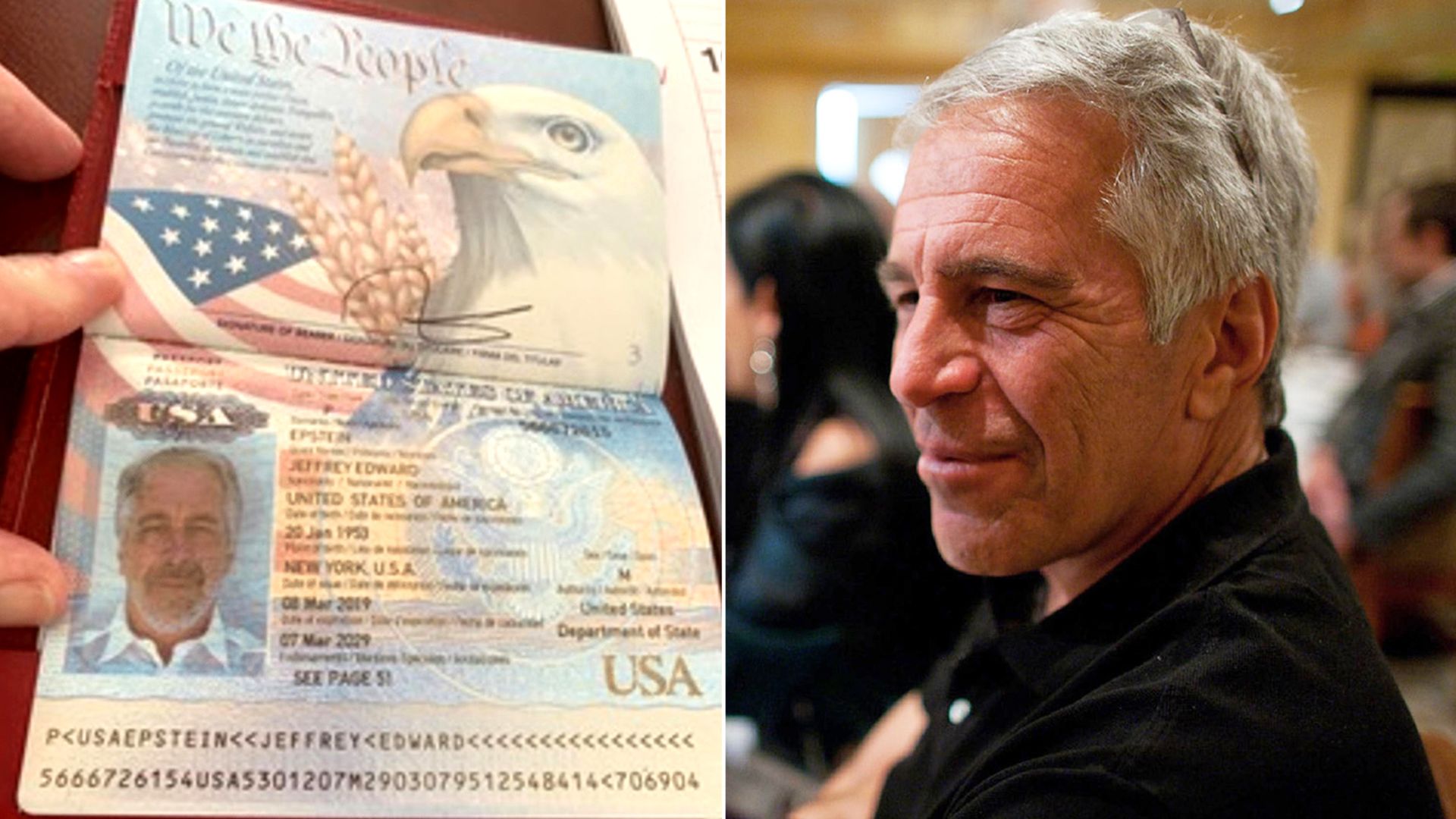
Democrats have shared more pictures from Jeffrey Epstein’s estate, hours before the US Justice Department’s deadline to release all the files it has on the paedophile financier.The Latest News from the UK and Around the World | Sky News

With Indiana having won the national championship, the FOX Sports editorial team ranked the most dominant teams in the CFP era. Here’s a look at our Ultimate 12-team CFP bracket.FOX Sports Digital
By: Grace Dumas, News of the North

This story has been corrected, the Organ was stationed at the Gross Alaska Theater, not Goldtown.
Longtime Juneau organist and State employee T.J. Duffy will perform his final noon organ concert tomorrow, closing a chapter that has spanned nearly 16 years of weekly performances in downtown Juneau.
Duffy, who has been a fixture of Juneau’s music scene since arriving in 2009, said the concerts have been one of the great joys of his career.
While he is retiring from the series, he emphasized that he is not stepping away from music entirely.
“I have loved giving these concerts.” Duffy said, “But since I’m retiring, I’ve got my sights set on some other things.”
The noon organ concerts trace their roots back decades. The instrument is housed in an office building but it has lived in other locations across the capital city including at Gross Alaska Theater.
The organ was donated to the city on the condition that it remain in Juneau.
Early performances sometimes coincided with visits from dignitaries.
Over the years, Duffy’s concerts have drawn a wide range of listeners, Duffy is a classically trained musician and has played across genres in his career, with his noon concerts showcasing classic rock anthems from Metallica to Twisted Sister.
One memory stands out for him involved a concertgoer who was both deaf and blind.
“He comes to the concerts. And when he does, he likes to press his body up against the instrument and feel the vibrations.” Duffy said.
As he prepares for his final performance, Duffy expressed hope that the tradition of noon organ concerts will continue with a new generation of musicians.
“Organists, we’re a dying breed, what I hope is any promising music student who’s in music school right now, might come up for a visit and consider staying.” Duffy said.
Duffy said his final concert will be a celebration. He plans to invite the audience to sing along and will provide lyric sheets featuring familiar Christmas music.
“I’m really hoping for a big crowd,” said Duffy, “If you love to sing, come out tomorrow.”
The concert will mark the end of an era for a longtime Juneau musical tradition, one that Duffy helped sustain and shape for nearly two decades.


NOTN- The Juneau School District has begun work on a new five-year strategic plan aimed at guiding the district through academic, organizational and financial challenges ahead.
“Strategic planning is a really important process for school districts being able to plan for the future.” Said Board of Education member David Noon, “Everyone is focused on the direction and the vision, where a district wants to go.”
Superintendent Frank Hauser said the planning process comes as the district concludes its previous strategic plan, adopted in 2020. School district strategic plans are typically updated every five years.
The current planning process began last spring and has included focus groups, surveys and meetings with community members, staff and district stakeholders. The goal, Hauser said, is to define clear priorities and outcomes for the next phase of the district’s work.
Noon said the plan centers on several key areas, “There’s a couple of major areas that we are aiming to focus our attention on over the course of the next five years, obviously starting first with the students, the second couple of which deal with the organization itself, the district staff. How do we recruit talented teachers? How do we as an organization act in a responsible way that’s driven by integrity? And then there’s also the financial, fiscal and operational sort of security that we’re trying to guarantee.” Noon said, “So we definitely are using the experience of the consolidation and thinking about the atmosphere of education funding in Alaska and, of course, nationwide as we develop this plan for the next five years. We can’t predict the future, but we can create a structure that allows us to adapt to whatever happens over the next couple of years while not just reacting to it.”.
Hauser said the strategic plan will also play a critical role in guiding budget decisions based on community priorities.
“From a budget perspective, when the community comes together and develops that strategic plan and everyone gets behind that, the board, through the budgeting process, can identify what the primary goals are.” Hauser said.
The draft strategic plan is now in its final phase and is expected to be presented to the Board of Education for a first reading in January, followed by a second reading shortly after.
Public input remains part of the process. The draft plan is available on the Juneau School District website, and community members may provide feedback during regular board meetings, held on the second Tuesday of each month, or by contacting board members directly.
Hauser, who announced earlier this year that he will be leaving the superintendent position, said the strategic plan is intended to provide continuity as leadership transitions occur.
“We’ve done a lot of great work here, the Juneau school district staff are some of the best staff in the world.” Hauser said, “Consolidation was hard. Those were really tough decisions. But I think, in looking at the future, we’re on much better financial footing. There are still challenges with the budget, but I think coming together and putting together a fiscal plan that is more focused, and having opportunities for kids, and even through the consolidation, being able to maintain those opportunities for our students and still see growth, those are the things I’m really proud of.”
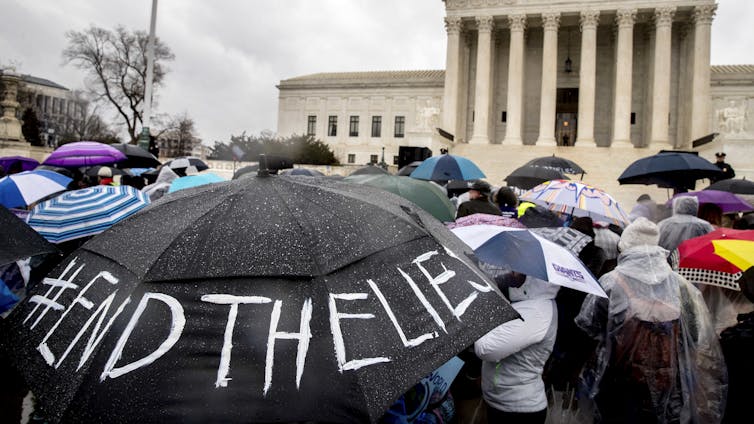
The latest Supreme Court case related to abortion is not technically about the legal right to have one. When the court heard oral arguments on Dec. 2, 2025, the word “abortion” came up only three times. The first instance was more than an hour into the 82-minute hearing.
Instead, First Choice Women’s Resource Centers Inc. v. Platkin hinges on whether First Amendment rights to freedom of speech and association give a chain of five crisis pregnancy centers in New Jersey the right to protect its donor records from disclosure to state authorities. The centers are Christian nonprofits that try to stop pregnant women from obtaining abortions.
There are more than 2,500 of them across the United States.
I’ve done extensive research regarding crisis pregnancy centers, and I’ve written about that work in more than a dozen articles in academic journals, books and the media.
Many critics of the centers call them “fake clinics” because the centers appear to be medical facilities when they are not.
Often, their waiting rooms look like those at doctors’ offices, and their volunteers wear white lab coats or medical scrubs. And they offer free services that people think of as medical, such as pregnancy tests and ultrasounds. But these pregnancy tests are typically the same kind that drugstores sell over the counter.
They’re able to function without medical professionals because it’s generally legal in the U.S. to operate ultrasound machines without any specialized training. They ask clients to read their own pregnancy tests so they can avoid laws regarding medical licensing.
Under current law, crisis pregnancy centers don’t need to tell their clients that they are not medical clinics. Nor must they disclose that they don’t provide abortions or birth control.
After California enacted a law that would force the centers to provide their clients with accurate information, the Supreme Court ruled in 2018 that it was unconstitutional.

The centers also don’t have to tell their clients that they are not bound by the Health Insurance Portability and Accountability Act, or HIPAA, or other patient privacy laws. They don’t have to say that few, if any, members of their staff are licensed medical professionals or that their ultrasounds are not typically intended to diagnose anything.
Crisis pregnancy centers far outnumber the 765 abortion clinics operating across the United States as of 2024 – two years after the Supreme Court allowed states to ban abortion in its Dobbs v. Jackson ruling.
The centers’ deceptive tactics appear before clients walk through their doors.
A team of researchers found that 91.3% of crisis pregnancy center websites misleadingly imply that they provide medical services.
In many cases, as I’ve previously explained, these centers are branded confusingly, with names suggesting they are clinics that provide abortions.
Their websites and mobile vans are often emblazoned with medical imagery.
Many operate near abortion clinics, adding to the confusion.
Researchers found that 80% of crisis pregnancy center websites include false information about abortion, including that it is linked to mental health issues, infertility and breast cancer.
All of these claims have been disproved. Many major medical organizations have issued statements to this effect, including the American College of Obstetricians and Gynecologists, the American Psychological Association and the Mayo Clinic.
In response to these concerns, crisis pregnancy centers often reference the goods and services they offer to women in need. But the resources they offer are often slim – far less than what is necessary to care for a baby – and may be contingent on participation in the Christian centers’ classes on parenting and other topics.
First Choice, when asked for comment, said that it “provides women and families free, compassionate care, including ultrasounds, educational resources, baby clothes and food.”

First Choice, the organization that brought this case, uses many of these tactics.
Four of its five centers in New Jersey are located within one mile of an abortion clinic.
Its homepage includes a photo of a woman dressed like a medical professional, wearing teal scrubs with a stethoscope around her neck.
The chain’s name, First Choice Women’s Resource Center, uses the language of “choice,” which has long been associated with the abortion rights movement.
First Choice’s website suggests that abortion can lead to depression, eating disorders and addiction. It makes claims about the prevalence of what it calls “post-abortion stress disorder,” a nonmedical term used by anti-abortion activists who have sought to falsely frame abortion as if it is something most women regret.
In reality, long-term studies show that 95% of women who have had abortions believe they made the right decision.
In November 2023, New Jersey Attorney General Matthew Platkin began investigating First Choice Women’s Resource Center to see whether the nonprofit had violated state consumer fraud laws by misrepresenting its services to clients, donors and the public.
Part of that probe, which was interrupted by the litigation that culminated in this Supreme Court case, included requesting documents about the center’s donors.
The next month, First Choice sued Platkin in federal court.
The lawsuit asserted that the First Amendment protects the privacy of First Choice’s donors.
A district court and appeals and court determined that this case should be heard in state court.
But instead of pursuing the case at the state level, First Choice appealed directly to the Supreme Court, which decided in June 2025 to take the case.
New Jersey’s fraud investigation and the “sweeping subpoena” it issued “may chill First Amendment freedoms,” said attorney Erin Hawley, when she argued the case before the Supreme Court on behalf of First Choice.
Following oral arguments, Platkin released a statement that said “First Choice – a crisis pregnancy center operating in New Jersey – has for years refused to answer questions about its operations in our state and the potential misrepresentations it has been making.”
Many crisis pregnancy centers like First Choice are affiliated with large networks that provide training materials.
For example, First Choice is affiliated with Heartbeat International, a Christian anti-abortion global network, which says that it has 45,000 active volunteers. Because those volunteers undergo training, I’ve been learning more about the centers by examining the network’s volunteer and staff manuals.
I’ve analyzed nearly 1,600 pages of these materials put together by large anti-abortion networks, including Heartbeat International. Along the way, I’ve tracked medical misinformation and references to confidentiality, privacy and data retention.
These training guides instruct volunteers to highlight the “medical services” their center provides and to omit “Christian language” from their branding and materials.
But the manuals I examined indicate that advancing their religious beliefs, rather than providing health care, is the centers’ primary goal. One manual says, “Heartbeat International is convinced that the loving outreach of a pregnancy center in the name of Jesus Christ is the most valuable ‘service’ provided, no matter what else is on the list of services.”
Heartbeat International’s Talking About Abortion manual includes medical misinformation about the supposed risks of having an abortion, such as cancer and mortality risks. It encourages volunteers to share these claims with clients.
None of that information, which includes official-sounding statistics, is backed by peer-reviewed scientific research.

Although First Choice sued in part due to concerns about its donors’ privacy, crisis pregnancy centers do not necessarily protect the privacy of the health data they collect from their clients.
The training manuals use the language of HIPAA, referencing the policy itself or its protections of private medical data. At the same time, the manuals inform volunteers that crisis pregnancy centers are “not governed by HIPAA” precisely because they are not medical clinics.
Instead, the manuals make clear that the centers can offer clients the opportunity to request confidentiality. But as stated in Heartbeat International’s Medical Essentials training manual, they “are under no obligation to accept or abide” by that request.
To New Jersey Attorney General Platkin, these kinds of approaches seemed worthy of investigation.
Should the Supreme Court majority rule in favor of First Choice, I believe states may have more trouble trying to investigate crisis pregnancy centers’ practices, while anti-abortion networks may face even fewer obstacles to their efforts to publicize medical misinformation.
Indeed, Aimee Huber, First Choice’s executive director, has said she hopes other states would “back off” any other efforts to probe crisis pregnancy centers.
But based on my 20 years of experience researching crisis pregnancy centers, I also believe that this case can be helpful for abortion rights supporters because it shows that the crisis pregnancy center industry understands that greater public awareness of its practices may restrict its power.
Heartbeat International did not respond to a request for comment by The Conversation.

Carly Thomsen consults for Reproductive Health and Freedom Watch. She has contributed to the Public Leadership Institute’s policy playbook regarding crisis pregnancy centers and she has testified in support of Vermont’s legislation regulating crisis pregnancy centers.
Politics + Society – The Conversation