Categories
Politics

Karoline Leavitt’s White House briefing doublethink is straight out of Orwell’s ‘1984’

White House press secretary Karoline Leavitt speaks during the daily press briefing on Nov. 4, 2025. Andrew Harnik/Getty Images

During a press conference on Dec. 11, 2025, White House press secretary Karoline Leavitt announced there was good news on the state of the economy.

“Inflation as measured by the overall CPI has slowed to an average 2.5% pace,” she said, referring to the consumer price index. “Real wages are increasing roughly $1,200 dollars for the average worker.”

When CNN political correspondent Kaitlan Collins attempted to ask a follow-up question, Leavitt pivoted to an attack. Not on Collins, a frequent target of White House ire, but on Leavitt’s predecessor in the Biden White House, Democrat Jen Psaki.

Psaki, claimed Leavitt, stood at the same lectern a year before and told “utter lies.” In contrast, Leavitt insisted, “Everything I’m telling you is the truth backed by real, factual data, and you just don’t want to report on it ’cause you want to push untrue narratives about the president.”

The “real, factual data” that underpinned Leavitt’s statement was specious at best. The actual inflation rate for September was 3%, not the 2.5% figure cherry-picked from economic data. The rise in real wages? CNN business editor David Goldman writes that in the past year, U.S. workers have experienced “the lowest annual paycheck growth that Americans have had since May 2021.”

White House press secretary Karoline Leavitt speaks to the media on Dec. 11, 2025.

I’m a historian who has written about the enduring legacy of George Orwell’s ideas about truth and freedom. Listening to Leavitt assert a “truth” so obviously discordant with people’s lives, I was reminded of the repeated pronouncements from the Ministry of Plenty in Orwell’s “1984.”

“The fabulous statistics continued to pour out of the telescreen,” Orwell wrote. “As compared with last year there was more food, more clothes, more houses, more furniture, more cooking-pots, more fuel, more ships, more helicopters, more books, more babies — more of everything except disease, crime, and insanity. Year by year and minute by minute, everybody and everything was whizzing rapidly upwards.”

The novel’s doomed hero, Winston Smith, works in the Records Department that produces these fraudulent statistics – figures that are so far divorced from reality that they “had no connection with anything in the real world, not even the kind of connection that is contained in a direct lie.”

In the world of “1984,” not only are statistics invented, they are continually reinvented to serve the needs of Big Brother’s regime at any given moment: “All history was a palimpsest, scraped clean and reinscribed exactly as often as was necessary.”

Transparency as doublespeak

The lack of transparency depicted in “1984” has an uncanny echo in our current political moment, despite Leavitt’s repeated assertions that President Donald Trump is the “most transparent president in history.”

Leavitt has made that claim countless times, including in her public defense of Trump’s “Quiet, Piggy!” dismissal of Bloomberg News journalist Catherine Lucey last month.

In Leavitt’s usage, “transparency” has become a form of Orwellian “doublespeak,” a word or phrase which through the process of “doublethink” had come to encompass its exact opposite meaning.

Doublethink,” in Orwell’s writing, was the mechanism of thought manipulation that allowed someone “to know and not to know, to be conscious of complete truthfulness while telling carefully constructed lies, to hold simultaneously two opinions which cancelled out, knowing them to be contradictory and believing in both of them.”

Doublethink was the mechanism that enabled the citizens of Oceania, the Anglo-American superstate governed by Big Brother’s authoritarian regime, to accept that “WAR IS PEACE; FREEDOM IS SLAVERY; IGNORANCE IS STRENGTH.”

And it is the mechanism that allowed Leavitt to proclaim, in defending Trump’s unwillingness to release the Epstein files, “This administration has done more with respect to transparency when it comes to Jeffrey Epstein than any administration ever.” That claim was pronounced “fabulously audacious” by The Guardian’s Washington bureau chief, David Smith, in a story headlined “Nothing to see here: Trump press chief in full denial mode over Epstein.”

President Ronald Reagan records a radio address on foreign policy on Sept. 24, 1988, in which he discussed “our philosophy of peace through strength.”

Making ‘lies sound truthful and murder respectable’

In his famous essay “Politics and the English Language,” Orwell wrote that “political language is designed to make lies sound truthful and murder respectable, and to give an appearance of solidity to pure wind.”

Over the past 10 months, Leavitt has, among other things, claimed that the now dismantled U.S. Agency for International Development – USAID – provided a grant of $32,000 for a “transgender comic book” in Peru. Not true. She has misrepresented the “One Big Beautiful Bill” as fully eliminating taxes on tips, overtime and Social Security. In reality, deductions for these are capped. She claimed that Trump coined the motto “peace through strength.” He didn’t. The phrase has been in circulation for decades, used most prominently by Ronald Reagan during his presidency.

And she recently sought to delegitimize U.S. Sen. Mark Kelly and colleagues’ plea to servicemen and women not to obey illegal orders by suggesting tautologically that “all lawful orders are presumed to be legal by our servicemembers,” and hence Kelly’s plea could only serve to provoke “disorder and chaos.”

All governments lie. But Leavitt has become a master of the art of political language, wielded to aggrandize her boss, belittle his opponents and deflect attention from administration scandals.

The Conversation

Laura Beers does not work for, consult, own shares in or receive funding from any company or organization that would benefit from this article, and has disclosed no relevant affiliations beyond their academic appointment.

​Politics + Society – The Conversation

Categories
Politics

America faced domestic fascists before and buried that history

Fritz Kuhn, center, is congratulated by fellow officers of the German American Bund in New York on Sept. 3, 1938. AP Photo

Masked officers conduct immigration raids. National Guard troops patrol American cities, and protesters decry their presence as a “fascist takeover.” White supremacists openly proclaim racist and antisemitic views.

Is the United States sliding into fascism? It’s a question that divides a good portion of the country today.

Embracing a belief in American exceptionalism – the idea that America is a unique and morally superior country – some historians suggest that “it can’t happen here,” echoing the satirical title of Sinclair Lewis’ 1935 book about creeping fascism in America. The social conditions required for fascism to take root do not exist in the U.S., these historians say.

Still, while fascist ideas never found a foothold among the majority of Americans, they exerted considerable influence during the period between the first and second world wars. Extremist groups like the Silver Shirts, the Christian Front, the Black Legion and the Ku Klux Klan claimed hundreds of thousands of members. Together they glorified a white Christian nation purified of Jews, Black Americans, immigrants and communists.

During the 1930s and early ’40s, fascist ideas were promoted and cheered on American soil by groups such as the pro-Nazi German American Bund, which staged a mass rally at New York’s Madison Square Garden in February 1939, displaying George Washington’s portrait alongside swastikas.

The Bund also operated lodges, storefronts, summer camps, beer halls and newspapers across the country and denounced the “melting pot.” It encouraged boycotts and street brawls against Jews and leftists and forged links to Germany’s Nazi party.

Yet the Bund and other far-right groups have largely vanished from public memory, even in communities where they once enjoyed popularity. As a sociologist of collective memory and identity, I wanted to know why that is the case.

The Bund in New Jersey

My analysis of hundreds of oral histories of people who grew up in New Jersey in the 1930s and ’40s, where the German American Bund enjoyed a particularly strong presence, suggests that witnesses saw them as insignificant, “un-American” and unworthy of remembrance.

But the people who rallied with the Bund for a white, Christian nation were ordinary citizens. They were mechanics and shopkeepers, churchgoers and small businessmen, and sometimes elected officials. They frequented diners, led PTA meetings and went to church. They were American.

Hundreds of American Nazis walk on a country road.
Nearly 1,000 uniformed men wearing swastika armbands and carrying Nazi banners parade past a reviewing stand in New Jersey on July 18, 1937.
AP Photo

When they were interviewed decades later, many of those who had seen Bundists up close in their communities remembered the uniforms, the swastika armbands, the marching columns. They recalled the local butcher who quietly displayed sympathy for Nazism, the Bund’s boycotts of Jewish businesses, and the street brawls at Bund rallies.

German American interviewees, who remember firsthand the support the Bund enjoyed before the U.S. entered World War II, 50 years later laughed at family members and neighbors who once supported the organization. Even Jewish interviewees who recalled fearful encounters with Bundists during that period tended to minimize the threat in retrospect. Like their German American counterparts, they framed the Bund as deviant and ephemeral. Few believed the group, and the ideas for which it stood, were significant.

I believe the German Americans’ laughter decades after the war was over, and after the revelations of the mass murder of European Jews, may have been a way for them to distance themselves from feelings of shame or discomfort. As cognitive psychologists show, people tend to erase or minimize inconvenient or painful facts that may threaten their sense of self.

Collective memories are also highly selective. They are influenced by the groups – nation, community, family – in which they are members. In other words, the past is always shaped by the needs of the present.

After World War II, for example, some Americans reframed the major threat facing the U.S. as communism. They cast fascism as a defeated foreign evil, while elevating “reds” as the existential threat. Collectively, Americans preferred a simpler national tale: Fascism was “over there.” America was the bulwark of democracy “over here.” This is one way forgetting works.

Communities will remember what they have forgotten or minimized when history is taught, markers are erected, archives are preserved and commemorations are staged. The U.S. has done that for the Holocaust and for the Civil Rights Movement. But when it comes to the history of homegrown fascism, and local resistance to it, few communities have made efforts to preserve this history.

Remembering difficult pasts

At least one community has tried. In Southbury, Connecticut, community members erected a small plaque in 2022 to honor townspeople who in 1937 organized to keep the Bund from building a training camp there. The inscription is simple: “Southbury Stops Nazi Training Camp.”

Mounted police form a line in front of hundreds of people.
New York City mounted police form a line outside Madison Square Garden, where the German American Bund was holding a rally on Feb. 20, 1939.
AP Photo/Murray Becker

The story it tells provides more than an example of local pride – it’s a template for how communities can commemorate the moments when ordinary citizens said “no.”

When Americans insist that “it can’t happen here,” they exempt themselves from vigilance. When they ignore or discount extremism, seeing it as “weird” or “foreign,” they miss how effectively such movements borrowed American idioms, such as patriotism, Christianity and law and order, to further hatred, violence and exclusion.

Research shows that some Americans have been drawn to movements that promise purity, unity and order at the expense of their neighbors’ rights. The point of remembering such histories is not to wallow in shame, nor to collapse every political dispute into “fascism.” It is to offer an accurate account of America’s democratic vulnerabilities.

The Conversation

Arlene Stein does not work for, consult, own shares in or receive funding from any company or organization that would benefit from this article, and has disclosed no relevant affiliations beyond their academic appointment.

​Politics + Society – The Conversation

Categories
Politics

Supreme Court case about ‘crisis pregnancy centers’ highlights debate over truthful advertising standards

The latest Supreme Court case related to abortion is not technically about the legal right to have one. When the court heard oral arguments on Dec. 2, 2025, the word “abortion” came up only three times. The first instance was more than an hour into the 82-minute hearing.

Instead, First Choice Women’s Resource Centers Inc. v. Platkin hinges on whether First Amendment rights to freedom of speech and association give a chain of five crisis pregnancy centers in New Jersey the right to protect its donor records from disclosure to state authorities. The centers are Christian nonprofits that try to stop pregnant women from obtaining abortions.

There are more than 2,500 of them across the United States.

I’ve done extensive research regarding crisis pregnancy centers, and I’ve written about that work in more than a dozen articles in academic journals, books and the media.

Resembling doctors’ offices in appearance only

Many critics of the centers call them “fake clinics” because the centers appear to be medical facilities when they are not.

Often, their waiting rooms look like those at doctors’ offices, and their volunteers wear white lab coats or medical scrubs. And they offer free services that people think of as medical, such as pregnancy tests and ultrasounds. But these pregnancy tests are typically the same kind that drugstores sell over the counter.

They’re able to function without medical professionals because it’s generally legal in the U.S. to operate ultrasound machines without any specialized training. They ask clients to read their own pregnancy tests so they can avoid laws regarding medical licensing.

Under current law, crisis pregnancy centers don’t need to tell their clients that they are not medical clinics. Nor must they disclose that they don’t provide abortions or birth control.

After California enacted a law that would force the centers to provide their clients with accurate information, the Supreme Court ruled in 2018 that it was unconstitutional.

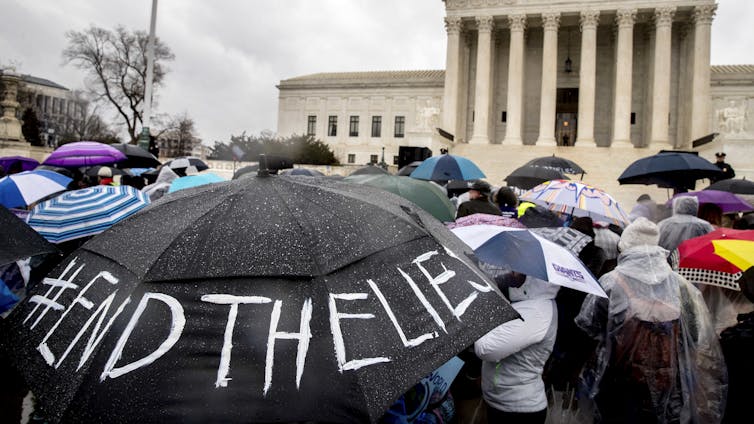
A person holds an umbrella that reads '#EndTheLies' during a rally outside the Supreme Court.
Supporters of abortion rights rally outside the Supreme Court in 2018, as the court hears a case regarding California’s regulation of crisis pregnancy centers.
AP Photo/Andrew Harnik

The centers also don’t have to tell their clients that they are not bound by the Health Insurance Portability and Accountability Act, or HIPAA, or other patient privacy laws. They don’t have to say that few, if any, members of their staff are licensed medical professionals or that their ultrasounds are not typically intended to diagnose anything.

Crisis pregnancy centers far outnumber the 765 abortion clinics operating across the United States as of 2024 – two years after the Supreme Court allowed states to ban abortion in its Dobbs v. Jackson ruling.

Deceptive by design

The centers’ deceptive tactics appear before clients walk through their doors.

A team of researchers found that 91.3% of crisis pregnancy center websites misleadingly imply that they provide medical services.

In many cases, as I’ve previously explained, these centers are branded confusingly, with names suggesting they are clinics that provide abortions.

Their websites and mobile vans are often emblazoned with medical imagery.

Many operate near abortion clinics, adding to the confusion.

Researchers found that 80% of crisis pregnancy center websites include false information about abortion, including that it is linked to mental health issues, infertility and breast cancer.

All of these claims have been disproved. Many major medical organizations have issued statements to this effect, including the American College of Obstetricians and Gynecologists, the American Psychological Association and the Mayo Clinic.

In response to these concerns, crisis pregnancy centers often reference the goods and services they offer to women in need. But the resources they offer are often slim – far less than what is necessary to care for a baby – and may be contingent on participation in the Christian centers’ classes on parenting and other topics.

First Choice, when asked for comment, said that it “provides women and families free, compassionate care, including ultrasounds, educational resources, baby clothes and food.”

Photo of a storefront location for a place called Problem Pregnancy with a sign outside offering 'free testing and counseling.'
Problem Pregnancy, a crisis pregnancy center located near a Planned Parenthood facility in Worcester, Mass., offers ‘free testing and counseling.’
Pat Greenhouse/The Boston Globe via Getty Images

First Choice’s practices

First Choice, the organization that brought this case, uses many of these tactics.

Four of its five centers in New Jersey are located within one mile of an abortion clinic.

Its homepage includes a photo of a woman dressed like a medical professional, wearing teal scrubs with a stethoscope around her neck.

The chain’s name, First Choice Women’s Resource Center, uses the language of “choice,” which has long been associated with the abortion rights movement.

First Choice’s website suggests that abortion can lead to depression, eating disorders and addiction. It makes claims about the prevalence of what it calls “post-abortion stress disorder,” a nonmedical term used by anti-abortion activists who have sought to falsely frame abortion as if it is something most women regret.

In reality, long-term studies show that 95% of women who have had abortions believe they made the right decision.

State consumer fraud investigation

In November 2023, New Jersey Attorney General Matthew Platkin began investigating First Choice Women’s Resource Center to see whether the nonprofit had violated state consumer fraud laws by misrepresenting its services to clients, donors and the public.

Part of that probe, which was interrupted by the litigation that culminated in this Supreme Court case, included requesting documents about the center’s donors.

The next month, First Choice sued Platkin in federal court.
The lawsuit asserted that the First Amendment protects the privacy of First Choice’s donors.

A district court and appeals and court determined that this case should be heard in state court.

But instead of pursuing the case at the state level, First Choice appealed directly to the Supreme Court, which decided in June 2025 to take the case.

New Jersey’s fraud investigation and the “sweeping subpoena” it issued “may chill First Amendment freedoms,” said attorney Erin Hawley, when she argued the case before the Supreme Court on behalf of First Choice.

Following oral arguments, Platkin released a statement that said “First Choice – a crisis pregnancy center operating in New Jersey – has for years refused to answer questions about its operations in our state and the potential misrepresentations it has been making.”

Analyzing training manuals

Many crisis pregnancy centers like First Choice are affiliated with large networks that provide training materials.

For example, First Choice is affiliated with Heartbeat International, a Christian anti-abortion global network, which says that it has 45,000 active volunteers. Because those volunteers undergo training, I’ve been learning more about the centers by examining the network’s volunteer and staff manuals.

I’ve analyzed nearly 1,600 pages of these materials put together by large anti-abortion networks, including Heartbeat International. Along the way, I’ve tracked medical misinformation and references to confidentiality, privacy and data retention.

These training guides instruct volunteers to highlight the “medical services” their center provides and to omit “Christian language” from their branding and materials.

But the manuals I examined indicate that advancing their religious beliefs, rather than providing health care, is the centers’ primary goal. One manual says, “Heartbeat International is convinced that the loving outreach of a pregnancy center in the name of Jesus Christ is the most valuable ‘service’ provided, no matter what else is on the list of services.”

Heartbeat International’s Talking About Abortion manual includes medical misinformation about the supposed risks of having an abortion, such as cancer and mortality risks. It encourages volunteers to share these claims with clients.

None of that information, which includes official-sounding statistics, is backed by peer-reviewed scientific research.

A sign advertises free pregnancy tests and abortion information outside a building identified as the Woman's Choice Pregnancy Resource Center.
Crisis pregnancy centers, like this one in Charleston, West Va., sometimes have names that suggest they offer abortions, evoking the pro-choice branding of the abortion rights movement.
AP Photo/Leah M. Willingham

Client privacy not protected

Although First Choice sued in part due to concerns about its donors’ privacy, crisis pregnancy centers do not necessarily protect the privacy of the health data they collect from their clients.

The training manuals use the language of HIPAA, referencing the policy itself or its protections of private medical data. At the same time, the manuals inform volunteers that crisis pregnancy centers are “not governed by HIPAA” precisely because they are not medical clinics.

Instead, the manuals make clear that the centers can offer clients the opportunity to request confidentiality. But as stated in Heartbeat International’s Medical Essentials training manual, they “are under no obligation to accept or abide” by that request.

To New Jersey Attorney General Platkin, these kinds of approaches seemed worthy of investigation.

Fewer obstacles ahead?

Should the Supreme Court majority rule in favor of First Choice, I believe states may have more trouble trying to investigate crisis pregnancy centers’ practices, while anti-abortion networks may face even fewer obstacles to their efforts to publicize medical misinformation.

Indeed, Aimee Huber, First Choice’s executive director, has said she hopes other states would “back off” any other efforts to probe crisis pregnancy centers.

But based on my 20 years of experience researching crisis pregnancy centers, I also believe that this case can be helpful for abortion rights supporters because it shows that the crisis pregnancy center industry understands that greater public awareness of its practices may restrict its power.

Heartbeat International did not respond to a request for comment by The Conversation.

The Conversation

Carly Thomsen consults for Reproductive Health and Freedom Watch. She has contributed to the Public Leadership Institute’s policy playbook regarding crisis pregnancy centers and she has testified in support of Vermont’s legislation regulating crisis pregnancy centers.

​Politics + Society – The Conversation
Categories
Politics

Shaping the conversation means offering context to extreme ideas, not just a platform

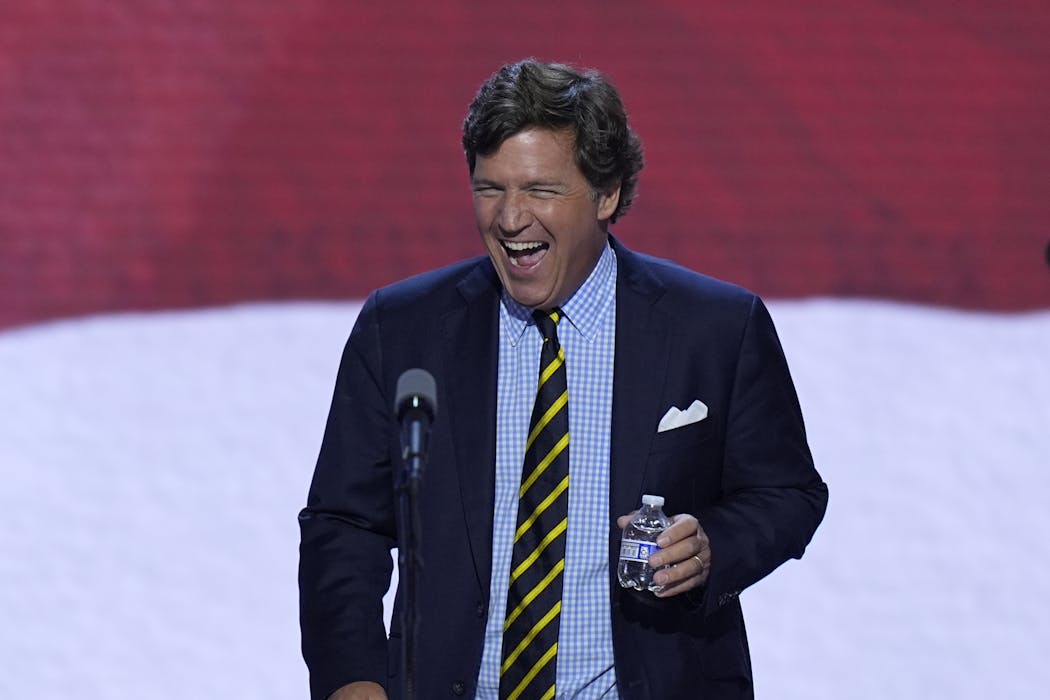
Tucker Carlson triggered outrage in some quarters of the conservative movement by interviewing white supremacist Nick Fuentes. J. Scott Applewhite/AP

The Oct. 27, 2025, interview between former Fox News host Tucker Carlson and political streamer Nick Fuentes created a rare public divide inside the MAGA movement.

Critics say Carlson gave Fuentes a national platform to advance his antisemitic and white nationalist views. Some conservatives, including President Donald Trump and Heritage Foundation president Kevin Roberts, defended the conversation as necessary to understand a growing segment of the movement.

These reactions may seem incompatible, but both contain slices of the truth. Public debates about extreme views often pull us toward simple binaries – platform or censor, engage or avoid – when the real issue is how the engagement is structured and the purpose it serves.

The current tension raises a broader question that extends beyond any single interview: When does a conversation with someone who holds extreme views illuminate their beliefs, which could serve the public interest, and when might it risk being interpreted as validation?

As a communication scholar who studies how people engage across deep divides, I see this as a question not about whether to interact with individuals who espouse extremist views, but how to structure that engagement and to what end.

Engaging ideas does not mean endorsing

When public figures say they are “just asking questions” or having a “respectful debate,” it’s easy to assume they believe that all conversation is valuable. Indeed, Carlson opened his interview by claiming he is simply “trying to understand” what Fuentes “affirmatively believes.”

In practice, however, the format and tone of an interview do much of the ethical work. Some conversations interrogate ideas. Others normalize them, meaning they make extreme claims sound ordinary or socially acceptable – in other words, treating them as just another position in public debate rather than as views outside widely shared norms. A conversation that presents all viewpoints as morally equivalent risks signaling that even extreme positions belong within normal political discourse.

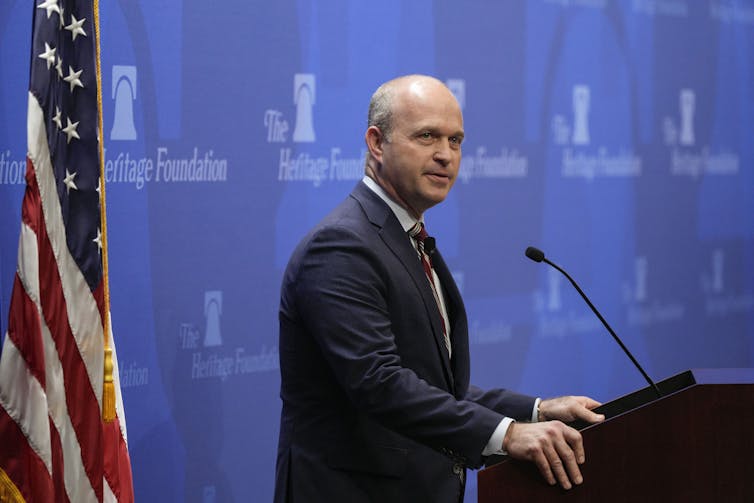
Kevin Roberts, the president of the Heritage Foundation, defended the interview with Nick Fuentes.
Kevin Roberts, the president of the Heritage Foundation, has defended Carlson’s decision to interview Fuentes, leading to some resignations from Heritage staff and board members.
Jess Rapfogel/AP

This is the concern raised by Carlson’s interview. Fuentes has made a series of claims about Jewish people that mainstream conservatives have rejected for decades. Although Carlson pushed back at one point, saying Fuentes’s views are “against my Christian faith,” the overall tone of polite exchange allowed some listeners to interpret the discussion as a meeting of two legitimate positions rather than as a critical examination of ideas widely understood as bigoted.

Listening is not neutrality

One explanation for these differing interpretations comes from a recent series of experiments showing speakers often confuse “active listening” with agreement. Even when they had maintained eye contact and signaled attention using short phrases like “I see,” listeners who disagreed were consistently judged as worse listeners. Because people tend to assume their own views are correct, they often infer that anyone who disagrees must not have listened well.

This psychological tendency complicates how the public interprets interviews like Carlson’s. Conversations can sound civil while failing to challenge harmful claims, leaving listeners with the mistaken belief that those claims are widely held.

Listeners operating from a humanizing mode attempt to understand the person behind the belief, asking questions such as “When did you first encounter this idea?” or “What was happening in your life at the time?” or “What concerns does this belief address for you?” A decade ago, a Dutch study found that extremist views often grow from fear, misinformation, isolation and a desire for belonging, along with other demographic, personality and social factors. Understanding those roots helps explain how individuals arrive at certain worldviews.

But understanding is not the same as acceptance. Good listening does not have to signal agreement.

Examples of this kind of engagement exist outside politics. Former extremists such as Christian Picciolini, who founded the Free Radicals Project, and musician Daryl Davis, known for building relationships with members of the Ku Klux Klan, have shown that humanizing conversations can help people leave hate groups without normalizing the ideas those groups promote. Their work illustrates that it is possible to confront harmful beliefs while still recognizing the humanity of the people who hold them.

Moving beyond just calling out

The ongoing debate about Carlson and Fuentes also reflects a broader tension in terms of how society responds to harmful speech.

Calling someone out, usually in public, focuses on blame. “Calling someone in,” a term developed by scholar and activist Loretta Ross, emphasizes private accountability and the possibility of correction. In a media setting, this might look like an interviewer saying, “I want to understand what you mean by that claim, because some viewers may hear it as targeting an entire group. Can you clarify how you see the people affected by this?” This approach challenges the idea while signaling curiosity about the speaker’s reasoning.

Nick Fuentes, a white nationalist commentator, appeared at a Donald Trump campaign event in 2020.
Right-wing podcaster Nick Fuentes has had occasional differences with Donald Trump, but the president defended the decision by commentator Tucker Carlson to interview him.
Jacquelyn Martin/AP

A similar approach, described by authors Justin Michael Williams and Shelly Tygielski, is known as “calling forward.” This framework focuses less on correcting a single remark, less on past mistakes and more on future growth by inviting reflection about how a belief fits within a person’s broader values. In practical terms, calling forward means setting clear boundaries around unacceptable beliefs while still recognizing an individual’s potential to change.

Using a “calling forward” approach, Carlson might have followed his mild pushback that Fuentes’s ideas are against his “Christian faith” by exploring how Fuentes understands the tension between his political claims and widely held moral or religious principles.

By stating directly when a claim is false or discriminatory but still allowing the conversation to explore how someone came to that belief, the interview places the idea in a fuller social and psychological context. The emphasis shifts to curiosity paired with accountability, and it can encourage someone to examine the roots and consequences of their beliefs without framing the exchange as a clash between equal positions.

Most people will never interview a national figure or decide whether to put an extremist on camera. Ideally, most of us won’t be faced with the burden of listening to views that question our or others’ humanity.

Even so, each of us likely has a relationship with someone who holds a belief we find troubling. More broadly, families, classrooms and community groups all face moments when someone introduces an idea that others find threatening.

The Carlson–Fuentes interview has become a flash point partly because it forces a public reckoning with a private question: What is the cost of engagement, and what is the cost of refusing it? Understanding that distinction requires paying attention not only to who is invited to speak, but also to how the ways in which we listen fundamentally shape the conversation.

The Conversation

Graham Bodie does not work for, consult, own shares in or receive funding from any company or organization that would benefit from this article, and has disclosed no relevant affiliations beyond their academic appointment.

​Politics + Society – The Conversation

Categories
Politics

Pramila Jayapal pushes Medicare for All polling

Rep. Pramila Jayapal (D-Wash.) wants Medicare for All back in the health care debate.

The former Congressional Progressive Caucus chair plans to present polling to her House Democratic colleagues next month as she argues for the electoral merits of Medicare for All — even in battleground districts the party must win to flip the House next fall. The research, paid for by Jayapal’s leadership PAC and shared first with POLITICO, found one in five Republicans support a “government-provided system,” as do most independents. Democrats back Medicare for All by 90 percent.

Two-thirds of voters said the federal government does “too little” to help people afford health care. Just 18 percent said the government does “too much.”

Jayapal’s Medicare for All push comes as Democrats have been largely unified on their health care messaging, pushing Republicans on the back foot about extending expiring Obamacare subsidies. Injecting Medicare for All back into the debate could also reopen a long-running intraparty fight that moderate Democrats aren’t keen to have.

In an interview, Jayapal described swing district voters’ openness to Medicare for All and a desire for “fundamental change” as a “significant shift” in recent years. She cited the rising costs of health care for making the current system less appealing to swing voters who “don’t feel like they can afford health care right now” and “don’t feel like they have a choice right now.”

“Whatever tropes they may have had about Medicare for all, those don’t really exist today in the public’s mind,” Jayapal said, arguing Democrats should now “put forward a very united and universal, comprehensive vision for health care in this country.”

Democrats are hoping to make health care a central midterm messaging — tying this fall’s federal government shutdown to a debate within the GOP over extending the Affordable Care Act subsidies. Jayapal hopes to nudge her party into not only pushing back on President Donald Trump’s cuts to Medicare, Medicaid and the ACA, but also “be ready with a proactive vision” for voters, she said.

Jayapal will undoubtedly face pushback from moderate Democrats over championing an issue that’s long divided the party. Medicare for All defined much of the ideological battle of the 2020 presidential primary, serving as the progressives’ flagship policy. After Joe Biden, who didn’t back it citing the price tag, won the primary, the policy largely fell out of the conversation.

Over the last five years, Medicare for All has remained popular among Democrats — and Jayapal argues her latest research shows that it’s increasingly intriguing to independents and Republicans, who are feeling the pinch of rising health care costs. Jayapal said she’ll pitch her polling to Republican members, too, though she declined to name them.

“There’s going to be some internal resistance [to Medicare for All] but it needs to be informed by polling, and in our survey, a majority of voters are in favor of it,” said David Walker, a pollster at GQR Research who conducted the survey. “We didn’t gild the lily [in the survey], we didn’t say it’d all be free.”

The poll described Medicare for All to participants as a “system [that] would still use the same doctors and hospitals as today, but take the profit motive out of health care by using a government-administered insurance system, like Medicare or Medicaid,” acknowledging “taxes will increase for many Americans,” but added, “those could be offset by not having to pay for health insurance premiums, co-pays or out-of-pocket costs.” The poll found 54 percent of voters nationally and 56 percent in battleground districts back Medicare for All.

Jaypal acknowledged confusion around the meaning of Medicare for All, and suggested adding “improved” to the slogan, as a nod to Americans’ frustrations with the existing Medicare program.

Jayapal said she intentionally used a polling firm that works closely with the Democratic Congressional Campaign Committee because “we wanted to make it clear this isn’t some fringe poll.” GQR surveyed 1,000 likely 2026 voters from Nov. 5 to Nov. 13, oversampling voters in battleground House seats. The margin of error is 3.1 percentage points.

​Politics

Categories
Politics

Poll: The affordability crisis is disrupting politics in 1 country after another

The affordability crisis that upended global politics last year continues to ripple across some of the world’s biggest democracies — punishing incumbents and undermining longstanding political alliances.

New international POLITICO polling shows the voter frustration with persistent financial strain remains a deeply potent force today. In five major economies, The POLITICO Poll found ongoing cost-of-living pressures continue to reverberate through politics:

  • In the United States, where Donald Trump returned to power on a campaign of economic populism, nearly two-thirds of voters — 65 percent — say the cost of living in the country has gotten worse over the last year. 
  • In the United Kingdom, where voters ousted the Conservative Party in 2024 after 14 years of rule, 77 percent say the cost of living has worsened. 
  • In France, where President Emmanuel Macron is grappling with historically low favorability ratings, almost half of all adults — 45 percent — say their country is falling behind comparable economies. 
  • In Germany, after prolonged infighting over the economy, former Chancellor Olaf Scholz’s governing coalition collapsed last year. There, 78 percent of respondents say the cost of living has gotten worse over the last year. 
  • And in Canada, a post-pandemic affordability crisis helped fuel a public backlash against then-Prime Minister Justin Trudeau’s government ahead of his resignation earlier this year. The POLITICO Poll found that 60 percent of adults in the country say the cost of living is the worst they can remember it being. 

The results, from POLITICO and Public First’s first-ever joint international poll, illustrate the uphill battle many leaders face in trying to contain the intertwined economic and political unrest. Five years after the coronavirus pandemic upended the global economy — and as the world contends with competing conflicts and AI rapidly becoming a defining force — meaningful shares of respondents across the U.S., Canada, and Europe’s biggest economies of Germany, the United Kingdom and France view the cost of living as among the biggest issues facing the world right now.

But as leaders seek to address the affordability concerns, many say that their leaders could be doing a lot more to help on the cost of living, but are choosing not to.

That has left incumbent governments grappling with how to manage the rising economic dread — and control the resulting political backlash. It has also created an opportunity for opposition parties on economic messaging.

“For incumbents it’s very difficult to run on these platforms,” said Javier Carbonell, a policy analyst at the European Policy Centre. “Today, center-left and center-right parties are seen as incumbents, and as the ones who are to put the blame.”

Voters are pessimistic about the cost of living

There is a pervasive sense in the five countries that their economies are deteriorating.

In France, 82 percent of adults say the cost of living in the country has worsened over the last year, as do 78 percent of respondents in Germany; 77 percent of adults in the United Kingdom and 79 percent in Canada say the same.

A majority of people in all five countries go even further, saying the cost of living crisis has never been worse.

In a further sign of the trouble facing leaders, the poll results suggest many view affordability as a systemic problem more than a personal one. Majorities across the countries, for example, say the issue of affordability is the high cost of goods, not that they are not paid too little.

In the U.K., roughly two-thirds of adults say the country’s economy has deteriorated — greater than the 46 percent who say their own financial situation has worsened over the last year. That same pattern holds for France, Canada and Germany, suggesting the public holds broad concerns about the economy and affordability that go beyond their individual lives.

While the European Union’s economy is set to grow by 1.4 percent in 2025, the economy in Germany has weakened over the past two years, and is expected to stagnate this year. In France, a series of government policies aimed at addressing cost-of-living concerns have contributed to an exploding national debt, which currently stands at nearly $4 trillion USD.

In the United Kingdom, the results come against a backdrop of sluggish economic growth, with incumbent Prime Minister Keir Starmer struggling to convince voters that his center-left Labour Party can drive down the cost of living.

And in Canada, the country’s deep-seated anxiety is born out by federal inflation data. Statistics Canada reported this week that the consumer price index ticked up 2.2 percent in November compared to the same month in 2024 — nearly a bullseye on the central bank’s 2 percent target.

Negative economic views are shaping politics

Voters’ economic concerns are roiling politics.

In 2024, Trump ran a campaign on economic concerns without having to oversee the economy himself. That dynamic has shifted in recent months, with voters beginning to sour on his handling of the economy, underscoring the difficulty of convincing voters of economic progress amid stubborn cost-of-living concerns.

That feeling of falling behind was particularly acute among European respondents in the POLITICO Poll, with nearly half of adults in Germany, France and the United Kingdom saying that their country is “generally falling behind other comparable economies.”

That pessimism has pushed many people out of the political process, Carbonell said, “because there’s no expectation that things are going to change.” For others, it’s fueling a search for political alternatives.

“There is this increasing demand for a very anti-system politics,” he said.

In Germany, Chancellor Friedrich Merz made revamping the economy a central campaign promise. But since taking office, he has been preoccupied with geopolitical issues, including the ongoing trade war and the Russia-Ukraine war.

That has become a successful line of attack for Merz’s critics — among them the far-right Alternative for Germany (AfD) party, now polling in first place. The party has accused Merz — whose approval ratings are at an all-time low — of not paying enough attention to the needs of the people in his own country, nicknaming him the “foreign policy chancellor.”

In France, the government is looking to roll back some of the policies it rolled out in response to cost-of-living concerns, but doing so could prove particularly unpopular with a population laser-focused on high costs. It could also fuel anti-establishment parties on the right and left, which have made the issue a central weapon against France’s crumbling political center.

David Coletto, a longtime pollster in Canada and CEO of the firm Abacus Data, has for years tracked affordability concerns — and found widespread concern among most survey respondents.

“This is not a marginal concern or a background anxiety,” he wrote of results from POLITICO’s November poll. “It is a dominant lived experience that continues to shape how Canadians interpret government performance, leadership, and competing policy priorities, alongside concern about Donald Trump, trade, and global instability.”

Affordability messaging will be a central message in upcoming elections

Affordability will be a central feature of elections across the globe next year — with some of that messaging already underway. In the U.S., Democratic candidates from New York to Georgia focused much of their 2025 campaigns on lowering the costs of living, and both parties are planning to center the issue in the midterms.

“For now, the cost of living remains a warning light rather than a red light for the Carney government,” Coletto wrote. “But the intensity of feeling, combined with seasonal pressures and fragile household finances, means the issue is unlikely to fade quietly into the background.”

Starmer’s government — languishing in the polls and facing local elections in 2026 — has pivoted in recent weeks to a more explicit focus on affordability.

The U.K. government has also floated freezing train fares, lowering energy bills, and boosting the minimum wage in an attempt to solve the affordability crisis, but a record-high level of taxation confirmed at a government-wide budget last month risks blunting its economic message.

In Germany, the issue of affordability may gain new momentum when voters in five federal states head to the polls to elect new state parliaments next year. In Berlin, the far-left Left Party, for example, plans to take a playbook from the affordability-centered campaign of New York’s Zohran Mamdani as a model for the state elections in September.

With local elections also taking place across France next year, and a presidential election in 2027, these issues are likely to continue to take center stage, especially in the larger cities where pricing pressures have been particularly acute.

In Paris, the outgoing center-left administration has been praised for making the city greener and more pedestrian-friendly, but far more needs to be done on affordability, said David Belliard, a member of the outgoing administration and the Green Party’s candidate for mayor.

“We’ve spent a lot of time fighting against the end of the world,” Belliard said, “but maybe not enough helping people make it to the end of the month.”

POLITICO’s Matt Honeycombe-Foster contributed to this report from the United Kingdom, Victor Goury-Laffont contributed to this report from France, Nette Nöstlinger contributed to this report from Germany and Nick Taylor-Vaisey contributed to this report from Canada. 

​Politics

Categories
Politics

Ramaswamy calls on conservatives to reject Groypers

Ohio gubernatorial hopeful and former GOP presidential candidate Vivek Ramaswamy urged conservatives to reject “Groyper transgressions,” becoming the latest Republican to weigh in on the ongoing debate in the party over antisemitism.

“If, like Mr. Fuentes, you believe that Hitler was “really f-ing cool,” or if you publicly call Usha Vance a “jeet,” then you have no place in the conservative movement, period,” Ramaswamy wrote in a New York Times op-ed published Wednesday, referring to a derogatory ethnic slur against South Asians.

In the quote, Ramaswamy was referencing Nick Fuentes and Vice President JD Vance’s wife Usha Vance, the daughter of Indian immigrant parents.

Ramaswamy shared that he has been the target of racial slurs and attacks on social media, despite “older Republicans” doubting the rising prevalence white supremacy in right-leaning online circles.

As the number of “Groypers,” or followers and fans of Fuentes, appears to grow, Ramaswmy said, there is a “real reluctance” from his fellow Republicans to condemn the “new identity politics on the right.”

“It should be acceptable on the right to criticize U.S. aid to Israel or immigrant visas, but it is downright unacceptable to spew poison toward Jews, Indians or any other ethnic group,” said Ramaswamy, the son of Indian immigrants.

The Republican Party has been embroiled in an intra-party struggle over whether the party should welcome groups associated with Fuentes, a debate that burst into the open after Tucker Carlson interviewed Fuentes on his podcast. Carlson, during his friendly October interview with Fuentes, said GOP backers of Israel have been “seized by this brain virus.” Fuentes said that “organized Jewry” is a major barrier to unifying America.

While President Donald Trump defended Carlson’s decision to interview Fuentes, House Speaker Mike Johnson called it a “big mistake.” The president of the conservative think tank Heritage Foundation, Kevin Roberts, also initially defended Carlson’s interview, arguing the real enemy was “the vile ideas of the left.” But after immense backlash — including from Sen. Mitch McConnell (R-Ky.) and multiple employees quitting — Roberts walked back his comments and condemned Fuentes’ rhetoric.

In his op-ed, Ramaswamy said that condemning the antisemitism brewing within a faction of the GOP does not need to equate to censorship but “moral clarity instead of indulgence.”

“The point isn’t to clutch pearls, but to prevent the gradual legitimization of this un-American animus,” he said. “This online edgelording reminds me of toddlers testing their parents’ limits: The job of a real Republican leader is to set firm boundaries for young followers, as a good father does for a transgressive son.”

​Politics

Categories
Entertainment

Rob Reiner, Wife’s Official Cause of Death Revealed Days After Murders

Reading Time: 3 minutes

We have an update on the heinous murder of Rob Reiner and his wife, Michele.

As you very likely know by now, the famous director and his long-time spouse were found dead in their Brentwood, California home this past Sunday afternoon.

The couple’s son, Nick Reiner, has been charged with double murder in the first degree appeared on Wednesday in court for the first time… looking disheveled and confused.

Thanks to the Los Angeles County Medical Examiner’s Office, meanwhile, we can now officially report that the Reiners died via multiple sharp force injuries.

Rob Reiner and his wife Michele Reiner speak during the ‘Shock and Awe’ press conference during the 13th Zurich Film Festival on September 30, 2017 in Zurich, Switzerland. (Photo by Andreas Rentz/Getty Images)

The manner of death was ruled a homicide.

Previously, the this same office said Rob and Michele were stabbed to death in their Los Angeles residence during the early morning hours of Sunday, December 14.

Nick Reiner was then arrested near the University of Southern California several hours after his parents’ bodies were found, authorities have confirmed.

Nick — who is being represented by lawyer Alan Jackson and who is said to have “personally used a dangerous and deadly weapon, a knife” in the killings — has not yet entered a plea.

According to various outlets, he got into a heated exchange with his father at a party just one day before the crime was committed.

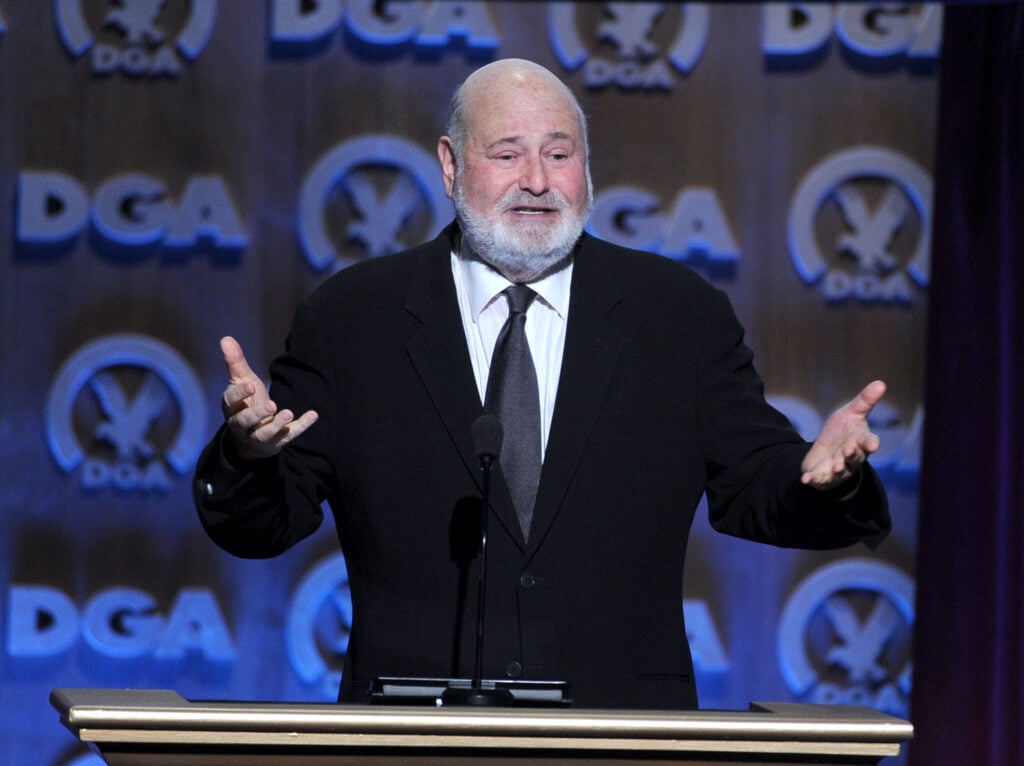
Rob Reiner in January 2014.
Rob Reiner speaks onstage at the 66th Annual Directors Guild Of America Awards held at the Hyatt Regency Century Plaza on January 25, 2014. (Photo Credit: Alberto E. Rodriguez/Getty Images for DGA)

In the wake of this unimaginable tragedy, Rob and Michele’s loved ones — which includes children Jake Reiner, 34, and Romy Reiner, 27 — said a few hours ago:

“Words cannot even begin to describe the unimaginable pain we are experiencing every moment of the day.

“The horrific and devastating loss of our parents, Rob and Michele Reiner, is something that no one should ever experience. They weren’t just our parents; they were our best friends.

“We are grateful for the outpouring of condolences, kindness, and support we have received not only from family and friends but people from all walks of life.

“We now ask for respect and privacy, for speculation to be tempered with compassion and humanity, and for our parents to be remembered for the incredible lives they lived and the love they gave.”

Rob Reiner (center) and wife Michele Singer (L) and son Nick Reiner (R) attend Teen Vogue's Back-to-School Saturday kick-off event at The Grove on August 9, 2013 in Los Angeles, California.
Rob Reiner (center) and wife Michele Singer (L) and son Nick Reiner (R) attend Teen Vogue’s Back-to-School Saturday kick-off event at The Grove on August 9, 2013 in Los Angeles, California. (Photo by Michael Buckner/Getty Images for Teen Vogue)

Rob Reiner was a director, producer and actor known for helming many iconic projects, including his directorial debut, This Is Spinal Tap (1984), along with Stand by Me (1986), The Princess Bride (1987), When Harry Met Sally… (1989), Misery (1990) and A Few Good Men (1992).

In 2015, Rob and his son collaborated on the film Being Charlie, which the latter co-wrote and stated was inspired by his own real-life experiences with drug addiction.

May Rob and Michele Reiner rest in peace.

Rob Reiner, Wife’s Official Cause of Death Revealed Days After Murders was originally published on The Hollywood Gossip.

​The Hollywood Gossip

Categories
Entertainment

‘Vanderpump Rules’ Reboot Scores Record Low Ratings: Headed For Cancelation …

Reading Time: 3 minutes

The twelfth season of Vanderpump Rules premiered on Bravo earlier this month.

And if you weren’t aware the show still existed — well, you’re not alone.

Yes, either Bravo’s marketing department really dropped the ball, or interest in the all-new Vanderpump cast is much, much lower than expected.

Whatever the case, the rebooted series premiered to shockingly low ratings.

The rebooted version of 'Vanderpump Rules' appears to be a colossal flop.
The rebooted version of ‘Vanderpump Rules’ appears to be a colossal flop. (YouTube)

And after just three episodes, there’s already talk that the show will not be renewed for Season 13.

‘Vanderpump’ premiere received lowest ratings in franchise history

According to a new report from Star magazine, the show’s December 2 season premiere drew in just 290,000 viewers, making it the least-watched episode in Vanderpump history.

The situation got even worse the following week, when Vanderpump Season 12 Episode 2 dropped to fewer than a quarter million viewers.

The numbers for the third episode, which aired on Tuesday night, aren’t in yet — but barring a Christmas miracle, they’re probably not gonna be anything to raise your glass about.

At this point, the show is such an unmitigated disaster that it might not be permitted to finish out the season, even though the whole thing has already been filmed.

Lisa Vanderpump attends the annual Keep Memory Alive "Power of Love" gala benefit for the Cleveland Clinic Lou Ruvo Center for Brain Health honoring Jimmy Kimmel at MGM Grand Garden Arena on February 22, 2025 in Las Vegas, Nevada.
Lisa Vanderpump attends the annual Keep Memory Alive “Power of Love” gala benefit for the Cleveland Clinic Lou Ruvo Center for Brain Health honoring Jimmy Kimmel at MGM Grand Garden Arena on February 22, 2025 in Las Vegas, Nevada. (Photo by Ethan Miller/Getty Images)

“The numbers for premiere week ratings are still coming in,” an insider told Star, adding, “And it’s still early, but based on early numbers, the lack of audience reaction, engagement, and overall interest, it’s likely at this point that the reboot will not come back.”

A second source offered an unconvincing rebuttal, noting that executive producer (and sole returning cast member) Lisa Vanderpump has been “very generous with her time promoting this show.”

(Frankly, that sounds like a Bravo insider’s way of paying a compliment to Lisa as a means of side-stepping the ratings issue.)

A third source says that the show has even bigger problems than its ratings, as Bravo execs believe that it’s simply not up to the network’s usual standards of quality.

TV personality Lisa Vanderpump arrives for Disney's 2024 Upfront presentation at North Javits Center on May 14, 2024 in New York.
TV personality Lisa Vanderpump arrives for Disney’s 2024 Upfront presentation at North Javits Center on May 14, 2024 in New York. (Photo by ANGELA WEISS/AFP via Getty Images)

“Bravo execs are struggling with the reboot. First of all, they don’t find the show to be as good, that’s the biggest issue,” that informant tells the US Sun.

For her part, Lisa has already been quick to dismiss the concerns about the show’s cancellation.

“Screw the naysayers!” Lisa told Page Six this week at her Vanderpump Dog Foundation Gala in Beverly Hills.

“I’m very excited about the new cast. Hopefully this time next year they’ll be a pain in my ass, because that’s when you know the show’s a success!”

Needless to say, unlikely that the show will still exist this time next year. But its namesake restaurateur appears unconcerned.

Of course, Lisa is independently wealthy and has already starred in and/or produced multiple successful reality shows (to say nothing of the many restaurants she’s opened).

The young cast of the rebooted Vanderpump Rules might not be so quick to shrug this situation off.

‘Vanderpump Rules’ Reboot Scores Record Low Ratings: Headed For Cancelation … was originally published on The Hollywood Gossip.

​The Hollywood Gossip

Categories
Entertainment

Blake Mitchell Cause of Death: Adult Performer Lane V Rogers Was 31

Reading Time: 3 minutes

Lane V. Rogers, known professionally as Blake Mitchell, has tragically died.

The 31-year-old adult performer had a massive audience.

His friends and loved ones are reacting with disbelief and heartbreak to these reports.

Fans are taking to social media to pay their respects.

Blake Mitchell, real name Lane V Rogers, days before his tragic death.
OnlyFans star Blake Mitchell, whose real name was Lane V Rogers, smiles for friend and colleague Liam Riley at a baseball game. (Image Credit: YouTube/Liam Riley)

Friends and fans are mourning Lane V Rogers (Blake Mitchell)

Born in 1994, Lane V Rogers — known in the adult entertainment world as Blake Mitchell — grew up in Versailles, Kentucky.

In his 20s, he moved to Los Angeles to pursue his career.

In the years since, he has accrued thousands of fans and OnlyFans subscribers

His athletic body and physical attributes helped him to stand out in the industry.

So, too, did his charisma and winning smile.

Rogers was openly and proudly bisexual — something that helped him stand out in an old-fashioned industry that often still expects male performers to either be gay or “gay for pay.”

(That is, thanks in no small part to performers like Rogers, slowly changing, with more out-and-proud bi male porn stars)

Many fans admired Rogers for his forthright social media posts. He would honestly and earnestly explain aspects of the industry.

(Sometimes, fans are confused about why their favorite performers never “collab.” Rogers was one of those who walked people through the process for those outside of the industry)

Not for nothing, but Rogers was also incredibly handsome, and often wore glasses — even if he didn’t have another stitch of clothing on his body. There was, and is, a real market for nearsighted kings.

A dark mode screenshot of a Silas Brooks tweet.
Alongside many other friends and colleagues, adult media superstar Silas Books paid tribute to the late Blake Mitchell (Lane V Rodgers) on social media. (Image Credit: Twitter)

What was Blake Mitchell’s cause of death?

There are competing reports about the tragic death of Blake Mitchell.

His friends and fans both hope to have clearer answers in the near future.

(We first learned of Lane Rogers’ passing through social media posts by adult performers Noahwaybabes and Silas Brooks, both of whom reacted with shock and sorrow)

However, from the limited information available, it soon became apparent that he had passed away due to a motorcycle crash in or around the Los Angeles area.

Even with the investigation underway, we do have a little more information as of early Wednesday afternoon.

On Wednesday afternoon, TMZ reported the specifics: that Lane Rogers had been driving his motorcycle in the vicinity of Oxnard, California just before 4 PM on Monday, December 15.

He and a box truck collided.

The report details that emergency responders pronounced him dead at the scene.

TMZ adds that the truck driver remained at the scene and spoke to investigators.

As of yet, there is no evidence of other causes behind the accident. The Ventura County Medical Examiner says that Rogers’ cause of death was blunt force trauma.

People are still finding out about this senseless tragedy

Obviously, fans will always have the hundreds of hours of Blake Mitchell’s first-rate performances by which to remember him. That is always a factor in a sex worker’s tragic passing.

But his friends knew Lane V Rogers as a whole person, seeing him beyond his OnlyFans stardom.

He was a tireless LGBTQ+ advocate. His posts make it clear that he was an animal lover.

And, judging from social media tributes, he was an amazing friend.

Our hearts go out to all of his loved ones at this time.

Blake Mitchell Cause of Death: Adult Performer Lane V Rogers Was 31 was originally published on The Hollywood Gossip.

​The Hollywood Gossip