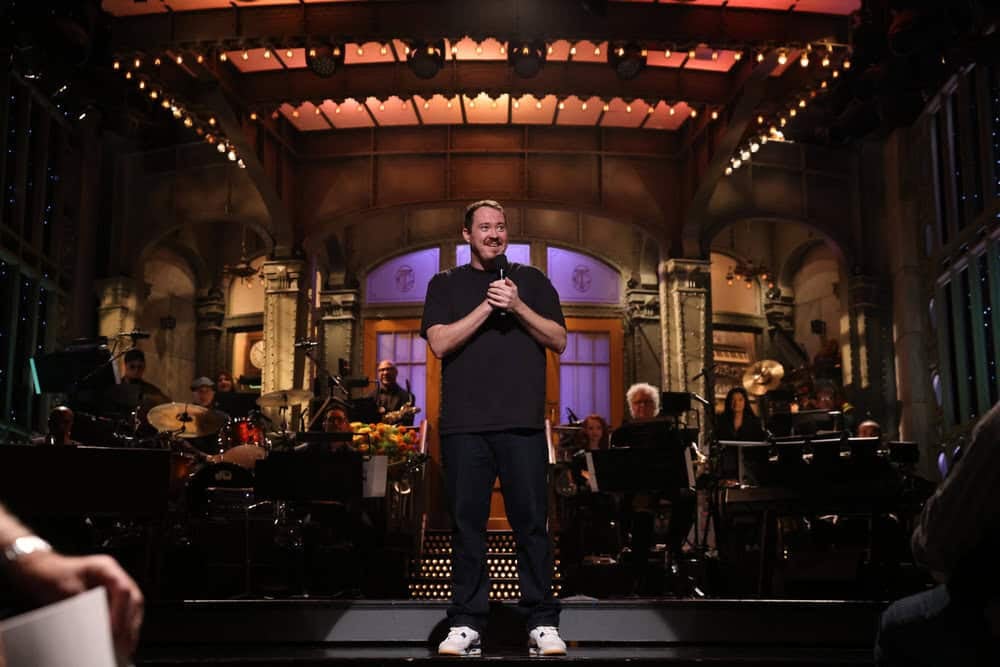
Bobby Bones took to Instagram to issue an apology after commenting on Shane Gillis’ controversial Saturday Night Live monologue without watching the comedian’s full segment.
During the monologue, Gillis made remarks about women’s gym attire, saying, “I haven’t been to the gym in so long I didn’t know women just dress like whores now,” Gillis said. “Look, I’m sorry, there’s no other way to describe. Have you seen it? I’ve seen it, the shorts. Have you seen the shorts? Those neon, they’re like the artificial bait colors. And the wrinkles go like around the cheeks and all combine at the butthole. And don’t look, you’re not allowed to look. For real, though, because they are filming. I’m in the background of like 10 TikToks right now.”
In a now-deleted TikTok video, Bones shared that he found Gillis’ comments about women’s gym shorts funny.
Bobby Bones; Photo Provided
“He said it looks like the color of an artificial bait, artificial lure,” Bones stated at the time. “And I thought that was so funny.”
He went on to suggest that people who “don’t get the joke” are “probably not from the South” or have “probably never been fishing.”
Now, the award-winning radio host is addressing the comments and backlash, admitting that he “missed the mark.”
“I literally just saw the joke that Shane Gillis made about the athletic wear the same color as a fishing lure and though that joke itself was funny and it has blown up into something. I wasn’t planning to come and say anything, I was just going to let it pass. I wasn’t planning to come and say anything, I was just going to let it pass,” he shared in the video.
Bones explained that his wife also pointed out that his remarks about Gillis’ monologue were “probably interpreted a little worse than you think.”
“So I am definitely not too good to come on here and be like, ‘Hand up, that’s on me.’ I saw the one joke. I should have watched the whole thing and I really was just going to set it out and let it pass. But I don’t want to let it pass because that’s not who I am. So I am sorry about all of this blowing up like this because it really was not my intention,” he admitted.
Reflecting on the now-deleted video, Bones said he posted it before the joke “became controversial” because he “saw the fishing joke and thought, ‘Oh, that’s a funny analogy.’”
He continued, “But it is not. And that’s on me. So apologies. And I saw different people covering it now. So the last thing I want to be is something that looks like an advocate for something that I am not…My fault. I should have watched the whole thing. Should have thought before I posted.
Bones concluded his apology by acknowledging that the situation had taught him a lesson.
“At the end of the day, Bones admitted, “I learned a valuable lesson here and I definitely will not do that again. So sorry guys.”
Bones’ comments come as comedians, actors, and public figures, including singer Maren Morris, are speaking out about Gillis’ SNL monologue.
Morris responded to the controversy with an Instagram video set to her song “be a bitch.” Text reading “me being a wh0re at the gym” appeared across the video as she flipped off the camera. She accompanied the post with the caption, “leave my gym short wedgie out of it.”
Gillis previously hosted SNL in 2024 and 2025. His first hosting appearance came five years after NBC fired him in 2019, shortly after announcing him as a cast member. The network made the decision after past anti-Asian and anti-gay comments made by the comedian resurfaced.
In one controversial joke, Gillis said that women “dress like wh-res” while working out at public gyms, an observation that did not go over well for obvious reasons.
Several public figures, including actor Dan Levy, have criticized Gillis’ monologue, and now, his ex-girlfriend, Grace Brassel is contributing her own take.
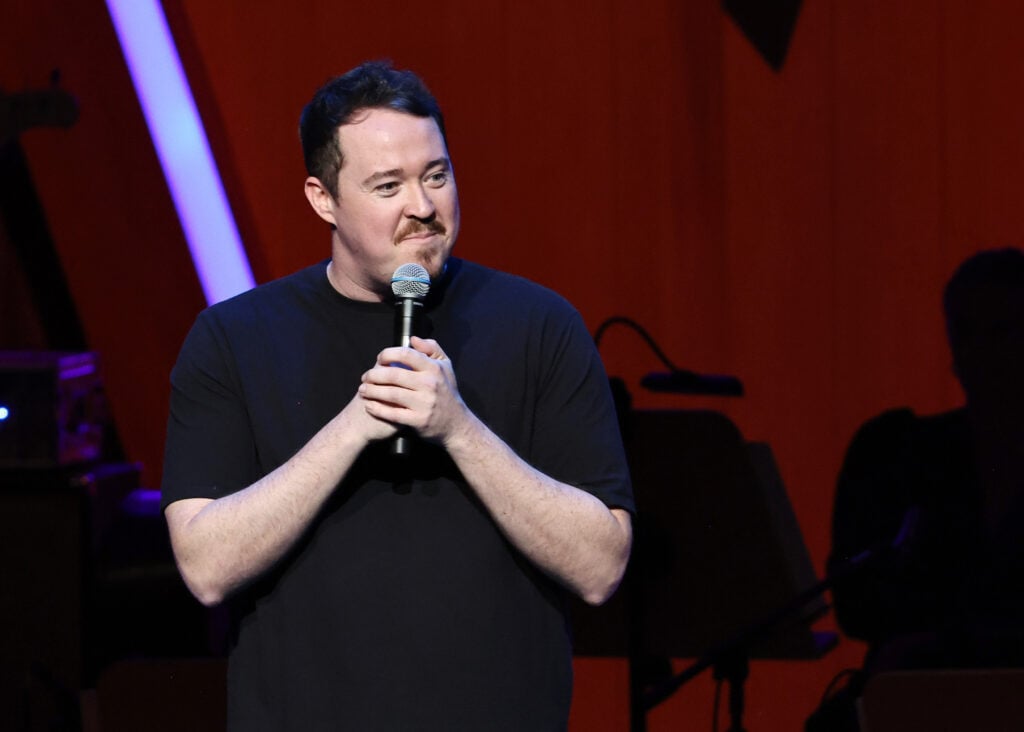
Shane Gillis performs onstage during the 17th Annual Stand Up For Heroes Benefit presented by Bob Woodruff Foundation and NY Comedy Festival at David Geffen Hall on November 06, 2023 in New York City. (Photo by Jamie McCarthy/Getty Images for Bob Woodruff Foundation)
Brassel, who dated the comedian until late last year, says the experience left her feeling like she had lost herself. She also claims harassment from Gillis’ fans made her afraid to speak publicly about what she went through.
Brassel shared an emotional Instagram video featuring footage from her personal struggles and her eventual recovery. The clips included moments of her crying, followed by happier scenes showing her moving forward with her life.
“Last year I was in a relationship that fully stripped me of who I am,” Brassel wrote.
She added that she had been “so terrified to even talk about what I went through,” citing what she described as relentless bullying from the comedian’s fanbase.
But Brassel wanted her post to offer encouragement to other women who might be experiencing something similar.
“I want to share this to let women know IT GETS BETTER!! And you can do it!” she wrote. “I had it on level hard mode, and I survived! And I’ve never been happier.”
Of course, sharing such a personal experience online also opened the door to criticism. Some commenters questioned why Brassel had recorded herself crying in the first place.
She subsequently explained that the footage was never intended to become public. Rather, she had been using the videos as a personal diary while working through difficult emotions.
“I know that his fans are going to purposefully misunderstand me; I’m used to it,” Brassel responded.
She also stressed that her message was bigger than her relationship with a famous comedian.
“The main point of this video is for people to know there’s more to life… regardless if my ex is a famous comedian or not,” she explained. “I want to show there’s hope.”
Brassel did not mention Gillis by name, but she left little doubt as to who she was talking about.
And she’s certainly not the first person to blast the comic this week.
“I haven’t been to the gym in so long I didn’t know that women just dress like whores now,” Gillis remarked while hosting SNL.
“I’m sorry, there’s no other way to describe — have you seen it? I’ve seen it. The shorts? Have you seen the shorts? Those neon — they’re like artificial bait colors. The wrinkles go around the cheeks and all combine at the butthole. And don’t look, you’re not allowed to look — for real don’t look because they are filming. I’m in the background of like 10 TikToks right now.”
Gillis has yet to respond to the backlash or the jabs from his ex. But we think it’s safe to say that it might be a while before he hosts SNL again.
Country music fans now have a new way to celebrate Alan Jackson’s remarkable career and learn more about the moments that helped his journey with the opening of his new museum located in downtown Nashville.
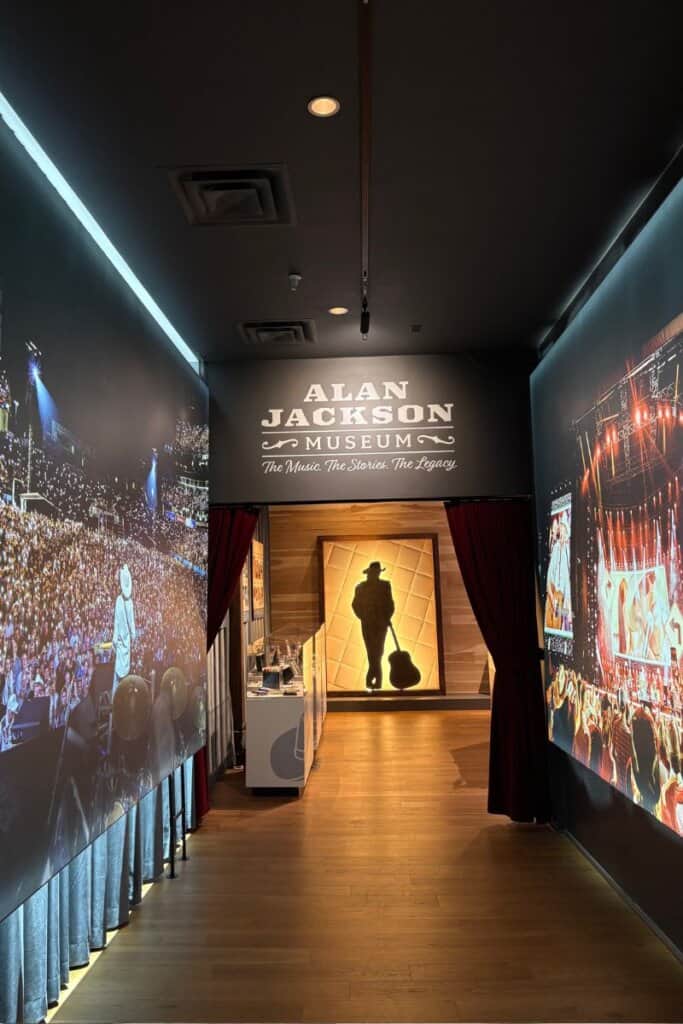
The Alan Jackson Museum can be found at 121 3rd Avenue South just off the popular Broadway strip. Since opening its doors in June, the unique space has welcomed locals and visitors from around the world to get an up-close look at the journey that took him from rural Georgia to massive stardom.
Photo Courtesy of Alan Jackson
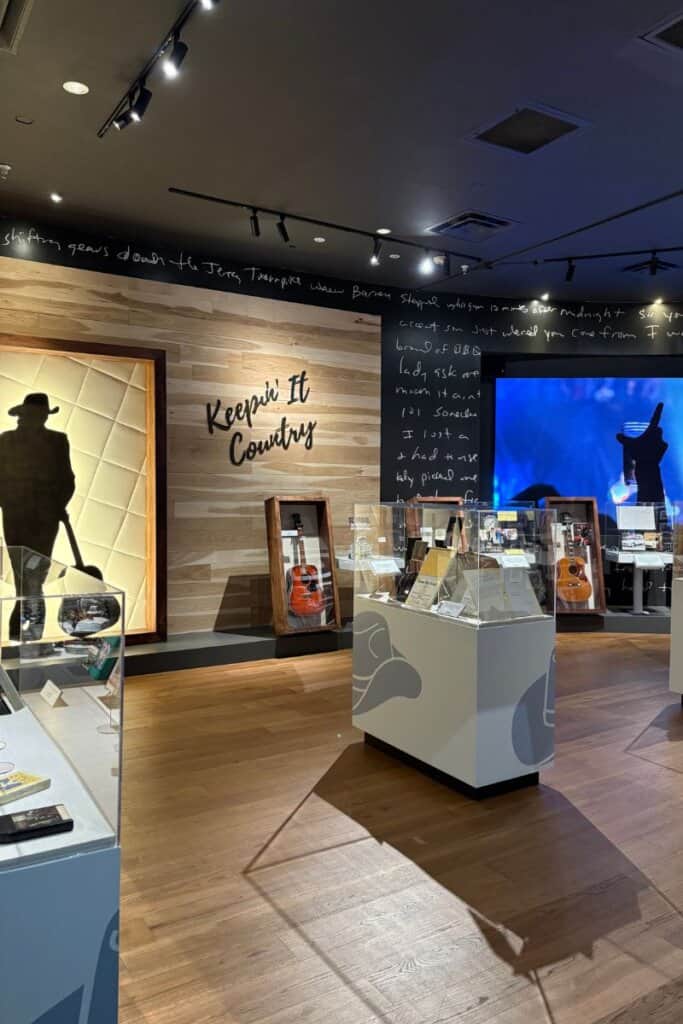
The exhibit features nearly 600 artifacts and memorabilia from Jackson’s personal life and decades-long music career, displayed in glass topped cases and floor-to-ceiling wall displays. Visitors can learn more about just about everything from Jackson’s early years, his relationship and marriage to his wife, Denise, and the steps he took to pursue his dream of becoming a country music singer.
Among the items on display is a paper bag filled with songs that Jackson brought with him when he moved to Nashville, the chair he sat in while writing early hits like “Here In The Real World” and clothing items drawn from album covers, television appearances, and music videos, including the boots, jeans and water-ski from his “Chatthoochee” music video.
Plus, many of the trophies that the hitmaker has earned throughout his career are available for viewing, such as Grammy Awards, Country Music Association Awards and Academy of Country Music Awards, along with recognitions celebrating his songwriting achievements and inductions into prestigious music halls of fame.
Photo Courtesy of Alan Jackson Museum
Beyond his musical achievements, the museum offers a more personal look at Jackson’s life. Childhood keepsakes, including a tricycle, school report cards, a sketchbook, his first cowboy hat and his first pair of boots, give fans a glimpse into his upbringing.
The collection also includes meaningful gifts presented to the Georgia native as a token of gratitude for his song “Where Were You (When the World Stopped Turning),” which reflected on the tragic events of September 11, 2001. Among these items are a piece of metal from the World Trade Center, a piece of stone from the Pentagon and an honorary chief’s helmet from the New York City Fire Department.
Alan Jackson’s many notable live performances are another important part of the museum experience. One featured event is the final concert of his career, held at Nashville’s Nissan Stadium this summer. The performance is set to be celebrated beyond the museum, through a live album titled Alan Jackson: The Last Show — One More for the Road — The Finale, Live from Nashville, TN as well as in an upcoming NBC television special.
Photo Courtesy of Alan Jackson Museum
While visiting the museum, fans can also head to Jackson’s Silverbelly Distillery located on the building’s first floor. Together, the two attractions offer a unique experience as the world’s only whiskey distillery and country music museum.
Visitors of any age can choose to explore the space on their own with a general admission ticket or take part in the “Alan Jackson Experience,” which includes a guided tour of the Museum and Distillery, a Silverbelly flight tasting, a “bottle your own” experience, and access to the Distillery’s “Vault.”
There is also an option to purchase a VIP ticket to the museum, which offers general admission to the museum as well as a Silverbelly flight tasting.
The Alan Jackson Museum is open at 121 3rd Avenue South 10:00am-5:00pm, seven days a week. Tickets and info can be found at alanjacksonmuseum.com.
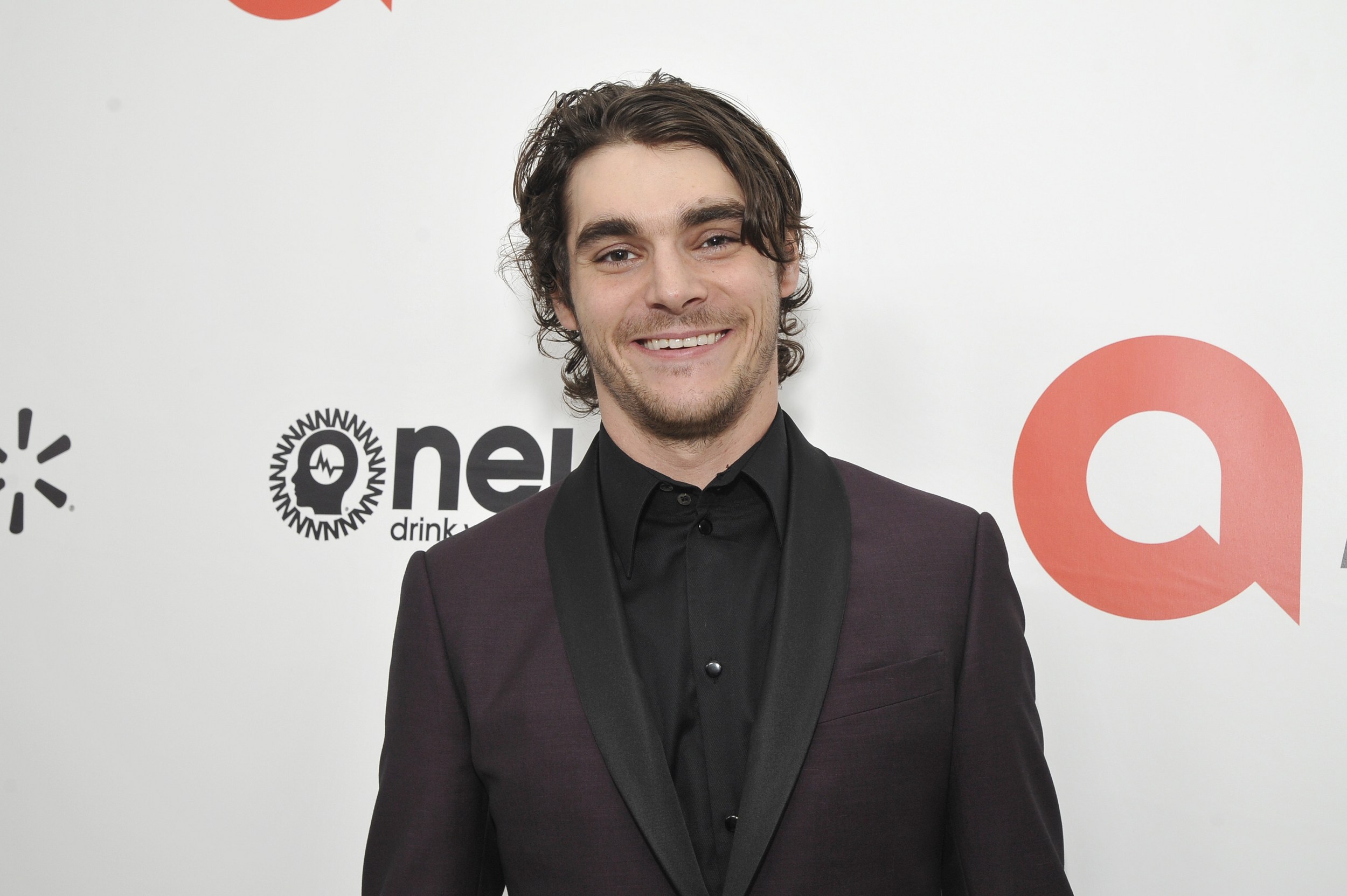
Best known for playing Walter White Jr. on the hit AMC series, ‘Breaking Bad,’ the actor also dedicated his life to disability awareness and inclusion. Continue reading…The Boot – Country Music News, Music Videos and Songs
2026 has seen a lot of sloppy football, and Week 5 may have been the sloppiest. The Eagles and Jaguars gave us a chaotic start in London. Jacksonville made enough mistakes for a woefully short-handed Philadelphia team to stick around in a game it had no business winning before a roller-coaster ending. The Commanders found a new way to blow a win in overtime against the Giants. Even the game of the day, the 49ers-Seahawks thriller, came down to which team made the fewest mistakes (spoiler: it wasn’t the team quarterbacked by Sam Darnold). Those games weren’t exactly well played, but they still delivered plenty of drama. Let’s take a closer look at the plays that shaped Week 5 in the NFL and see what they may mean for the future. Last week, I called Kansas City’s acquisition of Kenneth Walker the move of the offseason, but I’m ready to reopen the discussion after watching Mike Evans torch the Seahawks for 113 receiving yards and a touchdown on seven receptions in a thrilling 49ers road win. I don’t know where the 49ers would be without Evans, but I can say this confidently: they would not be 5-0. Seattle had no answer for him on Sunday. Whenever they needed a play, Brock Purdy looked his way. Their most significant connection – and the one that best illustrates how Evans has transformed this offense – came early in the fourth quarter, with the Niners trailing by five and facing third-and-10 around midfield. Evans lined up to Purdy’s right with Seahawks cornerback Josh Jobe across from him. The Seahawks elected to play man coverage, with one safety back deep and the other lurking in the middle. That gave Seattle more bodies in the middle of the field, where the 49ers were looking to attack, but it left Jobe in single coverage on Evans. Even with Jobe playing inside of Evans and cheating on in-breakers, the veteran receiver found a way to get open. A subtle shoulder feint outside and a sharp break in the other direction let Evans box out Jobe at the catch point, and Purdy trusted his new WR1 to take care of the rest. The throw was high and a bit behind Evans, but that catch radius could erase any inaccuracy. We’ve seen it all season with these two. If Purdy can put the ball in Evans’ general vicinity, the big receiver will come down with the ball. Per Pro Football Focus, the 33-year-old has caught 96% of his catchable targets and has come down with 10 of his 13 contested targets. Both would be career highs for Evans. Evans gives Purdy an answer for man coverage that he hasn’t had since Brandon Aiyuk was at his peak in 2023. Since Purdy’s breakout campaign, the 49ers haven’t fared well against defenses that can play sticky coverage. With Evans in the fold, they’ve punished opponents for trying. The takeaway: Evans has been everything the 49ers could have hoped for, but the depth chart is thin, and injuries are ravaging the receiving corps once again. San Francisco lost rookie second-round pick De’Zhaun Stribling for an extended time in training camp, Ricky Persall went down for the season with a torn PCL in August, and now Deebo Samuel is expected to miss a few weeks with a hamstring injury. The offense is rolling now, but an injury to Evans, who hasn’t been fully healthy all season, could wreck the passing game. Head coach Kyle Shanahan is acting accordingly. He’s been overly protective of his veteran receiver, limiting him to no more than 28 routes in a game this season. On Sunday, he didn’t run another snap after the 49ers took the lead in the fourth quarter. With Shanahan calling the plays for Purdy, perhaps the offense could stay afloat without Evans, but the Niners coach clearly has no interest in finding out. This sequence of blunders by the Commanders has been reviewed more times than the Zapruder film, but how about one more viewing? It’s been over 24 hours since the Commanders gave away a win with some of the worst clock management you’ll ever see, and I’m still not sure where we should be pinning the blame. But we have to blame someone, right? Jayden Daniels ultimately made the decision to go to the ground without enough time to line up and spike the ball, but I agree with Dan Quinn, who said after the game, “It’s an outside throw or a clock. Those are the two [options]: an out-of-bounds throw or a clock. That has to come from me. I don’t have to put [Daniels] into that spot.” The prospect of a 10-second runoff made it a trickier situation for Daniels to manage. Just chucking the ball out of bounds or into the first may have drawn an intentional grounding flag, which would have ended the game. Several erroneous intentional grounding calls were made around the league on Sunday, so leaving the game up to a referee’s judgment call isn’t great process – even if Daniels could have sailed the ball over Ben Sinnott’s head with a throwaway. Simply put, Quinn overcomplicated the situation for his young quarterback. In an ideal world, the Commanders would have a timeout and could manipulate the clock to make any Washington field-goal attempt the final play of the game – as they did in 2024 at the end of an early-season game against these same Giants. Without that timeout, though, the margins get smaller. As we saw, any screw-up puts the Commanders on the clock and forces them to scramble to spike it or rush the field-goal unit on. When a field goal ends the game, there’s no need to go to the lengths Washington did to milk the clock. Patrick Mahomes wasn’t standing on the other sideline. It was Jameis Winston. Quinn complicated things to avoid giving the ball back to Jameis freaking Winston with just a few ticks left on the clock and 40 yards between him and range for a game-winning field goal. But if Quinn wanted to run the clock down, there was a far simpler way. Washington could have lined up on the ball immediately after the first-down run that got the clock moving with around 50 seconds to go. If Daniels had taken the snap after the clock passed the 40-second mark, the play clock would have been turned off, and the Commanders could have calmly lined up and spiked the ball with just enough time for the game-winning kick. The takeaway: That NFC title game run in 2024 feels like ages ago now. Quinn may not last the season after Sunday’s debacle, and confidence in Daniels is waning with the third-year quarterback entering a pivotal offseason. If this coach-quarterback duo wants another shot at righting the ship, they’ll have to avoid these embarrassing episodes that have become all too familiar to a once-proud fanbase. Ultimately, the coach and quarterbacks are caretakers, whose main job is not to screw things up. We have never seen a team screw up in the manner Washington did on Sunday. I’ll let Philadelphia media and WIP callers handle the criticism of Nick Sirianni for mismanaging the clock and allowing the Jaguars to steal a win. Eagles rookie Makai Lemon should have stayed in bounds on second down to keep the clock running. In hindsight, Jake Elliott probably should have booted the ensuing kickoff out of the end zone for a touchback. Sirianni could have done more to raise Philly’s win probability by a few percentage points, but saying he threw away the game ignores that Jacksonville still had to make a remarkable play to get in position for Cam Little’s game-winner. Let’s give some love to the Jaguars players who made it all possible, starting with Ameer Abullah, who is somehow still kicking around the league more than a decade after you wasted that fourth-round pick on him in your fantasy draft. The journeyman back had just enough speed to break through the Eagles’ kick coverage, and I’m not sure if he would’ve done it without a running start. But as Elliott’s kick flies toward Abdullah, you can see him take a few steps back, gather momentum, and catch the ball. Abdullah needed every bit of that little head start. He reached 17.7 mph on the return. That’s fast for me or you, but it’s relatively slow by NFL standards. Aaron Rodgers hit 17.1 mph in Week 3. Abdullah still managed to run 57 yards in seven seconds, a minor miracle. But Abdullah received plenty of help from his blockers. If even one of them fails to execute, he’s tackled short of the 50-yard line, and Jacksonville loses the game. The play’s success hinges on the double-team block by running back Chris Martinez Jr. and tight end Tanner Koziol. Those two stonewall E.J. Jenkins, sealing off Abdullah’s left side. Tight end Quintin Morris and wide receiver Josh Cameron make the key blocks that seal off the right side for Abdullah. Cameron’s effort is remarkable. The rookie receiver, who’s earned offensive snaps thanks to his perimeter run blocking, is back deep with Abdullah when the ball is kicked. When the kick arrives, Cameron is over 29 yards from his block assignment, Kelee Ringo, and must close that gap in seconds. He not only does that, but he also lands a solid block on Ringo once he arrives, giving Abdullah enough space to break into the open field. Morris gets just enough Arnold Ebiketie to block him off from Abdullah, as well. Linebacker Branson Combs also makes a key block. Every time I rewatch the play, I find another Jaguar doing their job and making the return possible. And even with the top-shelf block, Abdullah still had to hurdle Elliott’s diving attempt at a tackle to get past midfield into Little’s range. The takeaway: Look, I get the rush to dunk on Sirianni after a highly avoidable loss, but he didn’t just hand Jacksonville the game. The Jags had no margin for error. Everything had to go right for Abdullah’s return to produce that result. Sirianni’s teams are typically on the right side of these inexplicable losses, which is why Sunday’s result was such a shock. You can criticize Sirianni for a lot of things, but game management usually isn’t the issue. But if this becomes a pattern, and the Eagles start giving away close games, it will be harder to ignore the myriad issues that have marred the offense for a few years running. Even if Sirianni isn’t fully to blame for the loss, he can’t afford to take it with the way things are going in Philadelphia. 1. Kyler Murray has stacked two solid performances in a row, and both have been highlighted by unreal throws, but it’s this 14-yard scramble that has me excited for what this Vikings offense can eventually become. Murray hit 20.8 mph on that run. It’s the top speed a quarterback has reached all season, narrowly beating out Caleb Williams, and the first time Murray has gotten over 20 mph since 2024. It felt like hearing Odysseus pluck his bow. The version of Murray who looked like a fringe top-10 quarterback just two seasons ago may have returned. 2. If there was any lingering doubt about Drake Maye, Sunday’s three-touchdown masterclass against the Raiders should have proved he is all the way back. This two-play sequence convinced me. The Patriots run the same “dagger” concept on two consecutive dropbacks. On the first play, the weak-side safety, Jeremy Chinn, runs with the clear-out route, leaving Romeo Doubs open on the deep in-breaker. After a run on first down, the Patriots ran the same pass concept. This time, Chinn jumps the in-breaker run by Kyle Williams, leaving Pop Douglas’s clear-out route open. That clear-out route is an “alert” and rarely gets thrown. That Maye felt it would be open and made the throws tells me he’s seeing the field much better than he did earlier in the season. 3. Since we’ve spent a lot of time criticizing coaches for strategic mistakes in crunch time, I wanted to give a shout-out to Broncos defensive coordinator Vance Joseph for sending a blitz on the Chargers’ Hail Mary attempt. Justin Herbert was sacked before his receivers could get downfield, eliminating any chance L.A. had of forcing overtime. Some may see that as a risky play call, but the numbers suggest it’s the safest approach in Hail Mary situations. There have been 178 Hail Mary plays since 2020, per Pro Football Focus. Defenses have blitzed 35 of those. Defenses sacked the quarterback on 32% of those plays and gave up no completions. The other 143 plays resulted in nine touchdowns. The best way to defend a Hail Mary is to keep the offense from even getting a pass off.Latest Sports News from FOX Sports
Several comedians, actors, and public figures, including singer Maren Morris, are speaking out following Shane Gillis’ Saturday Night Live monologue, which aired October 10.
Gillis returned to the NBC sketch comedy show to host over the weekend. During his opening monologue, he referred to women as “whores,” prompting backlash from viewers and fellow celebrities.
Photo Courtesy of Maren Morris
During the segment, Gillis said, “I haven’t been to the gym in so long I didn’t know women just dress like whores now,” Gillis said. “Look, I’m sorry, there’s no other way to describe. Have you seen it? I’ve seen it, the shorts. Have you seen the shorts? Those neon, they’re like the artificial bait colors. And the wrinkles go like around the cheeks and all combine at the butthole. And don’t look, you’re not allowed to look. For real, though, because they are filming. I’m in the background of like 10 TikToks right now.”
Morris responded to the controversy with an Instagram video set to her song “be a bitch.” Text reading “me being a wh0re at the gym” appeared across the video as she flipped off the camera. She accompanied the post with the caption, “leave my gym short wedgie out of it.”
Since sharing the clip Monday, Morris has garnered more than 1.2 million views and thousands of comments on the video.
The “Bones” singer is not the only public figure to address Gillis’ remarks.
Dan Levy, the star and co-creator of Schitt’s Creek, called for more men to “be defending women more.”
“I’m speechless that something like that can exist on live national television. And to be perfectly honest, more men need to be standing up in opposition to it because it’s complacency that has created the environment in which women are sexually assaulted and it’s a ‘conversation’ as opposed to a ‘crime,’” he stated.
Host Shane Gillis during the monologue on Saturday, October 10, 2026; Photo by: Will Heath/NBC
The controversy also became a topic of discussion on the TODAY show. Meanwhile, the Saturday Night Live YouTube video featuring Gillis’ monologue has amassed more than 2 million views and over 11,000 comments.
Gillis previously hosted SNL in 2024 and 2025. His first hosting appearance came five years after NBC fired him in 2019, shortly after announcing him as a cast member. The network made the decision after past anti-Asian and anti-gay comments made by the comedian resurfaced.
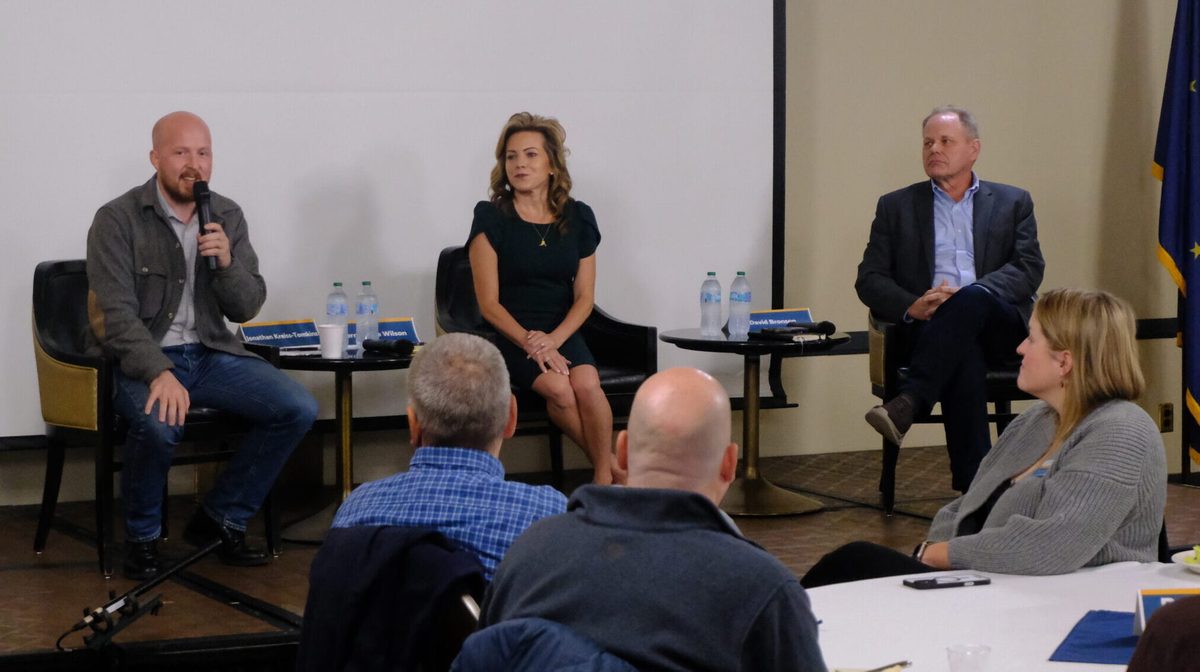
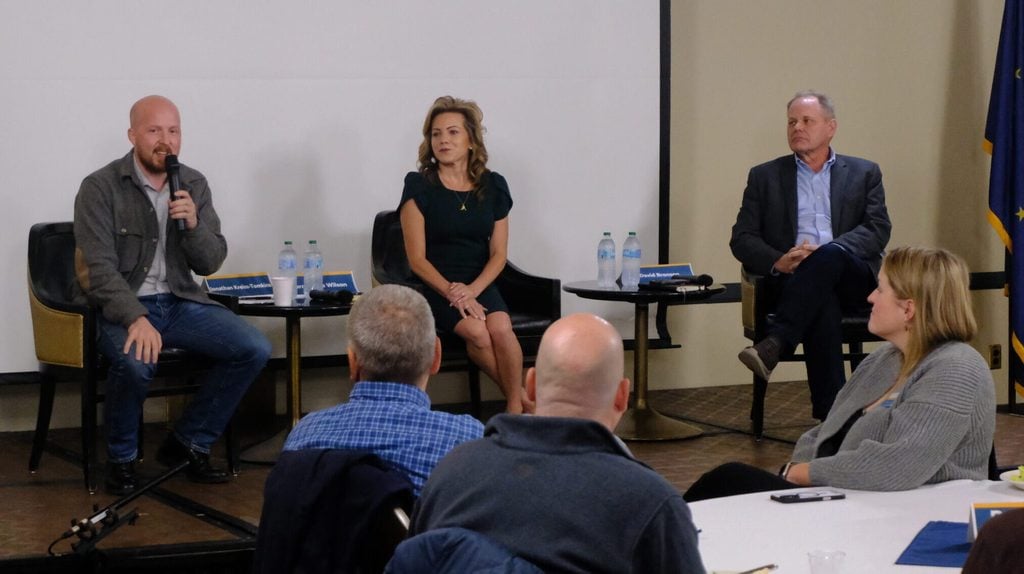
Alaska gubernatorial candidates Democrat Jonathan Kreiss-Tomkins (left), and Republicans Bernadette Wilson (center) and Dave Bronson (right) attend a forum hosted by the Juneau Chamber of Commerce in Juneau on October 7, 2026. (Photo by Corinne Smith/Alaska Beacon)
If elected, Republican governor candidates Dave Bronson and Bernadette Wilson said they would seek to roll back Alaska’s mandatory sick leave law and eliminate a minimum wage increase approved by voters in 2024.
The two spoke at a forum hosted Wednesday in Juneau by the Juneau Chamber of Commerce, which is in favor of rolling back the sick leave law.
Four candidates are running for governor in this year’s general election — Wilson, Bronson, Democratic candidate Jonathan Kreiss-Tomkins, and Republican candidate Treg Taylor. All except Taylor attended Wednesday’s event.
Seasonal employers — particularly in the seafood and tourism industries — are seeking to roll back the law because they said some seasonal workers have begun using sick leave as terminal leave at the end of the summer.
This spring, the Alaska House voted 22-18 on a bill to end sick leave immediately for seasonal workers and employers with nine or fewer workers. The rollback bill failed to pass the Senate before the end of the legislative session but is expected to return in 2027.
“I absolutely support an exemption for seasonal workers,” said Wilson.
“I would support introducing legislation to go back and repeal that ballot measure. It did not have the effect that it needed,” she said.
The 2024 ballot measure included both mandatory sick leave and a minimum wage increase. Under the law, Alaska’s minimum wage increased from $11.73 per hour to $13 per hour in 2025, and $14 this year. It will rise to $15 per hour in 2027, then rise with inflation each year after that.
Wilson said after Wednesday’s event that she does support repealing both the sick leave requirement and the minimum wage increases prescribed by the 2024 ballot measure.
So did Bronson, who said that while he isn’t proposing to eliminate the state’s minimum wage altogether, he wouldn’t mind doing so.
“In most small businesses, as you know, there’s no greater cost really than your employees, and to raise the cost of your greatest cost is prohibitive. My belief is that government shouldn’t be in the business of telling small business and private enterprise what to be doing in this regard, in the first place,” he said. “Mandatory sick leave, minimum wage — I would repeal them both because small business will figure this out.”
Kreiss-Tomkins, sharing the stage with Wilson and Bronson, was more moderate on the sick leave issue but said he does support changes to what voters enacted.
“Broadly speaking, I support paid sick leave,” Kreiss-Tomkins said. He added that he has heard from seafood and tourism trade organizations, “and I do think it is appropriate to look at amendments to the paid sick leave law.”
“I don’t know if that’s a wholesale exemption, but certainly making adjustments to the law that recognize the unique dynamics around seasonal industries and seasonal businesses is something that makes sense,” he said.
After the debate, Kreiss-Tomkins said he opposes lowering the minimum wage.
Taylor, by text message afterward, said he also supports amending the sick leave law.
“Yes, I agree!” he said in a text message sent through his campaign manager, April Gettys, “139,534 Alaskans work for small businesses, and I want to fix this law so those businesses can keep hiring and keep their doors open – Alaska should lead the nation in job opportunities. That means working with the Legislature to adjust the statute so it works for the corner café, the seasonal operator and the rural business. More jobs, more paychecks, more families staying in Alaska.”
Children’s bicycles are parked outside of the Interior Alaska Center for Non-Violent Living in Fairbanks, Alaska on September 14, 2023. (Photo by Claire Stremple for the Alaska Beacon)
One of the many issues before the next governor of Alaska will be the growing gap between available providers and the demand for childcare, which some advocates are calling a “childcare crisis.”
Many Alaska families are grappling with finding reliable care due to a lack of childcare facilities and workers that contributes to fewer slots, long waitlists and rising costs for families.
An estimated half of Alaskan families cannot fully participate in the workforce because they lack access to childcare, according to thread, a statewide childcare resource and referral organization. The organization estimates that’s more than 25,000 Alaskans that could be more active in the workforce.
The average cost to Alaska families is estimated at over $14,000 per year, thread estimates, sometimes surpassing the monthly cost of rent.
Advocates say a patchwork system of federal, state and local funding is insufficient in providing Alaska families with adequate childcare, with childcare providers reporting struggles to complete licensing requirements to open new facilities, provide competitive wages to workers and keep daycare operations going.
Democrat Jonathan Kreiss-Tomkins and Republicans Dave Bronson and Treg Taylor said they would seek to reduce state regulations for childcare providers and promote incentives for employers to provide childcare, if elected.
Kreiss-Tomkins and Bronson also said they would support recurring state funding for childcare.
The three are among four candidates running for governor in the November election, along with Republican Bernadette Wilson. Wilson’s campaign declined to comment on her platform on childcare issues after numerous calls, texts and emails over the course of a week.
Kreiss-Tomkins, Bronson and Taylor said their administrations would prioritize expanding access to childcare, especially in rural Alaska.
Bronson called childcare “essential infrastructure” for the state’s economy. “I would work with local communities, tribes, employers, school districts, and existing providers to expand the options that fit each community. So whether that’s a licensed center, a home-based provider, a cooperative, or an employer-supported program,” Bronson said. “Rural Alaska needs solutions designed locally, because a model that works in Anchorage may not work in a village.”
Kreiss-Tomkins also said he would support opening smaller, home-based providers and for childcare workers in rural areas, which would also boost rural employment opportunities. “Making training available to providers creates jobs for people who already live and work in rural communities and lets parents go to work, go hunting, or back to school,” he said.
Currently, only some Alaskan families receive childcare assistance based on available funding and eligibility. The non-profit thread estimates that 23% of children receive a subsidy from the government or employer.
Kreiss-Tomkins cited a true cost study commissioned by the Dunleavy administration in 2024 that showed a wide gap between childcare assistance and the cost of care — which is significantly larger in rural areas — in his support for boosting state childcare funding.
“Besides direct investment in programs like Child Care Assistance at the state level, I think one aspect we should clearly do more with is investment in the child care workforce, and partner with unions, tribes and universities to make those investments,” Kreiss-Tomkins said.
Bronson also said he supports recurring state funding, as well as “targeted employer partnerships” and pursuing federal grant programs.
But Taylor disagreed, saying before more state funding he would look to federal funding and tax credits for families and employers. “Any state support would come from the existing budget, not new taxes, and be tied to one result: more open slots for Alaska families,” he said.
All three candidates said they would pursue state incentives, like tax credits, for employers to provide childcare.
The three candidates split in views on expanding statewide childcare through implementing a statewide “universal” pre-Kindergarten program. Currently some Alaska school districts provide preschool and early education programs, but not all.
Kreiss-Tomkins said it would be a long-term intention of his administration to “get to a place where pre-K is something all parents in Alaska can count on.”
“That’s a lofty goal, and maybe a ways away, but I want to bring local governments, the state government, and other partners to the table to work toward it,” he said. Kreiss-Tomkins said he would also aim to expand paid family leave to reduce the demand for infant childcare.
Bronson and Taylor said they do not support a statewide pre-K program. Bronson said instead he supports families’ choices for public, private, tribal and community-based options. Taylor said he supports existing pre-K for children who qualify and choices for families, including homeschool programs.
Likewise the Democratic and Republican candidates split on their approaches to supporting childcare worker recruitment and retention.
Kreiss-Tomkins said he would support childcare workers through loan forgiveness programs, and “robust” apprenticeship programs. Bronson also said his administration would “work with employers and training institutions to recruit and prepare new workers.” Taylor said his administration would “lower barriers to entry” by reducing credential and education requirements for childcare jobs.
The Trump administration has announced plans to roll back regulatory requirements for Head Start programs, which serve children ages three to five years old, including changing provider ratios to allow more children per adult.
Bronson said he opposes an increase in ratios “as a quick fix,” citing safety. Kreiss-Tomkins did not say directly that he was in opposition of a ratio increase, but said he wants to be “thoughtful” with changing staffing ratios. “I think for infants, especially, there should be reasonable ratios on the number of infants any one caregiver is responsible for,” he said.
Taylor said he supports increasing staff ratios, in order to expand childcare programs, “with safety as the line I won’t cross,” he said. “The bigger threat to providers today is rules that make it impossible to staff a room or make the business pencil out. More flexibility helps them stay open.”
All three candidates who responded to the Alaska Beacon expressed support for reducing regulations for childcare providers licensed under the Alaska Department of Health to help ease barriers and help expand new childcare centers.
Wilson also indicated at an October candidate forum in Juneau that she would focus on cutting regulations in order to expand childcare capacity.
“For this administration, our first day in office, we’re going to come back and we’re going to roll those pages of bureaucratic regulations off the books. If they shouldn’t have been there, and the governor’s got the ability to do it, then by God, we’re going to get in there, and we’re going to do it,” she said. “We’ve got to roll those back and get them out of the way.”
Almost a third of our source code was comments. I deleted all of them and asked an AI agent to build the same features on both versions of the codebase, three times each. The code it wrote was just as good with or without comments.
If you use agents on a real codebase and wonder whether comments help them, slow them down, or don’t matter, here’s what I found.
Why I tried this
In this video (around 23:07), Lauren mentions that they don’t let their agents write comments in the code. Our codebase, is the opposite: it’s full of comments, and most of them were written by agents.
So I wondered: are all those comments helping the agent, or are they just extra text it has to read?
The experiment in one paragraph
I made a copy of the codebase with every comment removed, about 168,000 lines in total. Then I gave the same task to the same agent on both copies, three times on each, and checked the results the same way. I did this for two tasks, a small one and a bigger one.
The results
Every run passed every check: lint, type checks and the existing tests, plus, on the bigger task, a hidden test the agent never saw. A separate AI judge scored each result without knowing which copy it came from (more on that below).
Small task: tile all open windows (score out of 19)
Branch
Score
Tokens
Cost
With comments
18.3
2.18M
$1.42
Without
19.0
1.71M
$1.04
Bigger task: keep a window on top (score out of 23)
Branch
Score
Tokens
Cost
With comments
21.7
9.06M
$3.84
Without
22.0
9.12M
$3.95
The numbers are averages of three runs. The score differences are within noise, and so is the cost on the bigger task. On the small task, the agent used about 22% fewer tokens without comments, which makes sense: there was simply less to read.
The bigger task had a trap. The pinned state has to survive a page reload, and the PHP function that saves the window session drops any key it doesn’t know. Miss it and the feature looks fine until you reload. That’s exactly the kind of thing you’d expect a comment to help with. All six runs found it, with and without comments.
Why one run is not enough
My first plan was to run each branch once. I’m glad I didn’t.
On the bigger task, the three runs with comments used 8.21M, 8.79M and 10.17M tokens. The three runs without comments used 7.01M, 9.70M and 10.64M.
If I had picked one run from each branch, I could have written two opposite blog posts. Comparing 10.64M with 8.21M, removing comments makes the agent 30% more expensive. Comparing 7.01M with 10.17M, it makes the agent 31% cheaper. Same task, same code, same day.
Agents are not deterministic. If you’re measuring one, run it more than once.
How I ran it
The agent: Claude Code with Opus 5.5 at high effort. Same model and settings for every run.
The two codebases: our main branch, and a copy with the comments removed. I compiled both and checked that the resulting code is identical. The only comments left are the ones the tools need to work, such as lint directives and plugin headers, about 800 lines.
The tasks: two real features, with the same prompt on both branches.
The checks: the project’s own lint, type checks and tests. On the bigger task, also a hidden test I added after the agent finished, so it couldn’t write code just to pass it.
The judge: a separate Claude session read each change and scored it against a checklist written before the runs: does it work, does it follow the project’s conventions, does it have tests, and so on. The changes were labelled with random names, so the judge didn’t know which branch each one came from.
The runs: three per branch per task, alternating branches so that time of day affected both equally.
My conclusion
For the agent, code comments don’t make a difference to the quality of the code it writes. They don’t help, and they don’t hurt.
So keep a comment or delete it based on what it does for the people reading the code, not for the agent.
This doesn’t prove comments have zero effect. I tested one model, two tasks and three runs per branch, which is enough to rule out a big effect, not a small one.
Next: comments made no difference, but removing our docs/ folder and AGENTS.md did. That’s the next post.