Christa Pike has survived something that was never supposed to be survivable.
Nearly a week after Tennessee’s botched attempt to execute her by lethal injection, the 50-year-old death row inmate is conscious and speaking from her hospital bed, according to her attorneys.
Pike’s legal team announced the surprising update Tuesday, saying she is “conscious, speaking, and continues to receive critical medical care” (via TMZ).
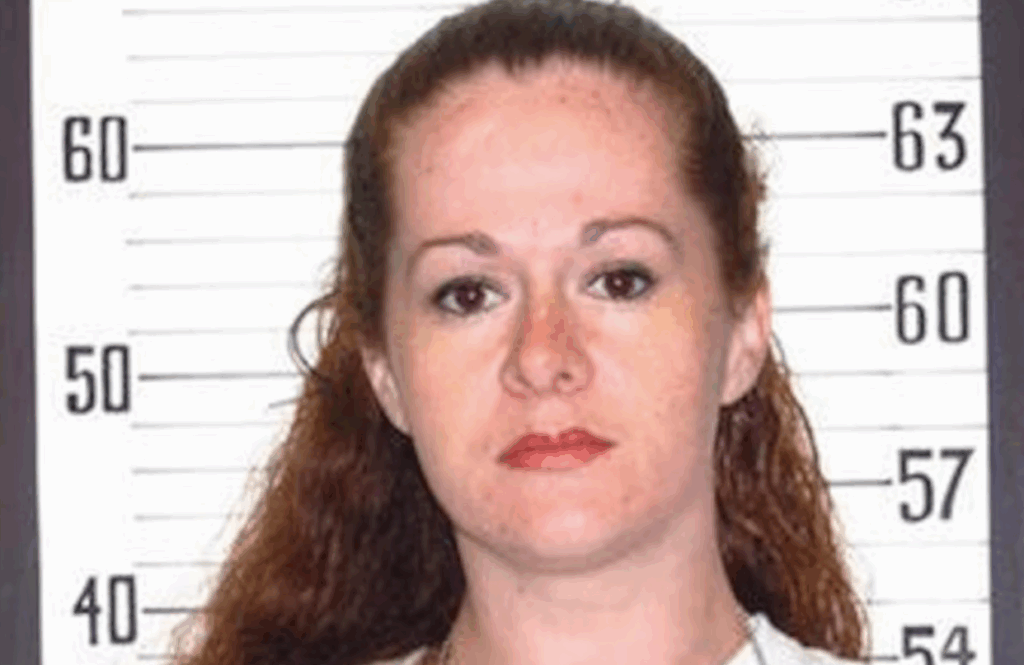
A mug shot of convicted killer Christa Pike. (Tennessee Department of Correction)
That’s obviously a significant improvement from where things stood just days ago.
She had been administered two lethal doses of pentobarbital, but the execution was ultimately halted after she failed to lose consciousness.
She was transported to a hospital, where doctors have been treating the effects of the failed execution.
“Her recovery is medically unprecedented,” Pike’s attorneys said in a statement. “Her prognosis remains unclear but, at a minimum, we expect a long recovery.”
Her lawyers also said Pike continues to deal with severe injuries to both arms and remains handcuffed and shackled to her hospital bed.
Pike’s attorneys have alleged that problems with the IV lines caused the lethal drug to enter surrounding tissue rather than properly reaching her bloodstream. They have also accused Tennessee officials of failing to recognize the problem during the execution.
According to a court filing, Pike experienced significant distress during the procedure, while witnesses reported hearing her breathing and snoring long after the lethal drugs had been administered.
The situation has raised serious questions about Tennessee’s execution procedures.
Gov. Bill Lee has ordered an independent review of what happened and halted the state’s remaining scheduled executions for the year. Tennessee Department of Correction Commissioner Frank Strada is also set to resign following the botched execution.
Pike’s attorneys are now asking Lee to commute her death sentence to life in prison without parole.
“The least that could happen now is that we at least take death off the table and start looking for what the future could be for her,” attorney Stephen Ferrell previously said.
Pike was sentenced to death for the 1995 murder of 19-year-old Colleen Slemmer. She was 18 at the time of the crime.
For now, however, the focus is on Pike’s condition and what comes next.
Her attorneys say her prognosis remains uncertain. But after surviving an execution that was intended to end her life, Pike is awake, speaking and fighting to recover.
And that’s a development few could have anticipated just one week ago.
National Republicans have spent months trying to rescue Ken Paxton. He’s complicating that effort.
Tensions are brewing with some Republicans after POLITICO published Paxton’s closed-door comments that “D.C.” Republicans were largely controlling his race.
“He is welcome to raise his own money and say whatever he wants,” said one Republican involved in the Paxton rescue effort, who like others in this article was granted anonymity to speak candidly. “In fact, if he did that, he’d probably be winning right now and we wouldn’t need to spend all this money.”
Senate Republicans and top operatives didn’t want to be in this position in the first place. Many had warned that the Trump effort to unseat Sen. John Cornyn and back Paxton in the primary would cost Republicans hundreds of millions to drag Paxton across the finish line in the general election. Cornyn and Senate GOP groups spent millions of dollars on ads during the primary attacking Paxton over his series of scandals and warning he was a flawed candidate.
Since then, the usual crowd of never-Paxton types has expanded into a wider circle of frustrated Republicans who are irked by the effort it’s taking to boost the scandal-plagued Senate candidate. And Paxton saying he doesn’t control his campaign messaging — alongside his remarks that President Donald Trump’s midterm convention hurt him politically — isn’t helping.
Paxton also complained about the drag of the Iran war and high prices on his campaign in another closed-door recording that Axios published Wednesday.
“Beggars can’t be choosers. He can try to raise federal money at a level that is necessary to save his candidacy at this point but his arms don’t reach that high,” said a Texas-based GOP consultant who’s closely monitoring multiple races. “As usual, he communicates something that is unhelpful, that is undisciplined, that is politically self-harmful and like most things, lacks any gratitude whatsoever.”
The top Senate GOP super PAC, Trump’s aligned MAGA Inc. operation and other Republicans are pumping more than $200 million into the race to salvage Paxton’s campaign against Democrat James Talarico. Trump allies say they have worked hard to shore up Paxton, suggesting they’ve pushed donations toward the campaign and the larger GOP Super PAC effort to avoid disaster in the Lone Star state. Trump plans to travel to Texas for the second time Wednesday to boost Paxton.
Paxton allies have brushed off his latest closed-door comments, saying he was referring to GOP super PACs he’s not allowed to coordinate with as a candidate.
The Paxton campaign did not respond to a request for comment, though campaign adviser Nick Maddux said in response to POLITICO’s initial report of the audio that “AG Paxton is thankful for the support and knows how important Texas is to keeping the majority which is why he’s on the ground every day.”
But another Republican, a Trump ally working on the fundraising effort, said the national intervention isn’t overstepping. That person said the messaging guidance from the national GOP is standard for major Senate races and that Paxton “needs the help.”
One national GOP operative involved in the Texas Senate race noted that the attorney general’s lackluster fundraising early on left him vulnerable to Talarico’s attacks throughout the summer — especially over Paxton’s series of “self-inflicted” scandals, which have made him “toxic” with key voting blocs in the deep red state.
“We warned them about this,” the GOP operative said.
The Texas Senate race has sucked up oxygen, despite Trump winning the state in 2024 by double digits. And, the Senate map has kept expanding as Democrats have made gains in other typically red states, forcing Republicans to make critical decisions about where to allocate resources.
Senate Majority Leader John Thune and Republicans have said there are dedicated donors who are backing their effort to help Paxton, as they also try to shore up red seats across the map.
Paxton, in the September meeting with donors, acknowledged Washington’s influence.
“I’ve never been in a race where I felt less control over the campaign … it’s all coming — you know — from D.C.,” Paxton told donors during a small fundraising event last month, according to the audio.
Top GOP officials have tried to downplay Paxton’s comments. The White House referred POLITICO to the RNC when asked for comment. The RNC argued Paxton, in the audio, was referring to the super PACs he can’t coordinate with as a candidate.
“This is fake news nonsense mixed with lazy reporting demonstrating a clear ignorance about how super PACs work. President Trump has called Ken Paxton the single greatest attorney general in history and has been clear he will do whatever it takes to make him the next senator from Texas,” RNC spokesperson Zach Kraft said in a statement.
Trump, when speaking to reporters at the White House on Tuesday, said he hadn’t seen Paxton’s latest comments. He added that his midterm travel blitz has helped Paxton and other Republican candidates.
“Ken’s doing much better now that I — everybody is — since starting three, four days ago, since starting the rallies. It’s brought a whole new awareness to how great the Republicans are doing, how great the economy is doing,” Trump said, touting investments and manufacturing.
The president last week traveled to Texas and told the crowd that Paxton is a “pain in the ass sometimes” and later acknowledged he’s “a little controversial.” But, he also warned the Texas crowd that Talarico would be “such a horror to your state,” adding, “we need the votes and I’m here for that, and I think we’re going to win.”
Vance also traveled to Texas, where he called Paxton “amazing attorney general and your next senator.”
Still, other Republicans have simply grown resigned to the state of the race, with Paxton needing all the aid he can get.
“There is only so much we can do,” one senior Senate GOP aide said. “And I feel like we’re doing a lot.”
The Paxton campaign told POLITICO it raised $18 million in the third quarter across the campaign and his joint fundraising committees. That’s roughly double his second-quarter total, though the campaign did not provide its cash-on-hand numbers, and Talarico has yet to release his fundraising haul.
Paxton also announced a $20 million ad buy last week — a significant single media investment in the race. But he’s had to rely heavily on Trump, MAGA Inc. and the top Senate GOP super PAC to bail him out.
Republicans have largely leaned on the Senate Leadership Fund, rather than the Trump-aligned MAGA Inc. super PAC, to keep Paxton afloat. SLF is spending a Texas record-breaking $131 million sum through Oct. 12 and has pledged to continue to spend more through the final weeks of the election.
If Paxton were to lose, Trump’s reaction and whether he chooses to distance himself from the rescue effort will be driven by media coverage, said a former Trump fundraiser.
“If the media coverage related to election night and the autopsy a couple days afterwards is brutal towards Trump, like, horrible economy, inflation’s not that much better than the last year of Joe Biden’s … he will lash out,” the person said. “But if the narrative is, it’s a midterm presidential, this is what normally happens … he’ll move on as fast as he can and never talk about Ken Paxton again. It just depends what the coverage looks like post the November election.”
Whitney Rose is officially turning the page.
Three months after the Real Housewives of Salt Lake City star and her husband Justin Rose’s separation was confirmed, she has filed for divorce in… E! Online (US) – Top Stories
Testimony from their actual victims (they are accused of crimes in three countries) paints a more personal picture of their cruelty and depravity.
One woman described being tricked into traveling to another country only to be forced to work 12-hour days and “f–k a bed knob” in an experience she describes as “sexual slavery.”
Andrew Tate and his brother Tristan Tate talk to the media outside their residence on March 23, 2025. (Photo Credit: Andrei Pungovschi/Getty Images)
Andrew Tate’s alleged human trafficking operation was international
According to court documents that TMZhas obtained, a woman has described being lured overseas by Tristan and Andrew Tate.
In 2017, she describes, Andrew convinced her to move to Romania. He claimed at the time that it would be her choice whether to do webcam work.
When she arrived, however, she said that Andrew had her working 12-hour shifts.
Andrew and Tristan, meanwhile, controlled the chats and accepted money, she said, for her to perform sex acts that she had not agreed to.
It is very common for online sex workers to get requests or cash offers to do things on camera that they do not wish to do. Most can decline, as politely or bluntly as they choose. She did not have that option.
Prior to her beginning this nightmare, she said that she had specifically set a boundary that she would not be doing anything anal. This was ignored, she says, by the Tate brothers.
Instead, the filing describes her being pressured into doing things such as using actual and improvised sex toys.
In one instance, she described, she had to “f–k a bed knob for an hour.”
She describes this nightmare life with the Tate brothers as “sexual slavery.”
Despite the abuse and rape that she described in the filing, she felt that she was unable to escape the human trafficking operation that the infamous brothers were operating.
In addition to accusing Andrew Tate of luring a woman there only to traffic her as a sex slave for his own profit, the document also has allegations about Tristan, specifically.
This second woman described Tristan repeatedly choking her during sex until she passed out.
Relatedly, she said that he had raped her anally while she was unconscious.
According to her, Tristan told her that “the more he liked someone, the more he wanted to hurt them.”
Many partners might engage in breath play, somnophilia, anal sex, and more. But sexual activity must always be safe, sane, and consensual. This victim is describing something much worse.
The Tate brothers continue to deny the allegations against them.
They are facing a litany of charges in numerous countries — including Romania, the UK, and the United States.
Andrew and Tristan maintain that only “low-IQ morons of the world” believe that they are guilty of the heinous crimes of which they are accused, even though the crimes completely match their whole vibe and personas.
They are currently in detention and awaiting extradition to the UK.
Though at least three countries will get a “bite at the apple,” many hope that no prosecutors fumble this case. There are too many evil men using their power to hurt women and then running around the world freely. Each time that one is brought to justice, the world becomes that much safer.
Ashley Cooke brought her Baby Blues Tour to Illinois on Thursday, Oct. 1, turning Joe’s Live in Rosemont into a sea of blue as fans packed the venue just outside the city of Chicago.
Prior to stepping on the stage at 9 p.m., Cooke set the tone for the night by offering a nostalgic introduction with “Since U Been Gone” karaoke-style as the lyrics scrolled across old television screens on stage. The screams of excited fans indicated that they were warmed up and ready to sing along with Cooke’s catalog.
Making her grand entrance with upgraded lighting and production elements from previous tours, the rising star launched into a lively performance of “Excuses” before moving through a mix of fan favorites, including “I Almost Do,” “Sleepless in Seattle” and “Swear Words.” With these tracks, she gave the first taste of the playful, heartbreak-fueled energy that would carry on throughout the night.
Ashley Cooke; Photo by Matt Leddo
This wasn’t Cooke’s first time performing in the area and it certainly won’t be the last. She told the crowd about her previous shows at Joes on Weed St., offering “full transparency” as she admitted that she loves to play Chicago.
“I hope to keep playing Chicago for the rest of my career. I just love you guys so, so much. And it’s always so good to be here,” she stated. “Seriously, it means the world that y’all are in this room tonight. You guys could be quite literally anywhere tonight and you guys chose to be here, to buy the ticket, to care about my music and I really just means the word. So thank you guys so much for being here. We’re going to have a damn good time.”
Regardless of whether fans in attendance had seen one of Cooke’s previous Windy City shows, it’s safe to say Thursday night’s performance was one to remember. One of the standout elements of the night was the creative use of audio snippets throughout the set, including messages from family, friends and fellow artists, as well as iconic moments from TV history.
At one point, a clip of Ross and Rachel’s famous “we were on a break” argument from Friends played before Cooke launched into “The Hell You Are,” perfectly setting up the song. She also continued the tradition of adding a recorded voicemail in the midst of her song “xs.” This message was recorded by a Chicago fan named Jake who had something important to say about his ex.
“If there was one thing I’d say about my ex is that I thought our relationship was like a Chicago Bears touchdown with fireworks but at the end of it all, it just ended up being smoke in the air,” he stated over the speakers.
Later in the show, Cooke’s sister, Jenn Cooke, left a few of her own pre-recorded messages, serving as introductions to several songs like “johnny ‘n june” and “the girl who cried wolf.” Cooke also brought the crowd into the fun when one of her band members grabbed the VHS camera and searched the audience for couples to feature on the “Kiss Cam” during “never til now.” The moment came after Cooke joked about her own dating life and then encouraging couples to dance together or challenging her single fans to find someone to do the same with.
One of the most sing-along-worthy moments of the night came when the songstress decided to go back to the music she grew up loving as a ’90s baby. She delivered a medley of hits from the era, including LeAnn Rimes’ “Can’t Fight the Moonlight,” Hilary Duff’s “Come Clean” and Avril Lavigne’s “Sk8er Boi.” As she performed, grainy images of Cooke’s childhood appeared on the vintage TV screens behind her, leaning fully into the nostalgic moment.
But the night wasn’t all about the high-energy moments. Ashley Cooke also slowed things down a bit for “it’s been a year” and “if I’m being honest,” sitting down with just her guitar and allowing the vulnerability of the songs to take center stage.
The latter of the two tracks serves as the opening track on Cooke’s new self-titled album that arrived in August. She explained that the decision to name the album after herself was connected to the raw authenticity woven throughout the project, giving fans a chance to get to know “Ash the person” beyond Ashley Cooke the artist. She also credits “if I’m being honest” as the song that truly kickstarted the project.
“I wrestled with different names for the project, but it wasn’t until I sat in my living room with two of my oldest co-writer friends drinking way too much wine and just venting about our deepest, darkest secrets and the things that scare us to say out loud about ourselves that we wrote this song and it became the first song on my self-title album. And it just feels like the most of me I’ve ever been in a song in a project. And so I just want to say thank you guys for loving this project. And this song is really kind of what started it all.”
Ashley Cooke; Photo by Matt Leddo
The momentum came back up when supporting act McCoy Moore joined Cooke onstage for a cover of Rascal Flatts “Summer Nights.” Sadly the night came to a close shortly after, with the final songs of her main set being “High School Sweetheart” and “Dance Around It.” Cooke returned for an encore featuring “Your Place,” her first No. 1 at country radio, and “Baby Blues,” during which she invited a brave audience member with blue eyes to move closer to the stage so she could sing directly to him, making for a memorable end to the evening.
“Thank you for always showing up for me in Chicago. I could not love y’all more,” she said before making her way off stage one last time.
The Rosemont stop felt like a night built around relatable experiences, raw storytelling and a true glimpse into Ashley Cooke as both an artist and a person with feelings poured out in her music. She gave fans plenty of reasons to dance and sing, but also created space for the heartbreak, nostalgia and stories behind the songs to resonate.
The Mormon Wives are a major crossroads.
But Layla Taylor is confident MomTok will survive its most fractious period yet, which most recently included Mikayla Matthews shocked fans by announcing… E! Online (US) – Top Stories
Former Anchorage Mayor Dave Bronson speaks at a gubernatorial candidate forum on Sept. 16, 2026, while former Attorney General Treg Taylor, Anchorage business owner and talk-show host Bernadette Wilson and former state Rep. Jonathan Kreiss-Tomkins listen. (Photo by Yereth Rosen/Alaska Beacon)
All four of the candidates in Alaska’s gubernatorial election this year support construction of a trans-Alaska natural gas pipeline and increased, state-backed drilling for natural gas in Cook Inlet.
But in a pair of forums held Sept. 21 and Oct. 2 in Anchorage, the four differed on a variety of other topics pertaining to the state’s energy policy, and one said he plans to borrow hundreds of millions of dollars in order to invest in projects that could pay off over decades.
Republicans Dave Bronson, Treg Taylor and Bernadette Wilson, together with Democratic candidate Jonathan Kreiss-Tomkins are each competing to replace Republican Gov. Mike Dunleavy, who is term-limited and cannot run again.
With Southcentral Alaska facing a shortage of cheap natural gas-fired electricity and rural Alaska continuing to experience high utility costs, the cost of energy is likely to be a major issue over the next four years.
“The difference between prosperity and decline in Alaska is often measured in cents per kilowatt-hour. That’s the bottom line,” Taylor said at the REAP forum. “Without affordable, reliable energy, Alaskan families are going to struggle.”
Absentee voting by mail and fax is underway, and early voting in person will begin Oct. 19. Election Day is Nov. 3.
Cook Inlet natural gas
Southcentral Alaska relies on natural gas for electricity and heating, but production from oil and gas deposits beneath and near Cook Inlet hasn’t kept up with demand.
After a cold 2025-2026 winter, utilities are worried that regionwide supplies could run short. Even if this year’s winter passes without incident, the long-term production trend is downward, and utilities are planning to import natural gas as soon as the end of the decade.
“I think we need to immediately incentivize more exploration and capital projects in the Cook Inlet,” Taylor said on Sept. 21.
“We’ve also got to prepare — because of where we’ve put ourselves — for importing LNG, and that’s a horrible place to be when you’re an energy-rich state,” Taylor said.
Currently, the state of Alaska is directly and indirectly subsidizing natural gas production. The Alaska Industrial Development and Export Authority — the state’s development financer — has provided loans to HEX, a company drilling in the region, and the state is foregoing royalties on gas leases in the area.
“I think it is appropriate for the state to offer royalty relief to Cook Inlet natural gas producers, as is currently the case,” said Kreiss-Tomkins at the APA forum, adding that he believes “getting every last molecule out of the Cook Inlet natural gas basin is a state priority.”
Speaking after Kreiss-Tomkins, Bronson said the state needs to somehow encourage a second jack-up drilling rig in Cook Inlet to allow the drilling of more wells in Cook Inlet.
“The most important stuff is natural gas production in the near term, to provide our immediate needs as we plan on more generation and transmission going forward,” he said.
Wilson said she believes structural changes are needed to boost Cook Inlet gas.
“We most certainly need to incentivize production in Cook Inlet,” she said on Sept. 21.
“Yes, whatever we can do to incentivize HEX, whatever we can do to incentivize Hilcorp,” she said, referring to two of the three companies currently drilling for gas in Cook Inlet.
In the room at the time of the debate were some sitting state legislators who supported a proposal to raise business taxes on Hilcorp, HEX and other privately owned oil and gas firms.
Wilson said she believes the threat of a tax increase deterred those companies from drilling.
“We have to pay very close attention that when we complain and — quite frankly — bitch and moan about the gas shortage, who has brought this on? We brought it upon ourselves, and we have to change the outlook,” she said.
On the gas pipeline
If Cook Inlet natural gas is the answer for the immediate future, Bronson said on Oct. 2, “for the long-term future, it is the gas line.”
The proposed Alaska LNG project envisions a pipeline from the North Slope to Cook Inlet, bookended by a pair of industrial processing plants. The project would bring abundant gas to Southcentral and to foreign customers via an export terminal.
According to official estimates, the project is expected to cost between $44.5 billion and $54.5 billion, but skeptics — including some state legislators — believe it will cost $65 billion or more.
For now, it isn’t certain how that project will be funded, who would sell natural gas into it, or who will buy that natural gas.
“We definitely need to have a sustainable energy system. But what we can do right now — what we have to do — the first three things we’re going to do is build a gas line, build a gas line, build a gas line,” Bronson said on Sept. 21.
Earlier this year, the Alaska Legislature took up — but failed to pass — a tax cut that would have benefited the project.
“I strongly support the natural gas pipeline and support restructuring property taxes for the state of Alaska if it helps us get to yes,” Kreiss-Tomkins said on Oct. 1.
Taylor said he thinks that on energy, the state needs to “think big, like the Alaska gas line, for example, a $50 billion project that would put a lot of Alaskans to work and solve a lot of our energy needs along along the Railbelt, and with the potential to export that energy to our our allies.”
Wilson said she ultimately hopes Alaska will be able to boast about having the lowest energy prices in the country.
“A gas line obviously is front and center of that conversation,” she said on Sept. 21.
“For 40 years, we have debated if we were going to make enough money from a gas line, and in 40 years, we have made precisely $0 from a gas line, because we’re debating on ‘Are we going to get our fair share?’ Enough,” she said.
A pipeline isn’t currently expected before the end of the decade, and the first phase of the project involves building a gas import facility that would later be turned around to export gas.
“I think it’s pretty much inevitable that there are going to be LNG imports in Cook Inlet and the Railbelt. That’s obviously incredibly unfortunate,” Kreiss-Tomkins said.
Borrowing for power
Speaking about energy more broadly, Kreiss-Tomkins said that if elected, he would ask the Alaska Legislature for permission to borrow money for projects across the state.
“I believe we need to pass a statewide energy bond in Alaska and make a generational investment in energy infrastructure and transmission infrastructure,” he said on Oct. 1.
When it comes to picking which projects would be funded by that bond, Kreiss-Tomkins said he would consult experts.
“I think we can take some big swings in some projects that can set up Alaska for the next 50 to 75 years,” he said on Sept. 21.
The Democrat said he believes Alaska is too reliant on natural gas alone and wants to see the state adopt a variety of power sources.
“Diversification is a key principle I have,” he said on Oct. 2, explaining that he believes the state should be funding projects through its existing renewable energy fund. He also wants to preserve the $1 billion trust fund that subsidizes rural prices through a program known as Power Cost Equalization.
Taylor said he also supports diversification but didn’t endorse Kreiss-Tomkins’ idea of borrowing money to build projects.
“We have to approach this problem with an all-of-the-above approach. We have to pursue all the avenues, and then let the market decide the winners and the losers,” Taylor said on Sept. 21.
Taylor said he believes the state needs to think big, with both the gas pipeline and the long-shelved Susitna-Watana hydroelectric project, which would put one of the largest dams in the United States between Anchorage and Fairbanks.
While the project would have a large up-front cost, the federal government is offering large tax credits for hydroelectric projects that begin construction before 2033.
Taylor said what he’d like to see is “a unified electric grid with a dispatcher to dispatch the lowest-cost energy to Alaskans along the Railbelt.”
It was a sentiment echoed by Kreiss-Tomkins, who said, “we need to coordinate our utilities.”
Wilson did not specify her plans for rural energy or energy in general but reiterated that she wants to see fewer restrictions on development and construction.
In both forums, Bronson said he supports the construction of large-scale computing data centers because he believes they will bring their own electricity generators.
“They’ll create their own electricity. They’ll deal with the cooling and the noise problems, and I think that’ll be good for us,” Bronson said on Sept. 21.
If the state requires datacenter owners to produce more power, that electricity could be sold locally, Bronson said.
“That’s how you drive down the cost of electricity. Let private enterprise come in and invest, and you compel them to produce more than they actually need,” he said.
In the short term, he believes the state should fund the replacement of older diesel generators in rural Alaska.
“A lot of the diesel generators out there are older than the people that maintain them. I think that’s unacceptable, and the cost of electricity with the newer-generation diesel generators goes down considerably,” he said on Oct. 1.
“I’m not a big fan of wind because it’s not reliable. It’s not base load electricity. Solar isn’t either,” Bronson said.
In the longer term, Bronson said he wants to see small-scale nuclear power plants in rural Alaska away from the Railbelt. The U.S. military is already planning so-called “microreactors” at some of its Alaska bases.
Kreiss-Tomkins didn’t agree with Bronson on nuclear power.
“I think micro-nuclear is compelling … but I think by any measure, it’s still an immature technology and not anything that we can bank on,” he said.
NOTN- Preliminary results from last night’s municipal election have been released, and according to the unofficial results, incumbent Paul Roy Kelly leads the areawide Assembly seat, Mila Cosgrove is the sole candidate for the Assembly seat representing District 1 and Joyce M. Niven leads a four-way race for the District 2 seat.
Kelly received 3,421 votes, or 63%, followed by Brad Sapp with 1,687 votes and James J. McCants with 322.
Cosgrove was unopposed and received 4,233 votes.
In the District 2 Assembly race, Niven leads with 1,829 votes, or 33.55%. Malachi Thorington has 1,394 votes, Karla Hart has 1,326 and David Lee Morris has 903.
The race for two Juneau Board of Education seats has David Noon leading with 3,548 votes, followed by Britteny Cioni-Haywood with 3,264 and Christine Johnson with 1,984.
Voters are also approving Proposition A, extending Juneau’s 3% temporary sales tax for another five years, with 4,694 yes votes, or 80.54%, compared with 1,134 no votes.
Proposition B, which would have restored the city’s mill rate cap to 12 mills, is currently trailing. The measure received 2,842 yes votes and 3,068 no votes, with 51.91% voting against it.
Proposition C, a proposed 1% seasonal sales tax, is passing with 3,369 yes votes, or 56.8%, compared with 2,562 no votes.
The preliminary results showed 5,962 voters cast ballots, representing 21.47% of Juneau’s 27,768 registered voters. The results were reported Tuesday evening and remain unofficial, results are expected to be certified October 20.
The 2026 House map continues to move further onto GOP terrain. But while Democrats are dreaming big, the GOP insists they can hold the majority.
Score talked to the DCCC’s Deputy Executive Director Will Van Nuys and the NRCC’s Communications Director Will Kiley.
The two operatives chose four under-the-radar races where they’re feeling good about their underdog candidates pulling off an upset. If these races flip, they know they’re having a good night.
“We’re not saying that this won’t be a tough fight to the end, but we know we feel very good about where we stand,” Kiley said.
“Our job is to make sure that we raise as much as we can to expand this battlefield as far as we can,” Van Nuys said.
DEMOCRATS’ FOUR ‘SLEEPER’ SEATS
CO-05 (Trump +9.1)
Rep. Jeff Crank won this seat by 14 points in 2024 in his third bid for Congress. But Colorado Springs is “trending Democrats’ way” with fast growth of younger and Hispanic populations. That shift, along with Trump’s unpopularity, has Democrats hoping for a flip, Van Nuys says.
IA-02 (Trump +10)
Republican Rep. Ashley Hinson’s run for Senate has left this Northeastern Iowa seat open for the taking, Van Nuys argues. Frustrations with beef imports, rising gas prices and the popularity of Democratic gubernatorial candidate Rob Sand have Democrats hoping state Rep. Lindsay James can turn this seat blue.
KY-06 (Trump +15)
Democratic Gov. Andy Beshear is making it his personal mission to elect his former adviser and federal prosecutor Zach Dembo and flip Senate nominee Rep. Andy Barr’s Lexington-based seat. Dembo released an internal poll in late September showing him with a five-point lead.
WI-01 (Trump +4.5)
Van Nuys says emergency room nurse Mitchell Berman is a “perfect contrast” in the blue-collar district to Republican Rep. Bryan Steil, an attorney and former plastics manufacturing executive.
FOUR DISTRICTS WHERE THE GOP THINKS IT CAN SURPRISE
NM-02 (Trump +1.8)
Former Republican Rep. Yvette Herrell ran four cycles in a row. Now the GOP is betting on a fresh face: Greg Cunningham, a tattooed, motorcycle-driving Marine vet and ex-cop who’s running ads highlighting his Hispanic heritage in the Latino-heavy district.
Republicans are spending big on the race.
Kiley called Cunningham a “badass.”“Greg is a candidate who can continue to capture those voters and keep them coming our way,” he said.
NY-03 (Trump +4.3)
Republican former state Assemblymember Mike LiPetri came within four points of defeating Rep. Tom Suozzi (D-N.Y.) in 2024, and Republican Nassau County Executive Bruce Blakeman coasted to reelection last fall. Now Blakeman is running for governor, and Kiley says the statewide campaign can push LiPetri over the top in a rematch.
The MAGA Inc.-affiliated No Going Back PAC has dropped a whopping $6 million into the district, with $2 million more from NRCC, though the CLF trimmed its own ad buy there on Tuesday.
“Last cycle, LiPetri came incredibly close with minimal to no outside investment,” Kiley said. “Now he has the investment and institutional support to get the job done.”
AZ-01 (Trump +3.1)
The DCCC’s preferred candidate lost to former Democratic state Rep. Amish Shah in the primary in this Phoenix and Scottsdale-area seat, and Kiley says that’s opened the door for the GOP to hold the seat.
“The DCCC is lying if they said that Amish is the candidate they wanted,” Kiley said.
Republicans nominated former Arizona Cardinals kicker and NFL commentator Jay Feely, and Kiley says Feely’s unique resume will boost him over the edge. Both parties are spending huge sums, with more than $31 million combined earmarked for the race.
NV-03 (Trump +0.7)
Republican Marty O’Donnell was the composer for the music in the popular video game Halo. He’s using that success to pour $3 million into his bid to flip this Las Vegas-area seat held by Democratic Rep. Susie Lee.
The personal investments, along with outside GOP spending, eliminate a cash advantage past Democrats enjoyed in the district, Kiley said.
“The resources are coming in to flip this seat because the GOP ecosystem can see how big of an opportunity it is,” he said.
A version of this article first appeared in POLITICO Pro’s Morning Score. Want to receive the newsletter every weekday? Subscribe to POLITICO Pro. You’ll also receive daily policy news and other intelligence you need to act on the day’s biggest stories.









 Whitney Rose is officially turning the page.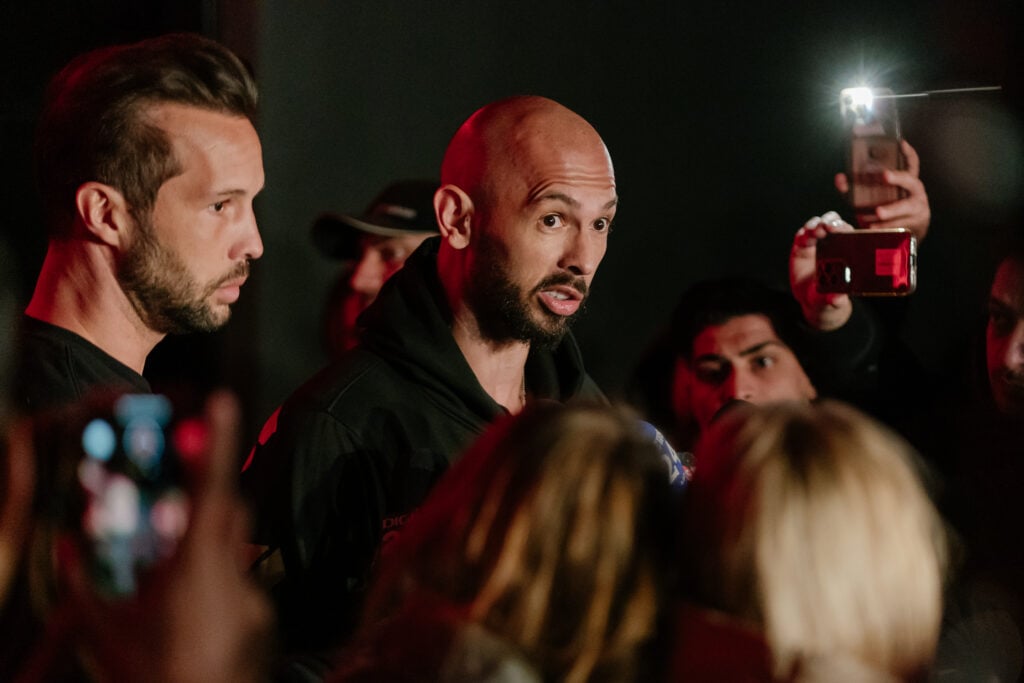



 The Mormon Wives are a major crossroads.