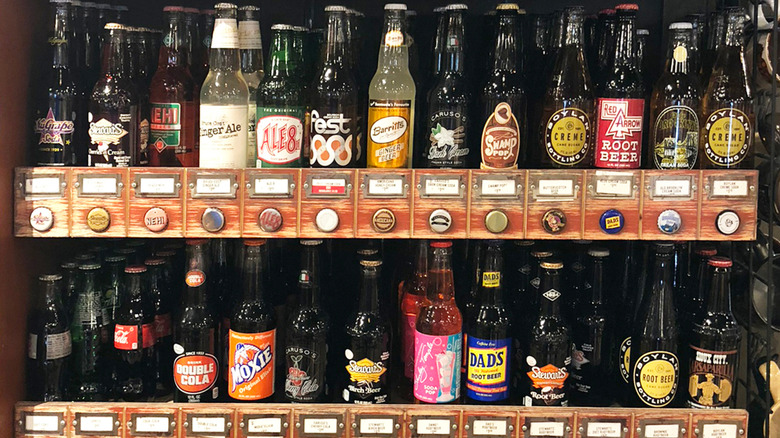
Cracker Barrel is more than just a sit-down restaurant. You can also peruse the country store section for old-fashioned sodas. These are the best ones there.
Food Republic – Restaurants, Reviews, Recipes, Cooking Tips








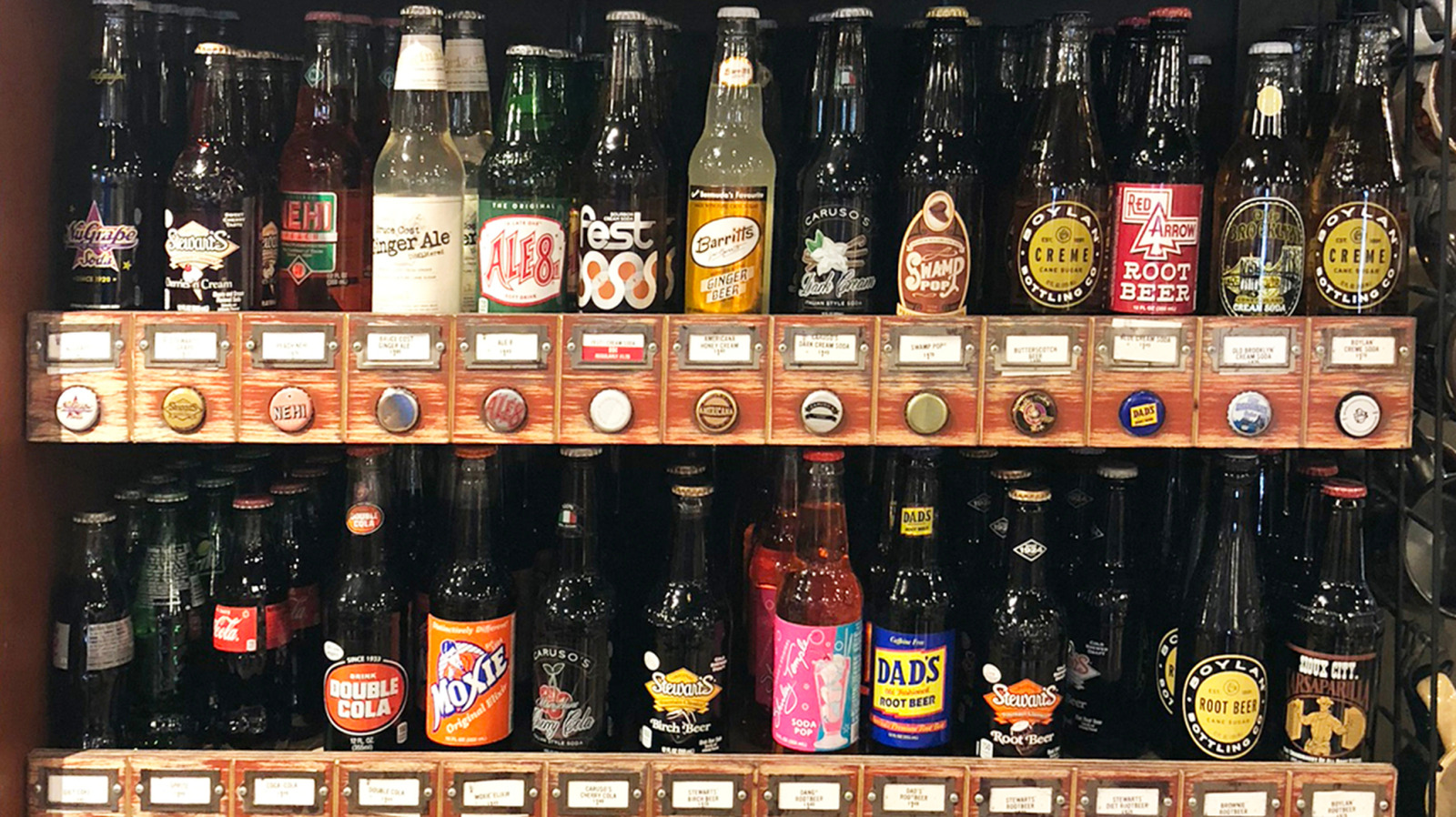
Cracker Barrel is more than just a sit-down restaurant. You can also peruse the country store section for old-fashioned sodas. These are the best ones there.
Food Republic – Restaurants, Reviews, Recipes, Cooking Tips

Just when it seemed like Joey Logano would never return to these power rankings, he goes out and wins the Cup race at North Wilkesboro. Which means he’s back. Here are my power rankings as the NASCAR Cup Series heads to Indianapolis Motor Speedway: Dropped out: William Byron (Last Week: 10), Carson Hocevar (Last Week: 9) On the verge: Alex Bowman, William Byron, Chase Elliott, Carson Hocevar, Erik Jones, Ryan Preece Is Kyle Larson still on this list because he’s Kyle Larson? Maybe, especially considering he has finishes of 34th, 34th and 15th the last three weeks. But he had four consecutive top fives before that stretch. A sixth at Atlanta and a fifth at North Wilkesboro shows that SVG isn’t just a road-course ace. And that should worry the competition. Logano earned his first top five since the season-opener at Daytona with his win at North Wilkesboro. But he was 12th at Chicagoland and ninth at Atlanta. So things are looking up. I know, I know, I do this every week. But here’s a look at Wallace’s recent results: third, 21st, second, 22nd, sixth, 29th and sixth. There are enough solid finishes to keep him in these rankings. Where did that hot season for Reddick go? Maybe it’s just the bad luck time of year for him. He has three finishes of 30th or worse in the last four races. But he still leads the series with five wins this year. Bell had an uncharacteristically poor day with a 19th at North Wilkesboro. That was following a pair of second-place finishes, so he doesn’t fall too far on this list. Blaney followed up the win at Atlanta with the pole at North Wilkesboro. He had to start in the back, though, and wound up 11th. Briscoe has three top-three finishes in the last four races. The thing for Briscoe is he has had too many bad races this year with five finishes of 30th or worse. Gibbs has finished third or fourth in three of the last four races. He just consistently finds his way to the front. A speeding penalty at North Wilkesboro ruined his potential to win. Hamlin had the field covered except for Logano at North Wilkesboro. He increased his regular-season points lead to 68 over Reddick, and that could pay benefits come The Chase.Latest Sports News from FOX Sports
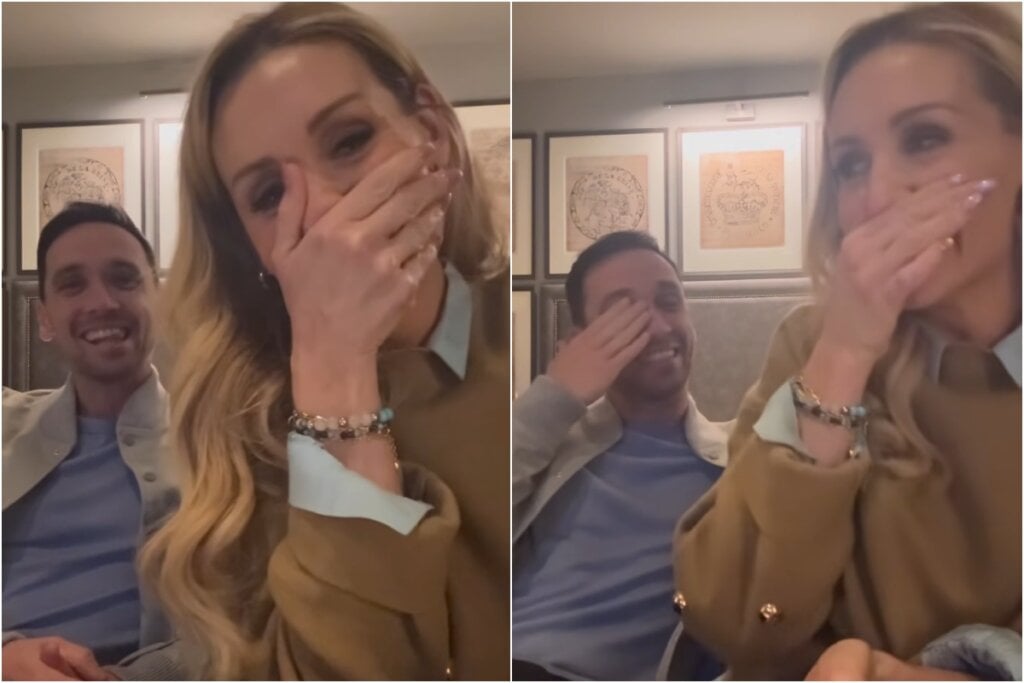
English actress Catherine Tyldesley thought she had planned the perfect Christmas gift for her husband, Tom Pitfield, a date night to see Luke Combs perform in their hometown of Manchester. Except they accidentally found themselves at a tribute show instead of an actual Luke Combs concert. Months later, the hilarious mix-up came full circle when she and her husband finally got the chance to meet the real country hitmaker.
Back in January, the couple took to social media to recap the unexpected date night and revealed the moment they figured out they would not be seeing Combs that night. Catherine, best known for her roles as Iris Moss in the BBC drama Lilies, Karen Norris in the BBC sitcom Scarborough and more, explained that she was struggling to find the perfect gift for her other half, but she knew that he was a fan of the North Carolina native and decided to lean into that.
“I was like, ‘No way is he coming back.’ Typed in ‘Luke Combs Manchester tour dates 2026.’ Comes up Bridgewater Hall. And I was like, ‘No way is he coming to Manchester?’ Then I got the tickets and the tickets were like, I don’t know, 30 quid each. And I was like, ‘What? This is insane.’ Went into work, flexing. I was like, ‘Oh my God, I got Luke Combs tickets.’ People were like, ‘Oh, we couldn’t get them.’ And I was like, ‘I’ve got them. Mic drop,’” she recalled with confidence.
Once the tickets were booked, they proceeded to make all the other necessary arrangements for their date, which included booking a hotel, finding a babysitter and making a dinner reservation. Everything seemed to be working out great until they actually arrived at the venue.
Their first clue was that the venue was not very full.
“I was like, oh, has he struggled to sell tickets?” Catherine wondered.
Then a singer finally appears on stage whom they believed to be the warmup. Except he started to sing one of Combs’ best songs, which immediately raised another red flag.
“We’re still anticipating Luke Combs coming on. Then this guy keeps on singing. I’m like, ‘Is that Luke Combs?’ I thought he might have shaved his beard off,” she joked.
Catherine starts searching for photos of Luke Combs and then suddenly he starts speaking in an Irish accent, confirming their suspicions that this was in fact not the real country star and she had instead bought tickets to a tribute show.
“We’ve done some stupid things in our lifetime,” Tom pointed out.
She added, “This is up there. I’m so sorry, babe.”
They ended the unfortunate, but hilarious story off by asking if anybody knew a way for them to get tickets to see the real “Beautiful Crazy” singer. About a month later they had a very positive update to share, thanks to the efforts of Sports Entertainment Tours.
“We had a lot of DMs, didn’t we? And actually, there were hundreds of people who had all done the same thing,” Catherine said, noting it made her feel better knowing that other people had also been fooled by tribute bands making them believe they were seeing the real artist.
Luckily, the video caught the attention of a man named John who works for Sports Entertainment Tours. He claimed that the original video made them smile so much that they wanted to offer a legit pair of tickets to attend Combs’ headline show at Slane Castle in Ireland this summer as part of his European leg of the “My Kinda Saturday Night Tour.”
“I was like, ‘You are pulling my plunker.’ Looked him up on LinkedIn, did a bit of detective work. He’s legit. Their company emailed me.”
The couple was bursting with excitement as they revealed that they were heading to the show. Tom stated that he was “absolutely buzzing” about the opportunity.
Catherine added, “Thank you so much sports entertainment tours for quite frankly, single-handedly saving my marriage…I’ve pulled this out of the bag.”
Finally on July 18, the lovebirds not only got to attend the concert, but they got to meet the singer/songwriter himself during a meet and greet. They made share to share a slideshow of photos to social media, documenting their meeting with Combs, their view from side stage and the massive crowd that filled the venue, finally experiencing the show they had originally set out to see.
The caption revealed just how much this opportunity meant to the couple, who celebrated 10 years of marriage in May. Catherine revealed that their interaction with Combs was nothing short of amazing, and he was even willing to pose with their daughter’s mermaid for one of the photos.
She wrote, “Special doesn’t even come close!!! It turns out Luke Combs had heard all about our ‘Mix up’ 😂😂 and invited us to do a meet and greet (pinch me now) An incredible talent and such a kind soul. He even had a picture taken with Irises mermaid (she insisted the mermaid attended the concert 🧜♀️) Huge thank you to Luke Combs HQ Jess and the amazing team. Massive wife points 😂🎉🎉🎉”
Luke Combs’ run across the UK continues through beginning of August, where he will wrap up with three back-to-back nights in Wembley Stadium.
The post Luke Combs Makes Couple’s Dream Come True After Their Hilarious Concert Mix-Up appeared first on Country Now.
Country Now

Culver’s locations are purchased and run by individual owner-operators under a franchise model. Even so, these owners must follow specific corporate rules.

Food Republic – Restaurants, Reviews, Recipes, Cooking Tips
By: Corinne Smith, Alaska Beacon
A legislative audit committee instructed the state auditor to investigate the past three years of process and legal compliance of the board tasked with developing policy and managing Alaska’s fisheries.
Rep. Louise Stutes, R-Kodiak and chair of the House Fisheries Committee, made the request for the special audit of the Alaska Board of Fisheries. The bicameral Legislative Audit and Budget Committee approved it at a hearing on Thursday.

“The breadth and frequency of stakeholder complaints about the Board’s process make it clear the Board has lost the public’s trust. As Chair of the House Fisheries Committee, I am compelled to act,” Stutes wrote.
She said the board has been “increasingly characterized as lacking transparency, unethical, and/or unlawful.”
The seven-member Board of Fisheries is appointed by Gov. Mike Dunleavy and confirmed by the Legislature. Each member serves a three year term. The legislative audit committee authorized an examination of the board’s activity from an Oct 12, 2023 meeting through July 1 of this year.
In a letter requesting the audit, Stutes cited concern that board members have “ethical impairments,” and pointed to recent action by the Acting Attorney General Cori Mills overruling the board’s decision to implement some fishing restrictions in an Aleutian Island fishery, Area M, as evidence.
In an unusual move, Mills stepped in and voided the regulations passed by the Board of Fish in February that implemented restrictions on the Area M fishery to allow more salmon to pass through to Western Alaska spawning streams. Area M has been the center of years of fierce debate and growing concerns from subsistence and Tribal communities in Western Alaska, where salmon runs have reached crisis lows.
Following the board’s February action, Aleutian fishing groups, local and Tribal governments filed ethics complaints against several board members citing conflicts of interest, then a lawsuit challenging the board’s action. The acting attorney general voided the decision in May. In response to that action — and in support of Western Alaska subsistence and Tribal communities — advocates filed a motion to reconsider that challenged the Attorney General’s authority to void the regulation changes and asked a court to review the decision. A judge denied the request.
The Board of Fish’s chair did not respond to a request for comment on the audit on Monday.
On Monday, a spokesperson for the Alaska Department of Law said that following the Attorney General’s disapproval memo, the board has an opportunity to reconsider the regulations to the Area M fishery “as long as they conform to the proper process.”
“In general, disapproval memos are rare as we are normally able to work with the respective state agencies throughout the regulations process and ensure the regulations comply with all necessary statutory requirements,” said Sam Curtis, a public information officer with the department. “In this case, the Department of Law took action pursuant to the Ethics Act and those proceedings are confidential by law. We cannot disclose any further information.”
In the hearing on Thursday, Sen. Scott Kawaki, D-Fairbanks questioned the motives of the special audit request. He said claims that the board actions lacked transparency or were unethical were “rather inflammatory.”
“I want to make sure that the request is targeted at the board process and whether the processes are being adhered to, and so it’s not an opinion,” he said. “If there’s a disagreement, you can litigate and you can go to Superior Court, and that seems like that process should be separate.”
Stutes told the twelve House and Senate committee members present that the audit would focus on the board’s process and procedures only, not actions taken by the board.
“We’re not addressing any decisions that have been made by the Board of Fish. Our intent through this audit is to address the process in which these decisions are being made,” Stutes said.
Kris Curtis, a Legislative Auditor for the state and that leads the Division of Legislative Audit told lawmakers at the hearing that her office has extensive experience auditing state boards — including the Board of Fish and the Board of Game — and that the state audit would adhere to the criteria outlined in the request. That includes compliance with fisheries regulations and statutes, public notice and comment requirements and compliance with the Administrative Procedure Act and Executive Branch Ethics Act.
“We conduct all of our audits in accordance with auditing standards that require that we maintain our independence, both in fact and appearance. I have no concerns about that,” Curtis said. “To be able to address these objectives using objective criteria, we will gather sufficient, appropriate evidence, like we always do for every performance audit we issue, and we will come back to the committee with an independent, objective report.”
Curtis replied to lawmakers’ questions about the Attorney General’s decision by saying it would be evaluated by auditors.
“The answer is absolutely,” she said. “It’s informative. It’s factual. If we didn’t, we would be deficient. We will also be collecting other evidence. We will be having interviews. We’ll be reaching out to stakeholders. We’ll be examining meeting meetings. We’ll be looking at meeting minutes. We’ll be looking at the process. We’ll be doing all kinds of audit procedures.”
Sen. Bill Wielechowski, D-Anchorage, asked her what would happen if auditors found the Attorney General acted improperly.
Curtis said her office would assess the case law cited in the decision. “If I found the Attorney General acted inappropriately, I would have to probably consult legislative, legal or outside counsel, depending on the subject and whatever we’re looking at, to inform us, the legislative audit team, about what decision they made. It’s not uncommon to seek additional legal advice when evaluating something,” she said.
House Speaker Bryce Edgmon, I-Dillingham, and a former commercial fisherman, acknowledged that the Board of Fish has often drawn criticism and controversy.
“You’ve audited just about every moving thing out there, if I recall, as a long-term legislator, and this issue is always going to be controversial,” he said. “There is a lot of concern out there on a number of fronts about the Board of Fisheries, as there always is.”
Edgmon noted that the auditors’ recommendations can be taken up by the Legislature if needed.
Curtis said auditors will work closely with the Board of Fish, who will have an opportunity to respond to the audits’ findings and recommendations. With the committee’s approval, Curtis said her office will likely begin the audit investigation in August and complete its work in four to six months.
By: Alex Brown, Stateline
The Trump administration is removing protections from the key places where endangered species live, saying states can keep the areas safe.
But experts say states aren’t equipped for the task.
Earlier this month, the Trump administration finalized a major change to the Endangered Species Act, rolling back protections for the forests, wetlands, deserts and other critical habitats that many plants and animals rely on.
The new rule will open many landscapes to development, logging, mining and oil and gas drilling. Wildlife officials — in both conservative and liberal states — had expressed strong concerns about the proposal, saying it would threaten their plans to safeguard endangered species.
But federal officials framed the decision as a move to give “freedom” to state leaders to manage wildlife without burdensome federal regulations.
States that wish to continue protecting habitats can do so under state law, the Interior Department and other federal agencies wrote in their lengthy new regulations.
But legal experts and wildlife veterans say that almost no states have endangered species laws on the books that allow state officials to prevent habitat destruction in the name of saving wildlife.
While many states have laws to stop poaching and direct killing of wildlife, the protection of nesting trees, spawning streams and other resources has long fallen to the federal Endangered Species Act and the agencies that enforce it.
“It’s not going to be a situation where the states can easily just jump in here and fill the void,” said Robert Anderson, who served as solicitor for the Department of the Interior during the Biden administration. “It’s not going to help states, and it’s going to make it worse for the species.”
Many wildlife experts also noted that state wildlife agencies are already underfunded as it is. Taking on the massive regulatory system that prevents developers and extractive industries from destroying critical habitat would require far more resources than those agencies have available.
A coalition of environmental groups and tribal nations have filed lawsuits challenging the federal rollback.
On July 10, the federal departments of Interior and Commerce announced they had finalized a rule rescinding the longstanding definition of “harm” under the Endangered Species Act.
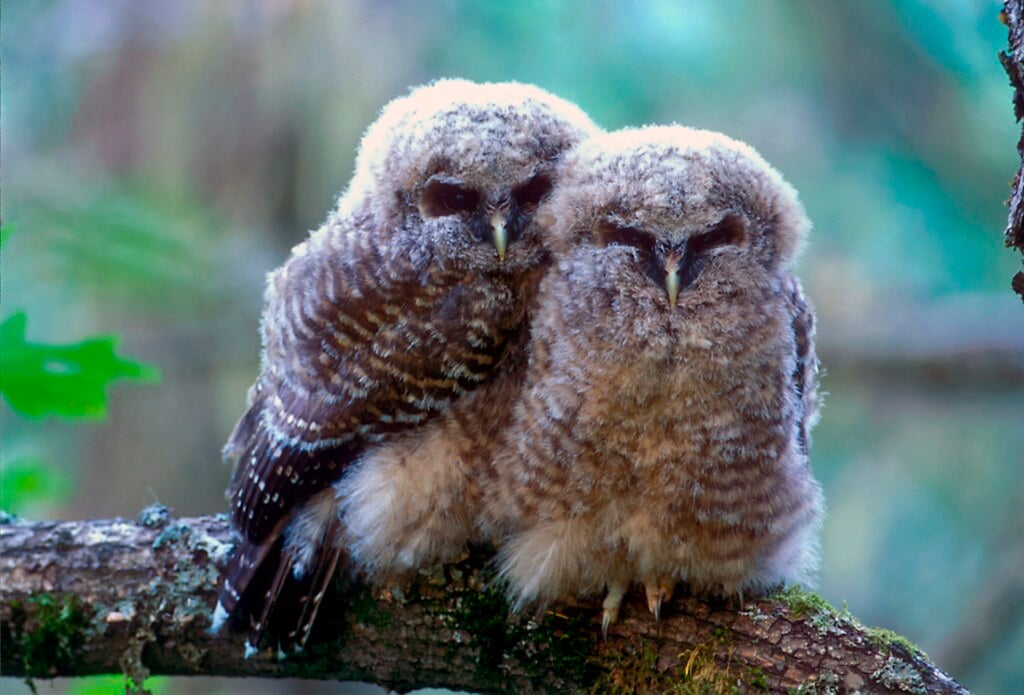
For decades, federal officials have scrutinized logging projects that would cut old-growth trees where owls build their nests, and agriculture operations that diverted water from streams where salmon return to spawn.
But now, the feds are pivoting to a much more limited definition of “harm.” Only actions that directly injure or kill the animals themselves will be considered a violation of endangered species law.
“You can destroy the resources a species requires as long as you don’t do it when the species is at home,” said Karrigan Börk, a law professor and director of the Center for Watershed Sciences at the UC Davis Institute of the Environment. “If you drain a salmon river during the summer when the salmon aren’t in it, ultimately it has the same impact of killing off that whole species.”
In its announcement, the Trump administration framed the move as restoring the “original intent” of the Endangered Species Act and reducing regulations that punished people for “indirect or speculative impacts” to wildlife.
The Interior Department did not respond to a Stateline interview request.
A 2019 study published in Conservation Science and Practice of species added to the list of endangered species from 1975 to 2017 found that only 17% of them faced threats from direct killing, while 81% faced habitat loss.
“It’s common sense that we can’t save a species unless we save the places that they live,” said Jane Davenport, senior attorney at Defenders of Wildlife, a nonprofit conservation group that is planning to sue the federal government over the change. “This is an attempted death blow to the Endangered Species Act.”
Some industry groups praised the move. The American Petroleum Institute and other oil and gas groups said in public comments that they supported the effort to limit habitat protections, but expressed concern that the Trump administration’s move to rescind the “harm” definition without issuing a new interpretation could allow a future president or the courts to issue a more expansive reading of the law.
The groups cited Supreme Court Justice Antonin Scalia’s dissenting opinion in a landmark 1995 case that upheld habitat protections under the Endangered Species Act.
“‘Harm’ must involve a direct injury to a particular animal,” the groups wrote, arguing that it “cannot result indirectly from habitat modification nor can the term apply to a population of animals.”
In public comments after the rule was initially proposed, wildlife agency leaders from both liberal and conservative states said the change would be a blow to their conservation efforts.
The proposed rule would have “dire consequences,” wrote Bruce Kreft, chief of the conservation and communications division with the North Dakota Game and Fish Department. “Eliminating habitat protection will lead to further population declines and, ultimately, an increase in the number of species needing (Endangered Species Act) protection.”
Wildlife officials in Arizona, Georgia, Louisiana, New Mexico, New Jersey, Vermont and Wyoming also expressed concern about the loss of habitat protections, as did the Association of Fish & Wildlife Agencies, a nonprofit that represents state wildlife managers.
Of the public comments reviewed by Stateline, only Alaska’s wildlife agency leader offered wholehearted support for the change.
In response to those concerns, federal officials wrote in their rulemaking decision that the change “does not alter the ability of States to implement their own conservation programs or to regulate habitat impacts under State law.”
But wildlife experts say states cannot replicate the habitat protections that federal law provided. Although most states have their own state-level endangered species laws, they’re largely focused on poaching or direct killing of animals.
“The state-level endangered species acts are wildly variable in what they’re supposed to cover and are uniformly under-resourced and under-enforced, because the federal Endangered Species Act has been the real baseline since the 1970s,” said Börk, the UC Davis professor.
Chris Servheen, who served as grizzly bear recovery coordinator for the U.S. Fish and Wildlife Service for 35 years, worked closely with state wildlife agencies in that position.
“It’s really disingenuous to say if states want to protect habitat, they can do so,” he said. “That’s not their role, that’s not what they do. States manage the take (killing) of the animals directly related to hunting or trapping or something like that. The federal agencies manage the land base.”
According to a 2024 analysis from the National Caucus of Environmental Legislators, only eight states plus Puerto Rico require the designation of critical habitats under their laws to protect endangered species.
California appears to be the only state with a process under state law to account for damage to wildlife habitat and require developers to offset those impacts, such as funding a restoration project nearby, said Becca Madsen, restoration economy director with the Environmental Policy Innovation Center.
“(States) don’t have this layer of federal regulations and staff and the consistency of how it’s been regulated for decades,” she said. “Now they’ve got to create their own processes and permitting and data and guidance. It’s a lot.”
Even if states were to pass laws and invest in programs to protect wildlife habitat, they would be unable to enforce those measures on federal land. Across the West, federal public lands cover vast swaths of many states and provide critical habitat for many species. If the U.S. Forest Service were to permit a logging operation on old-growth forest under the new “harm” definition, state wildlife officials could do nothing to stop it.
Meanwhile, some advocates are doubtful that state lawmakers have an appetite to take on the regulatory role once handled by the feds.
“Most state legislatures are pretty strongly captured by development and real estate interests,” said Kate Groetzinger, communications director with the Center for Western Priorities, a conservation group. “The political bar to putting something like this in place at the state level is a lot higher than it was when the Endangered Species Act was passed.”
Last week, a coalition of environmental groups filed a lawsuit challenging the “harm” rule. A pair of tribes in Washington state filed their own lawsuit, asserting that the decision will infringe on tribal fisheries that the federal government is obligated to protect under treaty agreements.
Some legal experts expect a flood of lawsuits over specific proposed projects.
“Courts are going to have to figure out on a case-by-case basis what’s covered and what’s not covered,” said Börk, the UC Davis professor. “It’s going to lead to widespread confusion over the next decades over what’s illegal or legal, and it’s going to make it harder for developers and landowners to know whether they have liability or not.”
Some advocates expressed concern that the lawsuits challenging the Trump administration could make it to the conservative Supreme Court, which could then permanently enshrine an interpretation of the Endangered Species Act that fails to protect habitat. That would leave a future administration powerless to undo the change, unless Congress were to rewrite the law.
But some see no real alternatives.
“I’d be worried if it got to the Supreme Court, but the alternative is just acquiescence, which I don’t think is a good idea,” said Anderson, the former Interior solicitor.
Editor’s note: This story was updated to correct the spelling of Chris Servheen’s name. Stateline reporter Alex Brown can be reached at abrown@stateline.org.
This story was originally produced by Stateline, which is part of States Newsroom, a nonprofit news network which includes Alaska Beacon, and is supported by grants and a coalition of donors as a 501c(3) public charity.

One iconic fast casual restaurant, which is particularly ubiquitous in airports and malls, has been family-owned and operated since the 1980s.

Food Republic – Restaurants, Reviews, Recipes, Cooking Tips

Olive Garden goes through a ton (perhaps literally) of breadsticks, but not all of them get eaten. What happens to those that are leftover? It actually depends.

Food Republic – Restaurants, Reviews, Recipes, Cooking Tips

Yes, we did an NFL Half-Decade Team last year, but if you’re a strict follower of the Gregorian calendar, we’re technically only halfway through the decade now. If you’re not a strict follower, consider this an update. In any case, the NFL in the 2020s has already featured quarterback brilliance, record-shattering receiver play and iconic postseason thrillers. Over the past six seasons, legends such as Tom Brady have retired, current stars like Josh Allen are leaving their mark and new stars such as Bijan Robinson are emerging. But who’s been the best of the best since the start of the decade? Here’s my 2020s NFL Half-Decade Team: OFFENSE Quarterback Yes, Mahomes’ numbers have regressed the past few seasons, but that’s due in large part to a worsening supporting cast at wide receiver. Though other quarterbacks have posted more impressive numbers recently, when you combine individual and team success, Mahomes remains the gold standard at the quarterback position post-Tom Brady. Since 2020, Mahomes has led the Chiefs to four Super Bowl appearances (three of which came in a row, from 2022-24), including back-to-back victories. Only one other quarterback, Jalen Hurts, has more than one Super Bowl appearance in that span. Mahomes’ best season of the decade so far came in 2022, when he led the league in passing yards, passing touchdowns and passing TD rate and won his second career MVP award. Running Back Henry has been the NFL’s most consistently dominant running back over the last six seasons, rushing for at least 1,100 yards five times. And the one season he didn’t (2021), he missed nine games due to injury — and still rushed for more than 900 yards. A five-time Pro Bowler, Henry in 2020 became the eighth player in league history to rush for more than 2,000 yards in a season. He came close again in 2024, rushing for 1,921 yards in his first season with the Ravens after eight years with the Tennessee Titans. The 32-year-old has reached double-digit rushing TDs in eight consecutive years. Wide Receivers Since 2020, no wide receiver has more combined first- and second-team AP All-Pro nods than Jefferson (4), whose numbers have been impacted recently by the Vikings’ instability at quarterback. But Jefferson has still produced six straight 1,000-yard seasons to start his career. His LSU teammate, the Bengals’ Chase, is one of the NFL’s most dominant players. Chase leads the NFL with 360 targets over the past two seasons, a span in which he’s caught 252 passes for 3,120 yards and 25 touchdowns. The former fifth overall pick won the league’s receiving triple crown in 2024. Adams is one of two receivers with three first-team All-Pro nods since 2020 (the other is Tyreek Hill), and the 33-year-old has become a highly effective WR2 in recent years. Last season with the Rams, he led the NFL with 14 receiving touchdowns. Tight End The 36-year-old Kelce, entering what could be his final NFL season, leads all tight ends with two first-team All-Pro nods over the past six seasons. He’s been a diminished version of himself in recent years, but he still hasn’t had fewer than 800 receiving yards in any season since his rookie year in 2013, when he appeared in just one game. An 11-time Pro Bowler, Kelce began the 2020s with a career-high 1,416 receiving yards and followed that with two more seasons of 1,100-plus receiving yards. Left Tackles Williams has been the gold standard for left tackles in the 2020s to this point, earning three first-team All-Pro nods (2021-23) and a second-team selection last season. Thuney, who has starred for three teams over the past six years (Patriots, Chiefs, Bears), leads all left guards with three first-team All-Pro selections in the past half decade, all coming since 2023. Center The Chiefs’ Creed Humphrey has a strong case here, but Kelce leads all centers with three first-team All-Pro selections since 2020, despite the fact that he’s been retired for two years. Kelce was named to five straight Pro Bowls to close out his career. Right Guard Martin retired after the 2024 season, but he still paces right guards with three first-team All-Pro selections in the decade to this point. Right Tackle The Eagles’ Lane Johnson is in the conversation, but Sewell has been the league’s most dominant right tackle since being drafted No. 7 overall in 2021. He has been named a first-team All-Pro three straight seasons and a Pro Bowler in four consecutive years. DEFENSE Edge Rushers Since 2020, no edge rushers have more first-team All-Pro selections than Garrett and Watt, who have five and three nods, respectively. Traded from the Browns to the Rams in a blockbuster deal this offseason, the 30-year-old Garrett registered 23.0 sacks last season, setting a single-season NFL record. The 31-year-old Watt has led the NFL in sacks three times over the past six seasons, including a career-high 22.5 in 2021. Interior Defensive Linemen Arguably the best defensive tackle in modern NFL history, Donald has been retired the past two seasons (though he has hinted at a 2026 return). He was still in peak form for his four seasons in the 2020s, winning his third Defensive Player of the Year award and being named a first-team All-Pro three times. Jones’ pass-rush production has dipped the last couple of seasons, but he has the best résumé in the past half decade among players at his position not named Donald. The Chiefs star made first- or second-team All-Pro every season from 2020-24, and he has 54.5 sacks over the past six years. Inside Linebackers Warner and Smith lead all inside linebackers with four and three first-team All-Pro selections since the start of 2020, respectively. Before missing 11 games last season due to injury, Warner made four All-Pro teams in the previous five seasons, recording at least 125 tackles each year and totaling 38 pass breakups. Smith has been a first- or second-team All-Pro five times since 2020, and he has recorded at least 130 tackles in six straight years. Cornerbacks Surtain, a two-time first-team All-Pro, is the only cornerback to claim a Defensive Player of the Year award since 2020. In his award-winning season of 2024, the four-time Pro Bowler amassed a league-high 132 yards returned off interceptions. The Texans’ Derek Stingley wins the recency debate here and the Colts’ Sauce Gardner was exceptional at the start of his career (2022-23), but Ramsey gets the second outside cornerback spot. He hit his prime at the start of the 2020s — he earned back-to-back first-team All-Pro selections in 2020 and ‘21 – and has remained an effective player in his early 30s playing more at safety. Nickelback An electrifying slot-safety hybrid, James has received an All-Pro nod as slot cornerback twice in the three years the position has been on the AP ballot, leading all players. Safeties Since 2020, Hamilton is the only safety with two first-team All-Pro nods. Baltimore’s 2022 first-round pick, one of the NFL’s most versatile defenders, has recorded at least nine pass breakups in three consecutive seasons. Baker has arguably been the league’s most consistently excellent safety over the last half decade, despite playing for bad Cardinals teams for most of his career. The 2017 second-round pick has been named to seven straight Pro Bowls. SPECIAL TEAMS Special Teamer Gray played just five games last season between two teams, the Broncos and Buccaneers, but he made three All-Pro teams between 2019-24 with the Saints (first team in 2021) as a core special teamer. That’s not bad for an undrafted free agent out of Mississippi State in 2018. Punter Cole is the only punter with two first-team All-Pro selections in the 2020s. His 48.5 yards per punt career average is the highest in NFL history. Placekicker The Cowboys’ Brandon Aubrey has an argument here in a small sample size (2023-25), but Tucker gets the edge. The former Ravens kicker was named to three All-Pro teams and four Pro Bowls between 2020-23. Punt Returner Jones has been named to two All-Pro teams since 2022. His 14.3 yards per punt return career average is the highest in league history. Kick Returner Nixon was a Pro Bowl cornerback last season, but he was a dominant kick returner earlier in the decade. He earned back-to-back first-team All-Pro nods in 2020 and 2021 after leading the NFL in both kick returns and kick return yardage. Long Snapper The 38-year-old DePaola has made four consecutive All-Pro teams (two first team, two second team). He’s the only long snapper with that many All-Pro nods since the start of 2020s.Latest Sports News from FOX Sports

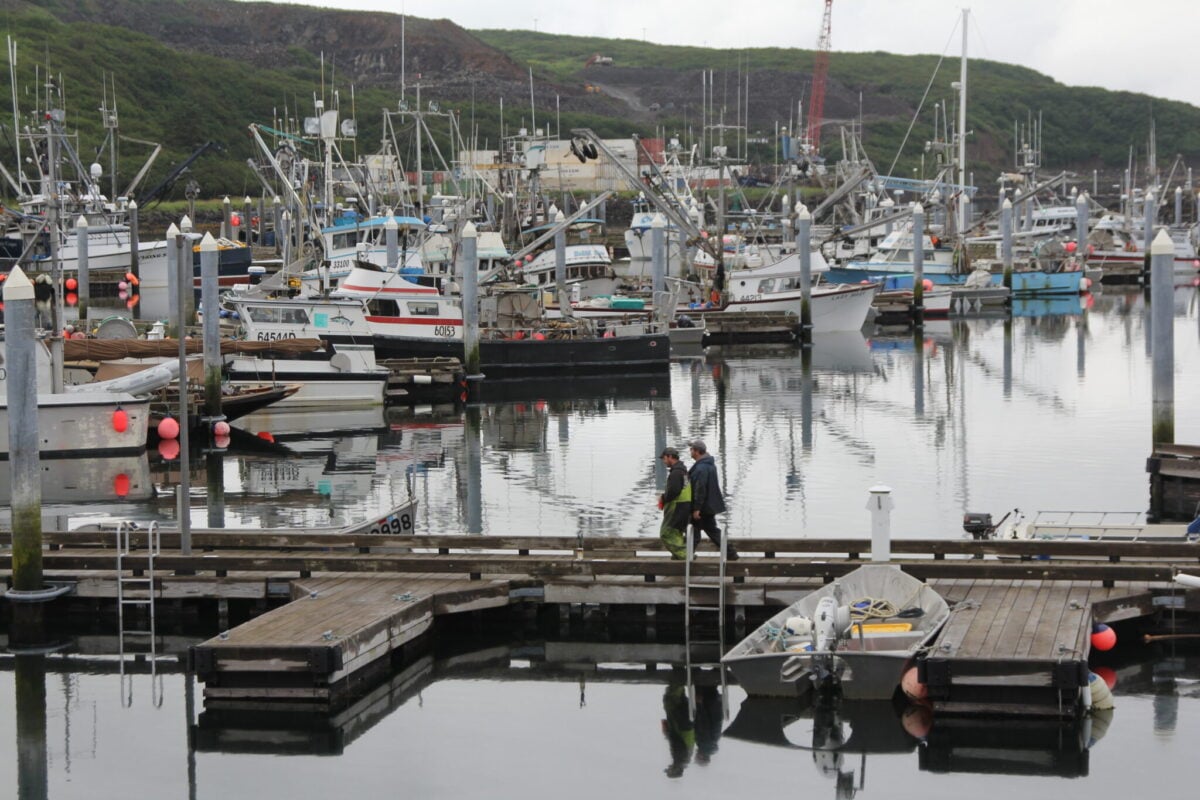
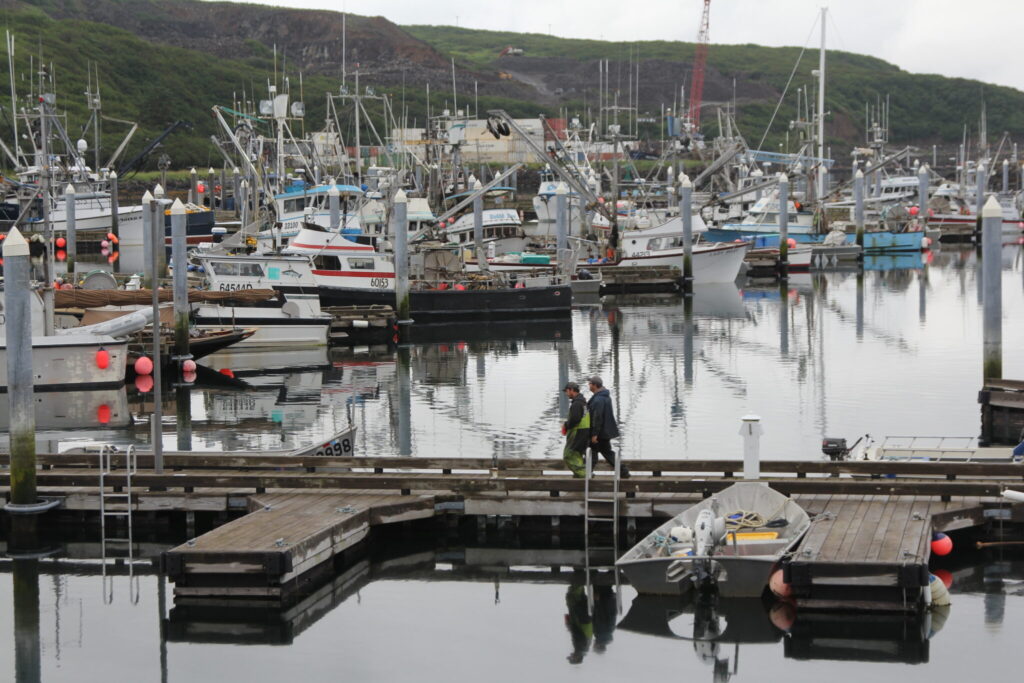
Fishing boats in the Robert E. Galovin Small Boat Harbor in Sand Point are seen on Aug 7, 2025, before heading out to the Area M fishery. (Photo by Theo Greenly)
A legislative audit committee instructed the state auditor to investigate the past three years of process and legal compliance of the board tasked with developing policy and managing Alaska’s fisheries.
Rep. Louise Stutes, R-Kodiak and chair of the House Fisheries Committee, made the request for the special audit of the Alaska Board of Fisheries. The bicameral Legislative Audit and Budget Committee approved it at a hearing on Thursday.
“The breadth and frequency of stakeholder complaints about the Board’s process make it clear the Board has lost the public’s trust. As Chair of the House Fisheries Committee, I am compelled to act,” Stutes wrote.
She said the board has been “increasingly characterized as lacking transparency, unethical, and/or unlawful.”
The seven-member Board of Fisheries is appointed by Gov. Mike Dunleavy and confirmed by the Legislature. Each member serves a three year term. The legislative audit committee authorized an examination of the board’s activity from an Oct 12, 2023 meeting through July 1 of this year.
In a letter requesting the audit, Stutes cited concern that board members have “ethical impairments,” and pointed to recent action by the Acting Attorney General Cori Mills overruling the board’s decision to implement some fishing restrictions in an Aleutian Island fishery, Area M, as evidence.
In an unusual move, Mills stepped in and voided the regulations passed by the Board of Fish in February that implemented restrictions on the Area M fishery to allow more salmon to pass through to Western Alaska spawning streams. Area M has been the center of years of fierce debate and growing concerns from subsistence and Tribal communities in Western Alaska, where salmon runs have reached crisis lows.
Following the board’s February action, Aleutian fishing groups, local and Tribal governments filed ethics complaints against several board members citing conflicts of interest, then a lawsuit challenging the board’s action. The acting attorney general voided the decision in May. In response to that action — and in support of Western Alaska subsistence and Tribal communities — advocates filed a motion to reconsider that challenged the Attorney General’s authority to void the regulation changes and asked a court to review the decision. A judge denied the request.
The Board of Fish’s chair did not respond to a request for comment on the audit on Monday.
On Monday, a spokesperson for the Alaska Department of Law said that following the Attorney General’s disapproval memo, the board has an opportunity to reconsider the regulations to the Area M fishery “as long as they conform to the proper process.”
“In general, disapproval memos are rare as we are normally able to work with the respective state agencies throughout the regulations process and ensure the regulations comply with all necessary statutory requirements,” said Sam Curtis, a public information officer with the department. “In this case, the Department of Law took action pursuant to the Ethics Act and those proceedings are confidential by law. We cannot disclose any further information.”
In the hearing on Thursday, Sen. Scott Kawaki, D-Fairbanks questioned the motives of the special audit request. He said claims that the board actions lacked transparency or were unethical were “rather inflammatory.”
“I want to make sure that the request is targeted at the board process and whether the processes are being adhered to, and so it’s not an opinion,” he said. “If there’s a disagreement, you can litigate and you can go to Superior Court, and that seems like that process should be separate.”
Stutes told the twelve House and Senate committee members present that the audit would focus on the board’s process and procedures only, not actions taken by the board.
“We’re not addressing any decisions that have been made by the Board of Fish. Our intent through this audit is to address the process in which these decisions are being made,” Stutes said.
Kris Curtis, a Legislative Auditor for the state and that leads the Division of Legislative Audit told lawmakers at the hearing that her office has extensive experience auditing state boards — including the Board of Fish and the Board of Game — and that the state audit would adhere to the criteria outlined in the request. That includes compliance with fisheries regulations and statutes, public notice and comment requirements and compliance with the Administrative Procedure Act and Executive Branch Ethics Act.
“We conduct all of our audits in accordance with auditing standards that require that we maintain our independence, both in fact and appearance. I have no concerns about that,” Curtis said. “To be able to address these objectives using objective criteria, we will gather sufficient, appropriate evidence, like we always do for every performance audit we issue, and we will come back to the committee with an independent, objective report.”
Curtis replied to lawmakers’ questions about the Attorney General’s decision by saying it would be evaluated by auditors.
“The answer is absolutely,” she said. “It’s informative. It’s factual. If we didn’t, we would be deficient. We will also be collecting other evidence. We will be having interviews. We’ll be reaching out to stakeholders. We’ll be examining meeting meetings. We’ll be looking at meeting minutes. We’ll be looking at the process. We’ll be doing all kinds of audit procedures.”
Sen. Bill Wielechowski, D-Anchorage, asked her what would happen if auditors found the Attorney General acted improperly.
Curtis said her office would assess the case law cited in the decision. “If I found the Attorney General acted inappropriately, I would have to probably consult legislative, legal or outside counsel, depending on the subject and whatever we’re looking at, to inform us, the legislative audit team, about what decision they made. It’s not uncommon to seek additional legal advice when evaluating something,” she said.
House Speaker Bryce Edgmon, I-Dillingham, and a former commercial fisherman, acknowledged that the Board of Fish has often drawn criticism and controversy.
“You’ve audited just about every moving thing out there, if I recall, as a long-term legislator, and this issue is always going to be controversial,” he said. “There is a lot of concern out there on a number of fronts about the Board of Fisheries, as there always is.”
Edgmon noted that the auditors’ recommendations can be taken up by the Legislature if needed.
Curtis said auditors will work closely with the Board of Fish, who will have an opportunity to respond to the audits’ findings and recommendations. With the committee’s approval, Curtis said her office will likely begin the audit investigation in August and complete its work in four to six months.