The 7.0.2 security release addresses one critical and one high severity security issue.
Because this is a security release, it is recommended that you update your sites immediately. Due to the severity, the WordPress.org team have enabled forced updates via the auto-update system for sites running affected versions.
To manually update you can visit your WordPress Dashboard, click “Updates”, and then click “Update Now”, or you can download WordPress 7.0.2 from WordPress.org. On sites that support automatic background updates, the update process will begin automatically.
Security updates included in this release
The security team would like to thank the following people for responsibly reporting vulnerabilities and allowing them to be fixed in this release:
A facilitated SQL injection issue reported as a team by TF1T, dtro, and haongo
A REST API batch-route confusion and SQL injection issue leading to Remote Code Execution reported by Adam Kues at Assetnote / Searchlight Cyber
For more information on this release, please visit the HelpHub site.
Backports
WordPress 6.9 is affected by both vulnerabilities. Version 6.9.5 has been released containing fixes for both.
WordPress 6.8 is only affected by the first vulnerability. Version 6.8.6 has been released containing a fix.
The beta release of WordPress 7.1 is affected by both vulnerabilities. Version 7.1 beta2 has been released containing fixes for both.
Versions of WordPress prior to 6.8 are not affected.
There are now four concerts on Garth Brooks’ 2026 tour itinerary. The singer and songwriter just announced two additional Blame It All On My Roots Tour dates.
Garth Brooks announced his 2026 Blame It All On My Roots Tour on July 7.
It begins in Indianapolis, Ind., wi
…
Read More
There are now four concerts on Garth Brooks’ 2026 tour itinerary. The singer and songwriter just announced two additional Blame It All On My Roots Tour dates.
Garth Brooks announced his 2026 Blame It All On My Roots Tour on July 7.
It begins in Indianapolis, Ind., wi
…
Read More
… Continue reading…The Boot – Country Music News, Music Videos and Songs
Hank Williams Jr. has been forced to postpone two concerts originally scheduled for this weekend due to poor air quality conditions across Michigan.
The Great Lakes State has experienced some of the worst air quality in the United States this week as smoke from wildfires burning in Minnesota and parts of Canada has moved into the region, creating hazardous conditions for residents and visitors.
According to The Detroit News, the conditions across the state could be “very unhealthy and hazardous.”
Hank Williams Jr.; Photo by Alysse Gafkjen
Hank Jr.’s team announced the schedule changes on social media early Friday morning, revealing that both of his Michigan shows have been rescheduled for next month.
Hank Jr. Reschedules Michigan Shows to Next Month
“Out of an abundance of caution regarding air quality, this weekend’s Hank Williams Jr. shows in Michigan have been postponed and rescheduled to August 13 at Pine Knob Music Theatre and August 14 at Acrisure Amphitheater,” the statement read.
The team also assured ticket holders that their tickets will remain valid for the new dates.
Country Thunder Wisconsin, which kicked off Thursday and runs through Sunday, has been keeping attendees updated as officials continue to monitor air quality conditions caused by the wildfire smoke. The festival shared that it is working closely with local officials to ensure the safety of everyone on-site.
“Your health and safety is our top priority, and we will be providing masks for attendees at all entrance points if required,” the festival shared in its latest statement.
Organizers also reminded fans that “onsite medical staff is available 24/7 to assist with anyone experiencing health concerns.”
Meanwhile, Country Jam USA in Eau Claire, Wisconsin, is also moving forward as planned while keeping a close eye on conditions. Festival organizers said they are working with emergency coordination teams to monitor smoke alerts and the heat index throughout the event.
Fans attending the festival are encouraged to stay hydrated, take breaks in shaded areas, and wear masks if the smoke begins to impact them.
CBJ-The American Red Cross will host a free workshop and resource fair on Sunday, July 19 at the Mendenhall Valley Library. The event is designed to help older adults, individuals with access or functional needs, and medically fragile persons prepare for emergencies.
The event begins at 12 p.m. with a presentation, available both in-person and online, followed by a planning workshop and resource fair from 1 to 3 p.m.
Attendees will have the opportunity to build an individualized disaster plan, complete an emergency contact card, learn how and where to safely store important documents and more.
Registration is free and available online at bit.ly/4vZJlPL. Information for virtual attendance will be provided upon registration
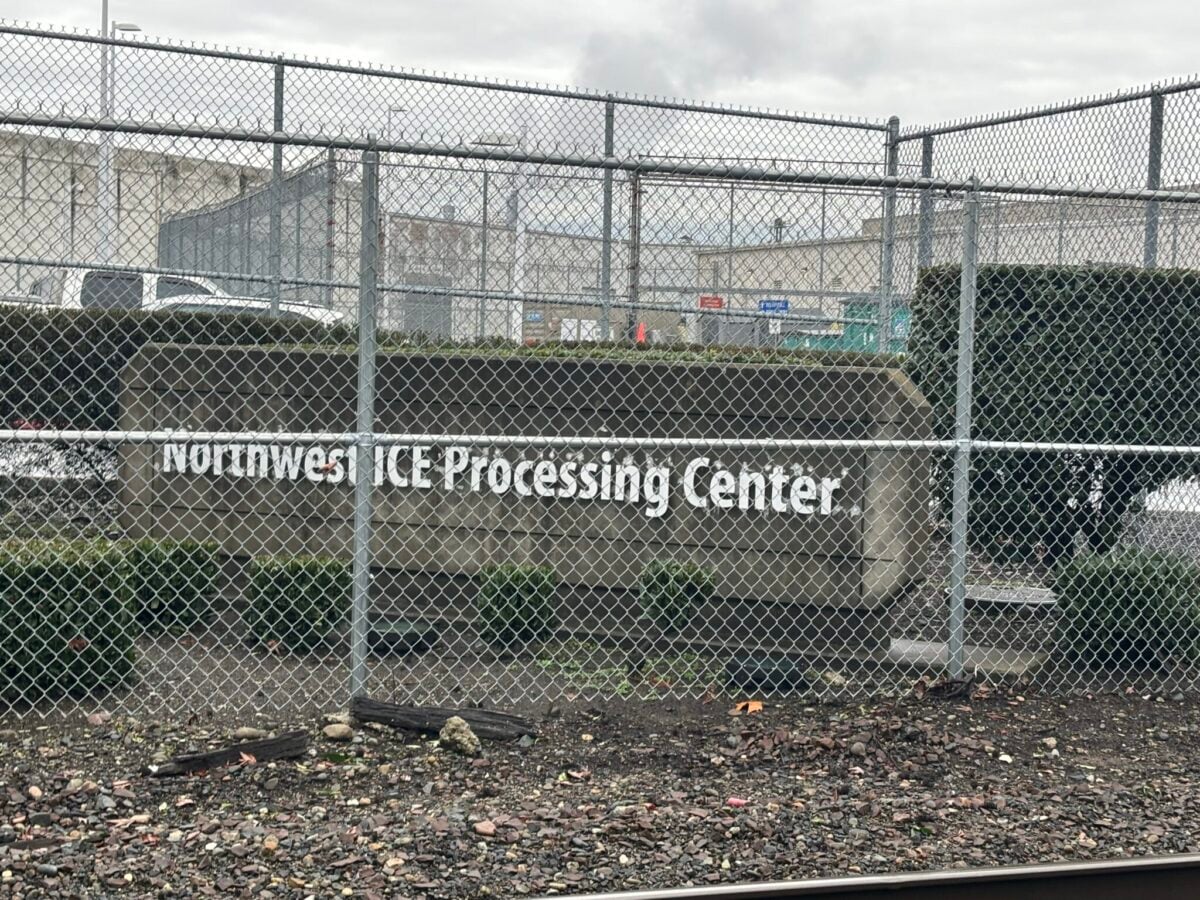
The Northwest ICE Processing Center in Tacoma, which is one of the largest immigrant detention facilities in the western U.S. (Grace Deng/Washington State Standard)
U.S. Immigration and Customs Enforcement arrested an Alaska state attorney in Anchorage and is holding him in an ICE detention facility in Washington state, according to an agency spokesperson.
Shucheng Yang, a 32-year-old Chinese national, was arrested in Anchorage on July 10.
“Yang violated the terms of his admission and is a deportable alien,” said Jason Chudy, an ICE Public Affairs officer, by email on Thursday. He said Yang is currently detained in the Northwest ICE Processing Center in Tacoma, Washington, pending immigration proceedings.
Yang is an attorney with the Alaska Department of Law’s labor, business and corporations section, according to the state employee database. Yang was admitted to the Alaska Bar Association and licensed to practice law in the state in June 2025. A spokesperson for the department declined to respond to questions about his immigration status, employment status or work authorization when hired, saying the department does not comment on personnel matters.
Chudy declined to say how Yang violated the terms of admission into the country. “To be clear, work authorization does NOT confer legal status in the United States,” he said in the email.
He referred further questions about Yang’s work authorization to the U.S. Citizenship and Immigration Services. A spokesperson for USCIS referred the question back to ICE, and said the agency does not comment on individual immigration cases.
The state requires applicants to self-disclose their employment eligibility and work authorization through the I-9 verification process during hiring, according to the Alaska Department of Administration, as reported by Alaska News Source.
There are no state criminal charges against Yang, according to court records. Yang pleaded no contest on June 26 for a speeding citation.
A spokesperson for the Municipality of Anchorage confirmed the Anchorage Police Department issued the traffic ticket on April 25. “They have had no other interaction with Mr. Yang since April,” said Nora Morse, communications director for the municipality, by email on Thursday.
“The Anchorage Police Department does not ask for someone’s immigration status as part of a routine traffic stop,” Morse said.
A spokesperson for the ACLU of Alaska said they were trying to get in touch with Yang’s attorney, and had no other information on his case.
The Alaska Department of Corrections contracts with ICE to hold detainees in Alaska under an agreement with the U.S. Marshals. A spokesperson confirmed that Yang was detained in Alaska for two days after his arrest until he was transferred on July 12.
DOC has held 17 people arrested by ICE since June 1, and 73 people since the beginning of the calendar year, according to spokesperson Betsy Holley on Thursday.
The Alaska House of Representatives on Thursday voted down a multibillion-dollar tax break for the proposed trans-Alaska natural gas pipeline project. Glenfarne LLC, the project’s lead developer, has said the tax break is necessary for it to obtain financing from banks and equity investors.
The Alaska Senate voted 11-8 to approve a compromise version of House Bill 381, which contains the tax break. But after that vote and as the House gaveled in, Dunleavy announced he would veto the bill if it were to pass.
In a statement on social media, the governor said a provision that applies a corporate income tax to certain kinds of privately owned oil and gas companies “raises serious concerns.”
Legislators are meeting in a second 30-day special session devoted to HB 381, and Dunleavy said he will call the Legislature into a third session starting July 27.
After the governor’s message was read on the House floor, only 19 members of the House voted in favor of the bill. Twenty-one votes were needed to approve it.
Many of those who voted against the bill spoke against the provision identified by the governor, with Rep. Dan Saddler, R-Eagle River, calling it a “parasite” within a bill intended to benefit the gas pipeline.
The provision came at the insistence of state senators who said it was necessary for the bill to earn their votes.
“If you want a gas line, everybody’s got to compromise, and I think that’s ultimately what you saw today,” said Sen. Bill Wielechowski, D-Anchorage and one of the most vocal advocates of the provision questioned by the governor.
After the governor’s announcement, Senate President Gary Stevens, R-Kodiak, said he was unsure how the Senate would proceed in the next special session.
The bill could be referred back to the Senate Resources Committee, chaired by Sen. Cathy Giessel, R-Anchorage and a leading project critic. The Senate Finance Committee could consider the issue further.
Senators could simply take no action and wait for the current Legislature to end and Dunleavy to leave office in December.
“I sort of feel you need to go to the next Legislature,” Stevens said.
First gas expected before 2030, developer says
As currently planned, the Alaska LNG project would include three separate subprojects, built in two stages. Altogether, the project is expected to cost as much as $54.5 billion, making it one of the largest natural gas projects in the world.
Gas would be pumped from North Slope wells to a processing plant on the North Slope, then down a pipeline to an export facility on the Kenai Peninsula.
Developers expect to reach a final investment decision on the project’s first phase this year. It would include the pipeline, part of the North Slope processing plant and part of the export facility.
Initially, the export facility would function in reverse, as a place for Alaska to import natural gas for local use while the pipeline is under construction.
Adam Prestidge, president of Glenfarne Alaska, told state senators on June 3 that after the final investment decision, it should take about three years for construction and commissioning before gas begins flowing through the pipeline to in-state residents.
The second, export phase of the project would take several more years to complete.
Switching from a property tax to a gas tax
The main intent of the bill is to replace Alaska’s 2% petroleum property tax with a lower tax on gas shipped through the pipeline.
The pipeline is exempt from the tax during construction, but the state would start collecting taxes when gas begins flowing. Glenfarne has said that’s a problem because it won’t begin making money until exports begin several years later.
Glenfarne executives have said they cannot get financing to build the pipeline unless the tax is changed.
That led Gov. Mike Dunleavy to propose the tax change in March. Legislators were unable to pass the bill by the time the regular legislative session ended in May, and Dunleavy has now called lawmakers into special session twice to get it done.
Because petroleum property taxes mostly go to municipalities, the amount received by cities and boroughs during that period would drop by another $5.3 billion.
Proponents of the change have focused on the benefits, rather than the lost revenue. Without the reduction, the pipeline cannot be built, they say. If the pipeline isn’t built, the state and municipalities get nothing.
“We want Alaskan gas for the Alaskan people, instead of Canadian gas for Alaskan people, instead of imports,” said Rep. Kevin McCabe, R-Big Lake, on the House floor. “It means the world to our people…lowered heating bills, a stronger economy.”
While proponents of the tax break have run a “Build the Line” ad campaign insinuating that the tax reduction would guarantee a pipeline, some state legislators say there is a low chance of a pipeline, even if the tax break becomes law.
Members of the conference committee tasked with negotiating a final compromise AKLNG tax bill from House and Senate versions, debate the bill on July 16, 2026, before moving it to a vote before the full House and Senate. (Photo by Corinne Smith/Alaska Beacon)
“This has been billed as the bill that either makes a pipeline be built or does not make a pipeline be built, and that just really is not true,” said Rep. Justin Ruffridge, R-Soldotna.
No ‘better shot’ at compromise, drafter says
The House and Senate passed different versions of HB 381 in June, sending the bill to a six-member multipartisan conference committee tasked with negotiating a compromise.
For weeks, the key point of contention has been whether or not the bill will also include the erasure of a tax exemption for “pass-through corporations,” generally large companies that are owned privately and not traded on public markets.
In Alaska, erasing that exemption would affect the oil and gas company Hilcorp, which operates the vast Prudhoe Bay oil field, among other work in the state.
It also would raise taxes on the proposed gas pipeline.
On Thursday morning, the conference committee adopted a new version of HB 381 that specifically exempts “income of an Alaska liquefied natural gas project” from the revised tax.
That would include all three segments of the pipeline project. But it was unclear whether it would cover gas shipments between the wellhead and the North Slope processing plant.
“It will be up to the Department of Revenue to determine the scope of that exemption,” said legislative attorney Emily Nauman, answering a question from Ruffridge.
The revised bill also delays the start of the tax until 2029. Affected companies would be required to submit an “informational tax return” the year before the tax starts.
That would give the state better information about how much money the tax will raise and whether the proposed tax rate needs to be changed.
Rep. Calvin Schrage, I-Anchorage, chaired the conference committee.
Rep. Calvin Schrage speaks on the House floor in support of the compromise AKLNG gas line tax bill in July 19, 2026. (Photo by Corinne Smith/Alaska Beacon)
“I don’t think, frankly, that we’re going to get a better shot at this,” he said before the House vote.
“I don’t think you’re going to get closer alignment between the different factions on this issue than you are going to get today.”
While the conference committee consulted with Glenfarne, the Dunleavy administration and the Alaska Gasline Development Corp., it didn’t discuss the bill at length with members of the House’s 19-person, all-Republican minority caucus.
Ruffridge, the minority caucus representative on the conference committee, said he received the final copy of the bill only 30 minutes before the meeting that adopted it.
On the House floor, members of the House minority lambasted the final version.
“In my opinion, this process was neither transparent nor collaborative,” said Rep. Frank Tomaszewski, R-Fairbanks and a member of the minority.
One member of the Democratic-independent-Republican coalition majority in the House also voted against the bill.
House Majority Leader Chuck Kopp, R-Anchorage, alluded to the way the pass-through tax would impact Hilcorp. Changing its taxes, he said, would deter future drilling because it would create uncertainty about what additional changes might be made in the future.
“From my perspective, that’s what’s killed this iteration of the bill,” Gov. Dunleavy said about the pass-through tax.
Climate protesters and oil advocates opposed the compromise
On Thursday morning, a small group of demonstrators gathered on the steps of the Capitol to protest the gas line and the proposed tax break. Protest signs called for investment in renewable energy instead of fossil fuels to help combat climate change, and called the megaproject a “pipedream” and a “scam.”
Protesters gather outside the Capitol on July 16, 2026, as lawmakers consider a tax cut for the proposed AKLNG gas line project. (Photo by Corinne Smith/Alaska Beacon)
“I’m really concerned about the cost to the state and to the communities that would be impacted by the project,” said Sally Schlichting, a Juneau resident. “Especially by these proposed tax breaks. I just think it’s horrendous to forego all that revenue for so long, and I feel like there’s very little guarantee this project will ever happen.”
Schlichting said she’s concerned that Alaska is giving up too much, and the project developer Glenfarne has not disclosed who is investing or how much.
“I just think this is the most wrong-headed way of approaching resource development,” she said. “We don’t fund our education. We are running out of money, and Alaskans own the resources, and we deserve to receive the revenue from it — and not later, now.”
Another Juneau resident, Emily Kane, called the project a “boondoggle,” and said she also came out to protest the project’s climate change impacts.
“I am very concerned about the habitability of the planet if we don’t seriously dial down fossil fuels,” she said. “I know young adults who are choosing to not have children, and it just really breaks my heart — this selfishness about not thinking about future generations.”
A group of pro-development organizations, including the Alaska Oil and Gas Association, Alaska Support Industry Alliance, Alaska Chamber of Commerce and Resource Development Council, briefly found themselves on the same side as the protesters.
After the conference committee passed its compromise version of HB 381, they sent a letter to legislators, urging them to vote down the conference committee compromise.
Rebecca Logan, CEO of the Support Industry Alliance, said by phone that the pass-through tax would hit companies that are drilling for gas in Cook Inlet, at a time when the region is running short.
“The gasline is our future, but what we’ve got right now, we can’t hurt,” she said.
Republican Rep. Ralph Norman joins members of the conservative House Freedom Caucus at the Capitol in June 2026 to criticize the Senate for not acting on the Save America Act. The act is stuck in limbo between the U.S. House and Senate.J. Scott Applewhite/AP Photo
President Donald Trump’s obsession with unfounded claims of election fraud has defined his second term in office. But in recent months his fixation has moved from executive nominee litmus tests and executive orders reinforcing proof of citizenship to vote into legislation – dragging Congress into the fray.
It’s become the focus of the administration in recent months, eclipsing prior legislative efforts by proposing stringent and widespread voting changes. The proposed law, which would federalize elections, require additional documentation in order to vote and curtail mail-in registration and ballots in all states, faces major logistical, legal and political hurdles.
The act, which is stuck in limbo between the U.S. House and Senate, has dominated and derailed the summer’s legislative calendar. In the House, Republican members delayed votes on major legislation in an effort to pressure the Senate to take the bill up for a vote, and it has become a sticking point in other unrelated legislation.
The controversial act has also soured the relationship between Trump and members of his party, leading him to refuse to sign a bipartisan housing bill passed by Congress. Although the bill became law without his signature, Trump’s preoccupation with the SAVE America Act ultimately denied congressional Republicans an opportunity to tout a bipartisan, popular policy win.
Yet, despite mounting political pressure, Congress hasn’t budged.
This tension between Trump’s priorities and congressional inaction is noteworthy because Republicans control both chambers. But as a political scientist who studies the evolving power of congressional leadership, I find inaction on the SAVE America Act to be more than a reflection of Trump’s waning popularity among Republican lawmakers. Rather, congressional hesitation on what would be the largest election reform in decades reflects an awareness of constituent needs and lawmakers’ own reelection risks.
What’s the latest?
House Republicans have been quick to blame the Senate – and the 60-vote filibuster threshold the legislation must overcome to receive a vote on the Senate floor – for the inaction.
House Speaker Mike Johnson has brought the legislation to the floor for at least three votes in an effort to pressure the Senate to take up the legislation. In July 2026, Johnson took a more creative approach, relenting to conservative lawmakers by including portions of the SAVE America Act in a House-passed bill to fund the State Department.
These actions are largely theatrical. Senate Majority Leader John Thune has said since February 2026 that there aren’t enough votes to move the SAVE America Act through the Senate, telling Fox News in June that “the votes currently aren’t there.” Although Senate Republicans could vote to remove the filibuster, which Trump has also requested, they have not.
Even in the House, the slim margins of Republican control have made it challenging for Johnson to keep the party together on the controversial issue. And Johnson’s gambit to attach the SAVE America Act to important legislation risks not only derailing bipartisan policy but another government shutdown, too.
If Republicans were serious about electoral reform, including moderate reforms that the majority of Americans do support, their approach would be like that used for other major legislation: bipartisan. Instead, partisan passage of a controversial bill, with a known Senate blockade, presents half-hearted strategy that avoids true responsibility.
Republican House Majority Leader Steve Scalise speaks to reporters about the SAVE America Act in February 2026. Tom Brenner/AP Photo
Changing election processes warrants precision and time, too. As Republican Sen. Thom Tillis noted, “Do you honestly believe that we can have this thing up in 50 states? There’s no funding. There’s no specific implementation instructions.”
Beyond logistics, the legality of federalizing election processes is murky.
Congress does have the power to mandate election requirements. But under Article 1, Section 4, of the Constitution, while Congress can outline parameters, states are responsible for election administration.
For example, the National Voter Registration Act of 1993 reinforced citizenship as a requirement, but states maintained responsibility for creating their own form and enrollment process. The SAVE America Act attempts to circumvent this by requiring federal possession of voter rolls.
Uncertainty for American citizens
Beyond legal challenges, the SAVE America Act introduces very real implications for American voters – and the members of Congress who represent them.
While the act’s stated goal is to ensure only citizens vote, citizenship requirements for voting are already federal law. In practice, many scholars believe the bill would make it more difficult for eligible voters to engage in the democratic process.
First-time voters, young voters on college campuses and voters who have recently moved could also face the hurdle of finding and presenting this documentation in person.
Members of Congress, particularly those who represent rural areas, are likely aware of this reality. Disenfranchising or, at best, confusing their voters risks their own electoral success, too.
Safety and security of upcoming elections
One of Trump’s first acts following the Supreme Court’s ruling in Trump v. Slaughter in June 2026, which allowed the president to remove executive branch officials without cause, was to fire the remaining members of the bipartisan, Senate-confirmed Election Assistance Commission.
The agency is the point of contact for states regarding election administration processes, offering resources, guidance and expertise on voting logistics. If the SAVE America Act were to pass, this office would be integral to ensuring changes are unbiased and fair across all 50 states.
As Tillis noted to reporters, “They’re being disingenuous to suggest to the American people they could possibly be operational by this election. And so then it begins to make me wonder … if we’re just beginning to undermine the underlying integrity of any of our elections. And I think that’s dangerous, and I think it’s wrong.”
Trump’s grip on Republicans
Does Congress’ hesitation to pass the SAVE America Act reflect a weakened Trump grip on the Republican party? Possibly. The president is more unpopular than he has been at any point during his second term. Ignoring Trump on the SAVE America Act may be a risk worth taking to some members.
But for most Republican members of Congress, appeasing Trump remains key to primary and electoral success. The president’s record on primary endorsements – even for Senate incumbents – remains strong, as he continues to define the party. Among constituents, some provisions of the SAVE America Act are popular among MAGA-aligned voters, making it an important electoral issue for members representing deep-red districts.
By publicly supporting the act, but relying on the Senate to serve as a doorstop to House-passed legislation, Congress falls into a familiar pattern that allows conservative members to appeal to the president while using procedure to block legislation that would make major changes to voting, mere months from Election Day.
Congress’ hesitance to pass the SAVE America Act is more than a test of its relationship with Trump. It’s an example of Congress doing what it was intended to do: represent its constituents.
SoRelle Wyckoff Gaynor does not work for, consult, own shares in or receive funding from any company or organization that would benefit from this article, and has disclosed no relevant affiliations beyond their academic appointment.
With the cost of everything on the rise, getting a quick meal at an affordable price is becoming more of a necessity. Some restaurants offer great discounts.