Blake Shelton just dropped a name that makes a lot of sense and absolutely no sense at the same time. Continue reading…Country Music News – Taste of Country









Blake Shelton just dropped a name that makes a lot of sense and absolutely no sense at the same time. Continue reading…Country Music News – Taste of Country
Blake Shelton just dropped a name that makes a lot of sense and absolutely no sense at the same time. Continue reading…The Boot – Country Music News, Music Videos and Songs

Olive Garden has a pretty impressive wine list, but are you allowed to bring a favorite bottle from home to enjoy alongside your breadsticks and pasta?

Food Republic – Restaurants, Reviews, Recipes, Cooking Tips

A 16-year-old country artist is playing arenas across multiple continents — and he got some incredible advice from a bona fide superstar. Continue reading…Country Music News – Taste of Country
A 16-year-old country artist is playing arenas across multiple continents — and he got some incredible advice from a bona fide superstar. Continue reading…The Boot – Country Music News, Music Videos and Songs

NOTN- The Eaglecrest Board will hold a special meeting this afternoon to consider the lone finalist for the ski area’s next general manager.
The meeting will run from 12:30 to 1:30 p.m. and will be held online only through Zoom, with the agenda available on the City and Borough of Juneau’s Civic Clerk webpage.
The finalist? Former Eaglecrest manager Julie Jackson Piper.
Piper previously worked at Eaglecrest from 2009 to 2015 and later managed Juneau’s public pools before becoming recreation manager for Richland, Washington. She was also a finalist for the position in 2024, finishing as the runner-up.
Her potential hiring comes during a challenging period for Eaglecrest, which has faced financial losses, equipment failures and closure uncertainty after the city canceled plans for a new gondola project because of soaring costs.
Currently the City and Goldbelt are discussing a potential partnership such as a long term lease.
Additional information on the meeting and other public meetings is available through the CBJ public meetings calendar.

The Alaska State Capitol is seen on May 18, 2026. (Photo by Claire Stremple/Alaska Beacon)
The Alaska state Capitol was quiet Monday, with halls empty and offices dark as legislators traveled and visited their home districts amid an ongoing special session.
Lawmakers reached by phone said they expect next week to be different, and a key vote that would decide the fate of the tax break for the proposed trans-Alaska natural gas pipeline could take place on July 16.
“This week I’m expecting members to be talking … and trying to figure out what the final package might look like, and then I’d expect members to probably return on the 11th or 12th for in-person conversations, and at some point a conference committee meeting to pass out a final product,” said Rep. Calvin Schrage, I-Anchorage and chair of the conference committee tasked with drafting a final version of the tax break.
In late June, the state House and Senate passed different versions of the bill containing the tax break. Now, six legislators — three from the state House and three from the state Senate — are attempting to negotiate a compromise.
They’re under a deadline: The ongoing special session expires July 19. If they don’t reach a final decision on the tax break before then, Gov. Mike Dunleavy could call legislators into another 30-day special session, the third on the topic.
While legislators disagree on many parts of the bill, the biggest sticking point in negotiations is whether or not the tax break bill should also end a corporate income tax exemption in state law. Currently, oil and gas companies that are publicly traded on stock markets — big names like ExxonMobil and ConocoPhillips — are required to pay the state’s corporate income tax.
Companies that aren’t — like Hilcorp, which is privately owned by billionaire businessman Jeffery Hildebrand, or Glenfarne, the firm that is now the lead developer of the pipeline — don’t have to pay the corporate income tax.
Earlier this year, the Senate approved a bill eliminating the exemption for privately held companies. The House voted it down.
When the Senate passed its version of the tax-break bill benefiting the pipeline, it voted 11-9 to include the “S-Corp provision” eliminating the exemption. The House’s version does not have that elimination.
As of Thursday, when the six-member House-Senate committee released an update on its work toward a compromise, the S-Corp provision was still in the bill.
“I think that’s it’s fair to say that’s the most controversial, the biggest decision still to be made,” Schrage said.
Limited information is available on the possible impact. The Alaska Department of Revenue has estimated that Hilcorp and similar companies would pay somewhere between $0 and $100 million per year if the exemption is eliminated.
If the gas pipeline is built as planned, its operators would pay nothing additional until 2036, the department estimates. That year, the operators would pay $29 million, the department estimates. That estimate rises to $65 million per year by 2041 and $358 million per year by 2051.
In comparison, the tax break being considered by lawmakers would reduce the pipeline project’s property tax burden by an estimated $16 billion over 30 years.
The state treasury would still collect an estimated $800 million from production taxes and royalties at full production, according to the Department of Revenue. That’s without the S-Corp provision and it doesn’t include economic effects caused by pipeline construction and operation.
Sen. Forrest Dunbar, D-Anchorage, authored a prior version of the S-Corp provision and has been a consistent supporter.
Speaking on Monday, he said that eliminating the tax exemption is a way to prevent the gas pipeline project from inadvertently lowering state oil revenue.
Because the cost of new infrastructure can be deducted from state taxes, it’s expected that oil revenue will drop as the gas pipeline begins to come online.
“I think it’s extremely important for protecting the finances of Alaska. It doesn’t burden the project,” he said, because the pipeline isn’t taxed until it starts making a profit.
Business groups and pro-industry legislators have attacked the provision as counterproductive, saying it works against the bill’s goal — lowering taxes in order to encourage investors to back what would be one of the world’s largest natural gas projects.
Last week, a coalition that includes the Alaska Chamber, Alaska Oil and Gas Association, and other trade groups wrote a letter urging lawmakers to drop the S-Corp provision.
“We encourage passage of a clean bill without the addition of unrelated targeted tax measures,” they wrote.
Glenfarne, on June 19, issued a statement opposing the provision.
“A poorly constructed pass-through entity tax change would be shortsighted when the state is on the verge of the largest capital raise initiative for energy infrastructure in U.S. history,” the company said.
Dunleavy has said he would veto a tax-break bill containing the S-Corp provision, and it isn’t clear whether the provision has the votes to pass the House.
In a written statement issued last week, the 19-member Republican House minority caucus issued a statement opposing the provision. Some members of the majority, including Rep. Chuck Kopp, R-Anchorage, have also said they oppose it.
Rep. Justin Ruffridge, R-Soldotna, is a member of the House minority caucus and a member of the conference committee negotiating the tax-break bill. He said he thinks there are too many uncertainties about the provision, including how much money it would raise, how it would be implemented and what effects it would have.
He doesn’t understand why the Senate’s majority caucus is insisting upon it.
“I’m genuinely surprised that that’s many people in the Senate’s position,” he said.
Under the rules of the six-member conference committee, changing the tax-break bill or advancing it onward to a final vote would require two votes from the three senators on the committee and two votes from the three House members on the committee.
While Sen. Mike Cronk, R-Tok, has said he supports removing the S-Corp provision, Sen. Lyman Hoffman, D-Bethel and Sen. Bert Stedman, R-Sitka, have previously supported the provision.
Hoffman was traveling on Monday and did not respond to a text message seeking his position on the provision. Stedman did not return a voice message left seeking comment.
Dunbar said he believes the bill will not come to a vote in the Senate without the S-Corp provision.
“I do not think it has the votes to get to the Senate floor without it being included,” he said.
If the bill were somehow able to leave the committee without the provision, Dunbar said he doesn’t see the bill passing the Senate.
“It kills the bill if it comes out. I think we would probably head to a third special session in that case, and we’d start with a new bill,” he said.
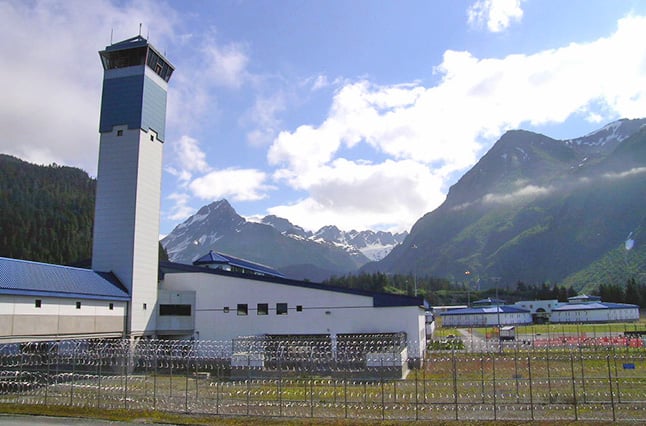
By: Corinne Smith, Alaska Beacon
Alaskans who have been wrongfully convicted can now apply to claim Alaska Permanent Fund dividends that were withheld while they were incarcerated, under a new law.
The Alaska Legislature passed Senate Bill 167 by a combined vote of 58 to 2, and Gov. Mike Dunleavy allowed the bill to pass into law without his signature last month.
Under current Alaska law, those who are incarcerated or sentenced as a result of a felony or certain combination of misdemeanor convictions are ineligible for the Permanent Fund dividend. The amount equivalent to those dividends is deposited into a restorative justice fund each year.
Under the new law, past dividends will be granted to people whose convictions were vacated or reversed, or those who had charges against them dismissed. People who were found not guilty after their case was retried are also eligible. Individuals whose charges were dropped as part of a plea agreement in another criminal case would not be eligible.
Exonerees have two years after a dismissal or not guilty finding — or two years after the bill’s effective date — to apply for the past dividends through the Permanent Fund dividend office with the Alaska Department of Revenue. The bill is set to take effect on September 16.

Sen. Scott Kawasaki, D-Fairbanks, sponsored the bill and told lawmakers at a May hearing that the state has a responsibility to those the justice system has failed.
“When an Alaskan has been wrongfully convicted, and then later has had their judgment vacated or reversed, then the state must go beyond merely unlocking the cell,” he said. “We have a duty to make amends for those who have endured an injustice under our laws.”
Prior to the law’s passage, Alaska was one of 12 states that did not provide compensation for wrongful convictions, according to a sponsor statement prepared by Kawasaki’s office. Many states provide financial compensation, or college tuition or job training assistance for exonerees.
Kawasaki said it’s a small step to restore dividend payments. “These funds represent a loss of personal property during that period of time,” he said. “(The bill) is about restoration and not compensation, because really the amount of time that a person has been behind bars can just never be repaid.”
The bill was supported by the Tanana Chiefs Conference and non-profit advocacy groups, including the Alaska Innocence Project and After Innocence, a national advocacy non-profit that provides post-release assistance for those wrongfully convicted.
Jon Eldan, the executive director of After Innocence, said in an interview Monday that the restored PFD money is helpful.
“Because people who have been incarcerated for crimes they didn’t commit typically face a wide range of barriers to rebuilding their lives after that horrible experience, and money helps,” he said. “And so not only is it good because it’s something that is due to them, but also because every dollar matters when you are trying to come back from having your liberty taken away.”
The number of Alaskans who have been wrongfully convicted, or who may be innocent and are in the process of fighting their prior conviction to be overturned is unknown.
The National Registry of Exonerations is a national database of false convictions compiled by Michigan State College of Law, University of Michigan Law and University of California Irvine Newkirk Center for Science and Society. The registry lists over 4,300 wrongful convictions since 1989 nationwide, including nine known cases in Alaska. Those nine cases represent a total of 76 years of incarceration.
“How many more people in Alaska who are incarcerated are factually innocent? And the difficult part is we don’t know,” Eldan said. “Except when these cases resolve in a systemic finding that their conviction needs to be overturned, and have the charges dismissed, etc. and so we don’t know what we don’t know.”
The most infamous cases of wrongful conviction in Alaska are known as the Fairbanks Four — when Marvin Roberts, Eugene Vent, George Frese and Kevin Pease were wrongfully convicted for the killing of a teenager, John Hartman, in 1997. The four Alaska Native men served 18 years in prison each, and were exonerated in 2015 when another man confessed to the killing.
Researchers with the National Registry of Exonerations point to a variety of factors that contribute to wrongful convictions, including police and prosecutorial misconduct, like concealing evidence and witness tampering, false or misleading forensic science, eyewitness testimony or confessions, or inadequate legal defense.GET THE MORNING HEADLINES.SUBSCRIBE
Black and Indigenous people are disproportionately arrested and incarcerated nationwide. Researchers with the National Registry of Exonerations estimate Black Americans are seven times more likely than white Americans to be falsely convicted of crimes.
In Alaska, while Alaska Native people make up less than 20% of the state’s population, they made up 40% of the prison population last year.
“We see an over-representation in our prisons of people of color and minority groups,” Eldan said. “So I wouldn’t be surprised at all — although the numbers are quite small in Alaska, so far, in terms of identified wrongful conviction or innocence cases — to find an over-representation of minority groups, including Alaska Natives.”

Throughout his illustrious career in the entertainment industry, comedian and filmmaker Mel Brooks has held on to beliefs that may have helped him live longer.

Health Digest – Health News, Wellness, Expert Insights

Everybody knows the classic cocoa and vanilla creme flavor of classic Oreos, but some of the brand’s more outlandish inventions are a little less familiar.

Mashed – Fast Food, Celebrity Chefs, Grocery, Reviews