The next time you’re in Delaware, why not grab a cookie, cupcake, cinnamon roll, or slice of fan-favorite cherry pie from this historic Newark bakery?

Mashed – Fast Food, Celebrity Chefs, Grocery, Reviews









The next time you’re in Delaware, why not grab a cookie, cupcake, cinnamon roll, or slice of fan-favorite cherry pie from this historic Newark bakery?
Mashed – Fast Food, Celebrity Chefs, Grocery, Reviews
By: Corinne Smith, Alaska Beacon
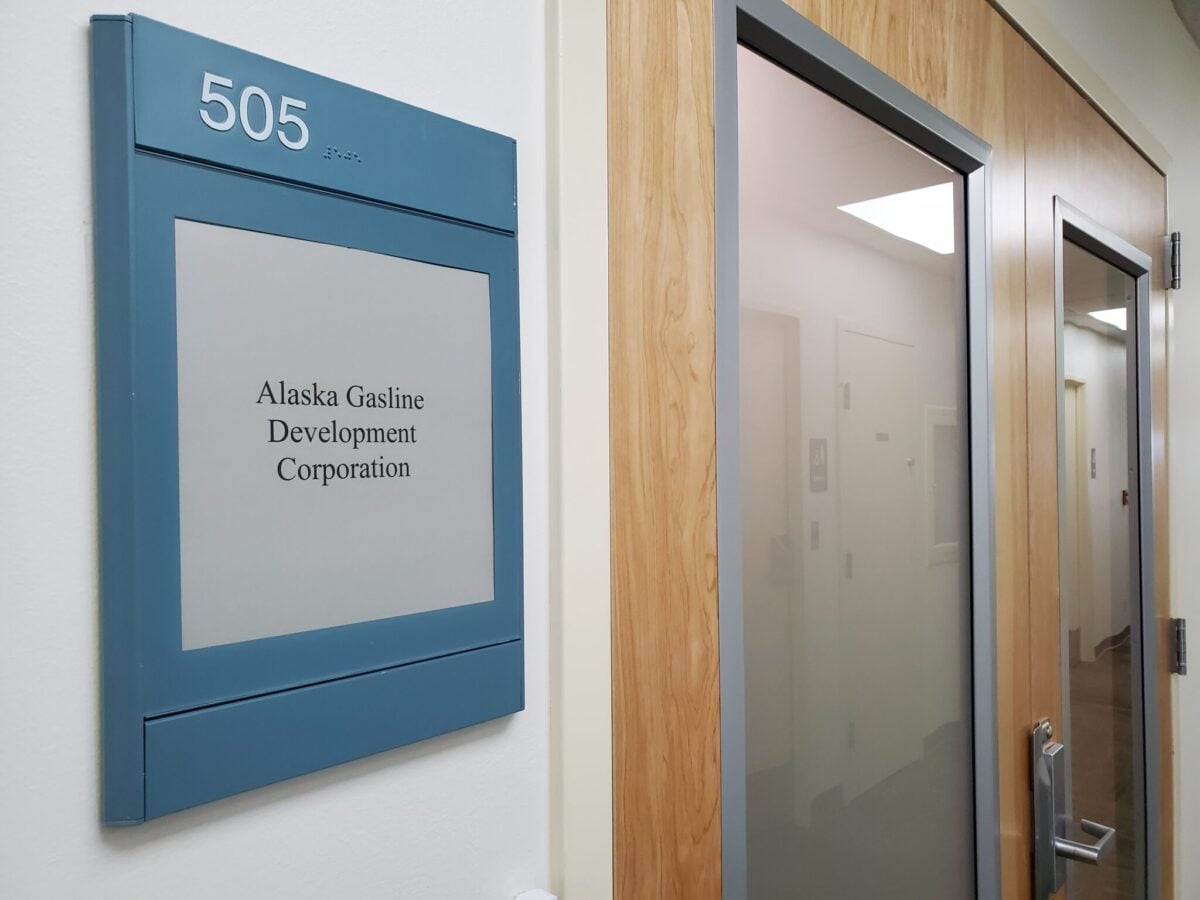
A board member with the state-owned Alaska Gasline Development Corporation, which is a part owner of the proposed AKLNG gas line project and pushing for lawmakers to provide a multibillion dollar tax break, likened state legislators to mosquitoes — “irritating, relentless, and somehow always present” — at a board meeting on Thursday.
The “tongue-in-cheek” comparison came from Fairbanks-based secretary and treasurer of the board Dennis Michel as the corporation grapples with lawmaker scrutiny after the leak of a confidential document revealing potential state financial liability in the project.
Some legislators found the comparison to be demeaning as they continue to debate the specifics of a state tax break for the project that is estimated by the developer to cost up to $55 billion, which would include a 807-mile gas line and gas treatment facilities. The comment and some lawmakers’ reaction highlights the tension in the working relationship between the groups.
Lawmakers are now in a second special session called by Gov. Mike Dunleavy. A conference committee of six legislators are negotiating a compromise bill from competing House and Senate proposals.
Lawmakers have been largely supportive of the AKLNG project that would deliver natural gas from the North Slope. But Senate lawmakers and Dunleavy have split on details of the plan. Lawmakers are weighing provisions to provide increased protections for Alaskan gas consumers, a community impact fund, labor-related provisions, disclosure agreements for foreign investors and provisions to protect the state if the project fails to move forward, among others.
The state-owned Alaska Gasline Development Corporation is a 25% owner of the project, while Glenfarne, a private developer, is a 75% owner, after AGDC handed over ownership last year.
The AGDC board includes seven members, including five members appointed by Dunleavy and two commissioners with the Alaska Department of Transportation and Public Facilities and the Alaska Department of Commerce, Community, and Economic Development.
The mosquito-themed remarks came one day after the Alaska Beacon reported on a confidential draft analysis of an agreement between AGDC and Glenfarne that shows if the project failed to move forward under some conditions, the state could be required to pay in order to take back the project.
The document was shared with some lawmakers, but not others or the public, and it informed some Senators in questions to the developer and their push for further protections on the proposed tax break proposal.
At Thursday’s virtual board meeting, officials with AGDC said they had launched an internal investigation into how the confidential document was shared. AGDC President Frank Richards called the disclosure “bad for AGDC” and its relationship with private investors.
On Thursday, AGDC board members expressed strong support for a state approved multibillion dollar tax break to benefit the project, and heard a detailed update on the current negotiations and proposed provisions being debated in the Legislature.
At the end of the nearly two-hour meeting, Michel, the Fairbanks-based board member, made the comments in what seemed like prepared remarks. He prefaced the remarks as “tongue in cheek” before he likened lawmakers to mosquitoes seen in the Interior.
“A mosquito can turn a peaceful evening into a defensive operation. A Legislature can turn a straightforward issue into a long campaign of hearings, amendments, delays and procedural buzzing,” Michel said. “Both are persistent, too. A mosquito can keep circling until it finds bare skin. Lawmakers circle around taxes, amendments, compromises until it finally lands, or at least until someone, everyone in the room, has been bitten by the process.”
Michel said he hoped the legislative conference committee would “stop hovering” and agree to a workable tax cut for the developers.
“So, yes, mosquitoes in the Legislature are both part of life in Alaska, irritating, relentless, and somehow always present just when people are trying to get something done,” he said.
“But even mosquitoes can be a sign of something good ahead,” he added. “More mosquitoes often mean more blueberries here in the Interior. And in the same spirit, I hope that the legislators and their sessions produce more than welts and frustrations, but ultimately deliver something of value to the citizens of Alaska.”
No other board members responded to the comments, and the meeting ended shortly after.
Several lawmakers were on the call, including Sen. Cathy Giessel, R-Anchorage, who chairs the Senate Resources Committee. She has been highly involved in drafting legislation around the AKLNG project and serves as a non-voting senate representative to the board.
She called the comments “outrageously demeaning.”

“He is an unelected person who has been appointed as a political favor to a board with no oversight by any elected individuals in the Legislature, and he was demeaning representatives of the people who have been elected,” Giessel said in an interview on Friday.
“(The comments) demonstrate to me the cavalier attitude that this board has toward the governing body of the Legislature, the one of the branches of government, and that concerns me a great deal,” she said. “This is a generational change project and we need to be working together.”
Rep. Donna Mears, D-Anchorage, who serves on the House Resources Committee also attended the hearing. She said the comments were “not acceptable.”
“The Legislature has got a duty that is larger than the AGDC board. We have a responsibility to our communities, we have a responsibility to rate payers. Yes, this project can bring a lot of benefit to the state, but we also have to make sure that we’re not running over our communities and our ratepayers in the process,” she said in an interview Friday.
During a break in the conference committee hearing, AGDC president Richards said in an interview he did not want to speak for Michel. “He was trying to identify that as tongue in cheek,” Richards said. “And really I think maybe expressing some frustration about the lengthy process, and about what’s been happening, the back and forth.”

“There’s this, sounds like tension, you know, that in the arena of the legislature that we want to be able to get through and achieve an economic project,” he added. “And that’s really the goal of what we’re going to do with the property tax, alternative volumetric tax provisions.”
When asked about lawmakers’ reaction, Richards said he did not have a comment, but added: “I certainly can see the perspective of hearing the words that were said and their personal reaction.”
Both Giessel and Mears noted ongoing concerns about a lack of transparency from AGDC and Glenfarne on the proposed gas line project, amplified by the reporting on the confidential draft agreement this week.
Lawmakers have been asking Glenfarne and AGDC for more detailed financial information for months. Glenfarne released an updated estimate for the project’s cost earlier this month at up to $55 billion, but state lawmakers say they still don’t have all the financial information they’ve been seeking, including estimates about the project’s profitability.
Giessel said she’s particularly concerned about confidential agreements with foreign investors. She authored provisions approved by the Senate to provide more state oversight of foreign entities and cost overruns.
“I think there’s been such distrust sown in this project that I don’t see how we can proceed forward at this point,” Giessel said. “It almost feels like there needs to be a restart where everybody comes to the table and stops hiding the ball, stops hiding the information, and the disrespect and demeaning language stops, and we start over with mutual respect and mutual collaboration.”
Mears said the legislators with the conference committee currently working on a final bill have an “enormous burden” to hammer out a compromise. She said if lawmakers still need more information, they should get more time to do their work.
“I think the information coming out this week is exactly why rushing a process is unacceptable,” she said, referring to the information in the confidential draft analysis.
“Maybe the thought that the Legislature is annoying is true,” Mears said. “Because the truth sure seems to be inconvenient. We would have a much better process starting from what we know now, and those of us that have been asking for more information for months are not wrong.”
Members of the conference committee are scheduled to meet publicly on Friday and Saturday. The Legislature is scheduled to reconvene on Wednesday July 1, but it’s uncertain whether a compromise bill will be finalized by then.
By: Jonathan Shorman, States Newsroom
The U.S. Supreme Court ruled Monday that states can count mail-in ballots that arrive after Election Day, a blow to the Trump administration and some Republican states that had urged the justices to require all ballots to arrive by the close of polls.
In a 5-4 decision, the court found that federal law does not prevent states from accepting late-arriving ballots. The ruling is a victory for Democrats and voting rights advocates, who had said setting a hard, Election Day deadline for ballot arrival would risk disenfranchising voters amid fears of deteriorating mail service.
The case, RNC vs. Watson, centered on whether federal law overrides a Mississippi law that requires mail-in ballots postmarked on or before Election Day to be counted as long as they arrive within five business days of the election. Thirteen states have similar laws, which extend a “grace period” to ballots that arrive through the mail after polls close.
Justice Amy Coney Barrett, writing for the majority, said that federal law didn’t preempt the state law because elections represent when voters make a decision, which must be done on or before Election Day. Voters who cast their ballot by mail have made a decision by Election Day, Barrett reasoned.
“The electorate’s choice is made when voting is complete, not when ballots are received,” Barrett wrote.
Barrett cautioned that the decision rested on the interpretation of federal law, not the U.S. Constitution. She noted that the court was not considering the scope of Congress’ authority to regulate federal elections — suggesting that if Congress passes a nationwide ballot arrival deadline that the justices might uphold such a law.
Barrett was joined by Chief Justice John Roberts and Justices Sonia Sotomayor, Elena Kagan and Ketanji Brown Jackson.
Justice Samuel Alito dissented, joined by Justices Clarence Thomas and Neil Gorsuch. Justice Brett Kavanaugh joined part of the dissent.
“If ballots received after election day are added to the set of ballots that dictate the election’s outcome, the electorate’s choice does not occur on election day, and the federal election-day statutes are violated,” Alito wrote.
In addition to Mississippi, other states with some form of grace period include Alaska, California, Illinois, Maryland, Massachusetts, Nevada, New Jersey, New York, Oregon, Texas, Virginia, Washington and West Virginia.
David Becker, executive director of the nonpartisan Center for Election Innovation & Research, called the Supreme Court decision a win for these states, as well as 30 states that accept military and overseas ballots delivered after Election Day.
“This is a victory for all the states and for all those who respect the will of the Founders, who ensured the security of our elections by giving the power to run those elections to the states — not to one person sitting in Washington, DC,” Becker said in a statement.
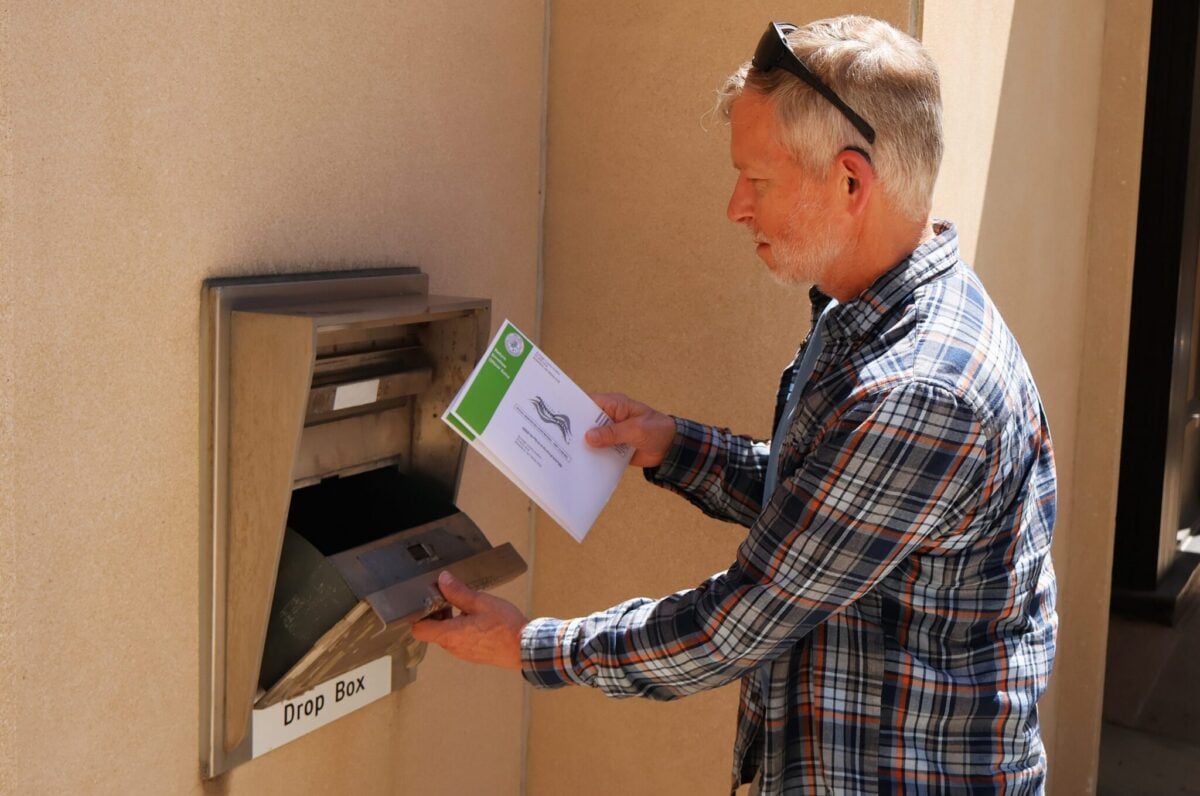
Some local election officials had warned that requiring all ballots to be received by the close of polls would burden their offices as they try to quickly warn voters about the change just months before the midterms. More ballot drop boxes that let voters keep their ballots out of the mail could help, they say, but also cost money.
“Ultimately, the voters may be harmed as well,” election officials in California, Massachusetts, Oregon and Washington wrote in a court brief, warning that some ballots may not be received in time, “despite best efforts by careful and proactive administrators and local governments.”
But some Republican secretaries of state had urged the justices to strike down “grace period” laws. Louisiana Secretary of State Nancy Landry and Wyoming Secretary of State Chuck Gray wrote in a court brief that an Election Day deadline “provides the bright-line rule that effective election administration demands.”
At least 725,000 ballots were postmarked by Election Day 2024 and arrived within a legally accepted post-election window, The New York Times has reported, citing election officials in 14 of 22 states and territories where late-arriving ballots were accepted that year.
Overall, about 30% of voters cast a mail ballot in 2024, according to data gathered by the U.S. Election Assistance Commission.
The Republican National Committee challenged the Mississippi law, which was defended by Mississippi Republican Secretary of State Michael Watson. The RNC argued a longstanding federal law that sets the Tuesday after the first Monday in November as Election Day for federal offices preempted state laws that allow ballots cast by Election Day, but received later, to count.
The 5th U.S. Circuit Court of Appeals ruled in October 2024 that federal law requires ballots to be received by Election Day. President Donald Trump last year also unilaterally attempted to require mail ballots to be received by the end of Election Day in a sweeping executive order on elections. Much of that order was blocked in federal court.
The Supreme Court “rejected the RNC’s radical attempt to rewrite election laws in a way that would have resulted in the rejection of hundreds of thousands of ballots and the disenfranchisement of voters nationwide through no fault of their own,” Elisabeth Frost, litigation chair at Elias Law Group, said in a statement.
Elias Law Group represented two nonprofit voting rights groups, Vet Voice Foundation and the Mississippi Alliance for Retired Americans, that had intervened as defendants in the case.
The Supreme Court issued Monday’s decision against a backdrop of uncertainty surrounding mail ballots. Trump signed an executive order in March that would restrict voting by mail by requiring states to provide lists of possible mail ballot voters to the U.S. Postal Service in advance. A federal judge recently blocked major portions of the order, triggering a near-certain appeal.
Republican National Committee chairman Joe Gruters accused Democrats of inviting chaos by allowing elections to “drag on” for days and weeks after ballots are cast. He said Republicans wouldn’t be deterred by the decision.
“If we want fair and secure elections, Election Day should mean exactly what it says, which is why this decision makes it even more imperative that Congress pass the SAVE America Act,” Gruters said in a statement, referring to restrictive voter legislation pushed by Trump that lacks the votes to pass the U.S. Senate.
Trump said the decision was a “tremendous loss” in a social media post and again urged passage of the SAVE America Act.
Paul Clement, an attorney for the Republican National Committee, said during oral arguments at the Supreme Court in March the prospect that the outcome of an election could change because of ballots arriving after Election Day would be unacceptable to losing candidates. After the 2020 election, President Donald Trump demanded election officials not count ballots that came in after Election Day, but states kept counting ballots.
“If you have an election and the election is going to turn on late-arriving ballots in a way that means what everybody kind of thought was the result on Election Day ends up being the opposite a week later, 21 days later, the losers are not going to accept that result. Full stop,” Clement told the justices.
Attorneys for Watson argued that both legal and historical precedent supported his position. States may decide that voters have made their final choices when ballots are submitted to state officials rather than when they’re received, according to Watson.
Watson didn’t immediately respond to a request for comment.
This is a developing report that will be updated.

If you can get your hands on it, you might want to try this regional favorite, a true Colorado original that launched to provide an alternative to Domino’s.

Food Republic – Restaurants, Reviews, Recipes, Cooking Tips

In this versatile recipe, pork is seared with spices and slow-cooked till meltingly tender in a savory broth that gets a subtly-spicy sweetness from Dr Pepper.

Mashed – Fast Food, Celebrity Chefs, Grocery, Reviews

Sad news if you were hoping for more leopard during Season 1 of ‘Dutton Ranch.’ Continue reading…Country Music News – Taste of Country
Sad news if you were hoping for more leopard during Season 1 of ‘Dutton Ranch.’ Continue reading…The Boot – Country Music News, Music Videos and Songs

This July Fourth, ditch the usual fireworks and whip up some colorful treats that will light up your table instead. Continue reading…The Boot – Country Music News, Music Videos and Songs

Hannah Harper is officially hitting the road in style after revealing the “big news” that she’s purchased her very own tour bus ahead of a busy stretch of shows.
The American Idol Season 24 winner shared the news while giving fans a glimpse into her new life on the move. Harper revealed that she has already logged more than 1,700 miles this weekend alone while traveling across Missouri, Kentucky, and Georgia before heading back home to the Show-Me State.
“We are officially out on tour, and my heart is so full. 🤍 A huge thank you to @robertsbrotherscoach for taking such incredible care of us and making sure every inch of this bus is road ready. We couldn’t do this without y’all,” she wrote in the caption.
Harper explained that she is feeling “extra grateful” that the person responsible for converting the massive vehicle already purchased all new mattresses and bedding for all the bunks as well as her bed, on top of deep cleaning the entire space. Since she will be spending a lot of time on the road with her husband and their three young sons, the back lounge of the bus has been transformed into a full bedroom, allowing them to be comfortable while on the move.
She packed up the house, preparing all the necessitates that her family will need, while her parents made their way to Nashville to pick up the bus. In the final video clips, she briefly panned around the newly renovated space as she settled in for a weekend with her family, her band, her nanny and bus driver (a.k.a her mom and dad).
The “String Cheese” singer has been on a whirlwind of a journey from the day she auditioned for American Idol to the moment she was crowned this season’s winner. Getting her own tour bus is just another major step in her fast-rising career, and Harper is feeling excited for everything to come.
“I am so excited to be on my bus this weekend with my crew,” she stated.
Now that she is fully prepared and ready to tackle her next set of shows, Hannah Haper will be making her way to her “stomping grounds” in Bunker, MO for the Mid American Bash on July 3.
She is slated to return to the Grand Ole Opry stage on July 17 for the first time since making her memorable debut on June 2 and then embark on a trip to South Bend, Indiana on July 6.
Hannah Harper also promised that a full bus tour will be “coming soon.”
Along with her run of headline shows on the String Cheese Tour, fans can catch the rising act opening for select dates of Lauren Alaina and Brad Paisley’s respective tours in the coming months.
The post ‘American Idol’ Winner Hannah Harper Levels Up With Tour Bus Reveal appeared first on Country Now.
Country Now

On June 23, around 40 students from the University of Illinois Chicago (UIC), Louisiana Tech University, and the University of Louisiana at Lafayette were celebrated in Chicago as the first cohort to receive the AI Leaders Micro-Credential through AI Leaders, the nation’s first workforce-focused AI literacy course tied to a recognized credential. Each of them earned it by building real projects, applying generative AI to genuine work, and contributing to the open source software that powers more than 40% of the web. Students who completed the course also earned $1,000, made possible by a donation from Automattic and UIC. This celebration was the moment the program had been building toward since it was first announced in February.
Explore the project portfolios built by this year’s AI Leaders
When the pilot launched, the goal was to test whether open source learning could connect directly to job pathways rather than stopping at a certificate. What makes this program distinct is that it is built on open source from the ground up: students learn on WordPress, contribute to it, and use generative AI the way the WordPress ecosystem uses it every day, leaving with a credential that employers can verify and a community that continues long after the course ends.
The pilot reflects a shared belief that AI and open source skills should be within reach regardless of where someone lives or what they can afford.
WordPress was built to expand access to publishing and participation on the open web.
The program is a collaboration with distinct roles for each partner. It is funded through the UIC Tech Solutions Open Source Fund, with support from the University of Illinois Chicago and Automattic, while the WordPress project and the WordPress Foundation contribute to the development of the curriculum itself.
The first cohort was just the beginning. The gathering in Chicago brought this group together with employers and agencies, and further job placements are already in motion.
The next round of AI Leaders is on the horizon. Subscribe for updates to be the first to hear when the next cohort opens and how to take part.
WordPress offers a wide range of educational opportunities for people at every stage, from first steps to advanced contribution. Explore workshops, lesson plans, and community-created resources designed to help you build practical skills while connecting with others who are learning and contributing at WordPress.org/education/.
WordPress Planet