The Alaska Supreme Court ruled that Dan J. Sullivan can remain on the August U.S. Senate primary ballot, rejecting the Division of Elections’ effort to remove his candidacy. The state argued his campaign was intended to confuse voters because he…









The Alaska Supreme Court ruled that Dan J. Sullivan can remain on the August U.S. Senate primary ballot, rejecting the Division of Elections’ effort to remove his candidacy. The state argued his campaign was intended to confuse voters because he…

The Alaska Supreme Court ruled that Dan J. Sullivan will remain on the August U.S. Senate primary ballot, rejecting the Division of Elections’ challenge to his candidacy. The state argued his campaign could confuse voters because he shares the same…
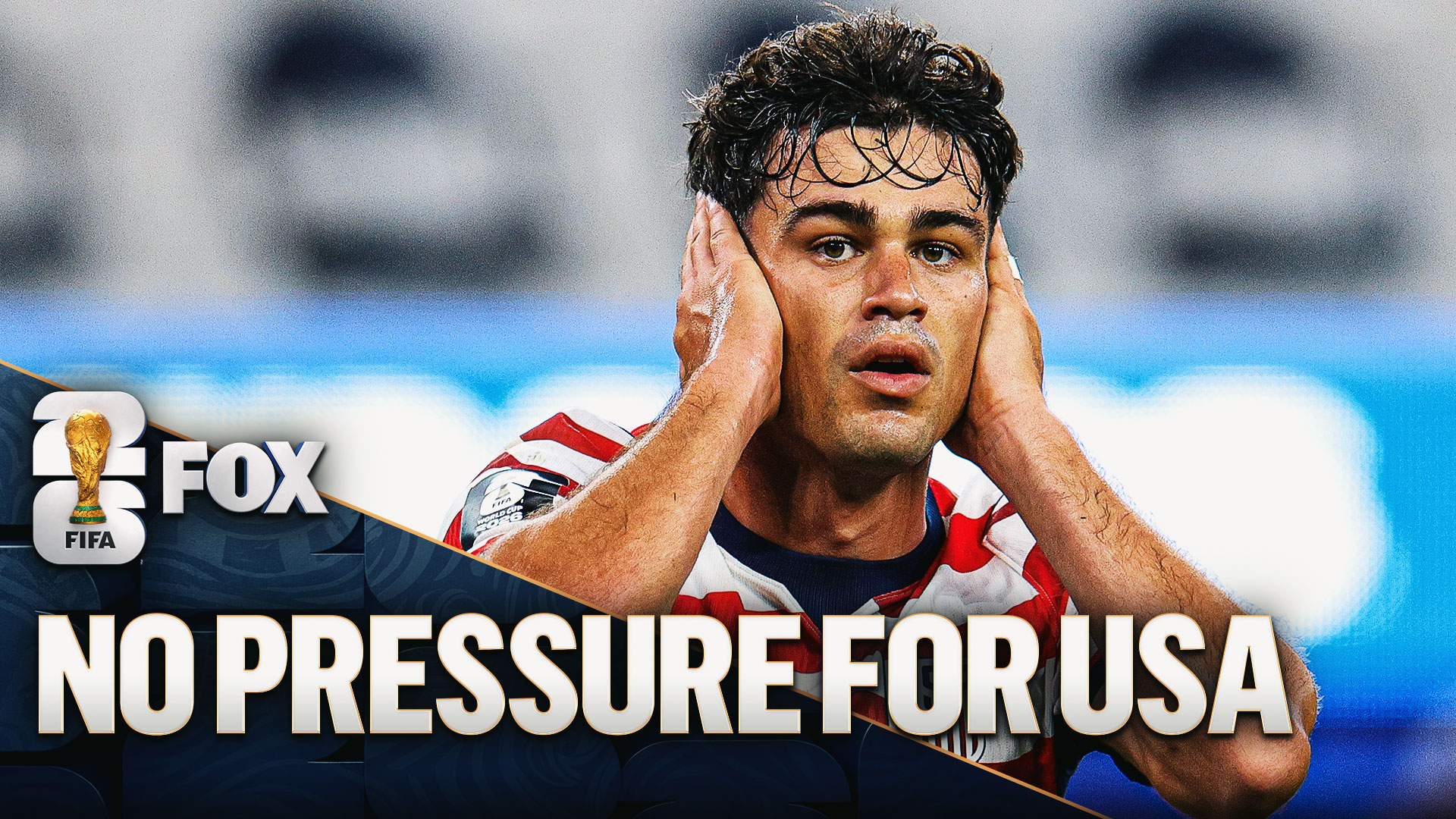
U.S. World Cup Team Training Base (IRVINE, Calif.) — There are two ways to look at the USA’s first knockout game of the 2026 FIFA World Cup. On the one hand, it’s a match fraught with danger. Losing in the round of 32 against tiny Bosnia and Herzegovina on Wednesday at San Francisco Bay Area Stadium would mark possibly the lowest moment in the century-plus-long history of the U.S. program. The Stars and Stripes have reached at least the round of 16 at three of the last four World Cups they’ve qualified for, but failing to do so at home, with arguably the most talented U.S. team ever, after comfortably winning their group, would be an epic disaster — worse than the 2017 defeat in Trinidad and Tobago that kept them out of the following year’s main event. The other, healthier perspective is more glass-half-full. That’s the way the American players are approaching the most important contest they have ever played for the national team before they leave Great Park, their base since arriving on the West Coast more than three weeks ago. “I think everybody knows what this game is,” midfielder Gio Reyna said before the U.S. delegation took an hour-long charter flight from Orange County to San Jose on Monday afternoon. “World Cups only come around every four years and, especially on home soil, this opportunity will really never come back.” Those colossal stakes are the reason many U.S. supporters are nervous. Although the World Cup co-hosts are the prohibitive favorite to beat the Bosnians and cruise into the last 16 — where they’ll face either Belgium or Senegal on July 6 in Seattle — anything can happen in a single match. An early goal against. An own goal. A red card. A career game from Golden Lillies keeper Nikola Vasilj. This is do-or-die, agony or ecstasy. There is no margin for error. Four years ago in Qatar, the U.S. rode into the knockout stage on the high of beating Iran to complete an undefeated group stage. Ninety minutes later, a 3-1 loss to the Netherlands dropped the team back on Earth, their World Cup over before they had time to process what had just occurred. Given that history, a few extra butterflies would be understandable — even for a 38-year-old veteran like captain Tim Ream. Ream logged every minute of the USA’s four matches at the last World Cup. “Would it be weird if I told you I don’t really feel too much pressure at this moment,” Ream said on Monday, prior to the Americans’ final training session. “It feels very different this time around than 2022,” Ream added. One reason is experience. Last time, just one of the 26 players selected to then-coach Gregg Berhalter’s roster had been to a World Cup before. Exactly half of them returned for this one under current boss Mauricio Pochettino. And while the performance in Qatar had to be considered a success considering the failure to make it in 2018 — especially for the youngest average starting lineup in the entire competition — the American players felt they could and should have done better. They are desperate not to leave anything on the table now that the business end of the World Cup is here. Ironically enough, that means not treating their next outing differently than the three that came before it this month. “In terms of pressure, there’s nothing added. Nothing extra,” Ream said. “That’s the way we’ve approached every single game.” As fellow defender Auston Trusty said after last week’s meaningless 3-2 loss to already-eliminated Türkiye, “The risk is high every single game. That’s the mindset.” Still, the reality is that this next test means more. “This game is important for the country, but it’s also important for us as this team,” Reyna said. “This group deserves something special. … We hope to inspire generations to come.”Latest Sports News from FOX Sports
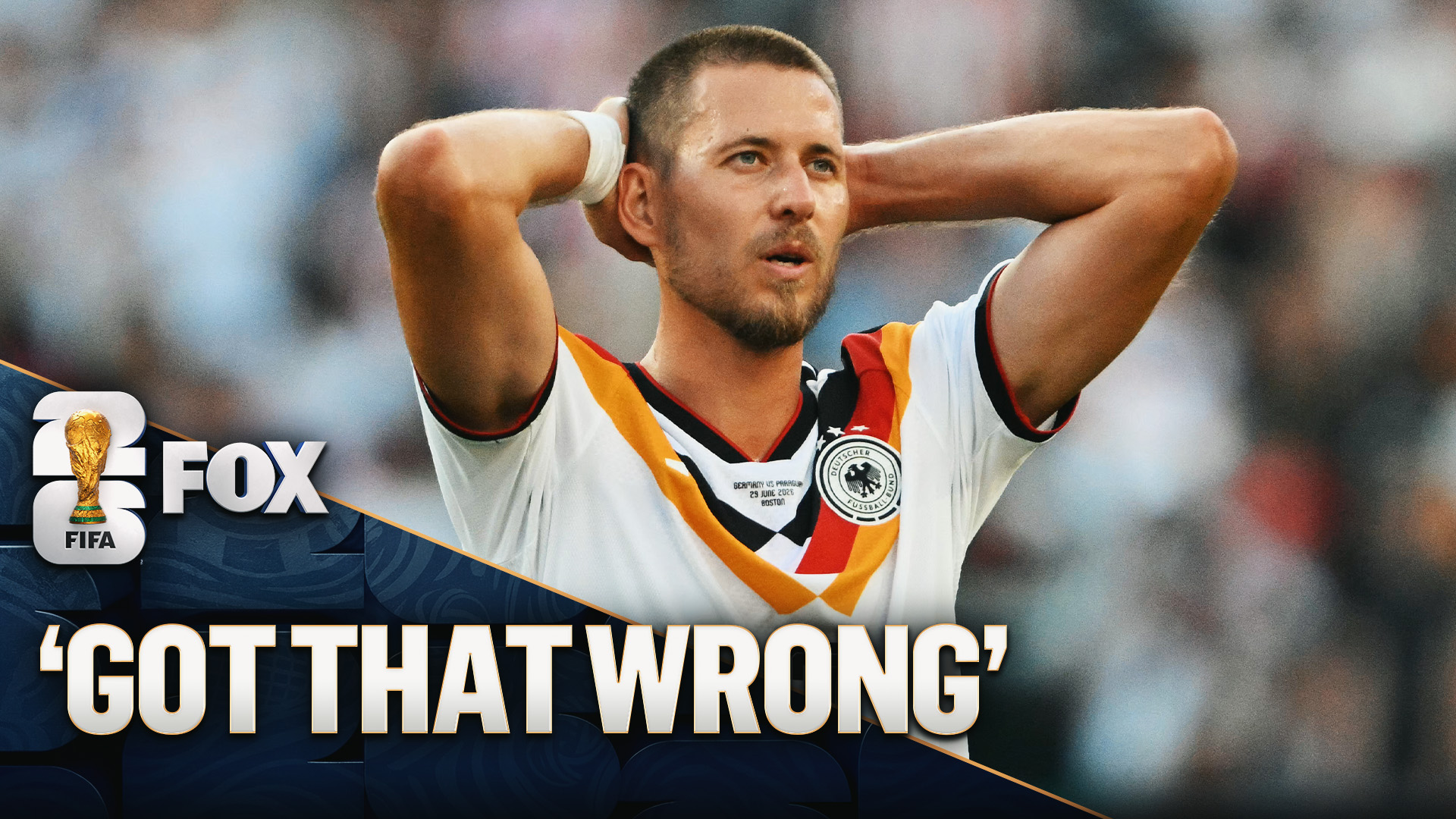
Germany won’t be advancing to the round of 16 at the 2026 FIFA World Cup, and some might think the Germans have a legitimate gripe about how their loss to Paraguay in the round of 32 unfolded. In the final minutes of the first half of extra time, Germany defender Jonathan Tah scored on a header off a corner kick that would’ve given his side a 2-1 lead. However, it was determined that Germany defender Waldemar Anton fouled Paraguay goalkeeper Orlando Gill after a VAR review, disallowing the goal. Germany went on to lose in penalty kicks in arguably one of the biggest upsets in men’s World Cup history. Before Germany’s loss, though, at least one former goalkeeper sided with the Germans over what happened. “I don’t think it’s a foul,” former Denmark and Manchester United goalkeeper Peter Schmeichel said on FOX’s “World Cup Live” in between the extra time periods. “I actually don’t think Anton did anything. He’s just there. The goalkeeper runs straight into him, and I think they got that wrong.” Not everyone on the panel agreed with Schmeichel. Former Nigeria midfielder John Obi Mikel argued that the attacker’s positioning justified the referee’s whistle, noting that the player was blocking the keeper without looking at the play. “I think it’s a foul,” Mikel said. “For me, when he impeded the goalkeeper, you can see the goalkeeper has his eyes on the ball. He has his eyes on the ball all the way through and the player’s just standing there. He’s not thinking about the ball. He’s not looking at the ball. And that’s exactly what happened. To me, it looks a bit soft. But I think the referee has made the right decision.” Former USA forward Clint Dempsey broke the tie on the panel, choosing to back Schmeichel’s perspective. “When you’ve got a goalkeeper who is a part of the goalkeeper union who says it’s not a foul, then it’s not a foul,” Dempsey said. The disallowed goal ultimately kept the game level, and Germany never had as good of a chance to take the lead as it did at that moment. It wound up losing in penalty kicks, 4-3, with Tah missing a penalty kick in the final round before Paraguay’s José Canale scored, continuing a rough streak for Germany in recent World Cups.Latest Sports News from FOX Sports
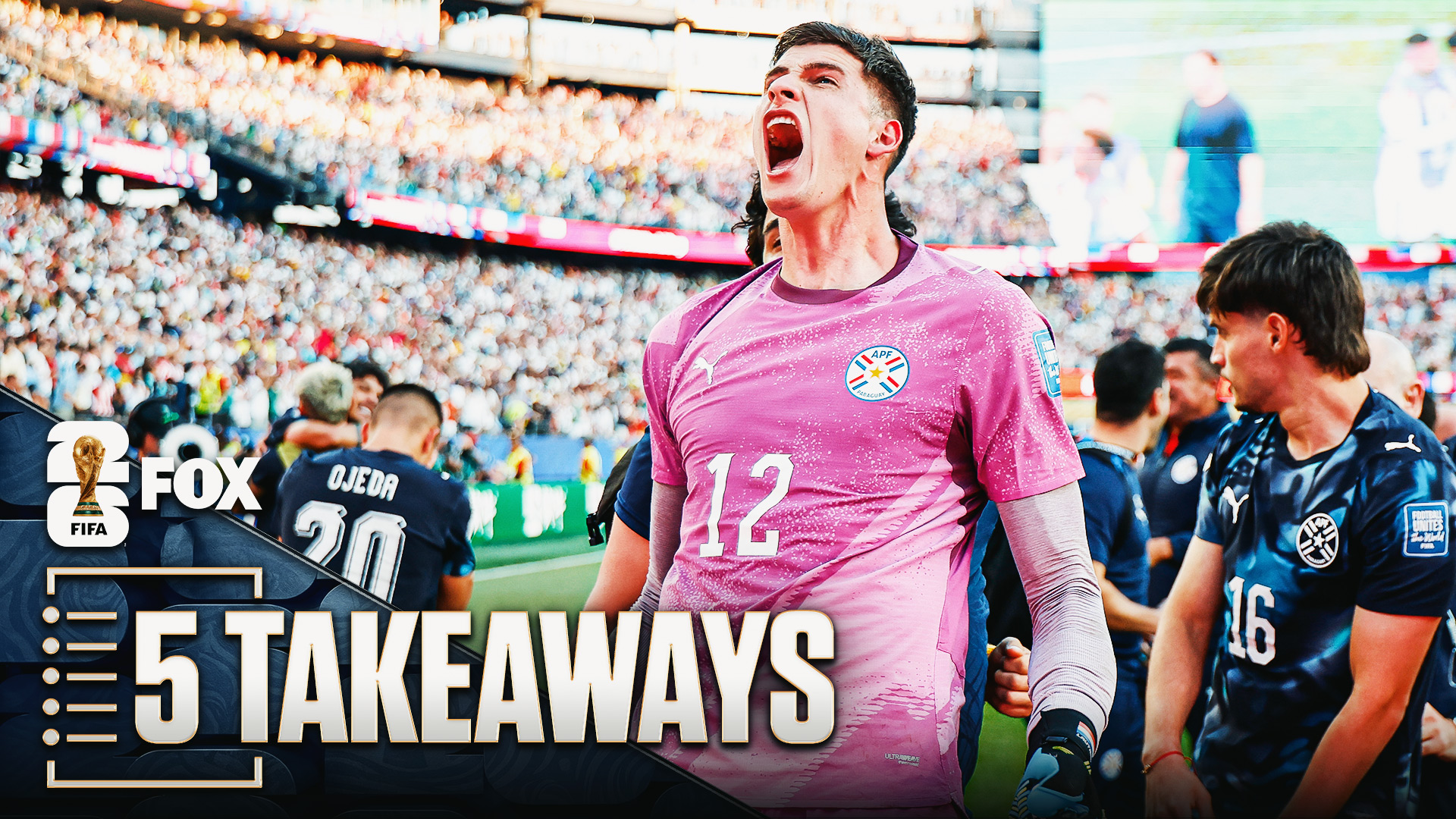
The 2026 FIFA World Cup turned in its first stunning knockout stage result as Paraguay defeated four-time champions Germany in a penalty shootout after a 1-1 draw over 120 minutes. For the first time ever, Germany has been eliminated at the World Cup in a penalty shootout. For the second time ever, Paraguay has won a World Cup knockout game. The biggest story in this game, of course, was just how well Paraguay defended over 120 minutes. With excellent commitment and communication, Paraguay’s defense was near impenetrable. On the one occasion Germany found the back of the net, Paraguay did not get down and let the dam burst. It kept up its game plan and got into the shootout. For Paraguay, it will likely need an even stronger defensive effort as France might be its next opponent (if Les Bleus get past Sweden). For Germany, it is soul-searching after a third straight World Cup disappointment. Here are five takeaways from the match: 1. Gill The Hero In A Massive Upset Orlando Gill, 26, will go down as the biggest player in Paraguay’s historic win over Germany. Gill has never played for a club outside of Paraguay, and this was only his 10th cap for the national team. He made six saves and then two in the shootout to stun Germany. Whenever Germany tested him, he had the answer. The shootout was full of drama as Gill made two big saves to give Paraguay two chances in the fourth and fifth rounds to win it. When Paraguay failed in those two attempts, it was given a third shot at a winner when Jonathan Tah shot way over the bar. José Canale then converted to send Paraguay off to the round of 16. 2. Paraguay’s Defensive Shape Coming into this game, everyone knew Paraguay was going to sit back and defend. Since Gio Reyna scored a goal in the final minutes of its 4-1 loss to the United States, Paraguay’s defense has been outstanding. First, there was the 1-0 win over Türkiye, where Paraguay had to play the entire second half down a man. Then there was the 0-0 draw with Australia, where Gustavo Alfaro’s team made no defensive mistakes and did enough to advance out of group play despite the poor start. This was a completely different test to go against four-time champions Germany. From the start, Alfaro had his team in a tight and compact 4-4-2 formation that sat deep, with 11 players typically behind the ball. Germany had very little space to work up the middle. This was not simply about bunkering or parking the bus. In the first half, Paraguay showed a lot of intelligence in how well it defended. Depending on where Germany was, certain players would step up to defend while others kept shape. Then the players would switch and get back into shape. There was little space between the midfield line and the backline, and this gave Germany no room to attack through the middle. Paraguay frequently allowed Germany to have the ball in the wide areas and took a gamble that Germany would not be able to quickly switch the point of attack with long passes or be able to dribble through a maze of Paraguayan defenders. For most of the game, it worked. Paraguay knew this was going to make things difficult offensively because whenever La Albirroja began a possession, its players were all deep and close together. The initial passes were often not there, and that resulted in many possessions that were quickly lost. But that was a tradeoff Paraguay was willing to make to defend well through its shape, which it only reluctantly broke. The only mistake Paraguay made defensively was when Germany equalized in the 54th minute. On the play, Florian Wirtz sent a ball into the box, and it found the head of Kai Havertz, who flicked it on into the goal. It was a rare mistake from Paraguay, whose defenders were slow to switch off when the ball was delivered. Aside from that, it was 120 minutes of near-perfect defense. 3. Paraguay’s Goal Exposed Germany In the first half, Paraguay’s game plan was working to perfection. Germany was frustrated offensively, and Paraguay was able to pounce on one of its very few opportunities. It began with Damián Bobadilla winning the ball deep in the attacking half. He then played the ball to Miguel Amiron on the right side. Almiron then advanced the ball to his Atlanta United club teammate Matías Galarza, who skillfully cut in from the right wing. Galarza then found a streaking Julio Enciso, who headed past a helpless Manuel Neuer. Germany showed its vulnerability on this play as it was not careful with the ball in the middle of the field and was slow to shift into a defensive formation, which allowed Enciso to move into the middle. Alfaro deserves a lot of credit for his decisions. Bobadilla’s tournament began terribly as he committed an own goal in the loss to the United States. But then, he played the second half as Paraguay fought for a win while down a man. In this game, Bobadilla returned to the starting lineup and was excellent defensively and his defensive effort created the goal. Meanwhile, Galarza continued to be Paraguay’s best player on both sides of the ball. His defensive work rate was excellent and, once again, he came up with a big play. First, it was the goal against Turkiye; this time it was an assist against Germany. 4. VAR Decision Will Loom By now, everyone has their opinion of VAR. But the 105th-minute decision will be talked about for a long time. Jonathan Tah headed home a corner delivered by Nathaniel Brown, but VAR ultimately determined that Paraguay goalkeeper Orlando Gill was blocked by Waldemar Anton. There was contact on Gill, but it did not seem anything beyond what normally happens on crowded set-piece deliveries into the box. For German players, officials, and fans, this VAR decision will be talked about for a long, long time. 5. Soul-Searching For Germany Losses happen. Upsets happen. Every team will lose, and every good team will eventually be beaten. For Germany, however, the pattern has been established that this team is not one of the elite teams in the world. Following its 2014 World Cup triumph, Germany did not get out of the group stages in 2018 and 2022. Is elimination in the round of 32 any better? The recent Euros have only been marginally better, with the team suffering elimination in the round of 16 in 2021 and the quarterfinals in 2024. At no point since 2014 has Germany been close to winning a major tournament. This loss is going to continue the ongoing soul-searching in the federation. There will be the usual discussion points whether Julian Nagelsmann is the right coach. But there will be broader questions on important topics such as player development within the federation and within the country’s top league, the Bundesliga. This is a painful loss for Germany and one that could force change within its federation.Latest Sports News from FOX Sports

Paraguay pulled off one of the biggest upsets in World Cup history on Monday, knocking out Germany in a penalty shootout. The result didn’t come without controversy. Germany had a goal from Jonathan Tah ruled out in extra time after a foul was called during the preceding corner kick. There were five yellow cards handed out during extra time in what was a tense and physical game. So, where does Paraguay’s upset rank? Let’s dive into the five biggest upsets in the World Cup knockout stage according to differences in the latest FIFA rankings before the tournament. Entering the 1994 World Cup in the United States, Germany was the reigning champion and the No. 1-ranked team in the FIFA World Rankings. It had also made it to the Euro 1992 final, which it lost to Denmark. Bulgaria was ranked 29th in FIFA’s rankings, and it had probably the best player in the country’s history in Hristo Stoichkov, who at the time was starring for Barcelona. The Bulgarians lost their first group-stage game before winning back-to-back matches against Greece and Argentina. In this quarterfinal matchup, Germany took the lead through legendary midfielder Lothar Matthäus, who scored a penalty in the 47th minute. Bulgaria came back with a vengeance, though, getting goals from Stoichkov and Yordan Letchkov in the 75th and 78th minutes for the win. Paraguay looked hopeless in its 2026 World Cup opener against the United States, losing 4-1 in convincing fashion. The South American side rebounded, though, with an upset win over Türkiye and then a draw against Australia that got it through to the knockout stage as one of the top eight third-place teams. In the round of 32, Paraguay scored its best chance of the game but otherwise was thoroughly on the back foot against Germany. Paraguay completed 161 passes compared to 719 for Germany. Paraguay was in control of the shootout before its fourth and fifth takers missed. Then, it was Tah who missed for Germany before Jose Canalé sealed the win. Next up for Paraguay: the winner of France vs. Sweden. South Korea, which was coached by Dutchman Guus Hiddink during the 2002 World Cup, won Group D and advanced alongside the United States. The Koreans beat Portugal in group play, and the upsets kept going from there. Against Italy, South Korea trailed after Italian striker Christian Vieri scored in the first half. Seol Ki-hyeon scored in the 88th minute to equalize before Ahn Jung-hwan scored in the 118th minute. Back then, extra time had golden-goal rules, which meant the game ended with that goal. Then, in the quarterfinals, the matchup against Spain ended 0-0 before winger Joaquin missed as the fourth Spanish taker. Korea converted on all five of its attempts to move on. In total, Korea bested three of the top eight teams in the tournament – Portugal was fifth, Italy sixth and Spain eighth. It was a magical run that ended in a semifinal defeat against Germany. Russia shocked the world when it knocked out a European giant when it hosted the World Cup in 2018. The Russians progressed through the group stage with two wins and a loss, which came against Uruguay. Spain, meanwhile, sputtered with a win and two draws. The round-of-16 matchup ended 1-1 after an own goal from Russian defender Sergei Ignashevich gave Spain the lead. Striker Artem Dzyuba tied the game in the 41st minute with a penalty. In the end, goalkeeper Igor Akinfeev was the hero, saving penalties from Koke and Iago Aspas to seal a quarterfinal spot. In that round, Russia went to another penalty shootout but fell short against Croatia, which went on to the final after beating England in the semifinals.Latest Sports News from FOX Sports

A polling place sign at the State Office Building in Juneau on Aug. 15, 2022. (Photo by Lisa Phu/Alaska Beacon)
The Alaska Supreme Court on Monday ordered the Alaska Division of Elections to include Dan J. Sullivan of Petersburg on the primary ballot as a candidate for U.S. Senate.
The ruling upholding a lower court’s decision came just hours after oral arguments in a fast-tracked case ahead of the division’s deadline to certify and print primary election ballots at noon on Tuesday.

A full opinion on the case will be issued at a later date, the court said.
The decision ends a weekslong saga between the state and the challenger with the same name Republican incumbent Sen. Dan Sullivan. The two Sullivans are among 16 primary candidates for the seat, including former Democratic U.S House Rep. Mary Peltola.
The primary election is Aug. 18. The general election in November determines who will hold the seat for a six-year term.
On Friday, an Anchorage Superior Court ruled that the division’s decision to strike Sullivan from the ballot was unlawful. The judge determined that the division did not have the authority to add additional requirements for candidates beyond what is outlined in the U.S. Constitution. He ruled Sullivan, a retired teacher from Petersburg, is eligible to run for U.S. Senate.
The state appealed that ruling, and the case went before the Alaska Supreme Court on Monday.
Reached by phone Monday afternoon, Sullivan of Petersburg expressed relief. “I’m glad it’s over. It was pretty stressful. I’ve got to admit that,” he said.

On the criticisms and questions about his campaign, Sullivan said they were “challenging” to hear.
“It’s all because of my name, and you know, there’s nothing I can do about my name,” he said. “I was frustrated, I felt it’s time for a change, and so I wanted to jump into the race and make my feelings and my thoughts known. So there’s not a whole lot more to it than that. They tried to make it more than that, and you know, that’s their prerogative.”
Sullivan said he would agree to be listed as “Dan J. Sullivan” on the ballot. He said he now plans to regroup and make plans to visit Alaskan communities, hear from voters, and continue the campaign for Senate.
Nate Adams, a spokesperson for Sen. Sullivan, said they were disappointed in the court ruling but encouraged by the fact that the division director can “use her expertise” to distinguish the candidates on the ballot in an emailed statement on Monday.
In the decision, the justices wrote the division will determine how the candidates will appear on the ballot.
“This matter is remanded for the Division of Elections to determine, in the first instance, how appellee Sullivan shall be listed as a candidate within the confines of existing Alaska ballot design law,” they wrote.
An official with the Alaska Department of Law on behalf of the division did not immediately respond to a question about how the two candidates would appear on the ballot.
“The State appreciates the court’s quick ruling and will work to implement the order,” said Sam Curtis with the Department of Law.
Sullivan from Petersburg appealed the division’s unprecedented June 15 decision to disqualify him from the U.S. Senate ballot. The Alaska Division of Elections cited complaints filed by the incumbent and Republican groups that his similar name, Republican party affiliation and campaign materials were evidence he was running in “bad faith” and mimicking the Republican incumbent, U.S. Sen. Dan S. Sullivan.
Challenger Dan. J. Sullivan has defended his campaign as authentic and genuine. In court, his attorney argued that he met all the constitutional requirements for candidacy, and the division had unlawfully added a subjective criteria.
In oral arguments before the Alaska Supreme Court on Monday, attorney Chris Murray argued on behalf of the division and its appeal of the lower court’s decision. He argued that the authority to administer the manner of elections includes disqualifying the challenger, as they deemed his intention in filing was to “frustrate the purpose” of the election and confuse voters.
Justices questioned that authority cited by the state. “A lot of the times people run for office for different reasons, to highlight an issue, to see what the process is like, and maybe start garnering support over time,” said Justice Aimee Oravec. “These are not necessarily candidates that are seeking office so much as attention for other reasons that are not necessarily bad faith, and there’s no limiting principle.”
“It seems amorphous, frankly,” said Justice Jennifer Henderson. “A broad, amorphous concept of what a candidate’s intent needs to be. So it seems like it’s very appropriate for us to worry about what is encompassed by that.”
Murray argued that the division has the authority, under current state regulations, and a duty to protect voters from confusion. “Because again, what’s the division trying to do? Protect the right to vote,” he said. “The division’s job is to make sure that people who want to vote for one candidate actually get to vote for that candidate, and their intent is reflected on the ballot.”
Justice Oravec questioned that position when the division has the authority to administer and design the ballot in a way that reduces confusion.
“You control the ballot,” she said. “So I think you’re conflating the potential for confusion when you have the authority to mitigate the confusion.”
State statute already prescribes how candidates with identical names should appear on the ballot. Candidate’s middle initials would be included — in this case “Dan J. Sullivan” for the candidate from Petersburg, and “Dan S. Sullivan” for the incumbent senator.
But in the state’s appeal filed over the weekend, Alaska Acting Attorney General Cori Mills requested that if the court upholds the ruling restoring the Petersburg Sullivan to the ballot, then the division could list him as “nonpartisan” instead of Republican like the incumbent senator.
Justices questioned whether that affiliation would be within the division’s authority. Jeffrey Robinson, arguing on behalf of Sullivan on Monday, objected to that listing. “There’s no authority for the proposition that in order to avoid confusion the director can change the party affiliation,” he said.
Robinson argued that the division adding unwritten, subjective criteria for candidates is unlawful. He again cited the case where the Alaska Democratic Party sought to remove Eric Hafner, a U.S. House candidate imprisoned out of state, and the division did not investigate his motives but found he met the qualifications to run for office.
“When would there be a better time to question the motives of someone’s intent to run for office than a convicted felon living out of state who has no potential to come back, or virtually no potential to come back and serve?” Robinson said.
The division has argued that there was no complaint filed against Hafner’s candidacy, and so no reason to investigate him.
Justice Oravec asked Robinson whether Sullivan and his legal team also dispute the division’s findings in their decision to disqualify him from the ballot. Robinson said the division’s points were “unconstitutional and frivolous” and they did not have the authority to make those findings.
In an unusual move, 14 Republican controlled states filed an amicus brief, or “friends of the court” brief, with the state Supreme Court expressing support for the division and its authority to remove Sullivan from the ballot.

 We’re seeing stars, stripes, and major July 4th savings! You can refresh your summer beauty routine, warm weather wardrobe, and even a few pieces around your home with the insanely good July 4th…
E! Online (US) – Top Stories
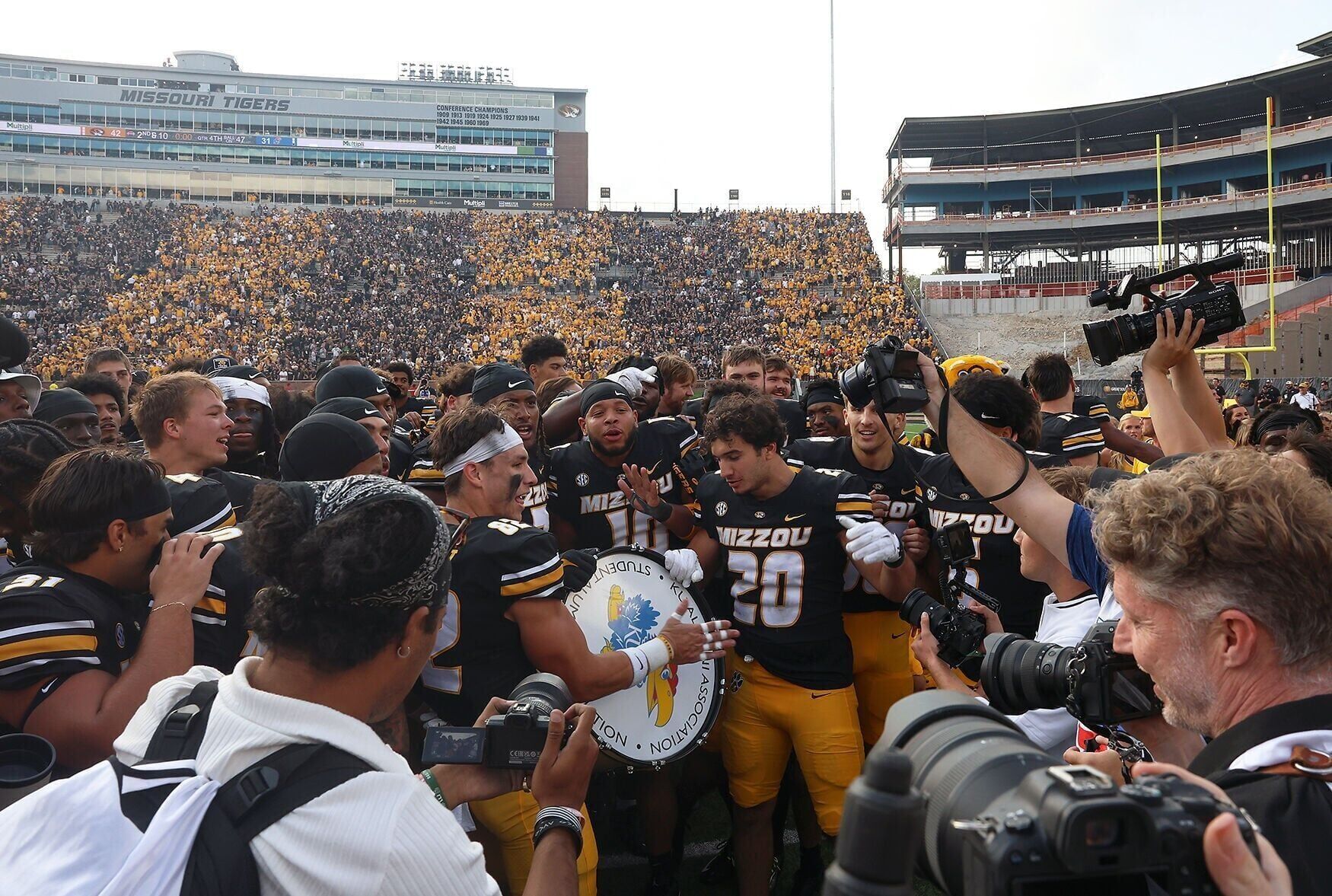
Some of the best Mizzou athletics over the last year will be broadcast on the SEC Network channel throughout the entire day.

Whenever you’re hosting a barbecue or cookout, it can be tricky to figure out how much food to prepare. Here’s how many hot dogs and burgers you’ll need.

Food Republic – Restaurants, Reviews, Recipes, Cooking Tips