Ratings for Episodes 1 and 2 of ‘Dutton Ranch’ are finally in. Continue reading…Country Music News – Taste of Country









Ratings for Episodes 1 and 2 of ‘Dutton Ranch’ are finally in. Continue reading…Country Music News – Taste of Country

A new regulatory proposal could accelerate development of oil fields on federal land in the western Arctic. (ConocoPhillips)
As major oil companies eye new drilling on Alaska’s North Slope, the Trump administration is now working to accelerate their projects by streamlining environmental reviews on federal land.
It’s a move that could boost production amid what leaders describe as a “renaissance” of North Slope oil. But opponents call it an alarming escalation of the administration’s push to open new areas of Alaska to oil and gas development.
The new proposal was announced May 15 by Interior Secretary Doug Burgum on a visit to Alaska.
It would change how regulators review and approve new oil projects in the National Petroleum Reserve – Alaska, a federally managed area that’s roughly the size of the state of Indiana and encompasses tundra, wetlands and expansive caribou and bird habitat.
Historically, federal land managers have required companies to go through lengthy environmental reviews each time they propose a new project. The Trump administration now aims to create a blanket environmental approval to expedite projects.
The proposal comes at a time when the Trump administration is under pressure from spiking fuel prices and looking for ways to boost U.S. energy production.
But it’s drawing sharp criticism from environmental advocates who fear that it would fast-track projects without adequate assessments of their impacts, imperiling Arctic ecosystems home to caribou, migratory birds and other wildlife.
“It’s pretty extreme,” said Erik Grafe, a longtime Anchorage-based lawyer with Earthjustice, a national environmental law firm that regularly sues to block Arctic oil development.
Another attorney who’s fought new development on the North Slope, Suzanne Bostrom with the firm Trustees for Alaska, said in a prepared statement that the proposal appears to set up a new system where projects could be “rubber stamped.”
“The Arctic isn’t meant for cookie cutter exploitation,” she added. “These are treasured public lands that people depend on and that should be given the highest level of care and protection — the complete opposite of what’s proposed.”
The proposed change comes as the North Slope’s oil industry is picking up steam.
The state’s biggest new oil field in years — located on state and Alaska Native corporation land to the east of the federal petroleum reserve — just started commercial production. Another major project, ConocoPhillips’ Willow development, is set to come online in a few years.
And the industry is poised to expand west: Several of the world’s largest oil corporations, including ConocoPhillips, Shell and ExxonMobil, bid on new territory in the federal reserve in a huge lease sale earlier this year.
Oil fields currently occupy only the reserve’s northeastern corner. But experts say billions of barrels of oil remain in the ground, potentially in areas far from existing infrastructure.
The Trump administration’s permitting proposal came in response to a petition by the Alaska Oil and Gas Association, a trade group known as AOGA. The group, whose members include the major companies operating in Alaska, submitted the request a few days before Burgum’s announcement.
“It’s about building a more stable, durable and predictable permitting framework,” said Steve Wackowski, AOGA’s president.
A decades-old law, the National Environmental Policy Act, requires federal regulators to assess the environmental impacts of large development proposals before taking action on them.
Currently, any oil project proposed on Alaska’s federal lands must undergo its own distinct environmental review.
Industry leaders have long argued that the process is too slow and repetitive — since oil projects often have similar designs and potential impacts. They say streamlining reviews could accelerate oil extraction and job creation without sacrificing environmental protections.
Under the new regulation, federal land managers would have two months to approve any proposed development in the petroleum reserve that meets specific standards.
AOGA’s petition lists more than 50 possible conditions, including consultation with local and regional Indigenous communities and accounting for wildlife habitat when designing infrastructure.
Opponents argue that a blanket analysis wouldn’t be able to account for the particulars of any one project and minimize impacts accordingly.
Wackowski disputed the idea that the proposal would amount to “rubber stamping.”
The impacts of development in the reserve have already been studied in an array of environmental assessments over the past 30 years, he said.
AOGA’s petition, he added, is the first step in a public process that “would evaluate what types of activities could appropriately fit within any streamlined framework and under what conditions.”
The regulatory change would apply only to projects in the petroleum reserve and to one federal agency, the Bureau of Land Management. Projects would still be subject to additional permitting requirements from other agencies like the U.S. Army Corps of Engineers, which reviews permit applications under the federal Clean Water Act.
The proposal is still in a preliminary review period and could change as the Trump administration studies it. Public comments are due by July 6.

Reading Time: 2 minutes
Back in November of 2025, the world was shocked by the brutal murder of Anna Kepner, the 18-year-old who was found dead in her cabin aboard a Carnival cruise ship.
In February, Kepner’s stepbrother, 16-year-old Timothy Hudson, was charged with her murder.
Prosecutors allege that Hudson raped Kepner before killing her and attempting to hide her body under a bed — circumstances that make today’s decision all the more surprising.
A federal judge ruled Wednesday that Hudson will not be jailed while awaiting trial and will instead remain in the custody of a family member under strict conditions as his case moves forward.
Hudson has been free since the death of his stepsister after initially being charged as a juvenile and released to live with his uncle because of his age.
The situation changed dramatically in April, when a federal grand jury indicted Hudson as an adult, raising the possibility that he could be detained behind bars before trial.
U.S. District Judge Edwin Torres acknowledged the gravity of the allegations but ultimately decided against jailing the teen ahead of his trial.
“If it were a 20-year-old under the exact circumstances I probably would have detained,” Torres said during Wednesday’s hearing, according to NBC News.
“The presumption would be we were just not going to take that chance. This is a different animal,” he added.
The judge explained that he considered the practical realities of detention, including the fact that Hudson’s family lives several hundred miles away in Hernando County, making visitation difficult if he were held in Miami-Dade County.
Federal prosecutors strongly objected to today’s decision.
Government attorney Alejandra Lopez argued that Hudson represents “a danger to the community,” especially considering that two minors reportedly live in the uncle’s home where he is currently staying.
“What is needed to prove a danger? A second dead body?” Lopez asked in court.
Hudson’s attorney, public defender Evan Kuhl, pushed back, arguing that the teen has followed every condition of his release for months and has shown no indication he poses a flight risk or danger to others.
Hudson is only allowed to leave the house while accompanied by his aunt or uncle and is being electronically monitored by authorities.
Anna and Hudson — whose parents married in December 2024 — had reportedly been sharing a cabin during the family vacation.
Her body was discovered bruised, wrapped in a blanket and hidden beneath a bed behind life vests. The Miami-Dade medical examiner ruled her death a homicide caused by “mechanical asphyxiation.”
On the day Hudson was indicted as an adult, Anna’s father, Chris Kepner, made his feelings painfully clear.
“Justice needs to be served,” he said.
Hudson’s trial could begin as early as September. We will have further updates on this developing story as new information becomes available,
Anna Kepner: Stepbrother Accused of Rape & Murder Aboard Cruise Ship Won’t Be … was originally published on The Hollywood Gossip.
The Hollywood Gossip

A massive 16-day America 250 celebration in Washington will bring together country, rock and hip-hop acts for a World Fair-style event. Continue reading…The Boot – Country Music News, Music Videos and Songs
A massive 16-day America 250 celebration in Washington will bring together country, rock and hip-hop acts for a World Fair-style event. Continue reading…Country Music News – Taste of Country
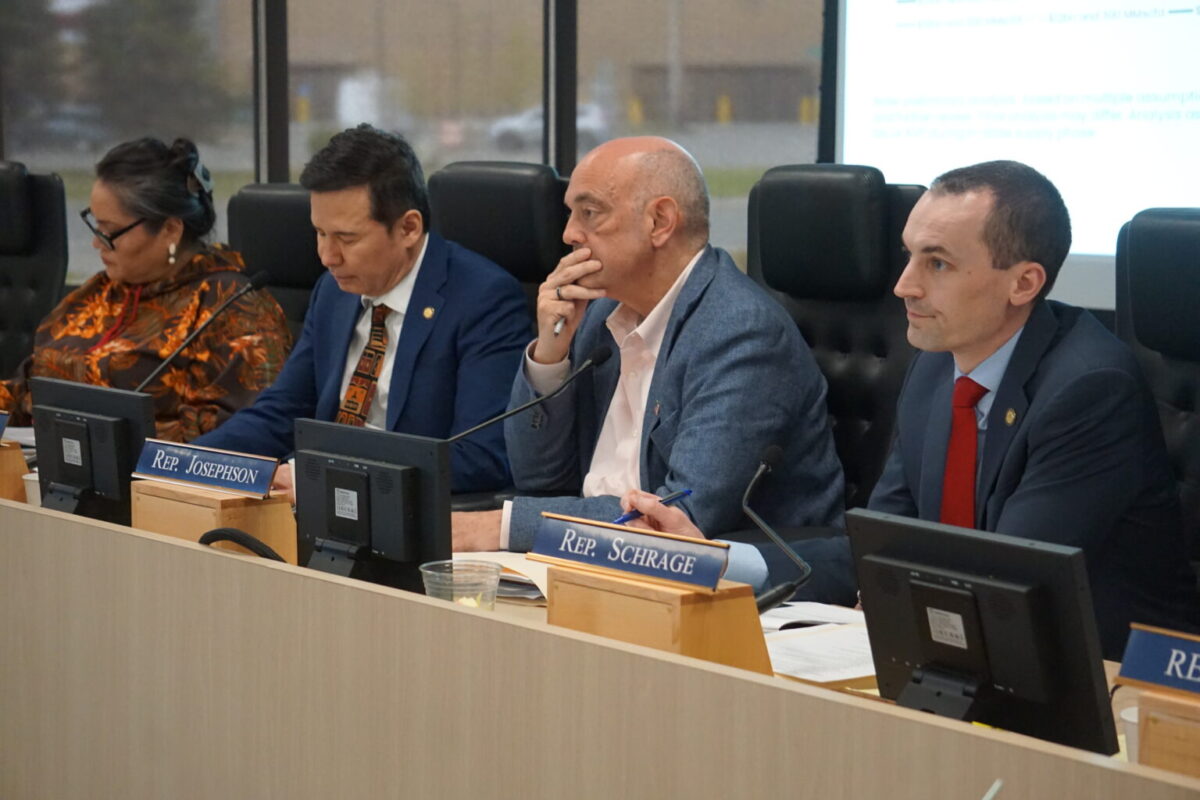
By: James Brooks, Alaska Beacon
The proposed trans-Alaska natural gas line faces a narrow road to profitability, even with Gov. Mike Dunleavy’s proposed multibillion-dollar tax break, according to estimates presented to state legislators.
The more the pipeline costs, the more its builders will need to charge for gas shipped through it in order to make money. But if the cost of Alaska gas is too high, it isn’t competitive with gas from other sources around the world.
On Tuesday, members of the House Finance Committee met for the second time in a 30-day special session devoted to discussing the tax break.
Nick Fulford of GaffneyCline, the Legislature’s hired analyst for the pipeline project, said previously published financial modeling by the Alaska Department of Revenue remains the best public look at whether the project pencils out financially.
“The main question really is: How much bigger and how much more capital cost can the project support before it becomes uneconomic,” he said.

In 2018, officials with the Alaska Gasline Development Corp. suggested that building a pipeline from the North Slope to Cook Inlet — plus large industrial processing plants on either end — would cost roughly $43.4 billion, including money earmarked for possible cost overruns.
Since then, the official cost has risen only slightly, to $46.2 billion, but many state lawmakers have said they are skeptical of that figure, because it does not seem to account for inflation.
Glenfarne, a multinational corporation that now owns 75% of the pipeline project, has not disclosed an updated figure.
Rep. Alyse Galvin, I-Anchorage, said that when she uses the Consumer Price Index to judge how much the cost has grown, it’s significant.
“When I look at cost adjustment, just using CPI, just a straight cut through, that brings us to $57 (billion) to $60 billion,” she said during Tuesday’s hearing.
“I would say it seems highly likely that it would be more than $46 billion given the general inflation that we’ve seen,” Fulford said.

Publicly available estimates suggest gas could be bought from North Slope producers between $1 and $2 per thousand cubic feet. That’s what’s technically known as the “upstream price.”
In a scenario where the pipeline costs Galvin’s suggested figure, the state’s tax laws don’t change to help the project and the upstream price is $1.50 per thousand cubic feet of gas, the Department of Revenue estimates that an end buyer in Japan could expect to pay more than $11 per thousand cubic feet.
That’s likely a problem for the pipeline project, because according to GaffneyCline’s estimates, the average contract price in Japan over the past 10 years has been $10.41 per thousand cubic feet — less than what the Alaska project would have to charge to earn its expected profit target.
Under a tax change proposed by the governor, the end buyer’s price would drop to about $10.40, using Galvin’s cost estimate and the $1.50 upstream price.
But if the cost of upstream gas rises, or if the cost of the pipeline rises, even the governor’s proposed tax break isn’t enough to keep the project economically competitive.
Fulford, speaking to the House Finance Committee, said he thinks Asian LNG prices will rise in the coming years, possibly offsetting any rising costs and keeping the project viable.
But he also acknowledged that with so many unknowns, it’s not clear where the project becomes uneconomic.
“The question is … if the price of LNG goes up and if the capital cost goes up, then where’s that sort of tipping point where the project can still go ahead, even if it’s a much higher capital cost?” he said.
Under Dunleavy’s proposal, the state’s existing petroleum property tax would be largely replaced by a tax on gas that moves through the pipeline.
Speaking last week in Anchorage, Glenfarne CEO Brendan Duval said the governor’s proposed change is necessary for Glenfarne to get financing for the project.
“It won’t be financeable in the form that we’re trying to do it without the tax stabilization law,” he told the Anchorage Daily News.
Legislators appear favorable to the general idea, but they don’t know what tax rate to use for the “alternative volumetric tax,” as it is formally known.
Dunleavy has proposed 6 cents per thousand cubic feet of gas. House and Senate lawmakers are each considering different, higher rates.
They’re also considering mandatory impact payments to compensate cities and boroughs that collectively would lose out on $14 billion in property taxes through 2063 if the governor’s plan is adopted. A mandatory natural gas spur line to Fairbanks is also being discussed. As currently planned, the pipeline runs to the west of Fairbanks.
Rep. Calvin Schrage, speaking Tuesday, said legislators are working with a large amount of uncertainty, and that is slowing their work.
“If we could eliminate some of these variables and have it known, it would really help us in figuring out where this might be going, but we don’t have that right now,” he said. “What this is ultimately showing is that under our current tax structure, there’s a very small window of break-even profitability for a developer.”
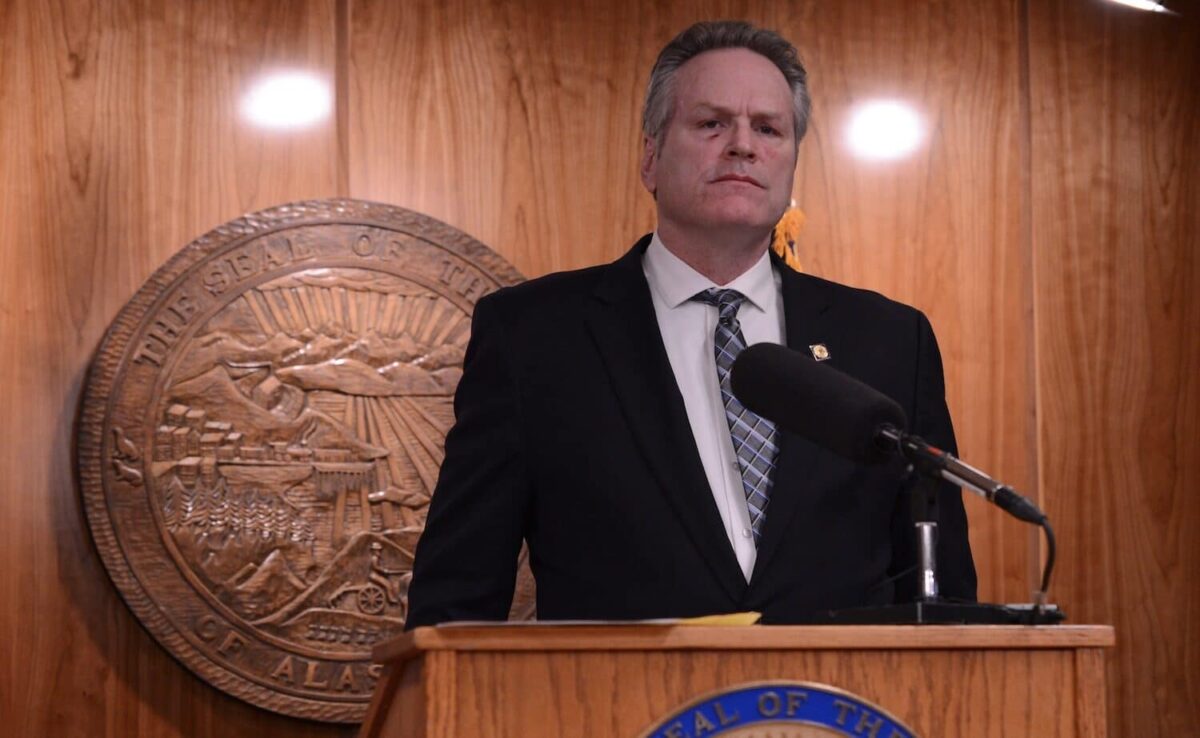
NOTN- Alaska lawmakers will continue holding hearings this week during a 30 day special session on Senate Bill 2001, and separately House Bill 381, the governor-backed gas pipeline tax proposal tied to the proposed Alaska LNG project.
The Alaska State Senate Finance Committee is scheduled to meet today, Thursday and Friday at 9 a.m. in Juneau to hear presentations and discussion on the bill.
Today and Thursday’s hearings will include presentations from consulting firm GaffneyCline. Friday’s meeting is also focused on continued review of the legislation.
The House met yesterday, and will continue work this week in Anchorage.
Governor Mike Dunleavy called the special session after lawmakers failed to pass a gasline bill during the regular session, lawmakers received the governor’s proposal on day 80 of 120.
The governor is pushing for larger tax breaks and incentives for the project’s developers.
According to reporting from the Alaska Beacon following an Energy Conference in Anchorage, state and local governments would eliminate 90% of the property tax that would be levied on gasline-related infrastructure in exchange for future opportunities to tax natural gas as it moves through the yet-to-be-built system.
Though legislators are currently sitting on both sides of the fence, some argue the proposal would reduce future revenue for both the state and local governments along the pipeline route.

We always knew we liked Smokey! Continue reading…The Boot – Country Music News, Music Videos and Songs
We always knew we liked Smokey! Continue reading…Country Music News – Taste of Country

He has built one of the biggest careers in contemporary music, but it all started with his first No. 1 hit. Continue reading…Country Music News – Taste of Country