Master the art of the perfect breakfast with Alex Guarnaschelli’s pancake method. The science-backed trick is the key to pillowy pancakes every time.

Mashed – Fast Food, Celebrity Chefs, Grocery, Reviews









Master the art of the perfect breakfast with Alex Guarnaschelli’s pancake method. The science-backed trick is the key to pillowy pancakes every time.
Mashed – Fast Food, Celebrity Chefs, Grocery, Reviews

Sylvia Chou quit her job at the National Cancer Institute in January, after working for the agency for more than 15 years. She says the Trump administration took a “sledgehammer” to the agency. (Eric Harkleroad/KFF Health News)
Marc Ernstoff, a physician who has pioneered immunotherapy research and treatments for cancer patients, said his work as a federal scientist proved untenable under the Trump administration.
Philip Stewart, a Rocky Mountain Laboratories researcher focused on tick-borne diseases, said he retired two years earlier than planned because of hurdles that made it too challenging to do his job well.
Alexa Romberg, an addiction prevention scientist focused on tobacco, said she “lost a great deal” of the research she oversaw when federal grants vanished.
“If one is thinking about the ‘Make America Healthy Again’ agenda and the prevention of chronic disease,” Romberg said, “tobacco use is the No. 1 contributor to early morbidity and mortality that we can prevent.”
The National Institutes of Health is the largest public funder of biomedical research in the world, with a mission statement to “enhance health, lengthen life, and reduce illness.”
Over decades, the value of the NIH may be the one thing everyone in Washington has agreed on. Lawmakers have routinely boosted its funding.
“I’m so pleased to be associated with NIH,” former Sen. Roy Blunt, a Missouri Republican and one of the NIH’s biggest champions in Congress, said in 2022 shortly before he retired.
But in President Donald Trump’s second term, the NIH has seen an exodus of scientists like Ernstoff, Stewart, and Romberg. Federal data shows the NIH lost about 4,400 people — more than 20% of its workforce. Scientists say the departures harm the U.S.’ ability to respond to disease outbreaks, develop treatments for chronic illnesses, and confront the nation’s most pressing public health problems.
“People are going to get hurt,” said Sylvia Chou, a scientist who worked at the National Cancer Institute in Rockville, Maryland, for over 15 years before she left in January. “There’s going to be a lot more health challenges and even deaths, because we need science in order to help people get healthy.”
Why They’re Leaving
KFF Health News interviewed a half dozen scientists who said they quit their jobs years before they’d planned to because of the tumult of 2025.
Only a few years ago, the NIH workforce was steadily growing, from roughly 17,700 employees in fiscal year 2019 to around 21,100 in fiscal 2024, federal data shows. Under Trump, those gains have been slashed.
The Trump administration enacted a campaign to purge government workers perceived as disloyal to the president. People were fired or encouraged to leave. Officials instituted a months-long freeze on hiring.
The NIH workforce has plummeted to about 17,100 people — its lowest level in at least two decades. Most who left weren’t fired. Roughly 4 in 5 either retired, quit, had appointments that expired, or transferred to a different job, according to federal data.

Scientists watched with dread as their colleagues were forced to terminate research funds for topics the Trump administration deemed off-limits. Across NIH labs, routine work stalled. They said they faced major delays in accessing equipment and supplies. Travel authorizations were slowed or denied.
Agency staff were instructed not to communicate with anyone outside the agency. When they could talk again, they were subject to greater constraints on what they could present to the public.
And under the administration’s agenda to eliminate “diversity, equity, and inclusion,” references to minorities or health equity were purged from NIH-funded research. Initiatives to protect Americans’ health were gutted. Among them: support for early-career scientists, ways to prevent harm from HIV or substance use, and efforts to study how different populations’ immune systems respond to disease.
In a January op-ed, Chou and Romberg were among a group of NIH scientists who said they resigned in protest of an administration “that treats science not as a process for building knowledge, but as a means to advance its political agenda.”

A ‘Fundamental Destruction’
Health and Human Services spokesperson Emily Hilliard said in a statement that the agency had shifted to focus on evidence-based research over “ideological agendas.” She said the NIH is still recruiting “the best and brightest” and advancing high-quality science to “deliver breakthroughs for the American people.” The federal health department oversees NIH.
“A major reset was overdue. HHS has taken action to streamline operations, reduce redundancies, and return to pre-pandemic employment levels,” Hilliard said.
Many scientists, however, question whether the NIH can still fulfill its public mission.
“There’s been a fundamental destruction,” said Daniel Dulebohn, a researcher who spent nearly two decades at Rocky Mountain Laboratories in Hamilton, Montana. It’s going to “take a very, very long time to rebuild.”
Dulebohn left the NIH’s infectious disease and allergy institute in September.
He analyzed how molecules and proteins interact in diseases, such as Lyme disease, HIV, and Alzheimer’s — information that’s key for new treatments. Dulebohn was a resource for scientists when they hit walls trying to understand, for example, if molecules could prevent infection or react to a treatment.
Now he and his wife are living off savings in Mexico with their three young kids. Dulebohn’s thinking about what’s next. One option: real estate.
The expert in biochemical analysis operated equipment few others know how to use. His exit further depletes resources in the specialty.
“It’s clear when someone comes out with a drug and now you’ve just cured a disease. But you never know which ones could have been cured,” Dulebohn said. “We don’t know what we’ve lost.”
Laura Stark, a Vanderbilt University associate professor who specializes in the history of medicine and science, said wiping out NIH staff will propel a shift toward private-industry research, with its profit motives, “as opposed to actually helping American health.”
“We just don’t have people who are now able to pursue research for the public good,” Stark said.
From Support to Scrutiny
Stark said the seeds of the present-day NIH were planted during World War II when the U.S. government spearheaded an effort to mass-produce the antibiotic penicillin to save soldiers from infections.
The agency has played a central role in lifesaving discoveries and treatments — including for heart disease, cancer, diabetes, and genetic diseases such as cystic fibrosis.
With bipartisan backing from Congress, the NIH budget has grown significantly over time, sitting at $48.7 billion for fiscal 2026. The NIH allocates roughly 11% of its budget for agency scientists. About 80% is awarded to universities and other institutions.
The money may be there, but the people who get it out the door are not, scientists said.
Jennifer Troyer left the National Human Genome Research Institute in Bethesda, Maryland, on Dec. 31, after working in various positions at the NIH for about 25 years. The division she led reviews research and oversees grants to organizations studying the human genome — or a person’s complete set of genes — and how it can be used to benefit health.
Last year, she said, her division lost about two-thirds of its staff. “There really are not enough people there right now to actually get the work done,” Troyer said. “It’s extreme harm.”
She decided to quit the day Trump issued an executive order in August that prohibited the use of grants to “fund, promote, encourage, subsidize, or facilitate” what it described as “anti-American values.” It also allowed political appointees to review all funding decisions.
“I wasn’t going to operate a division under those orders,” Troyer said. She hasn’t figured out her next career steps.

‘Enough Is Enough’
Research aligned with the administration’s stated priorities has suffered.
HHS Secretary Robert F. Kennedy Jr. has called the diagnosis and treatment of Lyme disease — a tick-borne infection that can cause debilitating lifelong symptoms — a priority. In December, Kennedy said the government had long dismissed patients burdened with a disease that nearly 500,000 people in the U.S. are diagnosed with annually.

That same month, Stewart, who had dedicated his career to ticks and Lyme disease as a federal scientist, retired early. He’d worked for the government for 27 years. Stewart said workforce cuts and travel delays stalled his efforts to confirm how far Lyme-carrying ticks had spread — information that could help doctors recognize symptoms sooner.
Stewart was a lead scientist on research published last year identifying a black-legged tick, or deer tick, in Montana. It was the first time the tick best known for transmitting Lyme disease had been confirmed in the state. He wanted to determine if the discovery was a fluke or an indicator that the species was gaining ground.
“The advice we’ve been getting is, ‘Put your head down below the trench line. Don’t look. Don’t peek over and risk getting shot,’” Stewart said. “At what point do you finally say, ‘Enough is enough’ and ‘We’re not being effective anymore’?”
Scientists said those early in their careers are looking abroad for jobs and training. People who want to stay in the U.S. are running into problems getting hired because of cuts to research grants and uncertainty about funding.
Collectively, people studying diseases warn the U.S. could lose its long-held position as the global leader in biomedical research, with devastating impact.
Stanley Perlman, a University of Iowa virologist who studies pediatric infectious diseases, said that title earned the nation more than prestige; it drew top scientists from the world over to the U.S. to study diseases that particularly affect people here.
There’s no guarantee halted research will be picked up elsewhere, whether by private industry or other countries. If others are doing that work, Americans could face delays in seeing benefits, he said.
“If you don’t have access to how the work was done,” Perlman said, “it’s harder to reproduce and adapt it for your country.”
KFF Health News data editor Holly K. Hacker contributed to this report.
KFF Health News is a national newsroom that produces in-depth journalism about health issues and is one of the core operating programs at KFF—an independent source of health policy research, polling, and journalism. Learn more about KFF.
Subscribe to KFF Health News’ free Morning Briefing.
This article first appeared on KFF Health News and is republished here under a Creative Commons Attribution-NoDerivatives 4.0 International License.
SUBSCRIBE: GET THE MORNING HEADLINES DELIVERED TO YOUR INBOX
Reading Time: 2 minutes
Popular comedian and social media personality Druski has never been one to shy away from controversy.
In fact, his willingness to push the envelope is a huge part of his massive popularity (he currently has over 1.7 million followers on X).
But some critics believe Druski went too far in his recent video based on Erika Kirk.
Erika, of course, is the widow of Charlie Kirk, who was shot and killed during a speaking engagement at a Utah college last year.
In the months since Charlie’s death, Erika has been on a nonstop media tour, hosting rallies, granting interviews, even being invited to the White House.
Some have accused her of exploiting her husband’s death or seeming inappropriately gleeful during her period of grief.
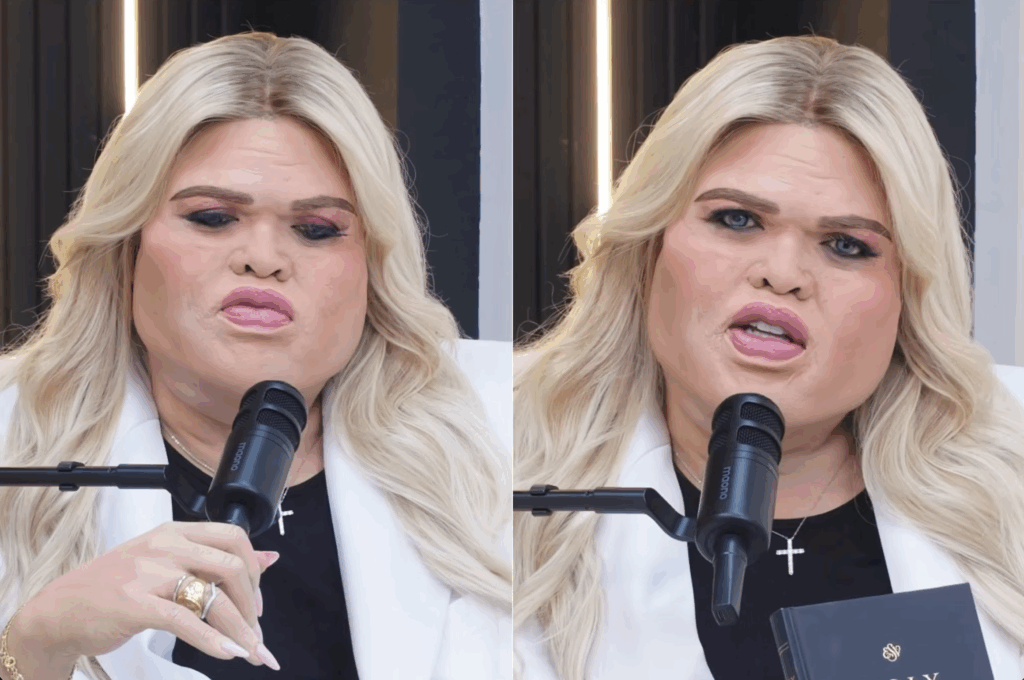
Druski’s sketch doesn’t call out Erika by name — but there’s no mistaking the fact that she’s being roasted.
“How Conservative Women in America act,” he captioned the video above.
The two-minute sketch skewers Erika’s rallies, as well as comments she’s made during some of her viral interviews.
“I serve a righteous God, and that is why we say our prayers. We are all his children, and when I say children, I mean the holy blessed Trinity, which is why I hold the Bible,” Druski (as Erika) says in the video.
“We have to protect all men in America, especially the white men in America. Those are the ones we care about. Yes, because they are the ones who matter most.”
We don’t need to tell you that these are very divisive times in America.

So it’s not surprising that many on the Right have taken issue with
“Of all conservative women in America why her? This woman is [still] grieving,” one X user wrote.
“Is this a joke? You think this is funny? Making fun of Erika Kirk? You’re a disgusting piece of you know what,” another added.
“This is too far man… You were completely disrespectful during NFL Honors & now you’re making fun of Erika Kirk, whose husband was brutally assassinated. This ain’t it,” conservative commentator Jon Root wrote on X.
Root is referring to an incident at the 2026 NFL Honors Awards, where Druski mispronounced the name of Seattle Seahawks wide receiver Jaxon Smith-Njigba’s name while presenting him with the Offensive Player of the Year Award.
Neither Erika nor Druski has commented on the controversy publicly. But something tells us Erika is probably less than thrilled with Druski’s portrayal.
Druski’s Erika Kirk Impression Sparks Outrage on Social Media was originally published on The Hollywood Gossip.
The Hollywood Gossip

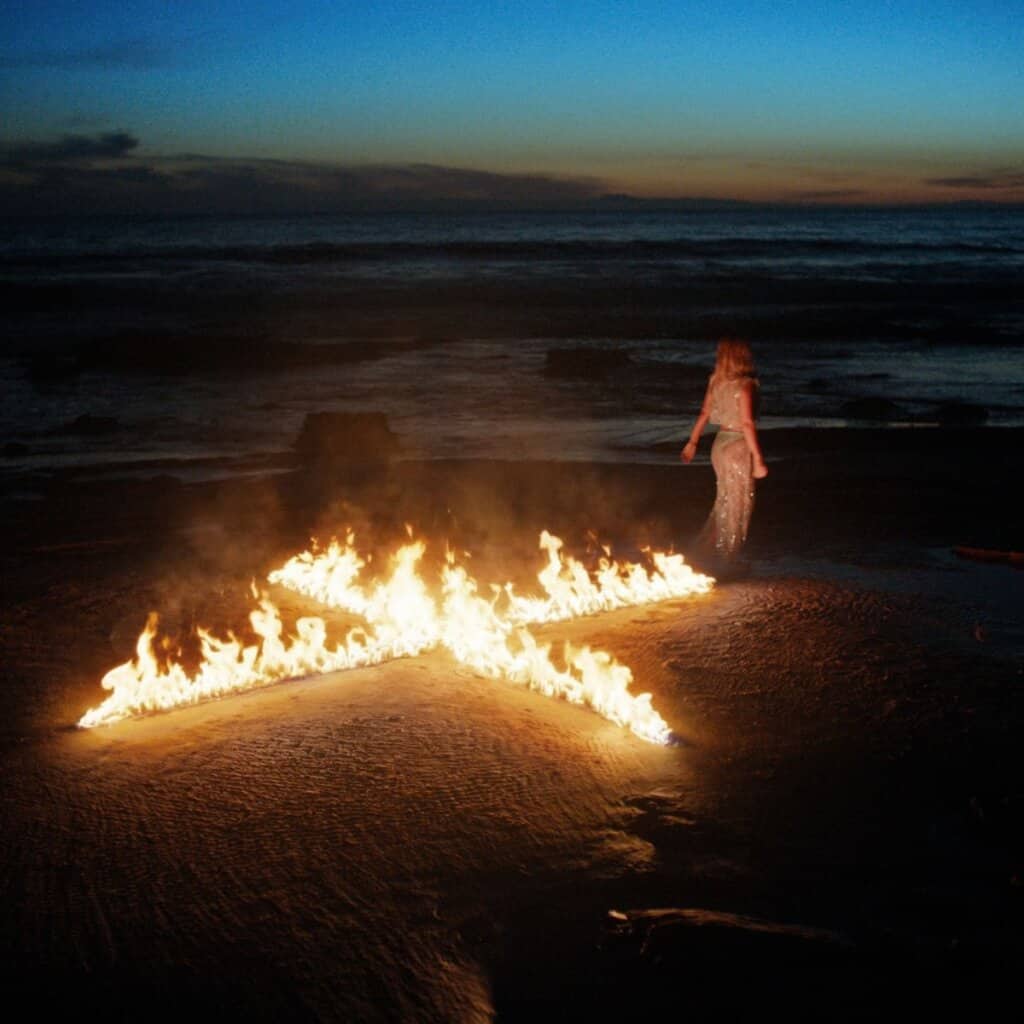
Ashley Cooke is wearing her heart on her sleeve as she speaks to the betrayal and consequences of crossing boundaries in a relationship with her new breakup anthem, “xs.”
This is the release fans have been patiently waiting for since the country star began teasing it on social media. This anticipation was only amplified when she brought the cautionary tale to the stage for the first time in London during her return to C2C: Country to Country.
The mid-tempo track was always destined for greatness, especially with the team of sought-after songwriters behind it, including Cooke with Ashley Gorley, Emily Weisband and Will Weatherly, as well as production by the legendary Dann Huff. The result of their creativity is a narrative centered around a relationship that is strained by a dishonesty that was all-too predictable.
The experience Cooke describes is one that can only lead to heartbreak. She sets the tone by reminding her former love interest of some “common sense” warnings she originally sent his way, knowing that he would eventually fall into temptation.
With her raw vocals, she sings, “Some things are common sense/ One leads to the other/ Like if you crack that door open/ You’ll end up under covers/ With a downtown girl you said I didn’t need to worry about/ Warned you this would happen baby.”
The lyrics chronicle the frustration of someone who saw the hurt coming but still gets blindsided by a partner’s reckless choices and finds herself wrapped up in a “tale as old as time.” Luckily, the Florida-born native is strong enough to stand her ground and feel zero regret when she kicks the two-timer to the curb.
The recurring line, “crossing lines makes xs,” serves as both a warning and a confirmation that once trust is broken, there’s no undoing it, and there’s no coming back.
“Whiskey nights wandering eyes make messes/ Hiding phones, “I don’t knows” make questions/ Towns talk and the truth starts spreading/ And don’t you know crossing lines makes xs/ Oh don’t deny I know you did it/ Oh doesn’t matter how you spin it/ Want me back after that forget it/ Don’t you know crossing lines makes xs,” Cooke delivers on the chorus.
The powerful instrumentation behind the track was brought to life by session players like guitarist Ilya Toshinskiy (Kelsea Ballerini, Tim McGraw) and drummer Jerry Roe (Luke Combs, Cody Johnson), creating an emotionally charged sound that drives every note of betrayal.
“xs” marks the introduction of Ashley Cooke’s next musical era and follows the success of songs like “baby blues” and her current single climbing the charts on country radio, “the hell you are.”
Cooke is hitting the stage tonight at the Appalachian Wireless Arena in Pikeville, KY for the final stop of her run supporting multi-platinum hitmaker Jon Pardi on the HONKYTONK HOLLYWOOD TOUR.
Following this run, she will make her Tortuga Music Festival debut in Fort Lauderdale on April 10, joining a star-studded lineup featuring Post Malone, Riley Green, Kenny Chesney, and more.
The post Ashley Cooke Turns Classic Cheating Story Into an Anthem of Strength With ‘xs’ appeared first on Country Now.
Country Now

The Music City Rodeo is quickly approaching, and excitement surrounding the second annual event is continuing to build.
On Tuesday evening (March 24), rising country artist Mae Estes joined forces with top rodeo talent Rocker Steiner on the Grand Ole Opry stage to announce Music City Rodeo’s Opry Takeover, as well as the official lineup for plaza performances for Music City Rodeo’s Rodeo Plaza at Bridgestone Arena leading into each headlining evening of Music City Rodeo (MCR).
Music City Rodeo’s Grand Ole Opry takeover will take place on May 5 and feature Grand Ole Opry member and 2026 MCR co-headliner Jon Pardi performing alongside artists like Ashley Cooke, Hudson Westbrook, and more. Additional music and rodeo talent will be announced in the coming weeks. Tickets for the Opry takeover are on sale now.
Additionally, it was revealed that ahead of each night of the rodeo on May 28–30, fans can once again take part in the free, family-friendly Rodeo Plaza Pre-Party outside Bridgestone Arena. Opening daily at 2 p.m., the event will feature live music, interactive activities, and a live broadcast of The Cowboy Channel’s RodeoLive on Saturday.
The 2026 lineup includes anthem singers Mae Estes (5/28), Tyler Booth (5/29), and MaRynn Taylor (5/30), along with Rodeo Plaza performers DJ Rio and Mae Estes (5/28), Chris Andreucci and Dalton Davis (5/29), and Patrick Thomas (5/30).
With the buzz continuing to build around the Music City Rodeo, the cowboys made a special stop at a Nashville Predators game, along with several other appearances across the city, to promote the return of the event to Nashville.
Sponsored by TennPop, Music City Rodeo, Nashville’s premier PRCA-sanctioned rodeo, will return to Bridgestone Arena May 28–30, 2026, delivering a three-day celebration that blends world-class rodeo competition with top country music performances in the heart of downtown Nashville.

This year’s headlining lineup features Miranda Lambert (May 28), Charley Crockett (May 29), and Jon Pardi (May 30), each set to bring their own style to the highly anticipated event.
For more information and tickets, visit MusicCityRodeo.com.
Music City Rodeo’s return to Nashville was first revealed by inaugural MCR Grand Marshal and headliner Tim McGraw during the opening night of his 2026 Las Vegas residency. McGraw was joined onstage by top rodeo athletes Tim O’Connell, Rusty Wright, Jace Trosclair, and Cody Custer, along with Music City Rodeo Queen Reagan Caen and trick rider Madison Schalla.
Following a standout inaugural year as the largest rodeo east of the Mississippi, the event has now been named an official Cinch Playoff Series Rodeo for 2026. After selling out its debut run, Music City Rodeo will return with elite competition in bull riding, barrel racing, team roping, and bronc riding, featuring more than $300,000 in prize money up for grabs.
The post Music City Rodeo Unveils Opry Takeover And Rodeo Plaza Events Ahead Of 2026 Return appeared first on Country Now.
Country Now

Breland opens up about his new song “In My Truck” and the unusual steps he took to record it. Continue reading…The Boot – Country Music News, Music Videos and Songs
Breland opens up about his new song “In My Truck” and the unusual steps he took to record it. Continue reading…Country Music News – Taste of Country

From two-foot quesadillas to an eight-pound nacho bucket, these ballparks have upped the ante with their food and drink offerings for the 2026 MLB season.

Food Republic – Restaurants, Reviews, Recipes, Cooking Tips

By: Corinne Smith, Alaska Beacon

The Alaska Legislature on Wednesday approved a stopgap budget bill amid an ongoing debate among lawmakers around war-driven oil revenues and whether to draw from state savings.
The stopgap budget bill contains $449.6 million in state spending including for disaster relief, construction, education, correctional officer overtime and some public assistance programs — expenses accrued since the Legislature and Gov. Mike Dunleavy adopted the state budget last year.
But the question of how and when all the items will be funded is still uncertain. Lawmakers chose to rely on anticipated oil revenue to fund the bill rather than drawing from savings.
The Alaska Senate passed the budget bill by a 19 to 1 vote on Wednesday, with Sen. Robert Meyers, R-North Pole opposing. The bill was quickly transferred to the Alaska House where it passed unanimously by all 40 members. The bill now moves to the governor’s desk for his consideration.
The Legislature created a select bicameral conference committee to hammer out differences between House and Senate versions of the budget bill over the last week.
The final bill includes $75 million for disaster relief to cover the state’s response to the Western Alaska storms last fall, and almost $100 million for fire suppression. It contains $20 million for the Alaska Department of Corrections for overtime spending, as well as $34.4 million for Medicaid and $12.8 million for other public assistance programs through the Alaska Department of Health. The bill allocates nearly $130 million toward the Alaska Higher Education Fund which provides grants and scholarships to students.
The spending bill also includes a time-sensitive appropriation for Alaska’s construction industry. It contains $70.2 million in state dollars to unlock roughly $630 million in federal grant funding that industry groups have said is essential for the summer construction season.
But how the nearly $450 million budget bill is funded is still in question.
Legislators have been closely watching oil prices since the start of the Iran war, which state forecasters have projected could potentially generate hundreds of millions in state revenue for Alaska.
Lawmakers agreed that if oil-driven state revenues from now until June 30, the end of the fiscal year, are not sufficient to cover the stopgap budget, then the Legislature will draw from state savings. That roughly pencils out to an average of $74 per barrel of oil through June to cover state spending, according to data provided by the House Finance Committee.
But that vote to confirm drawing from savings again failed in the House on Wednesday — the fourth vote held in the House this year. To draw from Alaska’s main $3 billion savings account requires support from three-quarters of the House and Senate.
The Senate approved the immediate draw from savings on Wednesday by a 16 to 4 vote, but it failed to pass the House by a vote of 22 to 18. It takes 30 votes in the House to spend from the savings reserve.
On Thursday, House Speaker Rep. Bryce Edgmon, I-Dillingham, expressed concern at sending the budget bill to the governor with what he said was no “backstop” funding from savings.
“So if the price of oil goes down, the governor may not have the money ultimately, to finish up or to pay for operations,” he said for this fiscal year.
Edgmon said he is concerned with banking on future oil prices to pay the state’s bills.
“It’s the first time, I think maybe perhaps in Alaska’s history, we’ve ever done it this way,” he said. “It’s going to be very interesting to see how this plays out, because oil prices can certainly go up as well, but they can also go down. And it’s not the way that I like to operate in terms of being fiscally responsible.”
Members of the Republican House minority caucus in opposition from drawing from savings expressed confidence in oil revenues providing enough funding to cover state expenses.
“Everything in this bill the state currently projects enough revenues to fund,” said Rep. Will Stapp, R-Fairbanks on Wednesday. “We still have many days in session, happy to revisit in the event oil price changes and we need to structure something in order to meet our obligations. That is not a requirement at this moment.”
The stopgap budget bill now moves to Dunleavy who can sign or veto the bill or let it pass into law without his signature.

By: Sean Maguire, Alaska Beacon

Alaska Gov. Mike Dunleavy has proposed eliminating property taxes for the Alaska LNG project to incentivize development of the $46 billion gas line and export facilities.
The bill was introduced to the Legislature on Mar. 20 and would exempt the project from local taxes in Alaska, including property and sales taxes. Instead, a volume-based tax would be levied once the pipeline starts producing significant quantities of gas from the North Slope.
In a statement, Dunleavy said his legislation “removes a structural barrier” that would help get the gas line built. The project is expected to create thousands of construction jobs, spur the development of new industries and potentially lower power and heating bills for consumers.
“We bring more gas into Alaska and stabilize supply — that lowers cost for families like yours and businesses,” Dunleavy said Wednesday on social media.
The state of Alaska is expected to collect over $22.5 billion in new revenue from the project over the next 36 years, primarily from production taxes and royalties, according to state economists.
In addition to exempting the project from property and sales taxes during its ramp-up period, the Alaska Department of Revenue estimates Dunleavy’s bill would equate to a 90% reduction in property tax revenue, once the pipeline is at full capacity.
Municipal governments are expected to take the biggest hit from that change. If the project was built under current tax law, they would collect an extra $13 billion in revenue through 2062, or $360 million annually.
Some long-time lawmakers have questioned whether the pipeline will result in reduced gas prices. Others have questioned why such a sharp reduction in property taxes is needed.
An 800-mile pipeline from the North Slope to deliver natural gas to market has been a dream in Alaska for decades. But prior efforts have all fallen short.
Supporters say its prospects have never been stronger. Key permits are in hand, several Asian nations are interested in buying Alaska’s gas, and President Donald Trump has voiced support for the project.
Former Democratic U.S. Sen. Mark Begich has been hired by the Dunleavy administration to help advance the pipeline. He told lawmakers the 1973 oil shock helped spur development of North Slope oil. Now, war in the Middle East has upended LNG production and raised prices, which makes Alaska natural gas more attractive, he said.
“This is our moment,” he said to the House Resources Committee on Monday, calling the gas line “an incredible project.”
Glenfarne, a New York-based company, signed on to develop the pipeline last January. It owns 75% of the project while the Alaska Gasline Development Corp., a state agency, owns the remaining 25%.
But the economics of the $46 billion gas line remain uncertain.
Glenfarne chose to split the project in two. The first phase would see construction of a pipeline for domestic consumption, with delivery of gas targeted for 2029. The second phase would construct a plant and shipping terminal in Cook Inlet for export.
Alaska’s current tax structure means a 2% property tax can be levied on oil and gas infrastructure.
Dunleavy’s tax proposal would impose a volume-based alternative. A new tax would be levied at 6 cents on every thousand cubic feet of gas, which would increase by 1% annually.
The tax would only be imposed once the pipeline delivers an average of 1 billion cubic feet of gas per day or 10 years after gas starts being produced.
Dan Stickel, economist with the Department of Revenue, on Wednesday said reducing property taxes would help with front-end costs. He said the agency is not examining Dunleavy’s bill as a tax cut because it would help spur the pipeline and potentially lead to new state revenue.
Stickel told the House Resources Committee that AGDC and Glenfarne have said the project will not move forward without property tax relief.
At full capacity, the pipeline is expected to deliver 3.5 billion cubic feet of gas per day. Southcentral Alaska’s demand for Cook Inlet gas equates to roughly 70 billion cubic feet of gas per year.

Adam Prestidge, president of Glenfarne Alaska LNG, said the project would be an “industrial renaissance” for Alaska. It could create 7,000 jobs during construction and spur new opportunities such as data centers, he said.
Wearing a lapel pin in a House Resources Committee hearing that said “build the line,” Prestidge told lawmakers discussions on gas agreements are ongoing with Alaska utilities. He said agreements could be signed and made public in the next couple of months.
“This is the only way to significantly bring down the cost of energy for Alaskans,” he said.
The Alaska Department of Revenue estimates the state would receive $22.5 billion in revenue from the gas line through 2062. The majority of that windfall would come from production taxes and royalties.
Compared to Alaska’s current tax regime, Dunleavy’s proposal would see the state miss out on $200 million per year from property taxes once the pipeline is at full capacity, projections show.
The alternative tax structure proposed by the governor would see $64 million per year collected by municipalities at full gas production and $9 million annually by the state.
For municipalities, there would be a bigger hit.
The gas line is expected to be built through four municipalities that collect property taxes: the North Slope Borough, Denali Borough, Matanuska-Susitna Borough and the Kenai Peninsula Borough.
Under Alaska’s current tax structure, municipal governments would be expected to share in $17.3 billion from the pipeline through 2062. Under Dunleavy’s tax bill, it would be below $4 billion.
Anchorage Democratic Sen. Bill Wielechowski, vice-chair of the Senate Resources Committee, spoke at a Tuesday news conference. He said legislators would look closely at Dunleavy’s proposed tax break and determine whether a 90% cut in property taxes is appropriate.
“I don’t know anybody in the Legislature who doesn’t want a gas pipeline. The question is, what is it going to take to get it?” Wielechowski said.
State projections show that under both tax systems, the owners of the pipeline are expected to collect $60 billion over the next 36 years.
Anchorage Republican Sen. Cathy Giessel, chair of the Senate Resources Committee, estimates Alaska has invested $1.1 billion to build a natural gas pipeline, but nothing has been built.
On Tuesday, Giessel cited costs like public safety that could be borne by communities along the proposed pipeline. She said it would likely take until the second phase of the project before 1 billion cubic feet of gas is produced per day. Meaning, it could take years before municipalities collect Dunleavy’s volume-based tax, she said.
“That’s a long time for these communities to have no property tax,” she said.
State data suggests local governments would take $6.3 billion in property taxes through 2042. Dunleavy’s volume-based tax would net them $1.3 billion over the same period.
“This is a huge give to the company,” Giessel said. “Will it still be enough for them? I don’t know.”
Mayors in impacted communities are set to testify on the governor’s tax proposal on Friday afternoon before the Senate Resources Committee.