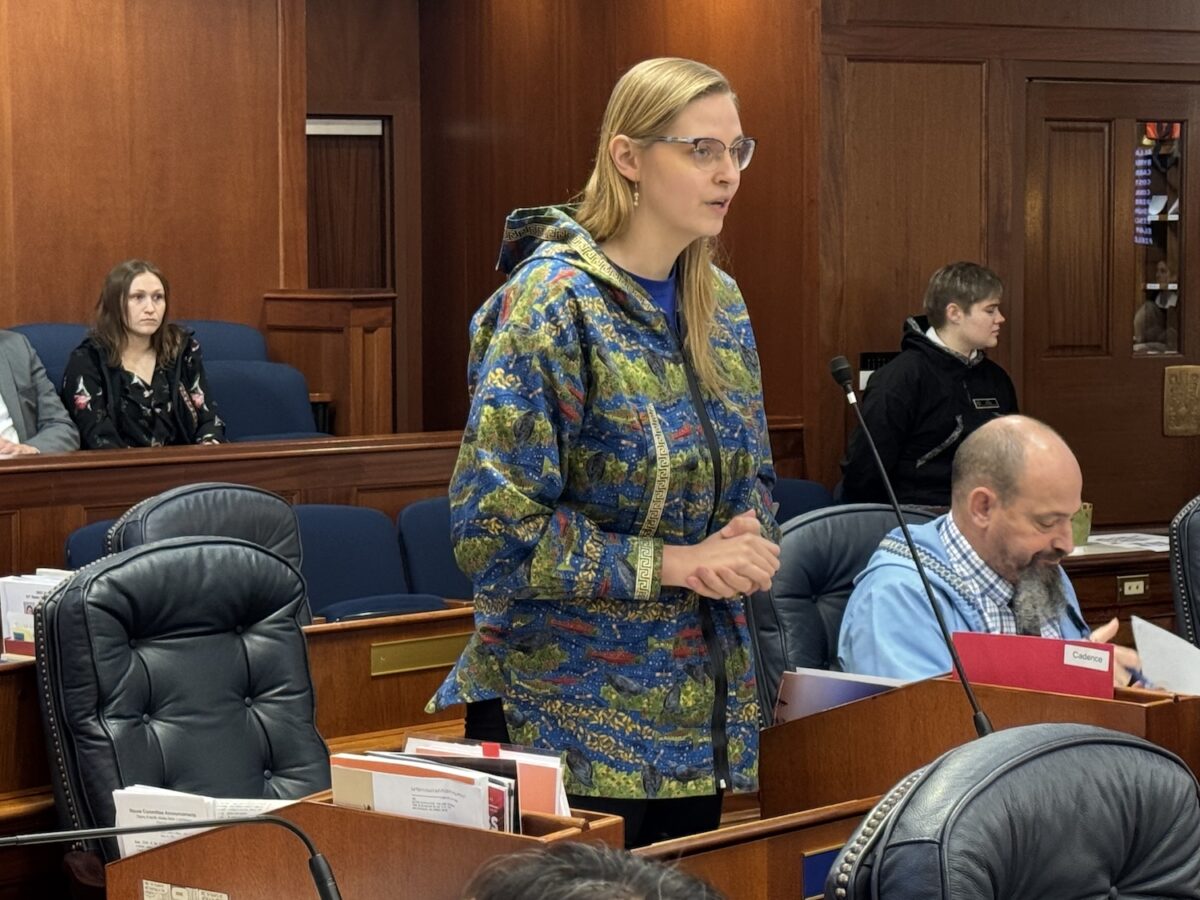
Rep. Ashley Carrick, D-Fairbanks, talks on the floor of the Alaska House of Representatives on Friday, Feb. 6, 2026. (James Brooks photo/Alaska Beacon)
By: James Brooks, Alaska Beacon
Rep. Ashley Carrick, D-Fairbanks, talks on the floor of the Alaska House of Representatives on Friday, Feb. 6, 2026. (James Brooks photo/Alaska Beacon)
The University of Alaska may soon be legally required to provide itemized bills to students and give them more notice of fee increases.
The Alaska House of Representatives voted 36-3 on Friday to pass House Bill 176 and send it to the Senate for further consideration.
Rep. Ashley Carrick, D-Fairbanks, introduced the bill in the House and said it is “meant to provide greater transparency and accountability for all of my fellow Nanooks, Seawolves and Whales out there,” referring to the state’s universities by their mascots.
“With House Bill 176, it is our hope that we are able to provide more information to students and those that may be helping them to pay their bills about what it is that they are paying for and how those dollars will be spent,” she said.
The legislation received bipartisan support in the House.
“As a mom of two college students, it is important to see what is going on with their tuition because I’m paying for their tuition,” said Rep. Jamie Allard, R-Eagle River.
No one spoke against the bill on the floor, but afterward, Rep. Justin Ruffridge, R-Soldotna and one of three “no” votes, said he didn’t think the bill was necessary.
“I just think government does some things that could be solved with five or six conversations,” he said.
The University of Alaska said in a fiscal note that it believes it can implement the changes without any additional cost to its budget.
The bill has been referred to the Senate Education Committee, which has not yet scheduled it for a hearing.
NOTN- The Juneau Assembly on Monday approved zoning changes at two Lemon Creek properties, one near Costco, and directed more than $2 million from the city’s Affordable Housing Fund to support several housing developments, as officials continue efforts to address a persistent housing shortage.
Deputy Mayor Greg Smith said housing was the focus of Monday night’s meeting.
The rezones were “tricky” he said, as certain zoning districts may not always be appropriate for housing.
“The Comprehensive Plan has a map that says what zoning districts are for good reason, people may not want to live next to an asphalt plant, or a rock crushing place, or a shooting range. So there are these zoning deserts, and there’s reason for it.” he said. “The development department and the planning commission looks and says, how will this use work? I think kind of a broader sentiment at the assembly was. some of these sites have been developed in a long time, we really need housing. lets give it a shot.”
Despite earlier recommendations against the changes from the Planning Commission, one property had been zoned industrial, where housing was not allowed, and the other required a zoning adjustment to permit expanded residential development.
The votes were not unanimous, he said.
In addition to the zoning decisions, the Assembly approved five measures allocating money from the city’s Affordable Housing Fund to projects across the city. Altogether, the developments are expected to add roughly 40 housing units, including a mix of single-family homes and multifamily buildings.
“We passed five that appropriated funds from the affordable housing fund for various projects throughout the borough, that was big.” Smith said.
Among the projects receiving support is the planned redevelopment of the former Bergmann Hotel in downtown Juneau. The developer is seeking to convert the long-closed building into an apartment complex. Other funded projects include new single-family homes and a small multifamily development in various neighborhoods, like Pederson Hill.
The Assembly also formally adopted its goals for the coming year, building on priorities identified during a December retreat.
City representatives will be attending the Southeast Alaska Conference this week.
Imagine sneaking out at 14 to chase a dream, only to find Dad in the crowd. Cody Johnson’s story pulls at the heartstrings. Continue reading…The Boot – Country Music News, Music Videos and Songs
Imagine sneaking out at 14 to chase a dream, only to find Dad in the crowd. Cody Johnson’s story pulls at the heartstrings. Continue reading…Country Music News – Taste of Country
A major player in women’s fashion is taking a bow, leaving shoppers with a whirlwind of discounts. Continue reading…The Boot – Country Music News, Music Videos and Songs
A major player in women’s fashion is taking a bow, leaving shoppers with a whirlwind of discounts. Continue reading…Country Music News – Taste of Country
It’s easy to stock up on more goods at Costco than necessary or go home with Kirkland products that you don’t need, but can you make a return without a receipt?
Mashed – Fast Food, Celebrity Chefs, Grocery, Reviews
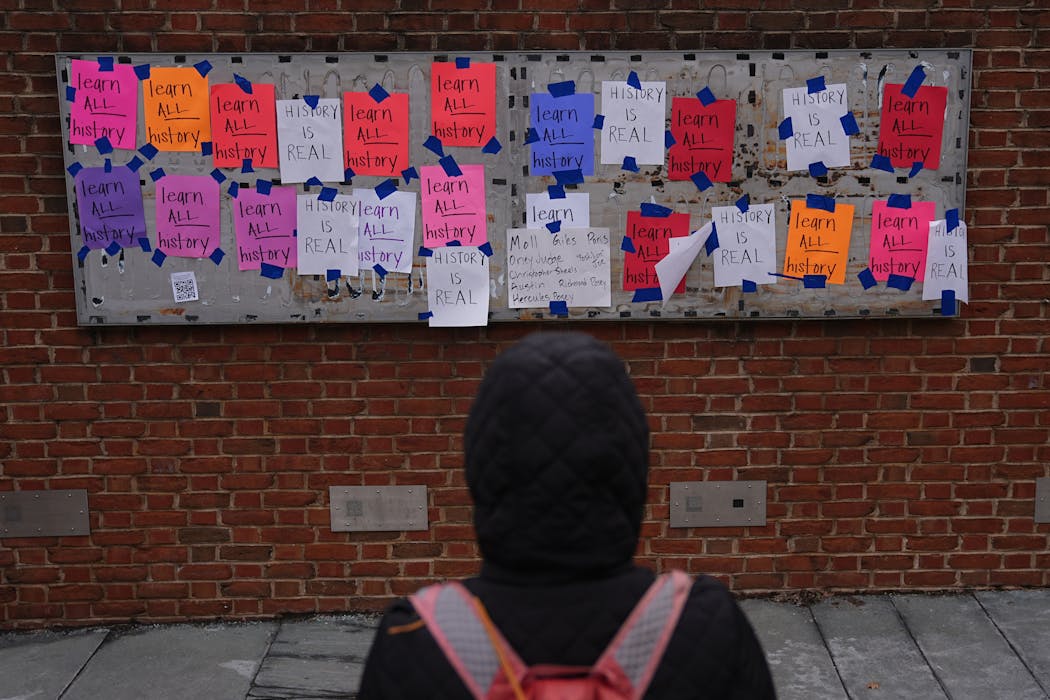
The National Park Service removed an exhibit on slavery at the President’s House site in Philadelphia on Jan. 22, 2026. The city of Philadelphia has sued the Trump administration in response. AP Photo/Matt Rourke
On the evening of May 21, 1796, Ona Judge made the daring decision to free herself.
Considering the prominence of her owner, the laws of the time and the dangerous trek to New Hampshire, a place where she could discreetly live freely, the act carried remarkable risk. Nevertheless, she slipped out of the President’s House undetected while the first family dined.
The house, then located at the intersection of 6th and Market streets in Philadelphia, served as the first executive mansion. It stood mere feet from Independence Hall, where the nation adopted its lofty language regarding freedom.
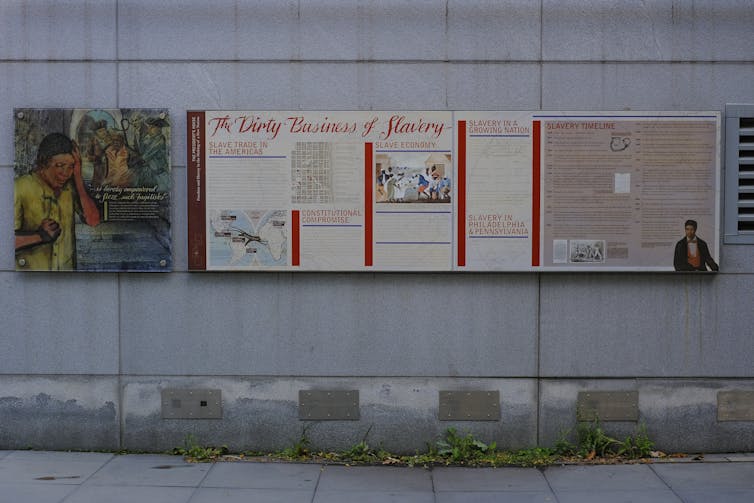
The slavery exhibition at Independence Hall opened in December 2010. It was the first slavery memorial on federal land in U.S. history. Michael Yanow/NurPhoto via Getty Images
Years later, Judge described her narrow escape to Rev. Benjamin Chase in an interview for the abolitionist newspaper The Liberator. Judge told Chase, “I had friends among the colored people of Philadelphia, had my things carried there beforehand, and left Washington’s house while they were eating dinner.”
Prior to her escape, Judge served as a chambermaid in the President’s House. She spent years tending to Martha Washington’s every need: bathing and dressing her, grooming her hair, laundering her clothes, organizing her personal belongings, and even periodically caring for her children and grandchildren.
Being a chambermaid also included grueling daily tasks such as maintaining fires, emptying chamber pots and scrubbing floors.
Even though she engaged in this arduous labor as property of the Washingtons, living in Philadelphia provided Judge a glimpse of what freedom could eventually look like for her. Historians estimate that 5% to 9% of the city’s population at the time were free Black people. Prior to her escape, Judge befriended several of them.
In the spring of 1796, the Washingtons prepared to return to Virginia to resume private life. President Washington issued his farewell address in the fall of 1796, but he told family and close confidants of his plans earlier in the year.
During that time, Martha Washington made arrangements for their pending return to Mount Vernon. Her plans included bequeathing Ona Judge to her granddaughter, Elizabeth Parke Custis, as a wedding gift. Upon learning this, Judge made plans of her own.
In her interview with Chase she explained, “Whilst they were packing up to go to Virginia, I was packing to go, I didn’t know where; for I knew that if I went back to Virginia, I should never get my liberty.”
As a civil rights lawyer and professor in the Africology and African American Studies department at Temple University in Philadelphia, I study the intersection of race, racism and the law in the United States. I believe Judge’s story is vital to the telling of America’s history.
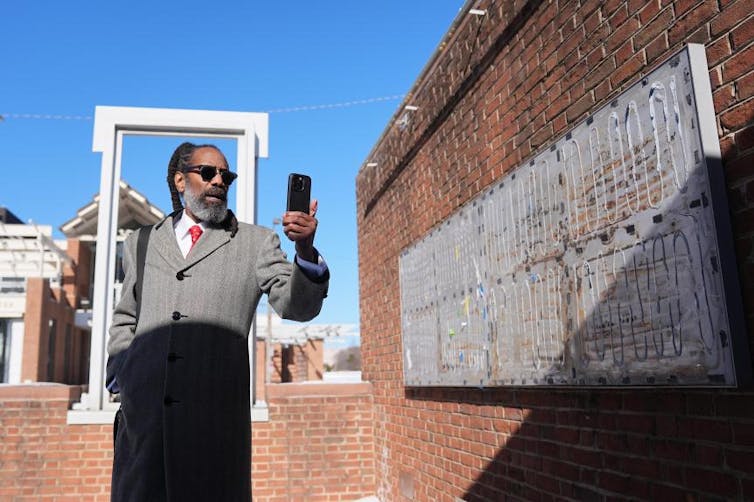
Before January 2026, those who wished to learn about Judge could literally stand on the same walkway in Philadelphia where Judge once stood when she chose to flee. Several footprints, shaped like a woman’s shoes and embedded into the pathway outside of where the President’s House once stood, memorialize the beginning of Judge’s journey. These footprints composed part of an exhibit examining the paradox between slavery, freedom and the nation’s founding.
The exhibit, “Freedom and Slavery in the Making of a New Nation,” also included 34 explanatory panels bolted onto brick walls along that sidewalk. They provided biographical details about the nine people the Washingtons owned while living in the presidential mansion. The exhibit presented the sobering reality that our nation’s first president enslaved people while he held the nation’s highest office.
These and other panels discussing the founders’ owning of slaves were removed in late January 2026, after an executive order issued by President Donald Trump in March 2025 called to eliminate materials deemed disparaging to the Founding Fathers or the legacy of the United States. Matthew Hatcher/Getty Images
This changed in late January when the National Park Service dismantled the slavery exhibit at Philadelphia Independence National Historic Park. The removal sparked intense, immediate outrage from people across the country dismayed by the attempt to suppress unfavorable aspects of American history.
Philadelphia Mayor Cherelle Parker responded swiftly. “Let me affirm, for the residents of the city of Philadelphia, that there is a cooperative agreement between the city and the federal government that dates back to 2006,” she said in a public statement. “That agreement requires parties to meet and confer if there are to be any changes made to an exhibit.”
The city of Philadelphia later sued Interior Secretary Doug Burgum and National Park Service acting Director Jessica Bowron. Pennsylvania subsequently filed an amicus brief in support of the city’s lawsuit.
Civil rights activist and Philadelphia-based attorney Michael Coard recently had an opportunity to visit and examine the exhibits in storage. Coard has led the fight to create and preserve the exhibit and now is at the center of the fight to restore it.
Philadelphia-based attorney Michael Coard, who helped lead the effort to create the exhibition, visited the site after its removal. AP Photo/Matt Rourke
Limiting discussion of race
While the court deliberates the future of the exhibits, critics continue to raise key concerns regarding the exhibit’s removal. Many argue the National Park Service’s dismantling of the exhibit is an attempt to “whitewash history” and erase stories like Ona Judge’s.
This is particularly the case considering the Trump administration has restored and reinstalled two Confederate monuments of Albert Pike in Washington, D.C., and Arlington National Cemetery, while removing the slavery exhibit in Philadelphia.
Similarly, during the first Trump administration, the federal government engaged in various efforts to counterbalance the 1619 Project, a project spearheaded by Pulitzer-winning journalist Nikole Hannah-Jones that discussed the 400th anniversary of slavery’s beginnings in America. The 1619 Project spawned yearslong backlash. This included the 1776 Commission, created during the first Trump administration, which tried to discredit the conclusions of the 1619 project.
This pattern has intensified as the United States prepares to celebrate the 250th anniversary of the framers signing the Declaration of Independence. As the nation celebrates its history, it must decide how much of it to explore.
In the face of widespread pessimism about the political fate of the United States and growing political polarization, scholars and citizens across the country are reimagining how American democracy could better serve the needs of the whole population.
In an October 2025 poll, a slight majority said that radical change is needed to make life better in America, compared to 32% who answered only small change is needed.
Reimagining a political system’s future effectively begins with the system’s foundation: how the populace chooses the people who will represent them and make collective decisions.
The U.S. Constitution mandates elected representatives in Congress to decide important questions, such as how to tax the population and spend that collective revenue. And they determine whether to go to war or to defend allies if they are invaded.
What would it take to make that electoral system become more responsive to citizens’ needs? How could it be fairer and more accurate in representing the entire electorate?
One answer is found in proportional representation, an electoral system used in most of the rest of the world’s established democracies. These systems elect multiple representatives in a district in proportion to the number of people who vote for them.
It examined evidence from other countries and concluded that proportional representation could provide more fair and accurate representation and more choice. Proportional representation could also help with the deep political polarization engulfing the United States.
How proportional representation works
This proposal would change the way Americans elect representatives to the U.S. House of Representatives and potentially to state legislatures.
Currently, the winner-take-all system in the U.S. works like this: States are divided into districts based on population and elect one representative to the House of Representatives per district. The winner is the person who gets the most votes. Most states also use this single-member district system to elect members of their state legislatures.
A proportional representation system has larger, multimember districts. Candidates are elected according to the share of votes they or their parties receive.
Different versions of proportional list systems exist. In one version called open list proportional representation, voters choose a candidate from party lists of nominated candidates or from lists of independent candidates.
So if the Good People Party, for example, wins 40% of the vote in a district with 10 members, it will get four seats. And the top four vote-winners on their list will be elected. If the Serious People Party wins 20% of the vote, it will get two seats, with the top two vote-getters on their list elected.
This method simultaneously serves the purpose of a primary election, allowing voters to choose among nominees from a party.
Another version of proportional representation also has multimember districts but uses ranked-choice voting to select the members, where voters rank candidates in order of preference. New Zealand and Australia changed to this system for some of their representative bodies in 1993 and 1948, respectively.
A September 2024 poll found that over half of Americans think the U.S. should change the way representatives are elected to the House of Representatives. SDI Productions
The advantages of proportional representation include outcomes where many more voters would live in a district with at least one of the elected officials representing their choice. That differs from the winner-take-all system where those on the losing side feel unrepresented, especially when the district is split 51% to 49%, for example.
Proportional representation opens the door to more choice because it becomes possible for a smaller party to win one seat out of five, for example. It would begin to break up the two-party system that currently forces some voters to choose the “lesser of two evils,” or to vote strategically against their most disliked party rather than for someone they want.
To be sure, proportional representation can lead to difficulty in forming a majority coalition. This happened in Belgium in 2010. It can also lead to situations where small, extremist parties can demand major concessions to join a larger party in forming a majority coalition, which Israel recently experienced.
Israel is often cited as a negative example of proportional representation. But the country remains unusual in that its extreme electoral system includes the entire country as one large district with 120 seats, so that many small parties can be elected.
Research indicates that districts with three to eight members are ideal to provide more accurate representation without overly fragmenting the party system.
In the U.S. it’s more likely that proportional representation would allow for different factions of the existing parties to be represented. Imagine a five-seat district that elects one MAGA Republican, one traditional Republican, one progressive Democrat, one centrist Democrat and one third-party or independent candidate. This would begin to break down the polarization and allow for different coalitions to form across different issues.
Changing the system to elect House members does not require a constitutional amendment. The Constitution allows states to determine the manner of elections.
In a bloc system, voters get as many votes as there are seats in that district. So in a five-seat district, each voter gets five votes instead of only one vote in a proportional system. A majority group, say whites, could thus choose to vote for only white candidates and win across the board, locking out any minority candidate from winning. The repeal could include a prohibition on returning to that bloc system.
Proportional representation would require that lawmakers who hold their seats under the current system agree to change the 1967 law. And they may be reluctant to change to a system that would give voters more choice.
But interviews with retiring lawmakers show their frustration with the dysfunction and toxicity of the current Congress. And some lawmakers are pushing for a committee to study how changes to the electoral system could create a better-functioning Congress.
Additionally, there is growing support for electoral reform in the U.S. A September 2024 poll found that over half of Americans think the U.S. should change the way we elect representatives to Congress. And 63% believe the country would be better off with more than two competitive parties.
One U.S. city – Portland, Oregon – recently moved to proportional representation. The Portland City Council that took office in 2025 has greater gender, minority and neighborhood representation than in the past, even if it experienced some initial difficulty in forming a majority coalition. And Cambridge, Massachusetts, has used proportional representation since 1941, where 95% of voters see one of their top three choices elected.
States and municipalities could thus become laboratories of innovation, experimenting with different versions of proportional representation and providing models and momentum for a national-level change. And the country could begin not only to reimagine but to experience a different democracy that serves all.
Jennifer Lynn McCoy receives funding from the Carnegie Corporation for an Andrew Carnegie fellowship on depolarization as well as the Institute for Humane Studies.. She is Regent’s Professor of Political Science at Georgia State University and a nonresident scholar at the Carnegie Endowment for International Peace.