There have been three strategies by three successive governments to tackle violence against women and girls (VAWG) since 2010, and one refresh.The Latest News from the UK and Around the World | Sky News










There have been three strategies by three successive governments to tackle violence against women and girls (VAWG) since 2010, and one refresh.The Latest News from the UK and Around the World | Sky News
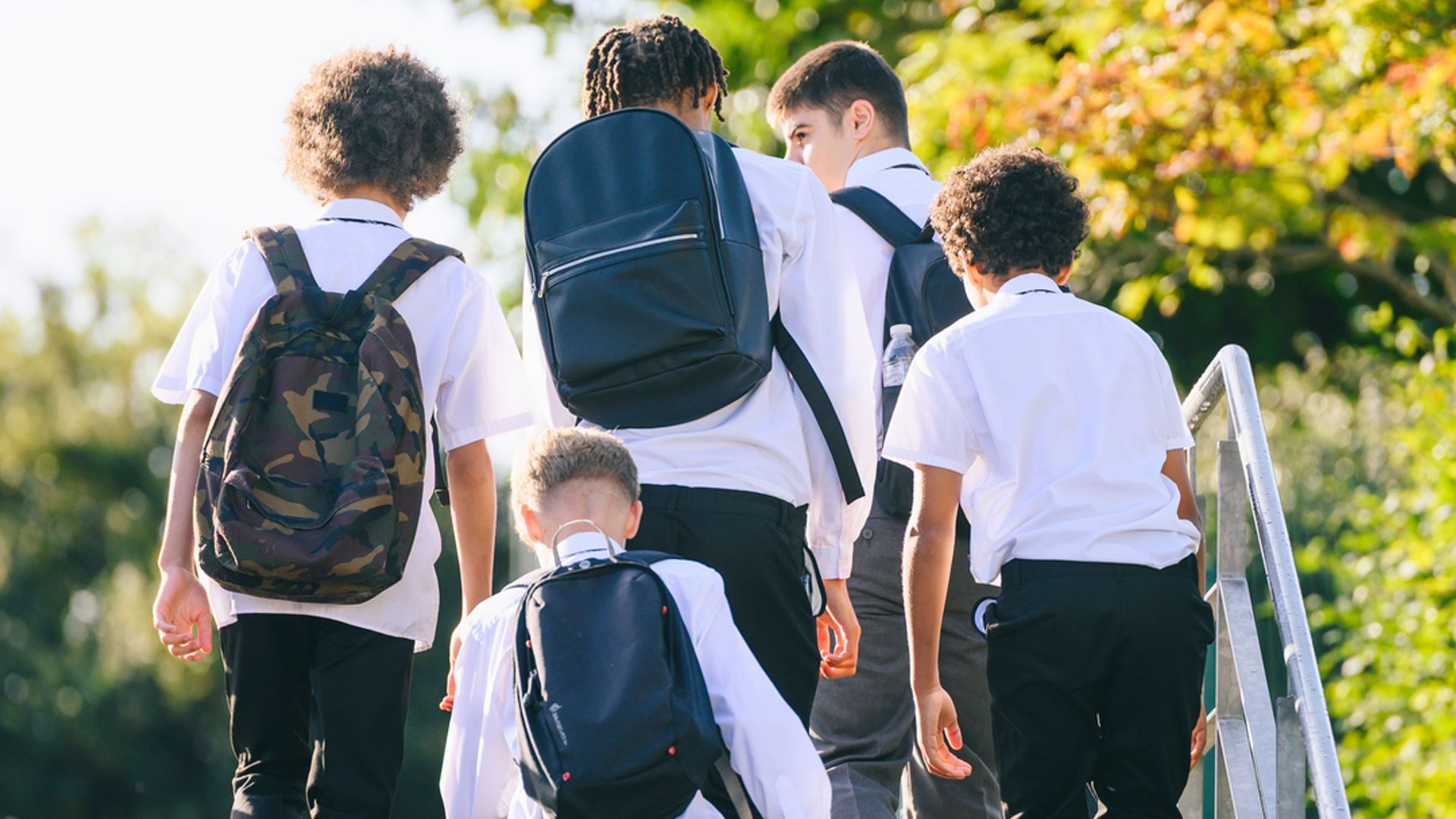
Teachers will be trained to spot early signs of misogyny in boys and steer them away from it as part of the government’s long-awaited strategy to tackle violence against women and girls (VAWG).The Latest News from the UK and Around the World | Sky News
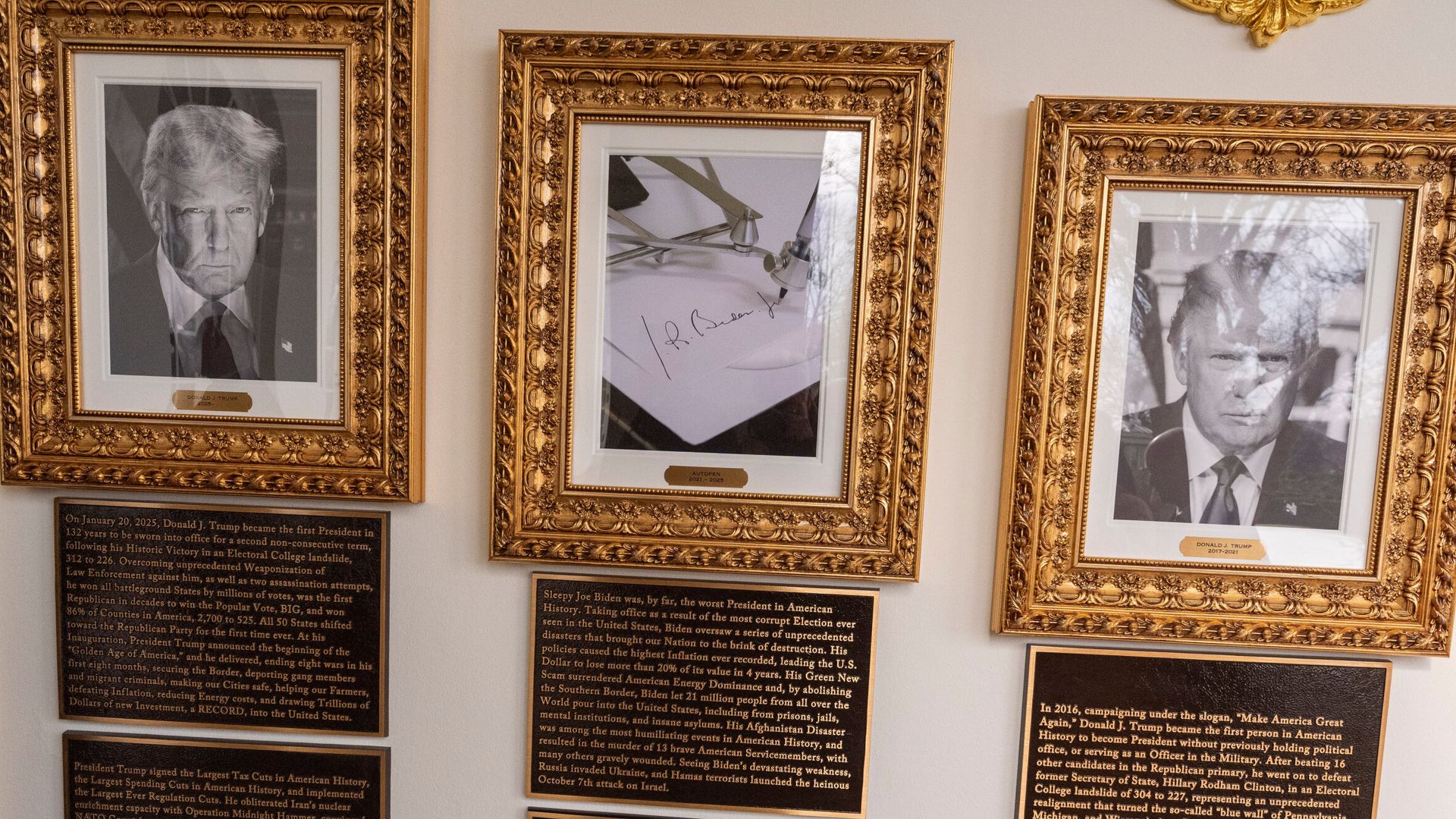
Donald Trump’s administration has installed new plaques beneath portraits of former presidents attacking his predecessors in the US president’s typical fashion.The Latest News from the UK and Around the World | Sky News

The Bondi terror attack suspects spent their entire four-week visit to the Philippines in Davao City and rarely left their hotel for more than about an hour at a time, according to a member of staff.The Latest News from the UK and Around the World | Sky News
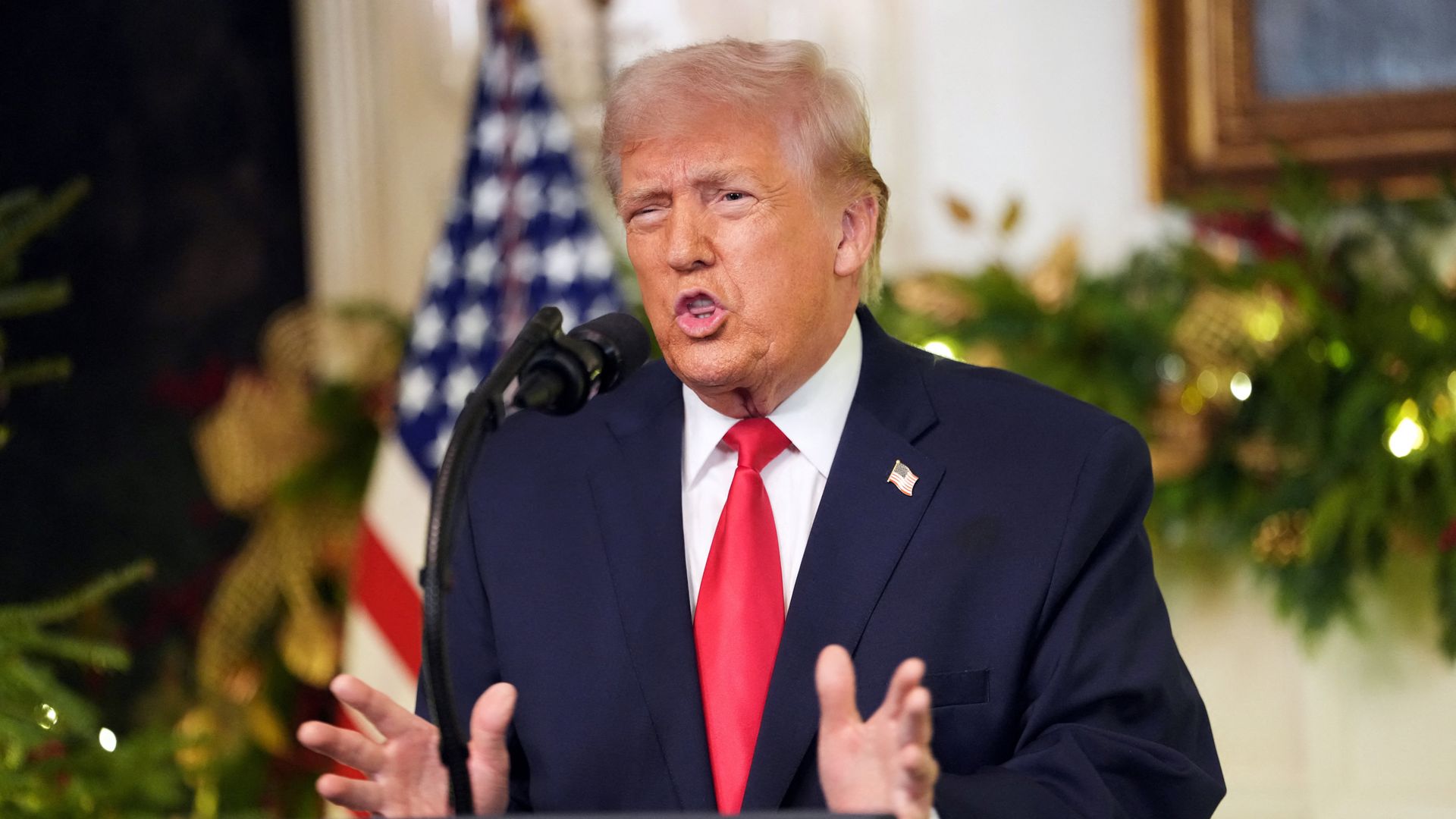
The anticipation had been that it would be a speech of significance.The Latest News from the UK and Around the World | Sky News
By: James Brooks, Alaska Beacon

Alaska Gov. Mike Dunleavy’s administration is proposing to divert money from a program intended to compensate North Slope communities for the side effects of oil and gas drilling on federal land near them.
As Dunleavy prepares to unveil a long-term fiscal plan, the state is proposing to use at least some of that money across Alaska instead.
“Definitely a big deal,” said Alexei Painter, director of the Legislative Finance Division, which analyzes the budget on behalf of legislators.
The National Petroleum Reserve-Alaska Impact Mitigation Grant Program sends millions of dollars from the federal government to North Slope communities each year.
It’s funded through revenue generated by oil production on federal land in the North Slope, and it is expected to grow significantly in coming years as more oil is produced from projects like Willow, which is located in the vast petroleum reserve between Utqiagvik and the Prudhoe Bay oil field.
The Willow project alone, for example, is expected to generate $3.1 billion for the grant program between 2029 and 2053, a boon for the borough’s 10,583 residents.
But in documents published recently, the Department of Revenue has reclassified money for the program as “unrestricted,” meaning it could be spent in a variety of ways.
During a Wednesday meeting of the Alaska Permanent Fund Corp. board of trustees, CEO Deven Mitchell told the board that he had just heard “that there’s been a federal law change” that could see more money end up in the Permanent Fund.
Mitchell couldn’t recall where he had read about that change, but it appears in the state’s newly published revenue forecast, which covers the fiscal year that starts July 1.
In several footnotes, the Department of Revenue describes a shift in policy. Currently, revenue from the leasing of federal land in the petroleum reserve is deposited in “a special revenue fund” dedicated to a particular purpose.
That changes with the new fiscal year, when “these payments will be divided between unrestricted revenue (74.5%), the Permanent Fund (25%) and Public School Trust Fund (0.5%).”
That would mean money from NPR-A would end up in the state’s general-purpose accounts, usable for services statewide or the Permanent Fund dividend.
Last year, the department wrote, “The federal government dictates that shared NPR-A revenue must be used for specific purposes, and therefore it is considered restricted revenue in this forecast.”
This year, that sentence doesn’t appear.
Comparing the two forecasts shows the difference. Last year, the department labeled NPR-A revenue as “restricted,” or locked in to a particular purpose. In the new fall forecast, it’s “unrestricted,” or available for general use.
While only $9.6 million in NPR-A revenue is expected in the next fiscal year, the state forecasts that amount will rise significantly after the end of the decade — to more than $200 million per year by 2033.
Speaking to reporters last week, an official with the Office of Management and Budget said the Alaska Department of Law was evaluating how changes to federal law in the Big Beautiful Bill Act will change the distribution of revenue to the state and local communities.
That act, passed with the enthusiastic endorsement of Republicans in Congress and President Donald Trump, calls for the state to receive 70% of revenue from oil and gas leases on federal land in the National Petroleum Reserve, Arctic National Wildlife Refuge and Cook Inlet, starting in fiscal year 2034.
The Department of Revenue concluded that clause will ultimately have little effect.
“Since all current and forecasted production in the NPR-A is located on leases issued before 2025, only a small portion of revenue within the current forecast period is expected to receive the 70% share,” the department wrote in its new forecast.
More important for the short term, the Act contains a clause stating that “for each of fiscal years 2025 through 2033, 50 percent (of federal-land oil revenue) shall be paid to the State of Alaska.”
Previous federal law contained a 50-50 split but also contained a clause stating that “in the allocation of such funds, the State shall give priority to use by subdivisions of the State most directly or severely impacted by development of oil and gas leased under this Act.”
That priority doesn’t appear in the Big Beautiful Bill.
As a result, the Alaska Department of Law is determining whether the state may choose to keep that money for direct uses instead of sending it to communities, the OMB official said.
As a precondition for the interview, reporters agreed to allow the official to speak on background and not be quoted directly.
The Alaska Department of Law did not respond to an emailed inquiry about the effort, nor did staff for any of Alaska’s three members of Congress, who were instrumental in adding that language to the Big Beautiful Bill Act.
The North Slope Borough was unable to comment before deadline Wednesday. Officials from VOICE of the Arctic Inupiat, an organization that has acted as a local booster for oil production, also did not return a message seeking comment.
By: James Brooks, Alaska Beacon

Alaska State Troopers said in a bulletin Monday that Dr. Ryan McDonough died in a weekend fire at his home in Wasilla.
At the time of the fire, McDonough — a cardiologist formerly with Mat-Su Regional Medical Center — was on $50,000 bail after being arrested on Dec. 11 and accused of owning child sexual abuse images.
The alleged crimes, and the bail posted by McDonough’s wife, were reported by the Anchorage Daily News on Friday, a day after the medical center fired him.
The fatal fire at McDonough’s home took place Saturday; McDonough was initially listed as missing after the fire, but firefighters found human remains at the site, and preliminary testing later identified McDonough’s body.
The cause of the fire remains under investigation, and the other people who lived at the home were unharmed.
Alaska Gov. Mike Dunleavy appointed McDonough to the state medical board in August. That month, he joined other members of the medical board in voting to impose restrictions on medical care for transgender youth in the state and to recommend that Alaska lawmakers end legal access to abortion in the late stages of pregnancy.
McDonough subsequently appeared to drop off the board; he attended its August and September meetings but was absent from its October and November ones, public records show.
Because of absences and unfilled seats, the board — which regulates doctors and other medical professionals in Alaska — has had problems finding a quorum needed to do business.
McDonough’s name was removed from the board’s roster in November. A spokesperson for Dunleavy told the Anchorage Daily News that the governor’s office found out about McDonough’s alleged crimes on Friday and was not aware of any investigations at the time of his appointment.
According to an affidavit submitted in Palmer courts by a Department of Homeland Security officer, the online file storage company Dropbox sent a tip to the National Center for Missing and Exploited Children on July 31.
That tip led to the investigation of a Dropbox account linked to McDonough that contained a video of a child being sexually abused. A second tip followed another video on Aug. 10.
The Anchorage Police Department, in charge of investigating tips like those received by the National Center, obtained a search warrant for McDonough’s Dropbox, GCI and Google accounts. Subsequent searches found additional suspect videos, and McDonough’s computer was seized during a search warrant on Dec. 11, shortly before his arrest.
The Alaska Beacon typically publishes copies of court affidavits but is not doing so in this case because of their graphic contents and because they describe acts of sexual violence against children.
McDonough’s next court appearance was scheduled for Jan. 31.
By: Yereth Rosen, Alaska Beacon

The National Oceanic and Atmospheric Administration issued its annual Arctic Report Card on Tuesday, which documents the way rising temperatures, diminished ice, thawing permafrost, melting glaciers and vegetation shifts are transforming the region and affecting its people. The agency has released the report for 20 years as a way to track changes in the Arctic.
“The Arctic continues to warm faster than the global average, with the 10 years that comprise the last decade marking the 10 warmest years on record,” Steve Thur, NOAA’s acting administrator for oceanic and atmospheric research and the agency’s acting chief scientist, said at a news conference Tuesday.
The report card is a peer-reviewed collaboration of more than 100 scientists from 13 countries, with numerous coauthors from the University of Alaska Fairbanks. It was officially released at the American Geophysical Union’s annual meeting in New Orleans, where Thur and other officials held the news conference.
The report is the first under the second Trump administration, at a time when the federal government’s commitment to documenting Arctic climate change has diminished: The president has repeatedly called climate change a hoax and federal departments are cancelling climate change-related research and projects, as well as scrubbing climate information from public view.
Under directives from the Trump administration, NOAA no longer provides information that the National Snow and Ice Data Center once used to monitor sea ice and snow cover, for example. The Colorado-based center now relies on satellite information from the Japan Aerospace Exploration Agency for its sea ice reports, and it has reduced its analysis.
A national dataset about the melt of the Greenland Ice Sheet has also been lost to the Trump administration’s cutbacks, said Rick Thoman of the UAF’s Alaska Center for Climate Assessment and Preparedness, one of the report’s main editors. The ice sheet is still being monitored by European satellites, but the data is not equivalent, he said.
Government entities like NOAA’s Alaska Fisheries Science Center, which regularly provides scientific information that goes into the Arctic Report Card, have endured deep budget cuts and staff firings.
On Tuesday, Russel Vought, President Donald Trump’s Office of Management and Budget Director, said the administration plans to close the National Center for Atmospheric Research, a Colorado research facility that has operated since 1960. The facility “is one of the largest sources of climate alarmism in the country,” Vought said in a post on the social media site X.
And this year, unlike the other years since 2006 when NOAA published the first Arctic Report Card, the agency declined to issue a news release about it.
Thur, asked if NOAA will continue to publish report cards in the future, said the agency will continue the work that goes into the annual documents.
“What I would say in response to that question, is that we’re here today and that we have released the 2025 version,” he said. NOAA has continued its long-term environmental observations in the Arctic, both with satellite observations, he said. “So I think one of the things that the community can rely upon is that our efforts to continue to observe the planet will remain present,” he said.

Thur also demurred when asked whether NOAA still stands by the statements about fossil fuels made by the agency’s prior administrator, Rick Spinrad. When last year’s report was issued at the end of the Biden administration, Spinrad said the changes in the Arctic were directly related to fossil-fuel emissions. Thur did not mention fossil fuels.
“What I would say in response to that question is that we recognize that the planet is changing dramatically,” he said during the news conference. “Our role within NOAA is to try to predict what’s going to occur in the future by documenting what’s occurring today,” he said. “There is a human role, as our administrator currently, Dr. Neil Jacobs, said during his congressional confirmation hearing, for humans in influencing those changes.”
Matthew Druckenmiller of the National Snow and Ice Data Center, another lead editor of the report, made no such equivocations.
“Let us start by first acknowledging that the warming of our planet driven by human greenhouse gas emissions into our atmosphere is amplified in the Arctic,” he said near the start of the news conference. “The Arctic continues to warm much faster than the globe overall, amplified by the loss of reflective sea ice and snow, causing more of the sun’s heat to penetrate into land and ocean.”
Druckenmiller also said the Trump administration did not interfere with drafting of the report.
“I can say that in producing the Arctic report card in 2025, we did not receive any political interference with our results,” he said.
Some of the main messages in this report concern superlatives, while others describe a continuation of long-term changes.
It was the Arctic’s hottest year in a record dating back to 1900, the report said. The past year’s winter sea ice maximum was the lowest in the satellite record, which dates back to the late 1970s, and sea ice is much thinner and younger than it was in the past, the report said.
The region set a record for precipitation for the 12 months that ended in September, despite an unusually dry summer in parts of northern Canada and Eurasia. Warmer air holds more moisture, and a long-term trend of higher precipitation continues, the report said.
Across the Arctic, June snow cover extent has declined by 50% over the past six decades, since the 1960s. “Even though you’re starting out in season with more snow, it’s melting faster,” Thoman said.
For rain, there is another pattern: more heavy rain events. Those included last January’s powerful, northward pushing “atmospheric river” that stretched from the Aleutian Islands through mainland Alaska, bringing midwinter rain and flood conditions to Anchorage and elsewhere.
Alaska figures prominently in this year’s report card, as it has in past years’ reports.

One chapter is devoted to changing conditions in the Northern Bering Sea and the Chukchi Sea, where a warming-related process termed “borealization” is ongoing. That refers to the transition from an Arctic ecosystem to a more southern ecosystem.
In both seas, the report said, boreal species ranging from commercially important fish like Alaska pollock and Pacific cod to tiny organisms that make up the base of the food web, have been pushing out the more cold-adapted Arctic species like Arctic cod, saffron cod and snow crab. There are impacts to people and marine mammals, the report noted.
“Warming temperatures, declining sea ice, and shifting productivity in the Chukchi and northern Bering Seas drive ecosystem changes with significant implications for fisheries, food security, and Indigenous subsistence,” the report said.
In both seas, about a third of the boreal species groups examined over time increased, while about a third of the Arctic species groups decreased. Some of those boreal species populations spiked in recent years. That long-term trend is evident despite a lot of year-to-year variation and anomalously cold conditions in the Chukchi over the past year.
A chapter about mountain glaciers, a major contributor to global sea level rise, highlights this summer’s glacial outburst flood in Juneau, a phenomenon that has become an annual occurrence in Alaska’s capital city. Glacial outburst floods are increasing in frequency and severity in certain parts of the Arctic and subarctic, said Gabriel Wolken of UAF at the news conference.
Glacial melt is also tied to another extreme event that happened this summer in Southeast Alaska: the collapse of a mountainside along narrow Tracy Arm, which generated a local tsunami that rose nearly 1,600 feet up the opposite side.
“Glacier retreat combined with slope instability can lead to landslides,” Wolken said, adding that those slides can lead to far-reaching tsunamis. “The August 10th, 2025 landslide in Southeast Alaska’s Tracey Arm illustrates the sheer power of these hazards,” he said.
A chapter in the report is devoted to “rusting rivers,” a permafrost-related phenomenon documented throughout the Arctic but especially in Northwestern Alaska. The name comes from the conversion of clear streams to rust-colored waterways, the product of iron and other chemicals that leech out from rocks because of permafrost thaw. There are more than 200 such rusting watersheds in Alaska, said Abagael Pruitt, a University of California, Davis scientist studying the subject.
Another chapter in the report describes the Indigenous science monitoring being done at the community level. That includes work by the Aleut Community of St. Paul Island, a tribal government that has established its own lab to screen traditional foods for mercury contents.
While much of the report was devoted to impacts within the Arctic and to people living in the region, its coauthors pointed out that rapid climate change in the far north affects latitudes far to the south. Sea level rise, disrupted weather patterns and shocks to commercial fisheries that are important global food sources are among the far-ranging effects of melt, thaw and other changes, they said.
Wolken, at the news conference, put it this way:
“From the deep oceans to the highest peaks, the Arctic cryosphere is undergoing rapid, interconnected and unprecedented change, and those changes matter far beyond the Arctic.”
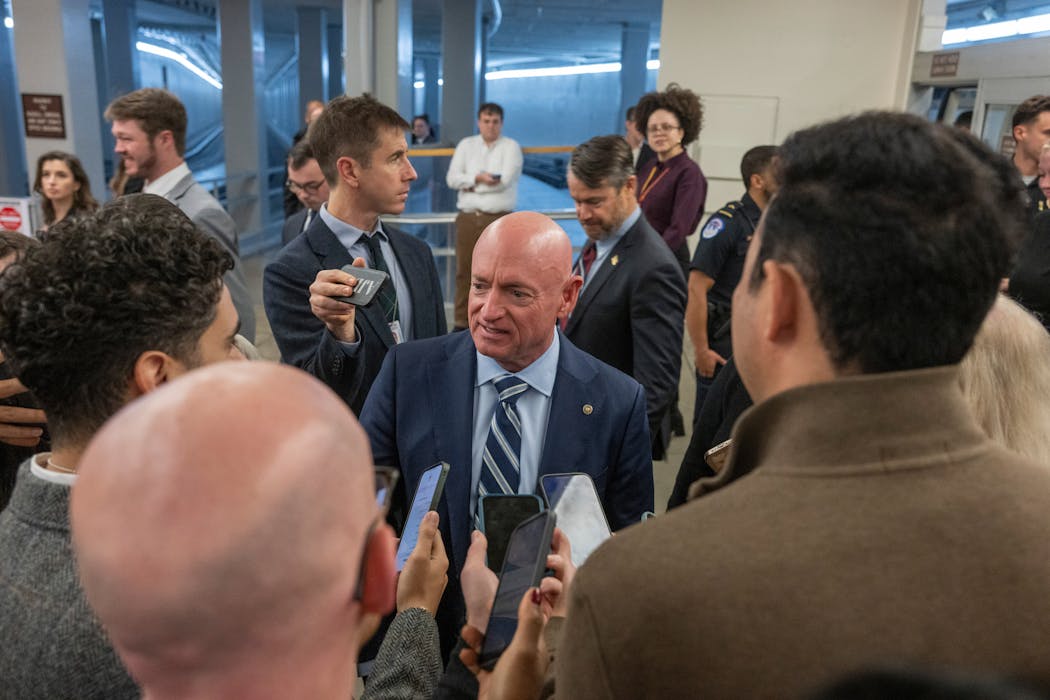
The Department of Defense in late November 2025 announced that it would investigate U.S. Sen. Mark Kelly, a retired Navy captain and NASA astronaut, for what Secretary of Defense Pete Hegseth has called seditious behavior. The threat of investigation came after Kelly and five other Democrats, all with military backgrounds, released a video reminding U.S. service members they can disobey illegal orders issued by the Trump administration.
“No one has to carry out orders that violate the law, or our Constitution,” the lawmakers said, without specifying the orders the U.S. service members may have received. “Know that we have your back … don’t give up the ship.”
In response to the video, President Donald Trump accused the lawmakers of “seditious behavior” that could be “punishable by death.”
Sedition is a federal crime, but as a military law scholar who served as a judge in the U.S. Air Force, I believe the Democratic lawmakers articulated a correct view of military law. That is, service members subject to the Uniform Code of Military Justice have a duty to not obey unlawful orders.
There are several unique features to military law that have no analog to civilian criminal law, and if Kelly were court-martialed he would be deprived of several fundamental constitutional rights.
In a civilian criminal trial the government normally has the burden of proof on all matters. But in a court-martial, a service member who argues that an order is unlawful has the burden of proving its unlawfulness. And the Supreme Court, in its 1827 opinion in Martin v. Mott, gave this view some credence, arguing that the president, as commander in chief, should not be questioned during a national emergency.
Second, ordinary citizens are protected by a constitutional requirement that the prosecution must convince all jurors of the defendant’s guilt beyond a reasonable doubt. A court-martial has only a two-thirds threshold to establish guilt. And the jurors – called members – are not the accused service member’s peers.
Indeed, the court-martial members are military personnel who outrank the accused service member and are picked to serve by senior commanding officers. Military judges are also uniformed officers and, like the rest of the military, are subject to the chain of command.
At times, senior officers have inserted themselves into the military justice system and tried to direct a court-martial to convict an accused service member. This has created the problem of unlawful command influence, the improper use of superior authority to interfere with the court-martial process.

Kelly is still theoretically subject to the Uniform Code of Military Justice and could be court-martialed because he is a military retiree. This concept of a lifetime military jurisdiction did not exist when the Constitution was instituted in 1789. It came into existence during an emergency session of Congress in 1861.
The Supreme Court has never held that lifetime jurisdiction is constitutional. But in 2022 the U.S. Court of Appeals for the District of Columbia did, in a 2-1 decision.
It reasoned that if the Constitution’s creators had thought such a jurisdiction were a threat to the republic, they would have prohibited it. The dissenting judge in that case pointed out the frightening possibility of a president using the Uniform Code of Military Justice to curb free speech.
Kelly is different than an ordinary retiree, and this case is bigger than a single senator. That’s because it goes to the heart of what the Constitution’s framers intended by preserving liberty through a republican form of government.
In 1648, Oliver Cromwell, who had become a military dictator over England, used the army to curb the Magna Carta – a revolutionary basic rights document dating to 1215 – and the ability of Parliament to debate matters and pass laws. The Constitution is designed to prevent anything coming close to such an occurrence.
So, what would Kelly’s defense likely be, other than that he exercised free speech and gave a correct recitation of the law?
Kelly’s first defense might be that under the Constitution, the president, as commander in chief, has no power to court-martial or otherwise administratively penalize him. Doing so would diminish Congress’ authority.
In 1974, the Supreme Court determined in Schlesinger v. Reservists Committee that although the Constitution prohibits a member of Congress from holding a position in the executive branch, citizens had no standing to sue in the federal courts to prevent this from occurring. Taken literally, the clause means that no member of Congress could hold a military commission and be beholden to the commander in chief, since this would erode Congress’ independence and authority.
Kelly’s second defense could be that after the Constitution and statutory law, the military law is governed by tradition, or the military’s own past practices, which used to be referred to as “lex non scripta.”
American history is replete with retired officers criticizing presidents or even joining in hate groups that accused a president of being beholden to subversive interests. Past presidents have ignored these men.
They include George Van Horn Moseley, who sided with pro-Nazi groups and accused President Franklin Roosevelt of being a communist. Retired generals Albert Coady Wedemeyer and Bonner Fellers formed organizations that undermined Presidents Harry Truman and Dwight Eisenhower.

None of these men were court-martialed or administratively penalized.
Finally, Kelly could argue in federal court that the military has no jurisdiction over him because of the issue of unlawful command influence. One only needs to look at Hegseth’s statements in the case to see the specter of this problem in regard to Kelly.
When Congress formulated the Uniform Code of Military Justice, it criminalized unlawful command influence. But as military law scholar Rachel VanLandingham has pointed out, no person has ever been prosecuted for violating the prohibition.
Kelly could argue that there are no safeguards in his case to ensure a fair hearing and that the case should move from military courts to federal courts. The federal judge assigned the case can then ponder whether siding with the administration’s claims is a step toward establishing a Cromwellian future and away from the Constitution’s protection of a republican form of government.
Of course, Congress could put a stop to any persecution of Kelly by informing the president that he is acting contrary to the Constitution and explaining to do so is a high crime or misdemeanor.
During the Vietnam War, scholar Robert Sherrill said that “military justice is to justice what military music is to music.” In the past, military justice has been able to accomplish fair trials of military members, but it is dangerously open to influence by military leaders, all the way up to the commander in chief.
If there is to be an exercise in accountability for Kelly, it could more fairly be administered through a real constitutional analysis conducted by the independent federal judicial branch – or through a congressional intervention. Without either occurring, we may as a nation find ourselves a closer step toward a Cromwellian future.

Joshua Kastenberg does not work for, consult, own shares in or receive funding from any company or organization that would benefit from this article, and has disclosed no relevant affiliations beyond their academic appointment.
Politics + Society – The Conversation
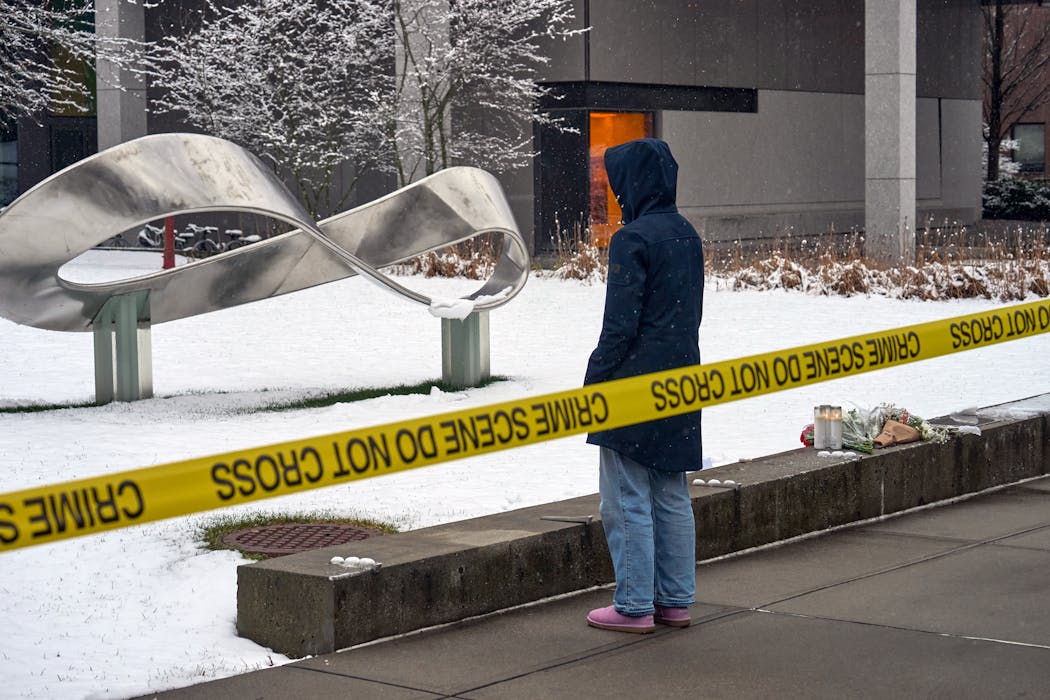
Active shootings represent a very small percentage of on-campus university violence.
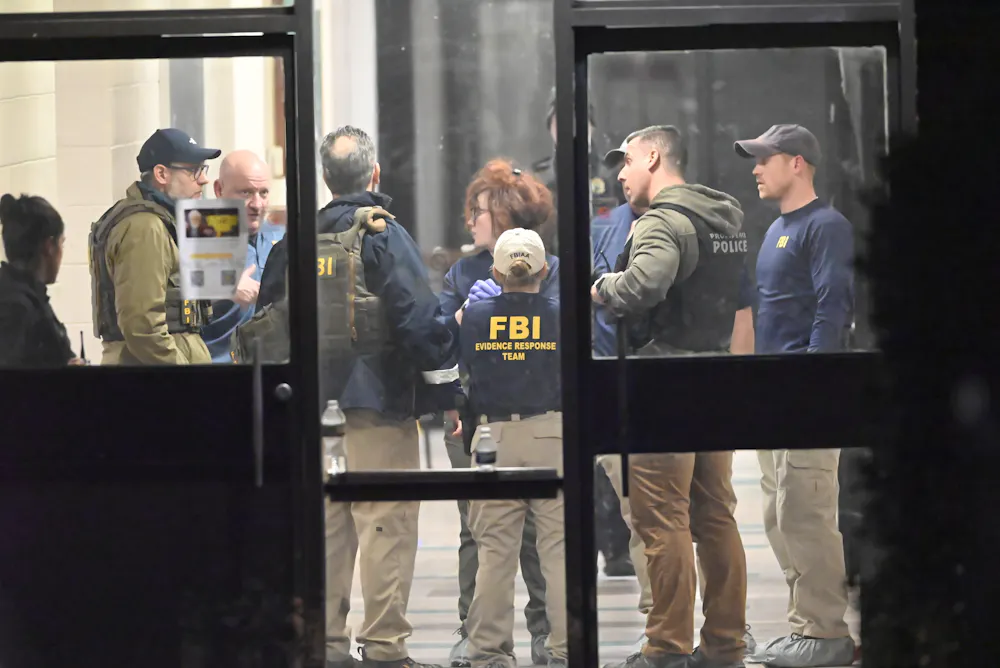
But among those that do happen, there are patterns. And as law enforcement officials continue to investigate the Dec. 13, 2025, Brown University shooting, similarities can be seen with other active shooter cases on college campuses that scholar James Densley has studied. “They tend to happen inside a classroom, and there tends to be multiple victims,” Densley explains.
The Brown University tragedy, in which a shooter killed two students and injured nine more, marks the fourth deadly shooting at a U.S. university in 2025.
The Department of Education in Rhode Island, where Brown University is located, said on Dec. 16 that it is urging local elementary and secondary schools to review safety protocols.
Amy Lieberman, the education editor at The Conversation U.S., spoke with Densley about how schools have been given what he describes as an “impossible mandate” to try to prevent shootings.
What is the overall trajectory of school shootings over the past few years?
K-12 school shootings appear to be trending downward, at least in the past two years. But we actually saw the largest jumps in this type of violence in the three to five years leading up to 2024, which trends closely with the broader rise in homicide and violent crime we saw in the pandemic era.
In 2025, there have been 230 school shooting incidents in the U.S. – still a staggeringly high number. This compares with 336 school shootings in 2024, 352 in 2023, 308 in 2022, and 257 in 2021.
How this relates to an increase in schools trying to institute security measures to prevent shootings is an open question. But it’s true that many schools are experimenting with certain solutions, like cameras, drones, AI threat detection, weapons scanners, panic apps and facial recognition, even if there is only weak or emerging evidence about how well they work.
Schools are treated as the front line, because the larger, structural solutions are too difficult to confront. It is much easier to blame schools after a tragedy than to actually address firearm access, grievance pathways – meaning how a person becomes a school shooter – and the other societal problems that are creating these tragedies.
How have schools responded to the rise of school shootings in recent years?
Schools are being asked to solve a societal gun violence problem that they didn’t create and they cannot control. Even the best-run school cannot eliminate all risks when causes accumulate outside of their purview. These attacks are rare but catastrophic, and they create an impossible mandate for schools because when they occur, schools are told it reflects a failure in their preparation. Educators are expected to be teachers, social workers, threat assessors and first responders. It normalizes fear and shifts the responsibility downward.
There is a growing school safety industry that markets fear as a solvable, technical problem. It promises faster ways to detect weapons, for example, but the evidence base for those products is thin, proprietary or nonexistent. One example is an AI detection software that mistook a bag of Doritos for a gun, resulting in a large police response.
Schools are pressured to buy something from these companies to show they are doing something. But some of these systems create false positives, and, more importantly, they shift attention away from human relationships. Technology alone cannot resolve grievances, replace trust and create belonging, but most schools are focused on technology as a means of prevention.
How effective are other prevention systems schools have put in place?
If a school shooter is an outsider trying to attack the building, having a single point of entry, access control or multiple locks on doors creates time and space, which are essential for delaying an attacker until law enforcement can arrive, thus mitigating casualties.
But the evidence shows that nearly all school shooters are either current or former students at the school. They are very familiar with entry and exit points, and they are potentially already inside the building before the school can act on a potential threat of violence.
So, what happens if a school locks down, but you are actually locking the shooter in a room with their potential victims? What if students are forced to hide when it would be safer to run? What if you have a door that locks only from the inside and a student or staff member uses that room to bully or sexually assault another student? We’re building schools to protect against the rare events, but we are not mitigating the more common problems they face.
Students are being asked to practice preventing their own deaths in active shooter drills and learn in environments designed around worst-case scenarios. In general, interpersonal violence and spillover of community violence, like gang-related shootings, are the most common form of school shooting. Most shootings at schools occur in parking lots or at sports events, but we do very little to prepare for those types of scenarios.
Are there any benefits, then, to schools having certain non-tech safety measures in place, like making sure every person has an ID?
Of course, you don’t want strangers walking around in a school building. The fact that someone coming to the school has to get their ID scanned and wear a badge makes perfect sense, not just to prevent shootings but to also prevent theft and assaults and other risks.
The paradox is that school shooters tend to be children already affiliated with the school, and when someone walks in already firing, checkpoints and metal detectors are useless. Historically, several mass shootings in K-12 schools have started outside of the building then moved inside. The issue is not slipping past barriers but overwhelming them in seconds with irresistible force.

Absent policy change, what is the clearest way to prevent school shootings, according to current evidence?
Evidence shows that we often see signs of a crisis or withdrawal beforehand from school attackers. And that is why school-based behavioral threat assessment and management is so important. It is really about noticing changes in behavior and having the authority to intervene early. This is not about profiling people or relying on law enforcement alone. It is about having a structured, team-based process for identifying concerning behavior, assessing risk and coordinating appropriate supports – such as counseling – to prevent harm before it occurs. So often in these cases, people had a gut feeling that something was off with a particular student, but they didn’t know what to share or who to share it with.
For decades we’ve invested far more in responding to school shootings once they occur rather than in preventing them. You can lock doors and run drills, but no school can become a fortress.
Attackers leak warning signs in advance. Real prevention is about creating human systems that get upstream of this.

James Densley has received funding from the National Institute of Justice, the Joyce Foundation, and the Sandy Hook Promise Foundation.
Politics + Society – The Conversation