Britain’s top military chiefs held a “very difficult” meeting this week over how to fund plans to rebuild the armed forces amid fears of further cuts, defence sources have said.The Latest News from the UK and Around the World | Sky News










Britain’s top military chiefs held a “very difficult” meeting this week over how to fund plans to rebuild the armed forces amid fears of further cuts, defence sources have said.The Latest News from the UK and Around the World | Sky News

Sticking to Labour’s manifesto pledge and freezing income tax thresholds rather than raising income tax has hurt low- and middle-income earners, an influential thinktank has said.The Latest News from the UK and Around the World | Sky News

Three people have been arrested on suspicion of manslaughter over a deadly fire which engulfed a high-rise residential complex in Hong Kong.The Latest News from the UK and Around the World | Sky News
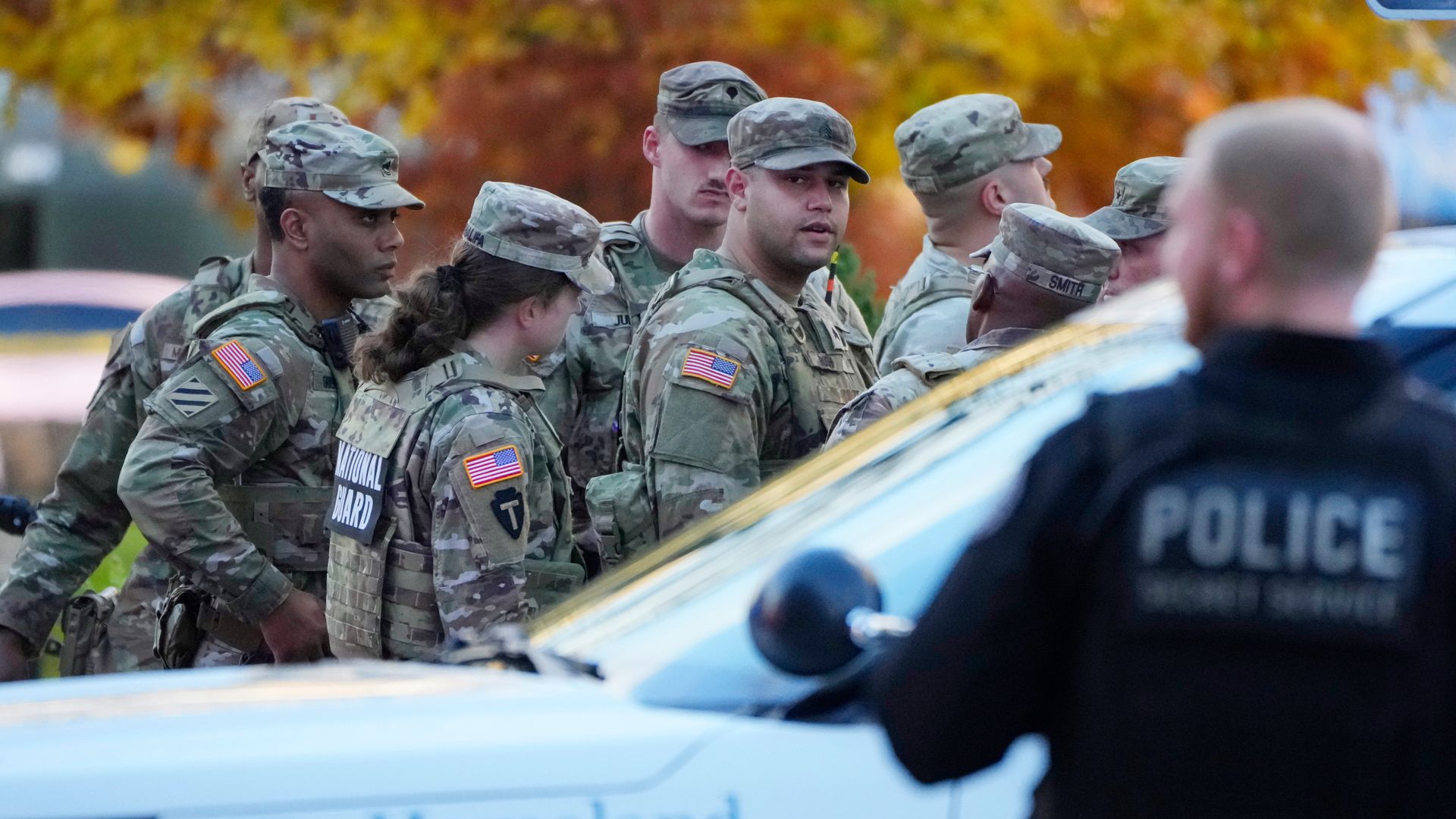
Donald Trump has called for every Afghan national who entered the US under the Biden administration to be investigated following the shooting of two National Guard troops near the White House.The Latest News from the UK and Around the World | Sky News

Hitchin in Hertfordshire does well in the polls.The Latest News from the UK and Around the World | Sky News

Over and over again, in the run-up to the election and beyond, the prime minister and the chancellor told voters they would not put up taxes on working people – that their manifesto plans for government were fully costed and, with the tax burden at a 70-year high, they were not in the business of raising more taxes.The Latest News from the UK and Around the World | Sky News

NOTN- City and Borough of Juneau (CBJ) Utility Billing is applying sales tax exemptions passed in the October 2025 municipal election to CBJ’s December 2025 utility billing period. Residential, non-commercial customers of CBJ water and wastewater will not be charged sales tax starting this December. Residential, non-commercial customers with a current senior sales tax exemption will also receive a 100% sales tax exemption.
Juneau Mayor Beth Weldon said the changes are intended to remove sales tax from residential utility costs, though the city has instituted a 180-day grace period to correct any misclassifications.
“In order to do the intent the voters wanted, we just had to make a very high level residential versus commercial, and the exemptions are only supposed to be on residential. So we may end up putting some sales tax back on some things if we erroneously labelled them as residential and they were actually commercial. So if houses and that kind of stuff are used for commercial means, like offices or Airbnbs, then they wouldn’t be exempt, necessarily.”
Grocery stores are adapting to the food-tax exemptions as well with each store processing the adoption differently.
Weldon said some stores are automatically removing tax on eligible food items, while others may require customers to separate food from non-food items at checkout. Prepared or hot foods, such as deli fried chicken or macaroni salad, may not exempt under the measure.
Customers who believe they are incorrectly designated as commercial may need to apply for a sales tax exemption card to affirm residential and non-commercial status. Visit juneau.org/finance/sales-tax for more information about Proposition 2 implementation.

NOTN- Free Thanksgiving Dinners are being offered across Southeast on Thursday, offering warm meals and a place to gather for those who need it.
In Juneau, the Salvation Army will serve a Community Thanksgiving Dinner from 11 a.m. to 1 p.m. at the Juneau Yacht Club.
Resurrection Lutheran Church will hold its annual Thanksgiving Dinner from 6 p.m. to 8:30 p.m. in the church’s community cafeteria and dining room.
The Eagle River United Methodist Camp will open its lodge at 10 a.m., with dinner service beginning around 1:30 p.m. The camp is located at Mile 28 of Glacier Highway, just before Eagle Beach State Park.
The Haines Ministerial Association will host a free holiday meal at the Haines School from noon to 2 p.m. at 604 Main Street.
In Gustavus, the community is invited to a Thanksgiving gathering at the Gustavus Chapel, otherwise known as the Red Church. Dinner will be served from 1 p.m. to 4 p.m.
Organizers say all are welcome, and no reservations are required.
“Happy Thanksgiving.” Said Juneau Mayor Beth Weldon, “We can be thankful for family and friends, but most important, we can be thankful for a great community we live in, even though we disagree at times, we still have each other’s backs. we’ll get through everything this year together.”

The National Park Service said Tuesday it is going to start charging the millions of international tourists who visit U.S. parks each year an extra $100 to enter some of the most popular sites, while leaving them out of fee-free days that will be reserved for American residents.
The announcement declaring “America-first entry fee policies” comes as national parks deal with the strain of a major staff reduction and severe budget cuts, along with recovering from damage during the recent government shutdown and significant lost revenue due to fees not being collected during that time.
The fee change will impact 11 national parks, including the Grand Canyon, Yellowstone and Yosemite, according to the U.S. Department of the Interior.
As part of the changes, which are set to take effect Jan. 1, foreign tourists will also see their annual parks pass price jump to $250, while U.S. residents will continue to be charged $80, according to the department’s statement.
Interior Secretary Doug Burgum said in a post on the social platform X that the changes make sure U.S. taxpayers who support the park service “continue to enjoy affordable access, while international visitors contribute their fair share to maintaining and improving our parks for future generations!”
A White House post on X laying out the increased fees ended with the phrase, “AMERICANS FIRST.”
The announcement follows a July executive order in which President Donald Trump directed the parks to increase entry fees for foreign tourists.
“There’s a lot to unpack in this announcement, including many questions on its implementation – all which NPCA will raise with the Department of Interior,” Kati Schmidt, a spokesperson for National Parks Conservation Association, said in an email.
The U.S. Travel Association estimated that in 2018, national parks and monuments saw more than 14 million international visitors. Yellowstone reported that in 2024, nearly 15% of its visitors were from outside the country, which was down from 30% in 2018.
The money made off the new fees will help support the national parks, including with upgrading facilities for visitors and maintenance, according to the statement.
The “resident-only patriotic fee-free days” next year include Veterans Day, which was one of the parks’ eight free days open to everyone in 2025. The Department of the Interior had announced those days by saying they wanted to ensure that “everyone, no matter their zip code, can access and enjoy the benefits of green spaces and our public lands.”
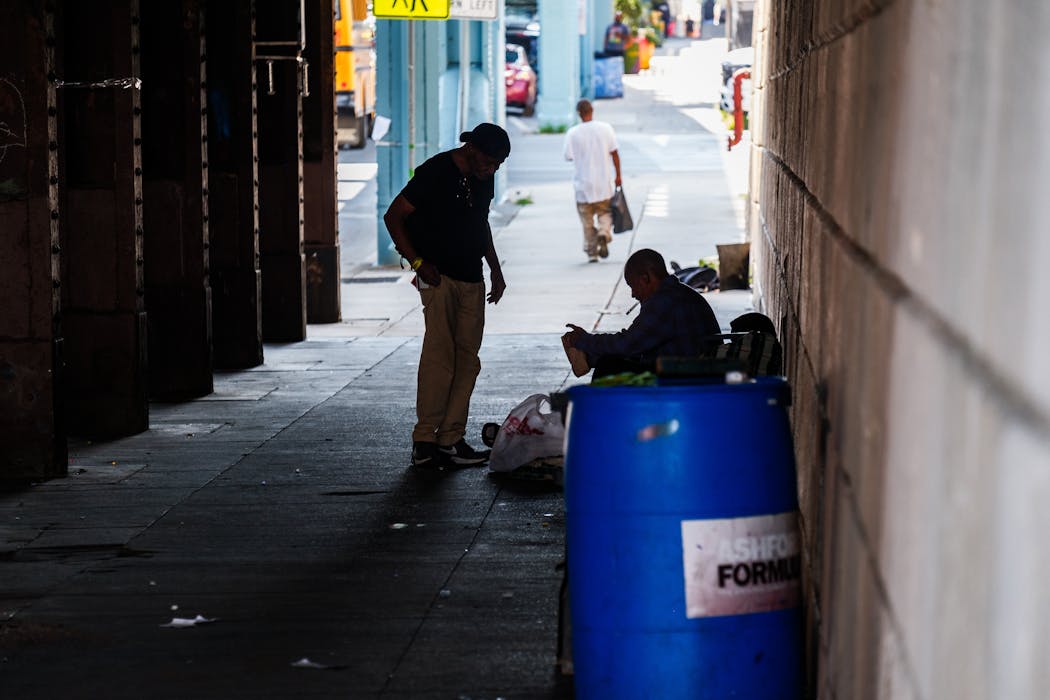
Seeing a person huddled under a makeshift roof of tarps or curled up on a warm grate can evoke powerful emotions and questions.
How did they get here? Why doesn’t someone help them? What can I do about this?
The answers to these questions are complex. However, a significant body of research suggests that there is a highly effective solution for many individuals who experience homelessness. It is called supportive housing.
Supportive housing programs combine a housing subsidy – financial assistance that helps make housing affordable even for those with very low incomes – with wraparound supportive services that help a person remain stably housed. Supportive services often include case management, occupational therapy and mental health and addiction treatment. These programs have helped thousands of Philadelphians end their experiences of homelessness.
As a researcher and former social worker, I have spent much of the past decade working in and studying homeless services in Philadelphia. For my dissertation research, I conducted hundreds of hours of ethnographic fieldwork at a soup kitchen and outreach center in the city between 2022 and 2024. I interviewed 75 homeless services workers, volunteers and people who were experiencing or had experienced homelessness. I also analyzed hundreds of pages of policy documents.
I have found that while the city has succeeded in centralizing services to support unhoused people, there remain major bureaucratic challenges exacerbated by insufficient funding and a shortage of supportive housing. These challenges impact both people seeking supportive housing and front-line workers trying to help them.
Consider the case of Khalil, a 48-year-old from West Philly who became homeless during the pandemic. (As for all the interviewees’ names used in this article, Khalil is a pseudonym I’m using to protect his privacy.) Khalil told me that he lost his job as an IT technician at Verizon, where he had worked for nine years. Sleeping outside and unable to afford life-sustaining kidney medication, he said, his physical and mental health spiraled.
A supportive housing program changed that, providing him with a stable and affordable place to live, while social workers helped him enroll in Medicaid and connect with a community health clinic. This support, Khalil explained, allowed him to “transition back into residential living and back into employment and back into being a working member of society.”
Despite the efficacy of supportive housing, cities do not receive sufficient federal funding to provide this service to all residents who are eligible. As a result, the need for these housing programs vastly outstrips the supply.
So how do officials in Philadelphia decide who will continue to sleep on the street or in a shelter, and who can move into a supportive housing facility with a warm bed and access to valuable wraparound services?
Like other localities, Philadelphia uses a Coordinated Entry System. CES is a form of automated bureaucracy that combines several different algorithms and administrative processes with the goal of helping officials and social service workers allocate resources fairly and efficiently.
CES is intended to help workers identify which people experiencing homelessness are in greatest need of aid. These systems work by combining a central pool of resources like housing programs and a central list of people seeking help. Unhoused people are scored using a vulnerability assessment tool, and those that score highest are matched to an opening in a supportive housing program.
Because most of these systems are premised on targeting resources to the most vulnerable people, defining and gauging vulnerability becomes fraught with tension. After all, vulnerability is inherently subjective, and there is no universally agreed-upon best way to measure it.
These systems will soon come under even greater pressure as the U.S. Department of Housing and Urban Development prepares to slash funding for supportive housing programs. As many as 170,000 people nationwide who were previously homeless will be at risk of returning to the streets once these funding changes are implemented.
Coordinated entry has made real progress on several long-standing challenges for Philadelphia’s homeless services system. Chief among these is centralization.
Most resources available for people experiencing homelessness are administered by nonprofit social services organizations. Prior to CES, a person seeking assistance would separately apply to various nonprofits and put their name on multiple waiting lists.
CES centralizes resources into a common pool, accessed through the vulnerability assessment process. As one administrator with the city’s Office of Homeless Services told me, this arrangement is “immensely more supportive and fair” than the scattered process that came before. For example, individual nonprofit providers are less able to earmark resources for clients they already work with.
However, there are downsides to Philadelphia’s approach to CES.
Vulnerability assessments, like those used in Philadelphia, have been criticized for failing to capture a full picture of a person’s plight. Assessments involve asking unhoused people a series of yes or no questions about their housing, health and financial history, and generate a vulnerability score based on the responses. A person who has a relatively mild experience with several different risk factors can end up with a much higher score than a person with an extremely serious experience with just a few.
And similar to other automated assessments, such as in the criminal legal system, they have the potential to introduce racial bias into allocation outcomes.
Furthermore, the way CES works is, by design, hidden from the people it impacts most. The ambiguity is intended to prevent people from gaming the system, but it also creates confusion for those living in shelters and on the street. Some seeking aid may hide evidence of their vulnerability, such as addiction, out of fear it will disqualify them from housing. Others may amplify their vulnerability in an effort to improve their odds of receiving help.
The result is a perception among people experiencing homelessness that the system is unfair.
As Andre, a 60-year-old who had been sleeping in shelters off and on for nearly a decade, told me, a person who “goes in there and tells the absolute truth, they’re put on the back burner.”
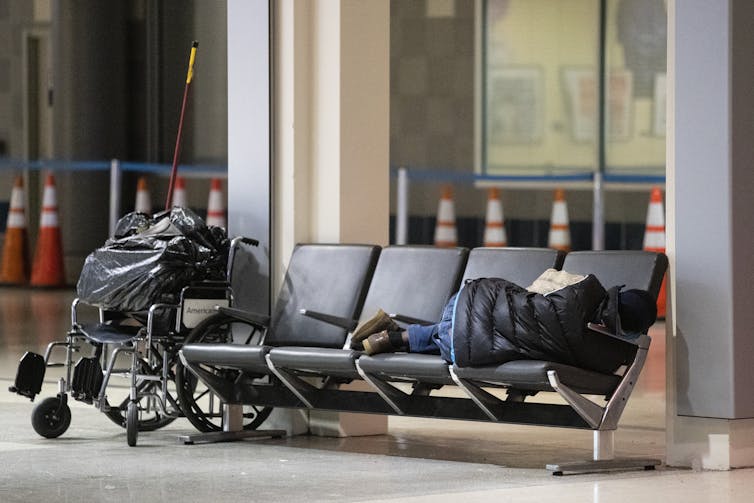
Leon, a 25-year-old from North Philadelphia, told me as we chatted over coffee that in order to be prioritized through CES, “You’ve got to have a record of being homeless.”
But generating such a paper trail can be difficult. A city database tracks shelter stays that can serve as proof of homelessness, but not all shelters participate. And for those sleeping outside, like Leon, proof depends on regular interactions with outreach workers, which requires being in the right place at the right time.
If an unhoused person cannot prove the length of their time on the street, or provide documentation of a mental health diagnosis, they may be deprioritized through CES, even if they are highly vulnerable.
For all its advantages, CES in Philly is not designed to take into account the input of unhoused people themselves. In the words of Richie, a 32-year-old who was seeking housing for himself and his pregnant wife, “There is no voice for homeless people … because homeless people don’t have a voice.”
Despite these challenges, the city has lowered barriers to participating in CES. For example, the city has launched a pilot program involving mobile assessors who can complete assessments in different locations beyond city shelters, such as at soup kitchens, to meet unhoused people where they are.
Here are three concrete ways the city could reduce more of the bureaucratic hurdles to supportive housing.
First, the city could expand pathways to supportive housing through a model called multiprinciple allocation. This approach combines different methods for determining who gets housing. Some subsidies could be allocated through new vulnerability assessments that are better vetted for bias, while others are distributed based on length of homelessness or a lottery system. This could bolster fairness by ensuring that people whose vulnerability is not picked up through the assessment tool could still have a shot at aid.
Second, the city could provide opportunities for unhoused people and front-line workers to attest to vulnerability and experiences of homelessness in their own words – allowing someone to say, “I am struggling with housing for reasons that the assessment did not cover.”
And third, Philadelphia could reduce the degree of automation in the CES matching process. As things stand, people with high scores are mechanically matched to open programs, even if that program is a poor fit for the individual person. Giving staff and unhoused people more agency in making housing matches could produce better outcomes.
No amount of tinkering with CES can address the fundamental resource constraints that shape the fight against homelessness in Philadelphia. Simply put, Philadelphia lacks sufficient funding for housing the most vulnerable. But thoughtful changes to CES could make the response to homelessness more effective, compassionate and fair.
Read more of our stories about Philadelphia, or sign up for our Philadelphia newsletter on Substack.

Pelle G. Tracey has received funding from the Google Award for Inclusion Research.
Politics + Society – The Conversation