Categories
Politics

A quarter of early child care educators in Colorado reported mistreatment from co-workers

Preschool teachers lead a class in Adams County, Colo. Kathryn Scott/The Denver Post via Getty Images

Early childhood educators and staff nurture and teach children under the age of 5. At its best, this type of early care sets kids up for long-term success.

But educators who are experiencing poor mental health are less able to cultivate positive relationships with the children in their care, which negatively affects the children’s development.

“We work in a field that has a high demand for kids to be safe and enjoy learning,” one educator told us. “We have … little people that depend on us, parents depend on us, and we need to make sure that we are there for the kids when they need us.”

Our research team – led by a clinical associate professor and a research assistant professor in public health – set out to learn how child care workers were coping with all of this responsibility.

What we learned was concerning and needs to be understood by parents and policymakers alike.

Studying 42 Head Start centers

Our peer-reviewed study examined the mental health of 332 early child care educators and other staff at 42 Head Start centers in the Denver metropolitan area and southeast Colorado.

We found that roughly 25% of early child care staff in Colorado self-reported discrimination and condescending or demeaning treatment from a colleague in the past year, with 15% experiencing more than one kind.

We measured discrimination tied to age, race, ethnicity and gender. We also measured types of demeaning treatment, which included bullying, harassment and condescending behavior. And we looked at physical violence.

Higher levels of workplace mistreatment were related to greater numbers of poor mental health days. The child care staff we surveyed reported an average of seven poor mental health days in the month prior to completing the survey.

Mistreatment in early childhood education

The early child care workforce also reports higher rates of depression than the national workforce.

High stress of educators and staff even pushes some workers out of the profession.

Working conditions matter, too, with early child care workers reporting substantial physical and psychological workplace challenges, such as lifting and carrying children, as well as managing a wide range of ages and capabilities among children in the classroom.

Our survey also revealed that 1 in 4 early child care staff experienced condescending or demeaning treatment by colleagues or superiors in the past 12 months. This was the most common type of workplace mistreatment.

In early child care, teamwork and collegiality are integral and are linked to educator well-being. Mistreatment between colleagues can strain relationships, contribute to burnout and reduce the likelihood of educators stepping into leadership roles.

Books are in focus in the foreground with titles like 'The Best Mouse Cookie' and 'If you take a mouse to school.' In the blurred background is an adult woman standing and teaching to a bunch of young children sitting on the ground.
Books in a Frederick, Colo., preschool class.
Lewis Geyer/Digital First Media/Boulder Daily Camera via Getty Images

Our study found that 1 in 10 early child care staff reported discrimination at work based on race or ethnicity. Experiences of discrimination have an impact beyond mental health and also affect physical health, job attitudes and engagement in the workplace.

Younger workers are struggling

Discrimination was three times as likely to be reported by the younger workforce, ages 18-29, than older workers. Discrimination between age groups affects trust and can reduce employee engagement.

Mistreatment of early child care workers can take several forms that happen at the same time. For example, age discrimination can occur in either direction. Younger staff may be viewed by older colleagues as less experienced, less committed or less capable than more experienced colleagues. Older colleagues may be perceived to be less creative or less willing to adapt to new strategies and practices.

Yet overall, younger workers seemed to be struggling more. Workers under 35 reported an average of eight to nine poor mental health days in a 30-day window; older workers reported an average of 5.6.

Improving staff well-being

Our study indicates a need for both societal and organizational change to prevent mistreatment of early child care staff, which can improve worker well-being and lead to better care for young children.

At a societal level, it is important to acknowledge the integral role of the early child care workforce and compensate these workers at a level commensurate with their importance. In 2023, the average U.S. preschool teacher earned an annual income of $37,120 compared to the $63,680 annual income of elementary school teachers.

Adequate pay and appreciation can reduce turnover. Rates of turnover are four times higher among early child care educators than elementary school teachers.

“Turnover has a lot to do with pay, unfortunately, and we don’t get paid a whole lot of money,” one educator said. “And … I don’t think I’ve always felt valued in the position I’m in.”

At an organizational level, leaders can implement health-centered policies and offer managerial training on how to build supportive teams. Total Worker Health interventions may also help to guide needed policy changes with input from staff. These interventions are holistic programs that focus on both the safety and well-being of workers and include elements such as environmental and social supports. They are shown to improve worker well-being.

One initiative compared wellness intervention models across six Early Head Start and Head Start networks nationally to address the comprehensive well-being in staff. Direct outcomes of the programs included workplace and organizational culture improvements, as well as higher staff well-being.

We designed the WELL Program, which has successfully been implemented at five Colorado-based Head Start networks. The program includes training to promote better sleep and mindfulness.

“WELL help(ed) people keep going every day and deal with their stress in a healthy way so it didn’t come out in the classroom, or come out against kiddos that are tough,” one participant said.

Our study also suggests there may be generational differences in workplace communication and a varied understanding of what it is to be mistreated. Additional research on these differences may help us to address causes of mistreatment and find solutions.

The Conversation

Charlotte Farewell receives funding from the Administration for Children and Families.

Jini Puma receives funding from the Administration for Children and Families.

Kyla Hagan-Haynes and Virginia McCarthy do not work for, consult, own shares in or receive funding from any company or organization that would benefit from this article, and have disclosed no relevant affiliations beyond their academic appointment.

​Politics + Society – The Conversation

Categories
Politics

‘Without prejudice’: What this 2-word legalese means for the dismissed charges against James Comey and Letitia James

Former FBI Director James Comey is sworn in remotely at a hearing of the Senate Judiciary Committee in Washington on Sept. 30, 2020. Ken Cedeno-Pool/Getty Images

A federal judge on Nov. 24, 2025, dismissed the indictments against former FBI Director James B. Comey and New York Attorney General Letitia James, blocking the Department of Justice’s efforts to prosecute two of President Donald Trump’s perceived adversaries.

But U.S. District Judge Cameron McGowan Currie qualified her dismissals, saying she did so “without prejudice.”

What does that legal term mean?

Unaddressed charges

In her ruling, Currie concluded that the appointment of interim U.S. Attorney Lindsey Halligan, who filed the cases against Comey and James, was unlawful. Currie wrote:

“Because Ms. Halligan had no lawful authority to present the indictment, I will grant Mr. Comey’s motion and dismiss the indictment without prejudice.”

She wrote the same about the case against James.

Currie’s “without prejudice” reference means the dismissal did not address what legal scholars like me call the merits or substance of the underlying criminal charges.

A “without prejudice” dismissal is legalese for “you can try again if you can fix the problems with your case.” Had the judge ruled that the dismissals were “with prejudice,” that would have meant the government could not have brought the cases again.

Here’s what prosecutors would need to fix to be able to bring cases against Comey and James again.

Federal law provides that whenever a U.S. attorney’s position is vacant, the attorney general may appoint an interim U.S. attorney for a period of 120 days. At the end of that period, it’s up to the federal judges of the district where that position is vacant to appoint someone to continue in that role unless and until the president nominates, and the Senate confirms, a U.S. attorney through the normal appointments process.

A woman speaks outdoors in front of microphones.
New York Attorney General Letitia James speaks outside U.S. District Court on Oct. 24, 2025, in Norfolk, Va.
AP Photo/John Clark

The Trump administration appointed Halligan’s predecessor, U.S. Attorney Erik Siebert, in that interim role in January 2025. And when the 120 days from his appointment lapsed, the district judges of the Eastern District of Virginia selected him to continue on in his interim role.

Currie found that when Siebert resigned after his reappointment, that did not empower the Trump administration to appoint a new interim prosecutor. The power still resided with the District Court judges. Because of that, Halligan’s appointment and her efforts to secure the Comey and James indictments were void.

The end of the beginning

The Department of Justice can certainly appeal these rulings and could get them reversed on appeal, or it could refile them after a new U.S. attorney is named in accordance with law.

It may be too late for the case against Comey, however, because the statute of limitations on those charges has already run out. As Currie noted in her Comey ruling, while the statute of limitations is generally suspended when a valid indictment has been filed, an invalid indictment, like the one against Comey, would not have the same effect on the statute of limitations.

That means the time has likely run out on the claims against the former FBI director.

If Currie’s rulings stand, the Justice Department can’t just file the cases again, with Halligan still in this role, unless the Trump administration follows the procedures set forth in the law for her proper appointment.

While this is not the beginning of the end for these prosecutions, it is, at least, the end of the beginning.

The Conversation

Ray Brescia does not work for, consult, own shares in or receive funding from any company or organization that would benefit from this article, and has disclosed no relevant affiliations beyond their academic appointment.

​Politics + Society – The Conversation

Categories
Politics

A database could help revive the Arapaho language before its last speakers are gone

There are fewer than 100 speakers of the Arapaho language today. Mark Makela/GettyImages

I was hired at the University of Colorado Boulder in 1995 as a language professor. I relocated from Hawaii, where I had learned the Hawaiian language.

When I arrived in Colorado, I decided I needed to learn about the Indigenous language of the Boulder and Denver area, Arapaho. The Arapaho people had occupied the area for many years until they were forced to leave in the 1860s.

I first visited the Northern Arapaho people on the Wind River Reservation in Wyoming in 1999. At that time, there were hundreds of speakers of the Arapaho language.

Today, there are less than 100, and all are over the age of 70.

The Arapaho people in Wyoming and Colorado believe their language can still survive, and so do I. That’s why I am working to combine decades of language documentation with new technological approaches in order to help revive the language.

Loss of Native languages

Many Native American languages currently have few Native speakers, and the speakers are typically the oldest members of the community. The languages of the Wichita and Kansa people, for example, are among many that are no longer spoken at all.

Native American languages have been in decline in the face of Euro-American pressure for centuries.

On the Great Plains, this decline accelerated after World War II when Native soldiers came home after seeing prosperity off the reservation.

Arapaho elders tell me that bilingual parents decided to speak only English to their children to improve their chances of success in life. They were certain the tribal languages would come “later.”

But “later” didn’t happen. Boarding schools had already been suppressing the language, and now economic improvements brought cars, radios and televisions to Wind River, further promoting the use of English. Without language exposure in the home, children were not able to acquire good speaking abilities.

A documentary from Rocky Mountain PBS about Native American people who lost their language as children.

Today, however, tribal communities around the country increasingly want to maintain or reacquire their languages. Efforts to do this have been going on for several decades, with some successes, such as the Mohawk language of New York and Canada, Cherokee in Oklahoma and North Carolina and the Blackfoot language of northern Montana.

In most places however, numbers of Native speakers continue to decline, while learning among younger speakers progresses slowly.

Uses of data for curriculum

My early work focused on documenting the Arapaho language. Past linguists working with Native languages typically focused on traditional storytelling, as well as audio-recorded data. But my interest in anthropology led me to focus on conversation and everyday interaction. I also recorded on video to capture social settings, gestures and sign language. And to better understand the role of the language in daily use, I worked to become a good speaker myself.

I have compiled my documentation into a database that contains over 100,000 sentences of natural Arapaho speech. All of this has been transcribed, translated into English and accompanied by detailed linguistic analysis.

The database is further supported by an online learning site and an online dictionary of around 25,000 entries. They are among the largest such resources for an Indigenous language, though resources do exist for other languages, such as Yurok.

Courtesy of Andrew Cowell.13.8 KB (download)

From documentation to curriculum

In response to the Arapaho people’s goal of language revitalization, my own work has shifted from documentation to assisting teachers, students and curriculum developers. The database turns out to have great value in this area.

Adult learners can watch the videos along with the Arapaho transcriptions or English translations, or both, and review the detailed grammatical analysis.

However, it is quite difficult for young learners to immediately benefit from listening to natural discourse. That’s why carefully graded curricula are crucial. Unlike for commonly taught languages such as French or Spanish, materials for most Native American languages are just being developed.

Arapaho can be challenging to learn because its structure is quite different from English. Many small chunks of meaning are combined to produce long, complex words. For example, an English speaker can start with “happy” and produce “un-happi-ness.” Arapaho speakers typically add three, four or even five prefixes, and multiple suffixes as well. A speaker can say the word “niibeetwonwoteekoohunoo” – which has six separate meaningful chunks. This translates to English, “I want to go and drive to town.”

There is little value in memorizing such complex words, just as English learners don’t memorize entire sentences. Instead, Arapaho learners need to understand the separate parts, and how they combine.

Previous efforts have succeeded in teaching children to speak basic Arapaho. The challenge now is to keep improving their Arapaho language abilities, using a graded curriculum that continues through all school levels.

The database can identify and label the individual chunks of words, and assign meanings to each chunk. A beginner’s dictionary of 1,300 entries has been created by calculating the overall frequency of base words in the 100,000 sentences, and then selecting only the most common ones.

The list has been broken down further to produce target vocabulary for each grade level. Smaller chunks of prefixes and suffixes are also measured, and sequential grammar-learning goals can be produced based on frequency and complexity.

A draft Arapaho learning sequence has been created, with 44 stages. It is now possible for the first time to produce a full, progressive language curriculum for Arapaho. The next step is to develop more curricular materials and train teachers to use them.

The sequence of 44 stages is now being introduced at Wyoming Indian Elementary School, the first school on the Wind River Reservation to pioneer dual-language classrooms.

Limitations of technology

Technology is not a magic bullet, however. Only Native people can save their languages, by choosing to learn and speak them.

Because artificial intelligence works using large language models, it needs billions of words of discourse to be trained effectively in a language. No Indigenous language has nearly that amount of data, so the capacity of AI to address Native language endangerment is limited. Moreover, many Indigenous communities are wary of AI due to concerns over data sovereignty and cultural property rights.

A man in a red gingham shirt holds a colorful quilted blanket.
The author, Andrew Cowell, is recognized for his Arapaho language revitalization at a 2018 ceremony on the Wind River Reservation in Wyoming.
Courtesy of Andrew Cowell.

My own old-fashioned experience as a learner and teacher has proved crucial. I can see where difficulties lie for learners, and how to fine-tune computational measurements and predictions. I’ve learned that success in helping revitalize Native languages depends on researchers building long-term relationships with Native peoples and, ideally, speaking Native languages. Only then can new technologies be applied most productively.

The Conversation

Andrew Cowell currently receives funding from National Science Foundation. Past funding related to the work described here has come from the American Council of Learned Societies and Hans Rausing Endangered Language Documentation Programme.

He has received compensation from elements of the Northern Arapaho Tribe and the Southern Cheyenne and Arapaho Tribe for some of his assistance and consultation.

​Politics + Society – The Conversation

Categories
Politics

Pentagon investigation of Sen. Mark Kelly revives Cold War persecution of Americans with supposedly disloyal views

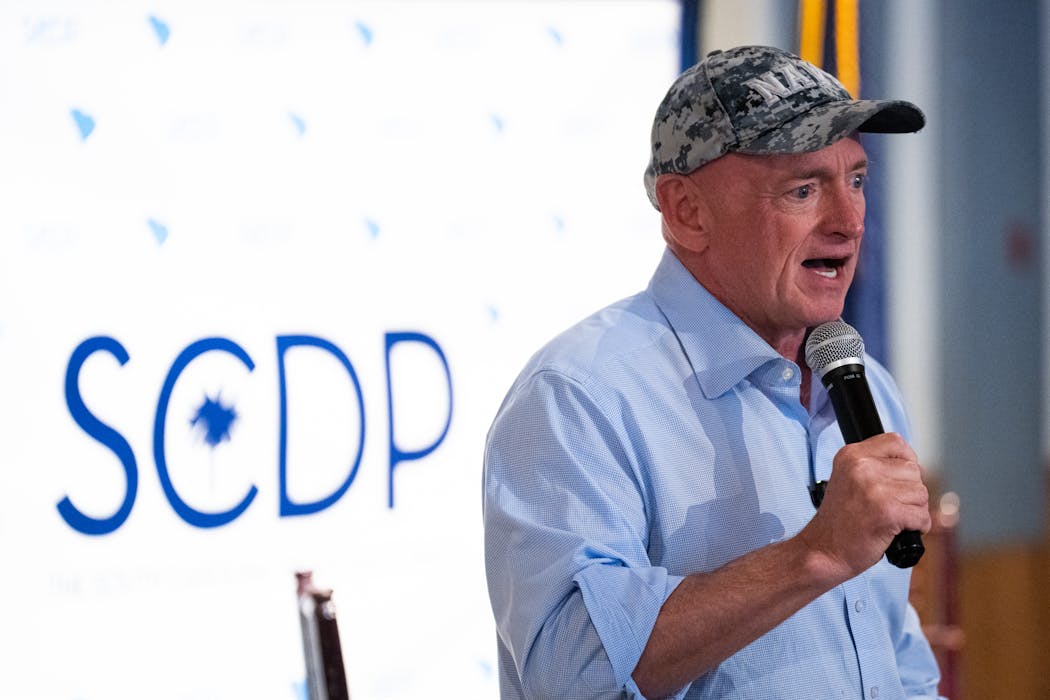
Arizona Sen. Mark Kelly speaks at a town hall meeting hosted by the South Carolina Democratic Party in Columbia, S.C., on Sept. 12, 2025. Bill Clark/CQ-Roll Call, Inc via Getty Images

In an unprecedented step, the Department of Defense announced online on Nov. 24, 2025, that it was reviewing statements by U.S. Sen. Mark Kelly, a Democrat, who is a retired Navy captain, decorated combat veteran and former NASA astronaut.

Kelly and five other members of Congress with military or intelligence backgrounds told members of the armed forces “You can refuse illegal orders” in a video released on Nov. 18, reiterating oaths that members of the military and the intelligence community swear to uphold and defend the Constitution. The legislators said they acted in response to concerns expressed by troops currently serving on active duty.

President Donald Trump called the video “seditious behavior, punishable by death.”

Retired senior officers like Kelly can be recalled to duty at any time, which would make it possible for the Pentagon to put Kelly on trial under the Uniform Code of Military Justice, although the Defense Department announcement did not specify possible charges. Defense Secretary Pete Hegseth wrote online that “Kelly’s conduct brings discredit upon the armed forces and will be addressed appropriately.”

This threat to punish Kelly is just the latest move by the Trump administration against perceived enemies at home. By branding critics and opponents as disloyal, traitorous or worse, Trump and his supporters are resurrecting a playbook that hearkens back to Sen. Joseph McCarthy’s crusade against people he portrayed as domestic threats to the U.S. in the 1950s.

As a historian who studies national security and the Cold War era, I know that McCarthyism wrought devastating social and cultural harm across our nation. In my view, repeating what I believe constitutes social and political fratricide could be just as harmful today, perhaps even more so.

Targeting homegrown enemies

In the late 1940s and early 1950s, many Americans believed the United States was a nation under siege. Despite their victory in World War II, Americans saw a dangerous world confronting them.

The communist-run Soviet Union held Eastern Europe in an iron grip. In 1949, Mao Zedong’s communist troops triumphed in the bloody Chinese civil war. One year later, the Korean peninsula descended into full-scale conflict, raising the prospect of World War III – a frightening possibility in the atomic era.

Anti-communist zealots in the U.S., most notably Wisconsin Republican Sen. McCarthy, argued that treasonous Americans were weakening the nation at home. During a February 1950 speech in Wheeling, West Virginia, McCarthy asserted that “the traitorous actions of those who have been treated so well by this nation” were undermining the United States during its “final, all-out battle” against communism.

When communist forces toppled China’s government, critics such as political activist Freda Utley lambasted President Harry Truman’s administration for what they cast as its timidity, blundering and, worse, “treason in high places.” Conflating foreign and domestic threats, McCarthy claimed without evidence that homegrown enemies “within our borders have been more responsible for the success of communism abroad than Soviet Russia.”

From 1950 through 1954, Sen. Joseph McCarthy, a Wisconsin Republican, used his role as chair of two powerful Senate committees to identify and accuse people he thought were Communist sympathizers. Many of those accused lost their jobs even when there was little or no evidence to support the accusations.

As ostensible proof, the senator pointed to American lives being lost in Korea and argued that it was possible to “fully fight a war abroad and at the same time … dispose of the traitorous filth and the Red vermin which have accumulated at home.”

Political opponents might disparage McCarthy for his “dishonest and cowardly use of fractional fact and innuendo,” but the Wisconsinite knew how to play to the press. Time and again, McCarthy would bombastically lash out against his critics as he did with columnist Drew Pearson, calling him “an unprincipled liar,” “a fake” and the owner of a “twisted perverted mentality.”

While McCarthy focused on allegedly disloyal government officials and media journalists, other self-pronounced protectors of the nation sought to warn naive members of the public. Defense Department pamphlets like “Know Your Communist Enemy” alerted Americans against being duped by Communist Party members skilled in deception and manipulation.

Virulent anti-communists denounced what they viewed as inherent weaknesses of postwar American society, with a clearly political bent. Republicans asserted that cowardly, effeminate liberals were weakening the nation’s defense by minimizing threats both home and abroad.

Censure and worse

In such an anxiety-ridden environment, “red-baiting” – discrediting political opponents by linking them to communism – spread across the country, leaving a trail of wrecked lives. From teachers to public officials, anyone deemed un-American by McCarthyites faced public censure, loss of employment or even imprisonment.

Under the 1940 Smith Act, which criminalized promoting the overthrow of the U.S. government, hundreds of Americans were prosecuted during the Cold War simply for having been members of the Communist Party of the United States. The act also authorized the “deportation of aliens,” reflecting fears that communist ideas had seeped into nearly all facets of American society.

The 1950 Internal Security Act, widely known as the McCarran Act, further emphasized existential threats from within. “Disloyal aliens,” a term the law left purposefully vague, could have their citizenship revoked. Communist Party members were required to register with the government, a step that made them susceptible to prosecution under the Smith Act.

Immigrants could be detained or deported if the president declared an “internal security emergency.” Advocates called this policy “preventive detention,” while critics derided the act as a “Concentration Camp Law,” in the words of historian Masumi Izumi.

Scapegoating outsiders

The scaremongering wasn’t just about people’s political views: Vulnerable groups, such as gay people, were also targeted. McCarthy warned of links between “communists and queers,” asserting that “sexual perverts” had infested the U.S. government, especially the State Department, and posed “dangerous security risks.” Closeted gay or lesbian employees, the argument went, were vulnerable to blackmail by foreign governments.

Fearmongering also took on a decidedly racist tone. South Carolina Governor George Bell Timmerman, Jr., for instance, argued in 1957 that enforcing “Negro voting rights” would promote the “cause of communism.”

Three years later, a comic book titled “The Red Iceberg” insinuated that communists were exploiting the “tragic plight” of Black families and that the NAACP, a leading U.S. civil rights advocacy group, had been infiltrated by the Kremlin. Conservatives like Arizona Sen. Barry Goldwater criticized the growing practice of using federal power to enforce civil rights, calling it communist-style social engineering.

In an interview on Oct. 13, 2024, then-candidate Donald Trump described Democratic Party rivals as ‘the enemy from within’ and suggested using the armed forces against ‘radical left lunatics’ on Election Day.

A new McCarthyism

While it’s never simple to draw neat historical parallels from past eras to the present, it appears McCarthy-like actions are recurring widely today. During the Red Scare, the focus was on alleged communists. Today, the focus is on straightforward dissent. Critics, both past and present, of President Donald Trump’s actions and policies are being targeted.

At the national level, Trump has called for using military force against “the enemy from within.” On Sept. 30, 2025, Trump told hundreds of generals and admirals who had been called to Quantico, Virginia, from posts around the world that the National Guard should view America’s “dangerous cities as training grounds.”

The Trump administration is making expansive use of the McCarran Act to crack down on immigrants in U.S. cities. White House adviser Stephen Miller has proposed suspending the constitutionally protected writ of habeas corpus, which entitles prisoners to challenge their detentions in court, in order to deport “illegal aliens,” alleging that the U.S. is “under invasion.”

In my home state of Texas, political fearmongering has taken on an equally McCarthyesque tone, with the Legislature directing the State Board of Education to adopt mandatory instruction on “atrocities attributable to communist regimes.”

Perhaps it is unsurprising, then, that right-wing activist Laura Loomer has unapologetically called for “making McCarthy great again.”

Disagreement is democratic

The history of McCarthyism shows where this kind of action can lead. Charging political opponents with treason and calling the media an “enemy of the people,” all without evidence, undercuts democratic principles.

These actions cast certain groups as different and dehumanize them. Portraying political rivals as existential threats, simply for disagreeing with their fellow citizens or political leaders, promotes forced consensus. This diminishes debate and can lead to bad policies.

Americans live in an insecure world today, but as I see it, demonizing enemies won’t make the United States a safer place. Instead, it only will lead to the kind of harm that was brought to pass by the very worst tendencies of McCarthyism.

The Conversation

Gregory A. Daddis does not work for, consult, own shares in or receive funding from any company or organization that would benefit from this article, and has disclosed no relevant affiliations beyond their academic appointment.

​Politics + Society – The Conversation

Categories
Entertainment

James Van Der Beek Video Praised by Fans, Wife Amidst Cancer Battle

Reading Time: 3 minutes

James Van Der Beek is “bouncing back.”

As he continues to battle his Stage 3 cancer diagnosis, the beloved actor is raising funds from fans.

He is auctioning off memorabilia from his lengthy acting career, particularly items from Dawson’s Creek and Varsity Blues.

One of his latest videos is earning encouragement from fans — and praise from his wife.

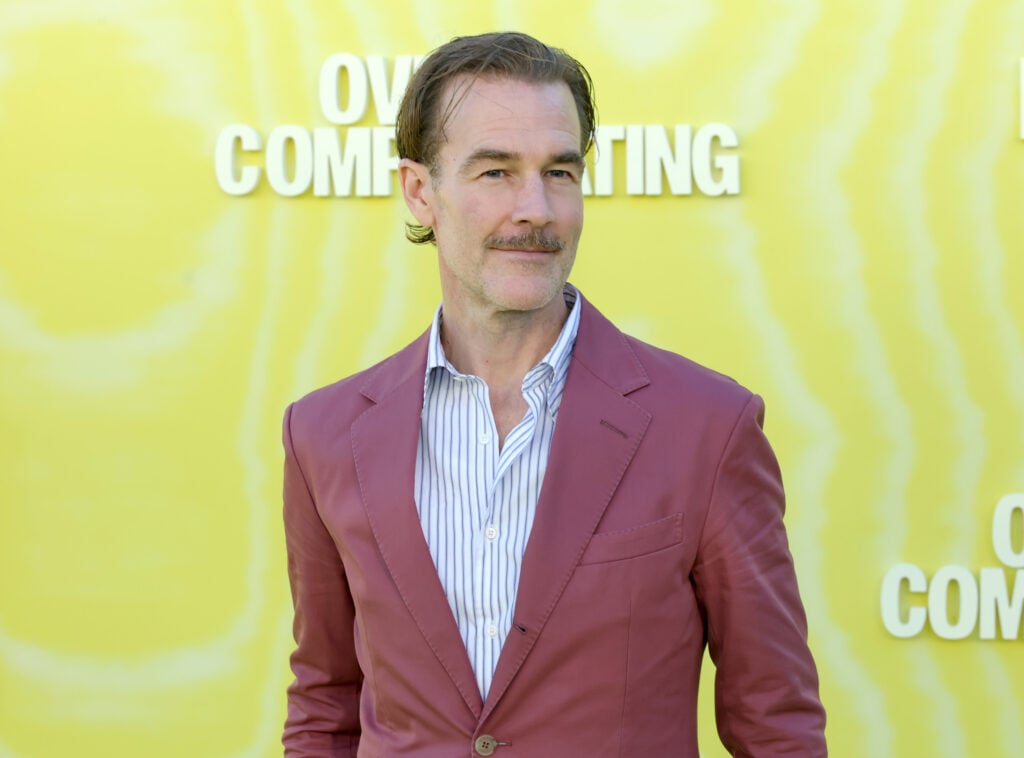
James Van Der Beek in May 2025.
Actor James Van Der Beek arrives at the premiere of Prime Video Series “Overcompensating” at Hollywood Palladium on May 14, 2025. (Photo Credit: Kevin Winter/Getty Images)

Everyone is rooting for James Van Der Beek

In a new video, James Van Der Beek shows himself playing with a football.

The Monday, November 24 Instagram posts shows the actor wearing his 1999 Varsity Blues jersey.

As we previously reported, it is one of numerous items that he is auctioning off to help raise money for his cancer treatment.

“By popular demand! My favorite jersey,” Van Der Beek’s caption begins.

He reflected: “Maybe it was all fun plays we got run in the football sequences for the away games… but I always loved putting on the varsity whites.”

“Last year when I released the Blues jersey, I was blown away by the love and support I received from all of you,” Van Der Beek gushed.

“It has meant more than I can ever express,” he emphasized.

“I hope you enjoy this one as much as the original,” Van Der Beek told his fans and followers.

“For me, every jersey I sign is a magical full-circle moment,” he wrote. “Thank you — for the love, the prayers, the support, and for making this jersey mean something far bigger than a movie.”

Van Der Beek concluded his caption: “Endlessly grateful for all of you. Proceeds go directly toward helping with treatment and supporting families walking the same path.”

A dark mode James Van Der Beek Instagram caption screenshot.
Alongside a video featuring his jersey, James Van Der Beek shared his appreciation for fans. (Image Credit: Instagram)

‘Bouncing back baby!!’

Obviously, James Van Der Beek received an outpouring of love and support on social media after sharing the video.

But some of that affection and affirmation came from somewhere closer to home.

His wife, Kimberly, also wrote in the comments of the Instagram post.

“You’re a wizard,” she praised.

Kimberly added: “Bouncing back baby!!”

James Van Der Beek in April 2023.
James Van Der Beek attends Operation Smile’s 11th annual Celebrity Ski & Smile Challenge presented by Alphapals, Barefoot Dreams and the St. Regis Deer Valley on April 01, 2023. (Photo Credit: Alex Goodlett/Getty Images for Operation Smile)

One year ago, Van Der Beek revealed that doctors had diagnosed him with Stage 3 colorectal cancer.

He had already been dealing with the news and lining up an aggressive treatment plan.

Van Der Beek has maintained all along that he is optimistic, that doctors tell him that he has many reasons to hope.

However, medical care is expensive.

A full year of cancer treatments is particularly devastating on a financial level. Yes, even for a famous actor who’s been in the industry for decades.

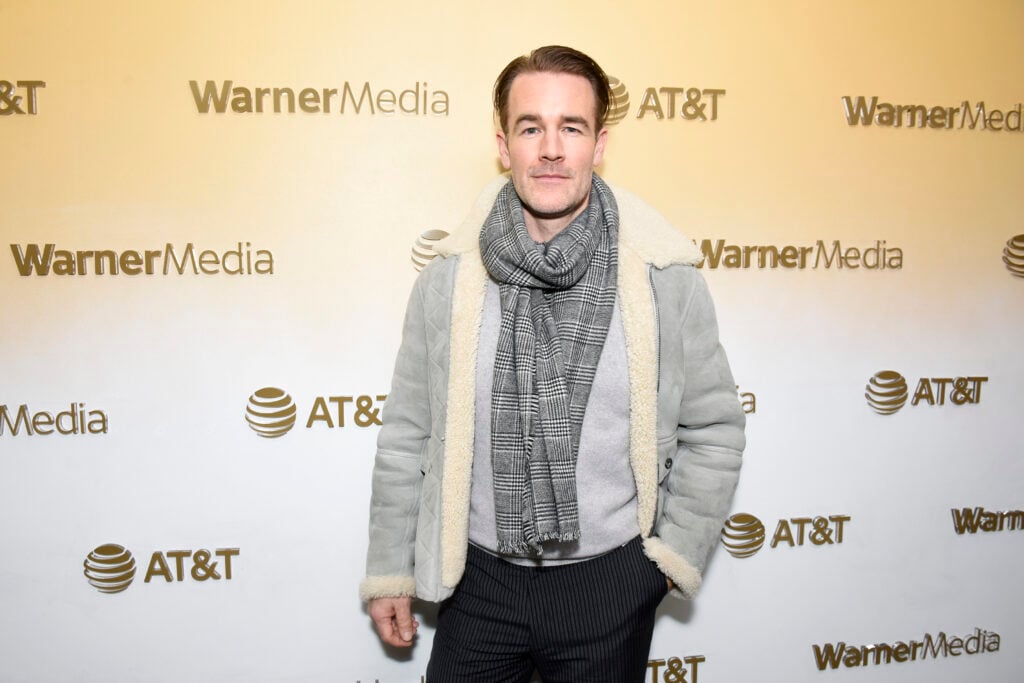
James Van Der Beek in January 2020.
James Van Der Beek stops by WarnerMedia Lodge: Elevating Storytelling with AT&T during Sundance Film Festival 2020 on January 24, 2020. (Photo Credit: Vivien Killilea/Getty Images for WarnerMedia and AT&T)

He’s offering a lot at the upcoming auction

Some of the items that James Van Der Beek is auctioning would be pricey even without the appeal to collectors.

Jewelry, clothes, and more from his time on the small and big screens could go for thousands — or tens of thousands — of dollars.

This is a good reminder that even “rich” actors who have been famous for years are seldom actually wealthy.

It is an even better reminder that our healthcare system is deeply broken. If a household name has to auction off keepsakes to cover medical expenses, what luck do the rest of us have?

We are all rooting for Van Der Beek to make a full recovery.

James Van Der Beek Video Praised by Fans, Wife Amidst Cancer Battle was originally published on The Hollywood Gossip.

​The Hollywood Gossip

Categories
Entertainment

Richard Branson Announces Death of Joan, Wife & Partner of 50 Years

Reading Time: 3 minutes

Richard Branson has revealed that his beloved wife, Joan, has died.

They spent the past half-century together.

The couple were married for a majority of that time, becoming parents and enduring tragedy together.

Now, her passing has rocked his world, but he’s sharing a powerful tribute to her.

Richard Branson and wife Joan in 2013.
In this handout image provided by the Boodles Boxing Ball Committee, Joan and Sir Richard Branson pose at the Boodles Boxing Ball 2013 on September 21, 2013. (Photo Credit: Dominic O’Neill/Boodles Boxing Ball Committee via Getty Images)

Richard Branson is mourning his late wife, Joan

On Tuesday, November 25, Richard Branson took to his Instagram page to share devastating news.

“Heartbroken to share that Joan, my wife and partner for 50 years, has passed away,” his caption began.

“She was the most wonderful mum and grandmum our kids and grandkids could have ever wished for,” Branson praised.

“She was my best friend, my rock, my guiding light, my world,” he affirmed.

The heartbroken Branson concluded his caption: “Love you forever, Joan x.”

Branson declined to reveal his late wife’s cause of death.

Initially, no reports on her death shed light upon this or other details.

However, some speculate that her death was not acutely sudden.

Just one day prior to her passing, he shared another post — a throwback of the couple — writing: “Love this photo of Joan.”

That could mean nothing. But it may indicate that Branson knew that the end was near for his beloved wife.

A dark mode screenshot of an Instagram caption by Richard Branson.
Taking to Instagram, business magnate Richard Branson penned a heartfelt tribute to his dearly departed wife. (Image Credit: Instagram)

They spent the past half-century together

Sir Richard Branson is a business magnate.

He is perhaps best known for his philanthropic endeavors and for his transportation businesses, such as Virgin Atlantic.

In 1976, he met Joan Templeman, later hitting off a relationship with her.

(Yes, that means that he was rounding up to “50 years,” but splitting hairs with a grieving widower should not be anyone’s favored hobby, and is nearly as bad as Megan Kelly’s quibbling)

Ultimately, they only married in 1989. It is usually wise to not rush into a marriage. Perhaps Branson’s erstwhile marriage to Kristen Tomassi had taught him this.

Richard Branson and wife Joan in 2008.
Sir Richard Branson and Lady Joan Branson attend the landmark Grand Opening of Atlantis, The Palm Resort, and the Palm Jumeirah on November 20, 2008. (Photo Credit: Chris Jackson/Getty Images for Atlantis, The Palm)

Over the course of their half-century relationship, they welcomed three children.

Daughter Clare Sarah, born in 1979, lived for only four days.

This family tragedy has stuck with them.

Holly, their daughter, was born in 1981.

Their son, Sam, was born in 1985.

Richard Branson and wife Joan in 2016.
Businessman Richard Branson and Joan Templeman attend the 2016 Pre-GRAMMY Gala and Salute to Industry Icons honoring Irving Azoff at The Beverly Hilton Hotel on February 14, 2016. (Photo Credit: Kevork Djansezian/Getty Images)

We will keep Joan’s loved ones in our thoughts

As we noted, we do not yet know Joan’s tragic cause of death.

Richard Branson, who was born in 1950, turned 75 early this past summer.

His dearly departed wife was 80 years old.

80 is a complex age — especially in 2025, and especially when someone has essentially unlimited resources. Some die “of old age” before this milestone, while others live and remain active well beyond it.

Regardless of what precipitated Joan’s tragic passing, our hearts go out to her family and other loved ones at this time.

Richard Branson Announces Death of Joan, Wife & Partner of 50 Years was originally published on The Hollywood Gossip.

​The Hollywood Gossip

Categories
Entertainment

Delarosa Cause of Death: Beloved Singer Shot and Killed at 22

Reading Time: 2 minutes

We have tragic news to report from the world of music today:

Singer Maria De La Rosa — better known by her stage name Delarosa — has been killed in an “ambush-style” shooting in Los Angeles.

She was just 22 years old.

Singer Delarosa has been shot and killed at the age of 22.
Singer Delarosa has been shot and killed at the age of 22. (YouTube)

According to the LAPD, Delarosa was shot to death in her car on Saturday night.

Two male suspects reportedly approached the car and fired a rapid succession of shots around 1:25.

Police say there were two men in the car with Delarosa, and both of them are currently in critical condition.

Delarosa was shot in the abdomen, and she succumbed to her injuries after being rushed to a nearby hospital, per People magazine.

In her final Instagram post on October 30, Delarosa stated that she would be taking a break from social media in order to focus on recording new music.

“Busy cookin in the Stu. don’t call me. It’s about that time.”

Seemed to be referencing her previous single, “No Me Llames,” which translates to “Don’t Call Me.”

The track, which was released in August, is now the final song released by Delarosa during her lifetime.

It’s unclear if she’s recorded enough additional material for any posthumous releases.

At this time, police have not announced any leads on the case.

According to People, investigators say they are working to determine a motive in this execution-style slaying.

Delarosa was an up-and-coming star on the international Latin music scene. Now, her death is being mourned across social media by an army of devoted fans.

Our thoughts go out to Delarosa’s loved ones during this enormously difficult time.

We will have further updates on this developing story as new information becomes available.

Delarosa Cause of Death: Beloved Singer Shot and Killed at 22 was originally published on The Hollywood Gossip.

​The Hollywood Gossip

Categories
Entertainment

Leon Brown Calls Kody a ‘Joke of a Father’ & Debunks Reconciliation Claims

Reading Time: 3 minutes

Leon Brown is calling out their father.

See, Kody has been speaking a lot about his family in recent interviews.

At the same time as he blamed reality TV for his divorces, the Sister Wives villain claimed that he’s (finally) trying to be a good dad.

Leon says that Kody’s claims just don’t hold water.

Leon Brown appears in a video then shared to YouTube.
Though Leon Brown is not always active on social media, they have shared a lot with followers — including some of their poetry. (Image Credit: YouTube)

Leon Brown is calling out their dad

After everything that Kody Brown has been saying recently, Leon felt that they had no choice but to respond.

Kody appeared alongside several other Special Forces finalists on The Viall Files.

There, the failed polygamist acknowledged that he is estranged from most of his adult children — but claimed that he’s working on changing that.

“I’m the one that’s reaching out,” Kody alleged.

But is that true?

Having seen — or at least heard about — the video, Leon took to social media to dispute their father’s claims.

In an Instagram Story post from around midday on Tuesday, November 25, they wrote: “Taking a break from my social media hiatus to say one thing.”

“There’s a ridiculous video of my father circulating,” Leon acknowledged. (There are, in fact, many ridiculous videos of Kody).

This video, they specified, is the one “where he says he reaches out to his children.”

Leon wrote: “Let me be so f–king clear: I have not heard from that man since my brother killed himself.”

A text post from Leon Brown's Instagram Story.
In a November 25, 2025 Instagram Story post, Leon Brown debunked their father’s claims of attempting to reconcile. (Image Credit: Instagram)

‘He is a joke of a father’

Not only has Leon Brown not heard from Kody since Garrison’s tragic death, they shared, but he seemingly couldn’t bring himself to reach out to them at the funeral.

“Kody blatantly blew me off at Garrison’s funeral,” they accused.

(Garrison’s funeral was in early March, 2024 — over a year and a half ago)

“He is a liar,” Leon characterized of their dad. “He is a joke of a father.”

Intent upon resuming their social media hiatus, they concluded: “That’s all.”

Kody Brown on The Viall Files.
On ‘The Viall Files,’ Kody Brown spoke about his one remaining marriage. (Image Credit: YouTube)

Obviously, not all of the Brown family children want to hear from Kody. This would include not wanting him to reach out, in at least some cases.

Sometimes, adult children will give you a second chance. But that doesn’t mean that they owe you that, after all.

However, Leon seems to be responding simply because their dad is presenting an image of himself as a man set on reconciliation.

But they’re saying that this isn’t true.

Or that, if it is true, he’s open to selective reconciliations — and is only extending that olive branch to certain children. Not to Leon.

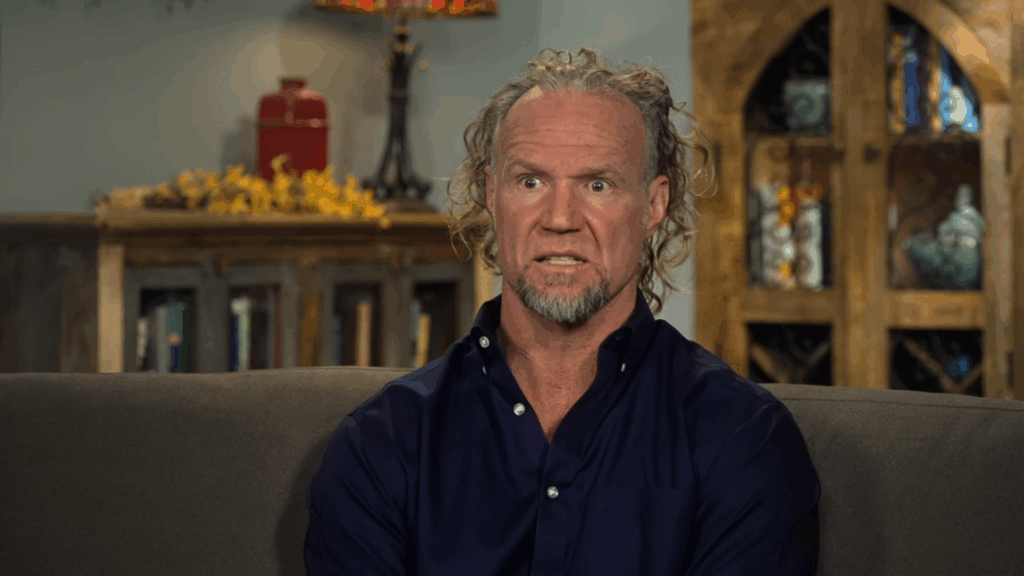
Kody Brown speaks to the camera.
Speaking to the ‘Sister Wives’ confessional camera is Kody Brown, as charming as ever. (Image Credit: TLC)

Did Kody actually lie?

We cannot claim to have secret knowledge of the inner workings of Kody and Leon Brown’s disagreement.

That said, we can speculate that Kody may believe that he has reached out … from a certain point of view.

It is possible that he’s starting by reaching out to adult children who he believes are most likely to be receptive. Some of his kids do talk to him. And maybe more will give him an undeserved second chance.

Perhaps his plan is to work his way towards children whom he has pushed away, like Leon.

But even if that very generous hypothetical is true, Leon has every right to feel annoyed that their dad is representing himself in this way.

Leon Brown Calls Kody a ‘Joke of a Father’ & Debunks Reconciliation Claims was originally published on The Hollywood Gossip.

​The Hollywood Gossip

Categories
Entertainment

Sawyer Sweeten Cause of Death: ‘Everybody Loves Raymond’ Stars Pay Tribute to …

Reading Time: 3 minutes

You might not know the name Sawyer Sweeten, but if you watched TV’s most popular sitcom in the late 1990s and early 2000s, then you’ve seen his work.

Sweeten played Geoffrey Barone on all nine seasons of Everybody Loves Raymond.

Sadly, he died under tragic circumstances at a very young age.

Actors Sawyer Sweeten, Madylin Sweeten and Sullivan Sweeten arrives at the 8th Annual TV Land Awards at Sony Studios on April 17, 2010 in Culver City, California.
Actors Sawyer Sweeten, Madylin Sweeten and Sullivan Sweeten arrives at the 8th Annual TV Land Awards at Sony Studios on April 17, 2010 in Culver City, California. (Photo by Alberto E. Rodriguez/Getty Images)

Sweeten died via self-inflicted gunshot wound in 2015, just weeks shy of his twentieth birthday.

The cast of Raymond was quite literally family to the young star, as his real-life sister and identical twin brother portrayed his onscreen siblings.

On Monday, the show’s star and co-creator Ray Romano paid tribute to Sawyer during the cast’s highly anticipated 30th anniversary special.

“So Sawyer, of course, is no longer with us, and we miss him,” Romano told the audience.

He then turned his attention to the surviving Sweeten siblings and added, “And he, just like you are, was this bright energy.”

The cast of 'Everybody Loves Raymond', (L-R) Peter Boyle, Brad Garrett, Doris Roberts, Ray Romano, Patricia Heaton, Monica Horan, Sawyer Sweeten, Sullivan Sweeten and Madylin Sweeten pose with the Emmy for Outstanding Comedy Series in the press room at the 57th Annual Emmy Awards held at the Shrine Auditorium on September 18, 2005 in Los Angeles, California.
The cast of ‘Everybody Loves Raymond’, (L-R) Peter Boyle, Brad Garrett, Doris Roberts, Ray Romano, Patricia Heaton, Monica Horan, Sawyer Sweeten, Sullivan Sweeten and Madylin Sweeten pose with the Emmy for Outstanding Comedy Series in the press room at the 57th Annual Emmy Awards held at the Shrine Auditorium on September 18, 2005 in Los Angeles, California. (Photo by Frazer Harrison/Getty Images)

“We’re very passionate in our family about suicide prevention. It is the second leading cause of death between ages 18 to 25. But 90 percent of people who seek treatment are cured,” said Madilyn Sweeten, who played Ally Baronw.

“None of us really expected what happened. But I try to think about the good moments. And oftentimes, that’s here on the set,” Sullivan Sweeten added.

It’s not the first time that Sweeten’s onscreen and real-life families have paid tribute to the late star.

“I’m shocked and terribly saddened by the news about Sawyer,” Romano said, in a 2015 statement to People magazine.

Actors Sullivan Sweeten (L) and Sawyer Sweeten attend the Everybody Loves Raymond Series Wrap Party at Hanger 8 on April 28, 2005 in Santa Monica, California.
Actors Sullivan Sweeten (L) and Sawyer Sweeten attend the Everybody Loves Raymond Series Wrap Party at Hanger 8 on April 28, 2005 in Santa Monica, California. (Photo by Matthew Simmons/Getty Images)

“He was a wonderful and sweet kid to be around. Just a great energy whenever he was there. My heart breaks for him, his family and his friends during this very difficult time.” Sweeten’s onscreen mother, Patricia Heaton echoed.

“Sawyer was a funny and exceptionally bright young man. He is gone from us far too soon. The loss the Sweeten family is experiencing is unimaginable,” Sweeten’s onscreen mother, Patricia Heaton echoed.

“Tonight, hug your children a little tighter and please keep Sawyer and his family in your thoughts and prayers.”

“At this time I would like to encourage everyone to reach out to the ones you love,” Madylin Sweeten wrote on Facebook at the time. “Let them have no doubt of what they mean to you.”

Sweeten took his own life while traveling with his family in Texas. His reasons remain unclear.

Our thoughts go out to his loved ones as they continue to process this horrific tragedy.

Sawyer Sweeten Cause of Death: ‘Everybody Loves Raymond’ Stars Pay Tribute to … was originally published on The Hollywood Gossip.

​The Hollywood Gossip

Categories
Health

Kennedy Family Member Tatiana Schlossberg’s Terminal Cancer Diagnosis, Explained

Yet another tragedy has befallen the Kennedy family, with Tatiana Schlossberg writing an article to explain her diagnosis of terminal cancer.

​Health Digest – Health News, Wellness, Expert Insights