In Soviet times, Western observers would scrutinise video footage of state occasions, like military parades on Red Square, to try to learn more about Kremlin hierarchy.The Latest News from the UK and Around the World | Sky News
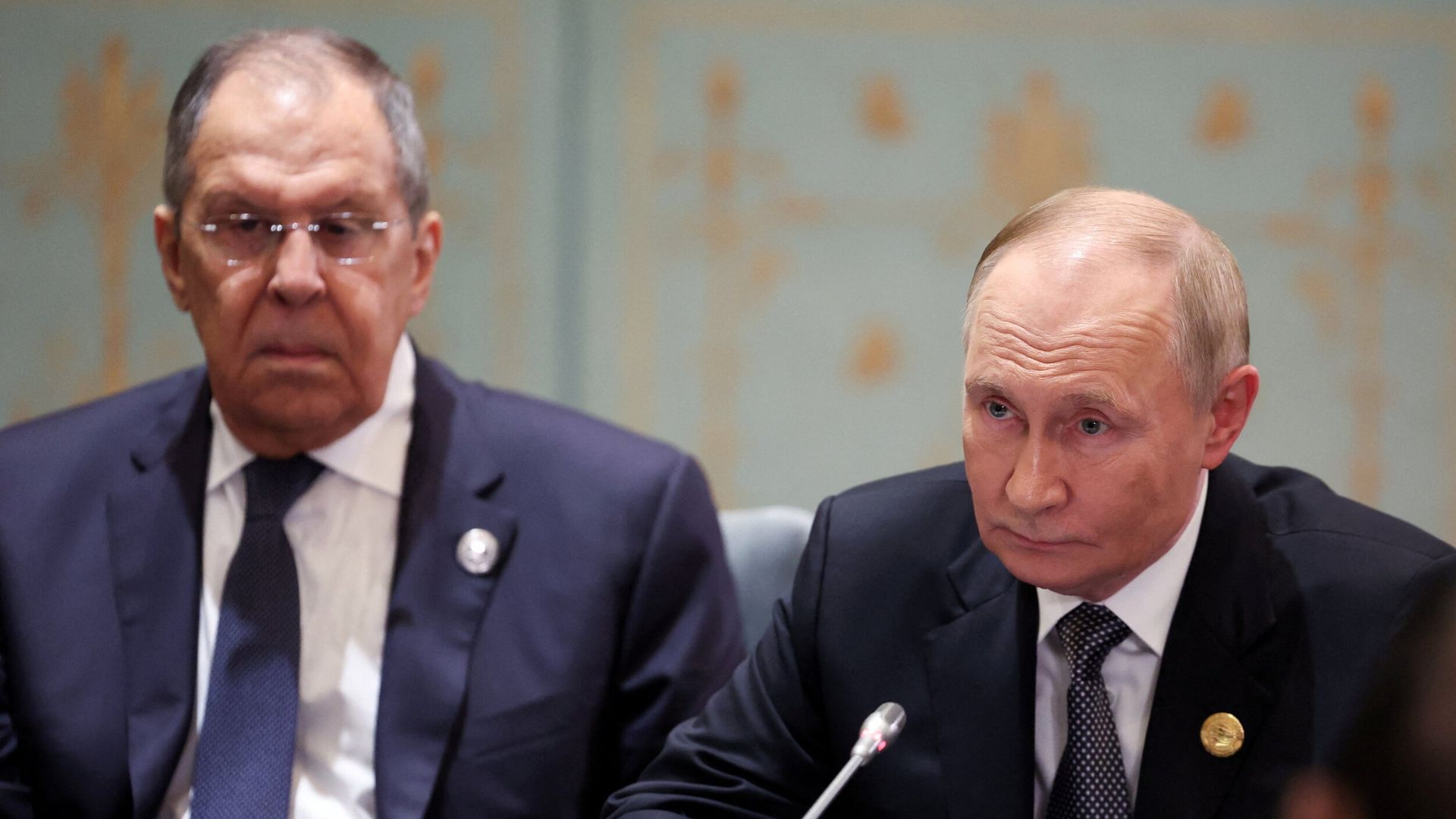









In Soviet times, Western observers would scrutinise video footage of state occasions, like military parades on Red Square, to try to learn more about Kremlin hierarchy.The Latest News from the UK and Around the World | Sky News
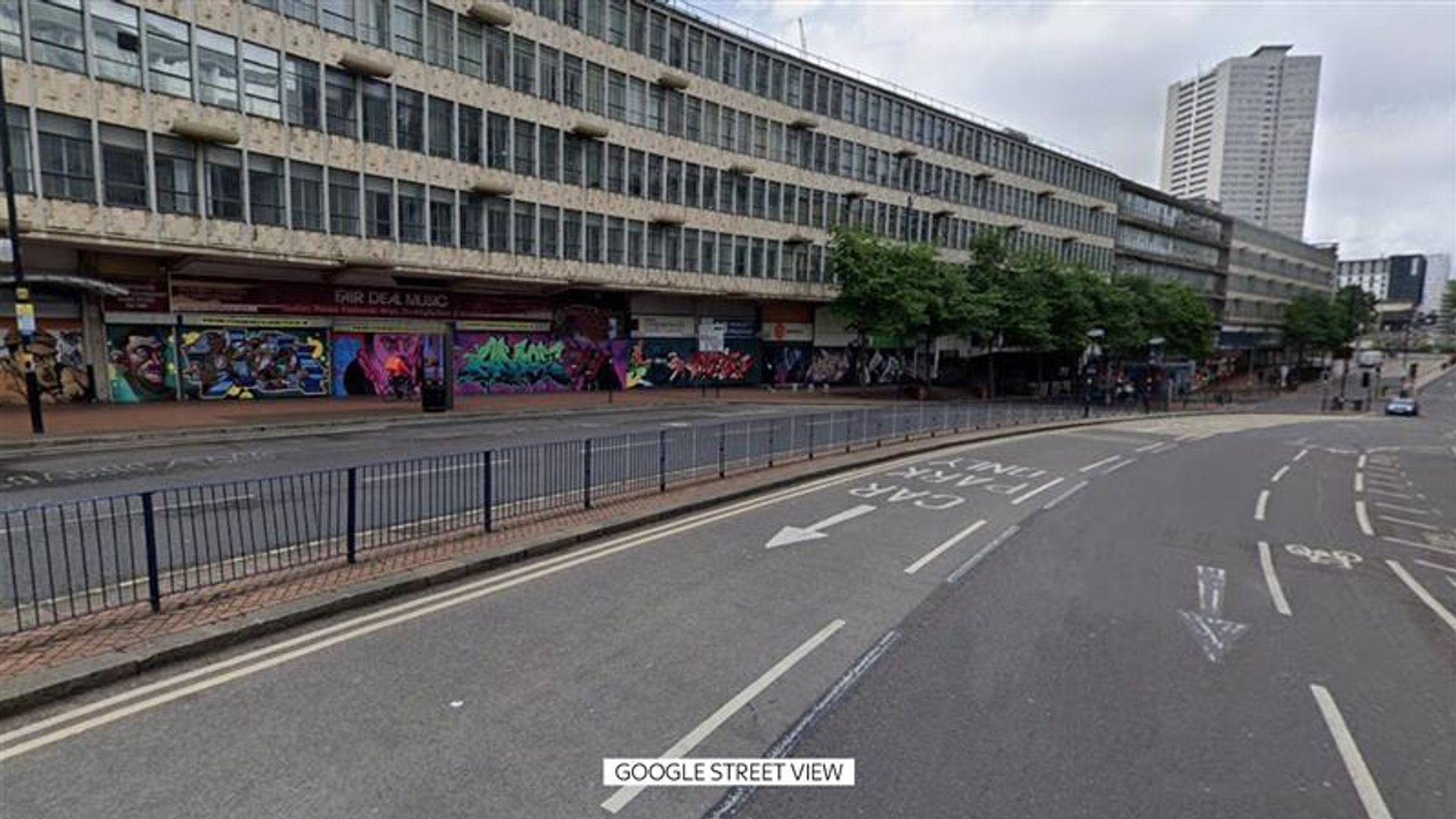
A woman is in a critical condition after she was stabbed in the neck in what police have described as an “unprovoked attack”.The Latest News from the UK and Around the World | Sky News

An NHS trust and a ward manager will be sentenced next week for health and safety failings – more than a decade after a young woman died in a secure mental health hospital.The Latest News from the UK and Around the World | Sky News
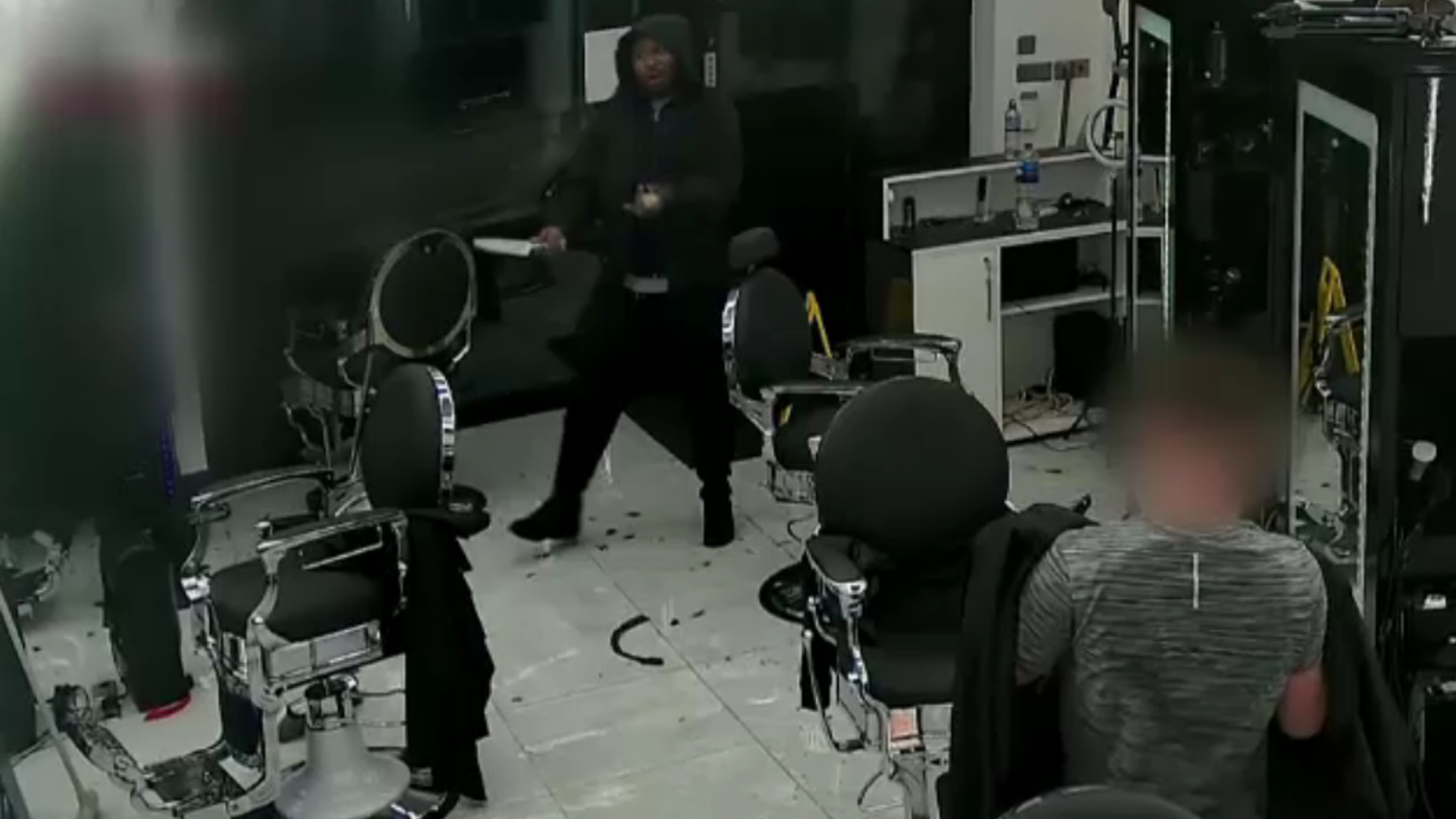
The owner of a barber shop that was twice confronted by a man wielding a knife has questioned whether last Saturday’s Huntingdon stabbing attack could have been prevented, had the police taken his concerns seriously.The Latest News from the UK and Around the World | Sky News

It started with a strong espresso in a simple cafe on a side street in north London.The Latest News from the UK and Around the World | Sky News

NOTN- With food insecurity surging and federal food assistance programs in limbo after November, Resurrection Lutheran Church is hosting the first-ever Juneau Hunger Jam today to raise funds and awareness for the Southeast Alaska Food Bank, along with their own meal programs.
The event will be a live-streamed telethon on the church’s YouTube channel and will feature performances from more than a dozen local musicians, including community choirs and High Cost of Living. Organizers say all proceeds will go directly to support the food bank, which supplies groceries to pantries and meal programs across Southeast Alaska.
“The food banks have been hit hard. They lost federal programs that were benefiting them and us, that got them food. As an example. We’re being hit really hard right now.” said Bradley Perkins, event organizer and church representative. “Our food pantries open on Tuesdays from noon to 4:30 and we are pretty much, running out of food by 2:30 or 3:00, and we have huge numbers of people coming in, not just those who we normally see that experience food scarcity, we’re seeing federal workers, we’re seeing teachers, and we’re seeing just all kinds of people, and our meal service program is also just gone off the charts.”
The food bank’s supplies have been strained since the recent federal freeze on SNAP benefits and other food distribution programs.
“When things happen like the cutting off of SNAP and federal workers being furloughed, we wanted to raise some money for them so that they can have a buffer to handle these blips that hit in the system.”Said Karen Lawfer, “We want to make sure that they have food security to handle all of these ups and downs. So how else to do that, but by having a lot of fun and raising money? So that’s when we came up with the Juneau Hunger Jam.”
The telethon will take place from 6 to 10 p.m. at Resurrection Lutheran Church. The event will include live performances, a silent auction, and an in-person studio audience. Food donations, particularly shelf-stable items will also be accepted at the church during the event.

NOTN- Juneau police are asking for the public’s help identifying three suspects accused of burglarizing a local church early November 1.
First reported by the Juneau Independent, the Juneau Police Department said officers began investigating the incident after receiving a report of a burglary at the Juneau Church of Christ, located on Trinity Drive. Surveillance video showed three individuals breaking into the church between 2 a.m. and 3:30 a.m. police said.
Approximately $4,000 worth of electronics and other items were reported stolen, including an Apple MacBook Air, Panasonic HD camcorder, GoPro Hero 3, Sennheiser wireless microphone system, and various audio-visual equipment. Police said the thieves also took plastic decorative flowers and laundry detergent.

Investigators released surveillance footage in hopes of identifying the suspects, available on JPD’s Facebook page.
Anyone with information is asked to contact Sergeant Lee Phelps at the Juneau Police Department at (907) 586-0600. Anonymous tips can be submitted through JuneauCrimeLine.com.
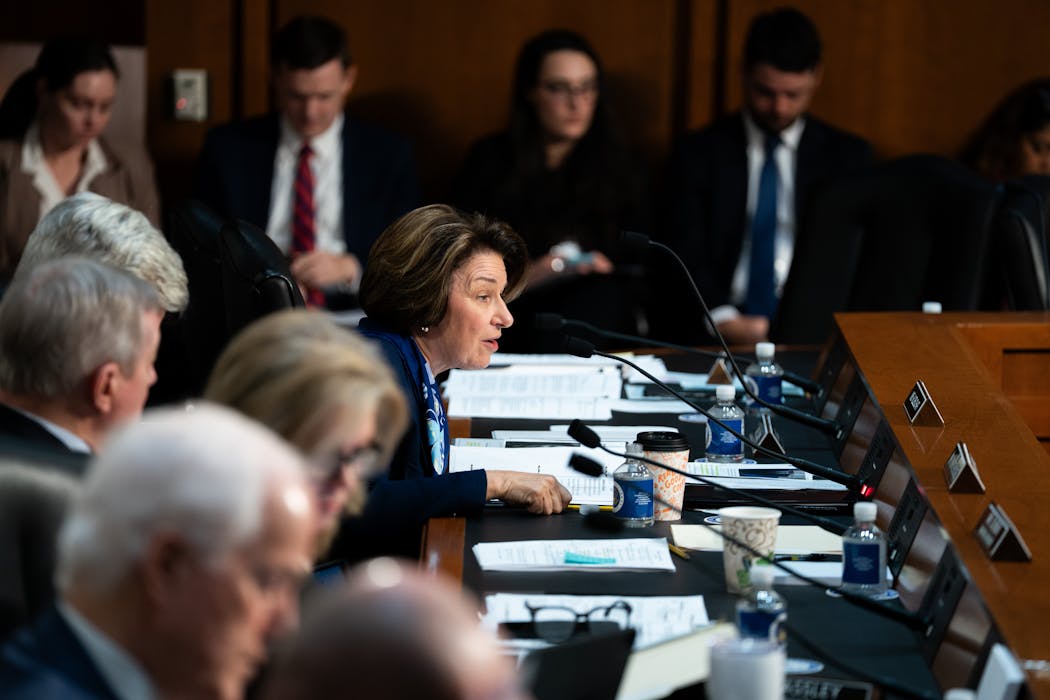
Routine congressional oversight hearings usually don’t make headlines. Historically, these often low-key events have been the sorts of things you catch only on C-SPAN – procedural, polite and largely ignored outside the Beltway.
But their tone has shifted dramatically during the second Trump administration.
When Attorney General Pam Bondi appeared before the Senate Judiciary Committee on Oct. 7, 2025, what took place was a contentious, highly partisan, made-for-TV-and-social-media confrontation.
The hearing occurred on the heels of the indictment of former FBI Director James Comey, which many legal experts view as an example of a president targeting his political enemies. Bondi came ready to fight. She refused to answer many questions from Democrats, instead launching personal attacks against these members of the U.S. Senate.
When Illinois Sen. Dick Durbin, a Democrat, asked about the deployment of National Guard troops in Chicago, Bondi retorted, “I wish you loved Chicago as much as you hate President Trump.” The clip went viral, as Bondi likely intended.
From our perspective as political scientists who study the U.S. Congress, congressional oversight has played an important role in American democracy. Here’s a brief history.
In simple terms, oversight is the ability of Congress to ensure that the laws it passes are faithfully executed. This generally means asking questions, demanding information, convening hearings and holding the executive branch accountable for its actions.
Oversight isn’t specifically mentioned in the Constitution. Article 1, Section 8, which lists the powers of Congress, includes the power “to make all laws which shall be necessary and proper,” without identifying an oversight role. Once laws are enacted, Article 2, Section 3, states that the president “shall take Care that the Laws be faithfully executed.”
However, the framers viewed congressional oversight as a key component of legislative authority. They wanted presidents to take Congress seriously and structured the Constitution to ensure that the executive would be accountable to the legislature. As James Madison urged in Federalist 51, the separate branches of government should have the power to keep each other from becoming too powerful. “Ambition must be made to counteract ambition,” Madison wrote.
The framers drew from the examples of the British Parliament and Colonial legislatures. In 1621, Sir Francis Bacon was charged with corruption and impeached as Lord High Chancellor after an investigation by a committee of the British Parliament. And in 1768, the Massachusetts Assembly conducted an investigation of Gov. Francis Bernard that led to a formal request to the King of England for his removal.
At the Federal Convention in 1787 that produced the Constitution, Delegate George Mason noted that members of Congress possessed “inquisitory powers” and “must meet frequently to inspect the Conduct of public officials.” Even though this idea was never written down, it was a habit of self-government that early Congresses put into practice.

Congressional oversight began almost as soon as the first Congress met. In 1790, Robert Morris, the superintendent of finances during the Continental Congress and a financier of the American Revolution, asked Congress to investigate his handling of the country’s finances and was exonerated of any wrongdoing.
During this period, congressional investigations were often referred to select committees – bodies created to perform special functions. These panels had the power to issue subpoenas and hold individuals in contempt. Since there was no official record of debates and proceedings, the public relied on newspaper accounts to learn about what had happened.
In March 1792, congressional oversight exposed businessman William Duer, who signed contracts with the War Department but failed to furnish the needed military supplies. This shortfall contributed to a stunning U.S. military defeat against a confederation of Native American tribes in the Northwest Territory.
Congress eventually removed the quartermaster general from his role for mismanaging the contracts. Duer was simultaneously involved in perhaps the first American economic bubble, which burst at the same time as Congress’ hearings. He ended up in a debtor’s prison, where he died in 1799.
Throughout the 19th century, Congress continued to quietly exercise this power. The work was often invisible to the public, but the issues were important. Hearings from December 1861 to May 1865 on the conduct of the U.S. Civil War produced a detailed record of the war, exposed military wrongdoing and condemned slavery. In 1871, the Senate created a select committee to investigate Ku Klux Klan violence during Reconstruction.
Congress started to use its oversight power more aggressively in the 1920s with the Senate Committee on Public Land and Surveys’ high-profile investigations into the Teapot Dome scandal.
Hearings revealed that Interior Secretary Albert Bacon Fall had secretly leased federal oil reserves in Wyoming to two private corporations and had received personal loans and gifts from the companies in return.
The investigation found clear evidence of corruption. Fall was indicted and became the first U.S. Cabinet member to be convicted of a felony.
The U.S. Supreme Court helped to shape the legal foundation of congressional oversight. In McGrain v. Daugherty, decided in 1927, the court held that congressional committees could issue subpoenas, force witnesses to testify and hold them in contempt if they fail to appear. Two years later, in Sinclair v. United States, the court ruled that witnesses who lied to Congress could be charged with perjury.
These cases granted the judicial branch’s sanction to what had long been an implied legislative power, cementing the constitutionality of congressional oversight.
The modern era of congressional oversight has produced some very important reforms – and some truly regrettable spectacles.
The most important example of bipartisan congressional oversight came in response to reporting by The Washington Post’s Carl Bernstein and Bob Woodward. The two journalists wrote about the 1972 burgling of Democratic National Committee offices in Washington, D.C.’s Watergate Hotel and subsequent cover-up efforts by the Nixon administration.
On Feb. 7, 1973, the U.S. Senate voted 77-0 to establish a Select Committee on Presidential Campaign Activities, which brought together Democrats and Republicans to investigate what came to be known as the “Watergate scandal.” The committee’s work spurred action in Congress to impeach President Richard Nixon, leading to Nixon’s resignation in 1974 and to the enactment of legal reforms to provide an institutional check on presidential power.
Another high point for congressional oversight came after the 9/11 terrorist attacks in 2001. Seeking to learn how the deadliest terrorist strike on American soil had occurred, Democratic Sen. Bob Graham and Republican Rep. Porter Goss, who chaired the Senate and House Intelligence committees, formed a joint committee to investigate intelligence failures before and after the attacks.
This inquiry produced several important recommendations that were ultimately adopted, including the creation of a director of national intelligence and a Department of Homeland Security, as well as better information sharing among law enforcement agencies.

Congress’ oversight can extend beyond the executive branch when the actions of private actors raise questions about existing laws or spur the need for new ones. As examples, investigations into medical device safety and Enron’s 2001 collapse examined malfeasance in the private sphere that existing regulations failed to prevent.
However, the power to expose corruption can also be used as a tool to score partisan points and generate outrage, rather than holding the executive branch accountable for actual malfeasance. Notably, in the 1950s, Wisconsin Sen. Joseph McCarthy turned oversight into inquisition and used the power of media to amplify his accusations of communist influence within the federal government.
Congressional oversight has strengthened the democratic system at many points. But hearings like Bondi’s recent session before the Senate Judiciary Committee aren’t the first, and likely won’t be the last, to substitute sound bites for substance.
As we see it, the problem with allowing oversight to become political theater is that it distracts Congress from quieter and more meaningful oversight work. Slow, procedural work isn’t likely to go viral, but it helps keep government accountable. The task of a deliberate legislative body is to reconcile those very different impulses.

The authors do not work for, consult, own shares in or receive funding from any company or organization that would benefit from this article, and have disclosed no relevant affiliations beyond their academic appointment.
Politics + Society – The Conversation
President Barack Obama famously chided Donald Trump in April 2011 during the annual White House correspondents’ dinner. The reality show star had repeatedly and falsely claimed that Obama had not been born in the United States and was therefore ineligible to be president.
Trump’s demands that Obama release his birth certificate had, in part, made Trump a front-runner among Republican hopefuls for their party’s nomination in the following year’s presidential election.
Obama referred to Trump’s presidential ambitions by joking that, if elected, Trump would bring some changes to the White House.
Obama then called attention to a satirical photo the guests could see of a remodeled White House with the words “Trump” and “The White House” in large purple letters followed by the words “hotel,” “casino” and “golf course.”
Obama’s ridicule of Trump that evening has been credited with inspiring Trump to run for president in 2016.
My book, “The Art of the Political Putdown,” includes Obama’s chiding of Trump at the correspondents’ dinner to demonstrate how politicians use humor to establish superiority over a rival.
Obama’s ridicule humiliated Trump, who temporarily dropped the birther conspiracy before reviving it. But Trump may have gotten the last laugh by using the humiliation of that night, as some think, as motivation in his run for the president in 2016.
There is a further twist to Obama joking about Trump’s renovations to the White House if Trump became president. Trump has fulfilled Obama’s prediction, kind of.
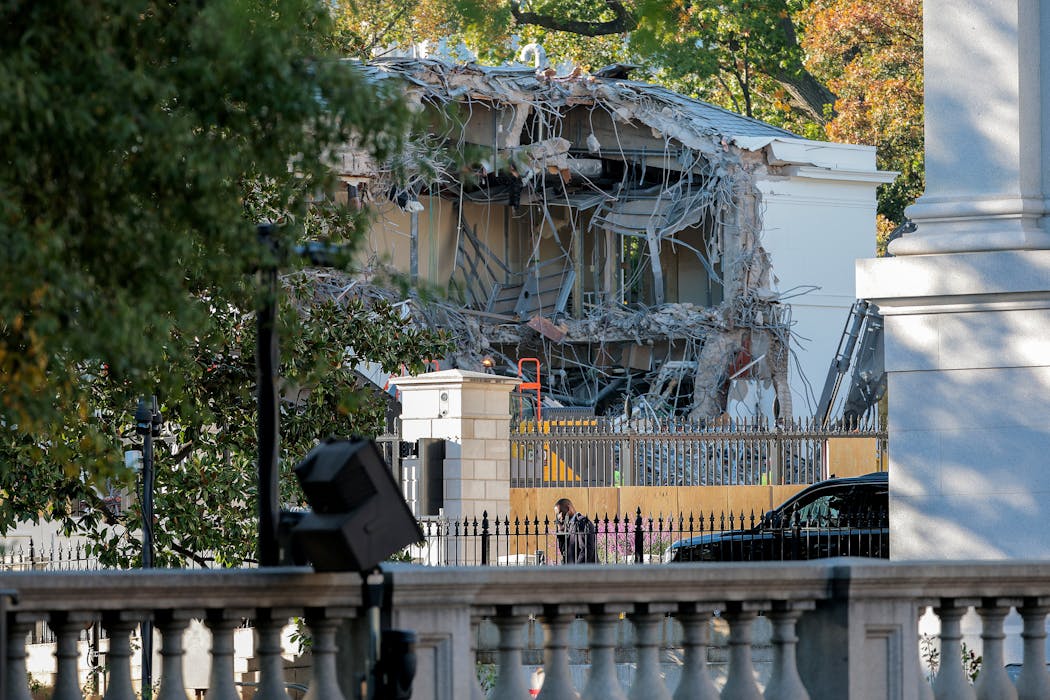
The Trump administration has razed the East Wing, which sits adjacent to the White House, and will replace it with a 90,000-square-foot, gold-encrusted ballroom that appears to reflect the ostentatious tastes of the president.
The US$300 million ballroom will be twice the size of the White House.
It’s expected to be big enough to accommodate nearly a thousand people. Design renderings suggest that the ballroom will resemble the ballroom at Mar-a-Lago, the president’s private estate in Palm Beach, Florida.
“I don’t have any plan to call it after myself,” Trump said recently. “That was fake news. Probably going to call it the presidential ballroom or something like that. We haven’t really thought about a name yet.”
But senior administration officials told ABC News that they were already referring to the structure as “The President Donald J. Trump Ballroom.”
The renovation will have neither a hotel, casino nor golf course, as Obama mentioned in his light-hearted speech at the 2011 correspondents’ dinner.

In the months before the 2011 correspondents’ dinner, Trump had repeatedly claimed that Obama had not been born in Hawaii but had instead been born outside the United States, perhaps in his father’s home country of Kenya.
The baseless conspiracy theory became such a distraction that Obama released his long-form birth certificate in April 2011.
Three days later, Obama delivered his speech at the correspondents’ dinner with Trump in the audience, where he said that Trump, having put the birther conspiracy behind him, could move to other conspiracy theories like claims the moon landing was staged, aliens landed in Roswell, New Mexico, or the unsolved murders of rappers Biggie Smalls and Tupac Shakur.
“Did we fake the moon landing?” Obama said. “What really happened at Roswell? And where are Biggie and Tupac?”
Obama then poked fun at Trump’s reality show, “The Apprentice,” and referred to how Trump, who owned hotels, casinos and golf courses, might renovate the White House.
When Obama was finished, Seth Meyers, the host of the dinner, made additional jokes at Trump’s expense.
“Donald Trump has been saying that he will run for president as a Republican – which is surprising, since I just assumed that he was running as a joke,” Meyers said.
The New Yorker magazine writer Adam Gopnik remembered watching Trump as the jokes kept coming at his expense.
“Trump’s humiliation was as absolute, and as visible, as any I have ever seen: his head set in place, like a man on a pillory, he barely moved or altered his expression as wave after wave of laughter struck him,” Gopnik wrote. “There was not a trace of feigning good humor about him.”

Roger Stone, one of Trump’s top advisers, said Trump decided to run for president after he felt he had been publicly humiliated.
“I think that is the night he resolves to run for president,” Stone said in an interview with the PBS program “Frontline.” “I think that he is kind of motivated by it. ‘Maybe I’ll just run. Maybe I’ll show them all.‘”
Trump, if Stone and other political observers are correct, sought the presidency to avenge that humiliation.
“I thought, ‘Oh, Barack Obama is starting something that I don’t know if he’ll be able to finish,’” said Omarosa Manigault, a former “Apprentice” contestant who became Trump’s director of African American outreach during his first term.
“Every critic, every detractor, will have to bow down to President Trump,” she said. “It is everyone who’s ever doubted Donald, whoever disagreed, whoever challenged him – it is the ultimate revenge to become the most powerful man in the universe.”
The notoriously thin-skinned Trump did not attend the White House correspondents’ dinner during his first presidency. He also did not attend the dinner during the first year of his second presidency.
Although Trump has never publicly acknowledged the importance of that event in 2011, a number of people have noted how pivotal it was, demonstrating how the putdown can be a powerful weapon in politics – even, perhaps, extending to tearing down the White House’s East Wing.

Chris Lamb does not work for, consult, own shares in or receive funding from any company or organization that would benefit from this article, and has disclosed no relevant affiliations beyond their academic appointment.
Politics + Society – The Conversation
Reading Time: 3 minutes
Amanda Bynes is an Ozempic girlie.
The former child actress has previously shared her plans to use the semaglutide medication for weight loss.
She also revealed her heartbreaking reason for wanting to change her figure.
Now, she’s updating fans on how much she’s lost in just a few months — and how much more she intends to lose.
In June of this year, Amanda Bynes announced to her fans and followers that she was starting Ozempic.
Though the semaglutide injections are a diabetes medication, in recent years, there has been a trendy new use: luxury weight loss.
This has caused both controversy and documented shortages of the medication for those who need it.
Amanda explained her decision at the time. Over the years (and perhaps due to medications), she has struggled with unwanted weight gain.
She heartbreakingly summarized her goal to “look better in paparazzi pictures.”
“I’m so excited,” Amanda gushed back in June.
“I’m 173 now,” she revealed.
The former actress is believed to be around 5-foot-8.
But the ranges for a “healthy” weight are so broad for different builds and bodies and activity levels that it is impossible to speculate what a desirable goal should be.
“So I hope to get down to 130,” she revealed, “which would be awesome.”

These days, Amanda Bynes lives a relatively private life.
Though paparazzi do snap shots of her out and about in Los Angeles, she mostly manages to avoid them — in part by just living her life like a normal person.
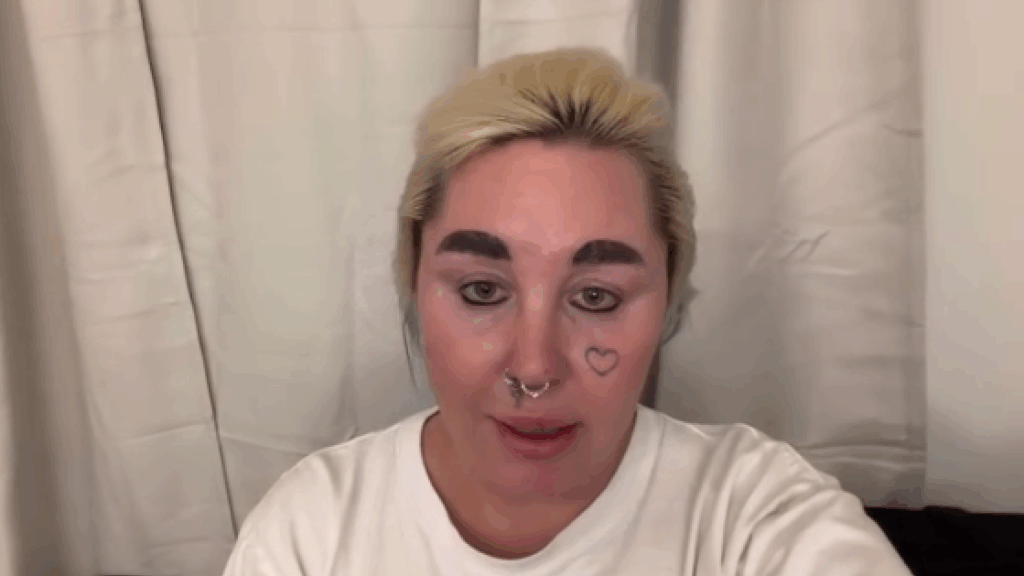
On Wednesday, November 5, Amanda took to her Instagram Story to update fans and followers on her Ozempic journey.
“I’ve lost 20 pounds so far,” she revealed. “I’m so excited about that to be honest.”
Presumably, that puts her about halfway towards reaching her goal. However, it’s sounding like she’s moved the goalpost a bit further.
Amanda Bynes is feeling herself after shedding 20 pounds with Ozempic — and she’s not done yet! Link below for more details about her weight-loss journey! (📸: INSTAGRAM)https://t.co/9KYiXZt8Qk pic.twitter.com/icJpE2Ef7q
— OK! Magazine USA (@OKMagazine) November 5, 2025
“I want to lose about 50 more pounds,” Amanda announced.
Wait, is she looking to weigh only 100 pounds? That would make her extremely small and frail, to say nothing of the toll that extreme weight loss takes on the body and of course known Ozempic side effects.
“I’m 163 now,” she revealed, making it sound as if she’s lost less weight than it had seemed.
“I actually shot up on the Ozempic pill to 180 from 173,” Amanda explained. “So I was able to lose 20 pounds from 180.”
She continued: “And now, I’m down to 163 on the Ozempic injection.”

Just to be clear, Ozempic is an injectable. Semaglutide does exist in a pill form, but that is under the name Rybelsus.
“So I’m really glad that I’m on the injection,” Amanda Bynes expressed to the camera.
“It’s really working for me,” she shared.
“And,” Amanda added, “I’m trying to lose more weight just to feel skinny and cute.”
One day, the world will have to reckon with what it has done to so many people, especially women, for them to put themselves through this. Clearly, that long night of the soul is a long way off.
Amanda Bynes Updates Fans on Ozempic Weight Loss, Surprising Setback was originally published on The Hollywood Gossip.
The Hollywood Gossip