A council has initiated legal action to evict a self-styled “African tribe” from their new campsite.The Latest News from the UK and Around the World | Sky News










A council has initiated legal action to evict a self-styled “African tribe” from their new campsite.The Latest News from the UK and Around the World | Sky News

The co-founder of Ben & Jerry’s ice cream has said he has a “broken heart” after quitting the company amid a row with its UK owner.The Latest News from the UK and Around the World | Sky News

Russia has a “pretty good map” of Britain’s crucial network of undersea cables, experts have warned – potentially presenting Vladimir Putin with a “vulnerable soft underbelly” to attack.The Latest News from the UK and Around the World | Sky News

A man who allegedly sent WhatsApp messages to five people within “Westminster circles” including MPs has been charged with blackmail and communications offences.The Latest News from the UK and Around the World | Sky News

Ex-Arsenal player Thomas Partey has pleaded not guilty to rape and sexual assault charges – hours after returning to north London for a Champions League match with new side Villarreal.The Latest News from the UK and Around the World | Sky News

The convicted sex offender Christian B has been released from prison after a prosecutor failed to find enough evidence to charge him in the Madeleine McCann case.The Latest News from the UK and Around the World | Sky News


NOTN- A High Wind Warning in Southeast Alaska is disrupting cruise ship schedules in Juneau for tomorrow.
The National Weather Service says winds of 25 to 35 miles per hour with gusts up to 60 are expected through Wednesday evening for the outer coast and islands, including Prince of Wales, Annette, Baranof, Chichagof and Western Kupreanof.
“Over the next 24 hours we are going to see storm-force low along our coast. For the inner channels, we are going to see gale-force to strong gales push up through the inner channels overnight Tuesday into Wednesday.” Said Andrew Park from the National Weather Service Juneau in a social media post.
The Caribbean Princess has extended its stay in Juneau, while the Ruby Princess and Sapphire Princess canceled Wednesday port calls due to the weather.
By: James Brooks, Alaska Beacon

The state of Alaska is asking the U.S. Supreme Court to decide whether rural Alaskans should continue to get preferential fishing rights on most rivers and lakes within federal parks, preserves and reserves.
On Monday, the Alaska Department of Law asked the Supreme Court to reconsider a ruling from a three-judge panel from the 9th U.S. Circuit Court of Appeals, which upheld the state’s existing two-tiered subsistence fishing system last month.
State attorneys have argued unsuccessfully since 2021 that federal law, as interpreted by recent rulings from the Supreme Court, means the state, not the federal government, has the power to regulate fishing in navigable waters on federal land.
A federal law, the Alaska National Interest Lands Conservation Act, requires that rural Alaskans be given preferential treatment when hunting and fishing are regulated in Alaska. Simultaneously, the Alaska Constitution forbids that kind of preference.
For decades, the result has been a two-tiered system under which the federal government regulates hunting and fishing on federal land and water, and the state regulates it everywhere else.
Under the state framework, someone from Anchorage would have the same fishing rights on the Kuskokwim River as someone who lives a mile away. Under the current system, the local resident gets priority in parts of the river within federal land.
In 2021, a regulatory dispute on the Kuskokwim River during a salmon shortage resulted in the federal government filing a lawsuit against the state. The Alaska Federation of Natives, Association of Village Council Presidents and other Native groups from across the state joined the lawsuit on the side of the federal government.
In 2024, a U.S. District Court judge in Alaska ruled in favor of the federal government, but the state appealed that decision. Last month, three judges from the 9th Circuit again ruled in favor of the federal government. Rather than appeal the issue to the full 9th Circuit, the state is going directly to the Supreme Court.
The state’s filing on Monday was formally known as a “cert petition,” which asks the court to take up the case.
The court takes only about 1% of the cases it receives, though the acceptance rate is higher (about 5%) if the large number of cases involving prisoners representing themselves in court are excluded.
In a written statement announcing the filing, Alaska Gov. Mike Dunleavy and Attorney General designee Stephen Cox said the state believes that federal law gives Alaska control of its navigable waters when it comes to fishing.
“Alaska is asking the Supreme Court to hold fast to the text, because fidelity to the law as written is the foundation of the rule of law,” Cox said in his statement.
Doug Vincent-Lang, commissioner of the Alaska Department of Fish and Game, said he believes the 9th Circuit decision “deepens a fractured system that undermines conservation, creates confusion, and threatens equitable access for all Alaskans. Salmon don’t recognize federal and state boundaries — our management shouldn’t either. We remain committed to sustainable management and will continue fighting for a system that works for every Alaskan. The Court should decide this case and reverse the Ninth Circuit.”
Attorneys representing Alaska Native groups said on Monday that they expected an appeal to the Supreme Court, even if they didn’t know the exact timing.
Nathaniel Amdur-Clark, who has represented the Kuskokwim River Intertribal Fish Commission in the lawsuit to date, said by text message on Monday that his clients “are disappointed, but not surprised, to see the state’s cert petition. It is just a continuation of the state’s push to undermine subsistence protections for Alaska Natives and rural Alaskans.”
The Supreme Court does not have a set timeline for considering the state’s petition, which will be taken up in a closed-door judicial conference after both sides of the argument file written briefs on the issue.

With two executive orders related to school sports, President Donald Trump recently tried to settle the growing legal conflict over the right of transgender students to participate in school sports.
That conflict, which the Biden administration tried to address and is now taking place in states, lower federal courts and the Department of Education, will reach the U.S. Supreme Court in its upcoming term.
Supporters of transgender athlete participation argue that gender is a social construct, shaped by societal norms and cultural beliefs more so than by biology. They say that people should have the right to self-identify. And they argue that there is no significant threat to fairness, safety or opportunity in student sports.
Opponents say that sex and gender identity are distinct from each other. They argue that including biologically born male athletes in women’s sports subverts fairness and threatens the impact of Title IX in women’s sports.
As a professor of sport management with a law degree, I believe the progress in equity, access and participation made by women in sport since the passage of Title IX is at risk if U.S. institutions and legislators depart from the federal law’s original intent: to ensure equal opportunities for women in education settings.
Women’s sports are experiencing unprecedented success. In 2024, the NCAA women’s basketball championship final drew a larger TV audience than the men’s final for the first time ever. Sponsorship deals for women’s pro sports have witnessed double-digit growth year over year the past two athletic seasons.
The 2023-2024 academic year saw 235,735 student-athletes participate in NCAA women’s sports. That’s a record high.
When Congress passed Title IX in 1972, the goal was simple: make sure women have the same educational opportunities as men in school, including in sports programs.
For decades, it worked. Thousands of new teams and opportunities for women emerged, and participation skyrocketed. Before 1972, only about 30,000 women had participated in college sports. Today, 220,000 female athletes compete in NCAA sports.
But while Title IX was expanding access for women athletes in schools, the boundaries of women’s sports were being tested in professional leagues.

In 1977, Renée Richards, a transgender tennis player, successfully challenged the United States Tennis Association’s eligibility rules and was allowed to compete in women’s tennis after undergoing sex reassignment surgery.
She played in the 1977 women’s U.S. Open and competed on the women’s professional tour, where she played for four more years before retiring.
Richards was hailed as a pioneer for transgender athletes. But her perspective has shifted over time. In February 2025, Richards said: “I believe that having gone through male puberty disqualifies transgender women from the female category in sports.”
Richards’ perspective underscores the tension between the inclusion of transgender people and maintaining fairness in competition and opportunities for women – a tension that remains at the center of legal debates today.
Courts across the country are now confronting a new wave of challenges to policies on transgender athlete participation from K-12 through college.
In 2021, Becky Pepper-Jackson, a transgender girl, sued the West Virginia Board of Education in federal court over the state’s “Save Women’s Sports Act,” which requires that sport participation in schools must be based on biological sex at birth. Pepper-Jackson argued that the act violated Title IX and the equal protection clause of the Fourteenth Amendment that requires states to treat people in similar situations equally.
A lower court struck down West Virginia’s law as unconstitutional, and in July 2025, the Supreme Court agreed to hear the case.

In 2024, several college athletes filed a lawsuit against the NCAA and participating universities. The suit claims the organization violated the athletes’ Title IX rights by allowing transgender swimmer Lia Thomas at the University of Pennsylvania to compete at the national championships in 2022. The plaintiffs argued that competing against athletes who had undergone male puberty created unfair conditions in women’s sports.
The suit has not been resolved. But in April 2025, the Department of Education concluded that the University of Pennsylvania violated Title IX by allowing Thomas to swim on the women’s team during the 2021-2022 season. As part of a resolution agreement with the Education Department, the university was required to restore to female athletes all individual Division I swimming records broken by biologically born male athletes competing in women’s categories. Per the agreement, the university also issued an apology to the affected athletes and adopted biology-based eligibility standards.
These collegiate cases form part of a larger picture. From high school track meets to NCAA championships, the participation of transgender women in female sports has, in the opinion of some, altered outcomes, raised safety concerns and challenged the principle of fair play.
Studies show that males have strength and size advantages over women. Those differences translate to advantages in sport, even after hormone suppression. To introduce competitive disadvantages in women’s sport threatens the premise of Title IX: to provide women with equal opportunity.
As these court cases unfold, their resolutions will help define standards for transgender participation in women’s sports across educational levels.
They underscore the ongoing challenge for institutions and governing bodies to balance inclusion, competitive fairness and compliance with Title IX.

Amanda Siegrist does not work for, consult, own shares in or receive funding from any company or organization that would benefit from this article, and has disclosed no relevant affiliations beyond their academic appointment.
Politics + Society – The Conversation
Reading Time: 3 minutes
As you’ve likely heard by now, conservative pundit Charlie Kirk was shot and killed during a speaking engagement last week.
Though Kirk has been a wildly popular figure in rightwing media for several years, his death has brought a new level of international attention to his life and beliefs.
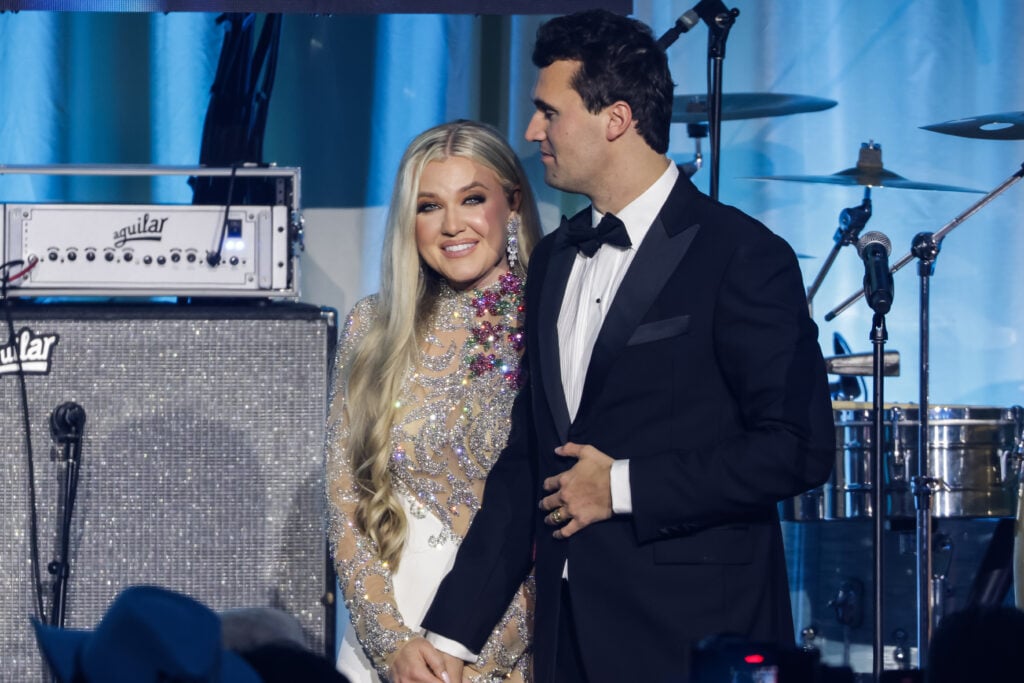
Kirk’s wife, Erika Kirk, has become an overnight celebrity of sorts, with many praising the young widow for the grace with which she’s handled her sudden loss.
Erika has gained millions of followers in the days since her husband was murdered, and many have praised her first statement to the public.
The surge in interest in Erika’s career has led to the surprising discovery that she once appeared on a popular Bravo reality show.
As The Hollywood Reporter points out, Erika appeared in an episode from the third season of Bravo’s Summer House.
She’s shown going on a date with former Summer House cast member Jordan Verroi.
Carl Radke, a friend of both Jordan and Erika, set up the date, explaining to the camera that Erika is “beautiful” and “happens to be religious,” qualities that he thought would make her a perfect match for Jordan.
Jordan was smitten, revealing in a confessional that he liked Erika’s “beautiful blonde hair, her smile, her radiance,” and noted that she had “outward beauty and inner beauty.”
The relationship proved to be short-lived, however, and Erika explained in a 2019 Instagram post that she turned down an offer to become a full-time cast member on the show.
These days, Erika works as a ministry leader and podcast host.
She announced earlier this week that she intends to dedicate herself to her husband’s Turning Point USA organization in order to carry on his legacy.
“The movement my husband built will not die — I refuse to let that happen,” she said.

Perhaps for his family’s protection, Charlie typically kept his professional and private lives separate, but he and Erika often sang one another’s praises on social media.
“5 years ago today, we sat inside Bills Burgers in NYC deep in conversation and banter over theology, philosophy and politics and at the end, you paused, looked at me and said, ‘I’m going to date you,’” she wrote in 2023 to mark the anniversary of their first meeting.
“Dating with intention to marry is way different than dating to ‘see where it goes.’ Let God write your love story,” she concluded.
Our thoughts go out to Erika and her two children during this enormously difficult time.
Erika Kirk’s ‘Summer House’ Appearance Resurfaces Following Charlie … was originally published on The Hollywood Gossip.
The Hollywood Gossip