9/11 Memorial ceremony at Glacier Valley Rotary Park, Photo by Greg Knight/NOTN
September 11, 2025, 24 years after the day the world changed forever. 9/11.
Across the State of Alaska, remembrances were held in many boroughs and communities. In Juneau, one of the largest remembrances in the state was held at Riverside Rotary Park in the Capital City.
Capital City Fire Rescue Chief Rich Etheridge spoke to why the day of remembrance is so important, even more than two decades later.
“So many people gave their lives, had lives taken, and it was the one moment in our history that I was aware of where we all came together, not just as a nation, but as a world, to stand up and look out for each other.” Ethridge said, “It was a moment in time that lasted for a little bit, and it started to fade. And so, you know, we’ve all promised never to forget that day and those events and really live up to what it was and celebrate the heroes that charged in, even though they knew that it was a one way trip.”
Alaska Representative Andi Story, whose District 3 seat ranges from Juneau north, attended the event.
“So many people lost their lives that day, and we need to let the families know that we care for them.” Story said, “We haven’t forgotten so many people went and served and tried to move our country more towards peace. And their efforts are admirable, and they suffered for it, and we need to stand with them.”
We remember. But what does it mean to remember now, after two decades, a new generation, and the scars that never fully heal? The story of 9/11 isn’t just about history; it’s a living question.
How do we keep honoring the past without being chained to it?
NOTN- Juneau officials are moving forward with plans to buy two floors of the Michael J. Burns building downtown, calling it the most financially responsible option for consolidating city staff after voters rejected a proposal for a new City Hall.
At a work session this week, the assembly voted to advance negotiations on the purchase to the full assembly for final approval. A decision could come within the next month.
Assembly member Christine Woll, head of the Finance Committee said the city’s current office spaces are aging and expensive to maintain. “The Burns building has emerged as the most financially responsible option, and makes the most sense to bring all our city employees into a single building that’s not leaking like our other locations right now. And so last night, we officially moved that decision to negotiate purchase to the full assembly, so we’ll ultimately make that final decision in about a month. But this was the last big stop to say, yes, this is what we’re interested in doing.”
If approved, the city would form a condominium association with the Alaska Permanent Fund Corporation, which owns part of the building. Renovations would be required to adapt the space for municipal use.
Sen. Mike Shower, R-Wasilla, speaks Friday, April 12, 2024, on Senate Bill 187, the capital budget. (Photo by James Brooks/Alaska Beacon)
Wasilla Republican Sen. Mike Shower will run for lieutenant governor alongside Republican gubernatorial candidate Bernadette Wilson, the two announced Tuesday night in Big Lake.
Wilson is the first of Alaska’s 10 governor candidates to announce her running mate.
The other nine candidates include former Democratic Sen. Tom Begich of Anchorage and eight Republicans: former state Sen. Click Bishop of Fairbanks; former Alaska Revenue Commissioner Adam Crum; current state Sen. Shelley Hughes of Palmer, Lt. Gov. Nancy Dahlstrom of Eagle River; Matanuska-Susitna Borough Mayor Edna DeVries; podiatrist Matt Heilala of Anchorage; former teacher James William Parkin IV of Angoon; and Bruce Walden of Palmer. Former Alaska Attorney General Treg Taylor is also expected to file for the office.
Current Rep. George Rauscher, R-Sutton, said he will run for Shower’s seat in the state Senate. Rauscher previously ran for Senate in 2018 and said he put his name in “one minute after Bernadette stated it was Shower.”
By phone, Wilson said the lieutenant governor has two jobs: taking care of the state seal, and taking care of elections.
“The Division of Elections is incredibly important and too important to get passed off to who is the politically expedient candidate,” she said.
Bernadette Wilson and Mike Shower pose for a photo on Tuesday, Sept. 9, 2025, in Big Lake, Alaska. (Bernadette Wilson photo)
Wilson said she believes “election integrity and the ability to vote at the ballot box is the very foundation of the Republic” and said that Shower is the right person to fix problems with voting in rural Alaska, an unusually large voter roll, and slow-to-arrive results.
“I felt very confident that Sen. Mike Shower has the knowledge in that area. It is an area that he is passionate about, which is the first step in solving any problem, and he’s worked on that extensively. So I felt that that was incredibly important and made him the best choice for Alaska’s next lieutenant governor,” she said.
Shower served over 20 years as a pilot in the U.S. Air Force and currently works as a commercial cargo pilot.
Shower was originally appointed to the Senate in February 2018 to replace Mike Dunleavy, who held the seat until resigning to run for governor. Elected on his own merits later that year and re-elected in 2022, he has repeatedly introduced proposals to make changes to the state’s elections system.
His first proposal was introduced in 2019 related to election security protocols, before President Donald Trump began lying about fraud in the 2020 election.
Currently the Senate’s minority leader, he has regularly re-introduced legislation related to the state’s elections system and has frequently been a key figure in end-of-session negotiations on the topic. Thus far, the Legislature has been unable to pass significant changes.
As a member of the Senate, Shower has consistently endorsed the idea of a large Permanent Fund dividend, going so far as to propose a statewide tax in order to pay for it.
Wilson said that she and Shower are confident in their ability to win the governor’s race, but if they finish behind another Republican in the August primary, they will withdraw and throw their support behind the leading Republican.
Under Alaska’s current voting system, all candidates for the same office run in the same race, regardless of political party. The top four-vote getters advance to the general election, where Alaskans use ranked choice voting to pick the ultimate winner.
Wilson, one of the leaders of a campaign to repeal that system, said she believes “that when you’ve got multiple people on the ballot of any party, it leads to so much confusion, it leads to voters only ranking one at the end of the day. … I think it’s very arrogant to say, Well, I’m not the top vote getter, but I’m going to stay in anyways. I just don’t think that that’s appropriate.”
An Anchorage Superior Court judge’s ruling has cleared the way for the state of Alaska to repeal its “80th Percentile Rule,” enacted by the state in 2004 as part of an attempt to reduce health care costs in the state.
The Dunleavy administration repealed the rule in 2024, saying it was counterproductive and argued it contributed to higher health care costs. Medical providers say that isn’t true and that repealing the rule will cause some clinicians to close down.
In 2023, a group of medical providers sued the state, alleging problems with the process used to repeal the rule. On Aug. 27, following a four-day bench trial in February, Judge Yvonne Lamoureaux ruled in favor of the state.
In her findings of fact and conclusions of law, Lamoureaux concluded that the repeal was not “unreasonable or arbitrary,” and the state did not conduct an improper procedure.
An appeal to the Alaska Supreme Court is possible.
When in place, the rule required that insurance companies reimburse out-of-network medical providers at a rate equal to the 80th percentile of charges for the given service.
If five clinics provide a given procedure, the required payment would be what the second-most-expensive clinic charges.
The rule was intended to prevent Alaskans from being left with large medical bills after visiting out-of-network clinics. The state and Alaska’s largest health insurance company, Premera Blue Cross Blue Shield of Alaska, contend that it required insurance companies to pay more for services than was warranted, contributing to higher insurance costs.
In an authoritarian state, the leader engages in unconstitutional or undemocratic practices for the purpose of consolidating power.
Key components of authoritarianism include rejecting democratic rules; denying the legitimacy of opponents; tolerating or encouraging political violence; and curtailing the civil liberties of opponents.
Because authoritarianism is most visible in hindsight, people often don’t recognize it until it’s too late. Erica Chenoweth, a Harvard political scientist, notes that when it comes to democratic backsliding, “there are no bright lines … people often find out the world they’re in after the fact.”
That’s why it’s particularly important for journalists to label authoritarians as such when the evidence warrants. In Trump’s case, I believe the U.S. is well past that point.
Armed National Guard soldiers patrol near the Labor Department in Washington, where a banner of President Donald Trump is displayed, Aug. 26, 2025. AP Photo/J. Scott Applewhite
Trump’s authoritarianism
Scholars with expertise in authoritarianism have been sounding the alarm about Trump for years.
Steven Levitsky and Daniel Ziblatt’s book “How Democracies Die” describes how, during the 2016 campaign and his first presidential term, Trump exhibited the key indicators of authoritarian behavior. He undermined the legitimacy of elections Republicans lost, baselessly described his rivals as criminals, refused to unambiguously condemn violence committed by his supporters, and threatened to punish critics and members of the media.
Levitsky and Ziblatt argue that “no other major presidential candidate in modern U.S. history, including Richard Nixon, has demonstrated such a weak public commitment to constitutional rights and democratic norms.”
Levitsky is not alone in that view. In a February 2025 survey of political scientists conducted by Bright Line Watch – an academic organization that researches democratic health – the percentage of scholars plummeted who said that the U.S. “mostly or fully” meets the standard for democratic health.
That was before Trump, via social media, promised to go to war in Chicago. When asked about his post, Trump said, “We’re not going to war. We’re going to clean up our cities,” but he did not back away from the intent to deploy troops against the wishes of Illinois Governor JB Pritzker.
On Sept. 7, 2025, New York Times opinion columnist Ezra Klein itemized some of Trump’s authoritarian actions, concluding, “This is not just how authoritarianism happens. This is authoritarianism happening.”
When Trump deployed troops to Washington, The Atlantic’s Quinta Jurecic dismissed it as “farcical” and “not a likely prelude to full authoritarian takeover.”
A CNN analysis similarly minimized the action as a “gambit,” a “distraction” and a “neat political trick.” CNN characterized concerns about authoritarianism as “hyperbolic warnings of looming tyranny that circulate all day on liberal media programs — whatever Trump does” and asserted that such reports “don’t really help voters understand what is going on.”
The New York Times’ Aug. 3 story by Peter Baker on Trump’s “tendency to suppress facts he doesn’t like and promote his own version of reality” bore a headline that read “Trump’s Efforts to Control Information Echo an Authoritarian Playbook,” suggesting that his actions were authoritarian without applying the label to Trump directly.
During the April 14, 2025, broadcast of CNN News Central, anchor Jessica Dean spoke with Nikolas Bowie, a Harvard Law School professor participating in a lawsuit against the Trump administration.
When Dean noted that the “Trump administration says it’s doing all of this in an effort to combat antisemitism on campus,” Bowie responded that “antisemitism is really just a pretext for what is really an authoritarian attack on higher education.” Federal Judge Allison Burroughs later agreed with that interpretation in her ruling against the Trump administration.
Dean, however, sidestepped that interpretation, saying, “What I’m hearing is you think that enough was done to combat antisemitism, that this is about something else.”
The headline on a recent NPR story, echoing other journalism outlets’ use of the terms ‘echo’ and ‘authoritarian playbook.’ NPR
Competitive authoritarianism
There are reasons why journalistic outlets may hesitate to identify the “something else” as authoritarianism, or portray it as a looming threat rather than a current danger.
And the imperative for balance sometimes results in a “both sides-ism” that misrepresents what authoritarianism actually looks like.
When California Gov. Gavin Newsom gave a speech asserting Trump’s military response to immigration protests in California was an assault on democracy, the New York Times covered it, quoting Newsom at length about the danger Trump presented. The article also quoted Republicans who alleged that Newsom’s public health directives during the COVID-19 pandemic made him “the ultimate authoritarian.”
But the particular nature of the authoritarianism the U.S is facing in the 21st century also plays a role.
Levitsky and Way have written about “competitive authoritarianism,” a new version of authoritarianism that doesn’t look like 20th-century fascism.
Many laypeople associate the word authoritarianism with military dictatorships and totalitarian rule. In competitive authoritarian regimes, however, there’s a constant push and pull between democratic and autocratic impulses. Levitsky and Way write that elections are held, but they may not be fair. The authoritarian regime uses power gained democratically to break democratic norms, undermine democratic institutions and tilt the playing field in its own favor.
Constraining free speech
Journalistic norms of independence can pressure even ethical journalists into acquiescence to competitive authoritarianism because they want to avoid looking partisan when all coverage that falls outside the authoritarian’s approved message gets characterized as resistance.
The Paramount and CBS cases suggest that, left unchallenged, a competitive authoritarian leader will use their leverage to influence what should be independent journalism.
Words matter. And how a democratic society responds to its leaders can make the difference between a free society and one in which a leader increasingly suppresses the voices, rights and will of the governed.
Karrin Vasby Anderson does not work for, consult, own shares in or receive funding from any company or organization that would benefit from this article, and has disclosed no relevant affiliations beyond their academic appointment.
Nine of every 10 detained defendants in the U.S. remain in jail awaiting trial because they cannot pay bail money.AP Photo/Rich Pedroncelli, File
President Donald Trump recently signed two executive orders targeting “cashless bail,” the policies that permit the release of people arrested for crimes pending trial without requiring them to pay money.
One executive order directs arrestees in Washington, D.C. to be “held in Federal custody to the fullest extent permissible under applicable law.” The other order calls for the withholding of federal funds to states that “substantially eliminated cash bail as a potential condition of pretrial release from custody” for many offenses.
Cashless bail does not mean that everyone is simply released unconditionally to await trial. Instead, judges have the ability to detain people who pose a specific threat to another person or the community. And they can impose conditions on those who are released, including stringent measures like electronic monitoring.
Trump has criticized cashless bail policies for threatening public safety because they can release dangerous people from detention.
In many U.S. jurisdictions, however, people pledge money or property as collateral for their pretrial release. But some people are released unconditionally, referred to as release on their own recognizance. Others are denied pretrial release altogether because they pose a risk of flight, a risk of failing to appear, or pose a danger to the community.
Historically, the bail system worked on promises and one’s reputation, not money. Money bail became more common around the turn of the 20th century with the rise of commercial bail bonds, in which a bail bond business would front the bail money, charging the arrestee a portion of the bail amount as a fee.
This created a system in which people with money could buy their pretrial freedom for many crimes – even serious felonies. Conversely, between 60% and 90% of people remained jailed despite the availability of bail bonds. This was not because they were dangerous, but because they lacked the financial resources to come up with the 10% of their bail amount to purchase their pretrial freedom.
The problems with cash bail
On any given day, approximately 664,000 people are locked up in jails in the United States. Only about 30% of these people are serving sentences following criminal convictions. The remaining 70% in jail are awaiting trial.
Typically, this is not because a court has judged them a risk to public safety. And usually it’s not because a judge decided they are unlikely to appear at scheduled court hearings.
In 2017, the jailing of people who could not afford bail cost U.S. taxpayers $38 million daily. AP Photo/Kathy Willens, File
A 2012 study in New York City found that “even when bail is set comparatively low – at $500 or less, as it is in one-third of nonfelony cases – only 15% of defendants are able to come up with the money to avoid jail.” In 2017, the jailing of people who could not afford bail cost taxpayers US$38 million each day – an amount that exceeds $50 million today, adjusted for inflation.
And it has allowed commercial bail businesses – and the nine insurance companies that back the roughly 30 corporations that underwrite more than $14 billion in bail bonds issued each year – to earn profits in excess of $2.4 billion annually.
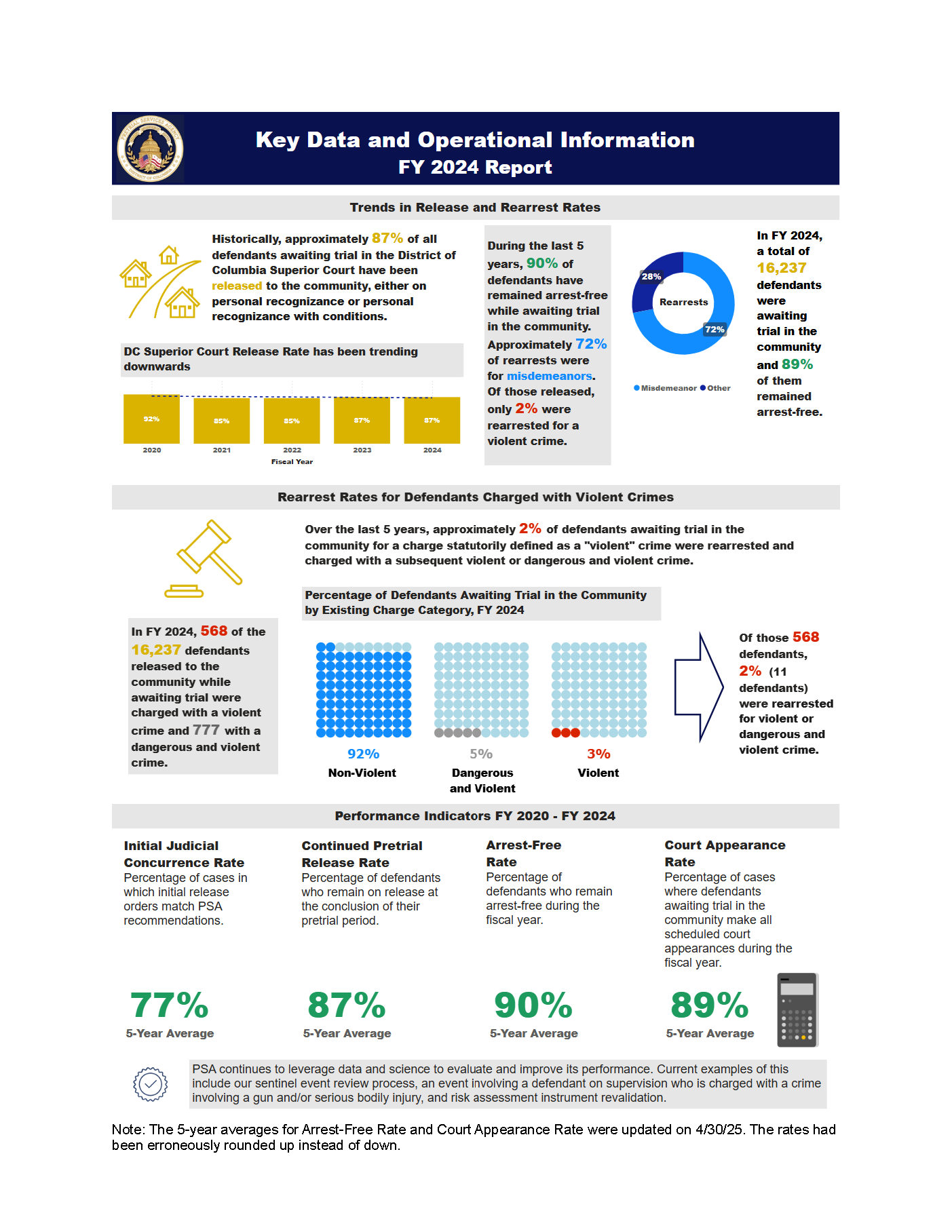
Washington abolished cash bail in the early 1990s. The city replaced it with a system that overwhelmingly pairs pretrial release with levels of supervision tied to the risk that a court determines a defendant might pose. As a result, roughly 87% of all people arrested in Washington are released pending trial without needing to pay or pledge any money.
Despite the lack of money bail, the city has experienced high court appearance rates and low reoffending rates. Between 2019 and 2024, 89% of defendants awaiting trial in the city showed up to their scheduled court appearances – and 90% remained arrest-free. Even among those accused of violent offenses, 98% were not rearrested for violent crimes while on pretrial release.
Washington shows that when people are given the tools and reminders they need, they are overwhelmingly likely to comply with court obligations. That includes phone calls, text messages and email reminders about court dates or access to pretrial services. Moreover, these results illustrate that alternatives to cash bail can function effectively, without compromising public safety.
The Illinois and New Jersey experiences
New Jersey overhauled its bail system
in 2017 by virtually eliminating cash bail. The state replaced it with a framework that relies on judicial assessments and pretrial monitoring to decide whether defendants should be detained or released.
This reduction was not accompanied by an increase in failures to appear in court or in new criminal charges.
A recent Drexel University–Boston University study echoed those findings, confirming that the decline in incarceration came without increases in gun violence. The study also found that the number of people held on low bail amounts – $2,500 or less – fell sharply, from more than 12% of the jail population in 2012 to just 0.4% by 2021.
In 2024, the Brennan Center for Justice, a public policy institute, analyzed data from 33 cities, comparing 22 that had enacted bail reforms with 11 that had not. The researchers found that there was no relationship between bail reform and crime rates. When combined with the data from Washington, New Jersey and Illinois, it seems clear that jurisdictions can protect public safety while also reducing unnecessary and harmful pretrial detention.
In New Jersey, for example, thousands of people – many from communities of color – were able to remain employed and housed while awaiting trial. Rather than destabilizing people’s lives by unnecessary incarceration, the state contributed to greater stability for them, their families and communities.
The question moving forward is how to build on these successes.
As policymakers consider next steps, these empirically supported results can provide guidance. They provide evidence that cashless bail is not a threat but an opportunity for fairer, smarter justice.
The authors do not work for, consult, own shares in or receive funding from any company or organization that would benefit from this article, and have disclosed no relevant affiliations beyond their academic appointment.
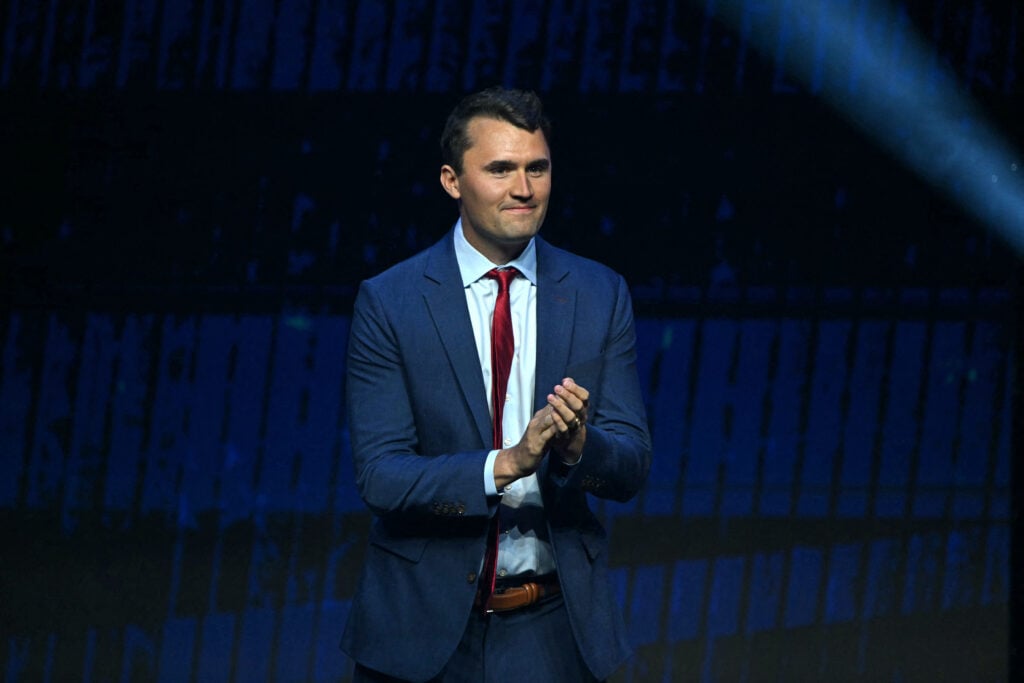
Controversial conservative commentator Charlie Kirk was shot in the neck today while speaking at an event at Utah Valley University in Orem, Utah.
Moments ago, on his Truth Social platform, President Donald Trump announced that Kirk has died:
“The Great, and even Legendary, Charlie Kirk, is dead. No one understood or had the Heart of the Youth in the United States of America better than Charlie,” Trump wrote.
“He was loved and admired by ALL, especially me, and now, he is no longer with us. Melania and my Sympathies go out to his beautiful wife Erika, and family. Charlie, we love you!”
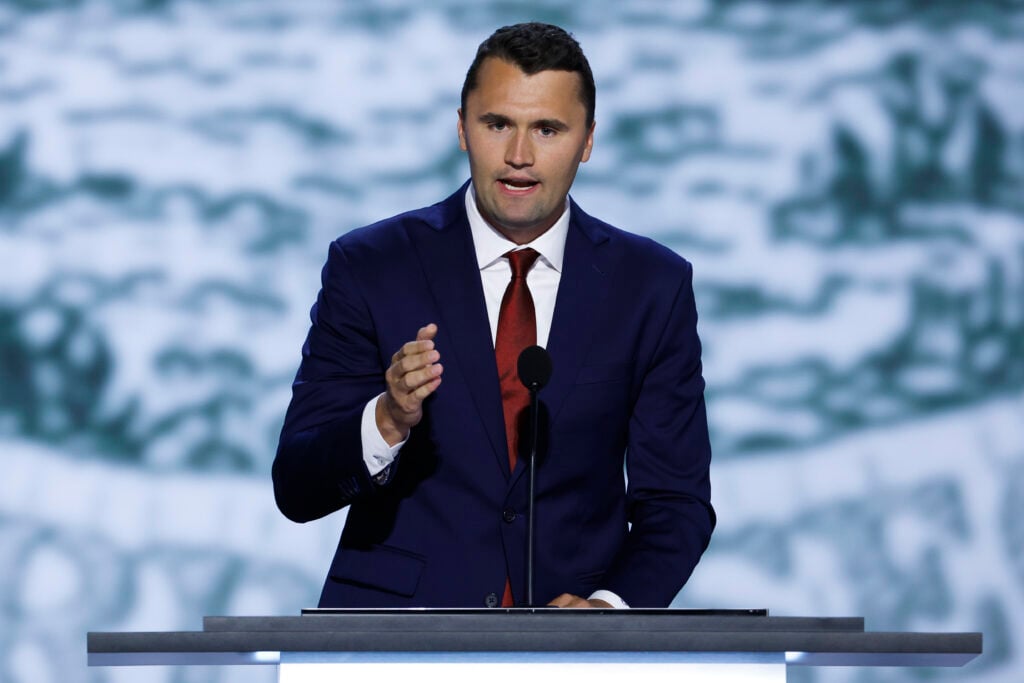
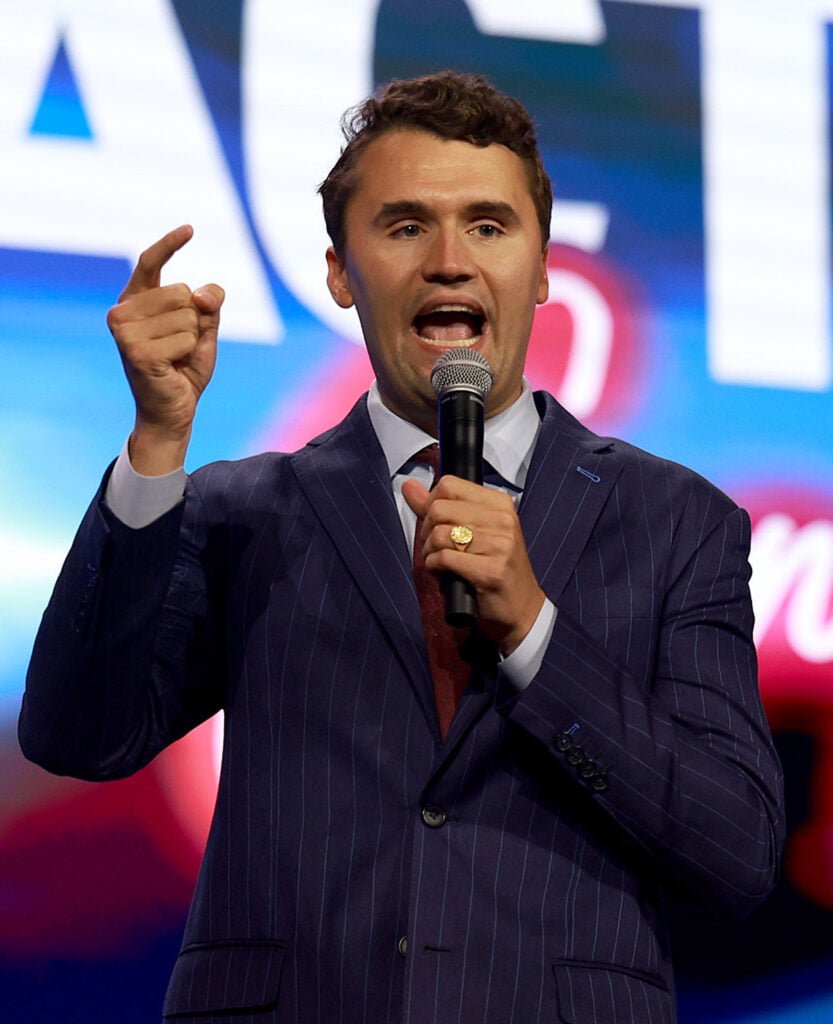
CEO of Turning Point USA Charlie Kirk speaks on stage on the first day of the Republican National Convention at the Fiserv Forum on July 15, 2024 in Milwaukee, Wisconsin. (Photo by Chip Somodevilla/Getty Images)
Footage from the incident shows Kirk bleeding profusely after being shot at what appears to be close range.
Police say a suspect has been arrested and is currently in custody.
Kirk was rushed to a nearby hospital, where he was initially reported to be in critical but stable condition.
Former Utah congressman Jason Chaffetz was at the event and told Fox News that Kirk was shot while answering a question about recent mass shootings.
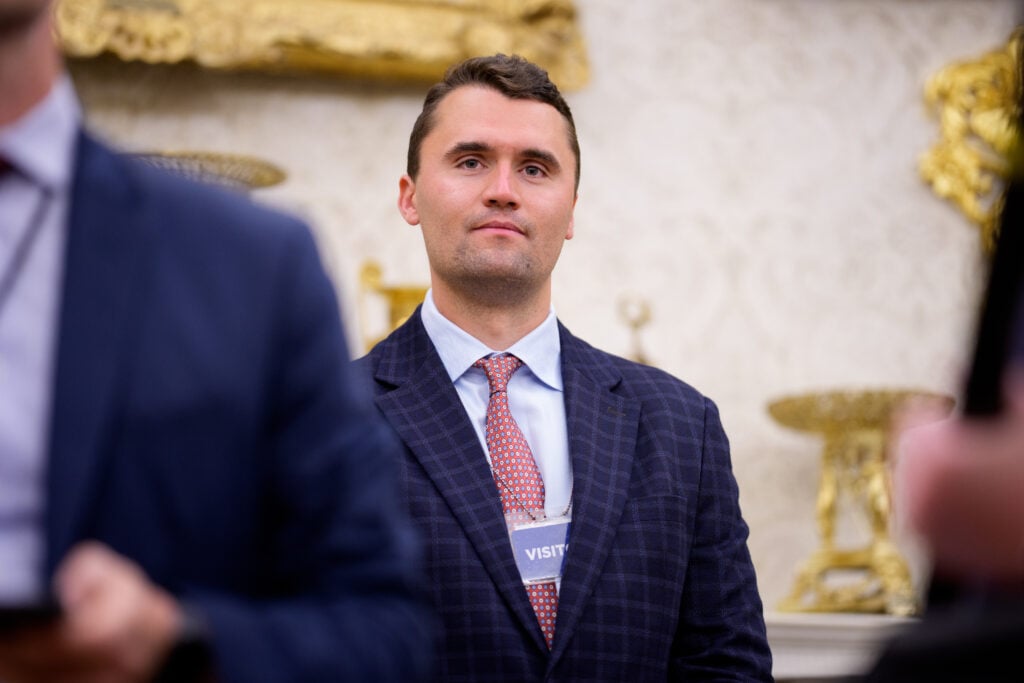
Turning Point USA co-founder Charlie Kirk stands in the back of the room as U.S. President Donald Trump speaks during a swearing in ceremony for interim U.S. Attorney for Washington, D.C. Jeanine Pirro in the Oval Office of the White House on May 28, 2025 in Washington, DC. (Photo by Andrew Harnik/Getty Images)
“He fell back to his left. Everybody hit the deck. Everybody was screaming, then everybody was running,” Chaffetz said (via The New York Post).
Chaffetz added that he believes the timing of the shooting was “no coincidence.”
“Our thoughts are with Charlie, his loved ones, and everyone affected. Agents will be on the scene quickly and the FBI stands in full support of the ongoing response and investigation,” FBI director Kash Patel said in a post on X.
“Utah Valley University is FIRED UP and READY for the first stop back on the American Comeback Tour,” Kirk wrote in his own post on X just moments before today’s event began.
Utah governor Spencer Cox tells CNN that he’s being briefed by law enforcement and will have a full statement later today.
“Those responsible will be held fully accountable. Violence has no place in our public life. Americans of every political persuasion must unite in condemning this act. Our prayers are with Charlie, his family, and all those affected,” Cox told the outlet.
Conservative political activist and founder of Turning Point Action Charlie Kirk takes the stage during a Turning Point Action ‘United for Change’ campaign rally for former US President and Republican presidential candidate Donald Trump at Thomas & Mack Center in Las Vegas, Nevada, on October 24, 2024. (Photo by PATRICK T. FALLON/AFP via Getty Images)
A husband and father of two, 31-year-old Kirk was the founder of the far-right think tank Turning Point USA.
His views made him one of the most controversial figures in American political media.
In the wake of today’s incident, figures from both ends of the ideological spectrum have spoken out about the rising tide of politically motivated violence in the US.
Our thoughts go out to Charlie Kirk’s loved ones during this enormously difficult time.
We will have further updates on this developing story as new information becomes available.
That’s the question on the minds of observers around the globe after Prince Harry spent time on Wednesday with his father — for the first time in about 19 months.
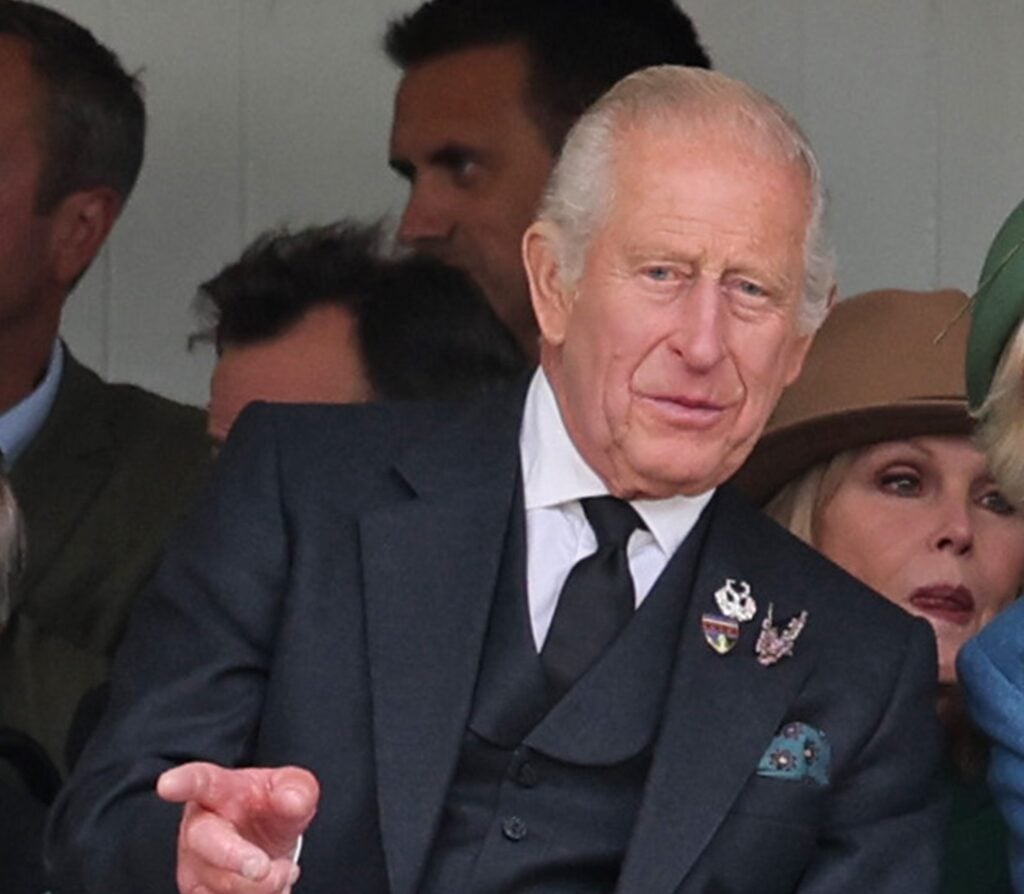
King Charles III, Joanna Lumley and Queen Camilla attend the Braemar Royal Highland Gathering at The Princess Royal and Duke of Fife Memorial Park on September 6, 2025 in Braemar, Scotland. (Photo by Chris Jackson/Getty Images)
On September 10, the Duke of Sussex was spotted arriving by car to Clarence House (the King’s London residence) for a private tea with his dad before heading to another engagement in the city.
The loved ones had not seen each other in person before this since February 2024… shortly after we learned of King Charles’ cancer diagnosis.
The pair’s reunion comes nearly two months after Harry’s chief communications officer, Meredith Maines, was seen getting together with King’s communications secretary, Tobyn Andrae, in London.
Father and son have been engaged in a pretty serious feud for a very long time now, ever since Harry moved to California in early 2020 and basically left The Royal Family behind.
Amid mounting financial concerns and his father’s grave medical condition, though, there’s been constant chatter that the prince is hoping to make amends.
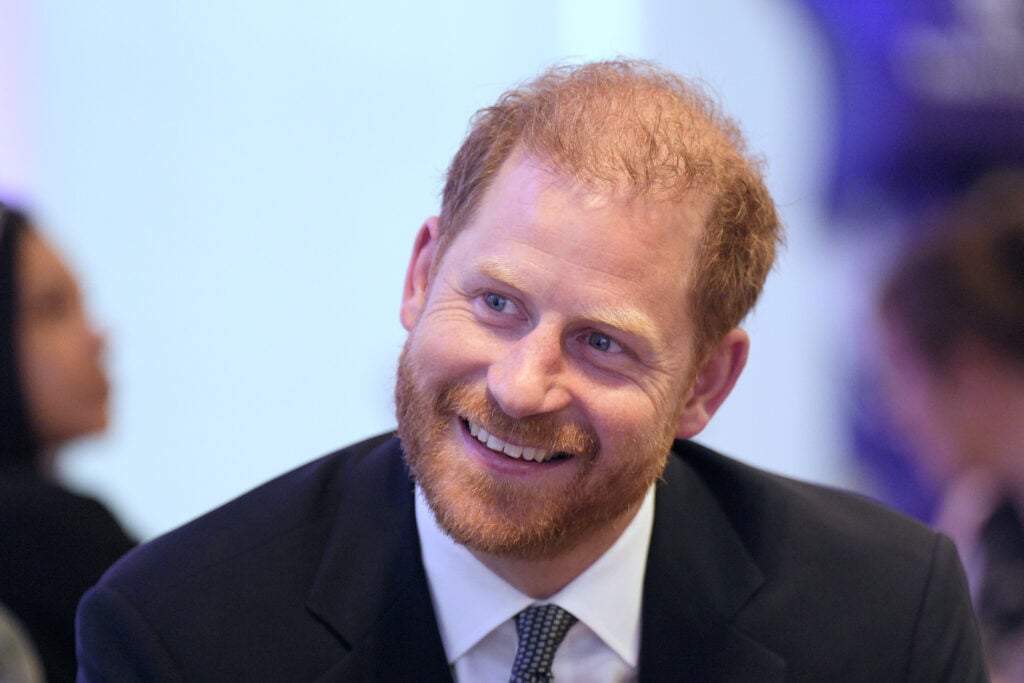
Prince Harry, Duke of Sussex speaks with an award recipient at the annual WellChild Awards 2025, which celebrates the achievements and resilience of seriously ill youngsters and their families, at the Royal Lancaster Hotel on September 8, 2025 in London, England. (Photo by Aaron Chown – Pool/Getty Images)
“It was a good first step,” an insider told People Magazine this summer of the aforementioned aides meeting. “It is always better to be talking.”
With bitterness still reigning supreme throughout the Royal Family after Harry revealed a number of alleged secrets in his recent autobiography, there’s been ongoing questions about whether Harry and Charles would ever interact again.
“Charles does want to meet Harry,” a source told Us Weekly for its latest cover story. “He doesn’t want this falling-out to overshadow his legacy. But Harry has caused chaos and hurt, so it’s complicated.”
The same individual noted that the public is “ultimately” hoping for Harry and Charles to reconcile.
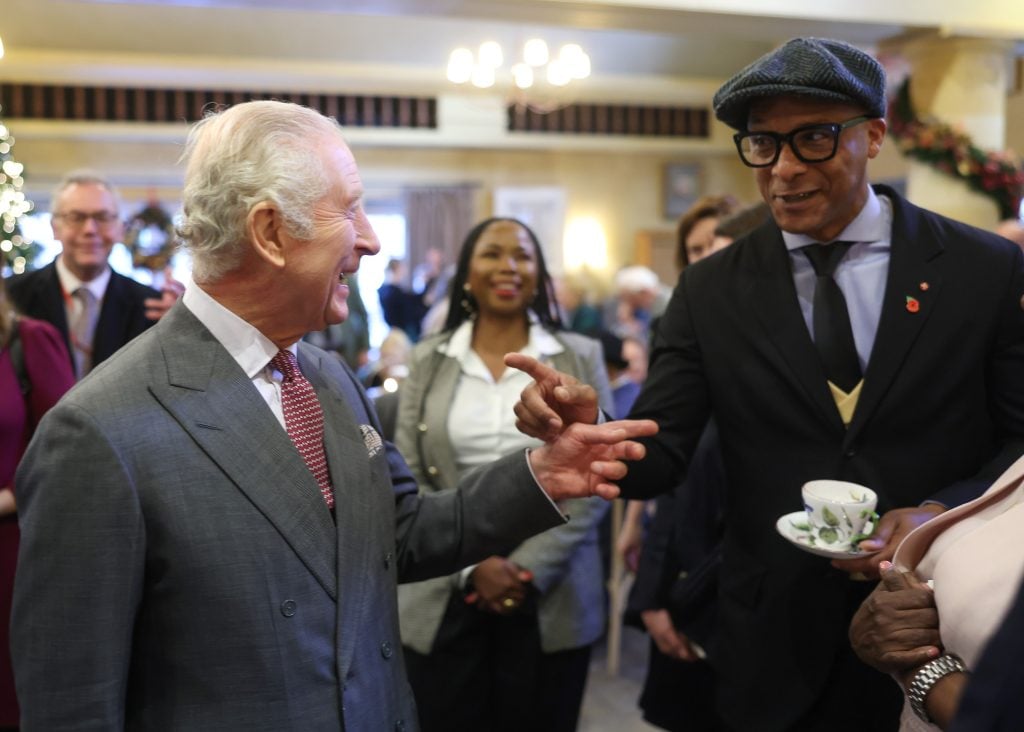
King Charles III’s shares a joke with TV presenter Jay Blades and guests as he attends his 75th birthday party hosted by the Prince’s Foundation at Highgrove House on November 13, 2023 in Tetbury, England. (Photo by Chris Jackson/Getty Images)
Earlier this year,Harry expressed hope that he and Charles could one day get on better terms following years of estrangement over his and Meghan Markle’s battle to restore security protection in the United Kingdom.
“There have been so many disagreements, differences between me and some of my family,” Harry told BBC in May.
“This current situation that has been on our ongoing for five years with regard to human life and safety is the sticking point. It is the only thing that’s left.”
As for Prince William, however?
A reunion between brothers does not seem likely.
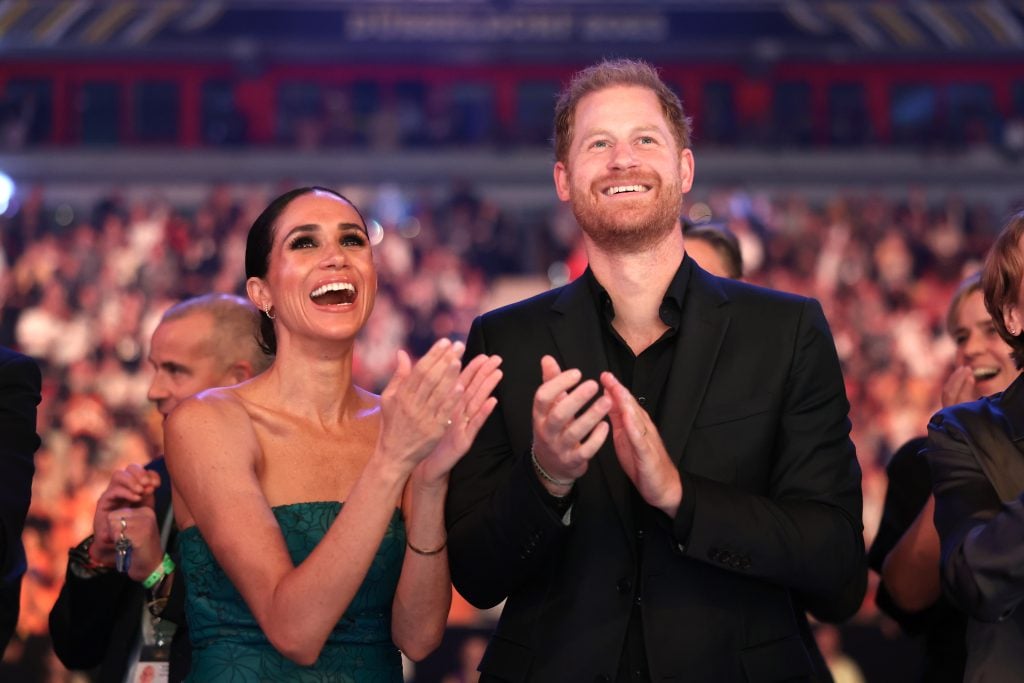
Prince Harry, Duke of Sussex, and Meghan, Duchess of Sussex attend the closing ceremony of the Invictus Games Düsseldorf 2023 at Merkur Spiel-Arena on September 16, 2023 in Duesseldorf, Germany. (Photo by Chris Jackson/Getty Images for the Invictus Games Foundation)
“You can tell it in all the weight that he’s lost. The rings around his eyes,” Savannah described.
“He’s not who I know as my brother.”
(More on Chase’s weight loss in a bit)
In tears, Savannah admitted: “I feel like I’ve already buried my brother.”
On her podcast, Savannah Chrisley discussed how a person’s appearance can impact their mental health. (Image Credit: YouTube)
It’s like she’s mourning him prematurely
Both despite and because of these worries, Savannah Chrisley had distanced herself from older brother Chase as a form of “self-protection.”
She told her therapist: “There’s a part of me that’s so afraid that he’s going to die that I don’t even want to have a relationship with him.”
Savannah confessed: “If something were to happen to him, now I’m closed off enough to where, I would be devastated. But I feel like I’ve been trying to grieve the loss of him little by little so when it happens it’s not a big bang.”
During their ABC interview, Todd Chrisley spoke about feeling “changed” by prison while seated beside wife Julie Chrisley and daughter Savannah Chrisley. (Image Credit; ABC)
Julie Chrisley lost her brother, Trey, when she was young.
Losing a sibling is a devastating horror. Savannah is afraid of sharing that trauma.
“I have to mentally and emotionally prepare myself that when that time does come,” she stated. “That I step in and I’m going to have to care for my parents because they’ll never be the same.”
Savannah continued: “It’s the only way that I know how to protect myself. Which is, just by letting Chase know, what he’s doing is wrong and it’s going to lead to a terrible endgame.”
Savannah Chrisley wears black in early February 2024 while speaking on a podcast. (Image Credit: YouTube)
As for Chase, he had his own take on his health
We said that we’d get into Chase Chrisley’s health and, contrary to what Savannah seems to think, it’s not directly from drinking.
He told the cameras about how he has “lost a lot of weight” all “within the last year.”
Chase claimed that his body is “rejecting food.” That could be several things, none of which are good.
Chase also detailed that he had not had a drink in “a month.”
Given his personal history, we hope that he has many more months like that one.
Controversial political commentator Charlie Kirk was shot and killed during a speaking engagement at Utah Valley University in Orem, Utah today.
The conservative media figure was just 31 years old.
Kirk was rushed to a nearby hospital, where he was initially reported to be in critical but stable condition.
Less than an hour later, however, his death was announced by President Donald Trump:
U.S. President Donald Trump shakes hands with conservative activist Charlie Kirk at a forum dubbed the Generation Next Summit at the White House on March 22, 2018 in Washington, DC. (Photo by Mark Wilson/Getty Images)
“The Great, and even Legendary, Charlie Kirk, is dead. No one understood or had the Heart of the Youth in the United States of America better than Charlie,” Trump wrote on his Truth Social platform.
“He was loved and admired by ALL, especially me, and now, he is no longer with us. Melania and my Sympathies go out to his beautiful wife Erika, and family. Charlie, we love you!”
Trump was the first of many politicians, celebrities, and other public figures to pay tribute to Kirk.
“We don’t yet know what motivated the person who shot and killed Charlie Kirk, but this kind of despicable violence has no place in our democracy. Michelle and I will be praying for Charlie’s family tonight, especially his wife Erika and their two young children,” former president Barack Obama tweeted moments ago.
Charlie Kirk speaks at the opening of the Turning Point Action conference on July 15, 2023 in West Palm Beach, Florida. (Photo by Joe Raedle/Getty Images)
“Charlie Kirk was an incredible patriot — brave, tough as hell, and a dear friend to our entire family. In his honor, all @Trump properties will fly their flags at half-staff. We will always celebrate his life, strive to make him proud, and pray that God watches over Erika and their precious kids,” Eric Trump wrote on his social media pages.
“Charlie Kirk got shot for telling the truth. That is literally it. What a mentally sick time we are living through We need god more than ever,” boxer and influencer Jake Paul chimed in, adding:
“Praying for Charlie’s family and praying for these evil people to heal.”
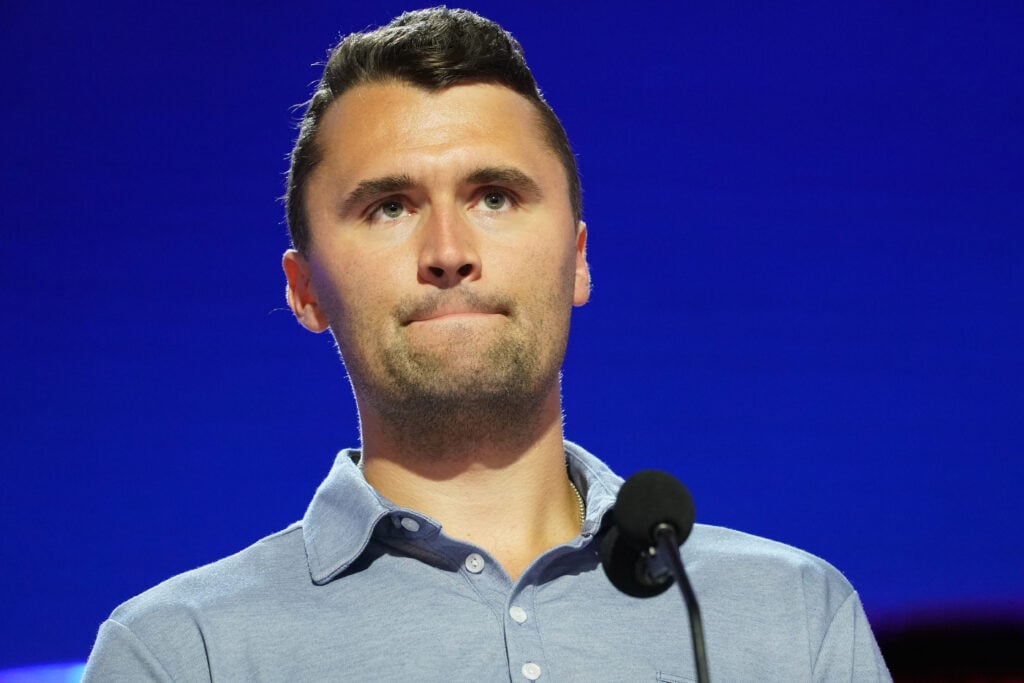
Turning Point USA Founder Charlie Kirk is seen onstage at the Fiserv Forum during preparations for the Republican National Convention (RNC) on July 14, 2024, in Milwaukee, Wisconsin. (Photo by Andrew Harnik/Getty Images)
“RIP Charlie Kirk. It doesn’t matter what your opinion is of Charlie or his politics if you don’t view this as one of the darkest days in American history than you are part of the problem,” sports media mogul Dave Portnoy wrote.
Kirk was a provocateur who courted controversy throughout his career and often used rhetoric that many would describe as hate speech.
But hopefully, Americans from both ends of the ideological spectrum can agree that what happened today was a horrific tragedy, and the political violence in this country needs to come to an end.
Our thoughts go out to Charlie Kirk’s loved ones during this enormously difficult time.