It’s been a confusing week.The Latest News from the UK and Around the World | Sky News
Categories
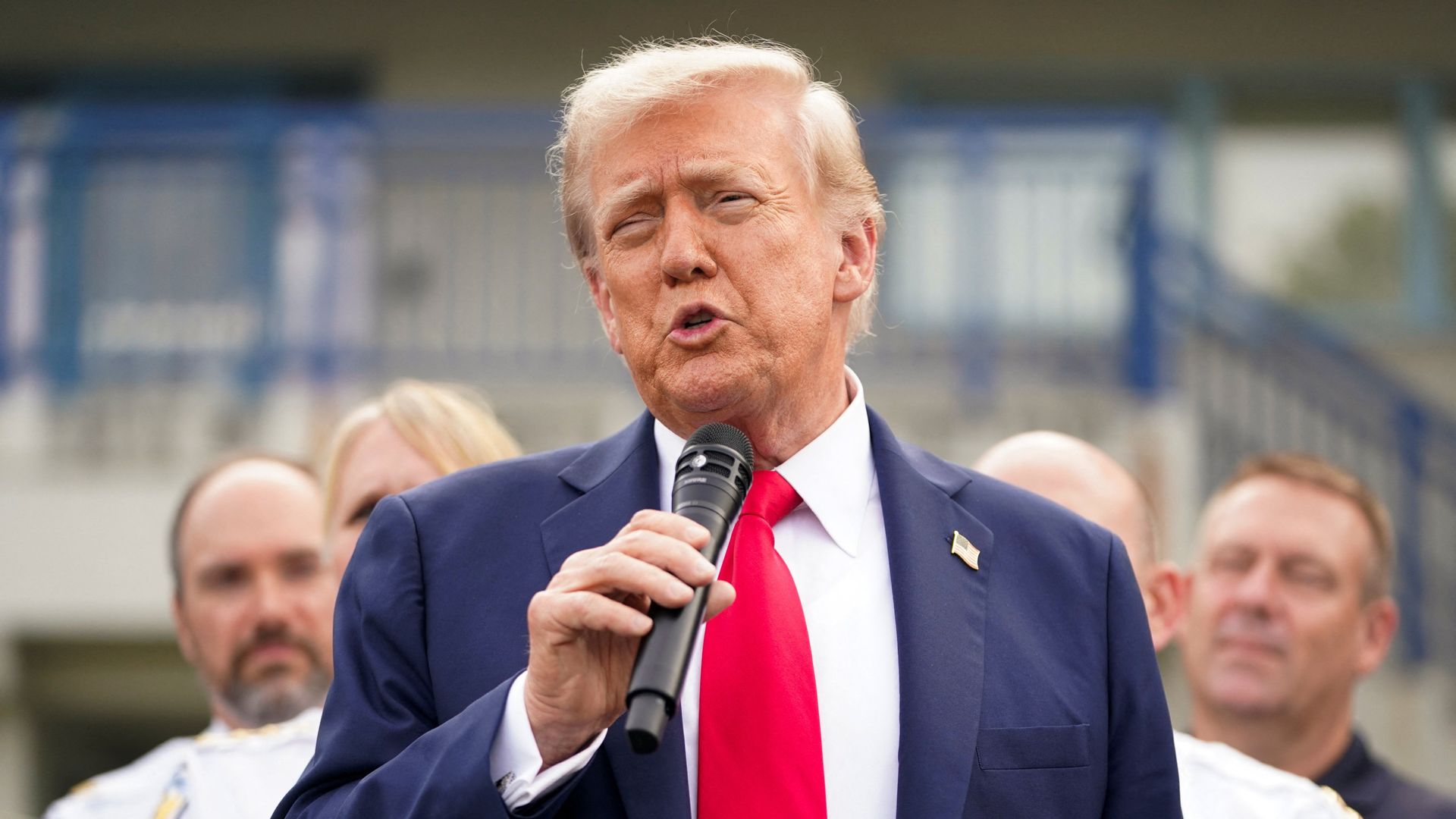
Russia has made Trump look weak








It’s been a confusing week.The Latest News from the UK and Around the World | Sky News

On the 10th anniversary of the Shoreham air disaster, the families of some of those killed have criticised the regulator for what they describe as a “shocking” ongoing attitude towards safety.The Latest News from the UK and Around the World | Sky News

Actor Noel Clarke has lost his High Court libel case against the publisher of The Guardian, over a series of news articles which featured claims from a number of women.The Latest News from the UK and Around the World | Sky News
By Greg Knight, News of the North
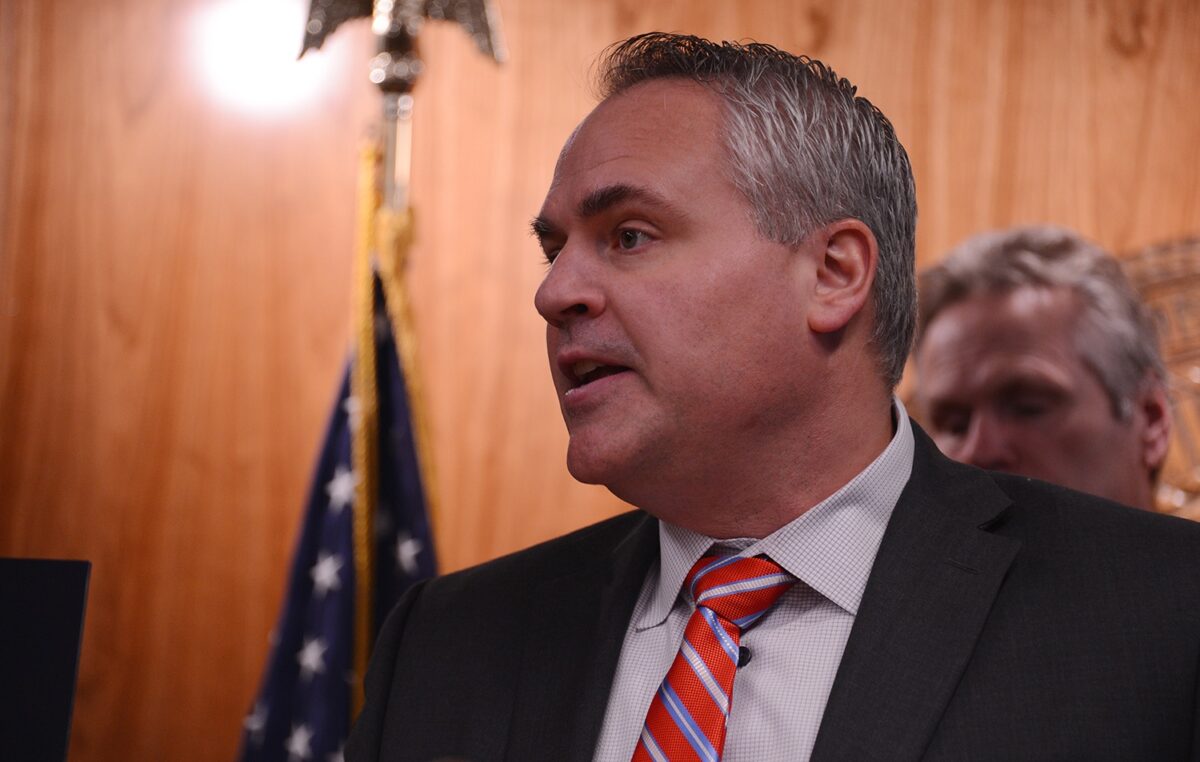
JUNEAU – Alaska Attorney General Treg Taylor will resign later this month after more than three years as the state’s top lawyer.
According to a statement from Governor Mike Dunleavy, he accepted the resignation and said Taylor’s final day will be Friday, August 29.
“Attorney General Treg Taylor’s sound legal judgment and dedication to public service have made a meaningful difference for Alaska,” Dunleavy said. “From defending our right to develop Alaska’s natural resources to fighting crime, his legal leadership has helped preserve and advance opportunities for everyday Alaskans.”
Taylor, first appointed in 2021, ranks among the longest-serving attorneys general in Alaska’s history. In a statement, Dunleavy credited him with steering the state through major legal battles, from natural resource development disputes to public safety issues.
“It has been an honor and a privilege to serve as the Alaska Attorney General,” Taylor said. “I am incredibly proud of what the Department has accomplished together fighting federal overreach, making our communities safer, and defending the Alaska way of life. None of these victories would have been possible without the extraordinary attorneys and staff at the Department of Law and the support of the Governor. Their dedication and professionalism inspire me, and I will always be thankful for the opportunity to have served alongside them.”
Dunleavy said he plans to name an interim attorney general before Taylor’s departure.


NOTN- City officials in Juneau say flood protection measures largely held during this month’s Suicide Basin release, but the risk of another release later this year remains.
Emergency Programs Manager Ryan O’Shaughnessy said five of the most severely damaged homes were on View Drive.
The barriers prevented widespread destruction but still experienced seepage and minor flooding in some areas.
“Six homes did have that major damage classification, And what that means is that water entered the living space and was generally above the height of a standard electrical outlet.” Said O’Shaughnessy, “At this time, the best professional judgment of the CBJ Engineering and Public Works team does believe that the HESCO barriers are not a viable solution for View Drive, so we’re working to identify any other solutions we can.”
Officials say long-term options for View Drive could include state- or federally sponsored buyouts. Meanwhile, the city is focusing on assessing barrier performance, repairing damaged sections, and moving forward with “Phase Two” of the project, which would extend protection as far as Brotherhood Bridge and Meadow Lane.
“There’s a lot of questions about phase two, and we’re working really hard to answer those, but seeing the effectiveness of the HESCO barriers this year is a great indication and a good reminder that we’re not out of the woods yet,” O’Shaughnessy said.
Last year, Suicide Basin released again in October with a final flood stage of just under 11 feet, and officials warn the glacier-dammed lake is currently refilling at a steady rate of about three feet per day, O’Shaughnessy said. “It is entirely possible we could see another release this year, another great reminder that we have a lot of work to do as a community.”
The city issued evacuation notices to more than 1,000 homes ahead of the flood, which crested at 16.6 feet, the highest on record. O’Shaughnessy credited the unified response involving the City and Borough of Juneau, state agencies, tribal partners, and the U.S. Coast Guard with preventing loss of life.

NOTN- The University of Alaska Southeast says its textbook affordability program has saved students more than $1 million since it began in 2016.
According to national surveys and studies on the affordability of course materials, about 65% of college students did not buy their textbooks because they were too expensive and 77% of students delayed purchasing their textbooks due to high cost. Students who face food insecurity are often the most heavily impacted, having to make a choice between buying meals and purchasing textbooks.
The initiative, encourages faculty to use low-cost or zero-cost course materials in place of traditional commercial textbooks. According to the university, more than 200 faculty have offered 889 “Zero Textbook Cost” courses, saving students an average of $225,000 each semester.
“Offering affordable access to an excellent education is our #1 priority at UAS.” Chancellor Aparna Palmer said in a statement. “Thanks to the leadership of the Egan Library and the hard work of our faculty and staff, we help ensure that our students can learn more deeply, finish their degrees, and achieve their dreams.”
The effort is part of a national shift toward using open educational resources (OER), which are free, adaptable, and often more up-to-date than traditional textbooks.
According to UAS these open educational resources enable both students and faculty to benefit, because the materials can be adapted to fit the needs of today’s students, they also help strengthen student participation.
UAS began marking “Zero Textbook Cost” courses in 2022, allowing students to easily search for affordable options when registering for classes.
By the end of the spring 2025 semester, the university estimates more than 10,000 students have benefited from the program.

By: James Brooks, Alaska Beacon
Alaska’s volcano experts no longer expect an eruption anytime soon from Mount Spurr, the closest active volcano to Anchorage.
On Wednesday, the Alaska Volcano Observatory formally lowered the alert level for Mount Spurr from yellow to green after months of declining activity.
“Things are OK right now, and hopefully that continues in the future,” said David Fee, coordinating scientist for the University of Alaska Fairbanks Geophysical Institute, which operates the observatory alongside the U.S. Geological Survey.
While the land immediately around Spurr isn’t inhabited, ash emitted from the volcano has disrupted life in Southcentral Alaska before. In 1953 and 1992, Spurr eruptions dumped ash on Anchorage, disrupting air travel.
Starting in February 2024, scientists had observed large numbers of small earthquakes beneath the volcano, and ground near it was deforming, surging upward. Ice atop the volcano melted, and air samples taken above the volcano showed signs of magma moving beneath the surface.
Scientists had been monitoring Crater Peak, a site south of Mount Spurr’s summit, as the likely spot of an eruption.
In October 2024, they raised the volcano’s alert level, and by March of this year, the volcano observatory said an eruption was “likely.”
But soon after that estimate, the signs of an imminent eruption began to diminish. There were fewer earthquakes, and the ground stopped rising as quickly as it had been.
Earlier this summer, the volcano observatory issued a statement saying that the odds of an eruption had fallen, and Spurr continued to quiet, leading to Wednesday’s announcement.
“What we’re seeing right now is all … really consistent with magma that intruded (beneath the volcano) and then stopped intruding. But it’s still creating some signals such as increased gas emissions and kind of weak seismicity,” Fee said.
While Spurr erupted in 1953 and 1992, darkening the skies over Anchorage with ash, it has also previously signaled an eruption that never came to pass.
In 2004 and 2006, the volcano showed signs of unrest for months but never erupted. The most recent period of unrest seems to resemble those two false starts.
Even though the volcano didn’t erupt, it has the potential to offer a scientific bonanza. AVO staff installed a network of seismic, infrasound and ground-measuring devices around Spurr, making it the most-monitored volcano in the state, according to the number of instruments listed on the AVO’s website.
“As we’re starting to look back now, at the period of unrest, it’s often just as interesting or scientifically valuable to understand why volcanoes don’t erupt, because they don’t, over half the time, approximately. Are there maybe some signals or something in our data that we can kind of tease out to help us understand why it didn’t erupt?” Fee said, looking back at what was learned.
“I think understanding why that occurred will be really important,” he said.
AVO and the Alaska Division of Homeland Security and Emergency Management also spent months educating Southcentral Alaskans about the possibility of ashfall, reminding them that they live in a volcanically active area.
That work will live on, too, Fee said, and people will be better informed the next time an eruption looks likely.
“Because they don’t happen that frequently in Cook Inlet, it was kind of a good reminder for people to be aware, to understand the hazards that are out there,” he said.
During the 2024 election campaign, the Republican Party’s historically fraught relationship with organized labor appeared to be changing. Several influential Republicans reached out to unions, seeking to cement the loyalties of the growing ranks of working-class Americans who have been backing Donald Trump’s presidential runs and voting for other members of his party.
During Trump’s first bid for the White house, the percentage of votes in households where at least one person belongs to a union fell to its lowest level in decades. In 2021, Marco Rubio, a U.S. senator at the time, wrote a USA Today op-ed supporting a unionization drive at an Amazon facility. Sen. Josh Hawley, a Missouri Republican, walked a United Auto Workers picket line in 2023 in solidarity with striking workers.
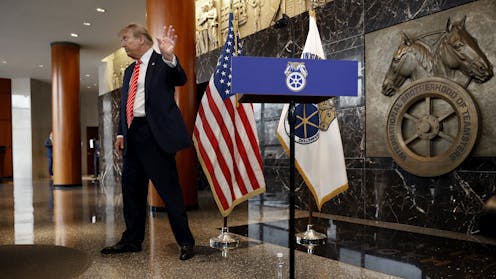
As the 2024 GOP presidential nominee, Trump spotlighted International Brotherhood of Teamsters President Sean O’Brien with a prominent speaking slot at the Republican National Convention – rewarding the union for staying neutral in that campaign after endorsing Joe Biden four years earlier.
Yet O’Brien shocked many in the convention crowd by lambasting longtime GOP coalition partners such as the Chamber of Commerce and Business Roundtable for hurting American workers.
Once in office, Trump continued to signal some degree of solidarity with the blue-collar voters who backed him. He chose former Rep. Lori Chavez-DeRemer, a Teamsters ally, to be his second-term labor secretary.
I’m a sociologist who has been researching the U.S. labor movement for over two decades. Given conservatives’ long-standing antipathy toward unions, I was curious whether the GOP’s greater engagement with labor portended any kind of change in its policies.
The GOP’s various outreach efforts during the 2024 campaign led University of Chicago law professor Eric Posner, a scholar of declining labor power, to write, “Is a pro-labor Republican Party possible?”
More than six months into Trump’s second term, I would say that based on the evidence thus far the answer to Posner’s question is a resounding no.
In late March 2025, Trump issued an executive order stripping hundreds of thousands of federal workers of their collective bargaining rights.
Overnight, twice as many federal employees lost their union protections as there are members of the United Auto Workers union, making the action “the largest and most aggressive single act of union-busting in U.S. history,” according to Georgetown University labor historian Joseph McCartin.
While affected unions have challenged that action and similar subsequent ones in court, the Trump administration is moving onto other agencies. In August, over 400,000 federal employees at the Department of Veterans Affairs and Environmental Protection Agency saw their union contracts terminated and their collective bargaining rights dissolved.
Everett Kelley, the American Federation of Government Employees president, described the attacks on federal workers as a “setback for fundamental rights in America.”

The Trump administration has pitched its erratic tariff policies as a boon to U.S.manufacturing, including in the automotive industry, once the foundation of the U.S. labor movement.
In reality, U.S. car producers are struggling to keep up with rising tariff-related costs of raw materials and parts. The number of factory jobs has fallen to the lowest level since the COVID-19 pandemic.
Even United Auto Workers President Shawn Fain, a supporter of targeted tariffs to buttress the domestic auto industry, criticized the administration’s trade policy in April 2025, saying, “We do not support reckless tariffs on all countries at crazy rates.”
Other administration actions cast as relief for struggling workers are unlikely to deliver as advertised. The “no tax on tips” provision in Trump’s huge tax-and-spending package excludes the nearly 40% of tipped workers whose earnings fall below the federal income tax threshold. Tipped workers make up a tiny share of the low-wage workforce.
Culinary Workers Local 226, a powerful Nevada union representing many tipped workers in Las Vegas and Reno, supported the provision. Yet it blasted the overall package, calling it a “big, horrible bill” for its windfalls to the rich instead of the working class.
The National Labor Relations Board is responsible for ensuring management and labor adhere to provisions of the National Labor Relations Act. Passed in 1935, that law established workers’ fundamental rights to collective bargaining. The board is responsible for conducting union elections, investigating allegations of unfair labor practices and outright abuses by employers, and enforcing court orders when employers or unions are found to have broken labor laws.
Presidents regularly use vacancies to tilt the ideological balance of the board to a more or less labor-friendly position. Trump, however, went further.
Soon after he was sworn in for a second term, Trump fired the National Labor Relations Board’s general counsel along with board member Gwynne Wilcox, who was only halfway through her five-year term. Wilcox’s dismissal was unprecedented and violated the National Labor Relations Act provision on board personnel changes.
Wilcox’s removal left the body without a quorum, preventing it from responding to appeals or requests for review and allowing employers accused of violating workers’ rights to delay any settlement. The Trump administration has left those important NLRB jobs vacant for months, although it has nominated two management-friendly replacements, both of whom awaited Senate approval in mid-August.
In the meantime, the agency is unable to hear labor disputes.
Disempowering the NLRB is a long-standing Republican tactic, suggesting more continuity with past GOP attacks on labor than a new era of partnership.
To be sure, Republicans don’t all agree with one another on the importance of supporting workers and labor rights. One who has stood out so far is Hawley. The relatively pro-labor Republican senator’s stance led him to partner with Sen. Corey Booker, a New Jersey Democrat, to co-sponsor the Faster Labor Contracts Act.
This new bill would force employers to negotiate a contract in a reasonable time frame with employees once they have voted in favor of forming a union.
Hawley also joined with Democrats to reintroduce a bill that would ban dangerous work speed requirements in warehouses. Hawley said, when summarizing his efforts on behalf of working people, “It’s time we deliver for them.”
The Missouri senator is not completely alone. Sens. Bernie Moreno of Ohio and Roger Marshall of Kansas, both Republicans, have backed some labor-friendly legislation in the spring and summer of this year.
GOP leaders in Congress are not moving those bills forward so far, likely in part due to pushback from Republicans and their allies outside Congress.
And there are limits to Hawley’s labor friendliness. He voted for Trump’s tax-and-spending package, despite publicly airing his misgivings about the harm it may cause his blue-collar constituents.
Meanwhile, his past partners in the more labor-friendly wing of the GOP now occupy prominent administration posts. Yet they have largely fallen silent on union issues – except, in Rubio’s case, to oversee the firing of well over 1,000 State Department employees, many of them members of the American Foreign Service Association union.

Another GOP presidential administration courted segments of the labor movement to divide a key Democratic constituency, only to take actions that weakened unions.
In 1980, for example, Ronald Reagan sought and won the endorsement of the Professional Air Traffic Controllers Organization. A year later, he fired 13,000 striking members of that union.
The Teamsters union also backed Reagan – twice. It endorsed him in 1980 after he pledged during the 1980 campaign not to pursue anti-labor policies. Although he broke his promise, personal outreach from Vice President George H.W. Bush in the lead-up to the 1984 election earned him the Teamsters endorsement a second time.
What seems clear in my view is that whenever the GOP has tried to cast itself as a labor-friendly political party, it has emphasized symbolism over substance, favoring using rhetoric embracing workers who belong to unions versus taking actions to strengthen labor rights.

To support his research, Jake Rosenfeld has received funding from the Economic Policy Institute, Washington Center for Equitable Growth, Urban Institute, and the National Science Foundation.
Politics + Society – The Conversation
The 2026 midterms are more than a year away, but some high-profile primary election battles in the Democratic Party are gaining national attention. Much of that attention is focused on the age of the candidates.
Thanks to Texas’ proposed mid-decade redistricting, a showdown is looming between two Democrats serving in the U.S. House of Representatives from that state: 36-year-old Rep. Greg Casar has made clear his intention to run against a colleague, Rep. Lloyd Doggett, despite Doggett’s public pressure on Casar to run in a different district. Doggett is 78 years old and has served in the House since 1994.
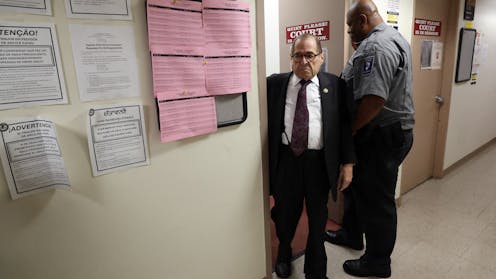
An even more stark generational divide has emerged in New York’s 12th district, where 26-year-old political organizer Liam Elkind is making a similar challenge in a Democratic primary. The 18-term incumbent in that race, Rep. Jerry Nadler, will be 79 years old by next year’s midterm election. He began his political career as a New York state assemblyman in 1977 — more than 20 years before Elkind was born.
These generational matchups have become common in the Democratic Party. They have also gained significant attention, particularly since the 2018 upset of another veteran Democratic leader, Rep. Joe Crowley of New York, in a primary challenge from Alexandria Ocasio-Cortez, who was 28 at the time.
These challengers often criticize the seniority of older lawmakers. They say seniority is not a benefit but a hindrance to effective representation because the longtime incumbents are out of touch with the needs of their districts and the country, and that remaining in office crowds out crucial younger perspectives.
As generational challenges have become more common, they’ve also become sharper in their explicit appeals to age as a key candidate quality. And candidates like Elkind have made the argument that the stakes go beyond generational “vibes.”
A geriatric Congress can also have demonstrable effects on the policymaking that happens on Capitol Hill.
Why is candidate age so prominent in the current election cycle?
One big reason is that razor-thin majorities in Congress make every seat count.
Slim margins create legislative and institutional uncertainty that has very real consequences for how Congress is run and how policy gets made.
In his candidacy announcement video, Elkind makes this point explicitly: “In the last five months, three House Democrats passed away, allowing Trump’s billionaire bill, gutting health care and food stamps for millions of people, to go through by one vote.”
Although it’s likely that Trump’s “big, beautiful bill” would have passed even without these vacancies, the Democratic absences undoubtedly made Speaker Mike Johnson’s job of passing the bill a little bit easier.
Elkind also notes that the last eight members of Congress who passed away in office were Democrats. In essence, Elkind is arguing that Democrats must elect more young members not just as a matter of representation but as a way of preserving power in Congress.
Seat vacancies caused by the early departures of members of Congress happen regularly, and in a variety of ways.
The 118th Congress, which met from Jan. 3, 2023, to Jan. 3, 2025, set a modern record with 17 vacancies, a rate unmatched going back to the 1950s. This was partly because of four member deaths, including Rep. Sheila Jackson Lee, D-Texas.
Other high-profile vacancies in the 118th Congress were due to different causes. Some members were forced to resign or even expelled from Congress because of scandal, like GOP Rep. George Santos of New York, who was convicted in 2024 for a range of crimes and subsequently sentenced to several years in prison.
Others cut short their current term due to political defeats: House Speaker Kevin McCarthy, a Republican from California, resigned after being ousted from his leadership post in 2023. The current 119th Congress has seen additional resignations from members who took positions in the second Trump administration.
Resignation is the most common reason for departure in recent Congresses. However, at least one member – and often more than one – has died in all but one Congress in the past 70 years. The number of deaths that regularly occur among members is more than sufficient to change how the majority party functions in a closely contested Congress like this one.
And for Democrats, three member deaths in the first nine months of the current Congress is far ahead of previous years’ paces, making incumbents’ advanced age a relevant issue on the campaign trail.
Although U.S. Senate vacancies are often – though not always – filled through an appointment by the governor of that state, the Constitution mandates that House vacancies be filled by special elections scheduled by the governor.
These elections usually happen within a few months of the vacancy. What this means is that there are real possibilities for the size of a party’s majority to shrink, or grow, between election years, in ways that have profound impacts on policymaking. And even if a majority party shift doesn’t happen, a district could still replace a moderate departing representative with an extremist, or vice versa.
Whether younger candidates’ message will resonate with primary election voters remains an open question. Longer-serving incumbents hold major advantages like deeper campaign experience. Younger candidates traditionally lack the name recognition and donor bases that older incumbents have built up over decades.
But given the public concern over the high-profile declines of candidates for president – like former President Joe Biden – and for Congress, like Sens. Dianne Feinstein and Mitch McConnell, generational politics may be more important than ever, and help reverse this trend.
This story contains material from a previous article published on Jan. 3, 2023.

Charlie Hunt does not work for, consult, own shares in or receive funding from any company or organization that would benefit from this article, and has disclosed no relevant affiliations beyond their academic appointment.
Politics + Society – The Conversation

When people use the term “Orwellian,” it’s not a good sign.
It usually characterizes an action, an individual or a society that is suppressing freedom, particularly the freedom of expression. It can also describe something perverted by tyrannical power.
It’s a term used primarily to describe the present, but whose implications inevitably connect to both the future and the past.
In his second term, President Donald Trump has revealed his ambitions to rewrite America’s official history to, in the words of the Organization of American Historians, “reflect a glorified narrative … while suppressing the voices of historically excluded groups.”
This ambition was manifested in efforts by the Department of Education to eradicate a “DEI agenda” from school curricula. It also included a high-profile assault on what detractors saw as “woke” universities, which culminated in Columbia University’s agreement to submit to a review of the faculty and curriculum of its Middle Eastern Studies department, with the aim of eradicating alleged pro-Palestinian bias.
Now, the administration has shifted its sights from formal educational institutions to one of the key sites of public history-making: the Smithsonian, a collection of 21 museums, the National Zoo and associated research centers, principally centered on the National Mall in Washington, D.C.
On Aug. 12, 2025, the Smithsonian’s director, Lonnie Bunch III, received a letter from the White House announcing its intent to carry out a systematic review of the institution’s holdings and exhibitions in the advance of the nation’s 250th anniversary in 2026.
The review’s stated aim is to ensure that museum content adequately reflects “Americanism” through a commitment to “celebrate American exceptionalism, [and] remove divisive or partisan narratives.”
On Aug. 19, 2025, Trump escalated his attack on the Smithsonian. “The Smithsonian is OUT OF CONTROL, where everything discussed is how horrible our Country is, how bad Slavery was…” he wrote in a Truth Social post. “Nothing about Success, nothing about Brightness, nothing about the Future. We are not going to allow this to happen.”
Such ambitions may sound benign, but they are deeply Orwellian. Here’s how.

Author George Orwell believed in objective, historical truth. Writing in 1946, he attributed his youthful desire to become an author in part to a “historical impulse,” or “the desire to see things as they are, to find out true facts and store them up for the use of posterity.”
But while Orwell believed in the existence of an objective truth about history, he did not necessarily believe that truth would prevail.
Truth, Orwell recognized, was best served by free speech and dialogue. Yet absolute power, Orwell appreciated, allowed those who possessed it to silence or censor opposing narratives, quashing the possibility of productive dialogue about history that could ultimately allow truth to come out.
As Orwell wrote in “1984,” his final, dystopian novel, “Who controls the past controls the future. Who controls the present controls the past.”
Historian Malgorzata Rymsza-Pawlowska has written about America’s bicentennial celebrations that took place in 1976. Then, she says, “Americans across the nation helped contribute to a pluralistic and inclusive commemoration … using it as a moment to question who had been left out of the legacies of the American Revolution, to tell more inclusive stories about the history of the United States.”
This was an example of the kind of productive dialogue encouraged in a free society. “By contrast,” writes Rymsza-Pawlowska, “the 250th is shaping up to be a top-down affair that advances a relatively narrow and celebratory idea of Americanism.” The newly announced Smithsonian review aims to purge counternarratives that challenge that celebratory idea.
The desire to eradicate counternarratives drives Winston Smith’s job at the ironically named Ministry of Truth in “1984.”
The novel is set in Oceania, a geographical entity covering North America and the British Isles and which governs much of the Global South.
Oceania is an absolute tyranny governed by Big Brother, the leader of a political party whose only goal is the perpetuation of its own power. In this society, truth is what Big Brother and the party say it is.

The regime imposes near total censorship so that not only dissident speech but subversive private reflection, or “thought crime,” is viciously prosecuted. In this way, it controls the present.
But it also controls the past. As the party’s protean policy evolves, Smith and his colleagues are tasked with systematically destroying any historical records that conflict with the current version of history. Smith literally disposes of artifacts of inexpedient history by throwing them down “memory holes,” where they are “wiped … out of existence and out of memory.”
At a key point in the novel, Smith recalls briefly holding on to a newspaper clipping that proved that an enemy of the regime had not actually committed the crime he had been accused of. Smith recognizes the power over the regime that this clipping gives him, but he simultaneously fears that power will make him a target. In the end, fear of retaliation leads him to drop the slip of newsprint down a memory hole.
The contemporary U.S. is a far cry from Orwell’s Oceania. Yet the Trump administration is doing its best to exert control over the present and the past.
Even before the Trump administration announced its review of the Smithsonian, officials in departments across government had taken unprecedented steps to rewrite the nation’s official history, attempting to purge parts of the historical narrative down Orwellian memory holes.
Comically, those efforts included the temporary removal from government websites of information about the Enola Gay, the plane that dropped the atomic bomb over Hiroshima. The plane was unwittingly caught up in a mass purge of references to “gay” and LGBTQ+ content on government websites.

Other erasures have included the deletion of content on government sites related to the life ofHarriet Tubman, the Maryland woman who escaped slavery and then played a pioneering role as a conductor of the Underground Railroad, helping enslaved people escape to freedom.
Public outcry led to the restoration of most of the deleted content.
Over at the Smithsonian, which earlier in the year had been criticized by Trump for its “divisive, race-centered ideology,” staff removed a temporary placard with references to President Trump’s two impeachment trials from a display case on impeachment that formed part of the National Museum of American History exhibition on the American presidency. The references to Trump’s two impeachments were modified, with some details removed, in a newly installed placard in the updated display.
Responding to questions, the Smithsonian stated that the placard’s removal was not in response to political pressure: “The placard, which was meant to be a temporary addition to a 25-year-old exhibition, did not meet the museum’s standards in appearance, location, timeline, and overall presentation.”
Orwell’s “1984” ends with an appendix on the history of “Newspeak,” Oceania’s official language, which, while it had not yet superseded “Oldspeak” or standard English, was rapidly gaining ground as both a written and spoken dialect.
According to the appendix, “The purpose of Newspeak was not only to provide a medium of expression for the worldview and mental habits proper to the devotees of [the Party], but to make all other modes of thought impossible.”
Orwell, as so often in his writing, makes the abstract theory concrete: “The word free still existed in Newspeak, but it could only be used in such statements as ‘This dog is free from lice’ or ‘This field is free from weeds.’ … political and intellectual freedom no longer existed even as concepts.”
The goal of this language streamlining was total control over past, present and future.
If it is illegal to even speak of systemic racism, for example, let alone discuss its causes and possible remedies, it constrains the potential for, even prohibits, social change.
It has become a cliché that those who do not understand history are bound to repeat it.
As George Orwell appreciated, the correlate is that social and historical progress require an awareness of, and receptivity to, both historical fact and competing historical narratives.
This story is an updated version of an article originally published on June 9, 2025.
The Smithsonian is a member of The Conversation U.S.

Laura Beers does not work for, consult, own shares in or receive funding from any company or organization that would benefit from this article, and has disclosed no relevant affiliations beyond their academic appointment.
Politics + Society – The Conversation