At least 101 people are known to have died of malnutrition during the conflict in Gaza, including 80 children, most of them in recent weeks, according to Palestinian officials.The Latest News from the UK and Around the World | Sky News









At least 101 people are known to have died of malnutrition during the conflict in Gaza, including 80 children, most of them in recent weeks, according to Palestinian officials.The Latest News from the UK and Around the World | Sky News

“Something special” was how England boss Sarina Wiegman described Michelle Agyemang after the Lionesses’ latest Women’s Euros victory.The Latest News from the UK and Around the World | Sky News

Black Sabbath have paid tribute to their former frontman Ozzy Osbourne after the megastar died at the age of 76.The Latest News from the UK and Around the World | Sky News
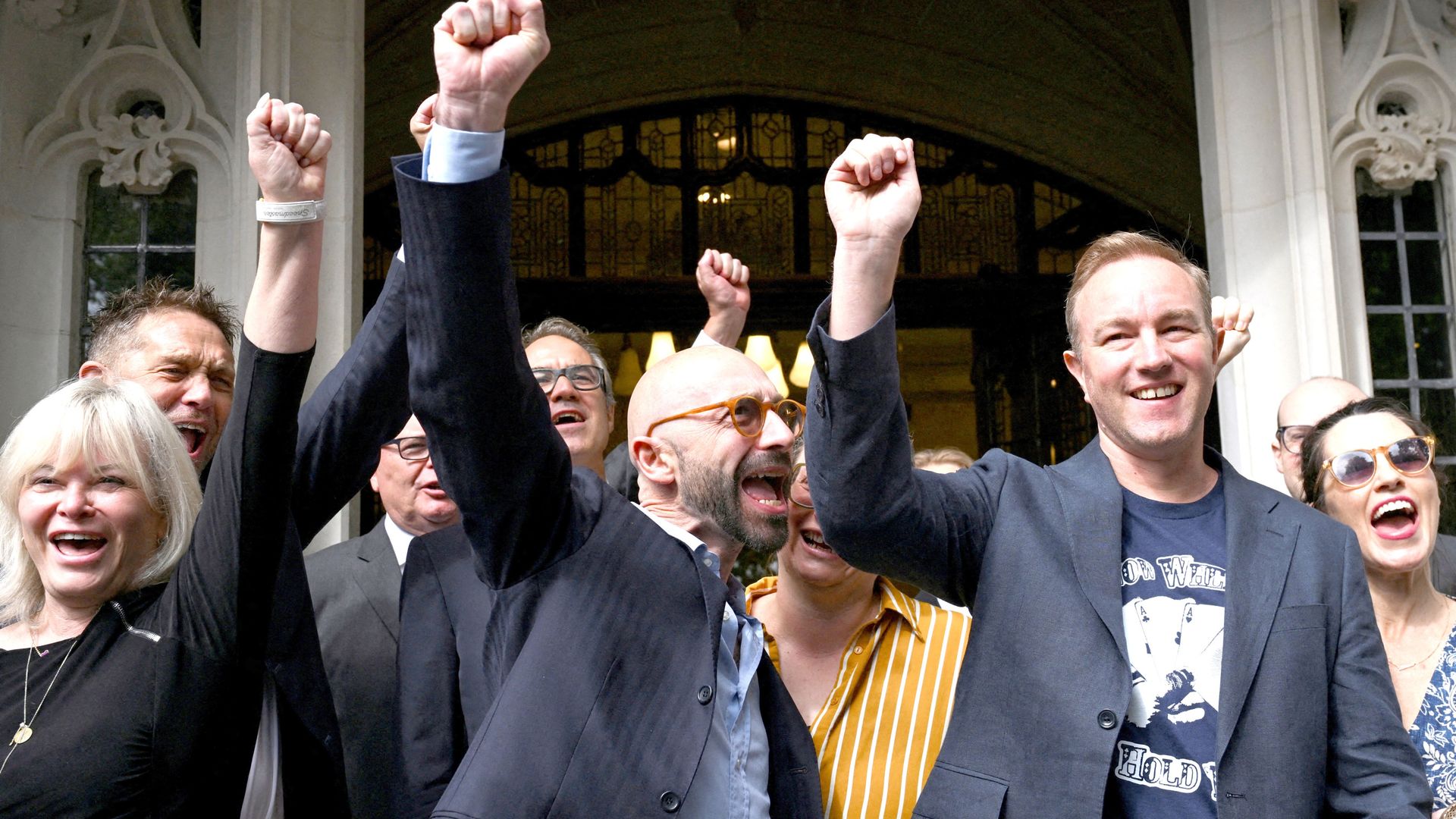
Two traders jailed for rigging benchmark interest rates have had their convictions overturned by the Supreme Court.The Latest News from the UK and Around the World | Sky News
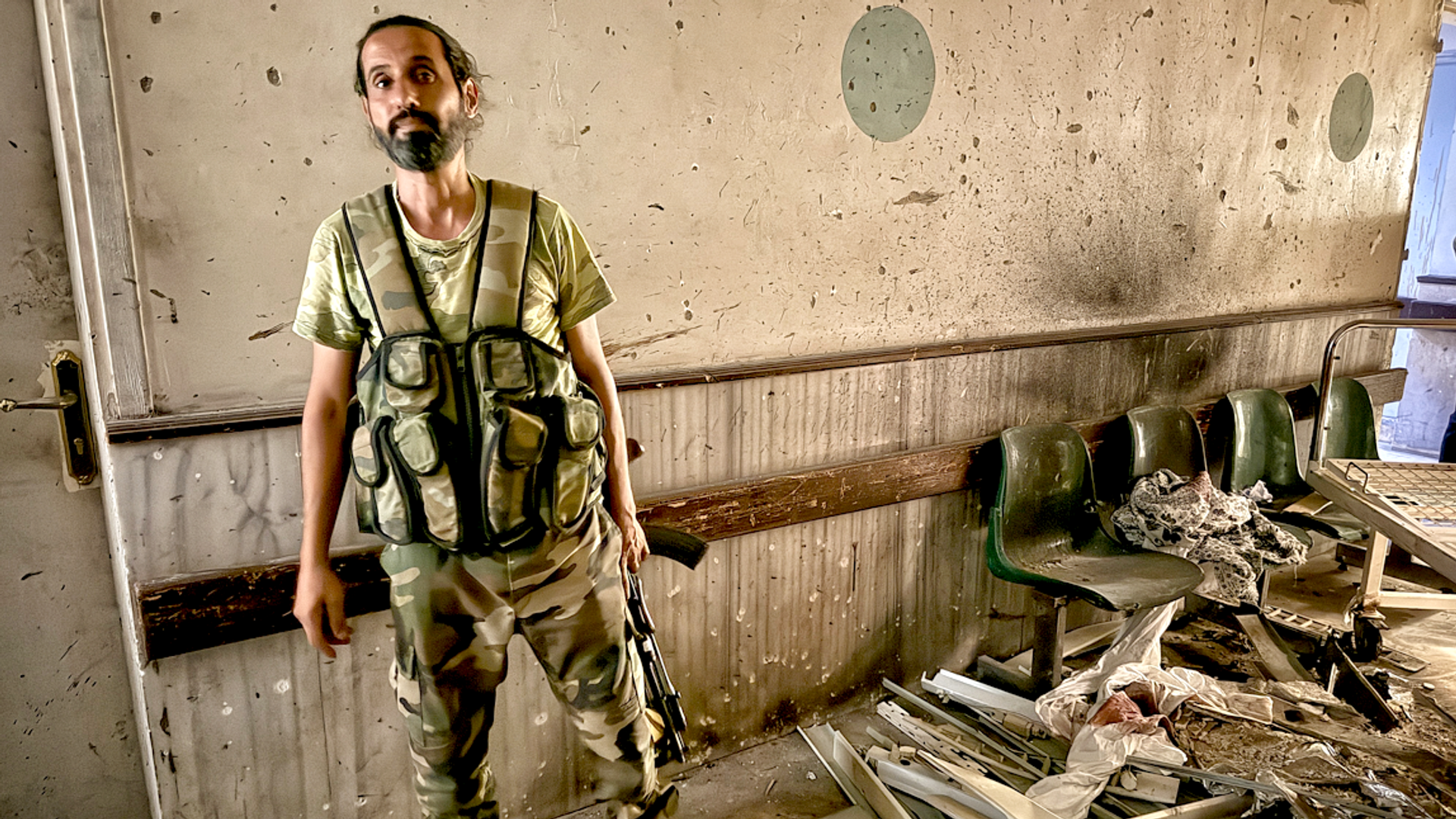
The smell hit us before we turned the corner into the backyard of Sweida City’s main hospital.The Latest News from the UK and Around the World | Sky News

Juneau is actively planning and moving forward with the construction of a new Capital Civic Center, according to the project’s executive director Bob Banghart the Civic Center’s purpose is to provide Alaska’s Capital City with an essential and vibrant community cultural and conference center located within the Áak’w Village Arts and Culture District.
“‘I’ll take us back to the early 80s, when Centennial Hall was first being designed and built.” Said Banghart, “Centennial Hall was built as it is, with an idea that there would be an addition later that would support performing arts and the arts itself. So about 10 years ago, a group of people got together to say, we need to do this.”
According to Banghart, the process of designing the new Civic Center started with an independent standalone building in the vicinity of Centennial Hall, but the group kept running into opposition, “We started listening to the different, diverse voices in the community, and then pandemic hit us.” Said Banghart, “during that process, the city approached us and said, what if we were to join the two buildings together and see about looking for some synergy that could be generated there. So the city put up some money, and we did just that, we designed a facility that conjoined what we had programmatically in the standalone building with Centennial Hall.”
The project has overcome significant challenges in recent years, including high construction costs and community opposition.
“In August last year, we came up with an idea, and we shopped it around. Took a lot of evaluation of it. People were saying, we like this, we don’t like that.” Said Banghart, “predominantly, we were looking at just joining the two buildings together with a large common space that proved to be, again, non-viable because it completely eradicated all the local parking in the area, and the cost to operate was looking like it might be outside the boundaries that we were able to afford.”
The proposed facility, an addition to the existing Centennial Hall, will feature a 299-seat professional theater, expanded lobby space, a gallery, and a flexible “black box” performance area.
Banghart described the project as a strategic response to community needs. “We’ve designed a facility that not only meets current event management challenges but creates new opportunities for community gatherings,” Banghart explained.
The $60 million project has already secured significant community support, with over 140 local donors contributing more than $10,000.
In terms of timeline, Banghart says he’d love to see the Civic Center break ground in 2027, “That’s funding pending right? the city is not on the hook to do any of that, other than what they’ve already contributed, contrary to some people’s beliefs, we are on a full court press to raise the money. We’ve been having some very strong successes.” Banghart said “So we’d love to see it happen in 27, we’ll see the documents completed next year.”
Though Banghart says there’s uncertainty on the federal end of things, he’s optimistic about contributions from the Coast Guard, “they’ve been very positive. They see a lot of application for the building’s use. We’re right across the street from them.”
The City and Project, the founding nonprofit, are jointly managing the Civic Center project, sharing design phase costs.
Interested community members can follow the project’s progress at capitalciviccenter.org.

By: Jonathon Dawe, Wrangell Sentinel

For the first time in 38 years, the Wrangell Native community has raised new totem poles in town, with four days of events planned Thursday through Sunday, July 17-20.
Unveiling the five new poles marks a significant revival of a centuries-old Tlingit tradition. The event honors the carvers and apprentices who transformed logs into cultural masterpieces, continuing a legacy nearly lost to time.
By the early 1900s, most of the town’s 30 to 40 totem poles had decayed or fallen, and the art of pole carving faded. The last totem pole raised in Wrangell was the Sun House Totem in 1987, carved by Steve Brown and Wayne Price, according to organizers of this week’s events.
Last week’s celebration symbolized a broader cultural resurgence that began with the 2013 rededication of Chief Shakes House and the 2015 completion of the WCA’s Carving Shed on Front Street, the organizers explained.
The new poles were funded in part by the U.S. Army (Gunakaadeit Pole) and organized by the Wrangell Cooperative Association.
The poles and their stories
Each pole tells a story rooted in Tlingit and Haida traditions:
Bear Up The Mountain Pole: A Naanya.aayí X’atgu Hít narrative of survival during a great flood.
Gunakaadeit Pole: A Naanya.aayí X’atgu Naasí Hít tale of a man using a sea monster’s skin to feed his community.
Underwater Sea Bear Pole: A Sik’nax.ádi legend of a mythical good-luck creature.
Killer Whale Grave Marker: A Kayaashkeiditaan tribute to Shx’atoo, who died during the U.S. Army’s 1869 bombardment of the Native village at Wrangell.
Kadashan Pole: A replica of a 1940 pole, originally gifted by Haida relatives to honor intermarriage with Tlingit women in the 1830s.
Master carvers and apprentices
Leading the project are master carvers:
Joe Young (Haida, Yahgw’laanaas clan), who learned from his grandfather Claude Morrison and carved the Bear Up The Mountain and Gunakaadeit poles.
Tommy Joseph (Tlingit, Kaagwaantaan clan), a renowned woodcarver behind the Underwater Sea Bear Pole.
TJ Young (Haida, Yahgw’láanaas clan), lead carver for the Kadashan pole.
Apprentice carvers, including Mike Hoyt, Tony Harding, Linda Churchill and Susie Beebee, also contributed, ensuring the tradition’s future.
“What an incredible experience to witness the community, literally pulling together to stand Kadashan pole in Totem Park.” Tlingit &Haida said in a Facebook post.
“This is more than art – it’s healing,” said Joe Young. “We’re reclaiming our history.”
By: James Brooks, Alaska Beacon
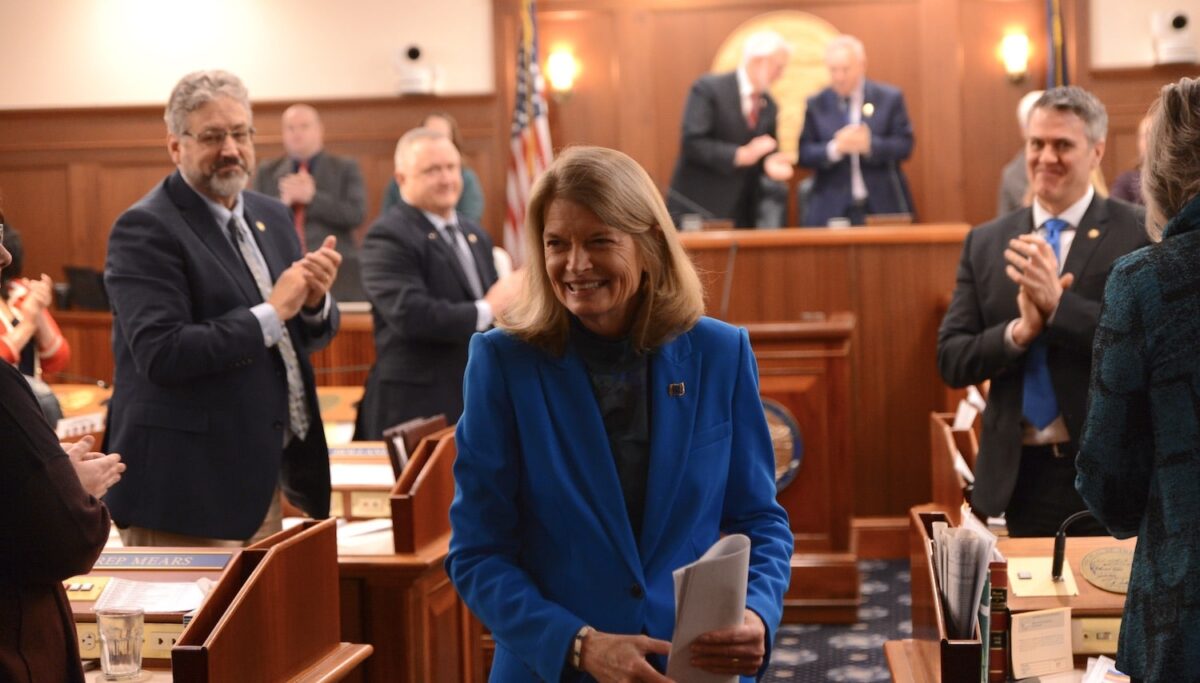
Speaking in an interview on Friday, Alaska Sen. Lisa Murkowski said President Donald Trump’s health care-cutting budget plan was destined to pass Congress, and her decisive vote on the package last month represented the best of a bad pair of options.
In a new analysis published Monday by the nonpartisan Congressional Budget Office, Republicans’ “big, beautiful” law is estimated to add almost $3.4 trillion to the federal debt over the next decade and cause 10 million Americans to lose access to health insurance.
Murkowski said she believes that had she opposed the law, Republican senators would instead have sought a 50th vote from Kentucky Republican Sen. Rand Paul, and the result would have been deeper cuts to the federal budget, including to health care.
“What he was looking for was dramatically more cuts to Medicaid, dramatically greater reductions in spending,” Murkowski said. “And so it was no secret that the bill was going to pass. It was just a question of whether or not it was going to pass with Senator Paul’s vote, or with Senator Murkowski’s vote.”
In a column published July 3 by the Louisville Courier-Journal, Paul wrote, “They could have had my vote and saved money but instead chose more spending and tax and welfare changes targeted at Alaska at the cost of the fiscal sanity of our country.”
Murkowski, echoing comments made previously by Alaska Sen. Dan Sullivan, who also voted for the proposal, said she was disappointed that several provisions benefiting Alaska were stricken by the Senate parliamentarian after objections from Senate Democrats.
Those included large subsidies for the state’s Medicaid program and a new split of oil revenue from federal land on the North Slope, with 90% going to the state and 10% to the federal government.
Voting on the budget package began before the parliamentarian ruled on all aspects of it.
“And so we didn’t know what was in and we didn’t know what was not in,” Murkowski said.
During the process, the 90-10 split dropped to 70-30, and state-specific benefits for Alaska disappeared.
Afterward, one provision that survived — a concession for wind and solar projects — was quashed by executive orders issued by President Trump.
Speaking to the Anchorage Daily News on Friday, Murkowski said she feels “cheated” by the maneuver.
Speaking to the Alaska Beacon, she said, “I have been criticized. I have been hung out to dry. But you know what? At the end of the day, I fought for my constituents as best I knew how, and I should never, and I will never, apologize for doing the best that I can by them.”
In her last three Alaska U.S. Senate elections, Murkowski defeated more socially conservative candidates with the support of Democrats and independents.
On social media, after her vote in favor of the Republican budget plan, many of those voters voiced their disapproval.
Asked about that disappointment, Murkowski said she understands and hears that criticism.
“I get the fact that they want me to be principled on this. But if it costs Alaskans — which it would have — then how is that doing my job for them? … At the end of the day, I couldn’t kill it, and I understand that people might not believe that, but again, what I set out to do was try to make improvements to a measure that started out in a place that would have … made it very challenging for too many Alaskans.”
Murkowski said she expects the Trump administration to propose more retroactive budget cuts akin to the one that passed last week involving foreign aid and the Corporation for Public Broadcasting.
Sullivan voted in favor of the cut; Murkowski opposed it.
Afterward, Trump budget director Russ Vought said he wants congressional Republicans to get more partisan in the budget process and that lawmakers should expect more “rescission” votes like last week’s.
Murkowski said she hopes other Republicans will join her in rejecting that call.
“I would like to think that it’s comments like that, that would galvanize us as appropriators, galvanize us as Republicans and Democrats in the United States Senate,” she said. “Our oath is to the Constitution. We would say we’ve got our job to do here, and we know that in order to do it and have it be enduring, it takes 60 votes, and so we need to be more bipartisan and not more partisan. To me, it was absolutely offensive, his statement, and so arrogant.”

Minnesota Gov. Tim Walz recently sparked controversy by comparing U.S. Immigration and Customs Enforcement to Nazi Germany’s notorious secret police, the Gestapo.
“Donald Trump’s modern-day Gestapo is scooping folks up off the streets,” Walz said during a May 2025 speech at the University of Minnesota Law School’s commencement ceremony.
“They’re in unmarked vans, wearing masks, being shipped off to foreign torture dungeons, no chance to mount a defense, not even a chance to kiss a loved one goodbye, just grabbed up by masked agents, shoved into those vans, and disappeared,” Walz added.
ICE, tasked with enforcing immigration policies, has dramatically increased the number of nationwide arrests of immigrants since President Donald Trump returned to office in January 2025. ICE’s arrests of immigrants have more than doubled in 38 states since then.
In recent months, other Democratic politicians, including U.S Rep. Dan Goldman of New York, have also compared ICE to the Gestapo, or Adolf Hitler’s “secret police,” as Rep. Seth Moulton of Massachusetts said in April.
But do ICE’s tactics actually resemble those of the Gestapo?
Because I am a scholar of modern Germany and the Holocaust, people regularly ask me if this analogy is accurate. The answer is complicated.

The Nazi regime established the Gestapo, short for the German phrase Geheime Staatspolizei, meaning secret state police, soon after Hitler became chancellor of Germany in January 1933. Among other responsibilities, the Gestapo was tasked with investigating political crimes and monitoring opposition activity. It later enforced racial laws in Germany and across occupied Europe.
As part of its daily work, the Gestapo identified and monitored the regime’s political enemies. It arrested, interrogated, detained and tortured suspects and sent others to concentration camps. To identify suspects, it often relied on anonymous denunciations that came not only from zealous Nazis, but also from disgruntled neighbors or business competitors who tipped off the Gestapo to Jews and other people.
While the Gestapo was relatively small in terms of personnel, it projected an image of being, as one scholar wrote, “omniscient, omnipotent, and omnipresent.”
It enforced the regime’s will and suppressed dissent not through sheer manpower but by creating a pervasive sense of fear. This aura of menace and terror has long outlived the Nazi regime itself.
ICE, with around 21,000 officers and staff operating in a country of more than 340 million, is smaller both in absolute terms and on a per capita basis. At its height between 1943 and 1945, the Gestapo had between 40,000 and 50,000 personnel in a country of 79 million.
ICE is set to expand its work in the next few years with an additional US$75 billion in funding that Congress appropriated in July as part of Trump’s tax and spending bill.
And while ICE focuses on immigration, the Gestapo had a more expansive role. It was responsible for suppressing all forms of political dissent, not just violations of immigration law.
ICE operates with vastly more advanced technologies that did not exist in the 1940s, including facial recognition and social media monitoring.
There is technically more transparency around ICE’s work than the Gestapo’s, since ICE is a federal agency that is subject to its work and information being reviewed by politicians and the public alike. But in June 2020, the first Trump administration reclassified ICE, which is part of the Department of Homeland Security, as a “security/sensitive agency.” This designation makes it harder for people to request and receive information about ICE’s work through Freedom of Information Act records requests.
Like the Gestapo, ICE can seem performative in its work, like when it carried out a dramatic July raid of a cannabis farm in California in which balaclava-wearing officers used tear gas against protesters.
Since World War II and the fall of the Nazi regime, the term Gestapo has become shorthand in the United States to describe police repression.
Using the word Gestapo to describe the worst possible authoritarian oppression has been popularized in popular movies in everything from the 1943 film “Casablanca” and “The Black Gestapo” in 1975 to “Inglourious Basterds” in 2009 and “Jojo Rabbit” in 2019.
Walz’s remarks in May, though provocative, were also far from isolated in politics. Politicians from both sides of the aisle, as well as political observers, regularly use Gestapo and Nazi metaphors to attack their opponents.
In 2022, Rep. Marjorie Taylor Greene of Georgia famously confused the term Gestapo with gazpacho soup in a gaffe that went viral. “Now we have Nancy Pelosi’s gazpacho police spying on members of Congress,” she said.
In 2024, Trump accused President Joe Biden of running a “Gestapo administration” as the Justice Department prosecuted Trump for attempting to overturn the 2020 election.
Overall, mentions of the word Gestapo in social media increased by 184% between 2017 and 2024, according to the nonprofit group Foundation to Combat Antisemitism.
The U.S. Holocaust Memorial Museum is among the organizations that have condemned making comparisons to the Holocaust and the Nazis for many reasons, including their historical inaccuracy and because they are insulting to people whose families remain scarred by the Holocaust.

Analogies can be useful for clarifying complex ideas. But especially when they stretch across decades and vastly different political contexts, they risk oversimplifying and trivializing history.
I believe that comparing ICE to the Gestapo is less a historical judgment than a reflection of modern anxiety – a fear that the U.S. is veering toward authoritarianism reminiscent of 1930s Germany.
If politicians and other public figures are looking for historical comparisons to modern law enforcement agencies that use severe tactics, there is, unfortunately, no shortage of options: the Soviet Union’s secret police agencies NKVD and KGB, Iran’s former secret police and intelligence agency SAVAK or East Germany’s Stasi, to name just a few.
All of those organizations denied suspects due process and grossly violated human rights in order to protect political regimes – but they don’t necessarily easily compare to ICE, either.
Still, politicians and political observers alike most often turn to the Gestapo and other Nazi references instead.
Ultimately, the Gestapo, Nazi Germany and the Holocaust serve as a powerful, shared cultural reference point. The catastrophes of World War II epitomize the worst possible outcomes of evil left unchecked.
They have become the master moral paradigm and an ethical compass for the world today. In an age of polarization, World War II and the Holocaust remain the mirror in which Americans examine their present.

Daniel H. Magilow received funding from the National Endowment for the Humanities (although DOGE cancelled the grant in April 2025).
He serves as Co-Editor-in-Chief of Holocaust and Genocide Studies, the journal of the United States Holocaust Memorial Museum’s Jack, Joseph and Morton Mandel Center for Advanced Holocaust Studies
Politics + Society – The Conversation

Champions of the almost entirely party-line vote in the U.S. Senate to erase US$1.1 billion in already approved funds for the Corporation for Public Broadcasting called their action a refusal to subsidize liberal media.
“Public broadcasting has long been overtaken by partisan activists,” said U.S. Sen. Ted Cruz of Texas, insisting there is no need for government to fund what he regards as biased media. “If you want to watch the left-wing propaganda, turn on MSNBC,” Cruz said.
Accusing the media of liberal bias has been a consistent conservative complaint since the civil rights era, when white Southerners insisted news outlets were slanting their stories against segregation. During his presidential campaign in 1964, U.S. Sen. Barry Goldwater of Arizona complained that the media was against him, an accusation that has been repeated by every Republican presidential candidate since.
But those charges of bias rarely survive empirical scrutiny.
As chair of a public policy institute devoted to strengthening deliberative democracy, I have written two books about the media and the presidency, and another about media ethics. My research traces how news institutions shape civic life and why healthy democracies rely on journalism that is independent of both market pressure and partisan talking points.
That independence in the United States – enshrined in the press freedom clause of the First Amendment – gives journalists the ability to hold government accountable, expose abuses of power and thereby support democracy.

Ad Fontes Media, a self-described “public benefit company” whose mission is to rate media for credibility and bias, have placed the reporting of “PBS NewsHour” under 10 points left of the ideological center. They label it as both “reliable” and based in “analysis/fact.” “Fox and Friends,” by contrast, the popular morning show on Fox News, is nearly 20 points to the right. The scale starts at zero and runs 42 points to the left to measure progressive bias and 42 points to the right to measure conservative bias. Ratings are provided by three-person panels comprising left-, right- and center-leaning reviewers.
A 2020 peer-reviewed study in Science Advances that tracked more than 6,000 political reporters likewise found “no evidence of liberal media bias” in the stories they chose to cover, even though most journalists are more left-leaning than the rest of the population.
A similar 2016 study published in Public Opinion Quarterly said that media are more similar than dissimilar and, excepting political scandals, “major
news organizations present topics in a largely nonpartisan manner,
casting neither Democrats nor Republicans in a particularly favorable
or unfavorable light.”
Surveys show public media’s audiences do not see it as biased. A national poll of likely voters released July 14, 2025, found that 53% of respondents trust public media to report news “fully, accurately and fairly,” while only 35% extend that trust to “the media in general.” A majority also opposed eliminating federal support.
Contrast these numbers with attitudes about public broadcasters such as MTVA in Hungary or the TVP in Poland, where the state controls most content. Protests in Budapest October 2024 drew thousands demanding an end to “propaganda.” Oxford’s Reuters Institute for the Study of Journalism reports that TVP is the least trusted news outlet in the country.
While critics sometimes conflate American public broadcasting with state-run outlets, the structures are very different.
In state-run media systems, a government agency hires editors, dictates coverage and provides full funding from the treasury. Public officials determine – or make up – what is newsworthy. Individual media operations survive only so long as the party in power is happy.
Public broadcasting in the U.S. works in almost exactly the opposite way: The Corporation for Public Broadcasting is a private nonprofit with a statutory “firewall” that forbids political interference.
More than 70% of the Corporation for Public Broadcasting’s federal appropriation for 2025 of US$1.1 billion flows through to roughly 1,500 independently governed local stations, most of which are NPR or PBS affiliates but some of which are unaffiliated community broadcasters. CPB headquarters retains only about 5% of that federal funding.
Stations survive by combining this modest federal grant money with listener donations, underwriting and foundation support. That creates a diversified revenue mix that further safeguards their editorial freedom.
And while stations share content, each also has latitude when it comes to programming and news coverage, especially at the local level.
As a public-private partnership, individual communities mostly own the public broadcasting system and its affiliate stations. Congress allocates funds, while community nonprofits, university boards, state authorities or other local license holders actually own and run the stations. Individual monthly donors are often called “members” and sometimes have voting rights in station-governance matters. Membership contributions make up the largest share of revenue for most stations, providing another safeguard for editorial independence.

And then there are public media’s critical benefits to democracy itself.
A 2021 report from the European Broadcasting Union links public broadcasting with higher voter turnout, better factual knowledge and lower susceptibility to extremist rhetoric.
Experts warn that even small cuts will exacerbate an already pernicious problem with political disinformation in the U.S., as citizens lose access to free information that fosters media literacy and encourages trust across demographics.
In many ways, public media remains the last broadly shared civic commons. It is both commercial-free and independently edited.
Another study, by the University of Pennsylvania’s Annenberg School in 2022, affirmed that “countries with independent and well-funded public broadcasting systems also consistently have stronger democracies.”
The study highlighted how public media works to bridge divides and foster understanding across polarized groups. Unlike commercial media, where the profit motive often creates incentives to emphasize conflict and sensationalism, public media generally seeks to provide balanced perspectives that encourage dialogue and mutual respect. Reports are often longer and more in-depth than those by other news outlets.
Such attention to nuance provides a critical counterweight to the fragmented, often hyperpartisan news bubbles that pervade cable news and social media. And this skillful, more balanced treatment helps to ameliorate political polarization and misinformation.
In all, public media’s unique structure and mission make democracy healthier in the U.S. and across the world. Public media prioritizes education and civic enlightenment. It gives citizens important tools for navigating complex issues to make informed decisions – whether those decisions are about whom to vote for or about public policy itself. Maintaining and strengthening public broadcasting preserves media diversity and advances important principles of self-government.
Congress’ cuts to public broadcasting will diminish the range and volume of the free press and the independent reporting it provides. Ronald Reagan once described a free press as vital for the United States to succeed in its “noble experiment in self-government.” From that perspective, more independent reporting – not less – will prove the best remedy for any worry about partisan spin.

Stephanie A. (Sam) Martin does not work for, consult, own shares in or receive funding from any company or organization that would benefit from this article, and has disclosed no relevant affiliations beyond their academic appointment.
Politics + Society – The Conversation