A candid conversation on contributor day turned hackathon, Cloudflare, product pivots, and the realities of founder-led sales.









A candid conversation on contributor day turned hackathon, Cloudflare, product pivots, and the realities of founder-led sales.
Bu makale Türkçe olarak da mevcuttur.
WordPress has never been merely a content management system for building websites to me. As a blind web developer, it showed me that I could create my own field of work, solve real problems, and contribute to the same open-source community as people around the world. The publication of my OZD Katalog plugin in the WordPress.org directory became one of the most visible results of that long journey.
My name is Sadık Özdoğan, and I live in Ankara, Türkiye. I studied Web Design and Coding at Anadolu University in Eskişehir. Literature, poetry, and music are important parts of my life, but over the years web technology has also become a powerful means of expression and production for me. Because I am blind, I use my computer with the NVDA screen reader. Instead of seeing the visual layout of a screen, I follow the structure of pages, headings, links, form fields, and text through synthesized speech.
This way of working means that a seemingly small accessibility error can become a complete barrier. An unlabeled button, an incorrectly built form, a message that is understandable only through color or imagery, or a control that cannot be reached with a keyboard may look like a minor imperfection to others, yet prevent me from completing a task. I did not want these barriers to distance me from technology. Instead, they encouraged me to understand how systems work and to create my own solutions.
Discovering WordPress was an important turning point in that search. During my early years with it, I was mainly a user. I built websites, published articles, customized themes, tried plugins, and searched for solutions whenever something failed. The fact that much of the administration experience followed a recognizable structure and used text, headings, links, and standard form controls was valuable to me. WordPress was not perfectly accessible in every situation, but it gave me an open space in which I could publish my own content and gradually improve my skills.
At first, I worked with existing themes and plugins. When I encountered a problem, I experimented with settings, read documentation and tutorials, and tried to understand the solution. In time, I realized that using tools was no longer enough for me. I wanted to know why a theme behaved in a certain way, which file controlled a function, and how an existing feature could be changed. That curiosity, which began with small code edits, gradually carried me from the user side of WordPress to the development side.
Customizing GeneratePress was one of my first serious learning experiences. I began by developing my own website and later built a radio website for a friend. I worked on themes for news, blogs, companies, and radio projects. Every project introduced a new problem that I had to break down and solve. Each detail I managed to fix increased not only my technical knowledge but also my confidence.
My working method as a blind developer is different in some respects. I cannot inspect indentation or the visual appearance of a page simply by looking at the screen. I move between files, lines, and components with the keyboard and turn the information spoken by my screen reader into a mental model. I ask people I trust for visual feedback when necessary, while relying on standards, testing tools, and repeated trials for technical validation. This has taught me that accessibility is not an optional feature added at the end of a project. Clear code, accurate labels, understandable language, and predictable behavior make technology easier for everyone.
For a long time, I wanted to publish a plugin of my own. However, there was an obstacle greater than my technical limitations: I did not trust myself enough. Questions such as “What if I cannot do it?”, “What if my code is not good enough?”, and “What if the plugin is rejected?” kept me at the starting line. Sometimes people wait for their work to become perfect and therefore never share it. My real change began when I accepted that I could start before I was perfect and continue learning along the way.
Artificial intelligence tools also supported my learning process. They helped me examine questions in greater detail, understand pieces of code, identify possible mistakes, and turn ideas into more systematic plans. They did not imagine the project on my behalf or create it independently. I was the person who recognized the need, decided which features mattered, tested the result, and accepted responsibility for it. Artificial intelligence, my screen reader, and my development tools all served the same purpose: helping me turn an idea in my mind into a working product that other people could use.
The idea for OZD Katalog emerged while I was building a website for a chair company. The company needed a clear and organized way to present its products. I initially created a catalog structure inside the theme. It could have remained a solution built only for that single project. As the work progressed, however, I asked myself: “Why should I leave this inside one theme? Why not turn it into an independent plugin and allow other people to use it?”
That question was the true beginning of OZD Katalog. My aim was to help businesses display products in a catalog without requiring the full complexity of an e-commerce system. Administrators needed to be able to add product names, images, descriptions, categories, and relevant details in the dashboard, while visitors needed a clear way to browse the information. A need I had encountered in a real client project was becoming a general solution that could help others.
I prepared the earliest version of the plugin about a year before its release. Along the way, I learned that there is a major difference between code that works and a plugin that is ready for the WordPress.org directory. Security checks, capability controls, nonces, sanitization, and output escaping had to be handled carefully. Text needed to be translatable, files had to follow the correct structure, interface messages had to be understandable, and the code needed to follow WordPress standards. Every correction improved not only the plugin but also my discipline as a developer.
Eventually, I submitted OZD Katalog for review. I made the changes requested by the review team, and the plugin was approved on August 2, 2026. Receiving that approval meant far more to me than completing a technical process. I was now contributing my own code to the platform I had used for years. I had once been a user who installed plugins and changed settings; now I was the developer of a plugin that other WordPress users could install.
OZD Katalog may not be the largest or most complex plugin in the WordPress ecosystem. Its value to me lies in the change it represents. It is my concrete answer to the question, “Can I really do this?” It showed me that blindness does not prevent me from creating and that, with suitable tools, patience, a willingness to learn, and honest feedback, I can contribute to open source.
WordPress did not magically promise me financial freedom. It gave me something more fundamental and lasting: a place where I could publish ideas, build projects, and solve problems for clients and friends. On sadikozdogan.com.tr, I publish technical articles, share my projects, and pass on what I learn in Turkish. I work on other web projects, including imagefilex.com, and continue developing ideas for themes and plugins. Each project helps me establish a stronger and more independent place in the digital world.
I especially want to tell this story to disabled people, to people in Türkiye and similar environments who want to create technology, and to anyone who delays the first step because they do not feel qualified enough. You do not need to possess every answer before you begin. Accessibility barriers, financial limitations, the absence of a strong technical community around you, or the fear of making mistakes may slow your progress. Still, beginning with one small and genuine problem can eventually take you somewhere you never expected.
This is also what I value most about open source. You can learn from code someone else developed years ago, study documentation, work according to standards created by a community, and finally make your own contribution available to others. Becoming part of that chain is not simply a matter of publishing code. It means believing that knowledge can be shared and that people with different circumstances can participate in creating technology.
I am now preparing to improve OZD Katalog with new features and language options. I also plan to continue building plugins, themes, and accessible applications. My goal is not only to release more products. I want to question how the tools I use work for blind users and, wherever possible, create solutions that are clear, lightweight, and accessible.
My WordPress journey has taught me that the greatest barrier is not always a lack of technical knowledge. Sometimes the real barrier is believing that our voice and our work have little value. OZD Katalog began as a small idea, answered a real need, and became a plugin available to everyone through WordPress.org. For me, this is not an ending. It is a new beginning: a journey from user to creator, from hesitation to sharing, and from dreaming about contribution to actually making one.
WordPress benim için yalnızca internet sitesi kurmaya yarayan bir içerik yönetim sistemi olmadı. Bana, görme engelli bir web geliştiricisi olarak kendi çalışma alanımı kurabileceğimi, karşılaştığım sorunlara çözüm üretebileceğimi ve dünyanın farklı yerlerindeki insanlarla aynı açık kaynak topluluğuna katkıda bulunabileceğimi gösterdi. OZD Katalog eklentisinin WordPress.org’da yayımlanması ise bu uzun yolculuğun en görünür sonuçlarından biri oldu.
Ben Sadık Özdoğan. Türkiye’nin Ankara şehrinde yaşıyorum. Eskişehir Anadolu Üniversitesi Web Tasarımı ve Kodlama Bölümünde eğitim aldım. Edebiyat, şiir ve müzik hayatımın önemli parçaları olsa da yıllar içinde web teknolojileri de benim için güçlü bir üretim alanına dönüştü. Görme engelli olduğum için bilgisayarı NVDA ekran okuyucusuyla kullanıyorum. Ekrandaki görsel düzeni doğrudan görmek yerine sayfaların yapısını, başlıklarını, bağlantılarını, form alanlarını ve metinlerini ekran okuyucunun sesiyle takip ediyorum.
Bu çalışma biçimi bazen bir internet sitesindeki küçük bir erişilebilirlik hatasını bile büyük bir engele dönüştürebiliyor. Etiketi bulunmayan bir düğme, yanlış kurulmuş bir form, yalnızca görsel olarak anlaşılabilen bir uyarı ya da klavyeyle ulaşılamayan bir alan, başkaları için küçük bir kusur gibi görünürken benim için işlemi tamamen durdurabiliyor. Buna rağmen teknolojiyle arama mesafe koymak istemedim. Tam tersine, sistemlerin nasıl çalıştığını öğrenmeye ve kendi çözümlerimi üretmeye yöneldim.
WordPress ile tanışmam bu arayışın önemli dönüm noktalarından biriydi. İlk yıllarda onu daha çok bir kullanıcı olarak tanıdım. Siteler kurdum, yazılar yayımladım, temaları özelleştirdim, eklentiler denedim ve karşılaştığım sorunlara çözümler aradım. Yönetim panelinin belirli bir düzene sahip olması ve birçok işlemin metinler, başlıklar ve standart form alanları üzerinden yürütülmesi benim için önemliydi. Her şey kusursuz derecede erişilebilir değildi; yine de WordPress, kendi içeriklerimi yayımlayabileceğim ve zamanla geliştirebileceğim açık bir alan sağladı.
Başlangıçta hazır tema ve eklentilerle çalışıyordum. Bir sorun çıktığında farklı ayarları deniyor, belge ve eğitimleri okuyup çözümü bulmaya çalışıyordum. Zamanla yalnızca bir aracı kullanan kişi olmakla yetinmediğimi fark ettim. Bir temada neden belirli bir davranışın ortaya çıktığını, bir fonksiyonun hangi dosyada çalıştığını ve bir özelliğin nasıl değiştirilebileceğini merak etmeye başladım. Küçük kod düzenlemeleriyle başlayan bu merak, beni giderek geliştirme tarafına taşıdı.
GeneratePress üzerinde yaptığım özelleştirmeler ilk ciddi öğrenme alanlarımdan biri oldu. Önce kendi web sitemi geliştirdim. Ardından bir arkadaşım için radyo sitesi hazırladım. Farklı ihtiyaçlara göre temalar üzerinde çalıştım; haber, blog, firma ve radyo projeleri geliştirdim. Her proje yeni bir sorunla karşılaşmam, o sorunu parçalara ayırmam ve çalışan bir çözüm üretmem anlamına geliyordu. Çözdüğüm her ayrıntı teknik bilgimin yanında özgüvenimi de artırdı.
Görme engelli bir geliştirici olarak çalışma yöntemim bazı yönleriyle farklı. Kodun girintilerini ve sayfanın görsel görünümünü ekranı izleyerek kontrol edemiyorum. Dosyalar, satırlar ve bileşenler arasında klavyeyle dolaşıyorum; ekran okuyucunun aktardığı bilgiyi zihnimde bir yapıya dönüştürüyorum. Tasarımlarda güvendiğim kişilerden görsel geri bildirim alıyor, teknik kontrollerde ise standartlardan, test araçlarından ve tekrar tekrar denemekten yararlanıyorum. Bu süreç bana erişilebilirliğin yalnızca kullanıcı arayüzüne sonradan eklenen bir özellik olmadığını öğretti. Açık ve düzenli kod, doğru etiketler, anlaşılır metinler ve öngörülebilir davranışlar herkesin işini kolaylaştırıyor.
Uzun süre kendi eklentimi yayımlama fikrim vardı. Fakat bu hedefin önünde teknik eksiklerden daha büyük bir engel bulunuyordu: Kendime yeterince güvenmiyordum. “Ya yapamazsam?”, “Ya kodum yetersiz bulunursa?”, “Ya eklentim reddedilirse?” gibi sorular beni başlangıç çizgisinde tutuyordu. İnsan bazen çalışmasının kusursuz olmasını beklerken onu hiç paylaşamayabiliyor. Benim için değişim, kusursuzluğu beklemek yerine öğrenerek ilerlemeyi kabul ettiğimde başladı.
Yapay zekâ araçları da öğrenme sürecimde yardımcı oldu. Sorularımı daha ayrıntılı biçimde incelememi, kod parçalarını anlamamı, olası hataları görmemi ve fikirlerimi daha düzenli bir plana dönüştürmemi sağladı. Ancak benim yerime fikir üretmedi ya da projeyi tek başına kurmadı. İhtiyacı belirleyen, hangi özelliğin gerekli olduğuna karar veren, ortaya çıkan sonucu test eden ve sorumluluğunu alan bendim. Yapay zekâ, ekran okuyucu ve geliştirme araçları benim için aynı amaca hizmet eden yardımcılar oldu: Zihnimdeki fikri çalışan ve insanların kullanabileceği bir ürüne dönüştürmek.
OZD Katalog fikri, bir sandalye firması için internet sitesi hazırlarken doğdu. Firmanın ürünlerini düzenli ve anlaşılır biçimde sunmak gerekiyordu. İlk olarak temanın içinde çalışan bir katalog yapısı hazırladım. Bu, yalnızca o projeye özel bir çözüm olabilirdi. Fakat çalışma ilerledikçe kendime şu soruyu sordum: “Neden bu yapıyı temanın içinde bırakayım? Neden bağımsız bir eklentiye dönüştürüp başka insanların da kullanmasını sağlamayayım?”
Bu soru, OZD Katalog’un gerçek başlangıcı oldu. Amacım, e-ticaret sisteminin bütün karmaşıklığına ihtiyaç duymayan işletmelerin ürünlerini katalog biçiminde sergileyebilmesiydi. Bir ürünün adı, görseli, açıklaması, kategorisi ve gerekli bilgileri yönetim panelinden eklenebilmeli; ziyaretçi de bunları anlaşılır bir yapıda görebilmeliydi. Gerçek bir projede karşılaştığım ihtiyaç, başkalarının da yararlanabileceği genel bir çözüme dönüşmeye başladı.
Eklentinin ilk hâlini yaklaşık bir yıl önce hazırladım. Fakat çalışan bir kod ile WordPress.org’da yayımlanabilecek bir eklenti arasında büyük fark olduğunu öğrendim. Güvenlik kontrolleri, yetkilendirme, nonce kullanımı, veri temizleme ve çıktı kaçışlama gibi konuların dikkatle ele alınması gerekiyordu. Metinlerin çevrilebilir olması, eklenti dosyalarının doğru yapıda hazırlanması, kullanıcıya gösterilen ifadelerin anlaşılır olması ve WordPress kod standartlarına yaklaşılması gerekiyordu. Her düzeltme bana yalnızca eklentiyi değil, geliştirici olarak kendi çalışma disiplinimi de iyileştirme fırsatı verdi.
Sonunda OZD Katalog’u WordPress.org incelemesine gönderdim. İnceleme ekibinin istediği düzeltmeleri uyguladım ve eklentim 2 Ağustos 2026 tarihinde onaylandı. Onay mesajını almak benim için teknik bir işlemin tamamlanmasından çok daha fazlasıydı. Yıllardır kullandığım WordPress’e artık kendi kodumla katkıda bulunuyordum. Bir zamanlar yalnızca eklenti kuran ve ayar yapan kullanıcıyken, artık başka kullanıcıların kurabileceği bir eklentinin geliştiricisiydim.
OZD Katalog dünyanın en büyük ya da en karmaşık WordPress eklentisi olmayabilir. Benim için değeri, temsil ettiği değişimde yatıyor. Bu proje, “Acaba yapabilir miyim?” sorusuna verdiğim somut cevaptır. Görme engelli olmamın üretmeme engel olmadığını; doğru araçlar, sabır, öğrenme isteği ve geri bildirimle açık kaynak dünyasına katkı sunabileceğimi gösterdi.
WordPress bana doğrudan finansal özgürlük vaat eden sihirli bir araç olmadı. Bana daha temel ve kalıcı bir şey verdi: Kendi fikirlerimi yayımlayabileceğim, projeler geliştirebileceğim, müşterilerin ve arkadaşlarımın ihtiyaçlarına çözüm üretebileceğim bir alan. sadikozdogan.com.tr üzerinde teknik yazılar yayımlıyor, geliştirdiğim projeleri paylaşıyor ve öğrendiklerimi Türkçe olarak başkalarına aktarıyorum. imagefilex.com gibi farklı web projeleri üzerinde çalışıyor, yeni tema ve eklenti fikirleri geliştiriyorum. Her proje dijital dünyada kendi yerimi biraz daha sağlamlaştırıyor.
Bu hikâyeyi özellikle engelli bireylere, Türkiye’de ve benzer koşullarda teknoloji üretmek isteyenlere, kendisini yeterli görmediği için ilk adımı erteleyenlere anlatmak istiyorum. Başlamak için bütün cevaplara sahip olmak gerekmiyor. Erişilebilirlik sorunları, maddi sınırlamalar, çevrenizde yeterli teknik topluluğun bulunmaması veya hata yapma korkusu yolunuzu yavaşlatabilir. Fakat küçük ve gerçek bir sorunu çözerek başlamak, zamanla sizi tahmin etmediğiniz bir noktaya taşıyabilir.
Açık kaynak dünyasının benim için en güçlü yanı da budur. Bir başkasının yıllar önce geliştirdiği koddan öğrenebilir, belgeleri okuyabilir, topluluğun belirlediği standartlara göre çalışabilir ve sonunda kendi katkınızı başkalarının kullanımına açabilirsiniz. Bu zincirin bir parçası olmak, yalnızca kod yayımlamak değildir. Bilginin paylaşılabileceğine ve farklı koşullardaki insanların da üretime katılabileceğine inanmak demektir.
Şimdi OZD Katalog’u geliştirmeye, yeni özellikler ve dil seçenekleri eklemeye hazırlanıyorum. Bunun yanında başka eklentiler, temalar ve erişilebilir uygulamalar üzerinde çalışmayı planlıyorum. Hedefim yalnızca daha fazla ürün çıkarmak değil; kullandığım araçların görme engelli kullanıcılar açısından nasıl çalıştığını sorgulamak ve mümkün olduğunca anlaşılır, hafif ve erişilebilir çözümler üretmek.
WordPress yolculuğum bana en büyük engelin her zaman teknik bilgi eksikliği olmadığını öğretti. Bazen asıl engel, kendi sesimizi ve emeğimizi değersiz görmemizdir. OZD Katalog küçük bir fikir olarak başladı, gerçek bir ihtiyaca cevap verdi ve sonunda WordPress.org’da herkesin erişebileceği bir eklentiye dönüştü. Benim için bu, bir bitiş değil; kullanıcı olmaktan üreticiye, çekinmekten paylaşmaya ve hayal etmekten katkı sunmaya uzanan yeni bir başlangıçtır.
The post Building Beyond the Screen: My WordPress, Accessibility, and OZD Katalog Story – Ekranın Ötesinde Üretmek: WordPress, Erişilebilirlik ve OZD Katalog Hikâyem appeared first on HeroPress.

When union workers and their families gather this Labor Day, some may ponder Ronald Reagan’s memorable refrain, “Are you better off now than you were four years ago?”
All workers – unionized or not – are dealing with higher prices for food and gasoline.
For America’s unionized workforce, the overall state of the economy is bleak. Threats from AI and robotics abound. Pledges by U.S. and international corporations to invest in new plants remain largely pledges. The roughly 400,000 federal job cuts during President Donald Trump’s second term have disrupted lives. Many of these jobs were previously represented by labor unions.
As a labor studies scholar, I believe weariness and wariness will accompany blue-collar voters to the polls in November. As such, the candidates who have practical ideas for turning the economy around and exhibit empathy for Americans worried about how to pay their bills could receive the bulk of the union vote.
Over generations, the majority of union members have sided with Democratic candidates, even if that support has wavered since the 1970s.
The 2024 presidential campaign was no exception. The majority of union members voted for Democratic candidates, but at a far lower rate than in the 1960s.
Why does this matter in 2026?
Union voters play a bigger role in Michigan, Pennsylvania and Nevada, three swing states where the share of voters who belong to unions is above the national average of 10%. In closely contested House and Senate races, even a small shift in union votes could influence the outcome.
How large is the union vote?
The latest Bureau of Labor Statistics figures show that the percentage of U.S. unionized workers has fallen over the past four decades.
In 1983, 20.1% of U.S. workers were represented by a union. In 2025, the rate was 10.0%, or 14.7 million people. Union membership among public sector workers (32.9%) is more than five times higher than that of private sector workers (5.9%). In close elections, the volatility of these voting blocs matters.
During the 2024 presidential campaign, Trump promised to reduce consumer prices, bring back manufacturing jobs and respect workers’ rights.
As the midterm elections approach, I believe the president’s performance on these issues in the eyes of union voters will determine which party controls the House and Senate. And the signs are not promising for Trump, with recent polls indicating the president’s support among union households is eroding.

The U.S. economy has lost 75,000 manufacturing jobs since January 2025, a 0.6% decline. These jobs have steadily declined since the 1980s, so Trump’s policies are not solely to blame.
Furthermore, Trump’s off-again, on-again tariffs may help some U.S. manufacturers. That’s because tariffs can erase the advantages of low-cost overseas labor. As economist Laura Veldkamp noted in July 2026, Trump’s tariffs “made it more profitable for American manufacturers to set up and produce here.”
The bigger problem, though, is that even if some manufacturing returns to the U.S., the work will likely be done with the latest manufacturing technologies, which tend to reduce the need for workers. That does not bode well for significant job creation.
In July 2026, Moody’s financial analyst Mark Zandi told Marketplace that more manufacturing output “doesn’t translate into jobs.” He explained that there has been more activity in the tech sector and in the defense-aerospace industries, but “these factories just don’t employ a lot of people.”
Additionally, Trump has not established a clear plan to lower inflation. The U.S. Department of Agriculture reports that food prices in July 2026 were up 3.0% from July 2025. This increase is slightly above the historical average.
There’s one more factor to consider. Many older blue-collar workers – many of them former union members – across New England, the Great Lakes, Ohio and western Pennsylvania remain angry about the epic industrial collapse of the 1970s and 1980s.
This kind of generational suffering can show up in the voting booth in a big way. And I don’t think voter surveys and polls are able to measure the depths of this rage.
The Civil Service Reform Act of 1978 allowed government workers to unionize. But a March 2025 White House announcement said the legislation had enabled “hostile Federal unions to obstruct agency management.”
Through an executive order and mass layoffs across the federal workforce in 2025, Trump has presided over a dramatic change in public sector collective bargaining in Washington, D.C.
Offering guidance on the 2025 executive order, the U.S. Office of Personnel Management directed federal agencies to end their collective bargaining agreement.
In response, the American Federation of Government Employees condemned the action in an email to its members, saying the Trump administration was “illegally strip(ping) collective bargaining rights from hundreds of thousands of federal workers.”
Federal unions have challenged the White House’s March 2025 executive order. In 2026, independent arbitrators have also ruled against the administration’s efforts to circumvent labor agreements with some federal workers. And in June 2026, a federal judge in Massachusetts struck down an effort by the Trump administration to exercise control over union elections at federal agencies.
Whether unionized industrial workers support their public sector counterparts remains to be seen.

Robert Forrant does not work for, consult, own shares in or receive funding from any company or organization that would benefit from this article, and has disclosed no relevant affiliations beyond their academic appointment.
Politics + Society – The Conversation

Omnisend continues its support for Open Channels FM, offering affordable services and fostering a strong community connection.

WordPress supports open-weight AI while enterprises address agent sprawl and new audit solutions like Halo Record offer verifiable trails.

Important note: Programs like the Kim Parsell Memorial Scholarship are made possible by the WordPress Foundation. Ongoing legal action by WP Engine threatens the Foundation’s ability to continue supporting scholarships, education programs, and community initiatives like this one.
We’re proud to announce this year’s WordCamp US Kim Parsell Memorial Scholarship recipient, Jeanherline Santiago.

Jeanherline is a WordPress contributor who has translated strings for the Polyglots team and has volunteered and organized at WordCamps around the world. Professionally, she works as a web developer and digital strategist, leading web, SEO, and product work across Mori Web Studios and NarraSEO — with experience spanning complex WordPress development, technical SEO, local search, site performance, infrastructure, security, and SaaS.
Her work has supported clients and teams across the United States, Canada, Australia, and the Philippines, and she remains active in the global WordPress community through organizing, volunteering, and contributing at WordCamp events.
“WordPress has provided so many learning experiences for me where I have contributed, volunteered, met so many wonderful people, and grown both as a person and professionally. My involvement in the community, which once started off as a simple act of joining, has become one of the most significant aspects of my journey.
This scholarship being awarded to me in memory of Kim Parsell, with her legacy of being inclusive, supportive, and making a place for herself in the WordPress community, means so much to me” – Jeanherline Santiago
Kim Parsell made room for people. Her legacy lives on every time we make space for someone new. Congratulations, Jeanherline.
The Kim Parsell Memorial Scholarship is funded entirely by the WordPress Foundation. If you’d like to help keep programs like this running, you can donate here.

As the 2026 midterm elections enter the final stretch, it’s important to know your rights in case your vote is challenged.
The best way to ensure that your vote is counted is to advocate for yourself. I’m a an attorney and lecturer for the University of Southern California’s undergraduate civil rights advocacy initiative, Agents of Change. Here are several straightforward ways to ensure your vote is counted and two practical remedies for you to consider if your vote remains challenged.
A major part of ensuring that you are able to vote is doing the necessary preparation before you even get to the polling place. Read on to find out how and where to register, where and when you can cast your ballot, and what numbers to call for any information you can’t find online.
Before you vote, you need to ensure that you’re registered to vote. You can verify your registration status using this tool. If you can’t use an online tool, then call your local election office or a voter help line like the ones listed in the hotline section below.
If you find you’re not registered, you can use this tool from the National Conference of State Legislatures to find your state’s online registration application. If you need to do this in person, then call your local election office for instructions.
At this point, you may have missed your state’s deadline for voter registration. But it may not be too late to register.
Many states allow same-day registration at the polling site. You can find your state’s same-day voter laws detailed here. Ask the poll worker, at the correct polling location, for a same-day registration form; complete the form and then ask for a “conditional ballot.” A conditional ballot allows election officials to count your vote after verifying your voter eligibility. If you can’t research online, you can call your local election office to find out if you can register on Election Day.

If you live in a state that requires identity verification to vote in person, gather the required documents – which may range from a driver’s license to bank statements with identifying information – before traveling to the correct polling place. You can find your county election office’s contact information here. This webpage includes a table listing each state’s acceptable ID documents and possible exceptions for some people. You may also call your local election office to find out what’s required.
Absentee voters: Locate your state’s identity verification rules here.
You can ensure that you’re headed to the right polling place with this tool. Or call your county election office to find your polling place and its hours of operation; you can look up your county’s election office contact information here.
Once you know your polling place and its hours, you can go there and check in. In most cases, you’ll be handed a ballot, shown where to vote and asked to put your ballot in a machine or a box, and then you can go merrily along your way.
But the moment of check-in is where things might go wrong.
Here are potential vote challenges and ways to overcome them.
Possibility No. 1: Out-of-order polling machines.
If you’re asked to leave because of malfunctioning machines, don’t. Instead, ask for a paper ballot.
Possibility No. 2: You’re in line and officials announce the polls have closed.
If you’re in line at the polling location before it closes, don’t let them turn you away at closing time if you haven’t voted. You have the legal right to vote under those circumstances, so stay in line and wait to cast your ballot.
Possibility No. 3: You’re not on the registered voters list.
If you’re told you can’t vote because your name is not on the voter roster, ask the poll site worker to check again and to check what’s called the list of supplemental voters. If they still can’t find your name, ask the poll worker to verify that you’re at the right location.
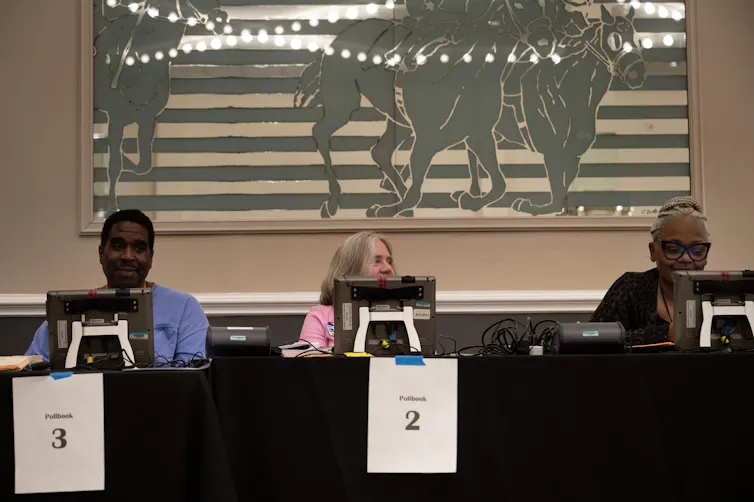
Possibility No. 4: Someone claims you shouldn’t be allowed to vote.
If your voting eligibility remains challenged after ensuring you’re at the right polling location, ask to cast a provisional ballot, which is available in every state except Idaho and Minnesota. You can find details about your particular state’s provisional ballot rules here.
Track your provisional ballot here.
If you are not given a provisional ballot, call an election hotline for help. Here are four hotlines, run by members of the nonpartisan Election Protection coalition, that can help you:
English: 866-OUR-VOTE/866-687-8683, the Lawyers’ Committee for Civil Rights Under Law
Spanish: 888-VE-Y-VOTA/888-839-8682, the National Association of Latino Elected and Appointed Officials Education Fund
Asian Languages: 888-API-VOTE/888-274-8683, Asian and Pacific Islander American Vote
Arabic: 844-YALLA-US/844-925-5287, Arab American Institute
If someone tries to scare you into voting or not voting for a candidate, stand your ground and demand a ballot from the poll site, call one of the hotlines above to report the intimidation, and file a claim with the FBI later by phone at 800-CALL-FBI – 800-225-5324 – or online at tips.fbi.gov.
If you are still blocked from voting, consider legal action – but get advice on your exact situation from one of the hotlines, which have free lawyers on hand. It’s a good idea to write down the names of people who prevented you from voting and to ask people who witnessed the incident for their contact information.
This is an updated version of a story that was originally published on Oct. 28, 2024.

Karen Figueroa-Clewett does not work for, consult, own shares in or receive funding from any company or organization that would benefit from this article, and has disclosed no relevant affiliations beyond their academic appointment.
Politics + Society – The Conversation
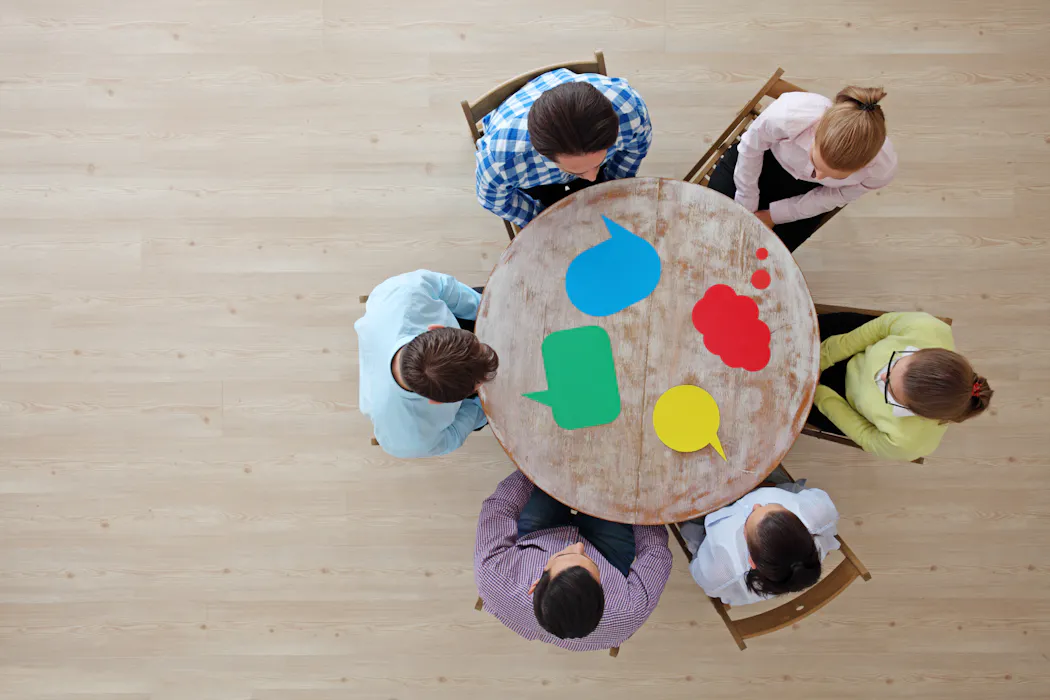
On a Thursday evening in Fort Collins, Colorado, community members gathered around tables to discuss whether the city should allow marijuana dispensaries within city limits.
Rather than take turns for two minutes at a microphone, the participants considered various viewpoints, engaged with quality information and focused on exploring solutions that worked to mitigate the concerns of the critics but still supported the goals of the advocates.
Gatherings like this one have happened more than 500 times in and around the northern Colorado town over the past 20 years. Each was facilitated by college students. While outrage and polarization dominate many political discussions, these events provide compelling evidence that when offered a more nuanced way of engaging, the public recognizes the value and calls for more.
I’m a communication studies professor with a background in argumentation and debate. I founded the Colorado State University Center for Public Deliberation in 2006 based on the theory that democracy requires high-quality communication and engagement to thrive. Existing political, journalistic and social media systems rarely provide such opportunities, but a growing number of organizations like the center are learning more about how to provide them.
Initially, my research centered on national politics. As I learned how issues like poverty, race and the environment were discussed, I became frustrated.
I came to understand that social issues are best understood as “wicked problems” that involve competing underlying values that are inherently in tension with each other. These tensions stand in the way of “solving” the problem long term. In a diverse society where people reasonably prioritize values differently, it is clear that addressing wicked problems requires a more collaborative style of communication.

Research in social psychology and brain science, however, shows humans are simply not wired for these conversations.
Scholarship reveals that humans are motivated reasoners susceptible to numerous unconscious biases that undermine their ability to engage complex issues. Humans are prone to confirmation bias and my-side bias, so we tend to cherry-pick the facts that support our preconceived ideas and reject those that challenge them. We often suffer from an inflated sense of certainty.
Humans are also narrative creatures who prefer simple stories with clear heroes, victims and villains. We have a natural attraction to divisive, identity-based appeals that too often see the world through us-them frames that lead to divisiveness and contempt.
In other words, when given a choice, humans strongly prefer to assume that problems are caused by wicked people, rather that engage the inherent wickedness of problems.
By the end of graduate school, I understood that a highly partisan two-party system makes a problematic situation worse by rewarding the exploitation of these human tendencies. As a result, adversarial politics lead to an exaggerated sense of polarization that breeds divisiveness and misunderstanding. They can also fuel information chaos, an overwhelming swirl of misinformation and disinformation that the researchers with RAND aptly named Truth Decay. Information chaos is also directly related to the erosion of trust in journalism and academia, two institutions that traditionally helped elevate quality information.
This adversarial environment is also a ripe breeding ground for bad faith actors who undermine our civic culture. There is a growing recognition among civic engagement scholars and practitioners that conflict profiteers, merchants of doubt and polarizers actively work to take advantage of human biases for their own benefit.
Above all, I recognized that how people engage each other matters. I decided to explore alternative models of engagement better suited to how our brains worked as well as the problems our communities were facing.
The practice of deliberation is a form of structured interactive communication designed to help people engage with complex issues and come to more reasoned judgments. I began experimenting with this new tool in my classroom starting in around 2000. At first I adopted material from the National Issues Forums Institute, a nonpartisan organization that has been developing deliberative discussion guides for educational purposes since 1981.
I was hired at Colorado State University in 2003 to take over the argumentation and debate class, and I shifted the class’s focus from debate to deliberation.
The course challenged students to frame an issue from a deliberative perspective by asking, “What should we do about X?” with X being a shared wicked problem, such as the increasing number of mental health issues on campus.
The assignment shifted students from being advocates of a particular viewpoint to serving as impartial analysts. Many assignments in K-12 and college education ask students to start with a conclusion and then do research to support it, encouraging motivated reasoning. This assignment was designed to force their brains to see different sides of an issue by adopting what author Julia Galef describes as a “scout mindset.”
Students developed a well-researched discussion guide that outlined at least three distinct approaches to address their problem. These guides served as useful tools for others to overcome my-side bias and exaggerated polarization and to be more likely to, as psychologist Adam Grant has encouraged, think again.
In 2006, the Center for Public Deliberation launched.
To support it, I designed a course that trains students to facilitate small-group discussions. Our first major project involved running six nights of forums for the local school district that engaged over 600 participants in a discussion about reorganizing schools. My students and I worked with them to and successfully debuted a deliberative form of engagement.
Soon we were designing and running events for the city, county, university and community organizations on issues such as housing affordability and decarbonization. College students facilitated every event.
Our work shows that the events our student facilitators supported had a positive impact on the quality of local engagement. Well-designed and well-facilitated processes bring out the best of human nature, particularly our creativity, cooperative social instincts and sense of purpose. They can rebuild trust and provide hope for democracy.
Since 2006, our staff has grown. The center has continued to refine our methods, drawing from the interdisciplinary academic field of deliberative democracy and using resources from practitioner organizations focused on quality engagement and collaboration, such as the National Coalition for Dialogue and Deliberation, the Interactivity Foundation and the International Association for Public Participation.
Similar centers for civic life have developed on other campuses. The Center for Public Deliberation is currently a part of a Department of Education grant to further expand the network to 40 campuses across the country.
Beyond campus, organizations such as Braver Angels, Better Together America and the Trust for Civic Life are dedicated to building local civic hubs that use these tools. They also train facilitators and serve as critical bridging institutions between diverse groups.
The challenges our communities face are significant. But every day more people are realizing that how we engage each other matters and are making space for the conversations that must be sparked for democracy to thrive.
Read more of our stories about Colorado.

Martin Carcasson works for the Colorado State University Center for Public Deliberation, serves as the co-chair of the Braver Angels Civic Scholars Council, and partners with organizations such at National Issues Forum, the Interactivty Foundation, and the National Coalition for Dialogue and Deliberation.
Politics + Society – The Conversation

The rise of AI in open source software has expanded contributor diversity, necessitating improved communication and documentation to guide participants effectively while ensuring sustainable collaboration and high-quality resources.

Following an appearance on The Pat McAfee Show on Aug. 3, 2026, Aaron Rodgers, quarterback for the Pittsburgh Steelers, received attention for calling Dr. Anthony Fauci an “absolute coward” and “criminal.” Rodgers’ comments were in response to Fauci invoking his Fifth Amendment rights at a congressional hearing on pandemic-era policies and the origins of COVID-19.
Fauci exercised his Fifth Amendment right against self-incrimination more than 100 times, rather than answer questions about his role in the government’s pandemic response. The invocation came amid years of congressional investigations and hearings scrutinizing his handling of the pandemic.
Fauci’s testimony likely didn’t do much to build public trust – invoking the Fifth Amendment dozens of times may have read as evasive even when it’s legally sound, and the format didn’t help either. Congressional hearings and press briefings aren’t, by design, places where people show much of themselves. Rodgers, on the other hand, has spent years doing the opposite – speaking candidly and often, in settings built for exactly that kind of rapport-building.
This isn’t unique to Rodgers. Many public figures – athletes, influencers, podcast hosts – have more regular opportunities to build rapport with audiences than experts do, at a time when Americans express decreased trust in experts overall.
There’s a reason for that decreased trust. Trust research can both help make sense of why someone might pay attention to a football player’s opinion of the former head of The National Institutes of Health. But that research also highlights the limits of opinion surveys that simply ask people how much they trust various groups in society.
These “how much do you trust” questions probe Americans’ overall views of specific groups, like scientists. The issue is that these questions sidestep deeper discussions about what makes people willing to put their trust in others.
Many researchers, including me, study the intersection of trust and how scientists engage the public. One thing essential to understanding trust is to separate behaviors from beliefs.
Trust researchers often treat trust as a type of behavior rather than an overall evaluation about a group. When it comes to healthcare, this might mean looking at how willing people are to follow their doctor’s medical advice. It matters less whether people say they trust doctors on a survey and more how they behave in their daily lives.
Trust behaviors involve making yourself vulnerable to someone else, and such behaviors are everywhere in our lives, once you know to look for them.
People demonstrate trust in automakers, mechanics, government employees who regulate and police roadways, and even other drivers by choosing to drive. People also demonstrate trust in economists, ecologists and epidemiologists, when they consider their advice while making personal or civic decisions.
Defining trust as a type of behavior helps clarify the key question: What beliefs make people more likely to trust?
Understanding what researchers often call trustworthiness beliefs – sometimes called perceptions – can help experts understand where they are falling short, whether in their behaviors or in how they communicate.
Scholars have long known that people don’t just trust scientists because they believe they hold expertise. What people believe about others’ character also matters.

While some research focuses on beliefs about expertise and character, other trust frameworks break character into smaller parts.
Benevolence beliefs can be understood as feeling that someone has goodwill toward you and cares about your well-being. Integrity beliefs focus on expectations about honesty and morality.
For example, a scientist might show a real desire to help, but fail to show how they protect their work’s integrity – like by being transparent about a study’s limitations or disclosing potential conflicts of interest. Likewise, an expert might demonstrate integrity without communicating care for the people that their decisions might affect.
Some researchers consider other character attributes too. Two common ones include beliefs about whether someone will listen and share information and whether someone shares your values.
These distinctions matter for experts who want to earn trust because the actions needed to demonstrate one aspect of trustworthiness may not demonstrate other aspects.
For example, experts might put a lot of effort into listening to community needs to demonstrate integrity and openness, but miss opportunities to communicate the underlying benevolent motivations driving their work. A public health department might hold listening sessions before rolling out a new program, but if it doesn’t also explain why it’s investing in that program – what it’s trying to protect people from, and who benefits – residents may come away seeing a checkbox exercise rather than genuine care.
Another challenge: Trustworthiness beliefs depend heavily on context. This is easy to see with expertise beliefs. The expertise you look for in a mechanic differs from what you look for in a doctor.
Trustworthiness beliefs also aren’t the only thing that shapes whether someone follows expert advice. Behavior change research points to other factors – like whether people believe an action actually benefits them, whether it’s socially accepted among their friends and family, and whether they feel capable of doing it.
In other words, someone might trust Fauci and still not get vaccinated, if they don’t believe the shot benefits them or don’t think they can manage the side effects.
Experts cannot assume that others see them as trustworthy or that people will pay attention to them while ignoring sources who have demonstrated other aspects of trustworthiness.
Experts also cannot assume people will pay close attention to every choice they’re asked to make or the trustworthiness of every information source.

People may also often rely on the most available information or follow potentially misleading cues like how compelling someone sounds, their appearance or existing beliefs.
Camera-ready influencers who interact regularly with audiences and health gurus who spend substantial time with their clients have many opportunities to shape beliefs about their ability, benevolence and integrity that busy experts cannot easily match.
These examples point to the reality that bona fide experts need to take advantage of every opportunity to demonstrate trustworthiness in engaging ways. This way, trustworthiness beliefs already exist when people make choices and when encountering potential causes for concern like Fauci’s testimony.
I often advise scientists to be more proactive in demonstrating their motivations and how they protect their work’s integrity while avoiding choices that may communicate a lack of concern or shared values.
Read more of our stories about Pittsburgh and Pennsylvania.

John C. Besley receives funding relevant to trust from the National Science Foundation, the USDA NIFA, the National Institutes of Health, and The Kavli Foundation. He has previously received funding from other science-focused foundations and government research programs. Any opinions, findings, conclusions, or recommendations expressed in this material are those of the authors and do not necessarily reflect the views of funders.
Politics + Society – The Conversation