







Categories
Sports Fox

UEFA Winners And Losers: England, Germany Shine But The Netherlands Lay An Egg

UEFA Nations League will not bring as much significance as the World Cup or the European Championship, but that was never the point. The competition was created in 2018 in order to replace a low-stake environment of international friendlies with a promotion/relegation hierarchical group stage preceding a knockout competition. And thanks to its foundation, we now have a legitimate competition during an international break and from what we saw in this window — in large part because of scenes in Madrid and Copenhagen — we also have legitimate, passionate drama. That all sets up a pretty packed bracket for the quarterfinals next March. Now that the group stage of the UEFA Nations League has come to an end – and as we prepare for Friday’s quarterfinal draw – let me just state that this tournament has proven to be a success. Let’s look back and reflect on some of the European action from this international window and assess the winners and losers from the group stage of the UEFA Nations League. Winners This Norwegian spirit is truly something else and on Tuesday evening in Copenhagen, just like this past summer’s World Cup, we saw it once again. In the last window, Ståle Solbakken’s side had lost three straight matches, which forced a desperate attempt to qualify for the final eight. It needed a victory over its Scandinavian cousin and after going down 2-0, it earned a tremendous 3-2 victory to secure second place in its group. And once again, it was that man: Erling Braut Haaland. The Man City striker scored a brace, including a 96th minute penalty winner that sent his country into delirium. Haaland now has an astonishing record for the national team — 68 goals in 61 matches — and that’s just simply extraterrestrial numbers. He earned a yellow at the end of the match after taking his shirt, but Haaland won’t care one bit as once again, the rhythm drum came out with captain Martin Ødegaard (who was fantastic on the night) leading the way into the global phenomenon that is the Viking Row. Only this time, it was in enemy territory as the annoying cousin that is Denmark was defeated. There is no way that I can exaggerate this sentiment. England’s 3-2 victory over Spain in Madrid at Metropolitano stadium was its greatest performance under Thomas Tuchel and I have to tell you something, due to the nature of the situation and the strength and momentum of the opponent leading up the fixture, I can’t remember a better one in the last 20 years. It was a collective, aggressive, resilient win that also highlighted the depth of the squad against the World Cup champion—who saw its 43-match unbeaten run come to an end. There were heroes everywhere. From Newcastle United’s Lewis Hall to stopper James Trafford, who moved to Leeds United this past summer from Manchester City for $60.5 million, making it a club record and one for a British goalkeeper. The move was an excellent decision as Trafford took the starting role over Jordan Pickford and fully delivered in a majestic performance. England now enters the quarterfinal stage as group winners and feeling very confident ahead of the knockout stage in March, who will also host the second-leg. This was an international window where we finally saw Germany flex its quintessential Jürgen Klopp identity as the 3-1 victory over Serbia was followed by an emphatic 5-0 demolition against the Netherlands. It was Germany’s biggest win over its historical rival since 1959. But that wasn’t the headline. Because to me, the biggest takeaway was that Klopp’s intoxicating philosophy finally came to fruition, and it was exemplified through players such as midfielder Florian Wirtz, who is looking like worth every penny of his record-breaking $157 million fee to Liverpool from Bayer Leverkusen. Wirtz, who scored three goals during this window including a brace over the Netherlands, is a perfect Klopp prototype, able to press, disrupt defensive lines, move with fluidity and lead the line in a high pressing system. He’s not the only one. Midfielder Brajan Gruda (the 22-year-old on loan at RB Leipzig from Brighton) has also proven to be a revelation. Gruda was magnificent in this window, especially against the Netherlands, giving out an overwhelming performance that just couldn’t be handled by Xavi’s men. Overall in the window, he delivered two goals and three assists and, again, he is just another reason why Klopp is perfect for this evolving German side, who end the window as top of its group. The new era of German football is here – and it’s a Klopp revolution. Losers It seems almost preposterous to think that a team who wins 7-0 in an international window (against Greece from last Friday) can be filed under this section, but the following 5-0 loss to Germany was extremely worrying from a Dutch perspective because this 12-goal shift seems like manager Xavi Hernandez does not yet have a grip on this team’s mentality. There were times during that demolition where his players, including experienced talented stars such as Gody Gakpo and Tijjani Reijnders, didn’t even bother to sprint back or track back a man in the latter stages of the match. It was extremely amateurish and a trait the Germans fully exploited. When the problem is tactical, then it’s more tangible and the manager can perhaps see how to solve it. But the loss to Germany was also psychological, so it’s imperative Xavi fixes this in 2027. The good news for the former Barcelona manager is that his team did reach the quarterfinal stage after coming second in the group. And he has until March to rectify this issue. How it pans out remains a question, but I do know this. The Netherlands can never approach a fixture like that ever again. It has not been a fruitful time for Scotland since the departure of Steve Clarke in August as Belgian manager Sebastien Pocognoli has really not had a good time with a squad that became a World Cup darling this summer due to its traveling Tartan Army fanbase. After their latest loss to Switzerland, Scotland only won against North Macedonia twice in six matches. It consequently missed out on promotion from a playoff spot in 2027 and a better seeding for the 2028 European Championship qualifying draw in December. This is a tough moment for Scotland, who qualified for the World Cup for the first time since 1998. It’s time for reflection as it looks to the future — one that doesn’t look promising right now. Real Madrid youngster Arda Güler is sadly not enough and this is the current problem with Türkiye, whose only achievement at the World Cup was coming out victorious in a group stage match over co-hosts the United States. It’s been a chaotic situation, as last month, Sergen Yalcin replaced the Italian Vincenzo Montella in charge. But the 53-year-old former Türkiye midfielder could not stop his side from relegation from League A to League B after losing six straight matches and conceding 15 goals, with only four scored. Losing to the likes of Belgium and France during this window isn’t anything to be ashamed about, but a team that features talent such as Güler shouldn’t have laid a goose egg in the win column. After Greece defeated Serbia 1-0 on Monday, Türkiye was amongst the two lowest-ranked fourth-placed teams and suffered the drop. This was a team that got some love as a World Cup darkhorse this summer – now they limp into the new year with big questions.​Latest Sports News from FOX Sports
Categories
Entertainment

Culver’s Fish Sandwiches Get A Flavor Boost From This British-Style Addition

Culver’s has had a fried fish sandwich since way back, and you can even ask for a packet of this popular British fish-and-chips condiment to go with it.

​Mashed – Fast Food, Celebrity Chefs, Grocery, Reviews

Categories
Sports Fox

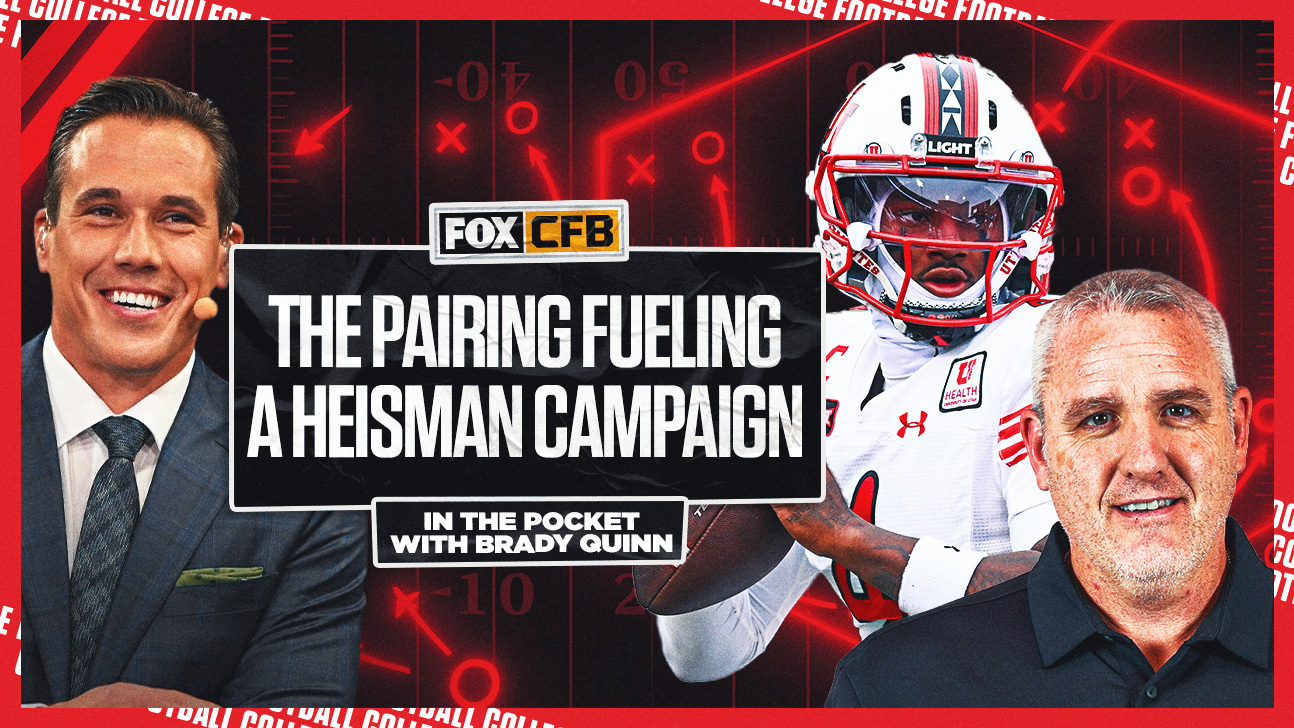
The Perfect Pairing Fueling A Heisman Trophy Campaign

This past weekend marked Big Noon Kickoff’s first trip to Tucson, Arizona, and it was truly an unforgettable experience. The “Zona Zoo” — Arizona’s student section — is simply put … wild. They created an incredible atmosphere for our pregame show and a raucous environment for the No. 2-ranked Utah Utes to try and remain unbeaten. It was a remarkable game from start to finish, but in the final two minutes, Utah quarterback Devon Dampier proved to be too much, delivering the final blow and putting an end to the Wildcats’ Big 12 title hopes. This was Dampier’s night to shine, and he did not disappoint. Devon Dampier’s Heisman Case Take a look at Utah’s recent schedule, and you’ll see that three of the Utes’ last four games have been against ranked opponents — and Dampier has put together Heisman-worthy numbers in every one of them. Over the last four games — wins over No. 14 Houston, Cincinnati, No. 9 BYU and No. 23 Arizona — Dampier has totaled 1,229 yards and 13 touchdowns. But Dampier’s Heisman case goes much deeper than just the numbers. The combination of Utah offensive coordinator Kevin McGiven and Dampier’s dual-threat ability has created a lethal combination. McGiven utilizes every part of Dampier’s skill set, including his ability to run. He will often call QB-designed runs and zone reads, but what makes this combination so good are plays like this: Watch as McGiven puts backup quarterback Byrd Ficklin in, who’s also a capable runner himself, and hides Dampier in the backfield in the Pistol formation. These wrinkles cause confusion and force defenses to adapt within seconds before the ball is snapped. The bottom line is this: McGiven has one of the most creative offenses in the country, and it’s because of who he has at quarterback. Need more proof? Check out this clip of Dampier catching a pass against BYU. Facing a fourth down, in one of the biggest games of the season, McGiven dials up a trick play for Dampier, who’s trying to hide near the sideline and then releases downfield for a pass. Unfortunately, there’s a “hideout” rule, which prevents players from faking as if they are exiting the sideline only to suddenly break downfield for a pass. The officials forced Dampier to run to the inside of the numbers and then return to his original spot on the sideline. Despite the element of surprise being gone, Dampier released downfield in tight one-on-one coverage and still came up with the contested catch for the conversion. He can run, he can catch, and then there’s dealing with Dampier as a passer. Whether he’s in or out of the pocket, he’s always a threat to create a big play. Trailing Arizona 39-33 with two minutes remaining, Dampier and the Utes took the field, needing a touchdown to keep their perfect season alive. It only took two throws and just like that, Utah found the end zone and took the lead. Watch as Dampier sits in the pocket, anticipates and throws an absolute strike on an inside post for the 70-yard go-ahead score. When I saw this play, I couldn’t help but to ask myself: who else is doing this? Was this Dampier’s Heisman moment? In a year when pundits are arguing over the value of “Heisman moments,” Dampier has plenty of them. So, whatever Heisman argument you want to make for a player this season, Dampier’s case stands up against most. He has led the No. 2-ranked team in the nation to a perfect 10-0 record. He is tied with Miami QB Darian Mensah in total touchdowns with 31. He ranks in the top 15 in the nation in combined passing and rushing yards. Dampier is currently listed at +550 to win the Heisman, the third-best odds behind Ohio State’s Jeremiah Smith (-140) and Mensah (+370). Oh, by the way, how many players have caught a pass, thrown a touchdown and rushed for a score this season? The answer is ten, and Dampier is one of them. This begs the question: Where would Utah be without Dampier? The answer: Surely not undefeated and headed toward the program’s first-ever College Football Playoff appearance. One Name To Know … Heading into Week 12, Texas Tech currently sits alone in second place in the Big 12 standings. The Red Raiders control their own destiny to a Big 12 championship and a CFP berth. It’s funny how much can change in seven months. Back in April, Texas Tech transfer QB Brendan Sorsby was embroiled in a gambling scandal, effectively ending his eligibility after a long-winded legal battle. The drama concluded in June, leaving the Red Raiders with limited options at quarterback. Quarterback Will Hammond started two games under center in 2025 for the injured Behren Morton, but one of those starts ended in a loss and there was a noticeable decline in the passing game. Texas Tech head coach Joey McGuire wanted to find another QB to bring competition and boost this roster’s chances of getting back to the playoff. Then, just like that, journeyman QB Tommy Castellanos fell right into their lap. Castellanos began his college career at UCF, playing sparingly in his freshman season, but demonstrating enough talent to warrant an opportunity at Boston College. He developed into a true dual-threat signal-caller for the Eagles, but following the 2023 season, head coach Jeff Hafley departed for the Green Bay Packers to take over their defense, leaving Castellanos to start over again. Castellanos’ time with Boston College head coach Bill O’Brien was filled with highs and lows. The Eagles kicked off the 2024 season with a win over No. 10 Florida State. They even cracked the AP Top 25. But as the season continued, the relationship between Castellanos and O’Brien soured, leading to a benching in November before the team’s game at SMU. Subsequently, Castellanos announced his intent to enter the transfer portal. After getting upset by Boston College earlier that year, then-Florida State head coach Mike Norvell believed Castellanos was the right fit for his program, reminding fans of former quarterback Jordan Travis. He had an up-and-down season, which began with an upset win over Alabama. His eligibility had expired until U.S. District Court Judge Charlotte Sweeney granted a class-wide preliminary injunction in July. This led to a long, winding legal process that saw Castellanos filing a lawsuit in the state of Kentucky that granted him a TRO (temporary restraining order) against the NCAA, deeming him eligible for another year. It was perfect timing for a Texas Tech program that was desperate to find an upgrade at quarterback on a roster that was favored to win the Big 12. Castellanos played sparingly to start this season, mostly in packages that highlighted his dynamic running ability. However, he was deemed ineligible after the Kentucky Court of Appeals ruled in favor of the NCAA, which prompted Castellanos to sit out the Red Raiders’ Week 5 game against Colorado. Almost two weeks later, another TRO was granted to Castellanos, once again making him eligible to play this season. McGuire made the decision to start Castellanos in Week 9 against Arizona following Hammond’s poor performance the previous week against Cincinnati — Tech’s only loss of the season. Since that decision was made, Castellanos has transformed Texas Tech’s offense, accounting for 12 touchdowns and an average of 342 yards per game over the last three contests. For perspective, those numbers would rank second among FBS quarterbacks extrapolated over an entire year. The most noticeable difference with Castellanos under center is the team’s rushing attack. The Red Raiders are now running the ball roughly 58% of the time, an average of about seven more rushes per game. This has helped to open up the downfield passing game, as Castellanos is completing 40% of his passes 20-plus yards downfield, with seven touchdowns in that span. The change at quarterback has not only transformed the offense, but it has created optimism that one of the most talented teams in college football can make a run in the CFP. It appears Utah and Texas Tech are on a collision course for the Big 12 championship, and it should be one of the best games of the year. What I’m Watching … LSU suffered its fourth loss of the season this past week, falling 22-21 to Texas and crushing the Tigers’ hopes of making the CFP in the process. There won’t be many who show any sympathy for Lane Kiffin and the Tigers outside of Baton Rouge. Kiffin embraced the “villain” role heading into his first season as LSU’s head coach, attempting to construct a roster with former NFL players. For all the money spent on hiring Kiffin, paying the previous staff’s buyout, and building a new roster, there will be many left asking: Was it worth it? There have been numerous examples of teams looking for the quick fix only to find the results inadequate. The truth is, it was always a pipe dream to think LSU was going to win a national championship in Year 1 under Kiffin. The Tigers will continue to build toward that national title if they receive the same level of commitment as they have in the past. The foundation of Kiffin’s program will be cemented over the next two weeks. There’s no reason the Tigers can’t play the role of spoiler against a Tennessee team with playoff hopes on the line. LSU quarterback Sam Leavitt has an additional year of eligibility remaining, and I think it would be wise to give himself another year of development. There’s no denying his talent and ability, but he still struggles with turnovers, leaving clean pockets and getting through his progressions. Another year with Charlie Weis Jr. will do wonders to improve his draft stock. This road game in Neyland will test the fabric of this team, but I think LSU is up for the challenge. Keep in mind, Kiffin needs to condition his team to persevere through seasons like this, given a four-loss team will likely make the CFP next year. On the other side of the field is a Tennessee team that needs to win out if it wants to assure itself a spot in the playoff. This is a team built on one of the best defenses and rushing attacks in college football, but it mimics this past week’s FAA ground stoppage — nothing productive through the air (123rd in FBS in passing). Tennessee true freshman quarterback Faizon Brandon started the season, but he was benched in early October in favor of George MacIntyre. MacIntyre has provided a slight upgrade at quarterback, but he injured his right knee this past week against Texas A&M. Brandon entered the game and helped lead the Volunteers to a victory, which leaves the starting QB spot in question this week against LSU. Whoever gets the start under center will need to improve mightily if this team wants a shot of getting past this LSU defense and being more than a playoff participant this season.​Latest Sports News from FOX Sports
Categories
Sports Fox

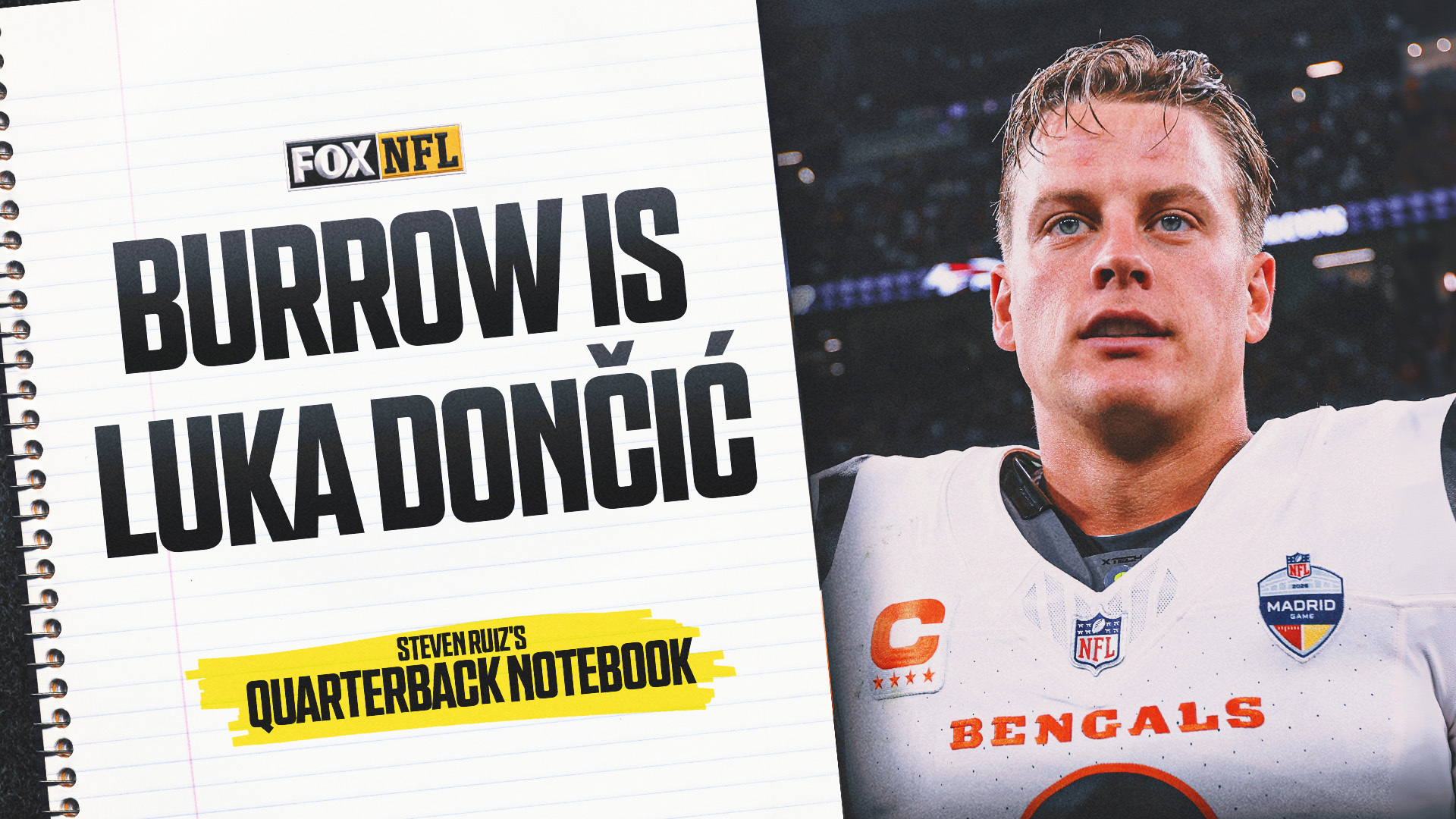
Joe Burrow Plays Like The NBA’s Frontrunner For MVP, But Another QB Is NFL’s MVP

Welcome to the Quarterback Notebook, where I’ll cover the past week in NFL quarterbacking – from the most interesting passers, plays and storylines to some other stuff that caught my eye while watching film this week. This week, we’ll make a cross-sport comparison to Joe Burrow’s amazing season, look at Josh Allen’s MVP case, and judge Fernando Mendoza’s first NFL start. Joe Burrow’s demolition tour of NFL defenses kept rolling on Sunday night, with the Bengals quarterback throwing for 409 yards and four touchdowns. That extended a remarkable five-game stretch that has established Burrow as the MVP favorite. The best argument for Burrow winning MVP isn’t his raw numbers; it’s how he’s accumulated them. Throwing a bajillion times (which might be a slight exaggeration) certainly helps a quarterback rack up passing yards and touchdowns, but few can sustain Burrow’s efficiency at such a high usage rate. And that’s where the Luka Dončić comp comes in. Like Luka, Burrow is putting up a ton of shots and leading his team to wins, but the sustainability of this approach has been questioned. Even if those questions are warranted, they don’t make Burrow’s achievements any less impressive. To steal a phrase that I’m way too old to be using: Burrow is ethically hooping. In a world full of scheme merchants who hide behind the threat of the run from their under-center formations, Burrow is lining up in the gun, spreading his receivers across the field, and dropping straight back. It’s the quarterbacking equivalent of spreading the floor and taking a defender one-on-one. Burrow has been the NFL’s best passer on straight dropbacks from the gun. He’s thrown for 2,353 yards on those plays, per Pro Football Focus. That’s more than 400 yards ahead of Dak Prescott in second. His 75.2% completion rate is nearly 10 percentage points higher than the next guy, Drake Maye. He’s also thrown nine more touchdown passes than his closest competitor, C.J. Stroud. The gap widens when you look only at three-step drops. Shorter drops lead to quick, easy passes. Five- and seven-step drops typically set up shot plays that don’t require much reading of the defense. Those three-step drops from the gun really test a quarterback’s ability to process quickly and deliver an accurate ball on time. Unsurprisingly, Burrow has been nearly unstoppable on those plays. The Steelers had no answer for those plays in Cincinnati’s 38-18 romp on Sunday night. Burrow passed for 272 yards on 24 three-step dropbacks against Pittsburgh. That’s the most in a single game this season, beating his previous high of 217, set in Week 8 against the Titans. Whether Burrow can play such a high-stress style without Ja’Marr Chase, Tee Higgins and a top-five offensive line is up for debate. Chase and Higgins have caught nearly every pass thrown their way this season, but Burrow is delivering catchable passes at an unbelievable rate. And even when excluding clean dropbacks, Burrow has still been the NFL’s most productive quarterback in pure passing situations. We’re just halfway through the season, so we haven’t seen defenses adjust to Cincinnati’s extremely pass-heavy approach. We haven’t seen how it looks when the weather gets nasty. And the Bengals run game hasn’t shown it can offer a viable counterpunch if defenses do sell out to stop the pass. But if Burrow can maintain this pace through the colder months, he’ll run away with his first MVP award. Josh Allen has somehow become one of the most polarizing quarterbacks in the sport. Personally, I don’t understand how anyone can watch him play and come to a conclusion other than: This guy is really freaking good and one of the best football players I’ve ever watched. But I guess what constitutes elite quarterback play is in the eye of the beholder. Allen’s stat line makes it easier to push back against the notion that he’s been one of the best players in 2026 and belongs in the MVP conversation. He’s thrown just 13 touchdowns against seven interceptions and ranks 14th in passing yards. Those are pedestrian numbers, and not the kind that warrant MVP talk. But let’s consider the context of Allen’s stat line, and we’ll use the current MVP frontrunner, Burrow, as the point of comparison. (Disclaimer: What follows is not an argument against Burrow’s MVP candidacy. His impressive counting stats make him a good foil for Allen.) If you just look at the counting stats, Burrow clears Allen. He’s thrown for 572 more yards and has doubled up Allen in passing touchdowns. Really, though, the gap is a product of play-calling. The Bengals pass more often, and when both offenses get closer to the goal line, the play-calling has been dramatically different. The Bills have called just two dropback passes inside the opponent’s 5-yard line. Allen has also attempted two passes on RPOs, giving Buffalo a 16% pass rate in goal-line situations. He has just one touchdown pass, along with a scramble touchdown. Compare that to the Bengals, who are passing on 60.9% of their goal-line plays. Burrow has thrown 11 touchdowns inside the opponent’s 5, which leads the NFL, while Allen ranks dead last among qualified quarterbacks in those short touchdown passes. He’s made up the difference by scoring eight times on tush-push sneaks. You can accuse Allen of “stat padding” with those sneaks, but you can’t deny that they’re awfully effective. He’s scored 10 times on 12 goal-line carries (compared to James Cook scoring three times on seven attempts). The Bills have scored a touchdown on all but one of their 14 goal-line possessions, and they settled for a field goal on the other. Compare that to the Bengals, who’ve also had 14 goal-line possessions and have scored 12 touchdowns with one field goal. The point is, both Allen and Burrow have helped their teams score around the goal line. How they’ve done it ultimately comes down to play-calling. If the Bills called more goal-line passes, Allen would have more touchdown passes. If the Bengals called more goal-line runs, Burrow would have fewer. Who is and isn’t “stat padding” is really just a matter of perspective, so these arguments feel like a big waste of time. Allen’s MVP candidacy isn’t based on what he’s doing around the goal line or in the red zone. It’s what he’s doing in the open field to get his team into scoring range that shows his true value. Burrow’s got him beat in the counting stats thanks to a big edge in passing attempts, but Allen holds a significant advantage in the rate stats, including EPA per dropback, success rate, yards per attempt, explosive play rate, first-down rate and win probability added, per Next Gen Stats: If I were casting an MVP vote today, I’d give it to Burrow. But Allen is still very much in the race. Don’t let a cursory glance at the numbers fool you. He’s the reason Buffalo leads the NFL in scoring and is sitting at 8-1 atop the AFC standings. That sounds like a strong MVP argument to me. Fernando Mendoza survived the Mike Macdonald stress test, and that’s what matters. There were no disastrous decisions, no ugly interceptions, and no moments where Mendoza looked out of his depth. That, alone, should be considered a win for a rookie quarterback making his debut against one of the NFL’s best defenses. Mendoza’s first NFL start was unremarkable, but I saw some very positive signs. First and foremost, Mendoza’s creation under pressure helped a shorthanded Raiders offense that lost Brock Bowers after just 11 snaps. Mendoza has been typecast as more of a system quarterback, but he showed Sunday that he can play when things break down. If he can eventually master Klint Kubiak’s offensive scheme while providing that out-of-structure magic, he’ll exceed even the highest expectations for his career. But Mendoza has a lot to learn before getting to that point. He showed some ability to get through a progression — and may have even come off his first read too quickly at times — but there were also instances of him panicking in the pocket and missing an open receiver on the backside of the play. He turns this one into a first down, but you want to see him hit Jalen Nailor over the middle. On this sack, he has room to step up and hit the in-breaker with anticipation. He throws this underneath route too quickly and misses an open receiver downfield. Kubiak called a lot of “high-low” concepts for his rookie, and Mendoza took the “low” option nearly every time, which you can see on his passing map. As he builds trust in the offense, we’ll see him take more chances on downfield throws and backside routes. The Raiders employ a passing scheme that relies on anticipatory throws, which wasn’t Indiana’s thing during Mendoza’s lone season in Bloomington. That’s going to take time. The good news: I thought Mendoza started to show more confidence as the game went on. By then, Seattle’s pass rush had worn down the Raiders’ offensive line and was pressuring the 23-year-old, who sprayed a few intermediate passes down the stretch. I’m sure there were many throws and decisions Mendoza would want back, but we’ve seen more experienced quarterbacks fare a lot worse against Macdonald’s defense. I don’t want to overreact to a game against the Titans, but I don’t think Robert Saleh’s defense played poorly. It just ran into the buzzsaw that is the Jaguars offense. Jacksonville’s passing game had mostly been operating in the middle of the field, between the numbers, coming into Week 10. Tennessee did a good job of clogging up those throwing windows and forcing Trevor Lawrence to throw outside. As you can see on the map, it didn’t make much of a difference. Lawrence had no issues completing those perimeter passes, going 13-of-17 for 181 yards and two touchdowns on throws outside the numbers, per Next Gen Stats. The best offenses can play left-handed if needed. Sunday’s game showed the Jags can do it, even if it was against lesser competition. It had been a while since we’d seen Patrick Mahomes air one out like that, and he made the throw with two pass rushers bearing down on him. Patriots backup Tommy DeVito turned down so many open throws in the second half against the Lions, but he decided to give Mack Hollins, who was surrounded by three Lions defenders, a shot on this play.​Latest Sports News from FOX Sports

Categories
Entertainment

The Popular Deli Brand That’s Owned By A Company In China

With this deli brand’s all-American name and pedigree, you might be surprised to learn that it’s actually owned by a company in China. Here’s how it came to be!

​Mashed – Fast Food, Celebrity Chefs, Grocery, Reviews

Categories
Entertainment

3 Red Wines To Try If You Like Pinot Noir

We consulted with creator and wine expert Charles Smith for his take on the three best red wines to try if you enjoy a nice glass of pinot noir.

​Mashed – Fast Food, Celebrity Chefs, Grocery, Reviews

Categories
Food

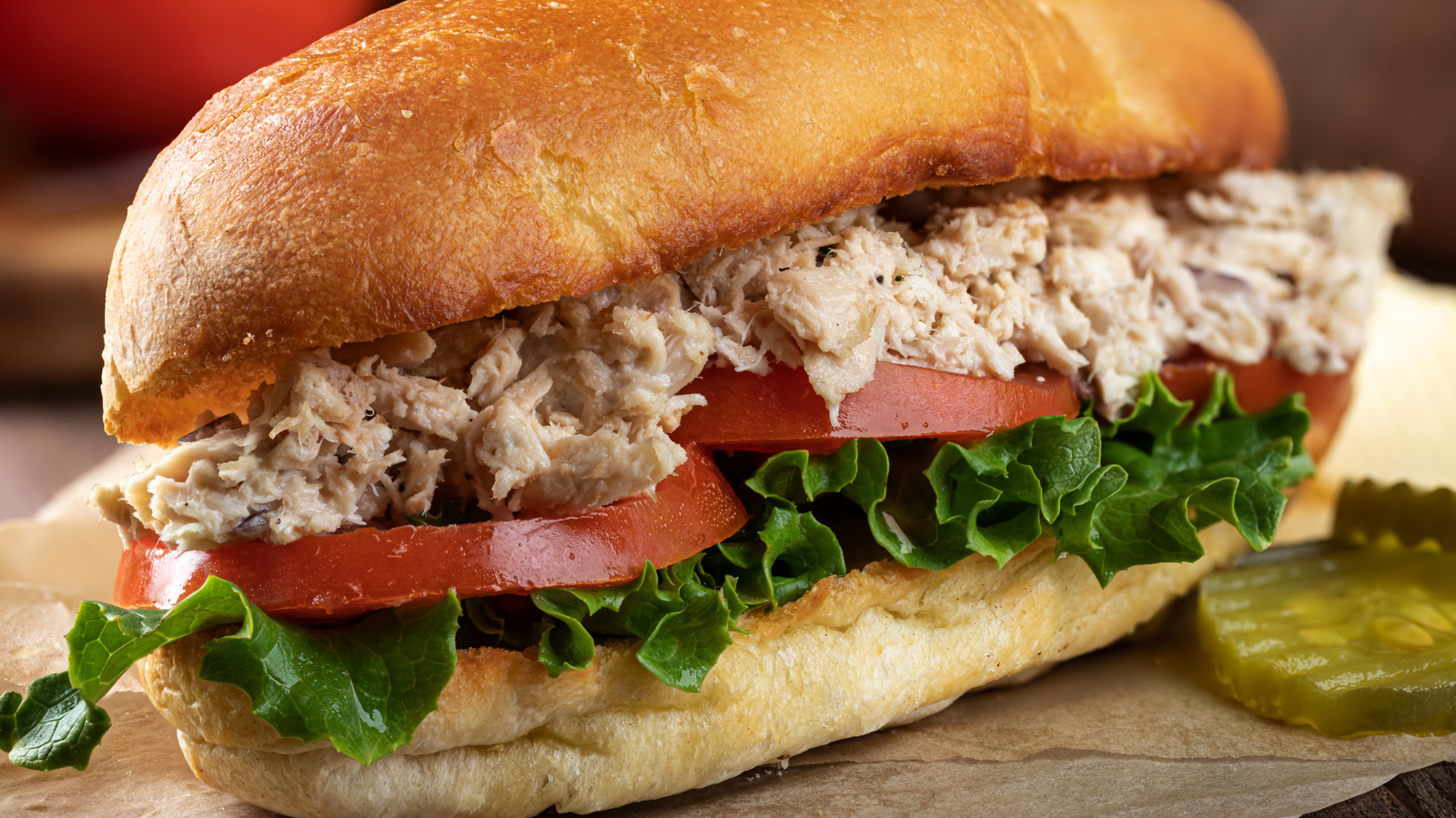
Forget Mayo: Add This Creamy Ingredient To Tuna Salad (Hint: It’s Egg Free)

If you want to switch up your next batch of tuna salad, ditch the mayo and opt for another creamy, egg-free ingredient that’s just as rich in flavor.

​Food Republic – Restaurants, Reviews, Recipes, Cooking Tips

Categories
Entertainment

One Of Chick-Fil-A’s Most Underrated Items Is Perfect For Cold Days

As temperatures drop, there’s nothing like something warm and comforting to get you through the day. This underrated Chick-fil-A item fits the bill.

​Mashed – Fast Food, Celebrity Chefs, Grocery, Reviews

Categories
Alaska News

Commentary: Alaska Board of Game should not close hunting, trapping for a road that doesn’t exist yet

The John River is seen from the sky , along the proposed Ambler Road route in the Southern Brooks Range. (Photo by Mary Glaves)

The state is considering restricting public hunting and trapping opportunities in Northwest and Interior Alaska to accommodate planning for a proposed private road.

While I call Juneau home, I’ve spent a bit of time in the Brooks Range and have long-time friends who live in and have deep ties to the region. I engage with the Alaska Board of Game both personally and through my professional work. I’ve made a point of believing in their public process, even when I disagree with an outcome. That is why the way that this proposal is moving forward concerns me.

On Nov. 20, the Board of Game will meet by web conference to consider closing roughly 420 square miles of hunting and trapping country in Units 23 and 24. The proposed closure would extend one mile on each side of the proposed Ambler Road, a 211-mile private industrial road planned to connect the Dalton Highway to the mining district. Amendments to 5 AAC 92.510 and 92.550 would prohibit hunting and trapping there from July 1, 2029, through Jan. 1, 2036, unless extended. People could still travel through the area, but they could not hunt or trap.

The road hasn’t been built. Geotechnical and permafrost studies took place along the corridor this past season, and exploration continues in the mining district. But survey crews and drill rigs are not a road. There is no roadbed, final alignment or drivable surface. Fish and Game’s own materials acknowledge: “The Ambler Road has not been constructed, and submission of this proposal will assist in the planning process for future construction and use of the road.”

That distinction matters. I understand that a road could raise legitimate questions about safety and access. Those questions may need to be addressed if it is built. But why impose a broad closure before there is a road—or a demonstrated wildlife-management need?

I continue to participate in the Board of Game process because it gives Alaskans a public forum to weigh competing interests and bring local knowledge and experience to the table. The process is not perfect, and people will not always agree with the board’s decisions. But it should be open, consistent and worthy of the public’s confidence.

The board first considered this proposal in July at a special Fairbanks meeting. The Fairbanks Advisory Committee voted 13-0 against it, and many people testified in opposition. The board tabled it for its January meeting in Kotzebue, in the affected region, offering local residents an opportunity to weigh in. Instead, the proposal is back on Nov. 20, at a web conference with no oral testimony. Written comments were due by 8 a.m. on Monday, Nov. 16—just four days before the meeting.

For rural Alaskans who live in or near the corridor, that is a significant limitation. Oral testimony is an important way to participate, particularly in communities where internet access, time and travel can be barriers. A decision affecting this much country deserves a genuine effort to hear from the people most directly connected to it.

The proposal originated from a confidential memorandum among state agencies, Native corporations, a mining company and the federal government. The report describes a “Hunting Buffer” section in which the parties agreed that the Fish and Game commissioner would propose this closure. The Anchorage Press reported on this earlier this year, in February. This raises a fair question: how does that agreement relate to the department’s responsibility to manage fish and wildlife in the public interest? Decisions about hunting and trapping opportunity should be made through the state’s public process, with the rationale and supporting information available for scrutiny.

The proposed road would be private, gated, staffed around the clock and off-limits to the public. Yet the proposal would restrict hunting and trapping on surrounding public land before the road is built, regardless of whether construction moves forward.

A closure of this scale should be grounded in a clear wildlife-management rationale or demonstrated need. As presented, the proposal identifies no biological necessity, such as a declining population or unsustainable harvest, and documents no current safety problem created by an existing road. Instead, it sets a future date: July 1, 2029. If a date tied to a road that has not been built can close roughly 420 square miles to hunting and trapping, what precedent does that set for the next road, pipeline or mine? It also raises another question: Does preemptively closing approximately 420 square miles of public land to hunting and trapping meaningfully advance the Department of Fish & Game’s first guiding principle: “provide for the greatest long-term opportunities for people to use and enjoy Alaska’s fish, wildlife, and habitat resources”?

The Board of Game should not ignore legitimate concerns that may arise if the Ambler Road is built. I am asking that the state honor its own process, its purpose, and the public’s role in it. I want to continue believing that decisions about hunting and trapping are considered openly, on their merits, and with respect for the people who live, work and recreate in the affected areas.

The board can reject the proposal or take no action. At a minimum, it should allow the public process to work as intended and ensure any restrictions are supported by a clear need and considered through a fair, accessible process. I still believe in that process. I want the state and the board to give Alaskans good reason to keep believing in it.

SUBSCRIBE: GET THE MORNING HEADLINES DELIVERED TO YOUR INBOX.

Categories
Alaska News Featured Juneau News juneau Juneau Local Juneau Local Ketchikan Local News Feeds Sitka Local

Alaska presumptive Gov.-elect Kreiss-Tomkins announces transition team leaders

By: Corinne Smith, Alaska Beacon

Democratic candidate for governor Jonathan Kreiss-Tomkins addresses supporters at an election night party in Anchorage on Nov. 2, 2026. (Photo by Corinne Smith/Alaska Beacon)

The projected winner of the Alaska governor’s race, Jonathan Kreiss-Tomkins, announced three leaders of his multipartisan transition team on Tuesday. Each member comes from a different part of the state.

The team of co-chairs will be Fairbanks Republican and former state Sen. Click Bishop, Bethel-born Democrat and Alaska Native leader Ana Hoffman and Anchorage independent and community leader Carol Gore. In the coming weeks, the team will lead the formation of the new administration, including hiring staff and setting policy priorities.

Kreiss-Tomkins, 37, sealed his lead last week surpassing the 50% first-choice vote threshold and the other three Republican candidates in the race, putting him on track to be Alaska’s 13th governor, the youngest in state history, and first Democrat elected since 1998. Gov. Mike Dunleavy is term-limited and was ineligible to run again.

Ballots are still being counted and the Alaska Division of Elections is scheduled to announce preliminary final results on Wednesday. It will certify the results on Nov. 25.

On the campaign trail, Kreiss-Tomkins pledged to organize an administration across partisan lines and the three co-chairs reflect the range of political perspectives, he said. 

“Alaska’s greatest strength is its people, and our administration will reflect that,” Kreiss-Tomkins said in an email statement with the announcement. “I’m grateful to Click, Ana, and Carol for stepping up to help lead this transition. They bring different backgrounds, perspectives, and experiences, but share a commitment to moving Alaska forward. We’re building a team that represents all Alaskans and is ready to get to work on day one.”

Click Bishop, a Republican and former state senator and commissioner of the Alaska Department of Labor and Workforce Development, is one of the co-chairs of the incoming Kreiss-Tomkins administration's transition team. (Courtesy photo)
Click Bishop, a Republican and former state senator and commissioner of the Alaska Department of Labor and Workforce Development, is one of the co-chairs of the incoming Kreiss-Tomkins administration’s transition team. (Courtesy photo)
Ana Hoffman, a Democrat and longtime Alaska Native leader and former co-chair of the Alaska Federation of Natives, is one of the co-chairs of the incoming Kreiss-Tomkins administration's transition team. (Courtesy photo)
Ana Hoffman, a Democrat and longtime Alaska Native leader and former co-chair of the Alaska Federation of Natives, is one of the co-chairs of the incoming Kreiss-Tomkins administration’s transition team. (Courtesy photo)
Carol Gore, an independent and Anchorage-based business and non-profit leader, is one of the co-chairs of the incoming Kreiss-Tomkins administration's transition team. (Courtesy photo)
Carol Gore, an independent and Anchorage-based business and non-profit leader, is one of the co-chairs of the incoming Kreiss-Tomkins administration’s transition team. (Courtesy photo)

Click Bishop formerly served in the Alaska Senate as a Republican representing Fairbanks from 2015 to 2023. Prior to the Legislature, he served as commissioner of the Alaska Department of Labor and Workforce Development from 2007 to 2012, and brings experience in workforce development, infrastructure and state budgeting, according to the announcement. Bishop also ran unsuccessfully for governor this year and was among 17 candidates in the primary election. He did not make the final four, but won 7% of the vote.

Ana Hoffman, a Democrat, formerly served as the co-chair of the Alaska Federation of Natives, the largest statewide Native organization, from 2013 to 2025. She is Yup’ik from Bethel, where she has served as the president and CEO of the Bethel Native Corp. since 2006. She has extensive experience in advocating for Alaska Native communities, rural Alaska and economic development, the announcement said. 

Carol Gore, an independent, is an Anchorage-based business and non-profit leader who previously served as CEO of the Cook Inlet Housing Authority from 2000 to 2023. She is of Aleut descent,a member of the Ninilchik Traditional Council and a shareholder of Cook Inlet Region, Inc. She serves on the board of the Anchorage Economic Development Corp. and various non-profit and business boards. Gore was inducted into the Alaska Business Hall of Fame this year.

Kreiss-Tomkins also launched a new website, rebuildalaska.com, for Alaskans to submit ideas to improve the state — and for prospective applicants to apply for jobs with the new administration. 

“We want to hear from Alaskans in every corner of the state, from every political background, and from every walk of life,” Kreiss-Tomkins said. “Whether you’re interested in public service or simply have a good idea for making Alaska a better place to live, we want you to be part of this process.”

The transition team will announce key appointments, including cabinet members, policy priorities and opportunities for public feedback in the coming weeks, according to the announcement.

Inauguration is scheduled for Dec. 7. Kreiss-Tomkins has not yet announced a location.