A man has died and hundreds of thousands were left without power after Storm Amy brought 90mph winds and heavy rain to parts of the UK and Ireland.The Latest News from the UK and Around the World | Sky News
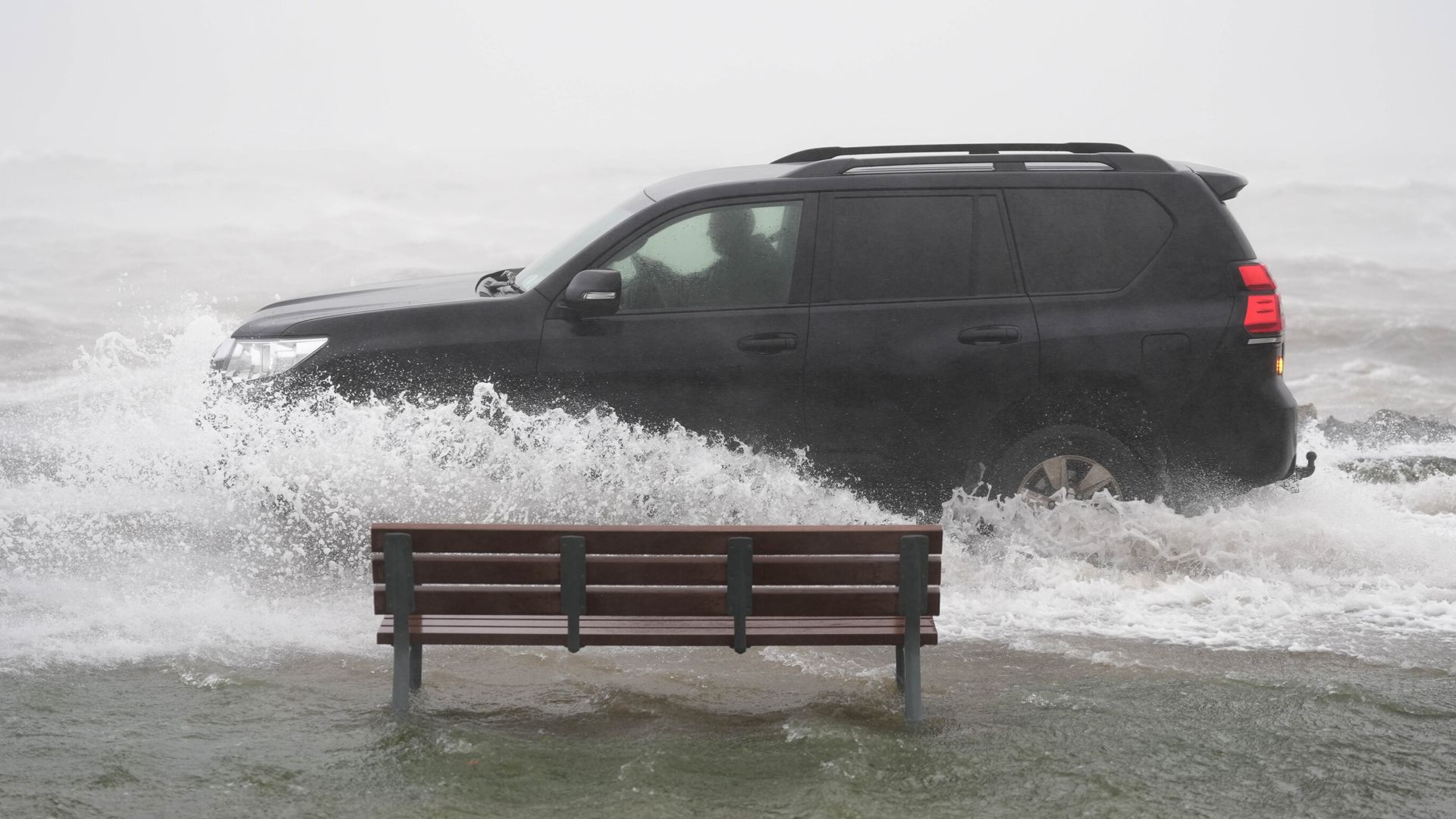








A man has died and hundreds of thousands were left without power after Storm Amy brought 90mph winds and heavy rain to parts of the UK and Ireland.The Latest News from the UK and Around the World | Sky News

Out of the darkness, flashing bars of red and blue, followed by the black, avian-like forms of two Typhoon fighter jets, emerge and glide side-long towards our plane.The Latest News from the UK and Around the World | Sky News
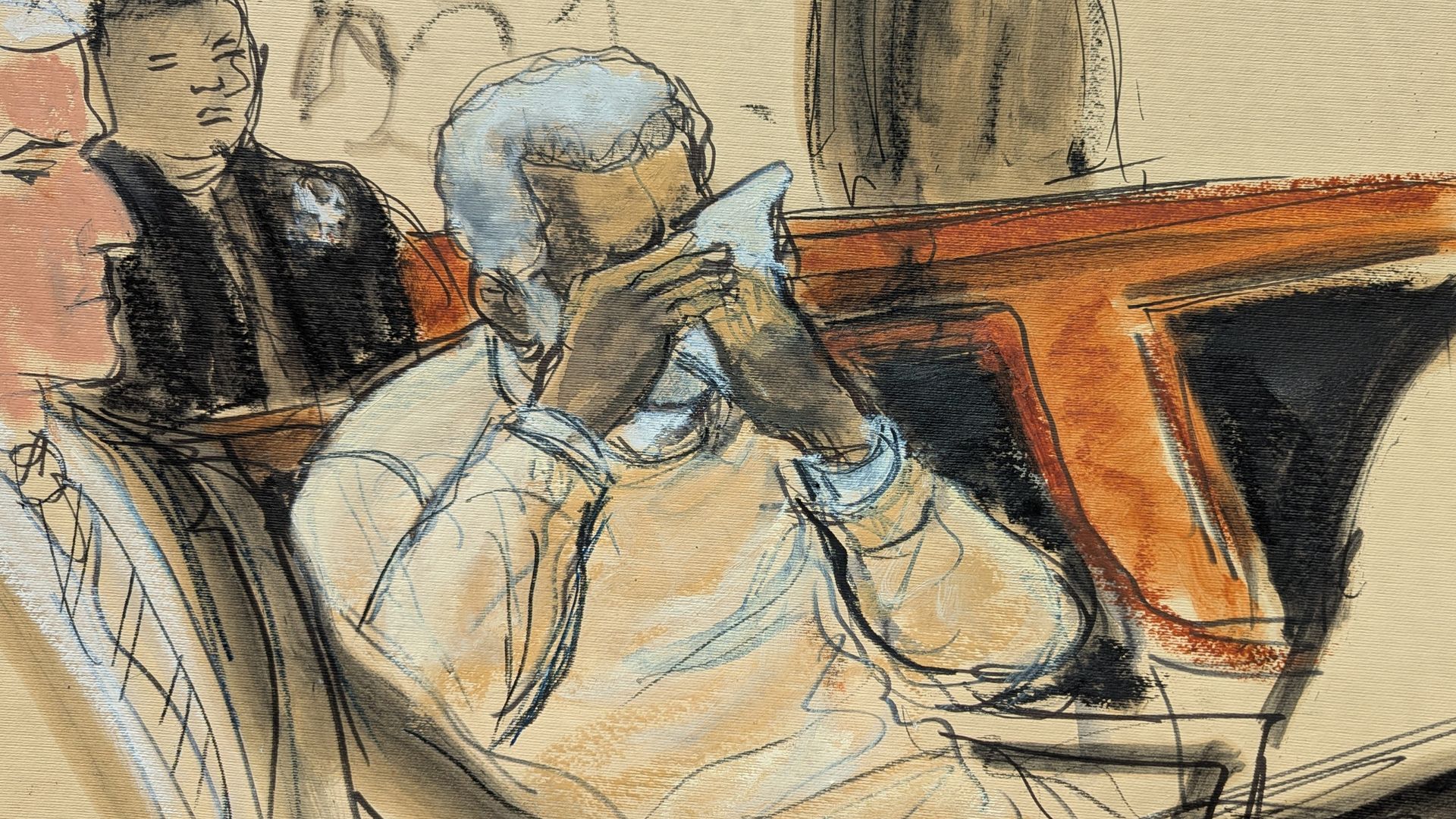
Sean “Diddy” Combs has been sentenced to more than four years in prison over prostitution charges relating to his former girlfriends and male sex workers.The Latest News from the UK and Around the World | Sky News

A Sky News investigation has uncovered new details about Israel’s support for a Palestinian rebel group with extremist ties and a history of looting aid trucks.The Latest News from the UK and Around the World | Sky News

At least 30 people have been injured in a Russian drone strike on a Ukrainian railway station, President Volodymyr Zelenskyy has said.The Latest News from the UK and Around the World | Sky News
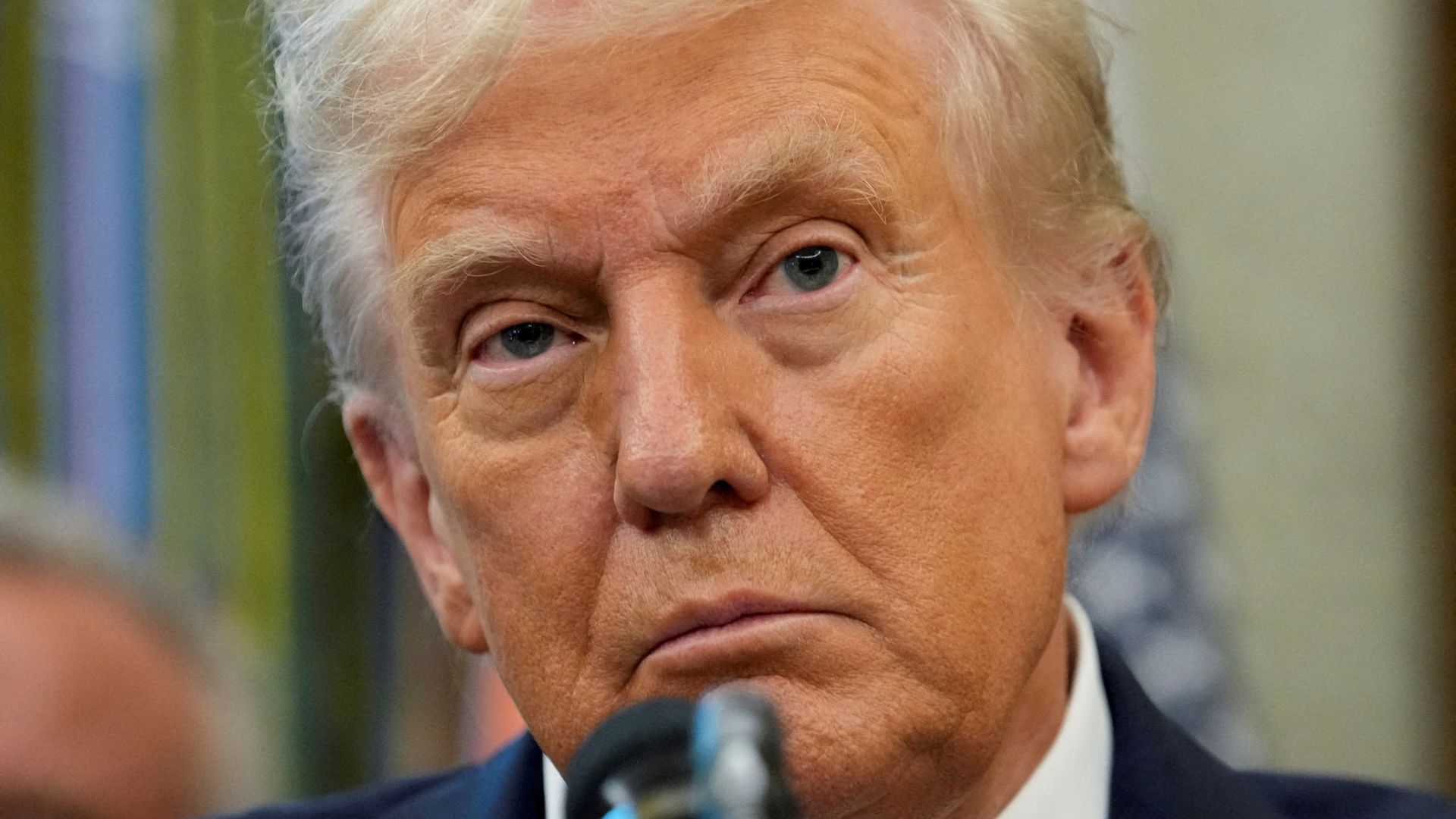
We are in the endgame. Nearly exactly two years since the Hamas attacks of 7 October 2023, it looks like we are on the brink of a breakthrough.The Latest News from the UK and Around the World | Sky News
By: James Brooks, Alaska Beacon

Election day is around the corner for most of Alaska’s local governments, and many communities are considering whether to raise local sales taxes to pay for the escalating cost of public services, including basic infrastructure like road repairs and landfills.
Alaska’s largest city, Anchorage, holds its elections in the spring, as do Valdez and Cordova, but most of the state’s 150-plus municipal governments will have their elections in the next week.
In the state capital, Juneau, where voting has been underway by mail since late September, voters are considering three ballot measures with major implications for the City and Borough of Juneau budget.
Measure No. 1 would tighten the cap on local property taxes below current rates, effectively cutting city revenue by about $1 million and eliminating the city’s ability to raise rates.
The second measure would exempt food and residential utilities from local sales taxes. That would eliminate between $10 million and $12 million per year from the city budget.
To compensate, there’s also Measure No. 3, which would raise the city’s sales tax from 5% to 7.5% in the summer and lower it to 3% in the winter. If that measure passes, it would roughly balance the lost money if Measure No. 2 passes.
If ballot measure No. 3 doesn’t pass, Juneau city officials expect to significantly cut local services in order to balance the budget.
Juneau is one of several communities deciding whether to pass sales tax hikes this month.
In Skagway, voters are considering a seasonal sales tax increase from 5% to 7% in the summer, with some of the proceeds earmarked for water, wastewater and garbage services in order to lower local rates.
In neighboring Haines, voters are deciding whether to raise the local sales tax from 5.5% to 7% in the summer within the Haines townsite, with a smaller increase in the rest of the borough. The sales tax would fall to 4.5% in the townsite during the winter, 3% in the rest of the borough, and groceries would be exempted.
In Ketchikan, borough residents are being asked whether they want to extend part of the local sales tax through 2032. The borough has a 2.5% sales tax, but half of a percent is dedicated to construction and renovation projects at local schools. That’s what voters will consider renewing.
Slightly north, in Petersburg, voters will decide whether to reduce a senior citizen sales tax exemption so it applies only to low-income residents.
While voters in the Ketchikan borough contemplate a sales tax measure, voters within the city of Ketchikan itself will also have seven other ballot propositions to consider.
First is a $15 million bond to pay for sewer mains and upgrades to the city’s water treatment facility. Those upgrades are being mandated by the state and federal governments.
Voters in the First City also will decide six different amendments to the city charter. Proposition No. 2 would eliminate a 30-day waiting period for city ordinances to take effect. No. 3 would allow the city manager to live outside city limits, but only on the road system of Revillagigedo Island, where the city is located.
Proposition No. 4 would remove the requirement that voters approve the sale of any city property worth more than $30,000. Instead, the city council would have the authority to approve those sales.
The fifth proposition would allow the city to award large contracts to someone other than the lowest bidder, and the sixth would allow the city to approve sales or contracts with city employees and elected officials as long as there are at least three cost quotes and the chosen contract is “the most advantageous to the city.”
The last proposition, the seventh, would allow the city’s annual fiscal audit to take more than four months.
In addition to those ballot measures, three candidates are running for two seats on the Ketchikan City Council. There’s also a two-way race for borough mayor, two contested borough assembly races and two contested school board races.
Voters in Sitka will consider two ballot measures. The first would allow the city to use proceeds from the local tobacco tax and the sale of the local hospital for parks and recreation.
The second, if adopted, would require all ballot measures to include a comprehensive economic impact study report before reaching the signature-gathering phase.
Six people are running for two seats on the Borough Assembly in Sitka, and there are three candidates for two seats on the local school board.
In Petersburg, two candidates are running for mayor and five candidates are running for two seats on the borough assembly. There is one candidate and two open seats for the school board.
In Skagway, the one candidate for mayor is running uncontested, after the previous mayor resigned earlier this year. There are four candidates for two assembly seats, and one candidate for two open school board seats. In Haines, there are four candidates for two assembly seats, and two candidates for two school board seats.
In the North Slope Borough, two of four assembly races are contested, and only one of four school board races is contested. Borough voters also will consider eight different bond proposals. That’s more ballot propositions than any other municipal election taking place this month in Alaska.
The borough is proposing to borrow a combined $204 million for public facilities, including light, power, water, sewage, public safety, education and flood control.
At Utqiagvik, the borough’s largest town and the northernmost town in the United States, voters will choose between two candidates for mayor. There’s also two city council races, only one of which is contested.
Voters also are being asked to choose whether or not to extend Utqiagvik’s 20% wholesale tobacco tax to cover “alternative nicotine products and equipment,” such as vape and e-cigarette products.
Within the Northwest Arctic Borough, there are four borough assembly seats on this year’s ballot. Only one race is contested, and one seat — covering Ambler, Kobuk and Shungnak — has no candidates at all.
Similarly, among three races for school board, none are contested and one of the three seats has no candidates.
In the Kotzebue city election, two seats on the city council are on the ballot, and each race has two candidates. Another seat was vacated by the resignation of Ruth Moto in September, and someone will be appointed to fill that seat after the election, with the replacement being up for election in October 2026.
The Nome Nugget noted “meager interest to run for public office” in Nome this year, with two city council seats and two school board seats unopposed, but voters there will also be asked whether to raise the city’s sales tax from 5% to 6%.
This week, the Nugget reported that if the tax increase doesn’t pass, city officials will cut services.
The Matanuska-Susitna Borough holds its elections in November (as does Metlakatla in Southeast), but the cities within the Mat-Su borough vote in October.
Wasilla has no ballot measures; its city election includes three city council races, only one of which is contested.
In Palmer, five people are competing to become the city mayor, the most competitive single municipal race this fall. Three people are competing for two three-year seats on the city council. There also is a one-year seat on the council, and two people are vying for it.
Palmer voters are also being asked if they want to change the city charter so the city manager is no longer required to live within the city. The change would allow the manager to live within five miles of city limits.
Within Houston, six people are running for three spots on the city council. Houston also has four ballot measures. One asks whether voters support a city-owned airport. A second asks voters to approve a 2% sales tax increase (from 2% to 4%) in order to pay for road repairs. The third and fourth measures ask voters to approve the “Matanuska Thunder Festival” and “Founder’s Day” as city holidays.
Within the Kenai Peninsula Borough, voters will decide five different ballot propositions. The first would require elections officials to hand-count ballots and ban electronic tabulators. The Matanuska-Susitna Borough has already taken a similar move.
Proposition No. 2 would create a special taxing district in Ninilchik to fund a new local swimming pool there. No. 3, if approved, would increase the property tax exemption in the borough so the first $75,000 of a homeowner’s residence would be exempted from local property taxes. The current exemption applies to the first $50,000.
The fourth proposition would raise the borough’s sales tax cap every five years. Currently, sales taxes only apply to the first $500 of a purchase.
Proposition No. 5 would shift borough elections to November, aligning them with state and federal elections, much as the Mat-Su borough has done.
Five seats on the Kenai borough assembly are up for election, and three of the races are contested. Three school board seats are on the ballot as well, with two races contested.
Among city elections on the Kenai Peninsula, only Soldotna has a ballot measure. That proposition asks voters to approve or reject the annexation of 2.63 square miles of nearby land into the city limits.
In the Interior, none of Fairbanks’ three local governments have ballot measures this year, but this year’s ballot will decide three seats on the borough assembly and two on the borough school board. There’s a two-person race to become Mayor of Fairbanks, and two seats on the city council are up for election.
Southeast of Fairbanks, in North Pole, four seats on the city council are up for election. There are only four candidates, but the order of the candidates will determine who gets a three-year term, a two-year term or a one-year term.
In Kodiak, voters will pick between two candidates for borough mayor, five candidates for two seats on the borough assembly, and they will vote on a variety of service area boards.
Within city limits on Kodiak, four people are running to replace longtime Mayor Pat Branson, and four candidates are running for two seats on the city council.
In southwest Alaska, Bethel has four open city council seats but only three registered candidates and one write-in candidate.
In Unalaska, Mayor Vince Tutiakoff Sr. is running unopposed for re-election, and three people are running for one of the two city council seats on the ballot. The other incumbent for city council is unopposed. On the local school board, three people are running for one of two school board seats; the other seat is held by the incumbent school board president, who is unopposed in his re-election bid.
Within the Aleutians East Borough, which includes Sand Point, King Cove and Cold Bay, two of three borough assembly seats have unopposed races, and the third has two candidates. All three school board seats on the ballot have candidates running unopposed.
Further north in Dillingham, two city council seats have two candidates apiece, and three people are running unopposed for three school board seats.
Within the Bristol Bay Borough, based in Naknek, three people are running for two seats on the borough assembly, and there are five candidates for the two school board seats on the ballot.
In the Lake and Peninsula Borough, two borough assembly members and two school board members are running unopposed. Those elections, like those in Juneau, are conducted by mail, and ballots must be postmarked by Oct. 7 and received by the borough clerk before Nov. 7.
By: James Brooks, Alaska Beacon

Former Anchorage Mayor Dave Bronson said Thursday in Fairbanks that he intends to run for governor in 2026, becoming the 13th candidate and 12th Republican in next year’s race.
Incumbent Gov. Mike Dunleavy is term-limited and unable to run again, which has caused an unusually large number of early entries into the governor’s race.
Only one Democratic candidate, former Anchorage state Sen. Tom Begich, has entered the race. Other Democrats say they are awaiting the possible run by former Democratic U.S. Rep. Mary Peltola, who had the highest favorability rating among top candidates, according to one poll this summer.
Republicans face no such obstacle. In addition to Bronson, the Republican field of candidates includes former state Sen. Click Bishop of Fairbanks; Lt. Gov. Nancy Dahlstrom of Eagle River; Anchorage businesswoman Bernadette Wilson; podiatrist Matt Heilala of Anchorage; Matanuska-Susitna Borough Mayor Edna DeVries; former teacher James William Parkin IV of Angoon; current state Sen. Shelley Hughes of Palmer; Bruce Walden of Palmer; former Alaska Revenue Commissioner Adam Crum; and former Alaska Attorney General Treg Taylor.
All of those candidates have filed letters of intent or statements of candidacy with the Alaska Public Offices Commission, which allows them to fundraise and spend money on a campaign.
They have not yet registered with the Alaska Division of Elections, which officially places a candidate on the August primary ballot.
Republican Henry Kroll of Soldotna, who has not registered with the Public Offices Commission, is the lone candidate to have registered with the Division of Elections.
The deadline to file with the Alaska Division of Elections is June 1, 2026.
In Alaska, the top four vote-getters for a state office, regardless of political party, advance from the August general election to the November general election.
Wilson has vowed to withdraw from the election if she finishes in the top four but isn’t the top Republican. She has encouraged other Republicans to take similar vows in an attempt to consolidate support for the top Republican front-runner in the general election.
Bronson, who delivered brief remarks in Fairbanks before participating in a panel discussion with six other Republican candidates, said he supports increased spending on infrastructure and the Permanent Fund dividend, saying he would like to see a constitutional amendment that would mandate a dividend paid according to a formula that was used from 1982 through 2016.
That would require spending an additional $2 billion per year for dividend payments above what lawmakers and Dunleavy approved this year. As a whole, the state’s operating budget is currently $5.9 billion. Bronson did not explain how he intends to pay for the increase.
An experienced pilot, Bronson was elected mayor of Anchorage in 2021, months after the incumbent Democratic mayor resigned during a sex scandal and amid a conservative backlash against COVID-19 mitigation efforts imposed by the Anchorage assembly.
He served a single term and was endorsed for re-election by Dunleavy and U.S. Sen. Dan Sullivan but lost in 2024 to current Mayor Suzanne LaFrance.
Bronson’s time in office was marked by major conflicts with city employees, public health officials and the assembly. In 2023, the city manager Bronson appointed and fired, sued him and the city, alleging illegal and unethical acts. The assembly settled that case in 2024 for $250,000 after Bronson left office.
In January, Dunleavy appointed Bronson to manage Ted Stevens Anchorage International Airport. After less than eight months, he announced his resignation from that job in August.
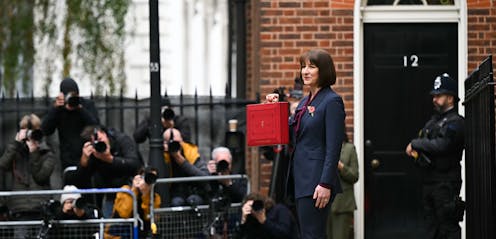
When it comes to shutdowns, the U.S. is very much an exception rather than the rule.
On Oct. 1, 2025, hundreds of thousands of federal employees were furloughed as the business of government ground to a halt. With negotiations in Congress seemingly deadlocked over a funding deal, many political watchers are predicting a lengthy period of government closure.
According to the nonpartisan nonprofit Committee for a Responsible Federal Budget, the latest shutdown represents the 20th such funding gap since 1976.
But it doesn’t have to be like this – and in most countries, it isn’t. Other Western democracies experience polarization and political turmoil, too, yet do not experience this problem. Take for example the U.K., traditionally one of Washington’s closest allies and home to the “mother of parliaments.”
In the British system, government shutdowns just don’t happen – in fact, there has never been one and likely never will be.
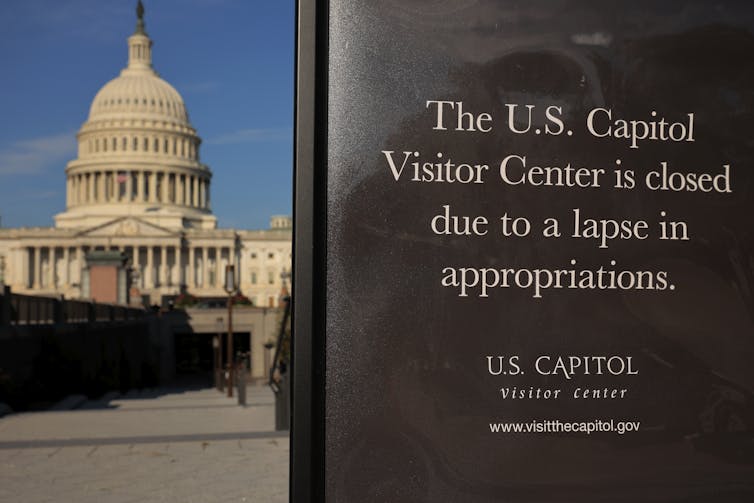
So why do they occur in Washington but not London? Essentially, it comes down to four factors: the relative power of the legislature; how easy it is to pass a budget; the political stakes at play; and distinctive appropriation rules.
There are significant differences in how the legislatures of the U.K. and U.S. shape the budgetary process.
In the U.K., only the executive branch – the party or coalition in power – has the authority to propose spending plans. Parliament, which consists of members from all political parties, maintains an oversight and approval role, but it has very limited power over the budgetary timeline or to amend spending plans. This is a stark contrast with the U.S., where Congress – which may be split or controlled by a party different to the executive – plays a far more consequential role.
The U.S. president starts the budget process by laying out the administration’s funding priorities. Yet, the Constitution grants Congress the power of the purse – that is, the power to tax and spend.
Moreover, past legislation has bolstered congressional control. The 1974 Congressional Budget Act helped curtail presidential involvement in the budgeting process, giving Congress more authority over the timeline. That gave Congress more power but also offered it more opportunities to bicker and derail the budgetary process.
Congress and the U.K. Parliament also differ when it comes to their voting rules. Passing the U.S. budget is inherently more complicated, as it requires the support of both the Senate and the House of Representatives.
In Parliament, however, the two houses – the elected House of Commons and unelected House of Lords – are not equally involved. The two Parliament Acts of 1911 and 1949 limited the power of the House of Lords, preventing it from amending or blocking laws relating to budgeting.
Additionally, approving the budget in Westminster requires only an absolute majority of votes in the House of Commons. That tends to be quite a straightforward hurdle to overcome in the U.K. The party in power will typically also command a majority of votes in the chamber or be able to muster one up with the support of smaller parties. It is not, however, so easy in Congress. While a simple majority suffices in the House of Representatives, the Senate still has a 60-vote requirement to close debates before proceeding with a majority vote to pass a bill.
U.S. and U.K. politicians do not face the same high stakes over budget approval. Members of Congress may eventually pay a political price for how they vote on the budget, but there is no immediate threat to their jobs. That is not so in the U.K.
Indeed, the party or coalition in power in the U.K. must maintain the “confidence” of the House of Commons to stay in office. In other words, they need to command the support of the majority for key votes. U.K. governments can actually fall – be forced to resign or call for new elections – if they lose formal votes of confidence. Since confidence is also implied in other major votes, such as over the annual budget proposals, this raises the stakes for members of Parliament. They have tended to think twice before voting against a budget, for fear of triggering a dissolution of Parliament and new elections.
Finally, rules about appropriation also set the U.S. apart. For many decades, federal agencies could still operate despite funding bills not being passed. That, however, changed with a ruling by then-Attorney General Benjamin Civiletti in 1980. He determined that it would be illegal for governments to spend money without congressional approval.
That decision has had the effect of making shutdowns more severe. But it is not a problem that the U.K. experiences because of its distinct rules on appropriation. So-called “votes on account” allow the U.K. government “to obtain an advance on the money they need for the next financial year.”
This is an updated version of an article that was first published by The Conversation U.S. on Sept. 28, 2023.

Garret Martin receives funding from the European Union for the Transatlantic Policy Center, which he co-directs.
Politics + Society – The Conversation
As he paced across a stage at a military base in Quantico, Virginia, on Sept. 30, 2025, Secretary of Defense Pete Hegseth told the hundreds of U.S. generals and admirals he had summoned from around the world that he aimed to reshape the military’s culture.
Ten new directives, he said, would strip away what he called “woke garbage” and restore what he termed a “warrior ethos.”
The phrase “warrior ethos” – a mix of combativeness, toughness and dominance – has become central to Hegseth’s political identity. In his 2024 book “The War on Warriors,” he insisted that the inclusion of women in combat roles had drained that ethos, leaving the U.S. military less lethal.
In his address, Hegseth outlined what he sees as the qualities and virtues the American soldier – and especially senior officers – should embody.
On physical fitness and appearance, he was blunt: “It’s completely unacceptable to see fat generals and admirals in the halls of the Pentagon and leading commands around the country and the world.”
He then turned from body shape to grooming: “No more beardos,” Hegseth declared. “The era of rampant and ridiculous shaving profiles is done.”
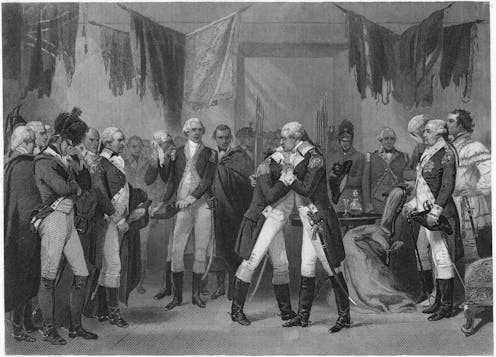
As a historian of George Washington, I can say that the commander in chief of the Continental Army, the nation’s first military leader, would have agreed with some of Secretary Hegseth’s directives – but only some.
Washington’s overall vision of a military leader could not be further from Hegseth’s vision of the tough warrior.

For starters, Washington would have found the concern with “fat generals” irrelevant. Some of the most capable officers in the Continental Army were famously overweight.
His trusted chief of artillery, Gen. Henry Knox, weighed around 280 pounds. The French officer Marquis de Chastellux described Knox as “a man of thirty-five, very fat, but very active, and of a gay and amiable character.”
Others were not far behind. Chastellux also described Gen. William Heath as having “a noble and open countenance.” His bald head and “corpulence,” he added, gave him “a striking resemblance to Lord Granby,” the celebrated British hero of the Seven Years’ War. Granby was admired for his courage, generosity and devotion to his men.
Washington never saw girth as disqualifying. He repeatedly entrusted Knox with the most demanding assignments: designing fortifications, commanding artillery and orchestrating the legendary “noble train of artillery” that brought cannon from Fort Ticonderoga to Boston.
When he became president, after the Revolution, Washington appointed Knox the first secretary of war – a sign of enduring confidence in his judgment and integrity.
As for beards, Washington would have shared Hegseth’s concern – though for very different reasons.
He disliked facial hair on himself and on others, including his soldiers. To Washington, a beard made a man look unkempt and slovenly, masking the higher emotions that civility required.
Beards were not signs of virility but of disorder. In his words, they made a man “unsoldierlike.” Every soldier, he insisted, must appear in public “as decent as his circumstances will permit.” Each was required to have “his beard shaved – hair combed – face washed – and cloaths put on in the best manner in his power.”
For Washington, this was no trivial matter. Outward appearance reflected inner discipline. He believed that a well-ordered body produced a well-ordered mind.
To him, neatness was the visible expression of self-command, the foundation of every other virtue a soldier and leader should possess.
That is why he equated beards and other forms of unkemptness with “indecency.” His lifelong battle was against indecency in all its forms. “Indecency,” he once wrote, was “utterly inconsistent with that delicacy of character, which an officer ought under every circumstance to preserve.”
By “delicacy,” Washington meant modesty, tact and self-awareness – the poise that set genuine leaders apart from individuals governed by passions.
For him, a soldier’s first victory was always over himself.
“A man attentive to his duty,” he wrote, “feels something within him that tells him the first measure is dictated by that prudence which ought to govern all men who commits a trust to another.”
In other words, Washington became a soldier not because he was hotheaded or drawn to the thrill of combat, but because he saw soldiering as the highest exercise of discipline, patience and composure. His “warrior ethos” was moral before it was martial.
Washington’s ideal military leader was more statesman than warrior. He believed that military power must be exercised under moral constraint, within the bounds of public accountability, and always with an eye to preserving liberty rather than winning personal glory.
In his mind, the army was not a caste apart but an instrument of the republic – an arena in which self-command and civic virtue were tested. Later generations would call him the model of the “republican general”: a commander whose authority rested not on bluster or bravado but on composure, prudence and restraint.
That vision was the opposite of the one Pete Hegseth performed at Quantico.

The “warrior ethos” Hegseth celebrates – loud, performative – was precisely what Washington believed a soldier must overcome.
In March 1778, after Marquis de Lafayette abandoned an impossible winter expedition to Canada, Washington praised caution over juvenile bravado.
“Every one will applaud your prudence in renouncing a project in which you would vainly have attempted physical impossibilities,” he wrote from the snows of Valley Forge.
For Washington, valor was never the same as recklessness. Success, he believed, depended on foresight, not fury, and certainly not bravado.
The first commander in chief cared little for waistlines or whiskers, in the end; what concerned him was discipline of the mind. What counted was not the cut of a man’s figure but the steadiness of his judgment.
Washington’s own “warrior ethos” was grounded in decency, temperance and the capacity to act with courage without surrendering to rage. That ideal built an army – and in time, a republic.

Maurizio Valsania does not work for, consult, own shares in or receive funding from any company or organization that would benefit from this article, and has disclosed no relevant affiliations beyond their academic appointment.
Politics + Society – The Conversation