Categories
Politics

Supreme Court to decide if Colorado’s law banning conversion therapy violates free speech

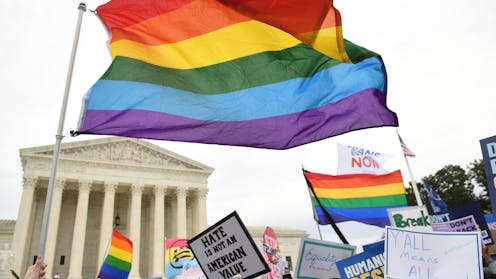
The US Supreme Court will hear oral arguments for yet another case involving the LGBTQ+ community. Saul Loeb/AFP via Getty Images

The constitutionality of a Colorado law that bans so-called “conversion therapy” is scheduled to go before the Supreme Court on Oct. 7, 2025. The question at the center of the case, Chiles v. Salazar, is whether a therapist who uses talk therapy to try to convince minors to change their sexual orientation or gender identity is protected by a First Amendment right to free speech.

Twenty-three other states and the District of Columbia also ban conversion therapy.
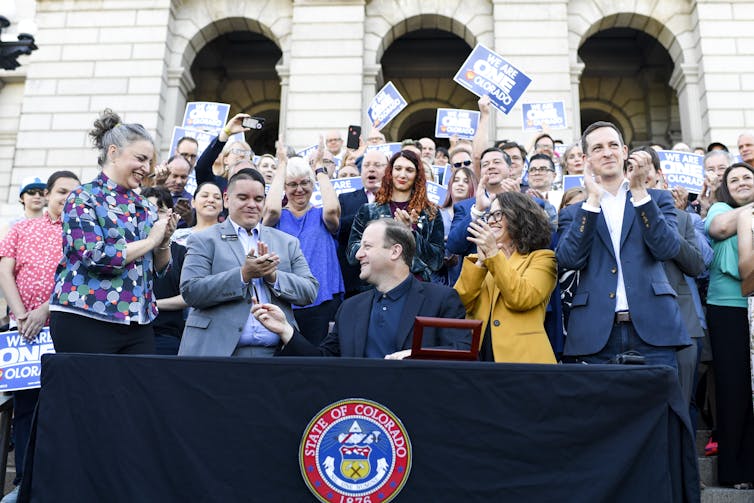
People stand behind a table cheering as a white man in a blue suit jacket signs bills into law.
Colorado Gov. Jared Polis is applauded as he signs a law banning the use of conversion therapy on minors.
Aaron Ontiveroz/The Denver Post via Getty Images

I am a legal scholar who has explored aspects of the rights of the LGBTQ+ community, and this case is an important test of the status of the community’s rights and protections at the Supreme Court.

Why it matters

The case has similarities to the court’s 2025 decision in United States v. Skrmetti that upheld state laws banning gender-affirming care for transgender minors, such as the use of puberty-blocking hormones. LGBTQ+ persons viewed those bans as hurting the community, whereas bans like Colorado’s on conversion therapy are viewed as protecting the community.

Technically, the legal issue in Skrmetti was different: The court addressed whether the ban violated the equal protection clause of the 14th Amendment, which prohibits states from discriminating against particular protected classes, such as race or gender, absent a particularly strong state interest. In the Skrmetti decision, the court held there was no discrimination on the basis of sex, which meant the law received no heightened scrutiny.

Instead, the court assessed whether there was a “rational basis” for the law and held that Tennessee had “plausible reasons” for the ban: protecting minors from harms such as sterility and treatments whose long-term effects are unclear. The court upheld the law banning gender-affirming care even though major U.S. medical professional associations oppose such bans and support such care.

The facts of Chiles

In Chiles, the issue is freedom of speech, not equal protection. But this time the Colordo ban on conversion therapy aligns with leading medical associations.

Kaley Chiles is a licensed professional counselor who uses talk therapy in her counseling practice. Chiles identifies as Christian and often works with Christian clients. Chiles “does not try to help minors change their attractions, behavior, or identity, when her minor clients tell her they are not seeking such change.” She would like to use talk therapy with clients “who have same-sex attractions or gender identity confusion and who also prioritize their faith above their feelings” and who “are seeking to live a life consistent with their faith,” according to court filings.

Chiles sued Colorado to invalidate the statute as unconstitutional for violating her freedom of speech and religion under the First Amendment of the U.S. Constitution. Both the federal district court in Colorado and the U.S. Court of Appeals for the 10th Circuit denied her request for a preliminary injunction, rejecting both arguments.

The Supreme Court agreed only to hear her free speech claim, leaving the 10th Circuit’s rejection of her religious liberty claim in place.

Is ‘talk therapy’ speech or conduct?

The Supreme Court first will need to address whether talk therapy is protected speech under the First Amendment. This decision likely will determine the case’s outcome.

Chiles contends that talk therapy is protected speech and that Colorado is impermissibly regulating the content of her potential speech. The law permits her to help minor clients embrace their sexual orientation or gender identity through talk therapy but not to change it. If this therapy is speech, it would be regulating the content of her speech because the law determines what can and cannot be said. Affirming talk therapy is allowed, but conversion therapy is prohibited.

Colorado, however, insists that the statute regulates medical conduct, which is not protected by the First Amendment, even if there is an incidental burden on speech.

A state undisputably can regulate medical activity, such as the prescription of a medicine. If the therapy involved the use of medicines, there would be no dispute because no speech would be involved. The Colorado conversion therapy ban is part of a broader statute, the Mental Health Practice Act, which prohibits acts that could harm patients. Thus, talk therapy, according to Colorado, is treatment – like providing medicine – that the state is free to regulate.

Conversion therapy is also deemed ineffective and harmful to children by leading medical associations, such as the American Psychiatric Association and the American Medical Association. The 10th Circuit noted that the Colorado ban regulates treatment, not expression, because Chiles is free to share her views on conversion therapy, even with minors. She simply cannot engage in actual therapy under the law.
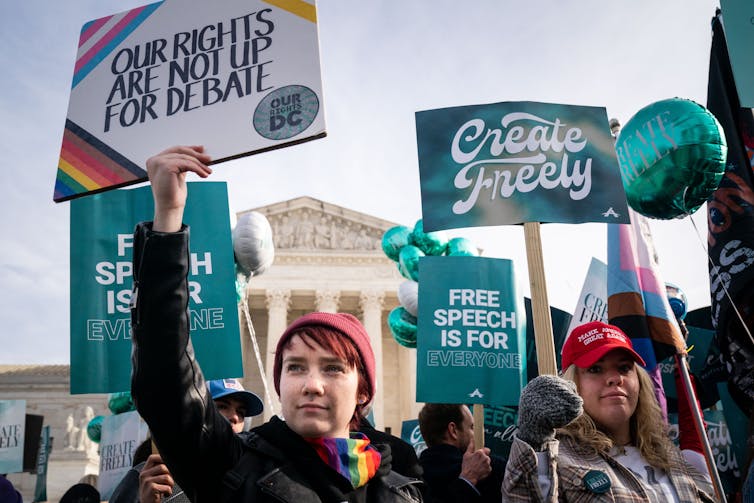
People with protest and support signs stand outside of the U.S. Supreme Court building.
Members of both sides of the debate stand in front of the U.S. Supreme Court on Dec. 5, 2022. The high court heard oral arguments in a case involving the owner of a website design company in Colorado who refused to create websites for same-sex weddings despite a state antidiscrimination law.
Kent Nishimura/Getty Images

The Supreme Court will need to decide whether talk therapy is speech or conduct. The court often takes a broad view of what constitutes speech, particularly in the area of LGBTQ+ rights. In 303 Creative LLC v. Elenis, another case out of Colorado, the court held that creating a wedding webpage was deemed protected speech. This 2023 decision permitted the webpage designer to deny services to same-sex couples requesting webpages for their weddings, in violation of Colorado’s law prohibiting sexual orientation discrimination.

If the court concludes that conversion therapy is conduct, then the Colorado law is subject to the same standard used in Skrmetti – rational basis – and likely will survive. In light of 303 Creative, however, the court may deem it speech.

If talk therapy is speech, can Colorado ban it?

Simply because an act constitutes speech protected by the First Amendment does not mean the state cannot regulate it. For example, the state can rightly regulate defamatory statements or obscene material.

Courts, however, apply an exacting standard of review, known as strict scrutiny, and rarely does a law survive such analysis. Colorado must show that its ban on conversion therapy is narrowly tailored to achieve a compelling state interest. Colorado contends that ensuring minors receive safe and effective mental health care is a compelling interest, and the law is narrowly tailored because “(i)t prohibits only specific harmful treatment while leaving therapists free to engage in any other appropriate therapy.”

Chiles’ strongest argument is that the law is not narrowly tailored for a number of reasons. Chiles contends the law is too broad because it bans more speech than necessary to protect against any harms to LGBTQ+ minors, including any therapy to change behavior, expression, identity or feeling.

For example, she argues she could not counsel a gay client toward celibacy. It is also not properly tailored, Chiles argues, because it exposes minors to the harms of conversion therapy by its omissions: It applies only to licensed mental health professionals and not others, such as life coaches, and it applies only to minors. If conversion therapy is as harmful as Colorado alleges, these gaps show the lack of proper tailoring, says Chiles.

The court has frequently struck down laws that regulate the content of speech. If the court concludes that talk therapy is protected speech, it is likely the court will find the Colorado ban on conversion therapy unconstitutional.

Such a decision would contrast sharply with Skrmetti. If the court strikes down the Colorado law, then a law meant to protect LGBTQ+ minors will be invalidated while one deemed harmful to trans minors will stand.

The court again will have gone against the predominant view of medical experts in a way detrimental to the LGBTQ+ community, potentially adding to criticism of the Supreme Court as being too political.

Read more of our stories about Colorado.

The Conversation

Timothy R. Holbrook does not work for, consult, own shares in or receive funding from any company or organization that would benefit from this article, and has disclosed no relevant affiliations beyond their academic appointment.

​Politics + Society – The Conversation

Categories
Politics

Moral panics intensify social divisions and can lead to political violence

The day before Charlie Kirk was assassinated, I was teaching a college class on science, religion and magic. Our class was comparing the Salem witch trials of the 1690s with the McCarthy hearings of the early 1950s, when U.S. democratic processes were eclipsed by the Red Scare of purported communist infiltration.

The aim of the class was to better understand the concept of moral panics, which are societal epidemics of disproportionate fear of real or perceived threats. Such outsized fear can often lead to violence or repression against certain socially marginalized groups. Moral panics are recurring themes in my research on the anthropology of fear and discrimination.

Our next class meeting would apply the moral panic concept to a recent example of political violence. Tragically, there were many of these examples to choose from.

Minnesota State Representative Melissa Hortman and her husband were assassinated on June 14, 2025, which happened to be the eighth anniversary of the congressional baseball shootings in which U.S. House Majority Whip Steve Scalise and three other Republicans were wounded. These shootings were among at least 15 high-profile instances of political violence since Rep. Gabby Gifford was severely wounded in a 2011 shooting that killed five and wounded another 13 people.

Seven of these violent incidents occurred within the past 12 months. Kirk’s killing became the eighth.

In most of these cases, we may never fully know the perpetrator’s motives. But the larger pattern of political violence tracks with the increasing polarization of American society. While researching this polarization, I have found recurring themes of segregation and both the dehumanization and disproportionate fear of people with opposing views among liberals and conservatives alike.

Segregation and self-censorship

The first ingredient of a moral panic is the segregation of a society into at least two groups with limited contact between them and an unwillingness to learn from one another.

In 17th century Salem, Massachusetts, the social divisions were long-standing. They were largely based on land disputes between family factions and economic tensions between agriculturally-based village communities and commercially-based town communities.

Within these larger groups, a growing number of widowed women had become socially marginalized for becoming economically independent after their husbands died in colonial wars between New England and New France. And rumors of continuing violence led residents in towns and villages to avoid Native Americans and new settlers in surrounding frontier areas. Salem was divided in many ways.

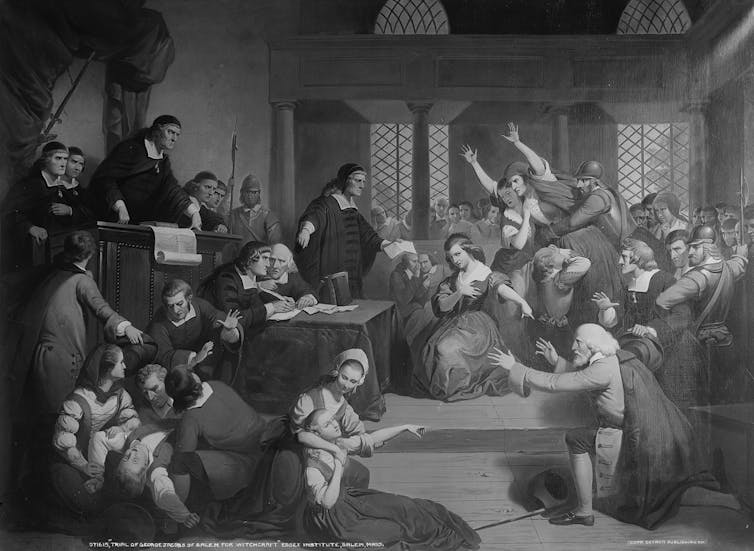
A black-and-white copy of a painting depicts a trial in Salem, Massachusetts, in 1692.
The painting ‘Trial of George Jacobs of Salem for Witchcraft’ by Tompkins Harrison Matteson. Jacobs was one of the few men accused of witchcraft.
Tompkins Harrison Matteson/Library of Congress via AP

Fast forward to the end of World War II. That’s when returning American veterans used their benefits to settle into suburban neighborhoods that would soon be separated by race and class through zoning policies and discriminatory lending practices. This set the stage for what has come to be called The Big Sort, the self-segregation of people into neighborhoods where residents shared the same political and religious ideologies.

It was during the early stages of these sorting processes that the Red Scare and McCarthy hearings emerged.

The Big Sort turned digital in the early 2000s with the rise of online information and social media platforms with algorithms that conform to the particular desires and biases of their user communities.

Consequently, it is now easier than ever for conservatives and liberals to live in separate worlds of their own choosing. Under these conditions, Democrats and Republicans tend to exaggerate the characteristics of the other party based on common stereotypes.

Dehumanization and discrimination

Dehumanization is perhaps the most crucial ingredient of a social panic. This involves labeling people according to categories that deprive them of positive human qualities. This labeling process is often conducted by “moral entrepreneurs” – people invested by their societies with the authority to make such claims in an official, unquestionable and seemingly objective way.

In 1690s Massachusetts, the moral entrepreneurs were religious authorities who labeled people as satanic witches and killed many of them. In 1950s Washington, the moral entrepreneurs were members of Congress and expert witnesses who labeled people Soviet collaborators and ruined many of their lives.

In the 21st century, the moral entrepreneurs include media personalities and social influencers as well as the nonhuman bots and algorithms whose authority is derived by constructing the illusion of broad consensus.

Under these conditions, many U.S. liberals and conservatives regard their counterparts as savage, immature, corrupt or malicious. Not surprisingly, surveys reveal that animosity between conservatives and liberals has been at its highest over the past five years than any other time since the measurements first began in 1978.

Adding to the animosity, dehumanization can also justify discrimination against a rival group. This is shown in social psychology experiments in which conservatives and liberals discriminate against one another to a greater degree than by race when deciding on scholarships and job opportunities. Such discrimination lends credence to further animosity.

Exaggerating fear

There is a fine line between animosity and disproportional fear. The latter can lead to extreme policies and violent actions during a moral panic.

Such fear often takes the form of perceived threats. Rachel Kleinfeld, a scholar who studies polarization and political violence, says that one of the best ways to rally a political base is to make them think they are under attack by the other side. She says that “is why ‘They are out to take your x’ is such a time-honored fundraising and get-out-the-vote message.”

In the past few years, the “x” that could be taken has escalated to core freedoms and personal safety, threats which could easily trigger widespread fear on both sides of the political divide.

But the question remains whether exaggerated fears are sufficient to trigger political violence. Are assassins like Kirk’s killer simply pathological outliers among agitated but otherwise self-restrained populations? Or are they sensitive indicators of a looming social catastrophe?

A black-and-white photo shows two men dressed in suits sitting in front of a desk.
The House Committee on Un-American Activities investigates movie producer Jack Warner, right, in Washington on Oct. 20, 1947.
AP Photo

Countering the panic

We do not have the answers to that question yet. But in the interim, there are efforts in higher education to reduce animosity and encourage constructive interactions and discussion between people with different perspectives.

A nonpartisan coalition of faculty, students and staff – known as the Heterodox Academy – is promoting viewpoint diversity and constructive debates on over 1,800 campuses. The college where I teach has participated in the Congress to Campus program, promoting bipartisan dialogue by having former legislators from different parties engage in constructive debates with one another about timely political issues. These debates serve as models for constructive dialogue.

It was in the spirit of constructive dialogue that my class debated whether the Kirk assassination could be explained as the product of a moral panic. Many agreed that it could, and most agreed it was probably an assault on free speech despite having strong objections to Kirk’s views. The debate was passionate, but everyone was respectful and listened to one another. No witches were to be found in the class that day.

The Conversation

Ron Barrett does not work for, consult, own shares in or receive funding from any company or organization that would benefit from this article, and has disclosed no relevant affiliations beyond their academic appointment.

​Politics + Society – The Conversation

Categories
Politics

Supreme Court opens with cases on voting rights, tariffs, gender identity and campaign finance to test the limits of a constitutional revolution

The U.S. Supreme Court building at dawn in Washington, D.C. Samuel Corum/Bloomberg via Getty Images

The most influential cases before the U.S. Supreme Court this term, which begins on Oct. 6, 2025, reflect the cultural and partisan clashes of American politics.

The major cases in October and November address the role of race in elections, conversion therapy and the Trump tariffs. Later cases include campaign finance and transgender sports.

This year’s controversies focus on three dominant themes. One is the continuing constitutional revolution in how the justices read our basic law. The court has shifted from a living reading of the Constitution, which says the Constitution should adapt to the American people’s evolving values and the needs of contemporary society, to an original reading, which aims to enforce the constitutional principles understood by the Americans who ratified them.

Another clear theme is the deep cultural division among Americans. The core disputes at the court this year reflect controversial factual questions about gender and race: How pervasive and influential is racism in the current day? Are gender transitions a recognized fact, which means that they must be accepted in sports competitions, or can a state assert that trans athletes are not women?

A final theme is the struggle for partisan advantage embedded in several cases.

A portion of the U.S. Constitution, torn into blue and red pieces.
The justices’ constitutional interpretations could have major partisan significance.
Douglas Rissing, iStock/Getty Images Plus

Constitutional revolution

Until just a few years ago, the majority of justices would have agreed that the proper way to read the Constitution was as an evolving document, an approach usually described as living constitutionalism.

The new majority reads the Constitution as an expression of enduring principles, which maintain their historical meaning unless the American people collectively decide to amend the document, an approach known as originalism.

Since 2022, this revolutionary shift has led to dramatic changes in the law on abortion, religion, guns, affirmative action and the power of federal agencies to regulate in areas such as the environment, public health or student debt.

This year, the constitutional revolution – “a historic constitutional course correction.” as legal scholars Gary Jeffrey Jacobsohn and Yaniv Roznai put it – turns to transgender politics.

Little v. Hecox and West Virginia v. B.P.J. ask whether a state can ban transgender athletes from participating in girls or women’s sports. The plaintiffs are middle school and university students who were banned by state laws from participating as a female competitor. They are asking the court to rule that transgender identity is a protected category similar to race and gender under the equal protection clause of the 14th Amendment.

Originalists argue that the meaning of the 14th Amendment is clear and fixed. It establishes the equal status of racial minorities as holders of rights. But originalists do not believe the equal protection clause was meant to apply to sexual identities unless that is explicitly approved through a constitutional amendment by the American public.

Originalists also emphasize the role of federalism as a core constitutional principle. Federalism allocates a great deal of authority to state legislatures to make decisions when a question of rights is uncertain.

For these reasons the court majority is likely to see the regulation of who gets to participate in women’s sports as a state-by-state decision.

Cultural divisions, disputed perceptions

The status of transgender identity also reflects the disputed perceptions of reality that have come to dominate American politics. In essence, the Iowa and West Virginia sports cases ask the court to rule whether a transgender girl – a person assigned male at birth who has transitioned to align with their identity as a girl or woman, as the AP Stylebook phrases it – is a girl or a boy.

The court is likely to leave such questions about what is factually true for state legislatures to determine.

The same need for the court to determine who can decide what is or is not a legitimate fact also applies to this year’s controversy over conversion therapy. Colorado bans the practice – condemned by many professional medical associations – in which counselors attempt to alter sexual orientation or gender identity.

Chiles v. Salazar challenges the Colorado law as a violation of the First Amendment’s protections of free speech and religious liberty.

An original reading of the First Amendment provides strong support for open expression on controversial topics, even by medical professionals. But on the factual question of whether homosexuality or gender identity in young people is indisputably innate or immutable, the court may defer to state legislatures to decide whether licensed professionals must assert only a specific set of accepted facts.

Partisan advantage

Many observers perceive a partisan as well as principled divide on the current court. Decisions in several cases this year potentially give a distinct advantage in future elections to Democrats or Republicans.

The most clear case may be about the regulation of campaign finance. National Republican Senatorial Committee v. FEC – a lawsuit begun in 2022 by then-U.S. Sen. JD Vance – asks the court to overturn a restriction that bars political parties from coordinating unlimited spending on campaign advertising with the official campaign.

Many Democrats believe Republicans will be the larger beneficiaries in the coming years if the court rules that the current limits violate the First Amendment.

Then there’s the challenge to the constitutionality of the Trump tariffs.

Learning Resources v. Trump will determine whether the recent tariffs are authorized by Congress under the International Emergency Powers Act of 1977. The answer hinges on the application of what’s known as the “major questions doctrine,” which limits presidential authority over issues of great economic or policy importance in the absence of direct endorsement from Congress.

The major questions doctrine is an originalist concept, but in the court’s view it may not apply to actions in the foreign policy realm – including tariffs – where the president has greater discretion.

A container ship loaded with hundres of containers, coming into a port.
Will the court strike down Trump’s tariffs on imported goods such as those on this ship in Oakland, Calif.?
Justin Sullivan/Getty Images

Race and elections

The case that represents all three trends at the court is Louisiana v. Callais on the creation of majority-Black congressional districts.

The Voting Rights Act of 1965 outlaws racial discrimination in voting. This landmark legislation from the civil rights era helped raise the rate of Black voter registration and turnout in Southern states from less than half the white rate to exceeding it over the past 60 years.

The question in front of the court is whether the law requires a state to make sure that some congressional districts have a majority of Black voters.

The argument opposing the intentional creation of racial districts is that the equal protection clause of the 14th Amendment demands the same treatment of all citizens regardless of race, banning any distinction even when designed to benefit minorities.

Underlying the differences of opinion are competing perceptions of the prevalence and influence of racism in the current day. This dispute was clear in the court’s 2013 Shelby County decision, which struck down the part of the Voting Rights Act that limited Southern states from passing new elections laws without “pre-clearance” from the Department of Justice. That requirement aimed to ensure that new laws would not discriminate against Black voters, whether intentionally or unintentionally.

In striking down that requirement, Chief Justice John Roberts ruled that “no one can fairly say” that the South “shows anything approaching the ‘pervasive,’ ‘flagrant,’ ‘widespread,’ and ‘rampant’ discrimination that faced Congress in 1965.”

Justice Ruth Bader Ginsburg famously responded that removing the Voting Rights Act’s protections was “like throwing away your umbrella in a rainstorm because you are not getting wet.”

The ultimate number of majority-Black districts in Louisiana is not only a question of constitutional principles applied to prevailing facts. It is also about partisan advantage. Partisans on both sides are well aware that a majority-Black district is also a Democratic district.

So whether the state ends up with two or just one – or potentially even none – of its six congressional districts shaped by race could shift the future partisan balance in a closely divided Congress.

With partisan advantage, clashing perceptions of reality and revolutionary readings of the Constitution all in play, the rulings of the Supreme Court this year will reach far into American politics and culture.

The Conversation

Morgan Marietta does not work for, consult, own shares in or receive funding from any company or organization that would benefit from this article, and has disclosed no relevant affiliations beyond their academic appointment.

​Politics + Society – The Conversation
Categories
Entertainment

Amy Duggar: My Uncle Stole All My Reality TV Money!

Reading Time: 3 minutes

Amy Duggar has revealed how much money she made from appearing various times back in the day on 19 Kids and Counting.

And it won’t take anyone very long do to the math.

On the latest episode of The Viall Files, the niece of Jim Bob and Michelle Duggar said plainly that she made “nada” from her time on television.

She knows who to blame for that zero in her bank account column, too.

(Zondervan Books)

“My uncle, he told all of us that 19 Kids and Counting was a ministry — and that we were on the show to shine a light in the darkness, to be a part of this ministry and that God has called us to this,” Amy told listeners of Jim Bob, emphasizing there was no compensation for the kids involved.

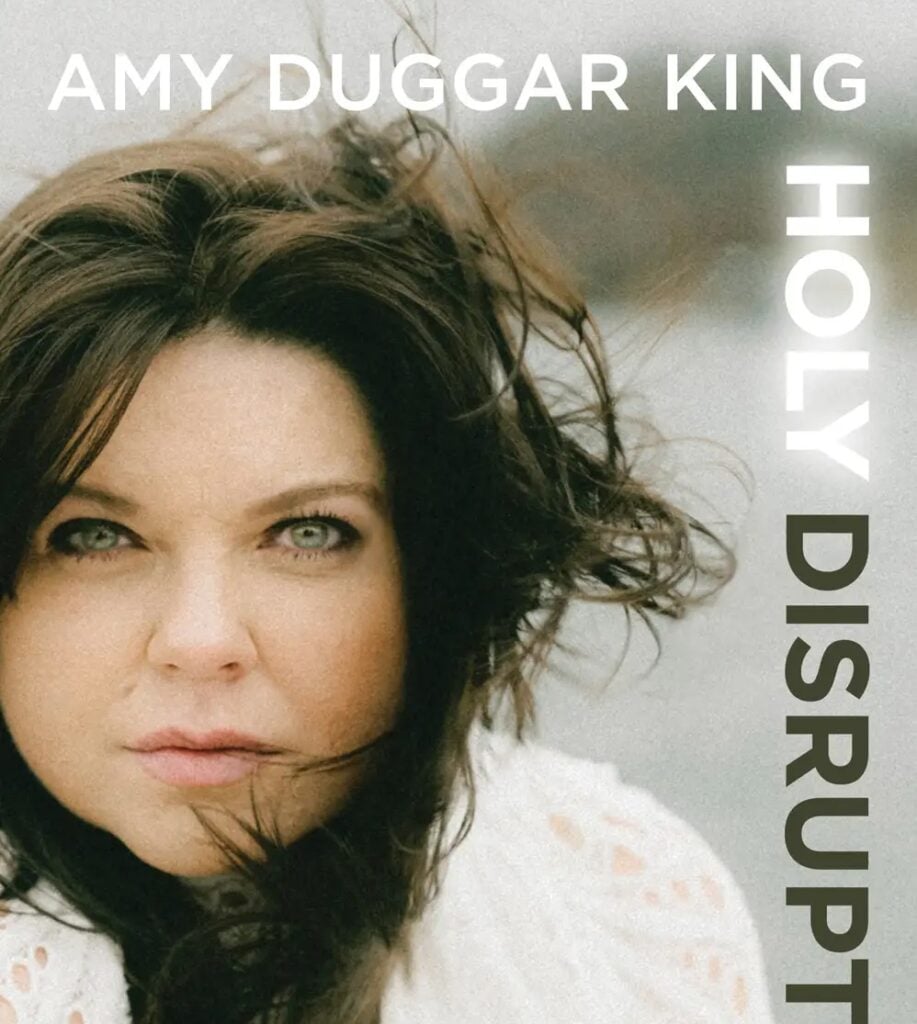
The author of a new memoir titled Holy Disruptor: Shattering the Shiny Facade by Getting Louder with the Truth, Amy said she “signed a contract blindly,” estimating that the series made her family over $6 million during its run.

Giving reluctant credit to Jim Bob, Amy added:

“He’s very smart, he really is. He’s a businessman and he knows how to do it.”

That’s one way to put it. Another way to put it would be that Jim Bob is selfish and dishonest and continues to spend money his children earned.

Amy Duggar and Dillon King arrive at WE tv's Real Love: Relationship Reality TV's Past, Present & Future event at The Paley Center for Media on December 11, 2018 in Beverly Hills, California.
Amy Duggar and Dillon King arrive at WE tv’s Real Love: Relationship Reality TV’s Past, Present & Future event at The Paley Center for Media on December 11, 2018 in Beverly Hills, California. (Photo by Amanda Edwards/Getty Images)

In general, Amy is not the first Duggar to accuse Jim Bob of withholding pay.

The patriarch’s daughter Jill Duggar Dillard — who starred in 19 Kids and Counting, as well as its spinoff Counting On — has made the same allegations.

“I never received any payout — no check, no cash, no nothing,” Jill said in the 2023 docuseries Shiny, Happy People: Duggar Family Secrets. “For seven and a half years of my adult life, I was never paid.”

She and husband Derick walked away from Counting On in 2017, four years before the show was canceled.

“That’s when we got an attorney involved and finally recovered some of the money,” Jill said in a 2020 YouTube vlog. “It was a process.”

(Image Credit: Amazon Prime)

In her aforementioned book, Amy admits that she was once close to cousin Josh Duggar... who is currently serving time in federal prison after having been convicted on child pornography charges.

The book doesn’t come out until October 14, but Amy has been making the media rounds of late in promotion for it.

“I think the entire book will drop jaws. No one knows the things that I was struggling with,” she recently told People Magazine, for example.

She added in this same interview:

“I hope this book brings closure as to why things kind of went the way they went for me. I hope it does connect the dots for those that did watch the show. And, I hope also that it feels like a hug for those that have experienced abuse in their lives.”

Amy Duggar: My Uncle Stole All My Reality TV Money! was originally published on The Hollywood Gossip.

​The Hollywood Gossip

Categories
Entertainment

Danielle Fishel Brutally Rebuffs Whitney Leavitt After ‘DWTS’ Gaffe

Reading Time: 2 minutes

Did Danielle Fishel just put Whitney Leavitt in her place?

It sure looks like it.

The Dancing With The Stars Season 34 cast expressed shock and sorrow over Tuesday’s dramatic elimination.

As you can see in the clip below, Leavitt seemed to want to celebrate. Fishel wasn’t having it.

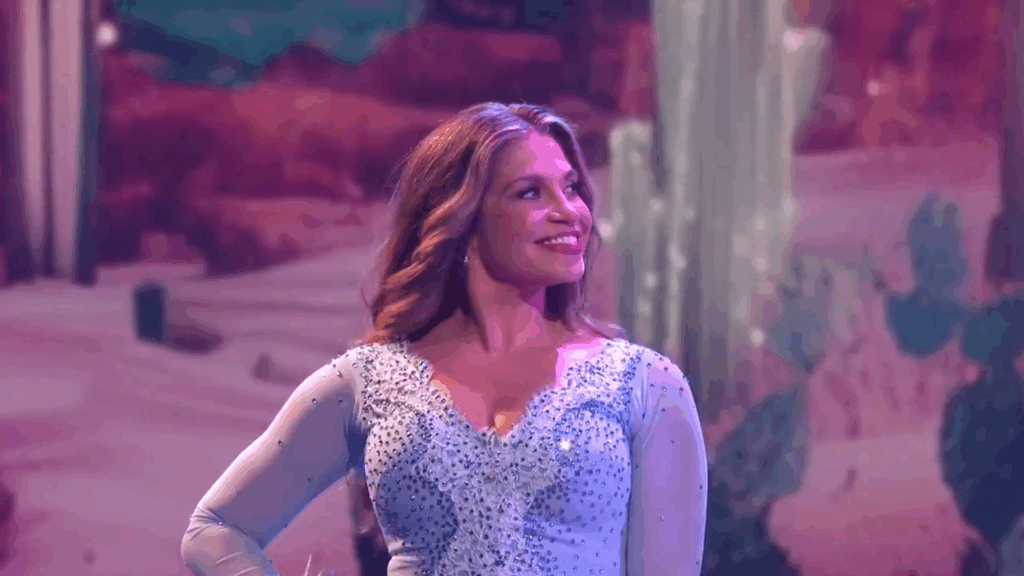
Danielle Fishel on Dancing With The Stars.
Danielle Fishel performs on TikTok Night for ‘Dancing With The Stars.’ (Image Credit: ABC)

(Almost) everyone was sad to see Lauren Jauregui go

On Tuesday, September 30, Dancing With The Stars Season 34 saw the elimination of Lauren Jauregui of Fifth Harmony and of her dance partner, Brandon Armstrong.

It was a shocker! Not only to fans, but to fellow contestants.

The others took tot he stage to console the freshly eliminated duo.

Then, it appears that a new layer of drama emerged on the dance stage.

Whitney Leavitt of The Secret Lives of Mormon Wives seemed to want Danielle Fishel to celebrate with her.

At least, those viewing video online observed Leavitt looking happy — and seeming to want Fishel to mirror her apparent joy.

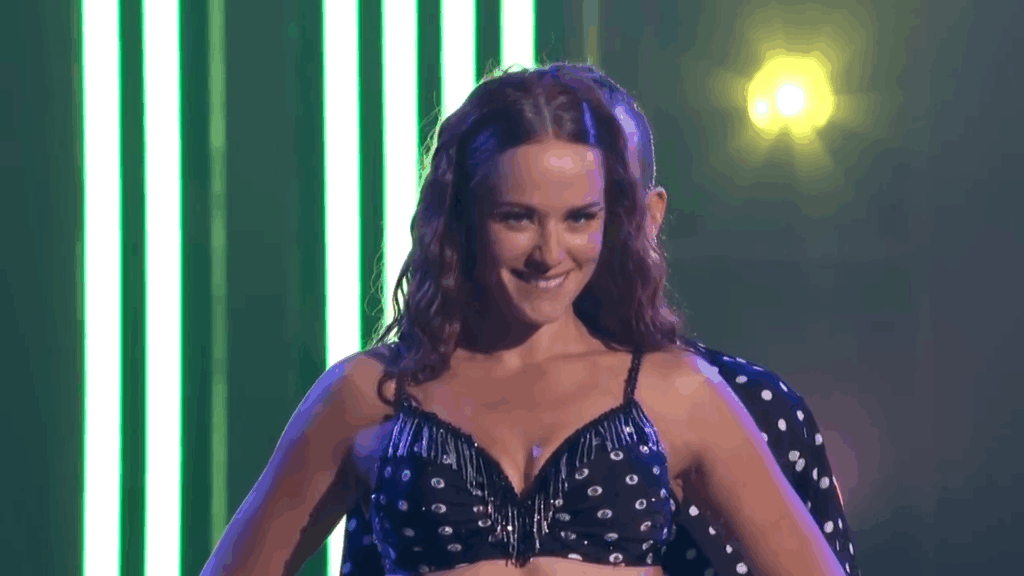
Whitney Leavitt smiling on Dancing With The Stars.
Giving a totally normal smile, Whitney Leavitt performs on the TikTok Night episode of Dancing With The Stars. (Image Credit: ABC)

Danielle Fishel seemed to turn down Whitney Leavitt

However, Danielle Fishel did not take Whitney Leavitt’s invitation to gleefully celebrate the stunning elimination.

In fact, it appears that the Boy Meets World alum actually shooed the Hulu star away.

As you can imagine, Leavitt’s mood appeared the shower.

Her face falls, even looking chastened. See for yourself:

Obviously, no one knows with certainty what exchange took place between these two.

However, some believe that Fishel simply wished to celebrate this elimination in private, being more experienced in the public eye than Leavitt.

Others note that perhaps Fishel felt genuinely heartbroken over Jauregui’s elimination — and thus did not share Leavitt’s enthusiasm, even privately.

Lauren Jauregui and Brandon Armstrong on Dancing With The Stars.
On what would be their final night on Dancing With The Stars, duo Lauren Jauregui and Brandon Armstrong wowed the audience with a Cha Cha. (Image Credit: ABC)

Don’t gloat over fan favorites leaving (it’s a bad look)

It is important to note that Lauren Jauregui and Brandon Armstrong were a fan-favorite couple — yes, even this early in the season.

The audience found their elimination heartbreaking.

So did many of the other contestants.

No matter how someone might truly feel about the elimination (it is, after all, a competition), openly celebrating would not be a good look.

Danielle Fishel Brutally Rebuffs Whitney Leavitt After ‘DWTS’ Gaffe was originally published on The Hollywood Gossip.

​The Hollywood Gossip

Categories
Entertainment

Bad Bunny Super Bowl LX Halftime Show Threatened by ICE

Reading Time: 4 minutes

Bad Bunny’s Halftime Show may be ruined by ICE terrorizing the crowd.

That’s not speculation — it’s a threat directly from the Trump administration.

After last month’s Bad Bunny Super Bowl announcement, the singer expressed his excitement.

Armed federal agents seem poised to raid the Super Bowl itself. Truly, no American institution is safe.

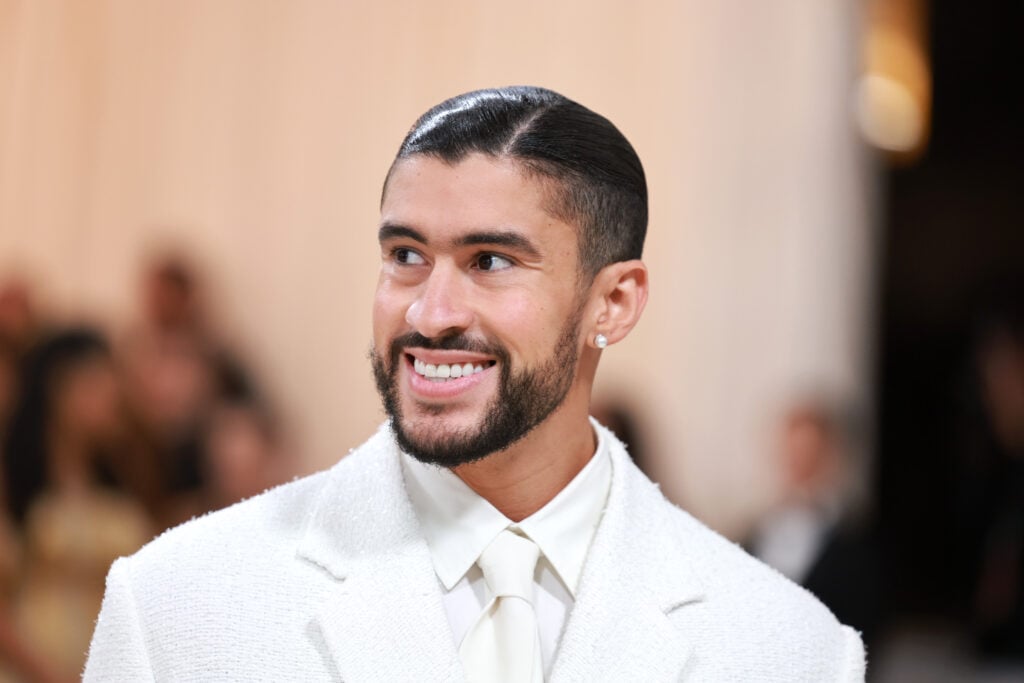
Bad Bunny at the 2023 Met Gala.
Bad Bunny attends The 2023 Met Gala Celebrating “Karl Lagerfeld: A Line Of Beauty” at The Metropolitan Museum of Art on May 01, 2023. (Photo Credit: Theo Wargo/Getty Images for Karl Lagerfeld)

Bad Bunny will headline the 2026 Super Bowl Halftime Show!

In late September, the NFL announced their decision to have Bad Bunny — Benito Antonio Martínez Ocasio — perform at the Super Bowl’s main event: the Halftime Show.

“I’m going to embrace the moment,” the singer himself announced at the time. He even teased the performance itself.

“I’m going to show what we have, our music, our culture,” he gushed.

He is an American — specifically, Puerto Rican — and very proud of his heritage.

Bad Bunny, whom fans call Benito as a term of endearment, added: “I’m just going to the stage to enjoy and have fun.”

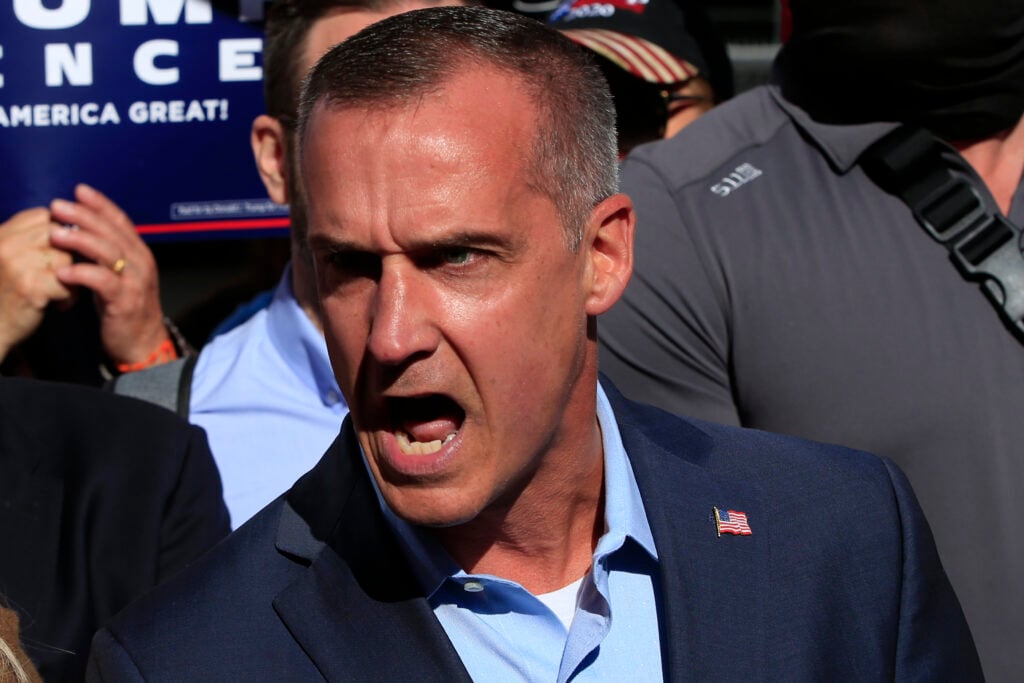
Corey Lewandowski yells in 2020.
Trump campaign adviser Corey Lewandowski speaks outside the Pennsylvania Convention Center on November 5, 2020. (Photo Credit: KENA BETANCUR/AFP via Getty Images)

We probably don’t have to tell you that Bad Bunny is one of the most popular male singers on the planet.

However, despite his latest studio album (Debí Tirar Más Fotos came out this year), he opted to not go out tour.

He cited a desire to protect his fans from Donald Trump’s ICE thugs as our national decline continues.

Specifically, Bad Bunny predicted that “f–king ICE” would target fans at his shows. And he was probably right.

As it turns out, that same looming threat also applies to the Super Bowl.

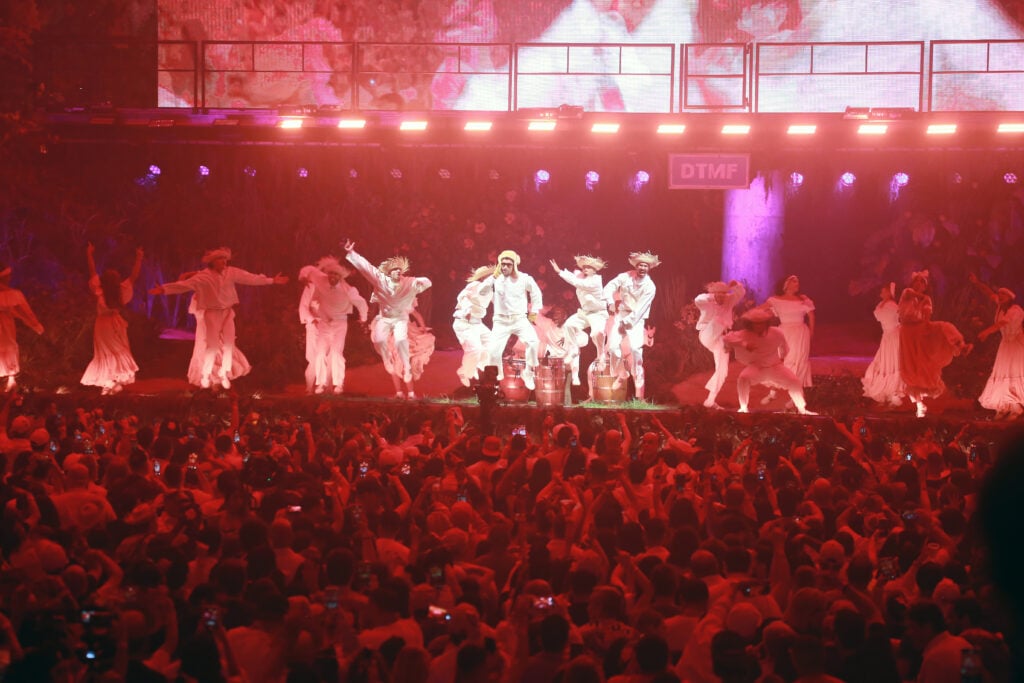
Bad Bunny performs in 2025.
Bad Bunny performs live during “No Me Quiero Ir De Aquí; Una Más” Residencia at Coliseo de Puerto Rico José Miguel Agrelot on September 20, 2025. (Photo Credit: Gladys Vega/Getty Images)

Here is what Corey Lwandowski is threatening for the Super Bowl

On-again, off-again Trump advisor Corey Lewandowski is chief advisor to noted dog-murderer Kristi Noem.

And he’s threatening the Super Bowl crowd.

On Wednesday, October 1, Lewandowski appeared on The Benny Show, telling host Benny Johnson that no American place is safe from Trump’s forces.

“I don’t care if it’s a concert for Johnny Smith or Bad Bunny or anybody else,” he menaced during the podcast. “We’re going to do enforcement everywhere.”

Paradoxically, Lewandowski added: “We are going to make Americans safe. That is a directive from the president. If you’re in this country illegally, do yourself a favor: Go home.”

Obviously, in real life, we all know that plenty of legal residents — including American citizens — are targets of ICE.

And Lewandowski is vowing on behalf of DHS that no place in America is safe.

“There is nowhere that you can provide safe haven to people in this country illegally,” he continued. “Not the Super Bowl and nowhere else.”

Lewandowski threatened: “We will find you, we will apprehend you. We will put you in a detention facility, and we will deport you.”

He added: “So know that that is a very real situation under this administration, which is completely contrary to what how it used to be.”

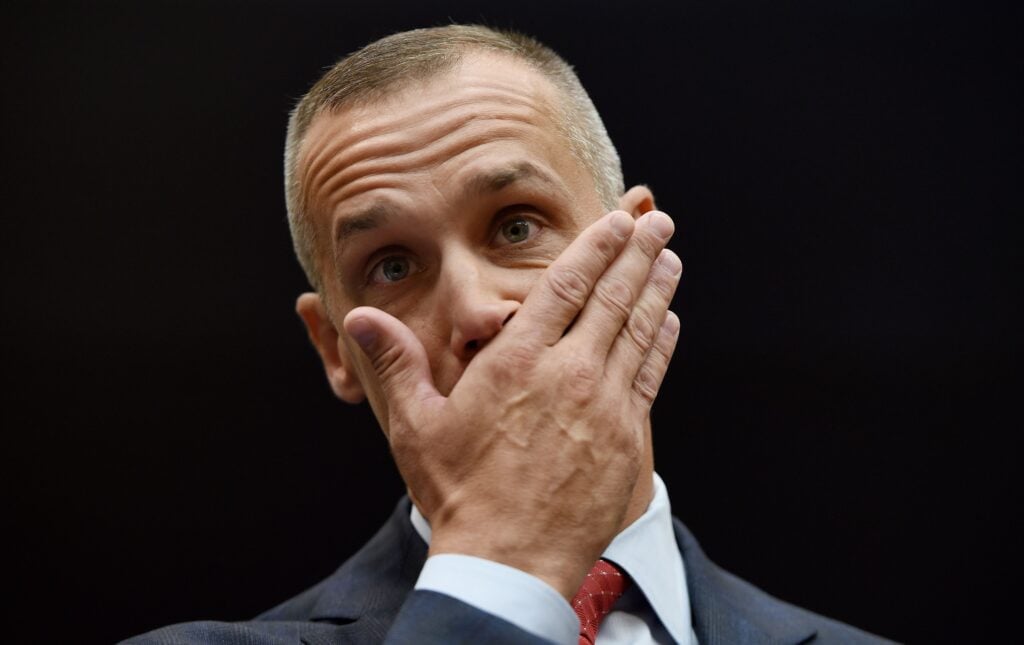
Corey Lewandowski in 2019.
Donald Trump’s former campaign manager, Corey Lewandowski, looks on before testifying before the House Judiciary Committee as part of a congressional investigation of the Trump presidency on September 17, 2019. (Photo Credit: OLIVIER DOULIERY/AFP via Getty Images)

He also made an odd statement about the singer himself

Around 70 thousand people regularly attend the Super Bowl each year.

Additionally, tens of thousands of employees make the big game happen in the first place.

Lewandowski is effectively threatening to terrorize all of them — especially those with brown skin.

Beyond siccing ICE on America’s biggest show, he’s espousing big opinions about Bad Bunny himself.

“It’s so shameful that they’ve decided to pick somebody who just seems to hate America so much to represent them at the halftime game,” Lewandowski whined without explanation.

Bad Bunny in August 2025.
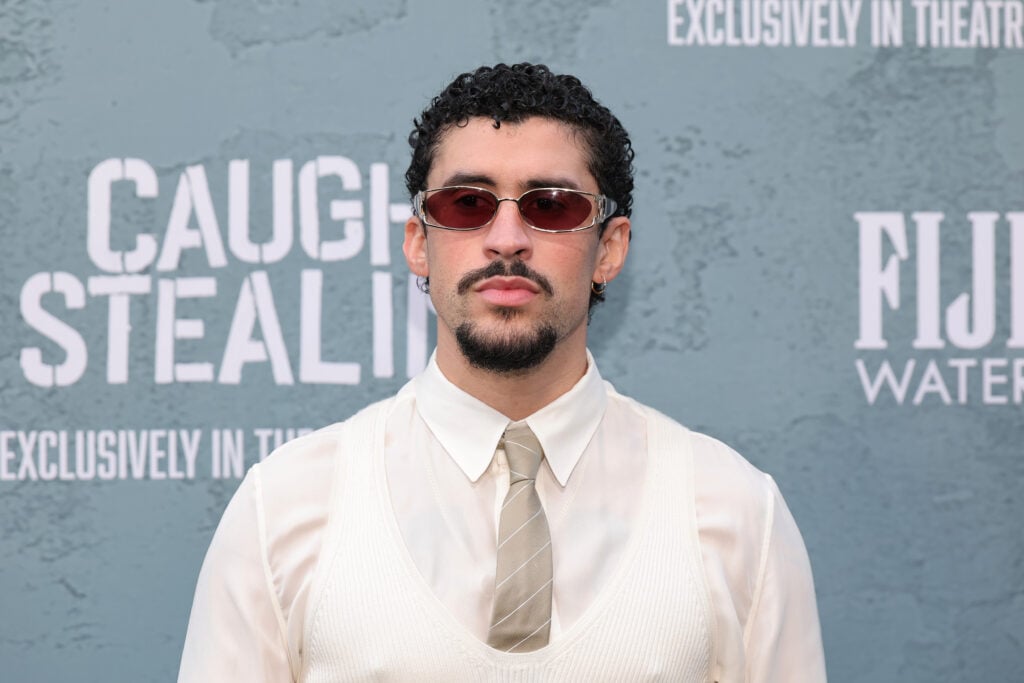
Bad Bunny attends Columbia Pictures’ “Caught Stealing” premiere at Regal Union Square on August 26, 2025. (Photo Credit: Dia Dipasupil/Getty Images)

The plans for ICE at Super Bowl LX before, during, and after the Bad Bunny Halftime Show are, unfortunately, no idle threat.

The notorious agency told TMZ in a statement: “There is no safe haven for violent criminal illegal aliens in the United States.”

Obviously, that is not ICE’s actual target. They know that, and so do we.

This is a clear warning for anyone considering attending the Super Bowl to consider carefully whether they or their loved ones may be in danger.

It will be years before ICE agents can be put on trial en masse. Perhaps Corey Lewandowski will be right there beside them.

If so, his podcast threats about Bad Bunny could be evidence. Only time will tell.

Bad Bunny Super Bowl LX Halftime Show Threatened by ICE was originally published on The Hollywood Gossip.

​The Hollywood Gossip

Categories
Entertainment

‘Cancel Netflix’ Campaign Backed By Elon Musk May Have Led to Stock Slide

Reading Time: 3 minutes

If you’ve noticed the phrase “cancel Netflix” on your social media feeds today, you’re certainly not alone.

The streaming giant is at the center of a new controversy involving a little-known animation series, which recently came under fire from Tesla CEO Elon Musk.

The show, Dead End: Paranormal Park, was canceled by Netflix in 2023, but Musk recently joined the campaign to punish the service for ever carrying it at all.

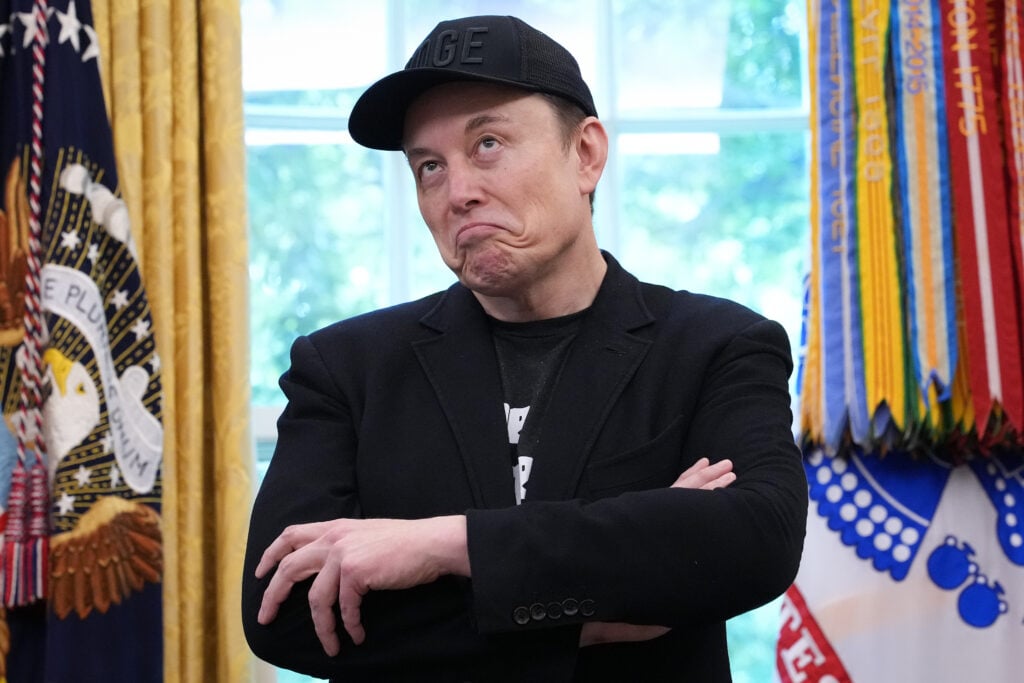
Tesla CEO Elon Musk speaks alongside U.S. President Donald Trump to reporters in the Oval Office of the White House on May 30, 2025 in Washington, DC.
Tesla CEO Elon Musk speaks alongside U.S. President Donald Trump to reporters in the Oval Office of the White House on May 30, 2025 in Washington, DC. (Photo by Kevin Dietsch/Getty Images)

Musk’s complaint stems from the fact that the series featured a character named Barry Guttman, who, at one point, comes out as transgender.

Elon Musk lashes out at canceled Netflix series

“This is not ok,” Musk tweeted, along with a clip from the show. “Cancel Netflix for the health of your kids,” he added.

The billionaire X owner then posted a screenshot to prove that he had canceled his own Netflix account.

He later kept up his assault on the service, tweeting scenes from other shows that featured storylines featuring trans characters and repeating his calls for a boycott.

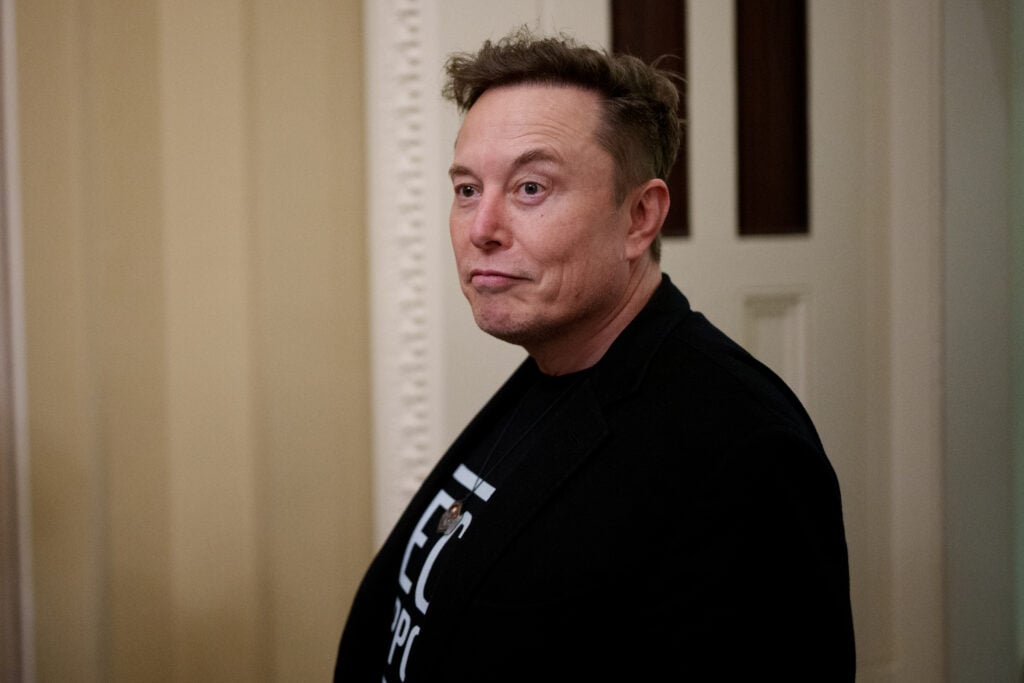
White House Senior Advisor to the President and Tesla and SpaceX CEO Elon Musk departs the U.S. Capitol Building on March 5, 2025 in Washington, DC. Musk was meeting with Republican senators at a closed door lunch.
White House Senior Advisor to the President and Tesla and SpaceX CEO Elon Musk departs the U.S. Capitol Building on March 5, 2025 in Washington, DC. Musk was meeting with Republican senators at a closed door lunch. (Photo by Andrew Harnik/Getty Images)

Not surprisingly, “cancel Netflix” quickly became the top trending topic on X, and the situation led to harassment directed at Dead End: Paranormal Park showrunner, Hamish Steele.

Steele initially took the situation in stride, joking that Netflix is in no way promoting his canceled series.

“It’s all lies and slander! Netflix is NOT promoting at the moment!” he wrote (via Deadline).

Just hours later, Steele reported that the situation had escalated to a frightening degree.

“I have mostly been very ok today and found it all quite funny, while really appreciating everyone who has reached out, but the extremely nasty weird homophobic and antisemitic emails have started rolling in and it is getting a little scary so I apologize if I take longer to respond to stuff,” he wrote.

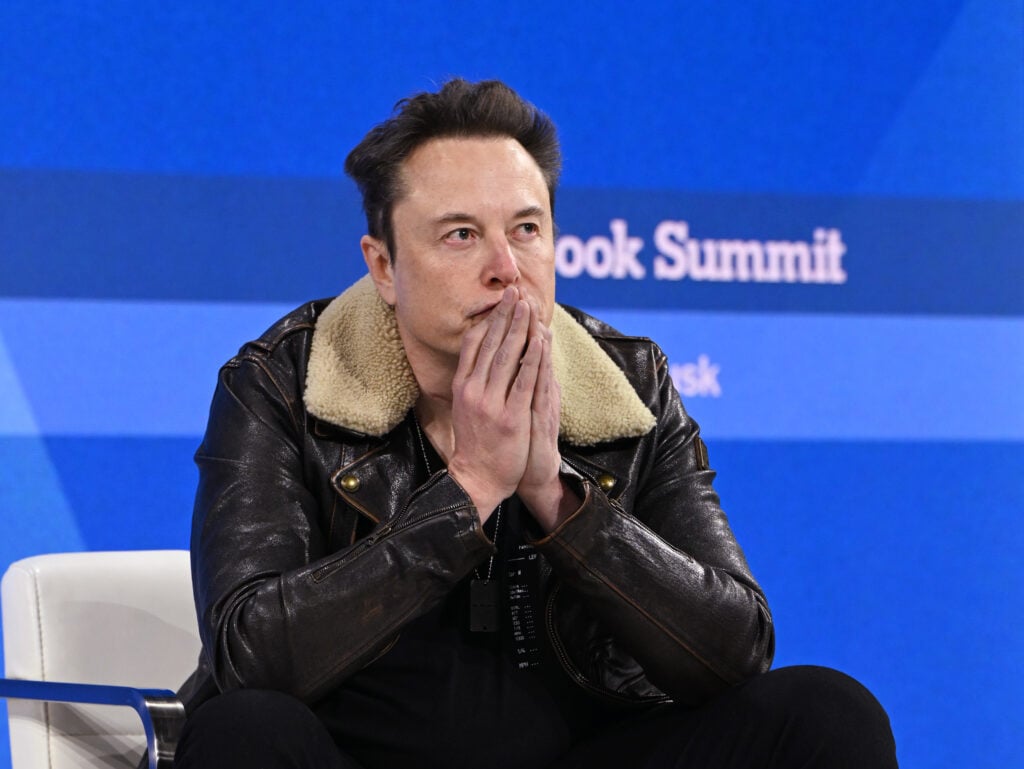
Elon Musk speaks onstage during The New York Times Dealbook Summit 2023 at Jazz at Lincoln Center on November 29, 2023 in New York City.
Elon Musk speaks onstage during The New York Times Dealbook Summit 2023 at Jazz at Lincoln Center on November 29, 2023 in New York City. (Photo by Slaven Vlasic/Getty Images for The New York Times)

“I will just say today is much much worse and I am going to basically be on the down low for the foreseeable,” Steele continued, adding, “My apologies.”

Musk has a long history of opposing trans rights, seemingly stemming from his fractured relationship with daughter Vivian Wilson.

Wilson says she is no longer on speaking terms with her father after coming out as trans.

While it’s impossible to say how much of an impact Musk’s boycott has had in terms of subscribers, Netflix’s stock slid roughly two percent in the day since he launched his war against the brand.

‘Cancel Netflix’ Campaign Backed By Elon Musk May Have Led to Stock Slide was originally published on The Hollywood Gossip.

​The Hollywood Gossip

Categories
Entertainment

Nicole Kidman Was ‘Blindsided’ By Keith Urban Affair, Blames Blake Shelton …

Reading Time: 3 minutes

Fans were stunned this week by the news of the Keith Urban and Nicole Kidman split, and every new detail that emerges only adds to the shock.

For starters, insiders now claim that Urban already has a new girlfriend.

Even more surprising is the fact that the rumored new flame is none other than Keith’s guitarist, Maggie Baugh.

Nicole Kidman and Keith Urban attend the 76th Annual Golden Globe Awards at The Beverly Hilton Hotel on January 6, 2019 in Beverly Hills, California.
Nicole Kidman and Keith Urban attend the 76th Annual Golden Globe Awards at The Beverly Hilton Hotel on January 6, 2019 in Beverly Hills, California. (Photo by Frazer Harrison/Getty Images)

That news has not been confirmed, but if it turns out to be true, it might go a long way toward explaining why Nicole filed for divorce abruptly and without any warning to Team Keith.

It’s always shocking when a 19-year marriage comes to an end, but the circumstances surrounding the Nicole-Keith split make it even more unbelievable.

And insiders say it all comes down to Keith suffering from a colossal midlife crisis.

Nicole Kidman feels ‘betrayed’ by Keith Urban’s infidelity, sources claim

To be clear, we don’t know if Keith started hooking up with his new flame while he and Nicole were still married.

Nicole Kidman and Keith Urban depart at Balenciaga on July 06, 2022 in Paris, France.
Nicole Kidman and Keith Urban depart at Balenciaga on July 06, 2022 in Paris, France. (Photo by Jacopo M. Raule/Getty Images For Balenciaga)

But one insider insists that that’s the case.

“Nicole feels blindsided not just by Keith but by the silence of the whole group,” the source tells Rob Shuter’s ShuterScoop.

Of course, as is usually the case with this sort of thing, in retrospect, the signs were there.

They began back in January, when Keith abruptly fired his band of 25 years.

Then there were the “late nights and mysterious disappearances.”

Keith Urban and Nicole Kidman attend a special screening of "Expats" at Palace Verona on December 20, 2023 in Sydney, Australia.
Keith Urban and Nicole Kidman attend a special screening of “Expats” at Palace Verona on December 20, 2023 in Sydney, Australia. (Photo by Brendon Thorne/Getty Images)

Nicole believes Blake Shelton helped to keep Keith’s secret

“Looking back, Nicole sees it now. The jokes, the awkward pauses, the looks — they were signs,” says the insider.

The insider says Nicole feels particularly betrayed by the fact that Keith’s friends — including Blake Shelton — helped to keep his secret.

“She just didn’t want to believe them. She thought they were her friends, too. Now she feels betrayed by the whole world Keith came from.”

Nicole Kidman and Keith Urban attend the Australian premiere of Being The Ricardos at the Hayden Orpheum Picture Palace on December 15, 2021 in Sydney, Australia.
Nicole Kidman and Keith Urban attend the Australian premiere of Being The Ricardos at the Hayden Orpheum Picture Palace on December 15, 2021 in Sydney, Australia. (Photo by Lisa Maree Williams/Getty Images)

“She can’t understand how no one gave her even a hint — not Blake, not anyone.”

It sounds like Nicole is experiencing the usual mix of strong negative emotions that comes with such a betrayal.

But she’s also dealing with the added stress of going through all of this in the public eye.

We can’t help but wonder if Gwen Stefani is aware of her husband’s alleged complicity. If so, Blake might soon find that he has some explaining to do!

We’ll have further updates on thi developing story as new informtion becomes available.

Nicole Kidman Was ‘Blindsided’ By Keith Urban Affair, Blames Blake Shelton … was originally published on The Hollywood Gossip.

​The Hollywood Gossip

Categories
Politics

The nation’s cartoonists on the week in politics

Every week political cartoonists throughout the country and across the political spectrum apply their ink-stained skills to capture the foibles, memes, hypocrisies and other head-slapping events in the world of politics. The fruits of these labors are hundreds of cartoons that entertain and enrage readers of all political stripes. Here’s an offering of the best of this week’s crop, picked fresh off the Toonosphere. Edited by Matt Wuerker.

​Politics

Categories
Health

Telehealth Services Under Medicare Just Got Much Harder To Access. Here’s What To Know

Without action from Congress or President Trump, Medicare patients will once again face telehealth restrictions. We’ll explain how this might affect you.

​Health Digest – Health News, Wellness, Expert Insights