Categories
Alaska News

Independents, Democrats out-fundraise Republican incumbents in most Alaska House races

A campaign sign for Cliff Groh, candidate for Alaska House District 18 is seen in the Muldoon neighborhood of northeast Anchorage on Sep. 23, 2026. (Photo by Yereth Rosen/Alaska Beacon)

A campaign sign for Cliff Groh, candidate for Alaska House District 18 is seen in the Muldoon neighborhood of northeast Anchorage on Sep. 23, 2026. (Photo by Yereth Rosen/Alaska Beacon)

A Fairbanks fire captain’s campaign raised over $72,000. A retired Kodiak school teacher and union leader’s campaign raised nearly $71,000. A Clam Gulch fisherman’s campaign raised over $45,000. All three candidates are independents running for Republican-held seats in the Alaska State House. 

Democratic and independent candidates for the Alaska State House are largely out-fundraising Republican opponents in races for Republican-held seats. Of 17 seats held by Republicans that have a Democratic or independent challenger, that challenger is outraising the Republican in 11 races.

According to campaign disclosure reports filed with the Alaska Public Offices Commission ahead of the August primary election, Democratic and independent candidates outpaced Republicans in fundraising for races in Fairbanks, Anchorage, the Kenai Peninsula and Kodiak and Prince William Sound. Some are political newcomers and some have run for the Legislature before.

Jenny-Marie Stryker, executive director of the Alaska Democratic Party, said she’s not surprised. 

”When donors are giving overarchingly to one side of the movement, it’s because they’re looking for something different. And they’re clearly taking a look at the other side and seeing that they have a better return on their investment when they’re investing in coalition-minded leaders, who really want to put Alaska first,” she said.

There are some notable exceptions. Six Republican incumbents — mostly in the Matanuska-Susitna Borough — have out-fundraised Democrat and independent opponents.

All forty members of the Alaska State House are up for re-election. In the 34th Alaska State Legislature, there was a tight margin between the 21-member multipartisan House Majority caucus and the 19 members of the all-Republican House Minority caucus leading to close votes on major legislation. If one or more Republican held seats flip, it could boost the majority caucus — made up of a mix of Republicans, Democrats and independents — and its priorities.  

Alaska House Representatives serve two-year terms, representing roughly 18,335 Alaskans in each district.

Campaign donations are just one way to gauge support for candidates. Financial disclosures include donations from individuals, industry and political interest groups, and political action committees.

In several races, Democratic and independent candidates gathered donations from a variety of individual Alaskans. Some are backed by unions, political interest groups or the Alaska Democratic Party. In some competitive races, some candidates — Republicans, Democrats and independents — gave large donations or personal loans to their own campaigns. 

The majority of Alaska’s approximately 603,000 voters are unaffiliated with a political party. A September report by the Alaska Division of Elections shows that 63% were registered as nonpartisan or undeclared in the August primary. 

An estimated 23.5% of voters are registered Republican and 11.6% registered Democrat. The remaining roughly 3% of voters are registered with a variety of other small political parties. 

Candidates of all political affiliations are making their bids for those independent voters. The ranked choice general election is just six weeks away. 

An independent is leading in donations and primary votes in Fairbanks 

In Fairbanks, independent Joy Beth Cottle has a significant financial advantage over  Republican Harmony Tomaszewski. The two are running for a seat vacated by Tomaszewski’s husband, former Republican Rep. Frank Tomaszewski, who is running for the Alaska Senate. House District 34 extends across Steele Creek, Two Rivers, Eielson Air Force Base and Salcha. 

Joy Beth Cottle is running to represent House District 34 in 2026. (Photo courtesy of Joy Beth Cottle)
Harmony Tomaszewski is running to represent House District 34 in 2026. (Photo courtesy of Harmony Tomaszewski)

Cottle, a fire captain and paramedic based in Delta Junction, has raised more than $72,000 as of the week before the election. Dozens of small, individual donors have contributed to Cottle, as well as larger donations from unions representing laborers, plumbers and pipefitters, and public employees. Political action committees for Fairbanks Firefighters, the local Teamsters union and NEA-Alaska, the public teachers union, donated to Cottle’s campaign. 

Republican Harmony Tomaszewski, a small business owner in Fairbanks, raised nearly $34,000 as of a week before the election. She raised a variety of large and small donations from individual donors and the Republican Women of Fairbanks. She also gave a $5,000 personal loan to the campaign. 

Former Republican Sen. Rob Myers of Fairbanks — who is vacating the seat that Rep. Frank Tomaszewski is running for — donated $2,000 to Harmony Tomaszewski’s campaign. 

In the primary election, Cottle won by just 280 votes, or 53% of the vote, compared to Tomaszewski who won 47% of votes cast in the district.  

Cottle said her district has been particularly impacted by the increases in cost of fuel driven by the Trump administration’s U.S. war on Iran. “A lot of people are hurting specifically because of this war,” she said. 

“Some of the platforms and initiatives from the GOP aren’t as popular these days because people are trying to fill their fuel tanks. I know up here in Fairbanks, just about every door that I knock, people are waiting for their PFD, but they also know that’s not going to be enough to get their fuel tanks filled. And we’re looking at really high energy costs going into the winter as well,” she said.

Nearby in Fairbanks’ House District 33 race, independent Pepper McFarland and Republican Barbara Haney are challenging Republican incumbent Mike Prax, who has held the seat representing the North Pole and Badger areas since 2019. 

McFarland, a teacher based in North Pole, has out-fundraised both Republican opponents, though she trailed them in votes in the primary election. 

A week before the primary, she reported collecting nearly $23,000 from dozens of donors as well as unions like the Alaska State Employees Association and NEA-Alaska teachers union.

Rep. Mike Prax, R-North Pole speaks on the House floor on the operating budget on Apr. 13, 2026. (Photo by Corinne Smith/Alaska Beacon)

Comparatively, incumbent Republican Mike Prax reported bringing in $13,500 as of a week before the primary election, but $10,000 of that Prax donated to his own campaign.

Republican challenger Barbara Haney, a retired economist and former assembly member with the Fairbanks North Star Borough Assembly, reported roughly $7,400 in contributions as of a week before the primary.

In the primary election, Prax led by just 105 votes, or 37%. Haney had 34%, followed by McFarland with 28.8% of votes cast in the district.

Prax said this is his first election with political challengers — in prior elections he was the only candidate running. He said he thinks that was driven by differences in education funding policy, particularly with McFarland, which he said is one of the top issues he’s hearing about from voters in his district.

An independent leads in campaign donations and primary support in Kodiak

In House District 5, which includes coastal communities of Kodiak Island and Prince William Sound, independent Kathy Simpler has an edge on Republican Sheldon Prout. The Kodiak residents are running for the seat vacated by former Republican Rep. Louise Stutes who is running for the Alaska Senate.

Sheldon Prout is running to represent House District 5 in the 2026 election. (Photo courtesy of Sheldon Prout)
Kathy Simpler is running to represent House District 5 in 2026. (Photo courtesy of Kathy Simpler)

Simpler, a former Kodiak elementary school teacher and union leader, raised over $70,700 as of a week prior to the election. The donations came from a variety of small and large donors, as well as unions: the Alaska Public Employees Association, NEA-Alaska teachers union — where she’s served as director since 2022 — the local Teamsters and the Anchorage Firefighters Union’s political action committee.

Prout, a Republican and commercial fisherman, raised over $21,400 in large and small donations one week before the primary, including $2,500 in donated snow crab for a reception at the fisheries tradeshow Comfish.

Simpler won the primary by 781 votes with 61% of the vote, while Prout had 38.5% of the vote and 1,319 votes. 

Independent seeks to unseat Republican incumbent in Homer 

In the southern Kenai Peninsula, independent Brent Johnson is running once again to unseat Republican incumbent Sarah Vance, who has represented the district since 2019. He has a very slight financial edge, as of the most recent financial reporting, and took a greater share of the vote in the primary election.

Johnson is a commercial fisherman and former Kenai Peninsula Borough Assemblymember from Clam Gulch, and unsuccessfully ran against Vance, of Homer, in 2024. 

Brent Johnson is running to represent House District 6 in the 2026 election. (Photo courtesy of Brent Johnson)
Rep. Sarah Vance, R-Homer, speaks Friday, April 26, 2024, on the floor of the Alaska House of Representatives. (Photo by James Brooks/Alaska Beacon)


Johnson raised more than $45,000 as of a week before the primary, from large and small donors and the Alaska Public Employees Association union. He also made a personal donation of $20,000 to his own campaign. 

Vance raised nearly $45,000 as of a week before the primary, from large and small donors, including $1,000 from current Republican Sen. Rob Yundt of Wasilla.  

In the primary election, Johnson won by 890 votes with 56.8%, while Vance landed 43% of votes.

Democrats lead in fundraising in races for Republican-held seats in Anchorage

Democrat Cliff Groh and Republican Dan Sager are running for a seat vacated by Republican Rep. David Nelson who is not seeking re-election.  Anchorage’s House District 18 includes Government Hill, Joint Base Elmendorf-Richardson and a small section of Muldoon. 

Groh, a former prosecutor, has far outraised Sager — and any other state House candidate — and won the primary election. Groh raised nearly $152,000, with donations from dozens of Alaskans, as well as from the Alaska House Democratic Campaign Committee, public employee, construction and firefighters unions. He also wrote a $3,000 check to his own campaign.

Dan Sager, candidate for House District 18.
Cliff Groh, candidate for House District 18. (Photo supplied by candidate)
Cliff Groh, candidate for House District 18 in the 2026 election. (Photo courtesy of Cliff Groh)

Groh held the seat in 2023 and 2024 but lost a bid for re-election to Nelson in 2024 by just 22 votes. 

Sager, a sales manager for a manufacturing company and a political newcomer, has raised over $12,600 as of a week before the election, from a variety of donors including from Anchorage Republican groups. He also donated $3,000 to his own campaign. 

In the primary election, Groh won by 327 votes with 67% of the vote, while Sager won nearly 33%. 

Groh said he’s raised so much money in part because he has worked hard at his campaign, which he began last year, making calls and walking door-to-door speaking with residents. He noted that campaigns are expensive in his district: with more than half of residents living on Joint Base Elmendorf-Richardson, it’s more difficult to reach voters. “So I have to send the mailers, you know, mail pieces to them to reach them. So my campaign has a program for that, and that, of course, costs money,” he said. 

He said he’s had support from the Alaska Democratic Party and political consultants, but hopes his experience and vision garners support from voters.

In South Anchorage’s House District 15, long-time Republican incumbent Mia Costello is running for re-election against Democratic challenger Denny Wells, who raised more money than her and led in primary votes. 

Mia Costello, incumbent candidate for House District 15. Photo provided by candidate.
Denny Wells is a candidate for House District 15 in 2026. (Photo courtesy of Denny Wells)

The district includes Campbell Lake, Sand Lake, Bayshore and Dimond High School. Wells, a business owner, ran against Costello  for the seat in 2022 and 2024. Costello has held the seat since 2011.

In the primary, Wells won by 244 votes — winning nearly 53% of the vote; Costello won 47.2% of votes cast in the district.

Wells had raised nearly $23,000 as of a week before the primary, plus another $3,500 in donations a day before the election, totalling more than $26,000 by the primary election. He saw small and large donations from individual donors, as well as funds from the Alaska Democratic Party, the Alaska House Democratic Campaign Committee, and NEA-Alaska, the public teachers union. He also gave $4,000 in non-monetary contributions to his own campaign in printed materials, signs and associated hardware.

Costello raised more than $23,700 by the week before the election. Individual donors as well as the Anchorage Republican Women’s Club, and the Alaska Cabaret, Hotel, Restaurant and Retailers Association political action committee.

Other notable races

On the Kenai Peninsula, in the House District 7 and House District 8 races, Republican incumbents landed first place in the primary elections, even though Democratic and independent challengers raised more in campaign donations so far this year. 

In the race for House District 7, which includes Kenai and Soldotna, Democratic challenger Kate Veh is running against Republican incumbent Justin Ruffridge who was first elected to the seat in 2022.

Veh raised over $6,700, which was bolstered by a $3,000 donation from the Alaska Democratic Party. Ruffridge raised over $3,800 in donations this year, with roughly $6,200 held over from last year. This year Ruffridge had just a handful of donations, including $1,000 from the Laborers Local 341 construction union and $1,000 from the Pacific Seafood Processors political action committee. 

In the August primary, Ruffridge won nearly 74% of the vote, while Veh won 26% of votes cast in the district. 

Ruffridge said he’s not surprised at the Democratic and independent fundraising efforts. 

“I feel like in my four years of being in elected office, that has generally seemed to be the case. I think there’s a bit of a more national fundraising effort in this state on behalf of folks in that particular party alignment, and you don’t see that necessarily from folks on the Republican side, I think ours is a little more grassroots, typically,” he said.

He said his campaign has not had support from the Alaska Republican Party. 

The Alaska Republican Party did grant an interview to the Alaska Beacon for this story.

Ruffridge said he doesn’t see the fundraising numbers as evidence of a pushback against Republican policies or the Trump administration, but said support for the party in power usually lapses during midterm elections. 

In House District 8, which encompasses the northern Kenai Peninsula from Hope in the north to Seward in the southeast, independents Nissa Savage and Frank Quinn are challenging incumbent Republican Bill Elam, who was elected in 2025. 

Elam had a strong lead in the primary, despite raising only $50 since February. Quinn raised $139 before the primary elections. Savage, a certified public accountant based in Soldotna, raised more than $9,700, including a $3,000 donation from the Alaska Democratic Party. 

In the primary, Elam won by 72.5% of the vote, while Savage landed 17.1%, and Quinn won 10.3% of votes.  

In Southeast Alaska’s House District 1, which encompasses communities from Metlakatla and Ketchikan to Wrangell, Republican incumbent Jeremy Bynum is running for re-election against independent challenger Grant Echohawk. He led the primary vote and has outraised Echohawk, in part because of a $10,000 donation to his own campaign.

Bynum said in an interview he sees running for re-election as first doing the job of a legislator. He said he provided his own funding as a backstop since he was involved in three special sessions this summer as a member of the House Finance Committee, and could not campaign according to state law. He said he’s not surprised to hear Democrats and independents are out-fundraising Republicans this year. 

“There’s people that run as nonpartisan, but they’re strongly supported by the Democrat Party and the apparatus,” he said. “The Democratic Party in the state has made sure that they’re putting funding into those races not only this year but even last year if a candidate was filed, you know, so they’re very motivated. That’s for sure.”

All Alaska candidates are required to file new financial disclosure reports ahead of the November general election. The next disclosures are due October 3.

SUBSCRIBE: GET THE MORNING HEADLINES DELIVERED TO YOUR INBOX.

Categories
Alaska News

Alaska Beacon reporter recognized with national science journalism award

The village of Kipnuk, largely submerged by the remnants of Typhoon Halong, is seen from the air on Oct. 12, 2025. Alaska Air National Guard rescue personnel conducted search and rescue operations there, and the Alaska Division of Homeland Security and Emergency Management has worked with the Alaska Organized Militia and the U.S. Coast Guard in the response. (Photo provided by the Alaska National Guard)

The village of Kipnuk, largely submerged by the remnants of Typhoon Halong, is seen from the air on Oct. 12, 2025. Alaska Air National Guard rescue personnel conducted search and rescue operations there, and the Alaska Division of Homeland Security and Emergency Management has worked with the Alaska Organized Militia and the U.S. Coast Guard in the response. (Photo provided by the Alaska National Guard)

After the latest catastrophic storm hit Western Alaska, displacing more than 1,500 people, killing at least one and leaving villages in ruins, residents face an existential crisis. 

Will the wide delta that fans out between the lower Yukon and Kuskokwim Rivers and has supported one of the circumpolar north’s largest Indigenous populations for millennia continue to be a place where Alaska’s Yupik people can live?

So begins Alaska Beacon reporter Yereth Rosen’s award-winning report from 2025, which weaves together regional indigenous knowledge, scientific study findings and political influences to answer a freighted question about the future viability of village life in Western Alaska after ex-typhoon Halong.

Yereth Rosen

Her story, reported with help from Corinne Smith, was honored most recently with the American Geophysical Union’s Perlman Award for Excellence in Science Journalism. The award is a top honor for science reporting that makes information about science accessible and interesting to the general public.

The award is named for the former science editor of the San Francisco Chronicle.

Rosen’s story was selected as the anniversary of the devastating Western Alaska storms approaches, and as parts of the region are again under flood and storm warnings from ex-Typhoon Dujuan.

Typhoon disaster in Western Alaska raises questions around the region’s future

Her reporting did not stop with the one story — she followed the residents of the two villages hardest hit by the storms as they grappled with whether to leave their ancestral homelands or stay in areas that are vulnerable to catastrophic flooding and storms.

Ultimately, the residents of Kipnuk and Kwigillingok decided to relocate.

Rosen’s story is an example not just of national excellence in science journalism, but a realization of the Alaska Beacon’s mission to report fairly and independently on the people and interests that affect state policy, and to tell stories that aren’t being told, to bring fresh perspectives to state issues and to amplify the voices of Alaska communities that have been marginalized. 

SUPPORT: YOU MAKE OUR WORK POSSIBLE

Categories
Sports Fox

Tom Brady’s NFL Power Rankings: Which QBs Other Than Josh Allen Have Impressed The GOAT?

Week 2 of the 2026 NFL season didn’t feature as much scoring as Week 1, but there were still several quarterbacks who impressed, at least in Tom Brady’s eyes. In the most recent edition of Tom Brady’s power rankings, the GOAT pinpointed a handful of quarterbacks who have starred through the first two weeks. Buffalo Bills quarterback Josh Allen was among them, with Brady saying that he’s playing “very dangerous football” following his five-touchdown performance. But was Allen’s performance enough to help the Bills unseat the Seattle Seahawks at No. 1 in his power rankings? Here’s a closer look at Brady’s top 10. Brady’s thoughts: I know they sneak in at 1-1, but look, it was a short week in Buffalo. That’s pretty tough. Buffalo was opening up a new stadium. That’s as hard as it gets. Bills Mafia was out in full force. Jared Goff, give him his love. He’s playing lights out. He’s got six touchdowns and no picks in his first two games. I kind of like their prospects here as the season goes on. Brady’s thoughts: Listen, it’s not hometown bias by me. Their plus-26 point differential is third in the league. Kirk Cousins has six touchdowns in two games. C’mon, that’s pretty impressive. They go on the road and beat the Chargers. Look, undefeated is undefeated. What’s that saying? Just win, baby. Brady’s thoughts: They’re 2-0 in the division with their backup quarterback. What? No Kyler Murray. No J.J. McCarthy. Give Kevin O’Connell and Brian Flores a lot of credit. It’s a great coaching job. They held Chicago to three points. Yeah, the weather was a little nasty. But three points for Chicago a week after the Bears put up 59? Interesting. I think Kevin has amazing IQ, EQ and charisma. I think if you stack all three together, and he’s a great leader of men. So, he’s given his team a scheme advantage, getting them hyped up and ready to play every single game and he’s got an amazing intelligence about what he does. He knows how to read his guys and what they need to hear. He’s always going to put those guys in a position to win. Brady’s thoughts: The Australia trip — that’s in the past. That’s way behind them. It’s been overtalked about, overplayed — all of it. They took care of business back at home. Look, they had no Myles Garret, no Puka Nacua and they limited Aaron Donald [against the New York Giants]. This team is more than big names. Davante Adams went off for 195 yards and two tuddies. That’s exactly what they needed to get back on track. Brady’s thoughts: I’m very impressed with this start as well from Joe Burrow and the Cincinnati Bengals. A lot of complementary football — that’s what I’m seeing from Cincy. How about that defense? That’s music to the Bengals fans’ ears. We haven’t talked about that in a few years. They have eight sacks and four takeaways just to start the season in these first two weeks. That’s winning football. Two catches in Week 1 for Ja’Marr [Chase], but two touchdowns in Week 2 — possibly the catch of the year with that toe-tap on the sideline. Brady’s thoughts: Week 1 was kind of funny and some teams are winning big, but the Eagles are winning close ones. That’s nothing new to Eagles fans. It’s not a bad thing to have a close road test under your belt in September in very hot, humid conditions. They showed a lot of toughness, and that’s not easy to do for a team from the Northeast. Brady’s thoughts: Through two games, these four teams have kind of set themselves apart. [Patrick] Mahomes’ rust is completely non-existent. He looked invincible the other night. A vintage overtime performance at Arrowhead with almost 400 yards passing and Travis Kelce going off. Kenneth Walker, he’s been an absolute menace for these defenses. However, I will say their defense needs to find a way to pressure the QB. I’ve got an idea, though: Steve Spagnuolo, that guy calling the plays on defense, he’s the right guy to figure it out. Brady’s thoughts: The Bills got out to a fast start in their new stadium, which I’m really looking forward to seeing. And Detroit, they were literally playing catch-up the entire night. Tough to go on the road against a team like that; that’s really hot. The Bills’ offense had 36 points against Houston and 41 against Dan Campbell and the Lions. No turnovers across the board from Josh Allen in two games. Very impressive. I’m very impressed with Josh’s ability to eliminate the negative plays. I think early in his career, he was always trying to make a big play. He was a little bit inaccurate in the passing game. He’s really settled down and become an accurate passer. He knows when to take his chances. He’s playing very dangerous football. That’s going to be a tough team to beat. Brady’s thoughts: They get home from Australia and that travel didn’t bother them. They dominated the Dolphins. They have a plus-42 point differential this year. That’s almost double the next best in the NFL. Their offense is averaging eight [yards] per play and had no turnovers on Sunday. Are you seeing a trend here? Brock Purdy, how about this guy? He’s just always making the right decisions with his pre-snap reads. I always feel like he’s in total control. He’s very poised. I like the way Purdy’s playing. This Niners team — watch out. No one thought about them. Brady’s thoughts: In order to be the best, you’ve got to beat the best. Seattle is 2-0, winning in all three phases of the game: offense, defense and special teams. Great complementary football. And who can forget about JSN (Jaxon Smith-Njigba)? He’s got four tuddies in two games. Sam Darnold goes out a few plays into the season and in comes Drew Lock, who is completing 73% of his passes. And even more impressive, I talk about negative plays a lot, he’s had zero interceptions. That’s hard to do. They had 162 yards last week — a true running back by committee. They might miss Kenneth Walker a little bit, but you can’t keep everybody. They seem to have picked the right guys so far.​Latest Sports News from FOX Sports

Categories
Entertainment

How Much Should You Spend On A Good Bottle Of Vodka In 2026?

There are many good vodka brands, and price varies based on the grain that’s used and source of water. Additionally, vodka made with potatoes is more expensive.

​Mashed – Fast Food, Celebrity Chefs, Grocery, Reviews

Categories
Politics

NRSC Chair Tim Scott leaves Georgia, North Carolina off his list of top Senate targets

The National Republican Senatorial Committee is shifting its focus away from the North Carolina and Georgia Senate races as it works to shore up red states like Texas and flip other Democratic-held seats.

In a closed-door meeting Wednesday, Sen. Tim Scott, the chair of the NRSC, told Senate Republicans that the campaign arm will focus its spending going forward on defending GOP seats in Maine, Alaska, Ohio, Iowa and Texas and trying to flip the Democratic-held seats of Michigan and New Hampshire, according to four people in the room who were granted anonymity to share private details.

That list notably leaves out North Carolina GOP nominee Michael Whatley’s battle against Democrat Roy Cooper and Georgia GOP nominee Mike Collins’ effort to unseat Democratic Sen. Jon Ossoff.

Scott’s briefing is the clearest sign yet that Republicans have deprioritized the two states, as POLITICO has reported, while senior Republicans grow increasingly resigned to the possibility of losing those races. It’s a remarkable shift: President Donald Trump carried Georgia twice in 2016 and 2024 and North Carolina over the last three presidential elections.

In deprioritizing North Carolina, the NRSC is effectively ceding a state that Democrats haven’t won in the Senate since 2008.

Still, other GOP groups with massive war chests, including Trump’s MAGA Inc., could pick up the slack.

Scott also shared with the senators polling showing Republicans are locked in tight battles in several other key races, which tracks with much of the public polling, according to the four people.

For example, one poll found that GOP Sen. Jon Husted of Ohio is still trailing former Democratic Sen. Sherrod Brown. Scott also showed polling indicating Republican John Sununu is essentially neck-and-neck with Democratic Rep. Chris Pappas in New Hampshire, a seat Republicans are laser-focused on trying to flip.

The NRSC didn’t initially respond to a request for comment.

In a statement provided after publication, NRSC Communications Director Joanna Rodriguez said: “This completely fabricated story should be retracted and Politico should be embarrassed. Chairman Scott didn’t make any spending announcements at lunch and he praised Michael Whatley as an example of a candidate who has polling momentum on his side.”

“As Roy Cooper said earlier this year about U.S. Senate races in North Carolina, ‘Democrats are often ahead until they are not.’ And then just last week Cooper, correctly, observed, ‘We know a lot of undecided voters lean Republican.’ We’re confident we will have the resources to get our message out to North Carolina voters and win,” said Whatley Spokesman DJ Griffin in a statement.

Collins’ campaign did not respond to a request for comment.

Georgia GOP party chair Josh McKoon dismissed the notion that his state was being deprioritized by Republicans in Washington, even as he acknowledged beating Ossoff will be a challenge.

“Every cycle, someone in Washington leaks that they’re thinking about moving money,” he said in a text message. “What matters is who shows up — and what the actual numbers say.”

Senate Majority Leader John Thune is set to headline a fundraiser for Collins in Atlanta on Thursday, alongside the state’s popular Republican governor, Brian Kemp. The Collins campaign is also making the case that one in 10 Georgia voters — who backed Trump in 2024 and plan to vote for Jackson — are still “up for grabs,” according to a memo obtained by POLITICO.

“The goal in Georgia is to strike a balance where you are spending as little for Senate as possible while not derailing Rick Jackson’s, so far, very strong bid for Governor in a difficult environment,” said a GOP pollster granted anonymity to speak candidly about the landscape. Public polling shows the governor’s race has much tighter margins, with Jackson leading Democratic nominee Keisha Lance Bottoms in some recent surveys.

Sen. John Cornyn (R-Texas), who lost his Senate primary to Trump-backed Ken Paxton, was also in the room. He later told POLITICO that the party has to make tough decisions.

“At some point I think the people spending that money are going to have to make hard choices and figure out where the money can have the biggest impact, and certainly Texas is the most expensive,” Cornyn said.

​Politics

Categories
Music

Are Ella Langley and Tucker Wetmore Dating? What We Know

Ella and Tucker’s Nashville night out has sparked plenty of curiosity, but a new report claims the two country stars’ connection goes back further than we even knew. Continue reading…​The Boot – Country Music News, Music Videos and Songs

Categories
Alaska News Featured Juneau News juneau Juneau Local Juneau Local Ketchikan Local News Feeds Sitka Local

Mixed signals for housing costs in Alaska

By: Yereth Rosen, Alaska Beacon

A sign seen on April 9, 2025, advertises rental availability at an apartment building in Anchorage’s Turnagain neighborhood. (Photo by Yereth Rosen/Alaska Beacon)

Apartment rents in Alaska rose 2.1% over the past year, the most modest increase in five years, according to analysis by the state Department of Labor and Workforce Development.

The statistics on rental costs are part of a package of articles about housing costs published in the September issue of Alaska Economic Trends, the monthly magazine of the department’s research section.

Rental statistics, based on prices recorded in March of this year, show some striking geographic differences.

The Wrangell-Petersburg area in Southeast Alaska had the cheapest rent of the 11 cities and areas analyzed, with a median monthly rate of $1,288 for a two-bedroom apartment. Bethel, a rural hub in Western Alaska, had the highest rents, with a median of $2,030 a month for a two-bedroom apartment.

Kodiak, Anchorage, the Fairbanks North Star Borough and Juneau were behind Bethel with monthly median rentals above $1,700.The Matanuska-Susitna Borough, just north of Anchorage, was on the low side for median rents, at $1,567 a month, but it had the biggest yearly increase, measured at 12.8%.

That reflects demographic characteristics in the bustling borough, where many residents are commuters who work in Anchorage, said Gunnar Schultz, a state labor economist and one of the authors of the housing-cost stories.

“Mat-Su obviously has been growing in contrast to most of the rest of the state,” he said. “So I think that that obviously puts upward pressure on price.” Proximity to Anchorage is another contributor because it means money is coming into the borough from the state’s largest city, he said.

The analysis is part of the department’s regular monitoring of housing costs. The rental comparisons covered much but not all of the state; the North Slope Borough and Bering Strait region, for example, were not included.

For homebuyers in Alaska, there are some economic headwinds, according to the economists’ analysis. Mortgage costs are much higher than they used to be, they said.

For a 30-year fixed rate mortgage on a $415,000 Alaska home — the median value — the monthly payment in 2025 was about $2,050. That is 84% higher than the estimated median monthly mortgage payment in 2019, the analysis said.

A big driver is the rise in home values, from an average of about $300,000 in 2019 to an average of $415,000 just six years later. Another factor is the increase in interest rates, from a median under 3% in 2020 to 6.5%in 2023, the analysis said.

But while home values and thus monthly mortgage costs increased, so did wages in Alaska.

The result of all those combined changes was that purchasing a home became marginally more affordable in 2025 than in the two years prior, according to the analysis.

Alaska’s Housing Affordability Index,  the number that represents how many people earning the average monthly are needed to make mortgage payments, dropped a bit in 2025 to 1.37. That is down from last year’s index of 1.39 and from the 2024 index of 1.4, which was the highest in recent years. But it is above the indexes measured in previous years; from 2019 to 2021, the index was below 1, indicating that a single person earning average Alaska wages had enough money to afford monthly mortgage payments.

Despite the slight improvement in the affordability index, buying a house remains a hefty burden in Alaska, Schultz said. “It’s still so much higher than it was during COVID and before,” he said.

A slight decline in interest rates last year was a contributing factor to the small improvement in housing affordability. However, interest rates are now heading up, the analysis pointed out.

Also affecting housing affordability is the availability of homes, and on that subject, there is positive news for would-be buyers, according to the economists’ analysis.

Housing construction in 2025 hit a 10-year high after years of increases that followed the big drop during the COVID-19 pandemic. A total of 2,261 single-family and multifamily housing units were built last year, the analysis said. That compares to 1,747 in 2020 and 1,726 in 2021. Home construction has been steadily rising since those years, according to the data.

The Alaska Economic Trends articles did not compare housing costs in the state to those nationwide, but the U.S. Census Bureau has some U.S. statistics that provide some contest.

Nationally, home ownership costs remained flat from 2020 to 2024, while rents increased by $100 more a month to a median $1,413 during the period, according to the Census Bureau. The analysis considers areas around the nation with populations over 5,000, so most of Alaska’s rural communities are not included.

Categories
Music

Dolly Parton’s Nephew Bryan Seaver Hit With Restraining Order

One day after Dolly Parton’s manager filed a lawsuit against her nephew, a judge sided with him. Continue reading…​The Boot – Country Music News, Music Videos and Songs

Categories
Music

Dolly Parton’s Nephew Bryan Seaver Hit With Restraining Order

One day after Dolly Parton’s manager filed a lawsuit against her nephew, a judge sided with him. Continue reading…​Country Music News – Taste of Country

Categories
Alaska News Featured Juneau News juneau Juneau Local Juneau Local Ketchikan Local News Feeds Sitka Local

Gov. Dunleavy lifts freeze on state government hiring, new regulations and worker travel

By: James Brooks, Alaska Beacon

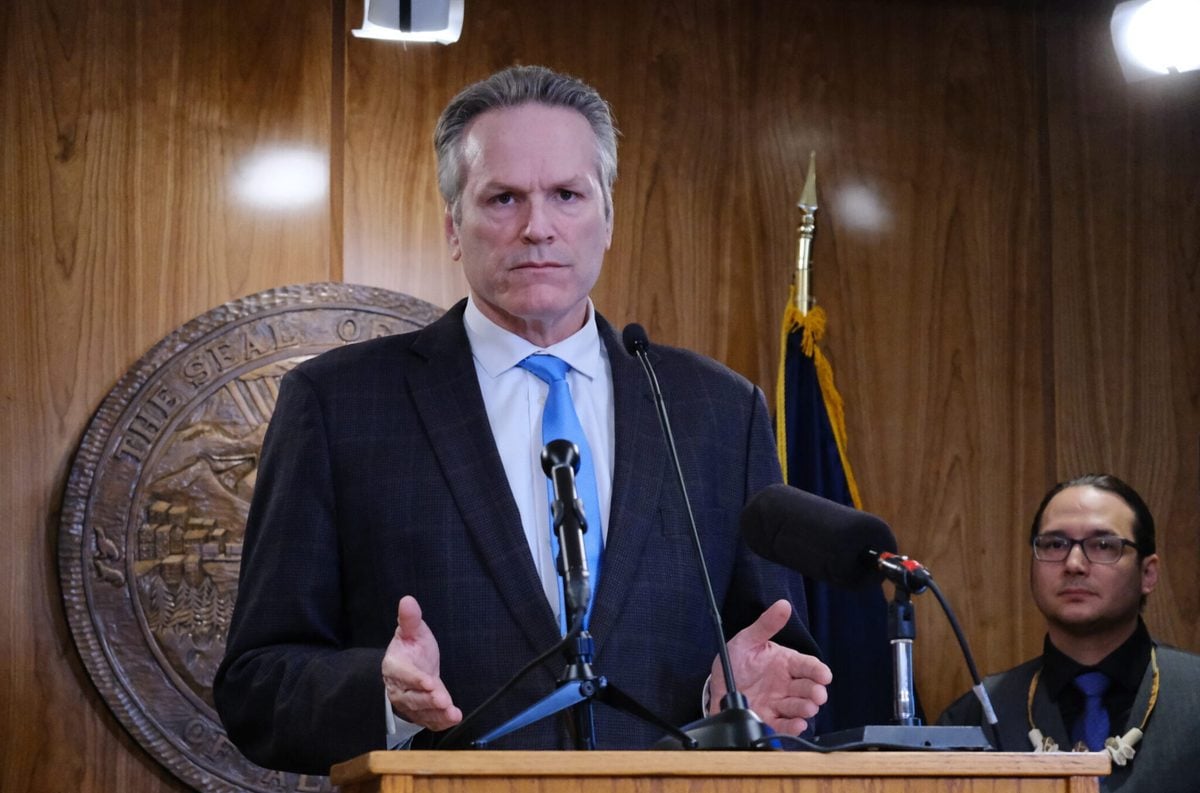
Gov. Mike Dunleavy discusses proposed education legislation at a news conference on Jan. 31, 2025. (Photo by Corinne Smith/Alaska Beacon)

Gov. Mike Dunleavy on Monday lifted a statewide executive branch hiring freeze, removing restrictions on managers who had been required since May 2025 to obtain special permission before hiring new state employees. 

The governor’s decision was revealed without fanfare in a new administrative order that took effect Monday.

This week’s order also repealed a freeze on new state regulations and on state employee travel. Both of those restrictions, and the hiring freeze, had been imposed by the same administrative order last year. 

At the time, Dunleavy cited concerns over state spending, and his actions were similar to ones he took during the COVID-19 pandemic emergency. Both moves mimicked action by former Gov. Bill Walker during a mid-2010s slump in state oil revenue.

Since Dunleavy’s 2025 order, the state’s fiscal situation has improved because of the Iran war. Alaska North Slope oil is worth significantly more than it was last year, and the state has now had consecutive fiscal years with a budget surplus.

Jeff Turner, the governor’s communications director, said on Tuesday that no one from the administration was available to speak about the repeal of the freeze order. 

While state agencies have been able to continue working amid the regulation freeze, it has nonetheless had various effects on operations.

On Tuesday, for example, the Regulatory Commission of Alaska announced that it was unable to allow the state’s electric utilities to buy more home-produced solar power. 

The commission said it had requested a waiver of the regulations freeze in order to proceed but did not receive it, and thus utilities cannot buy as much solar power as they desired.

The hiring freeze has coincided with a general decline in the number of people employed by the state. In August, according to the Alaska Department of Labor and Workforce Development, the state had 23,500 workers. That’s down from 24,800 in April 2025, the month before the hiring freeze. 

Doug Carson is the lead business agent for the Alaska State Employees Association, Alaska’s largest union for state workers.

“Hiring freezes … they’re a lot more PR stunts than they have any actual dramatic impact in terms of hiring,” he said by phone. 

“It doesn’t stop hiring completely, but the one serious impact I think it has is it affects recruitment and retention. People are less inclined to apply for state jobs because they see a hiring freeze is on,” he said.

Carson said he also believes that a hiring freeze encourages state agencies to outsource jobs to private contractors. One example: The state’s Division of Public Assistance, which is working through a large backlog of applications and has continued to contract out much of the work to a company in Massachusetts.

“We think that money belongs in state, in Alaskans’ pockets,” Carson said.

Heidi Drygas, president of the Alaska AFL-CIO, said that while she sees the lifting of the hiring freeze as “a step in the right direction,” it doesn’t fix pre-existing problems in state agencies.

“Things were already pretty bad and pretty rough from department to department in terms of vacancy rates and burnout and just general working conditions, and the freeze just made it worse,” she said.

“It’s going to be for the next administration to deal with, just like a whole host of problems that this administration is leaving for the next governor,” Drygas said.