Mary Peltola speaks to a crowd of supporters for her candidacy for U.S. Senate at a campaign kick off event in Juneau on Jan. 23, 2026 (Photo by Corinne Smith/Alaska Beacon)
The leading challenger to Republican incumbent U.S. Sen. Dan Sullivan is proposing to eliminate income taxes for Alaskans earning less than $92,000 per year, the state’s median household income.
Democratic candidate Mary Peltola introduced the idea Monday as part of a newly expanded platform of campaign ideas.
Among some of the other ideas: a federally subsidized “Essential Freight Service” for air cargo to small communities, a renewal of the federal Expanded Child Tax Credit, tax credits for renters and child care facilities, and price controls and limits on corporate mergers.
There are relatively few seats in the U.S. Senate that could be won by either a Republican or a Democrat this year. In a recent analysis, NPR dubbed Alaska’s seat the “majority maker.” National Democrats are hoping that Peltola can beat Sullivan and help them take control of the Senate, which currently has a 54-46 Republican edge.
Meanwhile, Sullivan has continued to strengthen a network of connections within the state. He’s already received endorsements from the United Fishermen of Alaska — the state’s largest commercial fishing organization — and last week was endorsed by the ANCSA Regional Association, a group representing the state’s largest Alaska Native corporations.
Both groups represent constituencies that have previously favored Peltola.
Statewide opinion polls have found economic issues are at the top of Alaskans’ minds, and many Alaskans have an extraordinarily pessimistic view of the state’s financial health and their own financial situation.
Many residents believe that any economic improvements won’t trickle down to them, said Matt Larkin, a leading pollster, in a recent interview.
That’s the environment in which Peltola is launching her new economic campaign.
“Affordability — it’s on everyone’s mind,” she said in an interview ahead of the launch.
Peltola, who lives part of the year in rural Alaska, said she believes the high cost of heating fuel and stove fuel has created a crisis.
“I feel like we’re in a dire situation that I have never experienced,” she said, explaining that her monthly fuel bill now exceeds her mortgage.
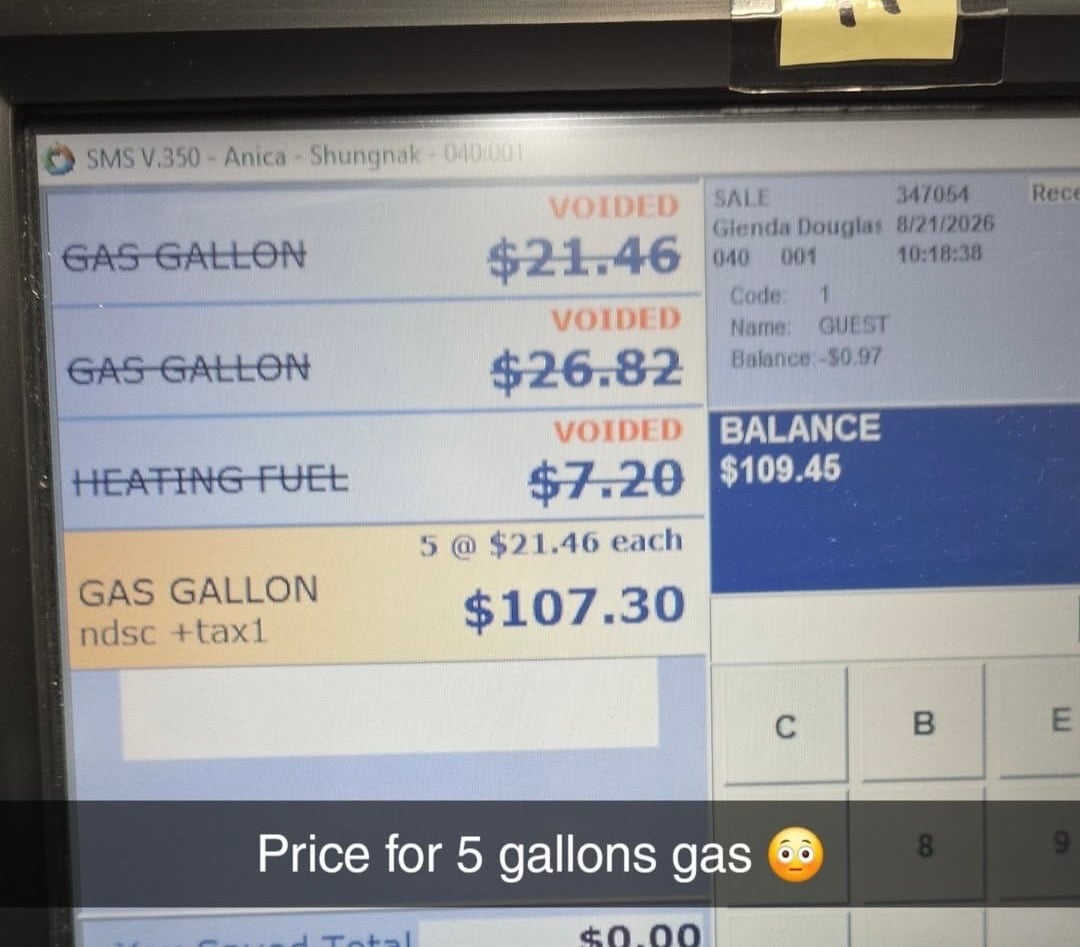
During a recent visit to St. Mary’s, on the Yukon River in southwest Alaska, she talked to people who are currently paying $10 per gallon for fuel. They’re expecting prices to go up by 40-50%, she said.
If they can’t afford fuel, “that means there’s no electricity, there’s no heat, there’s no gas for hunting and fishing. This is dire. And I, you know, I just think we’ve got to get really serious about how to bring down prices for everyday Alaskans, for everyday households.”
Peltola drew a direct line between the American war on Iran and those high prices. Sullivan has been a staunch supporter of the war. Peltola believes Congress needs to intervene, though she stopped short of outright opposing it.
“There is a need for the War Powers Act. I do not believe that any President should be making these kinds of substantive decisions unilaterally,” she said.
Peltola’s call for an “Essential Freight Service” mirrors her support for Bypass Mail and the Essential Air Service, two existing subsidy programs that support flights to rural Alaska and other parts of rural America.
She said the exact scope of the freight program still needs to be worked out. Alaska is essentially “six states within a state,” and “and every single region is so unique, and I think it would have to be unique approaches in every region and every community.”
Monday’s announcement is the second significant policy launch by Peltola since she announced in January that she would challenge Sullivan for Senate.
In late March, she announced her support for Congressional term limits, a ban on stock trading by members of Congress and her support for a Constitutional amendment to overturn the U.S. Supreme Court case known as Citizens United.
That case allows third-party groups to spend unlimited amounts of money on political campaigns as long as they do not coordinate with candidates.
Speaking Friday, Peltola said anti-corruption and affordability are complementary issues.
“I think we’re all going to be looking at where the price gouging is and where we can halt corporate greed and inflation,” she said.
The Juneau Empire last week shut down its office in the Jordan Creek Center and relocated to what’s reportedly a single-desk space at Vintage Business Park. The masthead in Saturday’s print edition lists no staff, aside from an obituaries/legal notice person based outside Juneau — and the only job opening is for a general sales manager.
For weeks the only byline on local stories has been “Juneau Empire staff” and virtually all of those stories — generally two or three per twice-weekly issue — have been rewritten press releases. The rest is filled with “wire” copy from sources such as the Alaska Beacon, plus local and “wire” opinion submissions. The Empire is continuing to publish opinion and other reader-contributed items such as religion features by local residents.
The print edition of the Empire on Wednesday was a single section with six pages and last Saturday a single section with eight pages. It still costs the same $2 as editions published a year ago when the editions were twice that size and filled almost entirely with local staff content.
At the Peninsula Clarion and Homer News, the other two newspapers in Alaska owned by Carpenter Media Group, there appears to be a single person in Homer doing newsroom work.
The Juneau Empire’s former office in the Jordan Creek Center on Monday, May 4, 2026. (Mark Sabbatini / Juneau Independent)
No help wanted listings for reporters at any of those publications have been seen recently at journalismjobs.com or Poynter’s jobs site, two of the most common places to look. The Empire’s website, in the “careers” section of its website that’s accessed through a submenu, does list an opening for a “full-time general reporter” that was posted Feb. 3.
The listed contact for the position is Mary Kemmis, senior vice president and group publisher of Carpenter’s Canadian Division. She did not respond to email inquiries about the company’s plans for its Alaska papers. During a teleconferenced meeting I took part in a year ago, she asserted that community newspapers can attract local readers with content not produced by local reporters.
“I don’t think there’s any problem with having stories that are regional or statewide,” she said. “We’ve never had that problem anywhere else. I don’t happen to think Americans are that much different from Canadians. And I don’t happen to think Alaskans are that much different from Albertans.”
Carpenter’s cost-cutting at publications nationwide is well-documented and it’s hardly surprising the company would take such actions when it purchased the Empire’s parent company, Black Press Media (owner of Sound Publishing), after bankruptcy/creditor protection filings by Canada-based BPM. When I returned to the Empire in April of 2022 (I had also worked there between 1995 and 2006), for the first two years I heard constantly the paper couldn’t keep publishing if it kept losing money.
Also, Black Press/Sound Publishing did plenty of cost cuts prior to Carpenter’s takeover. When I joined in 2022 the Empire’s newsroom had an editor and three full-time reporters, a publisher, and there was also an ad manager, subscription manager and a receptionist — not to mention papers were still printed locally five times a week, which required pressroom and delivery employees.
While the Caprenter’s newsroom practices have been heavily denounced by journalists and some readers, the company may be in a strong position to argue it is achieving its goal of improving the financial standing of its publications in Alaska. It comes down to the simple math of it the company has been able to dramatically cuts costs while retaining most of its readers.
A comparison of the Empire’s readership and financial figures now versus a year ago isn’t readily available. However, a year ago as editor of the Empire I was told the paper was among the relative few owned by Carpenter that had made a profit during the previous 12 months. But the profit wasn’t high enough to meet their “best practices” goals, which was among the reasons they were planning to impose cost-cutting as well as newsroom coverage changes.
Online readership also surged upward significantly during the five months before I departed, but I can’t say if that included any new subscribers or just the same subscribers reading more articles. Again, though, if the site still has most of its subscribers then the number of web clicks isn’t overly relevant other than for marketing/advertising purposes.
As noted in the disclaimer above, the intent here is to report the closure of the Empire’s former office and current staffing status, not to criticize it (or promote the Independent — which a critic could fairly note has operated at a loss during most months since launching nearly a year ago). As I’ve stated on various occasions in this space and elsewhere, readers can make their own judgements about how well they feel local media outlets are fulfilling their roles.
A little over a year and a half after it burned down, the Quick Shop is back: bigger, and better — many at the grand opening said on Friday.
“The only place in town you can get beer, butter, and bullets,” is what emcee Dan Mahoney said, as he welcomed the first throng through the entryway of the new store Friday afternoon.
The ribbon cutting and door opening drew long lines and filled parking lots around the building.
The first into the new shop were largely kids, and the store’s candy section was heavily thinned out within seconds of opening.
Jordan Kinison makes his first purchase at the new shop. Friday, May 8, 2026. (Will Steinfeld/Chilkat Valley News)
Axel Stickler claimed to be the first customer of the new store, after he bought a bag of skittles. While the claim was not disputed by his friends in line, it could not be independently verified.
Other purchases, by adults, included Joanie Wagner, with a new pair of Xtratufs.
“I’ve been waiting months to buy new gardening boots,” Wagner said, adding that she prefers to buy from brick and mortar stores, where she can support locals and try on shoes before purchasing.
The number of people gathered was one indication of the connection many residents had with the old Quick Shop when it burned down in October 2024; Charlie DeWitt said it outright as he looked around the new store: “You have to give (owner Mike Ward) a lot of credit,” DeWitt said. “He could’ve just quit. This took commitment and it shows.”
Ward, for his part, said the opening was even bigger than he expected.
“I didn’t realize, until the old place burned down, the connection people had to it. It’s gratifying to see people back,” he said.
Michael T. Ward prepares to raise the American Flag outside the new Quick Shop. Friday, May 8, 2026. (Will Steinfeld/Chilkat Valley News)
Senators passed the mental health budget by a 20 to 0 vote on May 7, 2026. (Photo by Corinne Smith/Alaska Beacon)
We’re headed into the finale of the second legislative session of the 34th Legislature. The Senate passed a draft operating budget and the House continues work on the capital budget, while lawmakers are considering final bills to pass or reject. A joint session to vote on the governor’s appointees for various boards and commissions is expected this week, but a date has not been set yet.
Gov. Mike Dunleavy is in Juneau and pushing for legislative action on the proposed Alaska LNG gas line project, but there is still considerable disagreement among legislators about what that should look like — and how much the state should subsidize the gas line.
This is the Alaska Beacon’s list of where we’re putting our attention in the coming week. There’s always more news than there are people to report it.
Every Thursday, the Alaska Legislature publishes its committee schedule for the coming week. Public notices alert us to meetings and events. The governor’s office occasionally lets us know ahead of time that something’s coming down the pike, too.
Here’s what we know about for the coming week. If you know of something that’s coming up that you should think we should pay attention to, email us at info@alaskabeacon.com.
We can’t cover everything on this list, but we’re interested in them and we think you should know about them in case you’re interested in them, too.
This list is ripped from our notebooks, and it is likely to change over the course of the week. We’ll update it when we can.
Are you trying to keep track of when to testify on a bill? The Legislature has a website for that.
Monday, May 11
House/Senate floor sessions in the morning
9 a.m. – Senate Finance considers an omnibus crime bill, containing ten bills related to a variety of court and criminal justice issues
1:30 p.m. – House Finance considers a “mini-bus” education bill, including adding nearly $82 million in one-time funding for schools and a variety of policy changes
3:15 p.m. – House Labor and Commerce considers a bill to change charitable gaming law to include electronic pull tabs, passed by the Senate
3:30 – Senate Resources continues considering tax breaks for the proposed Alaska LNG gas line project
Tuesday, May 12
8 a.m. House Community and Regional Affairs considers a bill to expand property tax deferments for some farms and agricultural businesses, which was passed by the Senate
9 a.m. – Senate Resources continues considering the proposed Alaska LNG gas line project, and a bill to enact tougher standards for residential licenses for hunting and fishing, which was already passed by the House
1:30 p.m. – Senate Transportation considers a bill that would regulate autonomous vehicles, which was passed by the House
3:15 p.m. – House State Affairs considers a bill that would cap campaign contributions and enact more reporting requirements for political campaigns
3:30 p.m. – Senate Resources considers a bill to establish cooperatives for salmon setnetters that has been passed by the House, and continues considering the proposed Alaska LNG gas line project
3:30 p.m. – Senate State Affairs considers a bill to establish an Alaska Native Languages Task Force, and looks at a new elections bill introduced by Gov. Dunleavy after he vetoed a bipartisan elections reform bill that the Legislature tried and failed to override
Wednesday, May 13
9 a.m. – House Finance considers a bill to enact a statewide spay and neuter program, and another bill that would establish shared responsibility for construction project owners and contractors for unpaid wage violations
9 a.m. – Senate Finance hears a presentation on the Donlin Gold project
9 a.m. – Senate Resources continues considering the proposed Alaska LNG gas line project
1:30 p.m. – House Finance considers a bill related to property taxes for the proposed Alaska LNG gas line project
1:30 p.m. – Senate Labor and Commerce considers a bill that would require contracts for new data centers to account for energy needs, prioritize renewable energy and ensure other energy customers’ costs do not increase
3:15 p.m. – House Labor and Commerce continues considering a bill to change charitable gaming law to include electronic pull tabs, passed by the Senate
3:30 p.m. – Senate Resources continues considering the proposed Alaska LNG gas line project
Thursday, May 14
9 a.m. – House Finance considers a bill to expand state funding for early education, including school districts’ funding for pre-K student programs, passed by the Senate
9 a.m. – Senate Finance to consider a governor’s proposal, amended by the Senate Resources Committee, to levy a state tax for education and expand corporate income taxes
9 a.m. – Senate Resources continues considering tax breaks for the proposed Alaska LNG gas line project
1:30 p.m. – House Finance continues hearing a House proposal for tax breaks on the proposed Alaska LNG gas line project
1:30 p.m. – Senate Finance considers two bills that would allow communities to borrow from the state’s bulk fuel loan program to help offset rising fuel costs
3:15 p.m. – House State Affairs continues to consider a bill that would cap campaign contributions and enact more reporting requirements for political campaigns, and another bill to update state law to prohibit discrimination based on gender identity or expression in real estate transactions
Friday, May 13
9 a.m. – House Finance considers a bill that would enact a $0.98 monthly surcharge on all phone lines to fund behavioral health crisis services, including a 988 crisis hotline
1:30 p.m. – House Finance continues consideration of a House proposal for tax breaks on the proposed Alaska LNG gas line project
1:30 p.m. – Senate Labor and Commerce considers a bill to exempt seafood processing workers from paid sick leave, passed by Alaska voters with Ballot Measure 1 in 2024
3:30 p.m. – Senate Resources continues considering the proposed Alaska LNG gas line project
Saturday, May 14
Hearings on various bills are scheduled to continue in Senate Finance, House Finance, House Health and Social Services and House State Affairs
Dr. Eli Butler, a visiting veterinarian, holds a dog named Jack at the Nome Animal House on April 10, 2026. Butler, a graduate of the University of Alaska Fairbanks-Colorado State University partnership program, was in Nome for the week to provide services to local dogs and cats. Jack is owned by one of the staff members at the Nome Animal House. (Photo by Yereth Rosen/Alaska Beacon)
Rural Alaska has long struggled with an abundance of stray and loose dogs and high rates of dog bites, with young children as the most frequent victims.
Pending state and federal legislation aims to chip away at that problem by improving access to veterinary care, currently difficult to obtain in wide swathes of Alaska.
Rep. Will Stapp, R-Fairbanks, talks to reporters on Wednesday, Jan. 17, 2024, in the Alaska State Capitol. Stapp’s bill to establish a state spay and neuter fund has attracted three cosponsors and support from animal-care groups. (Photo by James Brooks/Alaska Beacon)
At the state level, House Bill 258, sponsored by Rep. Will Stapp, R-Fairbanks, would establish a state fund to help cover spay and neuter services. Money for the fund, intended to fill gaps in currently available care, would come from sales of specialized license plates, which other states offer, and donations. The fund would also generate its own investment income.
The intent is to relieve the stresses on animal welfare, people and communities, including local shelters that are “overwhelmed by the costs of animal control and care,” Stapp wrote in a statement explaining his sponsorship of the bill.
“This legislation takes a preventative, fiscally responsible approach to an issue that affects communities throughout Alaska,” the statement concludes.
The bill has attracted three cosponsors and support from the animal-care community, Alaska Veterinary Medical Association and the Alaska Municipal League, among other groups.
At the federal level, Sen. Lisa Murkowski, R-Alaska, is pushing for legislation to get veterinary care included in the duties of the Indian Health Service. At present, the agency does not have the authority to pay for veterinarian care.
Murkowski’s bill has three Democratic cosponsors, from New Mexico, Hawaii and Minnesota, all states with significant Indigenous populations that are served by the IHS. It passed the Senate in December and is now pending in the House. A nearly identical measure sponsored by Murkowski and the same Democratic colleagues passed the Senate in late 2024, but it died before time ran out on that Congress.
The bill has support from Native organizations — including the Alaska Federation of Natives, the Alaska Native Tribal Health Consortium, the Yukon-Kuskokwim Health Corporation and the Navajo Nation, which is coping with problems in its tribal areas that are similar to those in Alaska.
It is an approach backed by experts as part of the “One Health” framework that considers human, animal and environmental health as linked.
“Veterinarians play an integral role in One Health because animals both impact and are impacted by people and the environment,” the American Veterinary Medical Association says on its website.
Human health impacts
Dogs are part of life in Alaska, where travel by dogsled is an aspect of Indigenous cultures. But problems caused by abandoned, stray and loose dogs are myriad.
Alaska consistently has the nation’s highest rate of dog bites, according to state officials. The rate of dog-bite cases treated in hospitals has been especially high in rural areas; a 2014 epidemiology report said that rate in Southwest and Northern Alaska was two to three times the national rate. Children are at particular risk. And 2009 research, albeit dated, found that Alaska had the highest per-capita rate of fatal dog maulings among all states, with a rate more than 16 times the national average.
U.S. Sen. Lisa Murkowski, R-Alaska, speaks on Oct. 18, 2025, at the Alaska Federation of Natives convention in Anchorage. Behind her is a screen projeting her image as she speaks. AFN is one of the Native organizations supporting her bill to add veterinary care in the duties of the Indian Health Service. (Photo by Yereth Rosen/Alaska Beacon)
The Navajo Nation has also struggled with strays. After a 13-year-old girl was killed in a dog mauling in 2021, the tribal government made a push to boost animal control services. The tribe’s senior animal control officer estimated at the time that there were 500,000 domestic and feral dogs on the Navajo Nation and that a single pair of mating dogs could create up to 5,700 new dogs in five years.
Several diseases are associated with loose dogs, notably parvovirus. Endemic in Alaska dogs, parvovirus can kill pets and, if spread to people, cause serious health problems for those who are pregnant or immunocompromised.
Rabies, endemic in wild canines in Alaska, is a perennial threat, notably to sled dogs that might be attacked outdoors. Human cases have been rare in Alaska, but they are serious; rabies is always fatal to people once the virus reaches the brain. To prevent that spread, exposed people get rabies shots as quickly as possible.
The risk of tick-borne diseases is increasing in Alaska as climate change enables northward tick expansion, according to state health officials. Alaskans may be under the mistaken impression that ticks are not a problem in the state and may thus underestimate their dogs’ vulnerabilities, the Alaska Department of Fish and Game has warned.
Feral cats can spread diseases, too. A feral cat was implicated in the first recorded fatality from borealpox, a newly discovered and highly rare disease that was initially called Alaskapox; the victim was a Kenai Peninsula man who had cared for a stray cat before dying in early 2024.
Emotional costs
There are associated mental health problems as well.
In rural villages where there are limited management options, stray dogs are sometimes killed, which is “cruel and inhumane,” Christine Witzmann, a board member with Alaska Rural Veterinary Outreach Inc., told the House Resources Committee at a Feb. 16 hearing.
“It is also traumatic for the children, who suffer deep emotional scars when they witness how their favorite stray dog is killed,” said Witzmann, whose organization is one of many nonprofits around the state that provide subsidies for spay and neuter services.
There can be similar trauma in urban areas, where workers in overcrowded shelters are sometimes tasked with euthanizing animals, another expert said in hearing testimony.
“That’s a terrible job that we don’t ever think about. The people who actually have to do the euthanizing, that’s mentally traumatizing to them,” Angie Fitch of the nonprofit Alaska Rural Veterinary Inc. told the committee.
A display at the Nome Animal House, seen on April 10, 2026, provides information about Tigaraha Pet Resources, a Nome-based nonprofit that helps pet owners pay for spay and neuter services and other veterinarian care. Spay and neuter services can cost hundreds of dollars, and several nonprofits around the state have programs to help people afford those procedures. (Photo by Yereth Rosen/Alaska Beacon)
Her organization has provided animal care in more than 100 rural communities over the past 14 years, she said. But despite efforts like that, she and representatives of other nonprofits said, resources to support the volunteer work are scarce and needs remain unmet.
Veterinarian shortages exist around the country, but they are acute in rural Alaska. Shortages are particularly dire in Western Alaska’s Yukon-Kuskokwim region.
Residents there generally cherish their dogs — 94% of survey respondents in the Yukon-Kuskokwim respondents reported having dogs, and the human-dog relationship has been part of Indigenous culture for centuries — but large majorities identified stray dogs as a problem, a source of community fear, according to a Colorado State University study published in July.
Dog owners in the region reported that only 62% of their animals had been vaccinated against rabies and only 53% had undergone full sterilization procedures, according to the study.
Service to rural Alaska often relies on traveling veterinarians.
Dr. Eli Butler is one of them. Originally from Kenai and a graduate of the collaborative University of Alaska Fairbanks-Colorado State University veterinary medicine program that has been operating for the past decade, Butler was in Nome for a week in early April.
Although she had traveled to other parts of Alaska, it was her first time in Nome, which is famous for its sled dogs and is the site of the finish line for the Iditarod Trail Sled Dog Race.
Butler did some spay and neuter procedures during her stint working at the Nome Animal House, a local pet care center. But she was busier with dental care, she said. Poor tooth health can be a problem for dogs, especially older animals, she said.
“It is great to be able to come out here and help an area that really, really needs it,” she said.
Feral dilemma
Stapp’s bill stops short of authorizing any kind of birth control for animals that are already feral. A provision would have allowed municipalities to have trap-neuter-release programs for stray animals, as are carried out in other states. But that was stripped from the bill because it would conflict with state wildlife regulations. It is illegal to release animals into the wild except in certain specially permitted situations, said Ryan Scott, director of the Department of Fish and Game’s Division of Wildlife Conservation.
Feral animals do a lot of damage to wildlife populations, killing birds, small game mammals and other native creatures, he said. A trap-neuter-release program would do little to address that problem as long as people continue to abandon unwanted dogs and cats, he said.
A flier posted at the Nome Recreation Center, seen on April 8, 2026, warns about rabies in wildlife in the Norton Sound region. (Photo by Yereth Rosen/Alaska Beacon)
“That particular animal is not going to reproduce. However, you’ve got to get them all,” he said.
Ideally, he said, stray dogs and cats would be adopted out if they are captured, spayed, neutered — and vaccinated, something that pets need periodically.
There are organizations that try to accomplish that but it takes a lot of work. In 2020, for example, the nonprofit Bethel Friends of Canines worked with other organizations to capture all the stray dogs in the Yukon-Kukokwim village of Tuntutuiak and prepare them for adoption.
Rabies threats
Murkowski’s bill does contain a section that concerns nondomestic animals – specifically, addressing the circulation of rabies in Arctic wildlife.
Her bill has a provision that would require the U.S. Department of Agriculture to complete a feasibility study on possible delivery of oral rabies vaccines to wildlife species known to be reservoirs of the rabies virus in the Arctic region, notably Arctic foxes, which spend much of their lives on sea ice.
Climate change is expected to have mixed impacts on rabies in Alaska. Because Arctic foxes have been the main reservoir, and because the icy habitat for that species is diminishing, it is likely that the prevalence will decrease, according to a 2018 study by UAF scientists. But red foxes, which are bigger, bolder and more likely to lurk around communities, are expanding into territory previously used by Arctic foxes and may become the primary rabies carriers, scientists have said.
Red foxes are implicated in most of the known rabies cases in what has been a significant late-winter outbreak in rural Alaska communities. From early February to early March, there were 10 confirmed cases and two more suspected cases, said Dr. Kimberlee Beckmen, veterinarian for the Alaska Department of Fish and Game.
That compares to last year’s total 11 rabies cases in wild animals, Beckmen said during an online webinar held March 10 by the Alaska Native Tribal Health Consortium’s Local Environmental Observer Network. “Now we’ve surpassed that in just one month,” she said.
Rabies infections can spread beyond canines.
A river otter in Kuskokwim River village of Nightmute tested positive for rabies last year, Beckman reported in her presentation.
In 2021, a river otter in Nome also tested positive for rabies, the first such case in Alaska since 2000, when a river otter in the Aleutians East Borough was found to be infected, according to the Alaska Department of Fish and Game.
A red fox trots across the rocky tundra in Bering Land Bridge National Preserve looking for something to eat. Red foxes are implicated in most of the recent wildlife rabies cases that have been documented in Alaska. (Photo provided by the National Park Service)
In 2023, an aggressive moose that entered the Inupiat village of Teller north of Nome was also found to be infected with rabies. It was Alaska’s first documented case of a rabid moose, and it was presumed to have been bitten by an infected fox.
Prospects for passage
Murkowski said the chances of her bill winning final passing are unclear. Success will probably depend on getting it combined with broader health legislation, she said.
“Passing a standalone bill anymore is just hard unless it is absolutely, 100% noncontroversial,” she said. “People are going to look at it and say, ‘Well, I don’t understand it, so there must be something in here that I should object to.’”
The bill has been sitting in the U.S. House since Dec. 15 without any action. The bill, if passed, would impose some new costs. The Congressional Budget Office estimated that adding veterinary care to the Indian Health Service’s mission, as proposed in the bill, would cost $3 million to $4 million a year.
Stapp’s spay-and-neuter fund bill would also create some new costs.
The program would be administered by the Alaska Department of Environmental Conservation at a cost of $536,200 in the first year and $331,300 every year after that, according to the Department of Revenue’s analysis. There is no way to know how much of that cost would be offset by the fundraising mechanism established by the bill, the analysis said.
As with Murkowski’s bill, the prospects for Stapp’s bill are unclear as the legislature’s scheduled May 20 adjournment deadline looms.
Still, it is a popular measure that has touched a nerve in the public, lawmakers acknowledge.
“Thank you for bringing forward a bill that fills up my mailbox, my email box,” Rep. Jeremy Bynum, R-Ketchikan, quipped to Stapp at a May 7 House Finance Committee hearing.
“There’ll be plenty more emails, and they’ll keep coming until the vote improves there, Rep. Bynum,” Stapp responded.
This chart by Alaska Survey Research shows Alaskans’ views of the economy, as based on a 0-100 point scale, over the past 16 years. (Photo by Alaska Survey Research)
New statewide polling shows Alaskans have near-record negative views of the state’s economy, with opinions more pessimistic than they were during the 2020 COVID-19 pandemic emergency.
On a scale of 0-100, Alaskans give the state economy a score of 42.6, two-tenths of a point above a record low recorded in fall 2023.
Moore has been asking Alaskans the same six economic questions regularly since spring 2010.
“I wish that we were living up right now to the old adage that how the economy goes in the United States, we do the reverse,” he said on Thursday when asked about the results.
The survey’s score peaked in 2014, when Alaska oil prices were near record highs, government spending was up and the Permanent Fund dividend was large.
When oil prices plunged in 2014 and 2015, so did public opinion. Opinions rebounded in late 2017 and early 2018 but tumbled again during the COVID-19 pandemic emergency, then fell again when inflation spiked after the emergency ended.
“In the 3.5 years since, even though Covid is reasonably a thing of the past, and the inflation rate is back to normal, the index has not recovered,” Moore wrote in his latest analysis. “Alaskans are as pessimistic about economic conditions in Alaska today as they were in the depths of the worst winter Covid months.”
Speaking by phone, he said that “even though the inflation rate is back to normal, it doesn’t mean that things aren’t still shockingly expensive. The war in Iran is creating uncertainty. The price of gas has gone through the roof.”
National surveys report similar findings. Last month, the University of Michigan — which measures American consumer sentiment monthly — reported results on par with 2022, when opinions were at their lowest in decades.
Moore isn’t the only person who’s finding low opinions among Alaskans about the economy.
At Dittman Research, Matt Larkin regularly polls state residents on behalf of the Alaska Chamber of Commerce and other clients.
“I’ve been doing this 15 years,” Larkin said. “In my opinion, I’ve not seen the economic concern worse than it is now.”
This year’s survey, conducted in March, found 60% of respondents saying Alaska’s economy was either pretty bad or “not too good.”
That was an increase of eight percentage points from 2025.
Two-thirds of respondents said the state of Alaska is on the wrong track, continuing a streak that began in March 2016. The last time more Alaskans said the state was headed in the right direction than the wrong direction was in January 2015.
Larkin also said that his survey found that many Alaskans were likely to believe that even if economic conditions improve, the improvements would not benefit them personally.
While both Moore and Larkin said their polls are a good barometer to check on public opinion, they also said that the results may be an indicator for this fall’s election campaigns.
“It strikes me that, with all the political races this year, I think the candidates that can best understand and appear to be offering real solutions are going to likely do well in that environment,” Larkin said.
“I think that’s the challenge for all these campaigns: How do they speak to a voter base that’s very, very down right now about the economic prospects for their personal lives, but also the state in general?”
An artist’s rendition of the proposed Watana Dam on the Susitna River. (Image courtesy Alaska Energy Authority)
For decades, the Susitna–Watana Hydroelectric Project has occupied a liminal space in Alaska’s energy conversations — too large, expensive and controversial to move forward, yet too potentially transformative to fully dismiss. In many ways, it has become shorthand for the state’s uneasy relationship with mega-projects that promise to reshape Alaska’s future but struggle under the weight of their scale and cost.
If built, the project would primarily serve the Railbelt electric grid stretching from Homer to Fairbanks — home to roughly three-quarters of Alaska’s population and the majority of the state’s electricity demand — and could ultimately supply a substantial share of that system’s power needs for generations.
Historically, momentum behind the project has tended to parallel moments of energy insecurity, including the energy shocks of the 1970s and the fuel price spike in 2008. Today, similar pressures are beginning to re-emerge, particularly around the adequacy, affordability and long-term security of the Railbelt’s natural gas supply.
I will admit that in the past, my view of the Susitna project has been ambivalent at best, and at times skeptical. But over the last several years, the broader landscape surrounding the project has shifted significantly. Given those changes, I believe the project deserves one last serious reconsideration before Alaska closes the door on it — likely for good.
Why we walked away twice
In the 1970s and early 1980s, the original Susitna project progressed through years of study and design before ultimately stalling out in the mid-1980s as economic conditions changed. With low-cost Cook Inlet natural gas readily available, the need for a project of Susitna’s scale diminished, and the Railbelt instead embarked on a path centered on gas-fired generation.
At the time, this shift arguably made sense. Gas was abundant, relatively inexpensive and well-matched to the scale and structure of the Railbelt grid. That made hydroelectric projects like Susitna — and even the much smaller Bradley Lake Hydroelectric Project — among the more expensive options available. Bradley was ultimately constructed, but only after narrowly securing legislative approval by a single vote, reflecting just how difficult the economics were to justify at the time. In 1980s dollars, natural gas cost on the order of 2 cents per kilowatt-hour, while power from Bradley Lake was roughly double that.
This history also helps explain why Bradley Lake was developed outside the conventional utility regulatory model overseen by the Regulatory Commission of Alaska. The project was pursued as a long-term infrastructure investment rather than through traditional least-cost planning processes.
While Bradley Lake squeaked by, those same economics ultimately doomed the much larger Susitna project during that era. But that calculus has not withstood the test of time. Hydropower prices have remained relatively stable, while natural gas prices have increased significantly and are expected to continue rising.
The same dynamics that have defined Cook Inlet gas over the past half century would apply to North Slope gas as well, just on a larger scale. The moment we turn on that tap, we begin drawing down a finite resource — one whose cost and availability will inevitably change over time as supplies diminish and prices remain tied to broader market forces.
Against that backdrop, it is not surprising that the Alaska LNG gas line and Susitna have often been seen as competing priorities, vying for the same pool of state resources and political bandwidth. But they are not, in fact, competing choices. These projects operate on different tracks and could be complementary.
Susitna is, at its core, an in-state investment – tied to Railbelt demand, local economic development and long-term price stability. Alaska LNG, by contrast, is driven largely by access to external markets, with in-state benefits a byproduct of that. Both may have a role to play, but they are not solving the same problem.
The case for reconsideration
At the beginning of this legislative session in January, the Alaska Energy Authority quietly delivered its required annual update to the Legislature on the Susitna–Watana Hydroelectric Project. The update was just two pages long. In it, Executive Director Curtis Thayer described how AEA has ceased active efforts on the project, focusing instead on archiving the extensive body of work completed to date and effectively placing it on the shelf alongside the more than 3,000 reports compiled during the original Susitna licensing effort in the 1980s. This is the directive the Authority has been given, and it is complying.
However, the broader energy landscape facing the Railbelt today looks very different from the one that existed when the project was last seriously pursued. Over the past decade, three major shifts have materially changed the conversation.
First, the Railbelt today can no longer rely on Cook Inlet gas. This resource — which accounts for the vast majority of heating in Southcentral Alaska and roughly 70 percent of electricity generation on the Railbelt — is not disappearing overnight, but it is steadily declining. Production from existing fields is expected to taper year by year, and utilities have been put on notice that Hilcorp Energy, the basin’s primary producer, is not interested in entering into new long-term supply commitments. That places growing pressure on utilities to secure alternative sources. The urgency of this challenge cannot be overstated; it is sucking up a great deal of the oxygen in boardrooms and halls of Juneau right now.
Second, the federal policy landscape has changed in ways that could be a game-changer for Susitna’s economics. The clean energy tax credit framework created under the Inflation Reduction Act, and since partially preserved on a bipartisan basis, now provides technology-neutral incentives for large hydropower projects. Perhaps most significantly for Alaska, where much of the energy system is owned by public and cooperative utilities, these entities can now – for the first time – access the credits directly through a cash-equivalent “direct pay” mechanism.
In practical terms, these incentives could offset on the order of 50 percent of total capital costs. For a project like Susitna, that could amount to several billion dollars and substantially alter the financial outlook. Although the up-front costs would still be significant, reducing the capital burden could materially lower rates – especially during the initial financing period.
Third, the demand outlook is beginning to change. For much of the past decade, utilities across the country, including those on the Railbelt, have operated in an environment of flat or declining demand. That trend is now reversing. Electrification of heating and transportation, along with the rapid growth of power-intensive data centers, is creating the first credible expectation of sustained load growth in years — and with it, the potential to fully utilize the project’s output. For large, capital-intensive resources, that expanded revenue base matters.
Taken together, these developments do not guarantee that Susitna makes sense. But they do suggest that many of the assumptions underlying earlier decisions to shelve the project warrant reconsideration.
A project of consequence
What would the Susitna project mean for the Railbelt? It would not be a marginal addition. At full buildout, it could generate on the order of 2.5 to 3 million megawatt-hours annually — enough to displace roughly 60 to 80 percent of gas-fired electricity generation on the Railbelt, depending on system growth and future demand.
Building out Susitna and its associated transmission infrastructure would also provide an important new anchor for the Railbelt’s long and relatively fragile grid, strengthening reliability and improving the ability to move power between regions. In many ways, this reflects the project as originally envisioned — a foundational asset around which a more interconnected Railbelt system could evolve.
But today, there are additional benefits not necessarily envisioned half a century ago. Susitna could place the Railbelt in a much stronger position to integrate variable renewable energy sources like wind and solar at scale, both by enabling greater interregional movement of power and because the reservoir itself could function much like a large energy storage system — allowing water to be held back when renewable generation is abundant and converted into electricity when the wind is not blowing or the sun is not shining.
It could also begin to reshape heating demand. If electricity prices fall while natural gas prices continue to rise, consumers may increasingly shift toward electric heating technologies such as heat pumps. That, in turn, could increase electricity sales, spread fixed system costs across a larger base of consumption, and potentially reinforce a virtuous cycle of higher system utilization and lower rates — even without the addition of large new industrial loads such as a data center.
Of course, we cannot pretend there are no trade-offs. No energy source is entirely environmentally benign. Fossil fuels require extraction, transport and combustion, with associated emissions and exposure to volatile global markets. Wind and solar carry their own challenges related to land use, materials sourcing, intermittency and project lifespan. Hydropower is no different, and its environmental and social impacts must be weighed carefully.
In particular, the legacy of major dam projects constructed during the early and mid-20th century still shapes public perceptions today. Many of those projects fundamentally altered landscapes and ecosystems, often with profound consequences for both communities and the environment. That history continues to influence how many Alaskans — especially environmentally-minded residents — view projects like Susitna.
But much has changed since the era of large dam construction in the United States. Modern licensing requirements are far more rigorous, and advances in hydropower design — from fish passage technologies to flow management and environmental mitigation — have meaningfully reduced many of the impacts associated with earlier projects.
Canada, in particular, has continued to build out large-scale hydropower, with many newer projects incorporating Indigenous ownership, revenue-sharing and long-term partnership structures. For example, the Site C Dam on the Peace River in British Columbia entered full commercial operation in 2025. It is substantially larger than the proposed Susitna project and is a good example of both Canada’s continued investment in large hydro and a more modern approach to structured, negotiated forms of community participation and benefit-sharing.
The question, then, is not whether Susitna would be impact-free. It is whether the trade-offs it presents look different today than they did in the past, especially given modern environmental standards and evolving approaches to collaboration and mitigation. Could Alaska Native landowners, resource agencies, utilities and conservation organizations work together to shape a project that minimizes environmental impacts and potentially even improves aspects of the salmon fishery? I believe that is possible, given the growing urgency of the Railbelt’s long-term energy challenges — issues that ultimately transcend the traditional sides of this debate. After all, there is some truth to the old adage about never wasting a good crisis.
So what next?
Sometimes, decisions are made through inaction — and this could be one of those moments. There is a clearly defined timeline to take advantage of federal tax credits for hydropower, and given how long it takes to develop projects of this scale there is little time to lose. Delay, even by a year or two, could place the project beyond the reach of those incentives.
Susitna has always been envisioned as a project requiring significant state investment. It is simply too large for any single Railbelt utility — or even all of them collectively — to finance on their own. But there may be a different path forward. Historically, projects of this scale were built by governments. Today, they are increasingly advanced through public-private partnerships, and that model may be worth exploring in Alaska as well.
Ideally, the next step would be to finalize the licensing process so the project could be positioned for development under whatever funding mechanism is ultimately pursued. That is the clear and logical next step. But doing so would require tens of millions of dollars, and at least for now, no funding for that effort has been included in the FY27 state budget.
But even absent state funding, the Alaska Energy Authority is already well-positioned to take a more modest next step. The state has invested heavily in dozens of studies to understand the resource, the engineering and the environmental considerations. That work has value — and we own it. Rather than placing those studies on a shelf, AEA could package that body of work and test the market through a request for information or proposals aimed at gauging private-sector interest in moving the project forward.
This would not be a commitment to build. Any concrete next step on the project would require continued public input through well-established permitting processes. But it would be a way to learn. The private sector is, by necessity, disciplined — if the project can be structured in a way that makes sense, there will be interest. If not, that is also valuable information. Either way, it would provide clarity that Alaska does not currently have.
There is an obvious recent precedent for this approach. The Alaska LNG Project has relied on a similar model of testing commercial interest and allowing that response to help guide next steps. A comparable approach for Susitna could allow the state to keep the project in play without committing to full-scale development.
At a minimum, this is about preserving optionality. The immediate decision before us is not whether to build Susitna, but whether to take reasonable incremental steps to keep the project viable while Alaska evaluates its long-term energy future. That seems like a prudent course of action — before the opportunity slips away for good.
Smoke from a wildfire at the entrance area of Denali National Park hovers on June 30, 2024, on the hillsides behind hotels and businesses serving tourists. (Photo provided by National Park Service)
The Alaska Legislature has voted to mandate a three-step disaster evacuation scale for use statewide, a move inspired in part by a miscommunication in a wildfire near Denali National Park.
The state House voted 39-1 on Wednesday to pass Senate Bill 192 and require that state and local officials use the terms “Ready,” “Set,” and “Go,” defined on maps by the colors green, yellow and red, when providing public information about evacuations from the path of a disaster.
People in a “Ready” area should begin packing for an evacuation and preparing their homes or property. Those in a “Set” area should be prepared to leave quickly, and those in a “Go” area should evacuate.
Because the Senate passed the bill 19-0 on April 24, the House’s action sends SB 192 to Gov. Mike Dunleavy for final approval or veto. The bill was sponsored by Sen. Jesse Bjorkman, R-Nikiski.
The Ready-Set-Go system is already in broad use within Alaska, but not universally.
Last year, Brenda Ahlberg, emergency manager for the Kenai Peninsula Borough, testified that during a wildfire in the Denali Borough, local officials used green to designate an area that should evacuate immediately.
That caused confusion among affected residents, she said.
Michelle Weston, fire chief in Girdwood, also spoke in support of the bill last year, stating that coordinated evacuation information is particularly important for travelers who may be moving through different parts of Alaska and are unfamiliar with local standards.
One standard would prevent confusion caused by different rules, she said.
Senate President Gary Stevens, R-Kodiak, announces the final vote passing the operating budget of 17 to 3 on May 7, 2026. (Photo by Corinne Smith/Alaska Beacon)
The Alaska Senate has finalized its draft of the state’s operating budget for the upcoming fiscal year, moving lawmakers closer to the end of their last regular session before the 2026 election.
In a 17-3 vote, Senators approved a $13.1 billion proposal that includes a $1,000 Permanent Fund dividend for 2026, plus a $150 “energy rebate” for PFD recipients.
The Senate plan conflicts with a different version drafted by the House. Legislators are expected to convene a committee to negotiate a compromise plan that will be sent to Gov. Mike Dunleavy, following standard policy.
After the budget leaves the Legislature, the governor may veto individual line items but cannot add or increase items.
The operating budget is one of four budget bills that pass through the Capitol in a typical year. One, the supplemental budget, has already become law. A second, the $2.5 billion capital budget, is being considered in the House. The third, the state’s mental health budget, is advancing in the Senate as well.
With lawmakers’ attention focused on legislation addressing a possible trans-Alaska natural gas pipeline, this is the first time in several years that the budget isn’t the top unresolved item in the Capitol.
Senate Minority Leader Mike Cronk, R-Tok, said legislators entered the year anticipating a $500 million deficit. High oil prices caused by the Iran war erased that gap and left lawmakers with more than enough expected revenue to balance the books.
“I think the Senate did a really good job of trying to stay fiscally responsible and keeping a balanced budget at a certain level,” Cronk said.
“When you do that, there’s a lot less to argue about in the end,” he said.
Sen. Lyman Hoffman, D-Bethel and co-chair of the Senate Finance Committee, was the lead drafter of the operating budget.
He said the war may have made things easier for his committee, but it has made things much harder for the people of Alaska, because of the price of oil.
“That gave us more money to spend, but it provided additional hardships to the people and the organizations of the state of Alaska,” Hoffman said of the war. “That’s why we tried to concentrate on using that one-time money to give some more money to the individuals, through the dividend energy relief, helping school districts out … and to double the amount for community assistance so those communities can get some relief from the high prices of oil.”
On Wednesday, the Alaska Division of Elections made an unusual last-day request — a $4.75 million increase to cover spending for the 2026 election.
Senators instead approved $650,000 on Thursday, including $100,000 intended to cover the cost of prepaid envelopes for absentee ballots. Until now, the state has required absentee voters to pay for their own postage.
“It’s very unusual,” Hoffman said about the last-minute request, “but I felt we couldn’t ignore it. We don’t want to be blamed for a dysfunctional election, so we added the money at the last minute, so hopefully it will result in a better election.”
Senate Majority Leader Cathy Giessel, R-Anchorage, is seen during an at ease on the Senate floor on May 7, 2026. (Photo by Corinne Smith/Alaska Beacon)
Senate President Gary Stevens, R-Kodiak, announces the final vote passing the operating budget of 17 to 3 on May 7, 2026. (Photo by Corinne Smith/Alaska Beacon)
The Alaska Senate has finalized its draft of the state’s operating budget for the upcoming fiscal year, moving lawmakers closer to the end of their last regular session before the 2026 election.
In a 17-3 vote, Senators approved a $13.1 billion proposal that includes a $1,000 Permanent Fund dividend for 2026, plus a $150 “energy rebate” for PFD recipients.
The Senate plan conflicts with a different version drafted by the House. Legislators are expected to convene a committee to negotiate a compromise plan that will be sent to Gov. Mike Dunleavy, following standard policy.
After the budget leaves the Legislature, the governor may veto individual line items but cannot add or increase items.
The operating budget is one of four budget bills that pass through the Capitol in a typical year. One, the supplemental budget, has already become law. A second, the $2.5 billion capital budget, is being considered in the House. The third, the state’s mental health budget, is advancing in the Senate as well.
With lawmakers’ attention focused on legislation addressing a possible trans-Alaska natural gas pipeline, this is the first time in several years that the budget isn’t the top unresolved item in the Capitol.
Senate Minority Leader Mike Cronk, R-Tok, said legislators entered the year anticipating a $500 million deficit. High oil prices caused by the Iran war erased that gap and left lawmakers with more than enough expected revenue to balance the books.
“I think the Senate did a really good job of trying to stay fiscally responsible and keeping a balanced budget at a certain level,” Cronk said.
“When you do that, there’s a lot less to argue about in the end,” he said.
Sen. Lyman Hoffman, D-Bethel and co-chair of the Senate Finance Committee, was the lead drafter of the operating budget.
He said the war may have made things easier for his committee, but it has made things much harder for the people of Alaska, because of the price of oil.
“That gave us more money to spend, but it provided additional hardships to the people and the organizations of the state of Alaska,” Hoffman said of the war. “That’s why we tried to concentrate on using that one-time money to give some more money to the individuals, through the dividend energy relief, helping school districts out … and to double the amount for community assistance so those communities can get some relief from the high prices of oil.”
On Wednesday, the Alaska Division of Elections made an unusual last-day request — a $4.75 million increase to cover spending for the 2026 election.
Senators instead approved $650,000 on Thursday, including $100,000 intended to cover the cost of prepaid envelopes for absentee ballots. Until now, the state has required absentee voters to pay for their own postage.
“It’s very unusual,” Hoffman said about the last-minute request, “but I felt we couldn’t ignore it. We don’t want to be blamed for a dysfunctional election, so we added the money at the last minute, so hopefully it will result in a better election.”
Senate Majority Leader Cathy Giessel, R-Anchorage, is seen during an at ease on the Senate floor on May 7, 2026. (Photo by Corinne Smith/Alaska Beacon)