Categories
Alaska News

Alaskans with certain low-level marijuana convictions can keep record private under new law

Buds of marijuana on display inside Mother Earth Wellness in Pawtucket, Rhode Island. (Photo by Christopher Shea/Rhode Island Current)

Buds of marijuana on display inside Mother Earth Wellness in Pawtucket, Rhode Island. (Photo by Christopher Shea/Rhode Island Current)

Alaskans who have been convicted for low-level marijuana possession will be able to apply to keep their records confidential so they do not appear in background checks, under a new law that takes effect in 2027. 

The change is part of a wide-ranging omnibus crime package that was approved by the Alaska Legislature and allowed to pass into law without Gov. Mike Dunleavy’s signature in June. 

Alaskans are eligible if they have been convicted of possessing less than an ounce of marijuana, were 21 years or older at the time of the arrest, and were not convicted of any other criminal charges in the case. 

Individuals must make a request to the Alaska Department of Public Safety that those records be kept confidential on background checks.

Marijuana is legal in Alaska after voters approved its cultivation, sale and recreational use in 2014. Alaskans are permitted to possess up to one ounce of marijuana for personal use in public, and up to four ounces in a private residence. Larger amounts, intent to distribute or large unlicensed cultivation carry a variety of criminal penalties, fines and possible jail time.

While personal use is currently legal, the bill’s sponsor, Rep. David Nelson, R-Anchorage, said those criminal records can still carry stigma and create barriers to opportunities. 

“Hardworking Alaskans are still facing barriers to employment, housing, licensing, and volunteer opportunities, leaving them less able to contribute fully to their community,” Nelson told lawmakers at a February hearing. He noted that under the bill Alaskans can keep those records confidential while still allowing government agencies access for background and statistical information.

In 2023, the Alaska Supreme Court ordered low level marijuana convictions to be removed from the public CourtView system, while still being available in courthouse searches and criminal background checks. The move was similarly prompted to help people avoid negative consequences from convictions that took place before marijuana was legalized in Alaska.

Officials with the Department of Public Safety said in a fiscal note the number of requests to keep low level marijuana conviction records confidential “is anticipated to be high.” They said change will require creating a new criminal justice technician position to search thousands of criminal conviction records and restrict their release. They estimated the cost to implement the bill at over $144,000 in the first year, and over $126,000 in the second year of implementation. 

SUBSCRIBE: GET THE MORNING HEADLINES DELIVERED TO YOUR INBOX.

Categories
Alaska News

There’s another aspect of the AKLNG project Alaskans should consider

A vehicle drives past the trans-Alaska pipeline near Galbraith Lake on the Dalton Highway, Alaska. Pump Station 4 is visible in the background. (BLM Alaska photo by Craig McCaa)

During the current discussion about the public-private Alaska liquefied natural gas project, known as Alaska LNG, lawmakers and the public have focused on the many unknowns surrounding the financing and cost of the project. But a more important question may be who ultimately controls whether the project gets built. 

The three major North Slope oil and gas producers – ExxonMobil, ConocoPhillips and Hilcorp Alaska – still hold all the cards, as they have for decades. They control the gas and have the financial resources, technical expertise and marketing capacity needed to build a project of this scale.  The bottom line is clear: the companies that control the gas can also control the project if it is in their interest to do so.

For now, the producers have agreed to supply gas to the Alaska LNG project through confidential gas sales precedent agreements — sale terms and any conditions for reaching a final shipping contract are unknown. Historically, the gas producers have declined to supply gas for a project in which they did not have an ownership stake and that did not meet the terms they requested from the state.

In 2009, ExxonMobil conditionally partnered with a private developer on a different North Slope natural gas pipeline proposal. In a Petroleum News article at the time, an ExxonMobil representative said full producer participation depended on the state providing “predictable and durable fiscal terms.” As the failed 2006 Stranded Gas Fiscal Contract and the 2014 Alaska LNG Heads of Agreement between the state and producers show, “predictable and durable fiscal terms” have meant fiscal certainty, tax reductions, regulatory certainty and other conditions the producers believe are in their interest. For example, the property tax reduction legislation now before the legislature is one of the conditions producers have previously sought before committing to a gas project.

The Alaska LNG public-private project structure does not preclude the producers from joining the project in the future and assuming control over its development . According to an April 2025 Alaska Gasline Development Corporation fact sheet, ExxonMobil, along with Goldman Sachs, introduced AGDC to the private developer Glenfarne. ExxonMobil may have an incentive to control a gas project because it holds the majority of rights to the gas-rich Point Thomson field. If Alaska LNG cannot move forward without greater producer involvement, ExxonMobil, ConocoPhillips and Hilcorp Alaska will be in a position to decide whether, when and on what terms they step in.

Unless Glenfarne and AGDC have found a solution that has eluded other gas project proponents over the years, it is doubtful the Alaska LNG project can succeed without the producers taking on a larger role beyond supplying gas. Before advancing legislation that could shape Alaska’s finances and energy future for years to come, lawmakers should require full disclosure of the North Slope producers’ expected role in Alaska LNG, the terms they seek from the state and the risks the state could be asked to assume. Many Alaskans want a successful gas project, but it should not come at the cost of giving away much needed public revenue or making concessions to the detriment of Alaskans’ interests.

SUBSCRIBE: GET THE MORNING HEADLINES DELIVERED TO YOUR INBOX.

Categories
Alaska News

Rare whale carcass is a scientific treasure trove

Carcasses of two rare Ziphius cavirostris, or goose-beaked whales, were discovered June 5 on two Southeast Alaska beaches, one near Yakutat and the other near Sitka at Fred’s Creek cabin on Kruzof Island.

The remains of the whale found near Yakutat were gone before researchers could reach the site. The one found by campers at Fred’s Creek was a pregnant female, and its discovery launched a scientific study.

Under the guidance of the National Oceanic and Atmospheric Administration’s National Stranding Network, Sitka citizen-scientists performed a partial necropsy, and brought tissue samples and the fetus back to Sitka. Volunteer researchers returned to the Kruzof site two days later and retrieved the skull, a fin, and more tissue samples.

The samples and the fetus now lay frozen in back rooms of the University of Alaska Southeast, Sitka campus, on Japonski Island.

Over the past two weeks, volunteer researchers including Dr. Lauren Wild of UAS-Sitka, and Sitka High biology teacher Stacey Golden boiled parts of the adult whale, hoping to clean the bones enough to use them for educational purposes. 

Last Thursday, they took the frozen fetus to the SEARHC health care facility in the former Mt. Edgecumbe Medical Center for a CT scan. Researchers said so little is known about  Ziphius cavirostris, and beaked whales in general, that this fetus could contribute greatly to scientific knowledge. 

Ziphius cavirostris, commonly known as Cuvier’s whales or  goose-beaked whales, are part of a family of 24 deep-diving beaked whale species. Goose-beaked whales hold the record for the longest and deepest recorded mammal dives in the world. 

Data from NOAA documents 77 beaked whale strandings and 24 Cuvier’s whale strandings in Alaska since 2000. There have been 13 documented strandings in Southeast, nine of them since 2000.

Most of the strandings are documented in summer, when many more people are out on the beaches. Often, the species cannot be reached and identified by scientists. According to NOAA, many beaked whales sink rather than strand when they die, making their deaths difficult to track.

 NOAA data show that five similar stranding events have occurred in Alaska since 2000, where two or more Cuvier’s whales have been stranded within a few hundred miles. This includes four Cuvier’s whales found around Kodiak Island in June and July 2004.  

A Necropsy on the Fly 

The five campers who discovered the large, pale body of a whale on the dark sand beach next to Fred’s Creek Cabin on June 5 were Ellie Schmidt, Annika Ord, Anna Sun, Derek Chung, and Jim Bleil. They said it was massive, strange and pungent. 

Ord, who works with the Alaska Climate Adaptation Science Center, connected with NOAA’s National Stranding Network, which monitors and manages stranded marine mammals all over the country. Scientists at the stranding network, which relies heavily on volunteers, could not send anyone out that day, and instead gave necropsy instructions to the campers.

“Honestly  – what were they thinking? We’re a bunch of chumps,” Sun said. “Even though it was gross, it was a really cool opportunity.”

The campers took a folding knife, some towels and a few large sticks, and started poking at the whale carcass.  “We were really concerned that it was bloated.” Sun explained. Decomposing whales have been known to explode, and “that was kind of the underlying fear… Every time we did anything, we said ‘stand back! ” he said.

After a while, the campers got spooked by the circling birds.

“At the end of the day, we’re cutting open a dead body,” Sun said. “Some primal fear was hitting. We got out of there as quickly as we could.”

They called it for the day, planning to bring home the collected tissue sample and leave the rest of the carcass. Fearful of bears, two members of the party tried to use their boats to drag the carcass out to sea at high tide, but did not succeed.

The next morning, two of the campers went on a “whale patrol.” Examining the carcass again, they discovered the fetus. Chung yelled, “It’s a baby – there’s a baby whale in here!”

At the direction of Stranding Network scientists, Bleil and Chung cut the fetus out. The campers carried it to their boat and delivered it to Dr. Wild at UAS – Sitka. “There was an ice chest with a bloody towel over it and some baby whale protruding out,” Sun described. “The weather wasn’t that good, and the baby whale was getting tossed around.” 

Chung struggled to explain how the experience  affected him. “The eagles flying around, the blood, the sounds of the ocean – it’s burned in my mind. I still don’t know, frankly.”

“I felt better that the scientists were excited about it – it gave some type of purpose to the death and the dissection,” Sun said. 

Longest and Deepest Divers in the World 

 Ziphius cavirostris hunts in the complete blackness of the “Midnight Zone.” To get there, the whales release most of the air in their lungs. Then they drop, sinking into the depths of the open ocean. They construct the world around them using echolocation, hunting swarms of squid and deep-sea fish with almost no air in their lungs. 

The deepest known dive for Ziphius cavirostris was 9,816 feet (nearly 2 miles) and the longest known dive lasted 222 minutes. This is deeper and longer than any other mammal on Earth. 

As they age, Ziphius cavirostris heads turn white and their bodies accumulate a patchwork of scars from encounters with sharks and other whales. The whales have a life-span comparable to a human’s (60-65 years) and brains that weigh six pounds (twice as big as a human brain.) Ziphius cavirostris is “cosmopolitan,” meaning they are found all over the world, except the poles. 

Beyond this, little is known about Ziphius cavirostris. 

CT Scan at Old SEARHC Campus

On June 9 Ord and Schmidt returned to the whale carcass at Fred’s Creek with Dr. Lauren Wild and National Stranding Network volunteers.

They found the carcass in a decomposed state, with signs a bear had visited. The team retrieved skin samples, the stomach and stomach contents (squid beaks), liver, kidney, muscle tissue, intestines, feces from intestinal track, the entire whale head, and a pectoral fin. 

Wild said many of these samples will be sent to Kathy Burek at the Alaska Veterinary Pathology Service, a nonprofit organization that runs toxicology and other tests on marine mammals for the National Stranding Network in Alaska. The organization manages a tissue repository for research use. 

Researchers held whale boilings in the UAS parking lot. They used a crane to place the whale head in a large metal bin on top of a fire. A smaller pot held the pectoral fin. Clad in gloves, scientists and community volunteers boiled the flesh off of the bones in a standard taxonomic practice. These bones will be utilized for educational purposes. 

The next day, the researchers opened up a horizontal freezer in the UAS biology wing. Inside was a white body bag which held the fetus that had been brought back by the campers. The whale fetus was about six feet long and almost two hundred pounds – massive and yet too small and skinny to be a full-term fetus. 

They put the fetus in the back of a truck, and drove it up the road to the old SEARHC Mt. Edgecumbe Medical Center, now closed. There, a group of ten or so scientists, students, and curious nurses waited next to the frozen whale for an ER patient to leave the CT room. Technicians ushered the whale in and put it through the machine. “We don’t have a frozen whale protocol,” one of the technicians said. 

Wild explained that beaked whales are “very poorly understood in terms of anatomy and physiology.” Whales in general are often too large for CT scans. “The opportunity to conduct one on a small fetus is one that got many people in the marine mammal community very excited.” 

In 2018, researchers at San Diego State University waited two years for the opportunity to scan a mink whale in a CT machine usually utilized for solid-fuel rocket engines. This data has been utilized in a number of studies. The CT scan of the fetus will provide cross sectional images of bones, blood vessels, and soft tissues to be utilized by researchers around the country. 

The scanning process took about ten minutes. Then technicians cleaned  the machine and the researchers returned the fetus to the freezer. It will remain frozen until November, when scientists will conduct a necropsy during Whale Fest. 

All of this work was done by volunteers. Team members, including Dr. Lauren Wild, Dr. Ellen Chenoweth, Willa Johnson, University of Alaska researchers, and Stacey Golden, the Sitka High School biology teacher, have conducted many  similar projects.  

 Cause of Death Unknown

The whales have been dead nearly a month, and nobody knows how they died. There was no visible strangling from fish nets, apparent injuries from collisions with fishing vessels, bullet wounds or signs of old age.

Wild said that the brain of the female whale was far too decomposed to check for barotrauma (the bends). She said that evidence of barotrauma “would be a very kind of a smoking gun in terms of cause of death.” It would indicate that something spooked that animal when it was in the middle of a dive and that it came up to the surface too quickly. As of now, the researchers, “don’t have any reason to believe that’s what happened with this animal,” but it is “often a cause of death for beaked whales,” Wild said.

NOAA states that, “Globally, strandings and mass stranding of deep-diving whale species, such as beaked whales, have been causally linked to mid-frequency active sonar (MFAS) use by military operations.”

These mass stranding events often aren’t investigated, but after eight Stejneger’s beaked whales were stranded simultaneously in Adak Island in August 2018 researchers investigated their deaths in a paper published in Marine Mammal Science. They found a possible connection between the deaths and confirmed seismic activity in the region, commonly caused by, among other things, seismic surveys and oil and gas exploration. 

The Daily Sitka Sentinel is awaiting responses from NOAA and the U.S. Navy for the release of any Incidental Harassment Authorization (IHA), Letter of Authorization (LOA), or Final Rule issued to the U.S. Navy or other commercial organizations authorizing the incidental taking of marine mammals in the Gulf of Alaska and/or Inside Passage region of Southeast Alaska that was in effect at any point between April 1, 2026 and June 30, 2026.

The post Rare whale carcass is a scientific treasure trove appeared first on Chilkat Valley News.


Categories
Alaska News

State closes summer Dungeness fishery early amid weak harvest

Southeast Alaska’s summer commercial Dungeness crab season will close three weeks early, after Alaska Department of Fish and Game’s harvest estimate came in the lowest in at least 25 years.

The department announced June 29 that the summer season will close at 11:59 p.m. Saturday, July 25, after allowing a total of 40 days of fishing.

Crab gear must be removed from the water entirely by 11:59 p.m. Aug. 1, though pots may be stored in closed waters for up to seven days if all doors are secured fully open and bait is removed.

Whether there will be a fall season — and how long it will run — is undetermined. Department shellfish biologist Joe Stratman, in Petersburg, said that decision will come after department staff finish reviewing port sampling and fish ticket data, likely by the end of July.

This year’s harvest estimate looks to land just above 1.5 million pounds, near the bottom of a 1.5-million to 2.25-million-pound range laid out in regulation.

Coming within that range means the summer season can be closed after 28 days. The department opted for 40 days, the same call the department made the last time an estimate landed in a similar spot, in 2017.

A projection below 1.5 million pounds would have required an even earlier close, as few as 21 days, and no fall season at all. That threshold has never been crossed, though this year came the closest yet.

The numbers behind the estimate reflect a slow start to the season. Fishermen landed 388,000 pounds in the fishery’s first seven days — the lowest first-week total the department has recorded since 1994, and well below the previous 10-year average of about 860,000 pounds.

Stratman said the number of permit holders who fished this summer’s opening week, 120, also came in below the 10-year average of 161.

He said fishing was reported as particularly poor around Petersburg and Wrangell. He cautioned that pinpointing a single cause is difficult in a fishery managed without independent abundance surveys.

Molt timing, which varies year to year and place to place, could be a factor, he said. So could below-average recruitment of legal-size crab into the fishery.

He also acknowledged a longer-running trend: The spread of sea otters into inside waters. Areas such as Duncan Canal and the Kake area, he said, now see very little crabbing reflected on fish tickets — a change he attributes in large part to sea otters occupying those formerly abundant crab areas.

Since the management plan took effect in the early 2000s, the department has had to invoke its harvest-reduction measures five times: 2013, 2017, 2022, last year and this year. For the first time, the trigger has come in back-to-back seasons.

Last year’s harvest landed near the opposite end of the range, close to 2.21 million pounds — near enough to the 2.25-million-pound ceiling that the department ran a full-length fall season.

“I think people are really hoping things get better,” Stratman said. He added that the department has, in past years, pointed to sea otters as a factor reshaping where the fleet can fish, while stopping short of linking otters directly to region-wide harvest declines — a position he said is becoming harder to hold as the fishery continues operating on shrinking grounds.

As with past early closures, Stratman said the department is giving more than three weeks’ notice ahead of the closure, in part because many crab permit holders also fish salmon and need time to pull gear. Closing the fishery on a Saturday is timed to avoid overlapping with gillnet fishery openings, which typically run Sunday through midweek.

The post State closes summer Dungeness fishery early amid weak harvest appeared first on Chilkat Valley News.

Categories
Alaska News

July kings opening for commercial trollers expected to close this week

Commercial troll fishermen were out on the water July 1 as the Southeast Alaska summer king salmon fishery opened.

The Alaska Department of Fish and Game will close the fishery once the catch estimate approaches the harvest target of about 81,300 treaty kings.

The department expects that will take seven to 10 days, putting the closure sometime this week.

About 70% of the summer commercial troll harvest quota of 116,100 treaty kings is allocated to the July fishery; the rest is held for an August opening that will begin no later than Aug. 20.

This past winter, Southeast trollers harvested 18,100 treaty kings, and the spring troll fishery harvest is projected to total 8,100 treaty kings when all of the fish tickets are tallied, the department said in a recent advisory announcement.

The harvest limit for trollers is based on Southeast Alaska’s king allocation under the Pacific Salmon Treaty, which the Alaska Board of Fisheries allocates among user groups. The quotas on treaty kings — which migrant through U.S. and Canadian waters — does not apply to kings raised in Alaska hatcheries.

The 2026 quota for all Southeast gear groups is 205,300 treaty kings, and the troll fleet’s share is 146,000. The rest goes to other commercial catches and sportfishing.

The state projects that trollers will harvest about 10,000 Alaska hatchery kings between the winter, spring and summer seasons.

In a recent in-season update, the department reported that the current spring troll king average weight of 11.1 pounds is below the 2025 and five-year averages of 11.6 and 11.3 pounds, respectively, for the same period.

The spring seasonal average price of $9.36 per pound is above the 2025 price and five-year averages of $8.83 and $8.62.

The post July kings opening for commercial trollers expected to close this week appeared first on Chilkat Valley News.

Categories
Alaska News

Ketchikan shipyard wins $99.6 million NOAA project

JAG Ketchikan LLC, which began operating the state-owned Ketchikan Shipyard in September, has secured a nearly $100 million contract for a service-life extension project involving a federal research vessel.

The $99.6 million contract from the National Oceanic and Atmospheric Administration for its Rhode Island based fisheries survey ship Henry B. Bigelow has a start time of June 6 for procurement of long lead-time materials and an estimated completion date of April 14, 2029, according to information from NOAA and the Alaska Industrial Development and Export Authority that owns the Ketchikan Shipyard.

The new project adds to NOAA’s work for the Ketchikan Shipyard, which in October already had four NOAA projects scheduled. That included a $95 million mid-life renovation project for NOAA’s Kodiak-based ship Oscar Dyson.

JAG Marine Group President Doug Huff said that JMG is “encouraged by the continued faith” that NOAA has placed in the group.

“NOAA plays an important and significant role in maritime commerce, port safety, nautical charting, research, and fishing and resource management,” Huff said, as quoted in a Monday press release from AIDEA. “The investment being made in the NOAA vessels will allow them to fulfill their responsibilities well into the future. JMG is pleased to play a small role in advancing NOAA’s mission.

“This award will positively impact the shipyard, our employees, the State of Alaska, the City and Borough of Ketchikan, through continued growth in the economic activity of the region,” Huff continued. “JMG specifically appreciates our employees and partners for their support in making this ‘win’ possible.”

NOAA’s solicitation for a request for proposals for the Henry B. Bigelow project was issued in January. The solicitation includes an extensive list of “base work items” such as vessel repowering, structural repairs to the hull and house, and replacing the propellor blades and hub, in addition to a wide variety of inspection, maintenance and other overhaul tasks.

The engineering phase of the project continue through Feb. 14, 2028, with the industrial phase running from Feb. 15, 2028, through April 14 2029, according to the solicitation.

AIDEA and JAG anticipate that the Henry B. Bigelow project “is expected to drive additional demand for skilled maritime labor, including core trades and specialized engineering, electrical, mechanical and fabrication expertise,” according to the press release, which adds that the project is expected to “support more stable year-round employment by adding long-duration vessel modernization work beyond seasonal Alaska Marine Highway System maintenance cycles.”

The four-page AIDEA press release included comments from Gov. Mike Dunleavy, Alaska Sen. Lisa Murkowski, Alaska Sen. Dan Sullivan, Alaska Rep. Nick Begich III, state Sen. Bert Stedman, City of Ketchikan Mayor Bob Sivertsen, Generations Southeast Prince of Wales Campus Director Charles Edwardson, and Alaska Department of Commerce, Community, and Economic Development Commissioner Julie Sande.

“Much appreciation goes to (AIDEA Executive Director) Randy Ruaro for the hard work that was done to help bring JAG to Ketchikan as the operator of the shipyard,” Sande said in the prepared statement.

In early 2025, AIDEA announced that it would not be extending its operating agreement with the shipyard’s then operator, Vigor Alaska, and in September transferred the operating agreement to the JAG Marine Group.

Another subsidiary of the Michigan-based JMG, JAG Alaska Inc., has operated the Seward Shipyard since 2018.

Sande said that the improvement at the shipyard has been “tremendous.”

“As a community member, I see it firsthand when I drive past the shipyard parking lot,” she said. “The progress is clear: what had been an underutilized and underperforming state asset is now showing visible momentum. The shipyard is not only Ketchikan’s Shipyard; it is an asset for the entire state of Alaska, and it is so encouraging to continue hearing good news from JAG.”

Mayor Sivertsen called the NOAA contract “welcome news” for Ketchikan and the shipyard’s “skilled men and women who make the shipyard such an important part of our local economy.

“The continued growth of work at the Ketchikan Shipyard means more family-supporting jobs, more opportunities for young people to enter the trades, and a stronger economic foundation for our community and Southeast Alaska,” Sivertsen said in the prepared statement. “The shipyard is an economic driver that is poised for growth within our community. This contract is just an example of opportunity that lies ahead Ketchikan.”

The post Ketchikan shipyard wins $99.6 million NOAA project appeared first on Chilkat Valley News.

Categories
Alaska News

Two interactive cameras installed atop Five Finger Lighthouse

Two high-quality interactive web cameras have recently been installed atop Five Finger Lighthouse – one of the world’s most renowned humpback whale watching locations.

The Five Finger Lighthouse Society (FFLS) installed a similar camera earlier this year at the lower boathouse level. Now, there are two more atop the lighthouse – one facing north, one south.

The FFLS is a Petersburg-based non-profit organization. All summer, the lighthouse is maintained by volunteer keepers, who stay in the lighthouse for around two weeks.

The keepers give tours, work on maintenance projects, and enjoy the scenic isolation of the tiny island – situated several miles from shore in any direction at the eastern edge of Stephens Passage and the northern extreme of Frederick Sound – around 45 miles north of Petersburg.

Courtney Cox was recently a keeper from May 25 to June 16.

“[We] tidy up, try to keep everything here pretty natural, because it’s part of what makes this really beautiful,” Cox said.

Couple Irene Tresser and Chris Brown were also keepers from May 29 to June 26. During their overlapping time, the three did volunteer projects such as redoing the helicopter pad walkway, keeping paths kept for visitors, and maintaining necessary island functions.

The keepers are rewarded with the unique sights and sounds of Five Finger Island.

“There might have been 10 or 12 different whales around the island,” Brown said. “They kind of hang around, so that’s pretty entertaining to watch their fin slapping… There were two of them a ways out, maybe a mile, not half mile out there, and they both had their tails up, and they’re just going back and forth with their tails.”

Now, with two webcams atop the lighthouse, these beautiful scenes are available remotely.

How to access the cameras

There are a few steps required to utilize these special cameras.

The app “CamHiPro” must be downloaded. Then, find the “add a camera” section of the app – and scan the QR code for a specific camera, and it grants permanent access to the camera. This must be done for all three individually to access all of them.

“It’s pretty intuitive, when you get CameraHiPro,” FFLS president Jeff Erickson said.

Once the QR code is scanned and the camera is on the app, any user can move the camera around and zoom in and out. The quality of the camera allows even sometimes to see into the water.

“Now you got zoom in, and you can zoom out, and then we can go left, or we can go up and down,” Erickson said.

Erickson, FFLS board member David Dial, and wife Lori Dial worked to get the cameras put up. David Dial specializes in electric work and put his skills to use.

“We’ve still got some things we’re playing with, but for the most part it’s up and running right now, the way we had planned it,” David Dial said.

The Dials were keepers May 18 to May 30, and were able to get the cameras mounted, plugged in, and connected to Wifi atop the historic lighthouse.

The cameras have been used for entertainment as well as practicality.

“The weather is obviously the biggest thing, but the birds nesting, it’s been super fun to watch, the cameras also have sound,” Erickson said. “So that’s kind of cool, you can have a conversation, you can see how the tides are doing.”

An Oystercatcher family hangs out right in front of one of the cameras.

Fishermen and sailors can use the cameras to view conditions in the area.

“There’s a few [other cameras] like the one at Cape Fanshaw… it just does pictures and updates every 10 minutes,” Erickson said.

But the lighthouse’s cameras specialize in what a viewer can see and control, also being live.

The opportunity for the FFLS to complete this project came from the Petersburg Community Foundation, who granted funding for the cameras.

“[At the lighthouse] we’re a long ways away from Petersburg, so we always felt we had to come up with an idea,” Erickson said. “We got one camera here this winter… and that gave us the [idea]: let’s get some more cameras.”

Many Petersburg residents have not yet visited the Lighthouse, as it is roughly a half-day adventure roundtrip from town. For the FFLS, these cameras are a way to bring the community whose support helps keep the nonprofit afloat that much closer to experiencing the place. Visitors and residents alike are welcome to check out the cameras.

“It’s open to everybody, pilots, fishermen, yacht people, people that transit the area can get a real-time weather report,” Erickson said.

The post Two interactive cameras installed atop Five Finger Lighthouse appeared first on Chilkat Valley News.

Categories
Alaska News Featured Juneau News juneau Juneau Local Juneau Local Ketchikan Local News Feeds Sitka Local

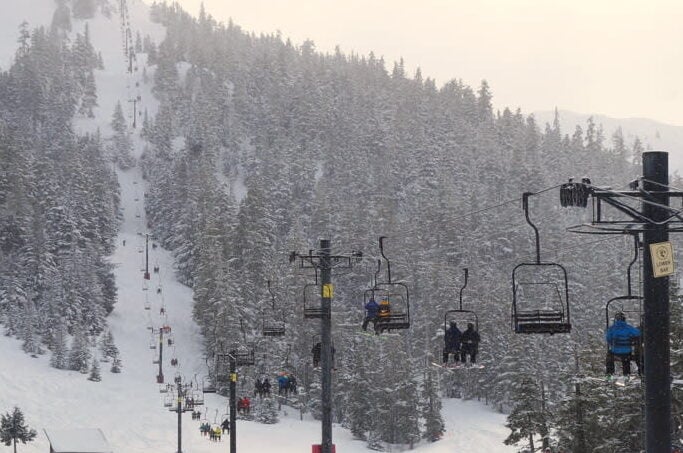
Eaglecrest board to consider lone general manager finalist today

NOTN- The Eaglecrest Board will hold a special meeting this afternoon to consider the lone finalist for the ski area’s next general manager.

The meeting will run from 12:30 to 1:30 p.m. and will be held online only through Zoom, with the agenda available on the City and Borough of Juneau’s Civic Clerk webpage.

The finalist? Former Eaglecrest manager Julie Jackson Piper.

Piper previously worked at Eaglecrest from 2009 to 2015 and later managed Juneau’s public pools before becoming recreation manager for Richland, Washington. She was also a finalist for the position in 2024, finishing as the runner-up.

Her potential hiring comes during a challenging period for Eaglecrest, which has faced financial losses, equipment failures and closure uncertainty after the city canceled plans for a new gondola project because of soaring costs.

Currently the City and Goldbelt are discussing a potential partnership such as a long term lease.

Additional information on the meeting and other public meetings is available through the CBJ public meetings calendar.

Categories
Alaska News

Corporate income tax change remains key sticking point for Alaska gas pipeline bill

The Alaska State Capitol is seen on May 18, 2026. (Photo by Claire Stremple/Alaska Beacon)

The Alaska State Capitol is seen on May 18, 2026. (Photo by Claire Stremple/Alaska Beacon)

The Alaska state Capitol was quiet Monday, with halls empty and offices dark as legislators traveled and visited their home districts amid an ongoing special session.

Lawmakers reached by phone said they expect next week to be different, and a key vote that would decide the fate of the tax break for the proposed trans-Alaska natural gas pipeline could take place on July 16.

“This week I’m expecting members to be talking … and trying to figure out what the final package might look like, and then I’d expect members to probably return on the 11th or 12th for in-person conversations, and at some point a conference committee meeting to pass out a final product,” said Rep. Calvin Schrage, I-Anchorage and chair of the conference committee tasked with drafting a final version of the tax break.

In late June, the state House and Senate passed different versions of the bill containing the tax break. Now, six legislators — three from the state House and three from the state Senate — are attempting to negotiate a compromise. 

They’re under a deadline: The ongoing special session expires July 19. If they don’t reach a final decision on the tax break before then, Gov. Mike Dunleavy could call legislators into another 30-day special session, the third on the topic.

While legislators disagree on many parts of the bill, the biggest sticking point in negotiations is whether or not the tax break bill should also end a corporate income tax exemption in state law. Currently, oil and gas companies that are publicly traded on stock markets — big names like ExxonMobil and ConocoPhillips — are required to pay the state’s corporate income tax.

Companies that aren’t — like Hilcorp, which is privately owned by billionaire businessman Jeffery Hildebrand, or Glenfarne, the firm that is now the lead developer of the pipeline — don’t have to pay the corporate income tax.

Earlier this year, the Senate approved a bill eliminating the exemption for privately held companies. The House voted it down. 

When the Senate passed its version of the tax-break bill benefiting the pipeline, it voted 11-9 to include the “S-Corp provision” eliminating the exemption. The House’s version does not have that elimination. 

As of Thursday, when the six-member House-Senate committee released an update on its work toward a compromise, the S-Corp provision was still in the bill. 

“I think that’s it’s fair to say that’s the most controversial, the biggest decision still to be made,” Schrage said.

Limited information is available on the possible impact. The Alaska Department of Revenue has estimated that Hilcorp and similar companies would pay somewhere between $0 and $100 million per year if the exemption is eliminated.

If the gas pipeline is built as planned, its operators would pay nothing additional until 2036, the department estimates. That year, the operators would pay $29 million, the department estimates. That estimate rises to $65 million per year by 2041 and $358 million per year by 2051. 

In comparison, the tax break being considered by lawmakers would reduce the pipeline project’s property tax burden by an estimated $16 billion over 30 years.

The state treasury would still collect an estimated $800 million from production taxes and royalties at full production, according to the Department of Revenue. That’s without the S-Corp provision and it doesn’t include economic effects caused by pipeline construction and operation.

Sen. Forrest Dunbar, D-Anchorage, authored a prior version of the S-Corp provision and has been a consistent supporter.

Speaking on Monday, he said that eliminating the tax exemption is a way to prevent the gas pipeline project from inadvertently lowering state oil revenue. 

Because the cost of new infrastructure can be deducted from state taxes, it’s expected that oil revenue will drop as the gas pipeline begins to come online.

“I think it’s extremely important for protecting the finances of Alaska. It doesn’t burden the project,” he said, because the pipeline isn’t taxed until it starts making a profit.

Business groups and pro-industry legislators have attacked the provision as counterproductive, saying it works against the bill’s goal — lowering taxes in order to encourage investors to back what would be one of the world’s largest natural gas projects.

Last week, a coalition that includes the Alaska Chamber, Alaska Oil and Gas Association, and other trade groups wrote a letter urging lawmakers to drop the S-Corp provision.

“We encourage passage of a clean bill without the addition of unrelated targeted tax measures,” they wrote.

Glenfarne, on June 19, issued a statement opposing the provision.

“A poorly constructed pass-through entity tax change would be shortsighted when the state is on the verge of the largest capital raise initiative for energy infrastructure in U.S. history,” the company said.

Dunleavy has said he would veto a tax-break bill containing the S-Corp provision, and it isn’t clear whether the provision has the votes to pass the House.

In a written statement issued last week, the 19-member Republican House minority caucus issued a statement opposing the provision. Some members of the majority, including Rep. Chuck Kopp, R-Anchorage, have also said they oppose it.

Rep. Justin Ruffridge, R-Soldotna, is a member of the House minority caucus and a member of the conference committee negotiating the tax-break bill. He said he thinks there are too many uncertainties about the provision, including how much money it would raise, how it would be implemented and what effects it would have. 

He doesn’t understand why the Senate’s majority caucus is insisting upon it.

“I’m genuinely surprised that that’s many people in the Senate’s position,” he said.

Under the rules of the six-member conference committee, changing the tax-break bill or advancing it onward to a final vote would require two votes from the three senators on the committee and two votes from the three House members on the committee.

While Sen. Mike Cronk, R-Tok, has said he supports removing the S-Corp provision, Sen. Lyman Hoffman, D-Bethel and Sen. Bert Stedman, R-Sitka, have previously supported the provision.

Hoffman was traveling on Monday and did not respond to a text message seeking his position on the provision. Stedman did not return a voice message left seeking comment.

Dunbar said he believes the bill will not come to a vote in the Senate without the S-Corp provision.

“I do not think it has the votes to get to the Senate floor without it being included,” he said.

If the bill were somehow able to leave the committee without the provision, Dunbar said he doesn’t see the bill passing the Senate.

“It kills the bill if it comes out. I think we would probably head to a third special session in that case, and we’d start with a new bill,” he said.

SUPPORT: YOU MAKE OUR WORK POSSIBLE

Categories
Alaska News Featured Juneau News juneau Juneau Local Juneau Local Ketchikan Local News Feeds Sitka Local

Wrongfully convicted Alaskans can now apply for withheld PFDs under new law

By: Corinne Smith, Alaska Beacon

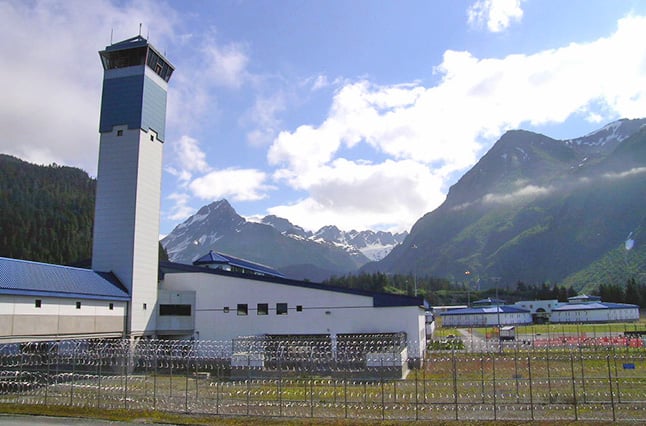
Spring Creek Correctional Center is seen in an undated photo. (Photo courtesy of Alaska Department of Corrections)

Alaskans who have been wrongfully convicted can now apply to claim Alaska Permanent Fund dividends that were withheld while they were incarcerated, under a new law. 

The Alaska Legislature passed Senate Bill 167 by a combined vote of 58 to 2, and Gov. Mike Dunleavy allowed the bill to pass into law without his signature last month. 

Under current Alaska law, those who are incarcerated or sentenced as a result of a felony or certain combination of misdemeanor convictions are ineligible for the Permanent Fund dividend. The amount equivalent to those dividends is deposited into a restorative justice fund each year. 

Under the new law, past dividends will be granted to people whose convictions were vacated or reversed, or those who had charges against them dismissed. People who were found not guilty after their case was retried are also eligible. Individuals whose charges were dropped as part of a plea agreement in another criminal case would not be eligible. 

Exonerees have two years after a dismissal or not guilty finding — or two years after the bill’s effective date — to apply for the past dividends through the Permanent Fund dividend office with the Alaska Department of Revenue. The bill is set to take effect on September 16.

Sen. Scott Kawasaki, D-Fairbanks, speaks Friday, Feb. 7, 2025, on the floor of the Alaska Senate. (Photo by James Brooks/Alaska Beacon)

Sen. Scott Kawasaki, D-Fairbanks, sponsored the bill and told lawmakers at a May hearing that the state has a responsibility to those the justice system has failed.  

“When an Alaskan has been wrongfully convicted, and then later has had their judgment vacated or reversed, then the state must go beyond merely unlocking the cell,” he said. “We have a duty to make amends for those who have endured an injustice under our laws.”

Prior to the law’s passage, Alaska was one of 12 states that did not provide compensation for wrongful convictions, according to a sponsor statement prepared by Kawasaki’s office. Many states provide financial compensation, or college tuition or job training assistance for exonerees.

Kawasaki said it’s a small step to restore dividend payments. “These funds represent a loss of personal property during that period of time,” he said. “(The bill) is about restoration and not compensation, because really the amount of time that a person has been behind bars can just never be repaid.”

The bill was supported by the Tanana Chiefs Conference and non-profit advocacy groups, including the Alaska Innocence Project and After Innocence, a national advocacy non-profit that provides post-release assistance for those wrongfully convicted. 

Jon Eldan, the executive director of After Innocence, said in an interview Monday that the  restored PFD money is helpful.

“Because people who have been incarcerated for crimes they didn’t commit typically face a wide range of barriers to rebuilding their lives after that horrible experience, and money helps,” he said. “And so not only is it good because it’s something that is due to them, but also because every dollar matters when you are trying to come back from having your liberty taken away.”

The number of Alaskans who have been wrongfully convicted, or who may be innocent and are in the process of fighting their prior conviction to be overturned is unknown. 

The National Registry of Exonerations is a national database of false convictions compiled by Michigan State College of Law, University of Michigan Law and University of California Irvine Newkirk Center for Science and Society. The registry lists over 4,300 wrongful convictions since 1989 nationwide, including nine known cases in Alaska. Those nine cases represent a total of 76 years of incarceration.  

“How many more people in Alaska who are incarcerated are factually innocent? And the difficult part is we don’t know,” Eldan said. “Except when these cases resolve in a systemic finding that their conviction needs to be overturned, and have the charges dismissed, etc. and so we don’t know what we don’t know.” 

The most infamous cases of wrongful conviction in Alaska are known as the Fairbanks Four — when Marvin Roberts, Eugene Vent, George Frese and Kevin Pease were wrongfully convicted for the killing of a teenager, John Hartman, in 1997. The four Alaska Native men served 18 years in prison each, and were exonerated in 2015 when another man confessed to the killing. 

Researchers with the National Registry of Exonerations point to a variety of factors that contribute to wrongful convictions, including police and prosecutorial misconduct, like concealing evidence and witness tampering, false or misleading forensic science, eyewitness testimony or confessions, or inadequate legal defense.GET THE MORNING HEADLINES.SUBSCRIBE

Black and Indigenous people are disproportionately arrested and incarcerated nationwide. Researchers with the National Registry of Exonerations estimate Black Americans are seven times more likely than white Americans to be falsely convicted of crimes.  

In Alaska, while Alaska Native people make up less than 20% of the state’s population, they made up 40% of the prison population last year.

“We see an over-representation in our prisons of people of color and minority groups,” Eldan said. “So I wouldn’t be surprised at all — although the numbers are quite small in Alaska, so far, in terms of identified wrongful conviction or innocence cases — to find an over-representation of minority groups, including Alaska Natives.”