NOTN- Eaglecrest Ski Area is off the mountain tonight with a new “Christmas in July” event downtown.
Director of Snow Sports Erin Lupro said the event will run this evening from 4–7 p.m. at Deckhand Dave’s food truck area, featuring live music from Steady Goin’ from 5–7 p.m., festive decorations and on-site season pass sales.
“If you do buy your pass at the event, we will give you an ornament to put into a box of your choice to win a Christmas present, and if you buy your season pass at the event, you have an option to pick a present that you might like. It varies from some Eaglecrest swag, of course, all the way up to, we might have a helicopter ride in one of those boxes.”
July is the only month Eaglecrest offers a payment plan for season passes, with installments stretching through October.
On the operations side, Lupro said the ski area is coming out of a “rough budget cycle” but has now begun winter hiring for lift operators, rental shop staff and instructors, with many returning employees retained.
Opening day is set for Dec. 12, with 87 operating days planned, “pretty much a copy-paste” of last winter, she said.
“The beginning of last season was a little rough, both for the community and for the staff because we want the same thing as the community. We want to be able to provide what is so much fun for all of us. So this winter, I know it’s the big elephant in the room. What will Eaglecrest be doing? We were able to work through the budget, and the only change is we have a small window in February where we’re open from 9:00 until 3:00 a little bit longer, and then switch to 4:00. So that’s the only difference that we made to the calendar for this operational season.” Lupro said.
Former Eaglecrest staffer Julie Jackson Piper will return as general manager on Aug. 31.
Two of Alaska’s largest labor organizations have sued Gov. Mike Dunleavy for failing to promptly fill two seats on the board that governs the state’s public employee pension plans.
The Alaska AFL-CIO, National Education Association-Alaska and five individuals filed suit Wednesday in Anchorage Superior Court, seeking a court order that would require the governor to fill seats on the Alaska Retirement Management Board that are designated for the teachers’ and public employees’ unions.
According to the complaint, the seats have been vacant since March 1. The unions sent lists of possible nominees to the governor four months before that, on Dec. 1.
Under state law, “a vacancy on the board of trustees shall be promptly filled.”
The unions sent a warning letter to the governor’s office in late May about the issue.
Stephen Cox, the attorney general designee whose confirmation was rejected by the Alaska Legislature this year, responded to the message. Now working as Counsel to the Governor, Cox said the law reserving seats for the unions “warrants further analysis, as it potentially encroaches upon the Governor’s constitutional appointment authority.”
Cox said the governor will be requesting a formal legal opinion from acting Attorney General Cori Mills.
“The administration does not comment on lawsuits,” said Jeff Turner, the governor’s communications director, when reached for comment.
The Beacon contacted the Department of Law on Monday afternoon as well, seeking comment about the lawsuit. It did not respond by 8 a.m. the following day.
The plaintiffs are being represented by attorney Scott Kendall, who has frequently fought cases against the Dunleavy administration.
By phone on Monday afternoon, Kendall said the issue is “very important” because the board handles billions of dollars’ worth of investments on behalf of state residents.
Two board meetings have already taken place without union representatives.
“This isn’t the, ‘Oops, this slipped through the cracks sort of issue.’ The new nominees were put forward by both unions three months before the prior terms expired. Those filings were acknowledged by the Department of Revenue, which handles this. So everything was done timely,” he said.
In the complaint, the plaintiffs state that if the issue goes to trial, Cox should not have a role because state law requires the Department of Law — through staff attorneys or hired counsel — to represent the state in legal issues.
Kendall said the legality of laws constraining a governor’s appointment powers have been repeatedly tried in court and upheld.
“To be honest, it’s befuddling. There’s a very clear statute. There’s a very clear regulation. They say these people shall be appointed promptly, and they shall be from lists from these two groups,” he said. “So I think it’s quite honestly bizarre that we’re even in this situation, but here we are nonetheless.”
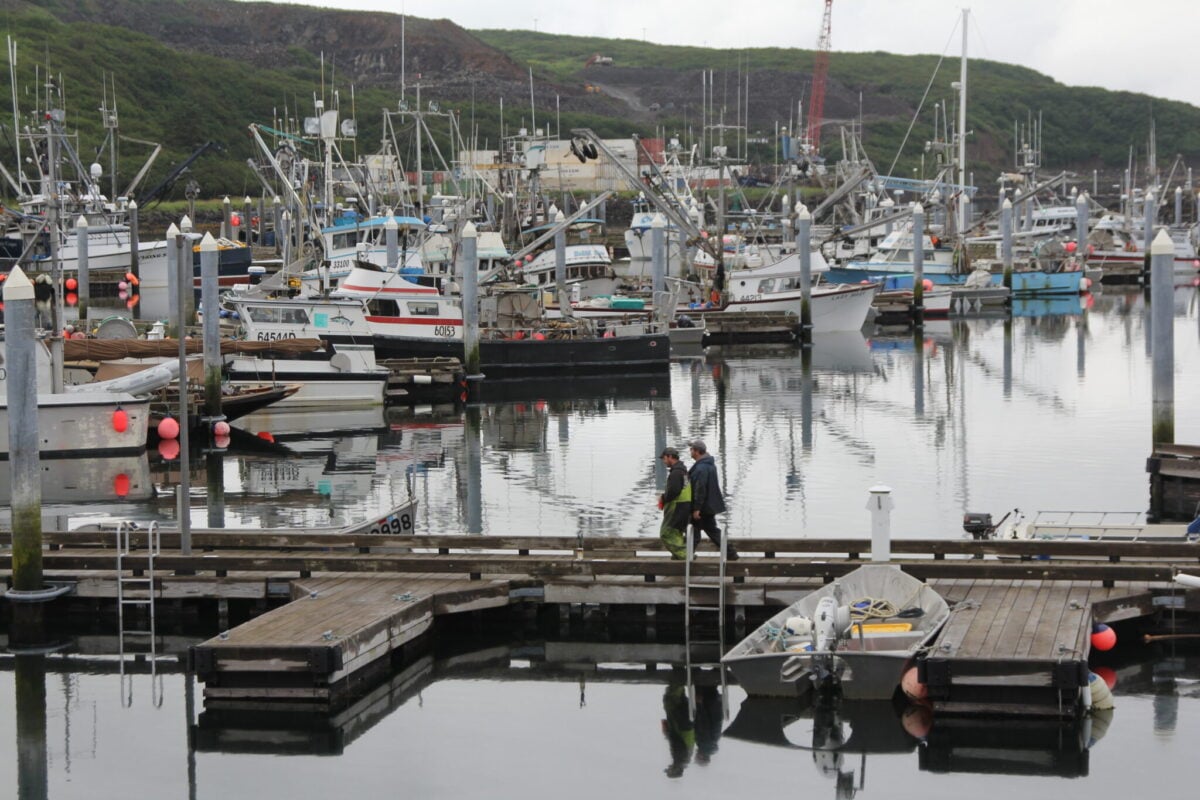
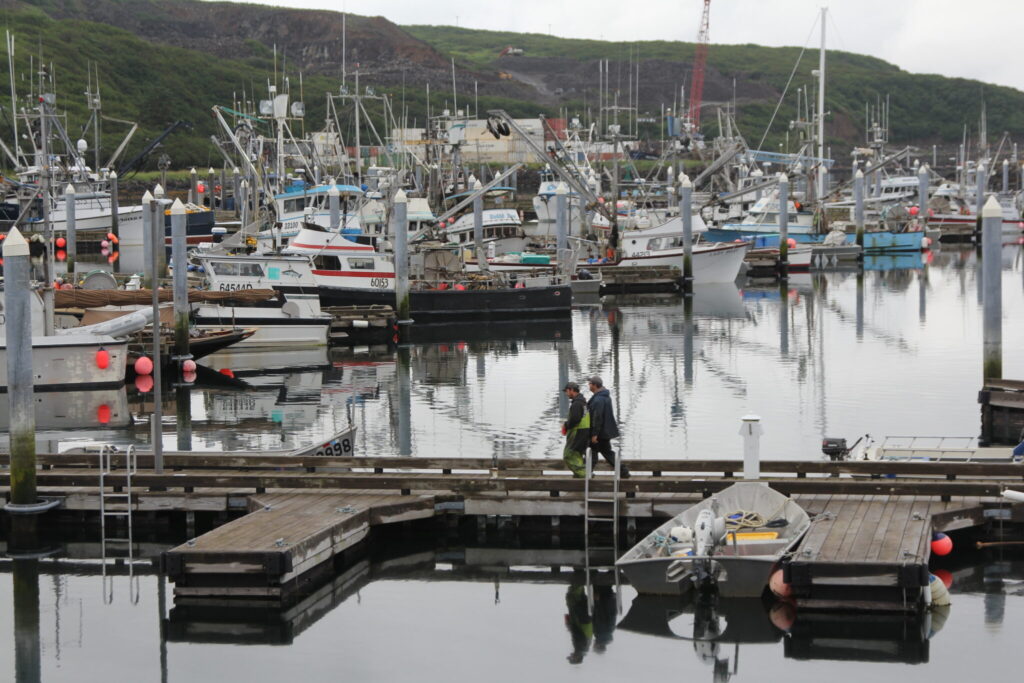
Fishing boats in the Robert E. Galovin Small Boat Harbor in Sand Point are seen on Aug 7, 2025, before heading out to the Area M fishery. (Photo by Theo Greenly)
A legislative audit committee instructed the state auditor to investigate the past three years of process and legal compliance of the board tasked with developing policy and managing Alaska’s fisheries.
Rep. Louise Stutes, R-Kodiak and chair of the House Fisheries Committee, made the request for the special audit of the Alaska Board of Fisheries. The bicameral Legislative Audit and Budget Committee approved it at a hearing on Thursday.
Rep. Louise Stutes, R-Kodiak, speaks on the House floor on the last day of the regular legislative session on May 20, 2026. (Photo by Corinne Smith/Alaska Beacon)
“The breadth and frequency of stakeholder complaints about the Board’s process make it clear the Board has lost the public’s trust. As Chair of the House Fisheries Committee, I am compelled to act,” Stutes wrote.
She said the board has been “increasingly characterized as lacking transparency, unethical, and/or unlawful.”
The seven-member Board of Fisheries is appointed by Gov. Mike Dunleavy and confirmed by the Legislature. Each member serves a three year term. The legislative audit committee authorized an examination of the board’s activity from an Oct 12, 2023 meeting through July 1 of this year.
In a letter requesting the audit, Stutes cited concern that board members have “ethical impairments,” and pointed to recent action by the Acting Attorney General Cori Mills overruling the board’s decision to implement some fishing restrictions in an Aleutian Island fishery, Area M, as evidence.
In an unusual move, Mills stepped in and voided the regulations passed by the Board of Fish in February that implemented restrictions on the Area M fishery to allow more salmon to pass through to Western Alaska spawning streams. Area M has been the center of years of fierce debate and growing concerns from subsistence and Tribal communities in Western Alaska, where salmon runs have reached crisis lows.
Following the board’s February action, Aleutian fishing groups, local and Tribal governments filed ethics complaints against several board members citing conflicts of interest, then a lawsuit challenging the board’s action. The acting attorney general voided the decision in May. In response to that action — and in support of Western Alaska subsistence and Tribal communities — advocates filed a motion to reconsider that challenged the Attorney General’s authority to void the regulation changes and asked a court to review the decision. A judge denied the request.
The Board of Fish’s chair did not respond to a request for comment on the audit on Monday.
On Monday, a spokesperson for the Alaska Department of Law said that following the Attorney General’s disapproval memo, the board has an opportunity to reconsider the regulations to the Area M fishery “as long as they conform to the proper process.”
“In general, disapproval memos are rare as we are normally able to work with the respective state agencies throughout the regulations process and ensure the regulations comply with all necessary statutory requirements,” said Sam Curtis, a public information officer with the department. “In this case, the Department of Law took action pursuant to the Ethics Act and those proceedings are confidential by law. We cannot disclose any further information.”
Legislative committee approves the audit request
In the hearing on Thursday, Sen. Scott Kawaki, D-Fairbanks questioned the motives of the special audit request. He said claims that the board actions lacked transparency or were unethical were “rather inflammatory.”
“I want to make sure that the request is targeted at the board process and whether the processes are being adhered to, and so it’s not an opinion,” he said. “If there’s a disagreement, you can litigate and you can go to Superior Court, and that seems like that process should be separate.”
Stutes told the twelve House and Senate committee members present that the audit would focus on the board’s process and procedures only, not actions taken by the board.
“We’re not addressing any decisions that have been made by the Board of Fish. Our intent through this audit is to address the process in which these decisions are being made,” Stutes said.
Kris Curtis, a Legislative Auditor for the state and that leads the Division of Legislative Audit told lawmakers at the hearing that her office has extensive experience auditing state boards — including the Board of Fish and the Board of Game — and that the state audit would adhere to the criteria outlined in the request. That includes compliance with fisheries regulations and statutes, public notice and comment requirements and compliance with the Administrative Procedure Act and Executive Branch Ethics Act.
“We conduct all of our audits in accordance with auditing standards that require that we maintain our independence, both in fact and appearance. I have no concerns about that,” Curtis said. “To be able to address these objectives using objective criteria, we will gather sufficient, appropriate evidence, like we always do for every performance audit we issue, and we will come back to the committee with an independent, objective report.”
Curtis replied to lawmakers’ questions about the Attorney General’s decision by saying it would be evaluated by auditors.
“The answer is absolutely,” she said. “It’s informative. It’s factual. If we didn’t, we would be deficient. We will also be collecting other evidence. We will be having interviews. We’ll be reaching out to stakeholders. We’ll be examining meeting meetings. We’ll be looking at meeting minutes. We’ll be looking at the process. We’ll be doing all kinds of audit procedures.”
Sen. Bill Wielechowski, D-Anchorage, asked her what would happen if auditors found the Attorney General acted improperly.
Curtis said her office would assess the case law cited in the decision. “If I found the Attorney General acted inappropriately, I would have to probably consult legislative, legal or outside counsel, depending on the subject and whatever we’re looking at, to inform us, the legislative audit team, about what decision they made. It’s not uncommon to seek additional legal advice when evaluating something,” she said.
House Speaker Bryce Edgmon, I-Dillingham, and a former commercial fisherman, acknowledged that the Board of Fish has often drawn criticism and controversy.
“You’ve audited just about every moving thing out there, if I recall, as a long-term legislator, and this issue is always going to be controversial,” he said. “There is a lot of concern out there on a number of fronts about the Board of Fisheries, as there always is.”
Edgmon noted that the auditors’ recommendations can be taken up by the Legislature if needed.
Curtis said auditors will work closely with the Board of Fish, who will have an opportunity to respond to the audits’ findings and recommendations. With the committee’s approval, Curtis said her office will likely begin the audit investigation in August and complete its work in four to six months.
For decades, federal wildlife officials have protected old-growth forests as critical habitat for northern spotted owls. But a new interpretation of the Endangered Species Act issued by the Trump administration removes protections for wildlife habitat. (Photo by Tom Kogut/U.S. Forest Service via U.S. Fish and Wildlife Service on Flickr)
The Trump administration is removing protections from the key places where endangered species live, saying states can keep the areas safe.
But experts say states aren’t equipped for the task.
Earlier this month, the Trump administration finalized a major change to the Endangered Species Act, rolling back protections for the forests, wetlands, deserts and other critical habitats that many plants and animals rely on.
The new rule will open many landscapes to development, logging, mining and oil and gas drilling. Wildlife officials — in both conservative and liberal states — had expressed strong concerns about the proposal, saying it would threaten their plans to safeguard endangered species.
But federal officials framed the decision as a move to give “freedom” to state leaders to manage wildlife without burdensome federal regulations.
States that wish to continue protecting habitats can do so under state law, the Interior Department and other federal agencies wrote in their lengthy new regulations.
But legal experts and wildlife veterans say that almost no states have endangered species laws on the books that allow state officials to prevent habitat destruction in the name of saving wildlife.
While many states have laws to stop poaching and direct killing of wildlife, the protection of nesting trees, spawning streams and other resources has long fallen to the federal Endangered Species Act and the agencies that enforce it.
“It’s not going to be a situation where the states can easily just jump in here and fill the void,” said Robert Anderson, who served as solicitor for the Department of the Interior during the Biden administration. “It’s not going to help states, and it’s going to make it worse for the species.”
Many wildlife experts also noted that state wildlife agencies are already underfunded as it is. Taking on the massive regulatory system that prevents developers and extractive industries from destroying critical habitat would require far more resources than those agencies have available.
A coalition of environmental groups and tribal nations have filed lawsuits challenging the federal rollback.
The ‘harm’ rule
On July 10, the federal departments of Interior and Commerce announced they had finalized a rule rescinding the longstanding definition of “harm” under the Endangered Species Act.
For decades, federal officials have scrutinized logging projects that would cut old-growth trees where owls build their nests, and agriculture operations that diverted water from streams where salmon return to spawn.
But now, the feds are pivoting to a much more limited definition of “harm.” Only actions that directly injure or kill the animals themselves will be considered a violation of endangered species law.
“You can destroy the resources a species requires as long as you don’t do it when the species is at home,” said Karrigan Börk, a law professor and director of the Center for Watershed Sciences at the UC Davis Institute of the Environment. “If you drain a salmon river during the summer when the salmon aren’t in it, ultimately it has the same impact of killing off that whole species.”
In its announcement, the Trump administration framed the move as restoring the “original intent” of the Endangered Species Act and reducing regulations that punished people for “indirect or speculative impacts” to wildlife.
The Interior Department did not respond to a Stateline interview request.
A 2019 study published in Conservation Science and Practice of species added to the list of endangered species from 1975 to 2017 found that only 17% of them faced threats from direct killing, while 81% faced habitat loss.
“It’s common sense that we can’t save a species unless we save the places that they live,” said Jane Davenport, senior attorney at Defenders of Wildlife, a nonprofit conservation group that is planning to sue the federal government over the change. “This is an attempted death blow to the Endangered Species Act.”
Some industry groups praised the move. The American Petroleum Institute and other oil and gas groups said in public comments that they supported the effort to limit habitat protections, but expressed concern that the Trump administration’s move to rescind the “harm” definition without issuing a new interpretation could allow a future president or the courts to issue a more expansive reading of the law.
The groups cited Supreme Court Justice Antonin Scalia’s dissenting opinion in a landmark 1995 case that upheld habitat protections under the Endangered Species Act.
“‘Harm’ must involve a direct injury to a particular animal,” the groups wrote, arguing that it “cannot result indirectly from habitat modification nor can the term apply to a population of animals.”
States’ role
In public comments after the rule was initially proposed, wildlife agency leaders from both liberal and conservative states said the change would be a blow to their conservation efforts.
The proposed rule would have “dire consequences,” wrote Bruce Kreft, chief of the conservation and communications division with the North Dakota Game and Fish Department. “Eliminating habitat protection will lead to further population declines and, ultimately, an increase in the number of species needing (Endangered Species Act) protection.”
Wildlife officials in Arizona, Georgia, Louisiana, New Mexico, New Jersey, Vermont and Wyoming also expressed concern about the loss of habitat protections, as did the Association of Fish & Wildlife Agencies, a nonprofit that represents state wildlife managers.
Of the public comments reviewed by Stateline, only Alaska’s wildlife agency leader offered wholehearted support for the change.
In response to those concerns, federal officials wrote in their rulemaking decision that the change “does not alter the ability of States to implement their own conservation programs or to regulate habitat impacts under State law.”
But wildlife experts say states cannot replicate the habitat protections that federal law provided. Although most states have their own state-level endangered species laws, they’re largely focused on poaching or direct killing of animals.
“The state-level endangered species acts are wildly variable in what they’re supposed to cover and are uniformly under-resourced and under-enforced, because the federal Endangered Species Act has been the real baseline since the 1970s,” said Börk, the UC Davis professor.
Chris Servheen, who served as grizzly bear recovery coordinator for the U.S. Fish and Wildlife Service for 35 years, worked closely with state wildlife agencies in that position.
“It’s really disingenuous to say if states want to protect habitat, they can do so,” he said. “That’s not their role, that’s not what they do. States manage the take (killing) of the animals directly related to hunting or trapping or something like that. The federal agencies manage the land base.”
According to a 2024 analysis from the National Caucus of Environmental Legislators, only eight states plus Puerto Rico require the designation of critical habitats under their laws to protect endangered species.
California appears to be the only state with a process under state law to account for damage to wildlife habitat and require developers to offset those impacts, such as funding a restoration project nearby, said Becca Madsen, restoration economy director with the Environmental Policy Innovation Center.
“(States) don’t have this layer of federal regulations and staff and the consistency of how it’s been regulated for decades,” she said. “Now they’ve got to create their own processes and permitting and data and guidance. It’s a lot.”
Even if states were to pass laws and invest in programs to protect wildlife habitat, they would be unable to enforce those measures on federal land. Across the West, federal public lands cover vast swaths of many states and provide critical habitat for many species. If the U.S. Forest Service were to permit a logging operation on old-growth forest under the new “harm” definition, state wildlife officials could do nothing to stop it.
Meanwhile, some advocates are doubtful that state lawmakers have an appetite to take on the regulatory role once handled by the feds.
“Most state legislatures are pretty strongly captured by development and real estate interests,” said Kate Groetzinger, communications director with the Center for Western Priorities, a conservation group. “The political bar to putting something like this in place at the state level is a lot higher than it was when the Endangered Species Act was passed.”
Going to court
Last week, a coalition of environmental groups filed a lawsuit challenging the “harm” rule. A pair of tribes in Washington state filed their own lawsuit, asserting that the decision will infringe on tribal fisheries that the federal government is obligated to protect under treaty agreements.
Some legal experts expect a flood of lawsuits over specific proposed projects.
“Courts are going to have to figure out on a case-by-case basis what’s covered and what’s not covered,” said Börk, the UC Davis professor. “It’s going to lead to widespread confusion over the next decades over what’s illegal or legal, and it’s going to make it harder for developers and landowners to know whether they have liability or not.”
Some advocates expressed concern that the lawsuits challenging the Trump administration could make it to the conservative Supreme Court, which could then permanently enshrine an interpretation of the Endangered Species Act that fails to protect habitat. That would leave a future administration powerless to undo the change, unless Congress were to rewrite the law.
But some see no real alternatives.
“I’d be worried if it got to the Supreme Court, but the alternative is just acquiescence, which I don’t think is a good idea,” said Anderson, the former Interior solicitor.
Editor’s note: This story was updated to correct the spelling of Chris Servheen’s name.Stateline reporter Alex Brown can be reached at abrown@stateline.org.
This story was originally produced by Stateline, which is part of States Newsroom, a nonprofit news network which includes Alaska Beacon, and is supported by grants and a coalition of donors as a 501c(3) public charity.
Fishing boats in the Robert E. Galovin Small Boat Harbor in Sand Point are seen on Aug 7, 2025, before heading out to the Area M fishery. (Photo by Theo Greenly)
A legislative audit committee instructed the state auditor to investigate the past three years of process and legal compliance of the board tasked with developing policy and managing Alaska’s fisheries.
Rep. Louise Stutes, R-Kodiak and chair of the House Fisheries Committee, made the request for the special audit of the Alaska Board of Fisheries. The bicameral Legislative Audit and Budget Committee approved it at a hearing on Thursday.
Rep. Louise Stutes, R-Kodiak, speaks on the House floor on the last day of the regular legislative session on May 20, 2026. (Photo by Corinne Smith/Alaska Beacon)
“The breadth and frequency of stakeholder complaints about the Board’s process make it clear the Board has lost the public’s trust. As Chair of the House Fisheries Committee, I am compelled to act,” Stutes wrote.
She said the board has been “increasingly characterized as lacking transparency, unethical, and/or unlawful.”
The seven-member Board of Fisheries is appointed by Gov. Mike Dunleavy and confirmed by the Legislature. Each member serves a three year term. The legislative audit committee authorized an examination of the board’s activity from an Oct 12, 2023 meeting through July 1 of this year.
In a letter requesting the audit, Stutes cited concern that board members have “ethical impairments,” and pointed to recent action by the Acting Attorney General Cori Mills overruling the board’s decision to implement some fishing restrictions in an Aleutian Island fishery, Area M, as evidence.
In an unusual move, Mills stepped in and voided the regulations passed by the Board of Fish in February that implemented restrictions on the Area M fishery to allow more salmon to pass through to Western Alaska spawning streams. Area M has been the center of years of fierce debate and growing concerns from subsistence and Tribal communities in Western Alaska, where salmon runs have reached crisis lows.
Following the board’s February action, Aleutian fishing groups, local and Tribal governments filed ethics complaints against several board members citing conflicts of interest, then a lawsuit challenging the board’s action. The acting attorney general voided the decision in May. In response to that action — and in support of Western Alaska subsistence and Tribal communities — advocates filed a motion to reconsider that challenged the Attorney General’s authority to void the regulation changes and asked a court to review the decision. A judge denied the request.
The Board of Fish’s chair did not respond to a request for comment on the audit on Monday.
On Monday, a spokesperson for the Alaska Department of Law said that following the Attorney General’s disapproval memo, the board has an opportunity to reconsider the regulations to the Area M fishery “as long as they conform to the proper process.”
“In general, disapproval memos are rare as we are normally able to work with the respective state agencies throughout the regulations process and ensure the regulations comply with all necessary statutory requirements,” said Sam Curtis, a public information officer with the department. “In this case, the Department of Law took action pursuant to the Ethics Act and those proceedings are confidential by law. We cannot disclose any further information.”
Legislative committee approves the audit request
In the hearing on Thursday, Sen. Scott Kawaki, D-Fairbanks questioned the motives of the special audit request. He said claims that the board actions lacked transparency or were unethical were “rather inflammatory.”
“I want to make sure that the request is targeted at the board process and whether the processes are being adhered to, and so it’s not an opinion,” he said. “If there’s a disagreement, you can litigate and you can go to Superior Court, and that seems like that process should be separate.”
Stutes told the twelve House and Senate committee members present that the audit would focus on the board’s process and procedures only, not actions taken by the board.
“We’re not addressing any decisions that have been made by the Board of Fish. Our intent through this audit is to address the process in which these decisions are being made,” Stutes said.
Kris Curtis, a Legislative Auditor for the state and that leads the Division of Legislative Audit told lawmakers at the hearing that her office has extensive experience auditing state boards — including the Board of Fish and the Board of Game — and that the state audit would adhere to the criteria outlined in the request. That includes compliance with fisheries regulations and statutes, public notice and comment requirements and compliance with the Administrative Procedure Act and Executive Branch Ethics Act.
“We conduct all of our audits in accordance with auditing standards that require that we maintain our independence, both in fact and appearance. I have no concerns about that,” Curtis said. “To be able to address these objectives using objective criteria, we will gather sufficient, appropriate evidence, like we always do for every performance audit we issue, and we will come back to the committee with an independent, objective report.”
Curtis replied to lawmakers’ questions about the Attorney General’s decision by saying it would be evaluated by auditors.
“The answer is absolutely,” she said. “It’s informative. It’s factual. If we didn’t, we would be deficient. We will also be collecting other evidence. We will be having interviews. We’ll be reaching out to stakeholders. We’ll be examining meeting meetings. We’ll be looking at meeting minutes. We’ll be looking at the process. We’ll be doing all kinds of audit procedures.”
Sen. Bill Wielechowski, D-Anchorage, asked her what would happen if auditors found the Attorney General acted improperly.
Curtis said her office would assess the case law cited in the decision. “If I found the Attorney General acted inappropriately, I would have to probably consult legislative, legal or outside counsel, depending on the subject and whatever we’re looking at, to inform us, the legislative audit team, about what decision they made. It’s not uncommon to seek additional legal advice when evaluating something,” she said.
House Speaker Bryce Edgmon, I-Dillingham, and a former commercial fisherman, acknowledged that the Board of Fish has often drawn criticism and controversy.
“You’ve audited just about every moving thing out there, if I recall, as a long-term legislator, and this issue is always going to be controversial,” he said. “There is a lot of concern out there on a number of fronts about the Board of Fisheries, as there always is.”
Edgmon noted that the auditors’ recommendations can be taken up by the Legislature if needed.
Curtis said auditors will work closely with the Board of Fish, who will have an opportunity to respond to the audits’ findings and recommendations. With the committee’s approval, Curtis said her office will likely begin the audit investigation in August and complete its work in four to six months.
A bill now being considered in the Senate would make daylight saving time permanent, but research suggests moving to standard time would bring more benefits.
Why would a young Republican back solar but reject a carbon tax? Twenty years of survey data shows climate opinion is more complex than party labels suggest.