The just-released song is bonus track on Ella Langley’s new ‘Dandelion’ album. Continue reading…The Boot – Country Music News, Music Videos and Songs











The just-released song is bonus track on Ella Langley’s new ‘Dandelion’ album. Continue reading…The Boot – Country Music News, Music Videos and Songs

The brainchild of two siblings seeking to provide nutritious local meals, this Texas eatery has been operating inside a car dealership for years.

Food Republic – Restaurants, Reviews, Recipes, Cooking Tips

Reading Time: 3 minutes
Wait, what happened to Taylor Frankie Paul?
It’s been over a month since The Secret Lives of Mormon Wives abruptly halted filming, and all of the explosive and upsetting drama that has followed.
Now, her Instagram and TikTok accounts — the vehicle by which she became famous — have gone dark.
She hasn’t deleted old posts. The entire accounts are gone. What happened?
On Wednesday, April 22, Taylor’s Instagram and TikTok vanished from the internet.
Understandably, fans wondered what was going on.
It is common (and healthy) for people to take a break from social media, especially from those two particularly pernicious apps. Time off of social media is healthy and wise.
Sometimes, people even delete the apps from their phones, ensuring that they don’t mindlessly reopen them out of habit. That’s smart!
But deleting the entire accounts is a huge deal.
Did she do this? Did someone do it for her?
What happened?
Fans on social media noticed her conspicuous absence and immediately began to speculate.
Some noted how the last five weeks or so have been absolute hell, and she may have deleted the accounts for her mental health — fearing that simply deleting or avoiding the apps would not be enough.
Others wondered if it was, perhaps, legal advice. She’s not facing charges, but there have been questions about her future on reality TV. Sometimes, public silence is the safest route.

TMZ reports that Taylor has taken this step with her social media of her own accord.
According to their source, “everything is fine.”
Instead, Taylor is said to be taking a break from two of the internet’s most toxic social media apps because she’s still in his chaotic news cycle.
Simply put, she needs time away from it all.
Taylor has previously spoken about wanting to take time to heal, especially given her trauma.

Meanwhile, TMZ confirms previous reporting that Taylor will return to The Secret Lives of Mormon Wives.
As we at THG have noted, production is starting up again after this month-or-so hiatus.
The report also notes that Taylor will not be returning to the show immediately.
After she has gotten a handle on some aspects of her personal life, she’ll resume filming.
We’re sure that some amount of her entire world turning upside down will make it onto the show. But it seems likely that at least some aspects of her recent turmoil won’t make it onto Hulu.
Taylor Frankie Paul VANISHES from Social Media After Tumultuous News Cycle was originally published on The Hollywood Gossip.
The Hollywood Gossip

The Alaska State Capitol is illuminated by the rising sun on the morning of Friday, Jan. 23, 2026. (James Brooks photo/Alaska Beacon)
The Senate Finance Committee on Wednesday proposed an operating budget for the next fiscal year, with a $1,000 Alaska Permanent Fund dividend plus $150 energy relief payment per eligible Alaskan.
The committee’s draft budget takes a more conservative approach to uncertainty around the state’s revenue forecast for next year — driven by rising oil prices due to the Iran war – than the proposed budget passed by the Alaska House passed earlier this month, and eliminates the deficit.
State forecasters have projected a $500 million boost in state revenues, and senators have expressed caution around state spending and a willingness to focus funds to tackle aging infrastructure and deferred maintenance, particularly upgrading school facilities.
“The most fundamental thing we have to remember is that the state doesn’t have the resources to do all the things we need to do and that Alaskans need us to do,” said Sen. Jesse Kiehl, D-Juneau, a member of the finance committee on Thursday. He said the greatest challenge for the Legislature is prioritizing.
“And so I think we did that effectively,” Kiehl said. “I think it makes a few really crucial, really targeted investments.”
The Senate’s draft budget removed the House’s proposed $158 million one-time education funding boost, and instead appropriates up to $100 million for K-12 schools subject to oil revenues averaging $95 per barrel for the rest of this fiscal year ending on June 30.
Alaska has no personal income or state sales tax, and so roughly 60% of state funds for the general purpose budget comes from the Alaska Permanent Fund, the state’s sovereign wealth fund currently valued at $86.3 billion, and roughly 30% comes from state oil revenues.
The draft Senate operating budget is based on an average of $73 per barrel for the next fiscal year starting in July, whereas the House draft budget is based on an average $75 per barrel projection.
The draft budget contains some changes to the House version and additions across departments. It would double funding for disaster relief to $48 million, and increase fire suppression funding from $47.5 million to nearly $61 million. It funds an additional $29 million for school districts and $20 million for communities to offset rising fuel and energy costs; $30 million for community assistance programs; $5.3 million toward a renewable energy fund; $3.5 million for the Alaska Marine Highway system’s ferry maintenance and staff salary increases. It also boosts funds for public employees retirement from $75 million to $106 million, and increases funds for teachers’ retirement system from $157 million to $164 million, among others.
The budget also contains $650,000 for a state audit of the Alaska Department of Corrections to evaluate cost drivers, as the department’s budget has ballooned in recent years.
Kiehl said while he’d like to see more investment in services like in the state’s foster care system, homelessness programs, energy and schools, he said the state can’t bank on unknown revenues.
“We have to be careful not to treat a temporary boost in the price of oil, which will probably last more than a year as though it were permanent, increase. That’s not responsible,” he said.
Senate Minority Leader Sen. Mike Cronk, R-Tok and a member of the finance committee, said he’d like to see a more conservative budget, but he also wants to avoid a large supplemental budget as seen this year. He said he supports the budget based on an average $73 per barrel estimate.
“I’m pretty comfortable with that number. I just don’t want to be back in that same position as we have this year, where we are $500 million upside down for supplemental,” he said.
Cronk said he supports targeted funding for renewable energy projects, education and deferred maintenance for schools, rather than expanding state department budgets. “I just think we should focus on making sure we have a fiscally responsible budget all around and not adding money to programs that continue in future budgets.”
The budget also includes a number of supplemental items, or costs incurred this year outside the budget. Those include $5.2 million for Alaska Pioneer Homes, $1.25 million for Village Public Safety Officer operations, $1.5 million for the Department of Law’s criminal division, $543,000 for court settlements and $4 million to defend a lawsuit challenging the state’s health care system for inmates in the corrections system.
Cronk said while he would like to see a maximum Permanent Fund dividend, it’s not possible within the state’s current financial picture.
“The whole PFD issue is very controversial, no matter which way we go on it,” he said. “We should be paying a full PFD, but the budget, the numbers, don’t allow that right now.”
The Senate’s draft budget overall cuts nearly $450 million from the operating budget, compared to the House draft version. However, the Senate’s proposal leaves $50 million of headroom for additional expenses next year, but that’s after accounting for a $360 million capital budget for state infrastructure projects. The Senate passed a nearly $250 million capital budget on Tuesday, which is now being debated in the House where likely additional projects will be added.
The proposed budget, unveiled as amendments to House Bill 263 will continue to be debated in the Senate Finance Committee and further amendments are due by Friday, before going before the full Senate for a vote.

Reading Time: 2 minutes
Jelly Roll has been feuding with controversial comedian Nicole Arbour for quite some time now.
And now, the beloved artist is facing a serious accusation this week, as comedian Arbour claims he made a death threat against her during a recent encounter.
According to TMZ, the dispute appears to be part of what police described as an “ongoing online back and forth” between the two.
A representative for the Metropolitan Nashville Police Department told the outlet, “No charges have been filed and there is no current investigation underway on the part of MNPD.”
The allegation stems from an incident report filed on March 1, in which Arbour reportedly told deputies she had been dealing with “ongoing issues” involving Jelly Roll, whose real name is Jason DeFord, as well as others associated with him.
According to the report, Arbour said she turned over video footage that she claims captured the incident.
Deputies reportedly reviewed that footage and identified Jelly Roll and another man in the clip.
Per TMZ’s reporting, Arbour alleges that the confrontation centered on a prior charity event where she had a camera.
She claims that during the exchange, Jelly Roll said that if he saw her with the camera, “he would kill her.” Deputies noted hearing the alleged remark themselves while reviewing the video.
The accusation comes amid a larger and increasingly public feud between the comedian and the Grammy-winning artist. TMZ reports that Arbour has recently accused Jelly Roll’s team of attempting to silence her with what she described as a “hush money” agreement, as well as threatening legal action if she refused to sign it.
Despite the severity of the claim, police have made clear that no active case is currently being pursued.
For now, there are no charges, no announced investigation, and no indication from authorities that the matter is escalating beyond the complaint already on file.
“As you’re probably aware, there appears to be an ongoing online back and forth between the two. No charges have been filed and there is no current investigation underway on the part of MNPD,” says a rep for the police department.
This is not the first time that Arbour has gone public with her dislike of Jelly Roll. The controversial comic — who has a long history of celebrity feuds — has already recorded a diss track about Mr. Roll titled “Cosplay Christian.”
We will have further updates on this developing story as new information becomes available.
Jelly Roll Accused of Issuing Death Threat to Comedian Nicole Arbour was originally published on The Hollywood Gossip.
The Hollywood Gossip

Ne-Yo is celebrating the 20th Anniversary of his debut In My Own Words with special vinyl formats. The original album has been remixed and remastered and will feature bonus tracks. In My Own Words will be available on standard edition 2LP and a limited edition ‘Enchanted Night’ Color 2LP.
In My Own Words is considered Ne-Yo’s breakthrough album. The album debuted at No. 1 on US Billboard 200, sold over 300k units, and received a Grammy nomination for Best Contemporary R&B Album category. It includes the smash hit “So Sick.” Produced by Norwegian duo Stargate, the song reached number one on both the US Billboard Hot 100 and the UK Singles Chart.
Last year, “So Sick” joined Spotify’s Billions Club, which celebrates songs that have eclipsed more than one billion views on the streaming platform. It was the singer’s third song to reach this milestone.

“It’s definitely the one that started it all. So this is when I learned a little something about the way that records are released — or at least in the book of [record label executive] L.A. Reid,” Ne-Yo previously told Billboard. “He says, ‘So we’re going to put out ‘Stay’ first and it’s not going to blow up … but it’s going to be enough to get their attention. And then once we get their attention, ‘So Sick.’ He was right.”
Ne-Yo began his music career writing for R&B stars like Mary J. Blige and Christina Milian. His star began to rise in 2004, when he penned the hit single “Let Me Love You” for Mario, which reached number one on the Billboard Hot 100.
In 2023, he released a mini-documentary highlighting his life and career, entitled In My Own Words. In the visual, Ne-Yo discusses his origins in the R&B genre, journaling, and melodic passion.
Shop Ne-Yo’s In My Own Words 20th anniversary releases here.
Discover more about the world’s greatest R&B artists | uDiscover Music

Carter Faith talks about her big, strange, ACM Album of the Year contender, ‘Cherry Valley.’ Continue reading…Country Music News – Taste of Country
Carter Faith talks about her big, strange, ACM Album of the Year contender, ‘Cherry Valley.’ Continue reading…The Boot – Country Music News, Music Videos and Songs
Reading Time: 3 minutes
There was a time when many Sister Wives viewers felt sorry for Meri Brown.
But the “poor Meri” days are over.
During her most recent interview, Mykelti Brown discussed the “mean” sister wife.
She remembers “cowering” in her presence, but how nothing that she or her siblings said or did made a difference.
During this week’s episode of the Cults to Consciousness podcast, Mykelti Brown appeared as a guest.
The Sister Wives star spoke on a series of interesting topics — from how growing up in a polygamous family made her imagine herself as a sister wife one day to how TLC changed the family dynamic to how the family unit began to fracture less dramatically than some might guess.
But, of course, this conversation also included discussion of Meri.
“I do not like Meri,” Mykelti expressed. For those unfamiliar with Sister Wives, she added: “She is my dad’s first wife.”
She continued: “I do not like her … she was mean growing up.” Mykelti then added that Meri “still is” mean, even now.
“I don’t care what she looks like on the show,” Mykelti continued, reminding everyone that behavior changes when someone knows that they are on camera.
“She was aggressive. She was manipulative,” she listed.
Remember how Christine realized that she was the “basement wife” of the family? Meri’s position, until Robyn, was the opposite.
“She was the favorite wife,” Mykelti described. “And she got the favorite wife privileges and perks.”
But Meri still had the responsibility of watching the family’s children. And Mykelti and at least some of her siblings dreaded those times.
“All of us kids were cowering and we were all scared,” Mykelti recalled. “We were all like, ‘OK, whatever you say, Meri. Just don’t hurt me, don’t be mean to me. Don’t yell at me.’”
(Mykelti does not bring up specific allegations of physical abuse, but she has admitted that she watches her words on this topic to avoid consequences for her family and their show.)
“She had this, like, scream she would do [when] she wasn’t getting her way and it was, like, pure loud and angry and just scary,” she described.
Mykelti elaborated: “It was like what you would imagine a freaking dragon screaming at a little child. Think about that.”
That sounds like both toxic behavior and a sign of a disturbed and emotionally immature individual.
According to Mykelti, when Meri was in charge, they all got “severely disciplined, talked down to, grounded.”
Naturally, many Sister Wives fans — and others — might be asking why the Brown kids didn’t simply talk to the other sister wives, especially their biological mothers, about it.
Over time, Mykelti explained, they learned to not bring it up, because nothing changed. It seemed like none of the parents wanted to hear it.
“They didn’t talk about it [and say], ‘No, no, that’s not OK for any parent to do that,’” she lamented. Kody, she said, also seemed to brush it off.
This is actually extremely common in families when there’s one bad parent. Other factors — a stepparent, one parent being the breadwinner, and both parents’ cultural backgrounds can also lead to otherwise good (or at least, relatively better) parents turning a blind eye to their own child’s mistreatment, sometimes in the name of “presenting a united front.”
“So it got to the point where we just stopped saying something,” Mykelti elaborated.
“Until we got older and then we got bigger, stronger, tougher, and knew this wasn’t OK,” she continued. “That’s when it stopped.”
Mykelti added that filming for Sister Wives didn’t make things any easier.
She and her siblings were instructed to not discuss family drama — except what fit things that the adults were sharing on camera. That definitely included Meri.
It is heartbreaking that Mykelti and her siblings had to go through that. They, and millions of other children at any given moment, deserve much better.
Mykelti Brown Describes ‘Cowering’ Around Meri as Kids, How Nothing the … was originally published on The Hollywood Gossip.
The Hollywood Gossip
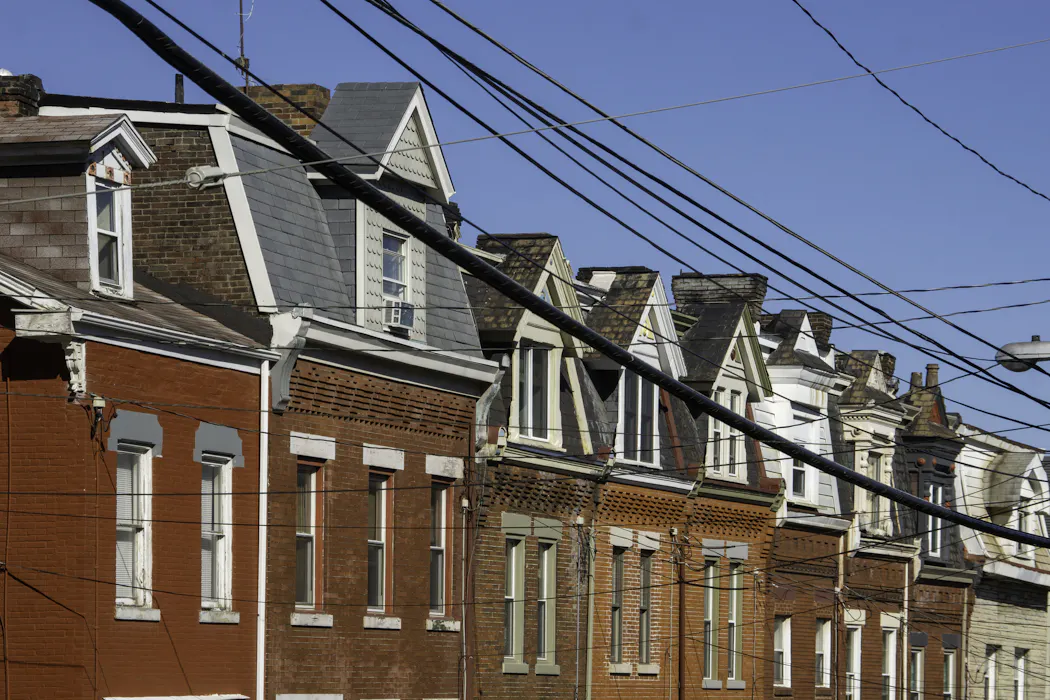
Pittsburgh is widely regarded as a relatively affordable place to live. Overall, housing and living costs remain below national averages for midsize cities in the United States.
Along with low home prices, Pittsburgh offers stable employment rates and close proximity to leading universities and high-quality hospitals.
However, data from a March 2026 survey shows that a single adult needs to earn about $95,000 to live comfortably in Pittsburgh. This is well above the city’s median household income of $67,000. A family of four needs nearly $239,000.
My peer‑reviewed work examines how housing affordability affects a community’s health. It also documents how well policy holds up over time in terms of affordable housing efforts.
Inclusionary zoning requires developers to reserve a portion of new housing units for lower-income residents at below-market rents. A city might require, for example, that a new residential complex reserve or set aside 10% of units for households that earn 80% or less of the area median income.
Also referred to as a “mandatory set-aside,” inclusionary zoning is often done in exchange for developer incentives, such as density bonuses, which allow developers to build additional units. Other incentives could be expedited permitting or relaxed parking minimums, allowing developers to build fewer parking spaces than normally required.
In 2025, Pittsburgh adopted the Affordable Housing Bonus Program, a largely voluntary, incentive-based policy that applies inclusionary zoning requirements only within designated overlay districts. An overlay district is an extra layer of rules that apply to a specific area on top of the neighborhood’s regular zoning rules – such as a special zone within a zone.
The goal is to encourage developers to include a percentage of affordable units within specific geographic areas, such as Lawrenceville, Bloomfield, Polish Hill and parts of Oakland. The Affordable Housing Bonus Program emerged after legal challenges and public opposition derailed inclusionary zoning citywide.
The Affordable Housing Bonus Program is now being tested by a University of Pittsburgh student housing project called The Caroline at University Commons. University Commons is situated in Pittsburgh’s Oakland neighborhood, an inclusionary zoning overlay district. However, the developer, Walnut Capital, is seeking to exempt the project from inclusionary zoning overlay requirements altogether. This would reduce the number of affordable units set aside from 16 to 0. Walnut Capital believes it’s exempt from inclusionary zoning because it meets all other bonus requirements.
The fragility of the Affordable Housing Bonus Program matters not only for the neighborhoods that it affects but for what it reveals about Pittsburgh’s housing affordability.
Pittsburgh faces a persistent shortage of affordable housing. This is especially true for extremely low-income residents, or those who earn less than 30% of an area’s median income. That’s roughly one-quarter of all Pittsburgh residents.
Local estimates from The Pittsburgh Foundation show a deficit of more than 11,000 affordable units for residents at the lowest income levels. This shortage leaves many of these renters cost-burdened and vulnerable to eviction.

The debate about inclusionary zoning in Pittsburgh is heated. Among advocates, community organizations and some policymakers, it’s seen as an effective policy lever. They say it keeps neighborhoods affordable and diverse while giving residents a voice in how their neighborhoods change.
Conversely, developers and some policymakers argue that inclusionary zoning can reduce new construction and lead to higher rents overall. They also warn it can undermine equity goals by slowing housing production or concentrating affordable units in just a few areas.
Pittsburgh’s housing challenges stem from a combination of rising construction and administrative costs; dependency on fragmented financing structures; housing market shifts and demographic change; a constrained tax base and a complex zoning and permitting system.
These supply-side challenges are compounded by demand-side barriers. In 2025, Pittsburgh added “housing status” as a protected class to prevent discrimination against the unhoused population, those with disabilities, and families fleeing domestic violence. But widespread landlord refusal of Section 8 vouchers shows how affordability policies can fall apart without real enforcement. The Affordable Housing Bonus Program similarly faces compliance problems.

Pittsburgh’s uncertain housing affordability policies have far-reaching implications for public health, equity and neighborhood stability.
Research shows 2 in 5 Pittsburgh renters spend more than 30% of their income on housing, and 1 in 4 spend over half. This increases eviction risk and housing instability, with cascading health effects, such as hypertension, cardiovascular disease, anxiety and depression.
Housing burdens can also force people to make trade-offs between housing and health care, medications, nutritious food or transportation.
Displacement and aging, poorly maintained housing stock compound these problems, making Pittsburgh’s affordable housing crisis a public health crisis as much as a housing one.
No single policy can resolve Pittsburgh’s housing challenges. But the city has taken meaningful steps.
Since the city budget was approved in March 2026, Pittsburgh has streamlined its permitting processes, increased local funding commitments for community investments and strengthened support for nonprofit developers and community organizations.
Treating housing affordability as a serious policy priority will require more innovation, not only in regulation and financing, but in how policies are evaluated, adapted and sustained over time.

Selena E. Ortiz receives funding from the Robert Wood Johnson Foundation.
Politics + Society – The Conversation