The bank holiday weekend for England, Wales, and Northern Ireland is just around the corner, but what does the weather have in store?The Latest News from the UK and Around the World | Sky News









The bank holiday weekend for England, Wales, and Northern Ireland is just around the corner, but what does the weather have in store?The Latest News from the UK and Around the World | Sky News

A TV advert for Sanex shower gel has been banned for reinforcing an offensive racial stereotype, a watchdog has said.The Latest News from the UK and Around the World | Sky News

An investigation has been launched into the death of an internet streamer who was known for taking part in extreme online challenges.The Latest News from the UK and Around the World | Sky News

Paul Weller is suing his former accountants after they stopped working with him after he alleged Israel was committing genocide in Gaza, according to a legal letter.The Latest News from the UK and Around the World | Sky News

A member of rap trio Kneecap was greeted by hundreds of supporters as he arrived at court for allegedly supporting a proscribed terror organisation.The Latest News from the UK and Around the World | Sky News

“It’s an interesting moment,” was how one government source described the High Court ruling that will force an Essex hotel to be emptied of asylum seekers within weeks.The Latest News from the UK and Around the World | Sky News


NOTN- Juneau officials reflected on the city’s response to this month’s glacial outburst flood, saying while the emergency actions were effective more work is needed to strengthen protections.
Deputy City Manager Robert Barr said “We’ve been getting a fair amount of expressions of concern that we’re early in congratulating the people that worked on it, expressing our appreciation and thanks, and we have, because it was a great response to a tragic event. At the same time, I think we are all capable of holding two truths at once, we have work to do. We have a long road ahead of us, the barrier project was far from perfect.”
Following a damage assessment of the city, it was revealed that 16 houses experienced minor water damage while six homes suffered major impacts, primarily on View Drive.
Juneau Mayor Beth Weldon said damage repairs could cost up to a million dollars. “We’re not standing around patting ourselves on the back. We’re just thankful that the houses didn’t get flooded to the number that happened last year, and we are continuing to look for not just another phase of our short term, but also our long term solution.”
The U.S. Army Corps of Engineers says the temporary flood barriers helped protect Juneau neighborhoods during last week’s flood.
The Corps shipped more than 37,000 feet of barrier wall, 112,000 sandbags, and other materials from Illinois to Juneau, where they were placed in phases along 2.5 miles of the river.
Floodwaters peaked at 16.6 ft., the highest on record.
“The HESCO worked.” Said Mayor Weldon, “and yes, there’s water in people’s yards on the other side, but the difference in height is pretty tremendous.”

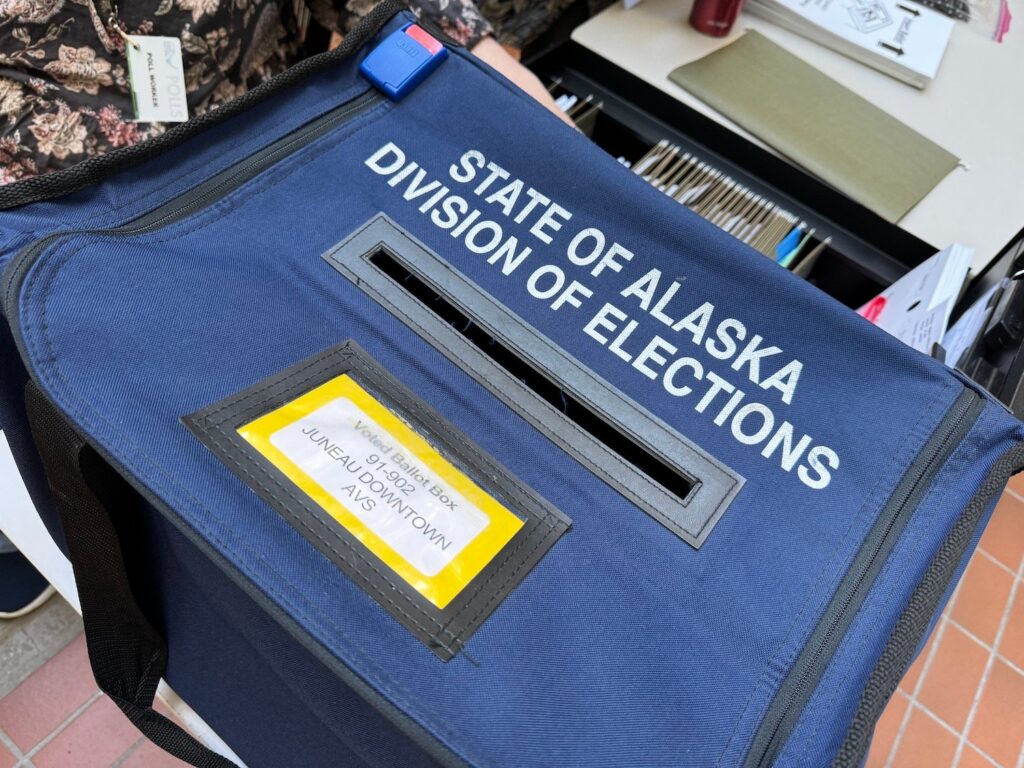
NOTN- Juneau’s proposal to adopt ranked choice voting in municipal elections is headed for another public hearing in November.
Deputy City Manager Robert Barr said the Assembly held its first hearing on the measure last night and advanced it to the Nov. 3 meeting.
“We had our first public hearing on it last night.” Said Barr, “an information release went out yesterday as well to help people understand how it would work in local elections.”
Under the proposal, voters could rank candidates in single-seat races, like for mayor or assembly. If no one wins a majority outright, the lowest-ranked candidates are eliminated and ballots are redistributed until one candidate secures over 50 percent.
The change would not apply to multimember races, like the school board, which would stay under the current system.
Juneau Mayor Beth Weldon said testimony so far has been split for and against the proposal.
“We had four people, two for it and two against it.” Said Weldon,”We’re keeping that on our radar.”
The city is weighing potential benefits and considerations, saying ranked- choice voting could add more consistency for voters and may increase the number of people willing to run for office, however they also note transitioning to a new election process could be difficult on voters and election staff, and counting could be more complex than the current voting system.
By: Corinne Smith, Alaska Beacon
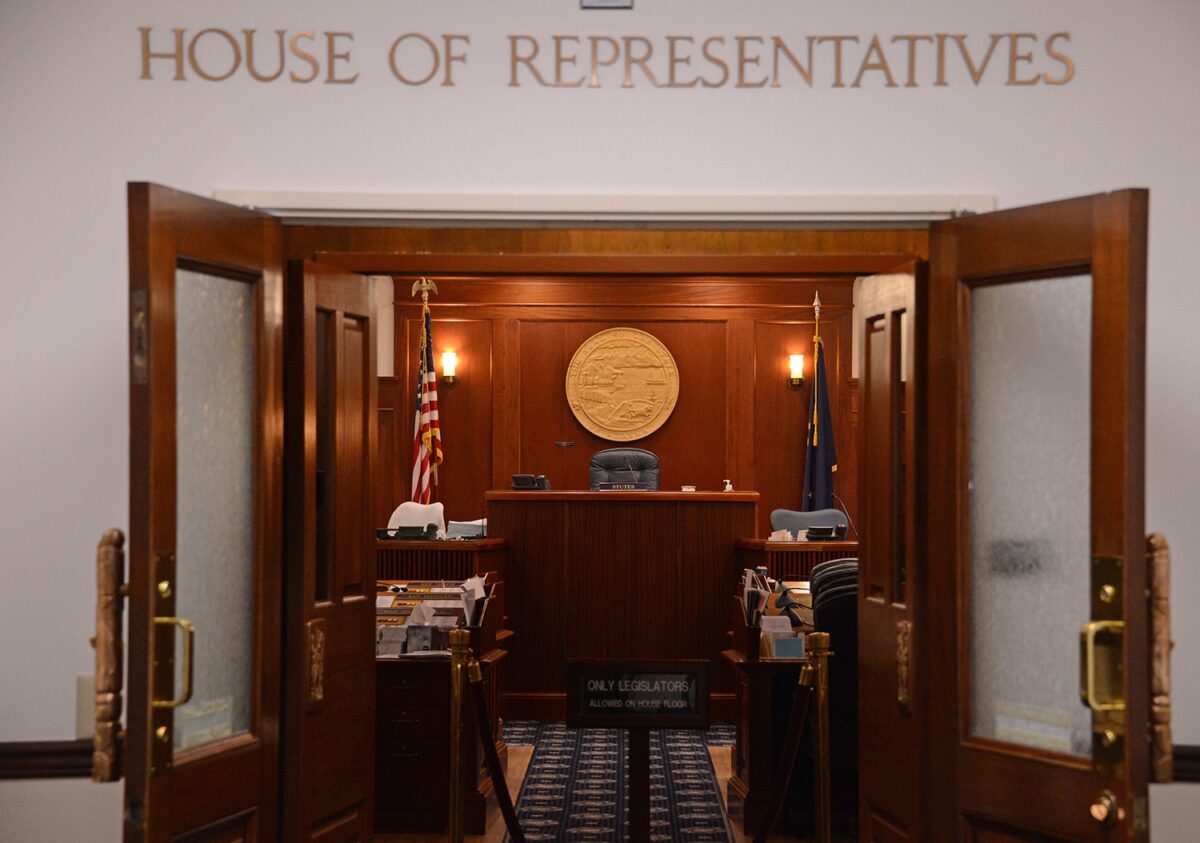
The Alaska State Legislature is planning a brief session without taking any action on Tuesday, and legislative leaders say they’ve already completed their intended work for the special session, which ends on Aug. 31.
Gov. Mike Dunleavy called the 30-day session, which began on Aug. 2, for legislators to address his education policy priorities and to create a new Alaska Department of Agriculture. The Legislature convened — one senator flying back from U.S. National Guard duty in Poland — and within hours voted to override two of the governor’s vetoes. Lawmakers then adjourned until Tuesday.
Legislators voted to leave the session open and not officially close out the special session to prevent Dunleavy from calling them into another one.
On Tuesday, just “a handful” of legislators are expected to be present for what’s known as a “technical session,” said House Speaker Rep. Bryce Edgmon, I-Dillingham, reached by phone Monday in his district.
Edgmon said he was planning to fly back to Juneau to facilitate proceedings in the House on Tuesday, but said it will be brief.
He said the Legislature’s votes to override two of the governor’s vetoes, including restoring $51 million for K-12 schools, was a success – and their only goal for the special session.
“But the specter of the governor calling us right back in seems to be very prominent,” Edgmon said. “And we had to do what we had to do in terms of allowing members to go back home, go back to their districts, not being Juneau, drawing per diem, costing the state money — with the stated intention, of course, of looking at the governor’s bills, continuing to consider the governor’s bills and the subject matter next session, as we started to do last session.”
The governor introduced three bills on Aug. 2, related to education policy, and Edgmon said they have been referred to related committees.
Edgmon said he’s had no communication from the governor’s office since the veto override votes.
“I wish we had a better relationship with the governor, to where we could plan things out, work jointly in terms of any outcomes for a special session. The governor is acting unilaterally, which, of course, is his prerogative, should he choose. But that does not bode well in terms of any kind of a positive result for special session,” he said.
Jeff Turner, the governor’s communications director, said by email Monday, “lawmakers should not need an incentive to improve public education policy,” and that it was the Legislature’s decision to not take up the governor’s bills during this special session.
Turner pointed to the governor’s comments on an Anchorage-based commercial radio show on Aug. 14, where Dunleavy criticized the Legislature’s veto override restoring school funding, and said additional funding is “not going to change the performance outcomes.”
The House and Senate are scheduled to gavel in at 10 a.m. on Tuesday.
A new joint legislative education funding task force is scheduled to hold its first meeting on Aug 25, where its six members are expected to examine how the state funds schools, as well as Dunleavy’s educational policy items.

Pennsylvania spends roughly US$200,000 a year for each juvenile it incarcerates, according to a 2021 report from the bipartisan Pennsylvania Juvenile Justice Task Force.
That’s 50 times the cost to deliver evidence-based family therapy that could prevent kids from entering the justice system in the first place.
In Philadelphia, juvenile incarceration involves confinement in the city‑run Philadelphia Juvenile Justice Services Center or other residential placement facility.
Young people leave these facilities with lower chances of graduating high school, frayed mental health and a higher likelihood of rearrest or being shot.
The social, emotional and economic costs of incarcerating young people are compounded in Philadelphia where, on any given day, dozens of youth may be held in the Juvenile Justice Services Center after they have been sentenced because a secure facility bed is not available.
That waiting time, which can be months, is punitive and unjust because it is not credited toward their sentence.
Drawing on almost 35 years of work in Philadelphia and other cities to understand what makes neighborhoods safer, I believe the surest returns come from prevention strategies aimed at young people who are not yet enmeshed in robberies, shootings and gang activity.
Homicides in Philadelphia are at their lowest levels in 25 years. In my view, this is an opportunity to redirect even youth who are already involved in violence away from the costly and counterproductive cycle of incarceration and into targeted, relationship-focused intervention programs that are humane, voluntary and effective.
At least two such programs exist here in Philadelphia – but on a modest scale.
In Southwest Philly, John Bartram High School’s Youth Violence Reduction Initiative launched in 2023.
It was designed by former School Safety Chief and now Philadelphia Police Commissioner Kevin Bethel, School Safety Officer and Program Manager Kevin Rosa, criminal justice researcher Brandy Blasko and me.
Students who have been involved in fights or show other risk factors for violence and street gang involvement are referred to the program.
The initative’s core idea is simple: Earn students’ trust through consistent, credible mentorship and step in when needed. Stepping in means teaching conflict resolution skills, running engaging workshops, buying a meal, or intervening when a fight is brewing or a student is on the verge of being expelled.
Each week a team of administrators, counselors, school safety officers and community outreach workers, most of whom are based in the school, review every participant’s progress. They track follow-through on referrals and coordinate communication with families and school staff.
The tightly managed, relationship-driven safety net gives students quicker access to help and makes the school climate calmer and safer.
Prior to 2023, on average, five Bartram High students were victims of firearm assault – at least one fatally – each school year.
At the 2025 National Conference on Juvenile Justice, program leaders presented evidence of an 80% decrease in firearm assaults by students and a 31% decrease in student-on-student assaults that did not involve guns. They also reported a 92% decrease in gang-involved group assaults, a 67% drop in student-on-staff assaults and a 62% drop in school incidents involving police.
More rigorous analysis needs to be done to verify that the program itself produced these results and some other factor wasn’t involved.
The program costs roughly $120,000 to serve 30 to 35 teenagers over a school year. That covers two full-time case managers, one part-time program manager and a small discretionary fund. The fund can be used for things such as local trips to museums, paying guest speakers and incentives for participant milestones.

The nonprofit YEAH Philly launched its Violent Crime Initiative in late 2020 for young people ages 15–24 from West and Southwest Philadelphia who have been charged with a violent or gun-related offense.
It takes the same relationship-based playbook the Youth Violence Reduction Initiative uses and amplifies it.
Court advocacy, cash stipends and intensive case management stay on tap for as long as a young person wants them. Since its inception, the voluntary program has served almost 200 people. Currently, 22 Philly youth receive Violent Crime Initiative services.
Flexible funding enables case managers to address nearly any support need that arises, going well beyond standard program budgets. This could mean a young person receives full tuition support for a two-year dental technician program while also attending intensive remedial writing workshops. Meanwhile, a partnership with Project HOME can secure them subsidized housing at Kate’s Place in Center City.
The approach emphasizes connection, case management and skill-building – key elements shown to help young people thrive when supported by caring, consistent adults.
I analyzed arrest data following a cohort of 93 young people who received Violent Crime Initiative services between January 2020 and April 2025. Among participants with two or more prior arrests, the rearrest rate was 60%. That’s compared to over 80% documented in a 2023 report prepared for the Philadelphia district attorney’s office that analyzed data on Philadelphia juveniles arrested in 2016. However, we haven’t been collecting data on all of the Violent Crime Initiative participants for as long, so the two figures are not perfectly comparable.
Fostering deep engagement with positive role models is not a feel-good add-on. It is evidence-based public safety policy.
Research shows clearly that one of the most reliable turning points for high-risk youth is a stable, caring relationship with an adult who refuses to give up on them. This can be a teacher, coach, grandparent or any other trusted adult who provides consistent positive support and guidance and opens doors to new opportunities.
My own research on how and why young people leave street gangs underscores just how powerful such relationships can be. I also led a three-study synthesis with colleagues from Arizona State University and the University of Colorado-Boulder that reviewed research involving 784 former gang members in 13 U.S. cities. We wanted to understand what actually moves young people out of gang life.
The clearest pattern was positive relationships. “Push” forces, such as fatigue from violence or pressure from police, opened the exit door for many. But lasting change required equally strong “pulls” toward stable, positive relationships.
After decades of evaluating both successful and failed public safety initiatives, I can say the biggest hurdle to developing cost-effective policies that reduce youth violence is the lack of coordinated, cross-agency use of data.
Cities need more than justice system records to guide their efforts. They need integrated information from schools, housing, behavioral health and community services.
With the right tools, early warning signs such as chronic school absence, school and neighborhood fights, and gun carrying can be flagged and young people matched with evidence-based programs and services they choose to participate in, rather than being mandated by the court, before a major crisis occurs.
Philadelphia already has the technical backbone for this work.
The Integrated Data for Evidence & Action or, “IDEA,” warehouse is a secure, city-run system that links administrative records across agencies. It allows officials to analyze patterns of risk across education, justice, housing and health systems, and it is used to support policy priorities such as Mayor Cherelle Parker’s public safety goal of reducing homicides by 20%.
Philadelphia also uses multidisciplinary planning meetings to configure services after a juvenile is released from incarceration – but only after incarceration. The meetings bring together the young people and their families with probation officers; attorneys; school, court and community representatives; behavioral health clinicians; and case management teams to coordinate supports that ease reentry and reduce recidivism.
Philadelphia city leaders could apply this coordinated approach earlier in a young person’s life and replace expensive and counterproductive confinement with voluntary, relationship-centered programming, using data from the IDEA warehouse to address early risk, pilot new ideas and track outcomes in real time.
Read more of our stories about Philadelphia.

Caterina G. Roman consults for the Office of School Safety within the School District of Philadelphia which runs the Youth Violence Reduction Initiative. She is also supported by the Neubauer Family Foundation as the evaluation partner for YEAH Philly’s Violence Crime Initiative. She is a member of the Advisory Board for Everytown for Gun Safety’s Community Safety Fund.
Politics + Society – The Conversation