From humble beginnings to chart-topping hits, Jason Aldean’s journey in country music is anything but ordinary. Continue reading…The Boot – Country Music News, Music Videos and Songs









From humble beginnings to chart-topping hits, Jason Aldean’s journey in country music is anything but ordinary. Continue reading…The Boot – Country Music News, Music Videos and Songs
From humble beginnings to chart-topping hits, Jason Aldean’s journey in country music is anything but ordinary. Continue reading…Country Music News – Taste of Country


NOTN- A dead fin whale was discovered draped over the bow of a cruise ship when it arrived at the dock in Seward on Friday, prompting a federal investigation and an animal autopsy to determine how the endangered whale died.
The whale, a 61-foot adult female, was found on the ship’s bow after the vessel arrived in the port on June 19. A local marine towing company later moved the whale to a nearby beach, where biologists are conducting a necropsy, or animal autopsy.
Officials are working with the Alaska SeaLife Center to examine the whale and determine its cause of death. Preliminary findings indicate the whale was pregnant at the time of its death.
Authorities have asked the public to avoid the beach where the necropsy is taking place, citing safety concerns and the need for researchers to have adequate space to collect samples and conduct the examination.
The NOAA Fisheries Office of Law Enforcement has opened an investigation into the incident. Officials are asking anyone with information about the whale’s death to contact the agency’s 24-hour enforcement hotline at 800-853-1964.
Fin whales are listed as endangered under the Endangered Species Act. They are the second-largest animals on Earth and can grow to more than 80 feet in length.
Officials also reminded the public that it is illegal to collect tissue, baleen or any other part of the whale without authorization. An exception exists for Alaska Natives who are collecting tissue or parts for subsistence purposes or use in traditional handicrafts, as allowed under federal law.

Simplicity in a cocktail isn’t a bad thing, but that doesn’t mean you can’t shake up classics with a twist now and again. Swap the spirit for summery delight.

Food Republic – Restaurants, Reviews, Recipes, Cooking Tips

Reading Time: 3 minutes
Last week, Jelly Roll filed to divorce his wife of the past decade.
Both partners had discussed a number of marital issues, even if it never quite read as “divorce hype.”
Now, Bunnie Xo has opened up about the split — growing tearful, but also putting a positive spin on things.
Also … they’re still having a baby together? As exes?
Days after the divorce news broke, Bunnie Xo took to her Dumb Blonde podcast to directly address the divorce.
“On Mother’s Day, we had a little bit of an argument, and in that argument, I was so fed up and so tired that I just looked at him and I said, ‘Well, then file the f–king divorce papers,’” she recalled.
Ordinarily, she clarified, “I’m not the type of person who says what I don’t mean.”
Bunnie continued: “I ended up leaving. So, I packed a bag and I left and I didn’t talk to my husband for weeks after that.”
She confirmed: “He was so mad and we were so emotional that he ended up doing exactly what I told him to do.” That is to say, he filed to divorce her, citing “irreconcilable differences.”
“Was I blindsided? Was this divorce mutual?” she asked before answering. “No, I was not. It was not mutual.”
Bunnie explained: “Even though I told him to file the divorce papers, I was speaking out of anger and frustration.”
She continued: “But was it necessary for us to have a wakeup call and to actually start having these real conversations? Absolutely.”
“When I found out that he had filed for divorce, I immediately got on HRT because I was like, I’ve got to pull myself out of this hole,” Bunnie reasoned.
“So, I got on HRT and started going to therapy, started going to counseling,” she shared. “I lost 15 pounds over this because he’s my best friend.”

“But the thing is, that’s my f–king best friend, dude,” Bunnie emphasized. “Like, I love him.”
She revealed: “And you guys are going to be shocked to hear this, but we’re still having a baby together.”
Bunnie acknowledged: “So, we have been the most unconventional couple that you guys have ever encountered.” That’s somewhat reasonable to say.
“J and I literally talked for two hours today before I did this podcast, you know, like he knows this podcast is coming,” Bunnie acknowledged. “He knows that he wants me to do this podcast.”
She continued: “He’s like, “Please clear up some s–t for me, please.’ I will always protect him.”

Bunnie also encouraged listeners to slide into his DMs and date him.
She, however, does not feel ready to date just yet.
Jelly Roll addressed the podcast at a concert, giving her a shout-out while not walking back the divorce at all.
That is an awful lot to unpack.
We’ll see if these two exes follow through on having a child together as exes. You can always love and support each other without trying to make something so complex work for a child. Just saying.
Bunnie Xo & Jelly Roll: We’re Still Having a Baby! After Divorcing! was originally published on The Hollywood Gossip.
The Hollywood Gossip

Reading Time: 2 minutes
We have sad news to report from the world of music today.
Clive Davis — the legendary record executive who helped launch and guide the careers of countless artists over the course of six decades — has died.
He was 94 years old.
Davis was widely regarded as one of the most powerful and successful executives in music history.
Over the years, he helped develop the careers of icons such as Whitney Houston, Aretha Franklin, Kelly Clarkson, Janis Joplin, Bruce Springsteen, and many others.
While no official cause of death has been revealed, weeks before his death, Davis was hospitalized with an upper respiratory infection.
At the time, representatives said the admission was precautionary and that he was expected to recover.
Born in Brooklyn, New York, Davis originally pursued a legal career after graduating from Harvard Law School. But a chance opportunity at Columbia Records ultimately changed the course of his life — and the music industry itself.
He rose through the ranks to become president of Columbia Records in 1967 and quickly developed a reputation for spotting talent before anyone else.
During his tenure, he helped sign or develop artists who would go on to dominate the charts for decades.
After leaving Columbia, Davis founded Arista Records and later helped launch J Records, continuing his extraordinary run of success well into the 21st century. His influence stretched across multiple generations of musicians and genres.
Throughout his career, Davis earned five Grammy Awards and was inducted into the Rock and Roll Hall of Fame as a non-performer in 2000. His annual pre-Grammy gala became one of the music industry’s most prestigious events, attracting some of the biggest names in entertainment year after year.
In recent years, Davis remained active in the industry despite various health challenges. He often spoke about his enduring passion for music and his belief in its power to bring people together.
While artists may have supplied the voices that defined generations, Clive Davis was often the man behind the scenes, helping those voices find an audience.
His impact on popular music will be felt for decades to come. Our condolences go out to his loved ones during this incredibly difficult time.
Clive Davis Cause of Death: Music World Bids Farewell to Legendary Mogul was originally published on The Hollywood Gossip.
The Hollywood Gossip

With origins dating back to the 16th century, this carb- and protein-packed meal became a second breakfast for ranch hands and cowboys after early morning work.

Mashed – Fast Food, Celebrity Chefs, Grocery, Reviews

The song brought everything full circle for Lainey. Continue reading…The Boot – Country Music News, Music Videos and Songs
The song brought everything full circle for Lainey. Continue reading…Country Music News – Taste of Country
By: James Brooks, Alaska Beacon
Alaska Gov. Mike Dunleavy extended his record-high veto rate Thursday by vetoing nine of the 82 bills passed by lawmakers in the second year of the 34th Alaska State Legislature.
Among the vetoed bills were measures that would have provided mental health lessons to kids in public schools, created a retirement plan for private-sector workers who don’t have one and updated the state’s corporate income tax system.
Two of the vetoed bills — one expanding the power of pharmacists and the other covering the state’s board of engineers and architects — were put into law Friday after lawmakers overrode the governor.
Dunleavy has now vetoed or attempted to veto almost one-fifth of all bills passed by the 34th Legislature. Other governors have issued more vetoes, but none have vetoed a higher proportion of bills than Dunleavy.
State legislators voted 43-17 on Friday to override Dunleavy’s veto of House Bill 195, which gives pharmacists more authority to prescribe medicines and conduct simple medical tests. Forty votes were needed.
Rep. Genevieve Mina, D-Anchorage, spoke in favor of the override, saying the bill will enable Alaskans to get cheaper medical care from pharmacists instead of more expensive providers.
Rep. Zack Fields, D-Anchorage, offered an example: For a parent with a child suffering from strep throat after their pediatrician had closed for the day, going to an urgent care clinic might cost hundreds of dollars, and an emergency room visit could cost thousands.
“This bill allows a parent to take their child to a pharmacy” and get a strep throat test, he said.
“We have a growing number of families in Alaska that cannot afford health insurance. If they can’t take their kid to a pharmacy, they’re just not going to get treated,” he said.GET THE MORNING HEADLINES.SUBSCRIBE
Some antiabortion advocates lobbied against the bill, saying they believe the bill could allow pharmacists to more easily dispense abortion-inducing drugs.
Rep. Jamie Allard, R-Eagle River, spoke to that point, but Rep. Mike Prax, R-North Pole and a strong antiabortion advocate himself, said that information is incorrect.
Alaska law limits who may perform an abortion in the state, Prax said.
“It just simply isn’t an issue, and therefore the benefits of this bill clearly outweigh any of the risks,” he said.
Lawmakers also overrode Dunleavy’s veto of House Bill 314 by a 45-15 margin. Forty votes were needed.
A revised version of a bill Dunleavy vetoed last year, HB 314 will regulate some aspects of interior design in the state by adding them to the State Board of Architects, Engineers, and Land Surveyors.
The bill also renewed the board’s legal authority, and when Dunleavy vetoed HB 314, it could have at least temporarily eliminated the board as a side effect. While the duties of the board would have been assumed by the Alaska Department of Commerce, Community and Economic Development, lawmakers said they did not want to eliminate the board just as the state considers a state-spanning natural gas pipeline.
Forty of the Legislature’s 60 members are needed to override the veto of a policy bill, and legislators failed to reach that threshold on three votes Friday due to the opposition of Republican lawmakers.
On House Bill 52, which would require increased oversight of youth psychiatric facilities, the vote was 36-24. The bill, from Rep. Maxine Dibert, D-Fairbanks, was introduced in response to reports of widespread problems at North Star psychiatric hospital in Anchorage.
If enacted, the bill would have required unannounced state inspections of facilities like North Star and reports on the use of physical and chemical restraints on children, among other items.
In his veto message, the governor said that while he supports oversight, he believes the bill duplicates what the state is already empowered to do.
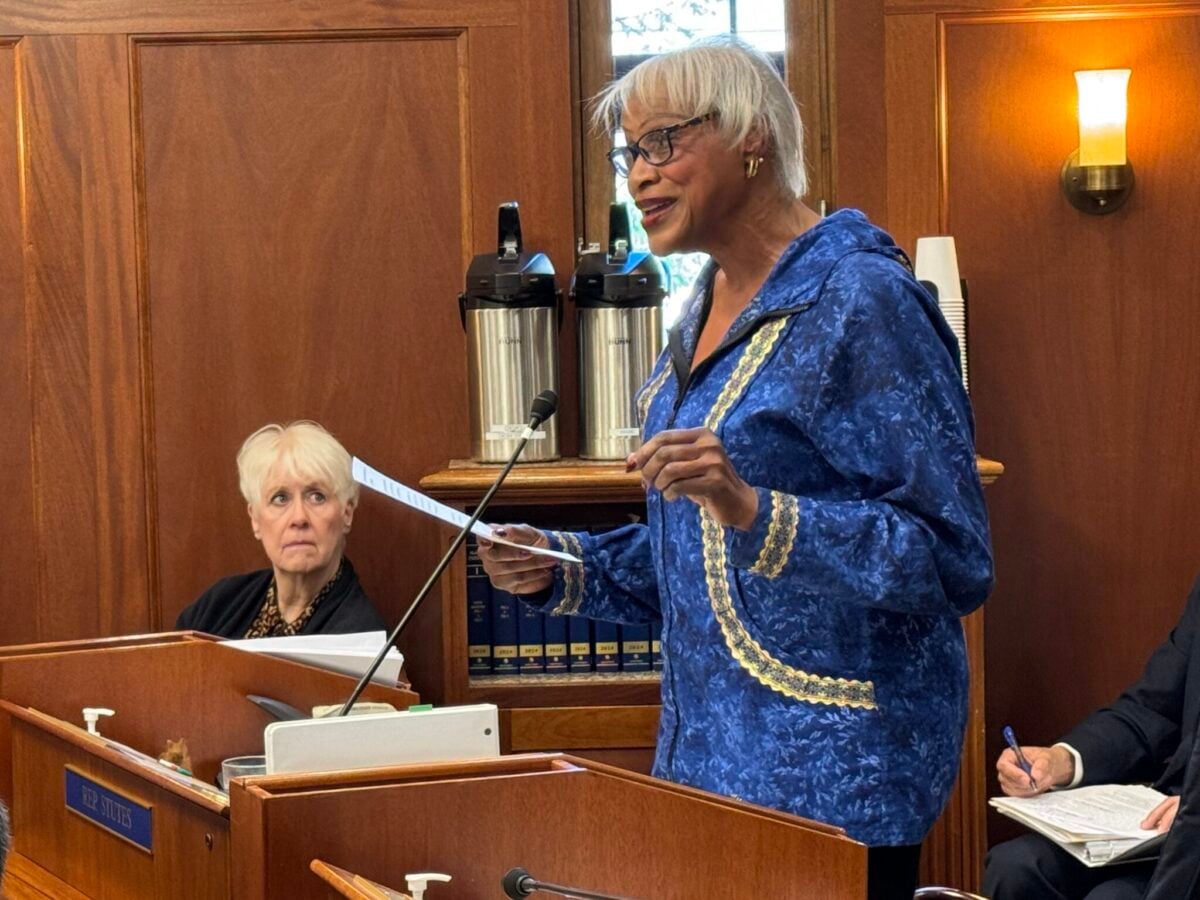
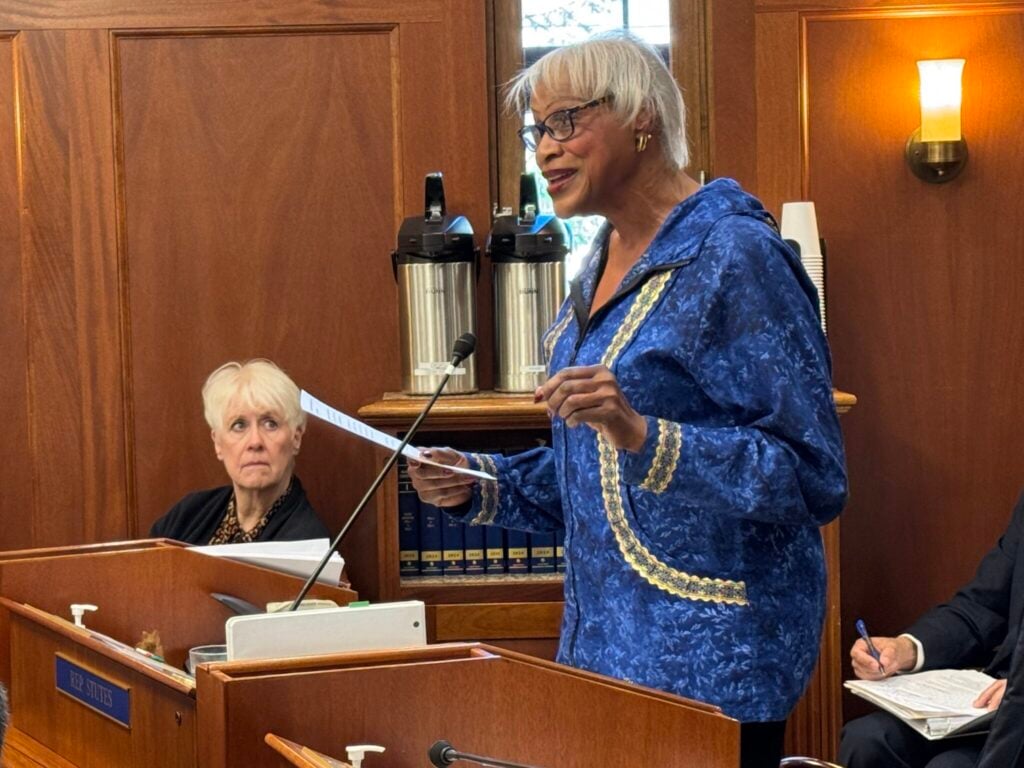
Despite an impassioned speech from Sen. Elvi Gray-Jackson, D-Anchorage, the Legislature declined to override Dunleavy’s veto of Senate Bill 41, which would have required the Alaska Department of Education and Early Development to draft a mental health curriculum in the same way that it has a physical education program.
Local districts would have been responsible for implementing that curriculum.
The override vote was 38-22, two votes short of what was needed.
The issue, Gray-Jackson told legislators Friday, is nothing short of a matter of life and death.
Alaska has the highest suicide rate in the nation, she said, and “in many rural communities, suicide rates are nearly four times that the national average. Teaching our students how to recognize mental health challenges, to seek help and support one another, is one of the most basic and meaningful steps we can take to address this crisis.”
In his veto message, the governor said, “this bill places the state in the role of imposing upon school districts to mandate the development of mental health education at a time when districts are already working to meet existing requirements.”
“Decisions about sensitive classroom instruction, especially instruction involving a student’s mental and emotional health, should remain as close as possible to parents, local school boards, and communities,” he said.
Gray-Jackson lambasted that statement, saying it repeated “false” and “harmful” misinformation from “online blogs and commentators.”
“SB 41 didn’t remove parents from the conversation, it didn’t strip authority from local school boards, it didn’t replace community values with a one-size-fits-all mandate,” she said.
“The reality is much simpler,” Gray-Jackson said. “The governor vetoed a bill with the potential to save lives in every community represented in this chamber, and I can’t emphasize that enough.”
Legislators failed by a single vote to override Dunleavy’s veto of Senate Bill 21, which would have provided state-run retirement plans for workers in businesses that do not currently offer retirement benefits.
The program under SB 21, similar to efforts already launched by other states, would have principally affected minimum-wage workers and those in small businesses. Unless they opt out, eligible workers would have had 5% of their paychecks automatically deducted and deposited into an investment account managed by the state.
In his veto message, the governor said he opposes a mandate, even with an opt-out provision.
“Although employees may opt out, the bill relies on automatic enrollment and places employers in the middle of a state-run investment program. Alaska businesses should not be required to
administer or facilitate retirement savings accounts created by the State when private retirement
and investment options are already available,” Dunleavy wrote.
The vote on an override was 39-21, with Rep. Kevin McCabe, R-Big Lake, casting the last and decisive vote to sustain the governor’s decision.
Of the governor’s nine vetoes, legislators declined to vote on four, permitting them to stand without a vote.
Dunleavy vetoed two bills — House Bill 280 and Senate Bill 24 — saying that he is unwilling to approve tax changes without a comprehensive fiscal plan that brings state expenses and revenue into line over the long-term.
Both bills had been passed in different forms by prior editions of the Legislature and were also previously vetoed by Dunleavy. If SB 24 had been enacted, it would have imposed Alaska’s first tax on e-cigarette products. HB 280 would have modernized the state’s corporate income tax system, taking tax revenue for online sales from other states to the Alaska treasury by declaring that sales to Alaskans take place in Alaska, not at the location of a warehouse or computer server operated by the seller.
House Bill 23, also vetoed by the governor, would have subjected nonprofit businesses to the authority of the Alaska State Commission for Human Rights, which handles discrimination complaints against employers.
“While I support protecting Alaskans from unlawful discrimination, this bill expands the commission’s reach over nonprofit employers, including charitable, educational, and religious organizations. That expansion creates uncertainty for small community organizations and risks unnecessary administrative proceedings and litigation,” the governor wrote in his veto message.
The last of the vetoes, Senate Bill 258, would have forbidden the state from signing computer software deals that lock in the state to a particular company or limit the software to a particular geographic area.
The governor’s veto message said in part that the “bill places rigid statutory limits on how the State and political subdivisions may contract for software in a highly technical and rapidly changing marketplace.”
“Software licensing, cybersecurity requirements, cloud services, support, hosting, and pricing
models are complex and often negotiated together. Restricting those negotiations in statute could reduce flexibility, limit access to needed products, and increase costs for agencies and local governments,” he wrote.