Categories
Sports Fox

Year 2 Leap: Ranking The Top 5 Second-Year Quarterback Breakout Candidates

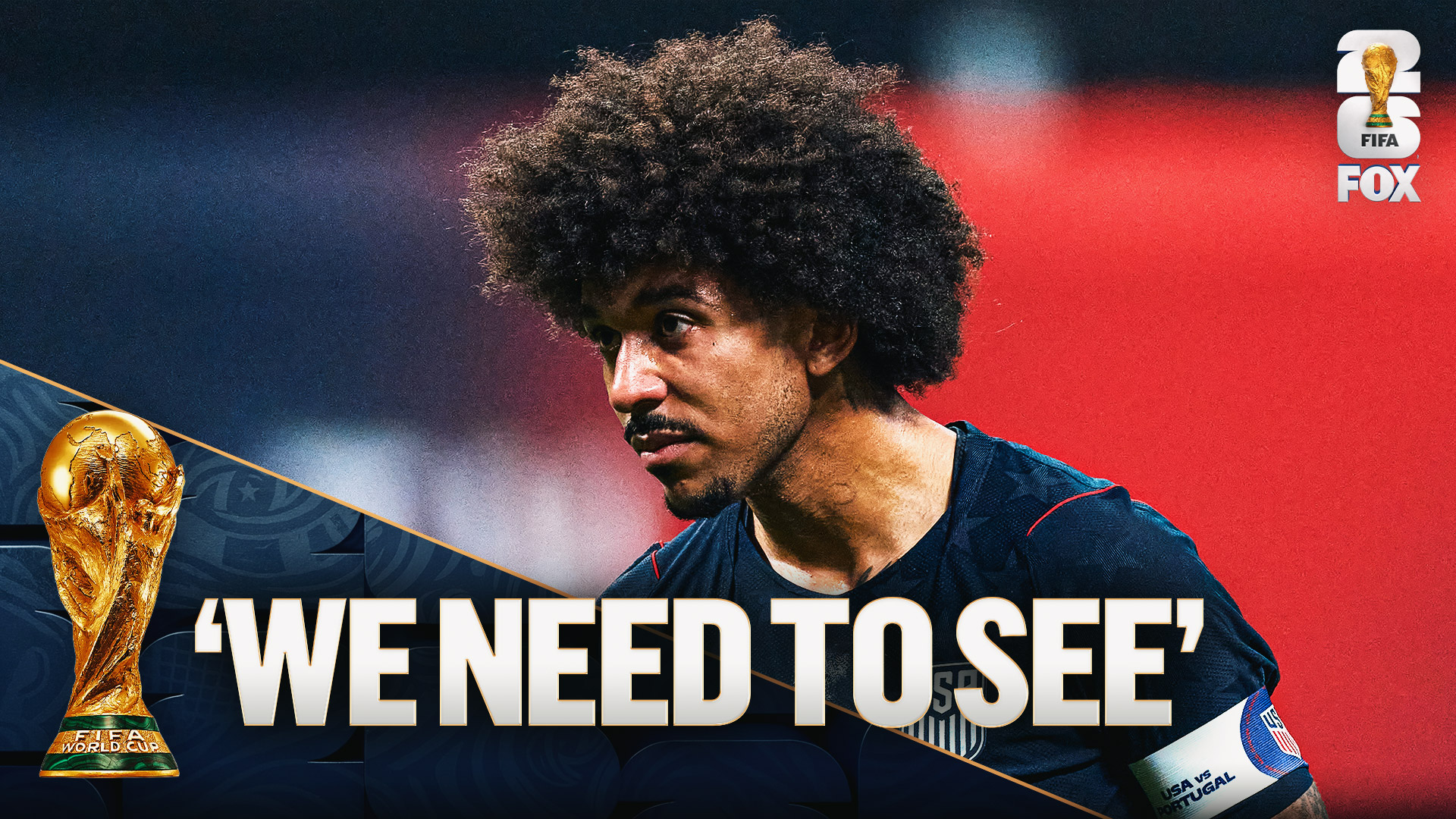
To see a great example of a Year 2 leap, look no further than last season. Patriots quarterback Drake Maye, who’d flashed as a rookie in 2024, finished second in NFL MVP voting and guided New England to Super Bowl LX. Who will be the Maye equivalent in 2026 — the quarterback to show exponential growth in his second season? Here’s my top-five ranking of second-year QBs by breakout potential, in descending order: 2025 stats (4 games, 3 starts): 66.3% completion rate for 622 yards and 3 TDs with 3 INTs Ewers is the backup in Miami behind free-agent acquisition Malik Willis, so technically he’s not even in position to “break out.” But being part of a rebuilding team that most league observers expect will struggle could offer many opportunities to play. The former seventh-round pick won’t have much help at receiver, though, as the top three WRs on the Dolphins’ depth chart — Jalen Tolbert, Malik Washington, Tutu Atwell — combined for just 712 receiving yards last season. 2025 stats (8 games, 7 starts): 56.6% completion rate for 1,400 yards and 7 TDs with 10 INTs There’s no guarantee that Sanders will be Cleveland’s QB1 — he appears to be in a competition with veteran Deshaun Watson — but if the former Colorado star is under center, he’ll have a much stronger supporting cast than last season. The Browns revamped their offensive line and added two top-40 draft picks at wide receiver in KC Concepcion and Denzel Boston. With better talent and a new offensive-minded head coach in Todd Monken, Sanders’ numbers in 2026 should show improvement if he’s named the starter. 2025 stats (14 games, 12 starts): 63.7% completion rate for 2,272 yards and 15 TDs with 5 INTs Malik Nabers is expected to be ready for the start of the season, so Dart will continue to grow with a No. 1 wide receiver. Due to injuries, the duo had just four games together last season. Veteran Darnell Mooney, who’s been a 1,000-yard receiver, also adds quality depth. The Giants also have two starting-caliber tight ends in Theo Johnson and free–agent acquisition Isaiah Likely, giving Dart plenty of help in the pass game. New York’s run game should improve with the presence of fullback Patrick Ricard as well. And Dart, the 25th overall pick last year, is a dual threat who can be effective and efficient when using his legs. 2025 stats (17 games, 17 starts): 59.8% completion rate for 3,169 yards and 15 TDs with 7 INTs Tennessee receivers had issues with creating separation and dropping passes last season. With No. 4 overall pick Carnell Tate and free-agent acquisition Wan’Dale Robinson now in the receivers room, Ward has the kind of help on the outside that could spur a Year 2 breakout. New Titans offensive coordinator Brian Daboll was pivotal in Josh Allen’s development from a project into a superstar quarterback in Buffalo, so he could guide a similar leap for Ward in Nashville. Ward and Daboll, then the Giants’ head coach, built a strong rapport during the pre-draft process last year. 2025 stats (11 games, 9 starts): 67.6% completion rate for 2,384 yards and 10 TDs with 6 INTs Shough, who finished second in Offensive Rookie of the Year voting to Carolina Panthers receiver Tetairoa McMillan, is the only quarterback on this list to be playing in the same system as a year ago. Staying in head coach Kellen Moore’s scheme puts the QB at a huge advantage entering Year 2. And if No. 8 overall pick Jordyn Tyson plays to the expectations of his draft slot, Shough will have two No. 1-caliber receivers with Tyson and Chris Olave. Adding Travis Etienne Jr. in free agency gives the Saints a Pro Bowl-caliber running back, and the team used four of its top five draft picks this year on offensive players. Shough is in an ideal situation to thrive.​Latest Sports News from FOX Sports

Categories
Entertainment

Barney Frank Cause of Death: Trailblazing Congressman Was 86

Reading Time: 2 minutes

We have sad news to report from the world of politics today:

Barney Frank — the progressive politician who became one of the first openly gay members of Congress — has died at the age of 86.

News of Frank’s death comes courtesy of his sister, who issued a statement to NBC Boston:

Former House Financial Services Committee Chairman Barney Frank (D-MA) participates in a panel discussion at the Brookings Institution March 2, 2015 in Washington, DC.
Former House Financial Services Committee Chairman Barney Frank (D-MA) participates in a panel discussion at the Brookings Institution March 2, 2015 in Washington, DC. (Photo by Chip Somodevilla/Getty Images)

“He was, above all else, a wonderful brother. I was lucky to be his sister,” Doris Breay told the outlet.

No cause of death was given. Frank was receiving hospice care at his Maine home in the final months of his life.

Frank’s death marks the end of a career that was as influential as it was polarizing.

A fixture on Capitol Hill for more than three decades, the Massachusetts Democrat built a reputation as a sharp debater, an unapologetic liberal, and a larger-than-life personality who rarely shied away from a fight.

For many Americans, Frank’s name became synonymous with financial reform in the aftermath of the 2008 economic collapse.

Alongside Senator Chris Dodd, he helped craft the sweeping Dodd-Frank financial overhaul, legislation designed to tighten regulations on Wall Street after the devastating housing crisis.

Born in Bayonne, New Jersey in 1940, Frank entered politics by getting elected to the Massachusetts legislature after graduating from Harvard Law School. He won a seat in Congress in 1980 and remained there until his retirement in 2013.

Over the years, Frank became a leading voice on housing, civil rights, and LGBTQ+ equality, long before such issues carried broad political support.

In 1987, he publicly came out as gay, becoming one of the first members of Congress to do so.

Years later, after same-sex marriage became legal in Massachusetts, he married longtime partner James Ready in 2012, making history once again as one of the first sitting members of Congress to marry a same-sex partner.

Frank’s outspokenness often made him a lightning rod for controversy. Conservatives frequently targeted him over housing policy and government spending, and even allies occasionally bristled at his famously combative style.

Admirers saw Frank as a brilliant legislator who pushed the country toward greater equality and stronger financial safeguards. Critics viewed him as an embodiment of government overreach.

But even opponents praised Frank’s bluntness and candor in an era of carefully rehearsed political messaging.

Following his retirement from Congress, Frank continued to weigh in on politics, financial regulation, and LGBTQ+ issues through interviews, speeches and frequent television appearances.

He is survived by his husband, James Ready, as well as a legacy that helped reshape both Washington and the national conversation around representation.

Our thoughts go out to Barney Frank’s loved ones during this difficult time.

Barney Frank Cause of Death: Trailblazing Congressman Was 86 was originally published on The Hollywood Gossip.

​The Hollywood Gossip

Categories
Food

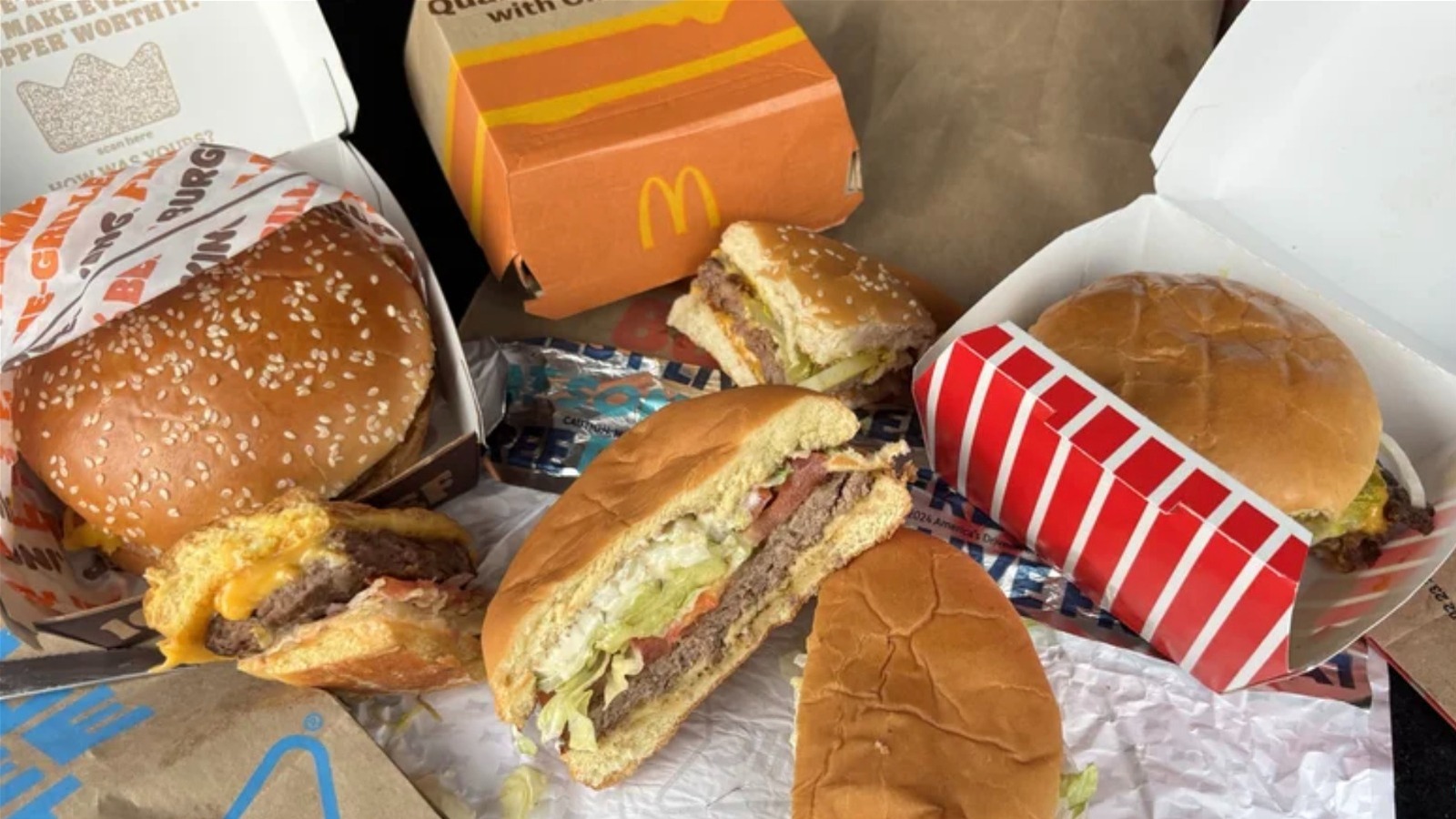
Want A Better McDonald’s Big Mac? Use These 5 Ordering Tips

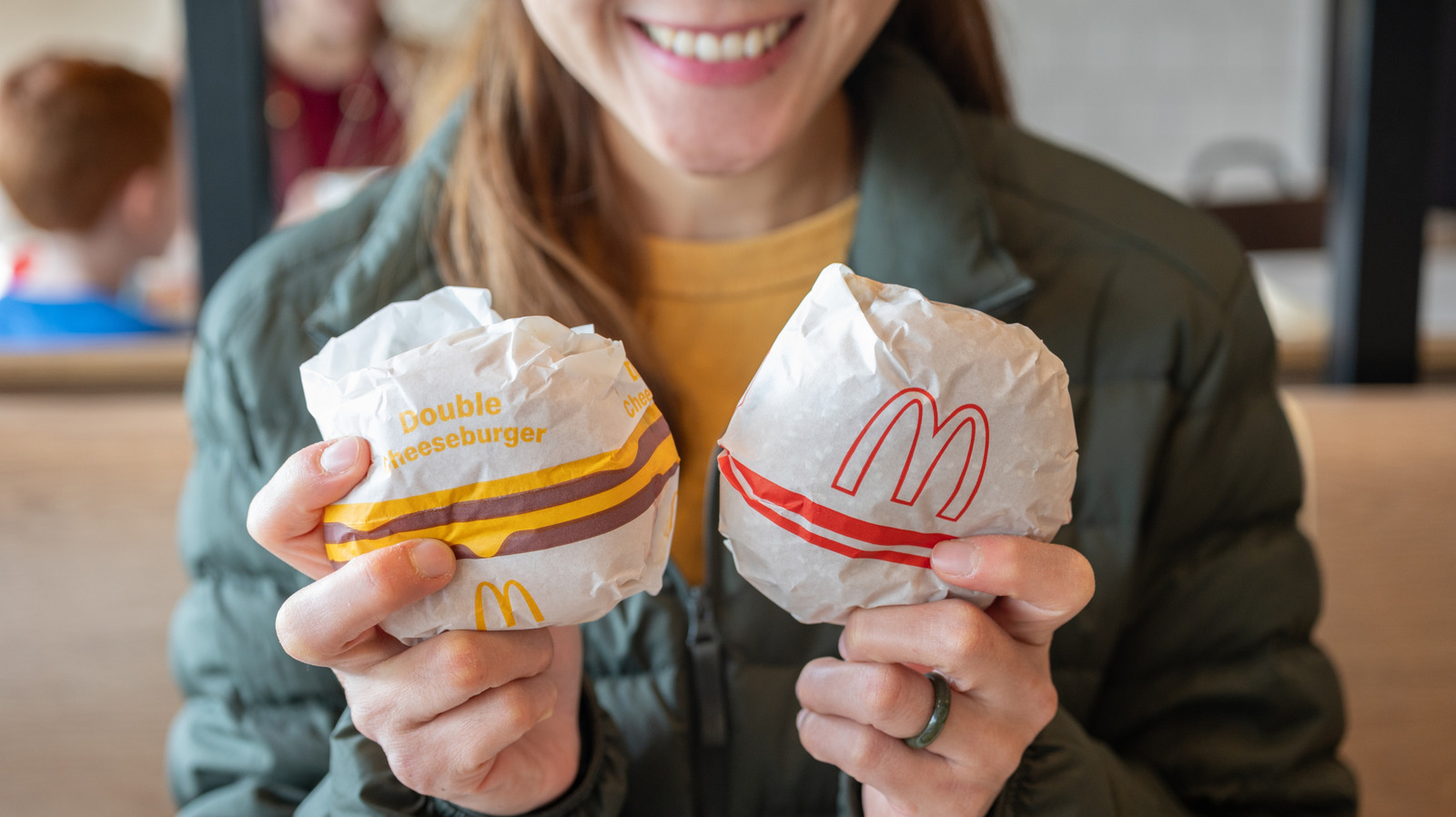
Want to change up your Big Mac burger but still want the bones in place? Use these ordering tips to give you a totally new (and better) experience.

​Food Republic – Restaurants, Reviews, Recipes, Cooking Tips
Categories
Entertainment

Natalie Maines of ‘The Chicks’ Blasts Donald Trump & Insurrectionist …

Reading Time: 3 minutes

On January 6, 2021, a mob of insurgents stormed our nation’s capitol, intent upon preventing the certification of the 2020 election and upon killing any lawmakers whom they deemed as enemies.

It was the worst attack against the US government since September 11.

Donald Trump is attempting to fleece citizens of $1.776 billion in order to create a slush fund that could reward the traitors who participated in the attack.

Natalie Maines of The Chicks spoke out in 2003. She’s speaking out now, too.

Martie Maguire, Natalie Maines, and Emily Robison of The Chicks in 2024.
Musicians Martie Maguire, Natalie Maines, and Emily Robison of The Chicks depart after performing the National Anthem on August 22, 2024. (Photo Credit: Chip Somodevilla/Getty Images)

Trump is ‘using your gas money to pay the insurrectionists’

On Tuesday, May 19, Natalie took to her Instagram page to share a wholehearted condemnation of Trump over the insurrection slush fund, the Iran war, and his dismantling of the economy.

“Our democracy is disappearing right before our eyes,” she began by acknowledging.

Using a Mean Girls insult that lives rent-free in many of our minds, she went after Trump more directly.

“This fugly slut is using your gas money to pay the insurrectionists,” Natalie noted.

“But don’t worry about it,” she added sarcastically. “I’m sure posting selfies will fix everything.”

A dark mode screenshot of Natalie Maines' Instagram caption about Donald Trump
In May of 2026, Natalie Maines once against used her voice to condemn a criminal occupant of the Oval Office. (Image Credit: Instagram)

Natalie then took aim, somewhat indirectly, at Meta’s policies as the company continues to actively collaborate with fascism.

“My last post that called him a fugly slut got removed,” she wrote.

“We’ll see how long this one lasts,” Natalie continued.

“Repost and help the message live,” she invited her followers.

“Named 1M times in the #epsteinfiles,” Natalie wrote of Trump. “#democracy #freespeech #fuglyslut”

Her passion makes sense, though her choice of insult was a little distracting

Obviously, there is nothing wrong with being a slut.

Having exactly as much sex as you like — be it none or the level of sex that has acquaintances trying to figure out how you make time — is exactly how one should live one’s life.

And there is nothing morally wrong with being fugly — that is, effing ugly. Some people are just ugly when compared to conventional beauty standards (or unconventional ones), and it is seldom by choice.

Natalie is perhaps leaning into the Mean Girls insult to a degree that distracts from her more important message.

This is a man accused of numerous sexual assaults, who is dismantling America before our eyes and gleefully performing acts of bold-faced corruption without any fear of consequences. His appearance is really irrelevant, you know?

In 2003, The Chicks — the known as The Dixie Chicks — spoke out against George W. Bush, expressing how embarrassing it was that such a terrible president could be from Texas.

(Anyone who has had an infamous Senator or Congressperson make headlines while being from their state can likely relate.)

The result was a sort of unhinged backlash not truly seen again until those couple of weeks in September 2025 when a bunch of people pretended that not mourning properly after Charlie Kirk died was some sort of travesty.

The Chicks were banned from music stations, cringe fans tossed out their CDs (remember CDs?), and they were sort of pariahs within the Country music world — which was, at the time, still transforming into the beer-and-truck-nuts parody of itself that it is today.

(Seriously, Country music used to be a much more diverse and interesting genre, full of anti-authoritarian sentiment! That sounds hard to believe, but it’s true.)

With that in mind, it is no surprise that Natalie is condemning Trump. She was right in 2003. And she’s right in 2026.

Natalie Maines of ‘The Chicks’ Blasts Donald Trump & Insurrectionist … was originally published on The Hollywood Gossip.

​The Hollywood Gossip

Categories
Alaska News Featured Juneau News juneau Juneau Local Juneau Local Ketchikan Local News Feeds Sitka Local

Alaska Legislature’s last-day action could cancel campaign-finance ballot measure

By: James Brooks, Alaska Beacon

Senate President Gary Stevens, R-Kodiak, talks with Senate staff before resuming work on Tuesday, May 19, 2026. (James Brooks photo/Alaska Beacon)

A vote pending on the last day of the Alaska Legislature’s regular session could end up canceling a long-planned ballot measure that would restrict financial donations to political candidates in the state.

Late Tuesday night, the Alaska Senate voted 12-8 to approve House Bill 16, which would impose limits on the amount of money that individuals and groups can donate to political candidates. 

That action sends the bill to the House for a simple up-or-down concurrence vote. Success would send it to Gov. Mike Dunleavy for enactment or veto.

HB 16 is substantially similar to a ballot measure scheduled for a vote during the August primary election. Under the Alaska Constitution, if lawmakers enact a substantially similar law to a ballot measure scheduled for a vote, the ballot measure vote is canceled. 

Both methods would change state law, but there’s one key difference: A ballot measure cannot be repealed for two years after voters approve it. A law may be repealed the following year if legislators and the governor approve.

In 2018, a scheduled ballot measure dealing with legislators’ conflicts of interest was removed from the ballot after legislators passed a substantially similar law. In 2019, they rolled back that law.

Sen. Bill Wielechowski, D-Anchorage, arranged Tuesday night’s vote on HB 16. He has previously sought to impose campaign finance limits.

“I think (the ballot measure) is going to pass overwhelmingly, and this would save a little bit of money,” he said of the decision to advance HB 16. 

State law requires ballot measure information be published in a pamphlet that is sent to voters. In addition, the Division of Elections is required to hold in-person presentations at locations across the state to explain each ballot measure.

Rep. Calvin Schrage, I-Anchorage, helped orchestrate the ballot measure and House Bill 16.

Late Tuesday, he said he was surprised by the Senate’s action and was not informed until shortly before it took place.

“To see them pass it relatively unchanged was quite surprising, and a pleasant surprise,” he said, noting that he and his colleagues have been seeking new campaign finance limits in Alaska for five years.

In 2021, a three-judge panel of the 9th U.S. Circuit Court of Appeals ruled Alaska’s then-existing campaign finance limits were unconstitutional.

The Alaska Department of Law declined to appeal that ruling. Speaking to reporter Nat Herz months later, Dunleavy said, “You know me: I’m the guy that wants people to be able to drive four wheelers on the road. I’m a freedom guy,” he said. “My tendency is to just let people do what they want in campaign finance law, as long as it’s disclosed and it’s accurate.”

As a result, the state’s 2022, 2024 and 2026 elections have operated with no restrictions on the amount of money a person can give to a candidate.

The Alaska House passed Schrage’s bill in April 2025, but the Senate took no action before adjourning that year. That inaction meant the 2026 election cycle opened without limits. 

“We took it up last year, and there just wasn’t the support to do it at that time,” Wielechowski said.

What changed?

“I don’t know,” he said. “I mean, people just — honestly, it just kind of got buried in everything else, and just going through bills, we saw it was there, and we said, ‘Well, I have a chance to maybe take it off the ballot and pass it.’”

Neither Wielechowski or Schrage have talked to Dunleavy about whether he would veto the measure or allow it to become law.

If HB 16 becomes law, or if the proposed ballot measure is adopted by voters, new limits would be in place for the 2028 election. 

The new individual limits would be $2,000 in donations per candidate in each two-year election cycle. For the governor’s race, where a lieutenant governor candidate and governor candidate run together on a single ticket, the limit would be $4,000. The limit for donations from one person to a political party or group would be $5,000.

If a group wants to donate to a candidate, the limit is $4,000, or $8,000 for the governor’s race.

Those limits would be adjusted for inflation every 10 years.

Schrage said he’s open to either HB 16 or the ballot measure.

“It is very widely popular, and so — one way or another, I just want to see this taken and taken up and put back into law,” he said.

Categories
Sports Fox

Which NFL QBs Have the Most Help? Ranking All 32 Supporting Casts

There’s a reason quarterbacks are the highest-paid players in the NFL. Teams know they can’t win without a good one. And with very few exceptions in modern history, they can’t compete for a Super Bowl without one who is playing well. But the truth is, even the best quarterbacks can’t do it alone. They need a strong supporting cast around them. That includes game-breaking receivers, protection up front and a run game to help keep defenses off balance. A smart and talented playcaller with a strong offensive scheme certainly makes a difference, too. So which NFL teams have the best support systems in place for their quarterbacks heading into the 2026 season? We spoke to a handful of NFL scouts to help determine how all 32 teams stack up on offense — when the QB is taken out of the equation. The Dolphins have a really good center in Aaron Brewer and a speedy, dangerous running back in De’Von Achane. But, well, that’s really about it. Drafting OL Kadyn Proctor in the first round was a step in the right direction, but the line still isn’t good. And with Tyreek Hill and Jaylen Waddle gone, Miami’s receiving corps is a mess. Jalen Tolbert and Tutu Atwell are the penciled-in starters, along with Greg Dulcich at tight end, and that’s terrible news for new QB Malik Willis. The Dolphins drafted multiple WRs and TEs between Rounds 3-5, but it’s a lot to expect any of them to really help this year. “They have the worst receiving corps in the league, and it’s not even close,” one scout told me. “All they can do this year is either let Willis run, or just get the ball to Achane and get out of his way.” It’s hard to find a worse offensive line situation in the league, which is horrible news for a team with big questions at QB. The Browns are likely to have four new starters on the line, including first-round LT Spencer Fano, and may need most of the season to develop any consistency. And it’s not like they’re overflowing with weapons who can make up for their line deficiencies. Their best is probably wideout Jerry Jeudy, who is quite the enigma. He was dazzling in 2024 (90-1,229-4) but a disaster last year (50-602-2, 47.2% catch rate). The Browns do have some promising young position players like RB Quinshon Judkins and TE Harold Fannin. And they have hope for the two receivers they just took in the first two rounds: KC Concepcion and Denzel Boston. “They have a couple of nice, young skill guys,” one scout told me. “But it doesn’t matter. None of them are good enough to overcome all their other problems.” It doesn’t help that most of the scouts viewed the switch from former coach Kevin Stefanski to new coach Todd Monken as a step backward. “Slightly,” one scout told me. “Monken is good. But Stefanski is better.” Every scout I spoke with said they liked the direction the Raiders were headed on offense. But they also all agreed, as one scout noted, “they have a very, very long way to go.” Their line was terrible last season, but it should be helped by the addition of expensive center Tyler Linderbaum. And with a little improvement up front, RB Ashton Jeanty should have some room to show all the things he couldn’t as a rookie. No one is sure what new coach Klint Kubiak will be able to get out of a very iffy receiving corps, though. A healthy Brock Bowers gives them an elite weapon at tight end, but Tre Tucker, Jalen Nailor and Jack Bech are uninspiring. “Nailor’s a deep threat,” one scout told me, “but not a No. 1 receiver.” Another said: “They took the right first steps, but it’s still not a good spot for a rookie quarterback. That’s not a surprise. But they have to sit (Fernando Mendoza) for a while until Kubiak figures the rest of it out.” The Titans added some weapons for QB Cam Ward in the offseason, but that’s not really the problem. “I wouldn’t put my quarterback behind that offensive line,” one scout told me. “It was bad last season. And now it might be worse.” The signings of center Austin Schlottmann and guard Cordell Volson probably weren’t enough to fix a unit that gave up 55 sacks last season. But their other additions were better. Drafting Carnell Tate No. 4 overall gives them a potential No. 1 WR. And even though WR Wan’Dale Robinson is 5-foot-8, he’s productive and fits perfectly in new offensive coordinator Brian Daboll’s scheme. Daboll can probably lean on his Giants years to figure out how to get the most out of his running backs (Tony Pollard, Tyjae Spears) despite the line issues. “Dabes has always had a brilliant offensive mind,” one scout told me. “He’s a really underrated playcaller. He’ll get the most out of that group. I just don’t know if there’s much there.” There seems to be a belief in Washington that the return of a healthy Jayden Daniels will make everybody better. They better be right, though, because the Commanders didn’t do a lot to improve his supporting cast in the offseason. Their best weapon, by far, is still WR Terry McLaurin, who will be 31 in September and coming off an injury-plagued season. Their offensive line improved last year, but they haven’t replaced their center, who left in free agency. The only weapon the Commanders added in the passing game was solid (and underrated) TE Chigoziem Okonkwo. They did add veteran RB Rachaad White, who could make for a potent duo with Jacory Croskey-Merritt, who had a surprisingly good rookie season after being drafted in the seventh round. Don’t underestimate the loss of offensive coordinator Kliff Kingsbury, though. He got a lot of credit for helping Daniels post arguably the best rookie season ever for a quarterback. He’s now replaced by former quarterbacks coach David Blough, who has been an assistant for two seasons and has never called plays before. If they ever do find a quarterback, there is potential with this offensive group — though for the most part, it’s still only potential. The only proven commodities are WR Garrett Wilson and RB Breece Hall. “(Wilson) would be a top 10 receiver if he even had a mediocre quarterback,” one scout told me. “And Breece can help any team in the league.” But after that, there are mostly unknowns. The Jets drafted WR Omar Cooper and TE Kenyon Sadiq in the first round, so maybe they’ll have a little more offensive diversity for new offensive coordinator Frank Reich. Maybe RB Braelon Allen can stay healthy and take some of the tougher carries off Hall’s plate. And maybe the offensive line, anchored by bookend tackles Olu Fashanu and Armand Membou, can continue to improve after a solid 2025. Those are a lot of “maybes.” But maybe the offensive foundation is finally there. Every year they tinker with their offensive line, and they did it again this offseason, bringing in probably three new starters. But it’s not clear if it’s any better than the mess of a unit that kept QB C.J. Stroud under constant pressure last season. That’s a big reason why his numbers keep dropping, but it’s far from the only one. “Everyone keeps wondering why C.J. Stroud is regressing,” one scout told me. “Well, it’s pretty obvious. Just look at what he has to work with down there.” Really, his only dangerous weapon is WR Nico Collins. He’s a big one, to be sure, but beyond that there isn’t much help outside of Dalton Schultz, a high-volume TE who doesn’t provide big returns. The Texans are hopeful that the return of WR Tank Dell will give the offense a spark, but that’s a lot to ask considering he missed all of last season with a knee injury. Houston did trade for RB David Montgomery, who is solid overall and a strong goal-line runner. But he’ll pair with Woody Marks, who is coming off an unimpressive rookie year. So again, it’s really Collins or bust for this offense. There is no doubt that Tetairoa McMillan, the reigning Offensive Rookie of the Year, is an explosive weapon. It’s the rest of the weapons that should cause concern. WR Xavier Legette, a former first-round pick, was mostly a non-factor last season. The Panthers are counting on Chuba Hubbard to again be their No. 1 back after he had to play a secondary role to the since-departed Rico Dowdle last year. Carolina got basically nothing in the passing game out of its tight ends in 2025. And the line has a lot of new pieces to integrate after the club signed LT Rasheed Walker and C Luke Fortner in free agency and drafted RT Monroe Freeling in the first round. McMillan should develop into an elite player. But QB Bryce Young is going to need a lot more than that. “I don’t know how you can expect him to develop into what they need him to be with a surrounding cast like that,” one scout told me. Here’s a great argument for the importance of the QB in the NFL: “If you take (Arizona’s) skill players and put them in a place with a good quarterback, they’ll win,” one scout told me. “They might win a lot.” And that’s the problem with evaluating the Cardinals. There is talent here, even if the production hasn’t been great. WR Marvin Harrison Jr.’s production through two years has not matched his promise. Michael Wilson played like a solid No. 1 WR last year. Trey McBride is the best tight end in the NFL, ranking second in catches and sixth in yards among all receivers last year. And there were many scouts who thought RB Jeremiyah Love, the No. 3 overall pick, was the best player in the draft. The Cardinals’ line is a problem, however. They hope that signing Isaac Seumalo and drafting Chase Bisontis in the second round will help make their interior stronger, but it’s very much a work in progress. Overall, though, “they have such a great, young core there,” another scout told me. “But with a bad quarterback situation, you can’t expect much at all.” They had two major problems on offense heading into the offseason: They had a bad offensive line and very little help for WR Chris Olave. They seem to have solved the latter, signing RB Travis Etienne, who’ll be a terrific replacement for the almost-done Alvin Kamara. And they drafted WR Jordyn Tyson, who one scout called “the best receiver in the draft.” They also still have dangerous TE Juwan Johnson, so young QB Tyler Shough and offensive whiz head coach Kellen Moore should have enough tools to work with. The line, however, is still an issue. Adding guard David Edwards in free agency was good, but what the Saints really need is improvement from their tackle duo of Kelvin Banks and Taliese Fuaga, both former first-round picks. If they don’t get that, the rest of the additions won’t matter as much as they’re hoping. They certainly have given whomever is their quarterback some good receivers to work with. Justin Jefferson is as good as any in football when everything is working right with the offense, and Jordan Addison is a strong No. 2. The Vikings also went out and added the underrated Jauan Jennings to give the QB another option. And TE T.J. Hockenson is a big weapon in the passing game, too — at least when he’s healthy. Beyond that, though, they really have to lean into the mind of head coach Kevin O’Connell because there are some issues. The offensive line was not good nor healthy last season. And they lean way too much on 32-year-old, oft-injured RB Aaron Jones. That lack of a dependable running game is big. It’s why defenses could tee off on Vikings QBs, who were sacked 60 times last season — tied for second-most in the league. They went on an epic run in the second half last season, averaging 32 points per game over their last 11 (including their loss in the playoffs). It looked like they had all the pieces in place on offense. But did they? Brian Thomas Jr., their No. 1 receiver, badly regressed last season. Parker Washington emerged, the trade for Jakobi Meyers helped and TE Brenton Strange is good, but if Thomas keeps fading, there isn’t an elite threat here for Trevor Lawrence. Now, as one scout told me, “That may not matter. Liam Coen is that good.” In his first season, the Jags head coach sure did look like one of the best young offensive minds in the league. But he’ll have to prove it again, especially after losing bell-cow running back Travis Etienne in free agency. The Jags are taking a huge risk by counting on Bhayshul Tuten and/or Chris Rodriguez to replace him. “Together, they might be better than Etienne,” another scout told me. “Tuten is elusive and Rodriguez is a power back. They’ll (complement) each other. But carrying the entire rushing attack? That’s a lot to ask of two guys who haven’t done anything in this league yet.” If Malik Nabers hadn’t torn his ACL last season, the Giants would be higher on this list. Maybe much higher. They have a deep receiving corps without Nabers, especially after signing Darnell Mooney and drafting Malachi Fields in the third round this offseason. And the addition of Isaiah Likely gives the Giants potentially the most dangerous TE they’ve had in years. They also have what one scout told me is a “sneaky good” running game behind a much-improved offensive line. If second-year back Cam Skattebo can fully recover from his devastating leg injury, he’ll join Tyron Tracy and Devin Singletary in a potent rotation. All that may be enough for the offense to be good around second-year QB Jaxson Dart, “but Nabers changes everything,” one scout told me. “I didn’t think he played great as a rookie (in 2024). He had too many drops and his quarterback play was awful. But look at the numbers he put up (109-1,204-7). With better quarterback play and help around him, he could be a monster.” Of course, that’s when he’s fully recovered. Nabers recently had another procedure on his knee and his status for Week 1 is uncertain. The fact that they had the NFL’s 12th-ranked total offense is a miracle considering all the injuries they had last season, and they really believe that better health will get them back where they were. Maybe they’re right. Their line was terrible, giving up 60 sacks, but they were missing LT Rashawn Slater and, for most of the season, RT Joe Alt. RB Omarian Hampton, their 2025 first-round pick, missed half his rookie season, too. The return of those three should definitely help the ground game. But do they have enough weapons in the passing game for their new offensive coordinator? “For Mike McDaniel? Yes,” one scout told me. “He’s a mad scientist. He’ll get the best out of those guys.” Those guys include WR Ladd McConkey, who got off to a painfully slow start last season, former first-rounder Quentin Johnston, who’s disappointed, and TE Oronde Gadsden, who had a promising but erratic rookie season. “Watch (McDaniel) turn (Johnston) into a star,” another scout told me. “He’s got pieces there. And he’s the right guy to figure it all out.” Justin Herbert is counting on it. Should the Bucs be evaluated on what they are, or what they should be? That’s the problem with this team. For example, losing WR Mike Evans is a huge hit because he’d been a staple of their offense for more than a decade. But he didn’t do much even when healthy last season. Emeka Egbuka looked like an ideal replacement, though — but only if you ignore the alarming drop-off during the back half of his rookie season. Chris Godwin could be the new No. 1, too, but he’s played just 16 games the past two seasons. Then there’s RB Bucky Irving, who was dominant as a rookie but played only 10 games last season and took a back seat to the since-departed Rachaad White. As for the line, should it be judged on its ugly season last year when the projected starting five played just a handful of snaps together? It all makes the Bucs offense a big mystery. There are pieces for new offensive coordinator Zac Robinson, a Sean McVay disciple. But it’s hard to say what that puzzle will look like when completed around Baker Mayfield. No one can say the Steelers aren’t doing everything they can to help 42-year-old QB Aaron Rodgers have one last shot at glory. They brought in WR DK Metcalf for him last season, then traded for the underrated (and big) Michael Pittman this offseason. They used a second-round pick on WR Germie Bernard, who’ll be a good No. 3 receiver. They protected Rodgers well last season with a young offensive line, and they just added right tackle Max Iheanachor in the first round. And they brought in RB Rico Dowdle, who should give a jolt to what was a bad rushing attack in 2025. “Dowdle was an underrated pickup,” one scout told me. “Nobody knows better how to use him than (Mike) McCarthy,” who turned him into a feature back in Dallas two years ago. Dowdle isn’t elite, but the combination of him and Jaylen Warren could be very good. Everything about this evaluation will change if — or, more likely, when — the Patriots complete their trade for WR A.J. Brown. He’s the No. 1 receiver the Patriots thought they were getting in Stefon Diggs last season, only he’s bigger and four years younger. But without Brown, the Pats currently have a bunch of role players in the passing game. Romeo Doubs is a solid No. 2. Kayshon Boutte is a deep threat. And Mack Hollins is a big target, but needs a reduced role at age 32. New England’s strength is in the potent 1-2 RB punch of TreVeyon Henderson and Rhamondre Stevenson. But the real key for this team will be the offensive line. It improved from 2024 yet still gave up a ridiculous 47 sacks in the regular season and a record 21 in four playoff games. There’s a good argument about whether those crazy numbers were more the fault of Drake Maye or his line. But it doesn’t matter. The young QB won’t survive another year like that, especially against a much tougher schedule. Make no mistake: This is a Josh Allen-centered offense. “His supporting cast doesn’t matter,” one scout told me. “It’s all about him.” Well, RB James Cook does play a role, too. And he emerged as a huge force last season when he led the league in rushing, thanks at least in part to one of the NFL’s best offensive lines. But the passing game is really all about Allen, and the Bills seem to treat it that way. “I’ll never understand why they just don’t go out and get (Allen) a No. 1 receiver,” another scout told me. “Put him with a top-10 guy and who stops that team? He’ll break every record in the book.” They did add D.J. Moore in the offseason, which is an improvement. But he’s 29 and three seasons removed from his WR1 days. Beyond him are mostly third and fourth receivers (Khalil Shakir, Keon Coleman, Josh Palmer) and two serviceable tight ends (Dalton Kincaid, Dawson Knox). “They would be unstoppable,” the first scout told me, “if they’d just get (Allen) some real help.” There is potential for this to be a great supporting cast for QB Jordan Love. But right now, the Packers are lacking a No 1 WR. Christian Watson showed glimpses last season of being that guy, but he has to show he can stay healthy first. Several scouts told me 2025 first-rounder Matthew Golden has the talent to be a go-to option, but last season he was, in the words of one scout, “tragically underused.” The Packers also have a game-breaking TE in Tucker Kraft, but he’s coming off a torn ACL. And they have a promising offensive line, though it’s coming off a bad season and dealing with a lot of moving parts. So for the moment, the star is 28-year-old Josh Jacobs, a punishing running back who also has to find a way to stay healthy. There’s a lot here for HC Matt LaFleur to work with — when everyone’s on the field. The best way to sum up the supporting cast in Kansas City was this statement, from one of the scouts: “Andy Reid and Patrick Mahomes have won with a lot less.” The reviews were generally good, if not great. Rashee Rice, if he stays healthy and out of trouble — he was sentenced to 30 days in jail Tuesday — can be a No. 1 receiver. Xavier Worthy has uncommon speed, though he hasn’t had the expected production yet. RB Kenneth Walker III is a huge upgrade to what the Chiefs have had in recent years, though it remains to be seen how Reid uses him. And then there’s TE Travis Kelce, back for another season at age 36. “He’s still good, but he’s nowhere near what he used to be,” one scout told me. “They have to start moving the offense away from him.” Either Rice or Walker might make more sense as the focal point of Reid’s scheme this year. It was unanimous among the scouts I spoke with that Bijan Robinson is the best RB, if not the best offensive skill player, in the game today. That’s a heck of a place for new coach Kevin Stefanski to start, no matter who starts at QB. “He’ll build everything around Bijan,” one scout told me. “(Robinson) can’t get the ball enough.” Robinson, in fact, was targeted on 37.2% of Atlanta’s plays last season. And “it should be more than that,” another scout said. Though it’s not like there’s nothing else here. Drake London is a legit No. 1 WR and a huge target. TE Kyle Pitts finally had his long-awaited breakout season last year. Robinson, London and Pitts make for a great Big 3. The offensive line is only average, though. Helping Atlanta’s cause is the fact that Stefanski, despite several years of QB Hell in Cleveland, is still a top-tier offensive mind. Having RB Derrick Henry in the backfield is probably more than enough support for Lamar Jackson, but that’s not all he has. Zay Flowers is emerging as one of the best receivers in the game, and TE Mark Andrews is still a weapon, especially in the red zone (at least as long as he’s healthy). There isn’t much help beyond that, but this is a ground-based attack, so the key is the offensive line. The loss of center Tyler Linderbaum is an undeniable hit. Drafting guard Olaivavega Ioane should help the interior, but center is now a big question mark. So is the hiring of 30-year-old Declan Doyle as the new offensive coordinator. He was the OC in Chicago last season, so at least he has experience watching Ben Johnson run his scheme. For much of last season, their passing offense was a one-man show, but what a phenomenal show it was. Jaxon Smith-Njigba might be the closest thing to Ja’Marr Chase west of the Mississippi. Even with a full season of Rashid Shaeed, which should help diversify the passing attack, the Seahawks might need even more out of JSN this season. There’s just no downplaying the loss of running back Kenneth Walker III, who was huge during their Super Bowl run. RB Zach Charbonnet is good enough to pick up some of the slack. Seattle also made a big first-round bet on RB Jadarian Price, who was the backup running back at Notre Dame. But there’s one other issue for QB Sam Darnold. “Losing Kenny Walker is going to hurt,” one scout told me. “Losing Klint Kubiak is going to hurt more.” The Seahawks’ former offensive coordinator is now coaching the Raiders, and first-time coordinator Brian Fleury has some huge shoes to fill. There are some mixed opinions on the makeup of this offense around Daniel Jones. There is no tougher runner in the league than Jonathan Taylor, but he’s a one-man show who led the league in carries last season (323). He’s got one of the NFL’s best offensive lines in front of him. The Colts also have maybe the best young TE in the league in Tyler Warren. The questions concern the wide receivers. The Colts traded away Michael Pittman and made Alec Pierce a very rich man in free agency. But, as one scout told me, “Pierce is not a No. 1 receiver. There’s no better deep threat in the league, but he’s not going to put up big numbers as the focus of the offense.” Slot receiver Josh Downs won’t be the focus, either, which could create a big hole in the passing attack if Pierce doesn’t prove he can do more than he’s been asked to do over his first four years. They were on the verge of a Super Bowl last year with an offense that was good but not explosive. The addition of WR Jaylen Waddle changes all that. He and Courtland Sutton form an elite tandem, and Troy Franklin can be one of the better No. 3 receivers in the league. Quarterback Bo Nix is also supported by possibly the best offensive line in the league and a solid, grind-it-out rushing attack (though that part depends on the always-iffy health of J.K. Dobbins). Add in the brilliant offensive mind of Sean Payton, and there’s not much more Nix could ask for heading into his third season — assuming, of course, that he’s fully recovered from the fractured ankle he suffered in the playoffs. He’ll be well-protected whenever he returns, so he’ll have plenty of time to execute what are always well-conceived game plans. The additions of wideouts Mike Evans and Christian Kirk really could put the Niners’ offense over the top, especially since they still have WR Ricky Pearsall and TE George Kittle catching passes and OT Trent Williams protecting the blind side. And, of course, everything in this offense revolves around RB Christian McCaffrey, a perennial MVP contender. But every one of those guys comes with big injury concerns. “They have so many guys with health and age issues,” one scout told me. “If they’re healthy, they’re loaded, but how many games do you really think they’ll all be on the field together?” It’s a good question, and if history holds, they won’t like the answer. But QB Brock Purdy still has one other big advantage: head coach Kyle Shanahan. “He’s a nightmare to play against,” one scout told me. “You can’t out-scheme him. No matter what he has, he’ll get the most out of it.” He always does. Everything with the Bengals starts with Ja’Marr Chase. “Nobody knows how to stop him,” one scout told me. “He can do whatever he wants, whenever he wants.” And he has help from Tee Higgins, who, one scout told me, “might be the No. 1 receiver on 20 other teams.” They also can lean on RB Chase Brown in the passing game, where he had 69 catches to go with his 1,019 rushing yards last year, making him one of the best dual threats in the NFL. The Bengals are really top-heavy, though, because they don’t have much beyond their Big 3. And they’re surprisingly returning all five starters from an offensive line that wasn’t very good last season. Considering nothing is more important for the Bengals than keeping QB Joe Burrow healthy, this was a curious decision. But Burrow’s intelligence and quick release might be able to compensate for that. And if it does, he’s got enough weapons to score a ton of points. Veteran QB Jared Goff has a trio of elite skill players, which is a great place to start. Amon-Ra St. Brown has become unstoppable, Jameson Williams is one of the best big-play receivers in the NFL. And Jahmyr Gibbs is a remarkable combination of power and elusiveness. But there are potential issues in Detroit. Gibbs and David Montgomery have made quite a combo in recent years, but the latter is now in Houston and was replaced by Isiah Pacheco. “He’s a good replacement,” one scout told me, “but only if he’s healthy. That’s really a big risk.” Another risky bet is TE Sam LaPorta, who’s coming off back surgery and hasn’t been able to duplicate his success as a rookie in 2023. The Lions also needed to fix some holes on their offensive line, which they hope they did by drafting RT Blake Miller and signing C Cade Mays. So the talent is there for new offensive coordinator Drew Petzing, who takes over an offense that was inconsistent last season yet still ranked fifth overall in scoring and total yards per game. They looked so dysfunctional all last year, but it was never because of a lack of talent around QB Jalen Hurts. The truth is, Philly is still loaded on offense. Saquon Barkley has 2,000-yard potential. The offensive line is the envy of most teams, despite coming off a relative down season. Dallas Goedert, as long as he stays healthy, is a reliable and dangerous tight end. And even if they trade A.J. Brown — which seems increasingly likely — they have a deep and dangerous receiving corps. DeVonta Smith is a worthy No. 1. In fact, he could become a top-five receiver once he’s out of Brown’s needy shadow. The Eagles also traded for Dontayvion Wicks and drafted Makai Lemon in the first round, and they signed Hollywood Brown, who is still only 28. All three wideouts could contribute a lot. New offensive coordinator Sean Mannion is younger than some of his players and has never been a coordinator before. But he sure has a lot of talent to work with in his first year. They look frighteningly like the Lions of a few years ago, led by a dangerous 1-2 punch at running back, a field-stretching tight end and an offensive game plan that’s hard to predict. That’s the brilliance of head coach Ben Johnson, the former Lions offensive coordinator. “His mind is on par with McVay’s,” one scout told me. “He knows what his players can do better than any coach in the league.” That’s great for QB Caleb Williams, who is protected by a top-three offensive line and has a thunder-and-lightning backfield with Kyle Monangai and D’Andre Swift. “You can game plan to stop one,” one scout told me, “but not both.” What Williams really needs is for a wide receiver to emerge so that tight end Colston Loveland doesn’t have to be his top target. Either Rome Odunze or Luther Burden could fill that void, though the former must first show that there aren’t any lingering issues in his foot after suffering a stress fracture late last year. Wide receivers CeeDee Lamb and George Pickens have a chance to put up some scary numbers in this offense if they can both stay healthy. Both are explosive enough to be considered top 10 in the league. And Dallas has other weapons, too, such as tight end Jake Ferguson and deep threat KaVontae Turpin. What really vaults the Cowboys on this list, though, is their commitment to Javonte Williams and the running game. “(Williams) surprised me with how strong a runner he was,” a scout told me. “But I was even more surprised by how much he was used. He really takes the pressure off the passing game.” It also helps that Dak Prescott has a top-tier line protecting him. If left tackle Tyler Guyton and center Cooper Beebe can stay healthy, Dallas might have one of the best lines in the league. No quarterback has more around him than 38-year-old Matthew Stafford. His line gave up only 23 sacks last season, tied for the fewest in the league. And it’s hard to find a more lethal wideout duo than Puka Nacua and Davante Adams, who remains strong and reliable despite his age (33). Kyren Williams is an elite running back and Blake Corum gives the Rams a 1-2 punch that is hard to stop. And while they may not have an elite tight end, the trio of Colby Parkinson, Tyler Higbee and David Allen combined for 92-897-14 last season, which any team would gladly take. That’s a lot to work with before factoring in head coach Sean McVay — “by far the best offensive mind in the league,” as one scout told me. “They can attack you from anywhere, anytime. And (McVay) knows where your weakest spots are.”​Latest Sports News from FOX Sports

Categories
Alaska News

Alaska Legislature’s last-day action could cancel campaign-finance ballot measure

Senate President Gary Stevens, R-Kodiak, talks with Senate staff before resuming work on Tuesday, May 19, 2026. (James Brooks photo/Alaska Beacon)

A vote pending on the last day of the Alaska Legislature’s regular session could end up canceling a long-planned ballot measure that would restrict financial donations to political candidates in the state.

Late Tuesday night, the Alaska Senate voted 12-8 to approve House Bill 16, which would impose limits on the amount of money that individuals and groups can donate to political candidates. 

That action sends the bill to the House for a simple up-or-down concurrence vote. Success would send it to Gov. Mike Dunleavy for enactment or veto.

HB 16 is substantially similar to a ballot measure scheduled for a vote during the August primary election. Under the Alaska Constitution, if lawmakers enact a substantially similar law to a ballot measure scheduled for a vote, the ballot measure vote is canceled. 

Both methods would change state law, but there’s one key difference: A ballot measure cannot be repealed for two years after voters approve it. A law may be repealed the following year if legislators and the governor approve.

In 2018, a scheduled ballot measure dealing with legislators’ conflicts of interest was removed from the ballot after legislators passed a substantially similar law. In 2019, they rolled back that law.

Sen. Bill Wielechowski, D-Anchorage, arranged Tuesday night’s vote on HB 16. He has previously sought to impose campaign finance limits.

“I think (the ballot measure) is going to pass overwhelmingly, and this would save a little bit of money,” he said of the decision to advance HB 16. 

State law requires ballot measure information be published in a pamphlet that is sent to voters. In addition, the Division of Elections is required to hold in-person presentations at locations across the state to explain each ballot measure.

Rep. Calvin Schrage, I-Anchorage, helped orchestrate the ballot measure and House Bill 16.

Late Tuesday, he said he was surprised by the Senate’s action and was not informed until shortly before it took place.

“To see them pass it relatively unchanged was quite surprising, and a pleasant surprise,” he said, noting that he and his colleagues have been seeking new campaign finance limits in Alaska for five years.

In 2021, a three-judge panel of the 9th U.S. Circuit Court of Appeals ruled Alaska’s then-existing campaign finance limits were unconstitutional.

The Alaska Department of Law declined to appeal that ruling. Speaking to reporter Nat Herz months later, Dunleavy said, “You know me: I’m the guy that wants people to be able to drive four wheelers on the road. I’m a freedom guy,” he said. “My tendency is to just let people do what they want in campaign finance law, as long as it’s disclosed and it’s accurate.”

As a result, the state’s 2022, 2024 and 2026 elections have operated with no restrictions on the amount of money a person can give to a candidate.

The Alaska House passed Schrage’s bill in April 2025, but the Senate took no action before adjourning that year. That inaction meant the 2026 election cycle opened without limits. 

“We took it up last year, and there just wasn’t the support to do it at that time,” Wielechowski said.

What changed?

“I don’t know,” he said. “I mean, people just — honestly, it just kind of got buried in everything else, and just going through bills, we saw it was there, and we said, ‘Well, I have a chance to maybe take it off the ballot and pass it.’”

Neither Wielechowski or Schrage have talked to Dunleavy about whether he would veto the measure or allow it to become law.

If HB 16 becomes law, or if the proposed ballot measure is adopted by voters, new limits would be in place for the 2028 election. 

The new individual limits would be $2,000 in donations per candidate in each two-year election cycle. For the governor’s race, where a lieutenant governor candidate and governor candidate run together on a single ticket, the limit would be $4,000. The limit for donations from one person to a political party or group would be $5,000.

If a group wants to donate to a candidate, the limit is $4,000, or $8,000 for the governor’s race.

Those limits would be adjusted for inflation every 10 years.

Schrage said he’s open to either HB 16 or the ballot measure.

“It is very widely popular, and so — one way or another, I just want to see this taken and taken up and put back into law,” he said.

SUPPORT: YOU MAKE OUR WORK POSSIBLE

Categories
Entertainment

Kylie Minogue Reveals Second Cancer Diagnosis, Secret Health Battle

Reading Time: 2 minutes

In 2005, music legend Kylie Minogue was diagnosed with breast cancer.

What even her most diehard fans are only now learning is that she had a second, secret cancer battle.

In her new documentary, the Grammy-winning music star opens up about her second diagnosis.

She also explains why she kept it private until now.

Kylie Minogue in her Netflix documentary.
Despite some real high points in her Netflix documentary, Kylie Minogue also delved into painful moments — including a secret that she’d kept from fans. (Image Credit: Netflix)

She received her second diagnosis in 2021

In Kylie’s new documentary, which premiered on Wednesday, May 20, the Australian singer opened up about her second diagnosis.

In 2021, she explained, she “got through it again.”

Back in 2005, she was one of the few public figures to openly discuss her breast cancer battle.

This time, however, she decided to keep things quiet.

“My second cancer diagnosis was in early 2021,” Kylie confirmed. “I was able to keep that to myself. Not like the first time.”

“Thankfully, I got through it, again, and all is well,” Kylie confirmed, to the relief of millions.

“Hey, who knows what’s around the corner,” she acknowledged.

“But pop music nurtures me,” Kylie expressed relatably. “My passion for music is greater than ever.”

After keeping the cancer battle quiet, it was a challenge “to find the right time” to tell fans about what she’d been through.

In 2023, much of her world was wrapped up in her Grammy-winning global smash hit, “Padam Padam.”

‘I knew that cancer wasn’t just a blip in my life’

“I don’t feel obliged to tell the world,” Kylie clarified.

“And actually,” she explained, “I just couldn’t at the time because I was just a shell of a person.”

Kylie elaborated: “I didn’t want to leave the house again at one point.”

She shared: “Padam Padam opened so many doors for me but on the inside I knew that cancer wasn’t just a blip in my life.”

Kylie continued: “And I really just wanted to say what happened so I can let go of it. I’d sit through interviews and every opportunity I thought, ‘now’s the time’, but I kept it to myself.”

As for speaking up, Kylie shared that she hopes that there is “someone out there who will benefit from a gentle reminder to do their check-ups.”

Her own cancer was diagnosed following a routine screening. Early detection saves lives.

“Early detection was very helpful,” Kylie acknowledged.

“And,” she expressed, “I am so grateful to be able to say that I am well today,”

Her full documentary is on Netflix. She is an extraordinary artist and individual as well as a worldwide LGBTQ+ icon, and we’re so glad that she’s still with us.

Kylie Minogue Reveals Second Cancer Diagnosis, Secret Health Battle was originally published on The Hollywood Gossip.

​The Hollywood Gossip

Categories
Health

Boy Meets World’s William Daniels, 99, Had An ‘Open Marriage’ — And Research Backs Him Up

When details of the “open marriage” between William Daniels and Bonnie Bartlett came out, many were shocked. But research says this arrangement can be healthy.

​Health Digest – Health News, Wellness, Expert Insights

Categories
Uncategorized

For the first time in a decade, the next election could be less secure than the one preceding it

The Election Security Group turns intelligence about foreign election threats into warnings and offensive operations. Charly Triballeau/AFP via Getty Images

With the 2026 midterms less than six months away, the Election Security Group would normally be busy helping prepare the nation’s election infrastructure. The federal task force typically briefs Congress on upcoming threats and engages with state and local leaders to game out scenarios ranging from ransomware to critical infrastructure attacks on Election Day.

But Gen. Joshua Rudd, director of the National Security Agency and commander of the U.S. Cyber Command – the two agencies that jointly run the Election Security Group – told the Senate Armed Services Committee on April 28, 2026, that he didn’t know whether the group had been set up yet. The Election Security Group has worked every federal election cycle since 2018, but, as of mid-May, there is no public indication it has been activated.

This pending Election Security Group activation follows the Trump administration’s 2025 decision to defund the Elections Infrastructure Information Sharing and Analysis Center, the threat-sharing hub that helped make 2024 the most cyber-secure election in U.S. history, according to the Center for Internet Security, a nonprofit focused on protecting against digital threats. A White House spokesperson said of the cuts at the time that EI-ISAC’s work no longer effectuated the priorities of the Department of Homeland Security.

These losses – and the disbanding of other federal offices that counter foreign influence operations – make it harder for local officials to learn of threats to election infrastructure, like AI-enabled targeting of voting tabulation systems or deepfakes of candidates. Little is known about whether the proactive cyber deterrence that has defined U.S. elections for much of the past decade remains in place in any other form.

I’m a scholar of global efforts to secure democracy, and I co-edited a book called “Securing Democracies” about cyberattacks and disinformation worldwide. I can attest to the importance of guarding against foreign efforts to undermine trust in U.S. elections and believe that, without groups like the EI-ISAC and the Election Security Group in place, the 2026 midterms could mark a milestone: For the first time in perhaps a decade, the next election may be less secure than the last.

Gen. Joshua Rudd stands before the Senate Committee on Armed Services in Washington
Gen. Joshua Rudd, who’s in charge of the two agencies that jointly run the Election Security Group, told the Senate Armed Services Committee on April 28, 2026, that he didn’t know if the group had been set up yet for the midterm elections.
AP Photo/Cliff Owen

A decade of election defense

The Russian-backed Internet Research Agency began targeting the U.S. political system to sow divisions in 2014. Thanks to Internet Research Agency troll farms – organized groups paid to flood social media platforms with fake or divisive content – disinformation proliferated through the 2016 election. At the same time, Russia’s GRU – its military intelligence agency – homed in on the Democratic National Committee and probed all 50 state election systems. It breached Hillary Clinton’s campaign and compromised election systems in Illinois.

Though there is no evidence that votes were altered as a result, Russian influence exposed the country’s election vulnerabilities and set the stage for extensive investigations and hearings questioning how the U.S. government should respond. It left lasting damage in its wake, like lower trust in electoral processes and widened political divides.

In the final weeks of the Obama administration, the Department of Homeland Security designated election infrastructure as critical, akin to water and electricity. The first Trump administration built on that designation and created the Cybersecurity and Infrastructure Security Agency, a component of the Department of Homeland Security, in 2018. That same year, the National Security Agency and U.S. Cyber Command – the military nerve center for cybersecurity – partnered to launch what was initially called the Russia Small Group, a task force to guard U.S. election infrastructure against Russian interference.

Since at least the Obama administration, the U.S. had been largely focused on defensive measures to protect elections, like multifactor authentication and encryption, which make it harder to compromise systems in the first place. The Trump administration wanted to be more proactive, to put adversaries on notice and deter future attacks. This approach is known as defending forward, or persistent engagement.

The test for this new, more activist policy came during the 2018 midterms, as the Internet Research Agency again tried to widen divisions in U.S. society through hundreds of thousands of manufactured tweets and posts that made divisive views appear more widely shared than they were on both sides of hot-button issues. This time, however, the Russia Small Group took the Internet Research Agency offline during and immediately after the election. Although the details are classified, public reporting indicates that Cyber Command temporarily disrupted the Internet Research Agency’s internet access and sent direct messages to operatives warning them against such activities and instructing them to not interfere in U.S. elections.

A poster shows the photos and names of six Russian military intelligence officers
A Department of Justice poster shows six GRU officers charged with cyberattacks, Oct. 19, 2020.
Andrew Harnik/Pool via Getty Images

The Election Security Group

By the 2020 presidential election, the Russia Small Group had been renamed the Election Security Group, and its scope expanded beyond Russia to include China, Iran, North Korea and nonstate actors. It worked to “disrupt, deter and degrade foreign adversaries’ ability to interfere with and influence how U.S. citizens vote and how those votes are counted.”

The Election Security Group does this through detailed information-sharing across agencies and with local officials and the private sector. If, for instance, a foreign influence campaign falsely claims that polling places have closed early in a swing state, the Election Security Group can alert election officials, platforms and distributed cybersecurity teams before the claim goes viral. In true “defend forward” spirit, it can also help cut off foreign trolls and state-backed hackers from what’s needed to run an influence operation, like internet access, servers and accounts.

Typically, it is active during election years, serving as a vital coordination hub and turning intelligence about foreign election threats into warnings, defensive measures and offensive operations.

The Election Security Group’s absence comes at a time when both threats and technological vulnerabilities are multiplying.

The 2026 midterms

The current election cycle, in many ways, is more prone to targeting than previous ones because of the Iran war, AI-powered cyberattacks, nation state–sponsored attacks against U.S. election infrastructure, and the firing of key Cybersecurity and Infrastructure Security Agency personnel who worked with tech companies to spot election-related deepfakes and inaccurate or misleading content.

These challenges – combined with losing the EI-ISAC and, possibly, the Election Security Group – could leave the U.S. less prepared this November. Local and state election officials have fewer places to turn for the latest intelligence, and Congress is less informed about pressing threats – all while global U.S. standing is slipping and foreign adversaries could feel emboldened.

The Election Security Group, which was created by the first Trump administration – alongside both the Elections Infrastructure Information Sharing and Analysis Center and the Cybersecurity and Infrastructure Security Agency – has been an important weapon in the U.S. arsenal to defend vulnerable election systems. What fills these gaps remains unclear. One outlet has reported that plans to revive the Election Security Group are beginning to move through senior intelligence and defense channels, weeks after Rudd’s testimony. Even if the group is activated immediately, it will have less than six months to do what it has historically done across a full election year. With early voting beginning in some states even sooner, the clock is ticking.

The Conversation

The views expressed in this article are the author’s own.

​Politics + Society – The Conversation