Categories
Music

Star-Studded Night in Nashville: Kacey Musgraves, Keith Urban, Blake Shelton & Thomas Rhett Take Over Music City

It is true what they say, you really never know who is going to pop up in Nashville. On this particular Wednesday night, it wasn’t just one major surprise appearance in town, it was four: Kacey Musgraves, Keith Urban, Blake Shelton and Thomas Rhett. Luckily, there were plenty of fans to go around.

Each artist had something to celebrate. Shelton was fresh off announcing a new Indianapolis location of his Ole Red bar, while the others are gearing up for new music and a busy year of touring ahead.

Lucky fans who caught wind of these intimate shows got to see the major artists step into rare small-room settings to deliver stripped-back performances, some of which included previews of unreleased music.

For those who either missed the memo or weren’t close enough to Music City to join in on the fun, we’ve put together a look at what went down at each event.

Kacey Musgraves

Kacey Musgraves; Photo by Getty Images for Spotify 

Kacey Musgraves took things to another level with Spotify, transforming the iconic Nashville Palace into an exclusive celebration for her new album Middle of Nowhere, which drops tonight at midnight.

Guests, which included the GRAMMY winner’s top Spotify listeners, got to play pool, try out mechanical bull riding, receive special merch and line dance the night away. Musgraves even made a surprise appearance to showcase a few songs off the record, including her first-ever performance of “Hell On Me” and “Rhinestoned.” 

Keith Urban

Keith Urban; Photo by Brennon Williamson

Keith Urban had been teasing that a big announcement was on the way earlier this week and even put out a “save the date” for Nashville-based fans. That announcement arrived on the morning of April 29, revealing his his 13th-studio album, Flow State, a project filled with Yacht Rock covers would be arriving June 12. In celebration of the news, he hosted a sold-out pop-up show at The Mil at Cannery Hall later that night.

Throughout the night, the GRAMMY-winner and his band performed several of the covers set to appear on Flow State such as “Magnet and Steel,” “Just the Two of Us,” “Baby Come Back,” as well as just released tracks, “Summer Breeze,” and “We Go Back” (ft. Michael McDonald).

Photo Courtesy Blake Shelton

Blake Shelton

Blake Shelton brought arena-level energy to a rare intimate setting at Ole Red Nashville on Wednesday, delivering an hour-and-20-minute set for lucky fans who won access through Ole Red’s “Spring Blake” giveaway.

The special night gave fans a rare chance to see Shelton up close, as he ran through some of his biggest hits, including “God’s Country,” “Texas,” and “Austin,” along with his latest single, “Let Him In Anyway.”

Throughout the show, Shelton kept the crowd laughing with jokes and casual banter, engaging directly with audience members and leaning into the laid-back atmosphere. The performance was a reminder that while he’s a superstar, he still brings the same down-to-earth energy he had early in his career. 

Thomas Rhett performs onstage for Summer of Live: Secret Set at Odie's on April 29, 2026 in Nashville, Tennessee.; Photo by John Shearer/Getty Images for Live Nation
Thomas Rhett performs onstage for Summer of Live: Secret Set at Odie’s on April 29, 2026 in Nashville, Tennessee.; Photo by John Shearer/Getty Images for Live Nation

Thomas Rhett

Thomas Rhett had also been teasing a spontaneous Nashville show for a few days this week. He specifically made a video asking fans to point him toward a “hot spot in Midtown” where he should show up. Jordan Davis jumped in the comments writing, “I know a spot…” which turned out to be a bit of foreshadowing for the night ahead.

The country act ended up at Old Dominion’s bar, Odie’s, for a one-night-only live experience to kick off Live Nation’s “Summer of Live” celebration featuring a week of $30 tickets to shows across the U.S. and Canada. Once word got out, fans lined up around the block and packed the venue to standing room only. Rhett ran through stripped-down versions of hits like “Die A Happy Man,” “T-Shirt,” and “Look What God Gave Her,” and even debuted a brand-new unreleased song. Jordan Davis also made a surprise appearance, joining him for the first-ever live performance of “Ain’t A Bad Life,” Rhett’s 25th No. 1.

And just like that, Nashville proved once again that the best nights are usually the unplanned ones and that anything can happen in Music City, even on a week night.

The post Star-Studded Night in Nashville: Kacey Musgraves, Keith Urban, Blake Shelton & Thomas Rhett Take Over Music City appeared first on Country Now.

​Country Now

Categories
Politics

Hochul’s Dear Tom letter

Gov. Kathy Hochul has sent a letter to President Donald Trump’s border czar about reports of the ICE agent who fatally shot Renee Good operating in New York.

DAYS THE BUDGET IS LATE: 30

ICE WATCH: Gov. Kathy Hochul wants assurances from President Donald Trump’s administration that a very specific federal immigration officer isn’t operating in New York: The ICE agent who fatally shot Renee Good.

The Democratic governor sent a letter this week to Trump border czar Tom Homan insisting he confirm whether the reportedly redeployed agent, Jonathan Ross, is now working in the Empire State.

“If Jonathan Ross has been reassigned to work in New York, I demand that he be immediately removed and not redeployed unless cleared after a full, independent investigation,” Hochul wrote in the previously unreported letter. “I have no confidence that Ross can be trusted to safely interact with the public. Nor should you.”

The White House did not immediately respond to a request for comment.

The notice is the latest effort by Hochul to place guardrails around Trump’s sweeping deportation policies — a push that includes direct White House outreach and expected legislative action to limit the reach of federal immigration agencies like ICE.

The two-track approach underscores how New York officials, including the governor, have been desperate to avoid a potentially destabilizing surge of federal immigration officers in the five boroughs, home to an estimated 560,000 undocumented immigrants.

The push also highlights how Hochul stands to benefit politically from taking an assertive posture against Trump’s immigration policies as she runs for reelection. The president rode back to the White House pledging to remove millions of people living illegally in the United States, only for voter support to quickly erode following the deaths of Good and Alex Pretti during January’s Minnesota crackdown.

A Siena University poll in February found 67 percent of New York voters believe federal immigration tactics had gone too far. The same survey found 59 percent of voters did not want to see more ICE agents flow into New York City.

Trump has dialed back the publicly aggressive deportation effort, but that’s done little to assuage the Hochul administration. The February death of Nurul Amin Shah Alam, a blind refugee who was left in front of a Buffalo coffee shop by federal agents, further inflamed New York officials.

“I have repeatedly stated that any agents involved in these types of incidents must be properly investigated and held accountable to the fullest extent of the law — not simply reassigned to administrative or investigative duties or shuffled to other states,” Hochul wrote in the letter.

Homan, who has become the Trump administration’s blue state ambassador following the deadly unrest in Minneapolis, met privately with her in Albany last month, and the governor urged him to not conduct a similar operation in the Big Apple.

To that end, Hochul and Democratic state lawmakers are also on the verge of approving a package of sanctuary-like measures meant to erect legal barriers around federal immigration enforcement in New York.

The measures would prohibit federal authorities from carrying out civil deportation warrants in sensitive locations like education facilities and houses of worship. It would also ban formal agreements between agencies like ICE and local police departments from coordinating operations and sharing equipment. And New York is poised to make it easier to sue federal officers if a person believes their constitutional rights have been violated.

The expected package of protections amounts to a sweeping blue state rebuke of Trump’s immigration and deportation policies. It also marks a change for Hochul, a moderate who as a local official two decades ago opposed allowing undocumented immigrants to obtain state driver’s licenses.

Yet some left-leaning state lawmakers worry that Hochul’s opposition to a strict ban on local police communicating with federal immigration authorities will leave undocumented immigrants exposed even as existing sanctuary protections will remain in place.

One legislator, granted anonymity to speak frankly, said the likely agreement is “really inadequate, arguably harmful, because her proposal would create an illusion of legal protections while still proactively permitting law enforcement to share info.” — Nick Reisman

FROM CITY HALL

City lawmakers are urging Mayor Zohran Mamdani to automatically enroll low-income New Yorkers in the city’s transit discount program due to current low membership.

FARE-LY AUTOMATIC: A majority of City Council members are pushing Mayor Zohran Mamdani’s administration to automatically enroll low-income New Yorkers in the city’s transit discount program.

Currently, New Yorkers need to furnish proof of identity, age, residence and taxable income to enroll in Fair Fares, which offers a 50 percent discount on subway, bus and paratransit rides for those at or below 150 percent of the federal poverty level.

In a Wednesday letter to Erin Dalton, Mamdani’s social services commissioner, 28 of the Council’s 51 members wrote that the application requirements needlessly keep people out of the program.

The letter, obtained by Playbook, says only about 370,000 of the city’s 1.4 million eligible residents benefit from Fair Faires, largely because many don’t know of its existence.

The city lawmakers, led by progressive Council Member Crystal Hudson, wrote to Dalton that the disparity can be fixed by automatically enrolling all eligible residents by using application information they’ve already provided while applying for SNAP, Cash Assistance, Medicaid and other city-administered public benefits.

“The City of New York has the information on hand and could easily enact automatic enrollment,” wrote the Council members, who included democratic socialist allies of the mayor like Tiffany Cabán and more moderate colleagues like Eric Dinowitz.

“Affordability is a top concern for New York City residents, and one in five New Yorkers struggles to pay the fare,” the lawmakers also wrote. “In short, we can help lower costs for New Yorkers by making it easier to enroll in the Fair Fares program.”

Asked about the letter, Mamdani spokesperson Dora Pekec said Thursday that the administration is “reviewing the automatic Fair Fares enrollment proposal.”

“The mayor remains deeply committed to collaborating with our city and state partners to make transit more affordable for all New Yorkers,” Pekec said.

Mamdani campaigned last year on a promise to eliminate fares on city buses so riding them would become completely free. But he acknowledged in an interview with POLITICO earlier this month that he won’t be able to make good on that pledge this year.

In the meantime, transportation advocates are ramping up pressure on him to find other ways to make transit more affordable. The letter from the Council members comes after a coalition of transit advocates earlier this month called on the mayor to usher in automatic Fair Fares enrollment.

Such a measure would likely come with a cost increase for the city-funded program. And that could prove tricky for Mamdani, who’s scrambling to address a multibillion-dollar city budget deficit.

Council Speaker Julie Menin, who’s in negotiations with Mamdani on the budget, did not sign Wednesday’s letter. “She doesn’t always sign on to colleague letters as speaker, but she is on record supporting automatic enrollment for Fair Fares,” her spokesperson Henry Robins said. — Chris Sommerfeldt

PIED-À-TERREABLE MATH: City Comptroller Mark Levine released a reality check for the mayor and governor, who are hoping to raise $500 million annually through a pied-à-terre tax to help the city’s ailing budget.

Levine found by using past proposals as a rubric that the tax would only reach those heights under the most ideal of scenarios. When factoring in otherwise eligible properties that are rentals — meaning they would be exempt — and pied-à-terre owners who would either sell or rent to avoid the tax, the yearly take-home for the city would be between $340 million to $380 million.

“As we continue to work toward budget agreements at the City and State levels, it’s imperative that government leaders, advocates and New Yorkers know how major new revenue proposals might reliably impact our budget,” Levine said in a statement.

The mayor’s office countered that the proposal is not yet fully baked, and that it will be designed in concert with the governor in a way that ensures it nets at least $500 million.

“The Comptroller’s report makes one thing very clear: thoughtfully crafting and implementing this legislation will do exactly that,” a spokesperson said. — Joe Anuta

VOUCHER FIGHT: Menin is playing to both sides of the debate over the costly rental subsidy known as CityFHEPS.

She joined advocates and Council members at a rally Thursday morning to urge Mamdani to drop a lawsuit fighting a voucher expansion — which the mayor pledged to do on the campaign trail. But Menin also agreed the costs “are not sustainable” and said a settlement the council has offered will contain them, while still expanding the program in some form.

“We have come in, with the leadership of Council member [Pierina] Sanchez and the advocates, with a responsible, reasonable settlement,” Menin said at the rally, where Council members and advocates chanted, “Mayor Mamdani, keep your promise!”

Menin declined to elaborate on the specifics of the settlement proposal since talks are ongoing.

The vouchers are already growing in cost at a rate of 4 percent per month, and the laws to expand eligibility — which the Council approved in 2023 — are estimated to increase costs further by somewhere between $6 and $22 billion over five years, according to the city comptroller’s office.

“We do agree that there has to be a change to the cost structure,” Menin told reporters at a press conference later Thursday. “We have been working very closely with the advocates on that. We have put forward a reasonable settlement, which is why we believe that continuing to litigate delays our ability to reach the settlement.”

Hochul has reportedly asked the mayor to look at the rental subsidies as one place where the city can find savings. Asked whether she’s spoken to the governor about the program, Menin said “she and I both agree we need to have cost containment.”

“We recognize the cost has grown exponentially,” Menin said. “I think we’re in a very good place on cost containment that literally contains the cost but also protects vulnerable New Yorkers.”

Mamdani has argued that if the city were to drop its appeal, it would be on the hook for billions in additional costs over just the next few years.

“Mayor Mamdani has been clear that CityFHEPS is an invaluable tool to prevent homelessness and support homeless New Yorkers,” City Hall spokesperson Matt Rauschenbach said in a statement on Thursday’s rally. “That is why our team is working hard to ensure that it is fiscally sound and sustainable for the long-term.” Janaki Chadha and Gelila Negesse

IN OTHER NEWS

COMMUNITY SAFETY: Advocates are worried Mamdani’s police reform efforts in cases involving mentally ill people may sideline the anti-domestic violence office at City Hall. (The New York Times)

BOARD OF REJECTIONS: A candidate for an Albany assembly district seat is contesting the state election board’s decision to reject his bid after he was disqualified for allegedly failing to meet residency and party enrollment requirements. (Times Union)

BEHIND THE BARS: New York state prisons are seeing a sharp rise in violence with staff and incarcerated people both sounding the alarm of increased assault rates. (NY 1)

Missed this morning’s New York Playbook? We forgive you. Read it here.

​Politics

Categories
Sports Fox

USA Stock Watch: Alex Freeman Reemerges With World Cup Roster Reveal Looming

On Thursday morning, the United States Soccer Federation announced details for the U.S. men’s squad’s hotly-anticipated World Cup roster reveal, which will take place  — and be open to fans — in New York City on May 26 at Pier 17 in Lower Manhattan. (Coverage begins at 3 p.m. ET on FOX.) That means national team coach Mauricio Pochettino has just over three weeks left to determine which 26 players will be part of his squad for the biggest World Cup of all time, one that will be staged on home soil for the first time in 32 years as the U.S. co-hosts the planet’s’ most popular event alongside North American neighbors Canada and Mexico. Who might be catching the former Chelsea and Paris Saint-Germain boss’s eye as the clock ticks toward the deadline? Who’s losing steam at precisely the wrong moment? Here’s the latest on how America’s World Cup hopefuls are playing for their club teams as Pochettino whittles down his list: Stock Up 📈 Easily this week’s biggest mover, Freeman made his first La Liga start for the Yellow Submarine and was outstanding in a 2-1 win over Celta Vigo. Deployed on the right side of manager Marcelino García Toral’s flat back four, Freeman showed why he bet on himself by signing in January with Spain’s third-best team; Villarreal leads fourth-place Atlético Madrid by five points with just four matches left to play. The 21-year-old had made just six substitute appearances before Sunday’s breakout. With first-choice Uruguayan Santiago Mouriño still nursing a leg injury, Freeman figures to keep his place at least for Saturday’s match against Levante. That’s great news for U.S. coach Mauricio Pochettino. Poch started the former Orlando City standout in the Americans’ final 12 matches of 2025. Despite Freeman’s bedding-in period overseas, he was also in the Argentine’s lineup for last month’s World Cup tuneup against Portugal. If Freeman is playing regularly heading into the main event, bank on him being in the USA’s starting 11 for the June 12 opener versus Paraguay. Cardoso made history on Wednesday, becoming just the fourth U.S. player ever to appear in a UEFA Champions League semifinal. (Apologies for getting this wrong on social media initially.) The 24-year-old New Jersey-born, Brazil raised box-to-box type — who started and went 88 minutes in the 1-1 first-leg tie with Premier League-leading Arsenal— joins DaMarcus Beasley (PSV, 2004), Tyler Adams (RB Leipzig, 2020) and Christian Pulisic (Chelsea, 2021). Pulisic, who won the title with the Blues, is the only American to play in a final. Before Johnny & Co. head to London for the decisive second leg of the home-and-home, total-goals-wins series, Atléti travels to Valencia on Saturday. The 25-year-old Californian’s preseason move from wing-back to a more attacking role has been paying off lately. Arfsten has three goals and two assists in his last five MLS matches, including the game-winner over Philadelphia last weekend. That production is hard to ignore. The UC Davis alum has done it at the international level, too; he led the U.S. squad in assists last year. Add in the injury to Germany-based left back John Tolkin, and Arfsten’s World Cup spot is probably secure, even if he’s not the ideal backup for Antonee Robinson in Pochettino’s preferred back four. That’s yet another reason Poch could consider going back to a three-man central defense when the World Cup kicks off. After getting a red card and serving a one-match suspension earlier this month, McKenzie returned to Toulouse’s lineup and helped the Ligue 1 side earn its first point — in part by shutting down U.S. teammate Folarin Balogun — since before the March international break in last weekend’s 2-2 tie with Monaco. It was the 27-year-old’s 25th start of what has been a career-best 2025-26 campaign. It might not be enough to unseat Matt Freese as Pochettino’s World Cup No. 1, but Turner has been the better of the two MLS-based backstops in 2026. The Qatar 2022 starter has allowed fewer goals, made more saves and has stopped a higher save percentage of on-target shots. Turner’s save percentage (78.9) is the second-highest among the American keepers in the domestic league, after projected U.S. third-string Chris Brady of the Chicago Fire. The timing is good for Scally, who last week became the youngest non-German player in Bundesliga history to hit the 150-game mark in a scoreless tie with Wolfsburg. That stat ought to remind Pochettino of the 23-year-old’s quality, not to mention the natural right-back ability to play in the middle or on the left side of the defense. With Arfsten now a dedicated winger, Scally is (and should be) still in the running for his second straight World Cup trip. Reyna has logged more minutes — 31 — in Gladbach’s last two Bundesliga games than he had across the six he was available for before that. That’s an encouraging sign as the 23-year-old, who hit the post after coming on as a sub against Wolfsburg, makes a late push to snare a World Cup roster spot. Gladbach has just three contests remaining, starting Sunday at home against Borussia Dortmund, Reyna’s former club. Stock Down 📉 “Christian is a very sensitive man and this drought is hitting him hard,” Milan boss Max Allegri said after Pulisic failed to score for the 16th straight time — 18 if you count the USA’s two friendlies in March — in Sunday’s 0-0 stalemate with Juventus and Weston McKennie. The USA’s top attacking star has four more chances to find the net in Serie A this season. The Rossoneri visit Sassuolo this weekend before returning to the San Siro to host Atalanta on May 10. Tillman has started just one of Leverkusen’s last eight outings, way back before the March international break. In the club’s five matches during the month of April, the 23-year-old playmaker played just 46 total minutes. The 2023-24 German champs will host Bundesliga rivals Leipzig at the Bay Arena on Saturday. The 38-year-old center back was not in uniform for Tuesday’s 2-0 U.S. Open Cup loss to Atlanta United — the fourth consecutive game Ream has missed for the Crown since limping off the field with a groin injury on April 15. Charlotte faces the Revs in Foxborough on Saturday. Although he just played another entire match at right back in L’OM’s 1-1 tie with Nice on Sunday, his 13th start on the back line this season, Freeman’s re-emergence probably reduces Weah’s chances of starting for Pochettino this summer. Weah can also man the wing, obviously; it’s his natural position and the one from which he scored the Americans’ opening goal four years ago in Qatar. But if Poch still sees Sergiño Dest higher up the field, he could have to choose between the two 2022 vets.​Latest Sports News from FOX Sports

Categories
Alaska News Featured Juneau News juneau Juneau Local Juneau Local Ketchikan Local News Feeds Sitka Local

Alaska lawmakers consider strengthening civics education requirements for high schoolers

By: Corinne Smith, Alaska Beacon

A copy of the Alaska Constitution is seen on Thursday, July 28, 2022. (Photo by James Brooks/Alaska Beacon)

A proposal to create civics education requirements for all Alaska high school students is advancing in the Legislature, amid a deepening decline in public trust in government nationwide. 

Senate President Gary Stevens, R-Kodiak, sponsored Senate Bill 23, which would require high school students to take a semester of civics curriculum, pass a civics exam or complete a project-based assessment in order to graduate. The bill is under consideration in House committees after it passed the Senate in March.

Senate President Gary Stevens, R-Kodiak, talks to fellow legislators shortly before the Alaska Senate adjourned for the year on Tuesday, May 20, 2025. (Photo by James Brooks/Alaska Beacon)

Stevens, a longtime legislator and former University of Alaska professor, told House members at a hearing on March 18 the goal is to inspire students to be more engaged with their government and civic affairs. 

“What we hope to do is to rekindle the spirit within our education system to help foster citizenship and voting and community engagement, which is really a fundamental purpose, I think, of public education,” Stevens said.

Civics education is the study of how local, state and federal government works in the constitutional democracy of the United States. That includes our government’s laws and history, the rights of citizens and structures of power. 

Stevens said in an interview Wednesday that he sees expanding civics education as a way to combat growing distrust or misunderstanding of government. 

“Certainly, I think there’s just a lack of understanding. I have talked to a lot of kids who just have no idea that there is a state government and there is a federal government. There’s a difference between the two,” he said, adding that each governments’ roles and responsibilities are important to understand. 

Stevens said Alaska’s students should know that, states are responsible for administering public schools and running elections. “I think kids need to know that, and I think they’re interested in it.”

The bill would direct the Alaska State Board of Education to provide open access, no-cost educational resources to districts covering 14 areas of government, politics and public affairs. Those 14 areas include the founding principles of the United States, the Alaska and U.S. Constitutions, federalism, civil liberties and civil rights, political parties, campaigns and elections, comparative systems of government including by Alaska Native tribes, and others.

If enacted, students would have three options to fulfill the graduation requirement: take and pass a semester-long comparative government and civics course, pass a civics exam — with an option e-take the exam if they did not pass — or opt to complete a civics-related project. 

In the second term of the Trump administration, public distrust and political polarization has continued to decline in the U.S. A survey completed in September by the Pew Research Center found public trust in government at one of the lowest points since 1958 — just 17% of respondents said they trust the federal government to do what is right. That’s down from 22% in 2024, and reported trust in government has not been higher than 30% since 2007. 

Another 2025 survey by the center found that 8 in 10 U.S. adults said that on important issues facing the country, Republican and Democrat voters not only disagree on policy and plans, but also can’t agree on basic facts.

Shawn Healy with iCivics, a nonpartisan advocacy organization founded by former Supreme Court Justice Sandra Day O’Connor to promote civics learning, testified in support of the bill. He said many states across the country are taking steps to bolster civics education.

“Just since 2021, 33 states have adopted at least 51 policies to strengthen civics education, and just this spring, we’re following 218 bills in 40 states, including Senate Bill 23, that seek to strengthen civic education,” he said.

Healy told lawmakers that often people do not understand where to go to solve problems in their communities. He said supporting civics education in schools and dialogue on public issues — across political divides — can help address polarization.

“What we know actually, is when we have conversations across difference, that that’s actually a moderating force, that brings us close together, at least creates an opportunity for us to compromise and develop consensus. And classrooms are great venues for that.” he said. 

Researchers with iCivics found that young people who experience civics education are more likely to vote, go to college, be confident in public speaking and volunteer and work on community issues. He said the growing interest in advancing civics education is an investment in future generations.

“We’re not sentenced to this current predicament in our country, where there’s widespread civic ignorance, there’s deep distrust of institutions and one another, and toxic levels of political polarization,” he said. “States across the country are embracing civic learning as a means of strengthening and sustaining our constitutional democracy.”

Many Alaska school districts, including Cordova, Haines, Kodiak and the Aleutian Region School District reported they already offer civics education, according to a survey conducted by the Alaska Council of School Administrators on the impacts of the bill. 

Other districts, including Nome, Lower Kuskokwim and Petersburg school districts noted that implementation would require costs for training teachers and purchasing curriculum. As a result, the bill was revised to require Alaska Department of Education and Early Development to develop open, no-cost curriculum resources for districts. 

Susan Nedza, superintendent of Hoonah City School District, testified to lawmakers she was initially concerned about the cost and now supports the revised bill. 

“While there is often much debate about the reason schools exist and what schools should teach, it is my opinion that civics education is vitally important in preparing youth for the future as community members and citizens,” she said. “I have in the past been concerned about cost and about tests creating a barrier for school and students. The version before you offers pathways that eliminate my concerns.”

The revised bill now estimates a state cost of $40,000 for educator stipends to support a working group to evaluate the curriculum and education resources for districts to list on the DEED website. It estimates $12,000 for the initial design, printing and shipping of a civic education seal for all high school graduates, and $5,000 each year going forward. 

Stevens has sponsored previous bills to strengthen civics education that were approved by the Senate in 2024 and 2022, but they were unsuccessful in gaining support and stalled before reaching a vote on the House floor. 

Stevens said some of the past opposition was related to a concern the state would be imposing an unfunded mandate for schools, but that is addressed in the current bill, which requires the state to provide with the open, no-cost educational resources. Other concerns were related to what critics called a “high stakes” test requirement to graduate. He said those are addressed by having three options for meeting the requirement in the bill. 

The civics education bill was advanced by the House Education Committee earlier this month and is now referred to the House Finance Committee for consideration. It has not yet been scheduled. 

Civics curriculum in SB 23 would include: 

  • the founding history of the United States, including foundational documents and the principles of government of the United States;
  • federalism, including the role and operations of local, state, and national governments;     
  •  the institutions of the United States government, including the responsibilities of the executive, legislative, and judicial branches;
  • the rights and responsibilities of United States citizenship;
  • civil liberties and civil rights;
  • the Constitution of the State of Alaska and the Constitution of the United States;
  • political parties and interest groups;
  • campaigns and elections;     
  • the United States Congress;
  • domestic policy; 
  • foreign policy;      
  • comparative systems of governments used globally and by Alaska Natives;                                                              
  • international relations; and  
  • major issues facing local, state, and the United States governments.
Categories
Alaska News Featured Juneau News juneau Juneau Local Juneau Local Ketchikan Local News Feeds Sitka Local

Public defends Parks and Rec services, option to ‘keep Eaglecrest warm’ presented at assembly meeting

Juneau residents pack Assembly Chambers to give public testimony on CBJ’s proposed Budget cuts, photo courtesy of CBJ.

NOTN-Residents packed a special Assembly meeting last night to oppose proposed cuts to city recreation facilities, warning that closures would damage public safety, youth development and the community’s quality of life.

“‘I’ve got some serious questions about the budget as proposed and how it actually balances livability.” Said one testifier, Brock.

The hearing focused on the city manager’s draft budget, which lists possible reductions to parks and recreation services, including the closure of one of Juneau’s two public pools, the Treadwell Ice Arena, and the Dimond Park Field House. City officials have emphasized the list is preliminary and intended for discussion, not a final set of cuts.

“Speaking in favor of the Juneau Douglas City Museum, my wife and I volunteer there, as do many, many other people, thousands of hours a year.” Said one testifier, Ed, “We provide a lot of information for visitors, capital tours, walking tours, the museum itself. When you lose a museum, you lose history. When you lose your history, you screw up the future.”

Speaker after speaker, including parents, children, seniors and former officials, urged the Assembly to keep the facilities open.

“‘Name me a better return on investment for the well being of Juneau than our pools in a community like ours, surrounded by water and defined by our connection to it. Access to safe, welcoming aquatic spaces is not a luxury. It is a necessity. Public Pools provide a place where people of all ages can come together, stay active and build community on any given day. Young children are being taught how to swim. Senior citizens are participating in low impact exercise. Athletes are using the gym. Parents like me are maintaining social connections. It is a shared space that strengthens the fabric of our town. For family, these pools are essential.” Said Connor, testifying in support of Parks and Rec.

Residents urged continued funding for the field house and ice arena, saying they are heavily used indoor venues that provide affordable recreation during long, dark winters.

“I’m here tonight as a social worker and advocate, and most importantly, a mother, because the people most affected by these proposed cuts are often the least able to attend in person late at night meetings.” Said Joanna, testifying on behalf of Parks and Recreation programs, “The proposed elimination of community services is not a minor budget adjustment. These are not luxuries. They are essential public infrastructure. What is most disappointing for me personally is not just the threat of cuts, but the lack of thoughtful understanding behind them.”

Some residents accused city leaders of, what they characterized as poor fiscal decisions, including spending on a new city hall and the troubled Eaglecrest gondola project.

“Mayor, City Manager, you’ve got to listen to the public. I was someone that worked for you that told the truth. I tried to go to a November assembly meeting. You made me leave.” Said KC Kregar, who has previously been trespassed from City Hall, according to a story by KTOO, he also came to discuss safety issues at Eaglecrest. “You’ve spent hundreds of thousands of dollars on a now dead gondola project. You spent millions of dollars of the community’s money not having a plan, and now you think this community is going to accept you taking away their recreational facilities.”

Some also warned that reductions to core services could drive working families away and erode trust in local government.

“Yes, our community faces some difficult decisions. But our solutions cannot be simply to take an ax to all the things that make this community wonderful.” Said Cheryl.

A few days prior to the special assembly meeting, Assembly member Nano Brooks posted to his Facebook with his own reduction proposals.

“It breaks my heart to see people pleading for recreation facilities. People are sad, people are scared and you all deserve better.” He wrote.

An assembly finance meeting took place directly following the swathes of public tesimony.

Members reviewed two lean budget options for Eaglecrest Ski Area, both designed to avoid another year of deficit spending.

At the Assembly’s request, the Eaglecrest Board and staff returned with a “bare minimum” budget built around the ski area’s traditional $930,000 general fund subsidy, and a separate, broader budget that would need about $1.68 million from the city but is the lowest level board members say can realistically support operations next winter.

Board members said the $930,000 option technically balances on paper but would cut staffing by 56%, trim operating days from about 86 to roughly 66, and shorten hours to 9 a.m.-3 p.m. all season and eliminate in‑house food service. Eaglecrest staff warned that would leave the mountain unable to reliably open lifts, respond to breakdowns or maintain safety.

Acting general manager Erin Lupro said the higher-subsidy plan still cuts staffing around 44% and keeps shortened hours, but preserves just enough capacity to run the hill, pursue a private food-and-beverage concession and continue long‑range planning the Assembly has requested.

In a split decision, the Finance Committee directed staff to calculate the cost of effectively mothballing Eaglecrest, which essentially means keeping facilities maintained but not operating, while leaving enough staff to plan for a future relaunch. Some members opposed even studying closure, but others said they need those numbers before deciding on any subsidy level.

“At some point, we’re going to be moving some stuff, we’ve got a long list for final decision.” Said Finance Chair Christine Woll, “I move that we direct somebody, and I would think this would be city staff and Eaglecrest staff, to work together to bring us back the cost for keeping Eagle Crest warm. When I hear that we can’t operate Eaglecrest at the same level of taxpayer funding that’s been going into Eaglecrest, I just have to know what the cost, if we were to not operate Eaglecrest, but maintain our infrastructure so that when a new plan for Eaglecrest arises, we can pick it back up. I think that will be expensive, but it’s hard for me to imagine justifying spending twice as many dollars of taxpayer support on Eaglecrest, given all of the feedback that we’ve gotten.”

No final decisions were made. Eaglecrest’s budget, along with youth grants and other items, remains on the committee’s pending list as the Assembly continues work on the fiscal 2027 budget.

Categories
Music

Country Splash Unveils Daily Lineup for Labor Day Weekend in Cabo San Lucas

Country Splash, the first-ever multi-day country music festival held directly on the beach in Cabo San Lucas, Mexico, has unveiled its daily lineup for the highly anticipated event taking place over Labor Day weekend.

Country Splash Daily Lineup Revealed

The weekend will kick off on Friday, Sept. 4 with a headlining performance from Tucker Wetmore, joined by Dasha, Blake Whiten, and Jacob Hackworth.

On Saturday, Sept. 5, Jon Pardi and Diplo will keep the party going, with additional performances from LOCASH, Zach John King, and ADHD.

The beachside weekend will wrap on Sunday, Sept. 6 with a headlining set from Riley Green, alongside performances by Cameron Whitcomb, Lauren Watkins, and Vavo.

The lineup also includes Dee Jay Silver, who will serve as the official DJ throughout the entire weekend.

Country Splash Daily Lineup

Festival Pass Options

Guests can choose from three different access tiers, GA, VIP Splash, and Members Private Club, along with the option of purchasing 3-day or single-day passes.

General Admission (GA)

GA Passes include access to the main stage beach performances, select sunset acoustic sets, and the Food Village.

  • 3-Day GA Passes start at $499
  • Single-Day GA Passes start at $199

VIP Splash Pass

VIP Splash Passes include all GA benefits, plus premium perks throughout the weekend. Guests will enjoy access to an open bar, poolside sets on Saturday and Sunday, premium restrooms, and enhanced access across the festival grounds.

  • 3-Day VIP Splash Passes start at $899
  • Single-Day VIP Splash Passes start at $349
CABO; Photo by @daniel.pressplay

Members Private Club

The Members Private Club offers the most elevated experience, including all VIP Splash benefits along with exclusive access to a private skydeck and lounge with a poolside setting. Additional perks include curated food offerings throughout the day and night, lounge seating, elevated viewing areas for headline performances, an ultra-premium open bar, dedicated restrooms, cocktail service, and expedited entry.

  • 3-Day Members Private Club Passes start at $2,799

Hotel Packages

Hotel packages include two (2) 3-day VIP Splash Passes along with a four-day, three-night stay, roundtrip airport transportation, and shuttle service to and from the festival grounds.

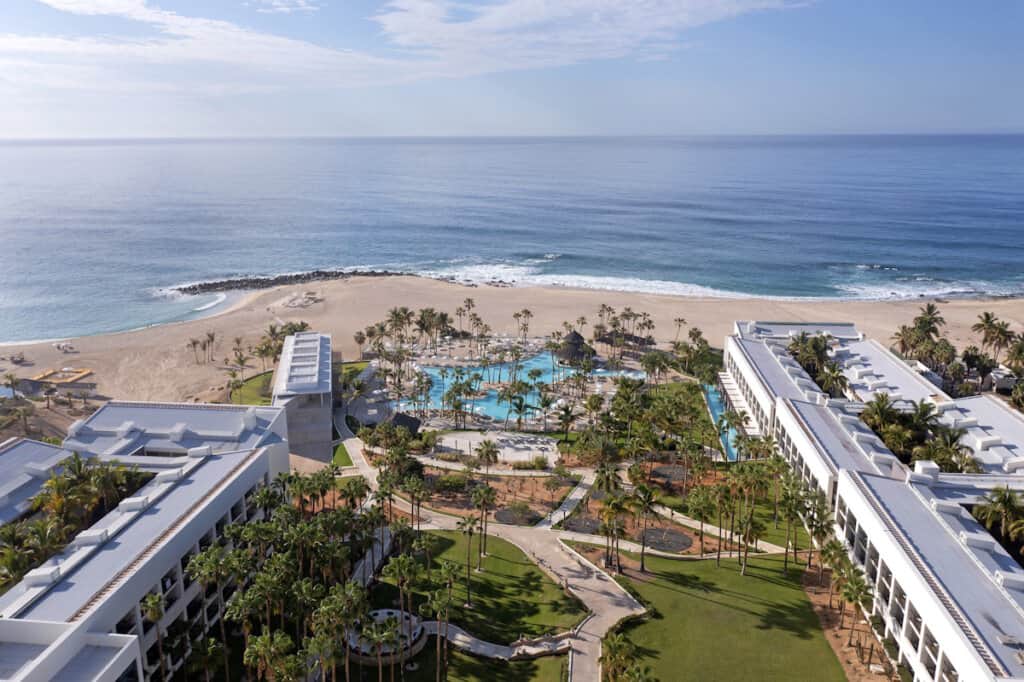
Paradisus Los Cabos will serve as the host resort and festival site, with additional accommodations available at Las Ventanas al Paraíso (A Rosewood Resort), Montage Los Cabos, Dreams Los Cabos, Marquis Los Cabos, and Hilton Los Cabos.

CABO; Photo by @daniel.pressplay

Villa Packages

Villa packages offer all the benefits of hotel packages, along with VIP Splash Passes for up to the villa’s maximum occupancy. Guests will also enjoy private chauffeured transportation, a dedicated villa concierge, and luxury amenities tailored to each property, such as chef and butler service, plus a limited-edition premium arrival gift box.

For more information on hotel and villa packages, visit CountrySplash.com.

Add-Ons & Experiences

Guests can further customize their experience with add-ons available for purchase alongside festival passes or packages. Options include VIP tables and cabanas, Saturday and Sunday morning wellness activities, exclusive Country Splash flight options, and festival after-parties.

Concierge Services

All guests will have access to festival concierge services, offering assistance with booking off-site experiences such as restaurant reservations, golf outings, private yacht charters, fishing excursions, and more, ensuring a seamless and elevated festival experience.

Paradisus Los Cabos; Photo Provided

Where Country Music Meets Luxury Beachfront Escape

During a recent conversation with Country Splash co-founder Robert Fried, he explained that the festival’s main goal is to make every guest feel like a VIP while striking the perfect balance between live music and a luxury travel experience.

“It’s a beachfront destination. Going down to the beach and relaxing on the sand is something that I think is undervalued in just having a destination that you can enjoy yourself at, relax, and also have a fun party experience,” he shared, adding, “I think all of it is equal parts, country music, destination, and the guest experience.”

Fried also noted that the setting allows fans to experience their favorite artists in a much more intimate way.

“One of our slogans is no fields, no fences, no distance stages. And we really want to make sure that everyone who comes feels like they’re up close and personal in an intimate environment where they’re not watching their favorite performer from a screen half a mile away. They’re watching it up close and personal and they’re really getting the full experience of their favorite country artists.”

For more information, visit the official Country Splash website. 

The post Country Splash Unveils Daily Lineup for Labor Day Weekend in Cabo San Lucas appeared first on Country Now.

​Country Now

Categories
Alaska News

Royal Caribbean Janitors Frantically Cleaning Glaciers Before the Start of Cruise Season

A herring on a background of herring with the caption "Fake news from a real town"
Fake news from a real town

Ricardo Mop has been part of the custodial crew at Royal Caribbean for six years, but this spring was his first time working anywhere on the Alaska route.

“I guess you could say I was pretty surprised,” said Mop, pulling down a scarf. “I was used to wiping sunscreen spills off deck chairs and picking up margarita glasses off the lido deck. Now here I am in a parka and ice-climbing gear with a vacuum cleaner.”

Mop and a dozen other janitors from Dystopia of the Seas, a 2,000-foot Royal Caribbean cruise ship, were cleaning the Sawyer Glacier in Tracy Arm fjord before the start of cruise season in Southeast Alaska. Most cruise companies that regularly include glacier viewing in their itineraries contract janitors to spruce up the ice, but only Royal Caribbean has an entire crew dedicated to the task. Geraldine Swiffer, Chief Spick n’ Span Officer aboard Dystopia, stated “Royal Caribbean is dedicated to giving its guests the best possible cruise experience and we are legendary for our ships’ cleanliness. To that end, we also tidy up the glaciers before showing them off to visitors.”

The crews consist of teams of dirt sweepers and vacuumers, high-powered leaf blowers, tanzanite graders, ice-worm exterminators, as well as custom-built four-wheel-drive Zambonis. Driver Brice Scate told reporters that the valley glaciers were usually the dirtiest. “Medial moraines are like dirt-central. Very unsightly. Imagine if you came all the way up here and all the nice white ice was covered in rock and dirt. And all the katabatic winds kicking up silt, rockslides and glacial retreat—it’s a complex janitorial environment.”

When asked how long they were at the glaciers, Ricardo Mop replied, “What? Can’t hear over the cracking sounds. We’re at Sawyer Glacier now, still got Dawes Glacier, the Hubbard, the Mendenhall. It’s a lot of vacuum bags. There’s that cracking sound again, what’s that? A tree falling?”

The post Royal Caribbean Janitors Frantically Cleaning Glaciers Before the Start of Cruise Season appeared first on Chilkat Valley News.

Categories
Alaska News

Museum opens redesigned main gallery

The redesigned main gallery at the Haines Sheldon Museum. Monday, April 27, 2026. (Will Steinfeld/Chilkat Valley News)

The main gallery of the Sheldon Museum has gotten its first overhaul in nearly a decade, and the new look debuts Friday. 

Residents accustomed to the previous gallery exhibit will find a re-arranged space with a higher density of information and objects. Some large centerpieces remain, including a display case of Chilkat blankets and Eldred Rock lighthouse’s  Fresnel lens. But most of the exhibit has not been on display, including a new collection on loan from Excursion Inlet’s cannery museum. 

As for the space itself, the previously open-floor look has been replaced by standing panels arranged with an eye toward a more intentional flow, museum director Brandon Wilks said. 

The new exhibit is the product of a year-and-a-half’s work from lead curator Andrea Nelson and Blythe Carter. 

Nelson, an on-again-off-again museum contributor over the past two decades, said her goal was to “home in on what makes this place different from other places in Southeast Alaska, other places in Lingít territory.”

Nelson focused on the physical topography of the land and the trade routes that ran up corridors into the interior. 

“I felt like (the exhibit) needed some kind of grounding narrative, instead of just peppering the audience with facts about the place,” Nelson said. 

From the gallery entrance, viewers first see a large canoe carved by Wayne Price. The canoe is meant to orient visitors in a historical landscape before highways, where water-based travel was often the quickest and easiest route. 

From there, visitors walk out into the center of the floor, which includes panels on Lingít trade empires, with porcelain originating in China on display. 

“Even people who feel like they know Chilkat Valley history might not realize the extent of Lingít trade, that they had one of the largest trade empires in the Americas,” Wilks said. 

Wilks and Nelson described the museum’s limited space as a challenge in displaying the valley’s historical breadth. 

“Recalling history is a really botched process, no matter how careful you are,” Nelson said. “A story can be told in so many ways from so many different perspectives.” 

Part of Nelson’s approach to that problem, she said, was to let the museum’s collection lead the narrative, “letting the objects speak,” as she put it. At the same time, she added, the approach introduces other challenges. For instance, the fact that the museum’s collection is determined by what can be acquired or donated, not necessarily what has the most historical significance. 

For his part, Wilks said he invites visitors to provide feedback on the history and is leaving open the possibility of adjusting the exhibit in the coming months.  

Alongside older art and archaeological artifacts, the museum will display a significant amount of work from renowned contemporary carvers, like Price and Ed Kasko, as well as a new retrospective on late Chilkat Valley painter Carol Clifton. 

Wilks said the museum has hosted art students in the past year to see the work, including high schoolers participating in this week’s regional Art Fest. 

The Clifton exhibit, curated by Donna Catotti and on display in the museum’s Elisabeth Hakkinen gallery, shows a range of Clifton’s local landscapes and portrait work. Starting Friday, the paintings will be up for silent auction, with 60% of proceeds going to the Clifton family and 40% going to the Haines Sheldon Museum.  

The post Museum opens redesigned main gallery appeared first on Chilkat Valley News.

Categories
Alaska News

Carol Clifton leaves legacy of creativity, quick wit

Barbara Pardee last saw her friend Carol Clifton around August 2025. 

Clifton hadn’t left her Dusty Trails apartment in months. She needed oxygen at that point and was self-conscious about the size of her tank. But once inside Pardee’s car, she didn’t want to go home. As they drove, Clifton pointed out old homes, old stories, old neighbors from 56 years of living in the Chilkat Valley. 

They went out to Mud Bay and passed by John Svenson’s art studio. 

“He saw me and we’re friends. But then he saw Carol and he just came right over,” Pardee said. “She rolled down her window and those two talked for at least 30 minutes. They just talked up a storm. She was just that way with everybody. If you were her friend, you were always her friend.” 

Clifton died Feb. 27 in Juneau after doctors discovered an advanced lung mass following a January fall.  She was 88 years old.  

Clifton and her twin brother were born Aug. 15, 1937, in Los Angeles. She was one of five children born to Finnish immigrants Emil William Hakkila and Frances Lavalle Hakkila. 

After high school, she moved to Fairbanks to work as a waitress in a cafe run by the mother of her childhood best friend, Gail Hay. 

“Alaska had just become a state and it seemed safe enough,” her son, Kim Clifton, said. “So off she went. And I’m sure it was quite the journey in 1959.” 

There, she met her future husband Jerry Clifton, and the couple eventually settled in Haines in 1969. They raised six children: Jerry, Kim, Van, Christine, Kelly, and Ralph. 

Kim said Carol worked at, and loved, being a good mom. With six children, the inevitable fight would break out and she would referee the situation to get everyone to calm down and make peace with one another. 

Clifton was always reaching for positivity, which, when combined with her quick humor, was a powerful tool. “Now I understand it to be something where … it was like a daily practice for her,” he said. 

The family  eventually bought three acres across from Portage Cove where Jerry built a three-story home overlooking the campground. Carol set up an easel in the corner of the house. 

“She was always painting something,” Kim said. “She’d get out her little palette and with all the colors and it was just part of where we were living. Part of the decor you might say.”

Pardee said when she first became aware of Clifton, it was from the paintings on small pans hanging at a local cafe. 

Pardee said it was fun to watch Carol’s artistic talent grow from small gold pans to large murals on the wall at the Captain’s Choice Motel. 

“She really studied it,” Pardee said. “Once she took me into the back bedroom and she had every art magazine and all of her art books. She said, ‘This is my college education right here.’”

Pardee said she will miss the depth that Carol brought to their friendship. Her intellectual curiosity led to constant reinvention. 

“She loved to learn. She never stopped, ever,” Pardee said. “You always admire somebody like that.” 

Clifton’s paintings often started with a trip up the Haines Highway, where she photographed  landscapes and wildlife. Eventually she became known for those photos as well, said longtime friend, Teresa Land. Land met Clifton in 1973 when asked to play piano in her home studio. 

“She thought I was going to play a two-bit thing, but … I just let loose,” playing a concerto by Felix Mendelssohn, Land said. 

It was the beginning of a lifelong friendship built on music, art and gardening.  

Friends say creativity spilled into every corner of Clifton’s life, from towering nasturtiums at her Beach Road home, to handmade Christmas cards, embroidery and carved fishing corks she gifted to family. 

She seemed to find joy in using her talents to make life brighter for others, her son said. And, for many in Haines, that included creations that emerged from her kitchen. 

“She loved making cream puffs and dropping by and surprising folks,” Kim said. “They were always little masterpieces, her cream puffs are just legendary.” 

Over time, Clifton became Haines’ de facto cake maker — something nearly every friend mentioned. Friends described them as  fluffy, textured, highly stylized: they could have flowers, pearls, ribbons, you name it. She also made puff pastries and a special almond bread for Christmas. 

“That stuff that people don’t like to make themselves but they like to eat,” Pardee said.

Alongside all of that creative energy Clifton used humor to connect with her friends, teasing them, making them laugh. 

“She called it loving on them,” Pardee said. “She would tell you the truth and she was not afraid to give you a barb if she thought you needed it.’ 

She also took great joy in telling people about her faith, something that deepened immensely in spring 1981, according to Kim. 

The family spent much of their early time in Haines attending the Presbyterian Church but toward the end of her life, she attended the Haines Christian Center — Assembly of God church. Kim, who is a pastor in the Houston area, said the two bonded over their spirituality. 

“She shared her faith freely with anyone and everyone,” Pardee said. “If you knew Carol Clifton, you knew where she came from, what she believed and what she stood for.” 

In her immediate family Carol was preceded in death by her husband, Jerry, and brothers, Don, Carl and Ralph Hakkila. 

Carol is survived by her six children—Jerry, Kim, Van, Christine (Clifton-Thornton), Kelly and Ralph Clifton — as well as her sister, Pennie Peterson, eight grandchildren and four great grandchildren.

A memorial service will be held July 3, 2026 at 6 p.m. at the Haines Christian Center. 

A retrospective showing of her paintings at the Haines Sheldon Museum with an opening reception is scheduled for Friday, May 1. 

The post Carol Clifton leaves legacy of creativity, quick wit appeared first on Chilkat Valley News.

Categories
Alaska News

Assembly Briefs: ADUs, severance tax, and an extra meeting

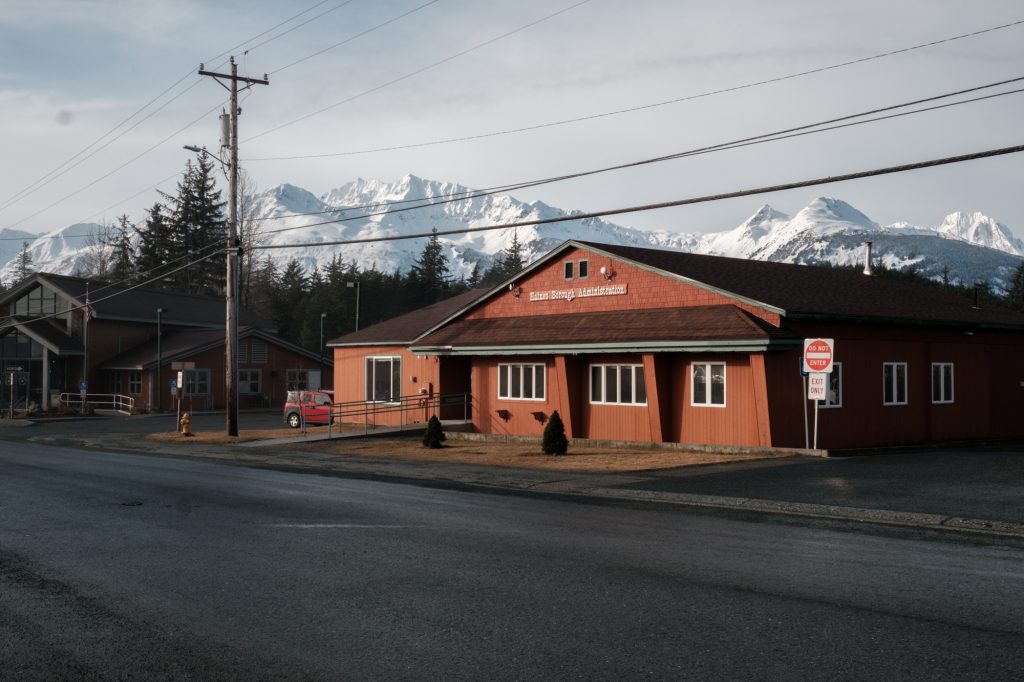
The Haines Borough Administration Building, March 3, 2025. (Will Steinfeld/Chilkat Valley News)

ADUs

After a year of consideration and reconsideration, accessory dwelling units have officially been voted down by the assembly. 

The arguments on each side are well worn at this point, and Tuesday was no different. 

There was some talk of amendments to make the proposal more amenable to skeptical assembly members and residents. 

One was a set of recommendations from the planning commission to increase minimum lot sizes for ADUs in Mud Bay. That failed to get support from assembly members.  

Another possibility came after assembly member Gabe Thomas named a number of changes he wanted to see in the proposal. Thomas’ ideas included aesthetic guidelines, a requirement that the property owner live on the property, and a limitation on use as short-term rental. 

But when asked by mayor Tom Morphet if he wanted to propose any of those suggestions as amendments, Thomas declined. 

After assembly member Kevin Forster went ahead and proposed one of those changes, a requirement that property owners live on the property, Thomas voted against it. 

“I’m not going to vote for this, period, the way it changes zoning,” Thomas said. 

In a final vote on allowing ADUs, Eben Sargent and Forster were the only votes in favor. 

The vote might be the end of ADUs in code for now, but not in practice.

Borough planner Chen Wu said at the meeting ADUs were widespread in the borough, rented out illegally. 

Residents get permits to build structures on their property as sheds or carports — both allowed uses — before later adding kitchen and bathroom facilities and renting them out without borough permission, Wu said. 

Wu said he’s seen evidence of the practice in permit applications, Facebook groups advertising rentals, and in conversations with residents who had previously lived in such structures. 

Planning commissioners this month said they agreed with Wu’s assessment.

Severance Tax 

The assembly agreed unanimously to reintroduce a severance tax ordinance after it failed to pass last meeting. It was a long road to get there. 

The main complication was Sargent asking for a commitment from assembly members that they wait to take a final vote on the proposal until all assembly members were present at a meeting. 

That came after last meeting, where assembly members voted down the ordinance with only four members present. Sargent said he was frustrated by the action given how much time had gone into developing the proposal.

“What I heard last meeting from Gabe (Thomas) was ‘I’m gonna kill it,’ after we asked to postpone,” Sargent said during discussion Tuesday. 

Not everyone was amenable to being asked to make such a commitment, namely Thomas and Smith. “Why wouldn’t we have that agreement for everything?” Smith said. “This is classic projection.” 

The lengthy and loud back and forth ended with middle-ground proposals from Forster and Stickler. Forster proposed a version of the tax structure roughly splitting the difference between the two proposals brought to the meeting: the previously-considered version, from the commerce committee, and a new version from Smith. 

Stickler proposed scheduling the proposal for two public hearings, with two more to follow if necessary. 

The amendments carried unanimously. 

Unfortunately, the discussion on procedural issues didn’t resolve any of the stickier questions about the actual tax structure — a question to be ironed out in coming public hearings. 

In numerous public hearings and committee meetings in the past year, as well as hearings in past assemblies, the severance tax has failed to reach a consensus to pass. 

Still to come

The assembly voted to close its Tuesday meeting at 10:30 p.m., with some of the agenda left for a Wednesday night addendum. Here’s what was bumped over to that meeting:

The cost of playing ball

The borough has received a $34,000 check from telecommunications company GCI for improvements at the Oslund Park baseball fields. 

The payment comes as the company considers applying for a cell-tower project, calling into question whether the borough can ethically accept the donation.

The GCI cell towers have for over a year faced strong opposition from residents.  

Tanani Bay sewer outfall

The assembly will vote whether to authorize a sewer maintenance service area for residents at a Tanani Bay development. 

The development’s sewer outfall is out of compliance with state regulations, and there’s debate over who’s responsible for addressing the issue. Developer Don Turner Jr. says the borough agreed in principle to assume ownership of the sewer system decades ago but never followed through. The borough’s attorney said the borough does not currently own the development’s sewer system. 

What is clear is that residents who have built new houses connected to the outfall want a solution fast, as the sewer issues are preventing them from moving in. 

If the assembly votes to approve the new service area, residents connected to the development’s sewer system who are registered to vote in Haines will then vote on establishing the service area. 

Seasonal sales tax and plastic bag ban

More discussion will come on two familiar topics. The assembly will consider a citizens’ petition to lower the seasonal sales tax rate for coming months in response to high fuel prices and elevated cost of goods downstream of those fuel prices. 

Also up for discussion is re-introduction of legislation to fully ban plastic bags in the borough, such as the ones used at Olerud’s. Identical legislation was voted down last assembly meeting, notable with only four members present, and has been brought back at the start of the legislative process. If introduced, it will need to go through a fresh round of public hearings before being eligible for another vote. 

The post Assembly Briefs: ADUs, severance tax, and an extra meeting appeared first on Chilkat Valley News.