What a difference a few years makes! Continue reading…Country Music News – Taste of Country









What a difference a few years makes! Continue reading…Country Music News – Taste of Country

Alton Brown is not known for his dislikes but his scientific approach to cooking, so when he says he hates this one food in particular, we’re curious.

Food Republic – Restaurants, Reviews, Recipes, Cooking Tips
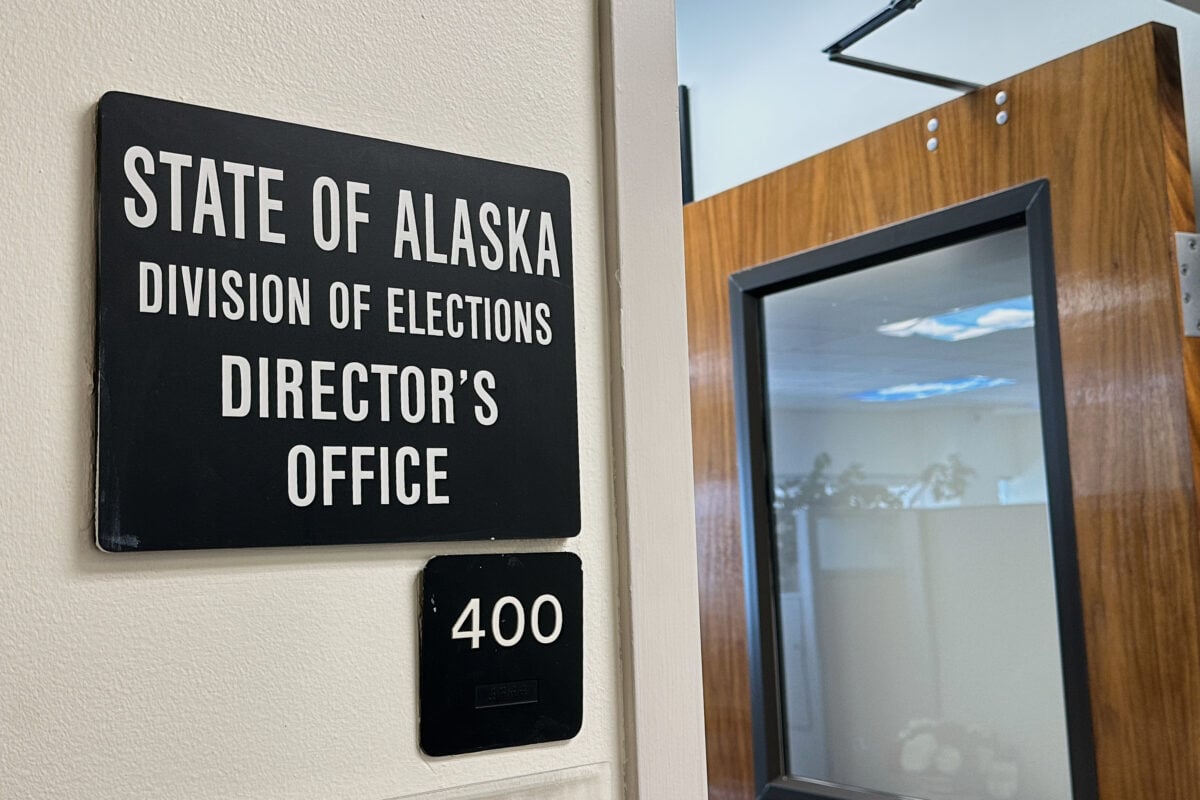
AP-Voting and civil rights groups sued Alaska elections officials Wednesday, alleging that their sharing of the state’s full voter registration list with the U.S. Department of Justice violates the state constitution.
Alaska is one of at least 12 states that has provided or said it would provide detailed information about its voters — including date of birth, driver’s license number or partial Social Security number — to the Trump administration, according to the Brennan Center. Alaska and Texas also signed agreements when they shared data in which the department outlined plans for its own analysis of voter files, its plans to flag voter list issues and directions for removing voters deemed ineligible.
Several other states provided the data, but refused those agreements, as part of a wide-ranging effort by the Justice Department to obtain detailed voter data from every state. Some elections officials have expressed concern the information being sought could be used by the Trump administration to search for possible noncitizens.
The Alaska lawsuit was filed in state court against state Division of Elections officials by the League of Women Voters of Alaska and Alaska Black Caucus. It alleges the handing over of personal data on the voter list violates the right to privacy under the state constitution. It also says the memorandum of understanding violates due process by allowing the Justice Department to flag voters for removal “without any apparent notice or process for impacted voters to challenge those decisions.”
The lawsuit names as defendants Republican Lt. Gov. Nancy Dahlstrom, who oversees the division, and division Director Carol Beecher.
Sam Curtis, a spokesperson with the state Department of Law, said by email that it would be premature to comment on specific claims raised in the lawsuit. But Curtis said the department has previously explained in public hearings that state law “expressly permits the sharing of this information for authorized governmental purposes. That statute is on the books, and we will defend it.”
“Alaska statutes contain numerous provisions that allow the sharing of otherwise non-public or confidential information with law enforcement,” Curtis said.
The plaintiffs are represented by the American Civil Liberties Union of Alaska, ACLU Voting Rights Project and the Electronic Privacy Information Center.
The Justice Department has sued at least 30 states and the District of Columbia to try to force the release of the data, according to a tally by the Brennan Center. Judges have rejected those efforts in California, Massachusetts, Michigan, Oregon and most recently, Rhode Island. A judge in Georgia dismissed a Justice Department lawsuit after ruling it had been filed in the wrong city. It was subsequently refiled.
In the Rhode Island case, Justice Department attorneys acknowledged the department was seeking unredacted voter information so it could be shared with the Department of Homeland Security to check citizenship status.
In addition to the state court lawsuit in Alaska, at least four federal lawsuits have been filed around the U.S. seeking to stop the Justice Department from collecting information from unredacted voter registration files or to prevent states from taking steps to cancel or suspend people’s voter registrations based on the federal project.
During a legislative hearing in Alaska last month, Rachel Witty, an attorney with the state Department of Law, told lawmakers the state had a “compelling interest” to comply with the federal request.
“To ensure the integrity of elections, there was a mutual interest in maintaining voters rolls that were accurate and current,” she said.
The Alaska lawsuit describes the process under state law for maintaining voter rolls and states that there are only limited circumstances under which a voter’s registration can be promptly canceled — “upon death or conviction of a felony involving moral turpitude.” It says that while elections officials have said they will only remove voters “to the extent allowed by state and federal law,” that interpretation is “irreconcilable with the plain language” of the agreement signed with the Justice Department.
The plaintiffs are asking a judge to void the agreement and require the elections division to make “reasonable efforts” to ensure the immediate destruction by the Justice Department of any hard copies and electronic versions of the list that was shared.
“Rather than fiercely defending the rights of Alaska’s voters, our Division of Elections acceded to federal overreach,” Eric Glatt, legal director for the ACLU of Alaska, said in a statement. “Now, we are asking the court to step in and ensure that DOE upholds its constitutional and legal obligations to Alaskans.”

Reading Time: 2 minutes
Back in February, Nicole “Snooki” Polizzi revealed her cervical cancer diagnosis.
It was a shock to the 38-year-old Jersey Shore star and to her fans.
Now, she’s opening up about her treatment plans, including an upcoming hysterectomy.
It’s scary. But fear is what had her avoiding screenings until it was almost too late. She can do this.
Speaking to People, Nicole Polizzi explains that she reacted to her stage 1 cervical cancer diagnosis in a very understandable way.
“I had a breakdown,” she described. “I got to my car and I called my mom hysterically crying, thinking the worst.”
She revealed that she had ignored her doctor’s advice, putting off getting a new Pap smear for over a year before this appointment.
That bad news came in February. The good news is that it hasn’t spread.
The more complex news is that Polizzi will need to undergo a hysterectomy in these coming months. After that, she won’t need any further treatment.
“I was scared,” Polizzi admitted.
“But you know what?” she continued. “It’s not the worst case and I can still deal with it.”
Polizzi affirmed: “I’m gonna be fine.”
A cancer diagnosis is always scary. And a hysterectomy is major surgery.
However, it sounds like her prognosis is good. She also has the financial means and support system to undergo surgery and recover without upending her life.
Polizzi recalled that, starting about four years ago, she began receiving abnormal Pap smear results.
Doctors found precancerous cells, which were “nothing crazy,” as she put it.
Still, her doctors had her come in for screenings six times as often as the normal recommendation — every six months, rather than every three years.
But, more recently, Polizzi began putting off the uncomfortable screenings.
“I ended up not going for like a year and a half because it’s uncomfortable, it’s not fun,” she admitted.
“I knew something bad could happen,” Polizzi confessed, “but instead of dealing with it, I just pretended it wasn’t happening.”
In 2025, her doctor did not give up. That professional persistence may have saved her life.
“My doctor was leaving me a voicemail screaming at me like, ‘You need to get in here. This is serious. You don’t want it to escalate.’ That’s when I finally went in,” Polizzi described.
She underwent a colposcopy and a cone biopsy, which found “severe cancer cells.” Fortunately, they found them in time.
“Even though I’m done having kids, the thought of not being able to really upset me,” Polizzi said of her upcoming colonoscopy. “It messes with you a little bit.”
Still, she affirmed: “I have a ton of people that are here for me and they love me.” They’ll support her through this journey, including her recovery.
Nicole ‘Snooki’ Polizzi Plans Hysterectomy After Cervical Cancer Diagnosis was originally published on The Hollywood Gossip.
The Hollywood Gossip

The crowds there were not at all impressed with the man who was revolutionizing popular music. Continue reading…Country Music News – Taste of Country

NOTN- Juneau Assembly members are bracing for tough budget decisions as they begin sorting through a broad list of possible service reductions and revenue changes intended to close some future funding gaps.
The Assembly Finance Committee met last night and members reviewed a “service reduction summary” outlining dozens of options, from closing one of the city’s public pools to trimming grants and changing how the city handles criminal prosecutions.
Finance Committee Chair Christine Woll, stressed that no cuts were being adopted yet, but said the Assembly must narrow the list so staff can focus their limited time.
“I know we’ve gotten lots of emails, as we expected, because these are pretty startling to see.” She said, “But you can’t look at our finances and not start discussing some of these things, that’s where we’re at. My intent today is not that we are voting on any things, we’re going to focus our discussion on where we need more information from staff to move forward in this process. At some point, we’re going to have to start reducing this list.”
City Manager Katie Koester and Finance Director Angie Flick said they will compile a memo for the committee’s April 29 meeting, answering questions and attempting to attach firmer cost estimates to selected ideas. Many items currently have no fixed dollar amounts attached, particularly those unlikely to produce savings by fiscal year 2027.
“Thank you all for working on a task that’s hard and not fun and probably nauseating in the process.” Said Flick.
Several of the highest‑profile possibilities involve facilities and recreation, such as potentially “Mothballing” one or both municipal pools, with members requesting analysis of which pool to close, impacts on user groups and staffing, and whether organized swim clubs could help operate a facility.
“Mothball means truly close the facility, not permanently, but we would keep it in warm status.” Said Koester, “We would keep it so that it could be turned back on, essentially. And so there would be an expense to that.”
Members also discussed changes at the Mount Jumbo facility and the Dimond Park Field House, including what services they provide, who uses them and how closures or relocations would affect maintenance workloads.
The final big ticket item on the list is, options for the Juneau City Museum, including what minimum operating space staff believe is needed and whether the city can legally divest parts of the collection.
The committee also debated whether to shift misdemeanor prosecutions back to the state, city staff say this could save roughly the cost of operating a pool but would reduce Juneau’s autonomy over criminal justice.
Members requested additional information in several other areas:
As well as discussions around Bartlett Regional Hospital- whether a city subsidy is necessary, and Animal Control- adding cat licensing, which members believe could offset animal control costs.
“When you start making policy around animals, this could very well be the time we’re looking for every penny and dime, So if people feel strongly like we’re looking for all the pennies then fine.” Said Assembly Member Alicia Hughes-Skandijs, ” I just know that when you get animals involved, and maybe this would be the time, because they’d get overpowered by people who don’t want their facilities closed, but it just usually bogs down the process. Anytime you bring people’s pets into it, it usually just goes nuts.”
The committee also asked for analysis of leasing the largely underused Douglas fire station.
Most empowered‑board budgets, including docks and harbors and the airport are advancing as proposed by their respective boards.
Members also weighed a series of foregone revenue options, places where the city may be losing money where they could be gaining.
The Committee reviewed a pared-down list of revenue ideas that identified 47 potential sources of foregone revenue.
One early focus was a possible property tax on commercial vessels, where Flick said the city lacks the data to estimate how much revenue could be raised.
On new revenue options, members discussed a potential business license program and local registration requirements, but agreed those ideas would not generate money in time for FY 2027.
“We move to instruct staff to bring back additional information on these two new revenue options to the finance committee after the budget process.” Said Neil Steininger.
There were no objections.
Later in the meeting, the panel advanced an ordinance to renew Juneau’s 3% temporary sales tax on the October ballot.
“Previously, we asked the body if you wanted to have an ordinance drafted to put on the ballot in October, a renewal of the 3% sales tax. And your answer was yes. And so in the packet tonight, is a draft ordinance.” Said Flick, “It has all the same intent language on how the 3% is split as we did.”
Mayor Beth Weldon described this as roughly one-third of the city’s operating budget. The draft measure will move to the full Assembly for scheduling and a future public hearing at a later date, but the public should expect to see this before June.
“These are big, hard decisions,” Said Woll.
By: Haley Lehman, Alaska Beacon
The Alaska House of Representatives advanced a bill Wednesday that aims to address a lack of oversight for minors treated at psychiatric facilities in Alaska. The bill would mandate an annual report on conditions and treatment at such facilities from the state’s Health Department, as well as unannounced biannual inspections.
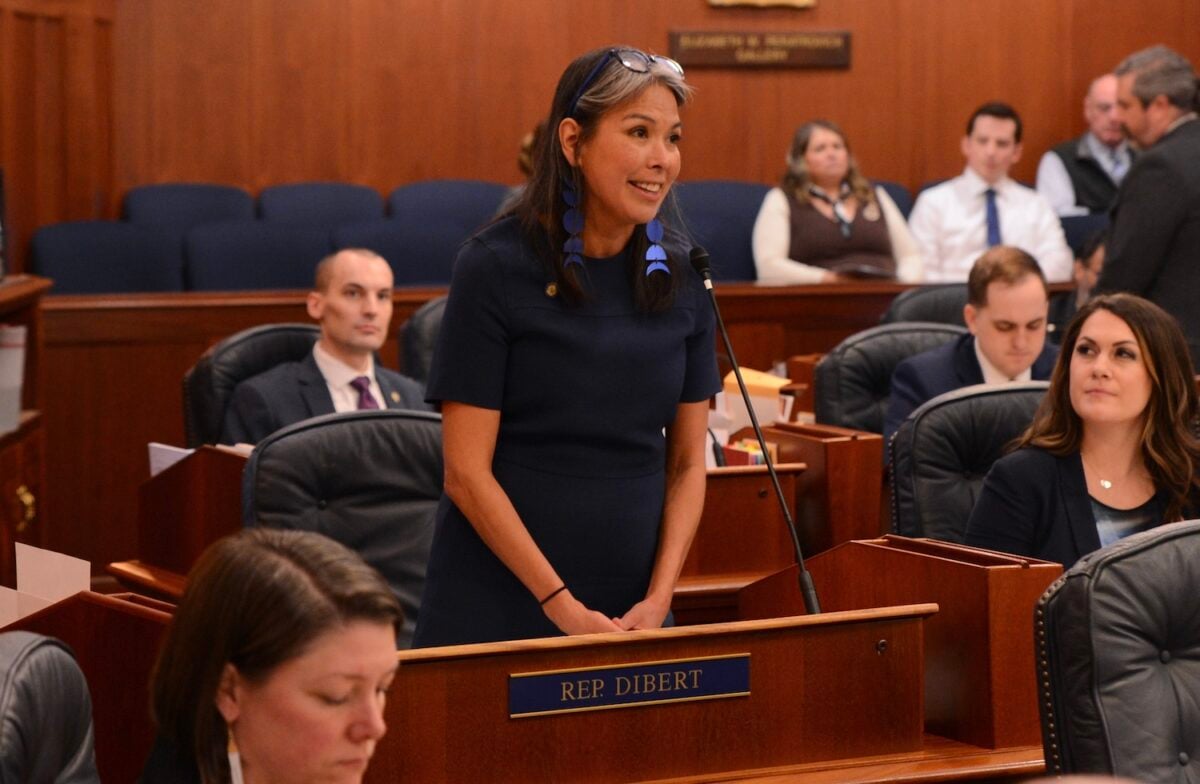
Rep. Maxine Dibert, D-Fairbanks and the bill’s sponsor, said the measure is a necessary step to increase accountability around the treatment of minors in psychiatric hospitals in the state, amid constituent concerns.
“These are not sweeping mandates, they are basic expectations of transparency, of communication and accountability of our youth here in Alaska,” she said on Wednesday.
The bill passed the House of Representatives with 37 yes votes. Three legislators were absent. It has been transmitted to the Senate for consideration.
The bill would also guarantee patients confidential telephone or video communication with a parent or guardian for two hours per week and require the Department of Health to notify a patient’s parent or legal guardian when seclusion or restraint is used within 72 hours.
The annual report would include information about the total uses of seclusion or restraint, findings of facility inspections and data on the number of minors who received residential care at psychiatric hospitals.
Dibert cited a 2004 investigation by the Disability Law Center of Alaska that found 261 episodes of seclusion and restraint over three months in psychiatric institutions, which the organization called “quite high.”
The United States Department of Justice issued a report in December 2022 that found that Alaskan youth are institutionalized in psychiatric hospitals and psychiatric residential treatment facilities at higher rates and for longer periods than minors in other states as a result of a lack of available and accessible community-based mental health services, violating the Americans with Disabilities Act.
Rep. Genevieve Mina, D-Anchorage and Chair of the House Health and Social Services Committee, voiced her support for the bill and drew attention to a finding by the DOJ that identified gaps in community-based services in Alaska.
Community-based services include home-based family treatment for early intervention services, intensive case management and crisis services, according to the DOJ.
“We have to face the reality that many of these kids are in these institutionalized settings because we have underinvested in our home and community based services in this broader continuum of care,” Mina said.
“The dearth of community-based services in Alaska is so pronounced and widespread that institutional placement has become, for many behavioral health service providers in the state, the default option to which they refer children with long-term behavioral health need,” DOJ investigators wrote in 2022.
According to the DOJ, more than 800 Alaskan children received behavioral health services in a psychiatric institution in 2020. Approximately a third of the patients were Alaska Native and parents reported to the DOJ concerns about separating their children from their culture while in residential treatment. In addition to four psychiatric residential treatment facilities in Alaska, the state sends children to 17 out of state psychiatric residential treatment facilities.
Rep. Justin Ruffridge, R-Soldotna, told legislators that the bill provides oversight and accountability that legislators are expected to institute.
The bill received support from the Alaska Federation of Natives, Lives in the Balance, a nonprofit that advocates for the fair treatment of children, Dot Lake Village, Citizens Commission on Human Rights, an organization that aims to eradicate abuse in mental health settings, and Aleutian Pribilof Islands Association.
The Department of Health estimated in a fiscal note that it would cost approximately $222,800 annually for a full-time nurse consultant to perform inspections, conduct interviews with patients and conduct investigations and for two nurse consultants to attend trauma informed care and cultural awareness training.

Ashley McBryde made her way to the Big Apple for a performance of her rising single, “What If We Don’t,” on The Tonight Show Starring Jimmy Fallon on Wednesday.
The performance featured the Arkansas native alongside her band, bringing the powerful, guitar-driven ballad to life.
Marking her fastest-rising single at country radio to date, it’s easy to understand why the track is resonating with listeners. The song captures that in-between moment when two people are deciding whether to take their relationship to the next level. It delivers a message about not being afraid to take chances, as she questions, “What if we don’t? What if we don’t? What if we stop fightin’ what we know we both want/ We might regret how far we let it go/ What if we don’t?”
Tonight Show viewers praised her performance, calling it “stunning” and “perfectly executed.”
Another declared, “”This woman could sing the cereal box and I would listen.”
Reflecting on how the song came to life, McBryde shared, “‘What If We Don’t’ came to me, Terri Jo Box, and Randall Clay sitting around a fire pit on a back porch, reminiscing on all the moments that we could’ve made a different choice and wondering if we should’ve. It’s about the leaps of faith that you do or don’t take, and having to learn to live with those consequences either way.”
“What If We Don’t” serves as the lead single from Ashley McBryde’s forthcoming fifth studio album, Wild, which is set for release on May 8.
The 11-track project includes six songs co-written by McBryde, along with five outside cuts. The Grand Ole Opry member recently shared that some of the songs span more than 15 years of her life, including a few she once believed were too honest and “unvarnished” to ever release.

“At the time I was told I needed to be more palatable than what those songs were offering,” McBryde explained. “I’ve kept them in my live show over the years, and I’m so thankful that I never cut them before this album. When I hear myself playing them now, I can finally believe the woman who’s singing.”
Among the standout moments on Wild is “Bottle Tells Me So,” a powerful and deeply personal track co-written by Ashley McBryde alongside Shelly Fairchild and Terri Jo Box. The song explores the fallout of a night fueled by alcohol, capturing the disorienting mix of regret, clarity, and consequence that comes with the morning after. Through raw honesty and introspection, McBryde brings listeners into a moment of reckoning, marking a significant turning point in her journey.

“When I was drinking, it was much easier to turn off my inner critic as I was creating,” McBryde, who has been sober since June 2022, admitted. “But over time I learned I needed to acknowledge that voice, tell her she’s no fun to work with, and then try to tap into the younger version of me—the one who couldn’t handle all the things she left behind in Arkansas, and who ended up drinking to soothe herself. I had to tell her, ‘Okay, the alcohol’s gone and you’re scared—so, do it scared. You’ve been through worse, and you made it out all right.’”
Ashley McBryde has a few tour dates planned leading up to the release, including shows this week in Southaven, MS and Vidalia, GA. For a full list of upcoming dates, click HERE.
The post Ashley McBryde Delivers Stunning Performance of ‘What If We Don’t’ on ‘The Tonight Show’ appeared first on Country Now.
Country Now

Bailey Zimmerman just had a pretty unforgettable moment with a fan that involves baby names and a little humor—stick around for the details. Continue reading…The Boot – Country Music News, Music Videos and Songs
Bailey Zimmerman just had a pretty unforgettable moment with a fan that involves baby names and a little humor—stick around for the details. Continue reading…Country Music News – Taste of Country