Watch a sneak preview of Riley Green’s introduction as Garrett on this Sunday’s episode of Marshals. Continue reading…The Boot – Country Music News, Music Videos and Songs
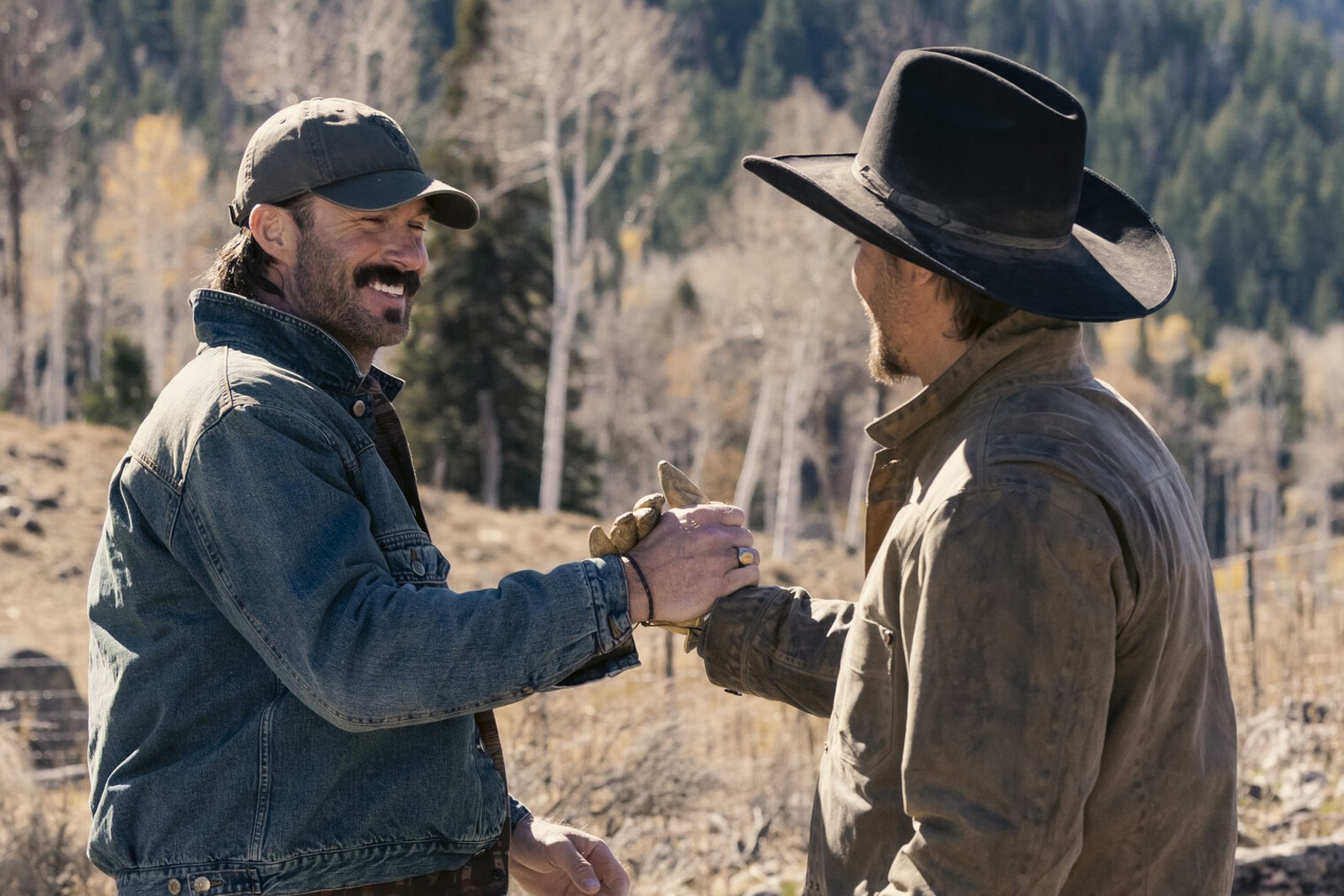








Watch a sneak preview of Riley Green’s introduction as Garrett on this Sunday’s episode of Marshals. Continue reading…The Boot – Country Music News, Music Videos and Songs
Watch a sneak preview of Riley Green’s introduction as Garrett on this Sunday’s episode of Marshals. Continue reading…Country Music News – Taste of Country
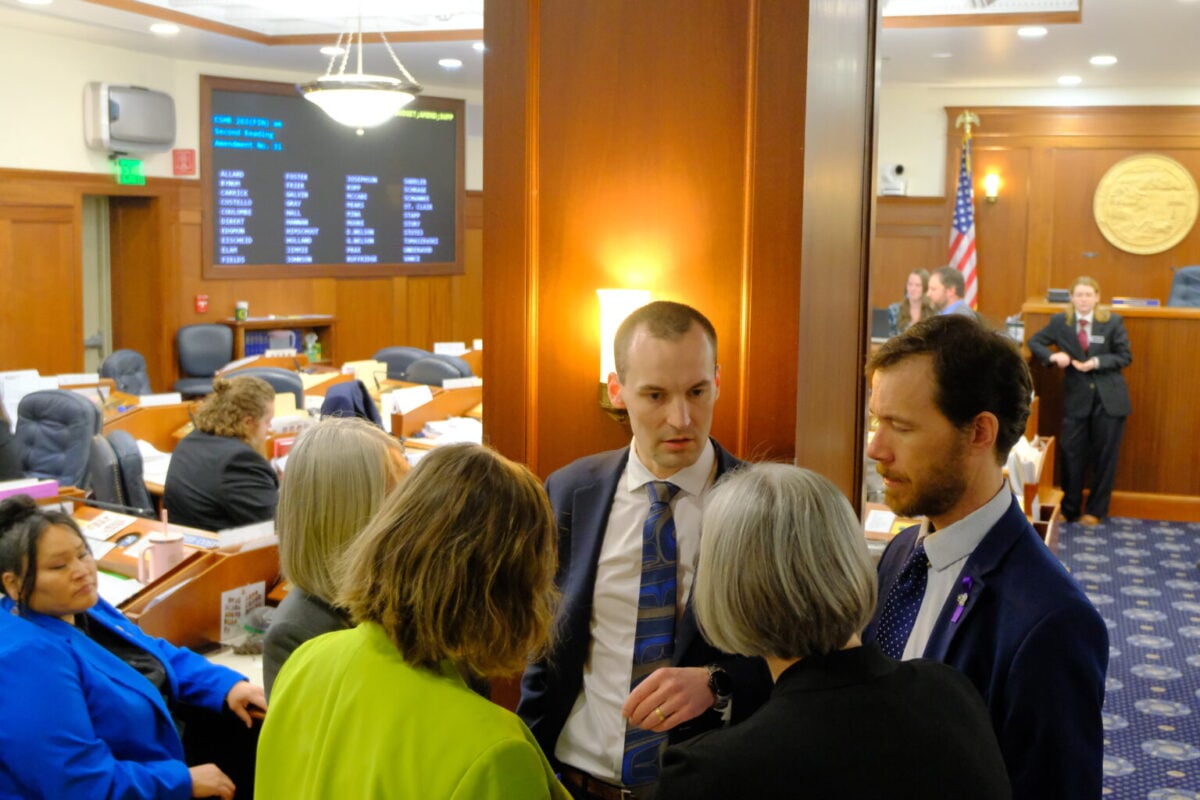
By: Corinne Smith, Alaska Beacon

The Alaska House of Representatives advanced a draft budget for the state’s operations next year, with a $1,500 Permanent Fund dividend for eligible Alaskans. It includes a nearly $158 million one-time funding boost for public schools and tens of millions for disaster relief, transportation and public assistance programs.
Members passed House Bill 263, the operating budget bill, along caucus lines by a 21 to 19 vote on Tuesday.
Lawmakers spent four days debating amendments — additions, cuts and reallocations to the draft budget — on the House floor, amid deep political divides around state priorities, war-driven oil revenues and how to balance paying for government services versus distributing cash to Alaskans through the dividend.
The draft budget now moves to the Senate for consideration, where it’s likely to be further revised.
“I feel relieved,” said Rep. Andy Josephson, D-Anchorage and co-chair of the House Finance Committee that drafted the budget, after the vote on Monday.

“But the difficulty we’re in is that overall, the war in Iran, which is most unfortunate, is very helpful to budgeting,” he said. “But the Alaska people are hurting more, right, particularly when it comes to fuel prices. So that’s a problem as well.”
As Alaska has no personal income tax or state sales tax, more than 60% of funds for the general purpose budget comes from an annual draw from the Alaska Permanent Fund and roughly 30% comes from state oil revenues.
Lawmakers have been closely watching Alaska oil prices, as they surged in recent weeks due to the Trump administration’s war on Iran. State forecasters project a potential $500 million boost in state revenues next year, but lawmakers are divided on what that should mean for state spending.
The all-Republican House minority caucus advocated for putting money towards a statutory Permanent Fund dividend, but the multipartisan majority coalition pushed the balance towards spending on state services.

The House draft operating budget made revisions to Gov. Mike Dunleavy’s proposed $7.75 billion budget unveiled in December, which included a $3,800 Permanent Fund dividend and a $1.8 billion draw from state savings.
The House draft opted not to tap into the state savings account. The House draft does include a deficit of roughly $180 million, but that total may change depending on revisions in the Senate.
Fairbanks Republican Will Stapp criticized the deficit as an “unfunded” budget. “It’s underwater,” he said Monday.
The draft budget contains increased funding across divisions: nearly $158 million in a one-time funding increase for public education, including nearly $11 million earmarked for student transportation; $33.3 million for Medicaid rate increases; nearly $55 million for fire suppression and $38 million for disaster relief; $17.5 million in heating assistance; $23 million for Alaska Department of Corrections staffing and tens of millions in transportation, public assistance programs like child care, infant learning programs, senior services, public health and public safety grants, among others.
House lawmakers rejected a roughly $3,800 Permanent Fund dividend proposed by the House Finance committee, which would have cost nearly $2.5 billion and was contingent on a draw from state savings, which requires approval of three-quarters of lawmakers.
House lawmakers instead approved a $1,500 Permanent Fund dividend that will cost the state $992 million.
Members of the multi-partisan House majority caucus expressed support for the draft budget that focused on public programs and services to enhance future benefits.
“Education, child care, parents-as-teachers, Head Start — moving upstream to try and give our youngest, our most precious resource in the state of Alaska, the best start that we can give them,” said Rep. Calvin Schrage, I-Anchorage, acknowledging that it is a balancing act for lawmakers.
Republican minority legislators also proposed spending increases, which included $2 million for the Alaska Department of Public Safety to establish a new Trooper post in Talkeetna, and $2 million for a sport fish hatchery in Fairbanks. Both failed along caucus lines by a 21 to 19 vote.
Minority Leader Rep. DeLena Johnson, R-Palmer, criticized the House draft budget in a statement following its initial approval on Monday.

“The budget passed by the Majority is a betrayal of the Alaskans we were sent here to represent,” said Johnson. “While Alaskans face one of the most unaffordable years of their lifetimes, this Majority has chosen to fund government agencies at record levels, while leaving families and communities behind.”
Minority lawmakers introduced nearly 50 amendments on the House floor over three days, which varied from cutting additional funding for education, funds for teacher recruitment and for community and regional jails, to cutting travel budgets and reallocating public employee salaries for vacant positions to add funding for school maintenance. Most of them failed along caucus lines.
The minority’s most strident call was for a maximum Permanent fund dividend.
“The removal of the statutory dividend that equates to removing $42.5 million dollars from the economy of my district,” said Rep. Sara Vance, R-Homer.
While lawmakers refer to the statutory dividend of roughly $3,800 per Alaskan, in 2017 the Alaska Supreme Court ruled lawmakers may ignore the formula since it’s not in the state Constitution. Since then, legislators have typically reduced the dividend to balance state expenses and avoid drawing from savings.
The House draft adds $158 million in one-time funding for Alaska schools, equivalent to an additional $630 per student.
That’s in the case that various education bills that provide a sustained increase to per student funding, through state’s formula boosting the base student allocation, fail to pass this year. Those bills are currently under consideration in education committees.
Lawmakers said they decided on the additional $630 per student after assessing the current deficits of the five largest school districts by student population. Many districts are grappling with decisions on school closures, staff cuts and increasing class sizes to address large budget shortfalls this month — including the potential closure of three schools in Anchorage, three schools in the Matanuska Susitna Borough, four schools on the Kenai Peninsula and two of the four elementary schools in Ketchikan.
Josephson said one-time funding this year for schools seems to be more viable than an attempt to permanently raise the per student funding formula, given the governor’s history of vetoing education funding increases — including three vetoes last year alone, one which the Legislature overrode in a special session last August.

“It’s far from a panacea, right? It’s far from anything that is the real solution. But I think if superintendents had it, they’d be delighted to have it,” he said.
Members of the House approved an amendment to earmark $10.9 million of that $158 million for school districts’ transportation for students, to help offset rising costs due to a war-driven rise in fuel prices.
Representatives from Northwest and Western Alaska objected to the transportation earmark, saying they were unsure if the funding would be allowed for student flights in their rural districts, which are off the road system. Rep. Jeremy Bynum, R-Ketchikan, sponsored the amendment, and said all districts would be eligible for their transportation of students, whether by road, air or ferry. It was approved by a 33 to 7 vote.
Lawmakers also debated earmarking an additional $10 million from the remaining one-time education funding for career and technical education grants for school districts, but the proposal narrowly failed by a 20 to 20 vote.
With a little over a month left in the legislative session, the House draft budget now goes to the Senate for consideration and likely further revisions.
On Monday, the Senate Finance Committee introduced a draft capital budget, a proposed $247 million for state facilities maintenance and construction projects, including for deferred maintenance of schools. The draft will go to the House for consideration in the coming weeks.
The legislative session is set to conclude on May 20.

Correction: A previous version of this story incorrectly stated the governor’s budget proposal, it was $7.75 billion not million.

Sen. Mark Kelly (D-Ariz.) raised $13 million in the last three months and ended the first quarter of 2026 with a massive $22.3 million cash on hand in his campaign account, large sums for a candidate not up for reelection, his campaign told POLITICO.
The haul is a sign President Donald Trump’s targeting of him as part of the so-called “Seditious Six” has continued to juice his grassroots donations. He raised $12.5 million last quarter too, much of it after Trump accused him and other Democratic military veterans of being traitors.
He’s not the only one to benefit: Rep. Jason Crow (D-Colo.), who was also featured in the video, raised $928,000 since the beginning of the year, and comes even though this year he’s not a top GOP target.
Kelly’s big quarter is likely to only stir more speculation about his presidential ambitions. Kelly has increasingly flirted with a presidential campaign, saying he will “seriously consider” a 2028 bid.
Kelly is using his fundraising prowess to spread the wealth to other Democrats facing tough races this year — and who could be helpful allies if he runs for president.
He raised an additional $470,000 for his leadership PAC and $1.1 million for the DNC in 2026. In the first quarter, his campaign and leadership PAC transferred $105,000 to the DSCC and made direct contributions to six candidates, including James Talarico, Julianna Stratton and Mary Peltola. Kelly’s campaign said 98 percent of his donations to his campaign were under $100.
“Mark knows that flipping Congress in November is how we hold Trump accountable and that’s why he is campaigning in battleground states and supporting candidates with the resources to help them win tough elections,” Kelly spokesperson Jacob Peters told POLITICO.
CORRECTION: An earlier version of this post said that this was Rep. Crow’s largest fundraising quarter.
Politics
Reading Time: 3 minutes
You cannot be nice to everyone. Not everyone deserves it.
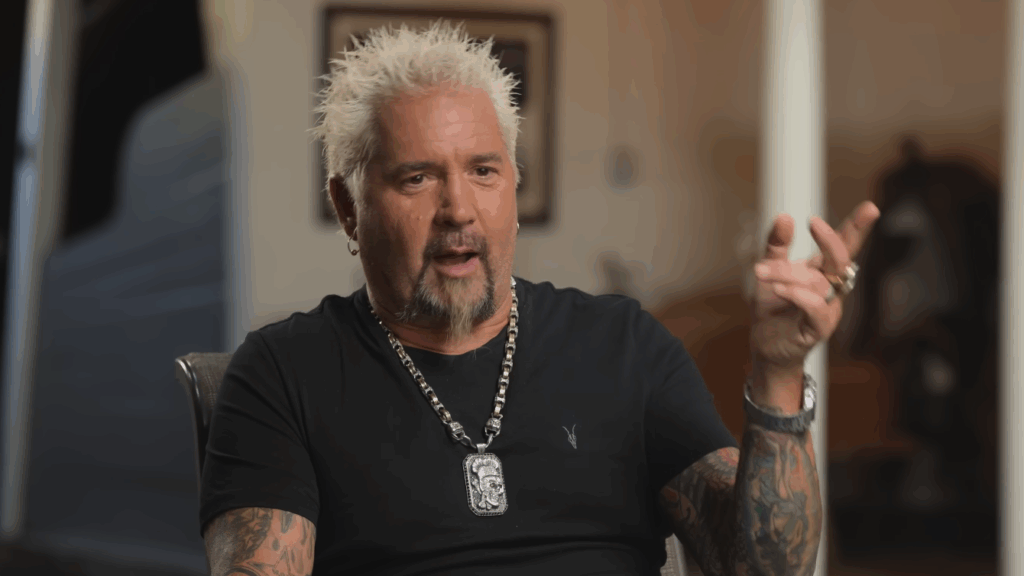
As we previously reported, Guy Fieri’s friendly fistbump with Andrew Tate received a lot of righteous backlash.
Some even pointed out that the Mayor of Flavortown has been seen rubbing elbows with other evil men.
Fieri is speaking out, admitting that he’s “devastated.” He promises that he can explain.
On Tuesday, April 14, Fieri tweeted a statement responding to the intense backlash.
“I’m seeing all of your comments about the photo from Saturday’s UFC event,” he began.
“And,” Fieri expressed, “ll I can say is that I’m devastated.”
He explained: “I was there to see the fights.”
His explanation continued: “And when I was walking through the venue, the Tate brothers stood up and said hello and that’s when the exchanged happened.”
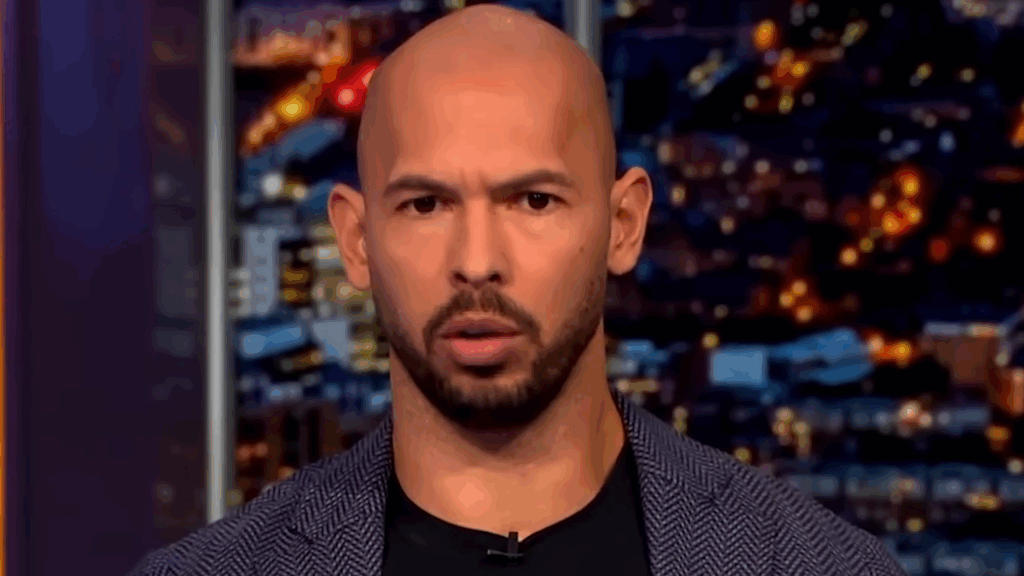
Anyone could, in theory, be subjected to a friendly greeting from infamous men who are, among other things, accused of rape and human trafficking.
So why did Fieri respond to them with a fistbump instead of something more hostile, more righteous?
“I did not know them or about them before that moment,” Fieri claimed.
“I’ll never pretend to be a perfect person,” he added.
“But let me be crystal clear,” Fieri declared, “I do not know the Tate brothers nor do I support them in any way.”
I always make this face when I totally don’t know who someone is, who is also under investigation for raping women. pic.twitter.com/KcE0ysAM9F
— Cork Off! (@CorkYou) April 14, 2026
Both Andrew Tate and his brother, Tristan Tate, are facing a slew of allegations.
They’re under investigation for 21 offenses in the UK alone. There are also cases against them in Romania and the United States.
Even without the allegations, the brothers are very publicly disgraceful.
Andrew in particular is notoriously part of the “manosphere,” a toxic online community of the worst influencers alive, promoting misogyny, toxic masculinity, and unrealistic images of success.
Even if they were not accused of rape and human trafficking, Fieri greeting them so warmly would have been a scandal.
And what about this PDF file? pic.twitter.com/ojzf1D6XKD
— The Chicago Pope (@TheChicagoPope) April 15, 2026
As you can see from the small sample of replies that we have included, even denizens of what was once Twitter aren’t buying Fieri’s claims.
Many challenged the idea that he’d so warmly greet men whom he believed to be total strangers.
Others pointed out that, for years, Fieri has made poor choices when it comes to his interactions.
As far back as 2023, he was called out and condemned for normalizing Donald Trump, who at the time was already threatening to retake power.
(Salon did a great piece on Fieri at the time, and it’s worth a read.)
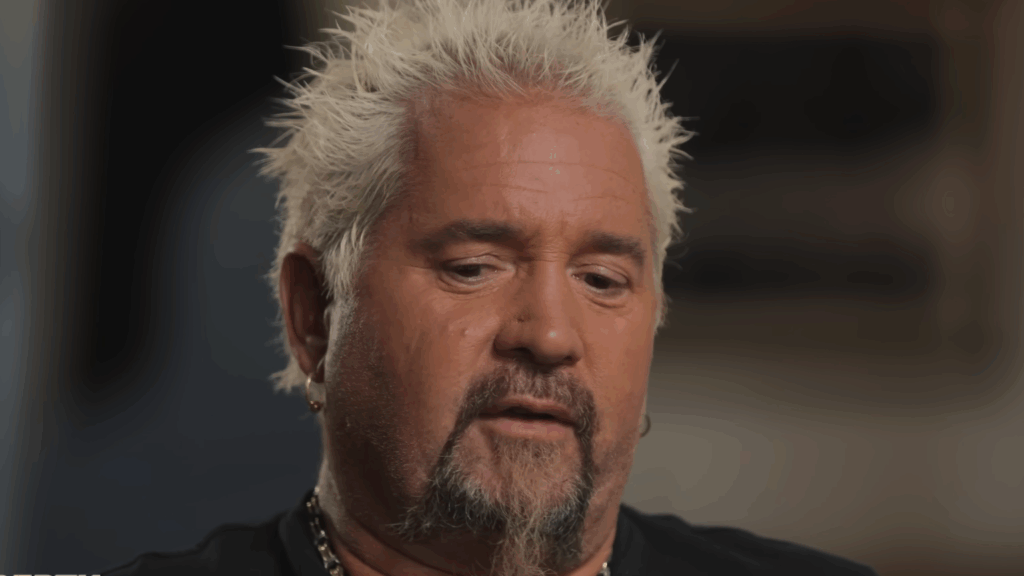
Real talk: it is entirely possible that Fieri has no idea who Andrew and Tristan Tate are.
(Can you imagine? We like to be aware of the threats that exist out there, but we’re also deeply envious on some levels.)
Fieri was born in the 1960s. In fact, he’ll be 60 in a couple of years. He might not know two influencers who primarily target teenage boys with their sinister grift.
However, this again goes to the problem of Fieri’s lack of overall judgment. The same thing that’s gotten him into trouble for associating with other scumbags, like Trump.
Simply put, we get wanting to be seen as the friendly guy who’s nice to everyone. But if you’re open and friendly to everyone, you will drive some people away. Some people — like the Tate brothers — are undeserving of human kindness.
Guy Fieri ‘Devastated’ By Backlash Over Andrew Tate Greeting: I Didn’t … was originally published on The Hollywood Gossip.
The Hollywood Gossip

Democrats running for the Senate posted some massive fundraising hauls in the first quarter.
The most striking number so far came from Texas. James Talarico brought in an eye-popping $27 million over the past three months, his campaign announced Wednesday morning ahead of today’s Federal Election Commission deadline, including $10 million since he won his March 3 primary.
Georgia Sen. Jon Ossoff raised more than $14 million in the first quarter, according to his campaign. In North Carolina, former Gov. Roy Cooper raised $13.8 million. In Alaska, former Rep. Mary Peltola brought in $8.9 million, while former Ohio Sen. Sherrod Brown raised $12.5 million in his comeback bid.
The hauls, several of which set records in their respective states, underscore how Democrats are feeling increasingly bullish about their ability to flip the Senate. While Democrats still face an uphill climb due to the red lean of many states on the Senate map, President Donald Trump’s tanking approval ratings and the unpopularity of the ongoing war in Iran has the party feeling optimistic ahead of the midterms.
Democrats facing competitive primaries did not report as strong numbers, as donors split among several candidates. In Michigan, state Sen. Mallory McMorrow brought in $3 million, slightly ahead of Abdul El-Sayed’s $2.2 million. Rep. Haley Stevens, the third candidate in the race, has not yet revealed her fundraising numbers ahead of the FEC deadline on Wednesday. Iowa’s two Democratic candidates, state Rep. Josh Turek and state Sen. Zach Wahls, each raised $1.1 million in the past quarter.
Politics
Thomas Rhett’s next project will be a little different from anything you’ve ever heard from him before. Continue reading…The Boot – Country Music News, Music Videos and Songs
Thomas Rhett’s next project will be a little different from anything you’ve ever heard from him before. Continue reading…Country Music News – Taste of Country

The entrance to the Anchorage Forestry Science Laboratory is seen on April 2, 2026. The lab serves state agencies, Native corporations and private industry as well as federal agencies. The lab, in Anchorage’s Ship Creek neighborhood, is on a list of U.S. Forest Service facilities that the Trump administration plans to close. (Photo by Yereth Rosen/Alaska Beacon)
Two weeks after the Trump administration announced a U.S. Forest Service “restructuring” that would close regional offices and most of the agency’s research facilities, impacts to Alaska – home to the two largest U.S. national forests – remain unclear.
The U.S. Department of Agriculture announced on March 31 that the Forest Service’s national headquarters will move to Utah and that many of its facilities will be shuttered. Among the facilities on the closure list were two that are important to Alaska: the Anchorage Forestry Sciences Laboratory and the Oregon-based Pacific Northwest Research Station in Portland.
But other impacts on the 17-million-acre Tongass National Forest and the 5.4-million-acre Chugach National Forest were not disclosed.
A statement from the Forest Service headquarters provided few details about the Tongass, the Chugach or the visitor and recreational facilities located in either forest.
“The transition will occur in phases. Employees will receive clear information about relocation timelines, available options, and resources to support their decisions,” the statement said. “The number of relocations beyond those already identified in the National Capital Region is unknown at this time.”
U.S. Agriculture Department Secretary Brooke Rollins, whose department oversees the Forest Service, outlined the restructuring plan last year. In a July 24, 2025, memo, she said the plan included the replacement of the Alaska regional office with “a reduced state office in Juneau.” The state capital is currently the site of the Alaska regional office managing both the Tongass and the Chugach.

Alaska has Forest Service facilities throughout the Tongass and Chugach regions, from the southern tip of the Southeast to Anchorage.
Sen. Lisa Murkowski, R-Alaska, is also trying to learn about impacts to Alaska, a spokesperson said.
The senator and her staff are in a “fact-finding” mode and preparing to mount a “defense of the Forest Service in Alaska and make sure the employees are able to continue the good work that they’re currently doing,” said Murkowski spokesperson Joe Plesha.
The issue is expected to be managed through the Congressional appropriations process, Plesha said.
Murkowski is on the Senate Appropriations Committee and chairs the appropriations subcommittee on the Department of the Interior, Environment and Related Agencies.
The Anchorage lab that is scheduled for closure is located in the Ship Creek district of downtown Anchorage. It supports research in the Tongass National Forest, which is the nation’s largest, and the Chugach National Forest, the second largest. It also supports research on forests elsewhere, from the boreal forests of Interior Alaska to those on tiny tropical Pacific islands like Guam and Micronesia.
The lab is used not just by Forest Service scientists but by other federal agencies, state agencies, Native corporations, University of Alaska researchers and private industry, according to its website.

Up to now, the lab has had a year-round staff of about 22 scientists and administrative workers, but the numbers increase during summer field seasons.
The planned closure of the century-old Pacific Northwest Research Station in Oregon is part of a consolidation of research functions into a single site in Fort Collins, Colorado.
The Pacific Northwest facility, with about 250 employees, has an affiliated lab in Juneau. The fate of the Juneau lab remains unknown.
Among the Alaska projects undertaken by the Pacific Northwest Research station, sometimes with partner organizations, is study of the decline of yellow cedar in the Tongass and adjacent regions in the southeastern part of the state; the status of birds and rare plants in the Tongass; the study of rural Alaskans’ access to wild foods in the Chugach National Forest and the surrounding region; and the monitoring of human recreation’s impacts on brown bears.
The Forest Service closure plans follow deep cuts already made by the Trump administration’s Department of Government Efficiency, or DOGE. In the first half of 2025, the Forest Service lost 5,860 of its 35,550 employees, according to a Dec. 17, 2025, report by the Agriculture Department’s inspector general.
That includes losses in Alaska. As of January, Alaska’s Forest Service workforce was down to 467 from the total of about 700 before the DOGE-imposed cuts began, KTOO reported in January.
SUPPORT: YOU MAKE OUR WORK POSSIBLE

Most of the blue-chip prospects in this year’s draft class are defensive players. So, where will they land? Here’s my projection for 10 of the top defenders, all of whom could hear their names called on Day 1 of the draft next Thursday: EDGE/LB Arvell Reese (Ohio State): New York Jets 2025 stats (14 games): 6.5 sacks, 69 tackles (10.0 for loss), 2 pass breakupsMeasurables: 6-foot-4, 241 pounds Reese, a hybrid edge rusher/linebacker, helps the Jets in the pass-rush department — New York traded edge Jermaine Johnson II in March and Pro Bowl defensive tackle Quinnen Williams last November — but the former Ohio State star could step in at inside linebacker as needed, too. The Jets’ projected starters there are 37-year-old Demario Davis and former fifth-rounder Kiko Mauigoa. Projected draft slot: No. 2 overall EDGE David Bailey (Texas Tech): Arizona Cardinals 2025 stats (14 games): 14.5 sacks, 19.5 tackles for loss, 3 PBUs, 3 forced fumblesMeasurables: 6-foot-4, 251 pounds The best pure edge rusher in this year’s draft class, Bailey could form a lethal outside linebacker tandem with veteran Josh Sweat (12.0 sacks last season). Sweat is the only returning Cardinal who had more than two sacks last season. Projected draft slot: No. 3 overall LB Sonny Styles (Ohio State): New York Giants 2025 stats (14 games): 82 tackles (6.5 for loss), 1 INT, 1 sack, 1 FFMeasurables: 6-foot-5, 244 pounds The Giants had the second-worst run defense in the NFL last season (145.3 rushing yards allowed/game), so Styles would slot in alongside free-agent acquisition Tremaine Edmunds to man the present and future of New York’s linebacker spot. A converted safety, Styles is a plus player in coverage, too. Projected draft slot: No. 5 overall S Caleb Downs (Ohio State): Washington Commanders 2025 stats (14 games): 68 tackles (5.0 for loss), 2 INTs, 2 FFs, 1 sackMeasurables: 6 feet, 206 pounds Downs, arguably the best overall player in the draft, would instantly be a weapon and a Swiss army knife in Dan Quinn’s secondary. The Commanders signed veteran safety Nick Cross in free agency, but he doesn’t have a guaranteed salary in 2027. Projected draft slot: No. 7 overall CB Mansoor Delane (LSU): Kansas City Chiefs 2025 stats (11 games): 45 tackles, 2 INTs, 11 PBUsMeasurables: 6 feet, 187 pounds The best cornerback in the 2026 class, Delane could be Kansas City’s CB1 immediately. This offseason, the Chiefs traded All-Pro Trent McDuffie and lost fellow starter Jaylen Watson in free agency, both to the Rams. Projected draft slot: No. 9 overall EDGE Rueben Bain Jr. (Miami): Cincinnati Bengals 2025 stats (16 games): 9.5 sacks, 15.5 tackles for loss, 1 INT, 1 FFMeasurables: 6-foot-2, 263 pounds Bain could become the long-term No. 1 edge rusher the Bengals need post-Trey Hendrickson. Cincinnati signed Boye Mafe as a big-ticket free agent, but he had just two sacks in 17 games last season for the Seahawks. Former first-round picks Myles Murphy and Shemar Stewart combined for just 6.5 sacks in 2025. The recent revelation that Bain was involved in a 2024 car accident in which a person later died could impact his draft slot, but he’s a top-five talent. Projected draft slot: No. 10 overall DL Akheem Mesidor (Miami): Tampa Bay Buccaneers 2025 stats (15 games): 12.5 sacks, 17.5 tackles for loss, 4 FFsMeasurables: 6-foot-3, 259 pounds The Bucs signed veteran Al-Quadin Muhammad in free agency but still need a young edge rusher in the fold. Mesidor would not only bring production (12.5 sacks for Miami last season) but also the versatility to play multiple spots. Plus, with six years of college experience, he’s more experienced than the typical rookie. Projected draft slot: No. 15 overall S Dillon Thieneman (Oregon): Minnesota Vikings 2025 stats (15 games): 96 tackles, 2 INTs, 5 PBUsMeasurables: 6 feet, 201 pounds Thieneman, one of the top safeties in this year’s draft class, feels like the perfect replacement on paper for Vikings legend Harrison Smith, who’s contemplating retirement. With eight interceptions in college and safety/nickel versatility, Thieneman could make an impact on Day 1 in Brian Flores’ defense. Projected draft slot: No. 18 overall CB Jermod McCoy (Tennessee): Dallas Cowboys 2025 stats: n/a (injured)Measurables: 6-foot-1, 188 pounds The Cowboys need reinforcements at cornerback, with veteran DaRon Bland coming off season-ending foot surgery in December. McCoy missed his final season at Tennessee due to a torn ACL, so Dallas may have to be patient with him. But he’s a CB1 talent, having registered six interceptions and 16 pass breakups across 2023 (at Oregon State) and ‘24. Projected draft slot: No. 20 overall [2026 NFL Draft Big Board: Top 150 Overall Prospects] S Emmanuel McNeil-Warren (Toledo): Chicago Bears 2025 stats (13 games): 77 tackles (5.5 for loss), 2 INTs (1 pick-6), 5 PBUs, 3 FFsMeasurables: 6-foot-3, 201 pounds After letting Kevin Byard and Jaquan Brisker walk in free agency, the Bears can’t be content at safety even after signing ex-Seahawk Coby Bryant. McNeil-Warren will bring playmaking potential to Chicago’s back end, as he recorded five interceptions and nine forced fumbles in his college career. Projected draft slot: No. 25 overallLatest Sports News from FOX Sports