Categories
Featured Juneau News juneau Juneau Local Juneau Local News Feeds

After historic education funding increase, some Alaska lawmakers aim to boost the BSA again

By: Corinne Smith, Alaska Beacon
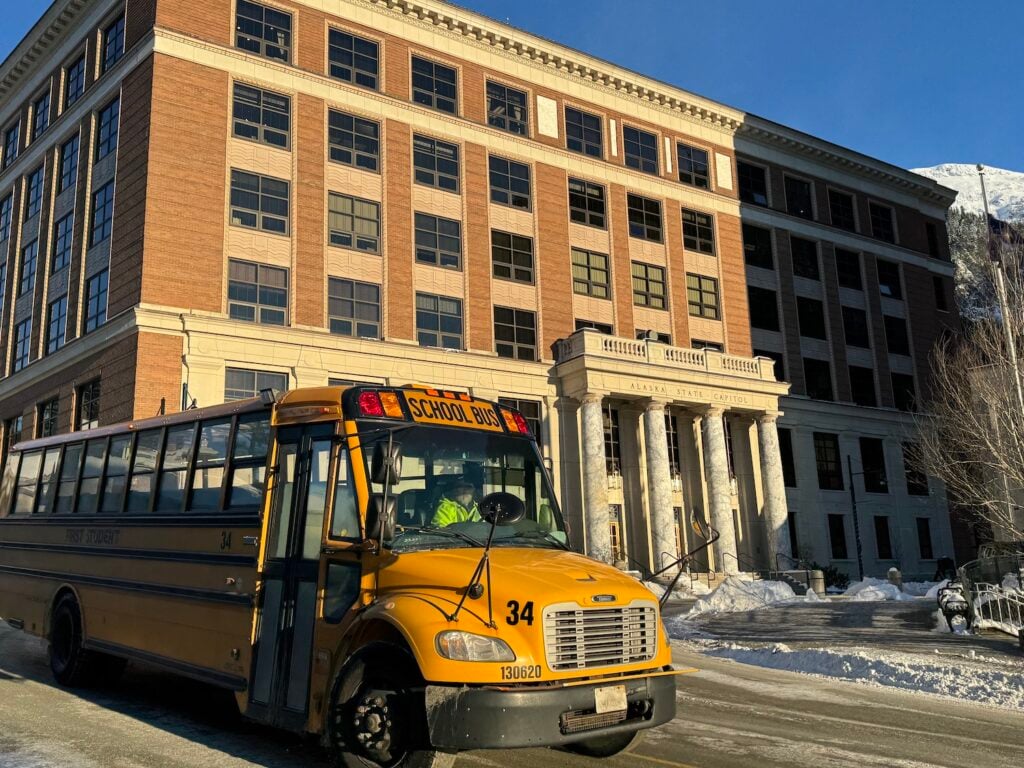
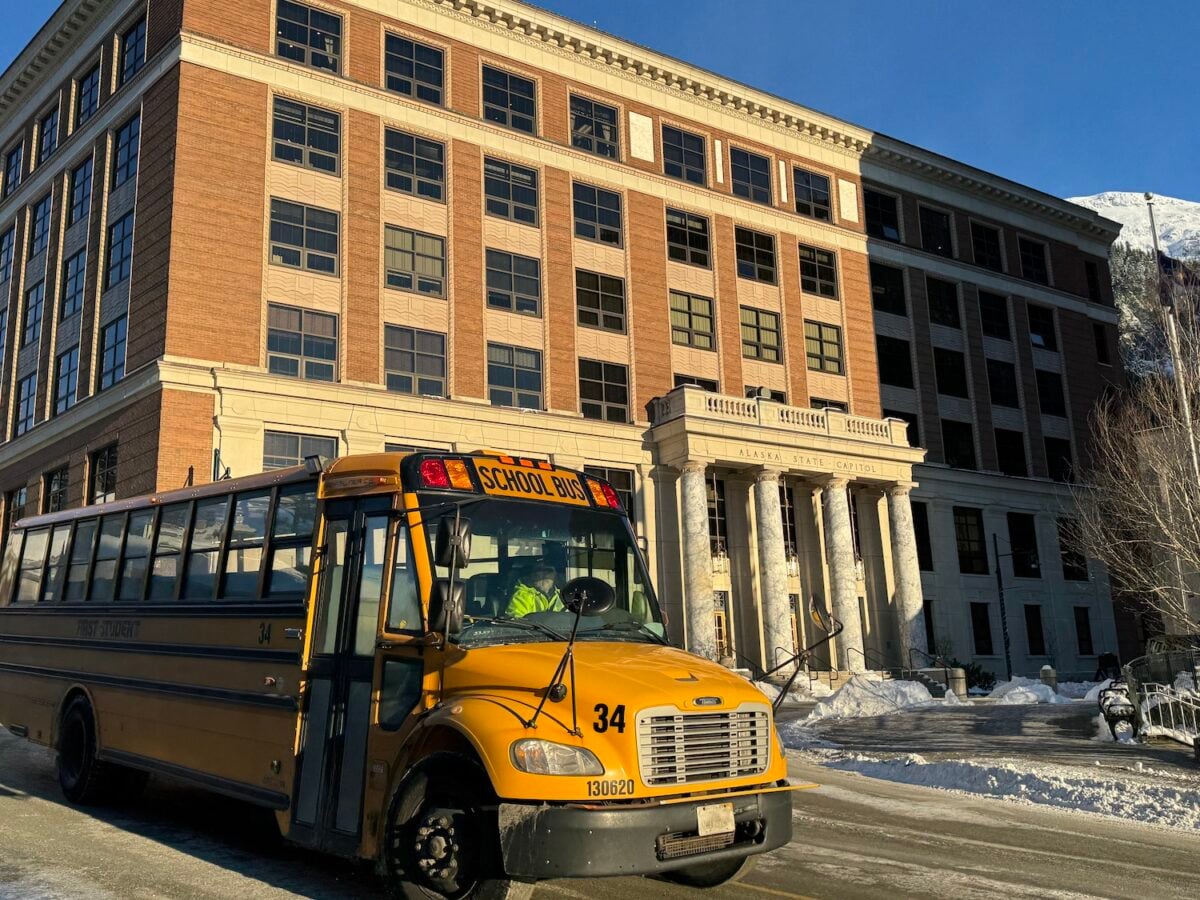
A school bus drives in front of the Alaska State Capitol on Monday, Feb. 3, 2025. (Photo by James Brooks/Alaska Beacon)

Alaska lawmakers introduced new legislation in the House of Representatives that would raise the state’s per student funding for schools. They say it is critical to help school districts struggling with rising costs and ballooning deficits. 

The House Education Committee introduced House Bill 374 on Wednesday. It would raise the state’s per student funding, known as the base student allocation, by $630 per student. That would increase the current per student total — from  $6,660 to $7,290. Lawmakers increased the BSA by $700 per student last year.

“We can’t lose ground right now,” said Rep. Rebecca Himschoot, I-Sitka and co-chair of the House Education Committee on Wednesday. “We continue to look at all the different ways to support the schools, and the BSA is one way to do it.”

Rep. Rebecca Himschoot, I-Sitka, speaks in favor of a veto override on House Bill 69 on Tuesday, April 22, 2025. (Photo by James Brooks/Alaska Beacon)

The education funding increase would total $158.6 million statewide, and Himschoot said it would offer districts more stability by raising funds within the state’s complex funding formula. 

Rep. DeLena Johnson, R-Palmer and House Minority Leader, expressed skepticism at adding state funding for schools this year. “No discussion about adding additional money can be had without deciding what program you want to cut,” she said Wednesday. 

Himschoot said lawmakers decided on the $630 per student figure after assessing the current budget deficits of the state’s five largest districts by student population. The proposed funding increase would provide a partial stopgap for those budget shortfalls.

The Anchorage School District is facing a $90 million budget deficit, and is advancing plans to close three schools and cut 500 teachers and staff. The Matanuska-Susitna Borough School District is confronting a $23 million deficit, and considering closing three schools. The Kenai Peninsula Borough School District is looking at an $8.5 million budget shortfall and considering ways to cut costs. The Juneau School District has a $6.7 million budget shortfall.

Pearl Creek Elementary School is seen on June 3, 2025. The Fairbanks North Star Borough School District decided to close the school at the end of the academic year. (Photo by Yereth Rosen/Alaska Beacon)

While the Fairbanks North Star Borough School District has a current budget surplus of $2.5 million this year, that comes after it closed three schools last year — totaling seven school closures in the last five years, Himschoot noted. 

“They have class sizes approaching 40 in the high school and 26 in their elementary schools even now. And they’ve downsized a lot of different staff, including a total of 300 teaching positions since 2019,” she said. “So they’ve had to do … some challenging things in their district to get to the black.”

Himschoot noted the state has revenue challenges but said lawmakers should make education a priority. 

Last year, lawmakers faced a bitter political battle with Gov. Mike Dunleavy who twice vetoed education funding increases, citing the need for education policy changes to improve student outcomes. Lawmakers overrode Dunleavy’s veto and passed a $700 per student increase with some policy items, but the governor then vetoed its funding. Legislators then returned for a special session and voted to override the budget line veto. That resulted in an additional $51 million for schools.

Alaskans who supported the override of Gov. Mike Dunleavy's education funding veto applaud as legislators leave the House chambers on Saturday, Aug. 2, 2025. (James Brooks photo/Alaska Beacon)
Alaskans who supported the override of Gov. Mike Dunleavy’s education funding veto applaud as legislators leave the House chambers on Saturday, Aug. 2, 2025. (James Brooks photo/Alaska Beacon)

But Dunleavy has said he is dropping his push for education policy changes this year, and focusing on a state fiscal plan and proposed oil and gas development projects.

Minority Leader Johnson, whose district includes the east side of the Matanuska-Susitna Borough, including Palmer, Butte and Lazy Mountain, said after the funding increase last year districts should manage their budgets accordingly.

“We added a significant amount of money last year,” she said. “I think that we need to take a little while to let the districts figure out what they actually need, and let that money go through the process. If they have to make corrections, I don’t know what to say — if they have to close schools — they have to do whatever they have to do to manage their budget.”

Newly appointed House Minority Leader Rep. DeLena Johnson, R-Anchorage and House Minority Whip Rep. Justin Ruffridge speak with reporters on the first day of the second session of the 34th Legislature on Jan. 20, 2026 (Photo by Corinne Smith/Alaska Beacon)

Johnson expressed concern that the state is reckoning with a projected deficit, as lawmakers await a state revenue forecast due out in March. “We’re in deficit spending, and I don’t know where the money’s going to come from. And I think we need to have a lot more data on school spending,” she said. 

School officials, teachers and students have testified to the House Education Committee this year that state funding has not kept pace with classroom needs, particularly with rising costs for keeping schools open, including fuel, insurance and transportation, as well as deteriorating school facilities. 

The proposed state education funding increase would help fill some of those gaps, and prevent more severe cuts to teachers and classrooms, said Rep. Andi Story, D-Juneau.

“I want families to know that we care about education in the state of Alaska, and you can raise your kids here and they’re going to have a decent education. And so I think we have to seriously look at what investment is that going to take from the state,” she said Wednesday. 

Himschoot said that BSA increase is one important step, and lawmakers are open to negotiating with members of the minority caucuses and the governor’s office to make it happen. “Everyone has schools in their district,” she said. “People call it a fight for the BSA. I prefer to call it a dance.”


Categories
Entertainment

The Great Depression Meal That Took A Jab At President Hoover

President Hoover was not popular during the Great Depression. This one dish was served in soup kitchens to prevent people from going hungry.

​Mashed – Fast Food, Celebrity Chefs, Grocery, Reviews

Categories
Music

Megan Moroney Performs ‘Medicine’ On ‘The Tonight Show’ Following ‘Cloud 9’ Billboard 200 Debut At No. 1

Megan Moroney gave fans a dose of her own “Medicine” with a performance of the fan-favorite track from her brand new, Billboard 200 chart-topping album, Cloud 9, on The Tonight Show Starring Jimmy Fallon.

Moroney made her way to the Big Apple for the appearance, delivering a confident and sass-filled rendition of the song, which she co-wrote alongside Connie Harrington, Jessie Jo Dillon, and Jessi Alexander. The Tonight Show stage was transformed into the all-pink Cloud 9 Pharmacy, complete with pill bottles lining the walls, as she performed the cheeky tune about giving a man who’s done her wrong a taste of his own medicine.

Megan Moroney; Photo by: Todd Owyoung/NBC

“Is it bitter going down, down, down?/ You don’t like it too much, do you? Coming back around, ’round, ’round/ Ain’t as fun when it’s happening to you/ Oh, poor, poor you/ Now, who’s the fool? Say I’m messing with your head again/ Well, how you like the taste of your own medicine?,” she playfully sang on the chorus while plucking her rhinestone-studded acoustic guitar.

“Medicine” stands out among the songs on Cloud 9 with its playful storytelling, upbeat melody, and country-leaning instrumentals.

The Georgia native’s Tonight Show performance comes on the heels of the biggest week of Moroney’s career, as Cloud 9 debuted at No. 1 on the Billboard 200, a history-making feat for women in country music. The project opened with an impressive 147,000 equivalent album units, marking not only Moroney’s best first-week sales to date, but also the highest first-week total consumption for any country artist so far in 2026.

“Not to be cliche but I’m on cloud 9!” Moroney exclaims. “I have to give credit to my fans, they’re the best in the world. To have them embrace an album like this is a dream come true. I can’t wait till we’re screaming these songs together on THE CLOUD 9 TOUR!”

Megan Moroney; Photo by: Todd Owyoung/NBC

With Cloud 9, Moroney proves she’s a bona fide superstar, delivering the full package with sharp wit, raw emotion, and lyrics that feel instantly relatable.

To celebrate the release of the project, Moroney hit the road for a whirlwind run of pop-up shows, visiting nine cities in nine days and offering fans the chance to see her in intimate venues with $9 tickets.

Photo Courtesy of Megan Moroney

The excitement surrounding Cloud 9 is set to continue with the launch of Megan Moroney’s highly anticipated THE CLOUD 9 TOUR, a massive global run kicking off May 29 and extending through October 2026.

The 43-date trek will take the Emo Cowgirl to major arenas across North America, Europe, and the UK, with stops at iconic venues like New York City’s Barclays Center, Los Angeles’ Crypto.com Arena, Chicago’s United Center, and Nashville’s Bridgestone Arena. With most dates already sold out, the tour is shaping up to be one of the hottest tickets of 2026

The post Megan Moroney Performs ‘Medicine’ On ‘The Tonight Show’ Following ‘Cloud 9’ Billboard 200 Debut At No. 1 appeared first on Country Now.

​Country Now

Categories
Entertainment

Review: I Tried Chick-Fil-A’s New Spring Menu And One Item Kicks The Classics To The Curb

Chick-fil-A is rolling out a new spring menu that mixes heat and sweet. The new additions shine, but one item in particular really takes the spotlight.

​Mashed – Fast Food, Celebrity Chefs, Grocery, Reviews

Categories
Music

Faster Horses Canceled For the Second Consecutive Year

When they canceled Faster Horses last year, organizers framed the decision as taking a break. But in 2026, their announcement feels a little more final. Continue reading…​The Boot – Country Music News, Music Videos and Songs

Categories
Entertainment

‘Broke’ Josh Duggar Gets R. Kelly Attorney to Take His Case

Reading Time: 3 minutes

Where did he get the money?

Josh Duggar claims to be broke in prison, receiving nothing from his infamous family.

He has been representing himself pro se as he attempts to weasel out of his sentence.

But now, Josh has hired an R. Kelly defense attorney to take up his cause.

Josh Duggar's Post-Conviction Mug Shot
Josh Duggar will be stuck behind federal bars for a VERY long time. No one feels sorry for him. (Image Credit: NBC)

New attorney, same creep

Beau Brindley was part of R. Kelly’s defense team.

While the disgraced rapper remains incarcerated, serving his combined 31-year sentence at FCI Butner, Josh is hoping for a different outcome.

On Tuesday, March 3, Brindley filed to notify the court of his appearance.

He has been retained by Josh for his upcoming hearing (which initially would have taken place on March 4 prior to its postponement).

Brindley also filed a Pro Hac Vice motion. This means that he is representing the fallen reality star just this once — despite being licensed in Illinois but not having taken the bar in Arkansas.

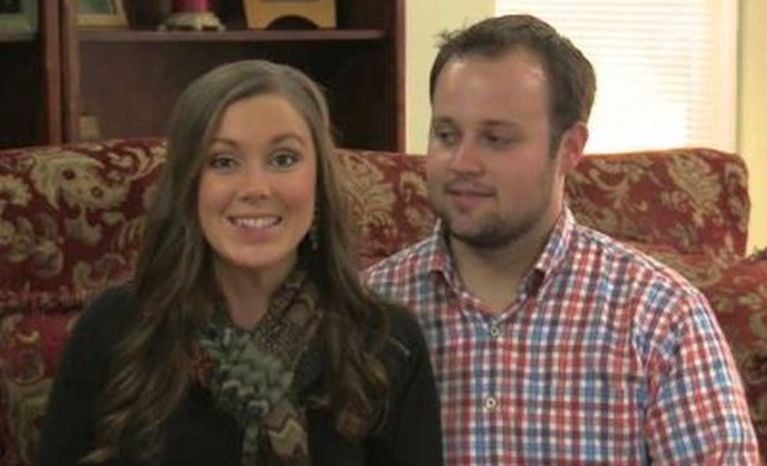
Josh Duggar and Anna Duggar on 19 Kids and Counting.
There was a time when TLC’s cameras caught Josh Duggar pretending to be an upstanding man and a good husband to Anna Duggar. Those were lies. (Image Credit: TLC)

The delay in the hearing was by Brindley’s request.

He had asked the court for a continuance.

Brindley explained that he is seeking “additional time to review the case materials and familiarize himself with the issues.”

There are no indications that anyone raised any objections.

That makes sense. No matter when the hearing takes place, Josh remains behind bars where he belongs.

Josh Duggar in an ugly yellow polo shirt on 19 Kids and Counting.
During his time on TLC’s 19 Kids and Counting, Josh Duggar was hiding dark secrets. (Image Credit: TLC)

He wants out

Josh has been fighting tooth and nail to worm his way out of prison, one way or the other.

He’s come up with argument after argument that he should get to walk free.

Josh has even gone so far as to claim that his trial violated his legal rights — by allowing testimony about his prior bad acts.

The bad acts in question? Molesting five young girls, four of whom were his own sisters.

If he’d stolen a car, that would be totally irrelevant. But considering that he was on trial for receiving and possessing CSAM — photos and video of young girls being sexually abused — it doesn’t sound irrelevant.

Josh and Anna Duggar on the now-defunct TLC reality show 19 Kids and Counting.
Josh and Anna Duggar on the now-defunct TLC reality show 19 Kids and Counting. (Image Credit: TLC)

But then, we’re not legal scholars. What do we know?

Josh doesn’t seem to be a legal scholar either.

One of his latest pieces of jailhouse legal drama has been allegedly mailing his documents to the wrong place.

Remember, Josh previously asked the taxpayers to pay for a new, free attorney for his endless appeals and legal challenges.

Josh did have attorneys for his initial appeals. Sadly, since he isn’t on death row, that’s where the right to a court-appointed attorney generally ends.

Now-disgraced criminal Josh Duggar sits beside wife Anna Duggar on 19 Kids and Counting.
Now-disgraced criminal Josh Duggar sits beside wife Anna Duggar on 19 Kids and Counting. (Image Credit: TLC)

Who’s paying for this?

Whether Brindley is there to help Josh with his mail issues or more, there are questions of how he managed to pull this off.

Sometimes, attorneys will work pro bono — usually for high-profile cases but sometimes for charitable reasons.

Josh’s endless appeals (and current fight about mail addresses) probably aren’t high profile enough to warrant free services. And Josh is fundamentally undeserving of charity.

Did Jim Bob throw Josh a bone, and shower Brindley with some cash to help Josh sort things out?

Or did Anna use her apparent business success to aid her husband’s hopefully futile struggle?

The world can only speculate until we know more. No matter what, the answer cannot be good.

‘Broke’ Josh Duggar Gets R. Kelly Attorney to Take His Case was originally published on The Hollywood Gossip.

​The Hollywood Gossip

Categories
Music

Marshals May Reveal Yellowstone Dutton Family’s Dirtiest Secrets

Episode 2 of Marshals promises to reveal a few Dutton family skeletons, perhaps literally. Continue reading…​The Boot – Country Music News, Music Videos and Songs

Categories
Entertainment

Nancy Guthrie May Have Been Kidnapped By Mexican Cartel: Report

Reading Time: 2 minutes

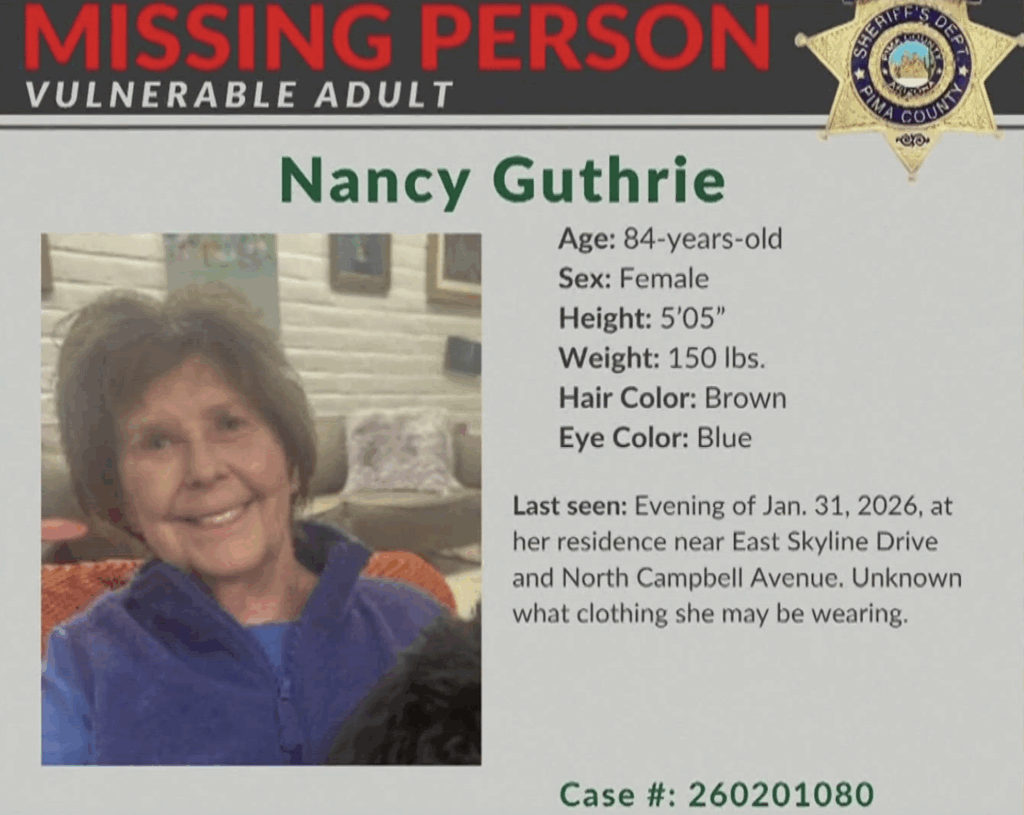
It’s been over a month since Nancy Guthrie went missing from her home in Tucson.

Her loved ones remain optimistic about the possibility that she’ll be found alive, but their hopes are likely diminishing by the day.

Now, a new theory has emerged about the identity and motive of the captors.

Savannah and Nancy Guthrie during one of Nancy's many guest appearances on the 'Today' show.
Savannah and Nancy Guthrie during one of Nancy’s many guest appearances on the Today show. (YouTube)

Five weeks after Nancy’s disappearance, police appear to be no closer to identifying a suspect.

One informant claims to have seen her in Mexico, and that’s not the only reason to believe that she may be a victim of cartel violence, one source claims.

“This is a likely – and sadly – worst case scenario,” a source identified as a former New York Police Department lawman turned criminal defense attorney tells Radar Online.

“Kidnappings are a business strategy for the cartels. The horrific treatment of their captives is well-documented and more often than not — deadly,” the expert added.

The source went on to state that if Nancy was kidnapped by the cartels, then it is paramount that the family meet their demands as quickly as possible.

Nancy and Savannah Guthrie on the set of the 'Today' show.
Nancy and Savannah Guthrie on the set of the Today show. (NBC/YouTube)

“Speed is of the essence,” the attorney added.

“If the cartels have her, police need to pinpoint her location for rescue — or pay off their ransom demands as quickly as possible. If they don’t, this story won’t have a happy ending.”

The Guthries have received several ransom notes, but have yet to pay the $6 million in Bitcoin demanded by the people claiming to be Nancy’s kidnappers.

Part of the problem is that the Guthrie’s requests for additional information — including proof that Nancy is still alive — have fallen on deaf ears.

It remains unclear if the notes were legitimate or merely a hoax.

Nancy Guthrie is still missing, several days after being taken from her home.
Nancy Guthrie is still missing, several days after being taken from her home. (YouTube)

Another source suggested that the kidnapping may have been an act of retaliation based on US foreign policy.

“This could’ve been retaliation against the United States’ attacks on the cartel’s distribution boats in the Caribbean and affecting their fentanyl trade,” private investigator Jason Jensen told Radar.

Whatever the case, Nancy remains missing, and her loved ones are getting more desperate for answers with each passing day.

Today show anchor Savannah Guthrie has made several public pleas for information, but thus far, it seems that this case is no closer to being solved.

We will have further updates on this developing story as new information becomes available.

Nancy Guthrie May Have Been Kidnapped By Mexican Cartel: Report was originally published on The Hollywood Gossip.

​The Hollywood Gossip

Categories
Uncategorized

Operational secrecy kept the US from making evacuation plans – and that means Americans in the Mideast could wait days

Canceled flights due to the Iran war have made it difficult for Americans to leave countries in the Middle East. Marcin Golba/NurPhoto via Getty Images

As the U.S. and Israel launched strikes on Iran, American citizens living in or visiting the Middle East found themselves stranded in countries facing bombing attacks by Iran. The State Department on March 2, 2026, urged Americans in 14 Middle Eastern countries to leave via “available commercial transportation, due to serious safety risks.” But commercial air travel and airports were shut down in many of those places and the U.S. wasn’t offering to evacuate its citizens.

Media reports featuring frustrated and frightened Americans stuck in places where danger was mounting, as well as growing criticism that the U.S. hadn’t handled the situation well or according to normal procedure, led the State Department to scramble and send charter flights to evacuate U.S. nationals from a handful of countries.

The Conversation’s politics editor Naomi Schalit interviewed former ambassador Donald Heflin, a veteran diplomat who now teaches at Tufts University’s Fletcher School, to understand how such situations are normally handled – and how the current situation diverged from longstanding practices.

A Facebook post with a message from the State Department on March 3, 2026, urging 'Americans to DEPART NOW' from the countries listed.
A Facebook post from the U.S. State Department on March 3, 2026, urging ‘Americans to DEPART NOW’ from the countries listed.
Facebook

What is the customary way that the United States and the State Department deal with U.S. nationals who are abroad in an area that becomes dangerous?

Over my 35-year career, I was ambassador to a small country and I worked a lot on African affairs. But most of my time was spent in consular affairs, which is the part of the State Department that does this work. And over the last 20 or 30 years, we’ve made a lot of progress. We’ve developed a model that works pretty well.

When you’re in a country with instability, what you want to do is to get the population of Americans down as small as you can. So the first thing that happens is you have some instability, and you tell Americans, “Listen, we advise against traveling here.” See if you can discourage everybody except missionaries or people whose employers really want them to go there to make money or people visiting family members, but get rid of the casual tourist.

Then, a little more time goes by and things start to get bad, and you say, “You should consider leaving.” And then, a little while later, the embassy gives its own employees and their families what they call “authorized departure,” which is, “It’s OK for you to go back to the U.S., and in fact we’ll help pay for it.” And we tell the public that, and we hope that that’ll help spur more people to leave.

And the step after that?

Next step: We order departure, where we tell parts of the embassy, “You’ve got to go home. You can’t make the decision to stay here, you and your kids go home.” And we tell the public that, and hopefully that makes the number of Americans remaining in the country smaller and smaller.

Then – and it doesn’t always happen – the last step is we evacuate. We say, “We’re getting our people out of here on planes, we’ve got space for you on the planes, you should have listened to us before.”

That’s the standard model. Unfortunately, it didn’t get followed very well this week.

What did you see this week, and how did it diverge from the normal procedure?

We went from zero to 60 very quickly. Look, the Mideast is unstable on a good day, but there had not been a new instability where people should be getting scared and going home. And then what happened was we launched the attack, and all of a sudden there was that instability.

Logically, you would think, there were two places that Americans should be getting out of. One was Iran, where we’ve told people not to be for many years. The other was Israel, because Israel is going to be attacked.

But no, the Iranians attacked over half a dozen countries. So now, all of a sudden, you’ve got Americans who feel unsafe in places that have never really been considered unsafe, like Oman, Cyprus or Turkey.

So now you have a long list of countries where you want to encourage Americans to leave and where they want to leave. There’s some demand, and you haven’t got that drawdown, where it makes things smaller, and also you haven’t done anything about arranging charter flights or military flights to get them out. So they’re going to have to stay where they are and feel unsafe for X number of days.

That’s when this started generating news stories.

This led to lot of people calling a member of Congress, a lot of people talking to the press, saying, “We got to get us out of here.” That’ll continue until the evacuation is arranged. There’s a bit of an analogy to COVID. When COVID first took off, we had a lot of Americans stuck overseas. They wanted to get home to their families. They figured U.S. health care to be the best that’s available, and it took us awhile to arrange charter flights. It was a very expensive process to get everybody home. They just kind of had to hunker down. That’s where we are right now.

On March 3, 2026, the State Department’s recorded message said the U.S. couldn’t help evacuate nationals in the Mideast; a more helpful message appeared the next day.

Do you think this problem that’s being faced by Americans in the Middle East now should have been anticipated by the State Department?

Yes and no. I think a big part of the problem here was that the Trump administration kept the knowledge of the impending attack to a very small circle of people for operational security reasons. You can’t launch a surprise attack if half of Washington knows about it.

You can see a scenario by which a very trusted State Department officer has to eventually talk to a charter plane company about chartering a whole bunch of planes. They’re going to figure out pretty quickly what’s going to happen, and then you’ve got a security leak.

At the same time, I think going back weeks and months, maybe people should have been arranging charter flights and military flights, kind of on spec so that you could flip the switch and get that going right away. They’re kind of starting from scratch this week.

You’ve got people who are stranded, afraid and can’t get on with their lives. What should happen next?

All these Iranian strikes, the casualty numbers aren’t high. So objectively speaking, I think that very few of the Americans over there are in actual, real danger.

But casual tourists do get afraid, and they don’t travel overseas that much. This may be their first time in the Mideast, and all of a sudden this is happening. They want out bad. They’re scared, whether, objectively speaking, they have a good reason to be scared or not. And it’s better for everybody – the U.S. embassy, the host country, for people in Washington – if we get them out of there and get them home.

This will sort itself out. There will be planes, we’ll get all the people out who want to get out, but it’s going to take at least a few days, maybe a week.

The Conversation

Donald Heflin does not work for, consult, own shares in or receive funding from any company or organization that would benefit from this article, and has disclosed no relevant affiliations beyond their academic appointment.

​Politics + Society – The Conversation

Categories
Uncategorized

How Denver’s Northeast Park Hill community reduced youth violence by 75%

The neighborhood had nearly double the youth arrest rate of the other 76 Denver neighborhoods combined. Royalty-free/Getty Images

Northeast Park Hill, a Denver neighborhood, has a long history of violence. During Denver’s summer of violence in the early 1990s, it was considered ground zero for gang conflict.

From the late 1990s through 2014, violent crime in Northeast Park Hill declined from its peak in the early ’90s but remained persistently higher than city averages. In 2016, Northeast Park Hill recorded 1,086 youth arrests per 100,000 young people. The arrest rate for the combination of the other 76 Denver neighborhoods was 513.

With a population of approximately 9,600, 19% of families in the neighborhood lived below the federal poverty line, 39% of residents identified as Black, and 27% identified as Hispanic.

Yet, Northeast Park Hill is also a community defined by collective action. In 2013, residents started organizing in response to a series of violent events. They laid the foundation for an emerging movement committed to rebuilding community safety.

Building on these community strengths, researchers at the University of Colorado Boulder’s Center for the Study and Prevention of Violence partnered with local leaders to implement Communities That Care in 2016. The program is a science-based prevention process designed to help communities use data, evidence and collective action to reduce youth violence.

As a sociologist and director of the Center for the Study and Prevention of Violence, my work examines the root causes of youth violence. I study how community-led, data-driven prevention efforts can reduce risk and build supports that help young people stay safe and connected. Working alongside leaders and residents in Northeast Park Hill, I’ve seen firsthand what’s possible and what their remarkable success can teach all of us.

A welcome change

After just five years, the youth arrest rate in Northeast Park Hill fell to 276 per 100,000 – a 75% reduction.

This drop in youth arrests reflects a decades-long nationwide trend. Across the country as a whole, juvenile arrests peaked in 1996 and then began a steady decline.

But not all neighborhoods benefited equally. To measure the impact of local prevention work in Northeast Park Hill, we compared its arrest rate to a carefully constructed “look-alike” community made up of similar Denver neighborhoods that did not receive the intervention. We found Northeast Park Hill saw a sharper and earlier decline than its comparison community – pointing to an impact beyond national trends and tied to the local interventions.

Impacts of youth violence

Youth violence is a major cause of harm.

This is especially true for urban communities that have endured decades of chronic disinvestment. That includes neglected infrastructure, deteriorating housing and long-standing environmental and health inequities. Such environments often lack the opportunities, resources and support that are essential for healthy youth development.

In the 1960s, Park Hill became a burgeoning mecca for affluent Black families. Redlining, a federal practice that deemed certain minority neighborhoods “hazardous” and denied those residents mortgages and insurance, changed the community. A 9News report looks back at how redlining defined Park Hill.

Young people in these neighborhoods are more likely to face increased exposure to violence and daily challenges associated with navigating violent communities, such as witnessing shootings near their homes and schools. They also face ongoing experiences of marginalization and discrimination. Many young people move through daily life in a constant state of vigilance. Some youth withdraw, carry weapons for protection or turn to substances to cope with chronic anxiety.

Building a prevention infrastructure

As part of Communities That Care, the community formed a prevention coalition of approximately 25 members, known as Park Hill Strong, to guide the work.

Three Black leaders, Troy Grimes, Jonathan McMillan and Dane Washington Sr., who grew up in the neighborhood and experienced the violence of the 1990s firsthand, chaired the coalition.

Following the Communities That Care model, they began by creating a community profile. They used local data, including youth and parent surveys, and neighborhood indicators, such as access to safe parks, after-school programs and healthy foods. The data helped the coalition identify the biggest sources of risk and what protective supports were available in the community.

That data pointed to several factors that increase the likelihood of youth violence. Many youth felt disconnected from their community and had limited supervision or inconsistent support at home. The data also highlighted early and persistent problem behaviors among youth, including aggression and defiance, which can place young people on a pathway toward later violence.

The data also revealed protective supports to build on. It showed that opportunities for young people to participate in positive activities were limited. Community recognition of youths’ healthy and constructive contributions was also low — highlighting important areas for improvement.

Once the profile was complete, the coalition developed a community action plan describing the community prevention strategies the coalition would use to address their prioritized risk and protective factors.

Community-level prevention strategies

The coalition selected three community-level prevention strategies.

First, a youth-led media campaign called the Power of One (PO1) addressed the risk factor of low neighborhood attachment. The campaign challenged the idea that young people themselves are the cause of violence, instead highlighting how decades of redlining, concentrated poverty and limited access to quality schools and jobs have shaped the conditions they are navigating. The campaign also highlighted positive stories about young people and their communities. The Power of One has reached more than 3,000 youth and adults through social media and hosted six community block parties.

Power of One campaign teaser.

Second, the coalition selected Promoting Alternative Thinking Strategies, known as PATHS. This evidence-based program aims to reduce early and persistent problem behaviors. It was implemented in all three of the elementary schools in Northeast Park Hill. PATHS helps students learn social and emotional skills, including managing strong emotions by recognizing when they are feeling angry and using calming strategies before reacting. Strengthening these competencies is associated with lower rates of aggression.

Third, pediatric health care providers identified youth at risk for carrying out future serious violence through the violence, injury protection and risk screening tool. Youth identified as high or medium risk after completing a 14-item screening tool that assesses violence and victimization history and other risk factors are referred to appropriate services. A total of 222 youth ages 10 to 14 were screened between 2016 and 2021.

Funding is in jeopardy

For more than two decades, the Centers for Disease Control and Prevention has funded the National Academic Centers of Excellence in Youth Violence Prevention, which includes programs like ours. But recent CDC funding cuts threaten the continuation of this work.

Since 2000, these efforts have contributed to reductions in violence in communities across the nation, including Chicago; Denver; Flint, Michigan; Richmond, Virginia; and Youngstown, Ohio.

In Flint, community groups mowed and removed trash from vacant lots between 2009 and 2013. The surrounding areas saw 40% fewer assaults and violent crimes between the months of May and September compared to areas surrounding unmaintained lots.

Likewise, in Youngstown, during the summer months from 2016 to 2018, violent crime fell at twice the rate on streets surrounding vacant lots transformed into gardens and play spaces by community residents than on streets where professional mowers did the greening.

Funding for programs like these is critical for neighborhoods where resources are already scarce and the burden of violence has been concentrated for generations. Without continued investment, communities risk losing hard-won gains and the capacity to create safe and supportive environments for young people.

Read more of our stories about Colorado.

The Conversation

Beverly Kingston receives funding from the Centers for Disease Control and Prevention’s National Centers of Excellence in Youth Violence Prevention under Cooperative Agreement Number, 5 U01 CE002757. The findings and conclusions are those of the author and do not necessarily represent the official position of the Centers for Disease Control and Prevention.

​Politics + Society – The Conversation