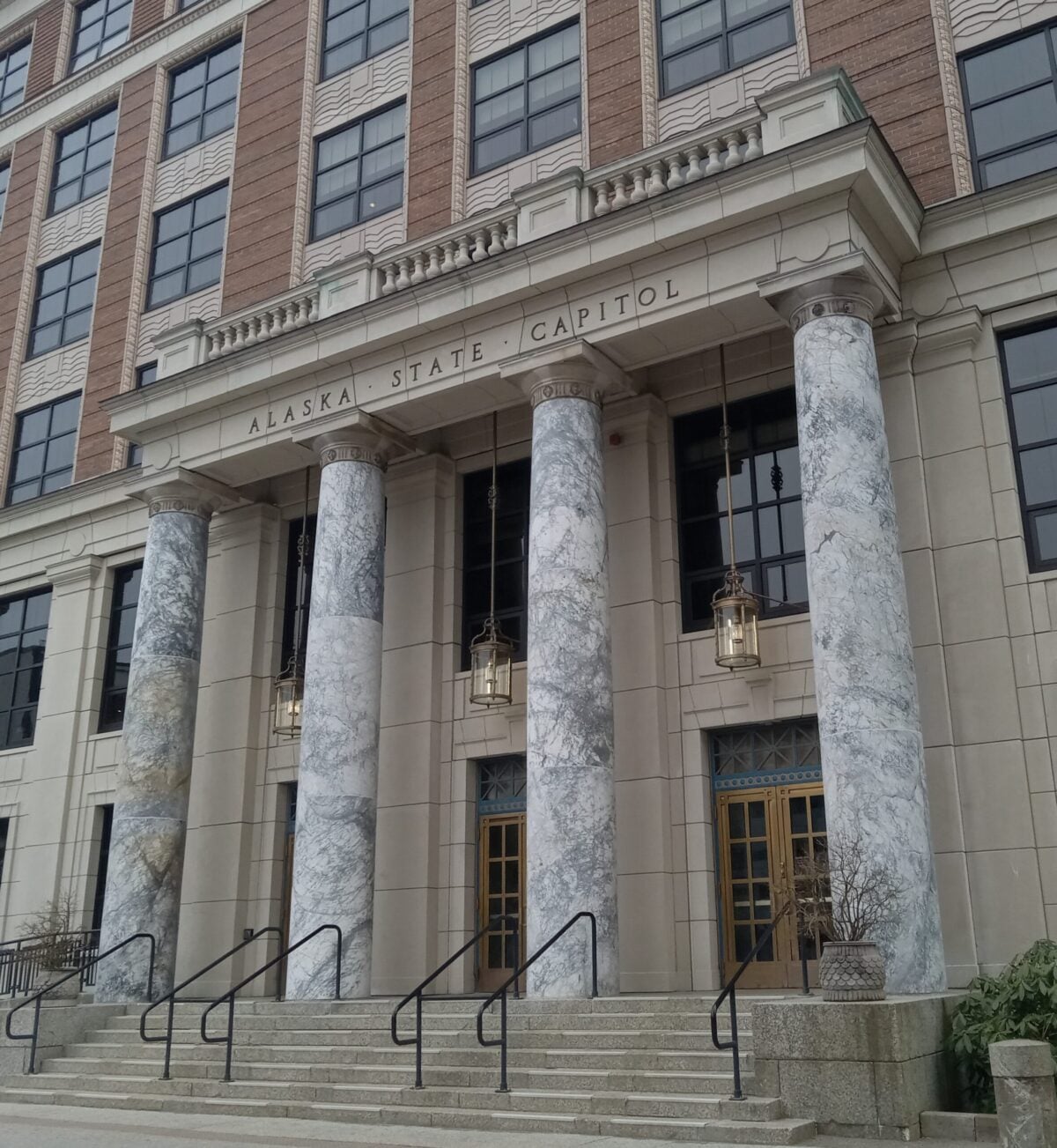
The Alaska State Capitol in downtown Juneau.
(Photo by Greg Knight/News of the North)
The Alaska State Capitol in downtown Juneau. (Photo by Greg Knight/News of the North)
NOTN- Juneau Mayor Beth Weldon said the city is finalizing its annual list of legislative funding priorities, shaped by months of committee work, public input and recommendations from numerous city boards and commissions.
“The planning commission, Systemic Racism Review Committee, General Commission on Sustainability, Utilities Advisory Board, Docks and harbours, Eagle Crest, Parks and Rec Advisory Committee, Historic Resources Committee, General School District and the General Commission on Aging, lots of hands have touched this list.” Weldon said.
The list, which guides Juneau’s requests to state lawmakers and Alaska’s congressional delegation, will be introduced to the full Assembly on Dec. 15 and is scheduled for a public hearing in January.
“What this list is, is it’s our priorities that we’re looking at, so it’s not all of our capital priorities by any stretch of imagination, but this is the list that we send to the State Delegation and the Federal Delegation in the hopes that there’s some money, either state money, which we know there’s not much of, or federal, that we can get help with. So again, this is not our complete list.” Weldon said.
The top projects on Juneau’s 2025 legislative priority list are; Mendenhall Glacier outburst flood response, North Douglas crossing, Mendenhall Wastewater Treatment Plant upgrades, Peterson Hill housing development, Juneau School District security and safety upgrades, Gold Creek flood control rehabilitation, prompted by flume failures, Bartlett Regional Hospital emergency department renovation, Statter Harbor wave attenuator project and Telephone Hill redevelopment.
Weldon said Juneau hopes to secure funding for even a portion of its top five projects. “We’ll be shocked to get any money on the top five. But you got to have a list for people to look at to help support you.” She said, “So this is to help our state delegates, who are having an open house today.”
The mayor encouraged residents to take advantage of the opportunity to speak with lawmakers during their open house at the state Capitol today.
Juneau Senator Jessie Kiehl added, “We’re opening up our offices from 11:30 to 1:00 today. We’ll have some snacks, some beverages, and good cheer.” He said, “Come on by the Capitol, just say hi. We don’t have an agenda, we don’t have a presentation, but we want to talk to you.”
The scales of justice are seen in an undated photo. (Getty Images)
The Alaska Court of Appeals has rejected an appeal from a man who received one of the highest prison sentences ever given in Alaska to a juvenile convicted of murder.
In an order published Friday, the court concluded that the recantation of a key witness is not enough to warrant a retrial for Brian Hall, who was 17 at the time. In 1995, Hall was sentenced to 159 years in prison for the killing of two men in Anchorage, Mickey Dinsmore and Stanley Honeycutt.
Despite the rejection, wrote Judge Marjorie Allard on behalf of the court, Hall is eligible for resentencing as part of a wave of juvenile punishments being reconsidered by state courts.
“At sentencing, the court sentenced Hall to 159 years to serve, one of the highest sentences — if not the highest sentence — that a juvenile tried as an adult in Alaska has ever received,” she wrote. “As a juvenile sentenced in 1995 to a de facto life without parole sentence, Hall has been granted the opportunity for a resentencing in which his youth and the unique attributes of youth will be appropriately considered.”
In 2012, the U.S. Supreme Court ruled that the Eighth Amendment prohibits courts from sentencing children to life in prison without the possibility of parole, except in homicide cases.
Two years ago, the state appeals court said the Alaska Constitution imposes further limits in addition to those provided by the U.S. Constitution.
Since then, Alaska courts have resentenced several former juveniles who were sentenced to long terms in prison. In September, Alaska’s youngest convicted female murderer was released from prison on parole after 40 years behind bars.
Hall, who has been in prison for 30 years, could receive similar treatment.
At the time of his trial, Hall claimed he acted in self-defense and that he believed, based on a statement from then-15-year-old Monica Shelton, that Dinsmore and Honeycutt — the people he killed — were armed.
At trial, Shelton denied telling Hall that the two were armed. Hall was convicted and sentenced with that testimony.
While in prison, Hall married Angela Diaz (now Angela Hall), and Angela hired a defense investigator who got in contact with Shelton. In a recorded interview, Shelton said she was scared at trial and lied in her testimony.
In an interview with the Anchorage Daily News, Hall said he is full of remorse about his crime and isn’t the same person he was at 17.
Years of legal arguments followed the investigator’s interview as Hall first requested a new trial, then asked for post-conviction relief.
Superior Court Judge Adolf Zeman dismissed that request, siding with state prosecutors who had raised procedural errors, including the idea that Hall’s filings were too late.
He also concluded that Hall failed to show that Shelton’s recantation would “probably result in an acquittal,” the standard that applies to timely filings for post-conviction relief.
Allard, writing on behalf of the appeals court, overruled Zeman on the procedural elements of Hall’s argument but concluded that even with the recanted testimony, it wasn’t clear that a new trial would result in a new outcome.
“The problem that Hall still faces, notwithstanding Shelton’s recantation, is that the rest of the evidence from trial indicates that Hall’s mistaken belief that he had to use deadly force … was not objectively reasonable,” she wrote.
“Hall was required to show that, viewing all the well-pleaded facts in the light most favorable to Hall, it is “highly probable” that Shelton’s recantation would result in an acquittal at any retrial,” Allard said.
“But while Shelton’s recantation constitutes important new evidence that sheds more light on Hall’s motivations and the reasons for his subjective fear, it does not alter the fact that his actions in shooting both men still appear overly impulsive and objectively unreasonable under the circumstances.”
Even with that finding, Hall is eligible for resentencing, Allard said.
“As part of that resentencing, the court should take into account Shelton’s recantation and the effect of that recantation on Hall’s level of culpability.”
Solar panels at the Cold Climate Housing Research Center campus in Fairbanks are seen on June 5, 2025. The Cold Climate House Research Center, which became part of the National Renewable Energy Labortory system in 2020, is focused on designing sustainable and energy efficient housing that is resilient to climate change in the far north. (Photo by Yereth Rosen/Alaska Beacon)
The federal government research organization that has been devoted for half a century to renewable energy development has had the word “renewable” stripped from its name.
The Trump administration, which broadly opposes renewable energy projects, changed the name of the Colorado-based National Renewable Energy Laboratory to “National Laboratory of the Rockies.”
The U.S. Department of Energy announced the name change on Monday, effective immediately.
“The energy crisis we face today is unlike the crisis that gave rise to NREL,” Assistant Secretary of Energy Audrey Robertson said in a statement. “We are no longer picking and choosing energy sources. Our highest priority is to invest in the scientific capabilities that will restore American manufacturing, drive down costs, and help this country meet its soaring energy demand. The National Laboratory of the Rockies will play a vital role in those efforts.”
NREL has a prominent presence in Alaska. The agency in 2020 joined into a partnership with the Cold Climate Housing Research Center at the University of Alaska Fairbanks. The UAF facility is one of four NREL centers; two campuses are in Colorado and there is an office in Washington, D.C.
Jud Virden, the laboratory’s director, said the new name “embraces a broader applied energy mission entrusted to us by the Department of Energy to deliver a more affordable and secure energy future for all,” according to the statement.
However, the name change is a troubling sign to one Alaska organization involved in projects promoting renewable energy and energy affordability.
“Removing ‘Renewable’ and ‘Energy’ from NREL’s name raises concerns. Renewables are key to affordable, secure energy and deliver long-term economic benefits, especially for rural communities,” Bridget Shaughnessy Smith, communications director for the Alaska Public Interest Research Group, a non-profit consumer advocacy group, said by email.
“While it’s not yet clear if this name change signals a broad mission shift, any refocus cannot come at the expense of renewable energy or by prioritizing already well-funded fossil fuel industries. Remote microgrid communities in Alaska are working with NREL to innovate toward affordable, reliable energy, and this name change must not disrupt that critical work,” Shaughnessy Smith continued.
NREL’s history started in 1974, when the organization was established as the Solar Energy Research Institute. In 1991, President George H.W. Bush elevated it to national lab status and changed the name to the National Renewable Energy Laboratory.
The Cold Climate Housing Research Center was established in 1999 with a mission of improving housing and building conditions in Alaska’s extreme climate. The center has focused on renewable energy, along with energy efficiency, structural integrity for buildings on permafrost, indoor air quality and designs that are sustainable in the far north. The center headquarters is the world’s farthest-north building with a platinum rating, the highest possible, bestowed by the U.S. Green Building Council Leadership in Energy and Environmental Design.
The NREL-Cold Climate Housing Research Center partnership has participated in numerous recent energy and environmental innovations, including the development of non-plastic housing insulation made from a fungi-wood pulp blend.
The NREL name change adds to a list of government agencies and geographic sites changed by the Trump administration this year to align with the president’s agenda.
On the day he was inaugurated for his second term, President Trump issued an executive order directing that the Gulf of Mexico be renamed “Gulf of America” and that Denali, North America’s tallest peak, revert to its previous federal name, Mount McKinley.
The Denali name comes from the traditional name for the Alaska peak used by the Koyukon people, the region’s Indigenous residents. The name, which translates to “the high one,” has been the official state of Alaska name since the 1970s. The McKinley name, for former president and Ohioan William McKinley, has been widely panned in Alaska, and state lawmakers passed a resolution asking for the Denali name to be restored for federal government use.
In September, Trump issued an executive order directing that the U.S Department of Defense be renamed “Department of War.” That resurrected a department name that was dropped in 1947.
A cruise ship emerges from a fog bank Monday, Aug. 28, 2023, in Juneau. (Photo by James Brooks/Alaska Beacon)
CBJ- The City and Borough of Juneau (CBJ) invites the public to submit proposals for how proceeds from the 2026 Marine Passenger Fee (MPF) are used. Proposals can be made via webform from December 1 to December 31, 2025. This annual process ensures that all members of the community can have a say in how fees from the cruise ship industry are reinvested in local business and services.
Various fees and taxes make up a $13 total fee per cruise ship passenger. These fees are designated to fund projects directly related to the visitor industry which enhance the tourism experience in Juneau and offset community impacts created by the cruise ship industry.
The use of these fees is constitutionally restricted. CBJ and Cruise Lines International Association (CLIA) settled a lawsuit in 2019 with an agreement that governs how and where CBJ spends the fees. CBJ therefore encourages project proposals that benefit cruise ship passengers as well as Juneau residents. For a full description of project eligibility, please see CBJ 69.20.120.
Exciting examples of past projects funded in part through the MPF include the Downtown Seawalk project, growing pedestrian access to Juneau’s waterfront, and improvements to Juneau’s wastewater systems, increasing utility effectiveness and efficiency for all of Juneau’s residents and visitors. For more details, please see the full list of FY26 projects & associated funding totals.
After the proposal period has ended, the City Manager will develop a draft recommendation list followed by a 30-day comment period that can be found on the Marine Passenger Fee Program website. All materials will then be submitted to the Assembly Finance Committee for review, and then to the Assembly for consideration during the upcoming budget cycle.
Proposals must be submitted by December 31 on the webform or the City Manager’s Office, attention Alexandra Pierce, 155 Heritage Way, Juneau, Alaska 99801.
A new Trump administration policy threatens to undermine foundational American commitments to free speech and association.D-Keine, Getty Images
A largely overlooked directive issued by the Trump administration marks a major shift in U.S. counterterrorism policy, one that threatens bedrock free speech rights enshrined in the Bill of Rights.
National Security Presidential Memorandum/NSPM-7, issued on Sept. 25, 2025, is a presidential directive that for the first time appears to authorize preemptive law enforcement measures against Americans based not on whether they are planning to commit violence but for their political or ideological beliefs.
This structure allows the president to direct law enforcement and national security agencies, with little opportunity for congressional oversight.
This seventh national security memorandum from the Trump White House pushes the limits of presidential authority by targeting individuals and groups as potential domestic terrorists based on their beliefs rather than their actions.
The memorandum represents a profound shift in U.S. counterterrorism policy, one that risks undermining foundational American commitments to free speech and association.
The presidential memorandum signed by Donald Trump identifies ‘anti-Christian,’ ‘anti-capitalism’ or ‘anti-American’ views as potential indicators that a group or person will commit domestic terrorism. Andrew Harnik/Getty Images
Presidential national security powers
Executive memoranda instruct government officials and agencies by delegating tasks and directing agency actions.
They can, for example, order a department to prepare reports, implement new policies, coordinate interagency efforts or review existing programs to align with the administration’s priorities.
Unlike executive orders, they are not required to be published. When these memoranda, like NSPM-7, relate to national security and military and foreign policy, they are called national security directives, although the specific name of these directives changes with each administration.
Many of these directives are classified. They may not be declassified, if at all, until years or decades after the end of the administration that issued them.
The stated purpose of NSPM-7 is to counter domestic terrorism and organized political violence, focusing mainly on perceived threats from the political left. The memorandum identifies “anti-Christian,” “anti-capitalism” or “anti-American” views as potential indicators that a group or person will commit domestic terrorism.
The memorandum claims that political violence originates with “anti-fascist” groups that hold the following views: “support for the overthrow of the United States Government; extremism on migration, race, and gender; and hostility towards those who hold traditional American views on family, religion, and morality.”
The strategy laid out in NSPM-7 includes preemptive measures to disrupt groups before they engage in violent political acts. For example, multiagency task forces are empowered to investigate potential federal crimes related to radicalization, as well as the funders of those potential crimes.
‘Domestic terrorist organizations’
The memorandum directs the Department of Justice to focus the resources of the FBI’s approximately 200 Joint Terrorism Task Forces on investigating “acts of recruiting or radicalizing persons” for the purpose of “political violence, terrorism, or conspiracy against rights; and the violent deprivation of any citizen’s rights.”
NSPM-7 also allows the attorney general to propose groups for designation as “domestic terrorist organizations.” That includes groups that engage in the following behaviors: “organized doxing campaigns, swatting, rioting, looting, trespass, assault, destruction of property, threats of violence, and civil disorder.”
Existing laws allow the secretary of state to designate groups as “foreign terrorist organizations” that are then subject to financial sanctions.
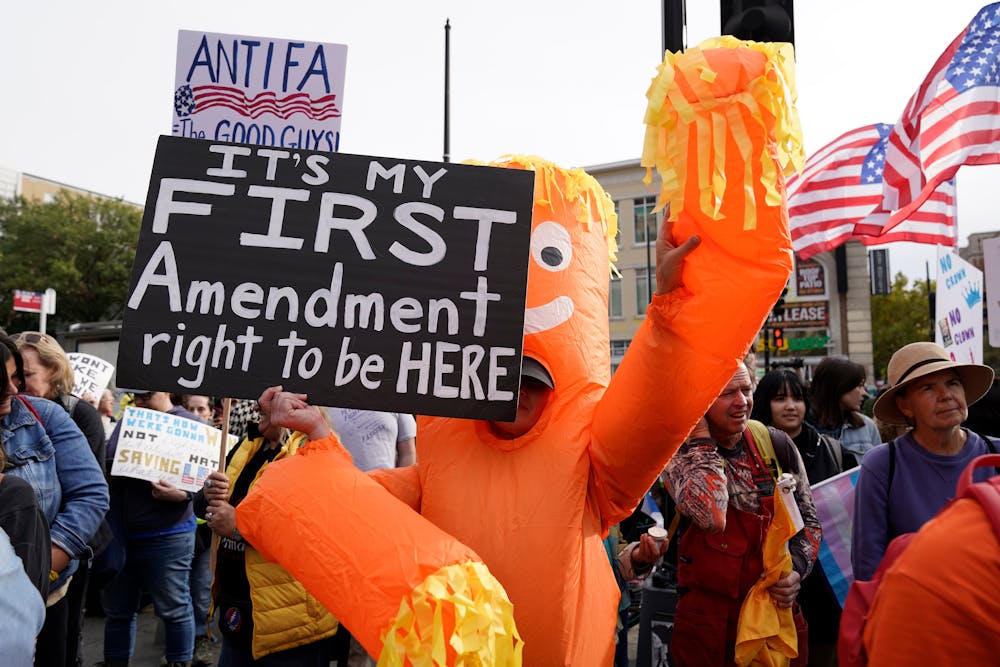
Would protesters like these at a Washington, D.C., ‘No Kings’ demonstration be seen as potential domestic terrorists by the Trump administration? Jose Luis Magana/AP
Defining terrorism
NSPM-7 marks a major conceptual shift in U.S. counterterrorism policy. Its focus on domestic terrorism significantly departs from historical approaches that primarily targeted foreign threats.
Since Ronald Reagan’s presidency, the U.S. government had treated terrorism as a global menace to democratic institutions, emphasizing protection of citizens and allies abroad. By moving away from a traditional law enforcement framework and recasting terrorism as an act of war, the Reagan administration situated the issue within the broader realm of Cold War geopolitics and military advantage.
After the 9/11 attacks, the Bush administration fused counterterrorism with national defense. The Bush-initiated global war on terrorism expanded the concept of who constituted a threat to include countries that harbored or aided terrorist organizations.
This standard was not focused on ideology but rather on tactical considerations, such as the feasibility of capture and continued threat to U.S. interests.
For example, the lethal drone strike on al-Qaida propagandist Anwar al-Awlaki in 2011 was justified on the basis that he was actively involved in plotting attacks and remained unreachable for capture.
During the first Trump presidency, executive orders were used to change counterterrorism policy, most notably through several iterations of a “travel ban” that attempted to restrict immigration from terror-prone countries such as Iraq, Iran, Somalia, Syria and Yemen.
The Biden administration redirected attention toward preventing catastrophic threats, especially from weapons of mass destruction in the hands of groups or individuals outside of governments, such as terrorist organizations.
First Amendment rights at risk
There is no single official definition of terrorism in U.S. law.
Instead, laws use different definitions based on their purpose, whether criminal law or laws relating to intelligence collection or civil liability.
Definitions in all those areas typically focus on identifying violent or dangerous acts done with the intent to intimidate or coerce civilians or influence government policy.
But more than redefining terrorism, NSPM-7 reorients the machinery of national security toward the policing of belief.
The First Amendment generally prevents the government from punishing people for unpopular opinions. It also protects the ability for people to associate to advance public and private ideas in pursuit of political, economic, religious or cultural goals.
The directive’s emphasis on ideological orientations – “anti-Christianity,” “anti-capitalism” and “anti-American” views – as indicators of domestic terrorism potentially jeopardizes First Amendment rights.
Thirty-one members of Congress sent a letter to Trump expressing “serious concerns” about NSPM-7, warning that it poses “serious constitutional, statutory and civil liberties risks, especially if used to target political dissent, protest or ideological speech.”
As the ACLU warns, any definition of terrorism that includes ideological components risks criminalizing people or groups based on belief rather than based on violence or other criminal conduct.
Congress has declined to create a domestic complement to the foreign terrorist designation in large part because of the potential for impinging on First Amendment–protected association and speech.
But I fear that chilling speech may be the point.
Silencing dissent
NSPM-7 does not authorize new actions in the legal and institutional framework for counterterrorism. It does not criminalize previously legal conduct.
Law professor Steve Vladeck frames this chill as “obeying in advance,” in which organizations self-censor rather than risk investigation, prosecution or defending against the “domestic terrorist” label.
Although left-wing violence has risen in the past decade, empirical evidence proves that this violence remains at very low absolute levels, well below historical levels of right-wing or jihadist violence.
In fact, most domestic terrorists in the U.S. are politically on the right, and right-wing attacks account for the vast majority of fatalities from domestic terrorism.
Yet NSPM-7 focuses disproportionately on left-wing ideologies. NSPM-7 departs from prior U.S. counterterrorism frameworks by prioritizing the suppression of ideologically motivated dissent, even in the absence of concrete evidence of violent intent.
Melinda Haas does not work for, consult, own shares in or receive funding from any company or organization that would benefit from this article, and has disclosed no relevant affiliations beyond their academic appointment.
If you use a mobile phone with location services turned on, it is likely that data about where you live and work, where you shop for groceries, where you go to church and see your doctor, and where you traveled to over the holidays is up for sale. And U.S. Immigration and Customs Enforcement is one of the customers.
The U.S. government doesn’t need to collect data about people’s locations itself, because your mobile phone is already doing it. While location data is sometimes collected as part of a mobile phone app’s intended use, like for navigation or to get a weather forecast, more often locations are collected invisibly in the background.
I am a privacy researcher who studies how people understand and make decisions about data that is collected about them, and I research new ways to help consumers get back some control over their privacy. Unfortunately, once you give an app or webpage permission to collect location data, you no longer have control over how the data is used and shared, including who the data is shared with or sold to.
Why mobile phones collect location data
Mobile phones collect location data for two reasons: as a by-product of their normal operation, and because they are required to by law.
Mobile phones are constantly scanning for nearby cell towers so that when someone wants to place a call or send a text, their phone is already connected to the closest tower. This makes it faster to place a call or send a text.
To maintain quality of service, mobile phones often connect with multiple cell towers at the same time. The range of the radio signal from a cell tower can be thought of as a big bubble with the cell tower in the center. The location of a mobile phone can be calculated via triangulation based on the intersection of the bubbles surrounding each of the cell towers the phone is connected to.
In addition to cell tower triangulation, since 2001 mobile phone carriers have been required by law to provide latitude and longitude information for phones that have been used to call 911. This supports faster response times from emergency responders.
The ‘Today’ show gives an overview of how your phone reveals where you go and what you do.
How location data ends up being shared
When people allow webpages and apps to access location data generated by their mobile phones, the software maker can share that data widely without asking for further permission. Sometimes the apps themselves do this directly through partnerships between the maker and data brokers.
More often, apps and webpages that contain advertisements share location data via a process called “real-time bidding,” which determines which ads are shown. This process involves third parties hired by advertisers, which place automated bids on the ad space to ensure that ads are shown to people who match the profile of interests the advertisers are looking for.
To identify the target audience for the ads, software embedded in the app or webpage shares information collected about the user, including their location, with the third parties placing the bids. These third parties are middlemen that can keep the data and do whatever they want with it, including selling the data to location data brokers, whether or not their bid wins the auction for the ad space.
The invisible collection, sale and repackaging of location data is a problem because location data is extremely sensitive and cannot be made anonymous. The two most common locations a person visits are their home and where they work. From this information alone, it is trivially easy to determine a person’s identity and match it with the other location data about them that these companies have acquired.
Also, most people don’t realize that the location data they allowed apps and services to collect for one purpose, like navigation or weather, can reveal sensitive personal information about them that they may not want to be sold to a location data broker. For example, a research study I published about fitness tracker data found that even though people use location data to track their route while exercising, they didn’t think about how that data could be used to infer their home address.
This lack of awareness means that people can’t be expected to anticipate that data collected through the normal use of their mobile phones might be available to, for example, U.S. Immigration and Customs Enforcement.
More restrictions on how mobile phone carriers and apps are allowed to collect and share location data – and on how the government is allowed to obtain and use location information about people – could help protect your privacy. To date, Federal Trade Commission efforts to curb carriers’ data sales have had mixed results in federal court, and only a few states are attempting to pass legislation to tackle the problem.
Emilee Rader receives funding from the National Science Foundation.
A horrifying story out of Michigan came to a bizarre conclusion in court this week:
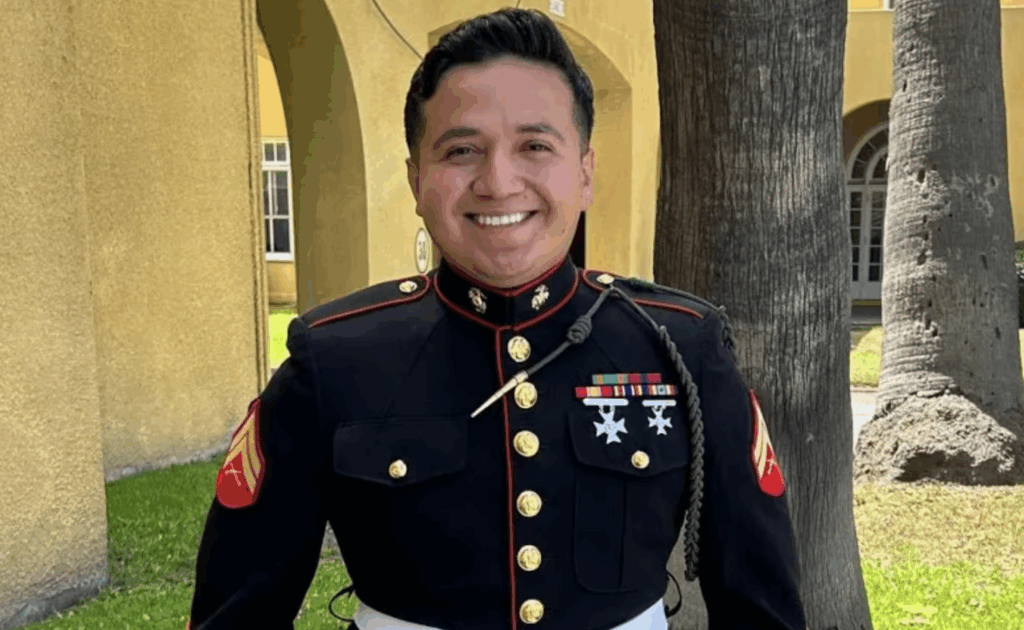
Police say a Marine recruiter named Ricardo Perez Castillo recently entered a neighbor’s home in Rockford, Michigan, took a knife from a kitchen drawer, and removed his pants.
He proceeded upstairs to the bedroom of an 11-year-old girl, whom he repeatedly stabbed.
Marine recruiter Ricardo Perez Castillo has been sentenced for stabbing an 11-year-old neighbor. (YouTube)
The girl was sleeping over at a friend’s house, and thankfully, the friend’s parents interrupted the attack before it was too late.
“He went upstairs and the first room he checked was the parents, they were sleeping, so he shut that door,” Kent County Chief Assistant Prosecuting Attorney Elizabeth Bartlett recently told People magazine.
“The second bedroom was locked. And then the third bedroom was the girls.
“The victim was sleeping on an air mattress in the middle of the room, and the homeowner’s daughter was in a top bunk, and he gets on top of the mattress over the girl, and he starts stabbing her, he thinks in her neck, but it’s her shoulder and then her arm,” Bartlett continued.
“She screamed, and then her friend screamed, and then the dad woke up and went into the room.”
Earlier this week, Castillo was sentenced for the shocking attack.
Despite being caught in the act, he pleaded no contest to assault with intent to murder, first-degree home invasion, and second-degree assault with intent to commit criminal sexual conduct.
“I ask for forgiveness for all of you, for both families, for the whole community of Rockford, I ask for forgiveness. Sorry. I’m sorry,” he told the court.
“I know I don’t deserve it,” he continued.
“I can’t imagine all the nightmares. I can’t imagine anything that you have felt for the past 15 months. But I’m sorry. I’m truly from the bottom of the heart. I was a lost person. I have found God and made me realize how much, how much I truly am lost.”
In the video above, Castillo weeps and falls to his knees as he pleads for mercy. But the judge in his case was not moved by the emotional display.
Marine recruiter Ricardo Perez Castillo has been sentenced for stabbing an 11-year-old neighbor. (YouTube)
“This case is disturbing on so many levels,” Judge Christina Mims said at last week’s sentencing, WOOD Grand Rapids reported.
“What you engaged in was — just what comes to mind is a real-life horror movie or a horror show where you’re stabbing this child. It’s just by the grace of God that she wasn’t killed.”
“I remember being in a lot of pain on the floor,” read a statement written by the victim and read by a prosecutor.
“I remember seeing all my blood everywhere. I remember feeling warm running down my body from the blood. I remember the smell of it. I could still feel the sting of the pain,” the victim described.
“I remember being very scared and not understanding why this happened to me. I was terrified. I never would have guessed an innocent sleepover would have left me in the hospital with bad injuries.”
Castillo has been sentenced to 40 years in prison. His victim is expected to make a full recovery.
Now, the medical professionals who allegedly had a hand in his death are finally being brought to justice.
But family, friends, and fans of the late star might feel that the punishment handed down today does not fit the severity of the crime.
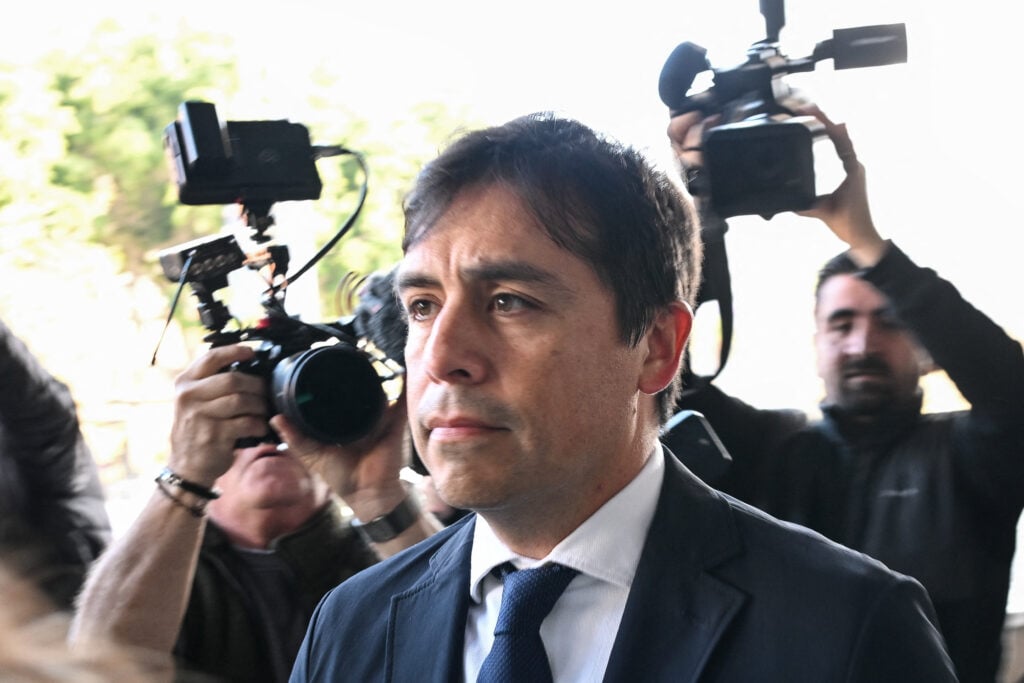
Salvador Plasencia arrives for his sentencing on charges of supplying ketamine to actor Matthew Perry, at the Edward R. Roybal Federal Courthouse in Los Angeles, California, on December 3, 2025. (Photo by Robyn Beck / AFP via Getty Images)
According to a new report from TMZ, Dr. Salvador Plasencia was sentenced to 30 months in prison today after striking a plea deal with prosecutors.
Plasencia pled guilty to four counts of distributing ketamine back in July, admitting that he had prescribed the drug to Perry shortly before the 54-year-old drowned in his hot tub.
In exchange for the plea, prosecutors dropped three other ketamine distribution charges and two counts of falsifying records.
Plasencia was taken into custody immediately after he was sentenced.
Actor Matthew Perry arrives at the premiere of “Ride” at ArcLight Hollywood on April 28, 2015 in Hollywood, California. (Photo by Angela Weiss/Getty Images)
Perry’s mother, Suzanne, and his stepfather, Keith Morrison, of Dateline fame, were both in attendance for the sentencing.
Both slammed Plasencia as “greedy” in a victim impact statement that was filed with the court ahead of today’s sentencing.
The Plasencia case is controversial for a number of reasons, not the least of which is the fact that the doctor got off with a surprisingly light sentence.
In addition, Plasencia was initially ordered to turn in his medical license 30 to 45 days after pleading guilty.
Actor Matthew Perry of the television show ‘The Kennedys – After Camelot’ speaks onstage during the REELZChannel portion of the 2017 Winter Television Critics Association Press Tour at the Langham Hotel on January 13, 2017 in Pasadena, California (Photo by Frederick M. Brown/Getty Images)
But in a bizarre twist, authorities allowed him to reopen his practice in August as long as he abided by certain restrictions.
One requirement was that the doctor inform all of his patients that he had recently pled guilty to federal charges.
Plasencia is the first person sentenced in connection to Perry’s death 2023.
But he likely won’t be the last.
Several other purveyors and medical professionals are facing charges, including Dr. Mark Chavez, Perry’s assistant Kenneth Iwamasa, alleged drug dealer Erik Fleming, and the self-proclaimed “Ketamine Queen” of So-Cal, Jasveen Sangha
We will have further updates on this developing story as new information becomes available.
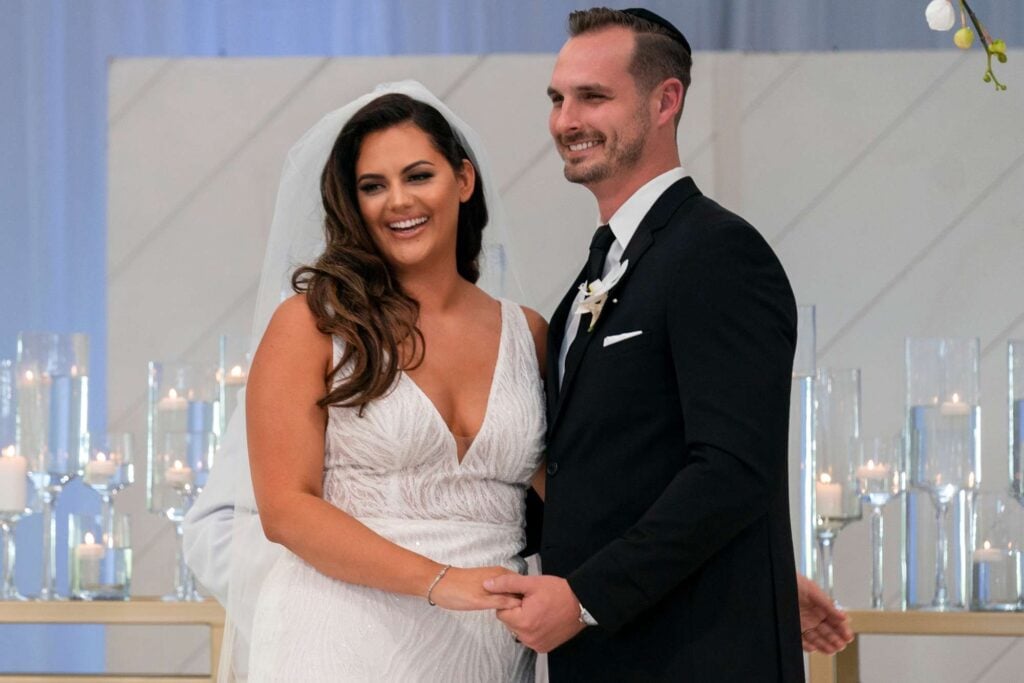
Alexa and Brennon Lemieux have reached the end of their romantic line.
The spouses, who met and seemed to actually fall in love on Season 3 of Love Is Blind, are getting a divorce.
Alexa posted the pair’s joint statement to Instagram on Wednesday, December 3, confirming for fans and followers across the land that the relationship is over.
(Netflix)
“After much reflection and many heartfelt conversations, we have made the difficult decision to end our marriage,” Alexa and Brennon said on Wednesday.
“This choice was not made lightly, and it comes with a great deal of care, respect, and appreciation for the time we’ve shared.”
The couple, who met and got married on the Netflix reality dating show in 2021, went on share their gratitude for their journey, despite how it concluded.
“We entered this relationship with love and optimism, and we leave it with gratitude for the experiences that shaped us and the growth we each gained along the way,” they wrote.
“While our journey as a married couple is coming to an end, we remain supportive of one another, devoted to our daughter, and committed to navigating this transition with compassion.”
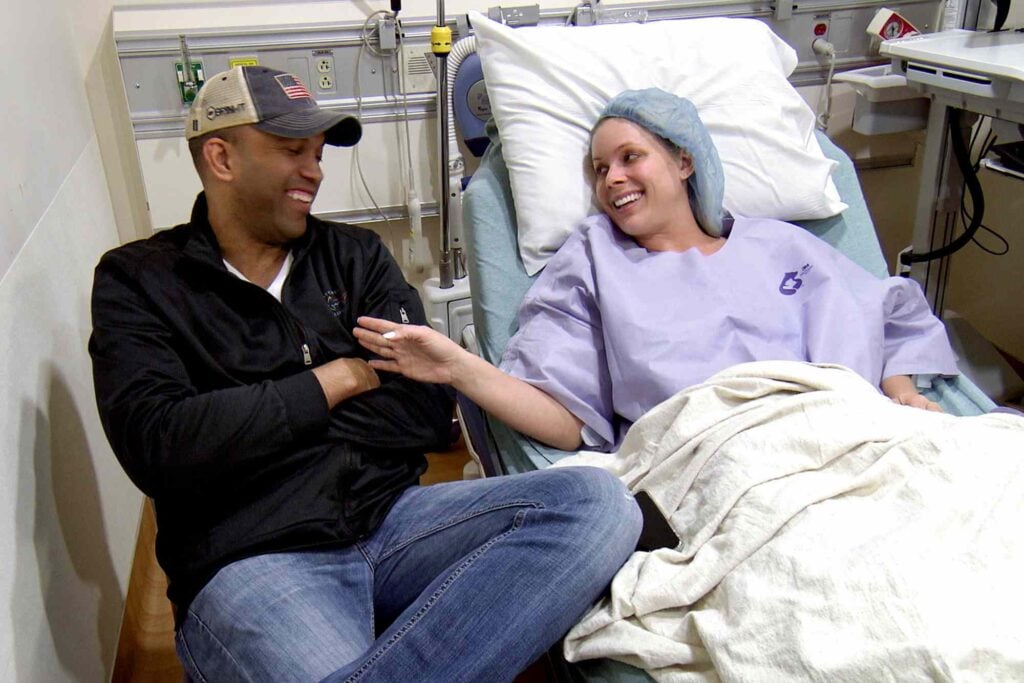
(Netflix)
They also asked for privacy as they “move forward and focus on [their] individual paths while keeping [their] precious daughter as our top priority.”
It was just over a year ago that the stars became parents.
“Our perfect daughter, Vienna Ziva Lemieux, born July 31, 2024. She has mommy’s hair and daddy’s dimples and we couldn’t be more in love,” the spouses wrote in a caption to an August 2024 Instagram post.
In July of 2025, meanwhile, Alexa posted to Instagram to mark their fourth anniversary.
“Happy 4 years to my lobster, thank you for being my person,” she wrote. “I never knew I could love someone the way I love you and blessed everyday that that love made the most perfect daughter.
You still give me butterflies and make my heart skip a beat. So grateful for the love, laughter, adventures, and priceless memories we’ve already made and can’t wait to make a million more.”
(Netflix)
We can’t say for certain what happened between this message and their decision to get a divorce.
Celebrating Vienna’s first birthday, Alexa posted an Instagram carousel of the parents and the toddler.
“Happy birthday to my littlest but greatest love,” her post opened. “Thank you for making my heart whole… I’m still in awe that I’m lucky enough to know you much less be your mom.”
Criscilla Anderson, a former hip-hop dancer who starred in Netflix’s 2020 reality show Country Ever After with her ex-husband and country musician Coffey Anderson, has announced her own death.
Yes, you read that correctly.
She was 45 years old.
Coffey Anderson and Criscilla Crossland Anderson attend the Academy of Country Music (ACM) Awards at Ford Center at the Star in Frisco, Texas, on May 11, 2023. (Photo by SUZANNE CORDEIRO/AFP via Getty Images)
“If you’re reading this, I’ve finally slipped into the arms of Jesus—peacefully and surrounded by love,” Criscilla wrote on Instagram December 2, posted by her friend Lindsey Villatoro.
“Please don’t stay in the darkness of this moment. I fought hard and I loved deeply.”
Anderson was diagnosed with colon cancer in 2018.
By the summer of 2021, she had been declared cancer-free. However, the disease sadly began growing in her lymph nodes the following year.
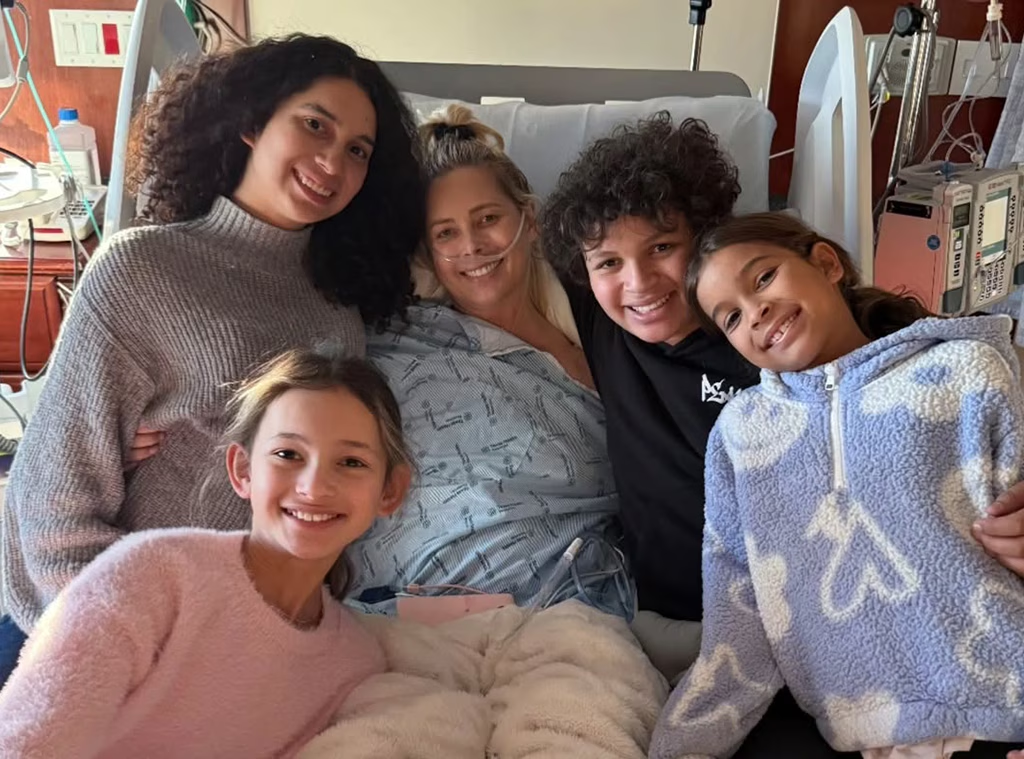
In November 2025, Villatoro shared an update on Criscilla’s Instagram, writing that her cancer had spread. She also wrote that Criscilla had been given “two years to live” seven years ago.
(Netflix)
“I am not gone… I’m Home,” Criscilla wrote in her posthumous post.
She also addressed her and Coffey’s kids Ethan, 14, Emmarie, 12, and Everleigh, 9, as well as step-daughter Savannah, 17, from Coffey’s previous relationship, calling them “my whole heart.”
“Ethan, you made me a mom. I’m still beside you, cheering you on,” Criscilla continued.
“Savannah, my bonus girl—you were a gift God knew I needed. Emmarie, my Jesus-loving dancer—keep dancing through every season. Everleigh, my bright spark—chase your dreams boldly and without fear…
“My babies… I am watching over you. When a moment feels warm, familiar, or too beautiful to be coincidence—that’s me. I’m still mothering you. I’m still yours.”
(Instagram)
Following her death, Coffey — who married Criscilla in 2009 before filing for divorce in 2022 — honored her with a moving tribute shared to social media.
“Criscilla defined strength and fighter like no other person on the planet,” he wrote on Instagram. “Heaven gained a star today.
“We miss you already. Our hearts are shattered. Our minds are jumbled. Our lives will never be the same. The house is quieter because you’re missing.”
The Dallas Cowboys Cheerleaders, who welcomed Criscilla back in 2024 as a judge for their tryouts, also shared their condolences.
“In loving memory of our dear friend, Criscilla Crossland,” the team wrote on Instagram December 3.
“Her artistry, passion and strength inspired so many in the Dallas Cowboys Cheerleaders family. The spirit, talent, and heart she shared will never be forgotten.”