The first saplings grown from the Sycamore Gap tree, which was deliberately cut down in 2023, are being planted on Saturday.The Latest News from the UK and Around the World | Sky News










The first saplings grown from the Sycamore Gap tree, which was deliberately cut down in 2023, are being planted on Saturday.The Latest News from the UK and Around the World | Sky News

Celebrations from Scotland fans as they secured a place at the men’s World Cup with a 4-2 victory over Denmark were so intense that they caused the earth to shake – with the tremors picked up by the UK’s national earthquake monitoring agency.The Latest News from the UK and Around the World | Sky News

Nathan Gill was at Manchester airport, about to board a flight to Russia, when accepting bribes finally caught up with him.The Latest News from the UK and Around the World | Sky News

Andrew Mountbatten-Windsor has been criticised by US politicians after he failed to respond to their request for an interview.The Latest News from the UK and Around the World | Sky News

The owner of the Daily Mail is in talks to buy the Daily Telegraph and its Sunday sister title for £500m, a deal that would finally end the more-than two-year hiatus over their future.The Latest News from the UK and Around the World | Sky News

Victims of grooming gangs and modern slavery are being denied compensation by a government scheme because of their criminal records, Sky News has learned.The Latest News from the UK and Around the World | Sky News
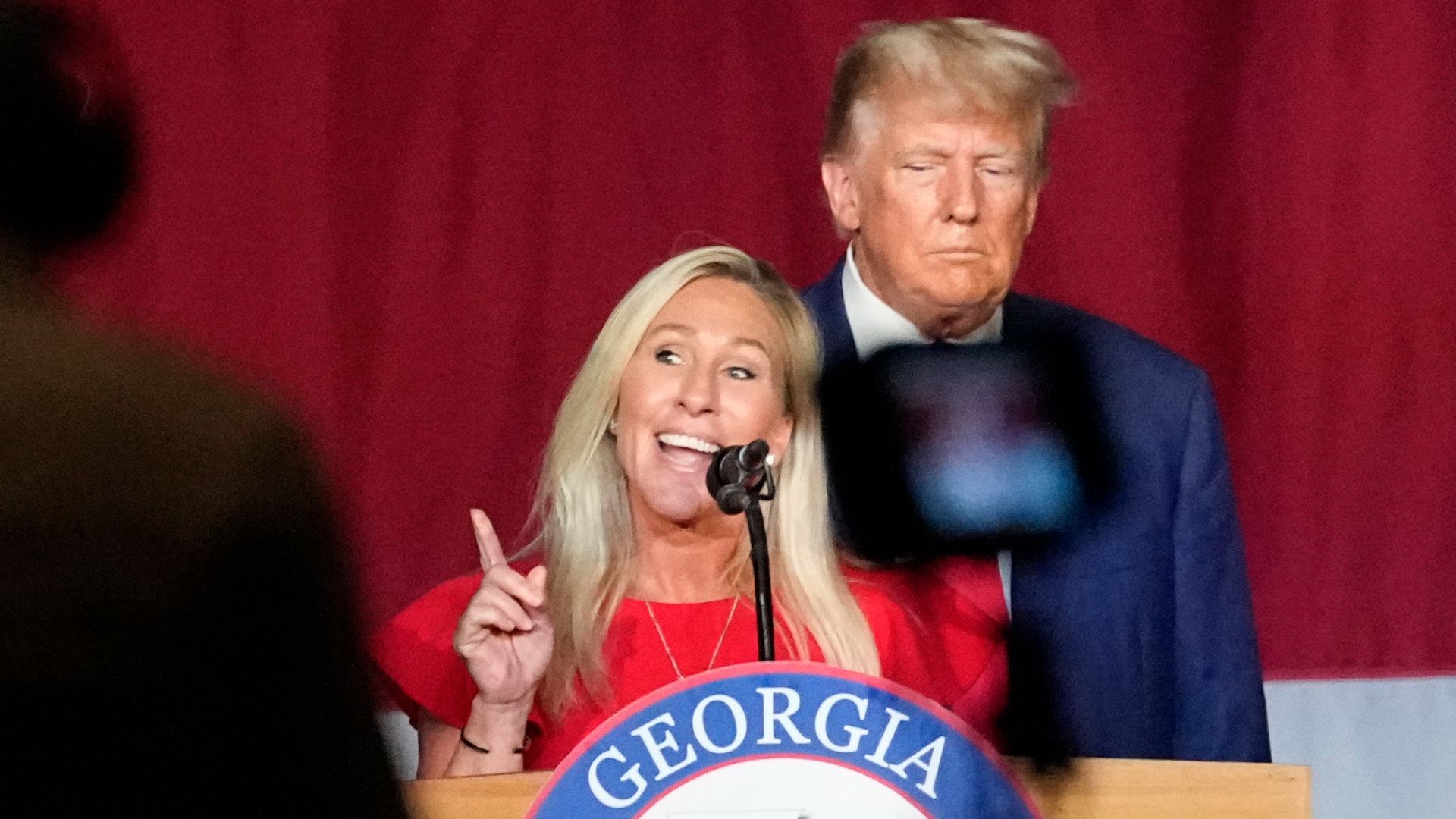
Usually, the resignation of a House representative wouldn’t be bombshell news – but Marjorie Taylor Greene has become one of the most famous politicians in the US.The Latest News from the UK and Around the World | Sky News
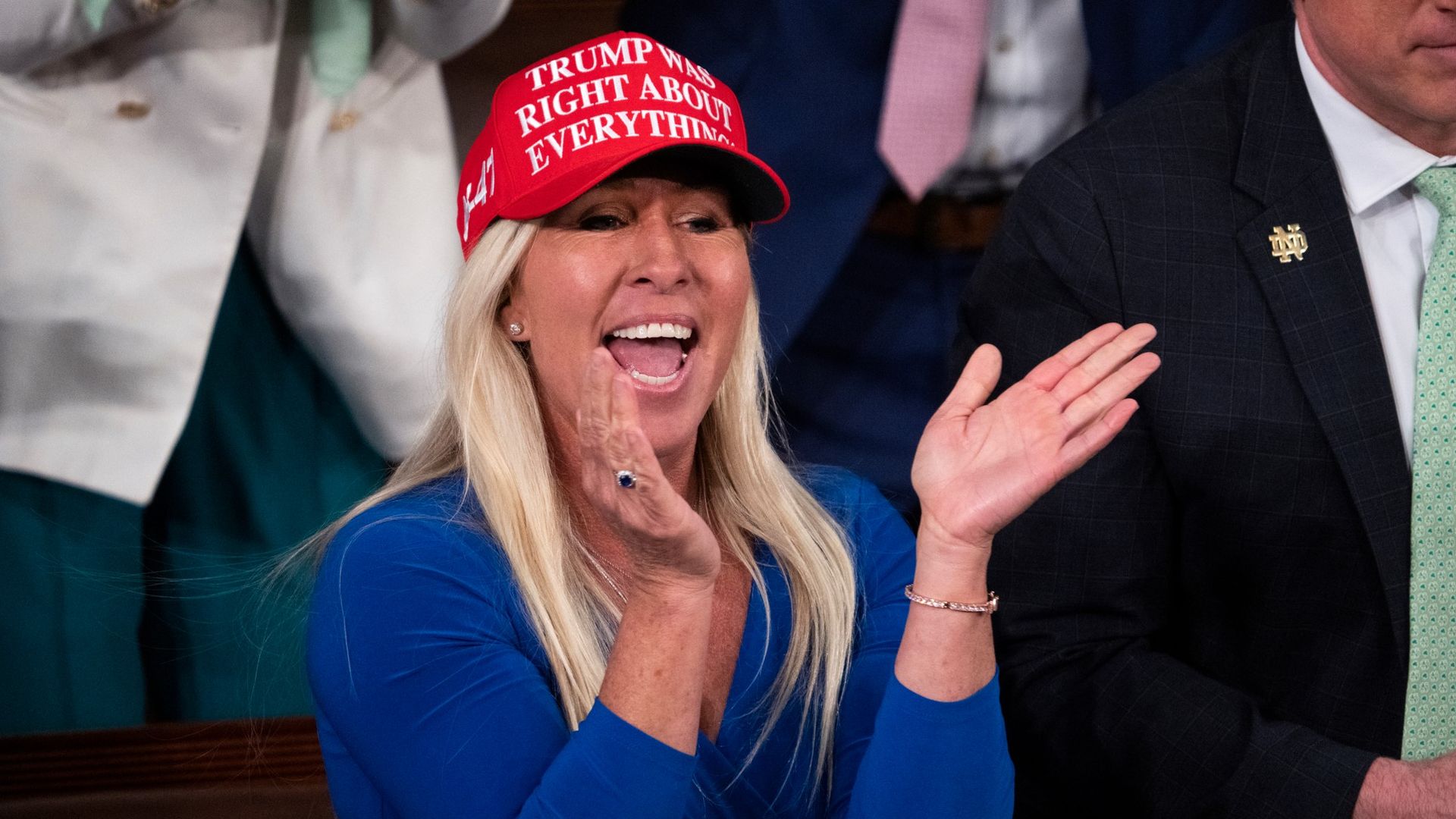
Marjorie Taylor Greene – a one-time MAGA ally who has turned into a fierce critic of Donald Trump – has unexpectedly announced she is resigning from Congress.The Latest News from the UK and Around the World | Sky News

NOTN- The legal fight over the future of the historic Telephone Hill neighborhood will now proceed entirely in Superior Court, after district judge Kristen Swanson declined to rule on the city’s eviction cases tied to the planned redevelopment project.
City Attorney Emily Wright said Judge Swanson dismissed the eviction actions in District Court, to Superior Court Judge Daniel Browning of Sitka.
“Superior Court handles more complex matters than District Court, so Judge Swanson was only going to rule on the issue of, should we (CBJ) have possession of the houses, and should these tenants have to leave immediately?” Said Wright, “The tenants, plus a few others, have filed a civil lawsuit, and in that lawsuit are talking about the evictions, but they’re also talking about the larger questions of, what is the city doing on Telephone Hill? Should that continue? And so really, Judge Swanson’s not going to hear the small little piece. She’s going to send it over to the Superior Court to handle everything.”
The lawsuit alleges the city improperly evicted residents and violated state and federal historic preservation laws in its push to clear Telephone Hill for redevelopment.
Wright said the city accepts Swanson’s decision and plans to request an expedited hearing before Judge Browning.
“We are going to ask for expedited hearings on that case. Because even though, civil cases can take a very, very long time. The city is trying to move forward on the testing of the houses.” She said.
The city’s engineering department has already begun hazardous materials assessments on homes that are vacant. Three homes remain occupied.
“The city engineering department is working their way through doing the hazardous materials assessment, and we’re starting with the houses that are empty. We need to get to those other houses before this next step so we’re going to ask for expedited consideration in the Superior Court matter, which probably means a hearing, sometime after Thanksgiving.”
The city plans to redevelope Telephone Hill into higher-density housing and had issued Nov. 1 eviction notices.

AP- The Trump administration says its plan to dismantle the Education Department offers a fix for the nation’s lagging academics — a solution that could free schools from the strictures of federal influence.
Yet to some school and state officials, the plan appears to add more bureaucracy, with no clear benefit for students who struggle with math or reading.
Instead of being housed in a single agency, much of the Education Department’s work now will be spread across four other federal departments. For President Donald Trump, it’s a step toward fully closing the department and giving states more power over schooling. Yet many states say it will complicate their role as intermediaries between local schools and the federal government.
The plan increases bureaucracy fivefold, Washington state’s education chief said, “undoubtedly creating confusion and duplicity” for educators and families. His counterpart in California said the plan is “clearly less efficient” and invites disruption. Maryland’s superintendent raised concerns about “the challenges of coordinating efforts with multiple federal agencies.”
“States were not engaged in this process, and this is not what we have asked for — or what our students need,” said Jill Underly, Wisconsin’s state superintendent. Underly urged the Trump administration to give states greater flexibility and cut down on standardized testing requirements.
Education Secretary Linda McMahon said schools will continue receiving federal money without disruption. Ultimately, schools will have more money and flexibility to serve students without the existence of the Education Department, she said.
Yet the department is not gone — only Congress has the power to abolish it. In the meantime, McMahon’s plan leaves the agency in a version of federal limbo. The Labor Department will take over most funding and support for the country’s schools, but the Education Department will retain some duties, including policy guidance and broad supervision of Labor’s education work.
Similar deals will offload programs to the Department of Health and Human Services, the State Department and the Interior Department. The agreements were signed days before the government shutdown and announced Tuesday.
Inking agreements to share work with other departments isn’t new: The Education Department already had dozens of such agreements before Trump took office. And local school officials routinely work with other agencies, including the U.S. Agriculture Department, which oversees school meals. What’s different this time is the scale of the programs offloaded — the majority of the Education Department’s funding for schools, for instance.
Yet Virginia schools chief Emily Anne Gullickson, for one, said schools are accustomed to working with multiple federal agencies, and she welcomed the administration’s efforts to give states more control.
Response to the plan has mostly been drawn along political lines, with Democrats saying the shakeup will hurt America’s most vulnerable students. Republicans in Congress called it a victory over bureaucracy.
Yet some conservatives pushed back against the dismantling. U.S. Sen. Lisa Murkowski, an Alaska Republican, said on social media that moving programs to agencies without policy expertise could hurt young people. And Margaret Spellings, a former education secretary to Republican President George W. Bush, called it a distraction to a national education crisis.
“Moving programs from one department to another does not actually eliminate the federal bureaucracy, and it may make the system harder for students, teachers and families to navigate and get the support they need,” Spellings said in a statement.
There’s little debate about the need for change in America’s schooling. Its math and reading scores have plummeted in the wake of COVID-19. Before that, reading scores had been stagnant for decades, and math scores weren’t much better.
McMahon said that’s evidence the Education Department has failed and isn’t needed. At a White House briefing Thursday, she called her plan a “hard reset” that does not halt federal support but ends “federal micromanagement.”
Randi Weingarten, president of the American Federation of Teachers union and one of McMahon’s sharpest opponents, questioned the logic in her plan.
“Why would you put a new infrastructure together, a new bureaucracy that nobody knows anything about, and take the old bureaucracy and destroy it, instead of making the old bureaucracy more efficient?” Weingarten said at a Wednesday event.
The full impact of the shakeup may not be clear for months, but already it’s stoking anxiety among states and school districts that have come to rely on the Education Department for its policy expertise. One of the agency’s roles is to serve as a hotline for questions about complicated funding formulas, special education laws and more.
The department has not said whether officials who serve that role will keep their jobs in the transition. Without that help, schools would have few options to clarify what can and can’t be paid for with federal money, said David Law, superintendent of Minnetonka Public Schools in Minnesota.
“What could happen is services are not provided because you don’t have an answer,” said Law, who is also president of AASA, a national association of school superintendents.
Some question whether other federal departments have the capacity to take on an influx of new work. The Labor Department will take over Title I, an $18 billion grant program that serves 26 million students in low-income areas. It’s going to a Labor office that now handles grants serving only 130,000 people a year, said Angela Hanks, who led the Labor office under former President Joe Biden.
At best, Hanks said, it will “unleash chaos on school districts, and ultimately, on our kids.”
In Salem, Massachusetts, the 4,000-student school system receives about $6 million in federal funding that helps support services for students who are low-income, homeless or still mastering English, Superintendent Stephen Zrike said. He fears moving those programs to the Labor Department could bring new “rules of engagement.”
“We don’t know what other stipulations will be attached to the funding,” he said. “The level of uncertainty is enormous.”
Other critics have noted the Education Department was created to consolidate education programs that were spread across multiple agencies.
Rep. Bobby Scott, D-Va., the ranking member on the House Education and Workforce Committee, urged McMahon to rethink her plan. He cited the 1979 law establishing the department, which said dispersion had resulted in “fragmented, duplicative, and often inconsistent Federal policies relating to education.”
___
AP education writers Moriah Balingit in Washington, Bianca Vázquez Toness in Boston and Makiya Seminera in Raleigh, N.C., contributed to this report.