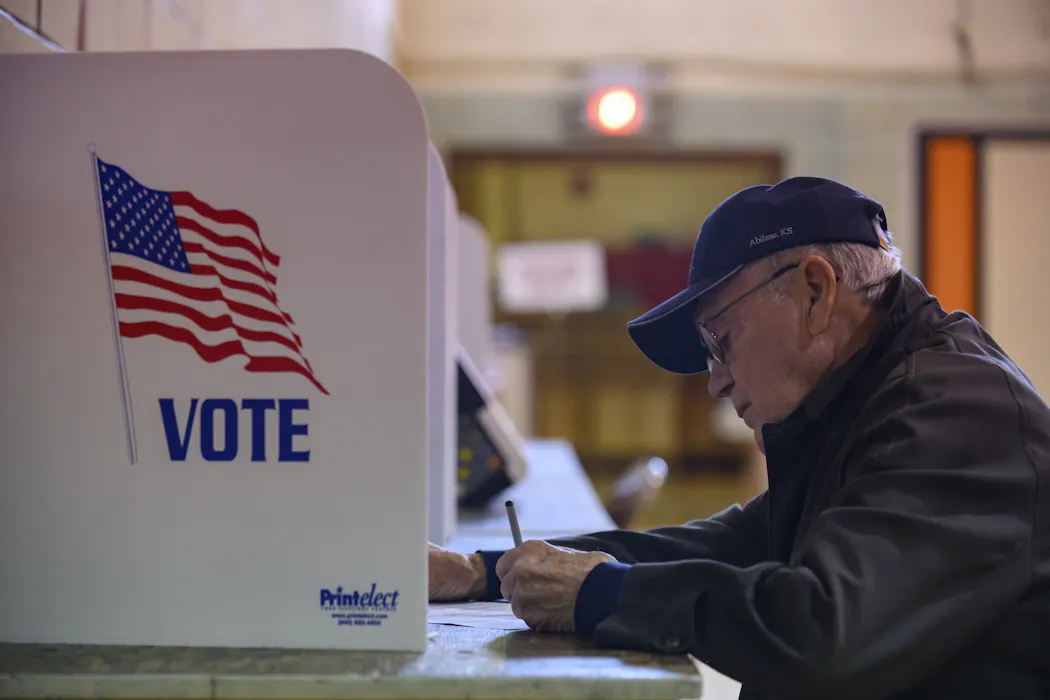
A study found that voting, like good nutrition and exercise, could extend your lifespan.Jeff Swensen/Getty Images
Most people know the basics of healthy living that become more important as you grow older: Eat plenty of vegetables, exercise regularly, sleep well, have a social life, limit your alcohol consumption and don’t smoke.
As an economist and social psychologist who study altruism and health, we wondered whether civic engagement might play a role as well.
In 2022, the American Medical Association, an organization representing doctors, noted that voting could potentially have health benefits. So we conducted a study that directly tested this idea: We examined whether older Americans – people who are 65 and up – who vote live longer than nonvoters.
Older adults vote at a higher rate than younger adults in the United States. In Wisconsin, the focus of our study, the voting rate of older adults is even higher.
We used data from the Wisconsin Longitudinal Study, a study which has followed a randomly selected sample of Wisconsin high school graduates since 1957. We compared the long-term health of older adults who voted in the 2008 presidential election to those who did not vote in that election. Using objectively verified voting records from Catalist, which tracks Americans’ voting behavior, along with official National Death Index records, we found that voters were 45% less likely to die within five years after the 2008 election, 37% less likely to die 10 years after the election, and 29% less likely to die 15 years later.
We also examined voting in the 2004 and 2012 presidential elections and found that the results were stronger for more recent elections – those held in 2008 and 2012 – compared to the earlier one held in 2004.
You may wonder whether this is just because healthier people are more likely to vote in the first place.
It’s easier to vote when you’re healthy than when you’re not, but this does not fully explain our results. Voters still had a lower risk of dying when we controlled for demographic factors such as gender, marital status and income, other forms of civic engagement such as volunteering, and a voter’s health status prior to voting.
We also found that those in poorer health to begin with benefited more from voting 15 years later than those who had been healthier before they voted.
Here’s another finding: How someone voted didn’t matter. When we compared what happened to older adults who cast their ballots in person to those who mailed their ballots, we found that both groups had about an equally lower risk of dying over the 15-year period.
It also did not matter whether a voter’s preferred candidate won. We found that although it can be stressful when the candidate you support loses, the people we studied experienced similar long-term health benefits of voting regardless of their political affiliation.
Voters had a lower risk of dying when the researchers controlled for demographic factors such as gender, marital status and income. Paul Hennessy/Anadolu via Getty Images
Voting is, arguably, also an altruistically motivated act. That’s because individual voters are aware that their one vote will not change the outcome of a national election.
What still isn’t known
If you are wondering why voting predicts lower mortality risk, well, so did we.
One possibility is that as with other civic engagement activities, including volunteering, voting may trigger positive biological responses that support well-being. Other researchers have found ample evidence showing that volunteering can boost the brain’s reward system, reduce stress and even slow some aspects of aging.
Although we didn’t test for these in the Wisconsin Longitudinal Study, they may help explain why people who vote tend to have better health outcomes than those who don’t.
Although the exact explanations aren’t known, studies consistently show a link between volunteering and a lower mortality risk, which suggests that participating in civic life – even something as simple as casting a ballot – may be good for your health, like going for a run or eating vegetables.
The authors do not work for, consult, own shares in or receive funding from any company or organization that would benefit from this article, and have disclosed no relevant affiliations beyond their academic appointment.
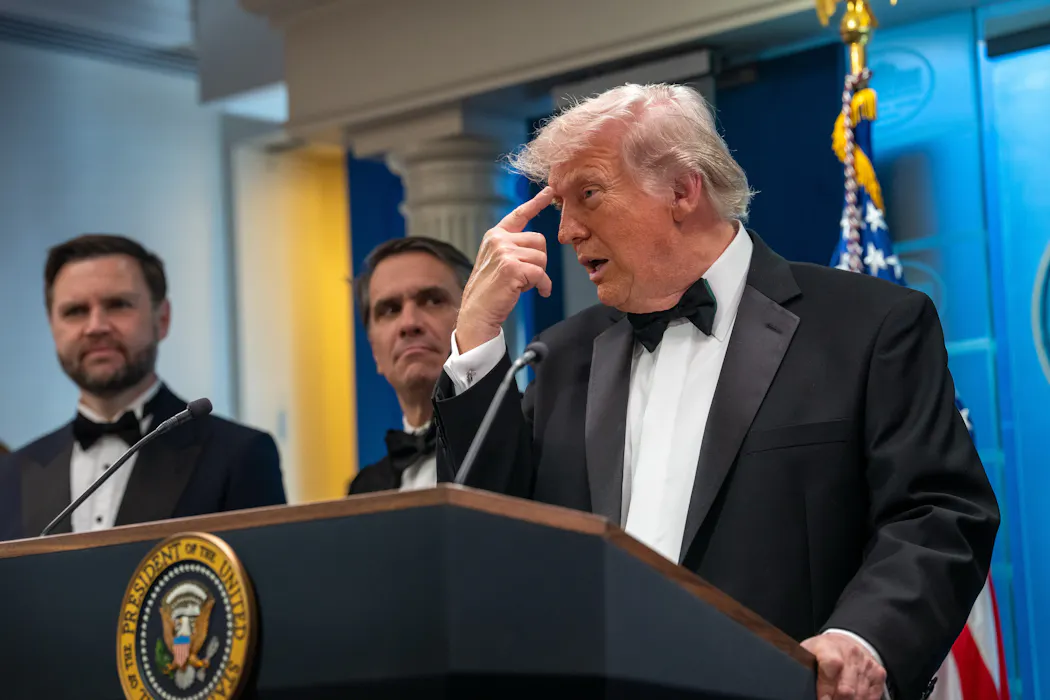
President Donald Trump speaks at the White House on April 25, 2026, after the cancellation of the annual White House Correspondents Association Dinner.Andrew Leyden/Getty Images)
As the investigation into the shooting continues, Alfonso Serrano, The Conversation’s politics and society editor, spoke with James Piazza, a political violence scholar at Penn State, about what is driving the rise of political violence in the U.S. and what can be done about it.
This is not the first time Trump has faced political violence. What stands out after the latest attack?
I think the events of April 25 underscore how dangerous this political moment is in the United States. For the past several years – certainly since Jan. 6, 2021 – the U.S. has been experiencing a period of increased political violence, which is generally defined as violence that is motivated by politics or is intended to communicate a political message or achieve a political objective.
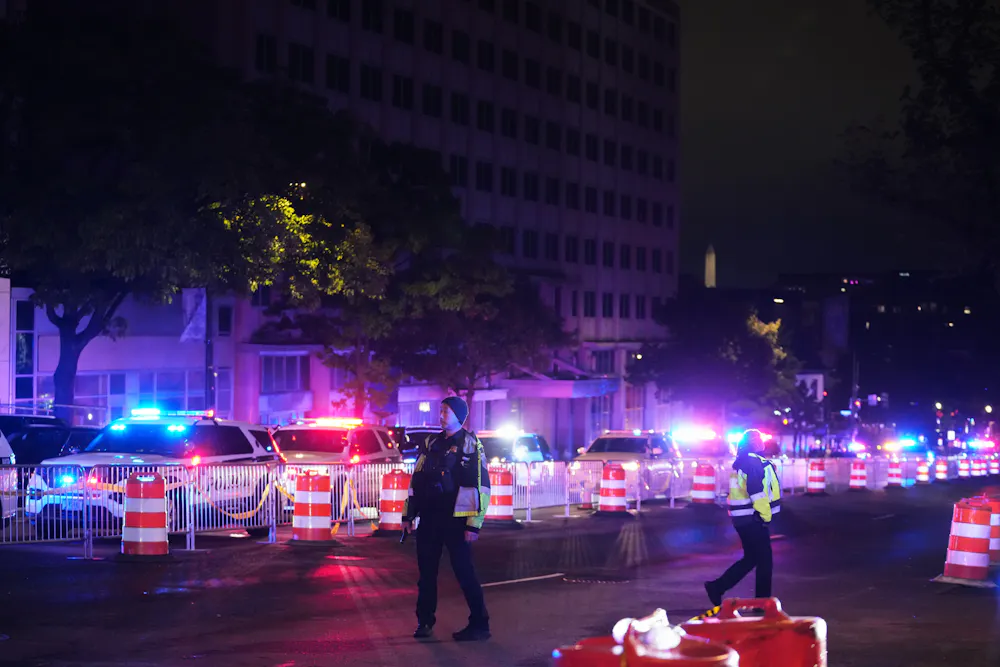
Law enforcement responds to an incident at the Washington Hilton during the White House Correspondents Dinner on April 25, 2026, in Washington. AP Photo/Allison Robbert
What’s driving that apparent plague of political violence afflicting the country?
There are several important drivers of political violence at work in the U.S. today, according to my own research and research by other scholars. The United States is currently very politically polarized, meaning that Americans are sharply divided against one another along partisan lines. They are suspicious and hostile toward one another, and this produces a tense and volatile environment for politics and public life. This has produced a “zero-sum” environment in which every election and political contest is a “do or die” moment.
Disinformation is also an important driver of political violence. A number of people who have engaged in recent acts of political violence seem to have been motivated by conspiracy theories and other forms of disinformation, often gleaned from social media. Disinformation plays a particularly important role in the context of social media communities, where people are exposed to large amounts of disinformation and are hermetically sealed off from other sources that might challenge their worldview. This facilitates radicalization and has been shown to fuel political violence in some cases.
Finally, I think an important factor is also the current assault on democratic norms and democratic institutions in the United States. U.S. democracy is experiencing pressures that are unprecedented in the modern era. This has had a very damaging effect on Americans’ trust in government, confidence in democratic institutions and value for democratic rule itself.
President Donald Trump takes questions at the White House on April 25, 2026, after a shooting incident at the White House Correspondents’ Dinner. Mandel Ngan/AFP via Getty Images
How does this moment of political violence stand out from other violent periods in U.S. history – are we in uncharted waters?
While the U.S. is currently experiencing an uptick in political violence, unfortunately it is not unprecedented. One example would be the highly polarized period in the 1850s in the run-up to the Civil War. In this era, there was a sharp division between abolitionists and advocates of slavery. This culminated in political assassinations, an assault on an abolitionist member of Congress by a pro-slavery member of Congress, and a bloody civil conflict in Kansas between pro- and anti-slavery armed groups.
Finally, the 1960s also saw a period of intense political violence surrounding opposition to the Vietnam War and backlash to the Civil Rights Movement.
Though there are some unique features about political violence today – namely the influence of social media – I think we can look for some parallels in these early periods of political violence.
Any last thoughts?
I believe it is absolutely critical that both Democratic and Republican politicians – politicians from all sides – unite to condemn this attack and all political violence. Political commentators and influencers can also condemn this and all use of political violence.
Research amply shows that what political elites – politicians, political leaders, media commentators, online influencers – say in the wake of these sorts of events has a huge effect on citizens’ attitudes. Political elites can adopt rhetoric that does not normalize this sort of behavior.
If the message comes from across the political spectrum, it will be that much more effective at reducing the public attitudes that nurture political violence.
James Piazza has received grants from the McCourtney Institute for Democracy at Penn State, a non-partisan research and public events center that sponsors research on democracy.
Events that draw large crowds can create opportunities traffickers may try to exploit.AP Photo/Gene J. Puskar
With the NFL draft taking place in Pittsburgh and an estimated 500,000 to 700,000 people expected to attend the events downtown and on the North Shore, conversations about sex trafficking have resurfaced – as they often do when major events draw large crowds to a city.
But how much of what people believe about trafficking and big events is actually supported by evidence? Mary Burke, a psychology professor at Carlow University who studies this intersection, breaks down what the data shows.
Burke partners with local nonprofit groups that fight human trafficking, such as Eden’s Farm. The organization offered three community training sessions ahead of the NFL draft that focused on recognizing the signs of exploitation, understanding grooming tactics and strengthening prevention strategies.
With Pittsburgh hosting the NFL draft, what does research show about how large events can influence sex trafficking activity?
Researchers have not found conclusive evidence that large events such as the NFL draft, the World Cup or other similarly sized, temporary events cause an increase in sex trafficking. However, experts do believe the crime of sex trafficking is underestimated in general due to a number of factors. Because so much effort goes into concealing trafficking, the crime goes unreported and undetected more often than it’s discovered. The true scale of the problem is likely much larger than the data reflects.
Large events that draw crowds even on a smaller scale than the draft, such as motorcycle rallies and large business conferences, often create opportunities traffickers may try to exploit, according to a 2016 study by researchers at Carnegie Mellon University.
Also, we do see an increased demand for commercial sex with events that draw a large male audience. Some of this demand is met through consensual means and some through force, fraud and coercion, which is the definition of sex trafficking.
One common misconception about trafficking is that it usually looks like kidnapping. AP Photo/Gene J. Puskar
How are organizations like Eden’s Farm working on the ground to prevent trafficking during the draft?
Eden’s Farm as well as the Social Impact Institute and Carlow University have led training. The hope is that this will equip citizens and those on the ground – law enforcement, ride share drivers and hotel and restaurant employees, for example – to know how to identify and respond to potential trafficking situations.
Additionally, these groups teach the public how to recognize signs of exploitation, how grooming works and how to strengthen online safety. The training also help families, educators, service providers and community members prevent people they know from being trafficked.
What are common misconceptions people have about sex trafficking during events like this?
One of the most common misconceptions about sex trafficking is the idea that trafficking includes abduction or physical captivity. While kidnapping can occur, many trafficking situations are carried out through psychological coercion rather than physical force. Victims may be controlled through grooming, fraud, intimidation, fear of retaliation against loved ones, or deep emotional dependency on the trafficker.
This translates into a victim not appearing to be restrained physically, which can make identification of a person in distress more difficult.
Research shows an increased demand for commercial sex with events that bring a large male audience. AP Photo/Gene J. Puskar
What signs should the general public look for that might indicate trafficking is happening?
This is tricky, as some of the indicators would be revealed through conversation, rather than observation at a distance. With that said, people should be on the lookout for patterns of control – for example, someone who does not seem to be able to speak freely or move about freely, has money or identification that is controlled by another person, or appears fearful.
In our training, we explain how to become aware of signs that someone is being pressured into commercial sex through manipulation rather than overt violence or consent. No single sign is definitive on its own, but there are some common situational red flags the public can take notice of regarding potential victims: They are coming and going from a hotel room at unusual hours with multiple different people, they are dressed in a way that seems inconsistent with the weather or setting, or they don’t seem to know basic details about where they are or where they’re going.
What are some prevention strategies Pittsburgh could adopt?
For this event and going forward, trafficking prevention should include a city- and county-level plan that can be implemented in relevant agencies. Pennsylvania’s plan focuses on prevention through public awareness and training, especially by equipping transportation workers and the public to recognize and report trafficking.
Prevention plans could include recommendations for the service and hospitality industries that require staff training on recognizing trafficking indicators, such as signs of coercion or restricted movement, and how to report to law enforcement or 911 for a rapid response. There are also a variety of ways to report suspected sex trafficking activity through the National Human Trafficking Hotline. When businesses and service workers interact with people who may be trafficking victims, they should do so in a way that is sensitive, nonjudgmental and doesn’t put the person in danger.
For example, a hotel employee who suspects a guest may be a trafficking victim shouldn’t confront the trafficker directly or make a scene – instead, they should know how to quietly offer help or alert the right people without escalating the situation or making the victim feel ashamed or accused.
Mary Burke is also the Director of the Social Impact Institute.
Rachel Seamans volunteers with the Social Impact Institute and Eden’s Farm.
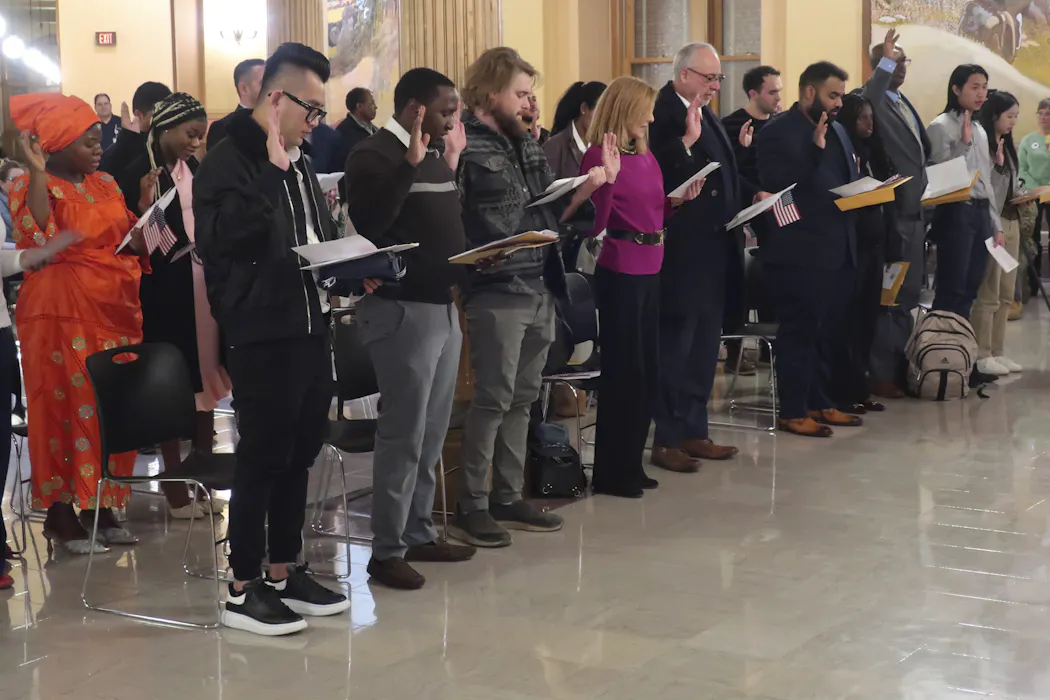
Dozens of immigrants from 18 nations take the oath to become U.S. citizens on Jan. 27, 2025, in Topeka, Kan. AP Photo/John Hanna
The Justice Department has identified 384 foreign-born Americans whose citizenship it wants to revoke as “the first wave” of such measures, according to recent reporting by The New York Times. These cases are being assigned to prosecutors in 39 U.S. attorney’s offices across the country.
The administration has ordered Department of Homeland Security staffers to refer upward of 200 denaturalization cases per month to the Justice Department as part of its crackdown on immigration, compared to an average of 11 cases per year between 1990 and 2017.
This shift comes as the Justice Department faces a severe staffing crisis, having lost nearly 1,000 assistant U.S. attorneys in resignations and firings. The strategy of distributing cases to regional offices appears designed both to increase capacity and to work around the expertise gap created by staff departures.
As we document in recent research, denaturalization risks becoming a tool of political control and intimidation. The lack of any statute of limitations in civil denaturalization gives prosecutors what the Supreme Court in 2017, in Maslenjak v. United States, warned against: “nearly limitless leverage” over naturalized citizens – creating permanent vulnerability for over 20 million naturalized Americans.
A brief history
Denaturalization is different from deportation, which removes noncitizens from the country. With civil denaturalization, the government files a lawsuit to strip people’s U.S. citizenship after they have become citizens, turning them back into noncitizens who can then be deported.
The government can only do this in specific situations. It must prove someone “illegally procured” citizenship by not meeting the requirements, or that they lied or hid important facts during the citizenship process.
The Trump administration’s “maximal” enforcement approach, outlined in a June 2025 Justice Department memo, means pursuing any case where evidence might support taking away citizenship, regardless of priority level or strength of evidence. As our earlier research documented, this has already led to cases like that of Baljinder Singh, whose citizenship was revoked based on a name discrepancy that could easily have resulted from a translator’s error rather than intentional fraud.
For most of American history, taking away citizenship has been rare. But it increased dramatically during the 1940s and 1950s during the Red Scare period characterized by intense suspicion of communism. The United States government targeted people it thought were communists or Nazi supporters. Between 1907 and 1967, over 22,000 Americans lost their citizenship this way.
Everything changed in 1967 when the Supreme Court decided Afroyim v. Rusk. The court said the government usually cannot take away citizenship without the person’s consent. It left open only cases involving fraud during the citizenship process.
After this decision, denaturalization became extremely rare. From 1968 to 2013, fewer than 150 people lost their citizenship, mostly war criminals who had hidden their past.
Sen. Joseph McCarthy appears at a March 1950 hearing on his charges of communist infiltration at the State Department. AP Photo/Herbert K. White
How the process works
In criminal lawsuits, defendants get free lawyers if they can’t afford one. They get jury trials. The government must prove guilt “beyond a reasonable doubt” – the highest standard of proof.
People facing denaturalization get no free lawyer, meaning poor defendants often face the government alone. There’s no jury trial – just a judge deciding whether someone deserves to remain American. The burden of proof is lower – “clear and convincing evidence” instead of “beyond a reasonable doubt.” Most important, there’s no time limit, so the government can go back decades to build cases.
The Supreme Court has called citizenship a fundamental right. Chief Justice Earl Warren in 1958 described it as the “right to have rights.”
In our reading of the law, taking away such a fundamental right through civil procedures that lack basic constitutional protection – no right to counsel for those who can’t afford it, no jury trial, and a lower burden of proof – seems to violate the due process of law required by the Constitution when the government seeks to deprive someone of their rights.
The bigger problem is what citizenship-stripping policy does to democracy.
When the government can strip citizenship from naturalized Americans for decades-old conduct through civil procedures with minimal due process protection – pursuing cases based on evidence that might not meet criminal standards – it undermines the security and permanence that citizenship is supposed to provide. This creates a system where naturalized citizens face ongoing vulnerability that can last their entire lives, potentially chilling their full participation in American democracy.
The Justice Department memo establishes 10 priority categories for denaturalization cases. They range from national security threats and war crimes to various forms of fraud, financial crimes and, most importantly, any other cases it deems “sufficiently important to pursue.” This “maximal enforcement” approach means pursuing not just clear cases of fraud, but also any case where evidence might support taking away citizenship, no matter how weak or old the evidence is.
This creates fear throughout immigrant communities.
About 20 million naturalized Americans now must worry that any mistake in their decades-old immigration paperwork could cost them their citizenship.
A 2-tier system
This policy effectively creates two different types of American citizens. Native-born Americans never have to worry about losing their citizenship, no matter what they do. But naturalized Americans face ongoing vulnerability that can last their entire lives.
This has already happened. A woman who became a naturalized citizen in 2007 helped her boss with paperwork that was later used in fraud. She cooperated with the FBI investigation, was characterized by prosecutors as only a “minimal participant,” completed her sentence, and still faced losing her citizenship decades later because she didn’t report the crime on her citizenship application – even though she hadn’t been charged at the time.
A woman receives a U.S. flag after passing her citizenship interview in Newark, N.J., on May 25, 2016. AP Photo/Julio Cortez
The Justice Department’s directive to “maximally pursue” cases across 10 broad categories – combined with the first Trump administration’s efforts to review over 700,000 naturalization files – represents an unprecedented expansion of denaturalization efforts.
The Trump administration’s strategy of distributing denaturalization cases across 39 U.S. attorney’s offices – many now staffed by less-experienced prosecutors handling unfamiliar constitutional terrain – may prove counterproductive.
These cases will come before dozens of federal judges, creating opportunities for multiple courts to rule against the policy. This pattern has already been seen with the administration’s detention policy: Federal courts have systematically rejected the administration’s attempt to drastically expand immigrant detention without hearings, with immigrants prevailing in 350 out of 362 cases decided by over 160 judges nationwide.
Denaturalization cases raise even more serious constitutional concerns and could face similar widespread judicial pushback.
The Supreme Court, in Afroyim v. Rusk, was focused on protecting existing citizens from losing their citizenship. The constitutional principle behind that decision – that citizenship is a fundamental right which can’t be arbitrarily taken away by whoever happens to be in power – applies equally to how the government handles denaturalization cases today.
The Trump administration’s directive, combined with court procedures that lack basic constitutional protections, risks creating a system that the Afroyim v. Rusk decision sought to prevent – one where, as the Supreme Court said, “A group of citizens temporarily in office can deprive another group of citizens of their citizenship.”
The authors do not work for, consult, own shares in or receive funding from any company or organization that would benefit from this article, and have disclosed no relevant affiliations beyond their academic appointment.
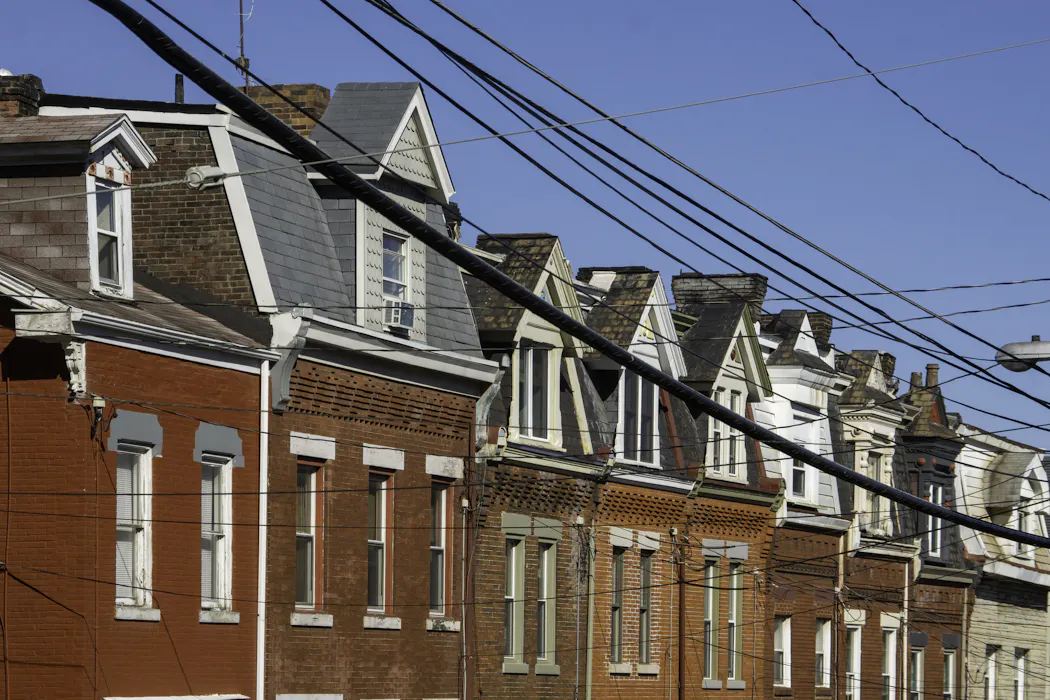
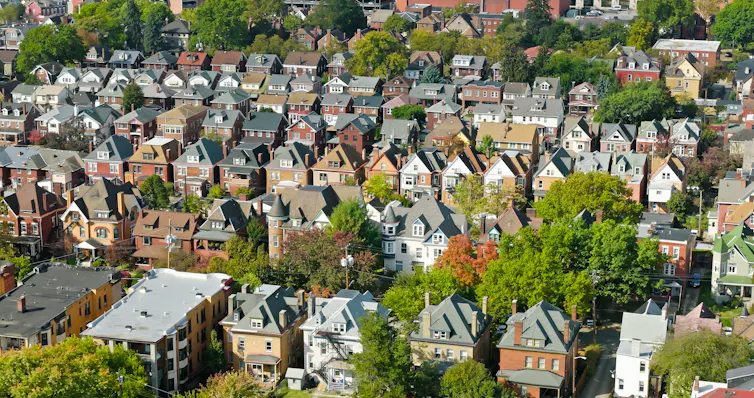
Inclusionary zoning requires developers to reserve a portion of new housing units for lower-income residents at below-market rents. A city might require, for example, that a new residential complex reserve or set aside 10% of units for households that earn 80% or less of the area median income.
Also referred to as a “mandatory set-aside,” inclusionary zoning is often done in exchange for developer incentives, such as density bonuses, which allow developers to build additional units. Other incentives could be expedited permitting or relaxed parking minimums, allowing developers to build fewer parking spaces than normally required.
In 2025, Pittsburgh adopted the Affordable Housing Bonus Program, a largely voluntary, incentive-based policy that applies inclusionary zoning requirements only within designated overlay districts. An overlay district is an extra layer of rules that apply to a specific area on top of the neighborhood’s regular zoning rules – such as a special zone within a zone.
The Affordable Housing Bonus Program is now being tested by a University of Pittsburgh student housing project called The Caroline at University Commons. University Commons is situated in Pittsburgh’s Oakland neighborhood, an inclusionary zoning overlay district. However, the developer, Walnut Capital, is seeking to exempt the project from inclusionary zoning overlay requirements altogether. This would reduce the number of affordable units set aside from 16 to 0. Walnut Capital believes it’s exempt from inclusionary zoning because it meets all other bonus requirements.
Short on homes, split on solutions
The fragility of the Affordable Housing Bonus Program matters not only for the neighborhoods that it affects but for what it reveals about Pittsburgh’s housing affordability.
Pittsburgh faces a persistent shortage of affordable housing. This is especially true for extremely low-income residents, or those who earn less than 30% of an area’s median income. That’s roughly one-quarter of all Pittsburgh residents.
Local estimates from The Pittsburgh Foundation show a deficit of more than 11,000 affordable units for residents at the lowest income levels. This shortage leaves many of these renters cost-burdened and vulnerable to eviction.
The debate about inclusionary zoning in Pittsburgh is heated. Among advocates, community organizations and some policymakers, it’s seen as an effective policy lever. They say it keeps neighborhoods affordable and diverse while giving residents a voice in how their neighborhoods change.
Conversely, developers and some policymakers argue that inclusionary zoning can reduce new construction and lead to higher rents overall. They also warn it can undermine equity goals by slowing housing production or concentrating affordable units in just a few areas.
Why Pittsburgh struggles to provide affordable housing
These supply-side challenges are compounded by demand-side barriers. In 2025, Pittsburgh added “housing status” as a protected class to prevent discrimination against the unhoused population, those with disabilities, and families fleeing domestic violence. But widespread landlord refusal of Section 8 vouchers shows how affordability policies can fall apart without real enforcement. The Affordable Housing Bonus Program similarly faces compliance problems.
Treating housing affordability as a serious policy priority will require more innovation, not only in regulation and financing, but in how policies are evaluated, adapted and sustained over time.
Selena E. Ortiz receives funding from the Robert Wood Johnson Foundation.
The U.S. Supreme Court is being criticized for decisions that are made quickly and outside of public view.Al Drago/Bloomberg via Getty Images
The recent publication of confidential Supreme Court memoranda by The New York Times has brought to light a pivotal moment in the court’s history. “The birth of the Supreme Court’s shadow docket has long been a mystery,” wrote reporters Jodi Kantor and Adam Liptak. “Until now.”
That’s law professor-speak for cases that are given abbreviated consideration and accelerated review by the justices, all out of public view – what The New York Times story referred to as the court “sprinting.” These cases aren’t included in the annual list of cases the justices have chosen to consider and that are presented by attorneys in public sessions, called “oral argument,” at the court.
During the second Trump administration, such shadow docket cases have proliferated as President Donald Trump has continued to push boundaries, challenge precedents and expand executive power. These cases have typically involved a request by the presidential administration “to suspend lower court orders” that temporarily block “an administration policy from taking effect,” according to liberal legal advocacy group the Brennan Center for Justice at New York University School of Law.
The lack of transparency in considering and ruling on the shadow docket, combined with the weight of the issues presented to the court via that docket, mean that the practice has come under strong criticismby manycourt watchers. Here’s how the process works and what you need to know to evaluate it.
Supreme Court Chief Justice John Roberts played a key role in pressing for the court to consider a major case first through the shadow docket. Leah Millis-Pool/Getty Images
The merits docket
The emergency docket is different from the court’s merits docket, which is the customary path for cases to reach the Supreme Court.
Ordinarily, in federal courts, a case begins in a federal district court. An appeal of the decision in the case is made to a federal appeals court. If a party in the case wants to appeal further, they can aim for U.S. Supreme Court review. That requires filing a “petition for writ of certiorari” to the court.
The Supreme Court does not take all the cases for which it has been petitioned. The court holds complete discretion to choose which cases to consider each term and always rejects the vast majority of petitions that it receives. By custom, the court agrees to consider a case if at least four justices vote to grant the writ of certiorari.
For the cases that the court agrees to consider, the parties to that case file briefs – written legal arguments – with the Supreme Court. Third parties can also file briefs with the court to assert their own arguments; these are known as “friend of the court” or amicus curiae briefs.
The justices then read those briefs and hear oral arguments in the case in a public session, during which they can question attorneys for both sides, before they meet and confer. At the end of this conference, the justices vote on the outcome in the case before assigning an author to draft the opinions.
The merits docket – the ordinary process – is methodical. It promotes deliberation and reasoned decision-making resulting in lengthy opinions that explain the justices’ rationale and provide guidance for lower courts in future cases.
The emergency docket
On the other hand, the emergency docket is a process whereby the court makes quick decisions without full briefing and deliberation, and it produces orders and rulings that almost always present little to no explanation.
Most of the court’s rulings and orders in cases on the emergency docket go without explanation. On occasion, however, the court produces short opinions that provide some explanation in emergency docket cases, albeit these are often dissents from the justices who disagree with the ruling.
As a constitutional law scholar, I’ve written elsewhere that the low approval might be attributable to the court’s undisciplined overruling of landmark cases regarding individual rights, such as the abortion rights case Roe v. Wade. In my view, it is reasonable to conclude that the court’s lack of transparency, specifically with its growing emergency docket, contributes to distrust in the court.
As the late Justice Sandra Day O’Connor stated, “The Court’s power lies … in its legitimacy, a product of substance and perception that shows itself in the people’s acceptance of the Judiciary as fit to determine what the Nation’s law means and to declare what it demands.”
Conversely, a lack of transparency breeds distrust and erodes institutional legitimacy.
Unprecedented action
The 2016 case at the center of the memoranda published by The New York Times –West Virginia v. EPA – concerned environmental regulation. As the justices’ memoranda illustrate, West Virginia, North Dakota and several energy companies sued the Obama administration over its Clean Power Plan and sought to block the new, transformative regulation from going into effect.
The Clean Power Plan would have required states and energy companies to shift electricity production from higher-emitting to lower-emitting production methods to reduce carbon dioxide emissions.
After losing at the trial court, the states and energy companies filed an emergency appeal to the Supreme Court asking the justices to pause the Obama regulation from going into effect while the parties litigated the case in the lower courts.
This was a highly unusual request because, as Taraleigh Davis at SCOTUSblog confirms, “nobody had previously asked the court to halt such a major executive regulatory action before any appellate court had ruled on it.”
Defenders of the emergency docket frequently claim that the court’s conduct is permissible because its orders are temporary. In West Virginia v. EPA, the court temporarily blocked the Clean Power Plan from going into effect until it eventually struck it down after hearing the case on its merits docket.
What is overlooked, however, is that even temporary orders from the court can have lasting implications that are difficult, and in some cases impossible, to undo.
Damage done
Advocates for Haitians holding temporary protected status appear at a press conference on March 16, 2026, in front of the Supreme Court, which has agreed to rule through its shadow docket on whether they can remain in the U.S. Roberto Schmidt/AFP via Getty Images
Consider the example of one of Trump’s immigration actions.
The administration seeks to terminate the temporary protected status for Haitian nationals, which had shielded them from deportation. But a federal district court temporarily blocked the president from doing so as the litigation continued.
The administration then filed an emergency appeal to the Supreme Court – still pending as of this writing – asking the court to overrule the district court. If granted, the court effectively would allow the administration to revoke TPS for Haitian nationals.
As an amicus brief in the case articulated, if TPS is revoked, Haitians “will be forced to face the untenable options of leaving behind their citizen children and/or partners, bringing family members with them to a country submerged in crisis, violence, and food insecurity, or staying in the U.S. without any legal status or work authorization and facing the constant threat of deportation.”
In other words, if the Supreme Court overrules the district court in this case on its emergency docket, then the Trump administration could deport the Haitian nationals even as their cases challenging the revocation of their TPS continue.
If the Haitian nationals ultimately prevail, reversing their deportation would be exceptionally difficult to do.
Wayne Unger does not work for, consult, own shares in or receive funding from any company or organization that would benefit from this article, and has disclosed no relevant affiliations beyond their academic appointment.
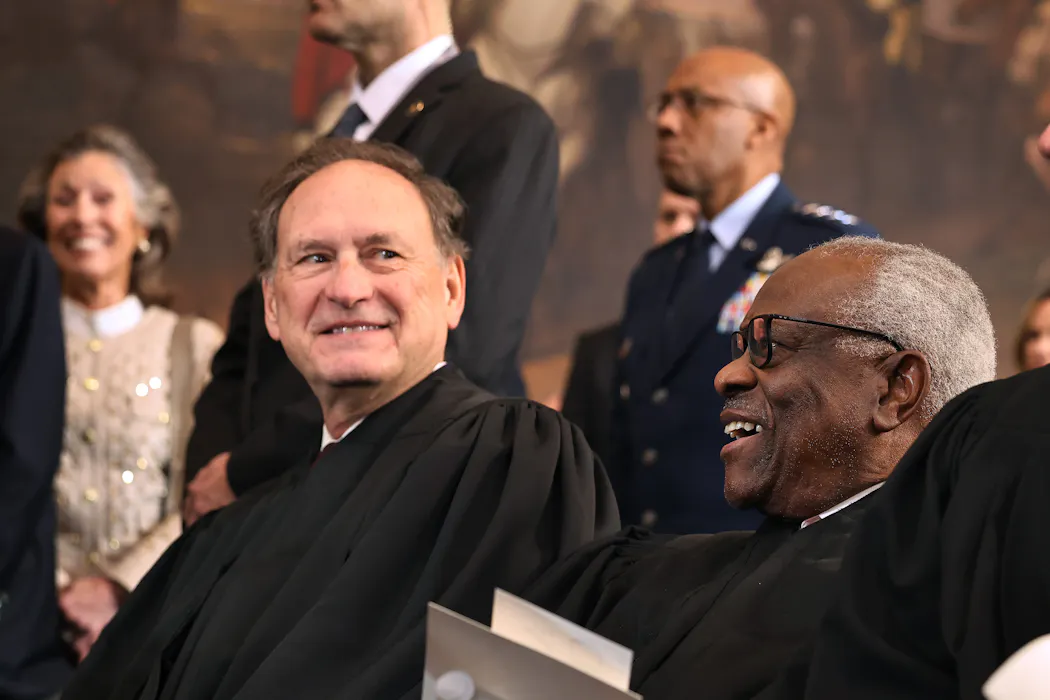
Trump praised Alito as “a great justice” and said that he is prepared to appoint a replacement, should Alito retire.
Trump added, “In theory, it’s two – you just read the statistics – it could be two, could be three, could be one.”
Trump didn’t say who the other potential retiring justices are. Speculation from pundits is that he is referring to Justice Clarence Thomas, 77, another solidconservative vote. Thomas, appointed by George H.W. Bush in 1991, is the court’s oldest justice and longest-serving member.
If Democrats were to take over the Senate following the midterms, it is very unlikely they would confirm a Trump-appointed Supreme Court nominee. Instead, they would probably follow the precedent set by Republicans in 2020 and block a Trump pick.
The clock is ticking on November’s midterm elections, and Democrats’ chances of taking back the Senate are improving. Assuming a current Supreme Court justice retires, here’s what has to happen for Trump and Senate Republicans to successfully confirm a successor.
The Supreme Court confirmation process
The Constitution says that the Senate provides “advice and consent” on presidential appointments to the Supreme Court. Over the course of the nation’s history, this has developed into a complex process.
Once the Senate receives a nomination from the president, it goes to the Judiciary Committee.
This is where the most public part of the confirmation process takes place: confirmation hearings. These typically last three to four days and feature a high stakes question-and-answer session with the nominee.
Prior to the hearings, senators and the nominee engage in a substantial amount of preparation.
Senators, with their staffs, do extensive background research on the nominee, which helps inform their questioning. Some of this is accomplished through the Senate Judiciary Committee questionnaire, to which nominees provide written answers. Supreme Court Justice Ketanji Brown Jackson’s 2022 questionnaire was 149 pages long. It included questions about organizational memberships, public speeches and judicial opinions authored.
Supreme Court nominee Ketanji Brown Jackson listens to U.S. Senate Judiciary Committee members on Capitol Hill on March 21, 2022. AP Photo/J. Scott Applewhite, Pool
Meanwhile, the nominee makes courtesy calls to senators to build support for confirmation.
At roughly the same time, the nominee takes part in hearing preparation, known as “murder boards.” Here, the nominee’s allies play the roles of members of the Judiciary Committee, anticipating the type of tough questions the nominee will face from skeptical senators from the opposition party of the appointing president.
During Jackson’s murder boards, for instance, the focus was on expected Republican attacks that Jackson was soft on crime.
Within a few days of the end of the confirmation hearings, the Judiciary Committee votes on its recommendation to the full Senate. Then the nomination goes back to the full Senate for more discussion and a final confirmation vote. A simple majority is needed to confirm a Supreme Court nominee.
For the nine members of the court, it has taken an average of 70 days between presidential appointment and Senate confirmation, according to data from The U.S. Supreme Court Database. But this number has decreased recently, with Barrett and Jackson taking 30 and 41 days, respectively, to be confirmed.
So, as long as there is roughly a month before the November midterms, it is likely that there is enough time for the Republican Senate to confirm a Trump nominee.
Democrats have limited options
In 2017, Senate Republicans ended the filibuster for Supreme Court nominees. It was a move to secure the confirmation of Neil Gorsuch.
This reduced the threshold for confirmation from 60 votes to 51 votes. Perhaps most importantly, it also severely limited the options available to the minority party to block a Supreme Court confirmation.
With a 53-47 Republican majority in the Senate, so long as Republicans stick together, it will be very difficult for Senate Democrats to block a Trump nominee.
There are some delay tactics available to Democrats – they can perhaps even grind the entire Senate to a halt – but they may pay a political price for these tactics. Republicans, for instance, may try to paint Democrats as obstructionist, potentially motivating a voter backlash against the Democratic Party in the midterm elections.
Paul M. Collins Jr. does not work for, consult, own shares in or receive funding from any company or organization that would benefit from this article, and has disclosed no relevant affiliations beyond their academic appointment.
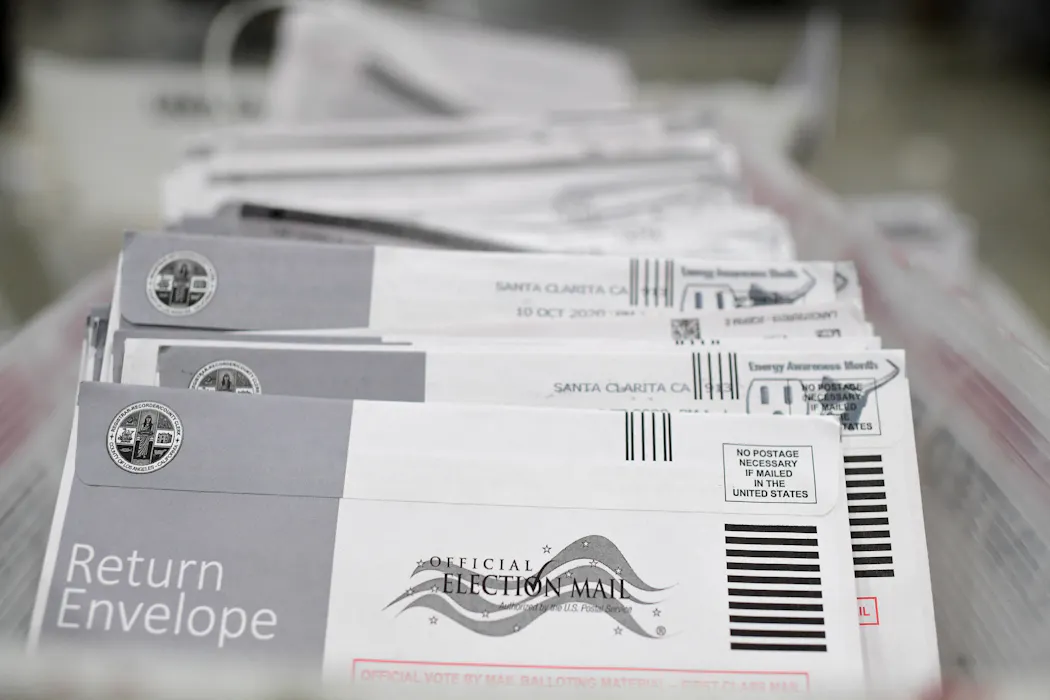
Mail-in ballots in their envelopes await processing at the Los Angeles County Registrar-Recorder’s mail-in ballot processing center in Pomona, Calif., on Oct. 28, 2020.Robyn Beck / AFP via Getty Images
John Jones knows about voter suppression. Currently the president of Dickinson College, Jones – nominated in 2002 by President George W. Bush and confirmed unanimously by the U.S. Senate – served for almost two decades as a federal court judge. In that role, Jones presided over a case, filed just prior to the November 2020 presidential election, in which a conservative legal foundation sued Pennsylvania’s top election official, alleging that she had allowed 21,000 dead people to remain on the voter rolls. The group asked Jones to stop those people from voting.
Jones denied the request. “In an election where every vote matters, we will not disenfranchise potentially eligible voters based solely upon the allegations of a private foundation,” he wrote in his memorandum on the case. In this interview with The Conversation politics and legal affairs editor Naomi Schalit, Jones discusses President Donald Trump’s March 31, 2026, executive order to wrest control of mail-in voting from states and give it to the U.S. Postal Service and the Department of Homeland Security; how the constitutional design of U.S. voting bars such federal control; and how Trump’s order would disenfranchise voters and is now the subject of lawsuits by voting rights groups and 23 states.
Article 1, Section 4, of the Constitution says, “The Times, Places and Manner of holding Elections for Senators and Representatives, shall be prescribed in each State by the Legislature thereof; but the Congress may at any time by Law make or alter such Regulations.” When you saw the executive order by the president, what did you think?
My first thought was, this executive order is dead on arrival. It assumes two problems that really don’t exist.
The president’s March order asserts that states don’t maintain active and appropriate voter rolls. That’s just not true. State after state takes that very, very seriously, and it’s a principle of federalism that states are given the responsibility for conducting elections. This includes maintaining accurate voter rolls, which, despite the noise to the contrary, states have historically done very well.
The second inaccuracy that undergirds this executive order is that there is rampant fraud in mail-in voting. There is absolutely no evidence to show that that is true.
President Donald Trump has repeatedly claimed there is pervasive fraud in mail-in voting, despite a lack of evidence.
So you have those twin rationales that are, in my view, demonstrably untrue. And as someone who believes that we need to defer to the laws and the Constitution, not to mention find accurate facts, this is deeply troubling. It’s just beyond the president’s authority to do this.
There are other problems. They are less critical but equally fatal.
President Trump said on signing the executive order that “the cheating on mail-in voting is legendary.” So the order gives the U.S. Postal Service the job of determining who may cast mail ballots, in cooperation with the Department of Homeland Security. Is that one of the problems you see?
That is not what the post office is equipped to do. I could joke here that they have a hard enough time at the U.S. Postal Service getting the mail delivered. Now they’re supposed to develop a program in concert with Homeland Security so that they could work to disqualify voters because they’re not on the list that Homeland Security provides to them that supposedly contains U.S. citizens. Homeland Security is simply not equipped to do this either. This is out of their skill set as well.
And now the administration is in effect saying, “We want to make it really, really difficult for you to vote by mail,” because of these contrived and, quite frankly, false premises that have to do with voter rolls and fraud in elections. There are legal challengesover this order in federal courts in D.C. and Massachusetts. The result will be a legal race to see which of those courts enjoins the policy first.
Victoria Beraja, center, and her mother, Lisa Burgess, right, both of Nevada, protest the passage of a mail-in voting bill during a Nevada Republican Party demonstration at the Grant Sawyer State Office Building on Aug. 4, 2020, in Las Vegas. Getty Images
Why does anybody have to sue if this is simply not in the president’s power to make happen?
Because if they don’t sue to enjoin this, since these agencies – the Postal Service and Homeland Security – are under the executive branch, they’ll just go ahead and implement this cumbersome and impossible initiative.
Secretaries of state have pushed back against this. In a separate move by the administration, the Department of Justice has asked states to turn over their voter rolls, and many have refused to do so, standing on the principle that it’s beyond the executive to demand those. Variousfederalcourtshave backed the states so far. One of the problems with the request is a lack of confidence that the information can be kept safe by the federal government. And states work very, very hard to do that.
When I was on the federal bench and denied the injunction in the lawsuit filed by a conservative legal foundation that sought to take 20,000 plus voters off the rolls, I did so because there was no good proof that they were, in fact, deceased, which is what the suit asserted. Subsequent to the election, at the now infamous Four Seasons landscaping press conference, Rudy Giuliani was waving my decision in the air and decrying the fact that dead people voted in Pennsylvania. That was simply not true.
These types of hyperbolic claims, made up out of whole cloth, stoke fears. This recent executive order is a solution that is looking for a problem that doesn’t exist.
Why did the framers of the Constitution set up a process where states run elections and not the federal government?
Well, first of all the federal government didn’t have the apparatus to conduct elections. And states had been running elections; they knew how to do it. There was a great deal of trust in the states’ ability to run elections. And there was the core debate of federalism, as to what powers states could retain, and they didn’t want to abdicate many of those powers. There was also a debate about the potential for fraud, that if there was a single entity controlling all the elections – that is, if you centralize elections under one politically motivated executive – it’s a really fraught situation which can be abused.
The Constitution is clear, and unless amended, Article 1, Section 4, is – to use the trite phrase – what it is. The power rests with the states, absent congressional action. There is no mention of the president. None. This executive order is thus, in my view, patently unconstitutional, and I harbor little doubt that it will be found to be so.
John E. Jones III does not work for, consult, own shares in or receive funding from any company or organization that would benefit from this article, and has disclosed no relevant affiliations beyond their academic appointment.
As a former U.S. Air Force officer and now national security scholar, I believe that math is a problem: The U.S. military for now has a $1 million answer to a $20,000 question. This math tells you almost everything you need to know about one of America’s biggest national security headaches.
And the frustrating part is that the U.S. military watched this happen in Ukraine for years. It knew the threat was coming.
The weapon that changed modern war
The Shahed isn’t impressive because it’s high-tech. It’s impressive because it isn’t.
Inspection of captured Shahed drones has found that many of their parts are made by ordinary commercial companies. That includes processors from a U.S. manufacturer, fuel pumps from a U.K. company and converters from China.
These military components aren’t hard to get. You could find similar parts in factories or farm machinery. That’s exactly what makes the Shahed so tough to deal with.
Russia, which also produces the drone, tolerates losing more than 75% of its Shahed stock because even at those loss rates, it’s winning the math battle against Ukraine. Russia or Iran don’t need every drone to hit its target. They just need to keep sending waves of them until their opponent runs out of expensive missiles to shoot back.
Ukraine, which had no choice but to learn fast, eventually figured out a better answer. Ukraine developed cheap interceptor drones that could slam into Shahed drones before they reached their targets. Each interceptor costs about $1,000 to $2,000, and Ukrainian manufacturers are producing thousands of them per month. That’s better math: a $2,000 interceptor against a $20,000 attacker.
This undated photograph released by the Ukrainian military’s Strategic Communications Directorate shows the wreckage of what Kyiv has described as an Iranian Shahed drone downed near Kupiansk, Ukraine. Ukrainian military’s Strategic Communications Directorate via AP
Ukraine’s battlefield experience, as a result, has become one of the most valuable resources in the world, with American and allied forces asking Ukrainian drone experts to share their knowledge.
Why can’t the U.S. churn out a solution of its own? Because the U.S. military doesn’t have a technology problem but a bureaucracy problem.
The Pentagon’s three-legged slowdown
The U.S. Department of Defense typically can’t just buy things. It follows a long, complicated process that can take a decade or more to go from “we need something” to “here it is.” That process runs through three separate bureaucratic systems, each of which can cause years of delay.
First, someone must write a formal document, known as a requirement, that explains exactly what they need and why. A military service, such as the Air Force, for example, drafts up a requirement and routes it through an internal service review within only their branch.
Even though the joint requirements process was ended, implementation of a new system is far from complete, and the existing culture potentially remains. Under the old requirements process, it took over 800 days to get a requirement approved.
Second, any new program then needs money. This is handled through the planning, programming, budgeting and execution process, a budget cycle designed in 1961. Getting a new program into the budget typically takes more than two years after the requirement is approved, because the military must submit its budget request years in advance. By then, the threat has potentially already moved on.
Third, once a requirement is approved and money allocated, the program then must be developed and built. The average major defense acquisition program now takes almost 12 years from program start just to deliver an initial capability to troops in the field, according to a 2025 Government Accountability Office report.
Add it up and you get a system where the military sees a threat, begs for a solution, argues for money and waits a decade.
Why the system is built this way
The Shahed drone exposed a gap that defense experts have been warning about for years: The U.S. military is very good at building the most advanced, most expensive weapons in the world, but it struggles to build cheap, simple things fast. That is the opposite of what this new kind of warfare demands.
It would be easy, but inaccurate, to blame the military for the decade-long contract process. The real answer is more complicated.
The Pentagon’s lengthy process was designed by the Department of Defense and Congress for a reason. Policymakers created the current system during the Cold War to combat excessive and redundant spending by the separate service branches. The system is built with checkpoints, reviews and approvals to make sure taxpayer money isn’t wasted.
Legacy military contractors also benefit from this dysfunctional process and resist change. They have the capital and know-how to wait out the predictable and stable existing contracts, while vying for new ones. These military contractors rarely need to worry about upstart contractors because they know small companies cannot survive waiting for a decade to secure funding for their prototypes.
The problem is that those rules were built for a world where the biggest threat was another superpower’s expensive jets and missiles. It wasn’t built to fight a flying bomb made from tractor parts. This type of threat requires fast innovation from lean companies, the exact companies that struggle in the current budget process.
However, killing the requirements process dealt with only one leg of the three-legged monster. The 1960s-era budget process that determines how money flows remains largely intact.
The most important reforms still need Congress to act, and Congress moves slowly, too. Congress has launched studies into reforming this system numerous times, with the answers being too politically difficult to implement.
Officials are expanding the use of flexible contracting tools, such as Other Transaction Authority, that let the military skip some traditional rules to get anti-drone technology faster. Yet these flexible contracting tools still represent a small slice of the Defense budget, and their effectiveness is unclear.
Ultimately, instead of using flexible contracting tools to quickly buy new prototypes, the bureaucratically easier solution could be to buy more of the expensive, already approved missiles.
This quick fix would reload the military’s stock of interceptors with existing weapons systems, which is the source of the bad math. The math would get worse and at the same time the operational imperative to find cheaper and better solutions might disappear.
So, as the Shahed keeps flying, the most powerful military in the world is still figuring out the paperwork and looking to other countries for help.
Aaron Brynildson served in the U.S. Air Force from 2016-2025.
The miners waged a pitched battle with the National Guard for 10 days before President Woodrow Wilson ordered federal soldiers to intervene. An estimated 69 to 199 people were killed. It was the end of one of the most bitter and violent miner strikes in U.S. labor history, which had begun in September 1913. The strike and massacre prompted Congress to take a hard look at labor reform. But significant changes in labor relations and unionization didn’t come until the mid-1930s.
Some state labor laws were on the books, but in 1914 the U.S. House Committee on Mines and Mining reported: “Colorado has good mining laws and such that ought to afford protection to the miners as to safety in the mine if they were enforced, yet in this State the percentage of fatalities is larger than any other, showing there is undoubtedly something wrong in reference to the management of its coal mines.”
Once the initial shock of the violence wore off, the Ludlow strike received little public attention outside of the immediate families affected and some Colorado residents until late in the 20th century. In “Where Are the Workers,” Mary Anne Trasciatti, a professor at Hofstra University, and I edited a collection of essays written by labor historians and archivists that explore nationwide efforts to bring the history of labor and working people into mainstream narratives of U.S. history.
In September 1913, roughly 10,000 mostly immigrant miners who worked for the Colorado Fuel & Iron Co. went on strike. The miners were represented by the United Mine Workers of America, which submitted a list of demands when the strike began, including implementing the eight-hour workday, being compensated for the time miners spent in the shafts, and the right to select their own housing and doctors.
A song by Woody Guthrie about the Ludlow strike and massacre recorded in the 1940s.
Coal mining in the early 1900s was labor intensive and dangerous. Death rates were high. Workers had no say in how the mines operated. From 1884 to 1912, more than 1,708 men died in the state’s coal mines, a rate twice the national average. In 1910, explosions at two Colorado Fuel & Iron mines killed 131 people. In 1912, 125 workers lost their lives in mine accidents across Colorado. That year, the annual death rate in Colorado’s mines was 7.06 per 1,000 employees, compared to a national rate of 3.15. Every trip down a shaft was fraught, with workers paid only for the weight of the coal they mined, not for their travel time.
John D. Rockefeller, the nation’s wealthiest man at the time of the strike, was the main owner of the fuel and iron company. With about 10,000 workers and nearly 70,000 acres of land under control, Colorado Fuel and Iron was one of the most powerful mining companies of that era.
Coal companies often owned entire towns, including miners’ homes, which was the case in Ludlow. Worker protests often led to widespread evictions. As a result of the Ludlow strike, 1,200 coal miners and their families were evicted and took refuge in tent colonies around the mines during the winter of 1913-14.
Colorado Fuel & Iron hired and armed 300 members of a private security agency known as Baldwin-Felts when the strike began. The agency was founded in the early 1890s by William Gibbony Baldwin and employed by mining companies in West Virginia and Colorado to repress strikes. Their job was to keep order and – if possible – break the walkout and reopen the mines.
Members of the United Mine Workers of America armed themselves as conflicts with the mining company’s private security force intensified.
Eventually, the Colorado governor, Elias M. Ammons, ordered the Colorado National Guard to join the fray on the corporation’s side, with the Rockefellers paying their wages. The Guard arrested hundreds of strikers.
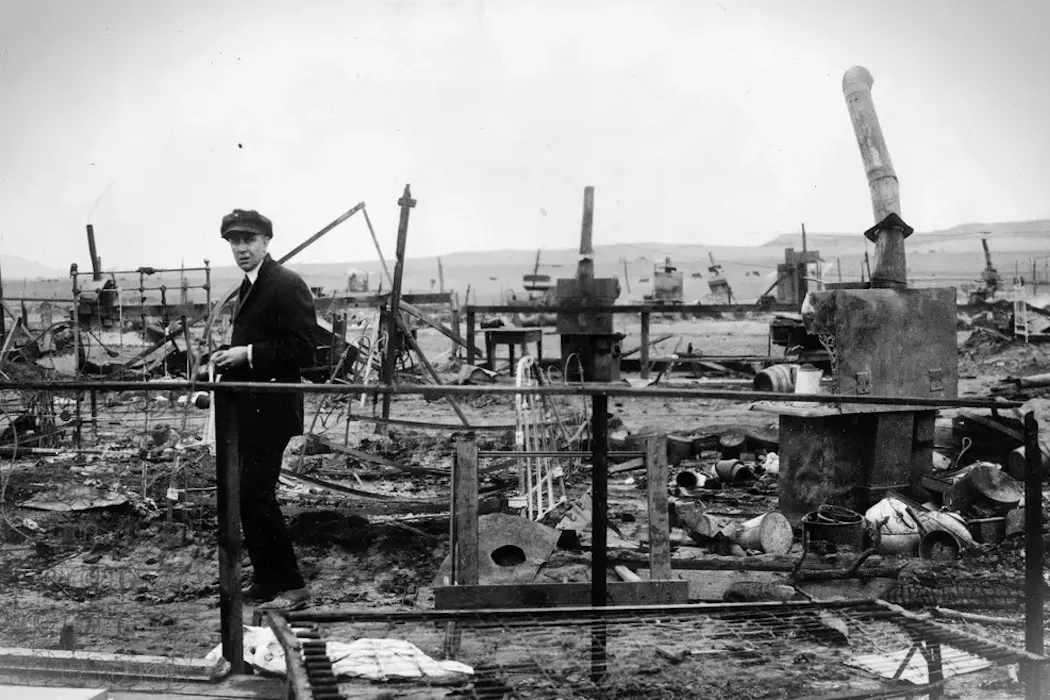
Then, on April 20, 1914, the National Guard and the private company opened fire on the tent colonies where the miners lived. After several hours of gunfire, with miners defending their camp, 25 people were dead, including two women and eleven children trapped when the camp was intentionally set ablaze.
Months earlier, miners had dug foxholes under tents so women and children could avoid bullets randomly fired through the camps. When the armored vehicle opened fire, everyone in the camps ducked into the holes. Later, women and children were found by miners huddled together at the bottoms of their burned-out tents.
Many miners’ family members were saved when the engineer on a passing train witnessed what was happening and stopped on the track to shield them from the gunfire.
This violence led to 10 more days of conflict before President Wilson finally ordered federal troops to disarm both sides.
Changes to labor law
In Congress, the House Committee on Mines and Mining conducted an investigation into the events and released a report in 1915. John D. Rockefeller Jr. was summoned before the committee, where he was questioned for several hours on May 20, 1914. There, he admitted that he had not visited the site since the incidents that led to the deaths of workers and their families.
According to a New York Times report, when asked whether he knew that thousands of his employees had been evicted from their homes and were living in tent colonies, and that the striking workers and their families were suffering without work or food, Rockefeller replied that he could not say, but that company officials could provide the facts. None were forthcoming.
A federal Commission on Industrial Relations also held hearings, determined to quell the upsurge in early 20th-century labor violence.
The commission determined that the strike raised a fundamental question about whether workers had a right to a voice at work. This question would animate labor struggles into the 1930s.
In 1935, Congress passed and President Franklin Roosevelt signed into law the National Labor Relations Act, which provided federal guidelines for labor union formation and stated that workers had a federal right to bargain over wages, hours and conditions of employment, the very things Colorado coal miners sought when they went on strike in 1913.
Commemorating the Ludlow strike and massacre
In 1915, officers of the United Mine Workers of America purchased 40 acres of land north of the Ludlow, Colorado, train depot, on the site where the tent colony had sheltered coal miners and their families during the 1913-14 strike.
Three years later, United Mine Workers officials dedicated a granite monument at the site where the women and children were killed. Labor historian James Green noted that of all the violence against workers at the time, none shocked the nation or troubled its collective conscience more than the Ludlow massacre because of the deaths of children. However, even incidents like the Ludlow Massacre did not become a significant part of the public discourse. This has changed some in the recent past.
The labor movement in the United States remains a bulwark of democracy, and workers have often been a driving force for social and economic equality in their communities. Yet its stories are not widely known, even one so dramatic as this battle in the Colorado coalfields.
The recognition of the Ludlow site as a National Historic Landmark and the recent release of a Library of Congress research guide propel the history of labor and working people into the mainstream. Such place-based labor history promotes our understanding of how and why things we sometimes take for granted – such as the eight-hour workday, paid holidays or workplace safety laws – came about only because people were willing to risk their lives fighting for these rights.
Robert Forrant does not work for, consult, own shares in or receive funding from any company or organization that would benefit from this article, and has disclosed no relevant affiliations beyond their academic appointment.