Categories
Uncategorized

AI-generated fantasies of US intervention reveal how desperation has narrowed Cuba’s political horizons

Cuba’s American liberators, depicted on the left in a political cartoon from 1898 and on the right in an AI image. Cartoon: Blanche S. Crawford, Cartoon History of the Spanish American War (Scrapbook, 1898), 48. AI image: screenshot from Instagram. Images for this article sourced by Jorge Damian de la Paz.

Ever since U.S. commandos successfully removed Nicolás Maduro from power in Venezuela on Jan. 3, 2026, speculation has been growing that “Cuba could be next” on the list of the Trump administration’s targets.

“We’ll take over Cuba almost immediately,” President Donald Trump mused during a speech in Florida on May 1. “On the way back from Iran, we’ll have … the USS Abraham Lincoln come right by Cuba, stop about 100 yards offshore, and they’ll say, ‘Thank you very much, we give up.’”

It’s hard to say whether such remarks are just bluster. While the White House has been trying to coerce Cuban authorities into negotiated political and economic concessions through a de facto oil blockade since January, Trump has also reportedly grown frustrated by the Cuban government’s ability to outlast months of sustained U.S. pressure.

That has not stopped many Cubans and Cuban Americans from eagerly predicting a military operation’s success or insisting that such a U.S. action is necessary.

Their tool of choice? Not battle plans or political manifestos, but artificial intelligence. For weeks, Cuban social media feeds and WhatsApp groups have been filled with armchair fantasies of deliverance from communist rule made with tools like Midjourney, DALL-E, Runway and ChatGPT. In some clips and images, the island nation is represented as a female captive or a child being freed by an American protector. In others, magically renovated cityscapes feature statues and portraits erected in Trump’s honor, replacing revolutionary iconography.

It is easy to dismiss such animations as online trolling. But as a historian of Cuba, I noticed something troubling when my colleague Jorge Damian de la Paz sent me a selection of these digital illustrations and reels. Their visual language eerily mirrors classic U.S. political cartoons during Cuba’s final war for independence against Spain in the late 19th century. That imagery went on to justify U.S. meddling in Cuban affairs for decades.

A fraught history

In the 1890s, American illustrators at publications such as Puck, Judge and Harper’s Weekly similarly portrayed Cuba as a feminized victim: weak, vulnerable, often racialized as nonwhite and incapable of securing freedom on her own. They imagined grateful tropical citizens celebrating future American liberators for defeating their Spanish overlords and bestowing the benefits of “civilization” on Caribbean life.

Such tropes were not innocent. They helped generate the cultural consensus that legitimized U.S. intervention in the Cuban war in 1898 – known by most Americans as the Spanish-American War. They also shaped Cuba’s postwar order: four years of U.S. military occupation, an imposed amendment to Cuba’s first constitution authorizing future American military action to preserve stability, and decades of political and economic dependence on the United States.

Taking their cue from heroes of the independence struggle such as José Martí, many Cubans grew to resent this asymmetrical relationship with the North, even as they fell in love with imported American consumer products and cultural pastimes. Especially by the 1930s and 1940s, mainstream political movements on the island all sought to, at a minimum, rebalance the extent of U.S. influence over Cuban life. Their failure to do so was part of what propelled Fidel Castro’s radical nationalist revolution to power in 1959.

Reversing course

But today, formal and informal polling suggests that significant numbers of Cubans and Cuban Americans seem willing to welcome, or at least tolerate, the explicit U.S. intervention that most of their forefathers rejected.

AI-generated expressions of these views do not appear to be coming from staunchly anti-communist exiles in South Florida alone. Comments and reposts suggest they are resonating among Cubans living on the island, many of whom are desperate for “something, anything” to put an end to the worsening blackouts, shortages and societal paralysis that have made daily life feel like purgatory.

If a U.S. military operation is the only way to escape, one friend in Havana told me, “que sea rápido” – let it be over quickly.

What’s distinct about AI is that it is providing this fatalism with a visual vocabulary rooted in imperial attitudes from the 1890s. This makes sense when you consider how the technology works: Generative AI systems have been trained on enormous, often U.S.-centric archives of historical photographs and other materials. They easily reproduce the old cultural and political prejudices seen in these digital repositories.

As a result, image and video generators appear to be spitting 19th-century American discourses back at 21st-century Cuban users. The most extreme iterations of the imagery even resurrect a long-dormant idea from more than a century ago: the outright annexation of the island as a U.S. state. In so doing, AI provides narrative fuel for the Trump administration’s efforts to rewind the clock to an era when Washington condescendingly treated Latin America as its “backyard.”

Deprivation and desperation

The depth of Cuba’s predicament today helps explain why these images are going viral.

Long before the Trump administration cut off oil supplies, Cubans were enduring their worst economic, political and social crisis in three decades. Botched internal reform efforts, repression of dissent, and mass migration profoundly eroded faith in Cuba’s Communist Party leadership and institutions in recent years. This has been particularly true since the island’s tourist-heavy economy was hit hard by COVID-19 and 2021 mass protests rocked more than 50 towns and cities.

Of course, plenty of Cubans in Cuba still blame the long-standing U.S sanctions regime, and Trump’s unprecedented additions to it, for many of their problems. Not all are willing to accept change at any cost.

But Cuban officials’ defense of national sovereignty in the face of mounting U.S. threats rings increasingly hollow. Cuba hasn’t held a truly competitive election in nearly 80 years and has been ruled by a one-party state for 65. Under those circumstances, political independence does not rest on the consent of the governed. It’s also hard for a country to claim sovereignty when its economy relies so strongly on external patrons, such as Russia, China, Venezuela (until January) and even the United States. Despite the embargo, Cuban Americans send hundreds of millions of dollars in remittances, food, medicines and other goods annually.

The seduction of rescue

Yet even if fantasies of rescue are understandable, they should be deeply concerning to anyone who cares about Cuba’s future.

The danger posed by AI images is not simply that they normalize the idea of a U.S. military intervention that could cost Cuban lives. It is that they replace deeper civic imagination with spectacle and clickbait.

AI is offering visions of liberation without requiring Cubans to grapple with the far more difficult dilemmas that any real transition would entail. Those questions include how to rebuild institutions, restore trust, confront inequality, reconstruct the economy, forge reconciliation and negotiate competing political visions after decades of polarization and authoritarianism.

Prolonged desperation, coupled with authorities’ stubborn refusal to open the island’s political and economic systems, has narrowed some Cubans’ political horizons to the point where they outsource their own salvation rather than imagine it from the bottom up.

The coming weeks may determine whether digital fantasies turn into concrete policy or remain wishful thinking. But one thing is certain: AI images of U.S. military intervention in Cuba reveal that many Cubans and Cuban Americans have given up on defining change on Cuban terms. That choice could mean the difference between a Cuba that once again becomes a U.S. client state and one where Cubans reclaim ownership of their nation’s future.

The Conversation

Michael J. Bustamante does not work for, consult, own shares in or receive funding from any company or organization that would benefit from this article, and has disclosed no relevant affiliations beyond their academic appointment.

​Politics + Society – The Conversation
Categories
Uncategorized

Why a growing number of Trump supporters are experiencing voter’s remorse

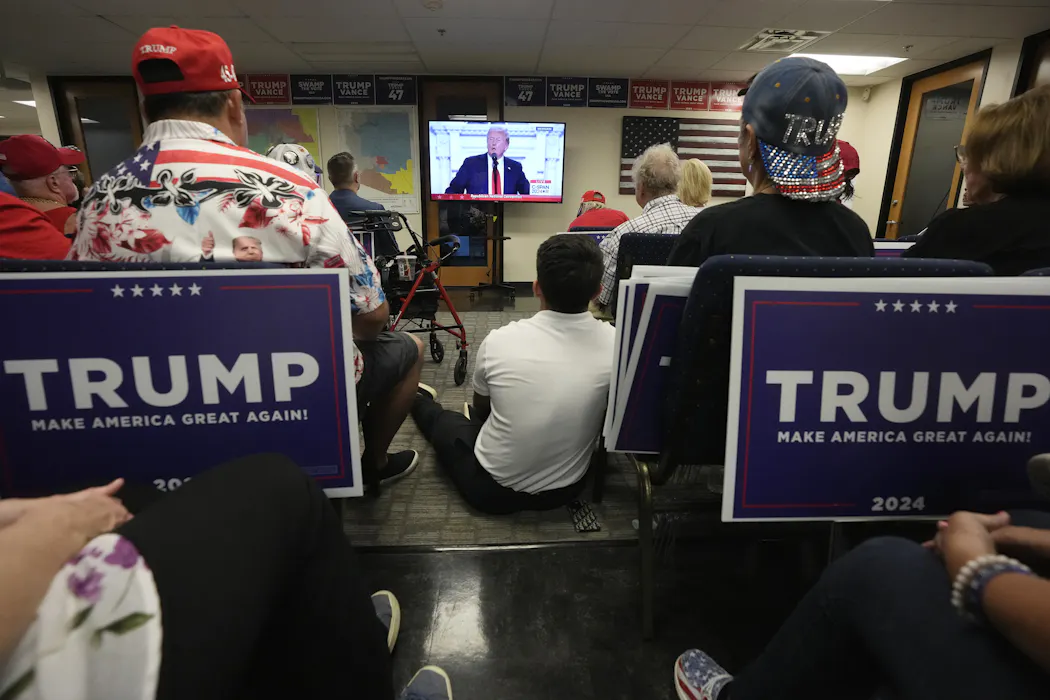
Phoenix residents watch presidential candidate Donald Trump speak at the Republican National Convention on July 18, 2024. AP Photo/Ross D. Franklin

In recent months, some prominent conservatives and erstwhile allies of President Donald Trump – former U.S. Rep. Marjorie Taylor Greene and journalist Megyn Kelly, for example – have voiced their displeasure with him on several issues. They range from Trump’s handling of the Iran war and the economy to the release of information concerning his relationship with convicted sex offender Jeffrey Epstein.

Most notably, political commentator Tucker Carlson, once one of Trump’s most stalwart loyalists, expressed remorse for his previous support for the president, declaring in April 2026, “It’s not enough to say, well, I changed my mind – or like, oh, this is bad, I’m out.” Carlson said he will be “tormented” by his support for Trump “for a long time” and that he is “sorry for misleading people.”

Growing unease with the Trump administration among these former allies comes amid some of the worst polling of Trump’s career. According to data compiled by pollster G. Elliott Morris, Trump’s popularity has been steadily declining over the past year. Americans are seriously questioning his handling of key issues, such as inflation, immigration, jobs and foreign affairs.

But beyond former prominent Trump allies, are there other Trump supporters having second thoughts about their votes in the 2024 presidential election? To answer this question, we conducted a nationally representative poll of 1,000 U.S. adults who were recruited from an online panel maintained by YouGov, a survey research firm.

We asked self-identified Trump voters about their votes in the 2024 election. Our results suggest that a growing number of them – especially moderates, African Americans and young people – are experiencing voter’s remorse.

A hand picks up a sticker off a table.
In our poll, roughly one-third of political moderates and African Americans who voted for Trump in 2024 said they would vote otherwise if the election were held again.
AP Photo/George Walker IV, File

Support for Trump remains strong

To be clear, our survey shows that most Trump voters remain in the president’s camp.

We found that 84% of 2024 Trump voters say they would vote for Trump if given the chance to vote again in the 2024 election. That’s down 2 percentage points since we previously asked this question in July 2025.

Over 90% of members of Trump’s core base of voters – including 93% of self-identified Republican Trump voters, 95% of self-identified conservative Trump voters and 92% of Trump voters over age 55 – said they would vote for Trump as they did in 2024 if given a second chance.

Regretful Trump voters

But some groups of Trump voters are having second thoughts. The most regretful are those with whom Trump made significant gains in 2024. They include political independents, African Americans, younger people and those with more education.

Roughly 3 in 10 2024 Trump voters who identify as political moderates and African Americans said they would vote differently if the election were held again. And roughly a quarter of young and middle-aged Trump voters also suggested they would not vote for Trump if they could redo their 2024 vote.

Twenty percent of Trump supporters with postgraduate degrees expressed a reluctance to vote for Trump if given a second opportunity. Voters with some college experience and those making less than $40,000 annually reported the same sentiment in similar percentages.

Perhaps most politically perilous, 31% of independents who voted for Trump in 2024 would not vote for him again in an election do-over.

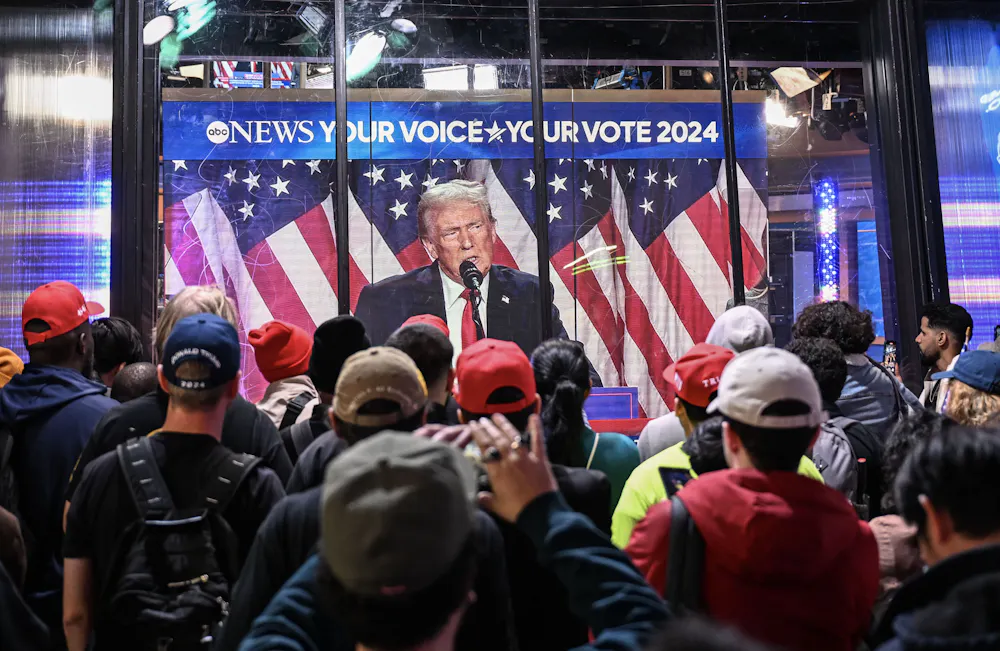
Several people wearing baseball hats watch a man speak on TV.
New York City residents watch Donald Trump speak as votes are tallied for the presidential election on Nov. 6, 2024.
Fatih Aktas/Anadolu via Getty Images

Cracks in the coalition

What is pushing Trump voters away from the president?

There is no single cause, but our results suggest that negative perceptions of Trump’s performance on high-profile issues are playing a big role. A substantial portion of Trump voters who give the president a negative grade on the economy (22%), the Epstein files (37%) and the Iran war (49%) say they would not vote for him in an election redo.

Our results suggest that cracks are forming in the Trump coalition and that they are concentrated among the groups that before 2024 were less likely to vote for the president.

Trump may take solace in the continued loyalty of his strongest supporters. But in a close election every vote counts, and lingering dissatisfaction could undermine Republicans’ ability to mobilize key swing voters.

As Republicans face the electorate in upcoming midterms, Trump and the GOP will have to work to reclaim the support of regretful voters. Failure to do so could cost Republicans Congress in 2026 and, ultimately, the presidency in 2028.

The Conversation

Jesse Rhodes has received funding from the National Science Foundation, the Spencer Foundation, Demos, and the University of Massachusetts Amherst.

Adam Eichen and Tatishe Nteta do not work for, consult, own shares in or receive funding from any company or organization that would benefit from this article, and have disclosed no relevant affiliations beyond their academic appointment.

​Politics + Society – The Conversation

Categories
Uncategorized

John Adams and Thomas Jefferson disagreed about the American Revolution’s meaning even as they lay dying

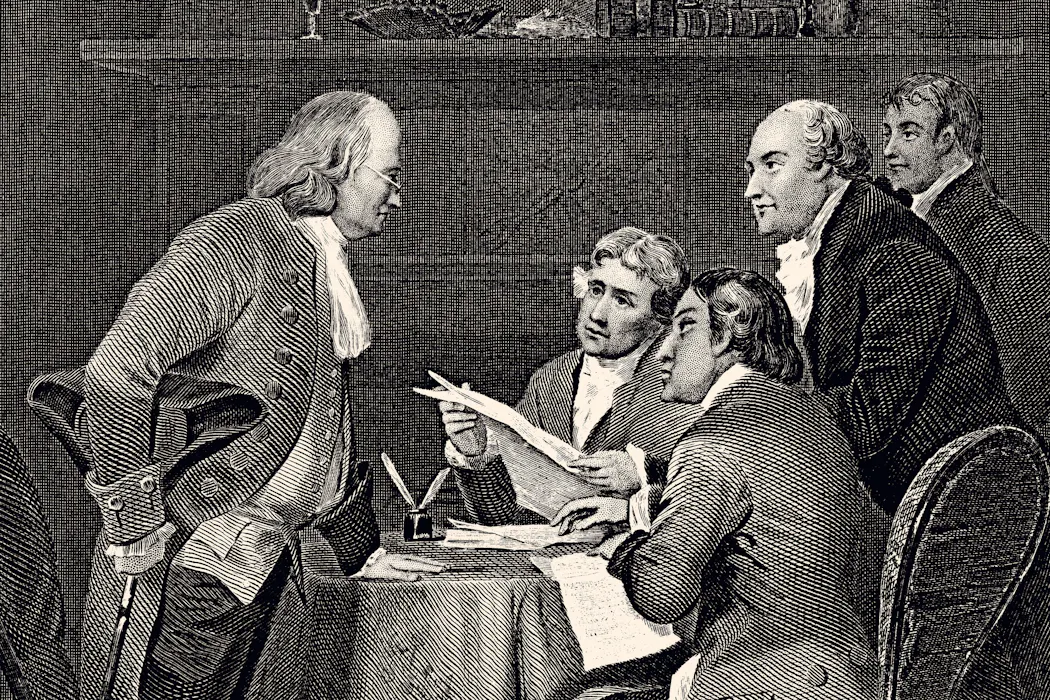
The men responsible for producing the Declaration of Independence, known as the Committee of Five, were, left to right: Benjamin Franklin, Thomas Jefferson, Roger Sherman, John Adams and Robert R. Livingston. Vintage etching circa late 19th century, digital restoration by Pictore via Getty Images

Like Americans today, the people living in the United States in 1826 were preparing to celebrate a milestone for their country. July Fourth of that year marked the 50th anniversary of the Declaration of Independence.

As what was known as the “Jubilee” of American independence approached, Americans realized that the founding generation was dying off. They wanted to take advantage of the founders’ insight while they still could.

This meant soliciting memories and advice from the signers of the Declaration, only three of whom were still alive. Thomas Jefferson and John Adams were the men most closely associated with the independence movement, yet they both lay dying and both declined invitations to attend the festivities planned for July Fourth.

But they were able to answer letters from younger men interested in their perspective on the revolution and subsequent history they had helped shape.

As an Adams scholar and someone interested in how he is remembered, I have studied with interest his response to the questions posed to him. He also wrote a good deal about the revolution to his friend and onetime rival, Jefferson.

These two men – who had worked well together during the American Revolution – could not have been more different. Both had thought long and hard about what the American Revolution meant to them. They did not always agree.

If Americans today are looking for a unified vision of their country in their own 250th celebrations, they will not find it with Adams or Jefferson.

A single page publication with the title 'FUNERAL THOUGHTS EXCITED BY THE DEATH OF JOHN ADAMS AND THOS. JEFFERSON'
A broadside published in Boston following the deaths of John Adams and Thomas Jefferson on July 4, 1826.
Library of Congress Printed Ephemera Collection

Rival friends

After the Revolutionary War, Adams and Jefferson became political rivals. They disagreed about how powerful the federal government should be and on foreign policy at a time when England and France, once again at war, were presenting challenges to the new country..

Jefferson founded the Democratic-Republican Party to counter the influence of Alexander Hamilton’s Federalist Party. While Adams never formally aligned with the Federalists, he agreed with many of their policies, especially on foreign policy.

As a result, the friendship between Adams and Jefferson unraveled. For years, they did not speak or correspond until a mutual friend, Benjamin Rush, encouraged their reconcilation.

On New Year’s Day, 1812, Adams was the first to reach out. He used the excuse of sending to Jefferson a pamphlet written by his son, John Quincy, saying that it was from “One who was honoured in his youth with Some of your Attention and much of your kindness.” Adams continued, in casual language, to tell Jefferson about the family and wished him a happy new year.

Jefferson responded warmly, telling Adams, “A letter from you calls up recollections very dear to my mind.”

From that time on, the two wrote to each other on a regular basis, discussing every topic imaginable, from agriculture to religion. Yet it was clear that their past rift was on Adams’s mind when he wrote, “You and I, ought not to die, before We have explained ourselves to each other.”

In the process, they revisited the days when they worked together to form a new nation. As they reflected on the meaning of the United States’ birth, they agreed that writing a history of the American Revolution was next to impossible.

Adams wrote to Jefferson: “Who shall write the history of the American revolution? Who can write it? Who will ever be able to write it?”

The problem, as Adams saw it, was that so much was done in secret. Nobody recorded the debates and speeches of the Continental Congress, the governing body during the revolution. Therefore, how could a true history ever exist?

Jefferson agreed. After restating Adams’ question about who could write a true history, Jefferson’s response was “nobody; except merely it’s external facts.”

On this, they could agree. On some of the specifics, they did not.

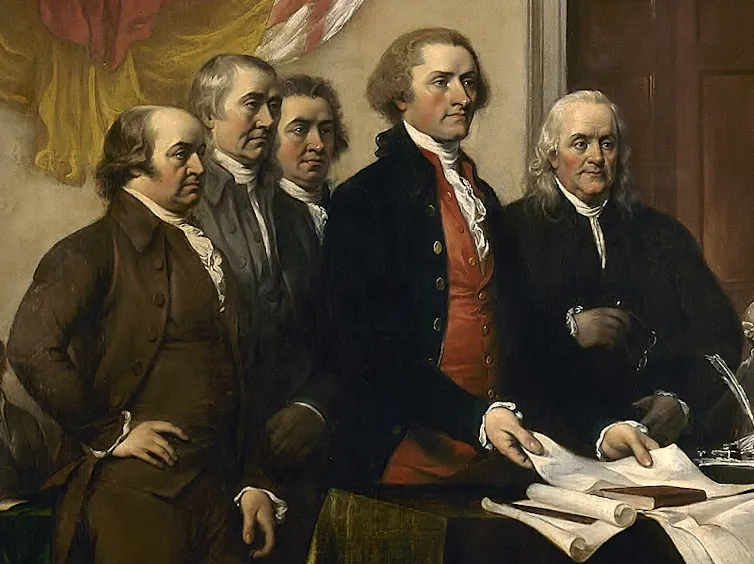
Five men in colonial dress, standing next to a table covered with papers.
The Committee of Five – left to right: John Adams, Roger Sherman, Robert Livingston, Thomas Jefferson, Benjamin Franklin – presenting their draft of the Declaration of Independence to the Second Continental Congress in Philadelphia.
Detail from John Trumbull’s 1818 painting in the U.S. Capitol, via Wikipedia

Fundamental difference

In old age, Adams remembered vividly how he convinced Jefferson to write the Declaration of Independence. One historian has argued that Adams’ memory seems a bit too clear, and suggested that he was working to elevate himself in the process of telling the story by claiming that he alone persuaded a reluctant Jefferson to take on the task.

However, scholars still accept Adams’ version of this event. Jefferson remembered the incident differently, stating that he was urged by the entire committee charged with producing the declaration, not just Adams, to take on the task and that he was happy to comply.

More important than the details was the ultimate interpretation by these two men of what they had accomplished 50 years before.

What their letters written after the Jubilee committee’s invitation reveal is a fundamental difference in their attitudes about the human spirit. Adams wrote that he appreciated the invitation and was sorry to decline. He called the birth of the U.S. “a Memorable epoch in the annals of the human race.”

Yet he also demonstrated his realistic view of human beings when he wrote that the independence movement would “form the brightest or the blackest page, according to the use or abuse of those political institutions by which they shall be shaped by the human mind.”

Adams understood that people interpret history according to their own circumstances. He was a realist who could not bring himself to accept the fundamentally optimistic view that humanity was always moving toward liberty.

Jefferson, on the other hand, was hopeful about the revolution’s impact on the world. He believed that the declaration would be “the Signal of arousing men to burst their chains.” The entire letter to the Jubilee committee offered an optimistic view of the future in which the human race was always progressing toward freedom.

When Adams and Jefferson died on July 4, 1826, their lives took on new meaning. In eulogizing them, House member Daniel Webster told the American public: “They are no more. They are dead. But how little is there of the great and good which can die! To their country they yet live, and live forever.”

Now, 200 years later, Americans still look to these Founding Fathers for inspiration. However, what Adams and Jefferson demonstrate is not unity. Instead, they exemplify the capacity for people to disagree and yet work for a common cause.

The Conversation

Marianne Holdzkom is affiliated with the Adams Memorial Foundation. She is an Adams Memorial Foundation Scholar, but receives no compensation from them.

​Politics + Society – The Conversation
Categories
Uncategorized

Why Trump’s call to pull 5,000 US troops from Germany will hurt America

The propeller of a ‘raisin bomber’ airplane from World War II is seen in Frankfurt, Germany, in June 2020. AP Photo/Michael Probst

President Donald Trump announced on May 1, 2026, that the United States will withdraw 5,000 U.S. troops from Germany – personnel who had been deployed there as a response to Russia’s invasion of Ukraine.

Germany-U.S. tensions started after the U.S. invasion of Iran. German Chancellor Friedrich Merz refused to support Trump’s war and stated that Iran had humiliated Washington’s leadership by closing the Strait of Hormuz. Trump followed the initial U.S. troop withdrawal announcement with threats to pull more armed forces.

U.S. troops will depart Germany over the next six to 12 months, leaving about 31,000 troops in the country.

The Trump administration’s decision to withdraw personnel comes after weeks of mounting tensions between the U.S. and NATO members. The United Kingdom and Portugal have restricted Washington’s ability to use its bases in those countries for certain activities related to the Iran war.

Trump also threatened to withdraw U.S. troops from Spain and Italy over their opposition to the war and refusal to help the U.S.

“Why shouldn’t I?” Trump said on April 30, 2026, referring to possible U.S. troop withdrawal from the two European countries. “Italy has not been of any help. Spain has been horrible. Absolutely.”

These remarks suggest the Trump administration views U.S. troop withdrawal as punishment for noncompliant European allies. But the reality is more complicated. Although this proposed 5,000-troop reduction is less than 15% of current U.S. forces in Germany, its logic and consequences speak to broader issues of power projection.

As experts in international relations, foreign policy and security cooperation, we have studied the relationship between U.S. military deployments and their host countries for years. While U.S. deployments contribute to the security of the host state, having troops based in Europe and other countries provides the U.S. with significant flexibility for pursuing its own foreign policy goals.

US deployment levels

Europe has historically been one of the regions with the highest concentrations of U.S. military personnel deployed overseas.

Since the end of the Cold War, for example, Italy has hosted between 20,000 and 40,000 personnel, and Spain between 2,000 and 7,000 personnel. Germany has regularly hosted the largest deployments. At the end of the Cold War, the U.S. maintained approximately 227,000 military personnel in Germany. Though Europe remains a significant location for basing U.S. troops, this number fell dramatically in the 1990s, hovering between 50,000 and 75,000 for most years since then.

US power projection

Historians and policymakers often explained U.S. deployments to Europe as a means of deterring the Soviet Union during the Cold War.

Nobel laureate Thomas Schelling described the logic in 1966: Even a small deployment in West Berlin served as a trip wire, ensuring that Soviet incursions would trigger a much larger military response from the U.S. and its European allies.

But a closer look at U.S. foreign policy challenges this view. While U.S. troops stationed in Europe were meant to defend Europe, their utility has extended far beyond that.

U.S. military bases and deployments provide the U.S. with greater flexibility and opportunities to pursue its foreign policy goals. By forward positioning military personnel and assets, the U.S. can reduce response times during crises, as well as the costs of moving its military resources into strategic positions.

A military plane lands on a runway.
A U.S. military aircraft lands at Incirlik Air Base in Adana, Turkey, as part of the operations against ISIS on Aug. 10, 2015.
Volkan Kasik/Anadolu Agency/Getty Images

Foreign deployments can convince countries not to attack countries that host them. During the Cold War, for example, the U.S. deployed nuclear weapons to Incirlik Air Base in Turkey, a NATO ally. Turkey’s close proximity to the Soviet Union increased the U.S.’s ability to challenge its superpower rival with these weapons.

These missiles were famously later withdrawn during the Cuban missile crisis in 1962, giving the U.S. something to bargain with in persuading the Soviets to remove their missiles from Cuba.

Larger military engagements, such as the Vietnam War or the wars in Iraq and Afghanistan, have typically relied on U.S. military facilities in allied states that are closer to the conflict. During the Vietnam War, U.S. bases in Germany, Japan and the Philippines were used as staging areas through which U.S. personnel and equipment moved on their way in or out of Southeast Asia.

U.S. facilities in Germany, such as Ramstein Air Base and Landstuhl Regional Medical Center, have been integral to combat operations, satellite control of drones and treating U.S. personnel wounded in combat. Landstuhl has admitted over 97,000 wounded soldiers since its founding in 1953 and has already treated service members injured during the ongoing Iran war.

Further, military equipment such as radar and interceptor missiles often have limited ranges. Deploying this equipment closer to rival countries can increase the chance of successfully intercepting and destroying incoming missiles.

Humanitarian benefits

Beyond warfare, U.S. humanitarian relief and disaster response operations often benefit from U.S. bases.

For instance, after a large earthquake struck Japan in 2011, U.S. personnel and facilities located in and around Japan enabled the rapid mobilization of relief operations.

A military transport plane takes off from a runway.
A U.S. Air Force C-17 Globemaster transport plane takes off from Ramstein Air Base in Germany on June 23, 2025.
Boris Roessler/Picture Alliance via Getty Images

In 2004, a powerful earthquake in the Indian Ocean triggered large tsunamis, affecting millions of people in nearby countries. U.S. personnel stationed at Yokota Air Base near Tokyo provided relief and supplies to people throughout Southeast Asia and as far as eastern Africa.

Similarly, after an earthquake in Turkey in 2023, U.S. medical personnel relocated from Germany to Incirlik Air Base to help provide relief.

Beyond their humanitarian benefits, these missions can increase favorable views of the U.S. More positive public views of America may also make foreign governments more likely to support U.S. foreign policy goals.

Lower costs for the US

Host states often make direct and indirect contributions to the costs of hosting and sustaining U.S. personnel. These can range from direct financial transfers to construction, tax reductions and subsidies. Japan and South Korea increased the amount they pay to host U.S. troops after Trump demanded they do so in 2019.

U.S. equipment – from tanks and trucks to planes and ships – also often relies on a host country’s infrastructure to operate and move within the host country. Germany, for example, paid over US$1 billion for construction costs and the stationing of U.S. troops in Germany during the 2010s.

Not all countries that host U.S. troops invest as much in their infrastructure as Germany does, and having those troops elsewhere could prove far more costly than having them in Germany.

The Conversation

Michael A. Allen received grant research funding from the Department of Defense’s Minerva Initiative, the US Army Research Laboratory, and the US Army Research Office from 2017 to 2021.

Carla Martinez Machain has received funding from the Department of Defense’s Minerva Initiative, the US Army Research Laboratory, and the US Army Research Office.

Michael E. Flynn has received funding from the Department of Defense’s Minerva Initiative, the US Army Research Laboratory, and the US Army Research Office.

​Politics + Society – The Conversation

Categories
Uncategorized

Trump-Xi summit will be no ‘Nixon in China’ moment – that they are talking is enough for now

Xi and Trump: A plastic friendship at best? Pedro Pardo/AFP via Getty Images

Meetings between Chinese and American leaders are not exactly routine, but few are historically groundbreaking.

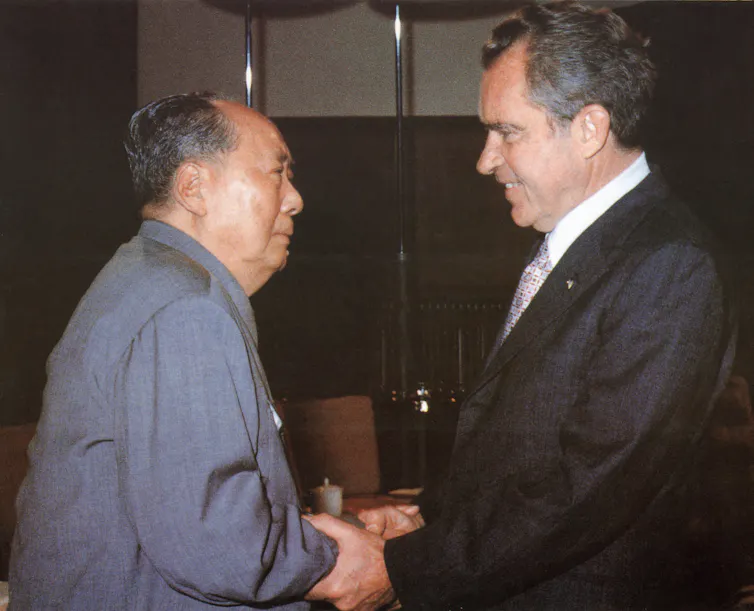
The exceptions include the very first visit by a sitting U.S. president to China, when Richard Nixon met with Chairman Mao Zedong in Beijing in February 1972 – at a time when America did not even formally recognize the People’s Republic of China. Deng Xiaoping’s visit to the U.S. in 1979 generated a similarly iconic moment when the reformist Chinese leader donned a Stetson at a Texas rodeo, a sign that he would be willing to engage with America in a way that Mao contemplated only near the end of his life.

Donald Trump may harbor hopes that his upcoming visit, slated for May 14-15, 2026, could have similar historical significance to those moments half a century ago. It will, after all, be the first face-to-face meeting of U.S. and Chinese leaders in Beijing since Trump’s own visit nearly a decade ago in 2017.

Two men in suits shake hands.
Chinese Communist Party Chairman Mao Zedong welcomes U.S. President Richard Nixon to his house in Beijing in 1972.
AFP via Getty Images

Yet the outcomes of this Trump summit with Xi Jinping are likely to be vague because the goals for both leaders are also only partially evident. The visit is being driven by trade imperatives, but there are other issues that threaten U.S.-China relations in the longer term.

It will be extremely hard for the two sides to address these more deep-rooted divides. Indeed, as an analyst of U.S.-China relations, I believe the world’s two largest economies will have an essentially competitive relationship for years to come, and areas of plausible cooperation – whether on climate change or AI regulation – are increasingly hard to find.

Taiwan: A change in US position?

One area that has been a source of contention for quite some time is Taiwan. Xi has made it clear that the unification of the island with the mainland cannot be left to “another generation” but has left it vague – up to now – as to how that goal will be achieved.

The summit has been preceded by lots of chatter about U.S. preparedness to honor its somewhat ambiguous promise to defend Taiwan in the event of an invasion – with Chinese analysts concluding that the war in Iran has severely weakened Washington’s capabilities on this front.

However, there are plenty of signs that Xi would rather find peaceful means to unite with Taiwan that avoid all-out war, particularly as the examples of Russia in Ukraine and the U.S. in Iran show that the outcomes of wars are not predictable.

Instead, China has seemingly concentrated its efforts on influencing the upcoming January 2028 Taiwan presidential election. The leader of the island’s major opposition Kuomintang party, Cheng Li-wun, recently visited the mainland and had a photo op with Xi – a sign that she thinks dealmaking with China might just be acceptable to the Taiwan electorate despite its deep distrust of Beijing.

To further fuel the narrative of a seemingly inevitable path toward unification, it would be helpful for Xi to have signals that the U.S. is no longer committed to defending Taiwan.

China will push for a change from the official position that the U.S. “does not support Taiwan independence” to “the U.S. opposes Taiwan independence.” The latter change sounds minor but would have great significance, as it would essentially be an acknowledgment that the U.S. recognizes unification, by some means, as a legitimate goal in its own right.

Trump has kept his own position ambiguous: He has noted more than once that Taiwan is very close to China and very far from the U.S., but he has also authorized major arms sales to the island that have infuriated Beijing.

The outline of a man is seen in front of a large ship.
Taiwanese navy warships anchored in Keelung, Taiwan.
Annabelle Chih/Getty Images

Taiwan’s ruling Democratic Progressive Party does not specifically endorse independence, as it knows that’s a red line for Beijing, but it would regard this change in American language as a serious blow to its position. It’s unlikely that the U.S. would make such a major concession during Trump’s visit – but that won’t stop Beijing from asking for it.

AI: The battle for global leadership

A more tentative but increasingly important area for discussion during the Xi-Trump summit is technology in general and AI in particular.

Just three years ago, the attitude of the U.S. government was summed up in the phrase of then national security adviser Jake Sullivan: “small yard, high fence.”

In other words, there would be only a few restricted areas of technology, but they would be fiercely guarded.

In 2026, things have changed. In some areas, tech restrictions have just become looser; the U.S. government now permits the sale to China of some high-specification, American-manufactured chips that were previously restricted. That policy was probably driven by the sense that China was developing its own domestic alternatives anyway and that the U.S. was losing market share.

Yet there is growing concern both in the U.S. and China that AI developments are moving too fast for governments – or companies – to know fully what the technology is capable of doing, let alone being able to regulate it.

China and the U.S. both desire to dominate AI and set the global norms and standards surrounding it. But they are also aware that AI has the potential to cause immense damage.

There has been loose discussion of whether any joint form of supervision or regulation of AI between the U.S. and China might be possible. And that could well form part of the discussions during the leaders’ summit.

But realistically, both sides see themselves in fierce competition, and the likelihood that either American or Chinese companies would restrain themselves may be fanciful.

The trade elephant in the room

The most substantial achievements of the summit, however, are likely to be in the least glamorous area: remedying the trade deficit.

Trump’s tariffs aim to make the United States’ global trade partners pay a higher price for entry to the American market, and China’s persistent and massive trade surplus has been a prime target for the U.S. president.

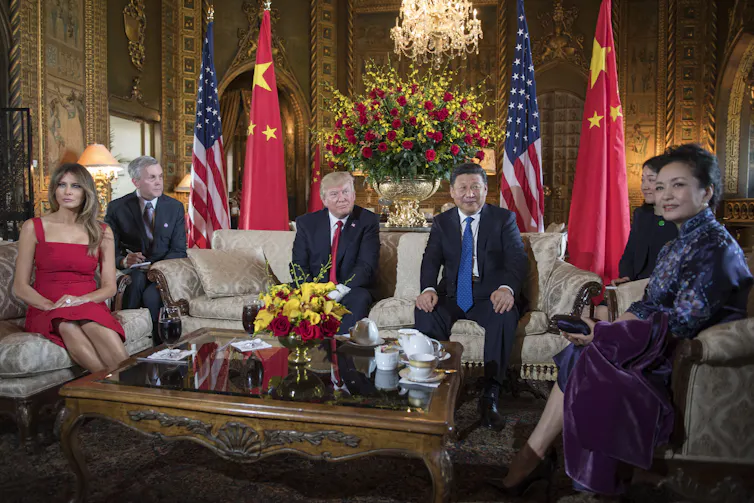
Four people sit on chairs surrounded by flags.
U.S. first lady Melania Trump, Donald Trump, Chinese President Xi Jinping and his wife, Peng Liyuan, in West Palm Beach, Fla., on April 6, 2017.
Jim Watson /AFP via Getty Images

While there are many American products that China would like to buy, most of them are not products that the U.S. government is willing to let them have, including high-tech equipment that could be used for military purposes.

Instead, the key products are likely to be agricultural, including U.S. soybeans and beef. Look out for concessions from China that would benefit farmers in key Republican states, such as Iowa.

The current tariff dispute between the U.S. and China has frozen into a standoff: The U.S. has agreed to allow China’s goods into its immense market at manageable tariff rates, and China has – mostly – agreed to allow critical minerals and rare earths to flow to U.S. manufacturers.

That truce lasts until October, but the summit may see it extended.

Neither side is keen to restart the trade war that marked the summer of 2025, when Trump announced tariffs of over 100% on China and the U.S. was in danger of having key mineral supplies cut off as a result.

Summit to talk about? Perhaps not

So how consequential will the Trump-Xi summit be? Well, don’t expect another “Nixon meets Mao” moment.

The circumstances more than a half-century on are also remarkably different. Today’s China, unlike in 1972, has an economy and military second only to the U.S. and a central position in global organizations, from the United Nations to the World Trade Organization, particularly as the U.S. retreats from such institutions.

Both the U.S. and Chinese sides know that they can expect limited cooperation at best from their opponent.

But after a period, particularly during the COVID-19 pandemic, when communication between the countries atrophied, it’s still important that they are talking at all.

The Conversation

Rana Mitter does not work for, consult, own shares in or receive funding from any company or organization that would benefit from this article, and has disclosed no relevant affiliations beyond their academic appointment.

​Politics + Society – The Conversation
Categories
Uncategorized

Racial gerrymandering may be here to stay

A recent Supreme Court decision is sparking a major push for partisan redistricting. Douglas Rissing, iStock/Getty Images Plus

The outrage was swift and severe when the U.S. Supreme Court, by an ideologically divided 6-3 vote, recently struck down Louisiana’s majority Black congressional district as an unconstitutional racial gerrymander. Critics lambasted the court for gutting the Voting Rights Act, the federal law that had until recently garnered strong bipartisan support and had ensured Black political representation in the South for more than half a century.

Many analysts see Jim Crow-era disenfranchisement of Black voters on the horizon.

Whether Louisiana v. Callais will wreak this kind of havoc remains to be seen, although some Southern states have already begun to redraw their legislative districts, aiming to ensure Republican control. Several Black legislators – all Democrats – are expected to lose their seats in the upcoming midterm elections. Democrats are threatening to retaliate with their own redistricting plans.

Because of a 2019 decision by the court, such political gerrymanders, where a legislative district is crafted to ensure partisan control, cannot be challenged under federal law. Both parties had taken full advantage of that ruling.

Prior to the Callais ruling, however, legislators had to be sure that when they sought partisan control of a district, they did not excessively dilute the voting power of minority residents. Multiple lawsuits had challenged political gerrymanders on exactly these grounds.

After Callais, that guardrail is gone. Indeed, lest they provoke the same type of litigation faced by Louisiana, state legislators must now ignore the race of voters altogether. From here on out, gerrymandering is fine, but only if it’s race-neutral.

This does not mean, however, that the race-blind mapmaking process envisioned by the Supreme Court majority will manifest. Based on our recently published research, it may, in fact, be just the opposite.

Race, we found, is – at least in the South – a more reliable predictor of how someone will vote than their party identification. And that makes race, we believe, a potentially irresistible lure for those designing congressional districts.

Three men in suits with the one on the left, who is Black, swearing an oath with his right hand raised.
In 1972, Andrew Young, left, was the first Black person to be elected to Congress from the deep South since Reconstruction.
AP Photo

Race a more reliable predictor

We are both political scientists – one of us an expert on Congress and national elections and the other a constitutional law and Supreme Court scholar. In Southern states, race and political party overlap significantly, with the vast majority of Black voters favoring Democrats and most white voters favoring Republicans. And in our study, we document that in this region, mapmakers actually have an incentive to take race into account when conducting a political gerrymander.

Political gerrymandering is the process of drawing electoral districts to favor one party over another. In most states, the responsibility for drawing districts rests with the state legislature. Thus, the party that controls state legislatures very often controls elections – at both the state and congressional level.

The goal of partisan redistricting is to maximize the chance that candidates from that political party will win elections. Our study shows that using both the race and party of voters to redraw districts, rather than just party alone, better ensures partisan advantage.

The research we conducted was motivated by a claim made by Justice Samuel Alito in another recent racial gerrymandering case decided by the Supreme Court, Alexander vs. South Carolina NAACP. He argued in the court’s majority opinion that when drawing districts to favor one party, mapmakers would need to look only at voters’ party affiliation – their race would be irrelevant to ensuring partisan control.

It is a straightforward, seemingly sensible claim. It is also wrong.

Our study uses an original dataset of precinct-level election results in South Carolina from 2010 to 2020 to explore how well a precinct’s racial and partisan composition before redistricting predicts how it votes over the following decade.

What we found reveals a more complicated picture than Alito – and the subsequent Callais decision – presumes.

A precinct’s Democratic and Republican vote share prior to redistricting was the strongest predictor of future election results. But there are two problems with relying on only such partisan data when gerrymandering a district.

First, our analysis showed that roughly a quarter of a precinct’s voters in the next election did not follow what the partisan data predicted – a sizable amount, given the supposed ease of gerrymandering by party.

Second, precinct election results are surprisingly volatile. Our analysis shows that the effect of preredistricting partisanship varies with election cycles, national conditions, gradual changes in party coalitions and other factors. A precinct that leaned Republican in the election before redistricting may vote very differently in a midterm wave year when the president is unpopular, precisely the type of election coming in November.

By comparison, the analysis shows that voters’ race is a more reliable predictor than their party of how they will vote in the next election. Consequently, it seems that, at least in Southern states, legislators have a genuine, data-driven incentive to use racial data when drawing partisan districts.

A man with white hair and glasses who looks stern and is pointing at someone not in the photo.
Republicans in South Carolina want to draw a new congressional map, and it could eliminate the district that has for decades elected Democrat Jim Clyburn.
Kevin Wolf/AP Photo

Will race still affect political gerrymanders?

Consider this redistricting scenario: South Carolina’s Republican-led legislature wants to flip the state’s lone Democratic congressional seat – long held by prominent African American U.S. Rep. Jim Clyburn – for the 2026 midterms. A simple approach is to identify those who voted for Donald Trump in 2024 and then just redraw the district to add enough of those voters to ensure Republican control.

The plan backfires, however. Not only does Clyburn hold his seat, but a neighboring district also elects a Democrat. What went wrong?

Simply put, the legislature failed to realize that past partisan returns are an imperfect predictor of future voting behavior.

A heavily Democratic area that is predominantly Black will vote Democratic far more consistently than a heavily Democratic area that is predominantly white. Two precincts that look identical on a partisan map can behave very differently at the ballot box. And a legislature that fails to take this into account has taken an unreliable route to partisan advantage.

If Republican legislators want to oust Democratic officials, the most reliable route is to oust from a district the minority Democratic voters who would have elected them.

This is not to suggest that legislators should use race in this way. It certainly smacks of racism and echoes the type of electoral machinations used during Jim Crow. But that analogy is not exactly on point. The approach we identified targets the power of Black voters not because they are Black, but because they are such reliable Democrats.

To many, that may be a difference that makes no difference. More litigation over gerrymanders is inevitable. If litigants can demonstrate that race was a “predominant” factor that “drove” redistricting, or that mapmakers purposefully attempted to diminish the power of Black voters because of their race, legal liability can still follow.

Voting rights advocates should be aware of the temptation legislators may have to let race affect their political gerrymanders.

Perhaps minority voters are as free from invidious discrimination as Alito’s majority opinion in the Callais case suggests. This does not mean, however, that those charged with ensuring all voters are fairly represented in American democracy will be colorblind. Our findings show that race could easily remain embedded in the political gerrymandering landscape, despite vehement claims to the contrary.

The Conversation

Jordan Ragusa has served as an expert witness in racial gerrymandering litigation, most notably in Alexander v. South Carolina State Conference of the NAACP. He also serves on the advisory board of Charleston Civil Rights and Civics (C3), an educational non-profit that fosters civic engagement and civil rights awareness among high school students

Claire B. Wofford does not work for, consult, own shares in or receive funding from any company or organization that would benefit from this article, and has disclosed no relevant affiliations beyond their academic appointment.

​Politics + Society – The Conversation

Categories
Uncategorized

The missing link in America’s critical minerals push isn’t mining – it’s processing expertise

MP Materials’ Mountain Pass mine and processing facility in California was for years the only U.S. rare earth elements mine. Tmy350/Wikimedia Commons, CC BY-SA

The United States is spending billions of dollars to secure access to critical minerals – minerals and metals that are essential to modern technology, from electric vehicles to smartphones and military systems.

But amid the push to dig more, one question gets far too little attention: Who will actually process what comes out of the ground?

Between mining and the finished product lies a complex chain of separation, refining and advanced manufacturing. Since the 1990s, however, the United States has lost much of its critical mineral processing capacity.

Rebuilding domestic mineral supply chains will depend not only on resource availability and funding, but also on whether the U.S. can rebuild the technical expertise and industrial systems required to process those materials on a large scale.

How America lost its lead

The United States was a global leader in rare earth minerals from 1965 through the mid-1980s. It produced about 15,000 metric tons a year, about three times the amount produced by the rest of the world.

The Mountain Pass mine in California supplied the majority of the world’s rare earth elements used in electronics and the defense industry. American metallurgists, chemical engineers and processing facilities had significant expertise in its production and processing.

However, environmental damage, including wastewater pipeline leaks that released radioactive wastewater into the Mojave Desert during the 1980s and 1990s, and tightening regulations increased operating costs in the United States. During that period, much of the world’s manufacturing base for rare earth elements shifted to China, where labor costs were lower and environmental regulations were less stringent.

As production grew abroad, U.S. production of rare earth elements fell sharply – to near zero by the early 2000s, according to the U.S. Geological Survey.

In recent years, as much as 90% of the rare earth minerals extracted in the United States and allied countries have been shipped to China for processing. In 2024, the U.S. relied on imports for about 80% of its rare earth compounds and metals.

Why bringing processing back is not simple

The U.S. government is now pushing to increase domestic critical minerals production, citing national security. But building a processing facility is not like opening a warehouse.

These facilities require years of permitting, highly specialized equipment and a workforce trained in metallurgy, chemical engineering and industrial systems operation. The time from investment decision to production can stretch across a decade.

The U.S. currently has two domestic rare earth mining locations. One is in southeast Georgia, which extracts rare earth elements as a byproduct of heavy mineral sand mining. The other is Mountain Pass, which produces bastnaesite, a rare earth carbonate mineral. The mines produced about 51,000 metric tons of rare earth mineral concentrates in 2025, while the U.S. imported about 21,000 metric tons of rare earth compounds, most of them from China, according to 2025 U.S. Geological Survey data.

The U.S. has also lost expertise. Mining and mineral engineering education programs now produce only a few hundred graduates per year, well below the levels of past decades. The number of accredited programs has declined since the 1980s. Many faculty members are nearing retirement.

Industry projections estimate that the mining workforce will need to grow significantly in the coming years to meet rising demand. Specialized skills in areas such as rare earth separation, metallurgical testing and environmental systems design require years of training and practical experience. And while mining can produce high-paying jobs, the industry also has a reputation for environmental damage and hazardous conditions.

Environmental compliance is part of the skill set

Processing critical minerals is a dirty industry. That fact has made it more difficult for processing and refining companies to operate in the U.S.

For example, separating rare earth elements typically involves chemical processing with acids and solvents. When waste streams are poorly managed, these processes can produce toxic wastewater and air pollution and contribute to soil erosion. In parts of China where rare earth production expanded rapidly in the 1990s and 2000s, contamination from mining and processing has polluted rivers and damaged nearby farmland, and the wastewater can seep into soil and groundwater.

In the U.S., modern facilities must meet strict federal and state standards for air quality, water discharge and waste management that raise the cost of processing. These regulations were developed in response to environmental disasters, like the Cuyahoga River fire of 1969, when industrial oil and waste on the river burned, and hazardous waste crises like the Love Canal disaster that led to landmark environmental laws.

Operating a refinery or separation facility in compliance with regulatory standards today requires expertise in pollution control, waste treatment and sustainable process design. That requires a workforce skilled in materials science and engineering and with knowledge of environmental systems. Without environmental expertise, operational risks, regulatory challenges and project delays can increase, affecting long-term viability.

How to build a US supply chain

Rebuilding U.S. supply chains will require more than expanding extraction.

Canada’s critical minerals strategy offers an example. It connects mining projects to battery and electric vehicle manufacturing by funding processing facilities, developing regional supply chain hubs and investing in workforce training programs tied to those industries.

Australia has combined critical minerals policies with incentives and public financing to encourage domestic mineral processing, while also expanding university and vocational training in mining, metallurgy and mineral processing.

The United States has many of the key ingredients needed to rebuild its processing capacity, including research universities and workers with transferable industrial skills. Land-grant and technical universities could expand programs that integrate mining, materials science, environmental restoration and recycling. In regions such as Appalachia, where coal’s decline has left workers with skills but few job opportunities, retraining programs for new mineral recovery jobs could help people transition to a new industry.

A few federal programs support parts of this transition, including research hubs that develop new extraction and processing technologies, apprenticeship initiatives and university-industry partnerships. However, these efforts are spread across multiple agencies, with limited coordination to align priorities and investment.

The real bottleneck

America’s critical minerals strategy is often discussed in terms of geology and geopolitics – where resources are located and who has access to them.

But supply chains depend on people and systems. That’s America’s real bottleneck in creating a domestic supply chain.

A successful domestic supply chain will require workers who know how to separate neodymium from praseodymium, operate solvent extraction circuits and maintain hydrometallurgical plants within regulatory standards. These are highly specialized skills that take years to develop.

The United States has significant mineral resources and growing policy support. Now, it needs to pay attention to the workforce and industrial capacity needed to transform those resources into usable materials.

This gap developed over decades. Addressing it will likely require sustained investment alongside broader mineral policy changes such as permitting reforms and investment in domestic processing facilities.

The Conversation

The authors do not work for, consult, own shares in or receive funding from any company or organization that would benefit from this article, and have disclosed no relevant affiliations beyond their academic appointment.

​Politics + Society – The Conversation

Categories
Uncategorized

When you don’t have the facts, argue the law: How Trump’s EPA is limiting its own ability to protect public health far into the future

The Trump administration is trying to tie the hands of future administrations when it comes to regulating pollution, including greenhouse gas emissions. Chris Sattlberger/Tetra Images via Getty Images

As the Trump administration moves to weaken America’s air pollution rules, it is deploying new legal interpretations that are intended to tie the hands of future administrations for years to come.

In practice, the changes limit the Environmental Protection Agency’s authority under the Clean Air Act. The result allows EPA officials to ignore science, data and the adverse effects their decisions will have on public health and the environment.

But the new interpretations are also designed to apply not just to the rule in which they are first set forth but into the future.

If affirmed by the U.S. Supreme Court in inevitable legal challenges, these interpretations could make it harder for future administrations to restore the public health protections that the Trump administration eliminates. They could also make it difficult to update rules to respond to new information about health risks.

Typically, moves to weaken pollution regulations through novel legal interpretations would have a good chance of being overturned in court. But the EPA’s new interpretations are strategically designed to appeal to the current U.S. Supreme Court’s view of federal agencies’ authority, especially in light of the court’s 2024 ruling in Loper Bright v. Raimondo. In that case, the court overturned what’s known as the Chevron doctrine. A 1984 Supreme Court ruling had established that courts should defer to executive agencies’ legal interpretations of their governing statutes when the text of the law was ambiguous or left gaps. That deference no longer applies.

As a former EPA appointee who helped write and review dozens of regulations under the Clean Air Act during the Obama and Biden administrations, I find these efforts to prevent the EPA from doing its job of protecting public health and the environment to be alarming. Here are two examples of how the new interpretations are playing out.

Blocking future climate regulations

In February 2026, the EPA rescinded its 2009 endangerment finding, a determination under the Clean Air Act that carbon dioxide and five other greenhouse gases “may reasonably be anticipated to endanger public health or welfare” because they contribute to climate change.

The endangerment finding was the scientific and legal basis for EPA rules requiring automakers, power plants and oil and gas operations to cut their greenhouse gas emissions. Erasing it would make it easier for the Trump administration to eliminate greenhouse gas regulations.

Rather than try to challenge the science of climate change, which would be difficult given the growing mountain of evidence, the Trump EPA relied on legal arguments that were intended to dispense forever with the EPA’s ability to regulate greenhouse gas pollutants under the Clean Air Act.

Two men walk toward a podium. One of them, Zeldin, is grinning. The promotional sign reads 'Largest Deregulation in History
President Donald Trump and U.S. Environmental Protection Agency Administrator Lee Zeldin arrive for a White House event to announce a rollback of the 2009 Endangerment Finding on Feb. 12, 2026.
Anna Moneymaker/Getty Images

Among the administration’s numerous arguments, two stand out:

First, the Trump EPA says the Clean Air Act should be read to limit the EPA’s authority to regulate air pollution only if its harm to the public is “through local or regional exposure.”

That would mean contributions from U.S. sources to global air pollution, no matter how demonstrable or how much they endanger Americans, are not covered by the Clean Air Act.

Second, the Trump EPA says that reducing greenhouse gas emissions from motor vehicles and engines would be “futile.” It points to global climate modeling that suggest these reductions would not meaningfully reduce the harm to public health and welfare.

What that argument fails to mention is that actions by people around the world to reduce emissions across different sectors add up. Motor vehicle emissions are the No. 1 contributor of U.S. emissions. If this sector is too small to regulate, then nothing is big enough.

Each of these interpretations is contrary to positions that the EPA took in the original endangerment finding, which the D.C. Circuit Court of Appeals upheld in 2012.

Allowing more toxic air pollutants

A second example involves the EPA’s proposal on March 17, 2026, to weaken pollution restrictions on businesses that sterilize medical equipment using ethylene oxide, a known carcinogen.

In that proposal, the EPA is also changing a legal interpretation in a way that would constrain the agency’s ability to protect human health into the future, this time from emissions of toxic air pollutants.

The Clean Air Act, under Section 112, establishes a methodical program for the EPA to regulate industries that emit significant quantities of air pollutants that can cause cancer, birth defects, genetic mutations or neurological harm, or harm reproductive health.

The EPA reviews how facilities control their emissions and sets standards that require all facilities to meet what the best-controlled sources are doing. But Section 112 has an important provision called “residual risk” review: Eight years after the EPA sets the first technology-based standards, it must determine whether the public health risk posed by emissions from the facilities after controls are added is acceptable.

In 2024, the EPA updated its hazardous air pollution rule for facilities that use ethylene oxide to sterilize medical equipment sensitive to steam heat, such as devices containing plastic, rubber or electronic components. Because recent research showed that ethylene oxide posed a much higher risk of cancer than previously thought, the EPA also updated its 2006 residual risk finding and required additional safeguards.

The Trump EPA is now arguing that the agency can assess residual risk only once, even if more recent information shows that the health risk is unacceptably high.

By constraining its own authority, the EPA is withholding standards that would protect thousands of people from a higher risk of cancer. It is also creating a legal precedent that will justify weakening other standards. Those include standards for chemical manufacturing facilities that the Biden EPA updated in 2024 through residual risk review.

That precedent would also prohibit the EPA in the future from taking into account new information about the health effects of any regulated hazardous air pollutant from any type of industry the EPA regulates under Section 112 of the Clean Air Act, including petroleum refineries, chemical manufacturing and paper mills.

Arguing the law

These rules are just two examples of the administration’s “if you don’t have the facts, argue the law” approach.

If the administration’s strategy works, the American public may be living, and dying, with the consequences of these industry-friendly regulations for years to come.

The Conversation

Janet McCabe is a volunteer with the Environmental Protection Network and has held several appointed positions at the United States Environmental Protection Agency. Consistent with the Indiana University Statement of Policy on Institutional Neutrality, the comments contained in this communication are solely my views and are not intended to be construed, and shall not be construed, as the views of Indiana University or comments made on behalf of or by Indiana University.

​Politics + Society – The Conversation

Categories
Uncategorized

What to do if someone you know in Philadelphia or elsewhere is detained by ICE

A handout photo provided by U.S. Immigration and Customs Enforcement of a worksite enforcement operation at a car wash in Philadelphia on Jan. 28, 2025.
U.S. Immigration and Customs Enforcement via Getty Images

If someone you know is detained by U.S. Immigration and Customs Enforcement, it can be incredibly challenging to find and communicate with them.

For example, it can take several days just to confirm where they are. Even after locating a loved one, it is possible to lose track of them again, as ICE regularly moves people between facilities without notice.

I’m a law professor at Temple University in Philadelphia, where I work with immigrant rights organizations on issues of ICE arrest and detention.

Here’s what we know about how and where ICE is holding people as of May 2026.

A confusing web of detention facilities

When a person is arrested by ICE, the lack of a centralized immigration detention system makes it hard to figure out where they are.

For ICE detention, the federal government can contract with counties for county jail space or to execute service agreements with private prison companies. ICE also contracts with the Federal Bureau of Prisons to hold immigrants in their facilities.

Pennsylvania is no exception to this patchwork system. Four county jails – in Pike, Clinton, Cambria and Franklin counties – have contracts with the federal government to detain immigrants for ICE. Pike County, for example, received US$16 million from ICE in 2024 and 2025 for use of its jail.

Further, ICE contracts with Centre County so the county can serve as a pass-through for payment to the private prison company, the Geo Group, which runs the Moshannon Valley Processing Center. Moshannon is the largest detention center in the Northeast with 1,876 beds. This pass-through system allows the federal government to avoid the burdensome Federal Acquisition System for contractors. That purchasing system is governed by uniform policies that apply to all federal agencies that enter into contracts for services to ensure that business is conducted with integrity, fairness and transparency.

ICE pays millions of dollars each month to operate the Moshannon Valley facility.

Most recently, ICE set up contracts with two Bureau of Prison facilities in Pennsylvania to hold immigrants: the federal detention center in Philadelphia and the federal prison FCI Lewisburg.

Over 2,000 immigrants in detention in PA

After a person has been arrested by ICE, major federal policy changes that are intended to keep people locked up or have them deported make it difficult to get that person released.

For example, ICE has issued new guidance that expands who is subject to mandatory detention without access to a bond hearing to include anyone who entered the U.S. without a visa. This policy is currently being legally challenged by the ACLU along with other groups.

Additionally, ICE releases many fewer people. Under federal law, ICE has the discretion to release most people, unless they fall into a specialized category of “criminal aliens.” Previously, people were released on parole or on their own recognizance, sometimes with an order of supervision or bond.

As a result, immigration detention has reached unprecedented levels.
Over 70,000 people were held in immigration detention in January 2026. As of April 2, 2026, over 2,000 people were held in immigration detention in Pennsylvania.

Crowd of people with one holding a sign that reads 'Sergio is one of us' and another holding a sign that reads 'We stand with Sergio'
Residents of Danville, Pa., hold a candlelight vigil for local business owner Sergio Chavez Jimenez after he was arrested by ICE on Dec. 27, 2025, and detained at the Clinton County Correctional Facility.
Paul Weaver/SOPA Images/LightRocket via Getty Images

Isolated from family and legal advice

Once arrested, ICE detainees have a hard time contacting the outside world.

Upon arrival at a facility, they are stripped of their belongings, including their cellphone. They must pay for telephone calls to their family or get others to pay by putting money in their commissary account.

Further, ICE detention facilities are often outside of major urban areas and far from legal services and community support. Moshannon, for example, is over 100 miles from any nonprofit immigration attorneys who provide representation to people in immigration removal proceedings.

Previously, the federal government funded a Legal Orientation Program where nongovernmental legal services offered information, referrals and representation to those in detention. In 2025, the Department of Justice ended the program, justifying its termination based on the executive order entitled “Protecting the American People Against Invasion.” Section 19 of that executive order relates to reviewing, pausing or terminating contracts, grants or other agreements with nongovernmental organizations that support or provide services “to removable or illegal aliens.”

Out-of-state transfers are common

ICE’s movement of people without notice across different facilities is a long-standing practice. However, a recent UCLA study found that out-of-state transfers of noncriminal Latino detainees jumped from 18% to 55% after President Donald Trump’s reelection in 2024.

Transfers are mostly about ICE’s own efficiency in maximizing the filling of bed space. Some advocacy organizations have alleged that transfers are conducted for retaliatory reasons against people who make requests or complain. Transfers are not only disorienting for the person involved but also impede communication with family and access to counsel.

How to find someone in ICE detention

Several online guides provide information about how to locate someone after an ICE arrest and how to prepare one’s family in case of future arrest.

Here are some key tips.

1. Use the ICE online detainee locator.

The locator requires either a person’s country of birth and alien registration number – called an “A number” – or their full name and date of birth. A person might have an A number if they have a past or present case with the government, including having applied for a green card or asylum. It can take 48 hours for ICE to enter information about the person into its database so it can be picked up by the online locator. The name must be an exact match with what was entered into the system.

Webpage of U.S. Immigration and Customs Enforcement
This online search tool can help locate an adult detainee in ICE or Customs and Border Protection custody.
U.S. Immigration and Customs Enforcement

2. Contact the ICE field office.

The Philadelphia field office covers Delaware, Pennsylvania and West Virginia. If you are a noncitizen, you might want a U.S. citizen to do this for you out of an abundance of caution, because ICE records information about the person calling. Call 215-656-7164 or email Philadelphia.Outreach@ice.dhs.gov.

3. Contact the consulate.

In many instances, ICE is supposed to notify the consulate of the arrested person’s home country within 72 hours.

4. Reach out to community groups, attorneys and elected officials.

In Philadelphia, community groups such as Asian Americans United, Juntos and New Sanctuary Movement, or the statewide Pennsylvania Immigration Coalition, might be able to help you. An attorney might also be able to help you. Here is a list of nonprofit legal service providers in Pennsylvania.

Further, you can ask for help from your federal elected officials, such as your congressional representative or Sens. John Fetterman or Dave McCormick. If you have a more direct relationship with a local elected official, such as your city council member, it cannot hurt to see whether they can also help you.

How to prepare in advance

If you know someone who is at risk of arrest by ICE, you can help them prepare in advance. Tell them to:

1. Keep copies of their documents in a secure space.

This includes their A number as well as immigration documents, passport, birth certificate, marriage certificate, tax returns and any employment and medical records. If they have children, make sure to include their passports, birth certificates and medical records.

2. Memorize important phone numbers.

They should know the numbers of family members and their attorney in case their cellphone is taken from them.

3. Have an emergency plan.

A family preparedness plan includes designating a caregiver for children in case a parent or guardian is arrested. They should also consider filling out documents that may help a family member or friend to care for their children if they are unavailable because of detention or deportation. These include forms that provide temporary guardianship or custody of minor children, consent for medical care of minor children and information for the Philadelphia School District.

Philadelphia Legal Assistance provides free downloadable packets in English and in Spanish to build a family preparedness plan.

Read more of our stories about Philadelphia and Pennsylvania, or sign up for our Philadelphia newsletter on Substack.

The Conversation

Jennifer J. Lee does not work for, consult, own shares in or receive funding from any company or organization that would benefit from this article, and has disclosed no relevant affiliations beyond their academic appointment.

​Politics + Society – The Conversation

Categories
Uncategorized

Why a landmark Supreme Court ruling has failed to keep racial bias out of jury selection

In 1986, the Supreme Court barred prosecutors from striking jurors solely because of race. Bloomberg Creative/Getty Images

On April 30, 2026, Texas executed James Broadnax, a Black man who was sentenced to death for the robbery and murder of two men in 2008.

Before the jury was seated, the prosecutor moved to dismiss each of the seven Black people from the jury pool. Citing court documents, CNN noted that he “(utilized) a spreadsheet during jury selection that bolded only the names of every Black juror” and none of the white or Latino people. After defense objections, the judge reseated one Black juror, citing the otherwise all-white jury.

The trial proceeded with 11 white jurors and one Black juror.

Mugshot of James Broadnax
James Broadnax was executed in Texas on April 30, 2026.
Associated Press/Texas Department of Criminal Justice

A jury with that racial composition is likely to deliberate in a different way than one that is more racially diverse. According to Duke University law professor James Coleman, “Juries with two or more members of color deliberate longer, discuss a wider range of evidence, and collectively are more accurate in their statements about cases, regardless of the race of the defendant.”

A 2012 Duke University study of two Florida counties found that juries “formed from all-white jury pools convicted Black defendants 16% more often than white defendants, a gap that was nearly eliminated when at least one member of the jury pool was Black.”

Broadnax was executed on the 40th anniversary of Batson v. Kentucky, in which the Supreme Court ruled that prosecutors cannot exclude jurors solely on account of their race.

But Broadnax’s case is not an outlier. Similar efforts to “whiten” juries in capital cases regularly occur in states that authorize the death penalty. A 2025 analysis of Alabama’s death row by the Equal Justice Initiative found that across 122 capital cases – involving Black and white defendants in roughly equal numbers – more than one-third were decided by juries with no Black jurors or, like Broadnax’s case, only one.

As a death penalty scholar who has tracked the role of race in the death penalty system, I believed Batson was a step forward in the effort to address a long history of excluding Black people from jury service. But 40 years have shown that Batson merely scratched the surface of the problem.

A long history

The exclusion of Black people from jury service is as old as the republic itself.

Before the Civil War, one way this was done was by limiting eligibility for such service to those who could vote. Some states went further, saying only whites could serve on juries. A Tennessee law dating from 1858 is a good example: “Every white male citizen who is a freeholder, or householder, and twenty-one years of age, is legally qualified to act as a grand or petit juror.”

It was only after the Civil War and the passage of the 13th, 14th and 15th amendments to the Constitution that Black people were entitled to serve on juries nationwide – at least in theory.

Some states resisted. For example, West Virginia law specified that “all white male persons who are twenty-one years of age and who are citizens of this State shall be liable to serve as jurors.”

In 1880, 12 years after the ratification of the 14th Amendment – which guarantees equal protection of the law – the Supreme Court struck down that West Virginia law. It did so in the case of a former slave who was convicted in a capital case by an all-white jury and given a death sentence – a preview, I believe, of the kind of thing that happened to Broadnax.

The court held that the West Virginia law that “denies to colored citizens the right and privilege of participating in the administration of the law as jurors because of their color … is, practically, a brand upon them, and a discrimination against them which is forbidden by the [14th] amendment.”

Despite the court’s unequivocal ruling, the door to jury service remained closed to Black people. As legal scholar Sarah Claxton argued in 2022, “States across the country enacted vague and subjective standards for juror eligibility – requiring good moral character, honest and intelligent men, persons having educational qualifications – whose discriminatory application excluded Black citizens from juries.”

The modern story

The story of racial discrimination in jury selection is not simply a story of a now discredited past.

In 1965, the Supreme Court refused to remedy the exclusion of Black people from juries that its 1880 decision was supposed to have ended. It held, in Swain v. Alabama, that “a defendant in a criminal case is not constitutionally entitled to a proportionate number of his race on the trial jury or the jury panel.”

Two decades passed before the court again took up the glaring problem of racial discrimination by prosecutors seeking to keep Black people off juries.

In Batson v. Kentucky, the court considered a case in which the prosecuting attorney “used his peremptory challenges to strike all four black persons” in the jury pool and managed to seat an all-white jury. And on April 30, 1986, it reaffirmed that “a State denies a Black defendant equal protection when it puts him on trial before a jury from which members of his race have been purposefully excluded.”

The court then created a process for challenging jury selection. First, the defendant must point to evidence – based on how the prosecutor used their strikes – that suggests racial discrimination. If they can, the prosecutor must then come forward with “a neutral explanation for challenging Black jurors.” Finally, the trial judge weighs all the evidence to decide whether the prosecutor’s stated reason is genuine or a cover for bias. In practice, this means a Batson challenge will fail as long as the prosecutor can offer any nonracial reason for excluding Black jurors, however thin.

Thurgood Marshall standing outside the Supreme Court building
When Batson v. Kentucky was decided, Justice Thurgood Marshall warned that the decision would not end racial discrimination in jury selection.
Bettmann/Getty Images

When Batson v. Kentucky was decided, Justice Thurgood Marshall, drawing on his years of experience as an NAACP Legal Defense Fund lawyer, warned that the decision would not end racial discrimination in jury selection. “Merely allowing defendants the opportunity to challenge the racially discriminatory use of peremptory challenges in individual cases will not end the illegitimate use of the peremptory challenge,” he explained.

He predicted that “any prosecutor can easily assert facially neutral reasons for striking a juror, and trial courts are ill-equipped to second-guess those reasons.”

40 years of Batson

History has proved Marshall right.

In the Broadnax case, prosecutors claimed that their efforts to remove Black jurors had nothing to do with their race. They suggested that they were dismissed because they could not be impartial or they had reservations about the death penalty, disqualifying them from service on a jury in a capital murder trial.

The Batson test has not been much of an obstacle for prosecutors in other capital cases either. In fact, in 2025 the Death Penalty Information Center reported that in the years after Batson, “prosecutors soon learned how to successfully defend race-based challenges, and courts generally accepted even the flimsiest excuses.” That’s why defendants rarely win Batson challenges “despite powerful evidence of racial bias.”

In the 40 years since Batson was decided, the Death Penalty Information Center has identified only 68 cases across 16 states in which a capital defendant succeeded in getting a conviction or death sentence reversed because of racial discrimination in jury selection.

The picture is similar in California, where more comprehensive data exists. According to a 2020 Berkeley Law report, the California Supreme Court reviewed 142 cases involving Batson claims over 30 years and found a violation in only three. At the time the report was published, it had been more than three decades since that court found a Batson violation involving the strike of a Black prospective juror.

Looking at what has happened since Batson v. Kentucky, Elisabeth Semel, a UC Berkeley law professor and co-director of the school’s Death Penalty Clinic, said in an interview with the Death Penalty Information Center that she would give Batson a grade of “F.” As she explained, “It certainly has failed to achieve its promise.”

The Conversation

Austin Sarat does not work for, consult, own shares in or receive funding from any company or organization that would benefit from this article, and has disclosed no relevant affiliations beyond their academic appointment.

​Politics + Society – The Conversation