Categories
Uncategorized

Supreme Court likely to reject limits on concealed carry but uphold bans on gun possession by drug users

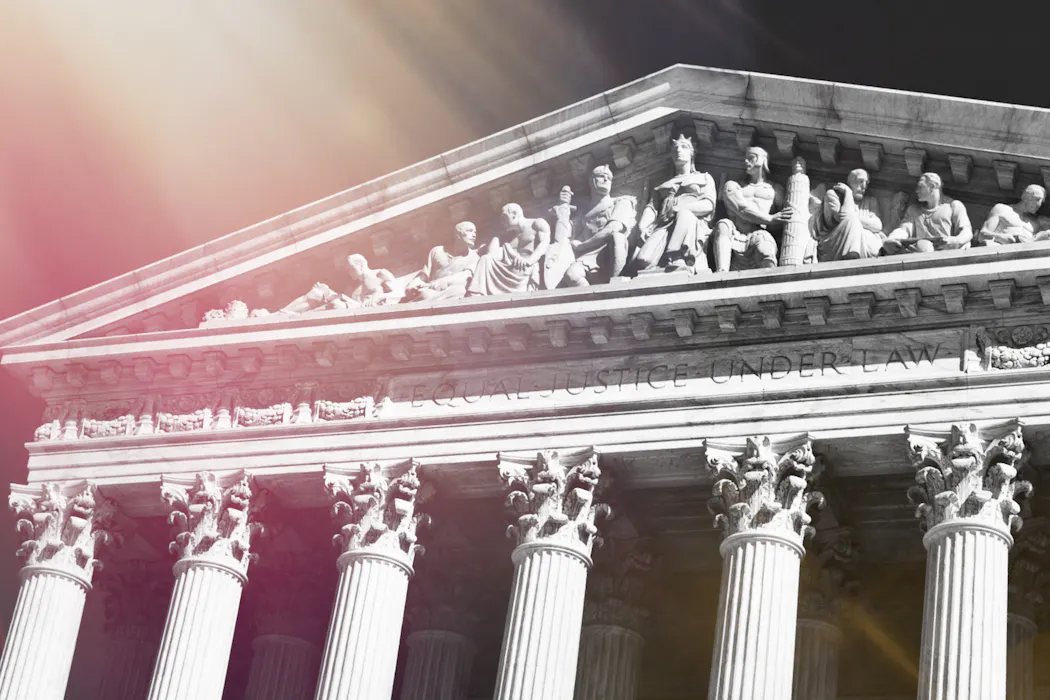
The Supreme Court recognizes an individual right to self-defense with firearms in public spaces. wildpixel/Getty Images

The U.S. Supreme Court in early 2026 will hear oral arguments in two cases testing the limits of gun rights under the Constitution.

Can a state outlaw carrying a concealed weapon in businesses or restaurants unless the owners post a sign allowing it? And can the federal government criminalize the possession of firearms by a habitual drug user?

The plaintiffs in both cases claim that these laws violate their Second Amendment rights. As a close observer of the Supreme Court, I suspect the rulings will split. The court will likely strike down the limitation on concealed carry and uphold the law denying gun rights to drug users.

History will tell

The Supreme Court recognizes an individual right to self-defense with firearms in public spaces. But it has also upheld the power of the government to enforce legitimate limits on that right.

The question is how can Americans know which limits are constitutional and which are not.

In 2022, the Supreme Court answered that question in a ruling, New York State Rifle & Pistol Association v. Bruen, that struck down several states’ limitations on issuing what’s called “concealed carry” licenses. That ruling set a new standard for defining the boundaries on a constitutional right: if the right was allowed at the time of America’s founding and the early republic.

In the view of originalists, who see the meaning of the U.S. Constitution and the subsequent amendments as fixed by the understanding of its authors and ratifiers, the Second Amendment recognizes a preexisting individual right of self-protection. That self-protection right can be restricted but not removed. It can be limited but not eliminated.

In the Bruen ruling, Justice Clarence Thomas wrote that current laws must be “consistent with the Nation’s historical tradition of firearm regulation.” The appropriate method, he wrote, is to examine “how and why” the regulation functions, and see if the same kinds of laws were accepted by the founders.

If so, the current laws in question are legitimate limits to the right. If not, they are unconstitutional infringements.

The first test of the new standard for a constitutional regulation came in the United States v. Rahimi case in 2024. The court upheld the federal law criminalizing gun possession by someone subject to a domestic violence restraining order.

The court examined the historical record and found several examples of laws removing firearms from people who threatened others. The record revealed established law in four states at the time of the founding that fit the same general reason and mechanism as the current federal regulation targeting domestic abusers.

Concealed carry

On Jan. 20, the court will hear arguments in Wolford v. Lopez about what the historical record reveals regarding limitations on carrying concealed firearms in public.

After the Bruen decision, Hawaii and a few other states enacted laws restricting citizens from bringing a licensed firearm on private property held open to the public unless the owner gives permission. Usually that is accomplished by posting “clear and conspicuous signage at the entrance.”

The plaintiffs, Jason and Alison Wolford, argue that the Hawaii ban makes it “impossible as a practical matter to carry a firearm.” Most establishments will not post any sign, meaning it would be a criminal offense to conduct normal errands such as entering a grocery store or shop.

tktk
Hawaii Gov. Josh Green signs gun control legislation in Honolulu on June 2, 2023. The law prohibits people from taking guns to a wide range of places, including beaches, hospitals, bars and movie theaters.
AP Photo/Audrey McAvoy, File

The U.S. Court of Appeals for the 9th Circuit in 2024 upheld the Hawaii law on the grounds that a 1771 New Jersey law and an 1865 Louisiana law are historical “dead ringers” for the Hawaii law. The court found that those laws meet the requirement of “an established tradition” limiting citizens from carrying firearms onto private property without consent.

The Republican-appointed majority on the Supreme Court, I believe, is likely to conclude that this is a misunderstanding of Justice Thomas’ method described in Bruen.

The standard the court has set is not to find any one or two similar laws that were not struck down as unconstitutional. Instead, the standard is to demonstrate a clear pattern of a recognized form of accepted regulation. If the law existed for only a short period of time, in a limited geography, or for reasons we would now see as unacceptable, this does not demonstrate a tradition of legitimate legal limitation.

Advocates for the plaintiff argue that the New Jersey law from the 1770s was intended to deal with the problem of hunters using private land without permission. They say it did not apply to businesses open to the public.

The Louisiana law enacted immediately after the Civil War was part of the Black Codes designed to keep firearms out of the hands of freed slaves. The law was not intended to be enforced against whites but had the clear intent to restrict the civil rights of freedmen. The plaintiffs argue that it is wrong to cite an openly racist post-Civil War regulation as a justification for contemporary law.

A man stretches on a beach
Todd Yukutake, a director of the Hawaii Firearms Coalition, stretches before exercising in a beach park in Honolulu on June 29, 2023. The coalition sued to block a Hawaii law that prohibits carrying guns in sensitive locations, including parks and beaches.
AP Photo/Jennifer Sinco Kelleher

The court is likely to agree. The majority of the court will likely rule that these laws are exceptions and not a legitimate pattern of historical regulation.

The legal scholar Neal Katyal describes the objections to these two examples as “flyspecking” – nitpicking small details.

But the historical analogies have clear flaws. If the majority follows the doctrine laid out in Bruen and Rahimi over the past few years, the court will strike down the Hawaii law.

Drug use

The second challenge to gun regulations will be heard in March.

United States v. Hemani addresses the federal law criminalizing firearm possession by anyone “who is an unlawful user” or “addicted to any controlled substance.”

Ali Hemani argues that his prosecution is unconstitutional because U.S. tradition only disarms citizens who are currently drunk or high, not alcohol abusers or addicts who may be clearheaded at other times.

History does not seem to be on Hemani’s side. While illicit drugs such as cocaine or heroin were largely unknown at the time of the nation’s founding, drunkenness was common and alcohol consumption was dramatic.

An amicus brief submitted for the case by a group of Colonial historians argues that “at the Founding, alcohol consumption, unlike drug use, was commonplace, and the Founders were aware of the risk that alcohol could cause a lapse in judgment.”

More importantly, the historians argue that “numerous laws disarmed those under the influence, recognizing that alcohol, which impedes judgment and self-control, is a dangerous combination with guns.”

These laws also applied to habitual drunkards, the mentally ill and others determined to be dangerous to the public.

Given the conservative leanings of the current court, it seems likely that the majority will find these historical laws on alcohol and guns to be close enough in purpose and method to uphold the current federal law on drugs and guns.

These two rulings may come down at the end of term in June 2026, when the most controversial cases tend to be announced. The court’s historical focus seems likely to yield nuanced results, striking down some regulations and upholding others.

Perhaps most importantly, we will see what the historical emphasis reveals about the balance between the constitutional right to self-defense and the collective power to ensure public safety.

The Conversation

Morgan Marietta does not work for, consult, own shares in or receive funding from any company or organization that would benefit from this article, and has disclosed no relevant affiliations beyond their academic appointment.

​Politics + Society – The Conversation

Categories
Uncategorized

Juneau officials maintain evacuation advisory for Behrends slide path

NOTN- Juneau officials are urging residents living within the Behrends avalanche path to continue evacuating and are advising the public to limit activity in the area as avalanche risk remains elevated.

Deputy City Manager Robert Barr said the city continues to recommend that people avoid stopping or parking within the Behrends avalanche path, citing ongoing uncertainty about snowpack stability and limited visibility at higher elevations due to the rainy and windy weather conditions.

Barr emphasized that the avalanche path shown on CBJ maps represents the maximum modeled extent of a worst-case avalanche event.

“It is important to note that the Behrends avalanche slide path, as shown in the CBJ avalanche maps, represents the maximum extent of the largest model avalanche event, meaning it is unlikely than an avalanche would reach the outer reaches of the map, that includes Egan drive.” Barr Said.

While officials say it is unlikely that an avalanche would reach Egan Drive, emergency planners prepare for the most severe scenario.

“Our emergency programs and responders prepare for the worst.” Barr said, “That means having critical resources staged on both sides of town, as well as having plans for their partners to respond and care for emergency medical transportation and other needs, we also want to make sure that the public has all the information we have so that they can make their own decisions about their potential risk.”

Barr noted that forecasting avalanche risk remains complex, particularly because weather conditions have prevented crews from visually inspecting the snowpack near the top of the Behrends slide path. Barr said information about the volume and stability of snow in the upper reaches of the slide zone is limited.

“Predicting and forecasting risk is complicated and can be an exercise in making decisions with incomplete information.” Barr said.

City teams were monitoring conditions overnight, so far there has been no major release, and the evacuation advisory remains in effect this morning.

Officials said additional information will be shared once crews are able to safely access and visually inspect the snowpack, which could happen later this week depending on weather conditions.

Categories
Uncategorized

Searching reporters’ homes, suing journalists and repressing citizen dissent are well-known steps toward autocracy

Neither of these men — US President Donald Trump, left, and Russian President Vladimir Putin — likes being held accountable by the press. Contributor/Getty Images

The FBI search of a Washington Post reporter’s home on Jan. 14, 2026, was a rare and intimidating move by an administration focused on repressing criticism and dissent.

In its story about the search at Hannah Natanson’s home, at which FBI agents said they were searching for materials related to a federal government contractor, Washington Post reporter Perry Stein wrote that “it is highly unusual and aggressive for law enforcement to conduct a search on a reporter’s home.”

And Jameel Jaffer, director of the Knight First Amendment Institute at Columbia University, told The New York Times the raid was “intensely concerning,” and could have a chilling effect “on legitimate journalistic activity.”

Free speech and independent media play a vital role in holding governments accountable by informing the public about government wrongdoing.

This is precisely why autocrats like Russia’s Vladimir Putin have worked to silence independent media, eliminating checks on their power and extending their rule. In Russia, for example, public ignorance about Putin’s responsibility for military failures in the war on Ukraine has allowed state propaganda to shift blame to senior military officials instead.

While the United States remains institutionally far removed from countries like Russia, the Trump administration has taken troubling early steps toward autocracy by threatening – and in some cases implementing – restrictions on free speech and independent media.

A large building with the words 'The New York Times' emblazoned on its lower floors.
Trump sued the New York Times in 2025 for $15 billion for what he called ‘malicious’ articles; a judge threw out the case.
Jakub Porzycki/NurPhoto via Getty Images

Public ignorance, free speech and independent media

Ignorance about what public officials do exists in every political system.

In democracies, citizens often remain uninformed because learning about politics takes time and effort, while one vote rarely changes an election. American economist Anthony Downs called this “rational ignorance,” and it is made worse by complex laws and bureaucracy that few people fully understand.

As a result, voters often lack the information needed to monitor politicians or hold them accountable, giving officials more room to act in their own interest.

Free speech and independent media are essential for breaking this cycle. They allow citizens, journalists and opposition leaders to expose corruption and criticize those in power.

Open debate helps people share grievances and organize collective action, from protests to campaigns.

Independent media also act as watchdogs, investigating wrongdoing and raising the political cost of abuse – making it harder for leaders to get away with corruption or incompetence.

Public ignorance in autocracies

Autocrats strengthen their grip on power by undermining the institutions meant to keep them in check.

When free speech and independent journalism disappear, citizens are less likely to learn about government corruption or failures. Ignorance becomes the regime’s ally – it keeps people isolated and uninformed. By censoring information, autocrats create an information vacuum that prevents citizens from making informed choices or organizing protests.

This lack of reliable information also allows autocrats to spread propaganda and shape public opinion on major political and social issues.

Most modern autocrats have worked to silence free speech and crush independent media. When Putin came to power, he gradually shut down independent TV networks and censored opposition outlets. Journalists who exposed government corruption or brutality were harassed, prosecuted or even killed. New laws restricted protests and public criticism, while “foreign agent” rules made it nearly impossible for the few remaining independent media to operate.

At the same time, the Kremlin built a vast propaganda machine to shape public opinion. This control over information helped protect the regime during crises. As I noted in a recent article, many Russians were unaware of Putin’s responsibility for military failures in 2022. State media used propaganda to shift blame to the military leadership – preserving Putin’s popularity even as the war faltered.

The threat to independent media in the US

While the United States remains far from an autocracy, the Trump administration has taken steps that echo the behavior of authoritarian regimes.

Consider the use of lawsuits to intimidate journalists. In Singapore, former Prime Minister Lee Kuan Yew and his son, Lee Hsien Loong, routinely used civil defamation suits to silence reporters who exposed government repression or corruption. These tactics discouraged criticism and encouraged self-censorship.

Two men in suits, one older, one younger, shaking hands.
In Singapore, former Prime Minister Lee Kuan Yew, left, and his son, Lee Hsien Loong, routinely used civil defamation suits to silence reporters who exposed government repression or corruption.
Roslan Rahman/AFP via Getty Images

President Donald Trump has taken a similar approach, seeking US$15 billion from The New York Times for publication of several allegedly “malicious” articles, and $10 billion from The Wall Street Journal. The latter suit concerns a story about a letter Trump reportedly signed in Jeffrey Epstein’s birthday book.

A court dismissed the lawsuit against The New York Times; that’s likely to happen with the Journal suit as well. But such lawsuits could deter reporting on government misconduct, reporting on the actions and statements of Trump’s political opponents, and the kind of criticism of an administration inherent in opinion journalism such as columns and editorials.

This problem is compounded by the fact that after the Jimmy Kimmel show was suspended following a threat from the Trump-aligned chairman of the Federal Communications Commission, the president suggested revoking the broadcast licenses of networks that air negative commentary about him.

Although the show was later reinstated, the episode revealed how the administration could use the autocratic technique of bureaucratic pressure to suppress speech it disagreed with. Combined with efforts to prosecute the president’s perceived enemies through the Justice Department, such actions inevitably encourage media self-censorship and deepen public ignorance.

The threat to free speech

Autocrats often invoke “national security” to pass laws restricting free speech. Russia’s “foreign agents” law, passed in 2012, forced nongovernmental organizations with foreign funding to label themselves as such, becoming a tool for silencing dissenting advocacy groups. Its 2022 revision broadened the definition, letting the Kremlin target anyone who criticized the government.

Similar laws have appeared in Hungary, Georgia and Kyrgyzstan. Russia also uses vague “terrorist” and “extremist” designations to punish those who protest and dissent, all under the guise of “national security.”

After Charlie Kirk’s murder, the Trump administration took steps threatening free speech. It used the pretext of the “violence-inciting radical left” to call for a crackdown on what it designated as “hate speech,” threaten liberal groups, and designate antifa as a domestic terrorist organization.

The latter move is especially troubling, pushing the United States closer to the behavior characteristic of autocratic governments. The vagueness of the designation threatens to suppress free expression and opposition to the Trump administration.

Antifa is not an organization but a “decentralized collection of individual activists,” as scholar Stanislav Vysotsky describes it. The scope of those falling under the antifa label is widened by its identification with broad ideas, described in a national security memorandum issued by the Trump administration in the fall of 2025, like anti-Americanism, anti-capitalism, and anti-Christianity. This gives the government leeway to prosecute an unprecedented number of individuals for their speech.

As scholar Melinda Haas writes, the memorandum “pushes the limits of presidential authority by targeting individuals and groups as potential domestic terrorists based on their beliefs rather than their actions.”

The Conversation

Konstantin Zhukov does not work for, consult, own shares in or receive funding from any company or organization that would benefit from this article, and has disclosed no relevant affiliations beyond their academic appointment.

​Politics + Society – The Conversation

Categories
Uncategorized

Mary Peltola, barrier-breaking ex-Alaska congresswoman, is challenging Dan Sullivan in Senate race

U.S. Rep. Mary Peltola, D-Alaska, speaks on Jan. 4, 2024, at a town hall meeting on the possible Albertsons-Kroger grocery merger. (Photo by Yereth Rosen/Alaska Beacon)

AP-Democratic former U.S. Rep. Mary Peltola said Monday that she would challenge Republican Sen. Dan Sullivan in this year’s midterm elections, vowing to shake up the establishment to make life more affordable for Alaskans.

“Life is difficult here, and we know that we have to take care of each other,” Peltola said in a video announcement.

Peltola, who is Yup’ik, was the first Alaska Native to serve in Congress. She won special and regular elections in 2022, defeating a field that included Republican former Gov. Sarah Palin. In 2024, she lost to Republican Nick Begich, who had also run in 2022.

Peltola’s time in Congress was marked by tragedy. Her mother died in 2023, and her husband died in a plane crash later that year.

Peltola focused on local concerns in her announcement, saying Alaska’s future depends on fixing the “rigged system in D.C. that’s shutting down Alaska, while politicians feather their own nests.”

She said the salmon and migratory birds that once filled the freezers of Alaska Native subsistence hunters are now harder to find, forcing families who live far from the state’s limited road system to rely on grocery stores for pricey staples, driven up by high transportation costs.

“It’s not just that politicians in D.C. don’t care that we’re paying $17 for a gallon of milk in rural Alaska,” she said. “They don’t even believe us. They’re more focused on their stock portfolios than our bank accounts.”

Although Democrats are hopeful about picking up seats in this year’s midterms, Alaska could prove to be difficult political terrain. Sullivan, a former state attorney general and natural resources commissioner, defeated the state’s last Democratic senator in 2014.

The Republican National Committee said Peltola became “a rubber stamp for the far-left the second she got to Washington.”

“Alaskans saw through her empty promises then showed her the door, and she’ll lose to Dan Sullivan who fights for Alaskans every day,” RNC spokesperson Nick Poche said in a statement.

While serving in Washington, Sullivan has been involved in military and resource development issues, and he was endorsed by then-President Donald Trump in the 2020 election.

“Senator Sullivan has spent years delivering real results for Alaska: historic investments in our state’s health care, major funding for our Coast Guard, helping protect those who can’t protect themselves and policies that are finally unleashing Alaska’s energy potential,” his campaign spokesperson, Nate Adams, said in an email to The Associated Press.

“His opponent,” Adams said, “served a term and a half in Congress where she didn’t pass a single bill. Alaskans deserve a senator with a proven record of getting things done, and the contrast couldn’t be clearer in this race.”

Peltola has long touted her ability to work across party lines, such as supporting the large Willow oil project on Alaska’s North Slope. She angered some Democrats in 2024 when she refused to endorse then-Vice President Kamala Harris in the presidential race won by Trump.

Peltola said Alaska’s Republican congressional delegation used to ignore partisanship and do what was right for the state, such as backing public media and disaster relief, and even invoked Republican former Sen. Ted Stevens.

“It’s about time Alaskans teach the rest of the country what Alaska First and, really, America First looks like,” Peltola said.

Alaska has open primaries and ranked choice voting in general elections. The top four vote-getters in the August primary regardless of party affiliation will advance to the November general election.

Categories
Uncategorized

Crews have removed 3 million pounds of snow as avalanche, wind risks remain elevated

Capital Transit bus, turning through pooling water, photo courtesy of CBJ

NOTN- Most City and Borough of Juneau facilities and schools reopened Monday after crews removed more than 3 million pounds of snow and ice from rooftops across the city, though officials warned that avalanche danger, high winds and heavy rain could create renewed hazards through Wednesday.

Deputy City Manager Robert Barr said city crews and contractors worked through the past week to prepare buildings for safe occupancy.

“We got a lot of work done.” Said Barr, “CBJ teams, our contractors, did a lot getting ready for facilities to reopen. The warming weather, I would say, mostly helped us, but the rain definitely presented some new challenges too. Over the past week or so, our crews and contractors removed over 3 million pounds of snow and ice from our roofs, that work, combined with the work of our engineering team doing all those roof assessments, got us to where we are today.”

All Juneau School District schools and CBJ facilities reopened Monday, except for Mendenhall River Community Schools, which remained closed while contractors complete snow removal from roofs.

City officials are now closely monitoring another weather system expected to move through the panhandle today into Wednesday.

High wind warnings have been issued for much of the panhandle through 9 p.m. Wednesday. Winds are expected to increase rapidly this afternoon, first across southern communities and then moving north. Gusts of up to 70 mph are possible as the front pushes through late today, before gradually decreasing but remaining elevated into Wednesday.

Forecasts also call for two to three inches of rain, conditions that could significantly increase avalanche danger.

“We will be actively monitoring that pattern with our partners at the Weather Service and DOT, and everyone else that’s involved with it so that we can understand what that might mean for avalanche risk. And of course, we’ll communicate that as it as it evolves.” Said Barr.

As a precaution, Thane Road will be closed at the avalanche gates beginning at noon today due to high avalanche hazard. The closure will be re-evaluated at 6 a.m. Wednesday.

Officials warned that if a natural avalanche reaches the roadway, debris removal may not be possible until conditions improve or hazard levels decrease naturally.

Barr thanked residents who reported drainage issues the city, saying the information helped crews clear storm drains and access fire hydrants.

“I want to express appreciation and really thank everyone who has reached out to us, really appreciate people giving us a heads up about where they see that localized flooding or ponding because a storm drains not clear.”

Residents can report more drainage issues or hazards at emergencyresponse@juneau.gov.

Juneau’s emergency declaration issued last week has brought additional assistance from the State Emergency Operations Center. Barr said the state is helping with documentation for potential reimbursement, coordinating with insurance providers, supplying new avalanche monitoring equipment installed Sunday, and supporting drone flights for situational awareness. Helicopter support is planned once weather conditions allow.

Centennial Hall will remain open as an emergency shelter for the foreseeable future, as long as evacuation advisories remain in place.

Categories
Uncategorized

South Florida’s Brightline has highlighted an old problem – every year for the past decade, 900 pedestrians were killed by trains

High-speed passenger trains like Florida’s Brightline travel through dense neighborhoods, increasing the likelihood of accidents involving pedestrians. Brynn Anderson/Associated Press

In 2018, high-speed passenger trains branded as Brightline started running along the formerly freight-only Florida East Coast Railway. Initial service from Miami to West Palm Beach was extended to Orlando in 2023. Unfortunately, the southern end of the line is in the spotlight because of collisions with pedestrians and motor vehicles.

The safety concerns have received extensive coverage in the Miami Herald, Orlando Sentinel, The Atlantic and on local television and radio stations.

To South Floridians, the furor may be novel. But nationally the debate over how to prevent these incidents has been going on for decades.

Most of the risks of railroading fall on pedestrians and motorists. Over the past decade, an average of 900 pedestrians lost their lives each year in the U.S., and another 150 motor vehicle occupants died in collisions at highway-rail grade crossings.

I’m an economist who has studied transportation safety for 40 years. My research has analyzed why motor vehicle risks have fallen substantially, while there has been hardly any progress for pedestrians.

Reducing motor vehicle crashes

In 1966, 1,700 motor vehicle occupants died at railroad crossings. Nowadays, that number is typically less than 150. Over the same period, the number of vehicles on the road has tripled. By these measures, the risk has fallen by an amazing 97%.

What happened?

In part, the risk fell due to better vehicle technology and reduced drunken driving, which have improved overall highway safety.

The rest was due to actions taken starting in the early 1970s in reaction to the high number of deaths. Notably, the responsibility for deciding on safety features at crossings was taken away from the railroads and given to state and local highway authorities.

A design standards handbook and risk analysis tools were developed by the U.S. Department of Transportation. The analysis tools produce a priority listing of the riskiest crossings. The handbook describes the options that engineers can use to reduce risks, such as installing flashing warning lights and barriers across the road. It also suggests when to consider closing or consolidating dangerous crossings. Federal money supplemented spending by railroads and state and local governments to pay for these improvements.

A public information campaign educating drivers about the risks at crossings was established in Idaho in 1972 under the name Operation Lifesaver. By 1986, the program had spread to every state.

Railways closed many unprofitable lines after they were allowed to do so by the Staggers Rail Act of 1980. The reduced number of railroad miles and crossings also dropped the associated risk.

Stagnant risks to pedestrians

A similar analysis of pedestrian deaths is complicated. Pedestrian deaths occur all along the railroad and not just at crossings. Sadly, some deaths are intentional. Federal railroad officials had stopped requiring that suicides be reported in the mid-1950s and resumed doing so only in 2011.

In 1966, there were 730 nonintentional pedestrian deaths. Today, that number is roughly the same. It’s worth noting, however, that the U.S. population is 70% higher than it was in the 1960s, so the risk per person is lower.

Federal data from the past decade shows that about a quarter of the 900 annual pedestrian deaths were ruled by a coroner or medical examiner to be intentional. Coroners often lack sufficient evidence to definitively rule a suicide, so the actual proportion of pedestrians with suicidal intent is likely much higher. My own research in the Chicago area found that about half were confirmed or likely suicides.

Getting to the root cause

While the risk is down, the reduction is nowhere near as large as that of motor vehicles at crossings.

In the past decade the U.S. Department of Transportation has funded development of handbooks on the design of pedestrian crossings and interventions to mitigate risks at places away from crossings.

The latter handbook emphasizes that successful countermeasures need to be tailored to the reasons people are on the tracks in the first place. And, of course, there are many reasons.

Fencing may seem like an obvious countermeasure, but a fence does not prevent access at crossings and stations. Moreover, fences also tend to be destroyed where it is onerous to detour to a formal crossing rather than take a shortcut.

In fact, fencing can be counterproductive if it screens the railroad from public view and encourages nefarious activities, including theft, drug dealing and loitering.

Tackling intentional deaths has been challenging. Countermeasures have focused on signage providing information on mental health services and training rail workers to recognize people displaying symptoms of distress and then intervening or calling for help.

At times, tackling the root of the problem may involve land use and zoning at a local level. For example, a city might decide not to allow a convenience store to be located on the opposite side of the tracks from the population it serves. Or a city or school district might relocate transit or school bus stops to avoid the temptation to take a shortcut.

train tracks running through an intersection with multiple stoplights
This intersection with red traffic lights and railway crossings in Miami requires the traffic lights to coordinate with railway crossing gates.
LB Studios/Connect Images via Getty Images

Florida railroads

South Florida faces several challenges. The primary challenge is its flat land. No hills means there is no natural grade separation between the railroad and intersecting roads and footpaths.

Elevating the railroad would be expensive and would cut communities in two. The effects of such severance should not be underestimated. In fact, the trend in recent times has been to rejoin urban neighborhoods that were bisected by interstate highway construction in the 1960s.

Another challenge comes, ironically, from the original vision behind rail travel in Florida. Standard Oil magnate Henry Flagler developed and built the Florida East Coast Railway in hopes of spurring coastal development. These days, dense communities surround the line, with housing, schools, stores and restaurants scattered on both sides of the tracks.

Development also made it less safe for motor vehicles. Main roads, such as U.S. Route 1 and Dixie Highway, were built parallel to the tracks. Over time, as these roads have become wider and busier, the cross streets have a smaller distance between the railroad and the main road. The space for vehicles waiting to turn onto the main road is limited, and the lights and gates at the railroad crossing must be coordinated with the traffic signals on the main road. This is a major challenge to the state, county and municipal traffic engineers who have inherited these complicated intersections.

It is tempting to suggest that many of these crossings should be consolidated into fewer, well-designed crossings. But this could result in unintended consequences for pedestrians. When too few crossings are available, pedestrians are more likely to take unauthorized shortcuts. Any consolidation of road crossings must be accompanied by alternative ways for pedestrians to cross the tracks safely.

It is important to keep looking for solutions to pedestrian and vehicle safety issues so that South Florida communities can be safer while enjoying the benefits that rail offers, such as reducing the number of trucks on the roads and offering an alternative to passengers who wish to avoid flying or driving on congested Interstate 95.

If you are experiencing suicidal thoughts, you can contact the National Suicide Prevention Lifeline (988) or Crisis Text Line (text “HELLO” to 741741) for immediate support.

The Conversation

I was a volunteer member of the National Academies of Sciences, Engineering, and Medicine oversight committee as the 2022 “Strategies for Deterring Trespassing on Rail Transit and Commuter Rail Rights-of-Way” handbook was developed. As such we could comment on drafts but were not the authors of the report.

​Politics + Society – The Conversation

Categories
Uncategorized

The ‘drug threat’ that justified the US ouster of Maduro won’t be fixed by his arrest

This isn’t going to stop in the U.S. just because Venezuelan President Nicolás Maduro was arrested. Floris Leeuwenberg, Corbis Documentary/Getty Images

Donald Trump has flagged Venezuelan drug trafficking as a key reason for the U.S. military operation on Jan. 3, 2026, that captured President Nicolás Maduro and whisked him to New York to face federal drug charges.

Trump has described Maduro as “the kingpin of a vast criminal network responsible for trafficking colossal amounts of deadly and illicit drugs into the United States.”

In 2025, the administration presented the U.S. military buildup in the Caribbean and repeated strikes on alleged drug trafficking vessels off Venezuela’s coast as necessary to counter the flow of cocaine into the United States.

But as an international relations scholar focused on Latin America, I know that when assessed against hard data on cocaine production and transit, the U.S. pretense for military action against Venezuela falters.

Venezuela has never been a major cocaine producer. That distinction belongs overwhelmingly to Colombia, which accounts for the vast majority of coca cultivation and cocaine processing in the Western Hemisphere.

That means the arrest of Maduro and subsequent U.S. attempts to control Venezuela’s government are unlikely to stem the influx of cocaine into the U.S.

Justifying intervention

While Venezuela’s geography and governance gaps make it a transit country for Colombian products, most U.S. cocaine originates and flows through corridors north and west of Venezuela. This contradicts the claim that Caracas was the central hub of cocaine trafficking into the United States.

Moreover, the opioid overdose crisis in the U.S. today is overwhelmingly driven by synthetic drugs such as fentanyl, which have supply chains rooted in Mexico and Asia, not Venezuela.

So why did Washington elevate Venezuela’s role in narcotics?

A man in handcuffs being moved along by uniformed law enforcement agents.
Nicolás Maduro, in handcuffs, is escorted by federal agents en route to a federal courthouse in New York on Jan. 5, 2026.
XNY/Star Max/GC Images

The answer, I believe, lies less in illicit markets than in power. By conflating criminal networks with government authority, an act amplified through legal designations and indictments, the Trump administration could justify military intervention without explicit congressional authorization.

Once Maduro was removed, the substance beneath the rhetoric became clearer. The U.S. has not turned power over to an opposition democratic coalition. Instead, it facilitated the swearing-in of Vice President Delcy Rodríguez as interim president, a figure deeply tied to the existing regime and whose network includes people long accused by U.S. authorities of illegal activities.

The release of political prisoners by the interim government and U.S. moves to reopen Venezuela’s oil sector to American interests underscore that what unfolded was not purely a counternarcotics mission but a reconfiguration of governance in Caracas.

Pretext for military action

The role of the Cartel de los Soles – or Cartel of the Suns – in this narrative deserves particular scrutiny. Originally a label for alleged trafficking networks within Venezuela’s security forces, U.S. legal indictments and terrorist designations expanded that concept. That amplified the narrative that Maduro was at the head of a transnational criminal enterprise.

In fact, the Cartel de los Soles is not a structured cartel at all. Yet the narrative of Maduro as head of a narco-terrorist empire was politically and legally potent. It provided a pretext for military action, creating a justification that could be sold domestically and internationally as an effort to defend U.S. citizens from an external criminal threat.

But the U.S. attack in Venezuela was not, in substance, a counternarcotics mission. It was a strategic economic and geopolitical operation framed in the language of law enforcement.

Two days after the Venezuela attack, the Justice Department retreated from its November 2025 claim that Maduro was the head of Cartel de los Soles, underscoring that the link between drug enforcement and regime removal was more instrumental than evidentiary.

Rodríguez said just days after the U.S. attack, “Drug trafficking and human rights were the excuse; the real motive was oil.”

A man in a blue suit walking into a group of other men in suits in a high-ceilinged room.
President Donald Trump arrives at a White House meeting with oil and gas executives on Jan. 9, 2026, to discuss plans for investment in Venezuela after ousting its leader, Nicolás Maduro.
Alex Wong/Getty Images

No meaningful reduction

While the U.S. operation in Venezuela undoubtedly disrupted the trafficking networks that operated under Maduro’s umbrella, at least temporarily, the action cannot be convincingly framed as a drug supply intervention.

The reality of drug trafficking itself underscores this point.

Cocaine production and distribution networks are dynamic. When one route is disrupted, traffickers invariably find alternative pathways.

Routes that once used Venezuelan territory have likely rerouted rather than collapsed. This has historically characterized drug flow in Latin America in response to pressure from law enforcement.

Even if Venezuelan transit networks are briefly destabilized, there is no evidence that U.S. intervention will lead to a meaningful reduction in the volume of illegal drugs flowing into the United States. The most significant drivers of U.S. drug problems, including Mexico-based distribution systems and the surge of synthetic opioids, operate largely outside Venezuela.

The U.S. operation may benefit Venezuela politically by toppling a long-standing authoritarian figure. That opens the possibility of political change.

But if the lens through which policymakers view these events is drug policy, they are misreading both the evidence and the incentives. The action was centered on energy and strategic realignment, with counternarcotics rhetoric serving as a justification rather than a driver of the U.S. attack.

And while trafficking networks adapt and survive, these shifts will not reduce the flow of drugs into the United States, which has long been shaped by factors far beyond Venezuela’s borders.

The Conversation

Eduardo Gamarra does not work for, consult, own shares in or receive funding from any company or organization that would benefit from this article, and has disclosed no relevant affiliations beyond their academic appointment.

​Politics + Society – The Conversation

Categories
Uncategorized

Martin Luther King Jr. was ahead of his time in pushing for universal basic income

Martin Luther King Jr. became involved not just in fights over racial equality but also economic hardship. Ted S. Warren/AP

Each year on the holiday that bears his name, Martin Luther King Jr. is remembered for his immense contributions to the struggle for racial equality. What is less often remembered but equally important is that King saw the fight for racial equality as deeply intertwined with economic justice.

To address inequality – and out of growing concern for how automation might displace workers – King became an early advocate for universal basic income. Under universal basic income, the government provides direct cash payments to all citizens to help them afford life’s expenses.

In recent years, more than a dozen U.S. cities have run universal basic income programs, often smaller or pilot programs that have offered guaranteed basic incomes to select groups of needy residents. As political scientists, we have followed these experiments closely.

One of us recently co-authored a study which found that universal basic income is generally popular. In two out of three surveys analyzed, majorities of white Americans supported a universal basic income proposal. Support is particularly high among those with low incomes.

King’s intuition was that white people with lower incomes would support this type of policy because they could also benefit from it. In 1967, King argued, “It seems to me that the Civil Rights Movement must now begin to organize for the guaranteed annual income … which I believe will go a long, long way toward dealing with the Negro’s economic problem and the economic problem with many other poor people confronting our nation.”

But there is one notable group that does not support universal basic income: those with higher levels of racial resentment. Racial resentment is a scale that social scientists have used to describe and measure anti-Black prejudice since the 1980s.

Notably, in our research, whites with higher levels of racial resentment and higher incomes are especially inclined to oppose universal basic income. As King well knew, this segment of Americans can create powerful opposition.

Economic self-interest can trump resentment

At the same time, the results of the study also suggest that coalition building is possible, even among the racially resentful.

Economic status matters. Racially resentful whites with lower incomes tend to be supportive of universal basic income. In short, self-interest seems to trump racial resentment. This is consistent with King’s idea of how an economic coalition could be built and pave the way toward racial progress.

Michael Tubbs, the mayor of Stockton, Calif., gestures with his hands while making a point.
As mayor of Stockton, Calif., Michael Tubbs ran a pioneering program that provided a basic income to a limited number of residents.
Rich Pedroncelli/AP

Income is not the only thing that shapes attitudes, however. Some of the strongest supporters of universal basic income are those who have higher incomes but low levels of racial resentment. This suggests an opportunity to build coalitions across economic lines, something King believed was necessary. “The rich must not ignore the poor,” he argued in his Nobel Peace Prize lecture, “because both rich and poor are tied in a single garment of destiny.” Our data shows that this is possible.

This approach to coalition building is also suggested by our earlier research. Using American National Election Studies surveys from 2004-2016, we found that for white Americans, racial resentment predicted lower support for social welfare policies. But we also found that economic position mattered, too.

Economic need can unite white Americans in support of more generous welfare policies, including among some who are racially prejudiced. At a minimum, this suggests that racial resentment does not necessarily prevent white Americans from supporting policies that would also benefit Black Americans.

Building lasting coalitions

During his career as an activist in the 1950s and 1960s, King struggled with building long-term, multiracial coalitions. He understood that many forms of racial prejudice could undermine his work. He therefore sought strategies that could forge alliances across lines of difference. He helped build coalitions of poor and working-class Americans, including those who are white. He was not so naive as to think that shared economic progress would eliminate racial prejudice, but he saw it as a place to start.

Martin Luther King Jr. speaks before a crowd at the 1963 March on Washington.
Martin Luther King Jr. believed Americans of different racial backgrounds could coalesce around shared economic interests.
AP

Currently, the nation faces an affordability crisis, and artificial intelligence poses new threats to jobs. These factors have increased calls for universal basic income.

Racial prejudice continues to fuel opposition to universal basic income, as well as other forms of social welfare. But our research suggests that this is not insurmountable.

As King knew, progress toward economic equality is not inevitable. But, as his legacy reminds us, progress does remain possible through organizing around shared interests.

The Conversation

The authors do not work for, consult, own shares in or receive funding from any company or organization that would benefit from this article, and have disclosed no relevant affiliations beyond their academic appointment.

​Politics + Society – The Conversation

Categories
Uncategorized

Nearly half of Detroit seniors spend at least 30% of their income on housing costs − even as real estate values fall

The high costs of maintaining a home can put Detroit seniors at risk. Nick Hagen/The Washington Post via Getty Images

For Detroit homeowners over 65 who overwhelmingly live on fixed incomes, unexpected costs – increases in grocery prices, rising health care premiums or an emergency repair – heighten their risk of financial instability and can even lead to them falling into poverty.

I am a policy researcher at Poverty Solutions at the University of Michigan. Our initiative uses action-based research, an approach that seeks to understand real-world problems and inform policy changes that could make life work better for people with low incomes. The center recently examined data from the 2023 American Community Survey to explore how low-income seniors in Detroit are affected by declining housing values and high housing costs compared to seniors across Michigan.

Federal, state and local programs to help seniors with these costs are already strained. As the population of older adults in metro Detroit continues to grow, demand for support services, such as caregiving and healthy meal programs, will likely increase.

Housing cost burdens are more acute for Detroit seniors

The poverty rate of senior-headed households in Detroit is nearly twice as high as the rate statewide.

Detroit seniors, both owners and renters, are more likely to be housing cost-burdened than Michigan seniors overall, with 45% paying more than 30% of their income on housing costs compared to 31% of seniors statewide. This is partially driven by lower median incomes in the city compared to the state.

Even when we focus on the seniors who would be considered the most financially stable, those who own their homes free and clear, the proportion burdened by housing costs is twice as high as the state: 32% versus 16%.

Detroit seniors pay more for property taxes and utilities

Lower incomes aren’t the only thing driving the higher housing cost burden. Detroit seniors pay more for all homeownership costs, including utilities – not only as a proportion of home values and income, but also in terms of real costs.

Detroiters face higher rates for auto insurance, and they pay more for utilities, compared to others in the state, adding to a situation where many residents, especially seniors on fixed incomes, struggle to make ends meet.

While the cost of living in urban areas is often higher compared to suburban and rural places, my analysis found that comparative costs for insurance, water, electricity and gas are lower in cities such as Milwaukee and Pittsburgh, which points to systemic issues that might be unique to Detroit.

Insurance and property taxes are also higher for seniors in Detroit compared to seniors across the state, especially relative to median home values. Detroit seniors pay the same or slightly more for these essentials despite living in homes that are worth less, based on the analysis.

The median house value for senior property owners in Detroit is $65,000, compared to $170,000 for seniors in Michigan.

High property taxes and insurance rates drive costs

Detroit lost over half a million residents between 1980 and 2020, causing an oversupply of single-family housing stock and a steady drop in home prices.

As residents left and businesses followed, the property tax base eroded. To generate the same revenue as cities with a richer tax base, Detroit levies property taxes at relatively high rates. Detroiters face a property tax rate close to 3%, significantly higher than the national average of 1.38%.

The housing market in Detroit has seen such large declines in property values that a disconnect has emerged. The replacement cost of a home, which is the actual expense required to reconstruct the dwelling, is often substantially higher than its current market value. This makes the cost of homeowner’s insurance disproportionately expensive relative to the market value of a home in Detroit.

A property’s condition and the condition of neighboring properties also raises the cost of homeowner’s insurance because insurance premiums are primarily influenced by the risk associated with insuring a property. Poor property and neighborhood conditions limit the availability of homeowner’s insurance, driving those who want homeowner’s insurance to purchase costly policies from insurers of last resort, or companies that provide coverage to people who cannot obtain it through other means due to high insurance risks.

The high cost drives many Detroit residents to forgo homeowner’s insurance. According to my analysis, almost 35% of Detroit seniors do not insure their homes, putting their main financial asset at risk.

Big utility bills

Utility bills in Detroit are higher compared to those statewide for two reasons: higher use and higher rates. The housing stock in Detroit is significantly older, with 88% of Detroit seniors living in houses built before 1960, compared to 34% of seniors in the rest of the state. These older homes use more energy because they often lack modern insulation and have single-paned windows, outdated appliances, older plumbing fixtures and poor seals around windows and doors.

Detroiters and others in Michigan served by DTE Energy, a utility provider, pay gas and electricity rates that are higher than others in the state. Detroiters also pay more for utilities due to a 5% “utility users tax” added to their gas and electricity bills. This surcharge isn’t new. It stems from legislation originally passed in the 1970s, and the funds collected flow to the Public Lighting Authority, which is responsible for improving and maintaining street lights in the city, and to the Detroit Police Department.

In the wake of Detroit’s bankruptcy filing in 2013, the Detroit Water and Sewerage Department carried out widespread shut-offs. From 2014 to 2020, the shut-offs affected as many as 141,000 Detroit residents, mostly those with low incomes. The crisis garnered national and international attention.

The initial crisis has passed, yet the cost of water continues to increase across the entire state, with those in the metro Detroit area served by the Great Lakes Water Authority seeing substantially higher rate increases than the state overall to cover deferred maintenance and infrastructure costs.

Costs are compounded by social isolation

Costs stemming from isolation and disability exacerbate the financial strain Detroit seniors already face.

Several factors contribute to older adults living alone, including increased life expectancy for women as well as children and family members moving farther away from each other. Older adults living alone are also more likely to be poorer than older adults who are a part of a larger household.

This issue is more pronounced in Detroit, where 54.7% of seniors live alone compared to the 43.2% statewide average. Living alone increases the risk of social isolation, which is linked to poorer health outcomes. Detroit seniors also have higher rates of disability than other seniors in the state of Michigan, which can lead to higher health care costs, decreased mobility and increased social isolation.

Less funding could create more hardship

Historically the demand for support outstrips the available resources, with only a small proportion of eligible households receiving energy assistance. And now, programs that help vulnerable seniors with the costs of utilities are at risk of funding cuts.

Detroit Water and Sewerage Department’s Lifeline Plan, launched in 2022, ran out of state and federal money in October 2025.

Meanwhile, the entire staff that administers the federal Low Income Home Energy Assistance Program, known as LIHEAP, was cut in April 2025. While the program is funded in the continuing resolution passed on Nov. 12, 2025, it is zeroed out in the president’s fiscal year 2026 proposed budget.

Even before funding uncertainties emerged, Detroit seniors who own their homes faced institutional barriers accessing property tax relief, putting many at risk of tax foreclosure. Additionally, Detroiters struggle to keep up with home repair costs, heightened by the needs of older homes and because the home repair assistance system is fragmented and difficult to access.

Without these programs, Detroit seniors will be left without an essential lifeline.

The Conversation

Amanda Nothaft does not work for, consult, own shares in or receive funding from any company or organization that would benefit from this article, and has disclosed no relevant affiliations beyond their academic appointment.

​Politics + Society – The Conversation

Categories
Uncategorized

Wars without clear purpose erode presidential legacies, and Trump risks political consequences with further military action in Venezuela

The body of U.S. Army Spc. Israel Candelaria Mejias is carried in a transfer case at Dover Air Force Base in Delaware after he was killed on April 5, 2009, near Baghdad. AFP Photo/Paul J. Richards via Getty Images

Despite public support in the U.S. for deposing Venezuelan leader Nicolás Maduro, President Donald Trump is unlikely to find that level of support for fighting an actual war in that country.

Even as Trump tries to work through Delcy Rodríguez, Maduro’s vice president and now the acting leader of the country, to manage Venezuela, there are echoes of President George W. Bush in Iraq with Trump saying that the United States will “run” Venezuela and “nurse it back to health” with Venezuelan oil wealth. None of that – which requires a lot of control by Washington and a major presence on the ground – can or will happen without a significant commitment of U.S. military forces, however, which Trump hasn’t ruled out.

“We’re not afraid of boots on the ground,” Trump said.

Yet U.S. citizens have been and remain deeply skeptical of military action in Venezuela. From Lyndon Johnson to George W. Bush, history shows that leaders often pay a high political price – and costs to their legacy, too – when wars they start or expand become unpopular.

As an expert on U.S. foreign policy and regime change wars, my research shows that every major U.S. war since 1900 – especially those that involved regime change – was buoyed at its outset by a big story with a grand purpose or objective. This helped galvanize national support to bear the costs of these wars.

During the Cold War, a story about the dangers of Soviet power to American democracy and the need to combat the spread of communism brought strong public support, at least initially, for wars in Korea and Vietnam, along with smaller operations in the Caribbean and Latin America.

In the 2000s and 2010s, the dominant narrative about preventing another Sept. 11 and quelling global terrorism generated strong initial public support for wars in Iraq – 70% in 2003 – and Afghanistan, 88% in 2001.

A big problem Trump now faces is that no similar story exists for Venezuela.

President Donald Trump said on Jan. 3, 2026, that the US is “not afraid of boots on the ground” in Venezuela.

What national interest?

The administration’s justifications for war cover a hodgepodge of reasons, such as stopping drugs that flow almost exclusively to Europe, not the U.S.; seizing oil fields that benefit U.S. corporations but not the wider public; and somehow curtailing China’s efforts to build roads and bridges in Latin America.

All these are unrelated to any story-driven sense of collective mission or purpose. Unlike Korea or Afghanistan at the start, Americans don’t know what war in Venezuela will bring them and whether it is worth the costs.

This lack of a holistic story or broad rationale shows up in the polls. In November, only 15% of Americans saw Venezuela as a national emergency. A plurality, 45%, opposed an overthrow of Maduro. After Maduro was removed in early January 2026, Americans’ opposition to force in Venezuela grew to 52%. No rally around the flag here.

Americans also worry about where things are heading in Venezuela, with 72% saying Trump has not clearly explained plans going forward. Few want the mantle of regime change, either. Nine in 10 say Venezuelans, not the United States, should choose their next government. And more than 60% oppose additional force against Venezuela or other Latin American countries.

Only 43% of Republicans want the United States to dominate the Western Hemisphere, indicating Trump’s foreign policy vision isn’t even popular in his own party.

Overall, these numbers stand in sharp contrast to past U.S. wars bolstered by big stories, where there was generally a deep, bipartisan consensus behind using force.

For the moment, 89% of Republicans support removing Maduro. But 87% of Democrats and 58% of independents are opposed.

Reflecting the national skepticism – and in a rebuke of Trump – the U.S. Senate advanced a measure to final vote requiring Trump to get congressional approval before taking further military action in Venezuela. Five Senate Republicans joined all Democratic senators in voting for the measure.

All told, the U.S. political system is flashing red when it comes to war in Venezuela.

Hubris can turn deadly

Research shows that U.S. regime change wars almost never go as planned. Yet, the hubris of U.S. leaders sometimes causes them to ignore this fact, which can result in deadly trouble. In Iraq, influential Vice President Dick Cheney told one interviewer, “We’ll be greeted as liberators.” We weren’t, and U.S. forces got bogged down in a bloody insurgency war.

Experts say the same trouble could come in Venezuela.

US soldiers sitting at a table with a tv behind them showing an image of Barack Obama.
U.S. Army soldiers watch a TV airing election coverage of Democratic presidential candidate Barack Obama at a base located along the Afghanistan-Pakistan border on Nov. 4, 2008.
David Furst/AFP via Getty Images

What might stop the United States from rolling into a deeper war that’s not in line with how the public views U.S. interests? My research shows that the answer lies with U.S. leaders taking steps to back away from owning what comes next in Venezuela.

This turns a lot on presidential rhetoric. When leaders make robust commitments to action, it often boxes them in politically later on to follow through, even if they don’t want to do so. Their words create what political scientists call “audience costs,” which are domestic political setbacks, or punishment, that leaders will face if they fail to follow through on what they promised to do.

Audience costs can even form in a case like Venezuela, because despite limited public support for force, the media along with proponents of war inside and outside government often pick up on a president’s words and produce a churning conversation. That conversation is visible now in the news cycle, with leading Republicans and other prominent voices calling for more robust action. It’s the “you broke it, you fix it” discussion.

This churn raises questions about the president’s credibility that sometimes makes leaders feel boxed in to act, even when public support is questionable.

As a presidential candidate in 2008, Barack Obama promised to devote greater attention and resources to the war in Afghanistan. When he got in office, Obama’s words came back to bite him. Political pressure generated by his campaign pledge made it almost impossible for Obama to avoid surging troops into Afghanistan at a much higher level than what he intended.

While presidents should always strive to keep the public informed of the direction policy is headed, research shows that leaders can avoid the trap of audience costs by remaining relatively vague and noncommittal, which the public now prefers, about future military actions.

On Venezuela, Trump has done some of this vague language work already by sidestepping specifics about when and if force will be used again, and by also downplaying talk of U.S.-led democracy promotion. If he stops talking about “running” Venezuela and adopts the more measured language used by advisers such as Secretary of State Marco Rubio, who says the goal is to “move (Venezuela) in a certain direction” but not run the country, Trump could take another step away from being boxed in to do more militarily.

Events on the ground in Venezuela might also factor into future U.S. policy. Obama would not have faced the political pressure for the surge that he did when coming to office if the Afghan war had been going in a more positive direction.

Venezuela is close to economic collapse, according to some experts, due to Caracas’ inability to reap the profits of selling oil abroad. If that happens, political chaos could follow and leave Trump, like Obama in Afghanistan, feeling lots of pressure to act militarily, especially if Trump is still saying he “runs” Venezuela.

Again, Americans don’t want that, which means taking steps, such as loosening the current oil embargo, to alleviate economic pain in Venezuela might make sense for Trump. Otherwise, if American troops are sent in by Trump and deaths mount, even a president deemed virtually untouchable by scandal and failure could find himself finally paying a political price for his decisions.

The Conversation

Charles Walldorf is affiliated with Defense Priorities.

​Politics + Society – The Conversation