







A focus on guiding new contributors in open source, discussing AI’s impact, and adding insightful commentary.
Category: Uncategorized

Learn what MCP is in plain English, then connect Claude or ChatGPT to your WordPress site step by step, with the safety settings that keep you in control.
The post How to Connect Claude or ChatGPT to WordPress With MCP (Step by Step) appeared first on Themeisle Blog.
Categories
Matt: Homework from WordCamp
A few times during the WordCamp US keynote, I asked for a show of hands and got mostly blank stares back, especially on the AI questions. That’s not a criticism — it’s a reading list. If the future is going to be built on this stuff, the WordPress community should be fluent in it. Here’s the homework.
How models are actually trained
When I asked who knew about the reinforcement learning models go through, Robert looked out and said “I see no yeses.” Base models are trained to predict the next word across huge amounts of text; the friendly, helpful behavior comes after, in post-training, where human/AI feedback reinforces some responses over others. If you use these tools every day, understanding that pipeline changes how you prompt them and what you expect from them.
Start with Hugging Face’s Illustrating RLHF, a visual explainer. Chip Huyen’s RLHF deep dive is the best longer read, and Anthropic’s Constitutional AI paper shows where post-training went next. If you only have time for one thing, watch Andrej Karpathy’s Deep Dive into LLMs — pretraining, fine-tuning, reinforcement learning, and why models behave the way they do, all in one sitting.
Uncensored models
Almost nobody had tried an OBLITERATED model. Since refusal behavior is added in post-training, researchers found it can also be removed — it turns out to be, roughly, a single direction inside the model that you can subtract out. Maxime Labonne’s Uncensor any LLM with abliteration explains the technique, and the paper behind it, Refusal in Language Models Is Mediated by a Single Direction, is short and genuinely fascinating. Whatever you think of the applications, it’s worth understanding that open weights mean the community can modify these models, the same way the GPL means you can modify WordPress.
The open-weight wave
Only a few hands went up for Qwen 3.8. The open-weight models coming out of Chinese labs — Qwen, DeepSeek, Kimi, GLM — are at or near the frontier at a fraction of the cost, and the smaller ones run on a laptop. I demoed one from this MacBook on stage. Token costs have dropped about 20x, and that curve isn’t slowing down.
The easiest way to feel this for yourself is to run one locally tonight: install Ollama or LM Studio, pull a small Qwen model, and talk to an intelligence that lives entirely on your own machine, no cloud required. For a community built on the four freedoms, that should feel familiar — and exciting.
Read one, watch one, run one. Then bring what you learned to your next meetup.
It is really important to me that WordPress community members ride this AI wave.
Errata: I said Automattic has 32 or 33 data centers; the actual number is 29, all co-located.

The fate of President Donald Trump’s estimated US$400 million White House ballroom may hinge on the little-known and somewhat surprising rules as to when the federal government and its agencies can accept privately donated funds.
That’s because Trump’s is using the fact that he’s been accepting private donations to pay for at least some of the project’s cost as a justification for not needing Congress’ explicit authorization.
A federal appeals court on Aug. 7, 2026, disagreed and left in place a lower court’s injunction that’s slated to halt construction on Aug. 21, barring Supreme Court intervention.
As a scholar of nonprofit and tax-exempt law who has studied for decades how the law governs deductible charitable contributions, including those to the government, I find that this appeals court decision calls for an explanation of the role that such private donations may play in any federal government project or activity. An intricate statutory dance is required for taxpayers to make donations to particular government agencies or for particular government purposes.
Giving to the government
You may not realize that you can make potentially tax-deductible contributions to the federal government itself. An official website lists almost two dozen programs, including the National Endowment for for the Humanities, the National Arboretum and AmeriCorps, to which U.S. citizens can donate.
But such donations are allowed to government agencies only if Congress has granted the agency statutory authority to receive those funds.
In this context, according to the reasoning of the majority in the appeals court case, that means spending donated funds to preserve the East Wing would have been automatically allowed because it stood on a national park and the National Parks Service is an agency that individuals can donate to; spending those funds to build something new to replace that structure would not be allowed unless Congress had authorized the project.
But the Trump administration has failed so far to obtain congressional authorization and appropriations for the ballroom.
The federal government has accepted donations voluntarily made by Americans since its founding.
What’s more, the Bureau of Fiscal Services – the central bank account and financial manager for the federal government – explains that it “may accept gifts donated to the United States Government” and that the account for such gifts, which dates back to 1843, was established “to accept gifts, such as bequests, from individuals wishing to express their patriotism to the United States.” Such gifts, however, are subject to restrictions.

Eric Lee/Getty Images
Statutory restrictions
Since 1982, a provision of the United States Code, the official codification of all the nation’s general and permanent federal statutes, has required that these “patriotic” donations be devoted exclusively to reducing the national debt.
By law, federal agencies cannot augment congressional appropriations. The Miscellaneous Receipts Act requires that “an official or agent of the Government receiving money for the Government from any source shall deposit the money in the Treasury as soon as practicable without deduction for any charge or claim.”
Despite this seemingly absolute language, government agencies are permitted to accept gifts of money or other property when – and to the extent – they are given explicit statutory authority.
Agencies with the authority to accept gifts include the Justice Department, the State Department and the Library of Congress.
But this money must be spent only as Congress directed in establishing the mission of the National Park Service, which is the conservation and preservation of the land and structures under its jurisdiction.
In contrast, the White House does not have this authority. Its own website states that it “is unable to accept cash, checks, bonds … or other monetary equivalents” as gifts from private citizens.

Andrew Caballero-Reynolds/AFP via Getty Images
‘No instance in American history’
That’s in part why the U.S. Court of Appeals for the District of Columbia Circuit held on Aug. 7 that Trump could not build the ballroom on the site of the former East Wing building.
The two judges in the majority concluded that neither the National Park Service, which is the steward for the national park on which the White House stands, nor Trump himself had satisfied all the statutory requirements needed to undertake building of the above-ground ballroom. It did not block work on an underground military bunker the Trump administration began renovating after it demolished the East Wing in October 2025.
That some, most or even all the funding comes from private donations does not protect the administration’s right to proceed with construction of the 90,000 square-foot (8,361 square-meter) ballroom because it has failed so far to obtain congressional authorization and appropriations for this project, the majority explained.
Crucial to this conclusion was a statute declaring, “A building or structure shall not be erected on any reservation, park, or public grounds of the Federal Government in the District of Columbia without express authority of Congress.”
“We are aware of no instance in American history in which a President unilaterally and using privately collected funds demolished substantial portions of the White House that Congress authorized to be built and American taxpayers paid
for,” the majority opinion says. “Until now.”
Satisfying 2 statutes
The Trump administration has pointed to two possible statutes it says provides the necessary authority to do that.
One involves the purposes for which the National Park Service can spend its funds, including privately donated funds. The other grants the president the ability to spend funds for, among other items, “the care, maintenance, repair, alteration, refurnishing, [and] improvement” of the executive residence at the White House – funds that “are authorized to be appropriated each fiscal year.”
The majority explained that authority for the president to construct the ballroom requires satisfying both of those statutes; neither alone suffices.
And it rejected the reliance on the National Park Service provision alone. That statute limits use of the service’s funds, in the words of the majority, to “the identified purposes of conservation and preservation.”
In particular, the majority ruled, the provision does not authorize the construction of a new building. Further, it held, the National Park Service provision cannot authorize the president to lead the project; only the provision related to the executive residence can do that.
As to the executive residence provision, the majority opinion explains that it “does not expressly grant the President any independent authority.”
Instead, the majority held, the president must rely on “an accompanying appropriation.” The court found no such accompanying appropriation.

Ellen P. Aprill does not work for, consult, own shares in or receive funding from any company or organization that would benefit from this article, and has disclosed no relevant affiliations beyond their academic appointment.
Politics + Society – The Conversation
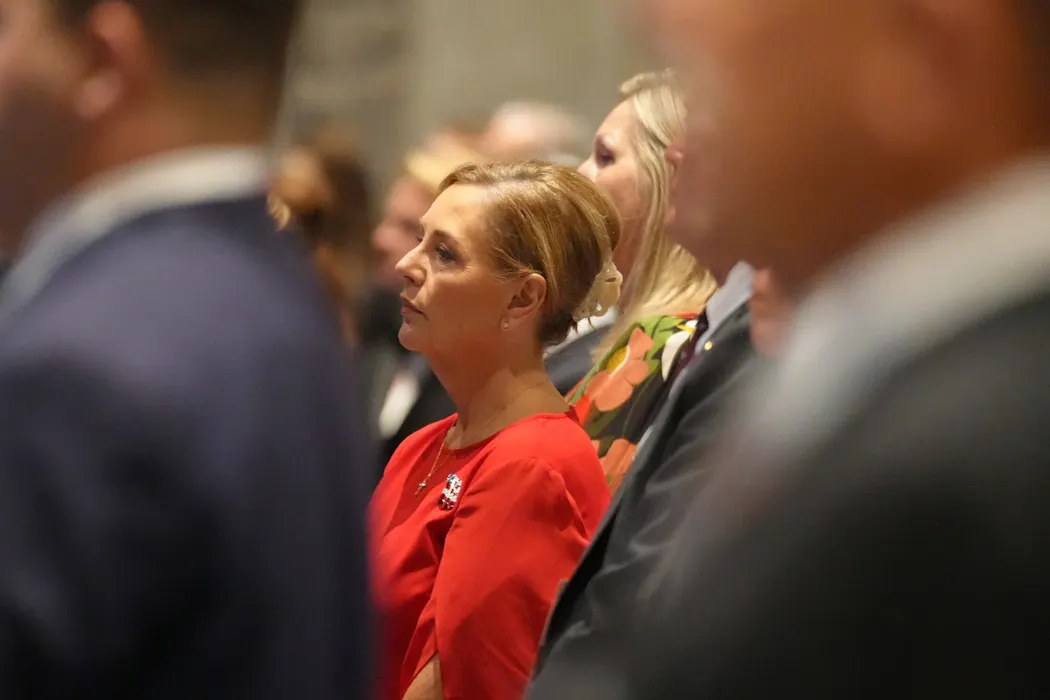
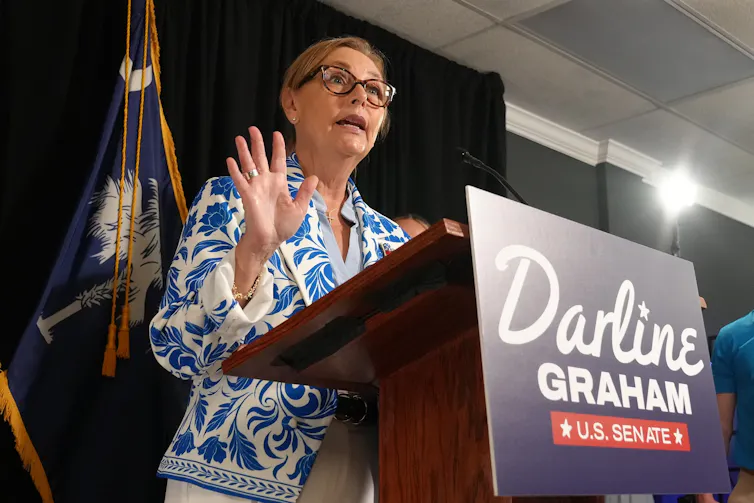
South Carolina Gov. Henry McMaster’s July 2026 appointment of Darline Graham to fill the remainder of her late brother Lindsey Graham’s Senate term – and her subsequent decision to run for the seat – may seem unusual. After all, Darline Graham has no experience in elected office and was virtually unknown outside of the small circle of people who knew her from her time heading the South Carolina Commission for the Blind, or the slightly larger group of people who knew her as Lindsey Graham’s sister.
Nevertheless, she’s made history as the first woman to represent South Carolina in the U.S. Senate.
Graham has since demonstrated how quickly a family connection can translate into electoral support. On Aug. 11, 2026, she finished first in a 10-candidate Republican primary with nearly 33% of the vote. She now faces U.S. Rep. Ralph Norman in an Aug. 25 runoff.
Her appointment belongs to a long American tradition of family succession in politics.
For much of the 20th century, political parties, particularly in the American South, routinely turned to relatives – particularly widows – to fill congressional vacancies. The practice persisted because it provided continuity during moments of uncertainty, preserved party control of valuable seats, avoided divisive nomination fights and capitalized on the electoral value of a familiar name. Although family succession might seem at odds with democratic ideals of open competition, it also created one of the first pathways for women to enter Congress.
As scholars of elections and Southern politics, we see the Graham appointment as a reminder that political inheritance has never been fully absent from American democracy. What has changed is the form it takes and the role it plays in the recruitment of political leaders.
Why widows became the preferred successors
Beginning in the 1920s, congressional widows frequently became the preferred choice to fill legislative vacancies. According to the Center for American Women and Politics at Rutgers University, 48 women have been elected or appointed to fill congressional vacancies created by the deaths of their husbands – 40 in the House and eight in the Senate.
The route into office differed by chamber.
In the case of Senate vacancies, states may allow governors to temporarily fill those spots, whereas House vacancies can be filled only by election. Congressional widows, therefore, reached Washington through both gubernatorial appointments and special elections. But in the one-party South, where Democrats held virtually every elected office from roughly 1900 to 1960, receiving the dominant party’s nomination was effectively a guarantee of a general election victory.
Supporters often argued that these women could provide continuity because many had served as trusted advisers, campaign surrogates and informal political partners to their husbands. They knew the district, understood constituent concerns and were familiar with ongoing legislative priorities. Much like Darline Graham, they also carried a last name that voters already associated with a familiar brand.
Political considerations also mattered. Party leaders often viewed a widow as a politically safe choice who could preserve a seat while avoiding a potentially damaging intraparty battle.
Voters, for their part, were presented with a familiar and trusted name at a time when replacement elections were often held quickly.
This was essentially the logic behind the appointment of Hattie Caraway, who was appointed to the U.S. Senate in 1931 by Arkansas Gov. Harvey Parnell after her husband, Thaddeus Caraway, died. Caraway was subsequently elected with only token opposition to complete the remainder of her husband’s term, becoming the first woman elected to the U.S. Senate.
This “widow’s mandate” was particularly prevalent in the South, although scholars have found that Southern widows served shorter terms than their counterparts elsewhere in the country, perhaps owing to the South’s embrace of more traditional gender norms.
Some women who entered Congress under these circumstances went on to build significant political careers of their own, though. Perhaps the best-known example is Margaret Chase Smith of Maine. After her husband’s death in 1940, she won a special election to succeed him in the House. She later won election to the Senate and became one of the most influential women in 20th-century American politics. Her famous “Declaration of Conscience” speech challenged the tactics of Sen. Joseph McCarthy at the height of the Red Scare.
AP Photo/Meg Kinnard
Why the Graham case is different
The appointment of Darline Graham highlights an aspect of family succession that was often less visible in traditional cases of widow succession.
Historically, widows were frequently defended as logical successors because they had participated in campaigns, advised their spouses and possessed extensive knowledge of district politics. Whether those claims were always accurate is debatable, but they provided a justification rooted in continuity and experience.
Darline Graham was not entirely absent from her brother’s political career. She supported his campaigns and appeared in his ads. Their personal relationship was also unusually close because Lindsey Graham helped raise his sister after their parents died.
Unlike some congressional widows, however, Darline Graham was not her predecessor’s longtime governing partner. Her appointment rests less on the notion of a political partnership and more directly on the value of a well-known political name and identity. Lindsey Graham served in Congress for more than three decades, first in the House and then in the Senate. His name recognition, political network and long-standing visibility in South Carolina politics created advantages that extended beyond the officeholder himself.
The Graham appointment therefore makes visible one of the central forces that has sustained family succession throughout American history: the enduring electoral value of political brands.
The political benefits of continuity
Widow succession still happens, but it is less common than it once was. This decline largely reflects the rise of women’s independent political careers. As women increasingly won local, state and federal offices on their own in the late 20th century, family connections became less necessary as a pathway into Congress.
Yet family succession has never completely disappeared. Darline Graham’s appointment and strong showing in the Republican primary demonstrate that the political benefits of continuity, name recognition and established networks remain powerful.
The old “widow’s mandate” may have faded, but the broader dynamics that sustained it continue to shape American politics.

The authors do not work for, consult, own shares in or receive funding from any company or organization that would benefit from this article, and have disclosed no relevant affiliations beyond their academic appointment.
Politics + Society – The Conversation
Both major U.S. political parties regularly tout their commitment to working-class Americans and claim to be the party of the working class. However, neither the Democrats nor the Republicans nominate many candidates who spent substantial time in working-class jobs.
This near-absence of people from working-class jobs in the halls of power matters. According to research in the U.S. and in other democracies, safety net programs are stingier, business regulations are flimsier and protections for workers are weaker than they would be if people from working-class jobs went on to hold office at higher rates. Working-class people can sometimes influence policy in other ways, but the fact that so few former workers hold elected office means that working-class interests often fall by the wayside in the world’s political institutions.
We research the causes and effects of the shortage of politicians from working-class jobs. We define working-class jobs as manual labor jobs, like construction worker, service industry jobs like restaurant server, and clerical jobs like receptionist.
We don’t include small-business owners or people who work in jobs that require extensive formal education. Instead, we focus on people in jobs that offer employees little stability or security.
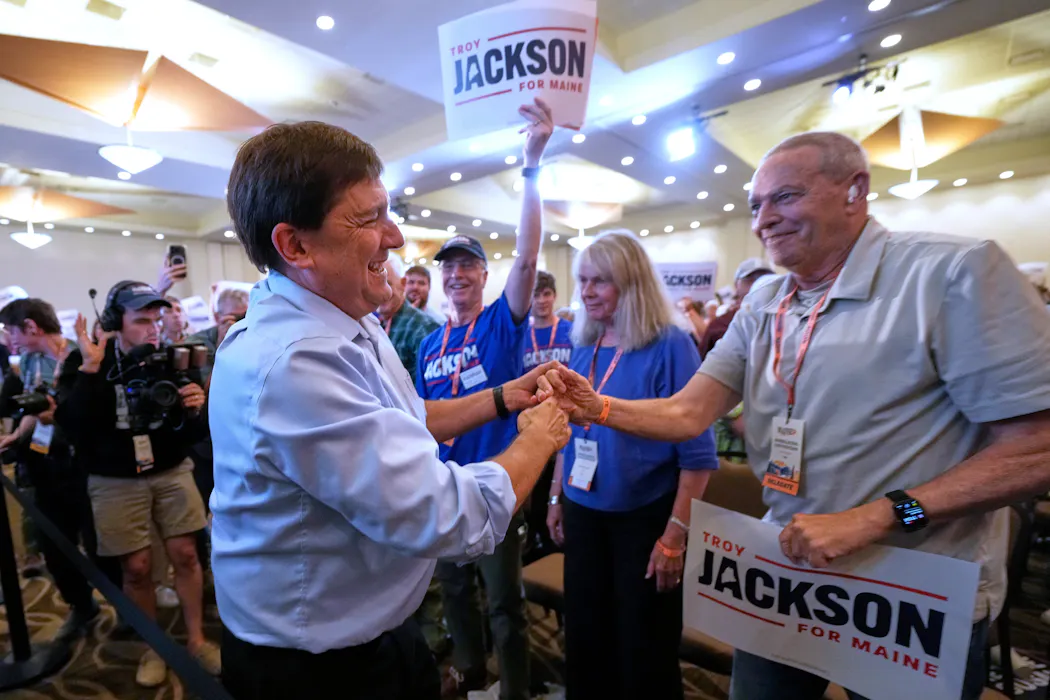
There are, of course, a small number of notable politicians from these kinds of occupations. U.S. Rep. Alexandria Ocasio-Cortez, a New York Democrat, was a bartender before she became a lawmaker. Troy Jackson, Maine’s Democratic Senate candidate, worked as a logger before entering state politics. Indiana state Sen. Jim Tomes, a Republican, worked as a truck driver and union steward.
There are also examples outside the U.S., such as Stefan Löfven, the former prime minister of Sweden, and Luiz Inácio Lula da Silva, the president of Brazil.
Politicians like these often attract outsized media attention, but overall, people from working-class jobs are sharply underrepresented in political institutions.
The working class rarely holds office
By our count, about half of all Americans in the labor force have working-class jobs. However, people who last had working-class jobs when they got into politics make up only about 1% of the average state legislature, regardless of their party affiliation. The same goes for Congress.
And the U.S. isn’t alone. Starting in 2016, we partnered with a team of researchers to collect data on 97 of the 103 democracies with more than 300,000 citizens. Like the U.S., the average global democracy draws just 2% of the members of its national legislature from people who last had working-class jobs.
People sometimes blame the shortage of working-class people in office on features of American elections, such as soaring campaign spending or the decline of labor unions.
But even in Germany and Belgium, which offer public financing to candidates, or Finland, where the vast majority of the labor force is unionized, people from working-class jobs make up around 5% or less of the national legislature.
What keeps workers out of office?
There doesn’t seem to be any shortcoming on the part of working-class Americans that would explain why they so rarely go on to hold office.
Working-class candidates tend to be about as qualified in the ways we can measure as white-collar professionals, about as interested in running for office and about as likely to win when they run.
Our new book, “Keeping Workers Off the Ballot,” shows that what keeps working-class Americans – and their counterparts around the world – out of elected office is that they so rarely run. And that’s because campaigning anywhere for any office at any level of government is personally burdensome, as we show in our book. It takes time and energy, it entails personal risks ranging from embarrassment to physical violence, and the outcome is always uncertain.
In surveys in the U.S. and other democracies, working-class people are significantly more likely than equally qualified professionals to say that they cannot run for office because of concerns about taking time off work and being unable to pay their bills during months spent on the campaign trail.
This inequality is magnified by a second process: In elections everywhere, parties and interest groups play key roles in recruiting and supporting candidates. These gatekeepers understand that working-class people have a harder time running for office.
As a result, party leaders – even those who care deeply about the working class – pass over qualified workers and instead favor the white-collar professionals they think will have an easier time on the campaign trail.

AP Photo/Steven R. Groves
Reforms that help workers are possible
We believe there are ways to overcome the obstacles that keep working-class people out of office.
In a report we wrote for the American Academy of Arts and Sciences, we outline a range of options. Some of the reforms we’re proposing would help in the short term, such as creating candidate training programs or political scholarships that target working-class people. Some examples already exist, such as the New Jersey AFL-CIO’s Labor Candidates School.
Other options, which admittedly might be less likely to happen in the current political environment, would create long-lasting paths to office for working-class people, such as the creation of party or institutional quotas for people from working-class jobs, or randomly selected citizen juries that advise policymakers.
But without serious reform efforts that target the factors that keep workers off the ballot, our research suggests that working-class people will never make up more than tiny fractions of elected officials in the U.S. and in democracies around the world.

Nicholas Carnes receives funding from the National Science Foundation under Grant No. 2139557. Any opinions, findings, and conclusions or recommendations expressed in this material are those of the author(s) and do not necessarily reflect the views of the National Science Foundation.
Noam Lupu does not work for, consult, own shares in or receive funding from any company or organization that would benefit from this article, and has disclosed no relevant affiliations beyond their academic appointment.
Politics + Society – The Conversation

In April 2026, a federal grand jury returned indictments charging the Southern Poverty Law Center with wire fraud, bank fraud and conspiracy to commit money laundering.
The indictment alleges the SPLC, a nonprofit legal advocacy group, secretly funneled more than US$3 million in donated funds to people associated with violent extremist groups, including the Ku Klux Klan and Aryan Nations.
Prosecutors allege that the SPLC secretly paid members of those groups to act as confidential informants without telling donors. Eight informants received the money between 2014 and 2023, according to U.S. Attorney General Todd Blanche.
The SPLC has denied the charges and seeks their dismissal, with lawyers for the group adding that the charges constitute “vindictive prosecution.” The SPLC’s interim president, Bryan Fair, has stated that the informant program “saved lives” and reflected decades of dangerous civil rights work.
Critics of the prosecution at Lawfare, a media site focused on the U.S. legal system, argued that the indictment is among “the most cynical criminal cases ever brought by the Department of Justice.” They noted that the SPLC had no legal duty to disclose the confidential nature of its informant program to donors.
Within hours of the Justice Department’s indictment, I found that white supremacist influencers on Telegram, Gab and other social platforms were celebrating the arraignment. They portrayed the charges as proof that journalists and civil rights groups documenting extremist movements could no longer be trusted.
The indictment became a rallying point to discredit not only the SPLC but the wider body of research on hate groups and political extremism. I believe that these narratives will be used to help justify increasingly radical and, in some cases, violent responses.
Ideological ammunition
Some conservative advocacy groups and right-wing media outlets – including Moms for Liberty and the Daily Signal – immediately stripped the indictment of its legal context. In online posts, they recast it as established proof that the SPLC had been deliberately creating extremist activity rather than investigating it.

Art Jipson
A Telegram search I conducted on May 6 identified 22 posts mentioning the SPLC across at least six white nationalist channels. Most appeared within 72 hours of the indictment. The posts did not engage in sustained discussion. They repeated a small set of claims.
The Super Sincere Alpha GOONMAXXING Aryan Sigma Patriot channel wrote: “The SPLC is a hate group.”
Other channels cited the indictment as proof that the SPLC had been paying sources to manufacture the very extremism it claimed to fight. In the White Lives Matter Official Telegram channel, users were urged to “become an activist for your race” while referencing the SPLC as an opposing force.
The similarity across channels and social media is notable. The same framing appeared repeatedly within a short time window. This suggests rapid circulation of a shared narrative across networks rather than independent commentary.
The neo-Nazi, neo-fascist layer
Comments on the Southern Poverty Law Center indictment by members of the Commander George Lincoln Rockwell channel – named for the founder of the American Nazi Party – demonstrate how antisemitic conspiracy theories work, not as explicit rhetoric but as a broader narrative.

Art Jipson
Internet discussions portrayed the SPLC as a politically motivated or illegitimate actor. Posts in Patriot Front Updates, for example, circulated allegations of fraud and money laundering while criticizing the SPLC and its efforts to identify and challenge white nationalist activity.
I found that this criticism of the SPLC also became connected to a broader antisemitic conspiracy narrative – one that portrays the organization as operating on behalf of purported Jewish interests rather than simply as an advocacy organization with political and ideological commitments.
These narratives circulated alongside the “great replacement theory,” which falsely claims that shadowy elites are encouraging immigration and demographic change to replace the white population and diminish its political and cultural influence. It’s a conspiracy theory that the SPLC and others have documented as central to contemporary white nationalism.
In this logic, the indictment is not an isolated fraud case – it is evidence that a coordinated network of institutions has been systematically suppressing white identity.
Victimhood as recruitment
Scholars of white nationalism have long identified victimhood narratives as central to that movement’s appeal. By portraying white people as under attack or unfairly displaced, these narratives transform social change into a story of persecution and provide a powerful justification for political mobilization.
My research on white nationalism shows how contemporary extremist movements rely less on formal membership and more on decentralized digital spaces. It is there that narratives, grievances and identities are continuously reinforced.
In these environments, major news events like the SPLC indictment become opportunities.
Why this pattern repeats
Extremist movements have long used mainstream controversies as recruitment opportunities.
Participants often interpret external events through narratives of threat, injustice and persecution. In doing so, they transform moments of controversy into evidence that their worldview is correct.
In the 1990s, for instance, the deadly standoffs between federal officers and the Branch Davidians religious sect near Waco, Texas, and survivalist Randy Weaver in Ruby Ridge, Idaho, became foundational persecution narratives for militia and Christian Identity movements. These groups saw the sieges as proof that the federal government was hunting gun owners and religious dissenters.
In online extremist communities, these events can become powerful tools for reinforcing group identity and attracting individuals who are searching for explanations or belonging.
With a real-world legal event like the SPLC indictment, extremists can point to government action as evidence that their worldview is being validated. The result is a narrative that appears responsive to current events, even when the connection is shallow or distorted.
Redirected domestic terrorism policy
Legal scholars have noted that the Justice Department indictment fits within the Trump administration’s broader pattern of redirecting domestic terrorism policy away from white supremacist groups.
The Trump White House’s 2026 Counterterrorism Strategy does not mention violent far-right groups as a domestic terrorism threat at all.
That context matters for understanding how the SPLC case landed in extremist spaces: not as an isolated fraud allegation but as institutional permission. The indictment has become a symbol before the evidence has been weighed.
In today’s fragmented digital media environment, symbols travel faster than facts, especially when they confirm what a radicalized audience already wants to believe. I believe the real danger is not that white supremacists believe the SPLC is guilty. It is that the controversy, whatever its legal outcome, has already done its work.

Art Jipson does not work for, consult, own shares in or receive funding from any company or organization that would benefit from this article, and has disclosed no relevant affiliations beyond their academic appointment.
Politics + Society – The Conversation

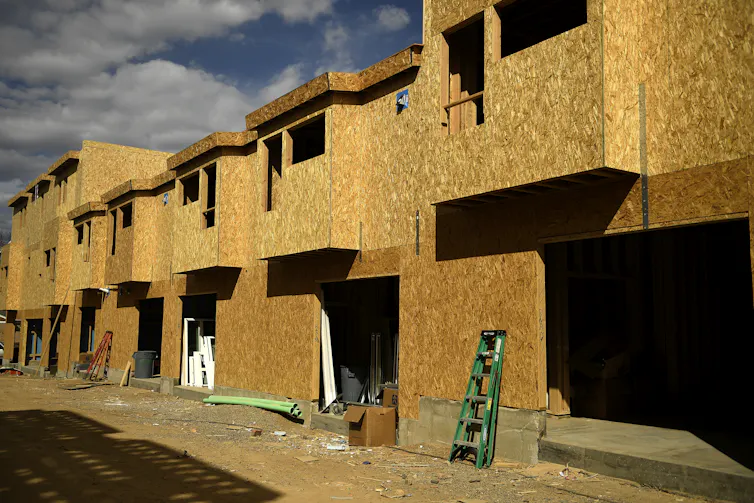
Colorado is in the midst of an affordable housing crisis. Well over half of low-income Colorado residents are cost-burdened, according to the National Low Income Housing Coalition. That means they spend more than 30% of their pretax income on rent or mortgage payments.
In fact, some 87% of extremely low-income Coloradans, or those who support a family of four on less than US$43,200 per year, are considered cost-burdened.
These high costs are explained, in part, by a significant housing shortage of over 106,000 homes in the state, according to a recent study by the Colorado Department of Local Affairs. This crisis is particularly pronounced in the for-sale market in Denver, where the median home price tops $600,000, which is about 54% above the national median.
Legislators and advocates have proposed different solutions, but it’s not clear which will work.
Some housing experts recommend finding ways to slash regulations, developer fees and overall compliance costs. For example, experts have recommended streamlining permits or fast-tracking approvals for new housing projects.
Other advocates are pushing for rent control or rent regulation to protect current renters and keep privately owned housing affordable. Although rent control legislation failed in 2023, Democrats in the state Legislature are still pushing the idea.
Joe Amon/The Denver Post via Getty Images
Which public policies will have the greatest success at producing more housing and lowering the cost of housing? We set out to examine these policies and others to understand their potential effects on housing production and affordability in Denver.
We are a law professor and urban planning scholar passionate about policy solutions that promote more affordable housing in Colorado.
How public policies shape housing supply
We study affordable housing policy at the University of Denver’s Center for Housing Research and Innovative Solutions, which launched in February 2026.
To model how various housing policies may influence housing supply in Denver, we partnered with Terner Labs, a housing research center at the University of California, Berkeley, which developed a Housing Policy Simulator that provides crucial information about the possible impact of new policies. The simulator considers project costs, the underlying economic environment and past housing market data.
We fed the simulator 10 different public policies. Each one was a simplified version of a policy that could be implemented in Denver. The simulator then considered economic conditions, such as interest rates, city zoning regulations, recent historical development trends and the economic viability of projects.
The simulator uses this data to generate a probability model, which is a mathematical model that accounts for uncertainties about the future. For example, the model can estimate the likelihood of a developer building market-rate housing that is multifamily. This includes duplexes, apartment buildings or anything other than a single-family home.
The simulator runs thousands of these probability models and ultimately provides a numerical estimate of the number of new units that could be built. It also predicts the average total cost to build those units.
In 1976, statistician George Box wrote, “All models are wrong, but some are useful.” It is notoriously difficult to predict the future. Rather than believing any one of the simulator’s outputs implicitly, we argue that it’s best to consider the outputs relative to one another, or to compare a single public policy across different economic and demographic characteristics.
‘Missing middle’ most promising
With these simulator limitations in mind, we focused specifically on market-rate, multifamily housing policies in Denver.
Among the policies we considered was “missing middle” rezoning allowed without public hearings or approvals.
Missing middle housing is everything excluding single-family detached homes and large apartment buildings. Duplexes, triplexes, quad-plexes, cottage courts and townhomes often fall in the missing middle category.
Housing policy scholars also define missing middle housing as housing serving middle-income people. This refers to people earning between 80% and 120% of the area median income, or the middle household income for a given metropolitan region. Middle density housing offers the possibility of homeownership for this group of people because the housing type is typically more affordable.
Too often, these people are sandwiched between affordable-housing and market-rate housing options. They can’t afford market rate, but they make too much for subsidized housing.
We also examined staff capacity limits in the Denver Permitting Office. Other examples of tested policies include a rent freeze and a new policy allowing denser development in Denver.
The simulator predicted that some of the public policies, like cutting staff at the Denver Permitting Office, would greatly limit housing production. This means that only higher-end housing would likely be built. Scholars have found that with fewer city staff members available to issue permits for projects, timelines increase. This leads to greater uncertainty and higher overall costs for builders and developers.
What would missing middle entail?
Missing middle upzoning emerged as a policy winner. Although Denver is currently experimenting with allowing missing middle housing in specific areas of the city through its Unlocking Housing Choices policy, the upzoning policy we modeled would allow landowners to build more densely on all parcels.
The simulator predicted that this policy had the potential to increase the supply of multifamily market-rate housing in Denver by 46%. It would also reduce the total costs to build a project. Based on cost assumptions used in the simulator, a typical middle density multifamily project would cost about $597,000 citywide. In contrast, a status quo model project for a new multifamily development would cost, on average, around $826,000 per unit to build. We believe the lower costs are due to a larger number of sites available for middle-density housing in Denver.
Our simulator model also found that the opposite public policy – downzoning to decrease density by decreasing the number of units of housing allowed on any given lot – would both limit housing supply and increase average total costs.
In our simulator model, single-family residential zones, which make up nearly 70% of residential land in Denver, are rezoned to allow more density without lengthy approval processes or permissions from the city. This policy encourages slightly denser development. Specifically, the model requires all parcels to allow at least four units. Parcels that already allow more density than that, such as those that allow apartment buildings, are unchanged.

Courtesy of Terner Labs.
Another important benefit of missing middle zoning policy is that zoning is typically the purview of local governments and does not require extensive involvement from the state or federal government. In Denver, city planners and mayoral staff are committed to increasing housing affordability and density, as seen through policies like Unlocking Housing Choices.
Model limitations and shortcomings
The simulator can rate the relative efficacy of public policies. However, it cannot assess the practical task of policy implementation. It also cannot account for dynamics like neighborhood opposition or resistance that may slow or halt the passage of a policy. It was not programmed or designed to do this.
As urban planning scholars have found, local communities participate extensively in neighborhood politics. These efforts can stop or slow policy changes.
In some cases, opposition might amount to parochial not in my backyard — or NIMBY — concerns. But in other cases, residents may have legitimate concerns about rezonings. These include infrastructure capacity, traffic congestion, pollution and tree canopy concerns, or issues around historical preservation.
While the missing middle policy holds theoretical promise, public attitudes may be moving in the opposite direction. For example, in April 2026, voters in Lakewood, Colorado, struck down a missing-middle style zoning reform. Advocates were concerned about changes to the suburban character of the midsize city just 8 miles west of Denver, according to The Colorado Sun.
Additionally, missing middle and other reforms do not function as a panacea. Multiple housing-policy reforms implemented together, like transit-oriented development, eliminating mandatory parking rules or fee waivers for qualifying sustainable multifamily projects near transit, would greatly increase housing supply.
Read more of our stories about Colorado.

Stefan Chavez-Norgaard has received funding from The Aspen Institute and the Lincoln Institute of Land Policy, and both organizations consider issues of urban development and planning. He is affiliated with the University of Denver Center for Housing Research and Innovative Solutions (CHRIS).
Susan D. Daggett has received research funding from the Lincoln Institute for Land Policy and is affiliated with the University of Denver’s Center for Housing Research and Innovative Solutions. Both organizations are engaged in research and policy development related to housing and land use. She has received a teaching stipend from the University of Denver’s Executive Certificate in Affordable Housing Program, which is partially funded by a donation from the Colorado Housing Finance Authority and the Simpson Family. She serves on the Board of Smart Growth America and Transportation Solutions. She is married to Senator Michael Bennet, a Democrat from Colorado.
Politics + Society – The Conversation
In the past decade, study after study has come to a troubling conclusion: Trust in news and journalism has declined dramatically.
The public’s loss of trust corresponds with the explosive development of our information ecosystem. The more options audiences have to find news elsewhere, the less trust the public has placed in traditional forms of journalism.
However, trust in journalism was displaced long before the rise of digital and social media.
That’s especially true for Black communities that have been harmfully misrepresented by mainstream outlets. Research, for example, has consistently shown how the news media has contributed to overrepresentation of Black people in crime coverage, which contributes to a litany of negative outcomes and perceptions.
Scholars, including me, have detailed how mainstream journalism continues to marginalize and misrepresent Black people. That especially happens in protest, crime and health coverage. It’s no surprise that Black communities have a long history of turning away from mainstream journalism.
As such, a closer look at these communities can also give us insights into how to win some of that trust back.
Trust takes two
Despite past harmful coverage, some Black people trust media anyway.
In a recent study I conducted with colleagues, we identified places where people do still trust media and focused on the next essential question: Why?
To answer this, we turned to Minneapolis and Saint Paul, Minnesota, to learn from journalists trusted by Black communities. In 2022, two years after the murder of George Floyd, our research team began surveying over 100 Black community members and residents to ask them about whom they trusted to tell them the news.
Although news organizations weren’t the No. 1 answer, community members named many journalists, including those working at mainstream outlets and community papers. So we connected with 17 trusted journalists who reported in the area after the murder – or during the police officer trials – to learn more about how they built trust.
We learned that the trusted journalists in this community embraced an ethic of love, a set of principles proposed by Black feminist scholar bell hooks that weave together the dimensions of care, commitment, responsibility, knowledge and respect.
We also found that building trust takes the engagement of two parties. No one practice from journalists can fix the trust crisis; it takes communities to engage, forgive and voice concern.

Kerem Yucel/AFP via Getty Images
What communities do to make trust possible
We found that the most overlooked piece to building media trust is the willingness of a community to engage with journalists. Instead of saying “no comment” or avoiding the camera, community members offered their perspectives and knowledge openly. Sometimes these discussions served as essential background knowledge. Other times, it led to being quoted directly in news coverage.
Journalists also perceived communities’ willingness to provide feedback as an opportunity to build and retain trust. Sometimes the feedback was critical. When a reader was upset about how a story was framed, they pushed back. Other times the feedback provided affirming support.
From these journalists’ perspectives, their trusted status was a product of the community’s willingness to share both knowledge and feedback.
How journalists built trust
There are some key practices that helped journalists gain trust with audiences: active listening, being accurate and demonstrating care. But we also found two distinct practices that were helpful for building meaningful community relationships: diligence and deference.
For trusted journalists, diligence meant spending more time with the community. Some attended hourslong events from beginning to end. Others waited until the end of an event to connect with sources, waiting and observing as time passed. Diligence also often demanded a continuous presence in the community – beyond what the job required.
In one instance, a journalist described staying at a community protest long after the event they were covering ended. For another journalist, it meant reporting on the same public safety beat for years, so long that everyone in the community he covered knew his name. Whatever the case, diligence always equated to time.
Diligent journalists couldn’t just connect with the community over a tragedy; they had to connect well beyond the event that made the news. For some, this meant riding on public transportation and being a regular at the local shops. For others, it meant showing up at events and community spaces during their time off. This showed communities that journalists cared about people, not just the headline.
Deference was a conscious task that involved honoring the boundaries, rules and expectations of community members. If someone said no pictures, a camera was pointed elsewhere – even if everyone was in a public space. If a community member asked for silence, those boundaries were respected.
The cultural boundaries that bind many Black communities, such as the respect for elders and aunties alike, were honored and respected in informal communication – and sometimes in coverage.
Importantly, deference required that journalists drop the assumption that they had all the answers. For many, this required a practice of intentional humility. Instead of assuming they already knew the narrative, trusted journalists deferred to the lived experiences of the community and allowed people the autonomy to tell their own stories in their own words.
The future of trust
I believe what we learned from these trusting relationships can serve as a blueprint for a more inclusive understanding of how trust is built and sustained.
For journalists and Black communities in Minnesota, this approach helped reduce harm and build personal connection. Most journalists we spoke to thought it was essential work to fulfill the democratic promise to serve and inform the public.
But these lessons aren’t a one-size-fits-all formula for the entire media industry or for all communities. The journalists in our study acknowledged this, too, noting that they are trusted by some community members, not all.
Building trust is highly contextual. For journalists, practicing deference and yielding authority are necessary steps when repairing relationships in communities that have experienced historical harm. But those same practices might not work with all groups.
For example, yielding authority to individuals or communities intentionally trying to spread misinformation could lead to complicity and diverge from the goals of journalism.
People often treat trust as a universal good, but whom journalists and communities choose to trust matters just as much as how they build it.

Danielle K. Brown received funding from the John S. and James L. Knight Foundation from 2022-2023 for the LIFT Project in Minneapolis & St. Paul, Minnesota.
Politics + Society – The Conversation

An update on Open Channels News, new fall series (including “AI for the Rest of Us”), and a preview of the Open Channels FM 5.0 release coming in September.