Tay was on hand Sunday night as the Chiefs edged out the Indianapolis Colts in overtime and Travis scored his first touchdown as a married man.
Taylor Swift attends the 67th Annual GRAMMY Awards on February 02, 2025 in Los Angeles, California. (Photo by Matt Winkelmeyer/Getty Images for The Recording Academy)
And his wife had a rather memorable way of celebrating.
Patrick Mahomes connected with Kelce for a 13-yard touchdown in the first quarter, giving Kansas City an early 10-7 lead.
The NBC broadcast then cut to Taylor in the suite, where she was celebrating enthusiastically alongside family members.
In a memorable celly moment of her own, Taylor pointed directly at her wedding ring.
Yes, after all these years of watching Travis find the end zone, she wanted to make absolutely certain everyone knew that this particular touchdown belonged to her husband.
“That’s my husband!” Taylor seemed to shout during the celebration. We couldn’t hear her on the broadcast, but we could certainly read her lips.
Hey, subtlety has never exactly been the name of the game when it comes to Taylor and Travis. And we’re fine with that.
Travis, meanwhile, reminded everyone that he can still make plenty of noise on the football field.
The 36-year-old tight end finished the game with nine catches for 101 yards and a touchdown. His score was his first of the season after he caught three passes for 71 yards in Kansas City’s season-opening victory over the Denver Broncos.
And while the Chiefs ultimately needed overtime to defeat the Colts 33-30, Travis’ touchdown gave Taylor an early reason to celebrate.
The game also provided another reminder that Taylor and Travis remain one of the NFL’s most closely watched couples.
It’ll likely be Travis’ last season in the NFL — and clearly, he and Taylor intend to make the most of it.
Longtime Food Network fans may remember Alex Guarnaschelli’s show “Alex’s Day Off,” which ran from 2009 to 2011. Here’s why fans still wish for its return.
Mashed – Fast Food, Celebrity Chefs, Grocery, Reviews
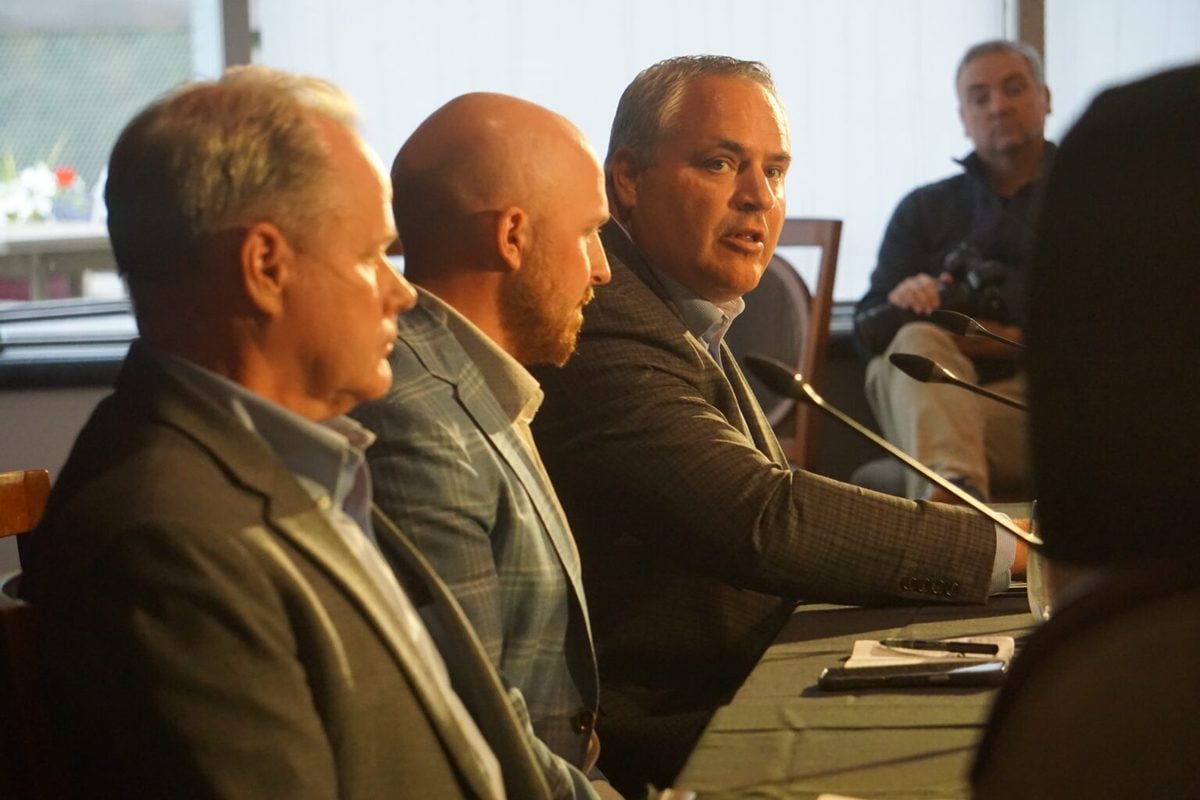
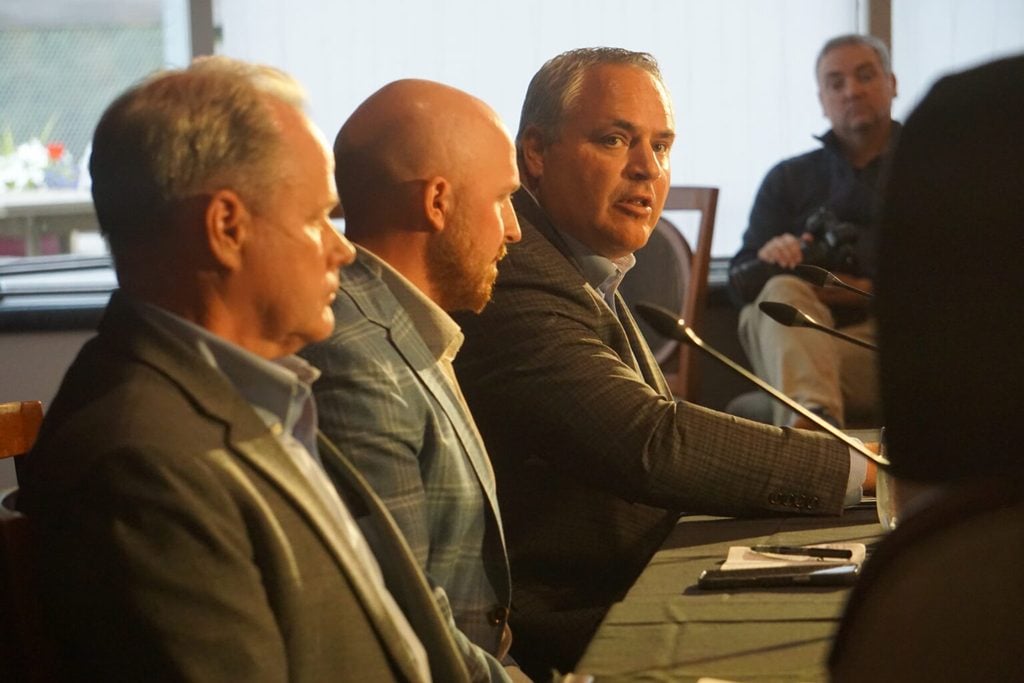
Former state Rep. Jonathan Kreiss-Tomkins, third from left, speaks at a gubernatorial candidate forum on Sept. 16, 2026, while former Attorney General Treg Taylor, Anchorage business owner and talk-show host Bernadette Wilson and former Anchorage Mayor Dave Bronson listen. The forum was held by the Alaska Hospital and Healthcare Association and the organization’s annual conference in Girdwood. Taylor, Wilson and Bronson are Republicans. Kreiss-Tomkins is a Democrat. (Photo by Yereth Rosen/Alaska Beacon)
In a candidate forum Thursday, three of the four candidates to be Alaska’s next governor voiced support for a long-debated plan to restructure the Alaska Permanent Fund in order to permanently cap the amount of money that can be spent from it without a statewide vote.
“You’ve got to protect the Permanent Fund. You simply have to,” said Republican candidate and former Anchorage Mayor Dave Bronson, speaking at the Commonwealth North forum.
Bronson referred to the Permanent Fund as “one of the two big engines” driving the state’s future. The other, he said, is developing Alaska’s natural resources.
Created in 1976, the Alaska Permanent Fund has been the No. 1 source of revenue for state services and the annual Permanent Fund dividend since 2018, when legislators and then-Gov. Bill Walker enacted a law that automatically diverts a portion of the now-$88 billion fund to the state treasury annually.
Even in years like this one, when oil prices are high and the state’s oil revenue booms, the annual transfer is worth more than oil and all other taxes combined and accounts for more than half of the state’s general-purpose revenue.
Currently, the Permanent Fund is divided into two parts. There’s the constitutionally protected corpus, which can only be spent via a statewide vote, and the earnings reserve, which collects the investment earnings of the corpus.
Money in the reserve can be spent by a simple majority vote of the Legislature and the assent of the governor.
Currently, only the 2018 law restricts spending from the earnings reserve, and that law is a flimsy limit — it could be overridden at any time by the Legislature and governor.
The trustees of the Alaska Permanent Fund have advocated that the two funds be combined into one, both to prevent overspending and to eliminate the possibility of the earnings reserve being drained, which would cause an instant state fiscal crisis.
“I think this is arguably the single most important question laying in wait for the next governor and the forthcoming Legislature,” said Democratic candidate Jonathan Kreiss-Tomkins. “I share Mayor Bronson’s belief that the Permanent Fund is a cornerstone of the state, and it is the single most important reform I want to pass as governor, working with the Legislature.”
Merging the two accounts would require a constitutional amendment. That needs the assent of two-thirds of the state House and two-thirds of the state Senate, plus a majority of voters in a statewide general election.
While serving as a member of the state House, Kreiss-Tomkins proposed such an amendment. His proposal passed through two legislative committees but was never voted upon by the full House or the full Senate.
Other, similar amendments have also failed to reach a vote of the House or Senate for two main reasons.
First, legislators would have to agree on the size of the Permanent Fund spending cap. Over the past eight years, the fund has struggled to earn enough money from its investments to make up for the annual transfer.
But reducing the size of the transfer means less money for services and dividends.
In 2025, state budgeters estimated that reducing the transfer by half a percentage point would open a $380 million gap in the budget. Reducing it by a full percentage point — to a level common in trust funds — would require finding $760 million per year in new revenue or cost cuts.
The second issue is the Permanent Fund dividend. Currently, legislators split the annual transfer from the Permanent Fund on an ad hoc basis, deciding each year how much to spend on dividends and services.
In practice, the Legislature has followed a “surplus dividend” strategy, setting the amount of the dividend based on what’s left over after services are paid for.
As operating costs have risen, the amount of money left for the dividend has shrunk. Some legislators now believe that without a policy change, the dividend is on course to disappear by the end of the decade.
State law mandates that dividends be paid using a specific formula in state law, but legislators have ignored that formula since 2016, and the Alaska Supreme Court upheld the legality of that approach.
“I’m going to fight like hell for that Permanent Fund dividend,” Wilson told Alaska Public Media in August.
She said she feels strongly about the issue because resources in Alaska are collectively owned by the state’s residents.
“It has nothing to do with the amount of a check. It has everything to do with the fact that Alaskans own the rights to those resources. And when you concede on that Permanent Fund dividend, you’re not just conceding on the amount of a check. You are conceding on the very idea that Alaskans no longer own those resources,” she said.
While permanently capping spending from the Permanent Fund does not directly alter the amount of the Permanent Fund dividend, it does eliminate a way to pay for larger dividends. Lawmakers who want larger dividends would have to either find new revenue or cut services in order to make money available for the dividend.
Some legislators have proposed that any revised structure for the Permanent Fund transfer reserve a portion of the transfer for dividends specifically, effectively guaranteeing a minimum payment.
Former Alaska attorney general Treg Taylor, speaking at an event in Kodiak, said he sees the Permanent Fund in the same way as the state’s fisheries — a resource that must be handled carefully in order to stay renewable.
Overfishing, or overspending, could endanger it.
“I think we have to lock up the Permanent Fund,” Taylor said, reiterating his position at this week’s Commonwealth North forum. “We have to protect that corpus. If we do not, there’s so much — I mean, JKT had it right. There’s just too much temptation to raid that. We’ve got to lock it up because that is our future.”
Instead, it even impacted the way that Jinger engaged with her faith, right down to reading the bible.
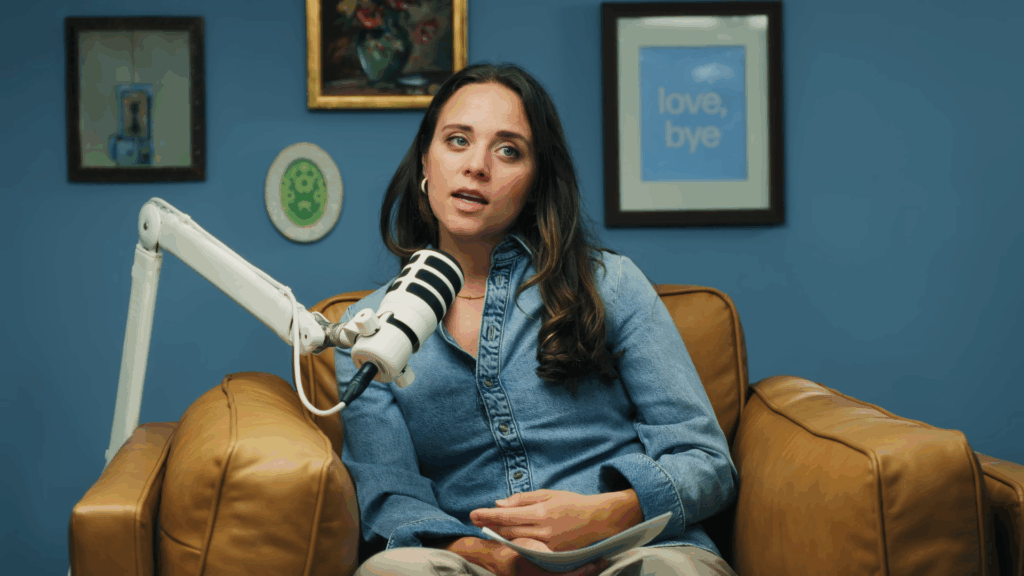
On the second episode of her ‘Call Your Sister’ podcast, Jinger Duggar opened up about an aspect of her childhood. (Image Credit: YouTube)
Jinger Duggar has dyslexia?
On the second official episode of the Call Your Sister podcast, Jinger and Joy-Anna Duggar discussed growing up.
They explored a few topics, from phases (of course using the “seasons” in-group language) to first crushes (when Jinger was 9, she had a crush on an older man she referred to as a “teacher,” though she acknowledges that he cold have been a teen at the time).
Jinger also disclosed that she has dyslexia, a learning disability that interferes with reading.
Had she attended anything resembling an actual school, it’s likely that this would have been identified in childhood.
Instead, Jinger learned her own workarounds … but it really interfered when it came time for Jinger to read the bible.
When Jinger was around 12 years old, she shared, she sat down to read her religion’s sacred text from cover to cover.
That makes a lot of sense for a Christian (or a non-Christian looking to better understand our heavily culturally Christian society) to do, but Jinger discovered that this was a challenge.
Referring to this plan as part of the “season of life” that she was in at the time, Jinger tried to explain.
“I [was] just determined to read it from start to finish within two months,” she shared.
“And somehow I relied on audio Bibles,” Jinger revealed, “‘cause I have dyslexia.”
Joy-Anna Duggar on the second episode of the ‘Call Your Sister’ podcast. (Image Credit: YouTube)
‘I know how hard it is for me to read out loud’
“Never been, whatever they say, diagnosed,” Jinger Duggar quickly admitted.
Due to our nation’s healthcare system, many people do not receive a diagnosis that could better explain their lives or open access to accommodations that they need in order to thrive.
“But I know how hard it is for me to read out loud,” she shared.
“Now, reading aloud is different than reading it like looking at it,” Jinger specified, “but it still is hard.”
Jinger acknowledged: “So my comprehension is terrible.”
Joy-Anna Duggar and Jinger Duggar on Episode 2 of their ‘Call Your Sister’ podcast. (Image Credit: YouTube)
The primary argument for sending children to actual schools instead of condemning them to homeschooling doesn’t really involve diagnosing things like dyslexia or ADHD or left-handedness or other traits that a teacher might recognize but a parent might not. It’s not even on the Top 5 list.
But it is on the list. And, looking on social media, it doesn’t seem that anyone is surprised that Jinger’s struggles with reading slipped by Michelle.
When your priorities are indoctrination and isolation, entire academic topics can leave the curriculum, and a learning disability or other brain difference can easily go unnoticed — or, worse, blamed on the child.
It’s good that Jinger knows herself well enough as an adult to identify that she has dyslexia.
When kids with dyslexia learn to “work around” their reading difficulties, they often engage in guesswork — learning the shapes and sizes of words instead of phonics. That’s not the same as reading.
Many folks online have pointed out that dyslexia often runs in families. How many other Duggars have undiagnosed dyslexia?
Each bite of this prepared Thai-flavored salmon from Costco is tasty without being too overpowering because the seasoning doesn’t go too heavy on the spices.
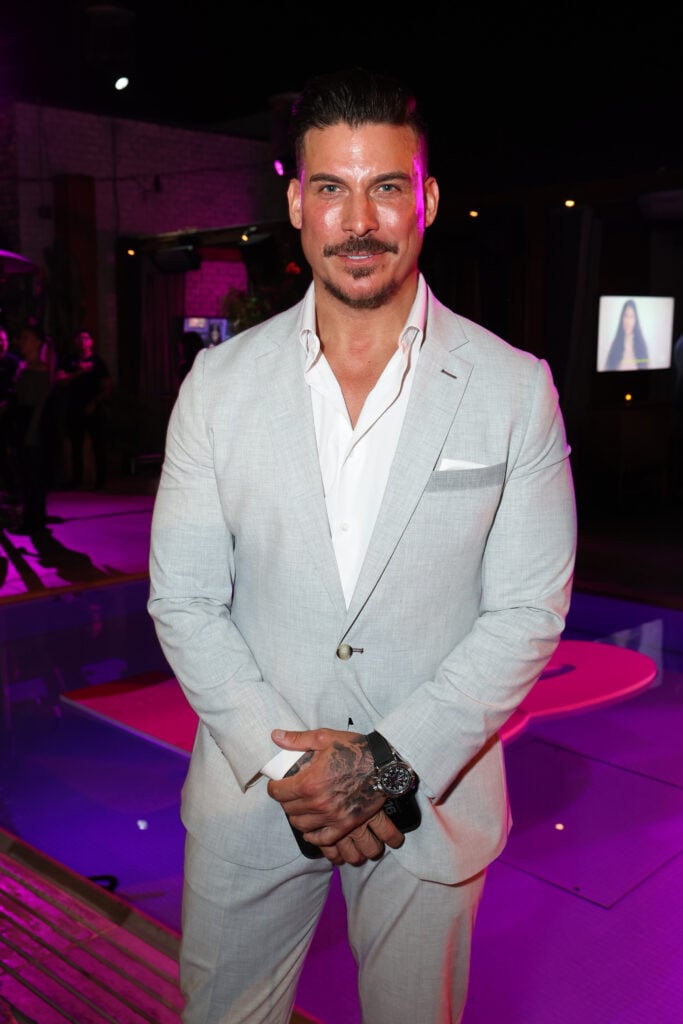
Jax Taylor attends Us Weekly And Pluto TV’s: Reality TV Stars Of The Year on October 10, 2024. (Photo Credit: Phillip Faraone/Getty Images)
Brittany Cartwright has harrowing allegations against Jax Taylor
Fair warning: very part of this is upsetting, and includes allegations of violence, violent threats, use of slurs, and more from a former romantic partner.
Recently, Brittany Cartwright secured a temporary restraining order (TRO) against Jax Taylor.
The former couple’s contentious divorce includes ugly custody disputes involving their young child.
RadarOnline reports on the details of Brittany’s allegations, which include Jax allegedly threatening to “gut her like a f–king fish” and to “f–king kill” her.
These threats and more came during an alleged furniture-throwing attack. Brittany shared evidence of what she says were injuries that she sustained during her ex’s tantrum.
In court documents, Brittany accused Jax of “coercive control, financial abuse, emotional and psychological abuse, gaslighting, and even physical violence.”
She also accused him of using child-support and spousal-support to intimidate her following their 2024 split.
In her filing, she says that Jax habitually “confronts me during custody-related interactions.”
As a result, Brittany shared with the court, she feels “so deeply concerned about Cruz being exposed to any escalation or retaliation.” Cruz is the former couple’s 5-year-old son.
Brittany has attempted to get sole custody of their child, but will have to make her case at a future hearing.
Some of the alleged verbal abuse took place in front of their child
According to Brittany Cartwright, Jax Taylor has bombared her with vicious insults. At times, in front of their child. At times, in public.
She says that he has called her “degrading and humiliating” names, including variations of “bitch,” “fat bitch,” “fatty,” and worse things that are unfit to print.
Additionally, he reportedly used the r-slur. That is unconscionable in any context.
Brittany has an alleged recording of incidents of verbal abuse — including a transcript which makes note of when Cruz is crying in the background.
Additionally, she says that Jax broke three of her iPhones, an iPad, and other property. She also accuses him of taking her $70,000 wedding ring.
Brittany and Jax married in 2019. At that time, they had been dating for four years.
In 2024, they broke up. Since then, harrowing allegations like these have been coming out — though never so many at once as in Brittany’s court filings, which of course need to catalogue everything.
Jax says that he is 21 months sober, simultaneously claiming that he takes “full responsibility” while also disputing what Brittany has to say.
(Sometimes, people will claim — truthfully or otherwise — to now be sober, hoping that this gives them a clean slate over past behavior. It does not.)
It sounds like this ugly breakup isn’t going to stop being contentious any time soon.
Former Attorney General Treg Taylor, at right, speaks at a Sept. 9. 2026, forum held by the Last Frontier Republican Club at the Petroleum Club of Anchorage. Next to him, from left, are two of the other three gubernatorial candidates: former Anchorage Mayor Dave Bronson, and former state Rep. Jonathan Kreiss-Tomkins. (Photo by Yereth Rosen/Alaska Beacon)
As Americans grow frustrated with artificial intelligence software and concerned about the side effects of data centers, they have become a major issue in this year’s midterm elections. Alaska’s gubernatorial race is no exception, particularly since the Alaska Industrial Development and Export Authority announced plans for a development that could include data centers in Southcentral Alaska.
All four candidates — Republicans Dave Bronson, Treg Taylor and Bernadette Wilson and the Democratic Kreiss-Tomkins — have staked out different policy positions before Alaskans vote this fall.
Data centers need reliable connections to the internet, cheap electricity and a cooling method. Currently, the North Slope is the most promising location for all three.
Current Gov. Mike Dunleavy has backed data centers, saying they could be an economic driver — they would create construction jobs and demand for infrastructure that would enable further development.
Dunleavy is term-limited and cannot run again this year. Four candidates remain in the race to replace him.
“I’m a big believer in data centers. I know that might be unpopular with some folks here,” said Bronson at a candidate forum hosted by Commonwealth North in Anchorage on Thursday.
A former Anchorage Mayor, retired Air Force pilot and former director of the state’s largest airport, Bronson said he sees economic opportunity if data centers are built in Alaska, and he would like to encourage them.
“The logistics (are) minimal, and there’s a lot of money in data centers, but you’ve got to deal with the noise. You’ve got to deal with the cooling, and you’ve got to deal — certainly — with the electricity. And the groups that I’m talking to, they said we’re not going to take your electricity because it’s not reliable. … We will produce our own, and we will move, and we will build our own data centers. That’s good for us. That’s a very strong revenue source,” Bronson said.
“I think we need to embrace it,” he said of data centers.
“We have all the makings of a great place for a data center to thrive and produce good-paying jobs for Alaskans,” Taylor said.
He added that electricity costs are his biggest concern. Any data center must “bring their own energy,” he said, and if a data center then sells excess power it generates, it could be a benefit to Alaskans if it is cheaper than other power available nearby.
“It doesn’t have to drive up costs if you do it correctly. It can produce a net savings to the ratepayers in Alaska,” he said.
Bronson and Taylor each said they see data centers as the future and fear that Alaska will miss out if it doesn’t embrace them.
“It’s a service everybody’s using and everybody has to adapt to and use, or you’re going to get left behind,” Taylor said.
Kreiss-Tomkins is advocating a temporary pause on data center development in the state.
“I support a moratorium on data center development in Alaska until the Legislature can pass a comprehensive regulatory framework for that development in Alaska,” he said during a Sept. 8 forum in Anchorage.
Any limits on development would be decided by negotiations between himself and the Legislature, he said.
The sponsor of the bill, Sen. Löki Tobin, D-Anchorage, will return to the Legislature next year, and the coalition majority that passed the bill is also likely to return, meaning that the next governor will likely be confronted with similar legislation.
Kreiss-Tomkins has also endorsed legislation that would ban AI-generated fake images intended to mislead the public and a bill that would require political advertisers to disclose AI-generated content.
Wilson, asked about her position by text message, criticized Kreiss-Tomkins’ campaign for accepting large contributions from AI company employees.
“Unlike Democrat Jonathan Kreiss-Tomkins — better known as Chat JKT — our campaign is not funded with hundreds of thousands of dollars from California AI companies hoping to own our governor and exploit our state,” she said before explaining her position. “Our administration will make independent decisions that are in the best interest of Alaska, not big donors from the Lower 48. I will never allow Alaska to be littered with hyperscale data centers that take our resources and spoil our lands. Our natural beauty, environment and quality of life matter to every person who calls Alaska home and my job is to represent them, not big tech liberals.”
Domino’s is the largest pizza chain in the world, and as such, it probably goes through a ton of extra pizzas each day. What does the company do with them?
The City Hall vote center will be open from today until Oct. 6 for in-person voting or ballot drop-off. Voters mailing ballots are urged to take them to the counter and request a hand-stamped postmark; ballots must be postmarked by Oct. 6 to be counted.
If voters make a mistake, they should draw a line through the error, write “no,” and mark the correct choice, or request a new ballot at the vote center.
There are three candidates for the one areawide Assembly seat: Paul Roy Kelly, Brad Sapp and James J. McCants.
Mila Cosgrove is the only candidate for the District 1 Assembly seat.
Four candidates are running for the District 2 Assembly seat: Karla Hart, Joyce M. Niven, Malachi Thorington and David Lee Morris.
Three candidates are running for two Board of Education seats: Britteny Cioni-Haywood, David Noon and Christine Johnson.
reliminary unofficial results will begin being posted election night. Updated preliminary results are expected October 9, with final results scheduled for publication October 20 after certification.