A public opinion researcher explains why this group’s declining faith goes beyond partisanship and reflects a fundamental question about its sense of belonging.









A public opinion researcher explains why this group’s declining faith goes beyond partisanship and reflects a fundamental question about its sense of belonging.

Post Content
Italian immigrants used to be accused of clinging too tightly to the Old World. Today, millions gather in Little Italy to celebrate the food, faith and traditions they brought with them.

A welcome sign to the city of Houston in the Matanuska-Susitna Borough is seen in an undated photo. (Photo by Amy Bushatz)
The prospect of data centers in the Matanuska-Susitna Borough has raised public concern and scrutiny of a proposed state land transfer of nearly 20,000 acres to the Alaska Industrial Development and Export Authority. Now, Alaska lawmakers are weighing in with legal concerns about the state’s proposal.
The Alaska Department of Natural Resources issued a preliminary decision in July to convey the nearly 30 square miles of land near Houston in a non-competitive, no-cost state land transfer to AIDEA, the state-owned economic development agency, for a “multi-use industrial and energy development district,” which could include data centers.
A group of senators on the Senate Resources Committee raised a range of concerns with the proposed land transfer to AIDEA in two letters to DNR during a public comment period.
Among their concerns, senators cited a legal analysis that calls into question the legality of the land transfer to AIDEA for “public and charitable use” because under the law the state can only make such a transfer if the land serves a sufficient public purpose.
According to the legal analysis by an attorney with the non-partisan Legislative Affairs Agency, “the conveyance may raise legal issues” without a DNR review of the proposed projects for the industrial district. So far, no projects have been confirmed at the site.
“We are concerned that the uses for the AIDEA conveyance are too vaguely premised,” the senators wrote in a Sep. 9 letter to the department. “The public interest cannot be evaluated or made certain; and that DNR has not and cannot perform its legally mandated due diligence under these circumstances.”
The letters were signed by Sens. Cathy Giessel, R-Anchorage, Bill Wielechowski, D-Anchorage, Forrest Dunbar, D-Anchorage, Matt Claman, D-Anchorage, and Scott Kawasaki, D-Fairbanks, all members of the multi-partisan Senate majority coalition.
The five of the seven committee members raised its concerns to DNR during an extended public comment period which ended Sep. 14. The state’s proposal garnered more than 2,100 comments, according to department officials.
A spokesperson for DNR declined an interview request to address the concerns raised by senators about the public benefit use. In an emailed statement, DNR spokesperson Lorraine Henry noted AIDEA’s status as a public corporation and directed questions about potential developments to AIDEA. She said the department will be reviewing all public comments before making a decision. “Any final decision will address feedback from the public, agencies, and legislature,” she wrote.
AIDEA officials denied an interview request on the proposed development and the senators’ concerns, but forwarded several letters by executive director Randy Ruaro on the proposal.
He wrote that AIDEA ownership “creates flexibility” for the Mat-Su Borough and the organization will collaborate with a variety of user groups before committing to projects.
“The goal is not to impose a single concept on nearly 20,000 acres. It is to identify which ground is suitable for development, which should remain a buffer or stewardship area, which access routes must be protected, and where local ownership makes better sense,” he wrote in a letter to Mat-Su legislators.
In the proposal, DNR said that the project could host a variety of projects, “including but not limited to:” a logistics hub adjacent to the Alaska Railroad, energy or utility projects, gravel or rock mining, manufacturing or data centers.
The agency says AIDEA seeks to acquire the land to “catalyze private investment and create durable jobs for Mat-Su residents.”
Local lawmakers representing the Mat-Su region say they support the development if it is what the community wants.
The group of senators with the Resources Committee said DNR must ensure state lands are used for public benefit under the law, and they were “not satisfied” DNR had performed an adequate review of proposed projects. That includes negative consequences of potential data centers — their energy and water demands, and environmental and community impacts including noise pollution.
Data centers have come under intense scrutiny and public criticism nationwide as technology companies have constructed the facilities to house servers or IT infrastructure to store or manage data running to digital applications and services. Consumers are angry at rising energy bills, and concerned about environmental impacts, including water use.
Southcentral Alaska, including the Matanuska-Susitna Borough, relies on natural gas for most of its energy needs. If an energy-hungry data center is built, it could drastically increase demand where supplies are already insufficient for existing demand.
“We do not want to see our state residents and small businesses forced to compete with private data centers for supply of natural gas or their utility bills driven sky-high, anytime soon or into the future,” the senators wrote.
But AIDEA officials have denied there are plans to build data centers, saying they are a possibility, but that no actual projects have been approved or confirmed.
“Let me be clear. There is no data center project planned, nor has one ever been discussed with a project proponent,” Ruaro wrote in a letter to DNR.
Ruaro said there have been efforts by China and Democrats to oppose data center developments “for political gain.” He said energy and water use concerns are valid but do not apply to the proposed land transfer.
Ruaro said that the state holding public lands generates no income, and AIDEA has the tools to lease lands and finance eligible projects, as well as work with local cities and boroughs on development projects. In a letter to Mat-Su legislators, he said any development project will only occur with input from surrounding communities.
“Local community needs will be prioritized,” he wrote.
Anchorage Republican Sen. Cathy Giessel, chair of the Senate Resources Committee, said in an interview she hears regularly from constituents who have concerns about data centers being developed in Alaska. Plus, with a looming gas shortage in Southcentral Alaska, she is concerned about any potential data centers’ energy demands.
“We are struggling right now to make sure we have energy,” she said in a Friday interview. “This seems terribly inappropriate.”
Republican Sen. George Rauscher and Republican Rep. Kevin McCabe, whose districts include the parcel under dispute, told the Alaska Beacon that they support what the local community wants for the land.
McCabe, in an interview Tuesday, said he was frustrated with members of the Senate Resources Committee’s opposition to the proposal. He wrote a letter responding to the committee members and argued AIDEA ownership is beneficial in promoting economic development and boosting much-needed revenues for local services.
“It makes little sense to block opportunities for jobs, investment, and taxable development before the people who actually live here have even decided what they want,” he said.
McCabe said he’s not concerned about data centers, and any construction would be subject to all local and state regulations.
“As far as a data center, I could care less,” he said. “It could be a horse farm. It could be a grain field, whatever brings money, whatever business brings money to the Borough coffers, so that the property taxes don’t go up or a gas tax doesn’t go up.”
Meanwhile, the nearby Houston city council voted unanimously last month to oppose the land transfer. It also introduced a two-year moratorium on the construction of new data centers to be heard at a meeting on Oct. 8.
On Tuesday, the Mat-Su Borough Assembly unanimously opposed the proposed land transfer to AIDEA and called for “more appropriate” land for development projects in the Point McKenzie and West Susitna regions.

One of the last cruise ships of the season scheduled to be in port in Haines, instead left early Wednesday morning after trying and failing to tie up to the cruise ship dock around 7 a.m.
There was a gale warning in effect for the northern Lynn Canal through about 4 p.m. Wednesday afternoon. Those conditions caused crew on the 1,250-passenger Riviera to also decide that it was too windy and there were too many…

Josie McClain fixes a swing at her home-based child care program. McClain says support from a local nonprofit has helped her expand and improve her facilities. (Jackie Mader/The Hechinger Report)
This story about child care solutions was produced by The Hechinger Report, a nonprofit, nonpartisan news outlet focused on education.
SEWARD, Alaska — It was 2018 when Casie Warner first realized there was a major problem in this popular cruise port, nestled on an inlet about a two-hour drive south of Anchorage. At the time, Warner worked as a home visitor, providing advice, support and resources to low-income parents with young children.
Time and time again, Warner would hear the same story from parents: “‘I wasn’t able to make my medical appointments. I didn’t have child care,’” said Warner. “‘I couldn’t pick up an extra shift at work because of child care.’”
Warner set out to find a solution. But Seward, like many rural communities across the country, is considered a child care desert, where options are scarce and there are no quick fixes.
Then, some unexpected help arrived. In 2021, Norwegian Cruise Lines donated $1 million to Seward to help with post-pandemic economic recovery. The city council voted to spend the money on the two issues deemed to be the most relevant for residents of the town of 2,800: housing and child care.
Five years later, licensed child care slots are up by 150 percent.
In rural communities, the availability of affordable child care is a key component of economic success. At a time when child care shortages are pronounced, especially in rural areas, Seward’s approach of prioritizing child care and investing in new programs and providers offers a potential road map for other communities looking to strengthen their child care industry, support the local economy and eventually retain or attract new residents.
“The hope is that if we can address child care, that perhaps it will have a bigger ripple effect,” said Courtney Bringhurst, a Seward city planner. “We’re hoping that it will help more families be willing to relocate to Seward and stay,” she added. “If we can get more families to stay, that will help strengthen our schools, which will give more opportunities and interest for other businesses to come to Seward.”

Although Seward’s success so far in expanding child care slots shows what’s possible with more money, experts caution that in most places, public dollars, not private donations alone, will need to fill the gap.
“It’s impossible math otherwise for these programs to continue operating, particularly in rural communities,” said Hailey Gibbs, associate director of early childhood policy at the left-leaning Center for American Progress.
About 1 in 7 people in the U.S. live in a rural community, and though they need and use child care as much as their urban counterparts, they face many more problems getting it. In sparsely populated areas, families are likely to live far from the few providers that exist. The most used child care option for rural families is a provider that operates from their home, but those small businesses are squeezed by low profit margins and high costs.
According to the Center for American Progress, almost all — 96 percent — of Alaska’s children live in a child care desert, defined by the think tank as an area where there are three or more children for every licensed child care slot. The problem is even more acute in rural areas that are also low income: In those parts of the country, there are nine babies for every one licensed child care slot, CAP says.
Alaska’s economy pays a penalty for the lack of child care — according to a 2023 report from the U.S. Chamber of Commerce Foundation, the state lost $165 million because parents couldn’t access child care to go to work or school.
But the economic effects are only part of the story. Rural families are more likely to experience food insecurity and to be on public assistance, and rural children under 5 have one of the nation’s highest poverty rates. Poverty and food insecurity are linked to poor school performance, which high quality child care could alleviate — but that care is not an option for many.
“We know that fewer than half of children from low-income families are ready for school at age 5, and the gaps are just so much larger in rural communities,” said Karen Harrison, lead adviser for workforce development at the global nonprofit Save the Children, which runs several rural child care initiatives in the United States. “Many families in rural communities are left without options.”
In Seward, Ella Wright said she and her husband spent the first five years of their daughter’s life working part time in nursing and mental health jobs respectively, due to the lack of child care. Until her daughter got a spot at a part-time preschool at age 3, “we had no breaks,” Wright said.
In 2023, about half of Alaskan parents who were surveyed said that, like Wright, they could not fully participate in the labor force because of child care access and affordability.
The picturesque town of Seward, framed by snow-capped peaks on the Kenai Peninsula, cannot afford to lose workers due to a lack of child care. Summers in Seward are lively. On days when cruise ships are in port, tourists meander up and down the main street, stocking up on souvenirs and taking pictures in front of Resurrection Bay’s ice-blue water. During these months, seasonal workers flood the town to work at restaurants and shops.

But the town’s year-round employers, including a state maximum-security prison and a medical facility, face ongoing worker shortages. The shortages have been so pronounced that in 2023 the town had to temporarily close its small local jail, diverting people in custody to state-run facilities, until it could hire more employees.
“It’s very difficult to maintain a strong, year-round economy, because we can’t maintain families year-round in Seward,” said Bringhurst, the city planner. “People just can’t maintain a job if they don’t have reliable child care.”
The donation from Norwegian couldn’t have come at a better time for the town. In 2019, a child care program closed unexpectedly just three years after it opened, eliminating 20 child care spots from the community. (Qutekcak Native Tribe, a Seward-based social services agency that ran the program, did not respond to a request for comment.)
Then in 2021, a preschool program funded by federal Title I money closed after the local elementary school no longer enrolled enough children from low-income families to qualify for the funding. That left two licensed programs and 20 slots for more than 80 children who needed care.
Norwegian’s donation was part of $10 million in support to Alaska port communities that were affected by Covid-related tourism drops. Warner had transitioned from her role as a home visitor to running a child-focused nonprofit, Happy Youth Programs and Educational Resources, or HYPER, which was chosen to lead the town’s new child care strategy.
Using half of the $1 million donation, HYPER trained providers so they could meet requirements for state licensing and offered start-up funds to help cover the high costs associated with launching or expanding home-based child care businesses. The organization also developed a retention bonus program to boost salaries for providers, paid for early educators to attend trainings and established a year-long subsidy program to help families pay for child care.
Seven miles north of downtown Seward, off the only road into town, Josie McClain’s home-based child care program is tucked away in a clearing down a long gravel driveway. The town’s investment has made an immense difference for McClain, who has a degree in elementary education and launched her program in late 2019 after years of running the local teen and youth center for the city.

On a recent morning, a dozen children roamed around a playground fenced off in front of McClain’s house. McClain and her assistant watched, sometimes stepping in to comfort crying toddlers, fix broken sandals and navigate arguments over the swings.
A little girl shuffled over to McClain, her rainbow-colored sandals on the wrong feet, and pointed through the playground fence, across the yard, to a sea of yellow dandelions.
“I see a lot of flowers!” exclaimed the little girl.
“Should we make dandelion jelly this week?” McClain asked. The little girl nodded eagerly.
“I’ll look up a recipe,” McClain promised. She kissed the girl on her head and sent her off to play.
The weight of her role in the community isn’t lost on McClain. The children in McClain’s care have a deep attachment to her. Several call her “grandma” and, during the day, wander over to cuddle on her lap or give her a hug.
Many of the parents McClain serves wouldn’t be able to work if it weren’t for her. Several work in critical industries, like the local bank, the school system and the hospital. As McClain looked around the playground, she pointed out children whose parents would have left Seward if she hadn’t had room for them. Hers is one of two 24-hour programs in Seward, offering reliable care for parents who work nights, as well as backup and emergency care when parents have unforeseen needs.
“There isn’t any place for them to go,” McClain said. “There isn’t an alternative.”
Running her program has involved sacrifice. On weeks when she can’t make the more than two-hour drive to Anchorage to load up on more affordable food and supplies, she must pay more at the stores in Seward. Recently, a federal food program for child care lowered their reimbursement rates, meaning she gets less money for the healthy food she serves children five times a day. To save money, she’s teaching herself how to can food for the winter. She hasn’t taken a vacation in years.
HYPER’s support and recent efforts from the state have helped ease the load a bit. In 2023, McClain was able to expand her child care program thanks to money from the organization. She used $10,000 from the nonprofit to help pay for a new screened-in porch to give children more room to play, including outside in cold and rainy weather.
“It made my small house one thousand times better,” McClain said. She also got licensed as a group child care program, allowing her to take in four more children for a total of 12.
For the first time in years, McClain has been able to stop living paycheck to paycheck and save money. She receives an annual bonus of several thousand dollars from HYPER each year. For the year that HYPER subsidized parent tuition, McClain could count on a reliable payment each month instead of having to “hunt down money” from families.
Recently, Alaska invested more in child care, from which McClain has also benefited. In 2025, the state allocated about $6 million more to expand eligibility for child care assistance, and this year, added close to another $6 million for annual grants to help child care programs operate. More is needed though, experts say. Earlier this year, lawmakers approved $6.4 million to help retain early educators, but Gov. Mike Dunleavy later vetoed those funds, along with $3.7 million that would have gone to Head Start, the federal and state-funded preschool program for low-income children.
While the cruise company’s donation funding boosted child care in Seward, and state initiatives have provided additional support, the town’s child care crisis is far from solved. Early childhood jobs, with their low pay and lack of benefits, are hard to fill, Warner said. McClain fears she will have to drop four children from her program if she can’t find someone to replace her assistant, who is leaving soon.
And although two new providers have opened with HYPER’s support in the last year, there is still a shortage of infant and toddler spots.
“I don’t think that the people who want more child care know how many hoops there are to jump through,” said Katie Shepard, who co-runs the newest program in town, Timberline Learning Center. “Anybody else who is not just dying to work with the kids is not going to go through all that.”

When Shepard wanted to open a part-time preschool program, the cost seemed insurmountable. HYPER provided a $30,000 grant to cover start-up costs, program supplies and business licenses. “Unless we had that kind of money to put into something like this, I don’t think it would have been possible,” Shepard said.
On one summer morning, 10 children scampered around the community room of a Methodist church downtown.
“Who wants to play the bug game?” asked one boy, who was sitting in the middle of the room with bug-themed bingo boards. Several children crowded around him.
At the back of the room, Shepard sat by a large poster where students could write their names and stick them by a picture of their favorite bug.
“I LOVE butterflies!” exclaimed a little girl as she ran up to Shepard. With her teacher’s encouragement, she carefully glued her name on the paper. “Glue is so sticky,” she said.

Nearby, Wright’s daughter sat at a table carefully placing pictures of bugs onto a clear piece of sticky paper. Wright has seen how her daughter, now 4, has thrived at preschool.
“Language-wise she’s grown, she’s task-oriented. She’s an only child, so that socialization is key for her,” Wright said. Last year, the family received a subsidy from HYPER to help pay tuition. “That was huge,” she said, adding that the family was able to save more money. She will be able to take on more hours at work once her daughter enters kindergarten full time in the fall.
Looking forward, Warner is trying to find a permanent source of funding for child care to help more families. Ideally, she says, that funding will come from a tourism tax. Recently, a new cruise ship dock opened, which will allow larger ships — and more people — to dock in Seward. If key infrastructure needs like child care aren’t addressed, Warner fears people won’t be able to live there.
“We have to support our year-round economy,” because, unlike the tourists, “We also love to live here when it’s quiet and cold.”
This story was produced with support from the Education Writers Association Reporting Fellowship program.
Contact staff writer Jackie Mader at 212-678-3562 or mader@hechingerreport.org.
SUBSCRIBE: GET THE MORNING HEADLINES DELIVERED TO YOUR INBOX.

Elementary school kids go through the lunch line. Cuts to the nation’s largest food assistance program may cause students to lose access to free breakfast and lunch. (Photo by Marcus Constantino for West Virginia Watch)
Twice a week, ships from each of Alaska’s two ocean carriers arrive in Anchorage after a days-long journey from Washington state. They carry most of the food Alaskans buy at the grocery store on the road system and beyond. A dizzyingly complex network of boats, trucks and planes then carries food step by step from Anchorage into the vast reaches of the state. At the same time, other ships are heading to Southeast and to the Aleutians, trucks are coming up the Alaska Highway and planes are flying directly from Outside. All carrying the store-bought food we eat.
Every Alaskan eats. The people we elect this November will help shape our food systems — how our food gets here, what it costs and who can reach it. That’s why the Alaska Food Policy Council built an informational resource to help Alaskans see the roles elected officials play in our food systems. We are nonpartisan organizations, and we take no positions on candidates or ballot measures.
Alaska’s food systems are unusually vulnerable. You’ve probably heard the figure that 95% of the food we purchase is imported. No one has hard numbers, but no one disputes the basic premise. We do know our grocery stores only carry three to five days of food at a time. Disruptions from bad weather, ice, natural disasters, or mechanical issues happen regularly — we’ve all experienced empty shelves. Food insecurity is commonplace across the state and heightened in rural areas. And groceries cost more, too: A cart of basic groceries that costs $45 in Washington D.C., costs $55 in Anchorage, $75 in Nome and $109 in Iliamna, according to 2025 grocery cart project results.
But vulnerability is only one part of our story. The ways food reaches our plates here are remarkably diverse. Wild and subsistence foods are vital. According to the Alaska Department of Fish and Game, Alaska residents harvest approximately 50 million pounds of wild foods per year. Alaska’s growing agricultural sector includes land and ocean farms, ranches and community gardens that provide fresh vegetables, fruits, meat, dairy, cut flowers and more. Dozens of mariculture operations produce oysters, mussels and kelp. Thousands of commercial fishermen head out on the water every summer to harvest seafood for our local communities and the world.
AFPC works at the intersection of food systems and political decisions. We believe that every Alaskan, in every community, deserves reliable access to healthy, affordable, culturally important food. This reliable access requires having food systems strong enough to provide it, for current and future generations. From federal nutrition programs to school lunches and from agricultural loans for farmers to supply chain infrastructure, elected officials are shaping our food systems through their decisions and priorities.
This November, Alaskans will choose a new governor, the vast majority of the state Legislature and two-thirds of our Congressional delegation. These elected officials will make decisions critical to our food systems and have a real impact on the food your family eats: how federal nutrition programs like SNAP are run in Alaska; whether agriculture, fisheries management and food safety programs are staffed and funded; whether the agricultural loan funds work for farmers; how schools buy food; and what gets built, including ports, roads, runways and cold storage.
AFPC worked with farmers, fishermen, Tribal organizations, food banks, market managers, business owners, researchers and public health advocates to create a resource called the AK Food Vote campaign. You won’t see us endorsing anyone or telling you how to vote. But at akfoodvote.org you’ll find information: responses to our candidate survey, which we’ll post in late September; how ranked-choice voting works; voter registration and absentee deadlines.
SUBSCRIBE: GET THE MORNING HEADLINES DELIVERED TO YOUR INBOX.
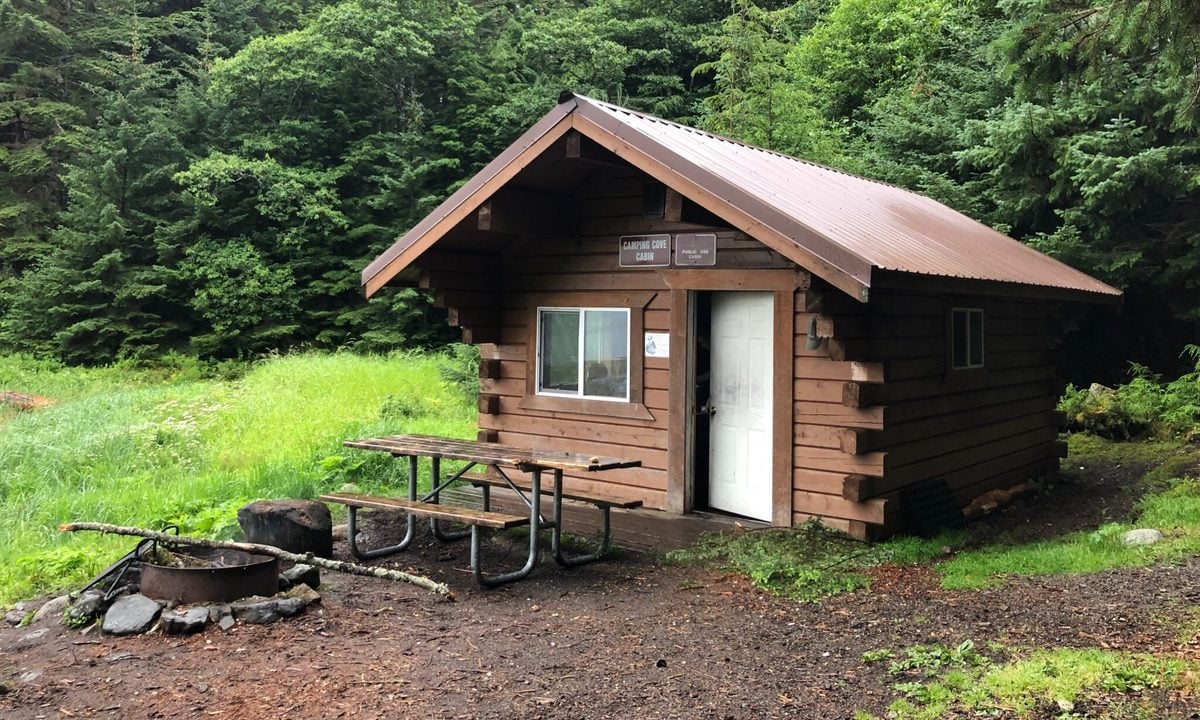
By: James Brooks, Alaska Beacon
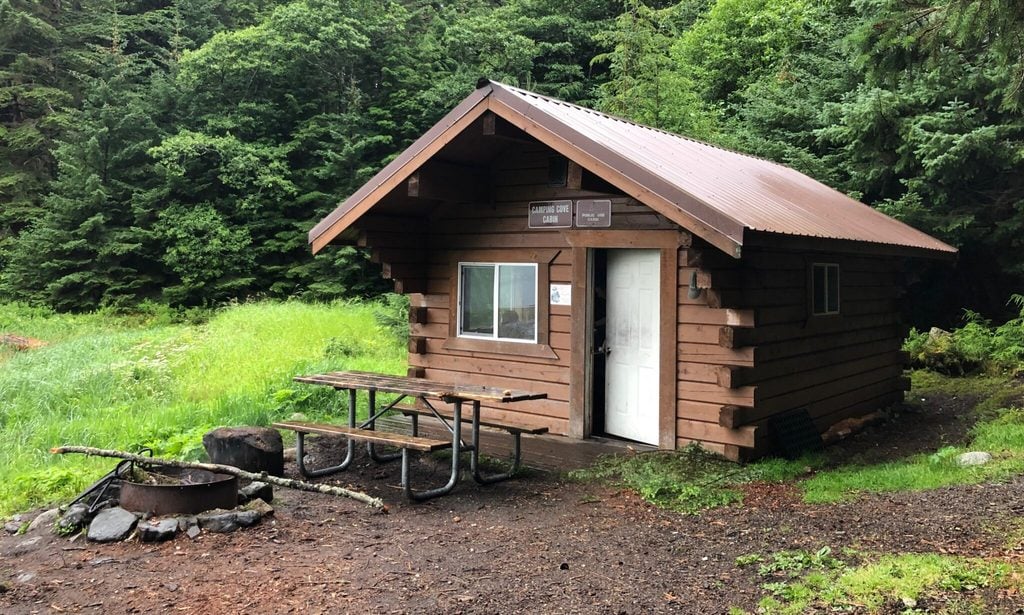
If you use Alaska’s public cabins, get ready for a change.
On Oct. 1, the Alaska Department of Natural Resources will begin limiting how far in advance reservations can be made to three months, down from six months.
The only exceptions to the three-month reservation window will include the Wood-Tikchik Region and cabins on Afognak and Shuyak Islands in the Kodiak region, which will continue to allow reservations up to six months in advance.
The change is part of a shift to a new online booking system and website that also opens Oct. 1. Cabin-seeking Alaskans will be unable to change, modify or cancel their existing reservations from Sept. 28 through Sept. 30 as part of the transition.
Beginning Oct. 1, reservations for all facilities can be made for Jan. 1, 2027 and the 3-month rolling window will begin.
Wendy Sailors, community engagement manager for Alaska State Parks, said by email that the new shorter reservation window is the result of feedback from Alaskans who said “that it is difficult to plan that far out, often people forget that they had the reservation and have to cancel last minute or just don’t use it, etc. So in addition to the three-month rolling reservation window, we are incorporating a few new features like an email reminder 7 days out.”

By: James Brooks, Alaska Beacon

In August, more than 70% of participating Alaska voters supported Ballot Measure 1, voting to restrict the amount of money that individuals can contribute to campaigns for state office.
On Nov. 3, Alaskans will vote on Ballot Measure 2, and an overlooked section of that measure — intended to roll back the state’s election system to what it was in 2020 — almost certainly would repeal part of Ballot Measure 1.
“I mean, people are like, why didn’t you raise this earlier? I’m like, it’s got 91 sections, and I literally didn’t notice,” said Scott Kendall, the author of Alaska’s existing elections system and an attorney fighting Ballot Measure 2.
In 2020, Alaskans passed a different Ballot Measure 2. It installed three major changes to the state’s election system: An open primary, where all candidates run together, and the top four advance to the general election; a ranked choice general election, where voters sort those four candidates in order of preference; and a disclosure law requiring third-party groups to disclose their donors when the groups donate to political candidates and causes.
This year’s Ballot Measure 2 seeks to repeal all three parts, returning Alaska elections to what they were in 2020.
There’s also a new wrinkle because of this year’s Ballot Measure 1.
Passed by voters in August, Ballot Measure 1 limits the amount of money that someone can donate to a candidate. That includes governor and lieutenant governor candidates who run together as a single ticket.
That single-ticket system was installed in 2020’s Ballot Measure 2. Ballot Measure 1 limited donations to that single ticket, putting the limits in Alaska Statute 15.13.070(g).
Ballot Measure 2 seeks to get rid of the combined single-ticket campaign, and Section 5 states, “AS 15.13.070(g) is repealed.”
That would get rid of the combined donation limit for governor and lieutenant governor. But some state officials say another law may then come into play.
Because candidates would — if Ballot Measure 2 passes — be running separately, they may be limited by a different part of Ballot Measure 1, AS 15.13.070(b), which applies to individual candidates.
That’s the position held by Alaska Public Offices Commission director Heather Hebdon. APOC is in charge of enforcing Alaska’s campaign finance laws.
By email, Hebdon said that if Ballot Measure 2 passes, “contribution limits for gubernatorial candidates would fall under those found in AS 15.13.070(b)(c) and (f).”
She believes APOC would likely write new regulations to deal with those limits’ applicability to governor and lieutenant governor candidates.
Kendall said he isn’t sure about that.
“I will say it’s really legally tenuous. I think when you have a statute that says a thing and you explicitly repeal that thing, you get what you get,” he said.
He also observed that in 2021, when the 9th U.S. Circuit Court of Appeals struck down Alaska’s prior limits on political donations, APOC attempted but failed to preserve a limit for the state’s 2022 elections.
Supporters of Ballot Measure 2 said they don’t have a position on the issue.
“Repeal Now wrote Ballot Measure 2 as a full and complete repeal of the 2020 ballot measure that brought ranked choice voting to Alaska. We are unaware of any effect on Ballot Measure 1 and thus can’t comment on that,” said Bethany Marcum, treasurer of Repeal Now, the leading group behind Ballot Measure 2.
Craig Richards, a former attorney general who represented Repeal Now in court, said he was unfamiliar with the issue.
The Alaska Department of Law also declined to make a definitive statement on the topic.
Sam Curtis, a spokesman for the department, said by email that attorneys within the Alaska Legislature would make the final determination of what happens if Ballot Measure 2 passes.
That’s because the revisor of statutes — an obscure staff official — is in charge of mediating disputes between enacted laws.
Emily Nauman, the Legislature’s chief attorney, declined to say how the Legislature might interpret any conflict.
Rep. Calvin Schrage, I-Anchorage and a sponsor of Ballot Measure 1, said earlier this month that he has requested that Nauman’s office deliver a written ruling on the issue, but as of Tuesday afternoon, that memo had not yet been completed.
The Alaska Supreme Court has dealt with similar issues before. In 2021 and in 2006, the court ruled that later laws trump earlier ones.
“In general, if two statutes conflict, then the later in time controls over the earlier, and the specific controls over the general,” the court wrote in a 2006 decision.
On Sept. 11, Schrage said he doesn’t like the idea of repealing a campaign finance limit.
“It seems to fly in the face of what Alaskan voters have time and time again reaffirmed as a priority for them,” he said.
The Alaska Supreme Court had an opportunity earlier this month to address the issue but declined to take it up.
During arguments over the proper description of Ballot Measure 2 on the November election ballot, Kendall sought to bring up the Section 5 issue.
The court rejected Kendall’s attempt, saying it hadn’t been properly briefed beforehand.
As a result, the final description on the ballot says only that Ballot Measure 2 would “remove the limits on donations to joint campaigns for governor and lieutenant governor.”
It doesn’t say whether anything will replace them.

(The Center Square) – Most voters in five battleground Senate states want lawmakers to fix Social Security before its retirement trust fund is depleted in 2032, but that support softens once specific tax increases or benefit cuts are named.