(The Center Square) – A U.S. Air Force B-52 Stratofortress crashed shortly after takeoff Monday morning from Edwards Air Force Base in Southern California.









(The Center Square) – A U.S. Air Force B-52 Stratofortress crashed shortly after takeoff Monday morning from Edwards Air Force Base in Southern California.

As Anchorage celebrates Juneteenth, the 2026 Ebony Aurora Awards are recognizing community members whose contributions have helped shape the city. Among the recipients is Herbert Turner, honored for more than six decades of service, including expanding educational opportunities for students…

Town Square Park renovation in Anchorage includes removal and preservation of commemorative bricks from the 1990s, with owners able to reclaim intact pieces.
Town Square Park renovation in Anchorage includes removal and preservation of commemorative bricks from the 1990s, with owners able to reclaim intact pieces.

Post Content

Coffee shops across Anchorage are dealing with rising costs for beans, fuel, shipping and supplies. Owners at Refuge Coffee and Bema Café say they have had to adapt as expenses climb, with some costs ultimately being passed on to customers.…

The Trump administration has issued final rules on how states should ensure that millions of Medicaid enrollees prove they’re working or completing other activities, such as job training, volunteering, or being enrolled in an educational program.
The Centers for Medicare & Medicaid Services released the rules on June 1. That deadline was set last year in the GOP tax-and-spending law known as the One Big Beautiful Bill Act, which established a work requirement for certain people enrolled in Medicaid, the state-federal health insurance program for people with low incomes or disabilities.
Medicaid agencies are scrambling to rework IT systems and make sure they have staff to effectively enforce the rules, while also keeping enrollees from losing coverage for administrative reasons, such as difficulty navigating state eligibility portals.
The newly announced regulations offer a clearer picture of what roughly 18.5 million Medicaid enrollees will have to do to prove they qualify for benefits.
Jim Torres, who helps people enroll in health coverage at the Samuel U. Rodgers Health Center in Kansas City, Missouri, said a “very small percentage” of his clients have heard of the changes coming to Medicaid.
“These folks have very busy lives. They’re doing the best they can to get by,” he said. “It’s just not a top-of-mind thing for most of them.”
Health policy researchers and consumer advocates said enrollees should keep a few things in mind as the Jan. 1, 2027, rollout approaches in most states.
1. The work rules won’t apply to everyone.
The new rules will apply to people covered through what’s known as Medicaid expansion. Since 2014, more than 40 states and the District of Columbia have decided to allow more people into their Medicaid programs, generally low-income adults without dependents. Georgia and Wisconsin offer coverage to some people in this group, so they’ll be subject to the rules.
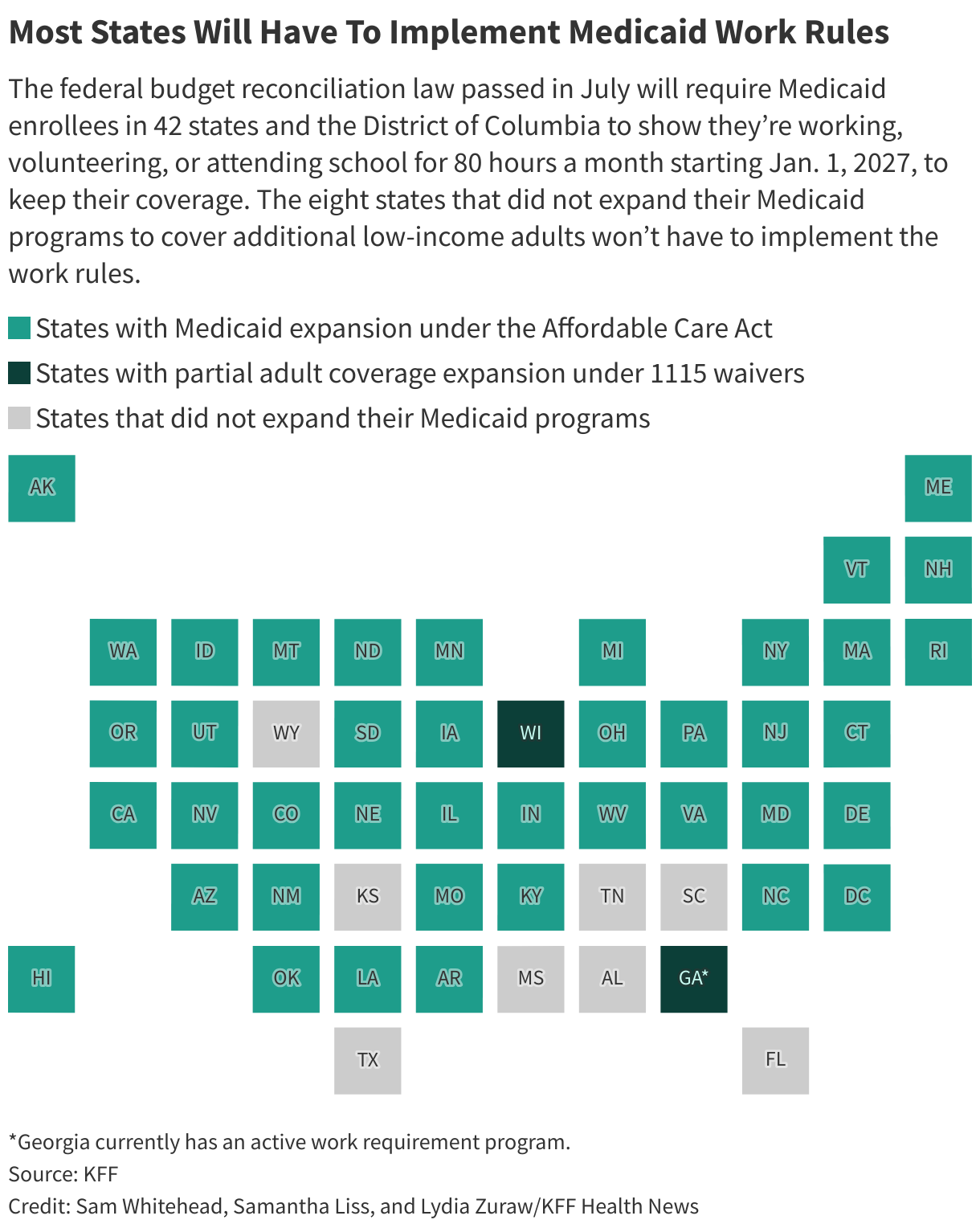
Children and pregnant people, as well as individuals with disabilities who receive Social Security payments — all groups that already qualify for Medicaid — won’t be subject to the rules. Nor will people determined to be “medically frail,” or too sick to work.
People subject to the work rules are “crowding out” people in the Medicaid program who are “truly in need,” CMS Director Mehmet Oz claimed during a June 1 press call. “Work requirements are going to turn this around, we hope.”
The rules are set to take effect in most places in January. Nebraska started enforcing them in May. Montana plans to start in July but won’t kick people off until October. Arkansas will do a “soft” launch in July — it will start enforcing the rules but with no penalties until next year.
2. States will take your word that you’re too sick to work. For now.
Federal officials have stressed that states should make the process of reporting hours and requesting exemptions as simple as possible for Medicaid enrollees by creating automated systems and using existing data sources, such as unemployment and education records.
If states cannot determine you’re performing 80 hours of qualifying activities a month using those data sources, you may be allowed to “self-attest” to that in 2027, health policy researchers said.
People will also be allowed to “self-attest” that they are too sick to work in 2027, and do so one time in 2028. Then states will start asking for proof, if they can’t find it through available data.
But after the initial rollout, the burden of proof is likely to still fall on many enrollees, said researchers and consumer advocates.
People may need to dig up pay stubs, medical records, and doctors’ notes and submit them for state review, said Morgan Henderson, who has studied Medicaid work programs in Georgia and Arkansas at The Hilltop Institute, a research center at the University of Maryland-Baltimore County.
“The higher this manual reporting burden, the less people are going to do it,” he said. “That means that we’re going to see coverage drop-offs.”
3. The rules are tougher than expected for people too sick to work.
One of CMS’ primary goals has been to “protect vulnerable populations” through “strong exemptions to make sure people who can’t reasonably be expected to work are not subject to the requirements,” Dan Brillman, a deputy administrator at the agency, said during the June 1 press call.
Consumer and patient advocates, however, said the final rules’ exemptions are more restrictive than expected. Enrollees will eventually have to provide documentation, such as a statement from a medical professional, to prove that a health condition keeps them from working. And each individual state will have to determine the severity of beneficiaries’ medical conditions.
“Someone could be medically frail in Nebraska but not medically frail in Delaware,” said Carolyn Sheridan, associate director of state policy for the National Organization for Rare Disorders, which lobbies for patients with rare diseases. She said her group had hoped the rules would offer a standardized definition of who counted as medically frail and not leave the decision up to states.
Trump administration officials have publicly crusaded against fraud in government health programs, such as Medicaid, and states could face financial penalties for incorrectly granting people exemptions from the work rules, said Jennifer Tolbert, who researches Medicaid at KFF, a health information nonprofit that includes KFF Health News.
“States may be more cautious,” she said. “That will likely lead to people losing coverage who may still be eligible.”
4. Only certain qualifying activities count.
Enrollees can satisfy the rules by working 80 hours a month. They can also be enrolled in college courses, volunteer through a community organization, or do “in-kind” work that doesn’t result in pay.
The rules set out, in detail, how many academic credit hours translate to 80 hours a month — students need to be enrolled in six credit hours per semester to meet the “half-time” requirement. An unpaid internship can count toward the 80 hours.
People can also prove they’re volunteering with “a document from a community service organization.”
Consumer advocates say it might be hard for people to obtain proof they’re performing these kinds of informal activities. But supporters of the rules say volunteerism can already be tracked.
“If you run into trouble with the law and the judge says, ‘Hey, you need some volunteering and community service to serve your time,’ there are already ways that we verify that,” said Niklas Kleinworth, who works on state health policy for the conservative Paragon Institute.
5. You have time to prepare.
Make sure your state Medicaid agency has your current mailing address and keep your eye on your mailbox, said researchers and consumer advocates. State Medicaid agencies must inform you in two ways if you’ll be subject to the rules — by either regular mail or email, and by one other form of communication, such as a text or phone call or by posting a notice online.
“The important stuff comes by mail,” Henderson said.
And check in with your state Medicaid agency, said researchers and advocates. Some states, including Arkansas, California, and Wisconsin, have already posted information about the work rules on their websites. If you can’t find what you’re looking for there, visit or call a local office. A caseworker should be able to tell you whether you’ll be subject to the rules.
“Get ahead of this,” said Joan Alker, executive director of the Georgetown University Center for Children and Families and studies Medicaid. “So that you don’t end up going to the pharmacy one day and they say, ‘Oh, you’re not insured anymore’ when you’re trying to get your prescriptions refilled.”
KFF Health News correspondent Samantha Liss and senior correspondent Rachana Pradhan contributed to this report.
Have you tried to prove your eligibility for Medicaid under new rules that require people to show they are working, going to school, or participating in another qualifying activity? Click here to contact KFF Health News.
KFF Health News is a national newsroom that produces in-depth journalism about health issues and is one of the core operating programs at KFF—an independent source of health policy research, polling, and journalism. Learn more about KFF.
This article first appeared on KFF Health News and is republished here under a Creative Commons Attribution-NonCommercial-NoDerivatives 4.0 International License.
The post Final rules for Medicaid work requirements are out. Here’s what you need to know. appeared first on Chilkat Valley News.
Republican attorneys general from 14 states and 19 GOP members of Congress are asking U.S. Environmental Protection Agency Administrator Lee Zeldin to classify and regulate the abortion medication mifepristone as a water contaminant.
Mifepristone is prescribed as part of a two-drug medication regimen to terminate a pregnancy. Studies have shown medication abortion to be safe and effective.
In a letter last Friday, the state officials argued that mifepristone is “a growing threat to the country’s waterways.” The letter was signed by the attorneys general of Alabama, Alaska, Arkansas, Florida, Idaho, Indiana, Kansas, Kentucky, Missouri, Nebraska, Louisiana, Oklahoma, South Carolina and Texas.
A concurrent letter, led by Republican Rep. Chris Smith of New Jersey, made similar claims and was signed by 18 other GOP members of Congress.
Environmental health science experts say there is no evidence that mifepristone in wastewater causes harm to the environment or to humans.
“There’s no evidence that medication abortion is affecting U.S. water systems, including drinking water and aquatic wildlife,” the Center for Biological Diversity, which advocates for stronger environmental protections, says on its website.
The GOP letters cite a 1996 FDA Center for Drug Evaluation and Research statement that said harmful environmental effects from mifepristone were “not anticipated,” while acknowledging that the drug may enter the environment via excretion or disposal of pharmaceutical waste. But drug trace amounts in water are a common occurrence, experts say, and state environmental agencies and scientists check for harmful contaminants in water as part of protocols and research.
In 2025, state lawmakers in seven states introduced nine bills that included claims about medication abortion and its effects on the environment and water. State lawmakers also introduced legislation calling for testing for mifepristone in water systems.
Last year, Republican members of Congress brought up similar concerns in a letter to the EPA.
The U.S. Supreme Court decided last month to preserve telehealth access to mifepristone until after the U.S. 5th Circuit Court of Appeals has ruled on the merits of the high-stakes federal lawsuit Louisiana v. Food and Drug Administration.
Medication abortion accounted for nearly two-thirds of all clinician-provided abortions in states without abortion bans in 2023, according to the most recent data available from the Guttmacher Institute, a research and policy organization focused on advancing reproductive rights.
Stateline reporter Nada Hassanein can be reached at nhassanein@stateline.org.
This story was originally produced by Stateline, which is part of States Newsroom, a nonprofit news network which includes Alaska Beacon, and is supported by grants and a coalition of donors as a 501c(3) public charity.
The post Alaska attorney general among those urging EPA to classify mifepristone as water contaminant appeared first on Chilkat Valley News.
By: Corinne Smith, Alaska Beacon
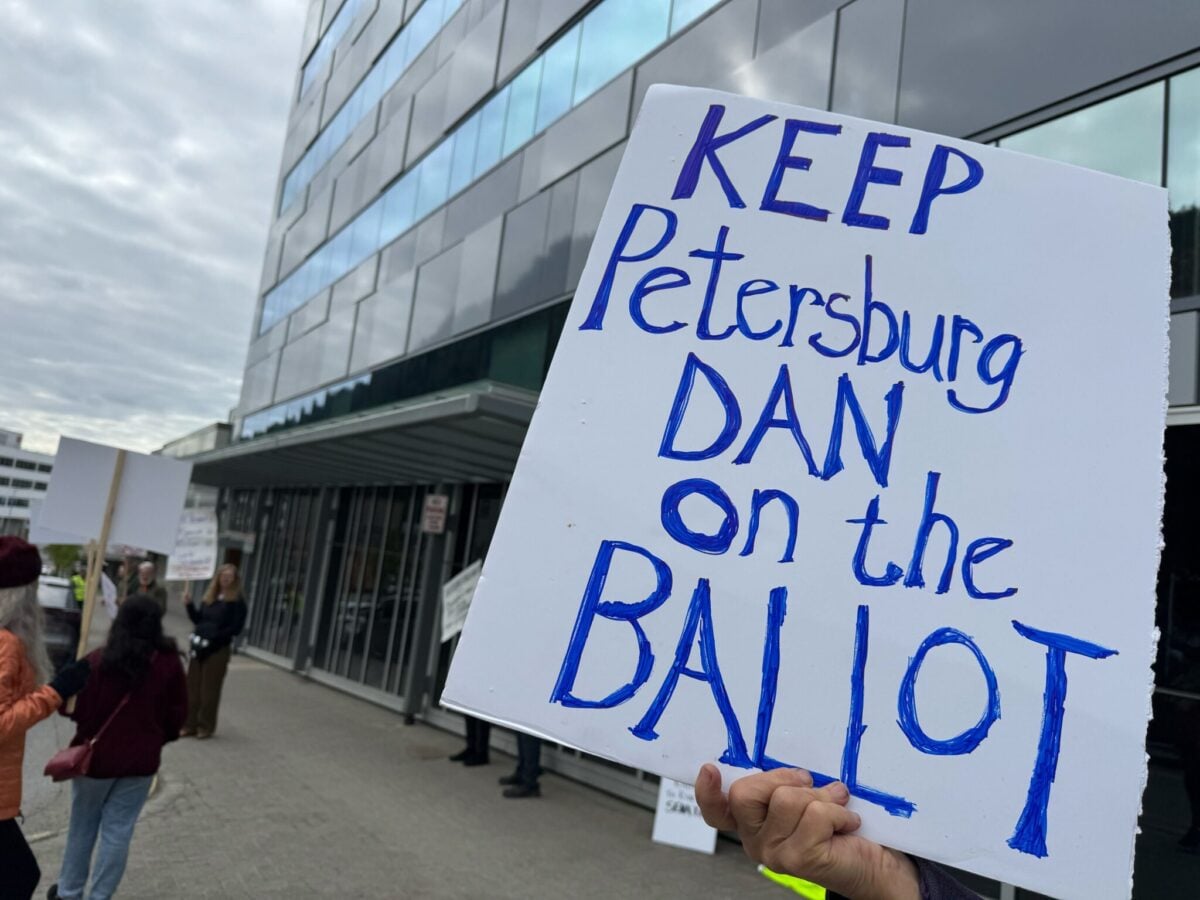
The Alaska Division of Elections announced that the state intends to disqualify a Petersburg candidate from Alaska’s U.S. Senate race. Dan J. Sullivan has the same first and last name as the incumbent senator. The decision comes after complaints from the incumbent and Republican Party groups and eligibility concerns.
The decision is preliminary, and the division gave no timeline for a final decision.

Dan J. Sullivan, a retired teacher from Petersburg, announced his candidacy last month, along with 15 candidates challenging the Republican incumbent U.S. Sen. Dan S. Sullivan for the seat.
The incumbent Sen. Sullivan and Republican groups criticized him as a “sham candidate” and said his candidacy is illegitimate and aimed at confusing voters to the benefit of the Democratic candidate, Mary Peltola.
Sullivan from Petersburg has defended his candidacy as authentic, and said he has complied with filing rules and has the right to run for the seat. He declined to comment on the preliminary decision on Friday.
Carol Beecher, division director, issued a preliminary decision on Wednesday, writing to the Petersburg Sullivan that the division had determined “that a preponderance of evidence does not support your eligibility for the office of U.S. Senate.”
Beecher did not provide the evidence or give a specific reason. She said the candidate had until 5 p.m. Friday to respond, and the state would issue a final decision with or without his response. Her office did not respond to a request for comment about the reasoning behind the preliminary decision to disqualify Sullivan on Thursday.
Beecher cited two complaints brought against Sullivan, one by the Alaska Republican Party which accused the Petersburg Sullivan of misrepresenting himself as a Republican. The group said at the time of filing for the seat he was registered to vote as “undeclared.”
The Petersburg Sullivan said he was affiliated with the Alaska Independence Party until it disbanded last year, then filed for the seat as a Republican.
The state’s filing form gives an option for candidates to change registered parties in a note under party affiliation.

The preliminary announcement to disqualify Sullivan came just hours after the candidate responded to questions by a deadline issued by the Lt. Gov. Nancy Dahlstrom’s office, which launched an investigation into the candidate on Monday.
Dahlstrom, a Republican, asked the candidate about his affiliation with the Republican Party, names he has used to register to vote, design decisions on his campaign website and logo and whether he has coordinated with the Democratic Party. The lieutenant governor said false statements could carry the penalty of perjury. She questioned whether Sullivan was running with “the deliberate intent to confuse voters.”
Sullivan denied the allegations, saying he was running under his lawful name as a Republican, and denied any affiliation with outside groups.
On Thursday evening, he issued a statement criticizing Dahlstrom’s actions and the message they send to voters.
“I am a qualified candidate who followed the rules and filed to run for office under my legal name. Yet, unsupported accusations have been given credibility while political operatives continue their effort to keep me off the ballot. Alaskans have every reason to ask whether this process is being driven by politics rather than by a fair application of the law,” he wrote.
A spokesperson for the Peltola campaign denied any connection to the candidate on Friday. “Our campaign has no involvement with either Sullivan campaign,” said Harry Child by email. The Alaska Democratic Party also denied involvement with the candidate.
The National Republican Senatorial Committee, which works to elect Republicans, filed a complaint with the Federal Election Commission that accused the candidate of violating federal law, and said he was working with political strategist, Amber Lee, to misrepresent his campaign. Sullivan said he was working with Lee, but denied the claims.
Sen. Sullivan’s campaign did not respond to a request for comment on the state’s preliminary decision to remove Sullivan from the ballot on Friday.
Demonstrators in Juneau took to the street Friday morning, protesting outside the Alaska Division of Elections office in support of Sullivan.

Anjuli Grantham with the grassroots advocacy group Juneau for Democracy said she doesn’t know Sullivan personally, but was out protesting in support. She said he meets qualifications for candidates under Alaska law, including being over 30 years old, a U.S. citizen and a resident of the state.
“And so what this actually is, it’s a sign of authoritarian slippage on the part of the state of Alaska,” she said. “In dictatorships, they control elections by deciding who will be on the ballot. And so we’re out here because it’s our constitutional right to run for office.”
Grantham also pointed to the division’s decision to share confidential voter information with the U.S. Department of Justice, a choice that some fear will be used to scrub Alaska voters from the rolls. Civil rights groups have filed a lawsuit against the Division of Elections saying it was a violation of voters’ privacy rights.
“That was very likely in violation of our state constitutional rights to privacy,” she said. “And so what we’re seeing now is another what seems to be anti-constitutional action on the part of the Division of Elections, so we’re here as democracy defenders and as people who are standing up to authoritarianism,” Grantham said.

By: James Brooks, Alaska Beacon
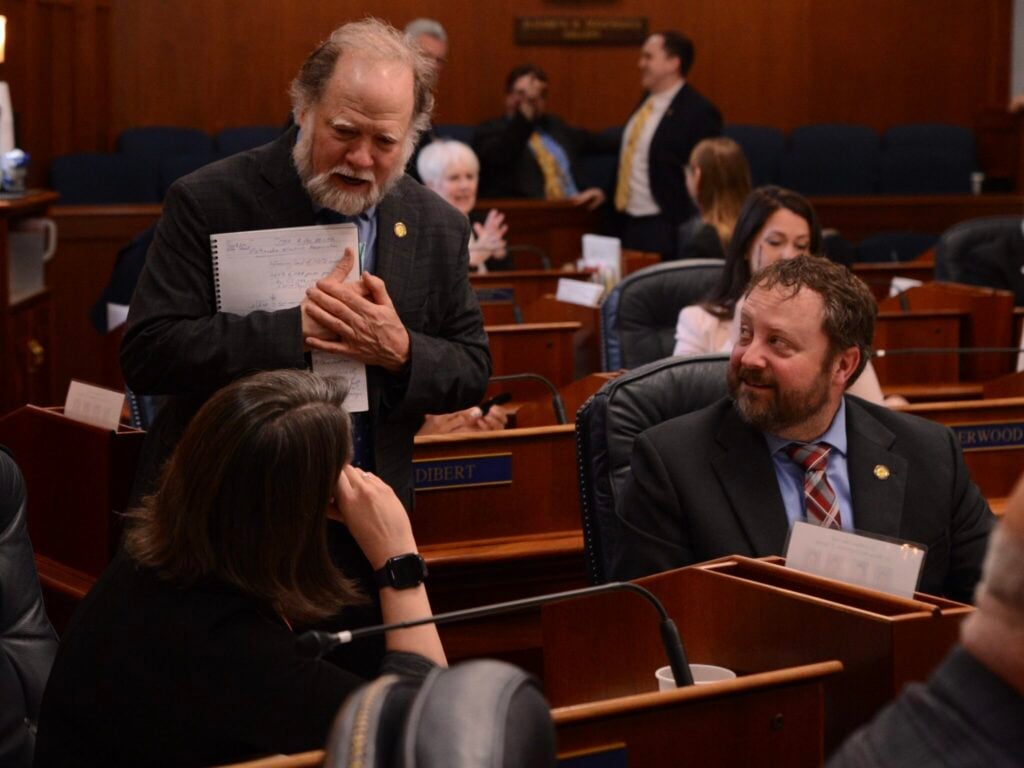
The Alaska House of Representatives has voted to advance a multibillion-dollar tax break for the proposed trans-Alaska natural gas pipeline project.
The House’s 34-5 action sends the tax break to the state Senate, which is expected to take up the issue next week. Legislators are in a 30-day special session devoted to the issue, and the session ends June 19.
House Bill 381, containing the tax break, doesn’t guarantee pipeline construction, but project skeptics and advocates alike say that without the change, the pipeline is uneconomic.
“I’m very proud of us getting this bill to where we are today and giving this project a fighting chance,” said Rep. Calvin Schrage, I-Anchorage, “so that Alaskans and hopefully the world can benefit from the gas reserves that we have here in the state.”
If enacted, the bill would replace the state’s 2% petroleum property tax with a tax on gas shipped through the pipeline.
Proceeds from the petroleum property tax are split between boroughs and the state. If the pipeline is built, those governments would collectively forego about $800 million per year, said Rep. Andy Josephson, D-Anchorage.
The state would still collect royalties, corporate income taxes, production taxes and other fees, said Rep. Chuck Kopp, R-Anchorage. Those are expected to net the state between $600 million and $700 million in new revenue per year.
HB 381 also contains a rate cap to mandate that pipeline developers provide natural gas to Southcentral Alaska residents at a price that’s lower than the predicted price of imported gas.
Currently, Southcentral Alaska relies on natural gas from fields beneath Cook Inlet. Available supplies are running low.
“I think everyone’s been asking: What is the benefit to Alaska?” said Rep. Sarah Vance, R-Homer. “The benefit, if you could summarize it into one thing, and that’s reliable energy.”
Other parts of the bill mandate an impact fund to compensate local governments for the effects of construction, and send money to a rural power fund to pay for energy projects away from the pipeline.
“Every region of Alaska will get a share of this project one way or the other, and there’s real protections for Alaska ratepayers,” Kopp said.
Gov. Mike Dunleavy and Glenfarne, the multinational firm developing the pipeline, issued written statements after the vote, praising lawmakers’ action.
“This project has the potential to transform Alaska’s economy for decades,” the governor said in part. “I look forward to working with the Senate to get this important legislation across the finish line.”
As currently planned, the Alaska LNG project would be built in two phases. The first phase would include a pipeline from the North Slope to Cook Inlet, with limited processing plants needed to deliver gas to Southcentral Alaska for domestic use.
Glenfarne expects to begin operating the first phase by 2029.
The second phase would involve building a large facility on the North Slope and another on the Kenai Peninsula, allowing the pipeline to ship larger volumes of gas for export overseas.
Glenfarne expects the second phase of construction to be done in 2033 and that both phases will cost between $44.5 billion and $54.5 billion altogether.
Exports would subsidize the cost of gas for in-state use, with Glenfarne projections suggesting that if the pipeline reaches full capacity, the cost of gas in Southcentral could be half of what it is today.
That’s still hypothetical. Estimates from the Alaska Department of Revenue suggest the pipeline project’s economics are marginal. Even if the tax break is adopted, the cost of exported gas may not be competitive on global markets with gas from other sources around the world.
“We cannot control global economics, and the passage of this bill does not guarantee a pipeline will be built. I think that’s important to recognize,” said Rep. Zack Fields, D-Anchorage. “This bill absolutely increases the likelihood that the project can progress.”
Under the terms of HB 381, pipeline developers would pay no gas tax for the first five years of the project, or until gas volume reaches a certain, export-level threshold.
After that point, the new tax would kick in.
Because boroughs are forgoing so much revenue, HB 381 requires the pipeline developer to pay $80 million into an impact fund that would be distributed to boroughs — including Anchorage — along the route.
That money might be used to pay for extra street repairs, additional police or other services needed to address the needs of thousands of extra workers who would be building the pipeline.
Rep. Dan Saddler, R-Eagle River, said he’s heard from Alaskans who think HB 381 is a giveaway and that the state could pull in hundreds of millions more if it simply left the property tax alone.
“I shake my head and tsk just a little bit,” he said, “because a high tax on no pipeline gets you no money; a lower tax on a real pipeline gets you money.”

Rep. Robin Frier, D-Utqiagvik, opposed the final version of HB 381. She represents the North Slope Borough, which relies heavily on the petroleum property tax for local needs. The borough would forego hundreds of millions of dollars in prospective revenue under a switch to a gas tax.
Before Friday’s final vote, she offered a pair of amendments that would have reduced the impact on the North Slope. Both were defeated by wide margins.
Rep. Donna Mears, D-Anchorage, was excused absent from Friday’s vote because of travel problems that kept her from reaching Juneau.
By text message, she said that had she been present, she would have voted against the bill.
“This legislation will push costs down onto communities and lock us into tax breaks we won’t be able to re-evaluate for decades,” she said.
Rep. Sara Hannan, D-Juneau, also voted against the bill, saying her constituents raised climate change concerns. Burning natural gas releases greenhouse gases, which contributes to climate change.
Rep. Jeremy Bynum, R-Ketchikan, offered a different perspective, saying that he believes cheap natural gas will displace diesel fuel, thus leading to an overall reduction in greenhouse gas emissions because gas is cleaner burning than fuel oil.
Fairbanks Democratic Rep. Ashley Carrick borrowed a term from public health and said that natural gas is an issue of “harm reduction.” In her district, many people heat their homes with fuel oil at $6 per gallon. When oil isn’t available — or is unaffordable — people burn wood.
“Fairbanks has some of the worst air quality in the nation, in the world, because of those fuel sources. Natural gas is harm reduction. I believe in that, and while I do share the frustration and concern from many, I believe this is a step in the right direction towards more sustainable energy, available energy and affordable energy for our communities,” she said.
Saddler, who is retiring from the Legislature this year, said he hopes lawmakers “can bring an end to that old joke that a natural gas pipeline is Alaska’s future and it always will be. I hope you never hear that joke again.”