Categories
Alaska News Featured Juneau News juneau Juneau Local Juneau Local Ketchikan Local News Feeds Sitka Local

Alaska’s U.S. senators back effort to waive $100k visa fee for public school employees

By: Corinne Smith, Alaska Beacon

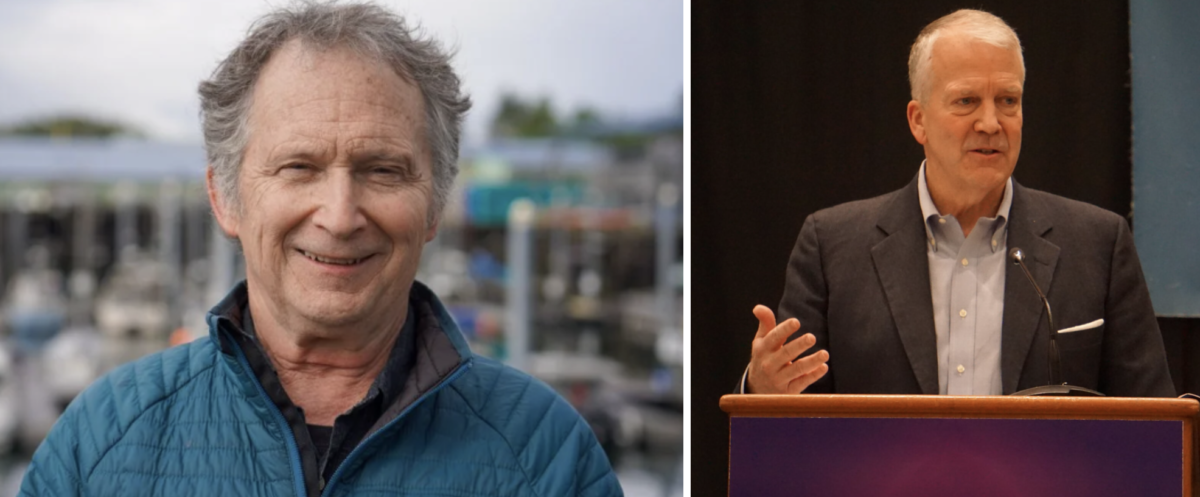
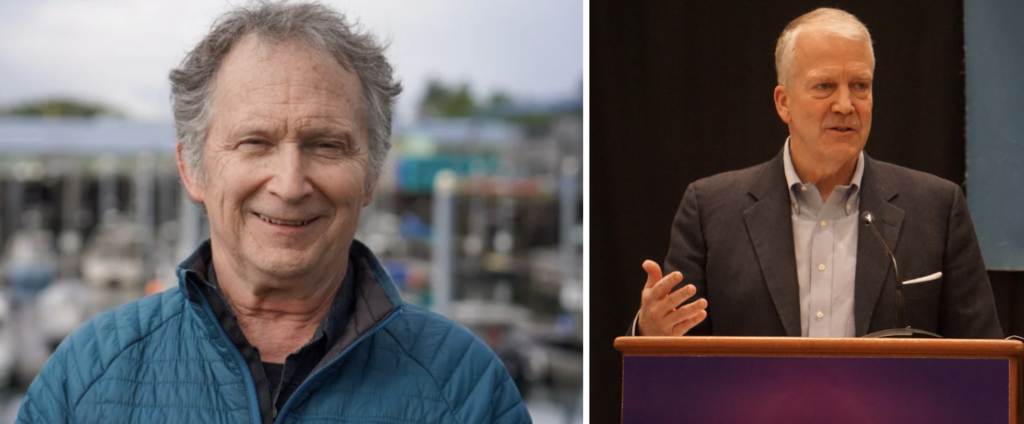
Alaska U.S. Senators Lisa Murkowski and Dan Sullivan (Alaska Beacon file photos)

Alaska’s Republican U.S. senators are pushing the Trump administration to waive a recently hiked visa fee for all public school employees.

The Trump administration raised the fee for highly skilled workers visas, known as the H-1B visa program, from $5,000 to $100,000 per visa in September. That has consequences for Alaska school districts, which have grown to rely on international hiring to fill teaching and staff positions.

“As soon as this proclamation was released last year, I have been sounding the alarm with the administration about the importance of the H-1B visa program to Alaska’s school districts,” U.S.  Sen. Lisa Murkowski said in a prepared statement announcing the bill. 

Murkowski introduced legislation in the U.S. Senate on Mar. 12, saying it would help alleviate financial strain for Alaska’s school districts. U.S. Sen. Dan Sullivan signed on as a cosponsor of the bill on Tuesday. 

The H-1B visa program provides non-immigrant visas for U.S. employers to recruit highly skilled workers, with at least a bachelor’s degree, in fields such as healthcare, technology or education. The visa is valid for up to six years. 

“Our public school classrooms have been facing a staffing crisis for years, but teachers in Alaska on H-B visas have been instrumental in bridging that shortage and serving our students with talent and care,” Murkowski wrote. “This legislation offers a commonsense exemption that will ensure Alaska’s schoolchildren have access to more high-quality educators while keeping class sizes reasonable.”

The Alaska House of Representatives introduced a resolution this month urging the visa waiver for teachers. 

There are close to 600 international teachers working in Alaska and 341 of them use H-1B visas, according to data provided by the Alaska Council of School Administrators, which assists districts in recruitment and hiring. 

“In some rural districts, visa teachers make up 50% to nearly 80% of the teaching staff,” said Lisa Parady, the council’s director, in a statement with the bill’s announcement. “School districts already invest $6,000 to $12,000 per teacher to recruit and sponsor educators through the H-1B visa process. Adding a $100,000 federal visa fee has made it financially impossible for many districts to continue hiring the teachers their students depend on.”

Alaska districts are also in the process of hiring teachers for next year, and officials say the fee imposes an impossible financial barrier. 

Cyndy Mika, superintendent of the Kodiak Island Borough School District, said in a written statement with the bill’s announcement that nearly 20% of teachers district wide — and 75% of village teachers — are international hires through visa programs. 

“These educators are not replacing American teachers—we simply do not have applicants for these positions,” she said. “Without access to international educators, districts like Kodiak will struggle to fill classrooms and provide consistent learning environments for students.”

The situation is exacerbated in Alaska’s rural districts by recent additional restrictions on the J-1 visa program, which requires visa-holding teachers to be placed in areas with access to health care services, transportation and other public services. 

Tammy Dodd, superintendent of the Bering Strait School District, said in a statement the new J-1 visa restrictions put rural districts at a unique disadvantage. 

“So the H-1B visa is the only choice,” she said. “The Bering Strait School District employs 86 international teachers, which is roughly 40% of certified staffing. With the new fee in place, the district would be unable to replace those positions with international hires.”

Murkowski sent a letter of concern to the former U.S. Sec. Kristi Noem with the Department Homeland Security, which administers the visa program. Noem responded in a letter on Dec. 15 shared by the senator’s office. Noem wrote that some exemptions are possible.

“Exceptions to the $100,000 payment are extremely rare and are granted only in extraordinarily compelling circumstances. Petitioning employers may seek an exception by sending their request,” Noem wrote.

“Evidence should support the alien worker’s presence in the United States as an H-1B worker is in the national interest, no American worker is available for fill the role, the alien worker does not pose a threat to security or welfare of the United States, and requiring the petitioning employer to pay the $100,000 payment would significantly undermine the interests of the United States,” she wrote. 

Jennifer Schmitz, director of the Alaska Educator Retention and Recruitment Center, a division of the Alaska Council of School Administrators, said by email Monday that some districts have sought individual exemptions from DHS for teachers with pending H-1B visa applications, but have received no response and no timeline from the department.

Categories
Alaska News

Alaska’s U.S. senators back effort to waive $100k visa fee for public school employees

Alaska’s Republican U.S. senators are pushing the Trump administration to waive a recently hiked visa fee for all public school employees.

The Trump administration raised the fee for highly skilled workers visas, known as the H-1B visa program, from $5,000 to $100,000 per visa in September. That has consequences for Alaska school districts, which have grown to rely on international hiring to fill teaching and staff positions.

“As soon as this proclamation was released last year, I have been sounding the alarm with the administration about the importance of the H-1B visa program to Alaska’s school districts,” U.S.  Sen. Lisa Murkowski said in a prepared statement announcing the bill. 

Murkowski introduced legislation in the U.S. Senate on Mar. 12, saying it would help alleviate financial strain for Alaska’s school districts. U.S. Sen. Dan Sullivan signed on as a cosponsor of the bill on Tuesday. 

The H-1B visa program provides non-immigrant visas for U.S. employers to recruit highly skilled workers, with at least a bachelor’s degree, in fields such as healthcare, technology or education. The visa is valid for up to six years. 

“Our public school classrooms have been facing a staffing crisis for years, but teachers in Alaska on H-B visas have been instrumental in bridging that shortage and serving our students with talent and care,” Murkowski wrote. “This legislation offers a commonsense exemption that will ensure Alaska’s schoolchildren have access to more high-quality educators while keeping class sizes reasonable.”

The Alaska House of Representatives introduced a resolution this month urging the visa waiver for teachers. 

There are close to 600 international teachers working in Alaska and 341 of them use H-1B visas, according to data provided by the Alaska Council of School Administrators, which assists districts in recruitment and hiring. 

“In some rural districts, visa teachers make up 50% to nearly 80% of the teaching staff,” said Lisa Parady, the council’s director, in a statement with the bill’s announcement. “School districts already invest $6,000 to $12,000 per teacher to recruit and sponsor educators through the H-1B visa process. Adding a $100,000 federal visa fee has made it financially impossible for many districts to continue hiring the teachers their students depend on.”

Alaska districts are also in the process of hiring teachers for next year, and officials say the fee imposes an impossible financial barrier. 

Cyndy Mika, superintendent of the Kodiak Island Borough School District, said in a written statement with the bill’s announcement that nearly 20% of teachers district wide — and 75% of village teachers — are international hires through visa programs. 

“These educators are not replacing American teachers—we simply do not have applicants for these positions,” she said. “Without access to international educators, districts like Kodiak will struggle to fill classrooms and provide consistent learning environments for students.”

The situation is exacerbated in Alaska’s rural districts by recent additional restrictions on the J-1 visa program, which requires visa-holding teachers to be placed in areas with access to health care services, transportation and other public services. 

Tammy Dodd, superintendent of the Bering Strait School District, said in a statement the new J-1 visa restrictions put rural districts at a unique disadvantage. 

“So the H-1B visa is the only choice,” she said. “The Bering Strait School District employs 86 international teachers, which is roughly 40% of certified staffing. With the new fee in place, the district would be unable to replace those positions with international hires.”

Murkowski sent a letter of concern to the former U.S. Sec. Kristi Noem with the Department Homeland Security, which administers the visa program. Noem responded in a letter on Dec. 15 shared by the senator’s office. Noem wrote that some exemptions are possible.

“Exceptions to the $100,000 payment are extremely rare and are granted only in extraordinarily compelling circumstances. Petitioning employers may seek an exception by sending their request,” Noem wrote.

“Evidence should support the alien worker’s presence in the United States as an H-1B worker is in the national interest, no American worker is available for fill the role, the alien worker does not pose a threat to security or welfare of the United States, and requiring the petitioning employer to pay the $100,000 payment would significantly undermine the interests of the United States,” she wrote. 

Jennifer Schmitz, director of the Alaska Educator Retention and Recruitment Center, a division of the Alaska Council of School Administrators, said by email Monday that some districts have sought individual exemptions from DHS for teachers with pending H-1B visa applications, but have received no response and no timeline from the department.

The post Alaska’s U.S. senators back effort to waive $100k visa fee for public school employees appeared first on Chilkat Valley News.

Categories
Alaska News

Alaska’s U.S. senators back effort to waive $100k visa fee for public school employees

Alaska U.S. Senators Lisa Murkowski and Dan Sullivan (Alaska Beacon file photos)

Alaska’s Republican U.S. senators are pushing the Trump administration to waive a recently hiked visa fee for all public school employees.

The Trump administration raised the fee for highly skilled workers visas, known as the H-1B visa program, from $5,000 to $100,000 per visa in September. That has consequences for Alaska school districts, which have grown to rely on international hiring to fill teaching and staff positions.

“As soon as this proclamation was released last year, I have been sounding the alarm with the administration about the importance of the H-1B visa program to Alaska’s school districts,” U.S.  Sen. Lisa Murkowski said in a prepared statement announcing the bill. 

Murkowski introduced legislation in the U.S. Senate on Mar. 12, saying it would help alleviate financial strain for Alaska’s school districts. U.S. Sen. Dan Sullivan signed on as a cosponsor of the bill on Tuesday. 

The H-1B visa program provides non-immigrant visas for U.S. employers to recruit highly skilled workers, with at least a bachelor’s degree, in fields such as healthcare, technology or education. The visa is valid for up to six years. 

“Our public school classrooms have been facing a staffing crisis for years, but teachers in Alaska on H-B visas have been instrumental in bridging that shortage and serving our students with talent and care,” Murkowski wrote. “This legislation offers a commonsense exemption that will ensure Alaska’s schoolchildren have access to more high-quality educators while keeping class sizes reasonable.”

The Alaska House of Representatives introduced a resolution this month urging the visa waiver for teachers. 

There are close to 600 international teachers working in Alaska and 341 of them use H-1B visas, according to data provided by the Alaska Council of School Administrators, which assists districts in recruitment and hiring. 

“In some rural districts, visa teachers make up 50% to nearly 80% of the teaching staff,” said Lisa Parady, the council’s director, in a statement with the bill’s announcement. “School districts already invest $6,000 to $12,000 per teacher to recruit and sponsor educators through the H-1B visa process. Adding a $100,000 federal visa fee has made it financially impossible for many districts to continue hiring the teachers their students depend on.”

Alaska districts are also in the process of hiring teachers for next year, and officials say the fee imposes an impossible financial barrier. 

Cyndy Mika, superintendent of the Kodiak Island Borough School District, said in a written statement with the bill’s announcement that nearly 20% of teachers district wide — and 75% of village teachers — are international hires through visa programs. 

“These educators are not replacing American teachers—we simply do not have applicants for these positions,” she said. “Without access to international educators, districts like Kodiak will struggle to fill classrooms and provide consistent learning environments for students.”

The situation is exacerbated in Alaska’s rural districts by recent additional restrictions on the J-1 visa program, which requires visa-holding teachers to be placed in areas with access to health care services, transportation and other public services. 

Tammy Dodd, superintendent of the Bering Strait School District, said in a statement the new J-1 visa restrictions put rural districts at a unique disadvantage. 

“So the H-1B visa is the only choice,” she said. “The Bering Strait School District employs 86 international teachers, which is roughly 40% of certified staffing. With the new fee in place, the district would be unable to replace those positions with international hires.”

Murkowski sent a letter of concern to the former U.S. Sec. Kristi Noem with the Department Homeland Security, which administers the visa program. Noem responded in a letter on Dec. 15 shared by the senator’s office. Noem wrote that some exemptions are possible.

“Exceptions to the $100,000 payment are extremely rare and are granted only in extraordinarily compelling circumstances. Petitioning employers may seek an exception by sending their request,” Noem wrote.

“Evidence should support the alien worker’s presence in the United States as an H-1B worker is in the national interest, no American worker is available for fill the role, the alien worker does not pose a threat to security or welfare of the United States, and requiring the petitioning employer to pay the $100,000 payment would significantly undermine the interests of the United States,” she wrote. 

Jennifer Schmitz, director of the Alaska Educator Retention and Recruitment Center, a division of the Alaska Council of School Administrators, said by email Monday that some districts have sought individual exemptions from DHS for teachers with pending H-1B visa applications, but have received no response and no timeline from the department.

SUPPORT: YOU MAKE OUR WORK POSSIBLE

Categories
Alaska News Featured Juneau News juneau Juneau Local Juneau Local Ketchikan Local News Feeds Sitka Local

Oil markets are second most uncertain on record, economist tells Alaska legislators

By: James Brooks, Alaska Beacon

Economist Dan Stickel talks to the Alaska House Finance Committee on Monday, March 16, 2026. (James Brooks photo/Alaska Beacon)

The U.S.-Israeli war against Iran has left oil markets more uncertain than they were during the Great Recession, a state expert told the Alaska Legislature on Monday.

In a pair of hearings, Alaska Department of Revenue economist Dan Stickel told state legislators that the volatility of global oil markets is the second-highest on record, leaving future forecasts particularly unreliable.

“The level of uncertainty around future prices in the oil markets now is higher than during the peaks of the Great Recession in 2008-2009 and it’s higher than the Russian invasion of Ukraine, and it’s higher than any of the COVID spikes other than the initial April 2020 spike,” he said during a Monday morning hearing of the Senate Finance Committee.

“The message here is to plan for the possibility that revenue doesn’t come in exactly at what we forecast for the next couple of years,” Stickel said. 

Oil is the second-largest source of general-purpose revenue for the Alaska state budget, and Stickel’s testimony came days after the department released a new Alaska revenue forecast showing $545 million more in current-year revenue than projected in the fall. Most of that higher prediction is due to the price of oil.

That forecast has snarled relations in the Alaska House of Representatives, which has repeatedly postponed discussion of a bill that would fund a variety of amendments to the fiscal year 2026 budget passed by lawmakers and Gov. Mike Dunleavy last spring. 

On Monday, after more than two hours of acrimonious debate, House legislators again declined to take up the bill.

Soon after the House adjourned its floor session, Stickel testified in front of the House Finance Committee, and told lawmakers that “the level of certainty that we will hit our exact forecast is low.”

As he spoke, on the other end of the Capitol’s fifth floor, the Senate Finance Committee was simultaneously hearing from Office of Management and Budget director Lacey Sanders, who said the governor’s office was requesting another $18 million in spending for the current fiscal year.

Altogether, the governor has requested almost $427 million in additions to the budget. Add in additional spending proposed by lawmakers, and there’s only about a $30 million difference between the new revenue forecast and the additions proposed by the governor and legislators.

At the latest forecast prices, said Rep. Calvin Schrage, I-Anchorage, a $2 change in the average price of a barrel of North Slope oil is worth $30 million.

He asked Stickel what the odds were that the forecast misses low by more than $2.

“Roughly a slightly less than 50% chance that we come in more than $2 below the forecast,” Stickel said, then alluded to the fact that there’s a similar chance of coming in above the forecast.

“The level of certainty that we will hit our exact forecast is low in either direction,” he said.

Currently, members of the House majority are advocating that legislators unlock the state’s principal savings account to provide surety for some of those budget additions.

Doing so would avoid problems if oil prices turn out to be lower than forecast.

But spending from the Constitutional Budget Reserve, the state’s principal savings account, requires 30 votes in the House and 15 votes in the Senate. 

The House’s multipartisan coalition majority has 21 members, which means they need support from the all-Republican House minority caucus.

Members of that group have been arguing against unlocking the budget reserve right now, saying that the new forecast and the current balance of the state’s general-purpose accounts demonstrate it isn’t needed.

In addition, as currently written, the supplemental budget bill in the House would allow spending from savings regardless of the price of oil. That could allow the majority to dictate extra spending even if prices stay high. 

The Senate has already approved spending from the Constitutional Budget Reserve, and on Monday morning, Sen. Bert Stedman, R-Sitka and co-chair of the Senate Finance Committee, said a draw from the reserve would act as a “safety net.” 

Sen. Lyman Hoffman, D-Bethel, said senators don’t intend to spend dollars from savings unless it is needed. 

“If they are not needed, they will stay in the CBR,” he said, adding that without permission to spend from savings, there’s a chance that lawmakers would need to return in August to fix budget problems in a special session.

Categories
Alaska News

Oil markets are second most uncertain on record, economist tells Alaska legislators

Economist Dan Stickel talks to the Alaska House Finance Committee on Monday, March 16, 2026. (James Brooks photo/Alaska Beacon)

The U.S.-Israeli war against Iran has left oil markets more uncertain than they were during the Great Recession, a state expert told the Alaska Legislature on Monday.

In a pair of hearings, Alaska Department of Revenue economist Dan Stickel told state legislators that the volatility of global oil markets is the second-highest on record, leaving future forecasts particularly unreliable.

“The level of uncertainty around future prices in the oil markets now is higher than during the peaks of the Great Recession in 2008-2009 and it’s higher than the Russian invasion of Ukraine, and it’s higher than any of the COVID spikes other than the initial April 2020 spike,” he said during a Monday morning hearing of the Senate Finance Committee.

“The message here is to plan for the possibility that revenue doesn’t come in exactly at what we forecast for the next couple of years,” Stickel said. 

Oil is the second-largest source of general-purpose revenue for the Alaska state budget, and Stickel’s testimony came days after the department released a new Alaska revenue forecast showing $545 million more in current-year revenue than projected in the fall. Most of that higher prediction is due to the price of oil.

That forecast has snarled relations in the Alaska House of Representatives, which has repeatedly postponed discussion of a bill that would fund a variety of amendments to the fiscal year 2026 budget passed by lawmakers and Gov. Mike Dunleavy last spring. 

On Monday, after more than two hours of acrimonious debate, House legislators again declined to take up the bill.

Soon after the House adjourned its floor session, Stickel testified in front of the House Finance Committee, and told lawmakers that “the level of certainty that we will hit our exact forecast is low.”

As he spoke, on the other end of the Capitol’s fifth floor, the Senate Finance Committee was simultaneously hearing from Office of Management and Budget director Lacey Sanders, who said the governor’s office was requesting another $18 million in spending for the current fiscal year.

Altogether, the governor has requested almost $427 million in additions to the budget. Add in additional spending proposed by lawmakers, and there’s only about a $30 million difference between the new revenue forecast and the additions proposed by the governor and legislators.

At the latest forecast prices, said Rep. Calvin Schrage, I-Anchorage, a $2 change in the average price of a barrel of North Slope oil is worth $30 million.

He asked Stickel what the odds were that the forecast misses low by more than $2.

“Roughly a slightly less than 50% chance that we come in more than $2 below the forecast,” Stickel said, then alluded to the fact that there’s a similar chance of coming in above the forecast.

“The level of certainty that we will hit our exact forecast is low in either direction,” he said.

Currently, members of the House majority are advocating that legislators unlock the state’s principal savings account to provide surety for some of those budget additions.

Doing so would avoid problems if oil prices turn out to be lower than forecast.

But spending from the Constitutional Budget Reserve, the state’s principal savings account, requires 30 votes in the House and 15 votes in the Senate. 

The House’s multipartisan coalition majority has 21 members, which means they need support from the all-Republican House minority caucus.

Members of that group have been arguing against unlocking the budget reserve right now, saying that the new forecast and the current balance of the state’s general-purpose accounts demonstrate it isn’t needed.

In addition, as currently written, the supplemental budget bill in the House would allow spending from savings regardless of the price of oil. That could allow the majority to dictate extra spending even if prices stay high. 

The Senate has already approved spending from the Constitutional Budget Reserve, and on Monday morning, Sen. Bert Stedman, R-Sitka and co-chair of the Senate Finance Committee, said a draw from the reserve would act as a “safety net.” 

Sen. Lyman Hoffman, D-Bethel, said senators don’t intend to spend dollars from savings unless it is needed. 

“If they are not needed, they will stay in the CBR,” he said, adding that without permission to spend from savings, there’s a chance that lawmakers would need to return in August to fix budget problems in a special session.

SUPPORT: YOU MAKE OUR WORK POSSIBLE

Categories
Alaska News

Support for education funding bill comes as Alaska districts grapple with ongoing deficits

Emily Brubaker, age 15 and a 9th grader at West Anchorage High School and a member of Alaska Youth for Environmental Action testified in support of a bill to increase per student funding, the base student allocation, before members of the House Education Committee on Mar. 12, 2026. (Photo by Corinne Smith/Alaska Beacon)

Emily Brubaker, age 15 and a 9th grader at West Anchorage High School and a member of Alaska Youth for Environmental Action testified in support of a bill to increase per student funding, the base student allocation, before members of the House Education Committee on Mar. 12, 2026. (Photo by Corinne Smith/Alaska Beacon)

Lawmakers are considering new legislation to increase state funding for Alaska schools, and heard public comment on Wednesday evening that showed overwhelming support for more funding for public education. 

The legislation comes on the heels of a historic increase to per pupil student funding last year — after political debate between lawmakers and Gov. Mike Dunleavy resulted in three governor’s vetoes and two override votes by the Legislature.

House Bill 374 would increase per student funding, known as the base student allocation, by $630 per student. The bill would take per student funding from $6,660 to $7,290 — totalling $158.6 million additional dollars for schools next year.

Sponsors of the legislation said they calculated that increase by assessing the current budget deficits of the state’s five largest school districts by student population — Anchorage, Matanuska-Susitna Borough, Kenai Peninsula Borough, Fairbanks North Star Borough and Juneau School Districts are all facing millions in budget shortfalls, and looking at cutting teachers and programs, increasing class sizes and potentially closing schools.

Members of the House Education Committee hear public testimony on HB 347, a bill to increase per student funding, on Mar 11, 2026. (Photo by Corinne Smith/Alaska Beacon)

Dozens of Alaska students, parents, grandparents, teachers, nurses and superintendents from across the state called in and spoke in-person at the Capitol to the House Education Committee for two hours on Mar. 11, urging support for the legislation. There were no testifiers against the bill. 

Sixteen-year-old Claire Tallis testified in person on behalf of her hometown school in Tok, and as a current student at the state-run boarding school, Mt. Edgecumbe High School.

“My personal experience with the education system has been challenging. When I was attending Tok school, it was blatantly apparent that I would not gain the level of education I wanted. There were constant funding issues, inconsistent hiring of teachers and lowered expectations based on the background of students. This forced me to choose between the best of two bad options,” she said. 

Tallis said she ultimately chose to move 680 miles away from family to Sitka to attend Mt. Edgecumbe, which is also experiencing funding and management issues. She said the BSA needs to keep up with inflation.

“When the BSA stays frozen while the cost keeps rising, it feels like my generation is being asked to carry the burden. It feels like our future is being cut at the knees before we even had the chance to stand. Mt. Edgecumbe is my home away from home, and my last option for a fruitful education,” she said. “Please consider this when you make the decision whether or not to fund Alaskan futures.” 

Emily Brubaker, a ninth grader at West High School in Anchorage, testified that her district is facing a $90 million budget shortfall, which could mean deeper cuts to student programs and opportunities. 

“Countless extracurriculars in ASD, like sports and clubs, are getting completely cut, opportunities that the youth of today will never get to experience. On top of this, educational classes like art and music are being eliminated, as well as the educators who teach them,” Brubaker said. “School districts are doing all of this cutting. They are trying their best, and it isn’t enough.” 

Several students and parents spoke about how budget cuts and school closures result in unmanageable class sizes. 

“Right now, my school will lose four teachers,” said Audrey Brower, a fourth grader at W. L. Bowman Elementary School in Anchorage. “Which means classrooms will start at 40 to 45 students per class with combos of two to three grade levels. It’s not okay for me and my friends. We can’t even fit that many kids in one classroom.” 

Several testifiers expressed frustration — some to the point of tears — that school funding is up for debate in the Legislature each year, rather than considered a state mandate.

Nancy Bale, a school nurse in the Anchorage School District, testifies in support of a school funding increase and HB 374. She says the district is proposing cutting nurses next year, to address a budget shortfall, which will negatively impact students. (Photo by Corinne Smith/Alaska Beacon)

Fairbanks resident Sarah Lewis said she’s frustrated at watching agencies like the Alaska Department of Corrections overspend by millions, while the level of school funding is debated each year. 

“Schools are community hubs. They are evacuation points. They are a place where many kids can depend on breakfast and lunch, and they’re even hostels, whether for a single visitor in remote areas, or for several dozen students from everywhere in the state,” she said. 

“Our schools and the people who fill them are doing remarkable, important work that keeps Alaskan kids secure, sheltered, fed and informed. They’re the front lines in the system that keeps our kids safe,” she said. “But somehow we support them so poorly that buildings are literally crumbling around them and resources are few and far between.”

Superintendents called in from around the state to share their support for increased funding. They described continually having to make difficult cuts to staff and programs to offset increasing operational costs. 

Cyndy Mika, superintendent of the Kodiak Borough School District, said her district is considering how to make at least $1 million in budget reductions ahead of next year —  including potential cuts to counseling, nursing, special education and gifted support, instructional coaching and classroom aides.

“Last year, we closed an elementary school, and if our fiscal outlook does not improve, our community is already preparing for the possibility of closing another school in the 2027-2028 school year,” she said. “Stable and adequate funding through the BSA is essential.”

Lily Boron is superintendent of the Haines Borough School District, which serves an elementary, middle and high school, plus a homeschool program. She said the district could not afford a new bus contract this year, continues to struggle with hiring teachers and had to cut its library program. She said she worries about the district’s future solvency. 

“We’ve cut, we’ve consolidated, we’ve deferred maintenance, and at this point, there simply is no more breathing room without a BSA increase. Without adequate funding for student transportation, major maintenance and mandated programs like the Alaska Reads Act, our school will not be able to remain solvent,” she sai. 

Lon Garrison, executive director of the Association of Alaska School Boards, was one of several school officials who pointed out that last year’s increase was only $20 per student more than the one-time funding schools got the year prior. He said last year’s BSA increase did not fill the inflation gap, where the cost of goods and services is rising faster than state funding. 

Garrison said state investment in students is well worth it.

“Ultimately, those student opportunities translate directly into community opportunity and strong schools help communities, large and small, attract families, develop workforces and sustain healthy economies,” he said. 

The House Education Committee is now considering the bill. Members of the House majority caucus have discussed spending more on schools since the Alaska Department of Revenue is forecasting that the Iran war will prompt a surge in oil prices and state revenues, but that will be up for debate in the Legislature in the coming weeks and months.

SUBSCRIBE: GET THE MORNING HEADLINES DELIVERED TO YOUR INBOX

Categories
Alaska News Featured Juneau News juneau Juneau Local Juneau Local Ketchikan Local News Feeds Sitka Local

Federal law doesn’t mandate minimum amounts of logging in Alaska’s Tongass rainforest, judge says

By: James Brooks, Alaska Beacon

A stream reflects the clouds on June 20, 2011, in Kootznoowoo Wilderness, Admiralty Island National Monument, Tongass National Forest, Alaska. (Forest Service photo by Don MacDougall)

A federal judge in Alaska has rejected a lawsuit that sought to reinstate a management plan that would allow heavier logging in the world’s largest temperate old-growth rainforest.

The result leaves an Obama-era management plan in place, but it could be short-lived: The administration of President Donald Trump is already at work on a new plan that could allow more logging in Alaska’s Tongass National Forest. 

In an order published Friday, Judge Sharon Gleason dismissed the lawsuit filed by Viking Lumber, Alcan Timber and the Alaska Forest Association. 

The three groups sued the U.S. Department of Agriculture — the parent organization of the U.S. Forest Service — last year, alleging in part that the federal Tongass Timber Reform Act of 1990 required the Forest Service to offer enough timber sales to meet market demand.

Gleason ruled otherwise, finding that TTRA does not impose “a mandatory duty” on the Forest Service to ensure that market demand is met by Tongass timber sales.

“Whether the harvest levels are designed to actually meet market demand is a discretionary agency action, not a mandatory requirement imposed by the TTRA on the Forest Service,” she wrote.

Gleason also declined to take up plaintiffs’ argument about whether the Forest Service violated the Administrative Procedures Act, and she ruled that a 2021 announcement about Tongass strategy did not amount to formal rulemaking under law. She did not analyze whether it would have met legal standards if it had been a formal rulemaking process.

Plaintiffs were represented by Pacific Legal Foundation, which on Friday said that the Forest Service’s approach has been devastating to plaintiffs.

Kyle Griesinger, a spokesperson for the foundation, said that even with a new management plan in the works, the case isn’t moot because the old plan remains in effect until superceded.

“And, moreover, the Forest Service has not lived up to the 2016 plan so any new plan they may not live up to is no guarantee for our clients,” he said.

Marlee Goska, an attorney for the Center for Biological Diversity, agreed that last week’s ruling still has merit. 

Goska was one of several attorneys who represented tribal, tourism, fishing and environmental groups that intervened on the side of the Department of Agriculture. 

“I don’t think we have enough information yet to say the Forest Service is going to implement what the plaintiffs want. And certainly we’ll fight tooth and nail to stop that from happening,” she said of the upcoming plan change.

Goska added that last week’s ruling is important because it shows that the Forest Service does not have to meet market demand under existing law, and it shows that federal law doesn’t draw a distinction between old-growth harvests and new-growth ones.

“To the extent this administration and the Forest Service might be thinking about saying the TTRA mandates large old-growth timber sales to meet market demand, the court has already said that is incorrect,” she said.

Gleason published a final judgment on Friday. Plaintiffs have 30 days to file an appeal. 

Categories
Alaska News Featured Juneau News juneau Juneau Local Juneau Local Ketchikan Local News Feeds Sitka Local

Juneau leaders weigh future of old City Hall; Sends plans to full Assembly

NOTN- The Assembly debated the future of 155 Heritage Way, the city’s current City Hall, and voted last night to send the ordinance to the full Assembly for public hearing and back to committee for further refinement.

City staff recommended selling the building by sealed bid with a $2.5 million minimum.

“The intent of bringing the disposal of City Hall to you well in advance of moving into the (new) municipal building or the Burns building, is we acknowledge that this conversation could take some time and even a sealed bid process, which is relatively straightforward, will take about nine months.” Said City Manager Katie Koester.

Members were split over whether to require an appraisal before sale, with some arguing an appraisal would provide necessary valuation confidence.

“To me, we have a duty. This project to move City Hall has been very expensive, more expensive than we would have ever wanted, and the public is not happy about it.” Said Christine Woll, “I do feel like we have a responsibility to get at least fair market value for this property. That being said, I don’t think we need to get the highest amount that we could get out of this, because I think that will come at an expense to our other goals. This is our downtown core and our waterfront, and we hear all the time from people who want to make sure this space stays year round in nature. So I think if we don’t design a process that allows us some control, not all the control in the world, but a bit more control to make sure that it goes somewhere that supports other community goals and is more year round in orientation.”

Others said it would add cost and delay.

“I would disagree with getting an appraiser, I think that’s spending money we don’t have to. If Huna Totem dock goes in, this is going to be a really valuable piece of property, and I think 2.5 will be nothing to what we can get for it.” Said Mayor Beth Weldon, “I probably have a couple minor little conditions to put on it, but not major ones. And my minor would be, just to give people food for thought, no jewelry stores, and a portion of the building would have to be year round. But everybody has to keep in mind that we can sell it like this, and then that person who bought it could turn around and sell it and have no conditions on it. So we just want to be careful. And I, like Ms. Woll, would like to get as much money as we can from the building.”

Several members urged sale conditions to protect downtown character, which is most commonly a requirement for year‑round occupancy of some portion of the site.

“Thank you, Mr. Chair. I also would resonate that I’m not particularly interested in doing the assessment, but it’s for a different reason.” said Nano Brooks, “Just a few years ago, we spent a lot of taxpayer money doing a campaign on why we need the new building, and plenty of data and figures came out from that campaign that this building was worth around $3 to $5 million and needed 14 million in deferred maintenance, therefore rendering it worthless. We all know that the land is extremely valuable, extremely desirable, but to say we’re selling a building I think, isn’t the most transparent and upfront, and we already did spend a lot of money figuring that information out that we put out there to the public. We need to find money where it can be found. But doing what’s right by the public takes the precedence too. So as far as the stipulations or requirements, I think, like the others were saying, having a preference for someone interested in year round operations, and then, if possible, having preference for a local purchase or two.”

Staff told the committee the $2.5 million minimum was set after consulting the assessor, and estimated a commercial appraisal would cost roughly $15,000–$20,000 if the Assembly opted for one.

Officials said the city will return with options on sale method, minimums and possible conditions at the next assembly meeting where the issue of City Hall will be brought to the public.

Categories
Alaska News

Federal law doesn’t mandate minimum amounts of logging in Alaska’s Tongass rainforest, judge says

A stream reflects the clouds on June 20, 2011, in Kootznoowoo Wilderness, Admiralty Island National Monument, Tongass National Forest, Alaska. (Forest Service photo by Don MacDougall)

A stream reflects the clouds on June 20, 2011, in Kootznoowoo Wilderness, Admiralty Island National Monument, Tongass National Forest, Alaska. (Forest Service photo by Don MacDougall)

A federal judge in Alaska has rejected a lawsuit that sought to reinstate a management plan that would allow heavier logging in the world’s largest temperate old-growth rainforest.

The result leaves an Obama-era management plan in place, but it could be short-lived: The administration of President Donald Trump is already at work on a new plan that could allow more logging in Alaska’s Tongass National Forest. 

In an order published Friday, Judge Sharon Gleason dismissed the lawsuit filed by Viking Lumber, Alcan Timber and the Alaska Forest Association. 

The three groups sued the U.S. Department of Agriculture — the parent organization of the U.S. Forest Service — last year, alleging in part that the federal Tongass Timber Reform Act of 1990 required the Forest Service to offer enough timber sales to meet market demand.

Gleason ruled otherwise, finding that TTRA does not impose “a mandatory duty” on the Forest Service to ensure that market demand is met by Tongass timber sales.

“Whether the harvest levels are designed to actually meet market demand is a discretionary agency action, not a mandatory requirement imposed by the TTRA on the Forest Service,” she wrote.

Gleason also declined to take up plaintiffs’ argument about whether the Forest Service violated the Administrative Procedures Act, and she ruled that a 2021 announcement about Tongass strategy did not amount to formal rulemaking under law. She did not analyze whether it would have met legal standards if it had been a formal rulemaking process.

Plaintiffs were represented by Pacific Legal Foundation, which on Friday said that the Forest Service’s approach has been devastating to plaintiffs.

Kyle Griesinger, a spokesperson for the foundation, said that even with a new management plan in the works, the case isn’t moot because the old plan remains in effect until superceded.

“And, moreover, the Forest Service has not lived up to the 2016 plan so any new plan they may not live up to is no guarantee for our clients,” he said.

Marlee Goska, an attorney for the Center for Biological Diversity, agreed that last week’s ruling still has merit. 

Goska was one of several attorneys who represented tribal, tourism, fishing and environmental groups that intervened on the side of the Department of Agriculture. 

“I don’t think we have enough information yet to say the Forest Service is going to implement what the plaintiffs want. And certainly we’ll fight tooth and nail to stop that from happening,” she said of the upcoming plan change.

Goska added that last week’s ruling is important because it shows that the Forest Service does not have to meet market demand under existing law, and it shows that federal law doesn’t draw a distinction between old-growth harvests and new-growth ones.

“To the extent this administration and the Forest Service might be thinking about saying the TTRA mandates large old-growth timber sales to meet market demand, the court has already said that is incorrect,” she said.

Gleason published a final judgment on Friday. Plaintiffs have 30 days to file an appeal. 

SUPPORT: YOU MAKE OUR WORK POSSIBLE

Categories
Alaska News

Citing war and fuel prices, Alaska Seaplanes announces a fuel surcharge

A regional airline is adding a temporary fuel surcharge to the cost of tickets in response to the war in the Middle East impacting jet fuel prices. 

Beginning Friday, Alaska Seaplanes and Island Air Express will add  a 6% surcharge added to customer fares, the company announced Monday in a media release. That surcharge will not apply to freight customers. 

Company spokesperson Andy Hedden said that, to his knowledge, the company hasn’t put this type of surcharge in place before. 

“The word ‘unprecedented’ keeps coming up,” he said. 

He said the company gets its jet fuel rates weekly, on Mondays, and during the first two weeks in March, those rates jumped 38%. 

“Just today it went up an additional 4 percent,” he said. “That’s over 40% for the first month of March.” 

Currently, a one way flight from Haines can be purchased online for $179, meaning the surcharge will add nearly $10.80 to the overall cost of the flight. 

Hedden said the company is not trying to make a profit off higher fuel prices, but wants to avoid taking a loss. 

Airlines outside of the U.S. have been raising prices for several days. 

Air New Zealand was among the first, announcing March 10 that its ticket prices would go up. Cathay Pacific Airways in Hong Kong announced an increase in fuel surcharges to go into place March 18. That airline cited a doubling of jet fuel prices since the beginning of the month. Scandinavian Airlines also put a temporary price increase into place March 10.

The post Citing war and fuel prices, Alaska Seaplanes announces a fuel surcharge appeared first on Chilkat Valley News.