Iditarod CEO Rob Urbach will step down after seven years, remaining through a leadership transition as the board searches for the organization’s next chief executive.









Iditarod CEO Rob Urbach will step down after seven years, remaining through a leadership transition as the board searches for the organization’s next chief executive.

A young polar bear climbs atop some ice Sept. 13, 2016 in the Chukchi Sea. The bear was spotted by crew members and scientists aboard the U.S. Coast Guard Cutter Healy during a scientific cruise in the Arctic. (Photo by Petty Officer 2nd Class Christopher M. Yaw/U.S. Coast Guard)
Lately, much of the news about the Arctic has been bleak. The far north is warming three to four times faster than the rest of the planet. Arctic climate change – manifesting in sea ice loss, permafrost thaw and coastal erosion, among other phenomena – is already causing serious problems for Arctic residents, ecosystems and the rest of the planet.
At the diplomatic level, Russia’s invasion of Ukraine in 2022 has had spillover effects in the Arctic, raising tensions and causing a breakdown in cooperation among the Arctic countries. The Trump administration’s interest in Greenland, along with its combative approach to NATO, has roiled relations among Arctic allies. The Arctic Council, established in 1996 to promote cooperation among the Arctic states, significantly scaled back its operations after the Russian invasion.
But there is a bright spot. Five years ago, the United States, Russia and China joined six other nations and the European Union to bring into force a new treaty – the Central Arctic Ocean Fisheries Agreement – to keep commercial fishing out of the region, at least for now.

The agreement’s moratorium on fishing remains in place today, and the parties to the treaty, including Russia, continue to work together to advance scientific understanding of the Arctic Ocean under the treaty, despite other tensions in the region.
While serving in the U.S. State Department, I chaired the negotiations that produced this treaty. It’s useful to look at why this unusual pact came together, why it still works, and whether it could serve as a model for future diplomacy in the Arctic.
At the heart of this treaty, and part of what can make it a good role model, is a tenet of modern international law known as the precautionary principle, or precautionary approach. In fact, it may be the best example of it that I’ve ever seen in international law.
In the context of managing international fisheries, this tenet calls upon governments to “be more cautious when information is uncertain, unreliable, or inadequate.” Unlike many treaties, including past fishing treaty failures, the countries agreed to take action in advance, before commercial fishing could become a problem.
Commercial fishing has never taken place in the Central Arctic Ocean. That’s because the area was completely covered by ice as far back as records exist, until recently. Today, as temperatures quickly rise in the Arctic and sea ice declines, a significant portion of the Central Arctic Ocean – the ocean’s international waters – is open water for part of each year.
Nobody can say what effect commercial fishing might have on the ecosystem in this region, given the dearth of scientific knowledge about the Arctic Ocean.
In the face of such uncertainty, this treaty – applying the precautionary approach – delays the start of commercial fishing until governments have adequate information to manage fishing sustainably. The treaty also sets up a research program to study and monitor the Central Arctic Ocean.
The origins of the agreement trace back to a bipartisan effort in the United States that may be difficult to imagine now. In 2008 Congress passed a joint resolution, signed by President George W. Bush, calling for a Central Arctic Ocean fisheries treaty.
Under President Barack Obama the United States convened two sets of international negotiations. The first round aligned the views of the United States and the four other countries that have coastlines on the Central Arctic Ocean: Canada, the Kingdom of Denmark, Norway and Russia. Next, the negotiations expanded to include Iceland and others with large, distant-water fishing fleets: China, Japan, South Korea and the European Union.
The treaty is also one of the best examples of a binding international agreement that requires incorporating Indigenous knowledge and the involvement of Arctic Indigenous peoples in its implementation. I believe the negotiations would not have succeeded without the involvement of Indigenous and other nongovernmental experts and groups, including scientists, industry leaders and environmental organizations.
The resulting treaty entered into force in 2021. The United States signed and ratified the agreement during President Donald Trump’s first term.
Each country has something to gain from cooperation. For the United States, the agreement extends the successful model of fisheries management off Alaska to the high seas and helps limit foreign vessel activity in the region. For countries that don’t border the Arctic Ocean, such as China, Japan and South Korea, the treaty gives them international recognition as Arctic players. At the same time, the treaty doesn’t preclude future commercial fishing in the Central Arctic Ocean, but instead allows time to ensure any fishing there can be sustainable.
The 10 parties to the treaty have met each year since 2022 to implement the agreement. They have advanced scientific research in this little-known part of our planet and are developing rules for very limited “exploratory fisheries” to study the migration of fish into the Central Arctic Ocean.
The fact that these meetings are taking place at all is an anomaly. In contrast to the Arctic Council, the conferences of the parties to this treaty have involved Russian experts each time, including during a meeting taking place June 16-17, 2026, in Brussels.
Despite the geopolitical turmoil in the world, those working to implement the treaty have put aside their differences to pursue their common interests concerning the Central Arctic Ocean.
That willingness to set aside differences in pursuit of common interests can have many benefits.
Even during the Cold War, the United States and the Soviet Union worked together on a wide range of issues, including a joint effort to spearhead the Antarctic Treaty, which has kept Antarctica demilitarized and facilitated scientific advancements at the Earth’s other pole.
After the Cold War ended, the Arctic also became a region of exceptional East-West collaboration. Nations cooperated to protect the Arctic environment, to promote economic development, to bolster search-and-rescue capacity and to improve scientific understanding.
The current breakdown in cooperation with Russia is, on one level, entirely understandable, given the desire to maintain pressure on Russia to end the war in Ukraine. However, the Arctic Ocean is facing new challenges, with commercial shipping increasing as the ice melts and the rising potential for seabed mining, each of which poses unknown risks to its environment.
I believe the Central Arctic Ocean Fisheries Agreement could serve as an inspiration, maybe even as a road map, for the path back to a cooperative, well-managed Arctic region, if countries follow its example.
This article is republished from The Conversation under a Creative Commons license. Read the original article.
SUBSCRIBE: GET THE MORNING HEADLINES DELIVERED TO YOUR INBOX.
Post Content

The Sealaska Corporation is speaking out after incidents in Alaska involving tourists interacting with sacred totem poles, calling for greater respect and education about their cultural significance.
(The Center Square) – Two Democrats and three Republicans have pulled ahead in Colorado’s crowded race for the soon-to-be vacant Governor’s Office.
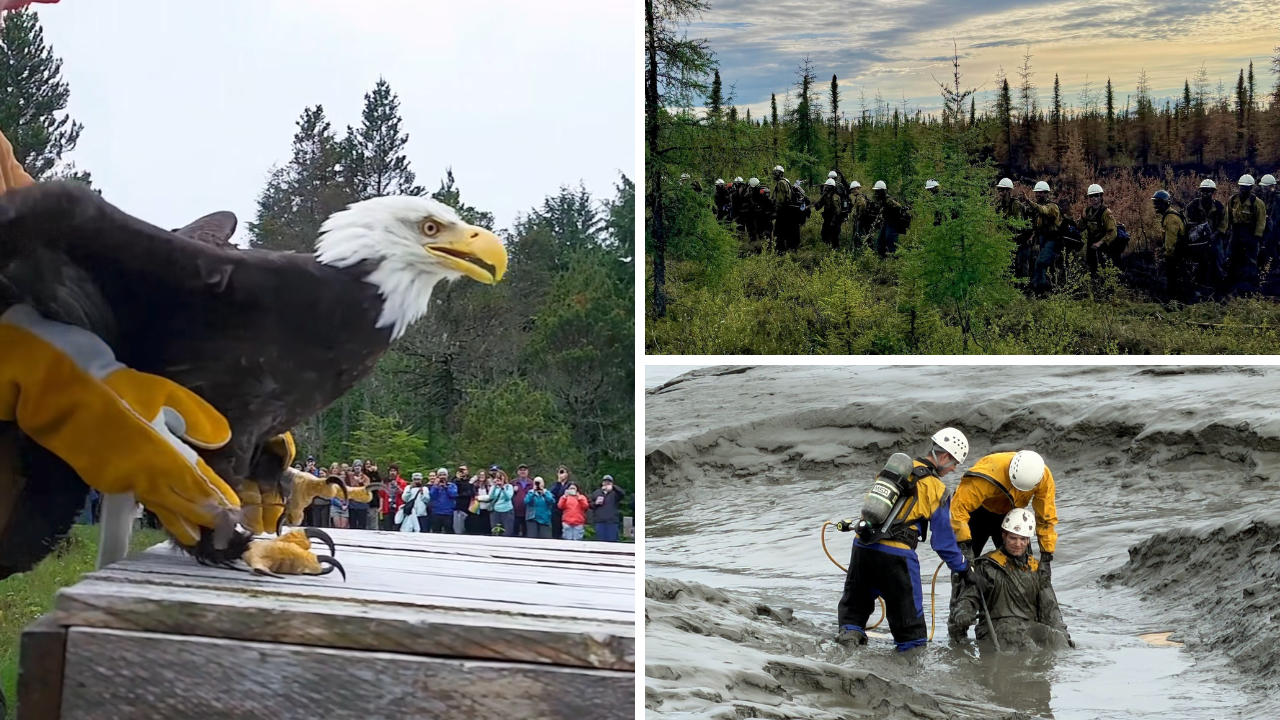
Alaska crews battle 13 wildfires, Anchorage warns of dangerous mud flats, Juneau shares updates on its ORV park, and a rehabilitated bald eagle returns to the wild.
Alaska crews battle 13 wildfires, Anchorage warns of dangerous mud flats, and a rehabilitated bald eagle returns to the wild.

Ashley Novella, an ecologist with the Anchorage Soil and Water Conservation District, removes mewly sprouting chokecherry seedings during a volunteer weed pull on June 17, 2026, along Anchorage’s Lanie Fleisher Chester Creek Trail. Chokecherry trees, brought to Alaska as ornamentals, are aggressive invaders and have crowded out natural plants in parts of Anchorage and other communities. The ANchoraeg Soil and Water Conservation District is part of the Alaska Invasive Species Partnership, which advocated for a bill that would have established an invasive species council in the state Department of Fish and Game. (Photo by Yereth Rosen/Alaska Beacon)
Gov. Mike Dunleavy on Thursday vetoed two environmental-protection bills that had passed with broad bipartisan support from legislators.
Dunleavy vetoed a bill to establish an invasive species council, Senate Bill 174, that was intended to be similar to coordinating organizations managing invasive species in other states, and a bill to ban restaurants’ use of polystyrene containers, House Bill 25.
Dunleavy, in veto messages, characterized both bills as overly burdensome and unnecessary expansions of government.
The invasive species bill would have established a council within the Department of Fish and Game to coordinate efforts that participants say are currently too disjointed to be as effective as they could be.
It was supported by numerous science and resource organizations, including the Alaska Invasive Species Partnership, a coalition of agencies and organizations that try to combat invasive species.
In a letter to lawmakers, the partnership’s chair said the board strongly backed the bill. “This legislation represents a vital step toward strengthening the coordination, education, and actions needed to protect Alaska’s environment, economy, and public health from the growing threat of invasive species,” the letter said.
It passed the Senate unanimously on May 8 and it passed the House by a 35-5 vote on May 19. In addition to the bill’s sponsor, Sen. Forrest Dunbar, D-Anchorage, 14 other senators from both parties and 11 Democratic, Republican and independent House members signed on as cosponsors.
But Dunleavy, in his veto message, said there is no need to add new invasive species duties to the Department of Fish and Game.
“Rather than strengthening direct operational capacity, the bill adds a formal advisory layer that is not necessary for the department to continue its efforts,” Dunleavy said in his veto message.

“The State should also be cautious about creating advisory structures that may become a vehicle for broader restrictions on land use, permitting, and responsible development.”
Dunbar called the governor’s reasoning “misguided” and “unfortunate.”
“In the battle over invasive species, Mike Dunleavy has joined the battle on the side of the invasive species,” he said.
As to why Dunleavy is contradicting state officials who are Alaska Invasive Species Partnership board members, “I think it boils down to animosity and ideology,” Dunbar said.
The animosity is because members of the Senate “have not been rolling over on certain issues,” he said. The ideology is the resistance to anything that appears to be an expansion of government, Dunbar said, even though experts advised that the more coordinated approach through the council the bill would have established would make invasive species effort more cost-effective.
Invasive species that threaten Alaska’s ecosystems and the livelihoods that depend on them, particularly seafood harvesting, include imported plants like elodea and fish species like northern pike, which prey on native salmon in Southcentral Alaska, and European green crabs, which eat native crabs and damage fishery habitat. European green crabs were first discovered in Alaska in 2022; since then, tens of thousands have been trapped in Southeast Alaska, but the species is expanding northward.
The bill banning restaurant use of polystyrene containers was aimed at reducing plastic pollution in Alaska, particularly pollution from microplastics, the long-lasting remnants of crumbled-up plastic trash that have become ubiquitous in waterways and the food web, even in remote parts of Alaska.
Dunleavy, in his veto message, said the bill would have created an “unrealistic implementation timeline for businesses,” especially affecting rural Alaska.

“A rapid transition away from customary packing could increase costs for businesses and consumers without giving affected businesses enough time to adapt,” he said.
The bill’s effective date was to be Jan. 1, but the measure included a provision allowing restaurants to continue to use stockpiled supplies of polystyrene containers until they were depleted.
The bill had bipartisan support, though the support was not as wide as that for the invasive species council measure.
It passed the House originally on April 21 by a 25-15 vote. It passed the Senate on May 18 by a 13-7 vote, and the House on May 19 concurred with Senate changes by a 26-14 vote.
Organizations that have been tracking plastics pollution in Alaska and advocated for the bill delivered angry reactions to the governor’s action.
“This veto is shameful,” Pamela Miller, executive director and senior scientist with Alaska Community Action on Toxics, said in a statement. “Governor Dunleavy had a chance to protect children, families, fish, wildlife, and future generations from unnecessary toxic exposure. Instead, he sided with plastics manufacturers and pollution. His time as governor is winding down and this veto will be part of his legacy, a legacy associated with divisiveness, negativity, and a refusal to act when human health is on the line.”
Dyani Lezama, state director of Alaska Environment, said she was “incredibly disappointed” by the veto.
“Polystyrene foam is bad for our health, produces a huge amount of litter and is incredibly hard to clean up. Products that we use for just a few minutes shouldn’t pollute our environment for hundreds of years,” she said in a statement.
“This is a bipartisan issue that most Alaskans agree on, despite significant lobbying from the plastics industry. It’s time to leave foam foodware in the past and I look forward to building greater public support to deliver a victory in 2027,” she said.

By: Yereth Rosen, Alaska Beacon

Starting next week, Alaska’s lowest-paid workers will be entitled to more money.
On July 1, the state’s minimum wage will rise to $14 an hour, a $1 bump from the current level. The increase is the result of a voter-approved ballot initiative that mandated paid sick leave, as well as stepped-up minimum wages.
The first increase took pay up to $13 an hour last year, and next year, the minimum wage is scheduled to rise to $15 an hour. In subsequent years, the state’s minimum wage is to rise with the inflation rate, under the voter-approved initiative.
Salaried workers are also covered by the minimum wage increase. Under state reuglations, minimum pay for salaried workers, with some exceptions, must be at least twice the hourly minimum wage, based on a 40-hour workweek.
Just how many workers will be affected by next week’s mandated pay increase is unclear.
Dan Robinson, research chief at the Alaska Department of Labor and Workforce Development, believes that there will be relatively few people affected by the change.
“This will not change very much because the situation for workers for a while now has been that employers have had to pay higher wages,” Robinson said.
Even a $14-an-hour wage for what are normally low-paid jobs was not high enough for many employers to attract workers, he said.GET THE MORNING HEADLINES.SUBSCRIBE
That is not because of any boom in available jobs in Alaska. The state’s picture is static, Robinson noted. Gains in private sector employment have been almost exactly offset by losses in government employment, mostly because of federal job losses, according to the state’s most recent analysis.
Rather, it is a product of demographic factors, including continued net-outmigration, meaning more people leaving Alaska than moving into the state. As of last year, Alaska had 13 consecutive years of net-outmigration, a post-World War II record.
Other factors shaping the labor force are Alaska’s aging population and immigration curbs.
Overall, there are “fewer people here seeking work than at other points in our history,” Robinson said. “So it’s kind of a feedback loop.”
The minimum wage increases are expected to affect more people in future years, when they are tied to inflation, he said.
A different perspective was offered in 2024 by the National Employment Labor Project, a nonprofit pro-labor advocacy group.
Prior to that year’s election, the organization estimated that 31,000 people in Alaska would earn more if the state’s minimum wage were raised. More women than men would see the benefits, since women are more likely to be in minimum wage-paying jobs, according to the analysis.
Robinson said the Department of Labor and Workforce Development does not have solid numbers on how many workers are earning minimum wage or anything closer to it.
The department does have information showing pay rates for different economic sectors and job categories, though that is also incomplete because it relies on surveys.
Alaska’s lowest-paid workers, based on those survey results, are in the food preparation and service sector, according to the Department of Labor and Workforce Development’s analysis. Within that sector, median hourly wages range from $12.65 for waiters and waitresses to $25.09 for chefs and head cooks, according to the survey data.
Alaska is among four states and more than two dozen municipalities with scheduled minimum wage increases going into effect in July. And by the end of the year, 88 jurisdictions across the country will have raised their minimum wages, according to the National Employment Labor Project.
As of Jan. 1, 20 states had minimum wages that were higher than Alaska’s $13-an-hour rate, according to the U.S. Department of Labor. Next week’s increase in Alaska, along with phased-in increases elsewhere, may change those rankings a bit.
The nation’s highest state minimum wage is in the District of Columbia, at $17.95 an hour, according to the U.S. Department of Labor. There are eight states with either no state-imposed minimum wage or a minimum wage that is lower than $7.25 an hour, the federal minimum, according to the department.
By: Corinne Smith, Alaska Beacon
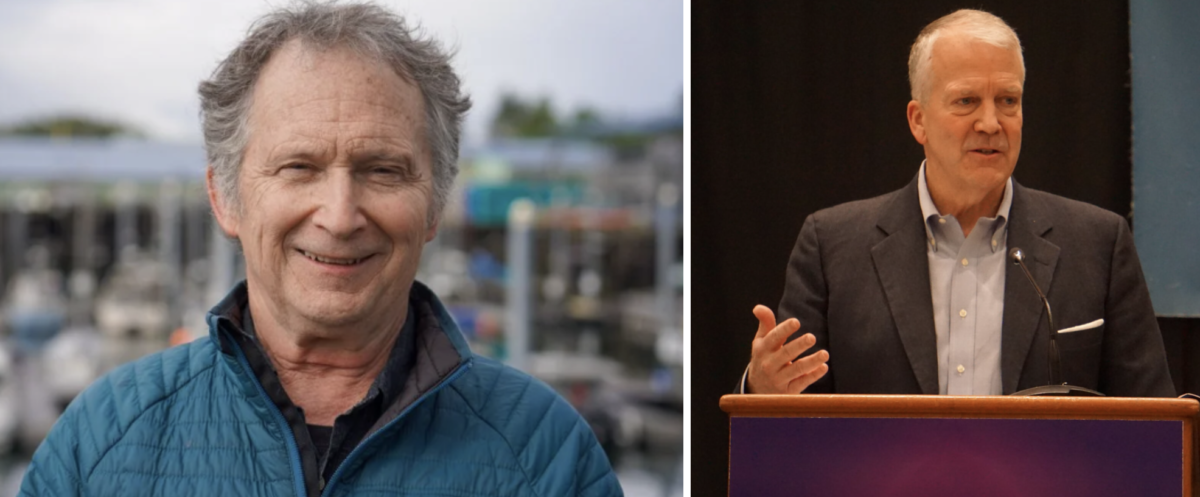
An Anchorage judge heard oral arguments on Thursday in a case poised to decide whether the Alaska Division of Elections has the authority to remove a candidate with the same name as the incumbent from the race for U.S. Senate.
The court is expediting the case and a decision is expected Friday. Any appeals are expected to be before the Alaska Supreme Court on Monday, ahead of a looming deadline for the division to print primary ballots no later than noon on Tuesday, June 30.
The division made the unprecedented decision to remove Dan J. Sullivan, a retired teacher from Petersburg, from the ballot on June 15, citing a “preponderance of evidence” the candidate had not filed a “good faith candidacy” and filed with the purpose to “confuse or mislead” voters.
Sullivan appealed that decision, saying he meets all eligibility requirements to run for office. He challenged the state’s decision as unlawful, and requested the court overturn the decision and restore his candidacy on the Alaska ballot for U.S. Senate.
In opening arguments, attorneys for the Division of Elections defended the decision to disqualify Sullivan from the ballot. They said the state has a duty to protect voters from confusion, and that the state is not obligated to place a candidate on the ballot where evidence shows t
Sullivan was one of sixteen candidates to file to run for one of Alaska’s U.S. Senate seats, challenging Republican incumbent U.S. Sen. Dan Sullivan in the high-stakes election that could determine the control of the U.S. Senate after the November elections. One candidate has withdrawn since then, leaving 14 challengers, including former Democratic U.S. Rep. Mary Peltola. The November election results will determine a candidate for a six-year term.
Critics of Sullivan said he was trying to confuse voters to the benefit of Peltola, the Democratic front-runner. Officials with the Peltola campaign and the Alaska Democratic Party have said they have no affiliation with either Sullivan.
Attorneys representing the Petersburg Sullivan and the Alaska Division of Elections went head to head in livestreamed Superior Court hearing, where over 300 viewers tuned in but others were not able to watch the stream. Officials with the court later apologized calling it a “record-breaking” livestream and posted a recording on their website.
Jeffrey Robinson, representing Sullivan, opened his argument reiterating that Sullivan met all the constitutional requirements to run for office: at least 30 years old, a U.S. citizen, and an inhabitant of Alaska if and when elected.

“Mr. Sullivan unambiguously meets each of these criteria,” Robinson said. “As seen in previous cases, states are not allowed to add to those qualifications.”
He cited the case where the Alaska Democratic Party sought to remove Eric Hafner, a U.S. House candidate imprisoned out of state, and the division did not investigate his motives but found he met the qualifications to run for office. Robinson argued the state has subjectively and unlawfully added additional criteria for Sullivan, including restrictions on his perceived political goals, how he presents his name, campaign and his party affiliation.
“Here the division imposed a substantive mental state-based qualification for U.S. Senate candidates in Alaska, and then it cynically and arbitrarily determined that Mr. Sullivan did not meet that qualification,” he said.
Robinson said it’s up to political campaigns to distinguish candidates and educate voters. He agreed the division has the authority to make sure candidates appearing on the ballot do not confuse voters, and noted that there are state regulations that offer solutions, like adding middle initials. But he said there are no “good faith” requirements, nor any other regulations that would give the division such broad authority to look at a candidate’s motives for office.
“They have no explicit authority in situations like this to even look into a candidate’s motives. Any subjective standard for candidates imposed by the division necessarily erodes the trust of voters,” he said. “If this standard were to apply, the director could challenge any or disqualify any potential reasons of personal dislike, or that the candidate may lose to their preferred candidate.”
Arguing for the Division of Elections, attorney Chris Murray said the division has the authority to review candidates and make sure the ballot is not presented in a way that would be confusing to voters.

In this case, he said the division director, Carol Beecher, reviewed complaints against the candidate filed by the Alaska Republican Party and the National Republican Senatorial Committee, which works to elect Republicans, that say his name, party affiliation and campaign materials mimic the incumbent’s. Murray said Beecher found that Sullivan “accentuated the similarity” between himself and Sen. Sullivan.
“She was stuck with the preponderance of the evidence pointing to this being a declaration of candidacy filed for the purpose of seeking office, but a declaration of candidacy filed for an ulterior purpose to cause voter confusion,” he said. “The director does not have the ability to permit that.”
Murray said in the Hafner case, there was no complaint filed prior to the primary on Hafner’s candidacy. He said the division has authority to review complaints and determine whether candidates made a “proper filing” before the primary, which they did for Sullivan.
“So where’s the line? The line is: the decision on qualification has to be made before somebody is placed onto the primary ballot, that is where Alaska law, that’s where the ‘properly filed’ comes in, that’s when there’s discretion in the Division of Elections — but that’s when the Division of Election decides who goes on the ballot, it’s before the primary election, that case was after the primary election,” he said.
Judge Thomas Matthews asked Murray how the division would handle the situation of three Dan Sullivans, in a hypothetical situation where a former Anchorage mayor, Dan A. Sullivan decided to enter the U.S. Senate race.

Murray said a “genuine candidate” would seek to distinguish himself from other candidates, and the division could use a middle initial or notation like “challenger” or “nonincumbent” on the ballot.
“I would say that if you were dealing with all of them, and all of them were trying to get on the ballot in order to win, I think they would all be cooperatively participating in a process where they could be effectively distinguished from each other, so as to avoid voter confusion. That’s not what we have here,” he said.
Judge Matthews asked if there was a way to effectively distinguish the two Dan Sullivans.
Murray said he did not believe that is the division’s responsibility if the candidate’s goal is to confuse voters. “Where the confusion is the goal, Your Honor, we don’t believe the division is under an obligation to try and mitigate it or accommodate it,” he said. “The court could order that the division implement some method to distinguish him, and I’ll say right now, we don’t think a middle initial is sufficient.”
Murray also argued the court ruling would be an important precedent for the division to administer elections.
“If this decision is not affirmed, and it turns out that the court holds that Alaska is just simply powerless, and the division is powerless to stop this sort of behavior, we’re going to be inviting more of this,” he said.
Judge Matthews said he will announce a ruling by Friday, and it could be after business hours.
Attorneys for Sullivan also filed a stay with the court to delay the division printing primary ballots until a final decision is ruled on by the courts. Matthews said he would consider the petition.
After the ruling, both parties are expected to appeal before the Alaska Supreme Court on Monday.