(The Center Square) – California’s ethics agency oversees an unlimited, blank-check system of payments solicited by elected officials — including the $347 million Gov. Gavin Newsom has steered through California politics. An investigation by The Center Square has found the…
Recently, Autogrill was named as one of the top 130 most innovative businesses in Italy by Statista for Il Corriere della Sera. The roadside restaurant … Read moreThe post Italy’s most overlooked cultural experience is off the next exit appeared…
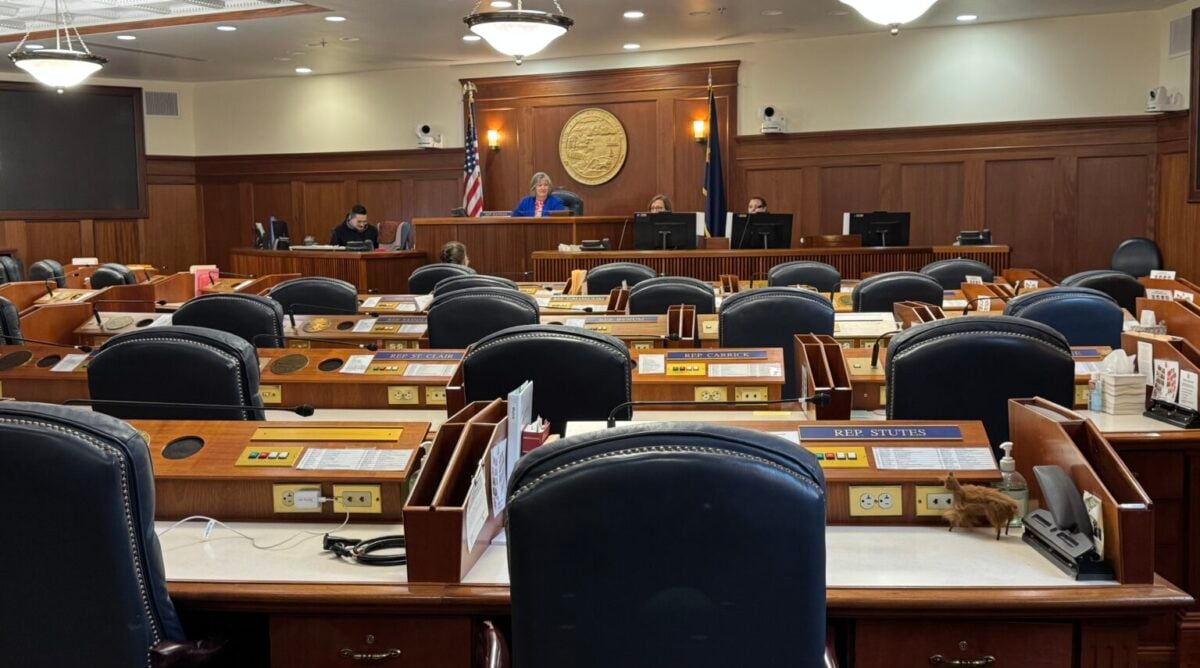
A group of pro-democracy demonstrators gathers Monday, Aug. 3, 2026, in Juneau on the first day of early voting for the 2026 Alaska primary election. (James Brooks photo/Alaska Beacon)
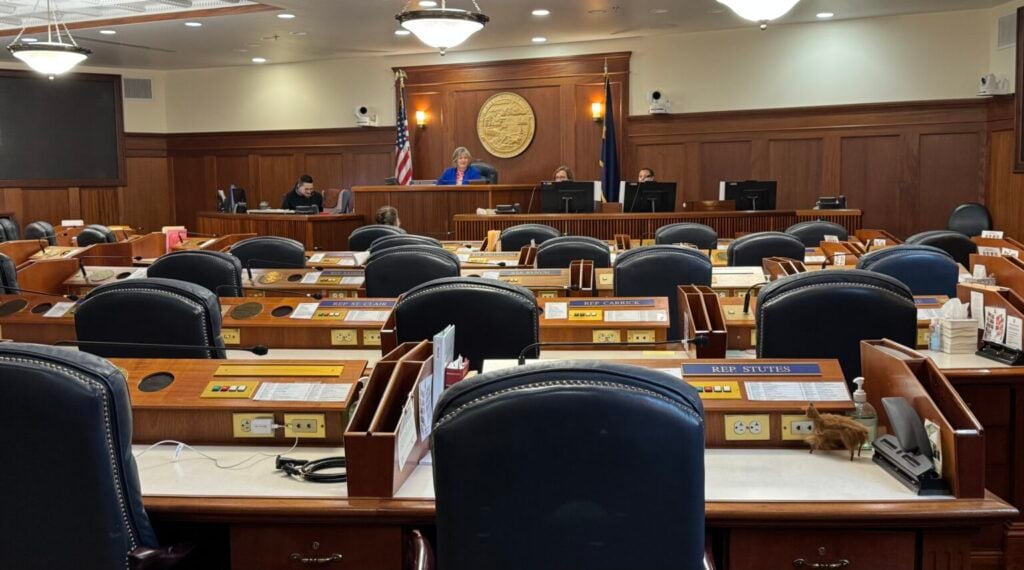
Early in-person voting began Monday at 10 locations in the Railbelt, Juneau and Nome for Alaska’s Aug. 18 statewide primary election. As of July 31, just under 10,000 voters had requested absentee ballots for the election, and hundreds of absentee voters had already mailed in their votes, according to figures from the Alaska Division of Elections.
What’s at stake?
This election decides the four U.S. House, U.S. Senate and governor candidates who will be in the November general election. It also decides whether Alaska will limit the amount of money that political donors can give directly to candidates.
Because the top four candidates for an office advance to the November general election — and because most of the 50 state legislative races have four or fewer candidates — the primary doesn’t mean as much for most legislative races individually.
But because the difference between a Republican-led state House and Senate and a predominantly Democratic coalition-led state House and Senate may come down to a few votes, the handful of contested legislative elections may be important.
Watch Eagle River, where incumbent Republican Rep. Jamie Allard is facing four challengers, or the eastern Mat-Su, where Dunleavy-appointed Republican Rep. Garret Nelson has five opponents. In the western Mat-Su, Republican Rep. Kevin McCabe has four challengers.
In the Senate, watch southwest Alaska, where Sen. Lyman Hoffman, D-Bethel, has retired and seven candidates — including current Speaker of the House Bryce Edgmon, I-Dillingham — are running for the open seat.
Seven people are running for the state House seat that Edgmon is leaving open.
What’s the difference between absentee voting and early voting?
The difference is when your ID is verified. At an early voting location, a poll worker looks up your voter registration at a computer to verify that you’re registered to vote in a specific district, then hands you a ballot from that district.
You’ll want to bring a driver’s license, tribal ID or something else to verify your identity. Even a piece of mail with your current name and address will work. If the poll worker knows you, they can also verify your identity without ID.
When you vote absentee, you get a ballot for a district, then seal it inside an envelope and fill out the cover of that envelope with identity information.
Starting Aug. 11, review boards will begin checking the information on those envelopes to verify that those absentee ballots came from registered voters. The ballots within those envelopes will be counted once the polls close Aug. 18.
Absentee ballots can be mailed to the Division of Elections, or they can be cast in person at dozens of places across the state. While there’s only 11 early voting places in Alaska, there are many, many more places to cast in-person absentee votes, including at most city clerks offices.
Which method is best?
Mailed absentee ballots will be counted as long as they’re postmarked on or before election day and reach the Division of Elections no later than Aug. 28.
In Alaska, not all mail is postmarked on the day it is mailed, so be sure to mail your ballot a few days early.
If you’re worried about mail delays, take your absentee ballot to one of the locations listed here before election day, or do early voting in person.
You can also fax a completed absentee ballot to the Division of Elections. If you don’t have a fax machine, you can use a scan-to-fax app on your cellphone instead.
Early voting ensures your vote gets counted, since your ID is verified up front, your ballot is already scanned and ready to be counted, and there’s a paper copy for any recounts and reviews.
The drawback is that it’s only offered in 10 places within the state, and if you’re traveling Outside or not close to one of those 10 places, it’s not available.
What does the ballot look like?
Your ballot will have two sides. On the front side are the U.S. House and U.S. Senate races. On the back side are the governor, state House and state Senate races. There’s also an option for Ballot Measure 1.
Pick one candidate for each race. Ranked-choice voting, when you’ll rank up to four candidates, is in November.
Use a blue or black pen to fill in the oval. Don’t use a permanent marker.
When will results be available?
The first unofficial results will be posted online about 9 p.m. on Aug. 18. Full election day totals may take a few days to arrive as rural precincts report their results. Absentee ballots will be counted day by day, with new totals expected Aug. 25 and then on Aug. 28, when the last unofficial results will be posted.
Aug. 31 is when the division expects to certify the final results. That’s also the date for any top-four candidates to withdraw, something that has happened in prior years for strategic reasons.
Lower-finishing Republicans, in particular, have been willing to drop out of the top four to ensure that only one Republican appears on the November ballot.
Correction: This story has been updated with the correct date of the primary election, Aug. 18.
The Alaska Beacon, Alaska Public Media, KTOO and the Anchorage Daily News worked together this year and have created a voter guide to help Alaskans make informed choices when they vote.
The 2026 Alaska Voter Guide won’t replace debates, forums and public statements. Instead, it’s something extra, aimed at informing voters about what candidates believe and providing a tool to hold them accountable once elected.
We’ve been working for months on this and are pleased to present it to you today, on the opening day of early in-person voting.
Each news organization asked its readers, viewers and listeners a basic question: What do you want candidates to talk about?
That’s what’s called the “citizens agenda” — where election reporting is less about determining who’s ahead, and more about what a candidate’s positions are and how they would affect things if elected.
We sent emails to every candidate in the first week of July and followed up by phone calls in the second week. We continued reaching out, by email, text message and phone call, throughout July.
In the end, 107 of 132 state legislative candidates responded — 81% of everyone running for the Legislature. That’s a huge improvement over two years ago, when 78 of 115 candidates answered a survey from the Beacon alone, or 67.8%. Four years ago, the Beacon’s rate was below 60%.
For the governor’s race, 14 of 17 candidates responded. For the U.S. House race, we received responses from 11 of 15 candidates, including Democratic candidate Matt Schultz, who has suspended his campaign but is still on the ballot. In the U.S. Senate race, we have answers from 11 of 16 candidates.
While it isn’t everyone — and we’ll continue pursuing answers — we’re proud to say that this questionnaire is the most complete one that you can find anywhere in Alaska.
When it comes to the Legislative races, the Beacon had the lead role and was in charge of questions. Here’s what we asked candidates and why:
Would you be willing to serve in a coalition majority where members of the other party are in leadership? Why or why not?
Whoever is in the majority controls the agenda and decides which bills advance and which bills fail. Alaska is the only state in the country with coalitions in both the House and Senate. The difference between a Republican-led majority and a coalition one is a big one in terms of what the Legislature does over the next two years.
What’s the biggest need in your district, and how would you address it?
This is an opportunity for candidates to show how much they know about local needs; it’s also a chance for them to talk about any issues we didn’t bring up.
What do you think should be done to improve public education in the state?
You, our readers, wanted candidates to talk about education more than anything else. This gave candidates a chance to talk about their platform.
How should the Alaska Legislature handle the Permanent Fund dividend?
This was probably the No. 2 issue that you brought up when we asked you what you wanted candidates to talk about.
How should lawmakers balance state revenue and expenses in the long term?
This is closely tied to the dividend question and meets your request to ask candidates about a fiscal plan.
When you look at the state budget, what’s the No. 1 thing you’d like to see cut or reduced, and what’s your No. 1 preferred way to raise new state revenue?
Like the previous question, this is a way to test candidates about their knowledge of the state budget and get their thoughts on a fiscal plan. That will be a major topic over the next two years.
What, if any, changes does the state need to make to its elections and voting system?
Voting and elections came up again and again when we asked readers what they wanted candidates to discuss. The Legislature has tried — and failed — to enact an elections bill over the past six years, so it’s a safe bet that the 35th Legislature will try again.
What threats do you see facing Alaska in the next four years?
This was our way of allowing candidates to show their priorities — what are they most worried about?
What should legislators do to make Alaska a better place for children and families?
This question came in response to your desire to see candidates talk about preschool, daycare, early childhood education and more.
As Alaska’s average age rises, what needs to be done to make the state a better place for older residents?
Alaska is the fastest-aging state in the country, and that trend is expected to continue. It’s something that the next Legislature will have to address. This question allows candidates to speak to older Alaskans directly.
What should Alaska do to keep residents and visitors safe from crime and disaster?
This question gave candidates a chance to talk about crime and climate change, data centers, energy shortages … it was really open-ended.
What, if any, change would you make to state law to support the Alaskans who are dependent on fish harvests and the fishing industry?
Candidates have been talking about fishing quite a bit this year, but it’d be a mistake to ask state-level candidates about trawling, given that most of it takes place in federal waters and there’s little the Legislature can do about it. So this question is more general.
What do people not know about you that you think they should know?
We’re not normally a fan of softball questions in these surveys, but they can be an opportunity to get to know a candidate’s personality, so this was an open-ended opportunity.
What should the Legislature do to help Alaskans with the high cost of living?
Inflation and cost of living came up as issues in a big way later in the spring, and we wanted to make sure we asked candidates about it.
How are the Trump administration’s policies working in Alaska? Where do you see them working well, and where do you see problems?
Our readers wanted very much to hear candidates talk about Donald Trump and whether they’re for or against him and his policies. This is a way to bring that question to a state level and make it applicable to the Legislature.
A bumblebee visits shooting stars on June 21, 2023. These early bloomers flower along coastal meadows and sea cliffs. Note the pollen sac on the bee’s hind legs. (Photo by Lisa Hupp/USFWS)
On an August evening in Interior Alaska, the sun hangs low over the hills as a bumblebee makes its final foraging trip of the season. The fireweed is fading, the nights are cooling, and the bee will soon retreat underground to overwinter. Moments like this — quiet and easy to overlook — capture the delicate balance that defines life for Alaska’s pollinators.
As the state continues to warm and ecosystems shift, the future of Alaska’s bees will depend on how well they can adapt to rapid environmental change — and how well Alaskans understand and support the landscapes these insects rely on.
A Changing North
Alaska is warming faster than almost anywhere else on Earth. Earlier springs, hotter summers and shifting precipitation patterns are reshaping the timing of plant growth and flowering. These changes affect the seasonal rhythms that bees depend on.
Researchers are watching several key trends:
earlier snowmelt that may cause flowers to bloom before bees emerge,
longer growing seasons that may favor some species over others,
drying soils and shrinking wetlands that alter nesting habitat and
shrubs and trees expanding into the tundra, changing plant communities.
Some bee species may adapt or even expand their ranges, while others may struggle to keep pace.
The Challenge of Invasive Plants
Invasive species such as white sweetclover and bird vetch are spreading along roadsides, river corridors, and disturbed soils. These plants can quickly dominate an area, reducing the diversity of native flowers that bees rely on throughout the season. While invasives may offer nectar, they often form dense stands that crowd out the varied plant communities needed to support different bee species.
Managing invasive plants through early detection, removal and responsible gardening choices will remain a key conservation priority.
Why Long‑Term Monitoring Matters
Because Alaska is vast and its ecosystems are changing quickly, long‑term monitoring is essential. The Alaska Bee Atlas, the state’s first coordinated effort to document bee diversity and distribution, is providing the baseline data needed to understand how bees respond to environmental change.
Specimen‑based records collected today will allow future scientists to track shifts in species ranges, changes in abundance, new arrivals from the south and long‑term trends in habitat use.
Without these data, it would be difficult to detect subtle but important changes in Alaska’s pollinator communities.
Opportunities for Conservation
Despite the challenges ahead, there are reasons for optimism. Alaska still has vast, intact landscapes that support healthy pollinator populations. Many native bees are adapted to cold climates and variable weather, giving them resilience that bees in other regions may lack.
Alaskans can support pollinators by:
planting flowers that bloom from spring through fall,
protecting nesting habitat,
reducing pesticide use,
managing invasive plants and
participating in community science programs.
These actions, taken together across the state, can help maintain the diversity and abundance of Alaska’s native bees.
A Future Shaped by Alaskans
The future of Alaska’s pollinators will be shaped by the combined effects of climate, habitat, and human choices. The research happening today — from the Bee Atlas to long‑term ecological monitoring — is giving Alaskans the tools they need to make informed decisions.
On that August evening, as the bumblebee disappears into the fading fireweed, it carries with it the story of a changing North. The choices Alaskans make in the years ahead will help determine how that story unfolds — and whether future generations will still see bees working the summer flowers of Alaska.
A Future Shaped by Alaskans
The future of Alaska’s pollinators will be shaped by the combined effects of climate, habitat, and human choices. The research happening today — from the Bee Atlas to long‑term ecological monitoring — is giving Alaskans the tools they need to make informed decisions.
On that August evening, as the bumblebee disappears into the fading fireweed, it carries with it the story of a changing North. The choices Alaskans make in the years ahead will help determine how that story unfolds — and whether future generations will still see bees working the summer flowers of Alaska.
I have no affiliation with the Alaska Bee Atlas, the University of Alaska Cooperative Extension Service, the U.S. Geological Survey, or the U.S. Fish & Wildlife Service. This series is based on the public‑domain research, outreach, and scientific work produced by these federal and state organizations. I am deeply grateful for their contributions to pollinator science and public education. The views expressed in this series are my own, based upon review of Federal and State published information.
A super PAC listing this Wasilla office space as its address is boosting a Green Party and fringe Democratic Party candidate in Alaska’s U.S. Senate race. (Amy Bushatz/Mat-Su Sentinel)
This story was originally published in the Anchorage Press. Subscribe here.
Richard Grayson lives in Arizona and has been a fringe candidate in a number of federal elections. That includes in New York, where records show he’s established campaign committees named “The Leopards Eating People’s Faces Party Supports NY-21 Write-In Candidate Richard Grayson,” and “Write In Richard Grayson New York’s Cutest Communist.”
This year, Grayson is on the ballot in Alaska’s U.S. Senate race, where two heavyweights, Republican incumbent Dan Sullivan and Democrat Mary Peltola, are running in a contest that could help decide control of the chamber.
And now, two weeks before the primary election determines which four candidates advance to the general, Grayson, who’s running under the Green Party label, is getting an unexpected boost: A new super PAC has spent more than $100,000 on his behalf.
Fair Deal Alaska registered with federal campaign finance regulators a few days ago and lists as an address a suite in a Wasilla office building that offers “virtual office and mail services.”
In multiple filings with the Federal Election Commission, it has since reported spending some $180,000 on mailers, phone calls and other media supporting Grayson — as well as roughly the same amount on behalf of another Democrat in the race, Carol Hafner, who lists a South Dakota campaign address and uses a New York City phone number.
Neither Grayson nor Hafner responded to requests for comment Saturday. (Grayson did write a letter to the Fairbanks Daily News-Miner in June saying that the temperature in August in his Arizona town rises to 114 F, and that “just as our town is filled with seasonal residents from Alaska and other northern climes, I now have a good excuse to visit my snowbird neighbors and mooch off them for a while.”)
The apparent purpose of the spending on the two fringe candidates is boosting Hafner or Grayson onto the general election ballot, where either of them could pull a small number of votes from Peltola and potentially tip the race toward Sullivan. Fair Deal Alaska is also spending more than $65,000 on mailers opposing Peltola, according to its disclosures.
A similar group, Right for Alaska, has taken a similar strategy to boost candidates who could pull votes from Sullivan — supported by a six-figure contribution from a retired surgeon in Massachusetts, William Harris.
The group last week spent more than $250,000 on print ads opposing Sullivan, the incumbent Republican, and the same amount boosting lesser known candidates who, if they advance to the general election, could pull votes from him.
“They’re just trying to get some people in there to dilute either the Democratic vote that Mary’s going to get, or dilute the Republican vote that Daniel S. Sullivan is going to get,” said Jim Lottsfeldt, a longtime Alaska strategist who’s worked with candidates of both parties. “It’s just a tactic.”
The political operative who filed Right for Alaska’s paperwork with the Federal Election Commission, Thomas Datwyler, did not respond to requests for comment. Harris, the surgeon who contributed $100,000 to the group, declined to comment.
Fair Deal Alaska, the group opposing Peltola, did not respond to an email sent to the address it registered with the commission. Its listed address in Wasilla also hosts a gun shop, Arctic Ammo and Reloading Supplies; signs advertising two Republican politicians — incumbent U.S. Rep. Nick Begich III and gubernatorial candidate Bernadette Wilson — stood outside when a reporter visited Friday.
The group has not yet reported any of its fundraising information, though it will have to in a subsequent filing with campaign finance regulators.
A spokesperson for Sullivan’s campaign declined to comment on both Right for Alaska and Fair Deal Alaska. An from Peltola’s campaign said it was not familiar with either group.
There’s a long history of groups boosting third-party and fringe politicians to try to engineer the success of major candidates in Alaska elections. In 2014, incumbent Democratic U.S. Sen. Mark Begich’s campaign promoted libertarian Mark Fish in an effort to pull votes away from Sullivan, who nonetheless won the election.
In 2024, a group run by Lottsfeldt and aligned with Peltola, who was then running for re-election to the U.S. House of Representatives, spent significant sums running adswith the apparent aim of boosting less-competitive Republicans onto the general election ballot to pull votes from Nick Begich III, the leading GOP candidate.
In theory, Alaska’s ranked choice voting system should minimize the risk that the third- or fourth-placed candidates in the general election will pull significant numbers of votes from the top two — because their supporters’ votes are supposed to be redistributed to the candidates ranked next on each voter’s ballot.
But not everyone ranks all four candidates. In the 2024 U.S. House race, more than 7,000 voters only ranked the third- and fourth-placed candidates, John Wayne Howe of the Alaska Independence Party and Democrat Eric Hafner — and ultimately didn’t express a preference between Begich and Peltola, the top two finishers.
Begich ultimately won by some 8,000 votes.
“People on the far left and the far right don’t rank,” Lottsfeldt said. “They just vote for their favorite, and then they quit.”
Similar types of spending are happening elsewhere around the country, according to Lottsfeldt.
In Wisconsin, a Republican group is spending millions to boost a democratic socialist gubernatorial hopeful, Francesca Hong, who’s viewed as a more vulnerable candidate in the general election.
The session is for lawmakers to consider a property tax break to incentivize the proposed trans-Alaska natural gas pipeline, but Gov. Mike Dunleavy, who called the session and set the agenda, has yet to propose legislation for lawmakers to work on.
The state House failed to pass a compromise bill earlier this month, during the second special session of 2026, after Dunleavy threatened to veto it.
The governor has said he is holding closed-door negotiations to try to draft an alternative, but his office has released no details about those discussions.
Two members of the House and one member of the Senate held perfunctory “technical sessions” on Friday.
Article II, Section 10 of the state constitution requires regular meetings unless lawmakers approve a resolution allowing a different schedule.
The House has scheduled another technical session for this morning, and the Senate has scheduled one for Tuesday morning.
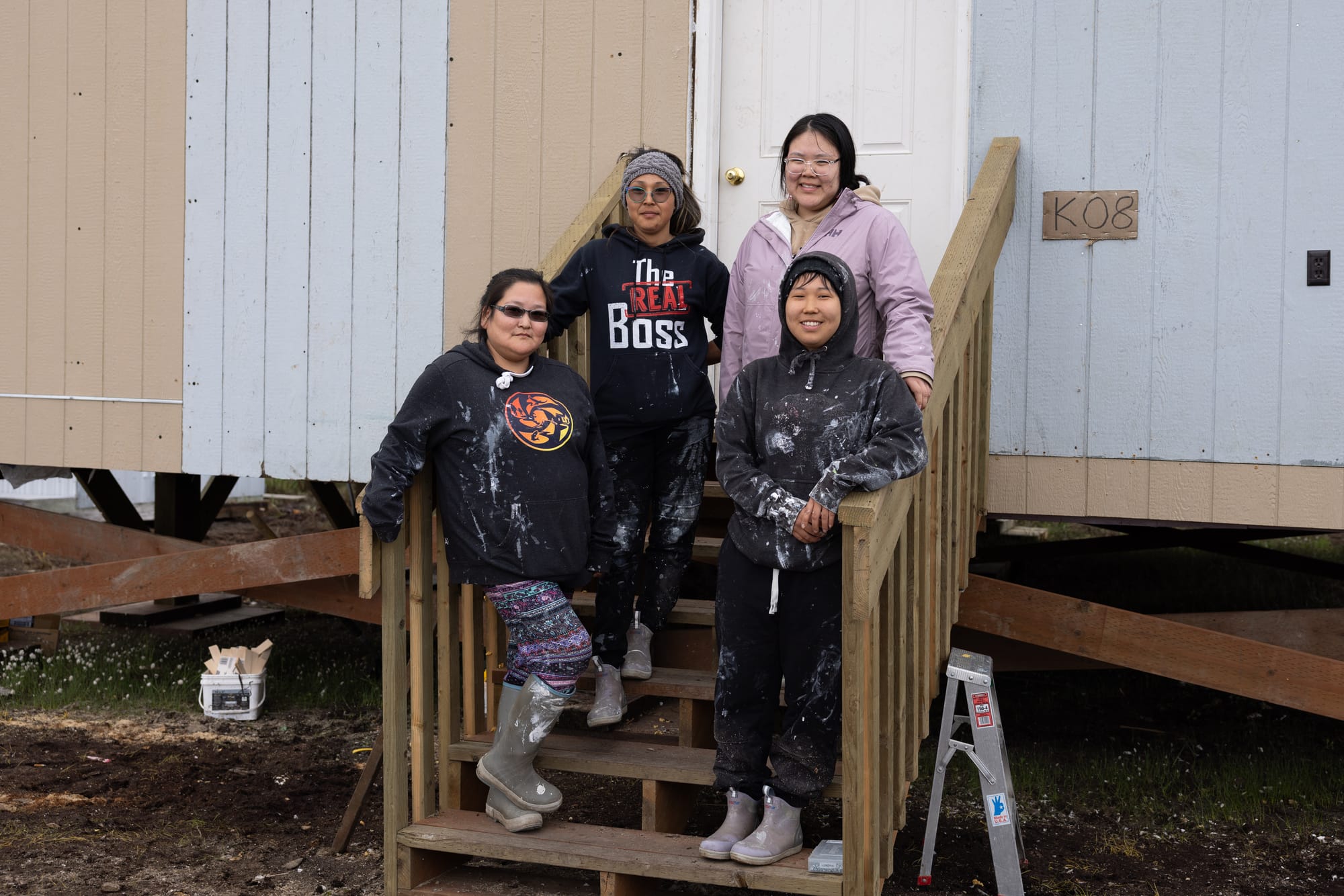
Clockwise from top: Dollie Martin, Desiree John, Nellie Manchuak and Lydia Tucker pause for a portrait while repairing a home in Kwigillingok, Alaska, on June 19, 2026. The home was damaged by flooding after ex-Typhoon Halong struck the village. All four women are from Kwigillingok and returned after initially evacuating. (Katie Baldwin Basile for Northern Journal)
From Bethel-based freelance photojournalist Katie Baldwin Basile:
While on a recent assignment in the Western Alaska village of Kwigillingok, I met two women who had returned months after evacuating to help repair widespread damage left behind by ex-Typhoon Halong.
As the women, Nellie Manchuak and Lydia Tucker, worked side-by-side on a construction crew, they encouraged each other to talk about the night the storm hit and the flashbacks, nightmares and anxiety that have followed.
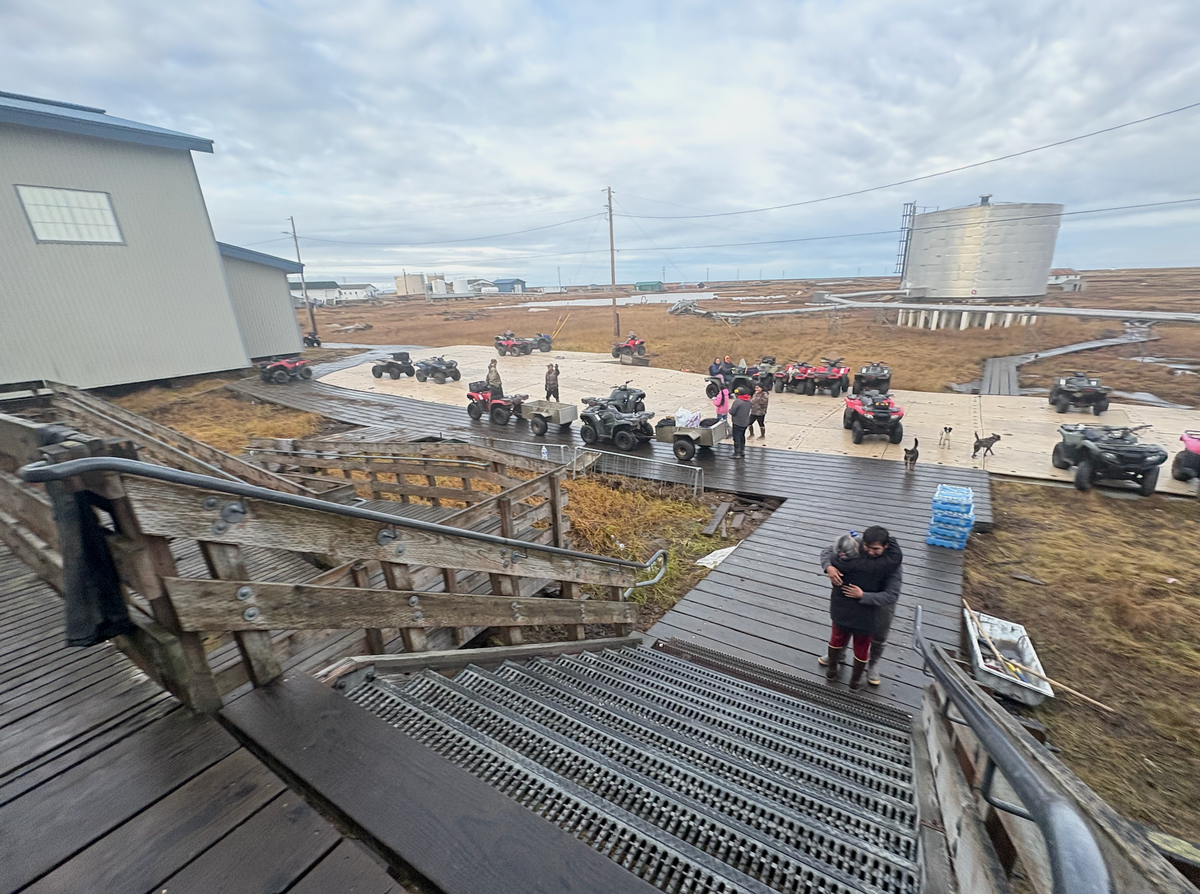
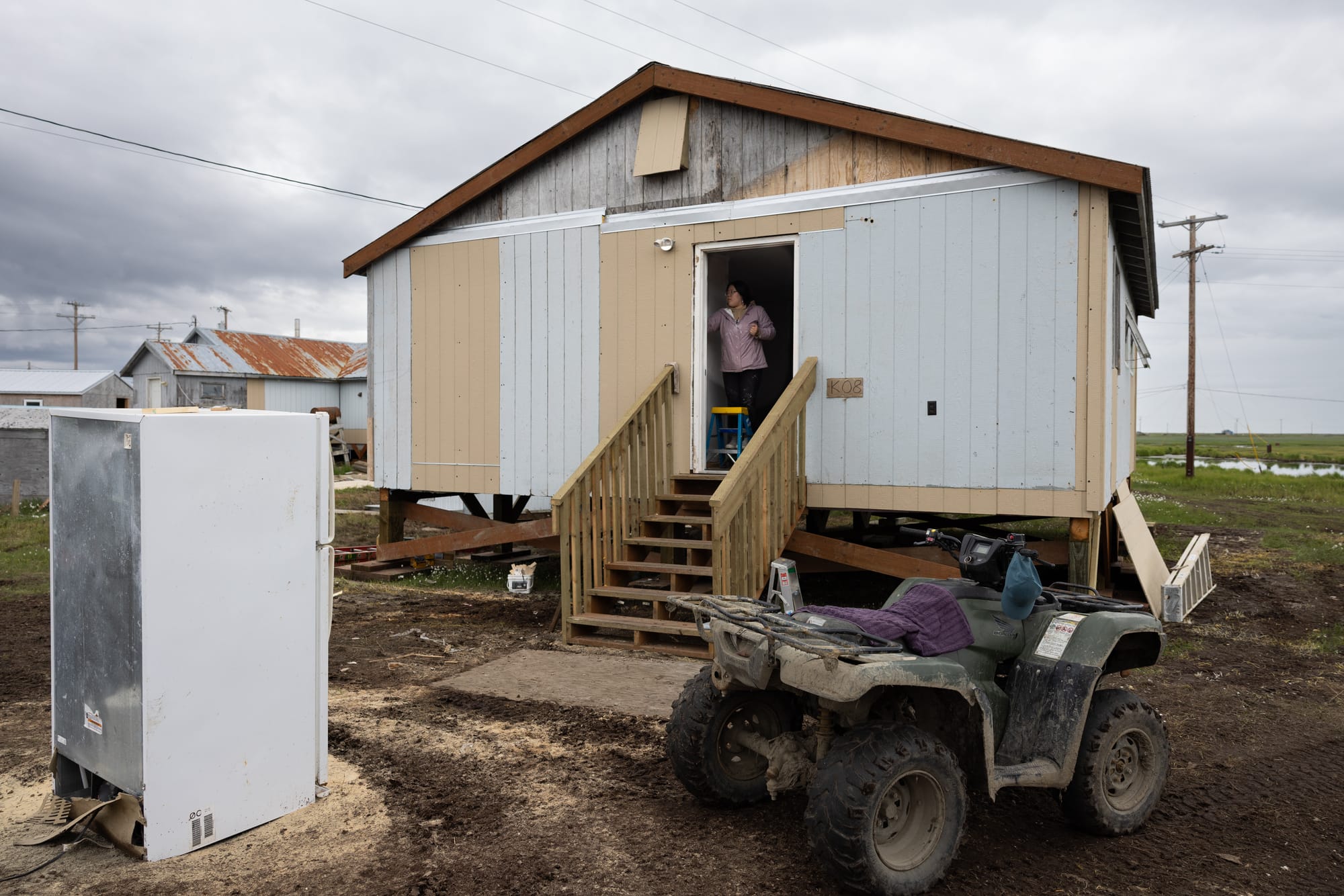
Halong swept through the region last October, tearing homes off foundations and forcing a terrifying evacuation for hundreds of residents, including Manchuak and Tucker. Piles of debris are still scattered around the village, nicknamed Kwig, and most residents have not returned.
Manchuak and Tucker told me about their harrowing experiences during the storm, and they opened up about life since. Manchuak, along with her partner, two sons and two brothers, crossed rising floodwaters in the middle of the night to reach safety at the village’s school. Tucker was in her house with her baby and partner, afraid to move as the water level rose outside. Both women returned to Kwig this year.
Their stories reflect a broader challenge around the lack of mental health support for Alaskans affected by Halong and other climate disasters. Manchuak and Tucker said they hoped that talking through that night and sharing their experiences would ease some of the stress and anxiety they have carried since October.
I was moved by the way these women support each other as they heal and rebuild both their village and their lives.
We spoke in June. Here is our conversation.
Nellie Manchuak: My name is Nellie Manchuak from Kwigillingok. I was born in Bethel and grew up here.
Lydia Tucker: I’m Lydia Tucker. I live here, but I’m originally from Emmonak.
Katie Basile: Nellie, how long have you been here in Kwigillingok since the initial evacuation?
Nellie: I came back in January to work and because I had no place to live. I didn’t want to be in Anchorage; I tried looking for apartments, and I got denied, like, twice. So, I just came back home.
Katie: What was living in Anchorage like for you?
Nellie: It was crowded. We were mostly in the hotels, going back and forth to my parents. We were at Wingate (hotel), and they were at Aspen (hotel).
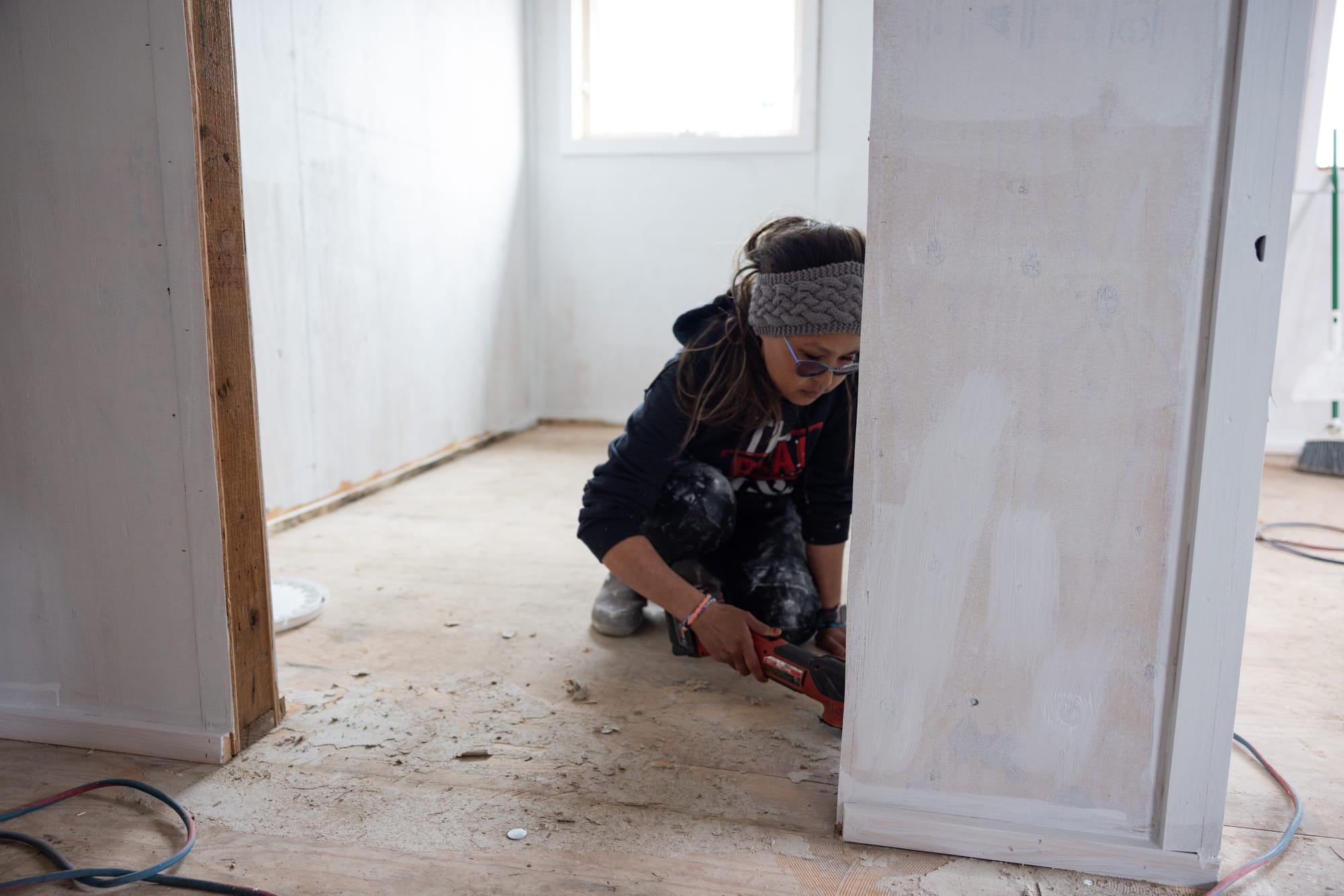
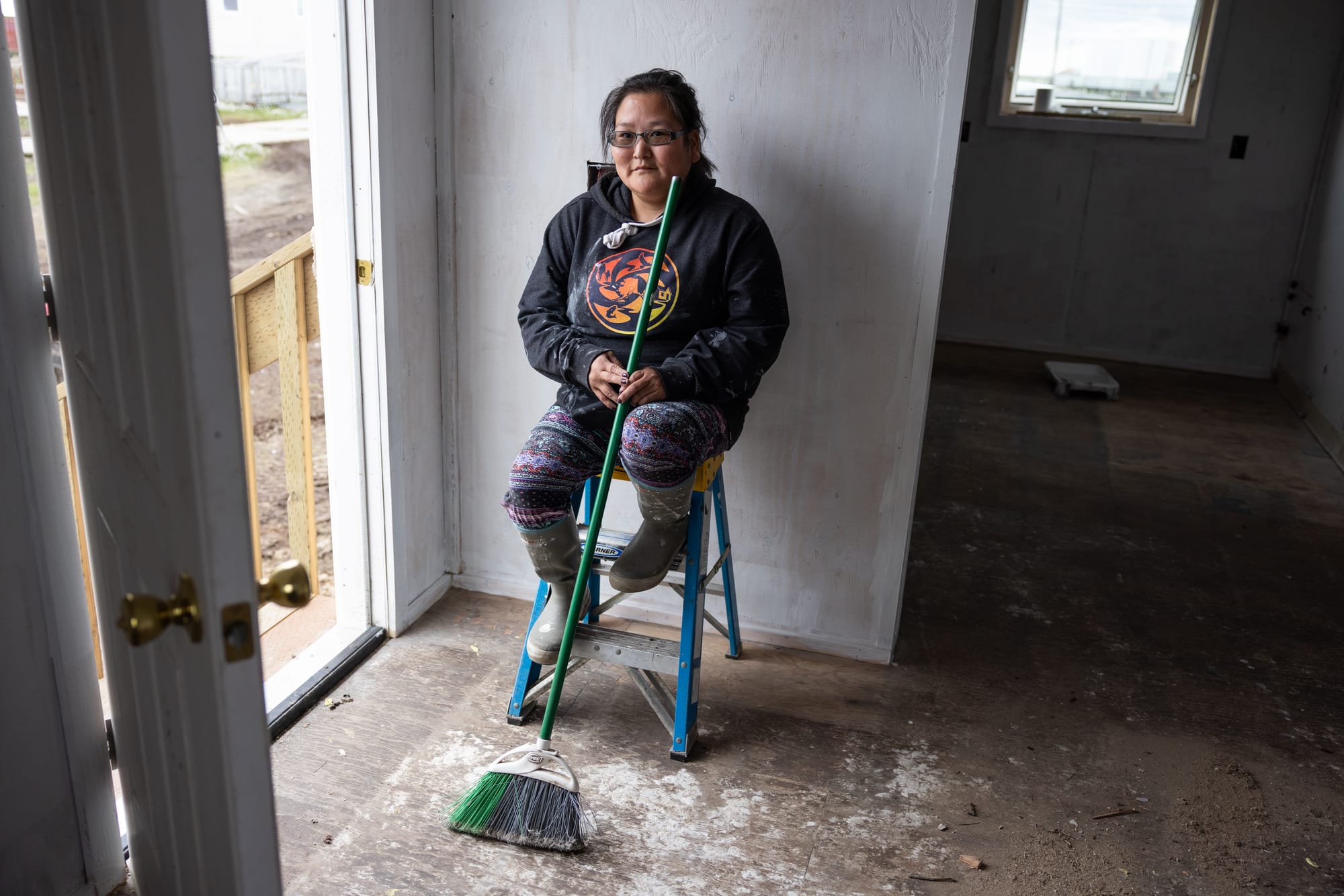
Nellie Manchuak sands the floor of a home in Kwigillingok, Alaska, on June 19. The home was damaged by flooding after ex-Typhoon Halong struck the village. Manchuak, who is from Kwigillingok, returned after initially evacuating to join a construction crew repairing homes in the village. (Katie Baldwin Basile for Northern Journal)
Katie: Where were you when the storm started?
Nellie: I was at home. I thought it was going to be like a regular flood. We all thought it was going to be regular.
They told us to evacuate to the school, but I just stayed home. My sister got ready with her kids, and got their stuff, blankets and everything. And then they went to the school. I told them that I was going to stay. There was me, my sons Quentin and Dale, and my partner Paiton — just four of us staying at home.
When we looked out the window, it was just like a regular, normal flood. But it kept coming in, like every 10 minutes or something. We were just chilling at home, watching TV, playing games, and then my parents went to the school. I saw them out the window. They were using a four-wheeler and a trailer. And then my two brothers hopped off and came into the house and said that they were going to stay with us, and I was so happy. We were all just chilling, watching TV. We kept looking out the window, though, and then the lights turned off around 1 a.m. or so.
As soon as the lights turned off, I turned on my phone light and yelled at them, “We’re all going to the school!” I got my baby’s blanket and pillows. I didn’t even grab a change of clothes. I just got my baby ready in a panic. I couldn’t find my son’s boots, so I just let him wear shoes. And then a shed hit the house. It shook the house. We looked out the window, and the doghouse floated, and the boardwalk floated with it. The water was up to the porch.
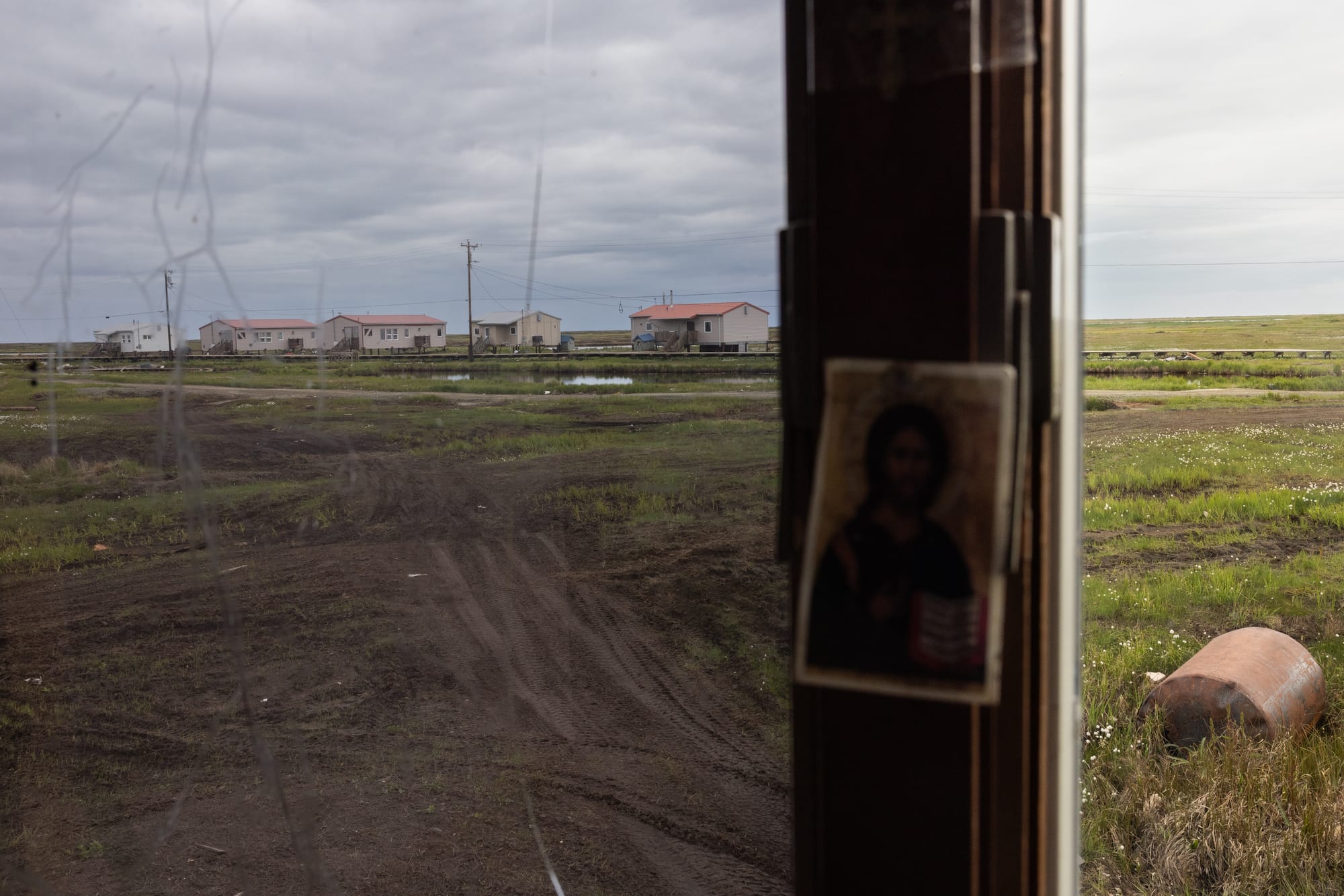
The view from the window of a Kwigillingok home under reconstruction in June after damage from ex-Typhoon Halong. (Katie Baldwin Basile for Northern Journal)
(My brothers) Frank and Sean and Paiton jumped off the boardwalk, and the water was more than waist deep. It was so cold. I was holding my baby, and I just handed him to Paiton. I held Quentin’s hand and just jumped. We were so scared, but we just kept walking. I told Paiton and Frank to get the four-wheeler onto the boardwalk. It didn’t reach the bridge. The boardwalks were like that by my house. We had to climb up.
Katie: They were floating?
Nellie: Yeah, they were floating. The boardwalks were floating.
Katie: Did you get the four-wheeler on top of it?
Nellie: Yeah, and then when we stopped the boardwalks would sink slowly. There was debris, pieces of wood, and we would just drive on top of them. But they’d get stuck, and Paiton would get off the four-wheeler and take them off. We kept going, even though it was like the four-wheeler was just on water. We were the last ones to get to the school, I think. There were two four-wheelers. My four-wheeler didn’t have a headlight. We could see the boardwalks, the rails. But when we got to Sarah Philip’s house, we couldn’t see the boardwalks to the school because they were under the water.
We tried flicking the lights for someone to help us. But they couldn’t even reach us because of all that water. And then I told Paiton, just visualize and just go.
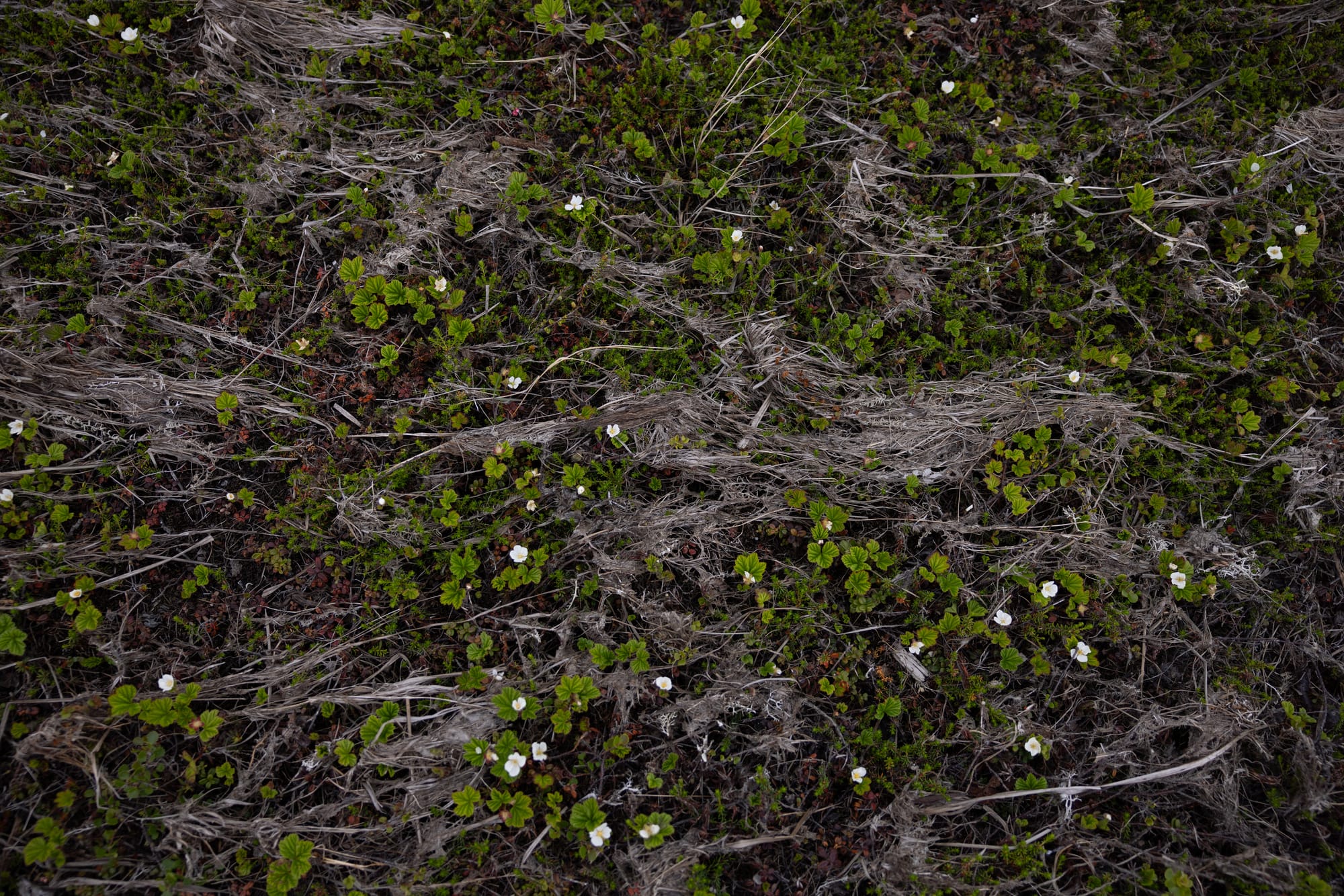
Cloudberry plants, known locally as salmonberry, are tangled in dead grass that washed ashore by flooding from ex-Typhoon Halong in Kwigillingok. (Katie Baldwin Basile for Northern Journal)
Katie: You just had to pretend you could see the boardwalk?
Nellie: Yes. And then if we took a wrong turn we would have slipped off the boardwalk, and yeah… one wrong little turn. I was scared. Just a small little turn…
Katie: You couldn’t see the boardwalk, but what could you see?
Nellie: Just water. It was just water. Then we got stuck again. Paiton couldn’t get it off. I got off the four-wheeler when he couldn’t do it with my baby holding him. Then he got on the four-wheeler, picked me up. Then we just went to the school, splashing all over Frank and Bob.
Quentin couldn’t get off the four-wheeler. He was just holding on so hard, even though we were by the school. We had to forcefully take his hands off.
Quentin didn’t want to come back to Kwig with me at first. He would ask, “Is it gonna flood again? Is it gonna get ‘high tide’ again?” Even a couple days ago, I had anxiety at work when we were at the reservoir because it was high. And I just cried.
When we got into the school, I took my boots off and poured them out in the kitchen. My clothes were soaked, and it was cold, so cold. I went to my mom’s room, and she had extra pants I wore while she dried our clothes.
Katie: How does it feel when you think back to that night?
Nellie: Like it just happened yesterday.
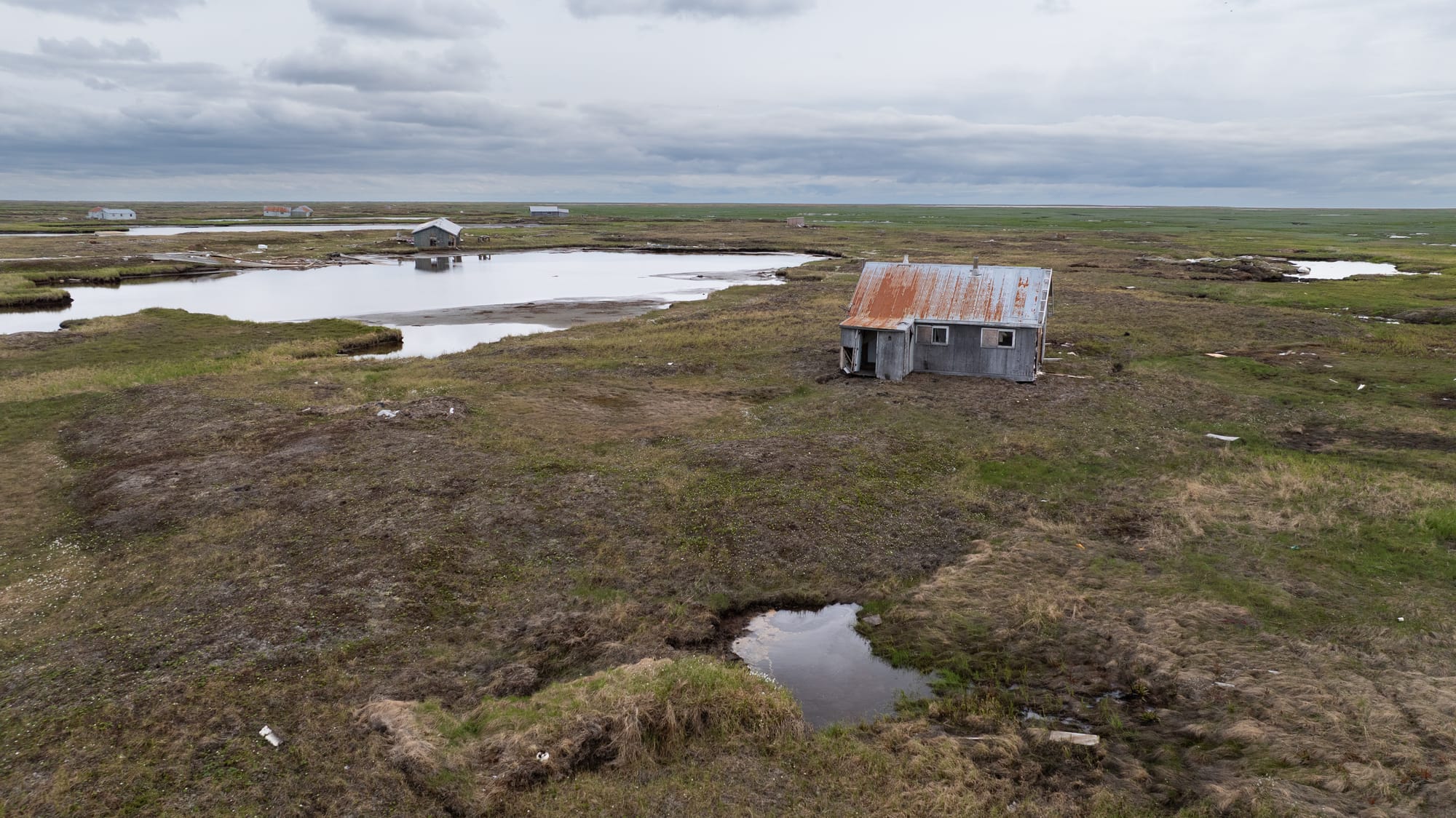
Houses are scattered across the tundra near Kwigillingok in June. During ex-Typhoon Halong, homes were lifted from their foundations and carried across the tundra by floodwaters. Many residents were later airlifted to safety. (Katie Baldwin Basile for Northern Journal)
Katie: What’s it like being back now? Does it feel like home?
Nellie: Yeah, it does. But not really. I always miss my house (after it floated away during the storm). Two weeks ago, we were going to head out to Anchorage. From here to Bethel, I told the pilot that I wanted to see my house, and we went around it because it’s way out there, maybe five or seven miles away. It was on the river bank the day after the typhoon, but then it got picked up (by the water) again.
The pilot took us on a tour around the house, my house. The porch has no walls. The windows are broken. I just cried, missing my house. But it’s always home. No matter what, it’s just home.
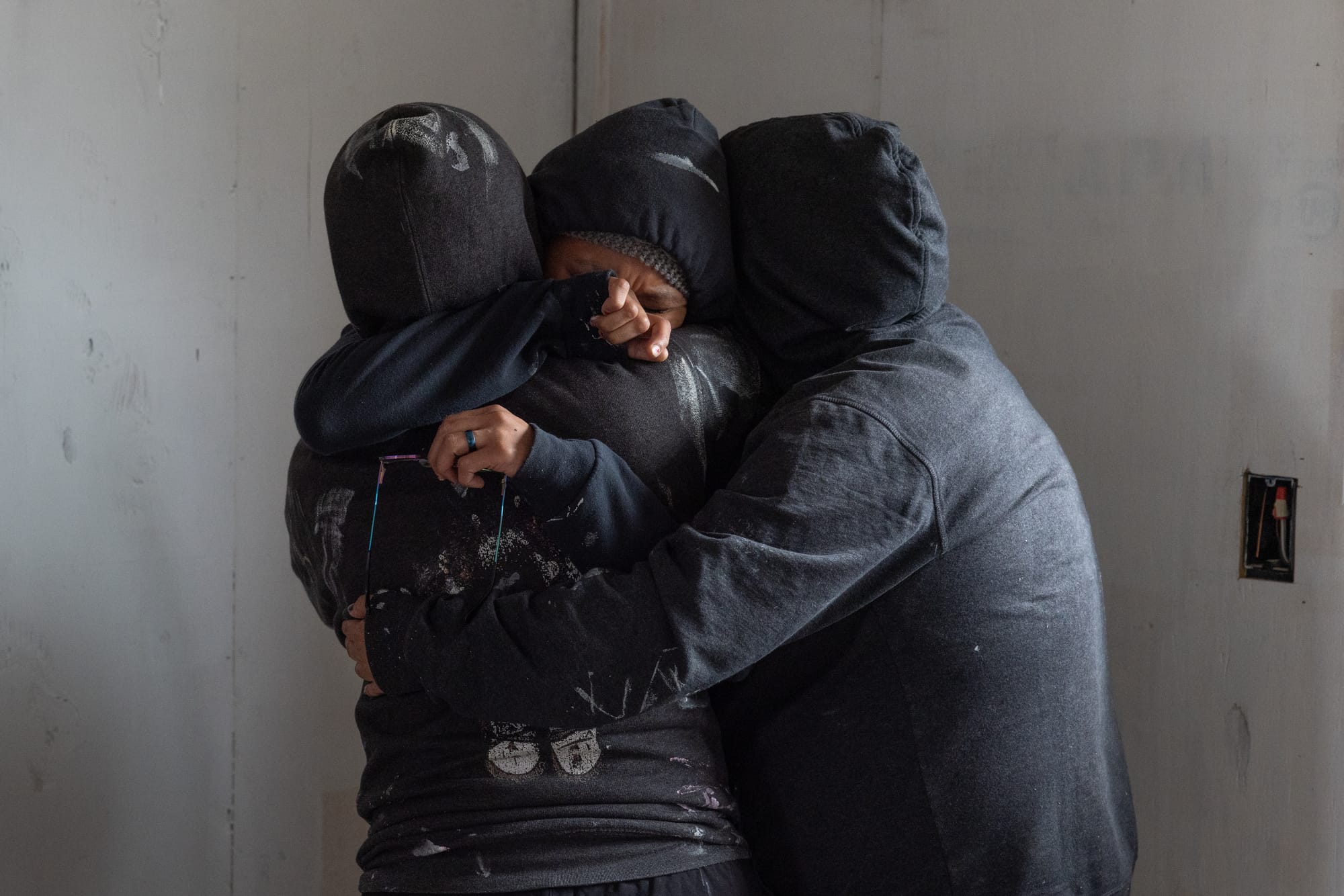
Desiree John and Lydia Tucker comfort Nellie Manchuak after she learns her parents canceled plans to visit Kwigillingok from Anchorage. The three women returned to the village and have been repairing damage left by ex-Typhoon Halong. After spending most of their lives in Kwigillingok, they say finding a new sense of normalcy has been difficult since the storm forced most residents to evacuate for an extended period. (Katie Baldwin Basile for Northern Journal)
Katie: Is it helping you to rebuild, and to be part of the village recovery?
Nellie: Yes, we’re just doing it for people to be happy to come home to their newly fixed houses.
Katie: You have a job with Hog River Construction. What’s your job title?
Nellie: Neighbor.
Katie: Neighbor. That’s what they call it?
Nellie: Yes.
It’s fun to do men’s work, to do construction. When we cut up wood and insulate the paper barrier. I did that. I’ve learned a lot.
Lydia: That’s where she got her tan. Natural tan.
Nellie: [Laughter] I was outside a lot. I would even work inside too, putting up sheets — nails, nail guns, staple guns. Those guys taught me a lot. People are just going to come back home so happy, with their house nicely done.
Dollie Martin paints inside a home in Kwigillingok, Alaska, on June 19, 2026. The home was damaged by flooding after ex-Typhoon Halong struck the village. Martin, who is from Kwigillingok and evacuated during the storm, returned with a construction crew that’s repairing homes in the village. (Katie Baldwin Basile for Northern Journal)
[Editor’s note: Nellie and Lydia are no longer working with Hog River. Their jobs ended in early July, Lydia said recently.]
Katie: Lydia, do you want to share? If so, maybe just start at the beginning. Where were you?
Lydia: We were at home watching the tide. Like Nellie said, everybody thought it would go up and go back down because that’s what it usually does. But it just kept coming up.
(My partner) went outside and said it was a deep one, and we were thinking about going to the school. But it came so fast. We decided to go into our maqi [steamhouse or sauna] because it was a little higher than our house and we thought we were going to float away. But then the maqi started floating up, and we had to go back to the house. We were carrying our babies on our shoulders.
Then the power turned off, and there were really strong winds. (With) every gust, you would feel the house shaking. And after the water reached us, I guess maybe we started floating, but we didn’t float away. When the power turned off, we kept looking out the window. We couldn’t really see, but you could just see how high the water was. At our house, we have to bend down to look underneath it. But when we walked out, the house was much higher than that.
Katie: Because it was floating?
Lydia: Yes.
I started praying, and then my 5-year-old started praying with me: Watch over us. Don’t let us float away. Keep everybody safe. And even though it was so high, we didn’t float. We didn’t move.
We started panicking and asking if someone could come get us by boat. But the tribal administrator told us that nobody could go anywhere: “Everybody stay in their houses. If you guys float away, watch on the map to see where you are going.”
After we changed the baby’s clothes and wiped them down, we wrapped them in all the blankets, and they fell asleep after they got warm. We didn’t sleep all night. People that were at their houses — we’d check on them, and they’d check on us by flashing lights at each other. We kept panicking, asking if the tide’s going down, or if the wind’s dying down. After all the water went down and it started getting bright, we looked out the window. But we couldn’t see through the grass and the salty water going down the windows. When we went to check outside, it looked like a dream. Everything was so out of place. Even our boardwalk was on top of that old truck by the school.
Lydia Tucker pauses for a photo while repairing a home in Kwigillingok in June. The home was damaged by flooding from ex-Typhoon Halong. Tucker, who is from the village, evacuated during the storm but returned with a construction crew that’s helping to rebuild. (Katie Baldwin Basile for Northern Journal)
Katie: So your house floated, but it didn’t float away. Do you know why yours stayed in place? Was there something different about your house?
Lydia: We were thinking the spiritual way. They say that kids’ prayers are stronger than ours. And my baby was praying with me. She started crying, and I was scared to use the bathroom because I knew we were floating. I was too scared to move in the house. Like, if we moved or walked around it would rock.
We sat in one spot in the living room, all together.
Katie: How many of you were there in the house?
Lydia: Me, my other half and the three kids. The older two were going to school in Bethel, so they didn’t know. They knew it was windy and flooding. But they didn’t know how bad it was.
Katie: After that night, what happened next?
Lydia: We went to the school.
We brought some stuff because at first, the elders got priority to evacuate. And after the elders, they asked everybody. First it was, “Whoever wants to evacuate, come put your name on the list.” And the next day, “Everybody has to leave. Nobody can stay. One bag per person.” So, since there were five of us, we used trash bags to take what we needed, mostly clothes and the diapers. And some keepsakes.
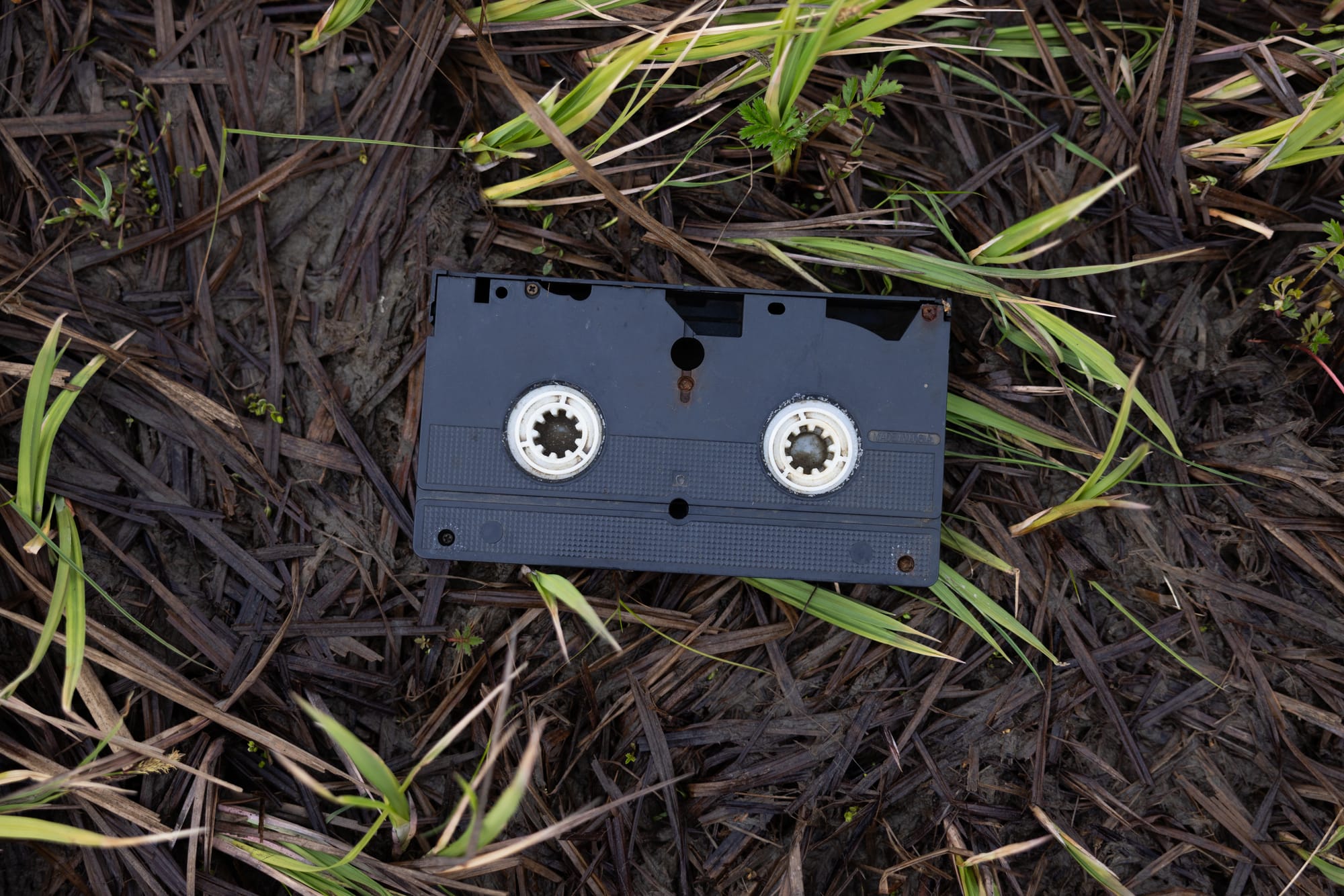
Items like this VHS tape were strewn across the tundra after ex-Typhoon Halong struck Kwigillingok in October. This photograph was taken June 18. (Katie Baldwin Basile for Northern Journal)
Katie: What kind of stuff did you keep?
Lydia: My last child, he’s 4. He had a twin (who) didn’t make it (when he was a baby). And so when we had to evacuate to Anchorage, I brought all the stuff we’d had at the hospital for him.
After my other half had been working for maybe two or three months, the kids and I came to visit two weeks go, and I lucked out on a construction job.
Katie: How does it feel to be rebuilding the village?
Lydia: It doesn’t feel the same, because most of the population is gone. The only thing downtown that’s available is a store, and they only open Monday, Wednesday, Friday for two hours.
Katie: How old are your kids?
Lydia: One just graduated — he’s 18. My daughter’s 17. She’ll be a senior. I have another boy who is 13, and a 4-year-old and 5-year-old.
When we first got back here, the baby got off the four-wheeler. He was standing in front of the house. He looked around.
“It’s not gonna get big water, Mommy?”
“No, there won’t be big water.”
“Will it be right here?” he asked, pointing to the stairs.
No. Even when it was high tide, like what Nellie was saying, they asked me, “Is it going to get really big water again?” No. “Will it come by the house?” No. Even in Anchorage, even if they’re just randomly playing with their toys, they talk about “big water,” “big flood.”
Maybe even I feel emotional when they talk about it, and I just think maybe that’s their way of coping with it, their way of expressing how they feel.
Katie: Is there anything you’d want to share with people who have to go through something like this?
Lydia: It helps to talk about it. Even with people who weren’t here, just talk to them or talk to anybody. It’ll help you release some of the stress.
Clockwise from top: Nellie Manchuak, Dollie Martin, Desiree John and Lydia Tucker pause for a portrait while repairing a home in Kwigillingok, Alaska, on June 19, 2026. The home was damaged by flooding after ex-Typhoon Halong struck the village. All four women are from Kwigillingok and evacuated during the storm. They returned this year to repair homes. (Katie Baldwin Basile for Northern Journal)
This story is the second in a series supported by the Alaska Community Foundation, the Alaska Center for Excellence in Journalism, the Institute for Nonprofit News, the Google News Initiative and the CatchLight Global Fellowship.
Last year, Georgia’s Blue Ridge Mountains landed on USA Today’s 10Best places to see fall foliage, and will probably rank there again. But the area … Read moreThe post Luxury and outdoor adventure meet in a North Georgia resort appeared…