 The capri pant comeback is no longer up for debate—it’s happening, and it’s being driven by both celebrity style and the runway.
Easiest to Style: Levi’s 311 Shaping Skinny Capri Women’s JeansMost…
E! Online (US) – Top Stories











The capri pant comeback is no longer up for debate—it’s happening, and it’s being driven by both celebrity style and the runway.
Easiest to Style: Levi’s 311 Shaping Skinny Capri Women’s JeansMost…
E! Online (US) – Top Stories

It’s the twang before the drop, for us. Continue reading…Country Music News – Taste of Country
It’s the twang before the drop, for us. Continue reading…The Boot – Country Music News, Music Videos and Songs

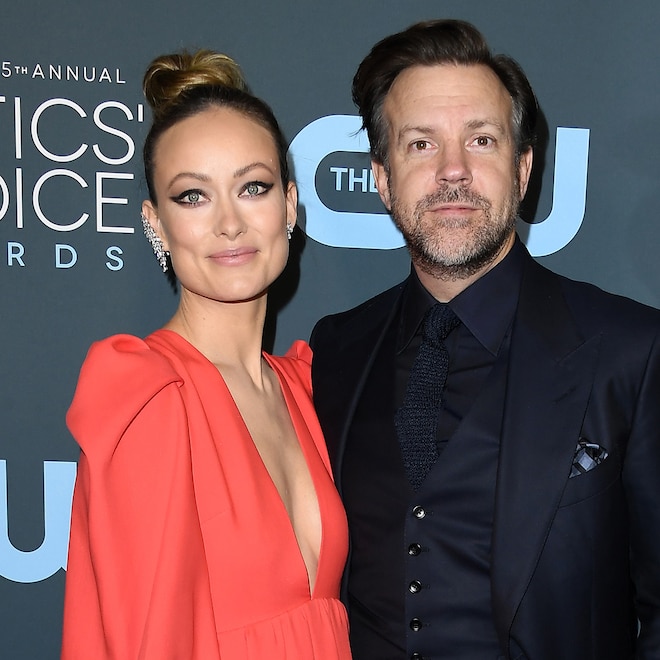 Olivia Wilde and Jason Sudeikis aren’t worried about their co-parenting relationship.
In fact, the Don’t Worry Darling director and the Ted Lasso star—who share son Otis, 12, and daughter Daisy,…
E! Online (US) – Top Stories

Reading Time: 2 minutes
Willie Nelson will celebrate his 93rd birthday on Wednesday.
And once again, he’ll be touring the United States and performing dozens of sell-out shows this summer.
As much as they love to hear him belt out his classic hits, some fans might think that Willie should slow down for the sake of his health — but those who know the country legend best say touring might be what keeps him alive.
According to a new report from Radar Online, Nelson believes his live shows are his literal lifeline.
“[Willie] thinks he’ll die if he’s not performing and entertaining a crowd,” a source tells the outlet.
Insiders say that while his “mind is still sharp as a whistle,” his body has been showing signs of age.
“He’s frail, can’t stand straight and must perform sitting down,” says one insider. “He even breathes with difficulty.”
Despite the signs of wear and tear, however, those closest to Nelson are confident that he’s “not retiring.”
And despite erroneous reports of Willie’s death, the music icon has no plans to step away from the stage.
“He needs his fans as much as they need him,” added the source. “His wife, Annie, and eight kids mean the world to him — but Willie’s first love was always his music. It keeps him going.”
In 2015, Nelson underwent stem cell treatment to repair damage to his lungs from his days of smoking cigarettes.
“I’ve smoked a lot of cigarettes, and I’ve had emphysema and pneumonia four or five times, so my lungs were really screwed up,” he told The Washington Post at the time (via Radar Online). “I had heard that this stem cell operation would be good for them. So, I said, ‘Well, I’m gonna try it out.’
“I have abused my lungs quite a bit in the past, so breathing is a little more difficult these days,” Nelson explained.
“I have to be careful.”
Thankfully, Willie kicked his tobacco habit decades ago. As for the smokable he’s most associated with? Well, that’s a different story.
According to his publicist, Elaine Schock, Nelson “does not smoke any more or any less [weed]” than he did prior to quitting cigarettes.”
It’s good to know that some things never change!
Willie Nelson, 93, ‘Thinks He’ll Die’ If He Gives Up Grueling Tour … was originally published on The Hollywood Gossip.
The Hollywood Gossip

 Real Housewives of Atlanta star Angela Oakley’s signature accessory is on sale at Amazon now! The fan she carries to events and while chatting with fellow Housewives, has been discounted during…
E! Online (US) – Top Stories
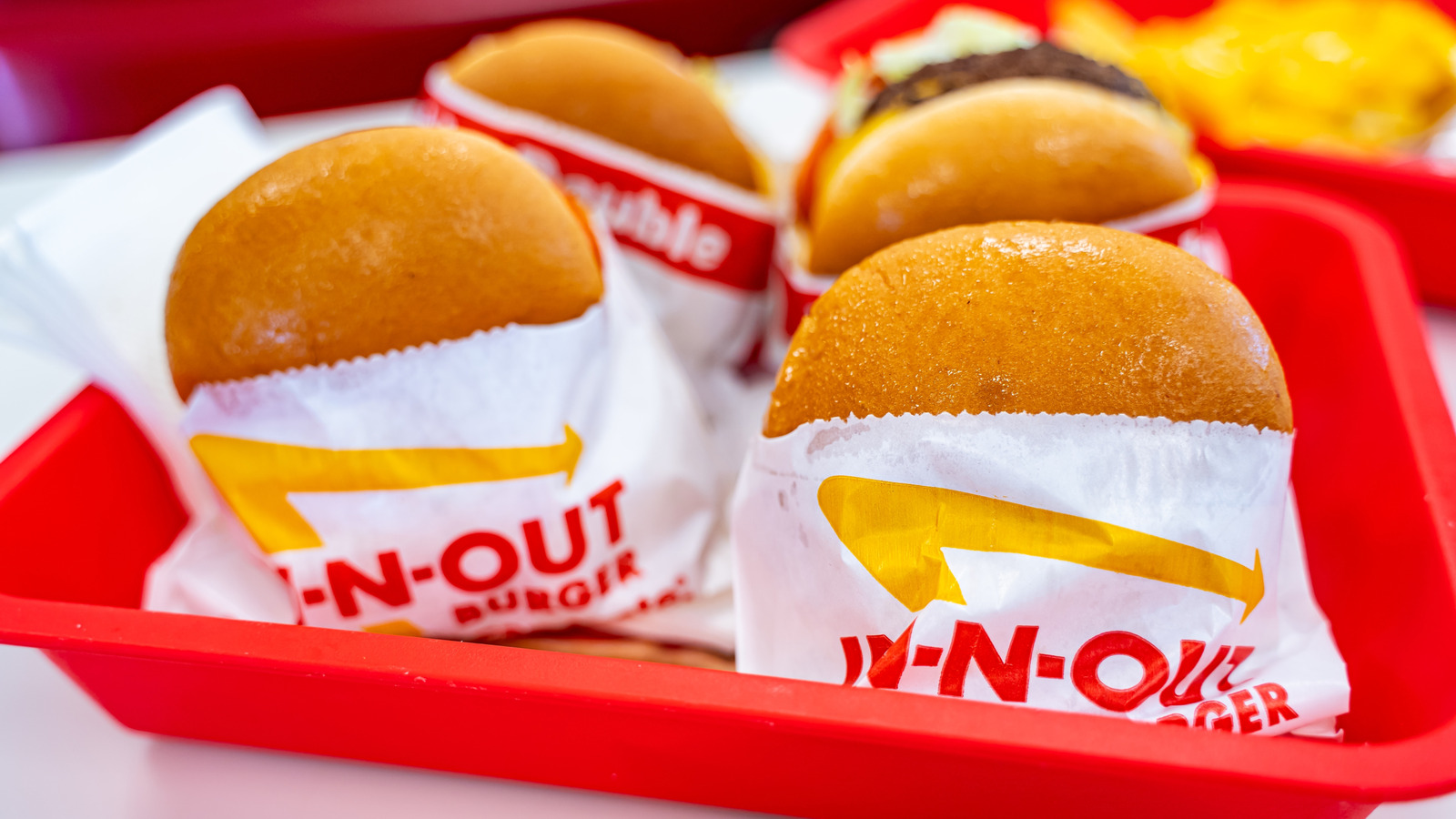
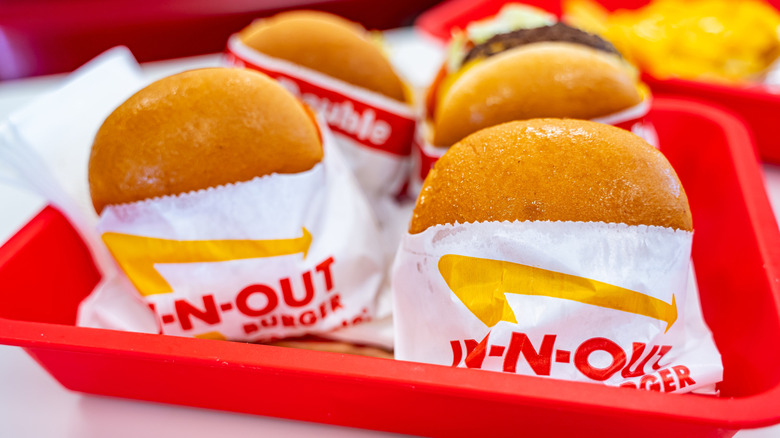
If you want to quadruple your burger (yes, that’s right: get four whole patties and slices of cheese) when eating at In-N-Out, just say three words.
Food Republic – Restaurants, Reviews, Recipes, Cooking Tips

This was an underwhelming year for quarterbacks in the NFL Draft. But next year, the quarterback carousel might go for a wild ride when the draft is held in our nation’s capital. Even though we’re still a year out, 2027 looks to be a very strong quarterback class, potentially as deep and talented as the 2024 class, which had six picked in the first 12 selections, three of which have already guided their teams to playoff victories. FOX Sports NFL Draft analyst Rob Rang had five quarterbacks taken in the first round of his 2027 NFL mock draft, including three taken in the top-four picks. That’s a far cry from this year’s draft, when only two quarterbacks went in the first two rounds — that’s only happened one other time (one in 2022) in the last decade. Which quarterbacks headline that group? Texas’ Arch Manning is the current favorite to go No. 1, but other talented passers like Oregon’s Dante Moore, Ohio State’s Julian Sayin, Notre Dame’s CJ Carr and others could threaten to be top-five picks. So, with next year’s quarterback class looking to be promising, it might be a good offseason to be a quarterback-needy team. With that in mind, we tried to project the 10 teams that will most likely be in need of a quarterback in the potentially loaded draft class. The Indianapolis Colts gave Daniel Jones a two-year, $88 million contract, but there’s nothing guaranteed in the second year, so if he doesn’t look good coming off a torn Achilles tendon, they could move on. It would mean $35 million in dead money for 2027, but it’s something we’ll note as an unlikely but possible outcome. It’s less likely that Anthony Richardson sticks around and plays well enough to be part of their plans, so there’s a worst-scenario world where the Colts — potentially with a new coach and general manager — look at drafting a quarterback as part of a complete reboot in 2027. Baker Mayfield is a free agent after this season, but it’s still likely the Tampa Bay Buccaneers will give him a lucrative extension after three solid seasons taking over for Tom Brady. If they don’t, there’s no heir apparent on the current roster, so they’d be on this list, though they’ve had good luck in the last two veterans they’ve found in free agency. They’ve drafted only one quarterback (Kyle Trask) in the last decade. The New Orleans Saints got an encouraging nine-game look at Tyler Shough in the second half of 2025, as he went 5-4 as a starter and threw 10 touchdowns against six interceptions. He’ll have every chance to entrench himself as the long-term starter this year, and the Saints have set him up with upgraded talent all over, from running back Travis Etienne to first-round receiver Jordyn Tyson and three other pass-catching draft picks. But it’s possible that Shough doesn’t continue where he left off, which could leave the Saints drafting a quarterback for the fourth time in five years. The Atlanta Falcons have Tua Tagovailoa on a minimum contract while Michael Penix Jr. comes back from another knee injury. He’s still only 28, so this is a chance for him to reset himself, and it’s possible Penix returns healthy and fares better than his 4-8 career record as a starter. If neither are a resounding success, an offensive coach like Kevin Stefanski will want a talented quarterback to build his team around after not having a first-round pick in this year’s draft. The Minnesota Vikings landed Kyler Murray on the cheap, so it’s possible he shows enough to become a long-term answer for the Vikings, and it’s less likely but possible that J.J. McCarthy beats him out and shows he’s better than a rough 2025 that saw him throw more interceptions (12) than touchdowns (11). Or Murray plays so well he Sam Darnolds himself to a big contract elsewhere, which would put Minnesota high on this list. The Miami Dolphins just gave Malik Willis a three-year contract worth $67 million. So, there’s certainly a chance he plays well and shows his promising glimpses in limited work (three starts in the last two years with the Packers) can translate to a full season. Miami has moved on from a huge Tua Tagovailoa contract, one that will count $55 million against this year’s salary cap. If Willis is unconvincing this season, he still has his $21 million salary fully guaranteed for 2027, but the Dolphins have also shown they’ll move on from a quarterback once they’ve decided he’s not the answer. Miami has shed enough talent in the past year through trades and cuts that this will be a rebuild, but if new coach Jeff Hafley wants to make it to a third season, having a long-term answer at quarterback is a must, so that could include a high draft pick next year. At age 35, Geno Smith is a stopgap quarterback, someone who can get the New York Jets started in the right direction but probably won’t be back for another season once the team has the chance to put a high draft pick into a long-term answer. They haven’t done that since Zach Wilson in 2021, and they should improve from a 3-14 record in Aaron Glenn’s first season, meaning they’ll pick later. New York used a fourth-round pick this past weekend on Clemson’s Cade Klubnik, but he took a big step back this past season, going from 36 touchdowns in 2024 and high draft expectations to just 16 in a disappointing 2025. There just aren’t many success stories from quarterbacks taken that late — in today’s NFL, it’s pretty much Brock Purdy and Dak Prescott. Is Aaron Rodgers coming back? Either way, he’s 43, so the franchise has to plan for a near future without him. The Pittsburgh Steelers haven’t had a losing record once since 2003, and they’ve managed to extend that streak despite mediocre quarterback play in the four years since Ben Roethlisberger retired. Much like some other teams on this list, they semi-addressed the position in this year’s draft, taking Penn State’s Drew Allar in the third round, and they also have 2025 sixth-round pick Will Howard. Could Allar be a long-term answer? He had 50 touchdowns against 10 interceptions in 2023-24, missing half of the 2025 season with an ankle injury. If Rodgers is back, Pittsburgh likely won’t see enough of Allar to evaluate him in 2026, leaving them with enough uncertainty that they’ll be tempted to draft a quarterback, though their relative success will mean they’re picking too late in the first round to get one of the top two or three options. How can an NFL team have four quarterbacks, and yet have none? That’s likely the Cleveland Browns, who still have the albatross of Deshaun Watson’s $230 million contract and have taken three middling quarterbacks in the last two drafts. Watson may actually play this season — he last did in 2024, going 1-6 with five touchdown passes in seven starts — but we also might see Shedeur Sanders, who had seven touchdowns and 10 interceptions in seven starts as a rookie last year. There’s also 2025 third-rounder DIllon Gabriel and 2026 sixth-rounder Taylen Green, but the odds of them leaving 2026 with a quarterback they’d want back as a starter are slim. Watson’s contract is up after this year, though he’ll count $86 million in dead money against their 2027 cap, which is just another reason Cleveland would do well to build around a rookie quarterback — with an inexpensive contract — as it works toward a franchise reset under new coach Todd Monken. Using first- and second-round picks on receivers KC Concepcion and Denzel Boston this year will help them have a viable pass game for the next quarterback. The Arizona Cardinals moved on from Kyler Murray this spring at a considerable expense, and are content to move forward with Jacoby Brissett as the presumed starter. Brissett is 33 and wasn’t bad last year, throwing 23 touchdowns against eight interceptions, but he went 1-11 as a starter and this would be the first time in his NFL career he’s started more than five games in back-to-back seasons. Arizona used a third-round pick on Miami (Fla.)’s Carson Beck, who should get a look at some point in what should be a long 2026 season at the bottom of the toughest division in the NFL. It’s unlikely that Beck would show so much promise that the Cardinals wouldn’t enter the 2027 draft with both a high pick and a clear focus on finding a starting quarterback there. Arizona hired an offensive-minded coach in Mike LaFleur, who has worked under both Kyle Shanahan and Sean McVay, and they have a promising young back in rookie Jeremiyah Love, so this should be a good situation for a quarterback to help spark a franchise turnaround.Latest Sports News from FOX Sports

Often, managers become the scapegoats for poorly-constructed teams missing the requisite talent to contend. Occasionally, though, an in-season change can spark a speedy turnaround. In 2022, that’s exactly what happened when Rob Thomson took over for Joe Girardi after Philadelphia’s 22-29 start and went 65-46 the rest of the way, steering the Phillies to their first playoff appearance in 11 years and their first World Series appearance in 13 years. Four years later, though, Thomson now finds himself in Girardi’s fateful position. The Phillies, owners of a 9-19 record and the worst run differential in Major League Baseball, have fired Thomson, the man who guided them back to relevance after a decade of disappointment and amassed the highest winning percentage (.568) in the team’s modern era. They reached the postseason in each of their four seasons with Thomson at the helm, but after making it to the World Series in 2022, they got bounced in the NLCS in 2023 and failed to advance out of the NLDS in 2024 and 2025. Now, the Phillies are hoping that Don Mattingly can rescue their 2026 season the same way Thomson did four years ago. What’s next for the Phillies? Just three days ago, Alex Cora was fired in Boston and immediately became one of the hottest names available. So it’s no surprise that Phillies president of baseball operations Dave Dombrowski, who hired Cora eight years ago and watched him guide the Red Sox to a World Series championship in his first year as the club’s manager, reached out to fill the Phillies’ vacancy. This time, however, Cora declined Dombrowski’s offer. Cora was in the second year of a three-year, $21.75 million extension in Boston and, at least right now, appears content to sit out the rest of this year. He could become an option in Philadelphia again next season. For now, the Phillies have pivoted to their bench coach, promoting Mattingly to interim manager “through the end of the 2026 season,” according to a team statement. Third-base coach Dusty Wathan will take over Mattingly’s role as bench coach, and Triple-A Lehigh Valley manager Anthony Contreras will assume Wathan’s role as third-base coach. Dombrowski still clearly believes in his roster, which has the fifth-highest payroll in the sport, despite its ineptitude to this point. The Phillies have dropped 15 of their last 18 games and at one point lost 10 straight. They’re 3-13 against teams over .500, and problems persist everywhere. Their offense ranks 29th in OPS, their pitching staff ranks 28th in ERA and their defense ranks last in defensive runs saved. Can a new manager solve all of those problems? Probably not, but it’s also hard to believe this team — which returned a nucleus of players that won 96 games last year — is suddenly the worst in the sport. On offense, Kyle Schwarber, Bryce Harper and Brandon Marsh have all been well above league-average hitters. The right-handed hitters on the team, however, have collectively tallied a .587 OPS, the second-worst mark in MLB. As a team, the Phillies have been the worst offense against left-handed pitchers by a wide margin. It’s hard to envision this team accomplishing much when Trea Turner, Bryson Stott and Adolis Garcia are all well below league-average hitters and when Alec Bohm is the worst qualified hitter in the sport, as he is right now. But you don’t get the worst run differential in MLB simply with an underperforming lineup. A starting pitching staff that many expected to be among the better units in baseball collectively sports a 5.80 ERA, the worst mark in MLB. Mattingly — whose son, Preston is the team’s general manager — will need a lot more out of that group, which just got Zack Wheeler back from injury and should be better than this. Opponents have a .354 batting average on balls in play against Phillies pitchers, a staggering figure that has to regress at some point. What’s next in the NL East race? Just one month in, the Braves are running away in the NL East. They’re 20-9 and, stunningly, the only team in the division with a winning record. After 28 games, the Phillies are already 10.5 games back of first place. Luckily for them, the Mets have been equally incompetent. FanGraphs still gives the Phillies a 32.5% chance to make the playoffs, and plenty of time remains for them to at least contend for a wild-card spot, though the decision to run back basically the same roster with its aging core looks inauspicious at the moment. There’s not a lot of help coming on the farm — top prospect Aidan Miller hasn’t played all year due to a back issue — so it’s on the players in uniform to get right while there’s still time. The track record of the Phillies’ top players would suggest better days ahead. What’s next in MLB’s coaching carousel? It’s a rarity to see any manager fired in April, let alone two. But with a number of supposed contenders dealing with unexpected early-season turmoil, front offices are getting antsy. With Cora and Thomson out, the two hottest seats now belong to Carlos Mendoza and Joe Espada, who are leading underperforming clubs while on expiring deals. Mendoza’s Mets are 9-19 and in a share for last place with the Phillies in the NL East. Espada’s Astros are 11-18 and in last place in the AL West. They’ll both need to get the train back on the tracks expeditiously to quiet the noise. Beyond those two, Matt Quatraro’s Royals are 11-17 and Dan Wilson’s Mariners are 14-16 a year after making it to the ALCS. Both teams, however, have played better recently. While many teams choose to hire from within when they make in-season managerial changes, among the top candidates available for teams seeking a new voice are Cora, Albert Pujols, Carlos Beltrán, Yadier Molina, Brandon Hyde, David Ross, Rocco Baldelli, Omar López and George Lombard.Latest Sports News from FOX Sports
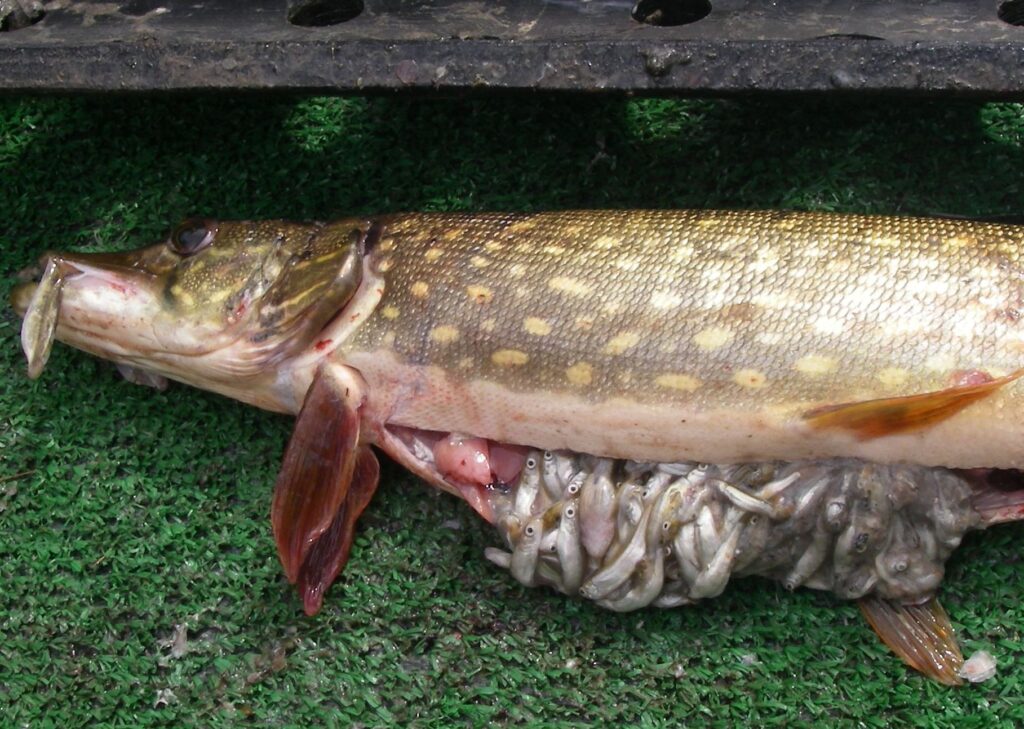
Invasive northern pike have wreaked havoc in Southcentral Alaska rivers and lakes. Introduced illegally in the 1950s, they have been devouring juvenile salmon and other native species.
Now a University of Alaska Fairbanks study warns that matters could get even worse.
As temperatures rise in waterways, invasive pike eat more, said the study, published in the journal Biological Invasions. And as temperatures continue to rise, that trend will continue, the study said. Based on expected temperature trends, invasive northern pike will eat 6% to 12% more by the end of the century, the study said.

“We expect there will be significant warming in the future, and the amount of fish that pike consume is going to increase with it,” Benjamin Rich, who led the study while earning a master’s degree at UAF’s College of Fisheries and Ocean Sciences, said in a statement released by the university.
The UAF study found that over the past decade, northern pike of all age classes ate more as waters warmed. The increase was most dramatic in year-old pike, which upped their intake by about 63% over the period.
The study site was the Deshka River, a Matanuska-Susitna Borough waterway that is an important feeder to Cook Inlet and commercial fisheries there. The 44-mile river, a tributary of the Susitna River, is also a cherished destination for Southcentral Alaska sport anglers.
It is famous for its abundance of salmon — or it has been. Salmon in the Deshka is a lot less abundant now than in the past.
The decline is a decades-long problem that affects king salmon in particular. State and federal biologists have cited numerous reasons for the decline.
The presence of invasive pike is one of them; pike have eaten a lot of juvenile king salmon, also known as Chinook, and coho salmon, also known as silver salmon.

Heat stress is also among the myriad causes of declines. The Deshka is particularly vulnerable to heat. It is in a flat area and not glacier-fed, and it is known to be one of the warmest river systems in the Matanuska-Susitna Borough.
It is the subject of ongoing temperature monitoring and studies by the U.S. Fish and Wildlife Service, the conservation group Cook Inletkeeper and others.
In 2019, a record-hot year in Alaska, waters in the Deshka were particularly warm — exceeding 81 degrees Fahrenheit that July, according to readings by Cook Inletkeeper.
Warmer temperatures, along with speeding pike metabolism and spurring more food consumption, appear to be sharpening the northern pikes’ predation skills, said Erik Schoen, a UAF fisheries biologist and a study co-author.
Fish, which are cold-blooded animals, have varying physiological responses to heat, Schoen said. Compared to salmon, which get sluggish in warm temperatures, northern pike thrive and become speedier swimmers, he said.
“If it keeps getting warmer, they get much better at catching salmon,” he said. “They’re amazing ambush predators.”
Deshka pike are actually eating less salmon than they did in past years, analysis of stomach content shows. But that is not because they are turning away from salmon; rather, it is evidence of salmon declines in the river.
The abundance of adult king salmon in the Deshka dropped by 42% over the past decade. At about the same time, the biomass of juvenile salmon eaten by northern pike decreased by 30% to 74%, depending on age class.
Do not expect the pike to go away if they deplete all the salmon, warned Schoen, who grew up in Anchorage and spent a lot of time fishing in the Deshka.
Rather, they will turn to other fish, as they appear to have done in the Deshka, such as whitefish and rainbow trout. If they can’t eat fish, they eat flies, he said. Northern pike are even known to eat birds, such as eagle chicks and ducklings, small mammals like voles and shrews — and, on occasion, each other.
“Once they wipe out the salmon, the pike don’t die off because they run out of food,” Schoen said.

Northern pike are native to the Interior and northern parts of Alaska, but they are not part of the natural ecosystem south of the Alaska Range. The first introduction was about seven decades ago, prior to statehood, and traced to the Bulchitna Lake, which is part of the Susitna River drainage. Through the following years, flooding and reproduction spread the fish to new places. And they have proved persistent, showing up not just around the Matanuska-Susitna Borough but also in Anchorage and, to biologists’ dismay, on the Kenai Peninsula.
As entrenched as the pike infestation is in the Matanuska-Susitna Borough, the salmon picture there is not beyond hope, Schoen said.
Pike prefer areas with slow-moving waters and lots of plants. That means areas with swift-flowing waters and gravelly banks are much less likely to be invaded by pike, and there are several such pike-resistant spots in the borough.
Even though it can’t get rid of all the pike, the Alaska Department of Fish and Game has had some success suppressing the invaders in certain important Matanuska-Susitna spots, Schoen said.
One is Alexander Creek, a 40-mile waterway that was one of the most important Northern Cook Inlet freshwater sites for king and silver salmon.
A multiyear program launched by the department resulted in removal of more than 25,000 Northern pike from Alexander Creek by 2021, according to a department report. Salmon numbers have improved. But pike remain a persistent problem, and suppression should continue, the report concluded.
Through its activities as part of the Alaska Invasive Species Partnership, a multiagency organization, the department is pursuing a long-term plan to control northern pike.
The post Higher temperatures spur Alaska’s invasive pike to eat more, a bad sign for salmon appeared first on Chilkat Valley News.