BuddyPress 14.5.7, 12.7.5, and 11.6.5 are now available. These security maintenance releases correct how Activity and XProfile queries handle nested relations. Sites running any of these release lines should update.
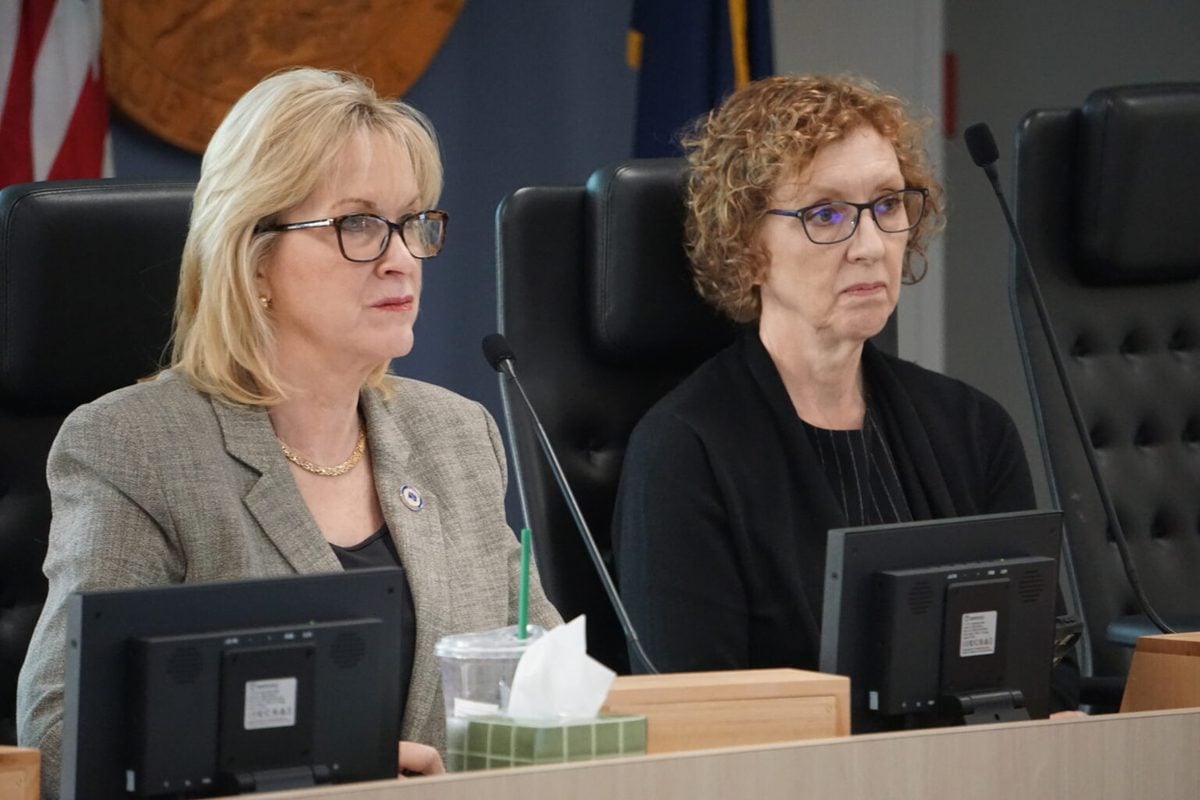
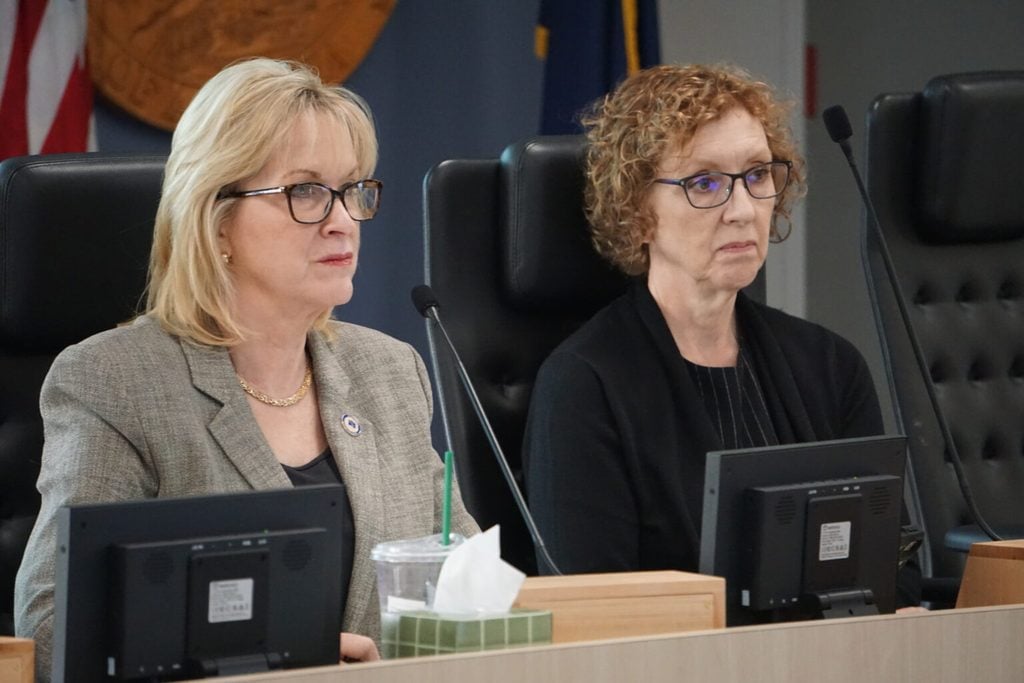
Lt. Gov. Nancy Dahlstrom and Division of Elections Director Carol Beecher listen to testimony at a July 27, 2026 hearing in Anchorage on Ballot Measure 2. (Photo by Yereth Rosen/Alaska Beacon)
Alaska Lt. Gov. Nancy Dahlstrom announced Monday the state is terminating its agreement with the U.S. Department of Justice to share uncensored voter information with the federal government, effective immediately.
The announcement came just hours after the Alaska Division of Elections, headed by Dahlstrom, had certified the results of the 2026 elections on Monday.
The agreement had drawn public criticism, an investigatory hearing by the Alaska State Legislature and a lawsuit challenging the state’s sharing of the voter rolls as a violation of Alaskans’ constitutional right to privacy. The rolls contain sensitive personal information — including partial social security numbers, addresses and drivers license numbers.
As part of the agreement, the Division of Elections Director Carol Beecher signed a memorandum of understanding that stated that the division would remove voters from the rolls within 45 days of a request from the DOJ if it deemed them ineligible.
In a statement with the announcement on Monday, Dahlstrom said the agreement is “no longer operative” and cannot be used to share voter information in the future.
“The Division entered the agreement in good faith to cooperate with our federal law enforcement partners as permitted under Alaska law,” Dahlstrom said in the statement.
“The circumstances have now changed, the election has concluded, and the agreement no longer serves a continuing purpose,” she said. “Alaska has strong list-maintenance procedures and will continue to protect both the accuracy of its voter rolls and the rights of eligible Alaska voters.”
The division provided the confidential voter list to the DOJ in December 2025, but the agency did not flag anyone to be removed, according to the statement.
“Since that time, the DOJ has not identified any potentially ineligible voters or raised concerns regarding Alaska’s voter registration records. No voters were removed from Alaska’s voter rolls as a result of the agreement,” the statement said.
However, the division removed over 3,000 Alaska voters from the rolls in July, saying they could be eligible if they provided additional proof of U.S. citizenship. Some of those voters were removed erroneously, according to reporting by the Alaska Beacon.
The division said it had directed the DOJ to destroy Alaska’s confidential voter information in accordance with the agreement.
The division’s Monday announcement also acknowledged that a U.S. District Court had vacated the DOJ’s voter removal program in October, saying the DOJ did not have the authority to obtain and review state voter lists.
But the division said termination does not constitute an acknowledgement of any wrongdoing.
“Alaska entered the agreement in good faith under state law, before any court had ruled that the DOJ’s program was unlawful,” the statement said. “Following a review of the changed circumstances, the Division determined that Alaska’s interests are best served by terminating the agreement and continuing to rely on its established voter list-maintenance procedures.”
“Alaska will continue to consider credible information, apply the law, and make its own decisions,” Dahlstrom said.
The lawsuit challenging the division’s agreement, brought by the League of Women Voters, Alaska Black Caucus and the Alaska Public Interest Research Group, is still open in Anchorage Superior Court.
Tocqueville at heart thought that agency and cultivation of people came above all else. He dreaded anesthetized placidity. In soft despotism, he feared that “ambition will lose its vigor and its greatness; that human passions will be appeased and lowered at the same time”. This vigor was for Tocqueville at the heart of what was admirable in America, whose bustle and intensity he repeatedly extols. American self-reliance and self-direction are paramount: “the citizen of the United States is taught from his earliest infancy to rely upon his own exertions in order to resist the evils and the difficulties of life.” For Tocqueville, any kind of servile and manicured comfort was not just undesirable, but a negation of the American promise.
Each year, Black Friday and Cyber Monday bring some of the best opportunities to save on premium WordPress tools. Whether you’re looking to build a stronger website or expand your toolkit, this is the time to invest and get the best value for your money.… Read More »
Donald Trump decided to endorse the casting, even doing a peculiar sort of research in the process.
Leave it to Trump to use article about his old tweets, which he read aloud, to decide how he feels about something.
Donald Trump speaks on November 23, 2026. (Photo Credit: Andrew Harnik/Getty Images)
‘He looks nice’
The New York Post reports that Trump paid a level of attention to questions about Pattinson’s casting that he normally only reserves for his absurd ballroom.
“He looks nice. You know, I wish him luck,” Trump commented.
Harp brought him articles — because Trump wanted to know, in his mind, the most important thing to know about anyone.
“I always like people that like me,” Trump commented, as if this were a good trait. But hey, it’s honest. The man loves to be adored.
Among the articles that Trump’s Obsession-reenacting aide presented him with were articles about his 2012 tweets.
“Robert Pattinson should not take back Kristen Stewart. She cheated on him like a dog and will do it again — just watch,” Trump tweeted at the time.
(This came up during Trump’s 2016 campaign as one of the many bizarre examples of his way of thinking and apparent dislike of both women and dogs — and this was before we learned more about Trump’s history of adultery.)
Trump read the old tweet aloud. You know how old people are.
Notably, this was one of multiple tweets that Trump — then a reality star — posted during a span of several weeks in 2012.
Apparently, whatever else Trump allegedly read in the articles that Harp gave him left him feeling satisfied.
(How much did he actually read? We don’t know. One has to imagine that he soon became bored with anything about Pattinson that was not also, in some way, about Trump.)
“That’s cute,” Trump remarked.
“He says nice things,” he then added.
Pattinson has a reputation for getting anxious during interviews and sort of compulsively lying. Unlike Trump, his lies are usually harmless and entertaining.
News of Pattinson’s casting elicited backlash from weirdo James Bond fans who seem to long for the days when avowed real-life misogynists played the role.
(It’s not up to the British monarchy, an institution that for some reason still exists in 2026, but the remark may have calmed some of those who think that Sean Connery should rise from the grave to return to the role.)
Pattinson is the first Millennial actor to play James Bond. He is the first new actor to take on the mantle in about a quarter of a century.
We’ll be excited to see his take on 007. And we’ll look forward to the hopefully unhinged press tours.
Prince William could strip his own children of their royal titles once he becomes king, according to claims in a forthcoming book by royal author Tom Sykes.
The book, titled Dukes of Hazard: Harry, Andrew and Edward VIII: The Spares Who Shook the Throne, looks at William’s reported ambitions for his reign, Radar Online reports.
According to the outlet, William and Kate Middleton, both 44, are said to favor giving Princess Charlotte, 11, and Prince Louis, 8, more freedom to decide their own futures.
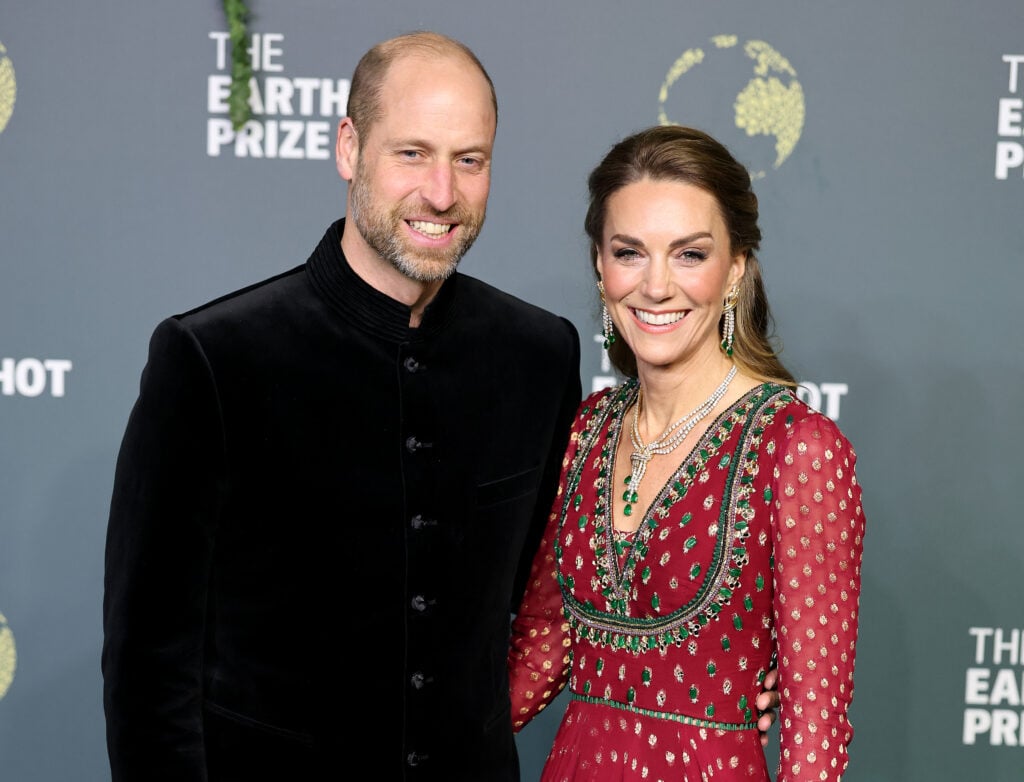
Prince William, Prince of Wales and Catherine, Princess of Wales smile as they attend The Earthshot Prize Awards Ceremony at the Jio World Convention Centre on November 17, 2026 in Mumbai, India. (Photo by Chris Jackson/Getty Images)
Friends of the Prince of Wales reportedly told Sykes that William is focused on the “liberation of his children.”
Prince George, 13, is still destined to inherit the throne. But under the reported plan, his younger siblings could be given the chance to build careers outside the royal institution, without holding on to their HRH styles.
The idea would reportedly borrow from Princess Anne, 76, and Prince Edward, 62, whose children grew up without using HRH styles.
Another royal watcher has reportedly claimed that William believes removing titles will be “breathtakingly simple.”
The broader proposal would treat royal titles more like a job requirement than a birthright. Working royals would receive salaries, allowances and housing in exchange for carrying out official engagements.
Family members who choose not to take part would be expected to support themselves, without the perks that come with representing the monarchy.
A friend of William quoted in the book reportedly put it bluntly. “If you are not doing those things and you are not a working royal, you will not get to be an HRH,” the source said.
Sykes reportedly writes that Harry, Meghan, Archie, and Lilibet would all lose their royal styles and titles under William’s current vision.
Harry and Meghan stepped back as senior working royals in 2020 and went on to set up their own business ventures in the US. They agreed at the time to stop using their HRH styles in an official capacity, but kept their titles as the Duke and Duchess of Sussex.
Now, it appears William’s own kids could be swept up in the same overhaul.
William, of course, is not king yet. His father, King Charles, 78, remains on the throne, and William is next in line.
Still, the future king has been open about wanting to shake things up. During an appearance with Eugene Levy on the Apple TV series The Reluctant Traveller, William made his intentions clear.
“Change is on my agenda – change for good,” he said.
He added, “I want to create a world in which my son is proud of what we do, a world and a job that actually does impact people’s lives for the better.”
William has already shown he’s willing to make big moves with the Duchy of Cornwall. Plans have been announced to sell roughly 20% of the estate over the next decade, raising £500 million ($656 million) for affordable housing, renewable energy and environmental projects.
“He’s gone and looked under the bonnet and is now making really difficult decisions and changing an organisation that hasn’t been changed for a very long time,” a spokesperson for William said.
His reported vision for a slimmed-down monarchy would involve a smaller group of working royals whose public duties justify their privileges and financial support. That would build on Charles’ own longtime goal of streamlining the institution.
If the reported reforms go ahead, William and Kate’s family and the Edinburghs could end up at the center of a much smaller royal operation.
Royal aides have reportedly indicated that, for now, William’s priorities remain supporting his family and carrying out his duties as Prince of Wales, especially following Kate’s cancer diagnosis in 2024.
William is also said to favor shorter, more focused overseas trips and charity work that delivers measurable results for communities. His and Kate’s recent visit to India was seen as an early sign of that approach.
Aaron Rodgers will be riding the bench.
The Pittsburgh Steelers confirmed that when they face down the Denver Broncos on Nov. 27, it won’t be Rodgers who will be taking to the field as… E! Online (US) – Top Stories
Aren Gunderson, mammal collection manager at the University of Alaska Museum of the North, pulls out a drawer containing vole specimens on Feb. 6, 2025. The voles are museum’s collection of more than 130,000 mammal specimens. Within the collection, scientists found a northern red-backed vole found in Denali National Park in the 1990s that contained viable borealpox virus, proving that the virus has been in Alaska as least as far back as then. (Photo by Yereth Rosen/Alaska Beacon)
When a woman showed up at his Fairbanks clinic in 2015 with what she thought was a spider bite, accompanied by hard-to-pin-down illness symptoms, Dr. Zachary Werle suspected the ailment was something highly unusual.
He was right. A sample he sent to the state virology lab, then forwarded to the U.S. Centers for Disease Control and Prevention national lab, revealed a completely new-to-science orthopoxvirus strain. It was dubbed Alaskapox.
What ultimately raised Werle’s suspicions and prompted him to send samples for testing was something called lymphangitis, “which is where there was a tracking or streaking or redness and inflammation where the infection was following the lymphatic channels,” he said. There were also some additional lesions that emerged on the patient’s skin, in somewhat similar fashion to an outbreak of shingles, which is a viral disease.
Dr. Zachary Werle, the Fairbanks clinician who made the first diagnosis of the disease initially called Alaskapox, then renamed borealpox. (Photo provided by Foundation Health Partners)
For five years, that case was a one-off. Then in 2020, during the COVID-19 pandemic, another patient came into Werle’s office with what she thought was a staph infection.
“I immediately recognized the similarities to the first case from 2015. I said, ‘Hey, I think I have an idea what this is,’” he recalled.
After then, a handful of patients trickled into Werle’s Tanana Valley Clinic with the same issues. Although their symptoms were unpleasant, all six Fairbanks-area residents diagnosed with Alaskapox from 2015 to 2023 recovered. Patients were mostly adults, though there was one 3-year-old child, Werle said. They had manageable illnesses, which were uncomfortable but not serious enough for hospitalizations, he said.
As cases emerged, state health officials alerted clinicians to keep an eye out for the ultra-rare disease that, though not expected to cause serious trouble for healthy people, might be more dangerous for people with compromised immune systems.
That warning proved prescient. In January 2024, a 69-year-old man from the Kenai Peninsula south of Anchorage, with an immune system weakened by cancer treatments, died from the infection.
The disease is now called borealpox, reflecting scientists’ conviction that it is found beyond Alaska.
The global total of diagnosed borealpox cases now stands at nine, with two new Fairbanks-area cases identified this year at Werle’s practice.
Borealpox is among the world’s most recently identifiedzoonotic diseases, a term for diseases that can leap between animal species and people. It is a growing list that includes several potentially deadly diseases such as COVID-19, Zika and Ebola.
Borealpox is now known to be circulating in small mammals, particularly red-backed voles, a species of burrowing animals found in almost all of Alaska and beyond in North America. The virus or antibodies indicating its past presence were also found in other small mammals, like squirrels, shrews and at least one house mouse.
A northern red-backed vole is seen in this undated photo. Red-backed voles, which are known to be carriers of the borealpox virus, are plentiful and found in almost all regions of Alaska. (Photo by Jim Dau/provided by Alaska Department of Fish and Game)
That conclusion came after researchers from the CDC, the Alaska Department of Health and the University of Alaska conducted searches in the wild over successive summers. They live-trapped and tested numerous types of small mammals in the woods around Fairbanks. Later, they extended their trap-and-test search to the Kenai Peninsula.
Along with the live-trapping effort, scientists at the University of Alaska Museum of the North went through the facility’s store of over 130,000 mammals to see if any in the past were carrying the virus.
The museum search hit pay dirt: proof that the virus dates back nearly three decades. A red-backed vole collected in 1998 from Denali National Park and stored as part of the museum’s vast collection was shown to be carrying a viable borealpox virus.
The large number of red-backed voles and their short lifespans, which are typically only about a year, help explain why the borealpox virus was so readily found in that species, said Link Olson, curator of mammals at the University of Alaska Museum of the North. Voles acquiring the virus may not have had enough time to outlive it, Olson said.
The degree to which the virus is circulating in longer-lived animals is now an important area of study. Olson and his colleagues are focusing on red squirrels, which generally live for five years in the wild.
“They live longer, and if they are exposed and survive, they will continue to mount an antibody response,” Olson said. “The downside of that type of testing is that it has to be a very fresh specimen, so none of these tissue samples from 30 years ago are amenable to serum testing.”
However, if any of the preserved red squirrels had active borealpox infections when they died, DNA tests can detect those, he added.
A northern red-backed vole scampers through a forested area of the Kenai Peninsula. (Photo by Colin Canterbury/U.S. Fish and Wildlife Service)
Exactly why borealpox is emerging now is unknown. There are too few documented cases to make any determinations beyond theories, according to scientists who are researching it.
One of those theories is that people are more susceptible to picking up pox viruses circulating in the environment because smallpox vaccines are no longer routine, now that that once-deadly disease is considered eradicated.
“The hypothesis that keeps popping up time and time again is that that coincides with the first generation or two of people who are not routinely vaccinated for smallpox,” Olson said.
Werle believes that is a logical explanation. Routine vaccination for smallpox stopped around 1980.
“We have a whole new generation of people enjoying the outdoors who don’t have that innate smallpox immunity through vaccination,” he said.
Other theories link borealpox’s appearance to climate change.
A 2025 study by an international team that included UAF researchers suggested that permafrost thaw may be a factor in borealpox, as it is for some other pathogens. A 2024 paper in The Lancet, a medical journal, suggested another possible factor: warmer winters that might be enabling a longer reproduction season and thus a population boom for red-backed voles.
A similarity in the cases to date is seasonal timing. All of the known human infections occurred in the summer or fall seasons, when people become busier in their outdoor recreation pursuits and food-gathering activities like hunting and berry-picking.
Ripe raspberries hang from a branch in this undated photo. (Photo provided by the University of Alaska Fairbanks Cooperative Extension Service)
Berry-picking, a popular late-summer and fall Alaska activity, was a common theme, Werle said.
“My personal theory on that is, potentially, some of these small rodents may be eating on raspberries or other berries that people also are picking and consuming,” he said. So people sticking their hands into raspberry patches and getting scratched up may be getting exposed to the virus. “If a small animal has defecated or urinated as they’re climbing those branches to chew on those berries.”
Another common theme is care for pets, particularly cats. Cats are widely implicated in the transmission to humans of another pox virus, cowpox, Werle noted. That makes it logical to add cats to the list of suspected borealpox remission sources, he said. “If you have a cat that’s a mouser and is out catching rodents and then rubbing on someone’s skin as it’s greeting them, that could also be another potential source,” he said.
It is also logical to assume that borealpox is much more widespread beyond the Fairbanks area, Denali and Kenai Peninsula, Werle said.
Olson said the museum currently has over 2,000 small mammal specimens in deep freeze that were donated by Joint Base Elmendorf-Richardson in Anchorage. The plan is to start testing those, he said.
Werle expects those tests to turn up some positives.
“I think they’re going to find more of it,” he said. “I think this is something that’s just right under our noses.”
People, wildlife and the environment
Two caribou walk along the Hulahula River in the Arctic National Wildlife Refuge in 2019. (Photo by Alexis Bonogofsky/U.S. Fish and WIldlife Service)
The study of borealpox falls under the One Health approach that connects humans, animals and the environment. Examined through the One Health approach, zoonotic diseases are of concern to people in Alaska not just because of the possibility of human infection but also because the risks to wildlife populations are important to rural and mostly Indigenous residents’ food security and culture.
Of particular concern in Alaska are caribou populations.
Caribou herds are in decline across the Arctic, a concern for rural residents who depend on hunting. Climate change is cited as a key factor, but so are various diseases, which themselves could be linked to climate change.
One example is a bacterium called Erysipelothrix rhusiopathiae, which causes a skin infection called erysipelas. In people, the infection turns skin red and is sometimes referred to as “St. Anthony’s fire.” The bacterium affects domestic livestock. And in recent years, it has been showing up in caribou herds, Canada and Greenland — with a suggested link to climate change, according to a 2022 study by U.S. and Canadian researchers from institutions that included the Alaska Department of Fish and Game.
The study found that seroprevalence, the term that refers to antibody presence in the blood from a prior infection, increased in summers following winters with rain-on-snow or icing events. Warmer winters produce rain-on-snow and icing events.
The exterior of the Alaska state virology lab on the University of Alaska Fairbanks campus is seen on June 23, 2026. (Photo by Yereth Rosen/Alaska Beacon)
Ellis, herself a graduate of UAF’s veterinary collaboration with Colorado State University, specializes in animal disease. She has been among those researching the spread of highly pathogenic avian influenza into wild terrestrial Alaska mammal populations, for example. Currently, she and her research partners are tracking a respiratory disease affecting caribou and moose, especially young animals, in different parts of the state.
She is a leader of UAF’s One Health Wildlife Laboratory, where she and other researchers are studying numerous other animal health conditions.
Those include zoonotic diseases of concern carried by voles, the plentiful mammals that are known to be carriers of borealpox. Ellis and her colleagues trapped several in the summer of 2025 and examined them for other diseases and pathogens.
The tiny animals, now under scrutiny for their role in spreading borealpox, had not gotten much attention until recently, she said.
“They’re minimally studied because people don’t really care about them,” she said. “But also, you know, they go everywhere, so they interact with wildlife, they interact with domestic animals, and then they go into people’s houses. And so they’re a big risk in terms of a vector for a zoonotic disease.”
Prominent among the troublesome zoonotic pathogens they found in the voles was bartonella, a type of bacteria that causes the disease bartonellosis.
It is commonly called “cat scratch disease” or “cat scratch fever” and is generally a nuisance but not dangerous for most people. But bartonellosis can cause serious problems in wildlife. Starting in 2006, for example, a die-off of sea otters in the Kenai Peninsula’s Kachemak Bay coincided with high rates of exposure to bartonella, as scientists explained in a study published in 2014.
A microscopic photograph taken in 2002 reveals numerous Francisella tularensis coccobacilli, the bacterium responsible for causing the disease, tularemia. (Photo by Larry Stauffer/Oregon State Public Health Laboratory/Provided by the U.S. Centers for Disease Control and Prevention.)
When there is a health mystery with terrestrial animals, Ellis is often called upon to solve it. She works on contract for the Alaska Department of Fish and Game at the virology lab on the UAF campus. Veterinarians, scientists and even pet owners in the general public send samples for Ellis and her colleagues to analyze.
When unusual diseases emerge among marine mammals, the scientists called into action are generally from the National Oceanic and Atmospheric Administration, other government agencies, the Alaska SeaLife Center in Seward and Alaska Veterinary Pathology Services in Eagle River, which contracts with agencies like NOAA’s National Marine Fisheries Service.
One disease showing signals of growing presence among Alaska marine mammals is tularemia, a tick-borne disease sometimes called “rabbit fever.”
In Alaska, tularemia is generally considered a terrestrial disease associated with hares. However, polar bears — classified as marine mammals because their habitat is the Arctic Ocean and its sea ice — are showing increasing signs of exposure, according to blood tests that found the presence of antibodies. That trend, documented by the U.S. Geological Survey, comes as climate change has reduced sea ice extent over the long term, forcing polar bears to spend more time on land.
Tularemia has also shown up in marine mammals farther south — in the endangered population of Cook Inlet beluga whales, for example.
Tularemia was documented for the first time in that population after two pregnant belugas were found dead in the fall of 2023, according to research led by Alaska Veterinary Pathology Services. Tularemia was determined to be the cause of death for the belugas, with an environmental source suspected. The route of exposure, said the researchers’ report to the CDC, published in 2025, “was likely inhalation of contaminated water.”
A Cook Inlet beluga mother and calf are seen swimming in 2017. Tularemia, a tick-borne disease, was recently identified in two dead Cook Inlet belugas. (Photo by Hollis Europe and Jacob Barbaro/NOAA Fisheries)
Tularemia can affect people too, though human cases are rare. There was one documented in 2023 in Anchorage, in the same Cook Inlet basin that is home to the infected belugas that were found dead that year. There was another documented Anchorage case in 2024 and one in Interior Alaska in 2025, according to state health officials.
For the doctors, veterinarians and scientists making discoveries about emerging zoonotic diseases, there are some mixed feelings.
Some findings can be worrisome, and inconclusive results can be frustrating, they say.
Still, putting together the puzzle pieces and gaining confirmation through lab tests at top scientific facilities can be satisfying.
That is the case for Werle, whose discovery of borealpox was an unexpected career turn.
“This is the kind of thing that you never expect is going to be a part of your medical practice as an individual community practitioner kind of in the front lines, in the trenches,” he said. “This is not something that you ever think you’re going to have a chance to be a part of, so I think it’s really been very rewarding for me to be a part of it.”
Jayne Ellis, assistant professor of veterinary medicine at the University of Alaska Fairbanks, stands on July 23, 2026, by a cabinet of animal samples at the Alaska state virology lab on the university campus. Ellis also works on contract for the Alaska Department of Fish and Game helping to track and analyze animal diseases. (Photo by Yereth Rosen/Alaska Beacon)















 Aaron Rodgers will be riding the bench.


